



Picking Asian haircuts for women with round faces gets easier once you stop chasing a smaller-looking face and start chasing shape.
That sounds obvious, but it’s the part most people skip. A round face isn’t a problem to hide; it’s a shape to work with. The right cut pulls the eye upward, breaks up width around the cheeks, and gives the hair enough movement so the whole look feels longer and lighter.
Many Asian hair textures lean straight, dense, silky, or fine with a lot of slip. That changes everything. A cut that looks airy on wavy hair can sit flat, puff at the wrong spot, or turn into one heavy line if the layers are placed badly. So the real trick is not “more layers” or “less layers.” It’s where the layers start, how much weight gets removed, and whether the front pieces open the face instead of boxing it in.
A good round-face haircut should do three things at once: add a little vertical lift, keep bulk away from the cheeks, and leave enough softness around the jaw that the face still looks natural. That’s the sweet spot. And it shows up in more than one style.
1. Long Layers with Curtain Bangs

If you want one cut that almost never feels too risky, start here. Long layers with curtain bangs work because they keep length below the chin while breaking up the width that can sit across a round face.
The shortest curtain pieces should not stop right at the cheek. That’s the trap. Ask for the bangs to open around the outer brow or top of the cheekbone, then sweep down and away so they blend into longer front layers. On straight Asian hair, this gives you movement without making the front look puffy.
Why It Flatters a Round Face
The face gets a soft diagonal line instead of a straight horizontal one. That matters more than people think. Diagonals make the face read a little longer, and the long layers keep the hair from collapsing into one blunt curtain.
This cut is especially good if your hair is thick or heavy at the ends. The layers remove some of that weight, but the length still stays in place. You get shape, not frizz. You get flow, not volume in the cheeks.
- Ask for the first face-framing layer to start around the mouth or just below it.
- Keep the curtain bangs long enough to part easily in the middle.
- Style with a round brush and a slight outward bend at the ends.
- Let the crown stay a little lifted; flat roots make the face look wider.
Best tip: tell your stylist you want movement around the face without volume at the cheekbone. That one sentence saves a lot of bad cuts.
2. The Korean Hush Cut

A hush cut is what you pick when you want softness, not drama. The Korean hush cut takes weight out of the interior of the hair and leaves the outline airy, which is a smart move on a round face.
What makes it work is the softness around the perimeter. The ends are feathered, the layers are quiet, and the whole shape feels light instead of chopped up. On straight, silky hair, that matters. Hair like that can look elegant and clean, but it can also look like a sheet if the cut is too blunt. The hush cut fixes that without turning the head into a shag.
The round-face benefit is subtle but real. The layers don’t sit wide at the cheeks. They slip past them. That gives the face a slimmer visual line without screaming “I got layers.” It also grows out better than many sharper cuts, which is handy if you dislike constant salon maintenance.
If your hair is very thick, ask for internal weight removal, not aggressive razoring at the ends. Too much thin-out can make the ends fray and puff, especially in humid weather. You want a soft fall, not a wispy halo.
3. Collarbone Lob with a Deep Side Part
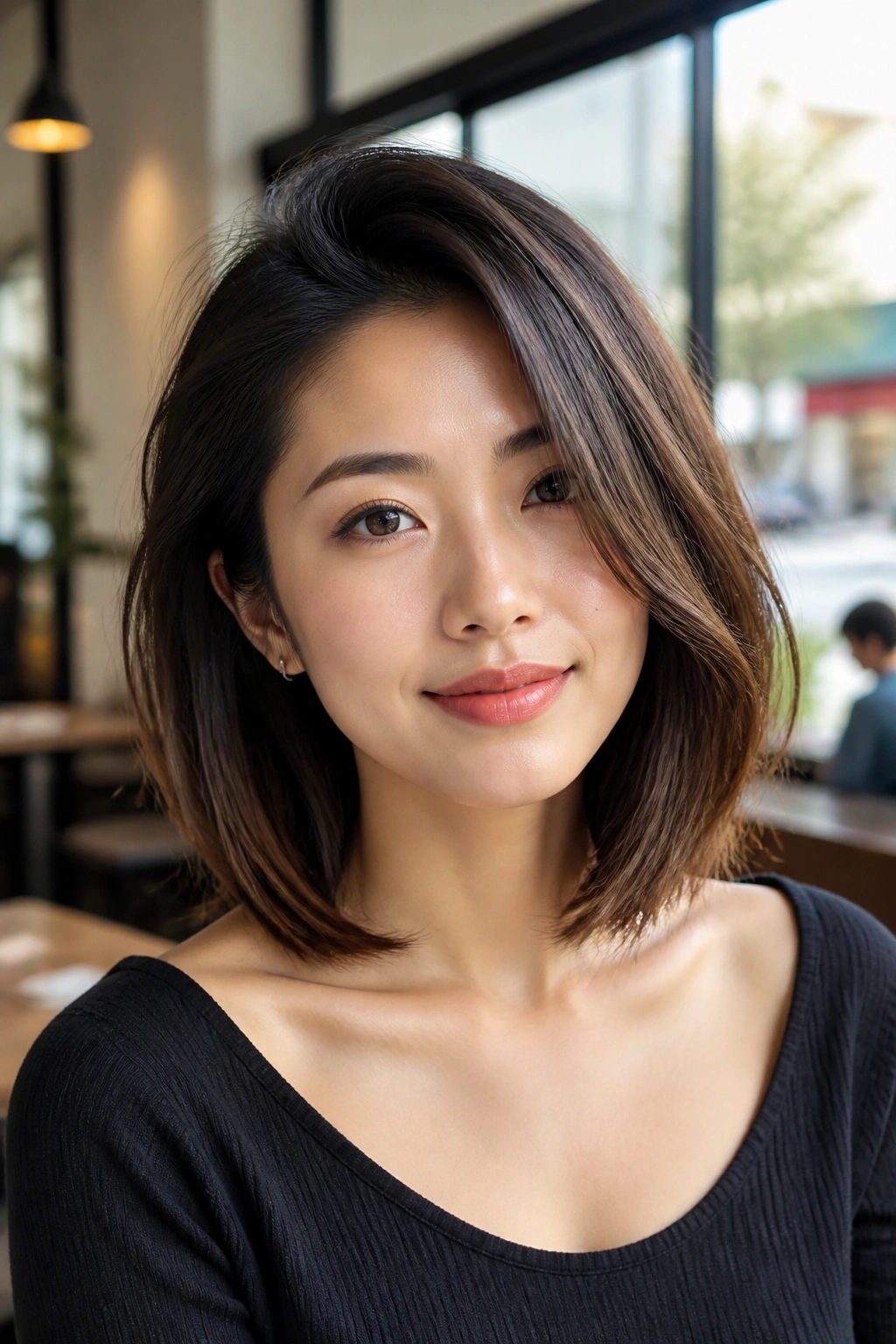
What if you want shorter hair, but not short short? That’s where the collarbone lob comes in. A lob that lands at the collarbone gives a round face length, and the deep side part adds a diagonal line that makes the shape feel sharper.
The reason this cut works is simple: it avoids the widest zones of the face. Chin-length cuts can sometimes sit right on the jaw and make the face look fuller. A collarbone lob drops below that line, so the eye keeps moving downward. The side part gives the top some lift, which helps a lot if your hair lies flat at the roots.
How to Style It
A deep side part doesn’t have to be dramatic. Even shifting the part by two inches can change the whole feel of the cut. If your hair is very straight, a small bend through the front pieces stops it from looking stiff.
- Keep the front ends skimming the collarbone, not the chin.
- Add a slight bend with a 1-inch iron or a medium round brush.
- Tuck one side behind the ear for a cleaner diagonal.
- Ask for soft texturing only at the ends, not around the cheeks.
This is one of those cuts that looks casual when it’s styled fast and polished when you spend ten more minutes on it. That’s why so many people keep coming back to it.
4. Chin-Grazing French Bob
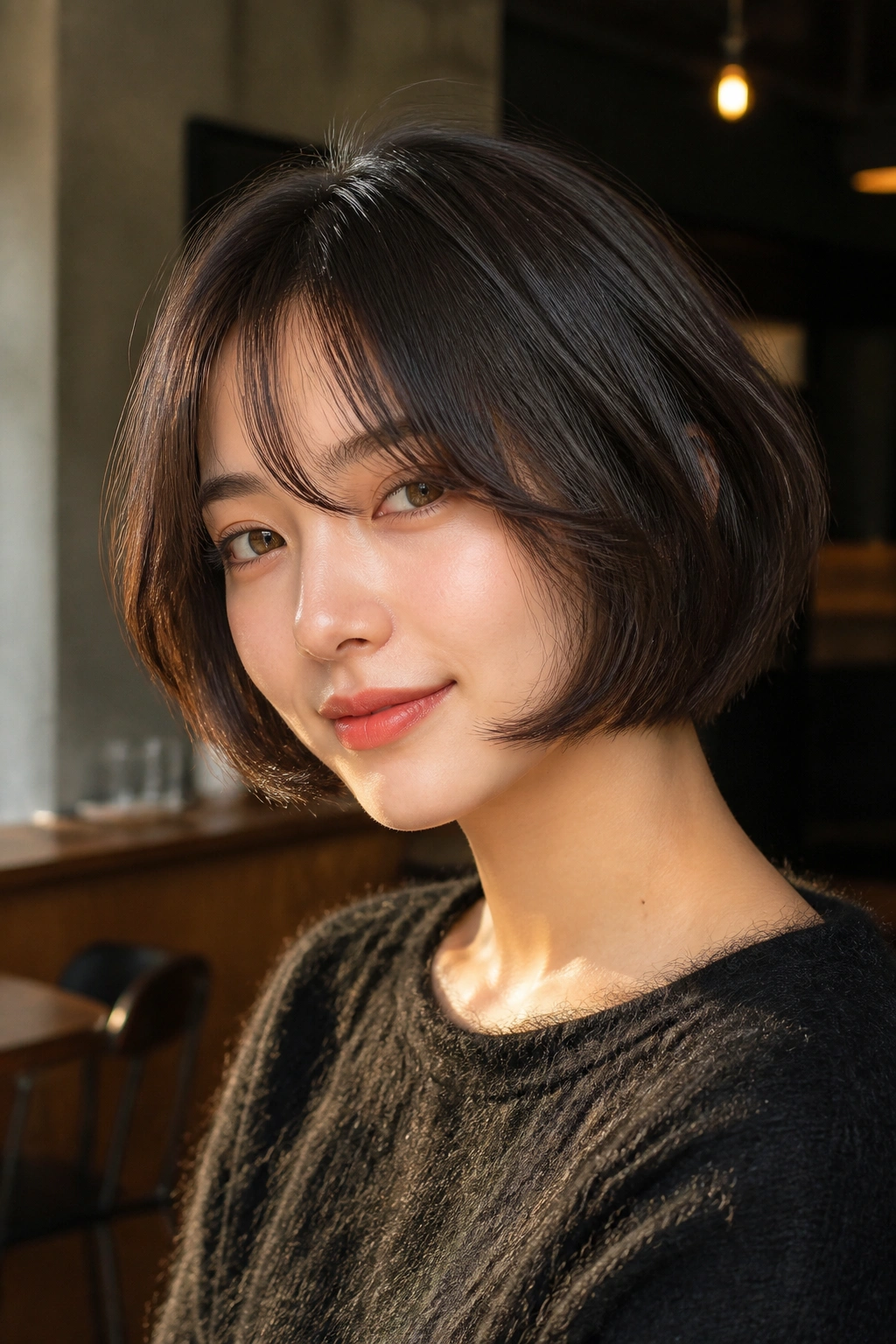
A chin-length bob can be a disaster on a round face if it’s cut too blunt and sits too square. A French bob avoids that problem by keeping the line soft, a little broken, and a touch shorter in the back.
The best version on Asian hair has light movement at the ends and enough air around the jaw that the face doesn’t feel trapped. The cut should graze the chin, not clamp onto it. If the hair is thick, a little internal debulking helps the bob sit closer to the head instead of swelling outward.
This style works because it shows off the neck and keeps the eye moving. Round faces usually benefit when the hair does not stop at the exact widest part of the face. The French bob breaks that rule in a smart way: it gives shape, but not heaviness.
One thing to watch for. If your hair is very straight and your stylist leaves the edge too clean, the bob can look boxy. A tiny bit of point cutting at the perimeter keeps it from feeling rigid. The goal is crisp, not severe.
5. Butterfly Cut with Face-Framing Pieces

The butterfly cut makes sense for women who want to keep length but still need the front of the hair to do some work. Butterfly layers create lift through the top half while the lower length stays long and soft.
Compared with a heavy one-length cut, this style is much kinder to a round face. The upper layers give that airy, floating effect near the crown, while the longer pieces pull the eye downward. That split is the whole point. You get movement up top without sacrificing the long line through the body of the hair.
The only part that needs careful handling is the face frame. If the shortest layers start too high, the cut can spread across the cheeks and make the face look wider. I’d rather see those front pieces begin around the cheekbone or a little below it. Then they can slide into the longer lengths without making a shelf.
This cut shines on straight Asian hair that tends to feel heavy when it’s all the same length. It also plays nicely with a soft blowout. If you like a little bounce at the ends, this is one of the most forgiving shapes on the list.
6. Textured Pixie with a Soft Side Fringe
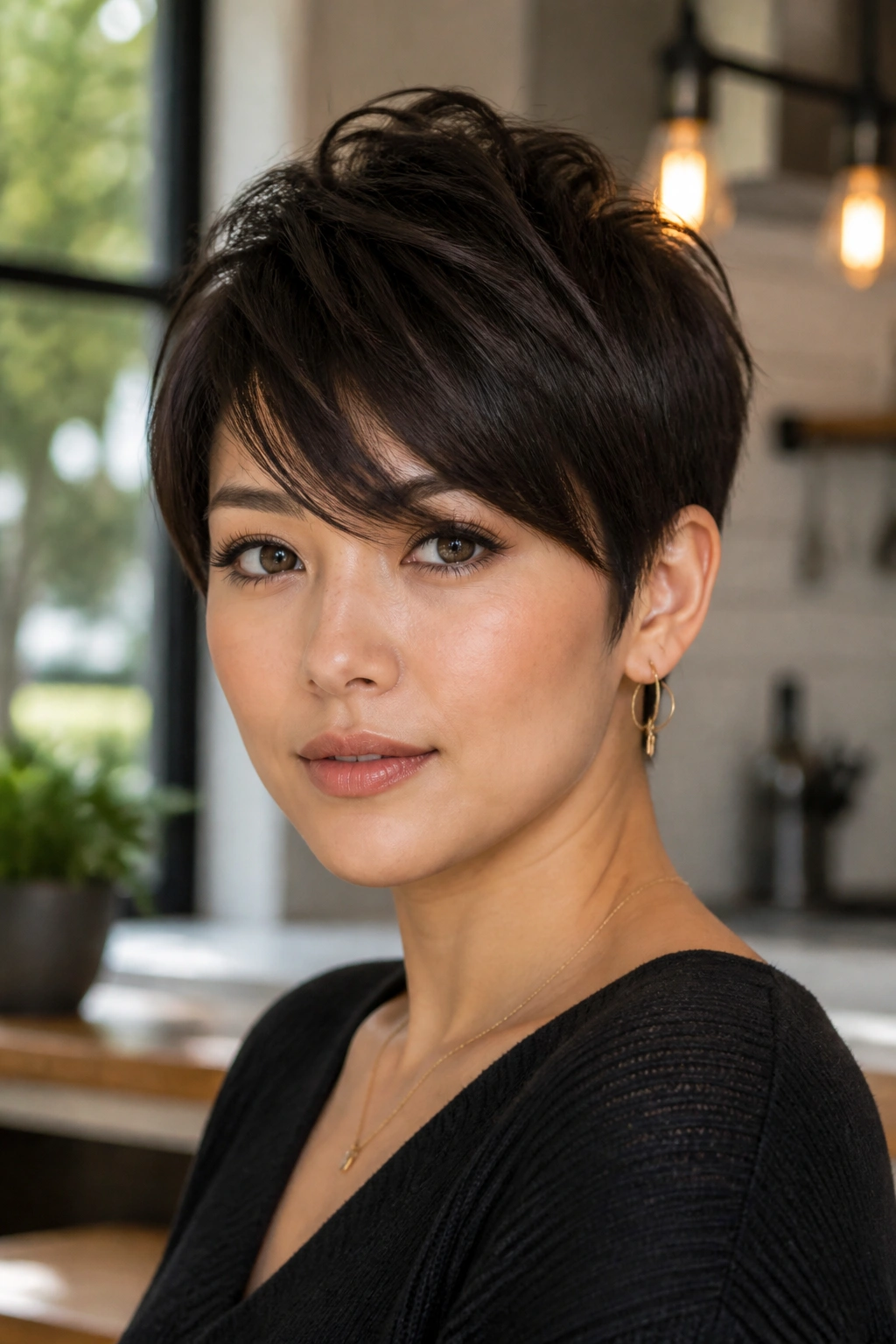
A pixie cut on a round face works only if it keeps some height on top. A textured pixie with a soft side fringe does exactly that, and it can look sharper than people expect.
What to Ask Your Stylist For
The top should be left a little longer than the sides. Think 2 to 3 inches on top, with a clean taper around the ears and nape. That extra length gives you lift, which matters because round faces need some vertical energy. A side fringe keeps the forehead from feeling too open and adds a gentle diagonal line across the face.
Why It Works
Very short cuts can expose every curve of the face. That’s not a bad thing, but the shape has to be intentional. A soft side fringe and a little crown height make the pixie feel tailored rather than harsh. If your hair is thick, ask for a bit of weight removal near the nape so the back doesn’t puff out.
- Best on straight to slightly wavy hair.
- Ask for textured ends, not choppy chunks.
- Keep the fringe long enough to skim one eyebrow.
- Style with a matte paste on dry hair for separation.
Best tip: don’t let the stylist take the sides too tight at the temples. That tiny bit of length near the temple keeps the face from looking wider.
7. Soft Wolf Cut
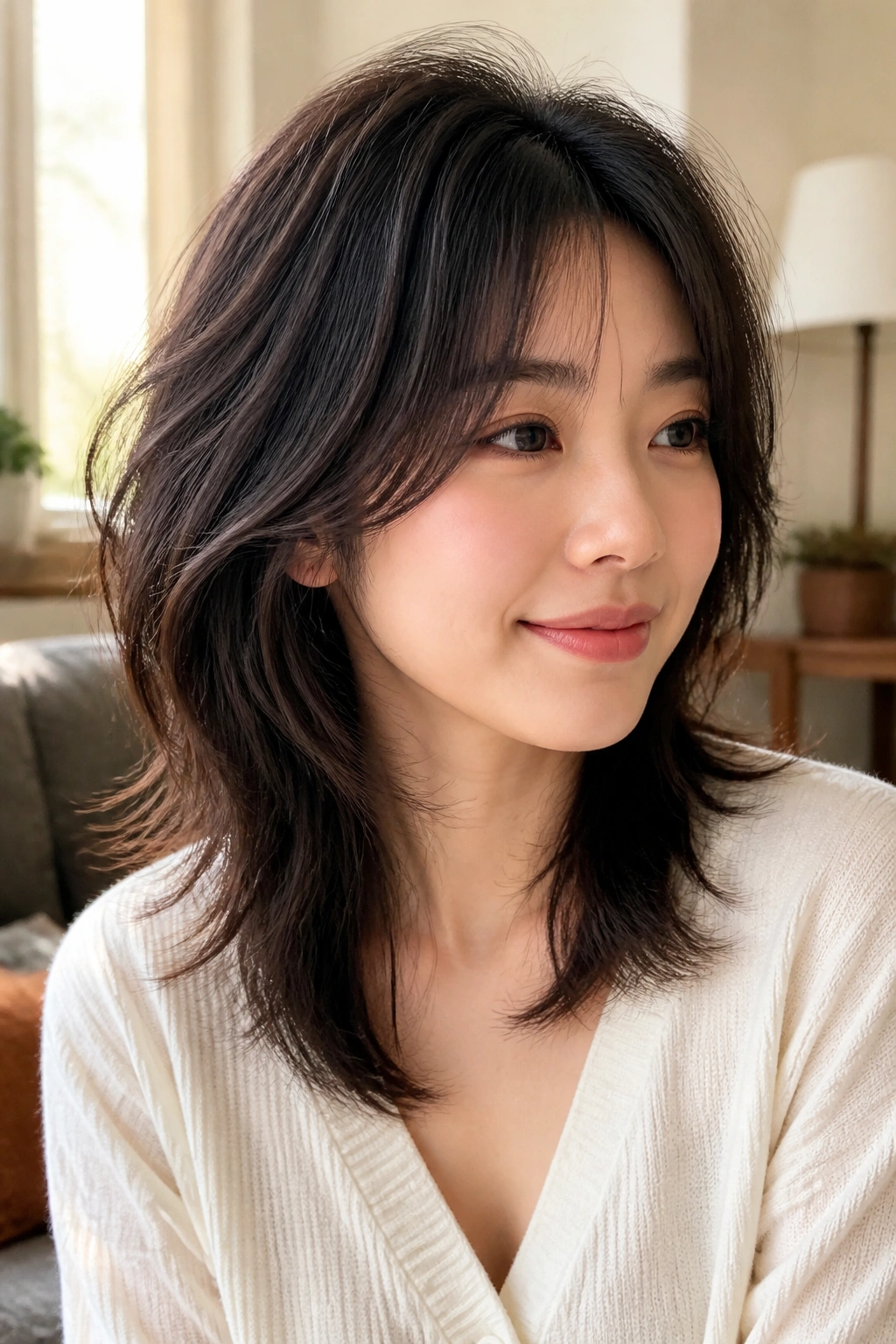
A soft wolf cut can be the most forgiving cut in this whole group—if it’s kept airy, not mullet-heavy. On a round face, the shape gives lift where you want it and keeps the perimeter long enough to stretch the outline.
The top section is where the magic happens. Shorter layers at the crown create height, and that helps because round faces often need more vertical line than horizontal width. The longer bottom section keeps the cut from getting too wild. On straight Asian hair, that balance matters. Without enough softness, the cut can feel stiff. Without enough length, it can look bulky.
The version I like best has a slightly longer face frame, not a sharp cheek-level chop. The front pieces should pass the jaw so the eye keeps dropping. If the layers hit right at the cheekbone, the style can add width. That’s the line you want to dodge.
This is not the cut for someone who wants a neat, polished finish every morning. It wants a little movement. A little mess is part of the point. If that sounds annoying, skip it. If you like a cut that looks better with touchable texture, it’s a strong choice.
8. Angled A-Line Bob
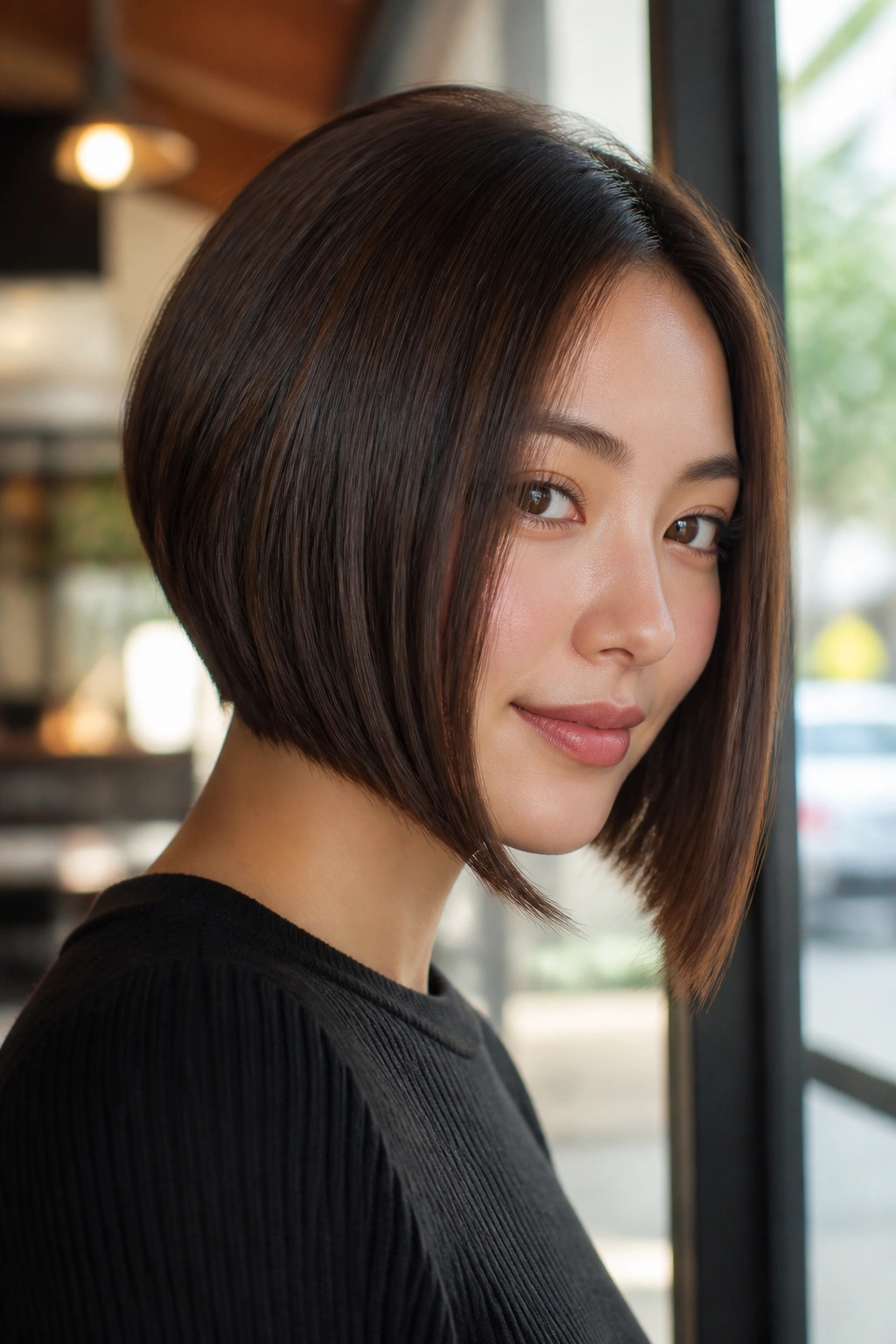
An A-line bob does a lot of quiet work on a round face. Shorter in the back, longer in the front is a simple formula, but it changes how the eye reads the whole head.
The angle pulls attention downward and forward instead of straight across. That means the face feels longer, not wider. On thick Asian hair, the shape also keeps the back from turning into a puffy block. That’s the part people sometimes miss. If the nape is stacked too high, the bob can balloon out and lose the clean line that makes it flattering.
Key Details That Matter
- Ask for the front to land below the jaw, ideally closer to the collarbone.
- Keep the back snug at the nape, but not over-stacked.
- Use a slight bevel at the ends so the front curves forward.
- If your hair is coarse, remove weight from the underside rather than slicing up the top.
This bob looks especially good with a smooth blow-dry and a side part, but it doesn’t have to be rigid. A soft bend through the front gives it a little swing. That swing is what keeps the haircut from feeling too severe.
9. U-Shaped Long Cut
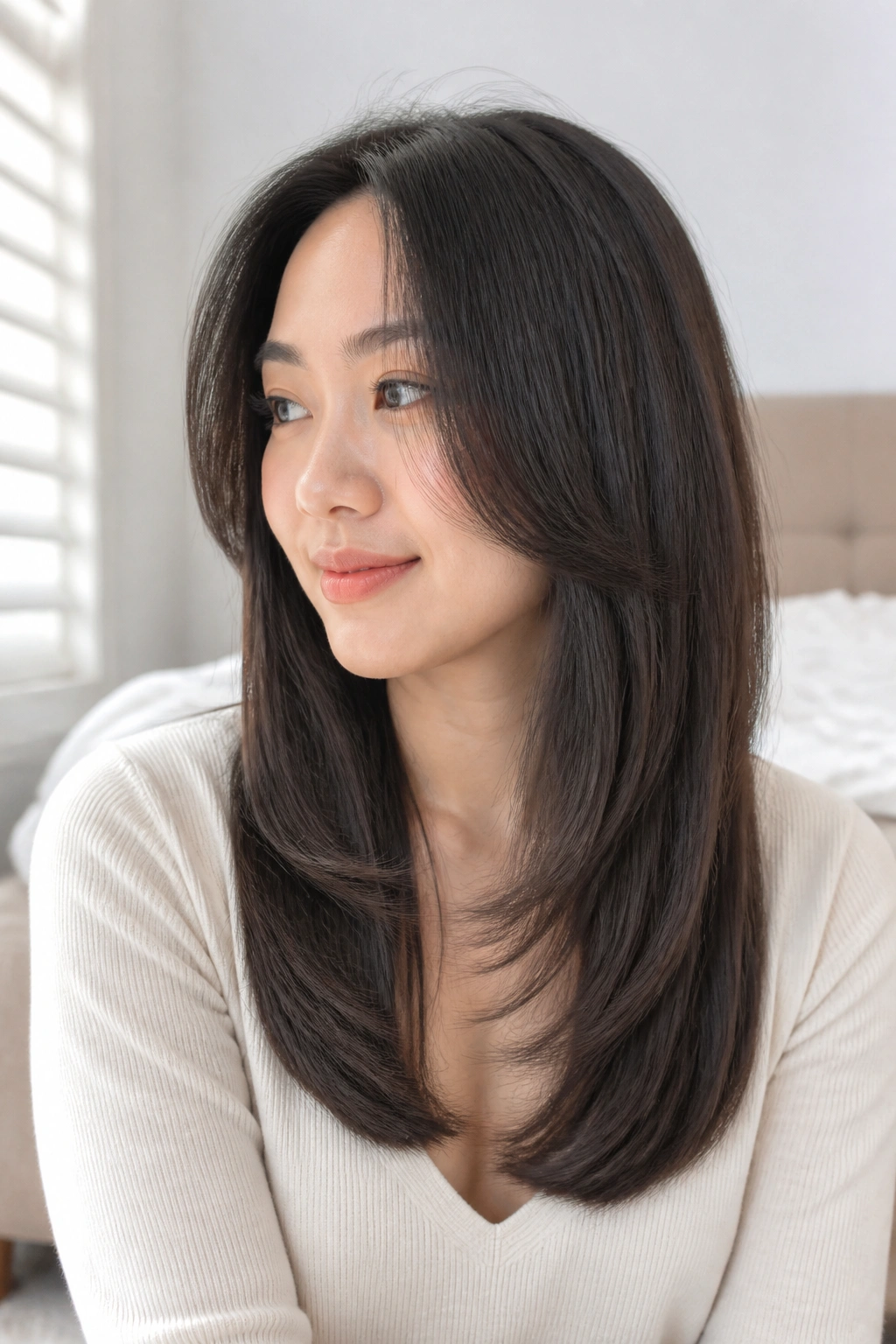
Do you want to keep your length? Then shape matters more than inches. A U-shaped long cut keeps the center longest and lets the sides taper just enough to avoid a heavy wall of hair.
Keeping It Light at the Ends
The U-shape is useful on round faces because it creates a gentle curve that falls past the cheeks. The sides do not sit blunt at the jaw. They lengthen the silhouette and keep the hair from stopping at one hard line. That makes a big difference on straight Asian hair, which can otherwise hang like a curtain.
If your hair is thick, ask for invisible long layers from under the ear down. Not a full layer job. Just enough to stop the ends from feeling like one giant slab. If your hair is fine, keep the cut cleaner and let the shape do the work.
The nice thing about this cut is how low-maintenance it can be. You can air-dry it with a little leave-in cream and still see the shape. A quick bend on the front pieces helps, but the cut does most of the work for you.
A U-shaped cut is quiet. That’s why it lasts.
10. Airy Blunt Bob with See-Through Bangs

A heavy blunt bob can box in a round face. An airy blunt bob with see-through bangs avoids that problem by keeping the line clean while softening the top.
The bangs are the whole difference. See-through bangs are thin enough to show a little forehead, which stops the face from feeling closed off. They also give the cut a lighter feel, especially on straight, dense hair. The bob itself should land just below the jaw, not right on it. That tiny shift matters more than most people think.
The ends should still have some texture. Not so much that the bob stops being blunt, but enough to keep it from looking like a helmet. A soft interior texture lets the hair move when you turn your head. That movement pulls the eye down and out of the cheeks.
This style is good if you like structure. It’s not fluffy, not shaggy, not overly romantic. It has a clean line, and the line is what gives the face a little definition. If your hair is very fine, this cut can make it look thicker. If it’s very thick, your stylist will need to take care not to widen the sides.
11. Shoulder-Length Shag with Invisible Layers

A shoulder-length shag can go wrong fast on straight hair, which is why I like the invisible layer version better. It keeps the movement, but it doesn’t leave obvious steps or choppy corners around the face.
The shoulder is a tricky place for a round face. If the hair lands exactly there and flips outward, it can add width where you least want it. That’s why the cut needs to be either a touch above the shoulder or a touch below, with some shape built into the sides. The best shag softens that problem by breaking up the silhouette.
Invisible layers work quietly through the mid-lengths. They keep the hair from feeling heavy without making the ends look thin. On straight Asian hair, this is a big deal. You get lift, but you don’t get the ragged texture that a harsher shag can create.
This cut also has a nice grown-out phase. It doesn’t fall apart after a few weeks. The layers blur a bit and the shape stays readable, which is more useful than chasing a cut that only looks good on day one.
One-sentence truth: a shag should move, not frizz.
12. Tapered Mid-Length Cut with Cheekbone Layers
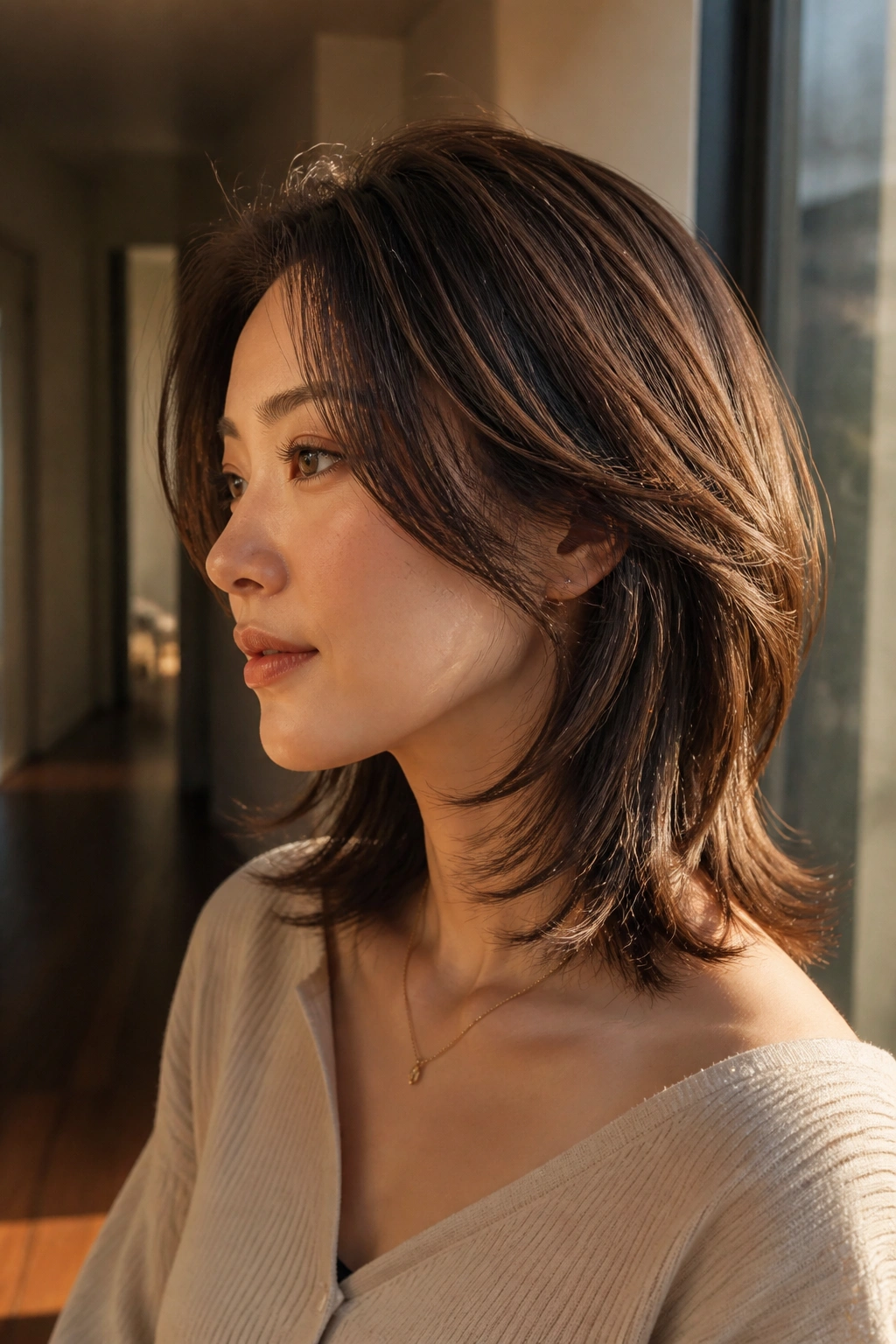
Mid-length cuts can be the smartest middle ground for round faces, especially when the layers are placed with intention. A tapered mid-length cut with cheekbone layers gives shape without asking you to give up too much length.
The Cut Line
The length usually sits between the chin and the shoulder, but the important part is the taper. The hair should feel fuller near the top and a little lighter as it falls. That keeps the head shape from reading wide. The face-framing pieces should start around the cheekbone, then drift down past the jaw.
What to Ask For
- Keep the first face layer at cheekbone height or slightly lower.
- Use point cutting on the front ends so they don’t look boxy.
- Leave the perimeter longer in back for a stretched-out profile.
- Ask for soft internal layers if your hair is thick and straight.
This cut is one of the easiest to live with because it works with a lot of everyday styling. A quick blow-dry gives it shape. Air-drying with a cream gives it softness. If you’re the kind of person who wants one cut to do multiple jobs, this is a strong candidate.
Best tip: if your face is fuller at the cheeks, push the shortest layer down a half-inch. That tiny adjustment can change the whole balance.
13. Layered Mixie

If you like edge but hate looking top-heavy, the mixie is smarter than it sounds. A layered mixie sits between a pixie and a shag, which gives a round face some lift without making the head look wide.
The shape is short enough to show the neck and jawline, but not so short that it loses softness. That balance matters. A round face usually benefits when there’s a little extra height near the crown and a little length left at the front. The mixie does both. It gives you that lifted, slightly undone finish without the bluntness of a classic crop.
Straight Asian hair can make a mixie look sharper than expected, so the layering needs to be deliberate. Too much top bulk and you get a mushroom shape. Too little and the cut falls flat. A good version keeps the crown textured, the sides neat, and the fringe soft enough to bend across the forehead.
This cut is for someone who wants personality in the haircut itself. It does not hide. It says something. If you want low-drama hair, skip it. If you want a cut that feels confident and a little punky, this is one to try.
14. Sleek Center-Parted Long Hair with Hidden Layers
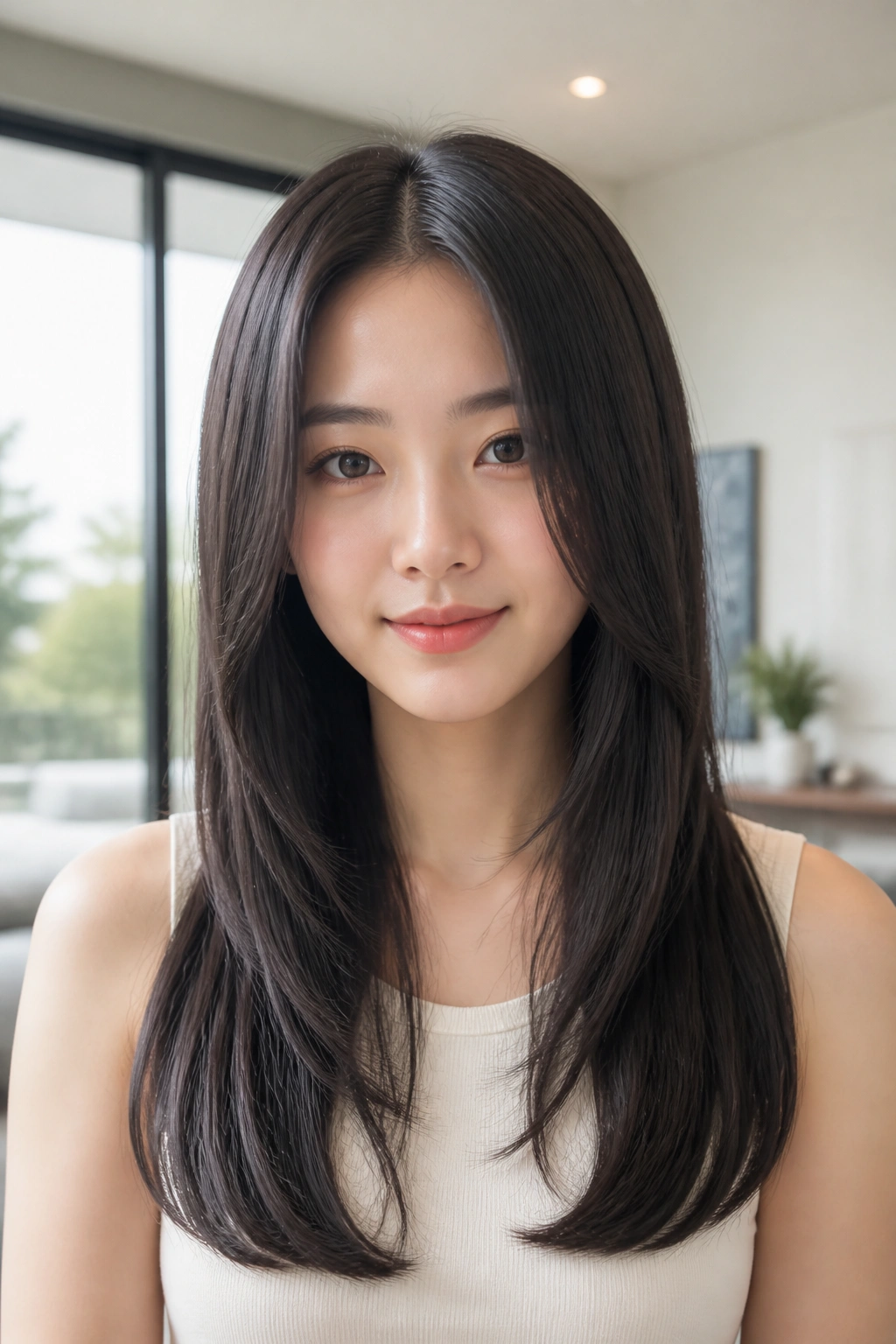
Can a center part work on a round face? Yes—if the hair underneath has enough shape. Sleek long hair with hidden layers gives you that clean middle line without making the face look broader.
The trick is keeping the front from hanging dead straight from the part. You want the first layers to begin low enough to fall past the cheeks and soften the jaw. Hidden layers do that without making the surface look choppy. On straight Asian hair, that’s useful because the shine stays intact while the silhouette gets lighter.
When the Center Part Helps
A center part looks strongest when the crown has a little lift and the hair falls past the cheek line. If the roots are flat and the front pieces stop at the cheekbone, the face can look wider. If the front pieces drift toward the collarbone, the shape gets longer and calmer.
When It Needs Help
- Add root lift at the crown with a blow-dry.
- Keep the front layers long enough to tuck behind the jaw.
- Use a light bend at the ends so the hair does not look severe.
- Avoid over-thinning the back; the silhouette should still feel full.
This is a polished choice, but not a boring one. The hidden layers keep it from feeling too plain.
15. Rounded Bob with Under-Curve Ends

A rounded bob sounds soft, and that’s the point. The under-curve end changes how the hair sits around a round face, pulling the line inward instead of letting it spread outward.
The cut should land below the chin, not on it. That detail matters. If the bob stops right at the jaw, the curve can add width. When the ends curve under and the line sits a little lower, the face looks more oval. It’s a simple illusion, but a useful one.
The under-curve works best when the bob is styled with a round brush or a small bend from a flat iron. You don’t need a big, bouncy flip. Just a clean inward direction at the ends. Straight Asian hair often holds that shape well, especially if the cut is slightly beveled.
- Ask for the bob to sit just below the widest part of the jaw.
- Keep the curve soft, not helmet-like.
- Remove bulk inside the shape if your hair is thick.
- Leave enough length to tuck one side behind the ear.
This is a good everyday haircut because it looks tidy even when you barely style it. Quiet cuts have their place.
16. Feathery Shoulder Cut with Side-Swept Bangs

A shoulder-length cut can feel awkward on a round face if it lands like one hard line. Feathery ends and side-swept bangs fix that by giving the hair a diagonal path instead of a straight stop.
This style works better than a plain shoulder cut because the bangs pull attention across the face rather than straight down the middle. Side-swept fringe softens the forehead and breaks up the width of the cheeks. Feathery ends do the same thing at the bottom. They keep the silhouette from feeling blocky.
It’s a strong option for coarser straight hair that needs some movement but not a ton of shaping. The cut does not need heavy layering. A little feathering around the ends is enough. If the layers go too short, the shoulder can puff up in the wrong place. That’s the mistake to avoid.
I also like this cut for people who wear their hair up half the time. The side fringe still looks good when you pin the rest back, which makes the haircut feel more useful than a style that only works one way.
17. Long Straight Cut with Bottleneck Bangs

Long, straight hair can be beautiful on a round face, but only if the front is doing more than sitting there. Bottleneck bangs are good at that because they start narrow in the center and widen as they blend into the sides.
The effect is soft around the forehead and cheekbone, which is exactly where round faces can use a little quiet structure. Unlike a thick blunt fringe, bottleneck bangs open the face instead of closing it off. On Asian hair that falls smooth and straight, that softness is a relief. You get shape without losing the clean line.
The long cut itself should stay tidy. Too many short layers can make straight hair look uneven. I’d rather see a controlled length with just enough internal movement at the ends. That keeps the hair sleek while still stopping it from looking flat.
One small note: these bangs need maintenance. Not every three days, but enough that they don’t split awkwardly or grow into your eyes. If you’re fine with trimming them every few weeks, the payoff is a face frame that feels elegant without trying too hard.
18. Soft Razor Lob with Face-Framing Flicks
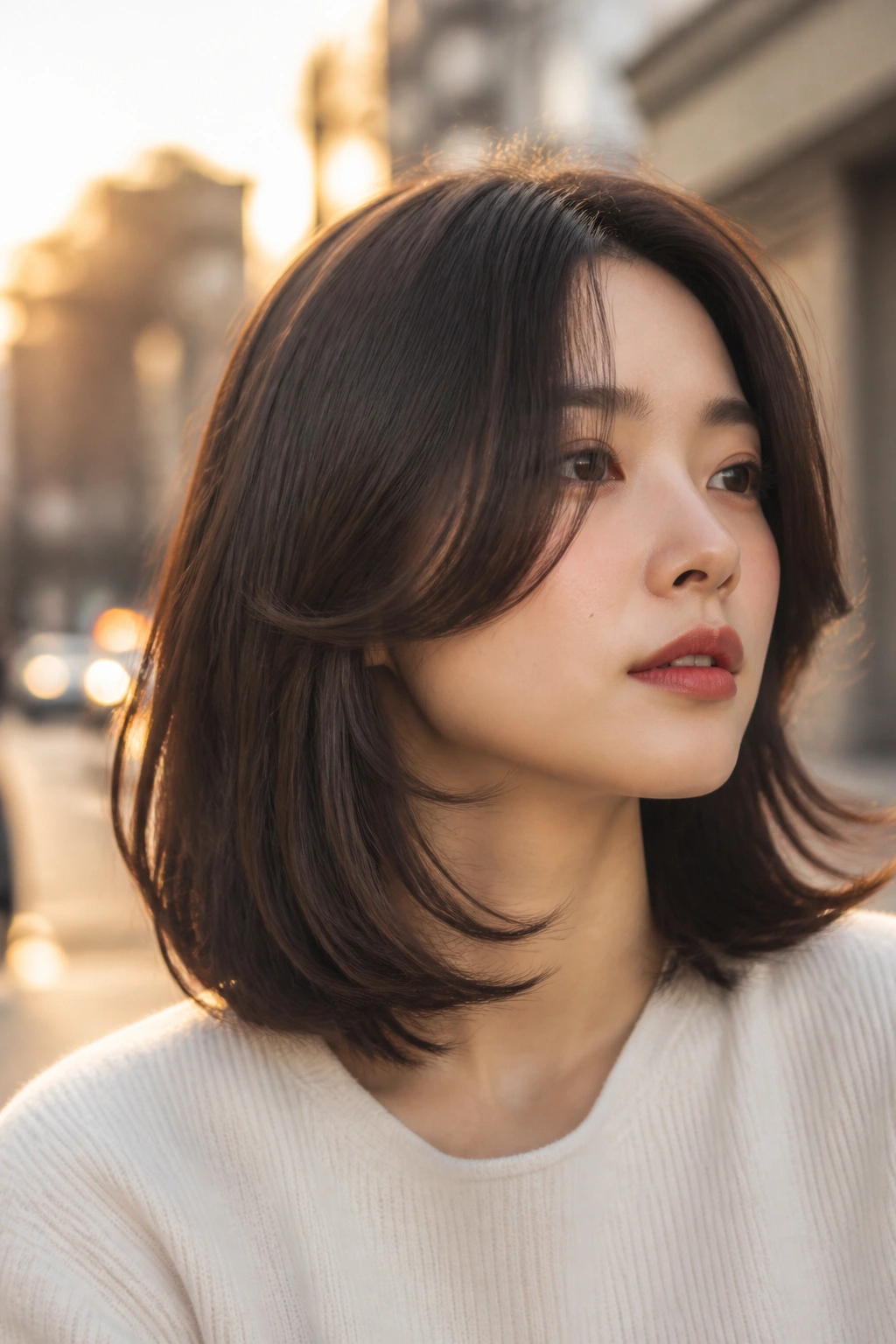
A razor lob sounds sharper than it looks. A soft razor cut removes bulk from thick straight hair and gives the ends a lighter fall, which can be a very good thing for a round face.
The face-framing flicks are the part that matters most. They should start low enough to skim past the cheeks and then turn slightly away from the face. Not curl. Not flip in a huge obvious way. Just a soft flick that keeps the front from sitting flat against the jaw. That little bit of direction gives the haircut motion and keeps the outline from feeling boxy.
This cut works well if your hair is dense and stubborn at the ends. A razor can take away weight without leaving a chunky step line, as long as it’s used carefully. If your hair is fine, ask for a softer razor touch or a combination of scissor and slide cutting. Too much razor work can make the ends look frayed.
If you’re choosing between a few options, this is one of the most balanced. It gives length, movement, and a little edge without asking you to live in a salon chair. Bring photos from the front and the side. The side view is where a good round-face cut proves itself.
