



A long face with a high forehead can make a haircut feel taller than it really is, which is why so many people start hunting for hair cuts for long faces with high foreheads after one disappointing salon visit. The wrong cut keeps pulling the eye straight up and down. The right one breaks that line, adds width where it counts, and makes the whole face look more balanced without looking forced.
Width beats height. That simple idea saves a lot of bad haircuts.
I’m usually looking for three things on this face shape: a fringe or part that interrupts the forehead, some fullness around the cheekbones or jaw, and a shape that doesn’t pile extra volume on the crown. A lot of people assume they need to hide the forehead completely. They do not. A softer interruption is often better than a heavy curtain of hair that feels stiff the second you leave the chair.
Hair texture matters too. Straight hair, waves, curls, and thick density all play this game a little differently, and a cut that looks perfect on one person can sit wrong on another if the layers are too high or the bangs start in the wrong place. The good news is that the basic geometry stays the same: shorten the forehead visually, widen the sides, and keep the top from going sky-high.
Some cuts do that with bangs. Some do it with a side part. Some rely on cheekbone-length layers, a bob that stops at the jaw, or a shag that puts movement where the face needs it most. The details are where the magic lives. And that’s where the best options start.
1. Curtain Bangs and Long Layers
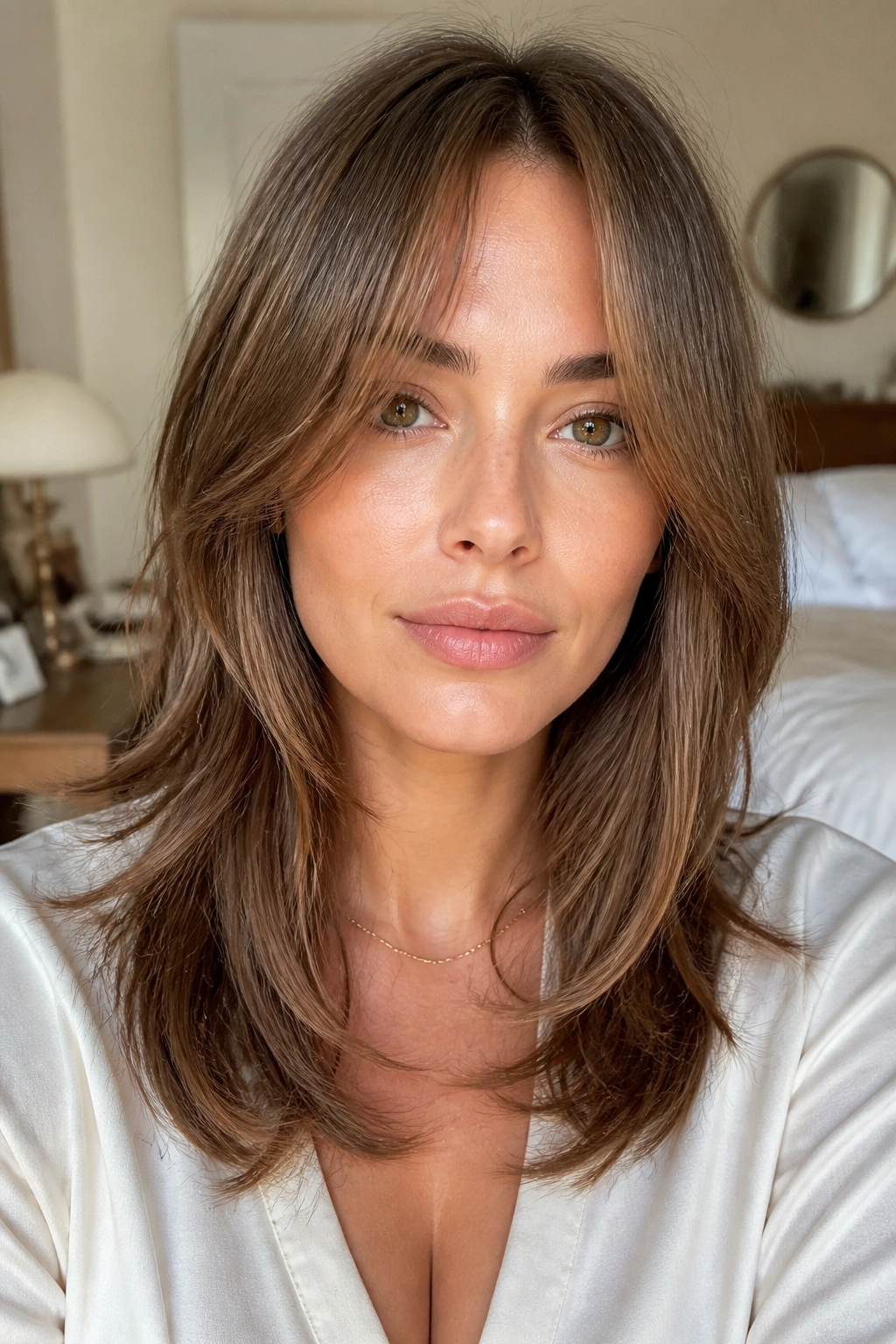
Curtain bangs are one of the easiest ways to soften a high forehead without making your haircut look heavy. They split the front of the face, which breaks up that long vertical line, and the longer pieces blend into the sides so the result feels relaxed instead of stiff. Pair them with long layers that begin around the collarbone, and the whole cut starts working with the face instead of stretching it.
Why It Works
The trick is placement. Curtain bangs should open near the center and fall wider toward the cheekbones, not sit as a blunt chunk across the forehead. That shape pulls attention outward, which is exactly what a long face needs. I also like layers that start low — around the chin or collarbone — because high layers tend to build width in the wrong place and can make the crown look even taller.
- Keep the shortest bang pieces around the eyebrow or just below it.
- Let the side pieces graze the cheekbone.
- Start the first long layer below the chin.
- Blow-dry the fringe away from the face with a round brush, not straight down.
Best tip: ask for bangs that still move when you push them aside. If they feel glued to your forehead, they’re probably too short or too dense.
2. Side-Swept Bangs and a Collarbone Lob
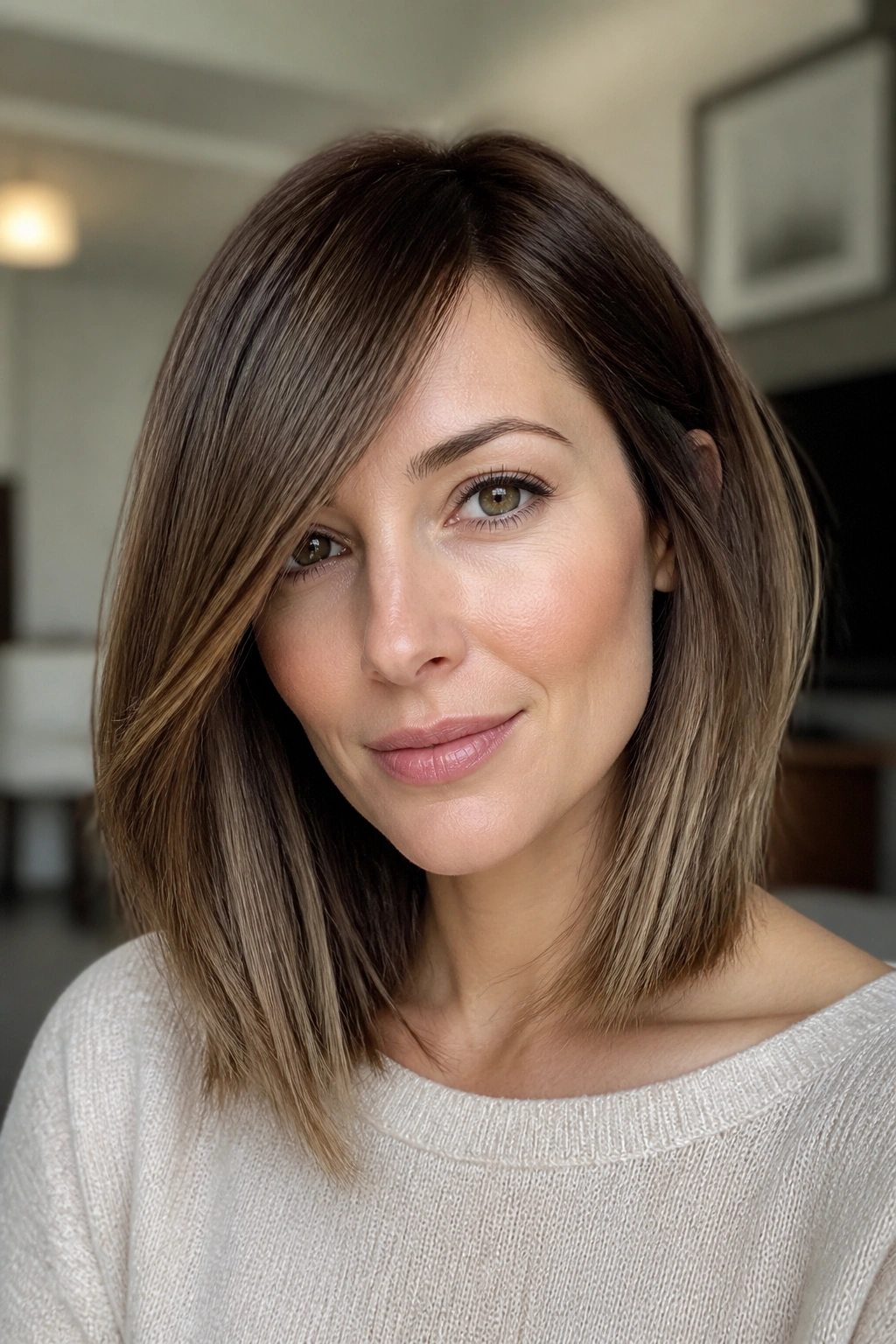
Why do side-swept bangs keep showing up on long faces? Because they do two jobs at once. They soften the forehead and they create a diagonal line, which is one of the easiest ways to make a face feel less vertically stretched. A collarbone lob gives you enough length to keep the style versatile, but not so much that the haircut drags everything downward.
The sweet spot is an off-center part with fringe that starts around the outer brow and sweeps toward the cheek. That keeps the forehead from reading as one big open shape. I like this cut for people who want bangs but don’t want a full commitment to a straight fringe. It grows out well, and it’s forgiving on days when you don’t want to style it much.
How to Ask for It
- A lob that lands right at the collarbone.
- Side bangs that begin near the brow tail.
- Soft ends, not a hard blunt edge.
- Enough weight at the sides to keep the face from looking narrow.
This cut is especially good if your hair has a slight bend. Straight hair can wear it too, but it benefits from a little body at the ends so the whole shape doesn’t go flat.
3. Blunt Bangs and a Sleek Mid-Length Cut
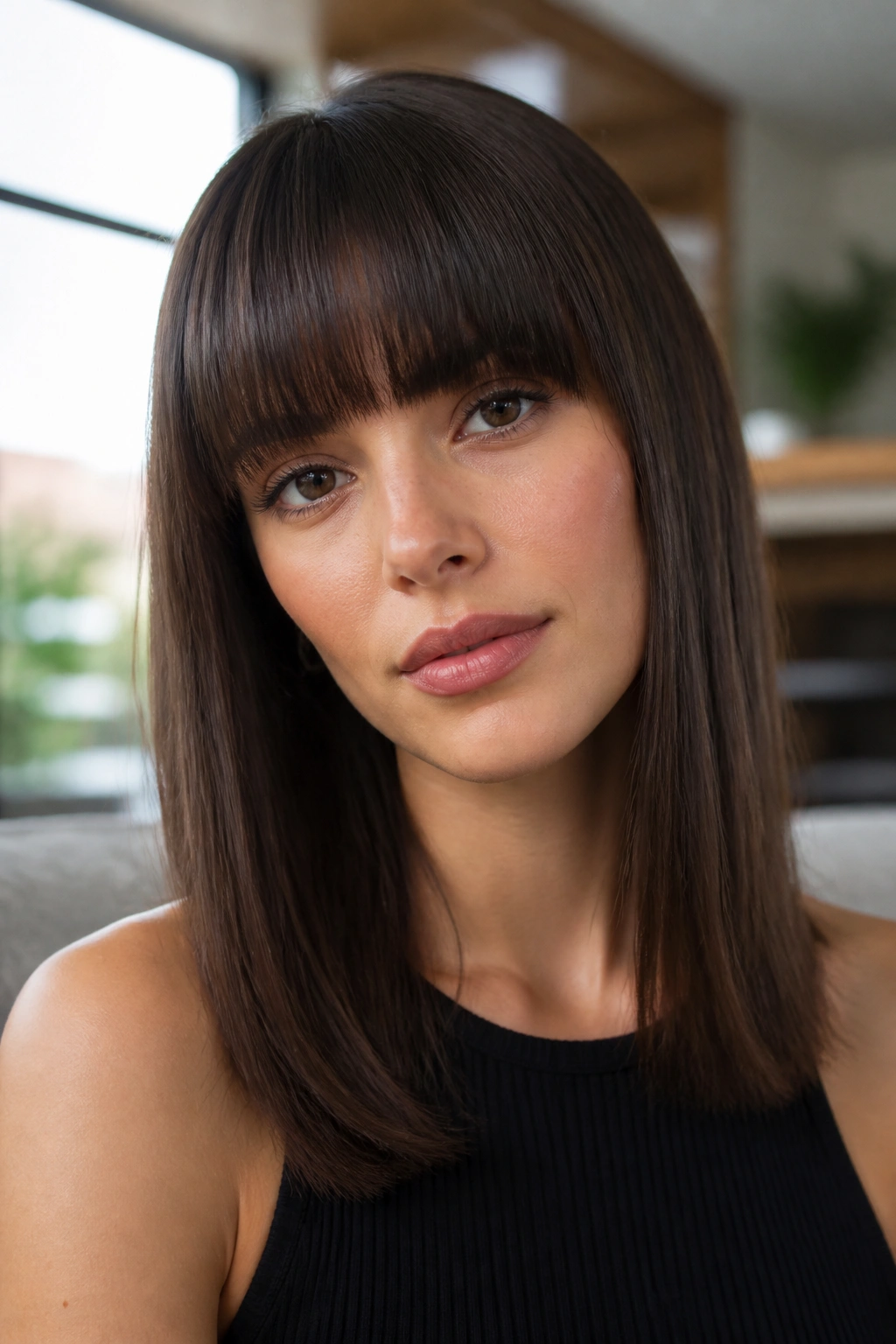
A blunt fringe can be a lifesaver on a high forehead if it’s cut with the right density and length. Too short, and it can feel severe. Too wispy, and it does nothing. The sweet spot is a clean line that sits around the brows or just kisses the lashes, paired with a mid-length cut that keeps the rest of the hair smooth and controlled.
I like this on straight or mostly straight hair, especially when the ends are cut around the shoulders instead of left long and heavy. The fringe takes the forehead out of the picture fast. The mid-length shape keeps the face from getting swallowed by hair. It’s a simple haircut, and that’s part of why it works.
One thing people miss: blunt bangs need enough density to look intentional. If your hair is fine and the fringe is too sparse, it can separate and show too much forehead anyway. That’s not the look.
- Best for straight to slightly wavy textures.
- Works well when the fringe is cut a touch longer while dry.
- Needs regular trims, usually every 4 to 6 weeks.
- Looks strongest with a clean center or soft off-center part.
Sharp does not have to mean harsh.
4. French Bob with an Airy Fringe

A French bob is short enough to change the whole mood of a long face, but not so short that it exaggerates the forehead. The shape usually sits around the jaw or just below it, which means the eye lands lower on the face instead of racing upward. Add a soft fringe — not a solid helmet of bangs — and you get a cut that feels balanced and alive.
I love this haircut on fine to medium hair because it creates the illusion of fullness without a lot of weight. The fringe can be broken up a little, so it doesn’t look boxy. The ends should move. They should never sit like a single stiff edge unless that is the exact look you want, and even then, I’d be cautious on a high forehead.
The real win here is proportion. The bob stops the face from looking endlessly long, while the fringe cuts the forehead into smaller sections. That combination can be elegant, easy, and a little bit cheeky. Very Paris, but without the costume feeling.
A small warning: don’t overbuild the crown. A French bob with too much lift on top loses the point. You want shape, not height.
5. Textured Shag with Eyebrow Bangs

Crowns can lie.
A shag sounds risky on a long face, but a textured shag with eyebrow-grazing bangs can be one of the smartest choices in the group. The reason is simple: the shag pushes movement outward and downward, which creates width through the sides instead of length through the middle. The bangs interrupt the forehead without closing the face off, and the layers keep the cut from looking too neat or too flat.
The Detail People Miss
The best shag for this face shape does not stack all the volume at the top. That’s the mistake. Keep the shortest layers around the cheekbones or upper lip area, then let the shape break up from there. If your bangs sit just at the brows, they can pull the eye down fast. If they’re too short, the forehead reads even bigger.
- Best on wavy or slightly coarse hair.
- Works well with a tousled blow-dry or air-dry routine.
- Needs texture around the sides, not just on top.
- Avoid cutting the crown too high unless the rest of the hair is very full.
I’m picky about shags for this reason. A good one gives balance. A bad one gives height.
6. Butterfly Cut with Cheekbone Pieces
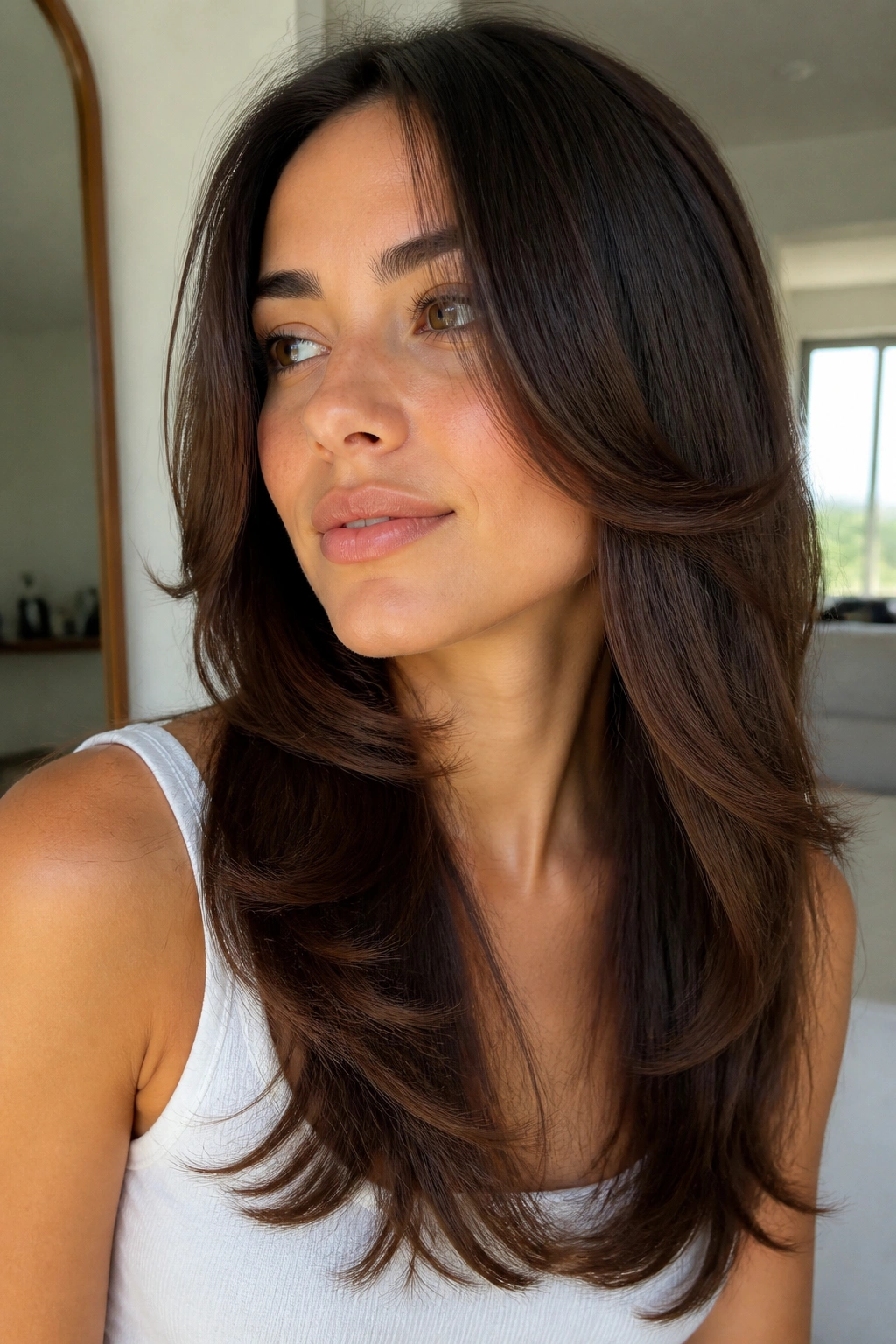
The butterfly cut is a smart middle ground if you want to keep your length but stop your hair from falling in one long, face-stretching sheet. The shorter layers sit around the top half of the hair, then the longer lengths keep the drama. On a long face with a high forehead, those cheekbone pieces do the heavy lifting. They widen the face right where it needs it.
Unlike a heavy one-length cut, the butterfly shape gives you movement without dragging the eye straight down. The shorter front sections frame the face, while the long lengths keep the haircut from feeling chopped up. That matters. If the layers start too high, the whole thing can start looking fluffy at the crown and thin at the ends.
This is one of the better options if you like blowouts. The shape almost asks for a round brush and a little bend away from the face. But it does not need to be polished to work. Even soft air-dried waves can show off the layering if the face frame starts around the cheekbone or just below it.
The key is not to over-layer the back. Let the front do the balancing.
7. Chin-Length Bob with a Deep Side Part
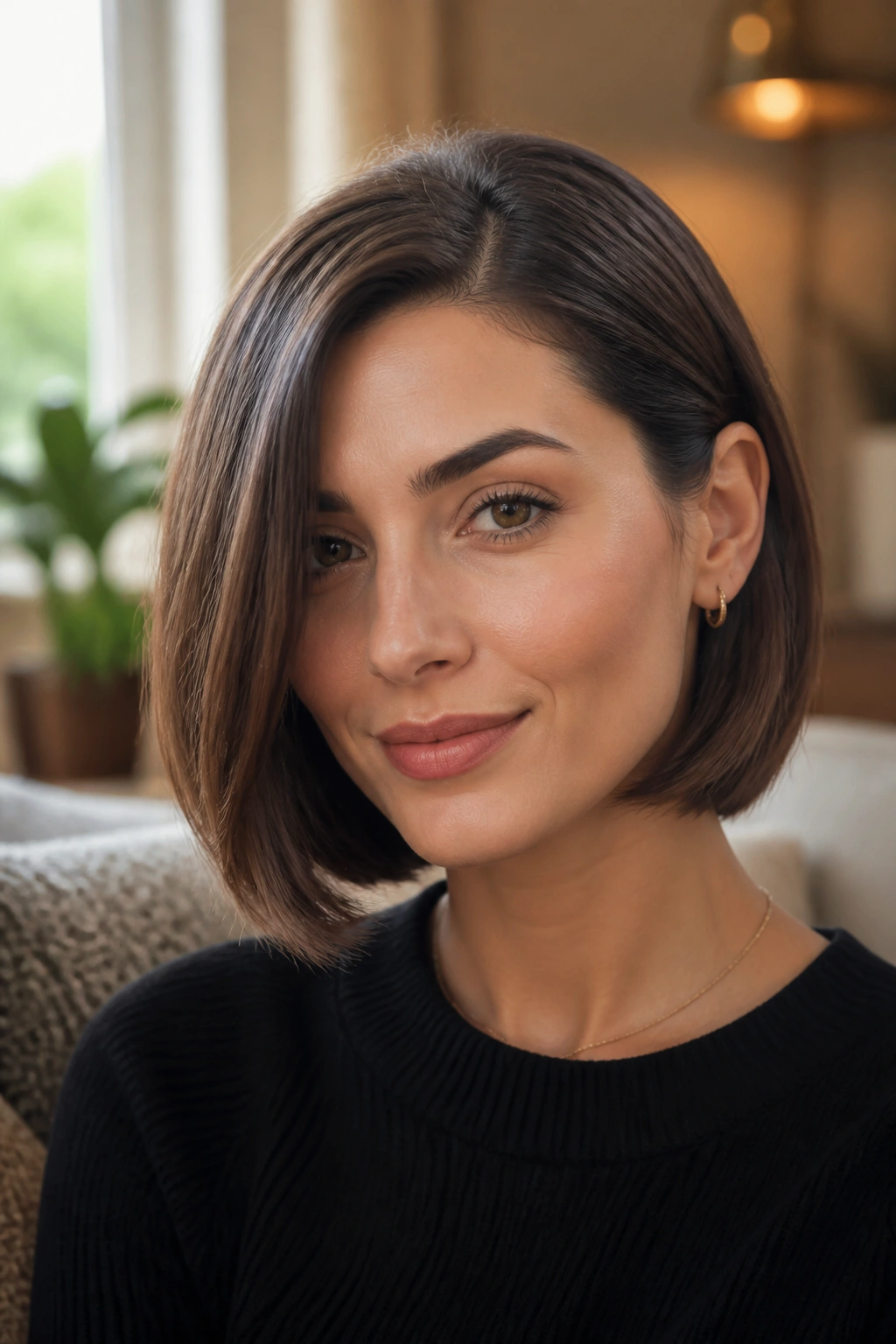
A chin-length bob puts a clean horizontal line right at the lower part of the face, and that helps a long face feel shorter. The deep side part does the rest. It breaks up the forehead and shifts the eye line, which is a huge help if your forehead feels like the first thing people notice.
This cut works especially well when the ends curve under a little or flick outward at the jaw. That gives the face width instead of extra length. A straight, flat chin bob can look too severe on the wrong person, so I prefer one with a bit of movement or tuckability. You should be able to wear one side behind the ear and still keep the shape interesting.
What the Side Part Does
The side part keeps the forehead from reading as one long open space, and it gives the top of the hair a little asymmetry. That asymmetry matters more than people think. It stops the haircut from feeling too centered and tall.
- Part the hair about 1 to 2 inches off center.
- Keep the bob at the chin or just above it.
- Add a soft bend at the ends, not a tight curl.
- Use a light root spray only if the hair is very flat.
This is a neat haircut. Clean, not fussy.
8. Razored Lob with Bottleneck Bangs

Why do bottleneck bangs keep getting attention on long faces? Because they’re narrow in the middle and wider at the edges, which means they interrupt the forehead without creating a hard shelf. The shape is softer than a blunt fringe and less fussy than some curtain bangs. Paired with a razored lob, the whole cut stays light and movable.
A razored lob is a good answer if your hair tends to feel thick or bulky around the ends. The razor takes out some weight, so the length doesn’t sit like a block. That is useful on a long face, because a heavy block can make the face look even longer. You want the opposite: movement at the side, not a curtain dropping straight down.
How to Ask for It
- Bangs that start narrow between the brows.
- Softer width at the outer edges.
- A lob that hits the collarbone or a touch above it.
- Razored ends only through the lower lengths, not the crown.
This one is elegant in a low-key way. It does not scream for attention. It just fixes the proportions.
9. Long Waves with a Wide Side Part

Sometimes the smartest haircut is the one that keeps your length but changes how the hair sits on the face. Long waves with a wide side part do exactly that. The waves add width around the cheekbones, and the part breaks the forehead into a smaller visual section. That combination can be enough to make a long face feel balanced without cutting much hair off.
This works best when the waves start around the mid-lengths, not from the roots. Root-to-tip waves can get too fluffy on top, and that pulls the eye upward. Keep the lift lower. A 1-inch iron, wrapped away from the face, gives a cleaner wave than a loose crimp or overly tight curl. Leave the ends a little straighter if you want the shape to feel modern rather than prom-heavy.
You can also cheat a little with a face-framing piece that begins around the nose or cheekbone. That’s a tiny adjustment, but it helps. The point is not to hide the forehead. The point is to give the face something to look at besides vertical length.
This is a good one for people who hate a full fringe.
10. Modern Pixie with a Long Top and Side Fringe

Short hair can work beautifully on a long face, but it has to be shaped with care. A modern pixie with a long top and side fringe keeps the forehead from taking over while still giving you that sharp, clean feel. The fringe should fall to one side and sit long enough to skim the brow line. The top should have movement, but not so much height that the face feels stretched.
Key Details That Matter
- Keep the fringe long enough to sweep, not spike.
- Leave some fullness near the ears.
- Ask for texture on top, not a tall pompadour shape.
- Keep the sides soft so the cut doesn’t get boxy.
I like this cut on people who want something low-maintenance in spirit, even if the styling takes a few minutes. It can be finger-styled with a bit of paste, or brushed forward with a touch of cream. The important thing is to keep the shape horizontal enough to counter the face length.
One-sentence truth: too much height ruins a pixie on this face shape fast.
11. Soft Mullet with a Tapered Fringe

A soft mullet sounds like a bold choice, but the softer version is surprisingly flattering on a long face. Why? Because it keeps volume around the sides and lower back while using a tapered fringe to cut the forehead down visually. The shape is less round than a shag and less strict than a bob, which gives it room to balance a high forehead without looking precious.
The best version is feathered, not choppy. The fringe should sit light on the forehead, and the sides should graze the cheekbones or jaw. That keeps the haircut from becoming top-heavy. If the crown is puffed up too much, the face length gets emphasized again. If the sides are too skinny, the whole point disappears.
Who It Flatters
This cut tends to work well on thick hair, wavy hair, and anyone who likes a little edge without a heavy styling routine. It also grows out in a way that can look intentional for a while, which is handy if you do not want constant trims. If you like texture and dislike hair that sits stiffly around your face, this one deserves a look.
It is not the safest haircut here. It is one of the most interesting.
12. A-Line Bob with Hidden Side Volume

The angle matters more than the drama. A-line bobs can look severe on paper, but on a long face with a high forehead, the forward angle can actually be a gift. The front stays longer and pulls the eye outward, while the shorter back keeps the cut from looking heavy. If you add volume behind the cheeks — not at the top — the shape becomes even more balanced.
I’ve always liked this cut on straight hair because it keeps a crisp line without making the face look narrow. The front pieces should sit somewhere between the jaw and collarbone, depending on how much length you want to keep. The back can be tidy and compact. That contrast is what gives the haircut its shape.
One practical note: the side volume has to stay low. If it gets puffed up too high, the head starts to look taller, and that is not the goal. A little bend with a round brush or a flat iron can create the right width without bulk.
This is a haircut that looks more considered than complicated.
13. Shoulder-Length Cut with Curtain Fringe and Flipped Ends

Shoulder length is a sweet spot for this face shape because it gives the hair enough weight to fall around the face instead of flying straight up. Add curtain fringe and flipped ends, and you get width at both the forehead and the lower half of the face. The result feels soft, balanced, and easy to wear.
What to Tell the Stylist
- Keep the length right at the shoulders.
- Start the curtain fringe around the brow and cheekbone.
- Add just enough layering for movement.
- Leave the ends full enough to flip out with a brush or iron.
The flipped ends are not a tiny detail. They widen the silhouette in a way that helps a long face more than a pin-straight edge does. You do not need dramatic curl. Even a subtle outward bend can do the job. The fringe keeps the forehead from dominating, and the shoulder length keeps the cut grounded.
This is one of the most forgiving choices if you want a cut that still works when you rush out the door. It behaves.
14. U-Shaped Long Cut with Internal Layers

A long cut can work on a long face, but only if it has some shape inside it. A U-shaped perimeter helps because it softens the bottom line instead of creating a hard straight drop. Internal layers keep the hair moving so it does not just hang like a curtain from the crown to the ribs.
That matters a lot for a high forehead. If the top is flat and the length is all one shape, the face can look even longer. A U-cut lets the hair curve around the body a little, which gives the eye a place to rest. It’s subtle. It’s also one of the few long-hair choices I trust when someone refuses bangs.
Best on medium to thick hair, this cut can lose shape if it is too heavily thinned. I’d rather keep the lower lengths full and adjust the layers inside the cut. That way, you still get movement without exposing too much scalp or making the ends wispy.
If you want long hair and balance, this is a solid route.
15. Piecey Crop with Micro Bangs
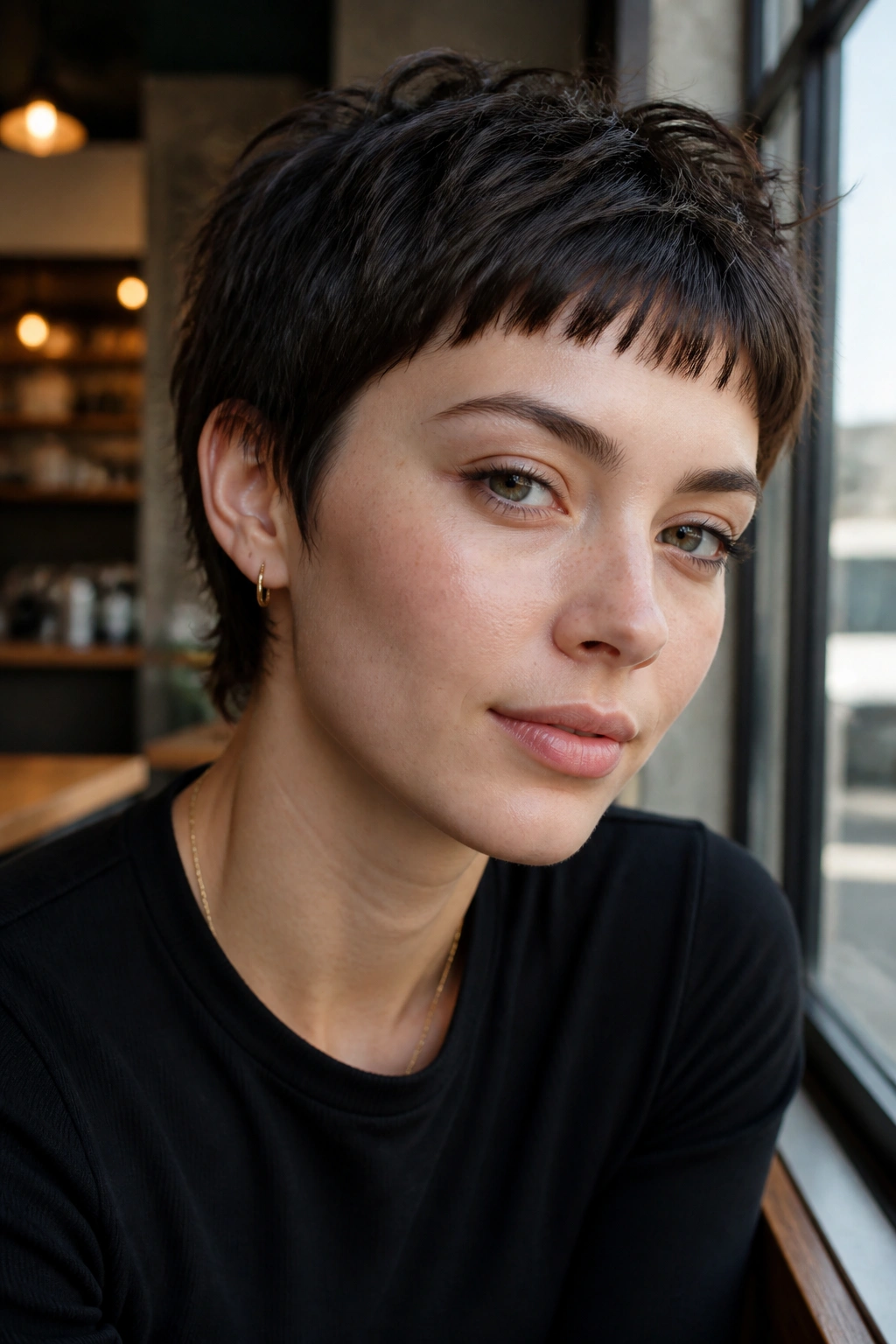
Can micro bangs work on a long face? Yes, but only when they’re piecey and soft enough to keep the forehead from looking boxed in. A hard, blunt micro fringe can pull the face into a strange proportion fast. A textured one, though, can be sharp and flattering, especially if the rest of the cut has width at the temples or around the ears.
This is not a quiet haircut. It has personality. The short fringe shortens the forehead fast, and the crop keeps the overall length from dragging down the face. The key is to keep the pieces separated a little so the line does not feel like a wall. That makes a bigger difference than people expect.
The Trick
- Keep the fringe light and separated.
- Leave texture around the temples.
- Avoid too much volume on top.
- Ask for point-cutting or soft razoring, not a blunt shelf.
I’d call this one a confident choice. If you like hair that reads intentional and a little sharp, it can be brilliant. If you want something softer, skip it.
16. Straight Blunt Cut with an Eye-Skimming Fringe

A straight blunt cut looks especially good when the fringe lands right around the eyes. That little strip of hair changes the whole face. It chops up the forehead, adds structure, and keeps a long face from looking stretched. The blunt line on the ends also stops the hair from thinning out too much, which helps balance the length.
This works best if your hair is naturally straight or easy to blow smooth. A blunt cut can go limp if the ends are too soft or overlayered, and that would defeat the point. Keep the edge clean. Let the fringe do the work.
There’s also a nice contrast here: a strong line below, a soft interruption above. That contrast looks fresh without needing a lot of styling tricks. I’d avoid too many face-framing layers with this one, because the fringe already gives you the forehead break you need.
A good blunt cut should feel tidy the second you dry it. Not rigid. Just clean.
17. Layered Mid-Length Cut with a Deep Side Sweep

If you want movement but hate the idea of actual bangs, this is the cut I’d keep on the short list. A layered mid-length shape with a deep side sweep gives the forehead some cover without forcing a fringe across it. The layers can begin around the cheekbone or lip line, which helps widen the face right where the structure needs support.
Where the Shortest Layer Should Sit
The shortest layer should not jump up near the temples. That’s too high for a long face. Keep it lower, so the shape frames the middle of the face and lets the rest fall away from the jaw. That makes the haircut feel softer and less vertical.
This cut works especially well on wavy hair, because the side sweep and the layers can move together instead of fighting each other. Straight hair can wear it too, but it benefits from a little bend at the ends so it doesn’t collapse into a straight curtain. A side sweep also buys you flexibility on days when you want more forehead coverage and days when you don’t.
It is a practical cut. I respect that.
18. Bixie with Long Crown Texture
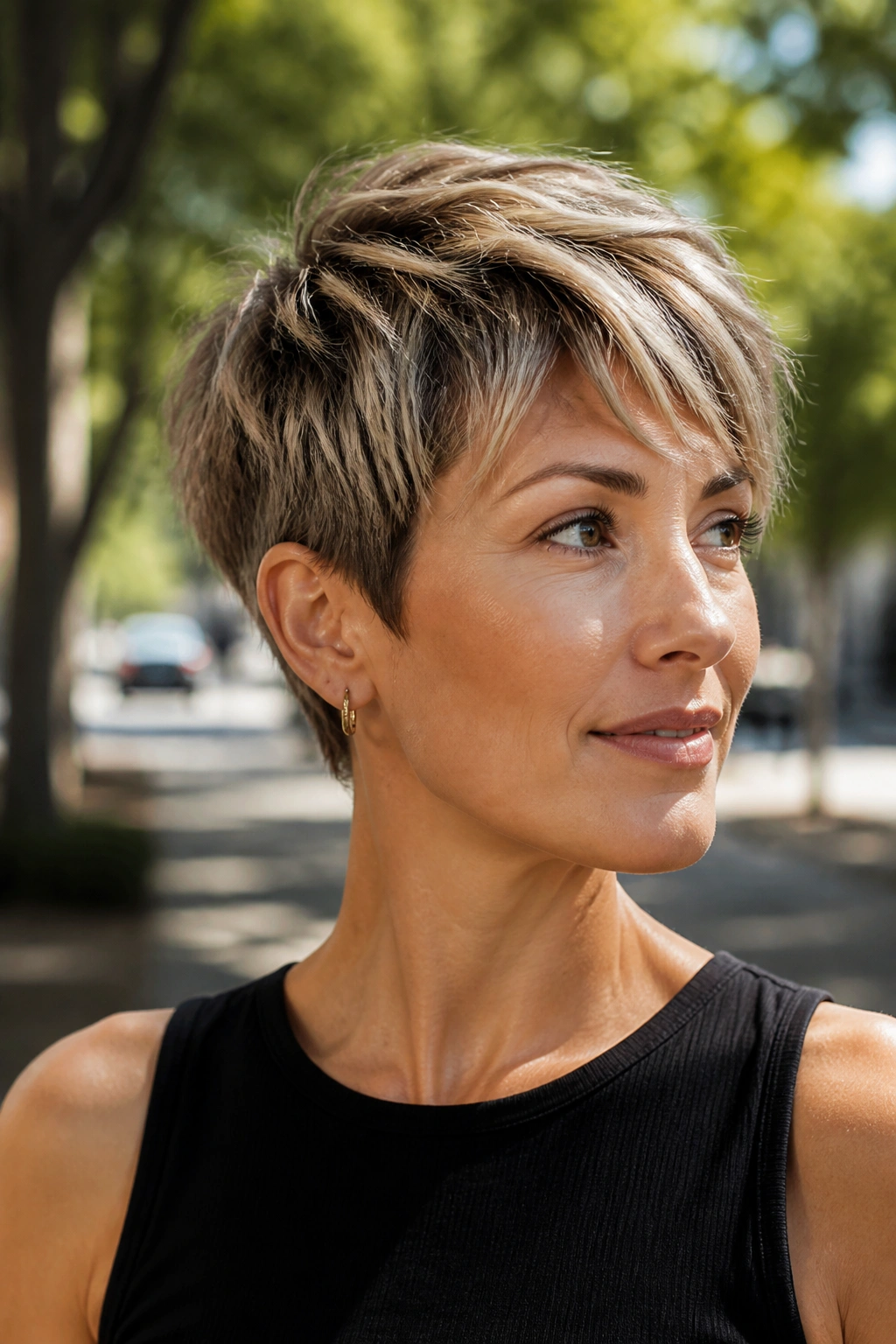
The bixie sits between a bob and a pixie, and that in-between length is exactly why it can flatter a long face. You get the openness of short hair without the severe height problem that some pixies create. The long crown texture can be directed forward or to the side, which helps soften the forehead and keep the cut from feeling too airy on top.
I like this one because it creates width around the temples and ears, where a long face needs it most. The edges should stay soft, and the top should never be pushed straight up unless you want more length showing through the face than you probably need. A bit of bend, a bit of piecey movement, and the shape starts to make sense.
What Makes It Different
- Short enough to feel fresh.
- Long enough to sweep across the forehead.
- Soft around the ears, which helps the face look broader.
- Easy to style with cream or light paste.
The bixie is not for everyone. But when it works, it really works.
19. Wavy Lob with Face-Framing Bends

A wavy lob is probably the easiest haircut in this group to live with. It gives you length without the vertical drag, and the waves add side-to-side movement that helps a long face feel wider. If you want to soften a high forehead without wearing bangs every day, this is one of the smartest choices.
The face-framing pieces should start lower than people often think — around the nose, mouth, or cheekbone, depending on your density. Too high, and the shape can look overcut. Too low, and the frame misses the point. I usually like a slight bend that curves away from the face, not a tight curl that stacks up around the cheek.
This cut also plays nicely with air-drying. A little mousse, a light twist, and some scrunching at the ends are often enough. If you use heat, keep the wave loose and leave the roots calmer. That keeps the top from looking too full.
This is a quiet winner. Easy, balanced, and not fussy.
20. Long Shag with Wispy Bangs

A long shag with wispy bangs is the kind of cut that gives a long face shape a break without taking away the length people often want to keep. The bangs soften the forehead, but they do it lightly, which matters if you do not want a heavy fringe. The shag layers build movement around the sides and lower lengths, so the face gets width instead of extra height.
The important part is restraint. The wispy fringe should feel light, not sparse. The layers should live mostly around the cheekbones, jaw, and below, not pile all the energy at the top. That keeps the haircut from becoming too tall or too fluffy near the crown. If your hair is naturally wavy, this cut can fall into place with very little work. If it is straight, a quick bend with a brush or iron brings the shape out.
This is the cut I’d point to if someone wanted one style that feels lived-in, face-flattering, and not overly precious. It gives a long face structure without trying to hide everything. That part is the whole trick.
