



Round faces don’t need to be hidden behind long hair. They need shape.
That’s the whole game with short haircuts for women with round faces: create a little more vertical line, break up the curve at the cheeks, and keep the silhouette from puffing out exactly where the face is widest. A cut can be short and still feel sharp, slim, and deliberate. It can also go wrong fast. A blunt, chin-level bob with too much side volume can make the face look fuller than it is, and nobody wants that surprise in the mirror.
The good cuts do one or more of three things: add height at the crown, build a diagonal line across the face, or leave length where it helps most, usually around the jaw or below it. Texture matters, too. Flat, uniform ends tend to sit heavy. Piecey ends, soft layering, or an offset part gives the cut some movement and keeps it from reading as one big circle.
A round face can wear a pixie, a bob, a shag, or a cropped curly cut. The trick is picking the right version of each one. And that’s where the details start to matter.
1. Angled Chin-Length Bob

An angled bob is one of those cuts that looks simple until you notice what it’s actually doing. The front sits a little longer than the back, which pulls the eye downward and keeps the face from feeling boxed in. On a round face, that slight forward tilt makes a bigger difference than people expect.
Why the Angle Matters
The back can sit right at the nape, while the front drops to the jaw or just below it. That diagonal line breaks up softness around the cheeks, and it feels cleaner than a blunt, even bob. I like this cut most on straight or lightly wavy hair, because the angle stays visible instead of disappearing into texture.
- Best for fine to medium hair that needs shape.
- Looks sharp with a deep side part.
- Works well with a smooth blowout or a flat iron bend at the ends.
- Ask for the front pieces to hit below the widest part of the cheek.
Tip: Keep the ends clean, not wispy. The shape should look crisp, not shredded.
2. Side-Swept Pixie
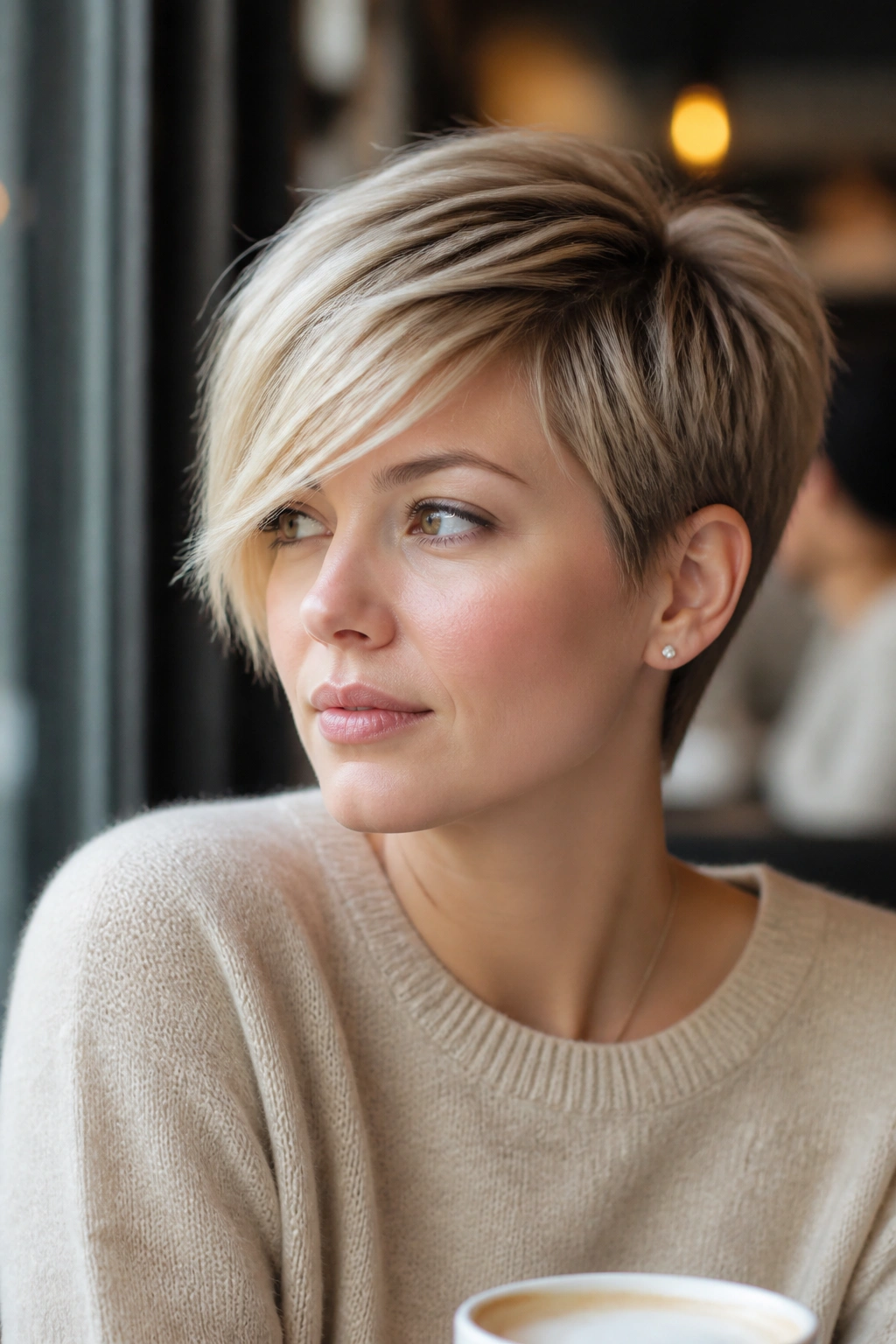
A side-swept pixie is sneaky-good on round faces. The long fringe creates a diagonal line across the forehead, which helps interrupt the roundness without making the cut feel severe. It’s short, yes, but it still has direction.
The best version leaves a little lift on top and keeps the sides close. That combination adds height where you want it and removes bulk where you do not. If you like low-fuss styling, this one is hard to beat. A pea-sized amount of matte paste, worked through dry hair, is usually enough.
The biggest mistake is cutting the fringe too short and too even. That turns the whole thing into a helmet. Keep it a touch longer on one side, and let it fall softly across the brow. It’s a small detail, but it changes the whole face.
3. French Bob With Soft Fringe

Why does a French bob work when so many blunt cuts don’t? Because it’s usually cut with a little air in it, not as a hard line. The length sits near the lip, chin, or slightly under, and the fringe is softer than a thick, flat bang. That keeps the style light enough for a round face.
How to Style It
The fringe should skim the forehead instead of sitting in one dense block. If the bangs are too heavy, the face can start to look shorter. If they’re broken up a little, they frame the eyes and let the rest of the cut do its job.
This cut looks best with natural movement. A loose wave, a bend from a round brush, or even a tiny bit of texture cream through the ends keeps it from looking stiff. I would skip this version if your hair is very thick and wants to puff out at the cheeks unless your stylist removes some internal weight.
It’s chic, but not fussy. That matters.
4. Textured Crop With Longer Crown
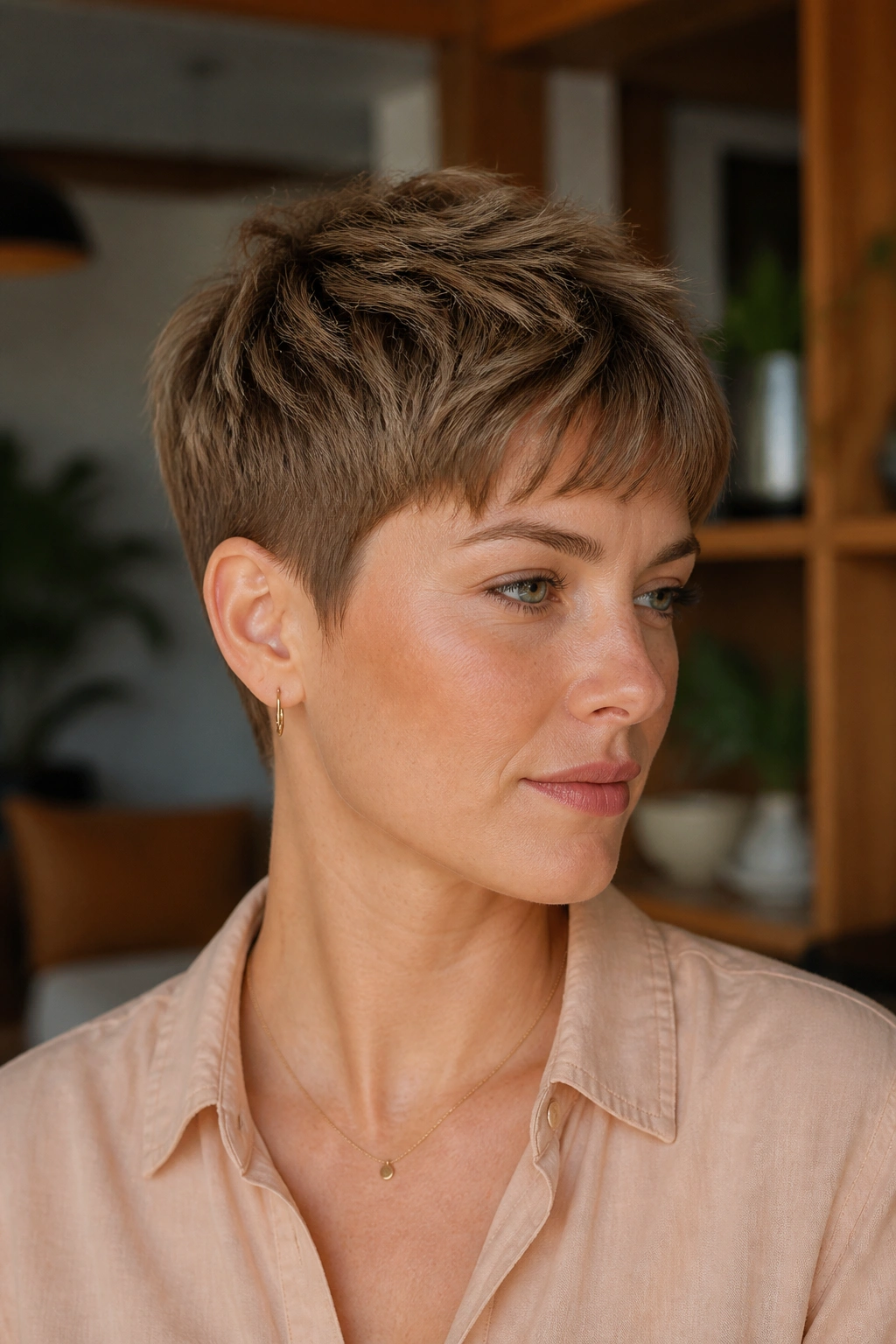
Picture a crop that’s close at the nape and ears, then a little longer and messier through the top. That shape does a lot for a round face because it pushes the eye upward instead of outward. It also gives you a little attitude, which I always think helps short hair look intentional.
A good textured crop depends on the crown. Leave enough length there to make a soft ridge, not a flat cap. The sides should stay tidy so the top can do the talking. This is a strong cut for thick hair because it removes bulk fast.
- Ask for a tapered nape.
- Keep 2 to 3 inches on top for movement.
- Use a light styling cream or paste, not a heavy gel.
- Best when the texture looks piecey, not fluffy.
One warning: if the top is cut too short, the face can feel wider. The crown needs room.
5. Shaggy Layered Bob

A shaggy bob is one of the easiest ways to soften a round face without losing shape. The layers break up the outline, especially around the cheeks, so the cut doesn’t sit like one solid shape. On wavy hair, it can look effortless in the best sense of the word.
The key is to keep the layers uneven enough to move, but not so choppy that the sides balloon out. That’s the line. You want the ends to flick and fall, not stand out from the head like a triangle. A bit of mousse at the roots and a quick air-dry can do more here than a fussy blowout.
I also like this cut for people who hate perfect hair. It looks better with a little mess in it. That slightly undone finish keeps the roundness from feeling emphasized, because the eye reads texture instead of outline.
6. Asymmetrical Bob

Unlike a standard bob, an asymmetrical bob gives the face a built-in diagonal. One side is longer, usually by an inch or two, and that tiny imbalance pulls the eye away from the widest point of the face. It’s simple geometry, and it works.
The best part is that it can be as subtle or dramatic as you want. A small difference in length feels polished. A bigger one feels bolder. Either way, the cut brings movement to a face shape that benefits from movement.
This is one of my favorite options for straight hair because the line shows clearly. If your hair has a natural bend, a round brush and a bit of smoothing cream will keep the longer side sleek while the shorter side stays tucked behind the ear. That tucked-ear trick matters more than people think.
A round face does not need more width. It needs a direction. This gives it one.
7. Bixie Cut
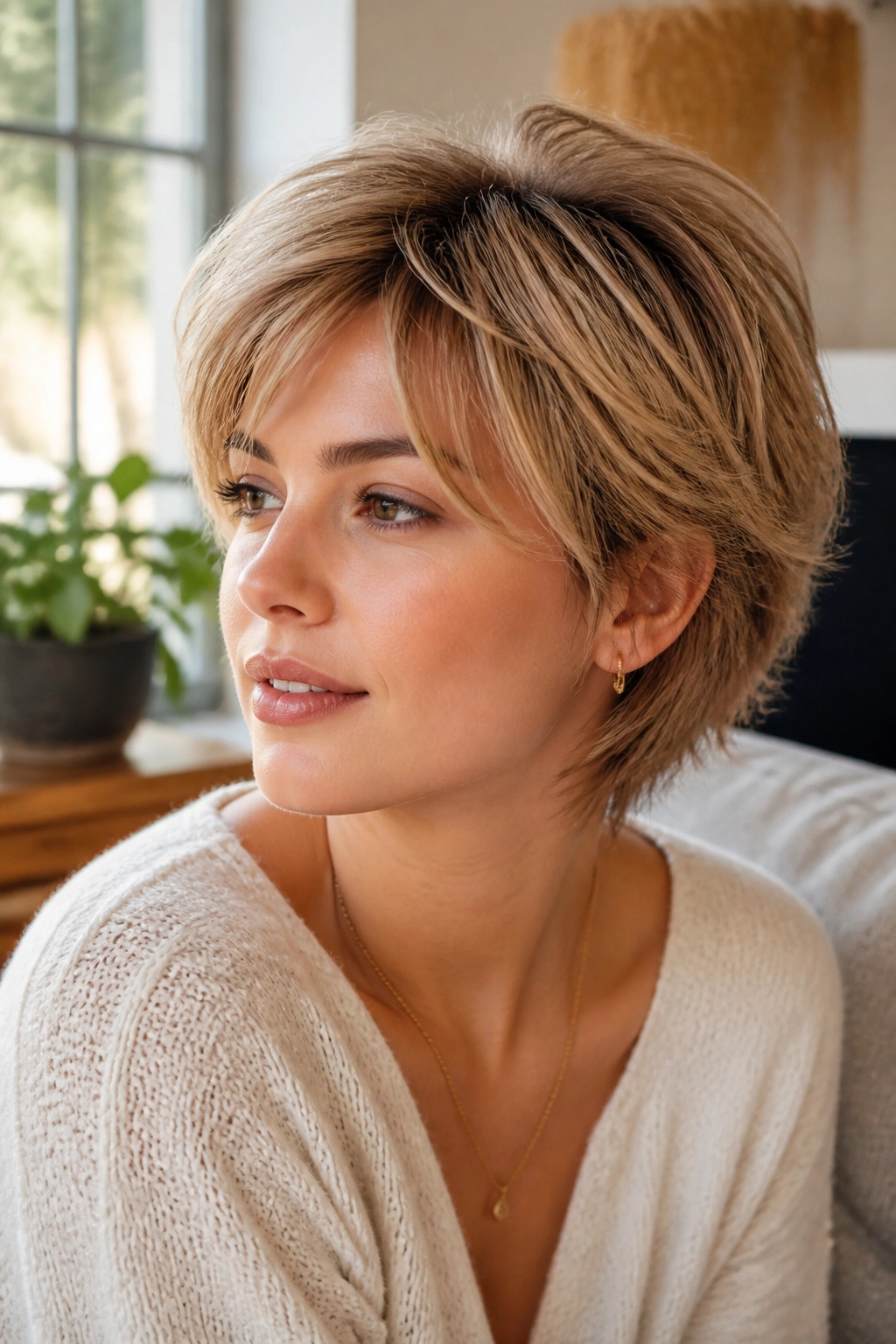
A bixie sits between a bob and a pixie, and that middle ground is exactly why it flatters round faces so well. It keeps enough length to feel soft, but the shape is still short and lifted. The result is lighter around the cheeks and fuller through the crown.
What Makes It Different
The bixie usually has feathered edges, a slightly longer top, and ears that are partly covered rather than fully exposed. That makes the face look a little longer without committing to a full pixie. It’s also forgiving on hair that doesn’t want to sit perfectly flat.
- Best for people who want short hair without going severe.
- Easy to style with a small round brush or fingers.
- Works well on fine hair that needs volume.
- Ask for a soft nape and longer crown layers.
If you’re nervous about short hair, this is a smart bridge cut. It has edge, but not shock value. That balance is why it keeps showing up in salons.
8. Jaw-Skimming Blunt Bob With a Deep Side Part

A blunt bob can absolutely work on a round face. The catch is placement. If it ends right at the cheeks and sits evenly on both sides, it can widen the face. If it skims the jaw and leans hard into a side part, the whole effect changes.
The deep part creates lift on one side and a cleaner line on the other. That asymmetry is doing real work. It keeps the cut from reading as one circular shape. On straight hair, this looks especially sharp, almost tailored.
I’d avoid this version if your hair is naturally very thick and full at the sides, unless your stylist removes weight underneath. Otherwise, the bob can swing outward and fight you. It wants a smooth finish, not too much puff.
One clean line. One deep part. That’s the move.
9. Curly Crop With Tapered Sides

Why do curls need a different plan? Because curl width can expand at the sides faster than straight hair does. On a round face, that extra width can make the cut feel wider than intended, even when the curls themselves are gorgeous.
How to Get It Right
Keep the sides tapered and the top a little longer. That lets the curls stack upward instead of flaring out at the cheekbones. A curl cream with a medium hold works better than heavy butter, which can weigh the shape down and blur the outline.
The diffuser matters here. Dry the curls with your head tilted slightly forward or to the side so the root lift stays visible. You do not want the curl pattern flattened at the crown. That’s where this haircut earns its keep.
A curly crop is smart, lively, and far more flattering than a lot of people expect. It just needs a shape built around the curl, not against it.
10. Stacked Bob With Hidden Graduation
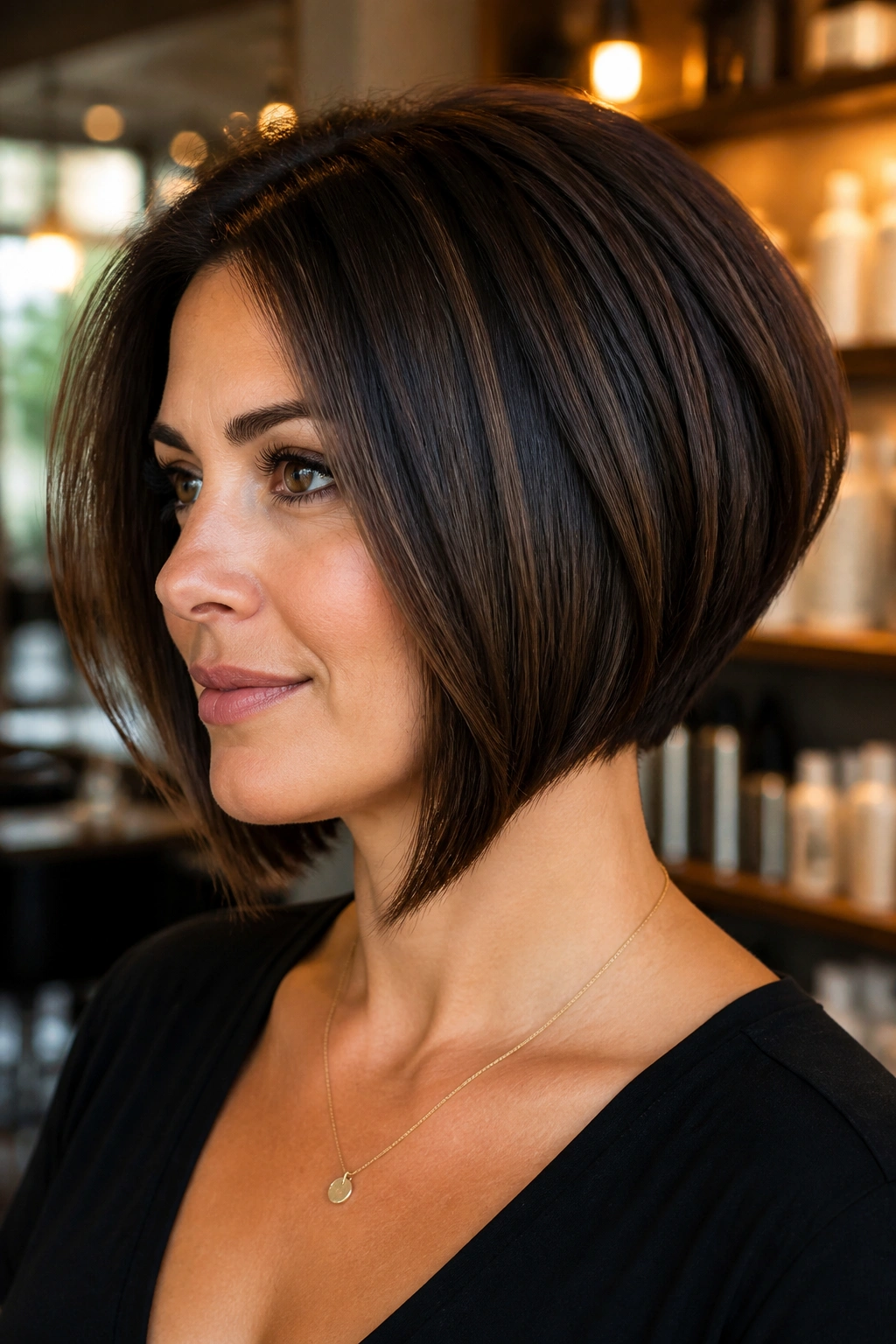
A stacked bob is a back-heavy cut, which sounds technical but is really about lifting the nape and building the shape upward. The back is cut shorter in layers, and the front stays longer. On a round face, that structure adds height and slims the profile a bit.
The trick is to keep the graduation hidden enough that it looks smooth, not puffy. If the stacking is too extreme, the back can turn into a little shelf. Nobody wants that. What you want is a rounded back that hugs the head and lets the front pieces fall forward with purpose.
- Great for fine hair that falls flat.
- Best with a blowout brush or a smoothing cream.
- Ask for the front to land below the chin.
- Avoid heavy layering at the cheeks.
This cut has a tidy, polished feel. It’s one of those styles that makes the neck look longer without trying too hard.
11. Undercut Pixie
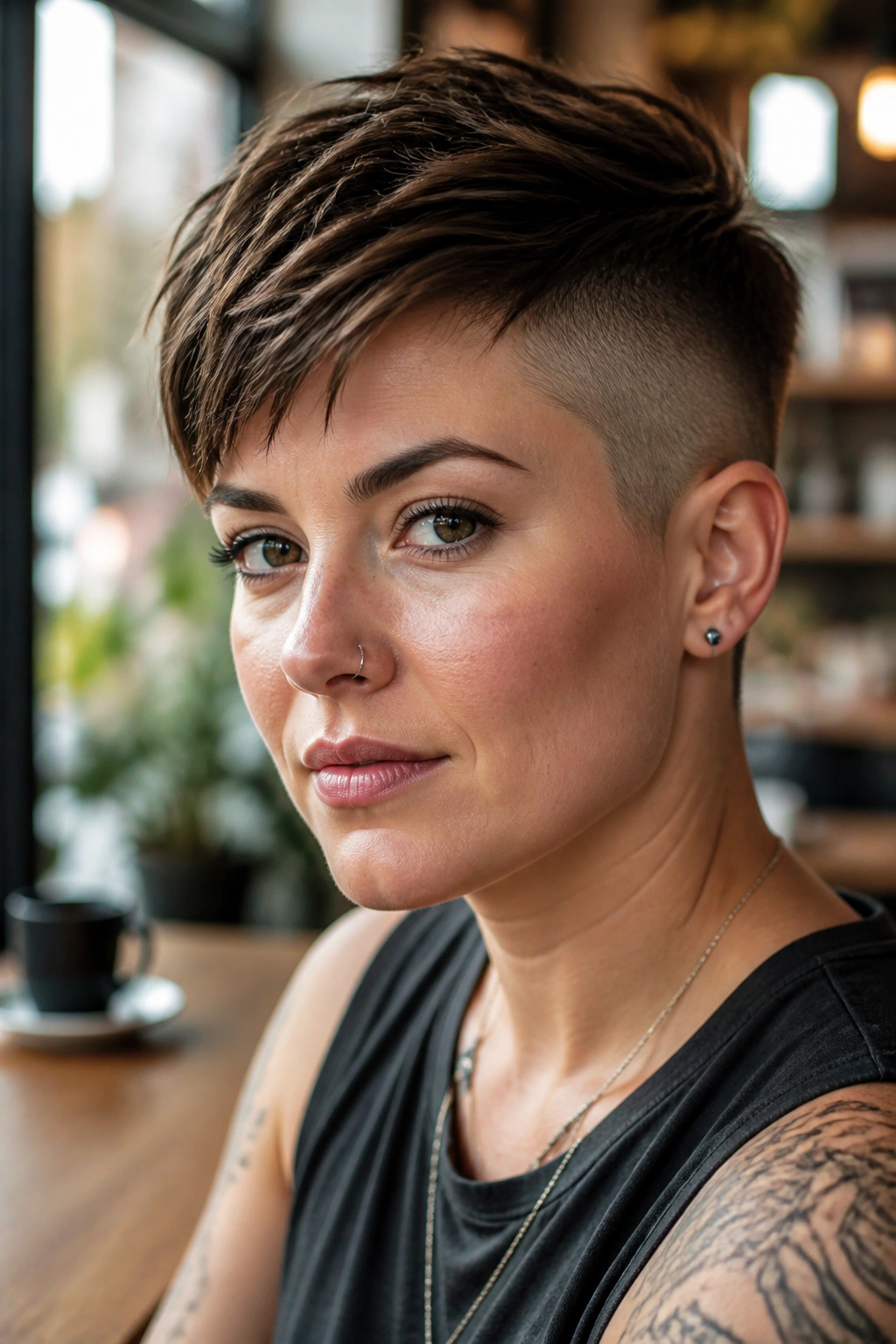
An undercut pixie is the blunt answer to thick hair that keeps ballooning out around the face. By removing bulk underneath and at the sides, the stylist can leave just enough length on top to shape the head and show off the eyes and cheekbones. The result is lean, not fluffy.
It’s a strong look. Not everyone wants that, and that’s fair. But if you like sharp hair and you’re tired of fighting volume at the jaw, it solves a real problem. A little wax through the top keeps it separated and gives the cut some edge.
I’d call this one high-reward, moderate-maintenance. The grow-out phase needs attention, usually every 4 to 6 weeks if you want the undercut to stay clean. If you like changing your hair often, that probably won’t scare you off. If you want one-and-done simplicity, it might.
12. Wedge Bob
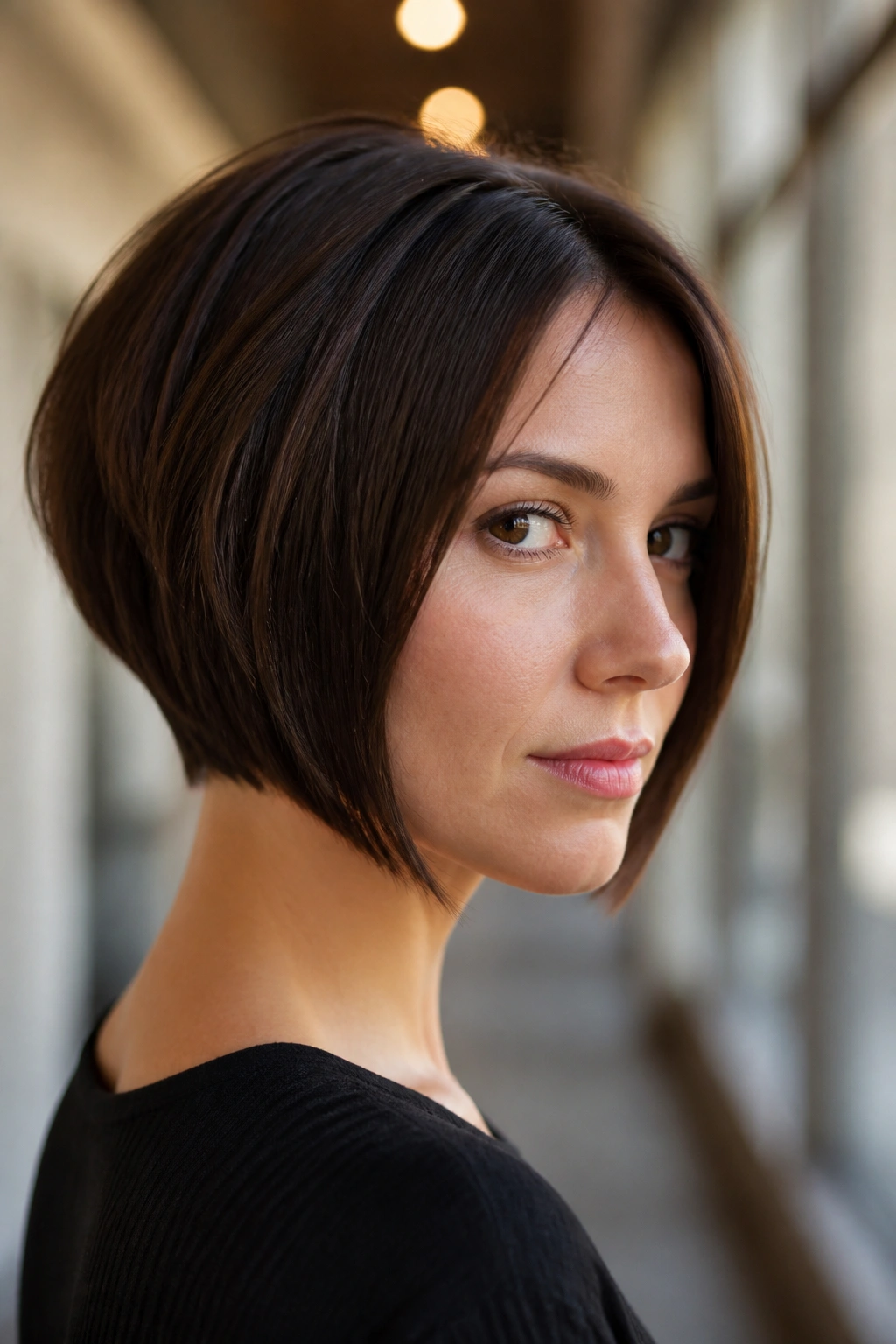
A wedge bob has a built-in angle that starts short at the back and gradually opens toward the front. It’s not as blunt as a classic bob, and that helps a round face because the shape doesn’t stop dead at the cheeks. The line keeps moving.
This cut works especially well on straight hair or hair with only a slight wave. You want the shape to be visible. Too much curl can blur the wedge and make the whole thing feel heavy. A smooth round-brush blowout shows the cut off in a clean, almost architectural way.
The front pieces can hit the jaw or just below it, depending on how much length you want to keep around the face. I’d lean a little longer if your cheeks are full and you want more vertical balance. The wedge does the rest.
It’s old-school in the best sense. Clean. Crisp. No drama.
13. Textured Crop With Piecey Bangs
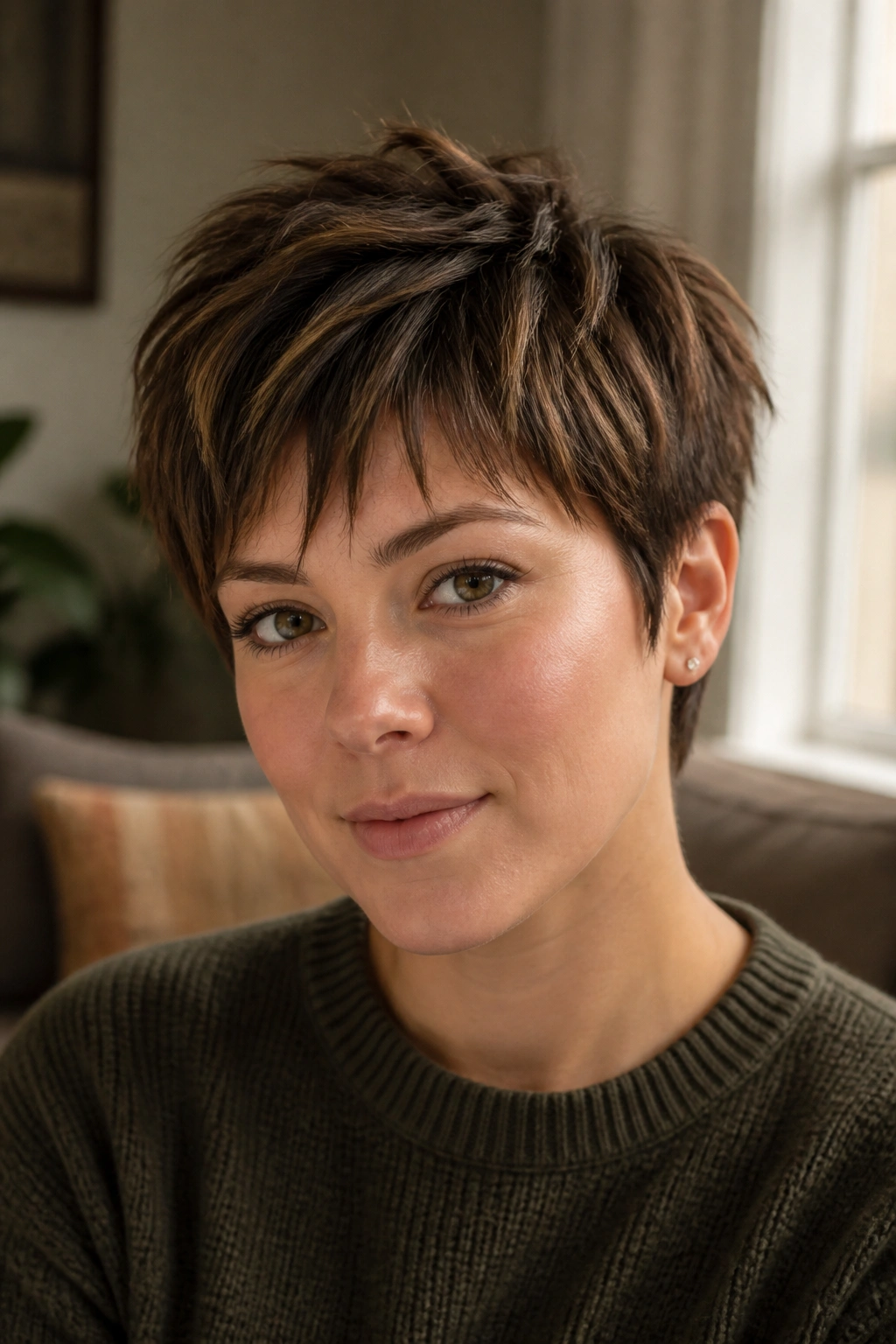
Piecey bangs are useful because they break the face into smaller sections. On a round face, that can be a good thing. Instead of one smooth curve from hairline to cheek, you get little bits of movement across the forehead and temple area.
Why the Bangs Matter
The bangs should be light enough to see through a bit. Heavy, straight-across bangs can shorten the face fast. Piecey ones do the opposite. They soften the forehead while leaving the center open, which keeps the cut from feeling boxed in.
- Works well with short layers around the ears.
- Needs a light styling paste or texture spray.
- Best on hair that has some natural bend.
- Ask for separation through the fringe, not a dense block.
This one is a little playful, which I like. It keeps short hair from feeling too serious. If your hairline is strong or your forehead is on the smaller side, this can be a smart way to add character without loading up on width.
14. Short Lob With Face-Framing Ends

A short lob is the cut I hand to people who want a safer answer. It’s longer than a bob, usually brushing the neck or just touching the collarbone, and that extra length is friendly to a round face. The face-framing ends can start near the cheekbones and slide down, which creates a long, soft line.
This is the easiest short haircut to live with if you’re not ready for something dramatic. It still feels light, still dries faster than long hair, and still gives you enough length to tuck, wave, or pin back. The front pieces should not stop right at the cheek. That’s the mistake.
A little bend at the ends helps. A flat, one-length lob can feel too square if it lands in the wrong place. A curved finish, even a subtle one, gives the face more room to breathe.
15. Short Wolf Cut

Why does a wolf cut work on round faces when a regular shag sometimes doesn’t? Because the wolf cut brings more height up top and more taper through the sides and ends. It has that layered, slightly wild shape that keeps the eye moving vertically instead of circling the face.
How to Keep It From Getting Puffy
The danger zone is bulk at the sides. If the layers are too wide at cheek level, the face can look fuller. Ask your stylist to keep the widest part higher, near the crown, and let the layers fall thinner toward the jaw.
A little sea salt spray or mousse can help, but don’t go heavy. The cut should look airy, not crunchy. Air-drying works if your texture is already wavy; otherwise, rough-dry the roots and let the ends stay imperfect.
This cut isn’t neat. That’s the charm. It gives round faces a bit of edge and motion without needing a polished finish every day.
16. Razor-Cut Bob
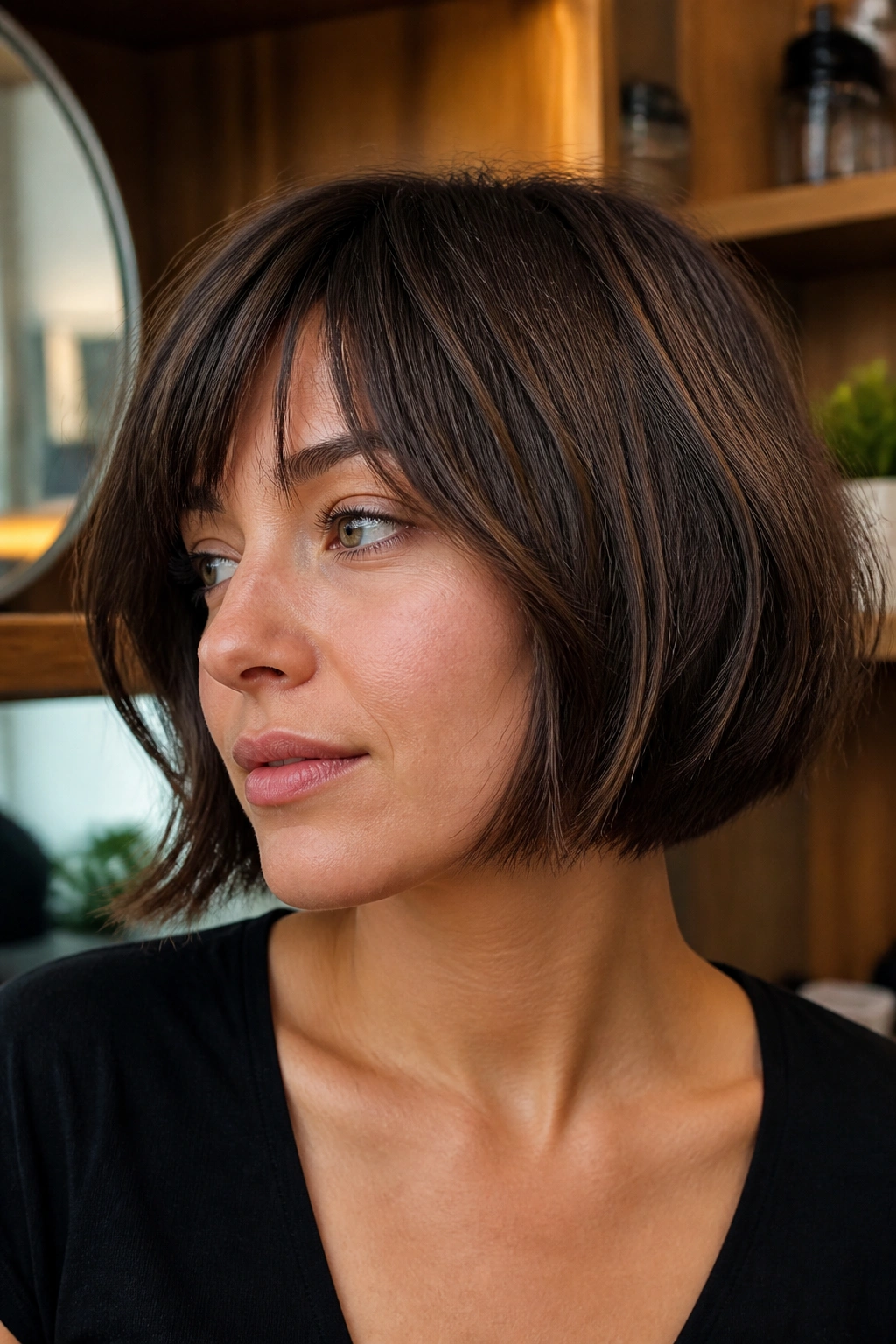
A razor-cut bob is softer at the edge than a blunt bob, which can be a blessing for round faces. The razor removes some of the harshness from the line, so the ends fall with more movement and less weight. It feels less like a helmet and more like hair.
The downside is that a razor cut can go too thin if the stylist gets overenthusiastic. Then the ends look stringy, and that is not the look we want. Used well, though, the razor gives the bob a bit of swing and helps it lie closer to the head.
- Best on medium-density hair.
- Works well with a side part.
- Ask for soft, movable ends rather than a sliced-out perimeter.
- Good if you want a bob that air-dries with shape.
I’d choose this one when you want the bob structure but can’t stand bluntness. It’s a softer take, and that softness is the whole point.
17. Tapered Natural Coils Cut
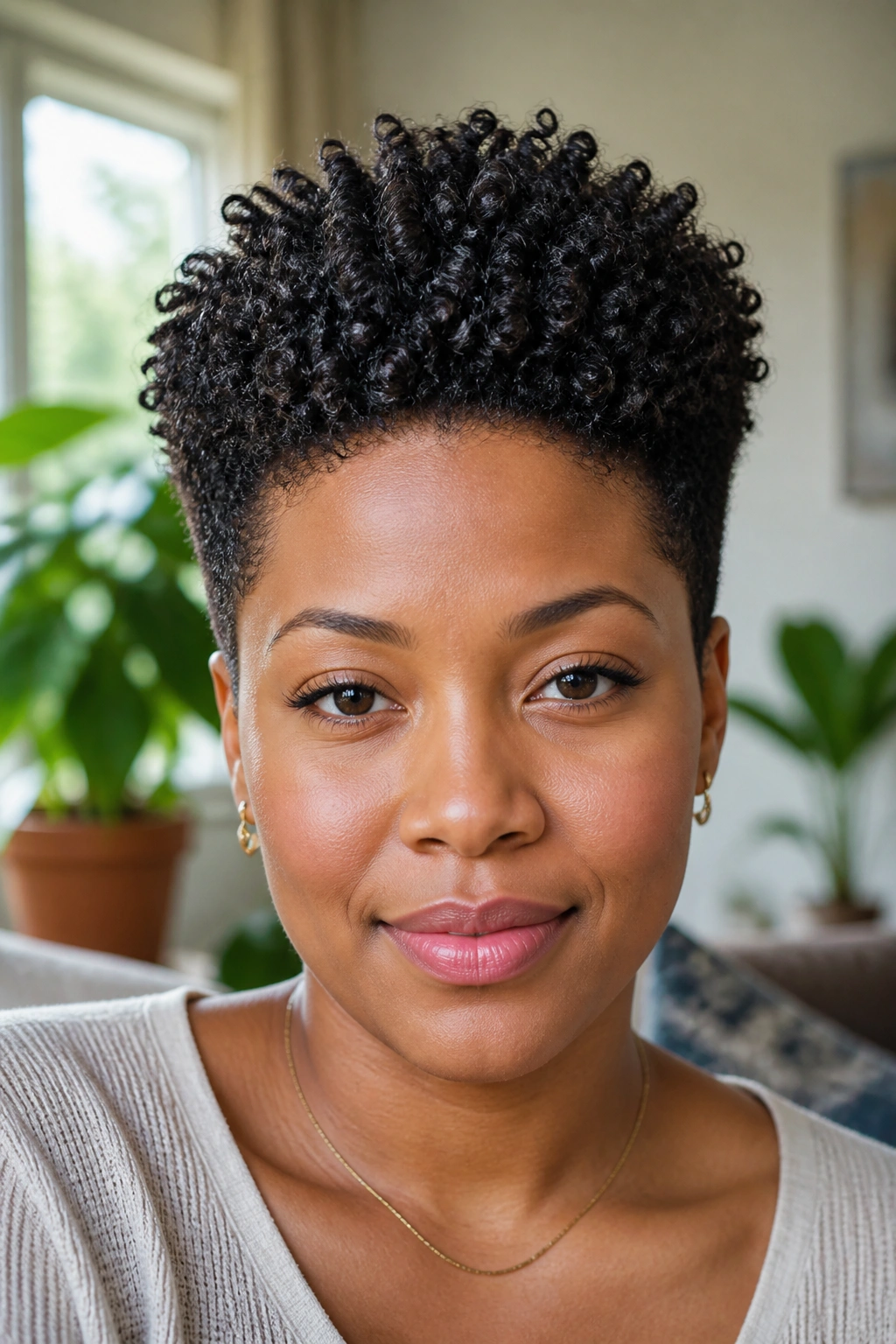
Natural coils need their own logic. A tapered cut keeps the sides and nape closer to the head while leaving more length and height on top, which is a strong shape for a round face. It draws the eye upward and lets the coil pattern do the rest.
This cut looks best when the top has room to spring. Too much compression at the crown flattens the whole style. Too much width at the sides, on the other hand, can make the face feel broader. The balance sits in the taper.
I like this cut because it respects texture instead of fighting it. A cream with hold, applied to damp hair in sections, helps the coils clump without puffing. A diffuser can help, but many people find that a hands-off dry works fine once the shape is set.
This is not about hiding the face. It’s about framing it with purpose.
18. Mushroom-Inspired Soft Bob

A mushroom cut gets a bad reputation because people picture the old heavy bowl shape. The softer version is different. It keeps the rounded inspiration, but the edges are broken up, the interior is lighter, and the line doesn’t sit hard against the cheekbones. That matters a lot on a round face.
The best soft mushroom bob has slightly longer sides and a tapered nape. It should feel rounded, not blunt. I’d call it a smart choice for straight hair with a little density, because the cut gives the shape without needing a ton of styling. A flat iron pass near the ends can keep it from puffing outward.
This one is not for someone who wants an edgy, shattered look. It’s neater than that. If you like a clean shape with a touch of retro energy, though, it’s a solid option. Subtle can be good.
19. Inverted Bob With Long Front Pieces

The inverted bob earns its place because it does two useful things at once: it lifts the back and stretches the front. That combination is flattering on a round face almost by default. The front pieces become a frame that moves downward, not outward.
What to Ask Your Stylist For
Keep the back stacked enough to create volume at the crown, but not so high that it flips into a dated shape. The front should land below the chin and maybe brush the top of the collarbone if you want extra length near the face.
- Good for straight or lightly waved hair.
- Best when the front pieces stay sleek.
- A side part can add even more length.
- Avoid bulky layers at the cheek line.
I’m a fan of this one because it gives the wearer shape without needing much daily fuss. A quick blow-dry with a paddle brush and a little shine serum is usually enough. Clean hair, clean lines. That’s the whole charm.
20. Spiky Pixie
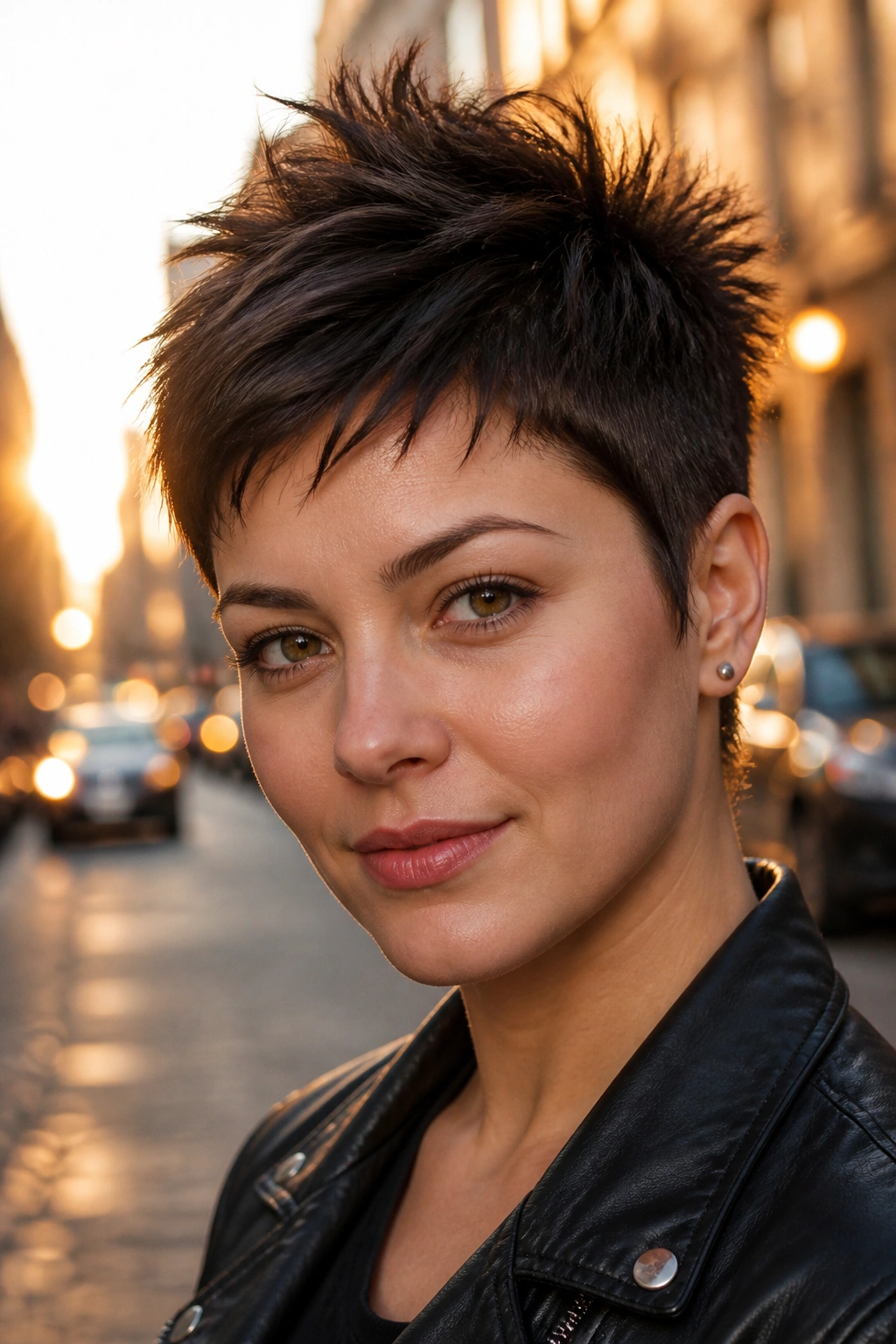
A spiky pixie sounds bold because it is bold. The reason it works on round faces is that the texture is concentrated up top, which adds height and creates a sharper outline. Instead of soft width at the cheeks, you get upward energy.
The styling part is easy enough: a tiny amount of pomade or wax, warmed between the fingers, then pinched through dry hair in small sections. You do not need every piece to stand up. That would look costume-y. You want separation, a little lift, and enough irregularity to keep the shape alive.
This cut is not for anyone who wants softness or zero styling. It needs a hand in the morning. Still, if you want short hair with attitude and you like seeing your cheekbones, it can be a fun one. There’s a reason it keeps coming back in some form.
21. Side-Parted Cropped Curls
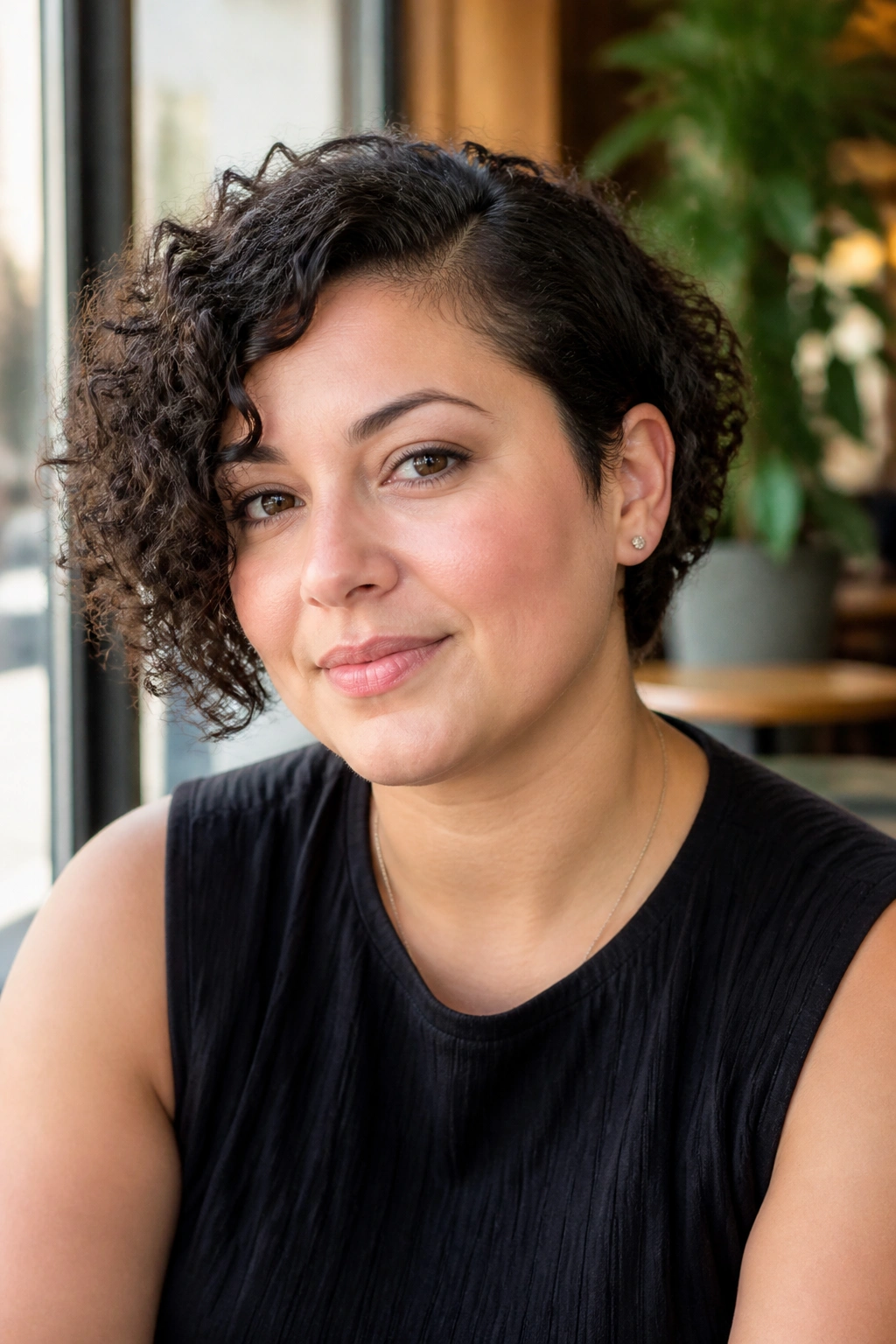
Can short curls work on a round face without making it wider? Yes, if the part and the shape are handled right. A side part breaks the symmetry, and a cropped length keeps the curls from expanding too far outward on both sides at once.
How to Wear It
Let one side sit a little fuller and tuck the other side back or behind the ear. That creates an off-balance look that flatters the face instead of circling it. Curl cream helps, but so does a good cut. The curls need shape from the start.
If the cut is too even, the curl mass can form a round halo. That’s the version to avoid. You want controlled unevenness, not chaos. A little lift at the roots and a longer top section can make the cut feel sleek even when the texture is soft.
This is one of those styles that looks casual but depends on precision. Funny how that works.
22. Ear-Length Bob With Tucked Ends

An ear-length bob sounds short enough to be risky, and on some faces it is. On a round face, though, it can work beautifully if the ends are tucked under or behind the ear instead of flaring out. That exposure around the cheekbone changes the whole visual line.
Picture a bob that sits close to the head, with just enough length to skim the ears and the upper jaw. Now imagine one side tucked away. The eye suddenly has somewhere to go. That little opening at the side stops the cut from feeling boxy.
- Best on smooth, fine-to-medium hair.
- Needs a good blow-dry or flat iron bend.
- Use a light serum to keep the ends neat.
- Works well if you like minimal styling.
This cut has a polished, almost crisp feel. It’s not trying to be soft. It just knows where to sit.
23. Soft Shag Pixie
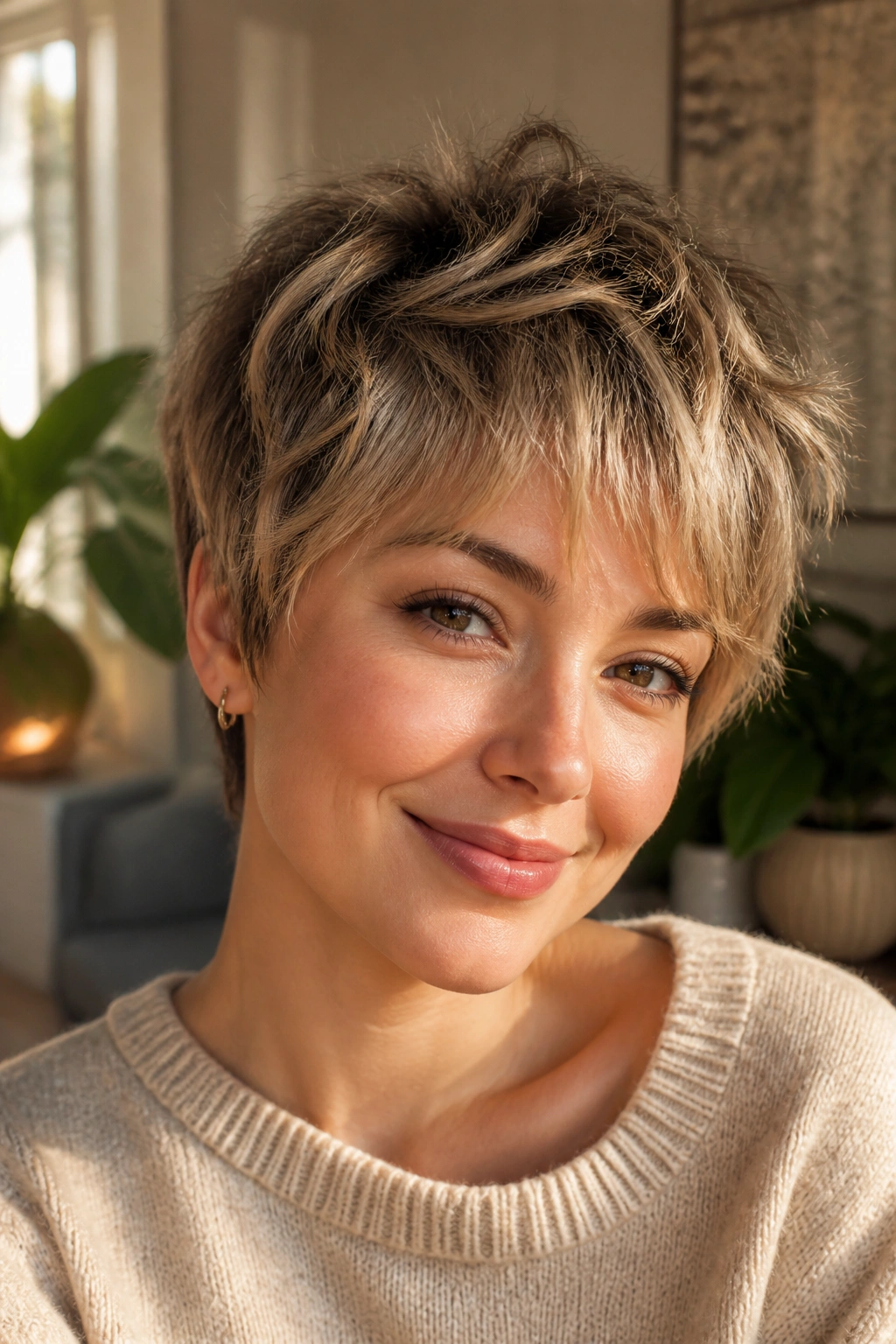
A soft shag pixie is what you get when a pixie cut decides to loosen up. The top stays layered and airy, the sides stay feathered, and the whole thing has a little movement instead of a sharp outline. On a round face, that broken texture keeps the head shape from feeling too circular.
I like this cut for people with fine hair because it creates the illusion of fullness without a lot of product. A little root lift spray at the crown helps, but the cut itself does most of the work. It can also be good for cowlicks, oddly enough, because the texture gives them somewhere to go.
This is a friendly version of short hair. Not too severe. Not too neat. If you want short hair that feels relaxed rather than sculpted, this is a strong choice.
24. Sliced Bob With Curtain Bangs

Curtain bangs are useful on round faces because they split the front of the face open instead of closing it off. Paired with a sliced bob, they make the haircut feel lighter and more vertical. The bangs sweep away from the center, which keeps the forehead area from looking boxed in.
Unlike a heavy fringe, curtain bangs let the eye move down and out. That movement matters. It creates a soft frame without adding bulk right across the widest part of the face. The sliced bob underneath gives the ends some separation, so the whole style looks less dense.
This one works nicely on medium-density hair with a bit of bend. If your hair is pin-straight, a round brush and a quick twist at the ends can keep the shape from falling flat. It’s a smart compromise between softness and structure.
25. Cropped Bob With Side Fringe

A cropped bob with a side fringe is the sort of cut that quietly solves a lot of problems. It sits short enough to feel fresh, but the side fringe breaks the face at an angle, which is exactly what a round face likes. The overall shape stays neat while the fringe keeps it from turning too symmetrical.
Why It Flatters So Many Round Faces
The fringe should sweep across the brow, not sit straight and heavy. That diagonal line makes the face feel a bit longer and gives the haircut some motion. If the bob itself ends around the jaw or a touch below, the whole cut reads balanced and clean.
- Good for straight, wavy, or lightly textured hair.
- Easy to tuck behind one ear for extra asymmetry.
- Works with air-drying if your hair has a slight bend.
- Ask for soft internal layers, not a bulky bottom edge.
This is one of the more dependable short haircuts for women with round faces because it does not rely on one trick. It uses length, angle, and softness together. That’s usually where the better cuts live.
Final Thoughts
The smartest short haircut is not the one that hides a round face. It’s the one that changes where the eye goes. Sometimes that means a sharp angle. Sometimes it means lift at the crown. Sometimes it’s just a side fringe and a cleaner line through the ends.
Bring photos, sure, but bring the right ones. Match the photo to your hair texture first, then to your face shape. A gorgeous bob on pin-straight hair can look completely different on thick waves, and a pixie that looks easy on one person can eat up half the morning on another.
Round faces can wear short hair with ease. The cut just has to be doing something on purpose.
