



Long shag mullets for women with thick hair solve a problem that blunt cuts create in a hurry: too much weight in the wrong places. Thick hair can look rich and full, sure, but it can also turn into a bulky block if the shape is lazy or the layers sit in all the wrong spots. Give it a little movement, and it comes alive. Give it the wrong layers, and it starts working against you.
That is why the long shag mullet keeps hanging on. The crown gets lift, the sides get softness, and the back keeps enough length to feel intentional instead of chopped off. The cut does not fight density. It uses it.
The tricky part is balance. Too little layering and the hair sits like a curtain. Too much thinning and the ends go scraggly, which is a special kind of annoying on thick hair because the bulk disappears in the middle and survives everywhere else. The best versions know exactly where to remove weight and where to leave some.
Some of these cuts lean soft and face-framing. Others are louder, messier, or a little rock-and-roll. That range is the fun of it, honestly. Thick hair can carry more shape than most people think, and the right shag mullet proves it.
1. Soft Curtain Fringe Mullet
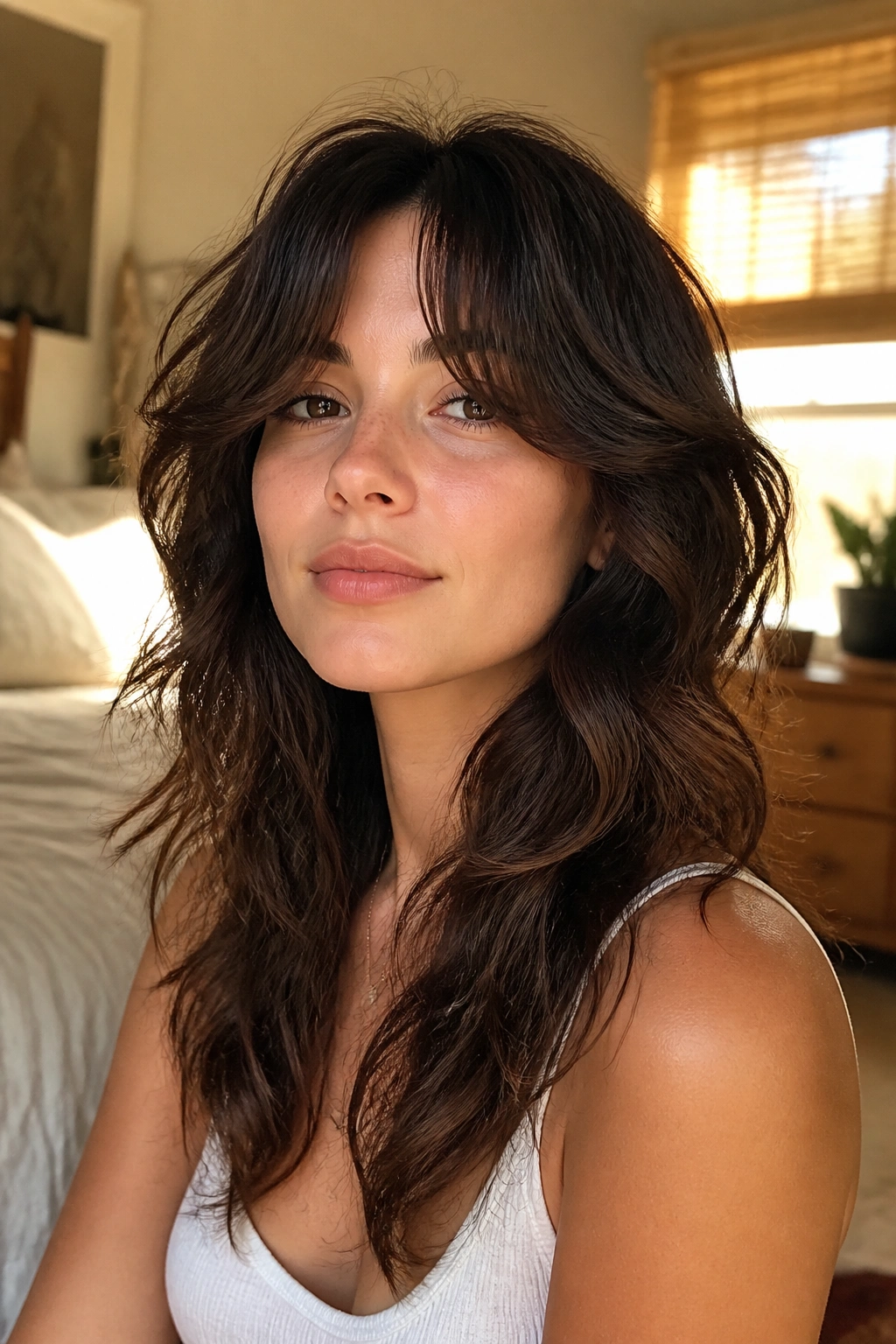
Soft curtain fringe and thick hair are a very good match. The fringe breaks up the width around the face, while the long back keeps the cut from feeling too short or too precious.
Why it works so well on dense hair
The front pieces fall away from the face in a way that takes pressure off the cheek area, which matters when the rest of your hair has a lot of body. Thick hair often wants to puff out at the sides, and curtain bangs create a clean opening right where the eye wants to land.
The cut also gives you room to keep the layers long. That is the part I like most. You get shape without losing the heavy, glossy length that thick hair does so well.
Ask your stylist for:
- Long curtain bangs that start around the cheekbone
- Internal layers through the crown, not short choppy pieces all over
- A softly tapered back that still brushes the upper back or collarbone
- Point-cut ends for movement instead of a blunt shelf
Tip: keep the shortest face-framing pieces long enough to tuck behind one ear. That tiny detail makes the whole cut feel less harsh.
2. Razor-Shag Wolf Mullet
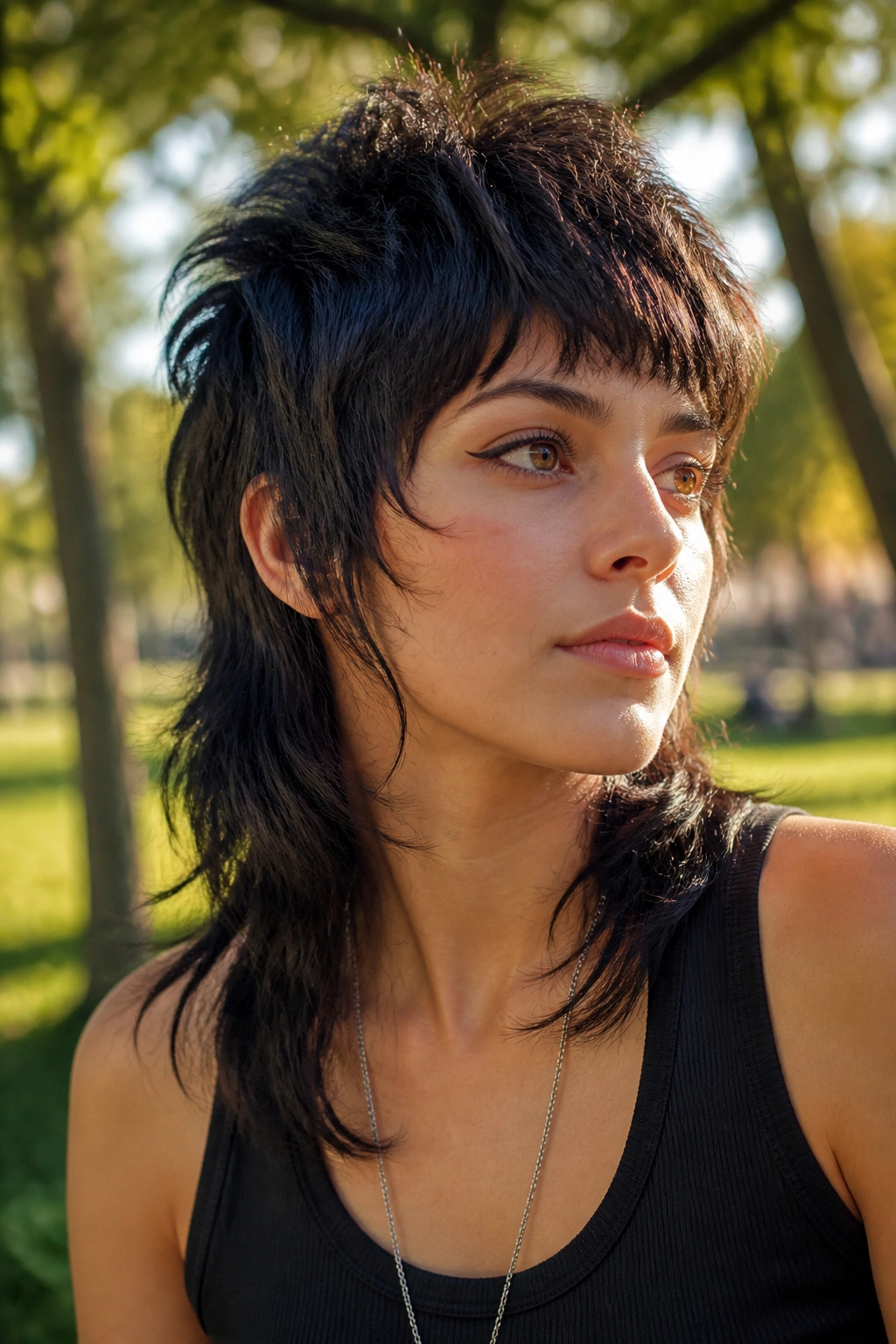
If your thick hair sits heavy by lunchtime, this is the cut that takes the weight off without making the style disappear. The razor-shag wolf mullet has a little attitude, but the real reason it works is structural. Razor cutting slices through dense hair in a way that creates bend and separation, especially at the ends.
The risk is frizz. I would not recommend this version if your hair already expands in humidity and gets fuzzy the moment you look at it sideways. When the hair is coarse, the razor can make the surface too airy. On the right texture, though, it gives that broken-up, lived-in shape people spend too long trying to fake with a curling wand.
This version looks best when the crown is lifted and the perimeter stays long enough to keep some weight. If the top is too short, you end up with a triangle. If the bottom is too blunt, you lose the whole point. The middle ground is where this cut lives.
A good styling cream or a pea-sized amount of lightweight oil goes a long way here. Not much more. Thick hair already has its own opinion.
3. Feathered ’70s Mullet for Thick Hair
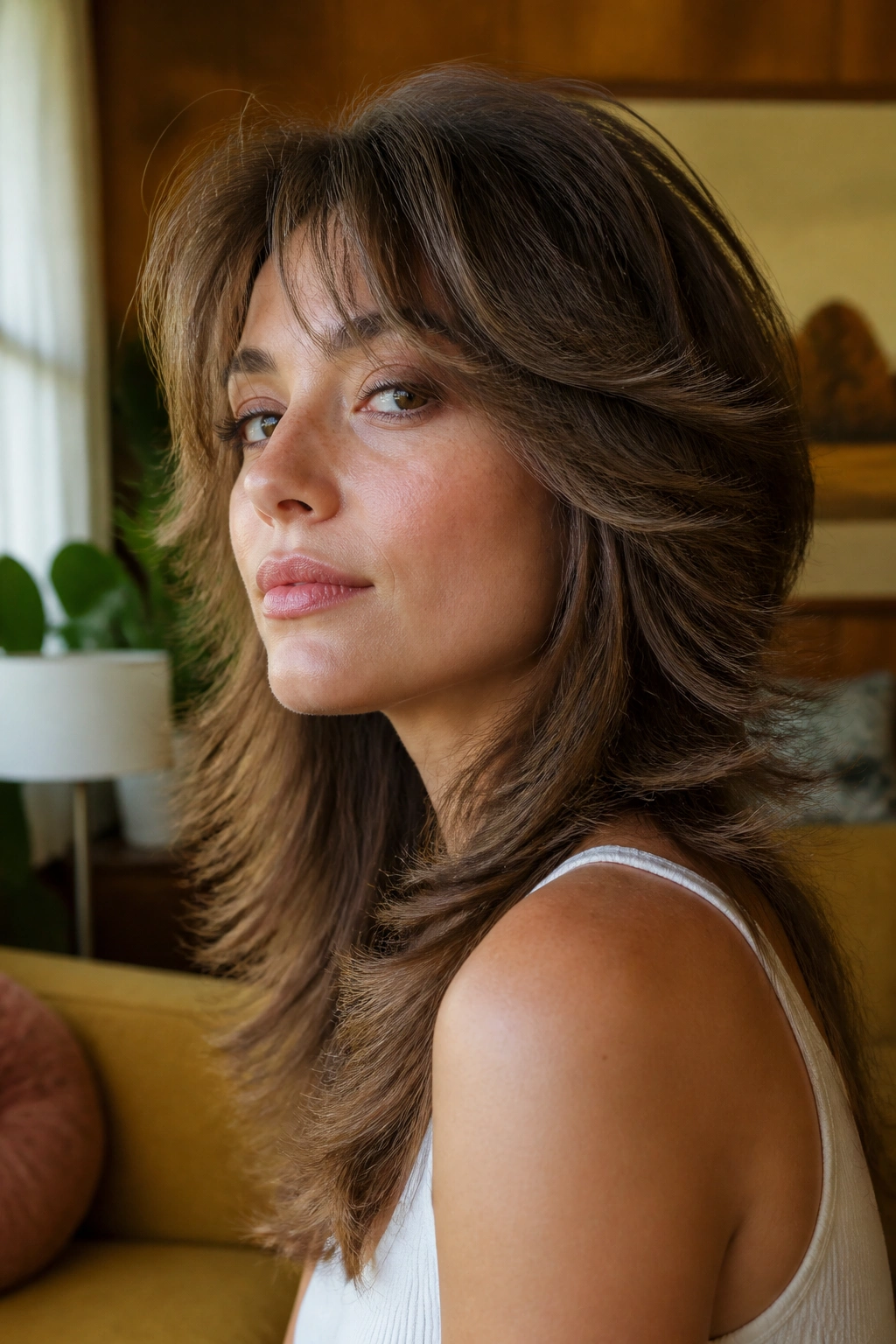
Picture hair that used to balloon outward at shoulder length, then suddenly turns soft and airy near the ends. That is the appeal of a feathered ’70s mullet. It feels glamorous in a way that is a little nostalgic, but the main draw is how it breaks up density without making the haircut look shredded.
The shape to ask for
You want feathering, not chunking. Those are not the same thing, and thick hair shows the difference fast. Feathering means the layers taper and flip away from the face and neck. Chunking means the cut looks like someone used scissors with a grudge.
The best version keeps fullness through the top and crown, then lets the back flutter instead of hanging like a heavy curtain. It suits hair that has some natural bend, but even straight hair can hold this shape if the stylist builds enough internal texture.
- Great if you want a softer retro look
- Good for hair that puffs at the ends
- Works well with side parting or a loose center part
- Needs a round brush or blowout brush for the best finish
This one is especially nice if you like your hair to look styled without looking too polished. A little swing in the layers goes a long way.
4. Long Curly Mullet with a Rounded Shape
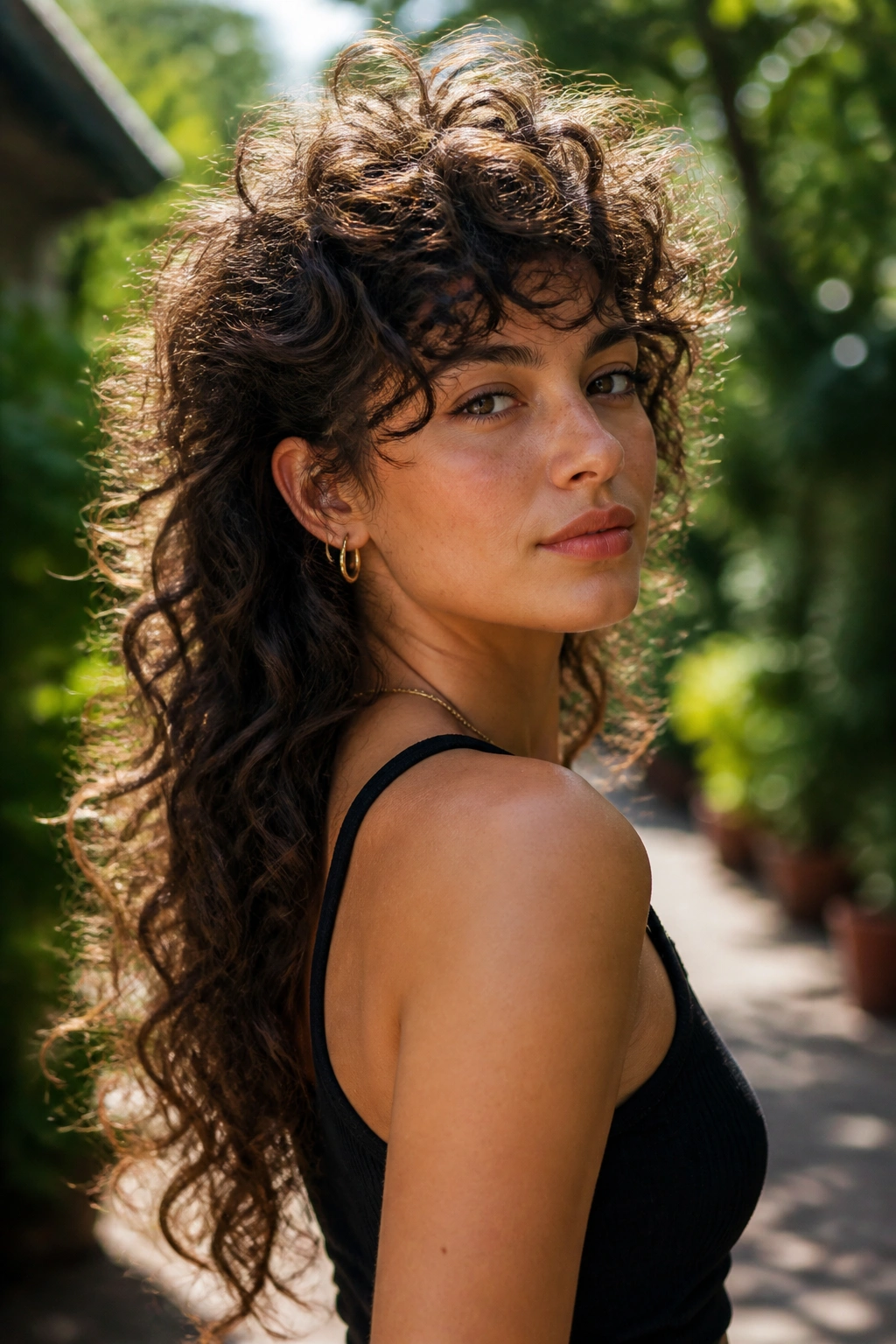
What happens when thick curls are cut into a blunt line at the back? They mushroom. Fast. A long curly mullet avoids that by giving the curls room to stack and bounce without building a heavy shelf under the ears.
The best curly version is cut with the curl pattern in mind, often dry or partly dry, so the stylist can see where each section actually lands. That matters more than people think. Curl shrinkage can steal two or three inches in a blink, and thick curls can look far shorter than they did when wet.
How to ask for it
Ask for a rounded crown, long layers through the sides, and enough length in the back to keep the silhouette soft. You do not want the top to be stripped too high. Curly hair already has lift. It does not need help becoming a triangle.
This shape looks especially good when the bangs are soft and split, not carved into a hard line. A light curl cream, a diffuser on low heat, and hands-off drying are the whole game. Touching it too much ruins the definition. Every time.
5. Collarbone Shag Mullet with Piecey Ends
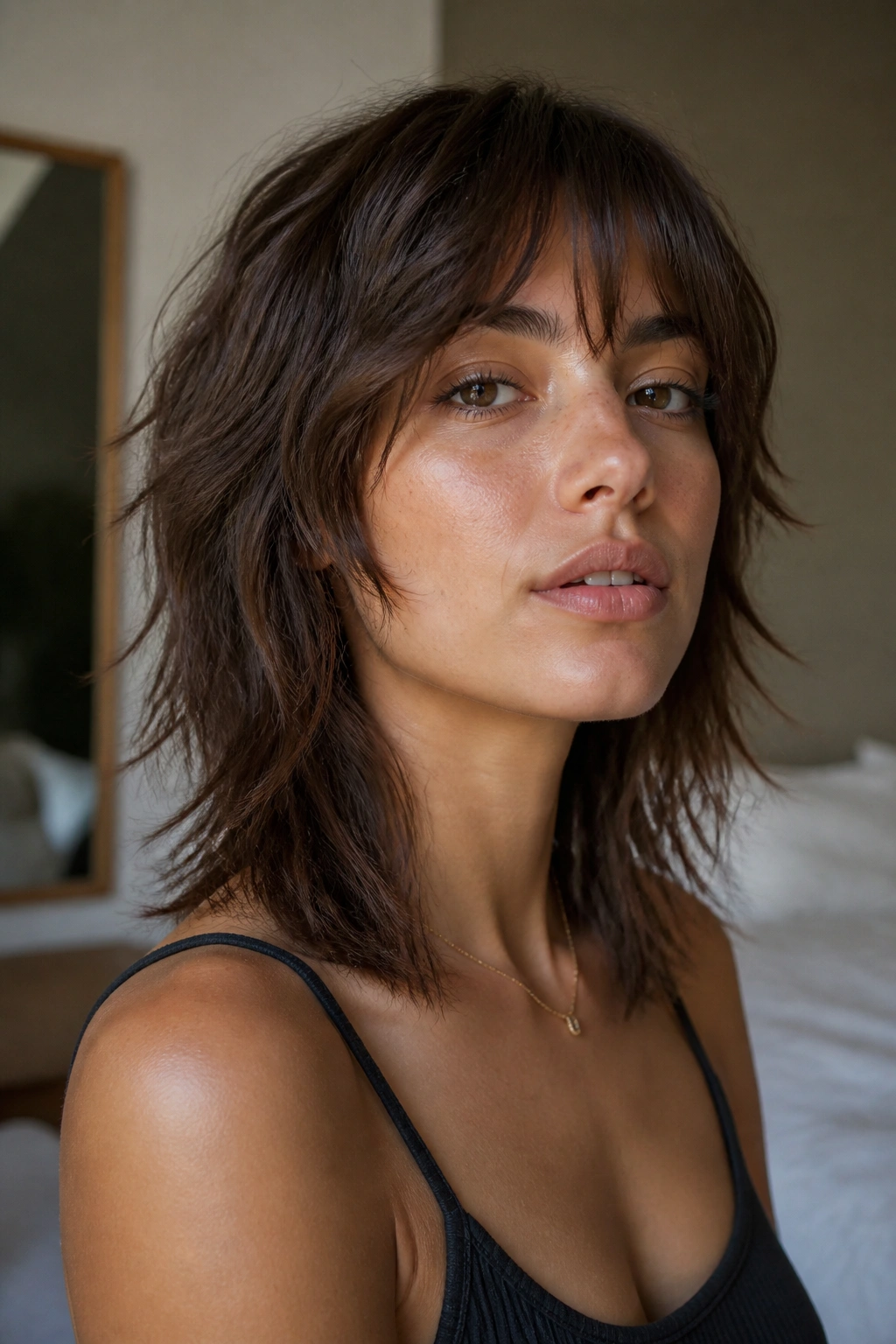
If you want shape without making a dramatic statement every time you walk into a room, this is the one I’d point to first. The collarbone length keeps the cut wearable, while the shaggy ends give thick hair a little air so it does not sit there like a blanket.
The collarbone zone is a sweet spot for dense hair. It is long enough to feel feminine and versatile, but short enough that the layers can actually do their job. Once hair gets much longer, heavy density can swallow the texture unless the cut is very careful.
This version is especially good for people who style their hair in loose waves or a quick bend with a large-barrel iron. The pieces around the face can be pushed outward, inward, or tucked behind the ears, and the whole thing still reads as deliberate. No awkward in-between zone.
I like it because it is low-drama in the best way. You still get the mullet edge in the back, but the overall feel is softer than a classic wolf cut. If you want to ease into the style before going choppier, start here.
6. Rocker Mullet with Bottleneck Bangs
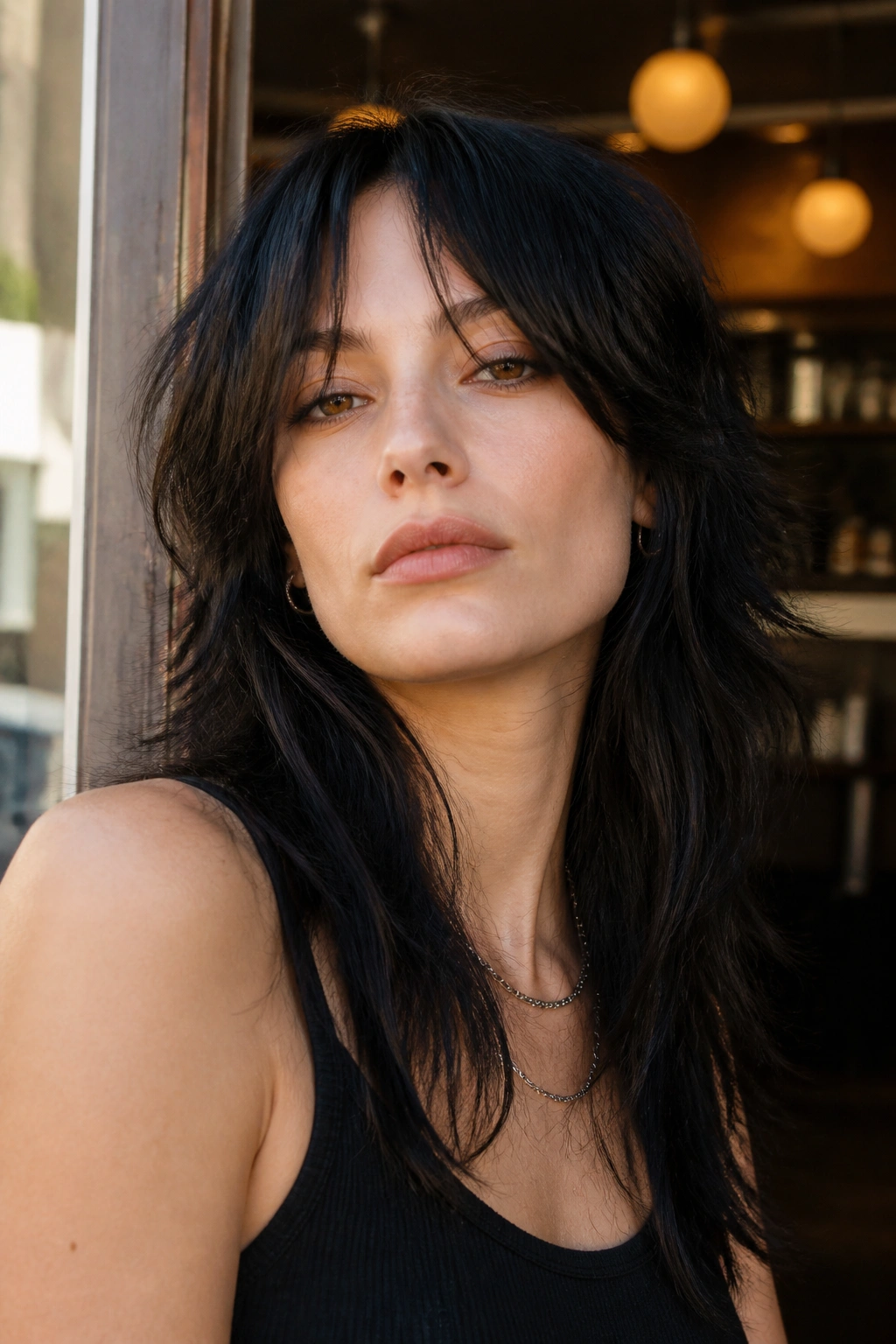
Unlike a classic shag, this version keeps a stronger back length and a more defined fringe line, which makes it feel sharper right away. Bottleneck bangs open in the center and widen slightly toward the cheeks, so they soften the forehead without swallowing the face.
This cut is good when thick hair needs direction more than it needs obvious thinning. The bangs do a lot of work up front, while the layered body through the sides keeps the hair from kicking out at the ends. If you have a habit of pulling your hair into a ponytail on day two, this is a smart choice, because the shape still looks cool half-done.
The styling is not fussy. A bit of blow-dry cream, a round brush on the fringe, and a touch of texturizing spray through the mids usually does it. The trick is not over-smoothing the whole head. If everything lies flat, the cut loses its personality.
Best for:
- Thick straight or wavy hair
- People who like a little edge
- Faces that need a softer center opening
- Anyone who wants bangs without full-on curtain fringe
It reads polished from the front and a little rebellious from the side. That contrast is the charm.
7. Butterfly-Blend Mullet with Big Movement
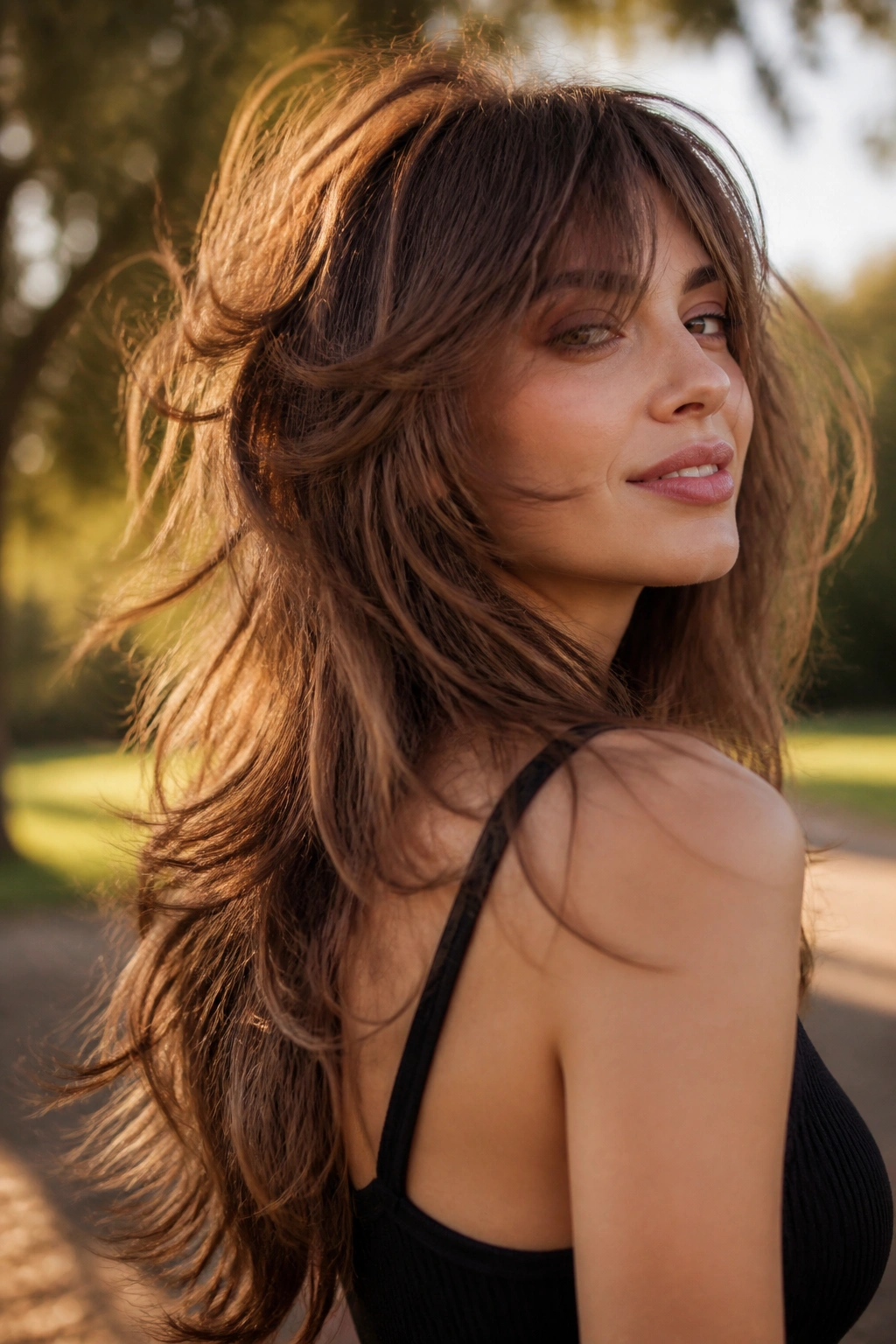
This is the prettiest version in the bunch if you like softness first and edge second. The butterfly-blend mullet borrows the long interior layers of a butterfly haircut and mixes them into the longer back length of a mullet, so the shape feels floaty instead of chopped.
For thick hair, that blend matters. A lot. The top layers lift the crown, the face-framing sections fall away from the cheekbones, and the lower length stays heavy enough to keep the cut grounded. It is one of those styles that looks expensive even when the styling is minimal.
A few details make it work:
- Keep the shortest layers below the brow line if you want to avoid a puffy crown
- Use long, sliding layers rather than short blocks of texture
- Finish with a soft bend, not tight curls
- Add a light mist of flexible hairspray at the face frame only
The best part is how it moves when you turn your head. Thick hair can look stiff in a bad cut. Here, it swings. That makes a bigger difference than people expect.
8. Airy Razor-Lift Mullet
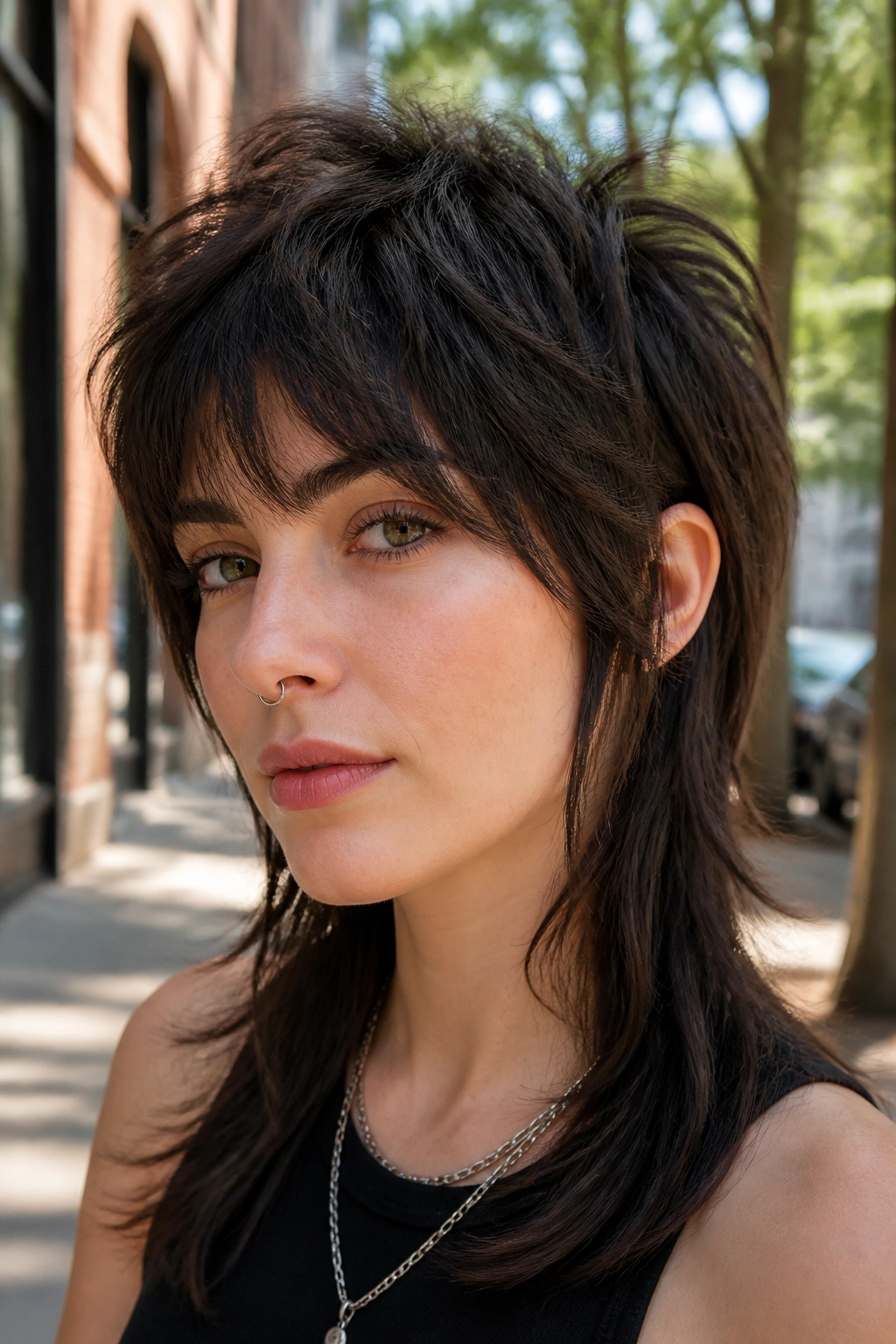
Some thick hair is so dense it sinks under its own weight. This cut is for that hair. The airy razor-lift mullet focuses on removing bulk at the crown and upper sides so the roots can actually rise instead of collapsing by noon.
Where the weight comes out
The stylist should be looking for the spots where the hair piles up, not attacking the whole head with thinning shears. The crown, upper back, and side panels near the cheekbones usually hold the most excess weight. Clean removal in those areas creates lift without leaving holes.
A good blowout helps, but the cut has to do the real work first. If the layering map is right, you can rough-dry this style and still get a decent shape. That is the mark of a good shag mullet: it does not demand a salon finish every single day.
I would pair this one with a root spray or lightweight mousse, especially if your hair tends to fold flat at the scalp. Use a vent brush or paddle brush while drying the top section upward, then switch to fingers through the mids. That little change keeps the texture from looking overdone.
The final effect is light, but not flimsy. There is a difference.
9. Full Fringe Shag Mullet
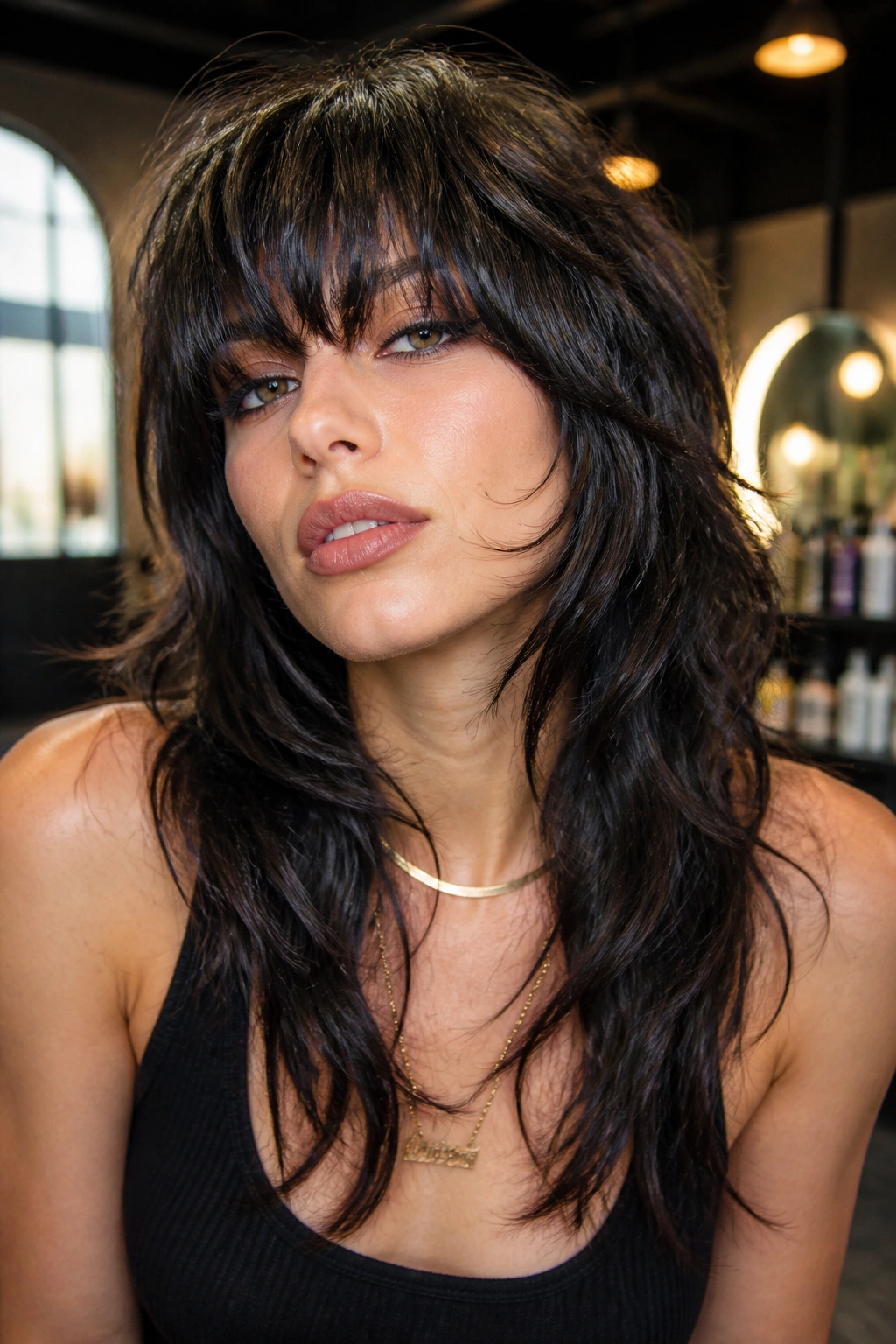
What happens when a thick-haired mullet gets a full fringe instead of a split one? The whole face changes. The line of the bangs makes the cut feel more dramatic, while the long layers keep the hair from turning into one solid curtain.
This is one of the better choices if your forehead feels larger than you want it to, or if you just like a stronger frame around the eyes. Thick hair gives full fringe some natural support, which means the bangs do not usually sit too wispy or broken apart. They have enough density to look intentional.
The key is keeping the fringe soft at the bottom. A heavy, blunt bang with a shaggy back can feel boxy fast. A slightly piecey edge, cut with movement, is much easier to live with. It also grows out more gracefully, which matters because bangs always eventually become everyone’s problem.
I like this cut on hair that air-dries with a bend. If the hair is pin-straight, it can still work, but you may need a quick pass with a round brush to stop the fringe from sitting flat. If it is naturally wavy, even better. It gets a little cinematic without trying too hard.
10. Sleek Center-Part Mullet
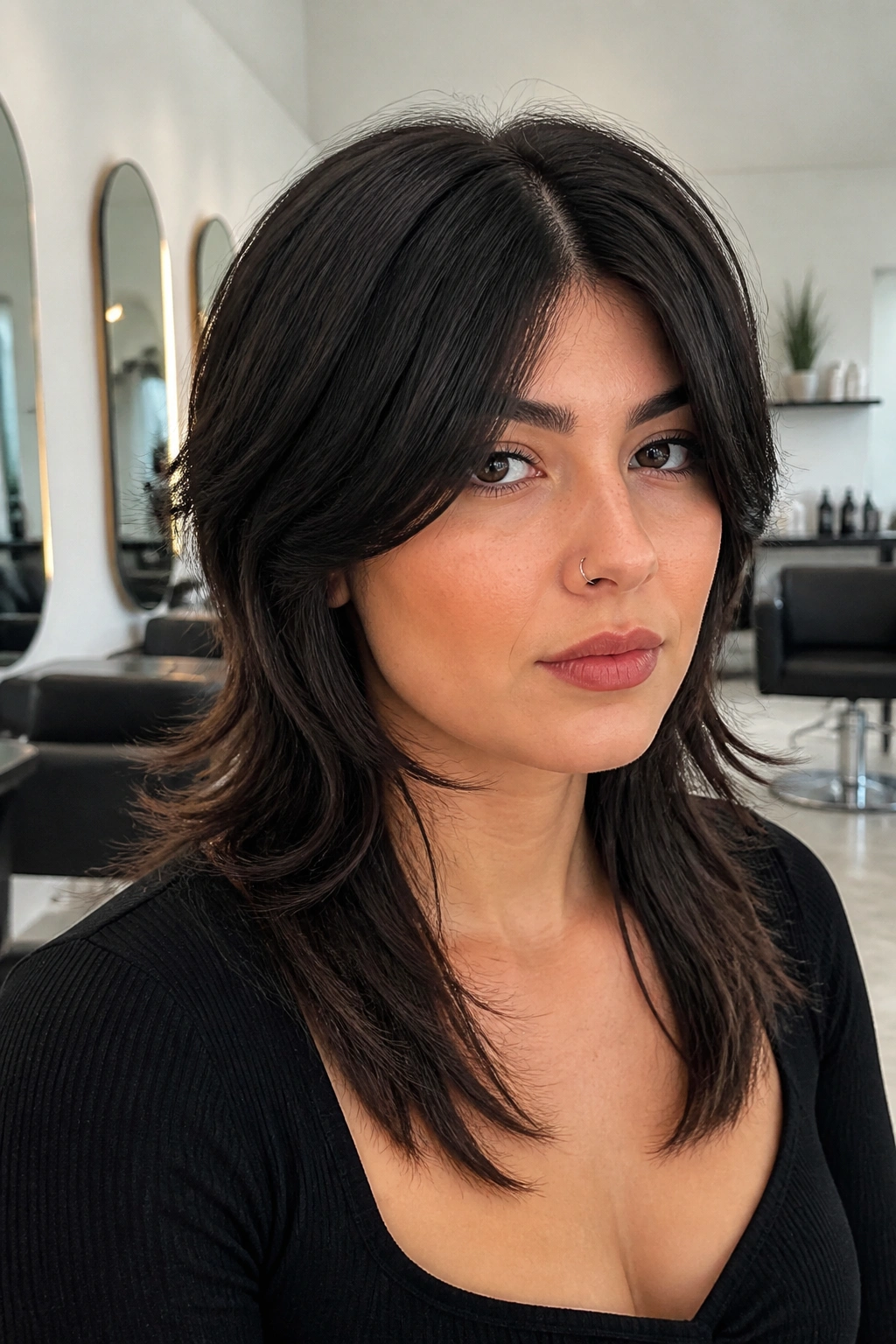
Not every shag mullet has to look messy. Some thick hair actually behaves better when the layers are clean and the center part is precise, which is why the sleek center-part mullet deserves a spot here. It gives you the shape of a shag without turning the whole head into texture overload.
This version works because the middle part creates symmetry, then the long layers break that symmetry just enough to keep the cut from feeling severe. Thick straight hair can carry this style beautifully if the ends are tapered and the interior is trimmed with care. Too much texture, and it becomes frizzy. Too little, and it turns into a long bob with an identity crisis.
A smoothing cream or serum is useful here, but only a little. You want the hair to reflect light and fall in clean lines, not look greasy. Blow-dry with tension, bend the front pieces slightly away from the face, and let the back keep a subtle taper.
This is the one I’d recommend for someone who likes a cleaner finish and does not want to wrestle with product every morning. It is still a mullet. It just has manners.
11. V-Layer Mullet with Face-Skimming Pieces
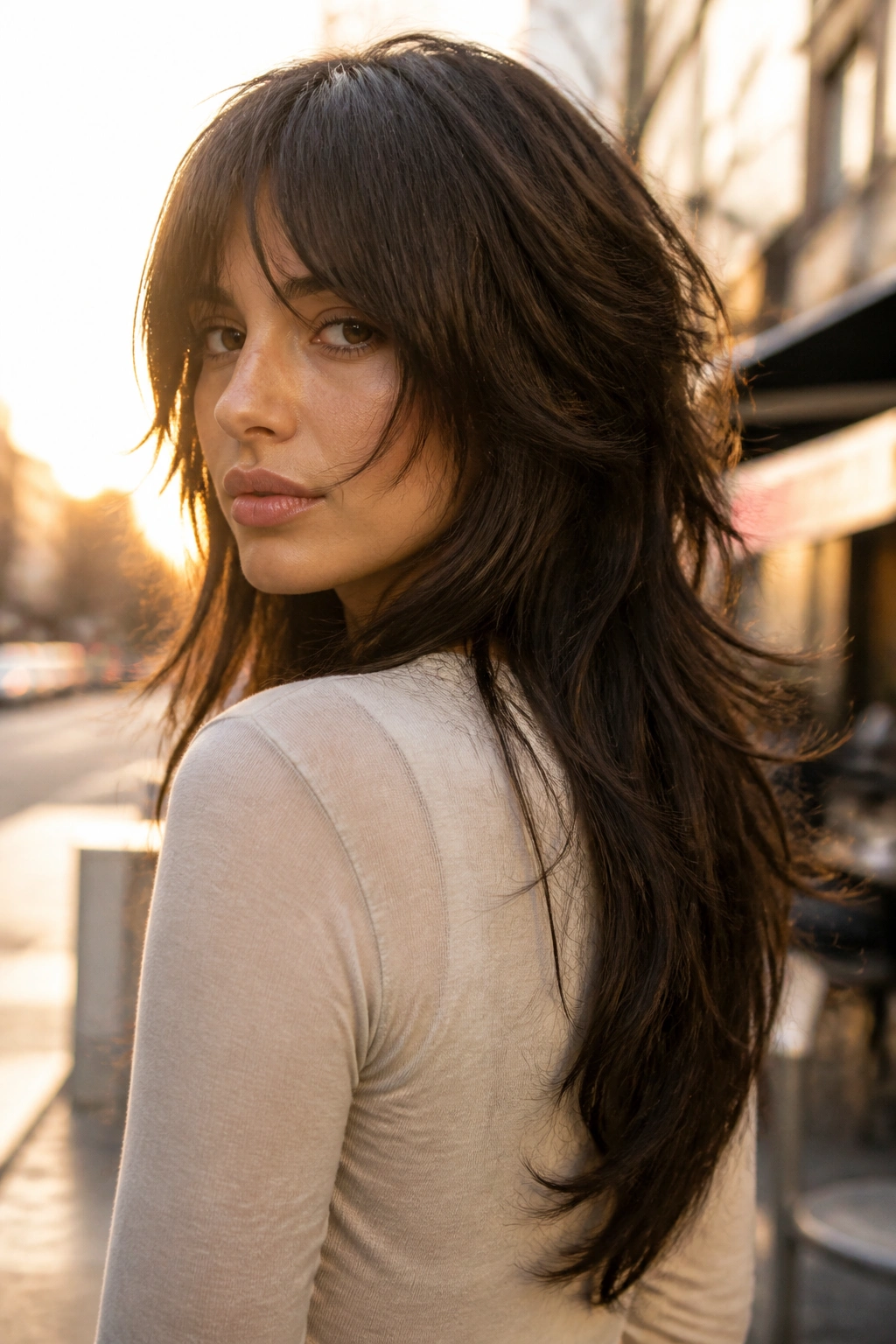
The V-layer shape is a smart move for thick hair because it keeps the back from sitting as one heavy sheet. Instead of a blunt hem, the length tapers into a point, which lets the weight fall in a cleaner line and makes the layers visible instead of buried.
Why it looks different from a standard layered cut
The face-skimming pieces are doing more than decoration here. They create the front shape, while the V in the back gives the haircut its long, directional feel. That combination keeps the style from reading as a plain shag. There is more structure in it.
This cut is good for people who wear their hair down most of the time and want some movement without sacrificing length. Thick hair benefits because the lower section is not forced into a boxy line. Instead, it fans out naturally, especially once you add a little wave or bend.
- Strong choice for long straight hair
- Helps dense ends look lighter
- Works with side parts or center parts
- Needs regular shaping at the hem to keep the V crisp
If you like a longer silhouette with a little drama, this one has teeth.
12. Boho Wavy Mullet with S-Curl Texture
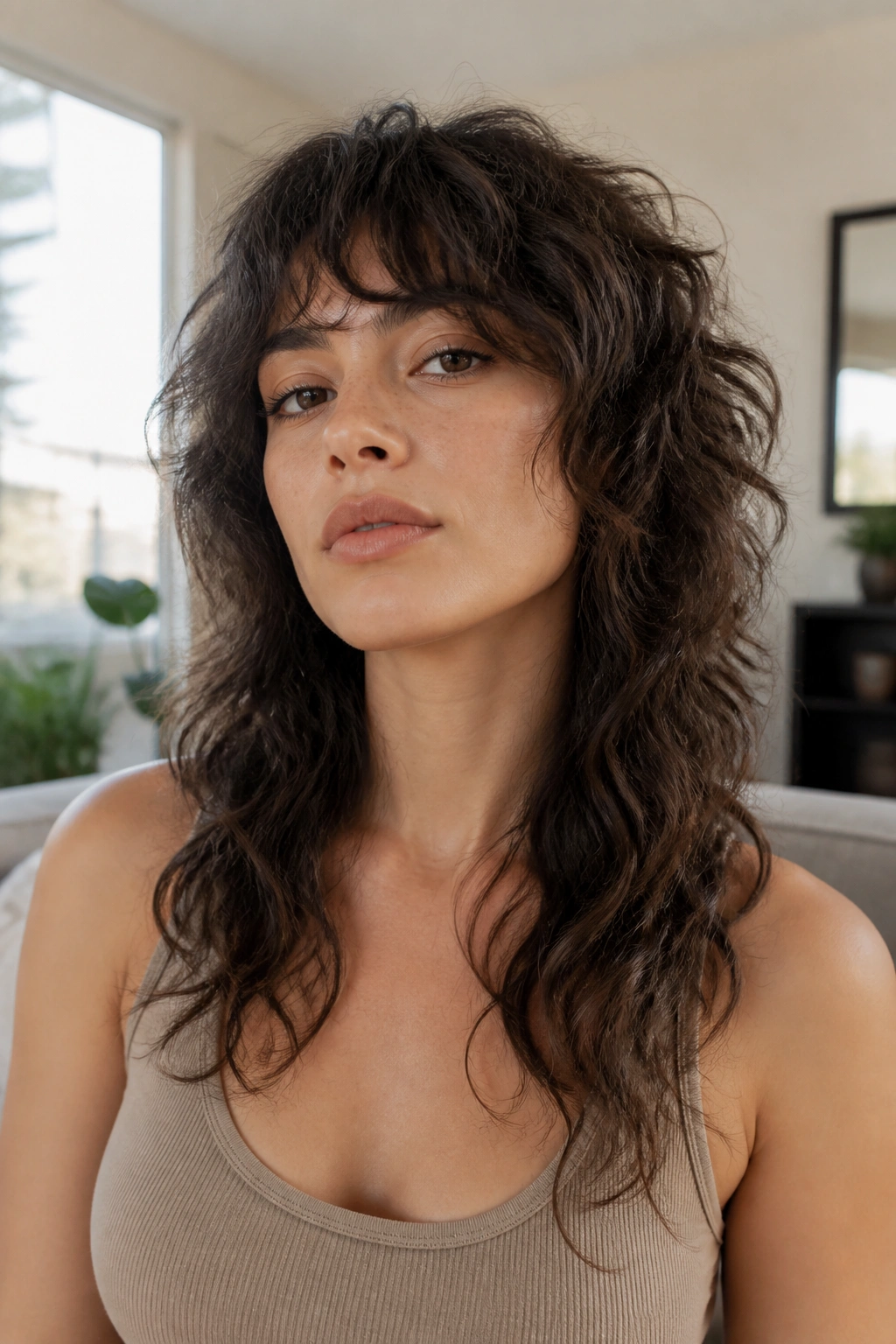
A boho wavy mullet looks relaxed, but there is a reason it works so well on thick hair: the waves break up mass before the mass can dominate the shape. A little S-bend through the mids and ends makes the whole cut feel softer, looser, and less dense.
This is the style I think of for hair that already has some natural wave but needs a better haircut to show it off. The layers should be cut to support that movement, not fight it. If the cut is too blunt at the bottom, the wave pattern collapses. If the layers are too short, the hair can puff. The sweet spot sits between those two mistakes.
You can style it with a diffuser, a braid-out, or a quick pass with a small wand, then shake it out with your fingers. I prefer finger separation over brushing because brushing thick waves often turns them into a fluff cloud. Not a good look.
A little salt spray can help, but do not drown the hair in it. A light mist gives separation; too much leaves the ends dry and rough. That line matters more than people admit.
13. Choppy Crown Mullet with Long Ends
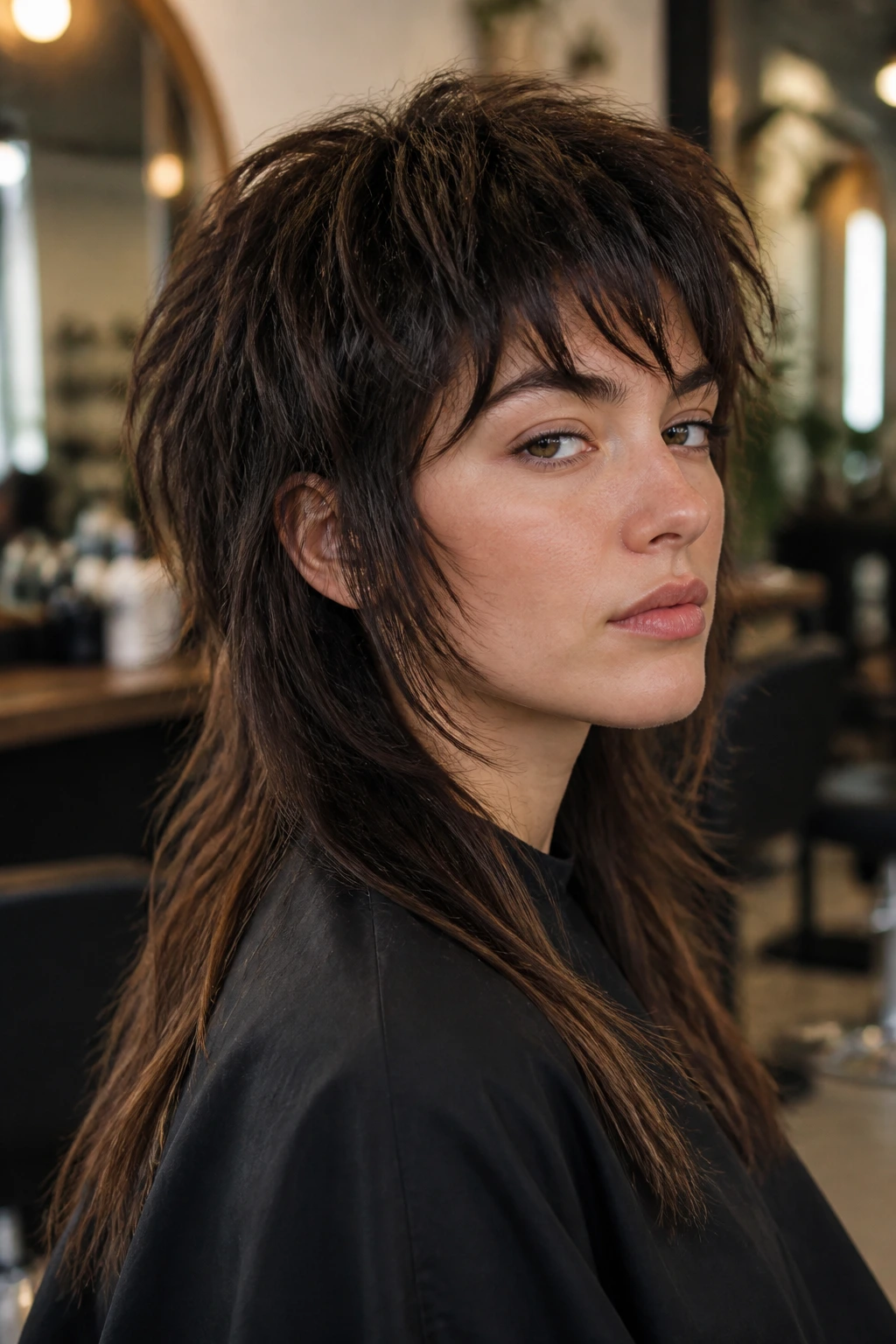
This cut lives or dies by the crown. If the top is flat, the whole style falls apart. If the crown has lift and the ends stay long, the haircut gets that cool, slightly undone shape that thick hair can carry so well.
The choppy crown gives you volume where the eye expects it first. That makes the back feel lighter without forcing you to sacrifice length. It also helps if your hair tends to sit heavy at the roots, because the crown texture creates a little lift before the rest of the hair even moves.
What to ask for:
- Shorter internal layers at the crown, but not so short they spike
- Long, soft ends at the perimeter
- Face-framing pieces that begin around the lip or chin
- Texture cut into the top, not the whole head
This version needs a bit of styling on most people. A root-lifting foam or mousse helps, and a quick flip of the head while drying can wake the top up fast. You do not need a lot of effort, though. A good cut does most of it for you. That is the real point.
14. Side-Swept Fringe Mullet
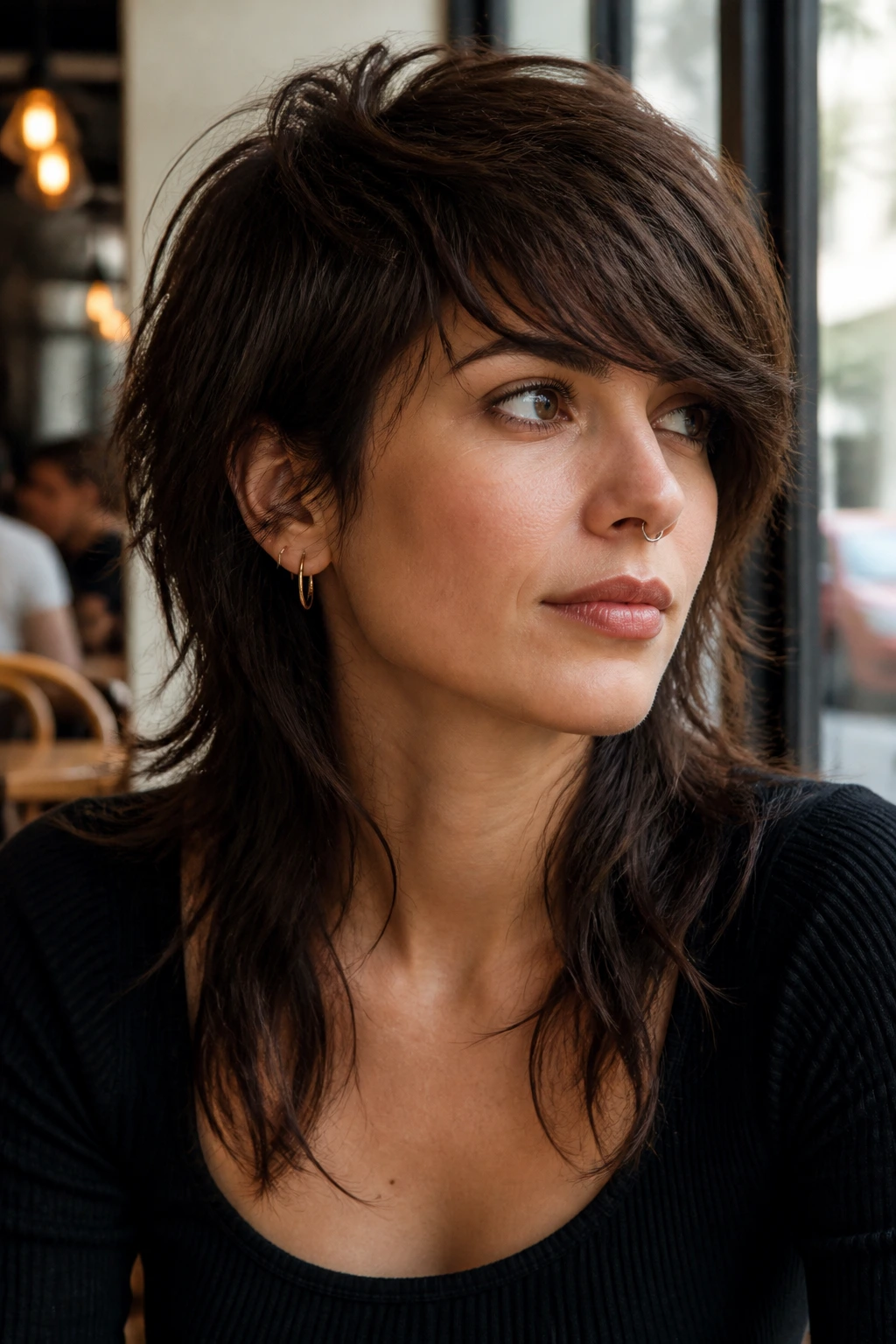
Why does a side-swept fringe work so well on thick hair? Because it breaks the horizontal line that can make dense hair look wide. The diagonal fall of the fringe narrows the face visually and gives the cut a softer, more tailored front.
This is a smart pick if curtain bangs feel too open and a full fringe feels too heavy. The side-swept shape sits in the middle. It gives you coverage without building a wall across the forehead, and it grows out with less of that awkward bang stage that everyone pretends not to hate.
How to keep it from going flat
Blow-dry the fringe in the direction you want it to live, not straight down. A medium round brush or even a large Velcro roller can help set the bend while the rest of the hair dries. The rest of the mullet can stay a little messier, which is part of the contrast.
This cut has a softer, more romantic feel than the sharper wolf-mullet versions. If you want shape but not edge, this is a very safe place to land. Safe does not mean boring here. It means usable.
15. Glossy Long Mullet with Tapered Ends
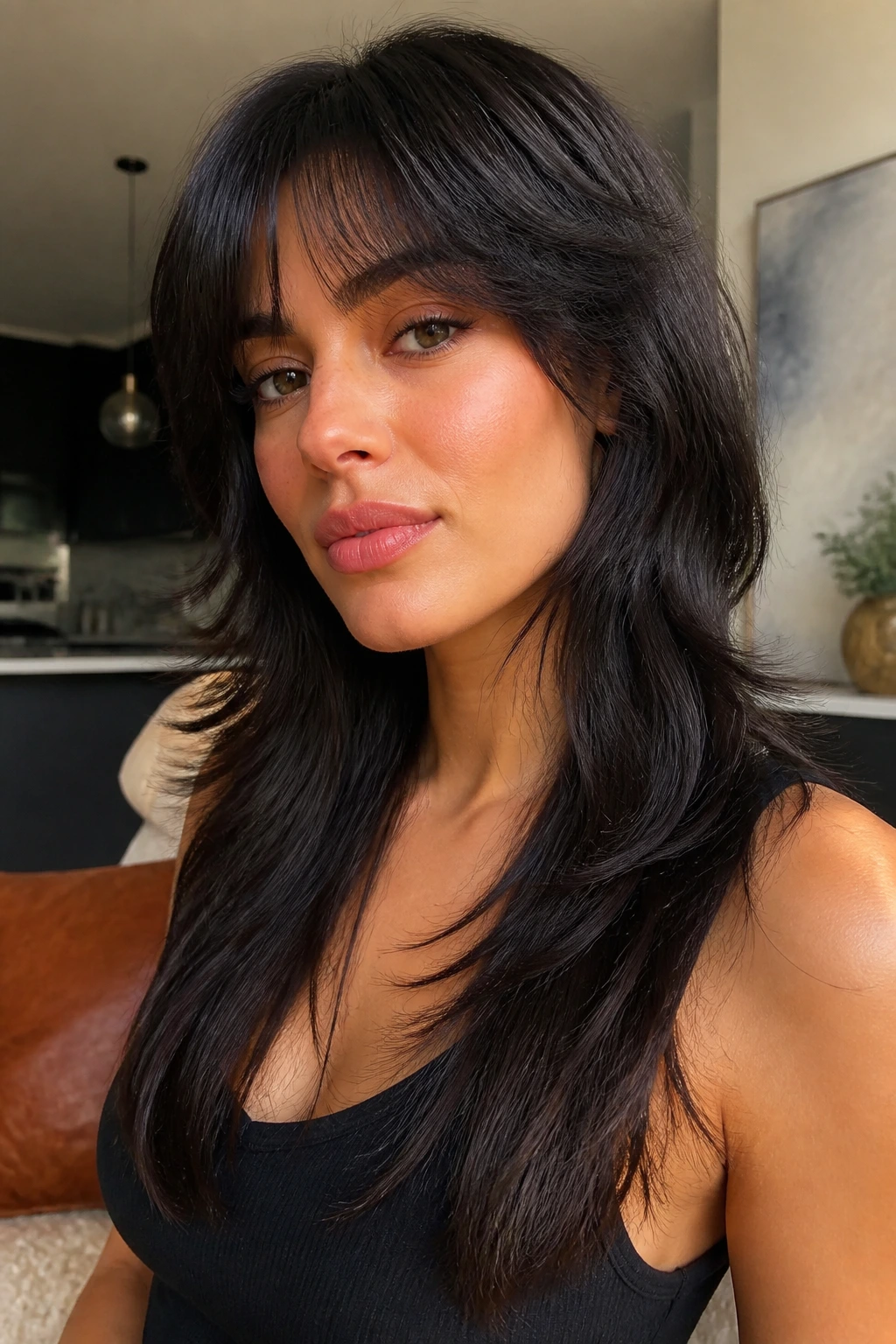
The glossy long mullet is for thick hair that looks best when it still has weight and shine. The layers are there, but they are quieter. The ends taper instead of fray, so the cut keeps a smooth outline while still moving around the shoulders and back.
I like this one for straight or slightly wavy hair that gets frizzy when it is overcut. Heavy layering can sometimes make thick hair too thirsty for shape. This version avoids that trap. It removes enough bulk to keep the silhouette from feeling square, but it leaves enough density at the bottom to look expensive in the everyday sense of the word: healthy, full, and intentional.
This is also the easiest style to dress up. A blowout makes it sleek. Loose bends make it casual. A tuck behind one ear changes the whole front. Thick hair gives you those options, and the taper keeps the line clean no matter which direction you go.
If you want a long shag mullet that feels wearable at work, on a night out, or just on a random Tuesday when your hair has to cooperate, this is the one I would save to your camera roll.
Final Thoughts
Thick hair is not the problem. Bad shaping is. A long shag mullet works when it removes bulk with purpose, keeps enough length to stay flattering, and gives the hair a clear direction instead of leaving it to swell wherever it wants.
The best choice depends on how much edge you want, how much styling you can tolerate, and whether your hair leans straight, wavy, or curly. Bring photos. Better yet, bring two or three photos that show the same silhouette from different angles. That makes the conversation with your stylist much easier.
If I had to give one practical rule, it would be this: ask where the weight is being removed. That question tells you almost everything about whether the cut will work on thick hair or turn into a puffed-up mess.
