



A good hairstyle can make a plain outfit look deliberate.
That’s why hairstyle ideas women are loving tend to do one of three things: sharpen the face, soften the face, or make the whole morning routine less annoying. The best ones aren’t always the most dramatic. Often, they’re the styles that hold their shape after a commute, survive a windy walk, and still look decent when you take the clip out at dinner.
I’ve always thought hair works best when it respects what your hair already wants to do. Fine hair usually behaves better with clean lines and lift at the crown. Thick hair tends to look strongest when the bulk is controlled instead of fought. Curly hair can be gorgeous in a blunt shape, but only if the cut leaves room for the curl to spring instead of puff out.
So the smartest women’s hairstyle ideas are the ones that look intentional without needing a full morning of effort. Some are polished. Some are easy. Some look a little bolder than you’d normally wear, which is half the fun.
1. Blunt Chin-Length Bob
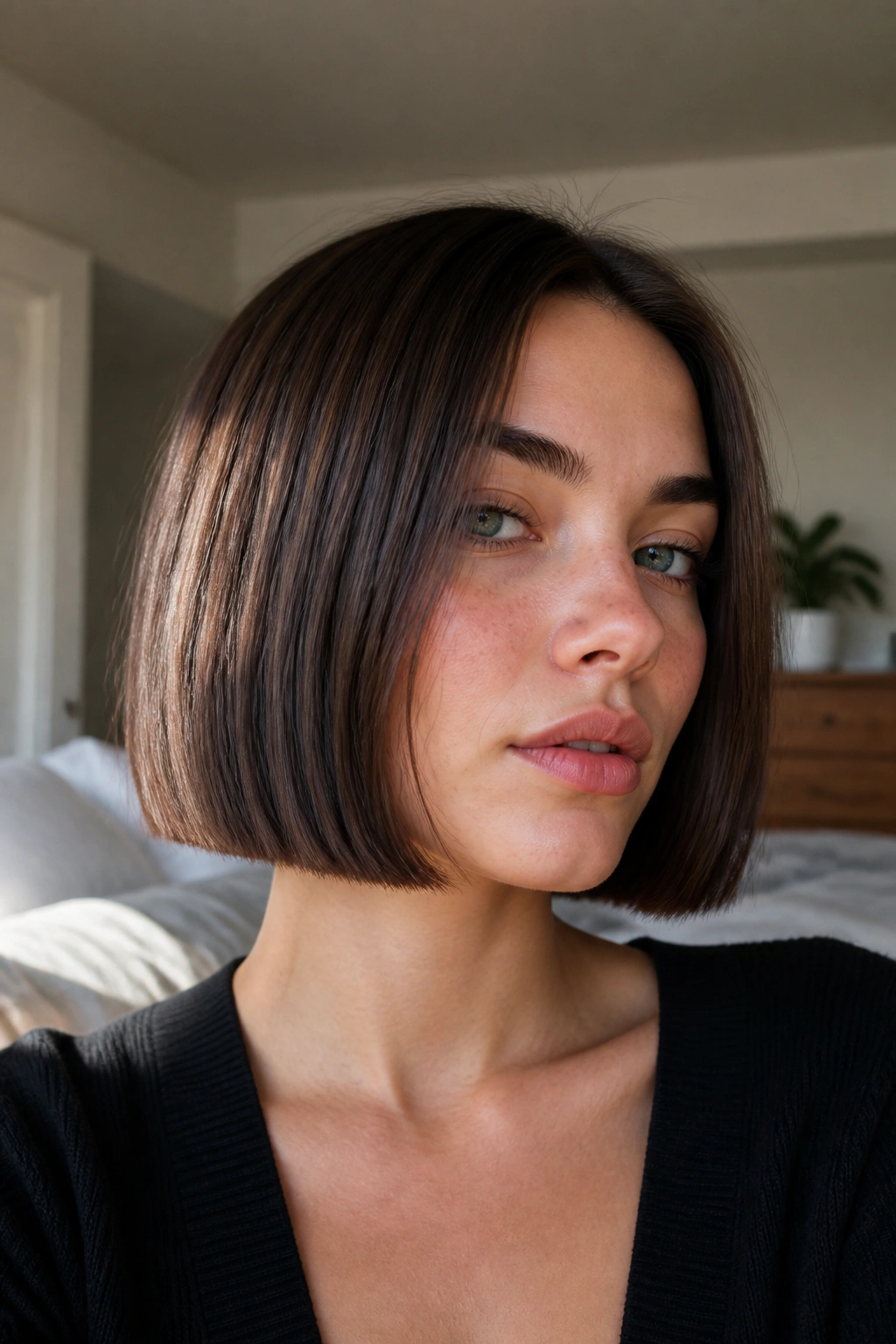
A blunt bob hits hard in the best way. The straight edge gives the hair weight and shape, and that matters a lot if your hair tends to fall flat by lunchtime.
Why It Works
The chin-length cut lands right where the jaw starts to matter, which is why it sharpens the face so nicely. It also makes fine hair look fuller because you’re not dragging the length down with too much weight.
If you want it to sit well, ask for the line to be clean and even, not choppy. A tiny bit of texture at the ends is fine, but the whole point is that crisp edge.
- Best for straight to slightly wavy hair
- Usually styled with a 1-inch round brush or a flat iron
- Needs a trim about every 6 to 8 weeks if you want the line to stay sharp
- Looks good tucked behind one ear, which sounds small and isn’t
Pro tip: Blow-dry the roots first, then smooth the ends last. That order keeps the bob from puffing out at the bottom.
2. Curtain Bangs with Long Layers

Curtain bangs are still everywhere for a reason: they make long hair look like it has a plan. Without them, long layers can sometimes drift into “fine, I just let it grow” territory. With them, the whole cut feels more finished.
The best part is how forgiving they are. These bangs part in the middle and sweep away from the face, so they grow out more gracefully than blunt bangs and do not demand perfect styling every single day.
Ask your stylist for bangs that start around the cheekbone or just below it, then blend into layers that move through the mid-lengths. If the shortest pieces are too short, they can flip awkwardly. If they’re too long, they disappear.
A medium round brush and a quick blow-dry toward the back of the head is usually enough. Add a pea-size dab of styling cream to the ends, not the roots, or the whole thing can go limp.
3. Sleek Low Bun with a Center Part
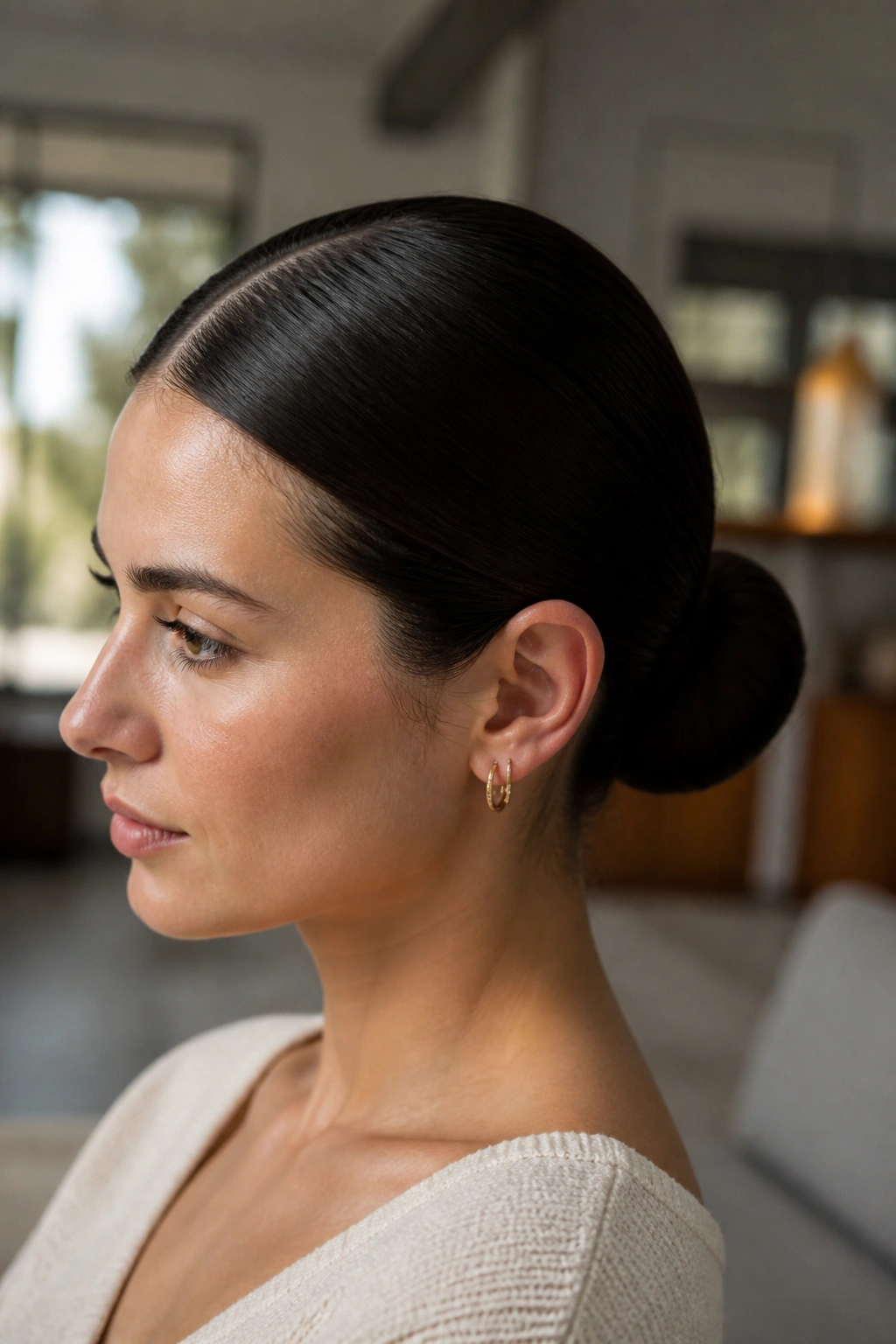
Need something polished that survives a long day and still looks neat at 7 p.m.? The sleek low bun does that job without fuss.
It’s the haircut equivalent of a crisp white shirt. Clean, simple, and annoyingly useful.
How to Style It
Start with hair that’s either freshly washed or smoothed with a little serum if it’s on day two. Make a clean center part, brush everything down with a boar-bristle brush, and gather the hair at the nape. A soft elastic plus two or three bobby pins usually holds better than one oversized clip that slips around.
For the finish, a light gel or smoothing cream on the top section keeps flyaways from sticking up. You do not need to drown the hair in product. A little goes a long way here, and too much makes the bun look greasy instead of sleek.
This style works especially well if your hair is fine, because the low placement gives it control. It also plays nicely with earrings. Tiny detail, but it matters.
4. Butterfly Layers with Soft Movement
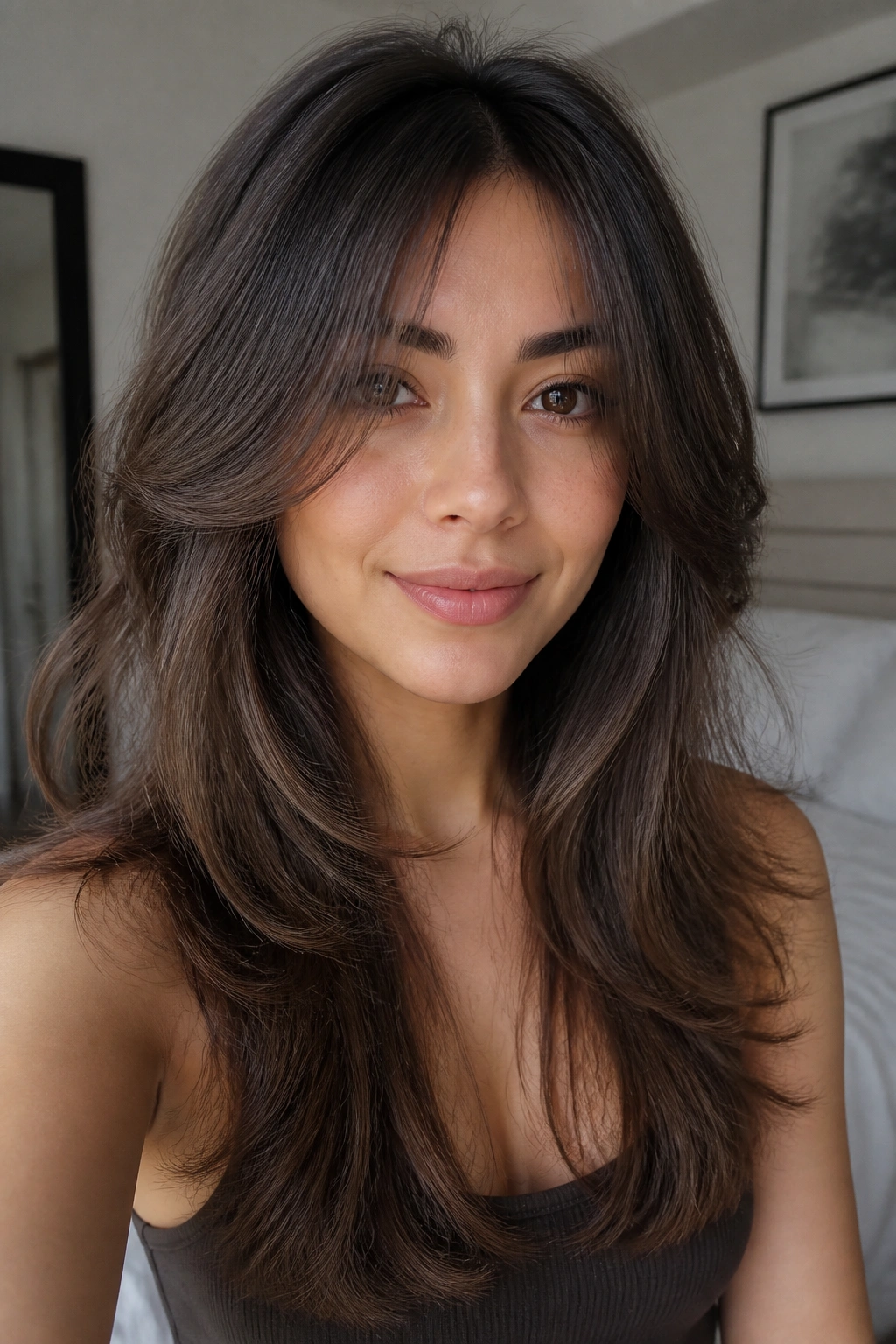
The first thing you notice is the lift. Butterfly layers create that airy, blown-out shape that makes hair look fuller around the face and lighter through the ends.
I like this cut because it gives you two moods at once. The top layers bring volume and shape close to the cheekbones, while the longer bottom layers keep the length. That balance is why it flatters so many women.
If your hair has felt heavy or a little dragged down, this is one of the best fixes. You get movement without losing the length you’ve been growing for ages.
Good Things to Ask For
- Shorter face-framing layers that hit around the cheekbone to jawline
- Longer layers through the back so the ends stay soft
- Blowout-friendly shaping, not razor-thin wisps
- Enough weight left at the bottom to keep the style from frizzing out
For styling, a 1.5-inch curling iron or a round brush gives the right bend. Curl away from the face on the front sections, then brush everything out with your fingers. That loose, airy finish is the whole point.
5. Claw-Clip French Twist
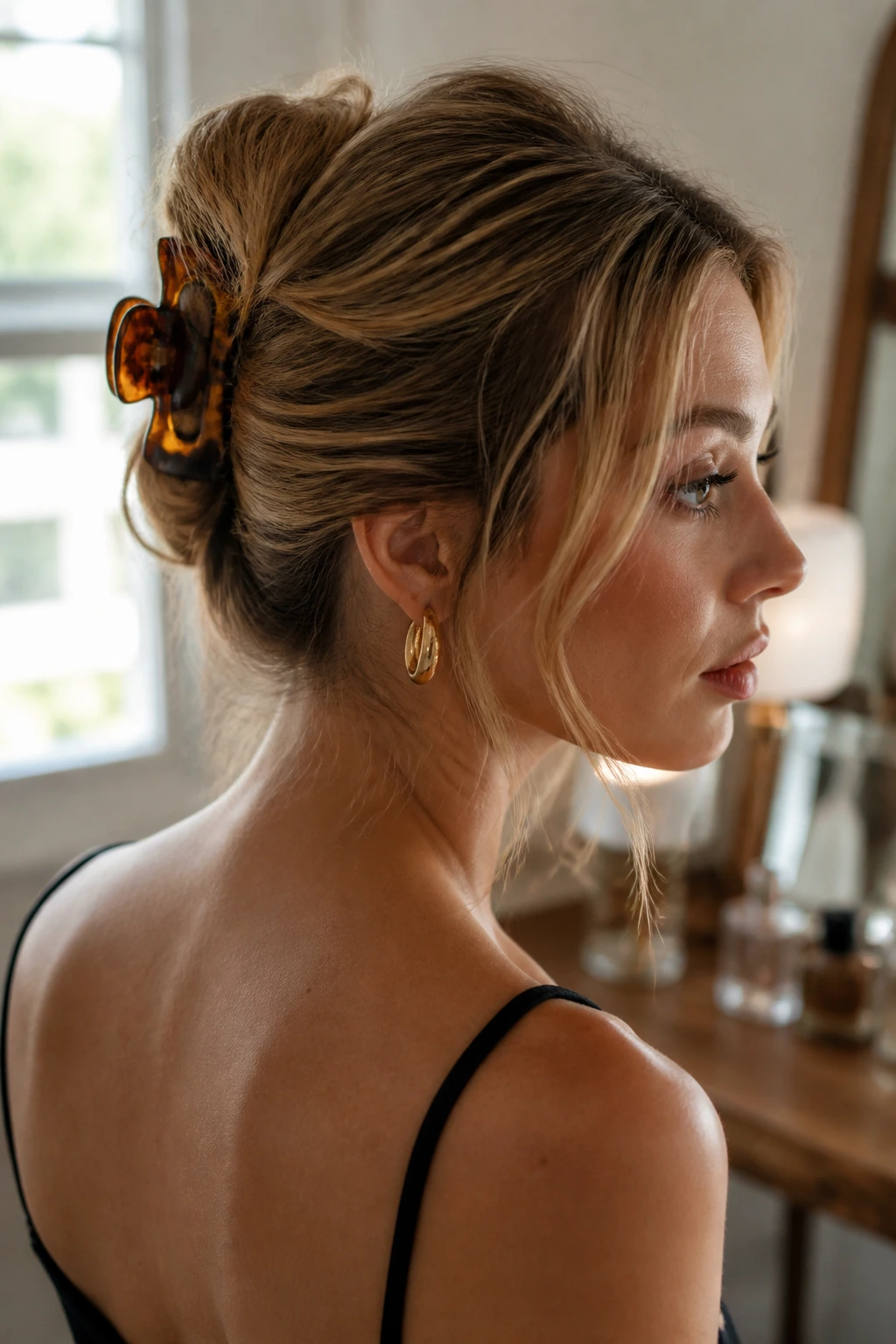
This is one of those styles that looks more complicated than it is. Good. We need more of those.
A claw-clip French twist works best on medium to long hair with a little grip, which is why second-day hair often behaves better than freshly washed hair. The clip catches the twist, the twist holds the shape, and you get a neat updo in under two minutes if your hands know the pattern.
The trick is not to twist the hair too tightly. Leave a little softness at the crown so the style doesn’t look severe. Pull out a few face pieces if you want it to feel less formal, or keep it tight if you’re aiming for a cleaner finish.
I prefer medium-size clips with teeth that actually bite into the hair. The flimsy ones slide. Always. If your hair is thick, choose a larger clip and pin the twist once before clipping it. That tiny extra step saves the style when you move around.
6. Collarbone Lob with Loose Waves
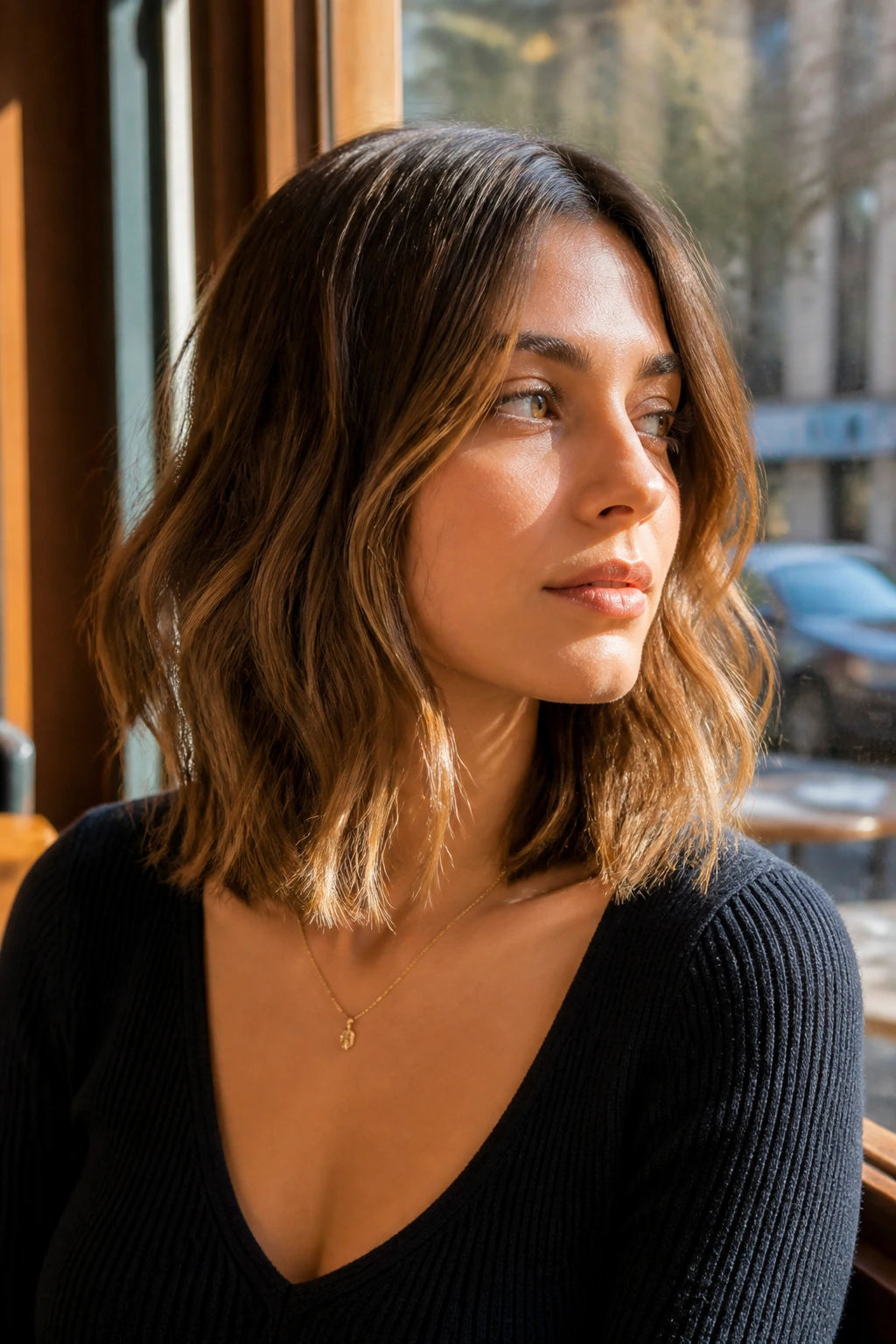
The lob is the middle ground that keeps winning because it solves a real problem: you want length, but you are tired of hair getting stuck on coat collars, chairs, bag straps, and your own patience.
Compared with a longer cut, a collarbone lob feels lighter and easier to style. Compared with a bob, it still gives you enough length to tuck, wave, clip, or braid. That’s the sweet spot for a lot of women.
Loose waves are the best way to wear it. Curl sections away from the face with a 1.25-inch iron, leave the ends slightly straighter, and shake the curls out once they cool. That little bit of imperfect texture keeps the lob from looking too done.
If you have naturally wavy hair, don’t over-style it. A salt spray at the mids and ends is often enough. Too much heat can make the shape frizzy instead of soft.
7. Wrapped High Ponytail

A high ponytail gets a lot better when you hide the elastic. That one tiny move changes the whole mood of the style.
What Makes It Look Finished
The wrapped base gives the ponytail height without making it look like a gym-only style. A small piece of hair wrapped around the elastic instantly makes it look more polished, even if the rest of the hair is straightforward.
Tease the crown lightly before you gather the ponytail. A one-inch lift at the roots is enough for most hair types; you do not need a giant bump. Smooth the sides with a brush, secure the ponytail high on the head, then wrap a thin strand around the elastic and pin it underneath.
- Best for medium to thick hair
- Looks cleaner if you use a smoothing cream on the top
- Works well with straight, wavy, or blown-out texture
- Takes less time than most updos once you’ve done it a few times
If your ponytail always sags, the elastic is probably too loose or the sectioning is too low. High placement makes the whole style feel sharper.
8. Bubble Braid with Glossy Sections
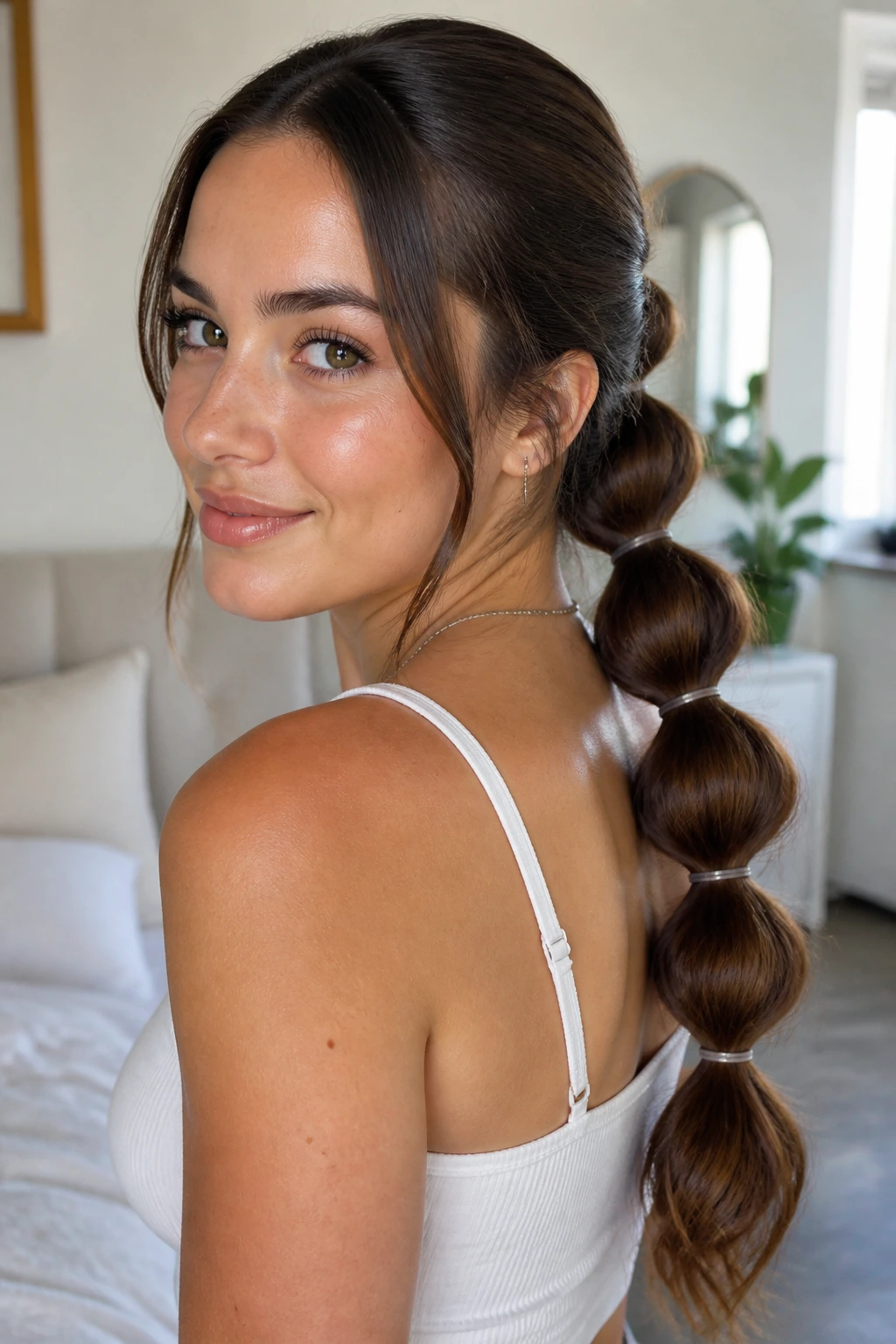
A bubble braid looks playful, but it’s also one of the easiest ways to make long hair feel styled without braiding every tiny strand.
The structure is what sells it. Clear elastics placed every 2 to 3 inches create those rounded “bubbles,” and once you gently tug each section outward, the braid gets shape fast. It’s a smart option for straight hair that needs more visual interest.
The glossy finish matters too. A light shine serum or a touch of hair oil on the outer layer keeps the sections looking intentional instead of fuzzy. Just stay away from the roots unless you want the style to collapse early.
This one works for errands, events, and days when you want something that reads as a little creative. It’s also kinder to long hair than tight braids that pull at the scalp all afternoon.
9. Pixie Cut with a Longer Top
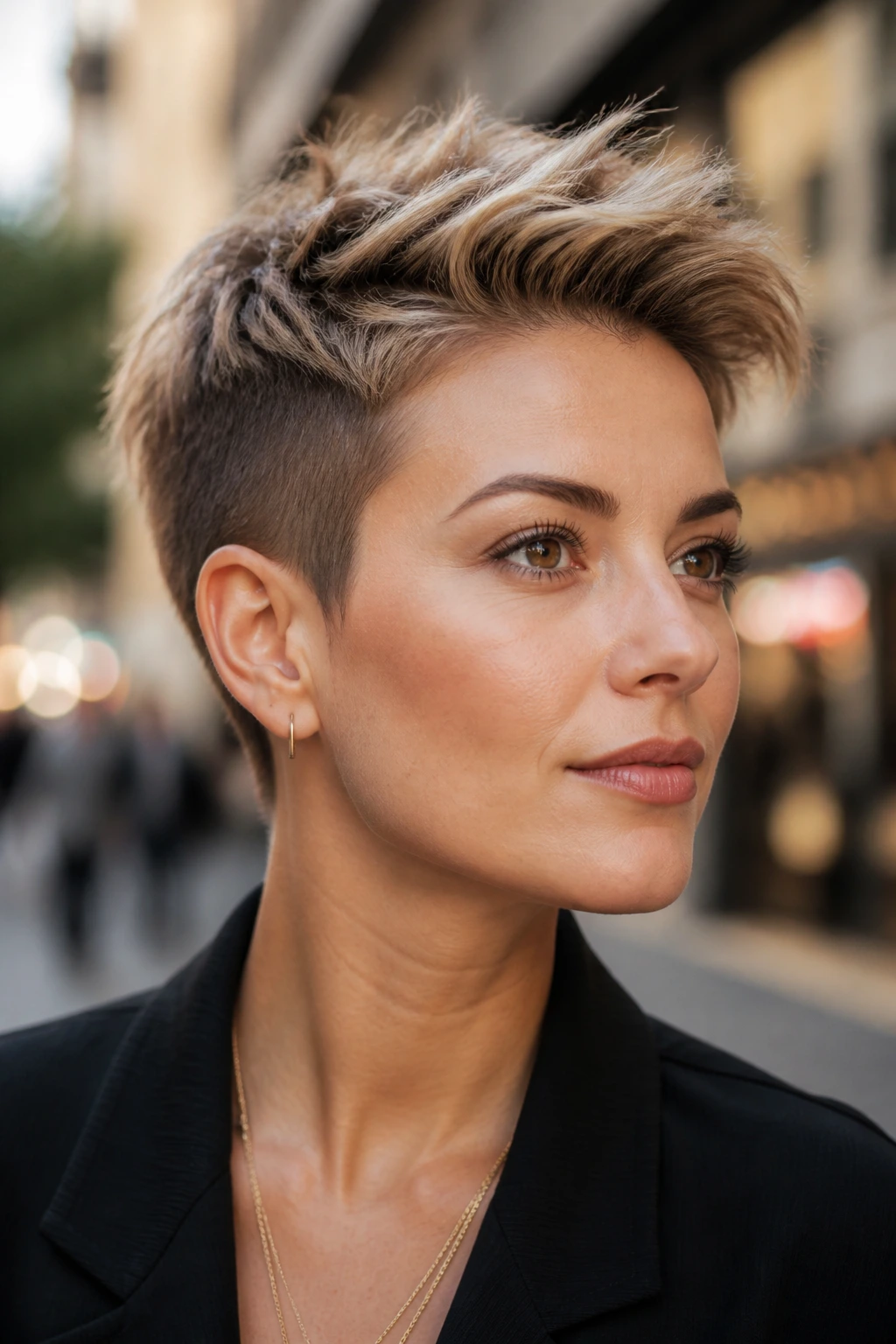
Do you want hair that feels bold but still gives you something to play with? The pixie with a longer top does exactly that.
The short sides and back keep the shape neat, while the longer top lets you sweep, spike, part, or flatten the hair depending on the day. It’s not a one-note cut. That’s the appeal.
How to Wear It
Use a small amount of texturizing paste, about the size of a pea, and warm it in your hands before touching the top layers. Then push the hair forward for a soft fringe, or lift it at the roots if you want more volume. A little product goes farther on short hair than people expect.
This cut looks especially good when the nape is kept tidy. If the back grows out too far, the shape starts to lose its edge. A trim every 4 to 6 weeks usually keeps it behaving.
The pixie is not lazy hair, by the way. It is efficient hair. There’s a difference.
10. Half-Up Style with Face-Framing Pieces

This is the style you reach for when you want your hair off your neck but don’t want a full updo. It gives you lift at the crown, shape around the face, and enough length left down to keep it soft.
The face-framing pieces are what make it feel fresh. Curl them away from the face with a 1-inch iron, then let them fall naturally. If you leave them pin-straight while the rest is styled, the contrast can look accidental.
A half-up style works especially well with medium and long hair. The trick is taking the top section from about the temples back, not too far down the sides. Too much hair and it becomes bulky. Too little and it looks unfinished.
Use a small elastic, a clip, or even a barrette if you want it to feel dressier. And yes, a little teasing at the crown helps. No need to make a helmet out of it.
11. Modern Shag with Piecey Ends
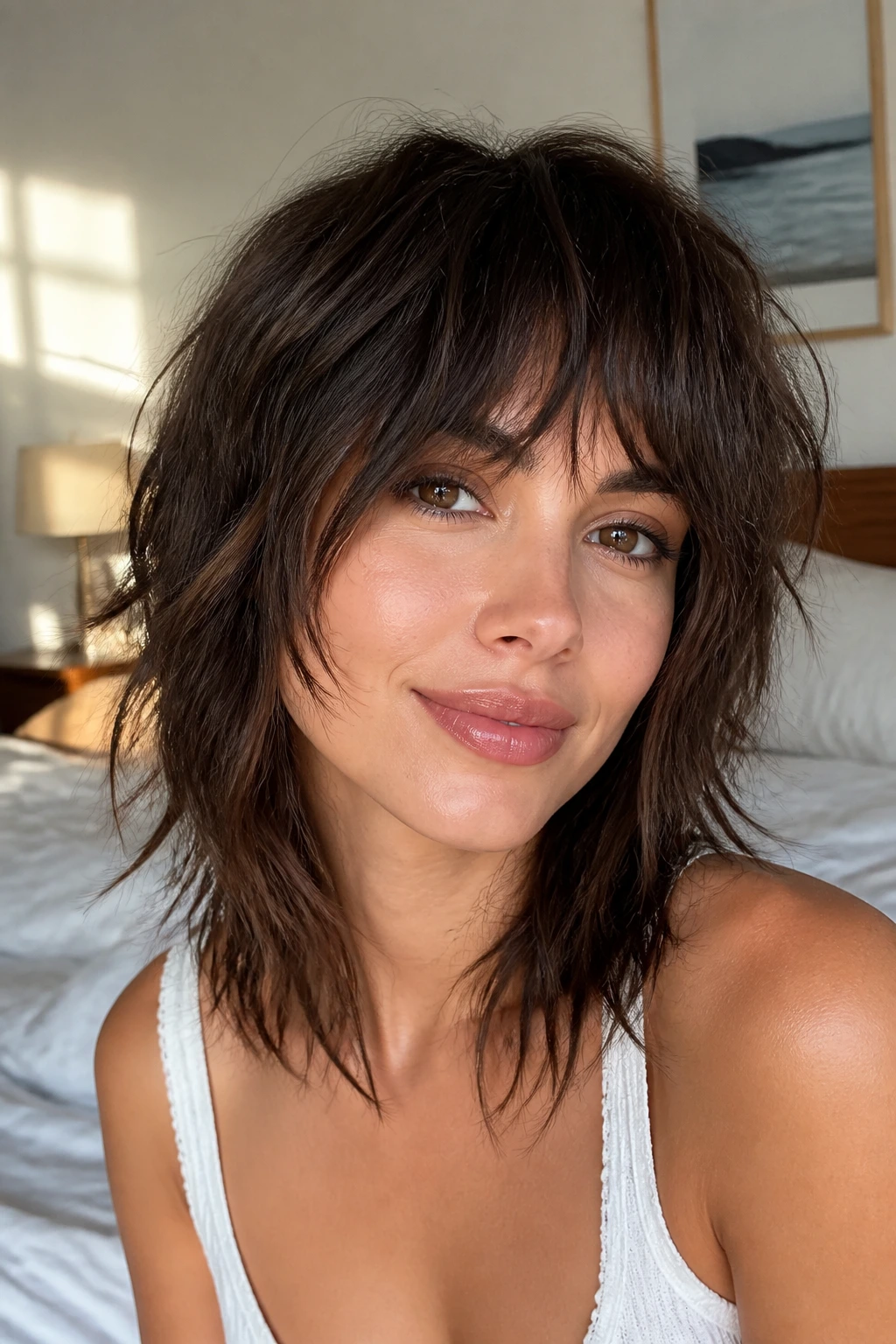
A good shag is never sloppy. That’s the first thing to understand.
The modern shag uses layers around the crown and through the face, then keeps the ends broken up and piecey so the hair moves instead of sitting in one heavy curtain. It works because it has attitude, but it still needs shape. The difference is obvious when the cut is done well.
This style is especially friendly to naturally wavy or curly hair because the layers can follow the movement instead of fighting it. Straight hair can wear it too, though it usually needs a bit more styling cream or texture spray to keep the layers from collapsing into each other.
I like this cut on women who want something less polished than a lob but more controlled than a full wolf cut. It has edge, but it does not need to shout.
A diffuser, a handful of mousse, and a quick scrunch at the ends can take it a long way.
12. Wet-Look Slicked-Back Bun
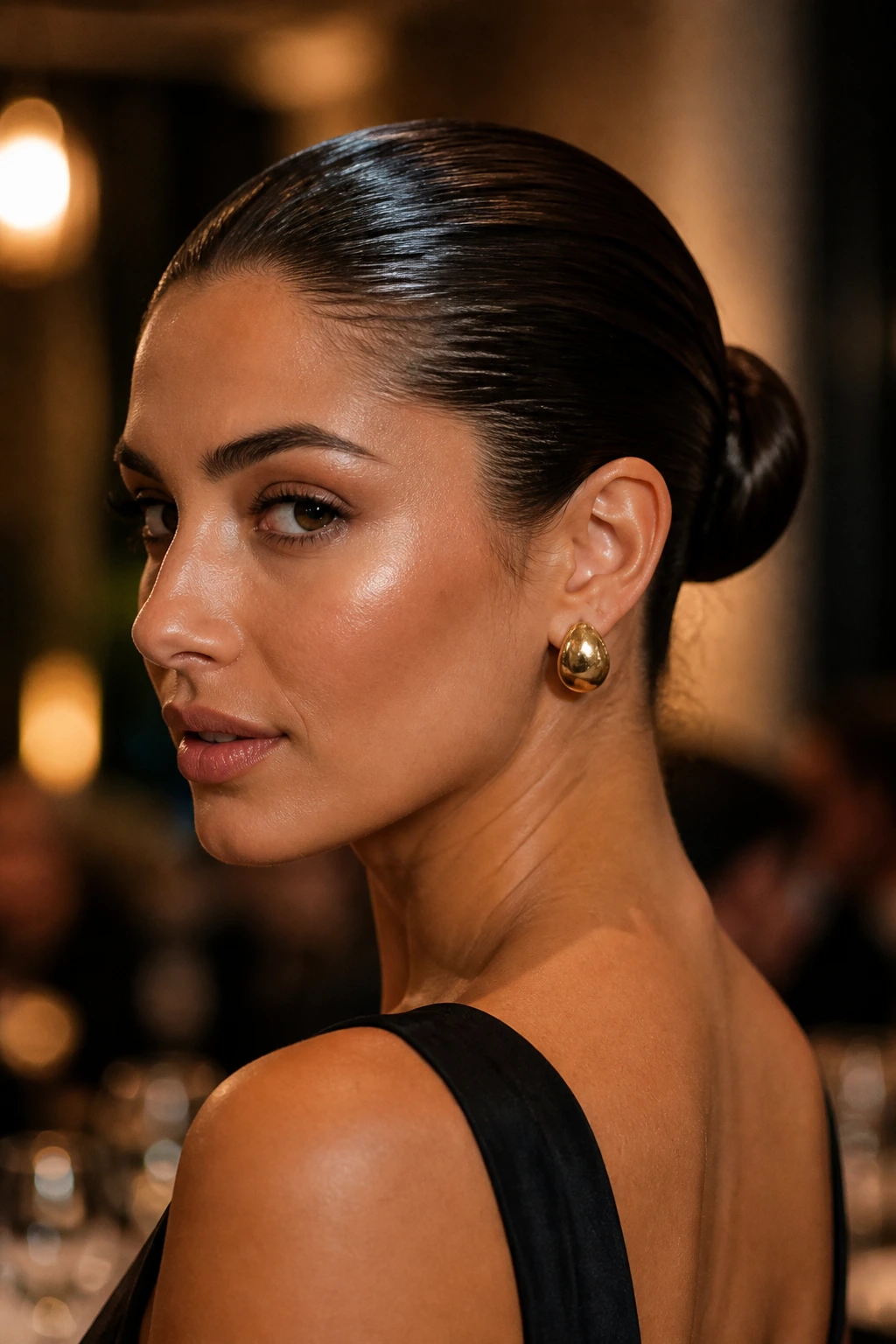
A slicked-back bun can look sharp, but the wet-look version feels a touch cooler and more deliberate. It also makes sense when your hair is slightly damp and you do not feel like blasting it dry for twenty minutes.
Compared with a soft low bun, this one has more shine and less softness. Compared with a high ponytail, it keeps everything close to the head and out of the way. That makes it a favorite for evenings, humid days, or any moment when frizz is being annoying.
What to Watch For
The key is using enough gel to hold the top, but not so much that the hair turns crunchy. Work the product through damp hair with a fine-tooth comb, then gather it into a bun at the nape or just above it.
- Best with medium to long hair
- Looks strongest on smooth or straight textures
- Can be pinned tighter for a formal finish
- Needs a little shine spray at the end if your hair drinks up product fast
I’d skip this style if your hair has a lot of short layers around the face. They can spring out unless you pin them properly.
13. Braided Crown for Busy Days
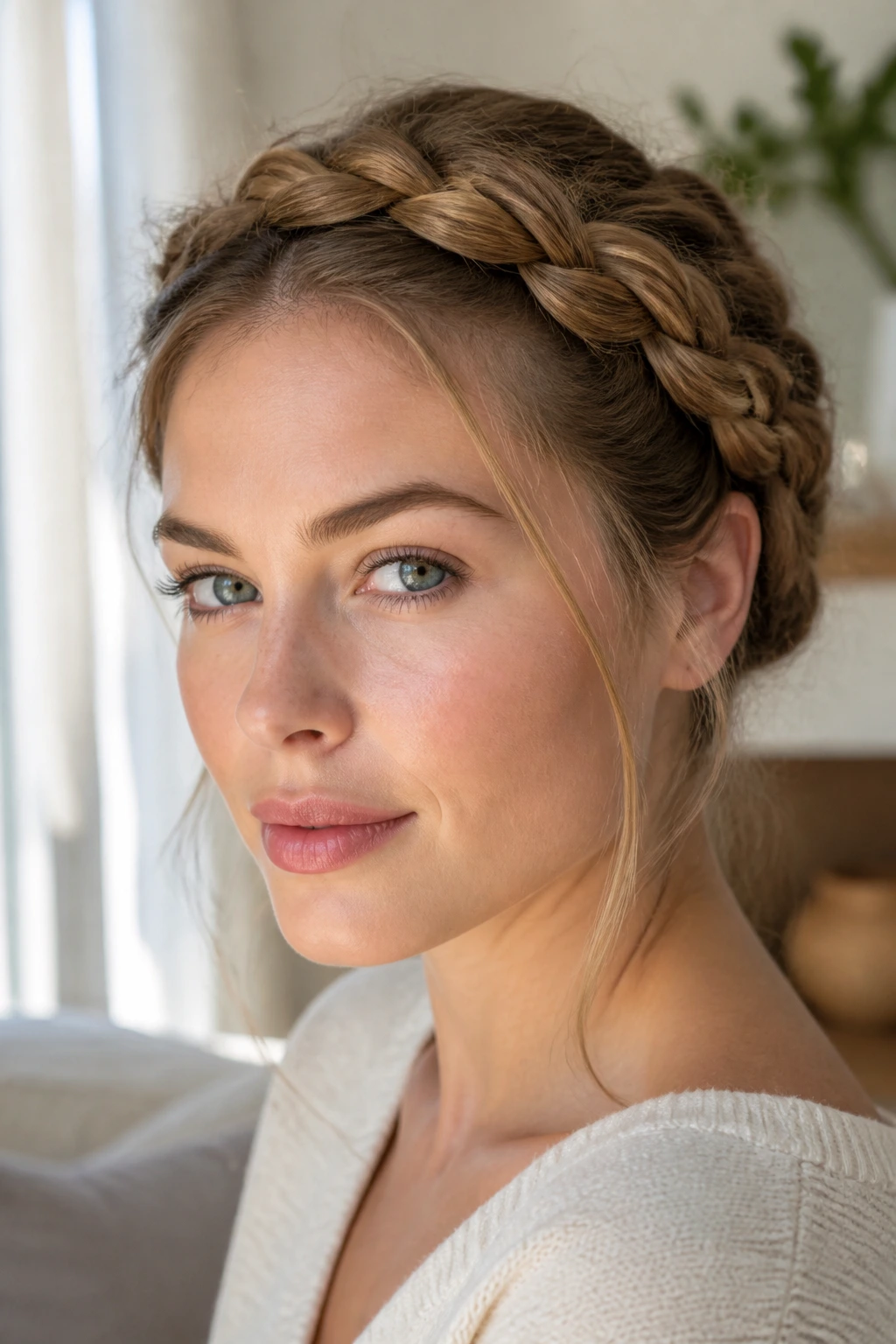
A braided crown looks fancier than the effort it takes, which is one reason it keeps showing up in real life. You can make it from one braid wrapped across the head or from two braids pinned together, and both versions work.
Why It’s Useful
It keeps the hair off the face, but it still feels softer than a tight bun. That matters on days when you want your hair controlled without looking severe.
If your hair is medium length or longer, start with a light wave or at least a bit of texture. Freshly silky hair can be slippery, and the braid won’t hold its shape as well. A tiny bit of dry shampoo at the roots gives the hair some grip.
- Works well for straight, wavy, and slightly curly hair
- Holds best with hidden pins placed every few inches
- Looks better when the braid is gently loosened after pinning
- Nice for weddings, dinners, and long workdays
The shape should sit around the hairline like a frame, not like a tight band. That small difference changes the whole feel.
14. Side-Swept Hollywood Waves

There’s a reason side-swept waves stay around. They look dressed up, but they do not demand a complicated haircut to work.
The deep side part is half the style. It gives one side more volume and lets the waves fall in a soft, cascading line over the shoulder. That shape flatters the cheekbones and adds movement even if your hair is naturally straight.
A 1.25-inch curling iron is usually the sweet spot for this look. Curl each section away from the face, clip the curls while they cool if you want a stronger bend, then brush them out gently. If you skip the cooling step, the waves fall faster.
This is one of those styles that benefits from a little extra finish. A flexible hold spray keeps the wave from going limp while still letting the hair move. Hard hairspray makes it look stiff, and that’s not the point.
15. Textured Midi Cut

What do you get when you want something shorter than long hair but less precise than a bob? A textured midi cut.
It sits around the upper chest or just above it, which gives you enough length to style without the daily drag of extra long hair. The texture matters more than the exact length here. Without it, the cut can feel heavy. With it, the hair gets movement and air.
How to Wear It
This cut looks good both straight and wavy, but the styling changes the mood. Straight and tucked behind the ears feels clean. Soft waves with an undone finish feel more casual and easy.
If your hair is thick, ask for internal texture rather than too many short face layers. That helps remove bulk without making the ends look thin. If your hair is fine, keep the ends blunt enough to hold their weight.
A soft blowout with a paddle brush works when you want smoothness. A quick wave with a flat iron works when you want something looser. That flexibility is the real reason people keep coming back to this length.
16. Twisted Low Ponytail
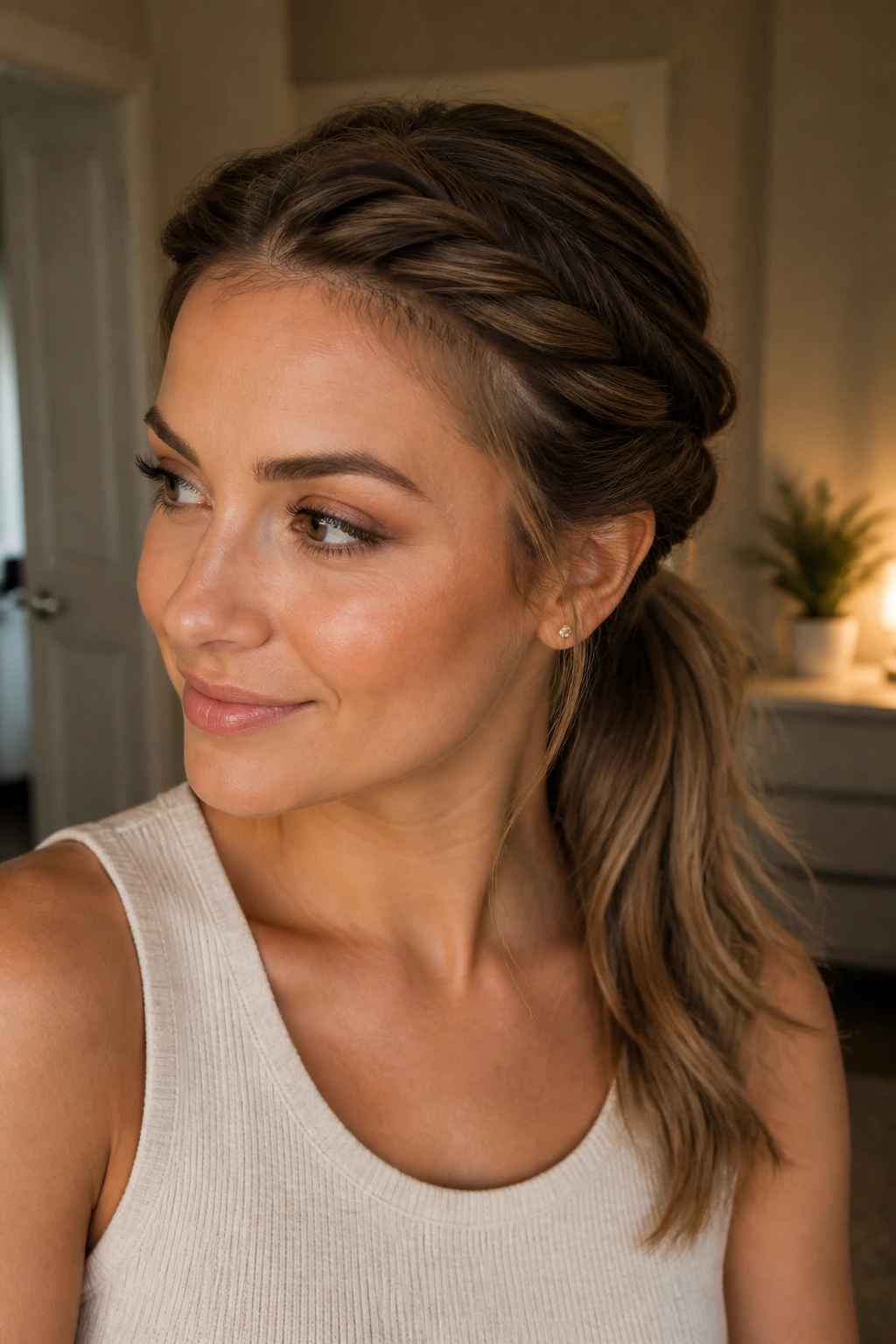
The twisted low ponytail is one of those styles that looks more thoughtful than a plain ponytail, but it takes only a little more effort.
Start by parting the hair in the middle or slightly off-center. Take two sections from the front, twist them back toward the nape, and secure the rest into a low ponytail. Then pin the twists into place so they don’t unravel and tuck the ends underneath if needed.
The style works especially well on hair that has some natural movement, because the twists give the front shape without requiring full curls. If your hair is very straight, a quick bend through the ends helps the ponytail sit better.
I like this look for days when a full updo feels too serious. It reads neat, but not stiff. A dab of serum on the tails keeps the ends from looking dry.
17. Voluminous Blowout Layers
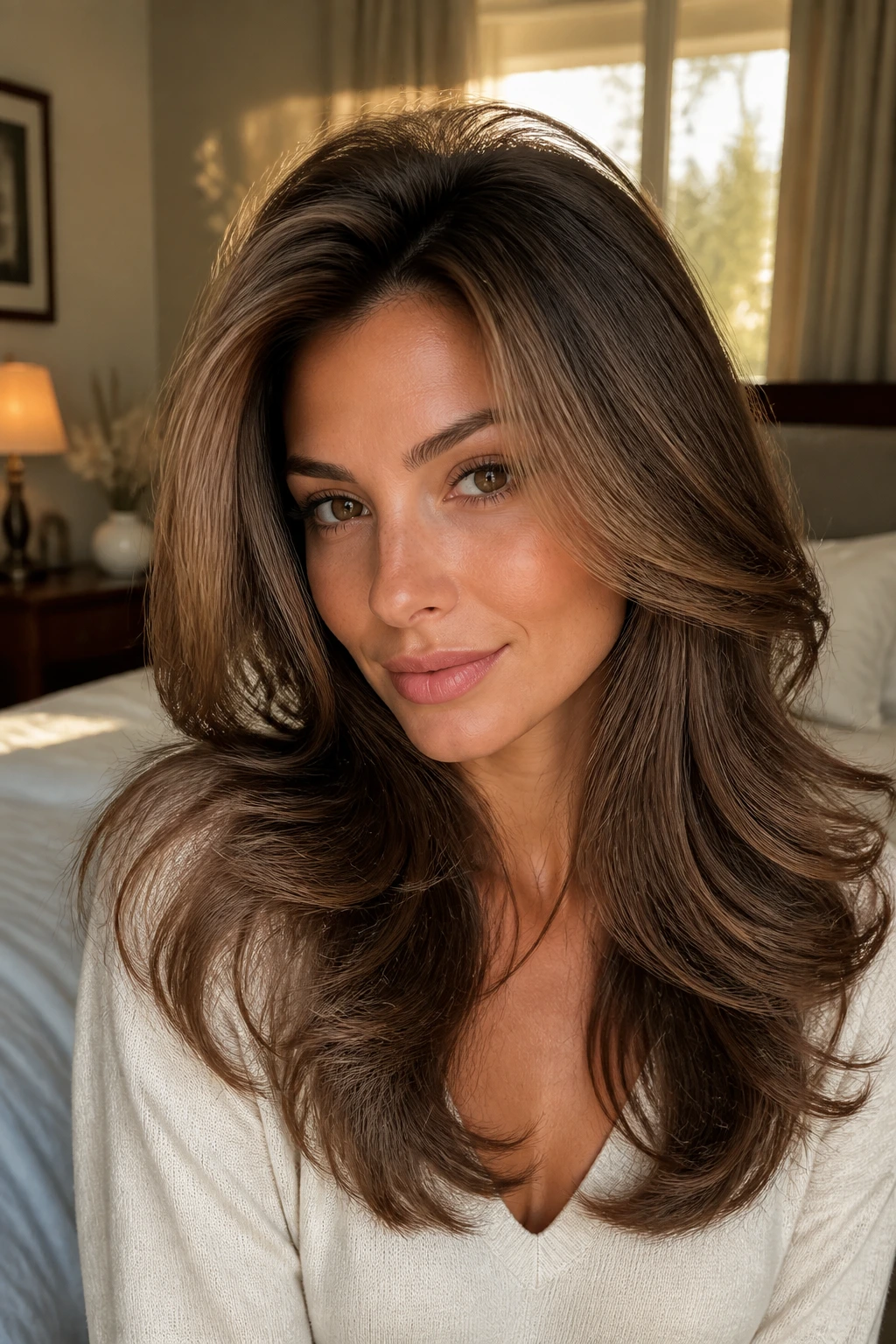
A blowout with layered movement still has a hold on women for a simple reason: it makes hair look healthy, full, and cared for without making it look overworked.
The goal is lift at the roots, bend through the mid-lengths, and soft ends that move when you turn your head. That sounds fancy. It isn’t, really. It’s just the sort of hair that looks better when it has a little round brush help.
Use root-lifting mousse on damp hair, about two pumps for shoulder-length hair, then rough-dry until the hair is about 80 percent dry. After that, use a round brush to direct the sections up and away from the scalp. Finish each section with a cool shot so the shape holds longer.
This style does take more time than a clip or bun. No pretending otherwise. But if you like hair that feels full and soft instead of flat, the payoff is worth it.
18. Soft Micro Bangs with a Bob
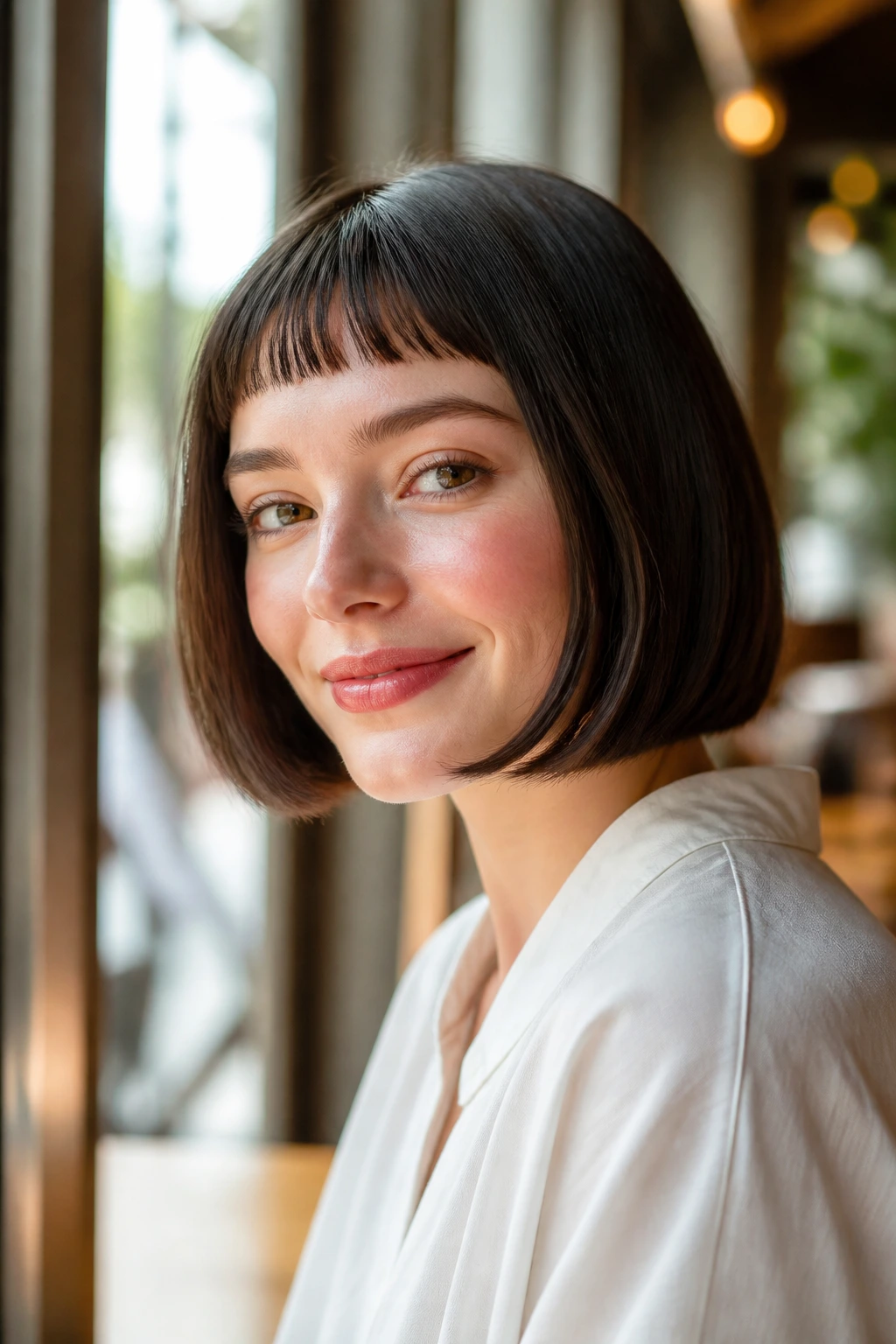
Micro bangs are not for everyone, and that’s exactly why they’re interesting.
Compared with curtain bangs, these are shorter, sharper, and more deliberate. They sit above the eyebrows and bring attention to the eyes, which makes them feel edgy without needing a wild haircut everywhere else. A bob underneath keeps the look grounded.
What Makes It Different
The bangs should feel soft at the edges, not helmet-straight across the forehead. If they’re cut too blunt and too heavy, they can overwhelm the face fast. A little texture makes them easier to wear and less likely to look severe.
- Best on straight or lightly wavy hair
- Needs dry cutting or careful trimming while the hair sits naturally
- Works well with a rounded bob or a slightly textured one
- Often styled with a mini flat iron or a quick finger-dry
This is a good choice if you want a statement but do not want to lose the easy feel of a bob. It’s a sharp cut, yes. It still has room to breathe.
19. Double Mini Buns for an Easy Lift
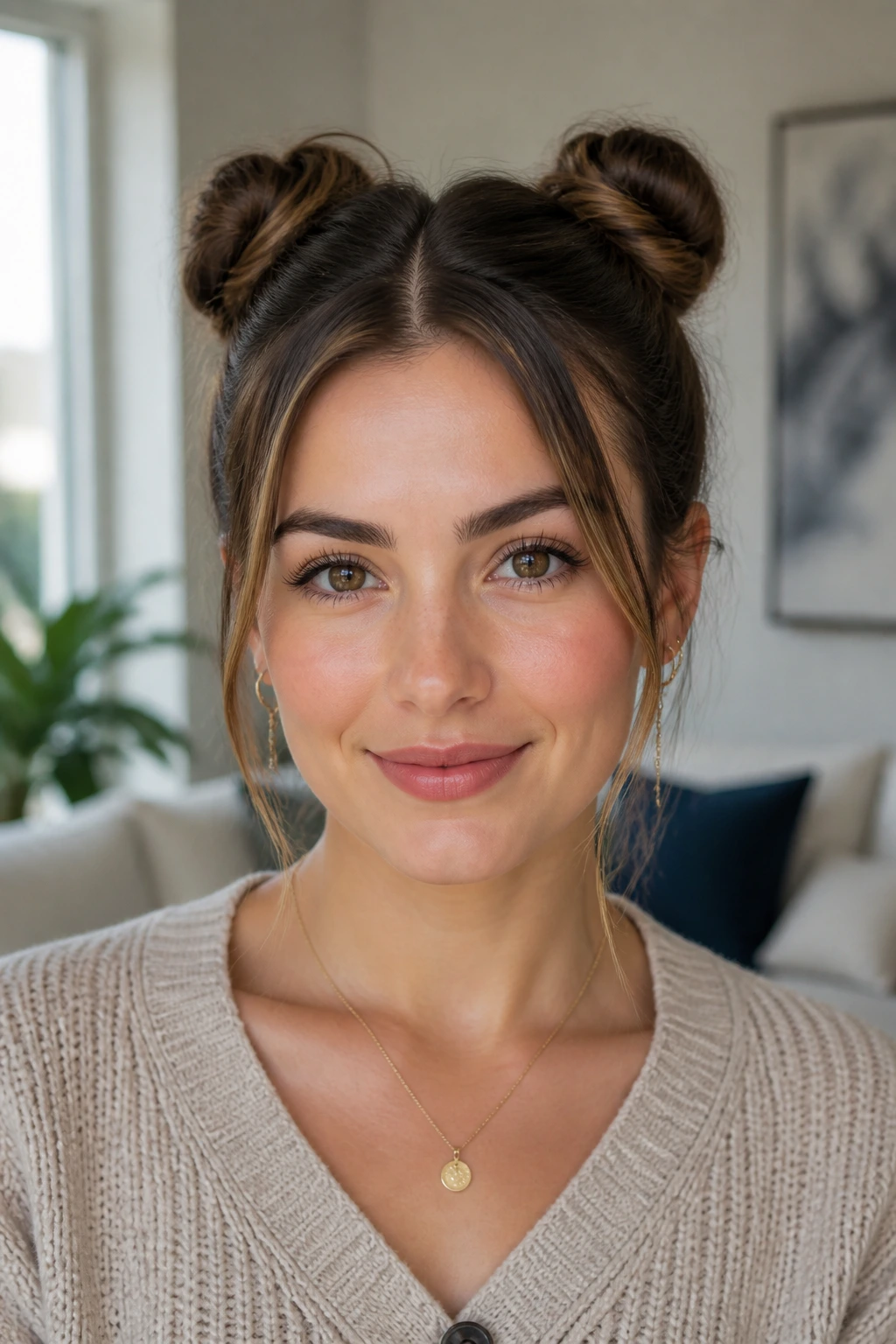
Double mini buns are playful, but they can look polished if you keep the lines clean. That’s the difference between cute and chaotic.
How to Keep Them Neat
Section the hair into two halves and place each bun slightly above the ears or higher, depending on how much lift you want. Keep the sectioning even, or the whole look tilts off balance fast. A little smoothing cream on the top helps the buns feel intentional instead of messy.
These buns are especially handy for medium-length hair that feels too short for a full top knot but too long to leave loose all day. They also keep hair out of the way without pinning every strand flat against the scalp.
- Use two small elastics first, then twist each bun into place
- Pin the ends underneath so they don’t poke out
- Pull a few soft pieces around the face if you want less of a cartoon feel
- Works well with second-day hair or light texture spray
I’d call this one a mood-lifter. Not every hairstyle has to be serious.
20. Long Fishtail Braid with Loose Ends

A fishtail braid looks intricate, but once you get the pattern, it becomes surprisingly repetitive in a good way. Divide the hair into two sections, take a small piece from the outside of one side, cross it to the other, then repeat until you reach the ends. That’s the whole rhythm.
The charm is in the looseness. A too-tight fishtail can feel stiff, almost overcontrolled. Leave the edges a little soft, tug gently at the braid after you finish, and let the tail stay a touch undone so it doesn’t look like a school recital version of itself.
This braid works especially well on long hair because the pattern shows up more clearly. It also holds better when there’s a little texture in the hair, so second-day strands or a light dusting of dry shampoo can help. If your hair is layered, pin the shorter pieces in place at the back before you start braiding.
A side fishtail is the version I keep coming back to. It sits over one shoulder, looks polished from a distance, and still feels relaxed when you’re up close. That balance is hard to beat.
Some hairstyles ask for a lot. These do not. They just need the right shape, a little care at the front, and enough honesty about your hair texture to stop fighting it every morning. That’s usually where the good styles live anyway.
And if a cut or style looks great on someone else but feels wrong on your own head, trust that. The right one should make getting ready easier, not louder.
