



Long hair has a way of looking effortless right up until you’re late, your ends are dry, and your ponytail keeps sliding down by lunchtime. That’s where easy long hair styles for everyday wear earn their place. They don’t need a curling iron marathon, and they don’t need twenty pins hidden under a mountain of hair. They just need a clean shape, a little control, and enough softness to still look like you.
The styles people actually wear over and over tend to solve one of three problems: too much hair in your face, hair that’s gone flat at the roots, or ends that need a break from heat and brushing. A good everyday style should handle all three without feeling fussy. That’s why the best long-hair looks are usually the ones that work with your hair’s weight instead of fighting it.
I like styles that hold up to real life. A commute. A windy walk. A desk chair. A quick grocery run when you didn’t plan on seeing anyone and then, somehow, everyone shows up. Long hair can look polished in those moments, but only if the style has a little structure under the surface. A center part, a wrapped elastic, one smart braid, or a clip in the right place can change the whole thing.
Start with the low ponytail. It’s the quiet workhorse of long hair, and it sets the tone for everything else.
1. Sleek Low Ponytail with a Middle Part
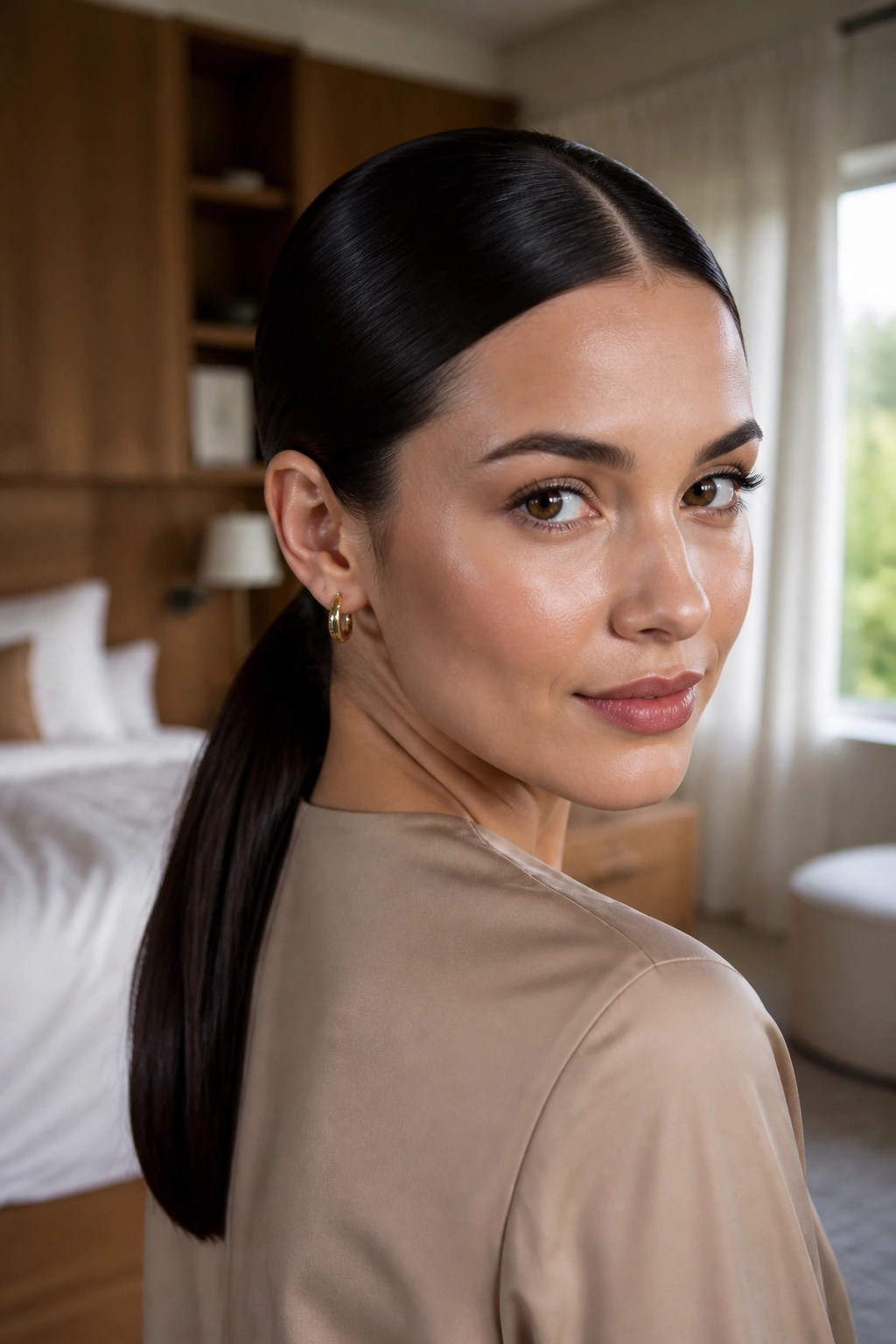
A low ponytail sounds plain until you give it a sharp middle part and smooth the top with a fine-tooth comb. Then it stops looking like an afterthought and starts looking intentional. This is the style I reach for when hair is clean but slightly flat, because the shape does the heavy lifting.
Use a light smoothing cream or a drop of serum from ears to ends, then gather the hair low at the nape. Secure it with one elastic, wrap a 1-inch section around the base, and pin the wrap underneath. That small wrap matters. It hides the rubber band and makes the whole style look cleaner.
Why It Works So Well
Long hair sits neatly in a low ponytail because the weight hangs straight instead of puffing out at the crown. If your hair is thick, brush it in sections so you don’t get bumps near the temple area. If it’s fine, tease the crown once with the tail of a comb before you pull it back.
- Best for straight, wavy, or lightly blown-out hair
- Looks sharper with a clean middle part
- Needs only 1 elastic and 1 bobby pin
- Stays neat for office days and errands
Tiny upgrade: leave the last 2 inches of the ponytail slightly bent with a flat iron so the ends don’t look limp.
2. Half-Up Claw Clip Twist
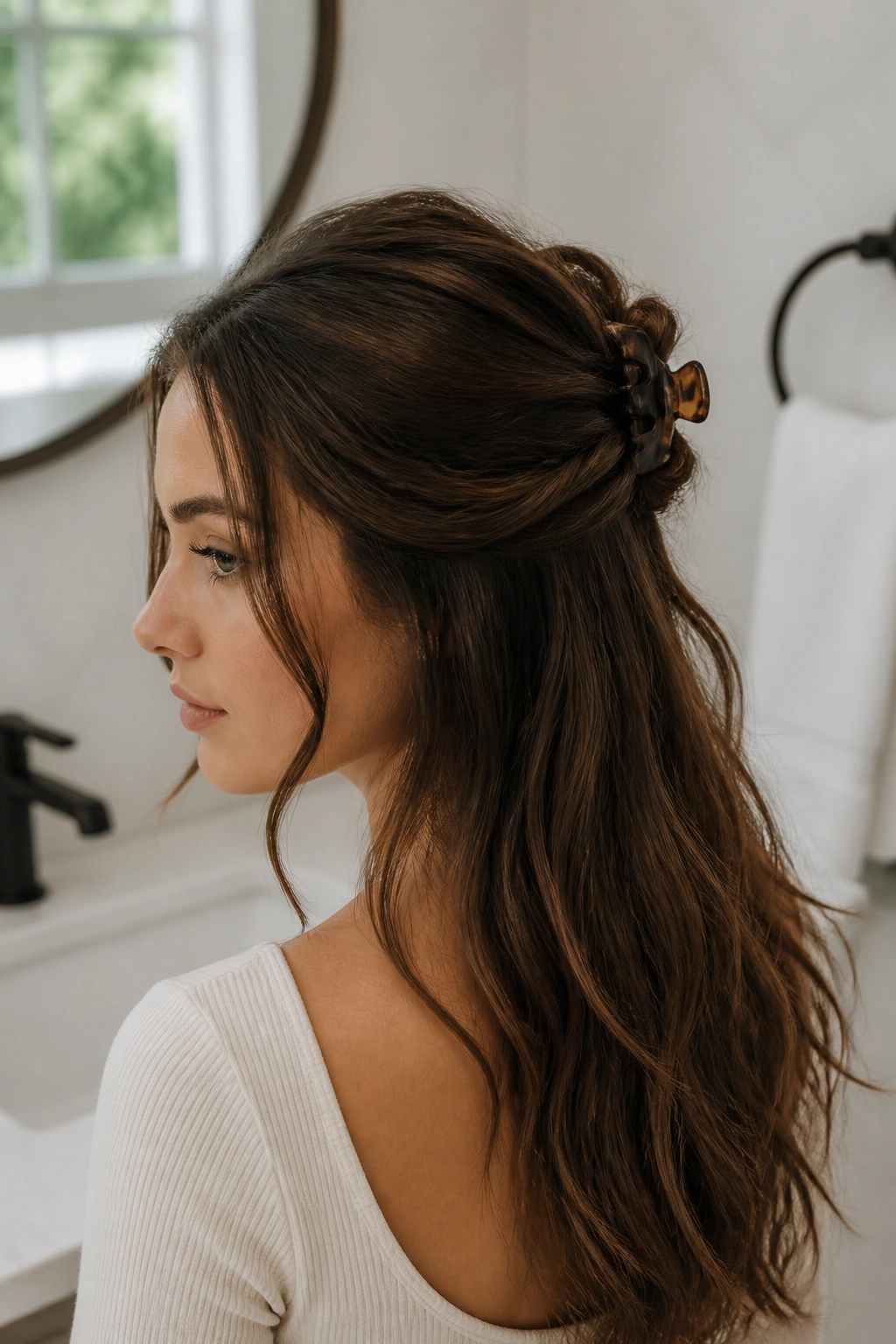
Why does a claw clip keep showing up in real life? Because it solves the “I want hair off my face, not all of it up” problem better than most other tools. A medium clip and a quick twist are enough for a polished half-up look that still feels relaxed.
Gather the hair from your temples to the crown, twist it once or twice, then fold the twist upward and clamp it in place. The ends can spill out a little. That’s part of the charm. If your hair is slippery, spray the roots with dry shampoo first so the clip has something to grab.
What Makes It Hold
A clip works best when you’re not forcing every strand into it. Leave some softness around the hairline, and don’t pull the twist too tight. A too-tight clip gives you a headache by noon, and nobody wants that.
If your hair is very long, use a larger claw clip with deep teeth. Smaller clips tend to slide when the weight of the hair starts tugging.
3. Loose Low Bun with Face-Framing Pieces

On days when your hair feels a little too much, a loose low bun is the hair version of a clean white shirt. It’s calm. It’s easy. It makes the rest of you look more put together than you probably feel.
Pull the hair into a low ponytail first, then twist it once and coil it into a bun at the nape. Pin it with 3 to 5 bobby pins, but don’t chase every loose strand. Let a few face-framing pieces fall out naturally, or pull out two thin sections near the cheekbones. The softness is what keeps it from looking severe.
The Detail That Matters
Keep the bun slightly off-center if you want it to look less formal. A perfectly centered bun can feel stiff on long hair, especially if your ends are thick. A loose coil sits better and wears better, too.
- Leave 1/2 inch to 1 inch of softness around the hairline
- Use a matte pin if your hair is slippery
- Works well with second-day hair
- Looks especially nice with earrings or a high-neck top
One more thing: don’t overthink the bun shape. If it feels secure and doesn’t wobble, it’s done.
4. Bubble Ponytail
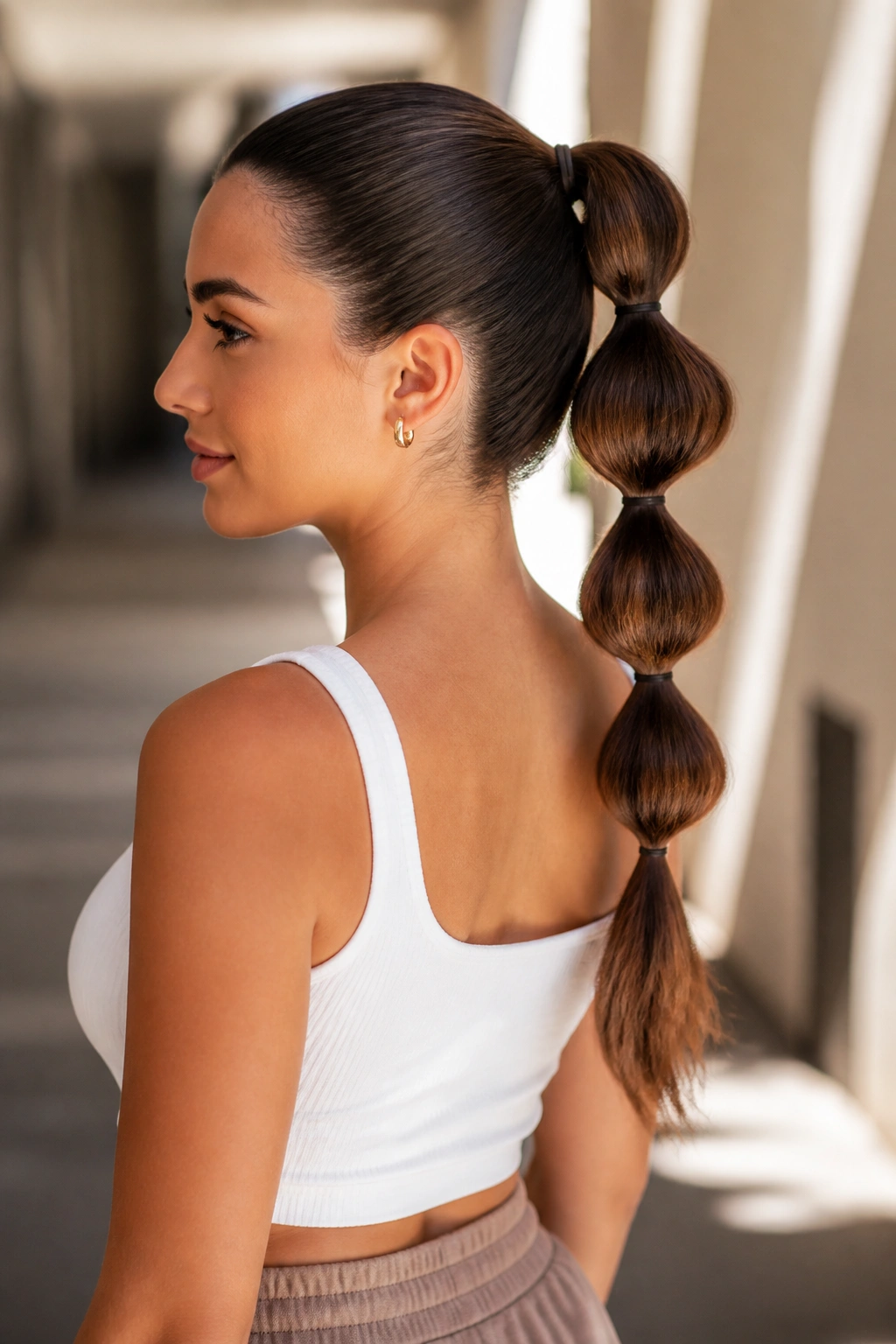
A bubble ponytail is a good answer when one elastic looks too simple and a braid feels like too much work. It gives long hair shape without asking you to actually braid anything. That’s the appeal.
Make a regular ponytail first, then add small elastics every 2 to 3 inches down the length. Gently tug each section outward to create round “bubbles.” The spacing does the visual work, so keep it even. If you want a softer finish, loosen the bubbles a touch with your fingers instead of pulling hard.
Why It Looks Better Than It Should
Bubble ponytails work especially well on long hair because the length gives the bubbles room to show. On shorter hair, the sections can look cramped. On long hair, they read clearly and move a little when you walk.
If your hair is fine, backcomb each section lightly before you puff it out. If it’s thick, use clear elastics so the base doesn’t get bulky. A little shine spray on the tail helps, but go easy. Too much and the bubbles collapse.
5. Fishtail Braid Over One Shoulder
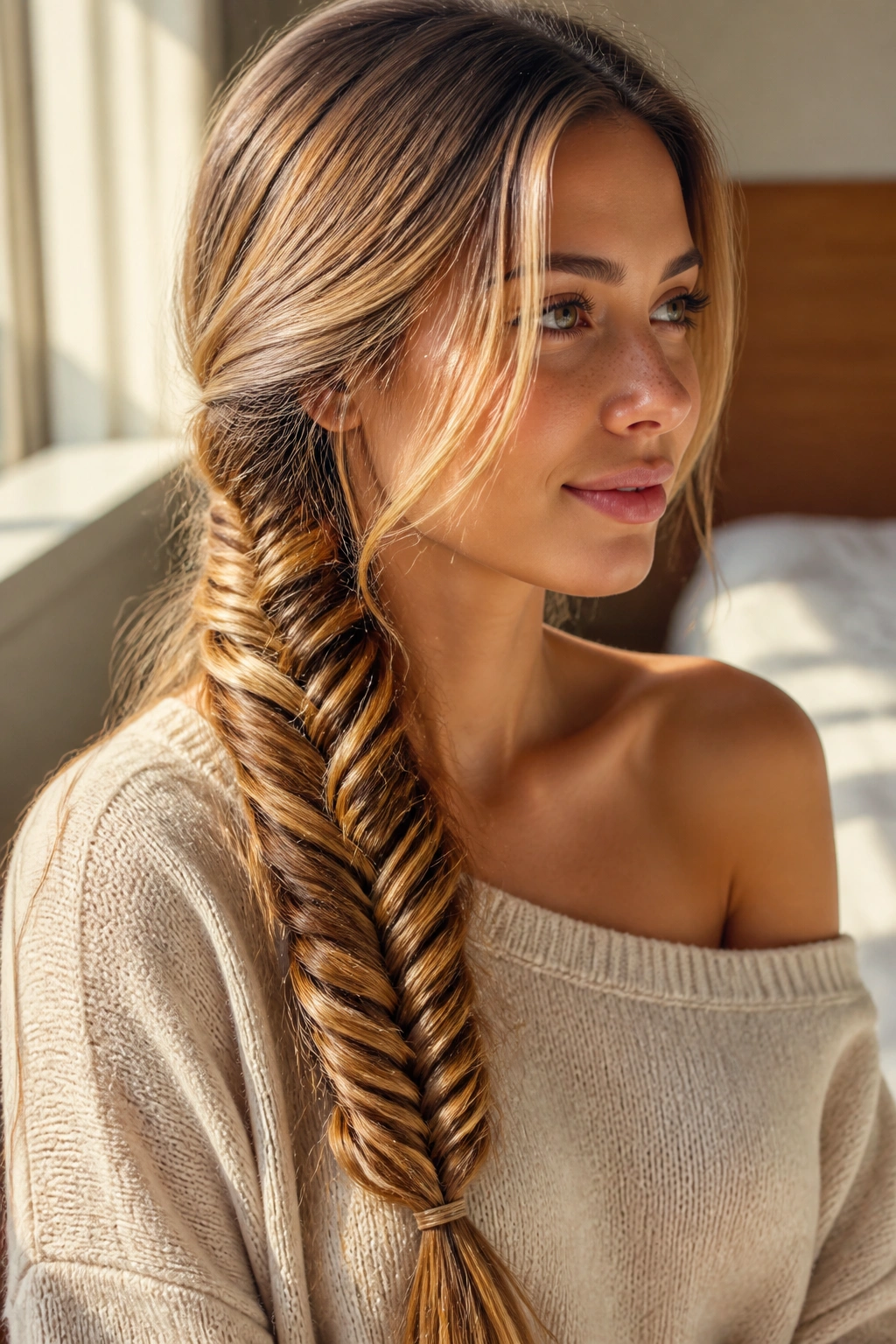
A fishtail braid looks more detailed than a standard braid, but it isn’t hard once your hands learn the motion. It’s one of those styles that people assume took ten minutes longer than it did. I like that.
Pull the hair over one shoulder, divide it into two sections, then take a small piece from the outside of the left section and cross it into the right. Repeat on the other side. Keep the pieces small and the tension even. Once you get the rhythm, it becomes almost mechanical.
A Style That Ages Well During the Day
The beauty of a fishtail is that it can get a little looser and still look good. In fact, it often looks better after a couple of hours, when the braid softens and the edges puff slightly. That makes it a useful everyday style, not a fussy special-occasion one.
If your hair is layered, start with a low ponytail and braid from there. It stops the shorter layers from slipping out before you’re ready. A tiny elastic at the end and a gentle tug on the braid edges finish it off.
6. French Braid from the Hairline

Can a French braid be easy? Yes, if you stop trying to make it look perfect. A relaxed French braid from the hairline keeps long hair controlled without flattening your whole head into one tight strip.
Start at the top center or slightly off to one side. Take three sections and braid as usual, adding small pieces from each side as you move down toward the nape. Keep the braid snug, not tight. If your hands tense up, the braid will too.
How to Keep It Soft
The trick is to let the braid sit close to the head near the top and slightly looser through the back. That keeps the top neat while letting the length hang naturally. A little texture spray at the roots helps if your hair is fresh and slippery.
- Best for hair that slips out of clips
- Good for humid days
- Easier to wear than a fully pulled-back style
- Works with straight or wavy hair
If you only braid to the crown and tie the rest into a low ponytail, that counts too. Honestly, that version is easier on busy mornings.
7. Half-Up Top Knot

A half-up top knot is what you reach for when your roots need control but your length still looks fine. It keeps the crown clean and leaves the rest of the hair free, which is a nice balance on long hair.
Gather the top half of your hair—from temple to temple—and twist it into a small knot at the crown. Secure it with a thin elastic or two pins. The knot should be no bigger than a small apple. If it grows much larger, it starts to look heavy and tips the whole style out of balance.
The Part People Miss
Leave the bottom half of the hair smooth or lightly waved. A top knot with tangled ends feels rushed. A top knot with brushed lengths feels like a decision.
If you have layers, mist the knot with a little hairspray before pinning. Shorter pieces around the front can be tucked behind the ears or left loose. I prefer a few loose pieces. It keeps the style from feeling boxed in.
8. Wrapped Ponytail with a Hidden Elastic

A wrapped ponytail is one of those small changes that makes a big difference. The shape is still simple, but the finish looks cleaner because the elastic disappears under a strand of hair.
Make a low or mid-height ponytail, then take a 1-inch section from underneath and wrap it around the base once or twice. Pin the end underneath the ponytail with a bobby pin. If the wrap keeps loosening, use two pins crossed like an X. That usually solves it.
Why It Feels More Finished
This style works because the eye stops seeing the elastic and starts seeing the smooth line of the hair. It’s a tiny detail, but on long hair, tiny details matter. A wrapped base can make an ordinary ponytail look like you planned the outfit around it.
If your hair is thick, use a strong elastic first so the ponytail sits high enough on the base of your neck. If it’s fine, puff the crown slightly before tying so the top doesn’t collapse. Simple. Clean. Done.
9. Rope Braid Ponytail
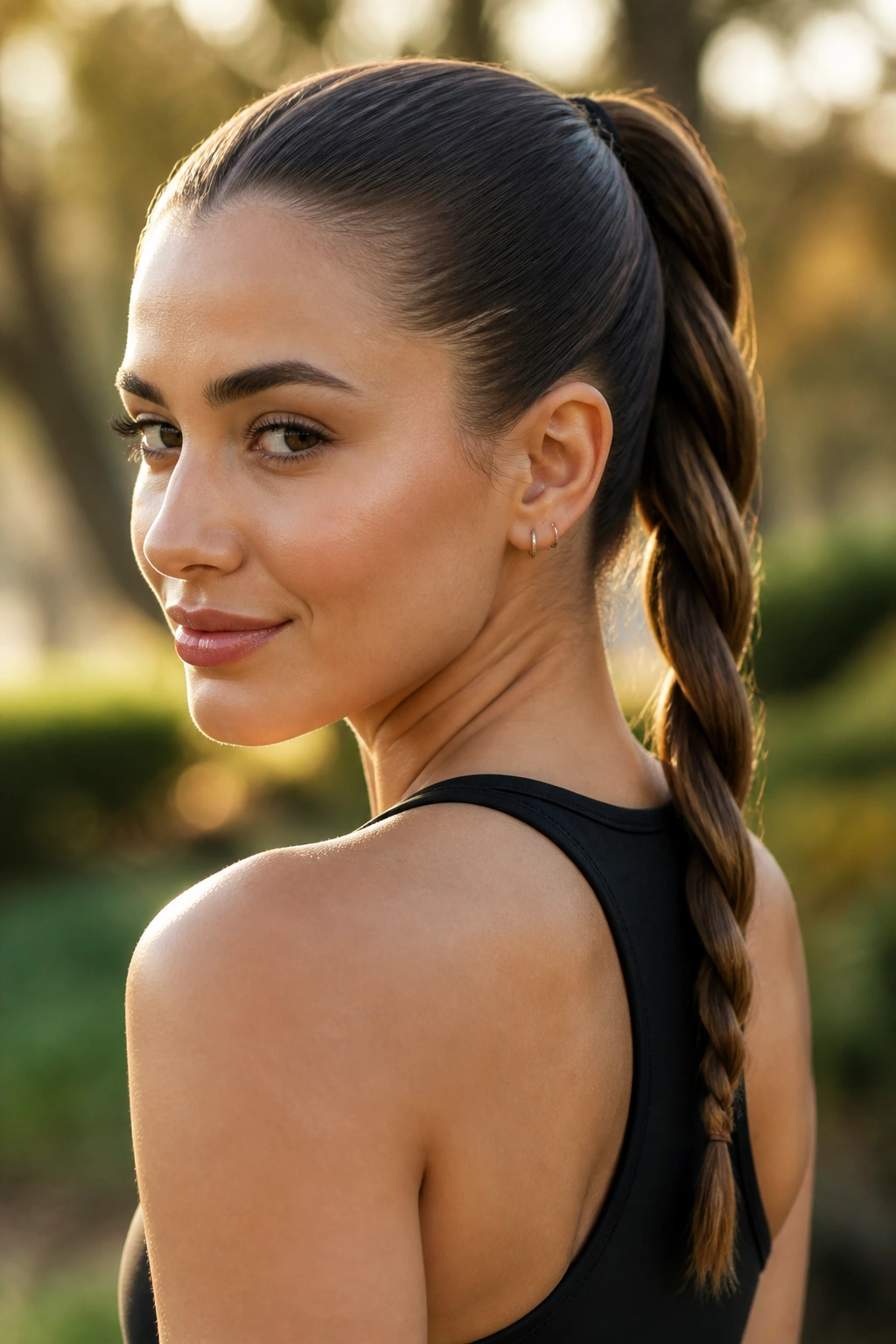
I reach for a rope braid when my fingers are tired and I still want the look of effort. It’s fast, it stays tight, and it gives long hair a little twist without turning the whole morning into a project.
Pull the hair into a ponytail, divide the tail into two sections, twist both sections in the same direction, then wrap them around each other in the opposite direction. That opposite twist is what makes the braid hold. Secure the end with a small elastic.
What It’s Good At
A rope braid has a sleeker shape than a loose three-strand braid, so it works well with long lengths that already have some smoothness. It’s also less likely to turn fuzzy by lunchtime, especially if your hair is coated with a little leave-in conditioner from the ears down.
If the twist starts unraveling, your sections are probably too thick. Make them a little smaller and keep your hands close to the elastic while you work. That keeps the structure tidy.
10. Crown Braid Halo
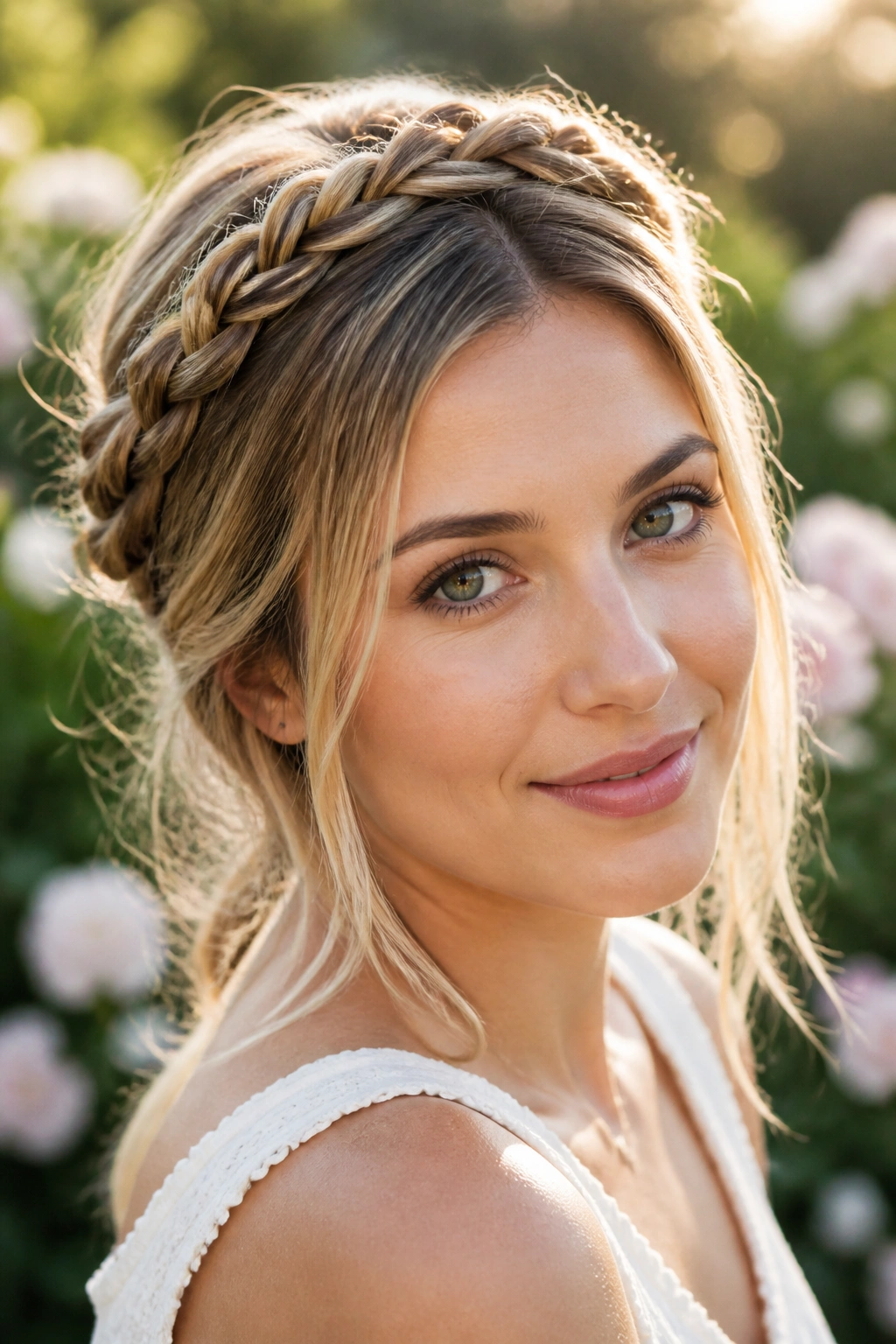
A crown braid can sound more formal than it is. In practice, this style is just two braids pinned across the top of the head, and it keeps long hair off the face in a way that feels soft instead of severe.
Part the hair down the middle, braid each side loosely, then lift each braid over the top of the head and pin it in place like a halo. Tuck the ends under the other braid or hide them behind the ears. A few loose pieces around the hairline keep it from looking stiff.
The Small Trick That Helps
Braiding a little looser than you think is smart here. Tight braids can pull the crown and give the style a flat, almost helmet-like shape. Looser braids sit better and blend into the rest of the hair more naturally.
This one is good on thick hair because the extra weight helps the braids stay put. On fine hair, use two or three extra pins near the back where the braids meet. That back point is usually where everything slips first.
11. Braided Low Bun

A braided low bun is one of my favorite styles for long hair because it keeps the neck clear and still looks like you made an effort. It’s a braid first, bun second, which means the texture is built in.
Start with a low ponytail, braid the length all the way down, then coil the braid around its base and pin it. Don’t flatten the bun with your palm. Let the braid texture show. That roughness is part of the appeal.
Where It Earns Its Keep
This style holds up well for commuting, windy weather, and long days when you don’t want to keep touching your hair. It also hides dry ends better than a straight ponytail, which is a nice bonus if your hair has been through a lot of brushing.
If your braid is too thick to coil neatly, split it in half before wrapping. That gives you a smaller bun and fewer pins. Sometimes the easiest fix is the one nobody mentions.
12. Twisted Half-Up Knot
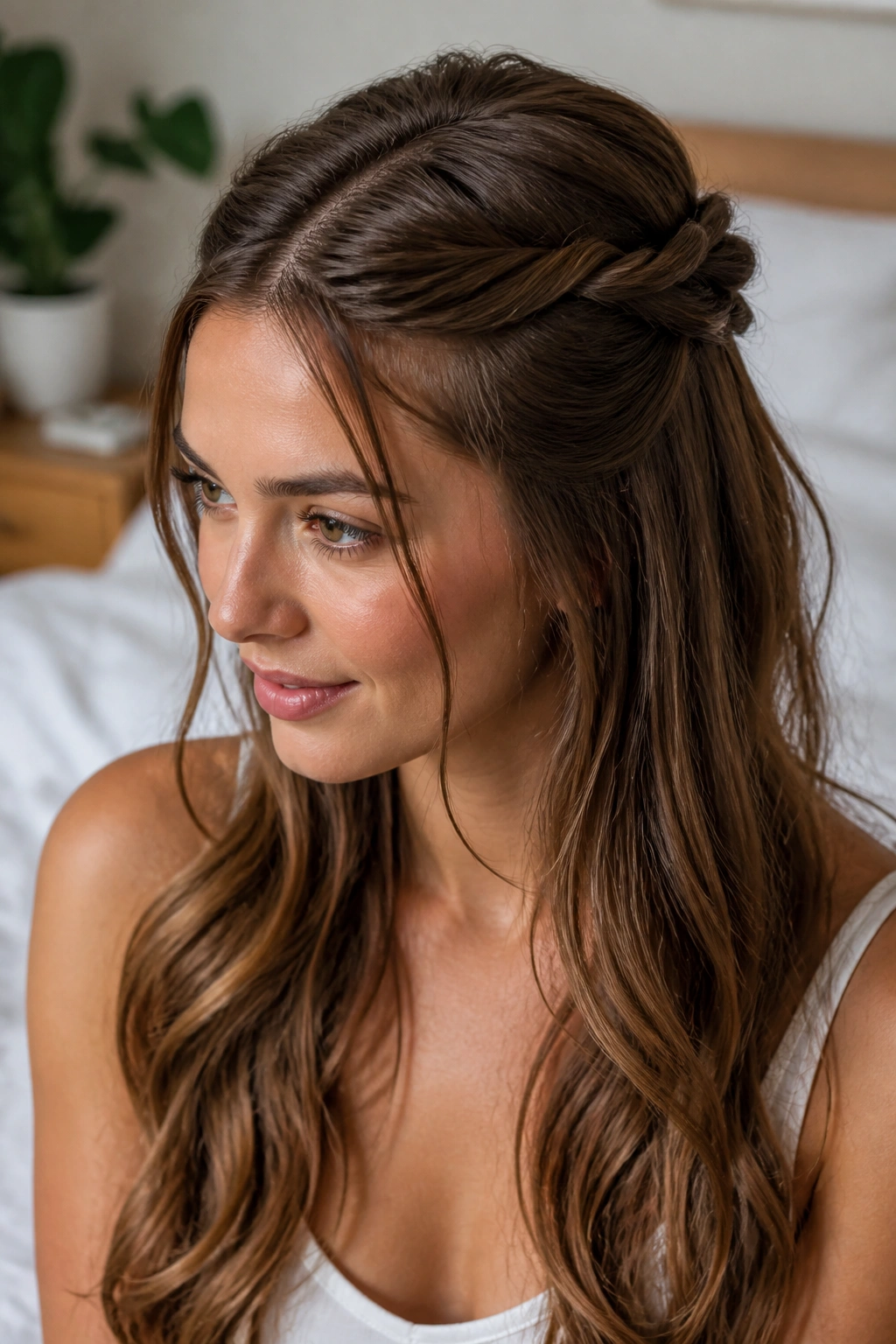
This is the style I’d hand to someone who says they only have four minutes. A twisted half-up knot gives long hair a lifted shape without needing a full braid or a clip.
Take a section from each side of the head, twist them back toward the crown, and tie or pin them together in the middle. The twist can sit high or low, depending on how casual you want it to feel. High reads a little more playful. Low feels quieter.
Why It’s So Useful
The style keeps hair off the cheeks while leaving the length down, which is a sweet spot for everyday wear. It also works on hair that’s in that in-between stage—clean enough to wear down, but not clean enough to fall flat.
A small barrette can replace the pins if you want a softer finish. And if your hair is very layered, twist the front pieces a bit tighter than the rest so they don’t fall apart before lunch.
13. Loose Waves with a Barrette

Do you need a full curl routine? Not really. Loose waves and one good barrette can carry long hair farther than people expect. The style is simple, but the texture makes it feel thought-out.
You can make the waves with a 1.25-inch iron, overnight braids, or a loose braid set on damp hair. Once the hair cools, brush it out gently so the waves separate. Pin one side back with a metal barrette, pearl clip, or plain snap clip.
How to Make It Wearable
Keep the wave pattern soft near the ends. Too much curl at the bottom makes long hair look dated fast, and the style loses that easy feel. A little bend through the mid-lengths is enough.
If your hair is thick, use the barrette as an anchor and leave the rest alone. If it’s fine, spray the roots lightly and keep the waves farther apart. The trick is to make the texture look lived-in, not overworked.
14. High Ponytail with a Soft Bend

A high ponytail does not need to be sharp to work. In fact, on long hair, a slightly soft high ponytail often looks better than a tight one because the length has room to swing.
Brush the hair up toward the crown, but stop before you flatten every bit of volume out of the sides. Secure the ponytail high, then wrap a section around the base or leave the elastic visible if you want a casual feel. Curl the ends or bend them slightly so the tail doesn’t hang straight and heavy.
A Small Word on Balance
If the ponytail is too tight at the temples, the whole style can pull your face back in an unflattering way. Leave a little lift near the crown. That tiny bit of softness makes a big difference.
This style works well when you want energy. Gym class, a long workday, a busy weekend. It keeps long hair up and out of the way without turning you into a different person.
15. Front Accent Braids

Front accent braids are the kind of detail that makes loose hair look styled without changing the whole shape. Two skinny braids at the temples do a lot of work for something that takes only a few minutes.
Take a 1/2-inch section on each side near the hairline, braid each one down a few inches, and pin them back or let them blend into the rest of the hair. You can keep them symmetrical or leave one side slightly looser. Both work.
Why They’re Useful on Busy Days
This style is good when you want your hair down but hate when it falls in your face. It gives control right where you need it, and it can hide awkward front layers that haven’t decided what they want to do yet.
A little texture spray helps the braids stay neat. If your hair is very smooth, braid from second-day hair instead. The grip is better, and the braids hold their shape longer.
16. Messy Loop Bun

A loop bun is kinder than a knot. That’s the main reason I like it. It gives long hair a loose shape without forcing every strand into the same place.
Pull the hair into a low ponytail, but on the last loop of the elastic, only pull the hair through halfway so the ends hang out in a soft loop. Spread the loop a little with your fingers, then pin the loose ends around the base. It should look relaxed, not unfinished.
What Makes It Work
The style depends on texture. A little frizz is fine here. Actually, a little frizz helps the bun hold. Hair that’s too silky can slide apart, so dry shampoo or a texturizing spray at the roots can help.
If you want the bun to sit lower and softer, keep the loop loose. If you want a more compact shape, twist the tail once before pinning. Either way, it’s faster than a full bun and easier on long layers.
17. Half-Up Braided Crown

A half-up braided crown gives you the look of a full crown braid without pulling all your hair up. That makes it a better everyday option, especially if you like wearing length down but need the top half controlled.
Braid a section from each temple toward the back, then pin the two braids together where they meet. Let the bottom half stay loose. You can keep the braids neat or pancake them slightly for a softer look. I lean toward the softer version. It feels more natural.
Best Use Case
This style is handy when your hair is freshly washed and too slippery for clips, but you still want the front under control. It also works nicely with waves because the braid adds structure while the lower half keeps movement.
If your hair is layered, braid a bit higher on the sides so the shorter front pieces are easier to catch. A strong pin right where the braids meet is the part that matters most.
18. Pull-Through Braid
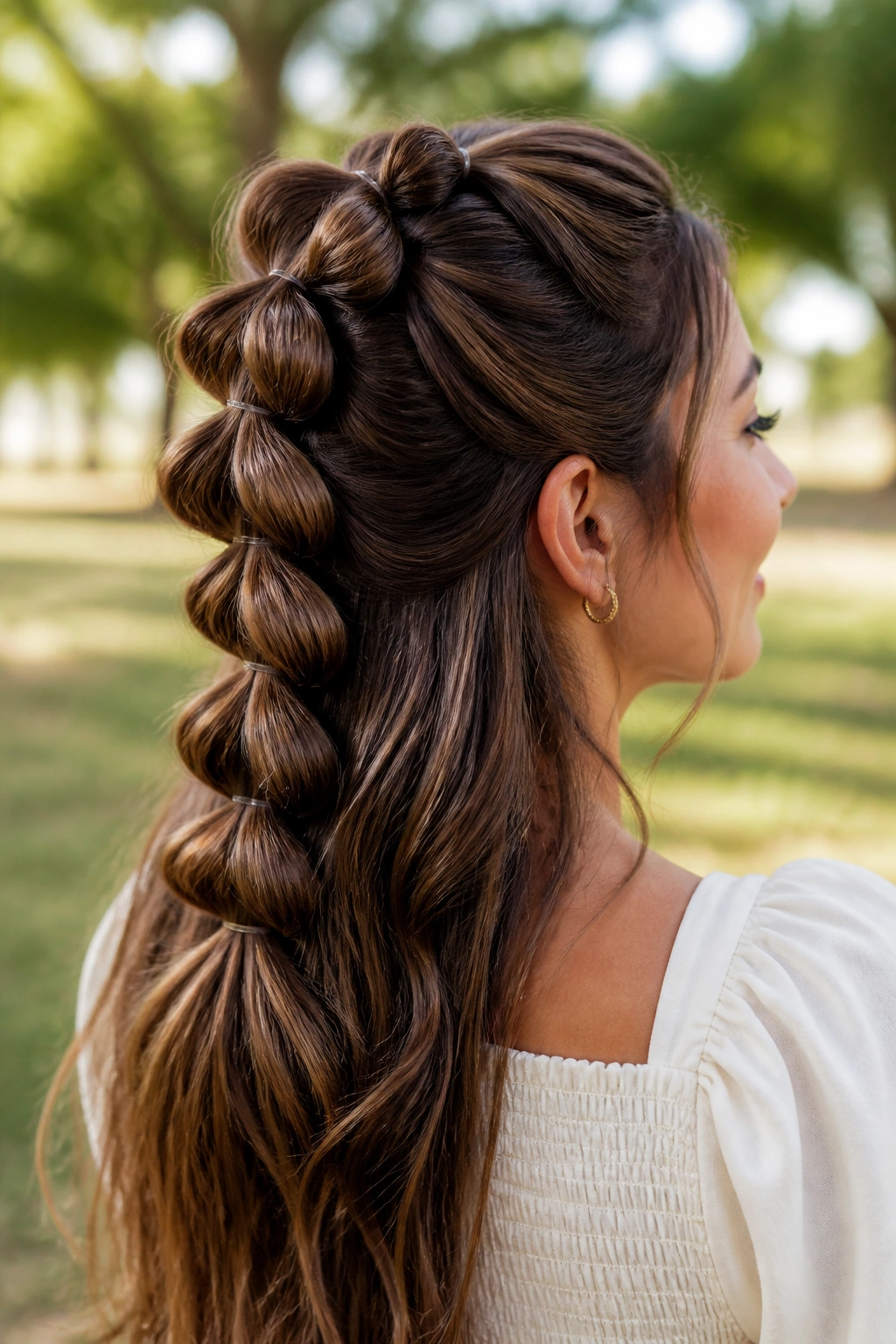
A pull-through braid looks like a thick, intricate braid, but it’s built with elastics. That makes it one of the easiest ways to fake a complicated style on long hair.
Start with a small half-up ponytail, make another ponytail directly below it, split the top ponytail in two, pull the lower ponytail through the gap, then repeat down the length. Keep the sections evenly spaced. The shape builds quickly once you get the rhythm.
Why It’s Worth the Extra Elastics
This braid is especially good for thick hair because the thickness makes each section read clearly. On fine hair, you can pancake the loops a little more to give them body. Either way, the result is fuller than a standard braid.
Use clear elastics if you want the braid to look smooth, or tiny colored ones if you’re fine with a more casual look. It takes a few more seconds than a regular braid, but not much. And it holds.
19. Gibson Tuck

The Gibson tuck has an old-fashioned name, but it works on long hair in a very modern way. It rolls the length up at the nape and keeps everything tucked in close to the head.
Make a low ponytail, split the hair above the elastic with your fingers, then flip the ponytail upward and tuck it through the gap. Let the ends fold into the roll and pin anything loose underneath. If your hair is extra long, tuck it in a second time.
The Part That Saves It
This style looks best when the roll is soft, not stuffed. If you try to cram too much hair into the tuck all at once, it turns bulky fast. Work in small folds and pin as you go.
Layered hair can slip out, so a light mist of hairspray on the tucked ends helps. A few face-framing pieces make the shape feel less rigid. It’s a tidy style, but it does not need to feel severe.
20. Double Dutch Braids

Double Dutch braids are practical, sure, but they’re also one of the few styles that can handle long hair on a busy day without collapsing. Because the braid sits raised on the head, it keeps shape well and stays secure.
Part the hair down the middle, then braid each side by crossing sections under instead of over. That under-crossing is what gives Dutch braids their raised look. Once you reach the ends, secure both braids and tug the outer edges a little if you want a softer finish.
When They Make Sense
This is the style I’d pick for anything active, damp weather, or a day when I know I’ll be touching my hair less if it’s fully contained. It also works well if your hair tangles easily, because two neat braids prevent a mess later.
If the part line isn’t perfectly straight, don’t panic. Slightly imperfect parts make the braids feel more lived-in. Clean enough. Not stiff.
21. Low Twist with a Scrunchie

A low twist with a scrunchie is softer than a standard ponytail and easier on the ends. That matters when your hair is long enough to carry a lot of weight in one place.
Gather the hair low, twist it once or twice, then loop it through a scrunchie so the shape stays loose. Let the tail hang through the center or partly out the side, depending on how much structure you want. A satin scrunchie looks neat and reduces snagging.
Why I Prefer It on Fragile Hair
This style puts less pressure on the hairline than a tight elastic. If your hair breaks easily or your scalp gets sore from snug ponytails, this is a friendlier option.
It also looks good with hair that has a little wave or bend already. Straight hair can still wear it, but the twist shows up more clearly when there’s some texture to catch the light. Use one pin inside the twist if the scrunchie feels loose.
22. Ribbon-Tied Half-Up
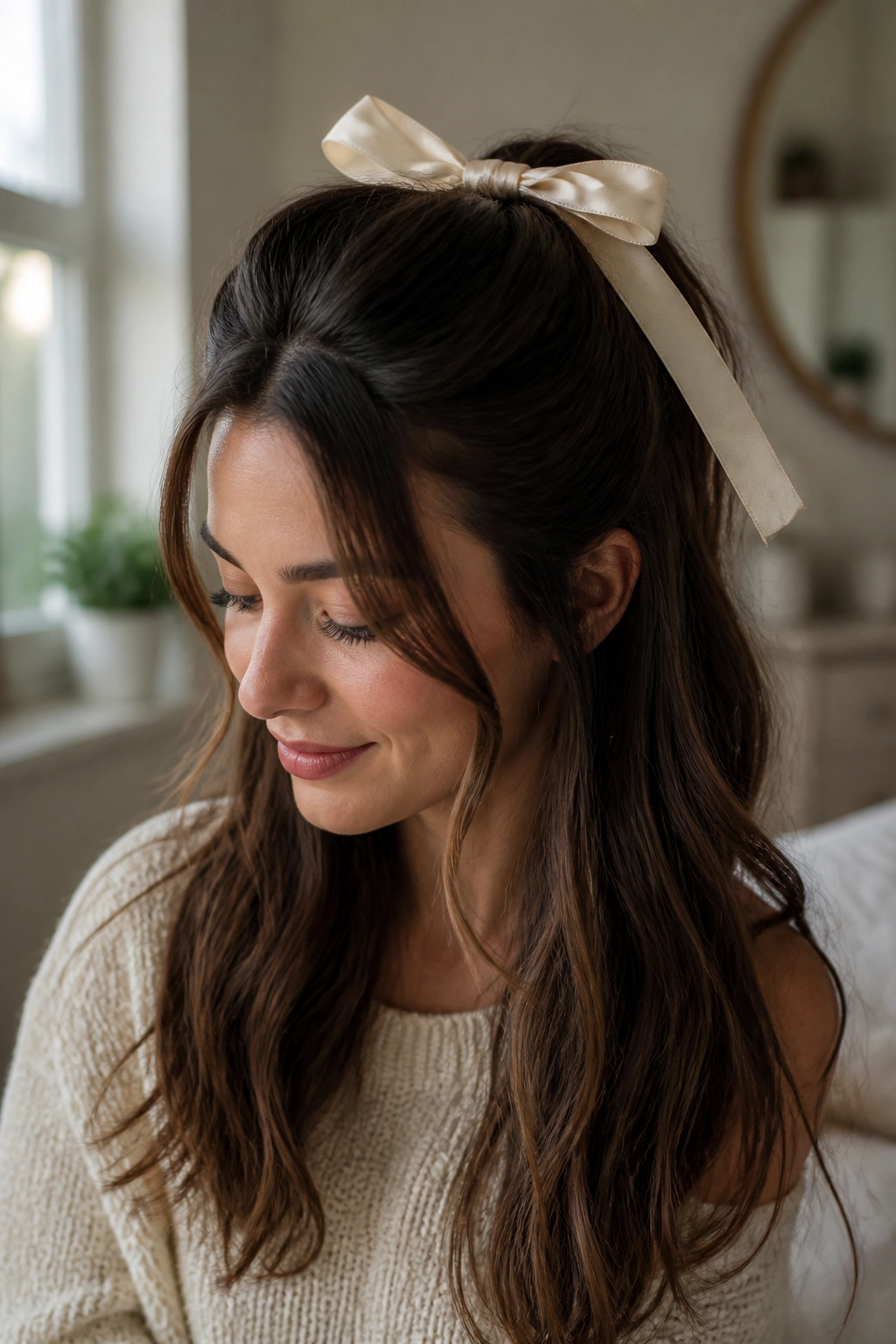
A ribbon-tied half-up style is one of the easiest ways to make long hair feel finished without making it stiff. A strip of velvet, satin, or grosgrain does the job better than another plastic elastic.
Take the top half of the hair, pull it back loosely, and tie it with a ribbon or fabric tie. Leave the ends hanging down. You can make a bow if you want something a little prettier, or keep the ribbon in a simple knot for a cleaner line.
How to Keep It Wearing Well
Pick a ribbon that has enough width to show. A very skinny ribbon can disappear into the hair, especially if your hair is thick. A 1-inch ribbon usually reads clearly without looking oversized.
This style works nicely with straight, wavy, or lightly curled hair. It’s also useful on the days when you want something softer than a claw clip and less structured than a braid. The ribbon gives the whole thing a small point of focus.
23. Side-Swept Low Ponytail

If a center part feels too neat, a side-swept low ponytail gives you the same ease with a little more movement. It’s a small shift, but long hair changes shape fast when you move the part and the anchor point.
Sweep the hair to one side, gather it low behind the ear or at the nape on the heavier side, and secure it with an elastic. Let the front curve softly over the forehead, or tuck it behind one ear if you want the face more open. A wrapped elastic finishes it cleanly.
Why It Feels Less Formal
The side placement breaks the straight line that a center part creates. That makes the style feel easier, which is helpful if your hair is thick and tends to read serious when pulled straight back.
You can keep this one loose for errands or smooth it out more for work. Both versions hold up well. The shape is forgiving, which is part of why it belongs on a long-hair daily rotation.
24. Bobby-Pin Wave Tuck

A bobby-pin wave tuck is a small style that sounds almost too simple, but it has a lot of charm. It uses pins as both structure and decoration, which is handy when you want long hair to look arranged without being fully pinned up.
Take two front sections, twist or wave them back toward the ears, and secure them with 3 to 5 bobby pins placed in a neat row or a tiny crisscross. Leave the length down and soft. The contrast between pinned front pieces and loose ends gives the whole style a little shape.
What Makes It Different
Unlike a full updo, this style keeps the weight of the hair down, so it feels lighter on the scalp. That matters more than people think, especially if you wear long hair most days and get tired of it being all up.
Use decorative pins if you want a visible detail, or plain ones if you want the tuck to disappear into the hair. Either way, make sure the pins grip the hair in the direction it’s being twisted. That’s the part that keeps them from sliding out.
25. Wide Headband with Loose Texture
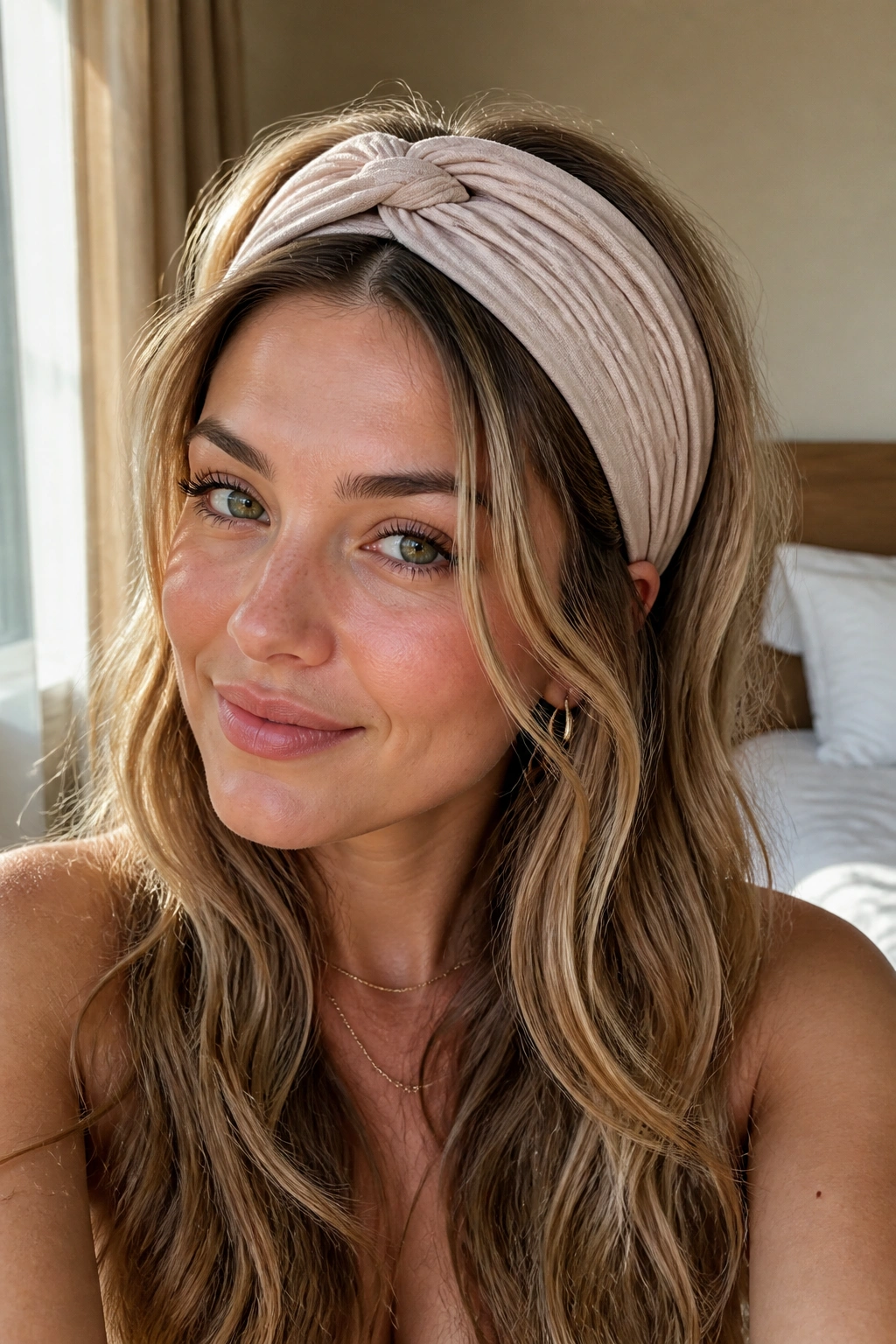
A wide headband is not a cheat. It’s a fix. On long hair, it solves greasy roots, flat front sections, and the stubborn little face pieces that refuse to stay where you want them.
Slip on a padded, fabric, or knotted headband, then pull a little hair forward over it at the crown if you want softness. Leave the rest of the length loose, wavy, or lightly brushed through. If your hair is freshly curled, this style helps the front stay neat without flattening the rest.
Why It Belongs in an Everyday Rotation
I like this one on days when the hair itself is fine but the front needs help. A headband gives you control without pins, heat, or another elastic tugging at the same spot for hours.
Choose the width based on your hair thickness. Wider bands work better on dense hair because they stay visible. Thinner bands can disappear. A little texture through the lengths keeps the style from looking too tidy, which is often the difference between “done” and “fussy.”
A good long-hair routine does not need twenty tricks. It needs a few styles that match your real mornings, your real hair texture, and the amount of time you actually have. These are the ones I keep coming back to because they hold their shape, stay wearable, and don’t ask for a full production.
Some days call for a braid. Some days need a clip and a decent part. Some days need nothing more than one elastic and a little nerve. That’s the nice part about easy long hair styles for everyday wear: they give you room to look pulled together without spending all morning in front of the mirror.
