



The best low tension loc styles that protect hair do one boring thing very well: they keep the weight off your hairline. A style can look polished in the mirror and still leave your temples sore by lunch, especially when the locs are long, dense, freshly retwisted, or all three at once.
Neat is not the same as tight. That difference shows up at the scalp. A good style should feel settled, not like your head is being held in a small vise, and if you feel burning at the nape, throbbing behind one ear, or a red line where the tie sits, the style is working against you.
Locs need a different kind of handling than loose hair. The roots are already carrying weight, so a ponytail, bun, or pin-up that pulls from one spot can turn into repeated stress in the same exact place, day after day. That repeated stress is what wears down edges, irritates the scalp, and makes people start avoiding styling altogether.
These 15 low tension loc styles stay gentle without looking lazy. Some are quick, some are polished, and a few are the kind you can wear to work, to a wedding, or on a wash-day stretch when your hair wants a break from friction, heat, and constant hands.
1. The Low-Tension Nape Bun That Keeps Weight Off the Hairline
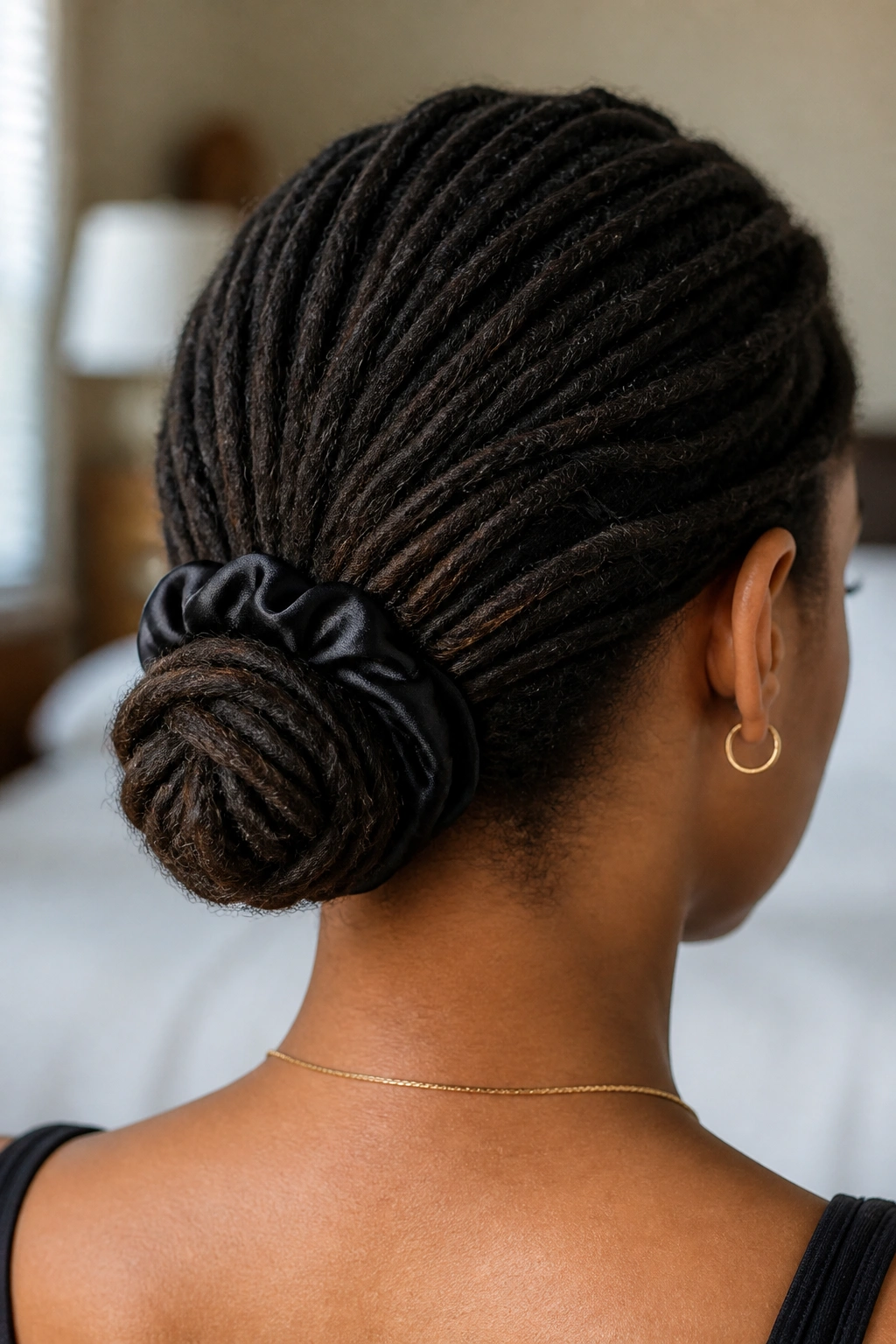
The low nape bun is the style I reach for when I want my locs out of the way and my scalp left alone. It sits close to the base of the neck, which matters more than people think. The higher the bun sits, the more leverage it puts on the roots. Low and close. That’s the trick.
What makes it gentle? The bun lives near the occipital bone, so the weight drops backward instead of tugging the hairline forward. That keeps the pull centered and reduces the little daily strain that adds up fast.
Quick way to keep it low tension
- Gather the locs at the nape, not at the crown.
- Use a soft satin scrunchie or a snag-free tie.
- Twist only once or twice before pinning.
- Use 2 to 4 U-pins around the bun instead of yanking the base tight.
- Leave enough slack to slide two fingers under the tie.
A low bun works for medium and long locs, and it looks especially good when the locs are freshly separated. If your bun leaves a ring mark, it’s too tight. If the front of your scalp feels lifted, it’s too high. That’s the whole test.
Soft is better. Always.
2. A Tucked Chignon That Hides the Ends
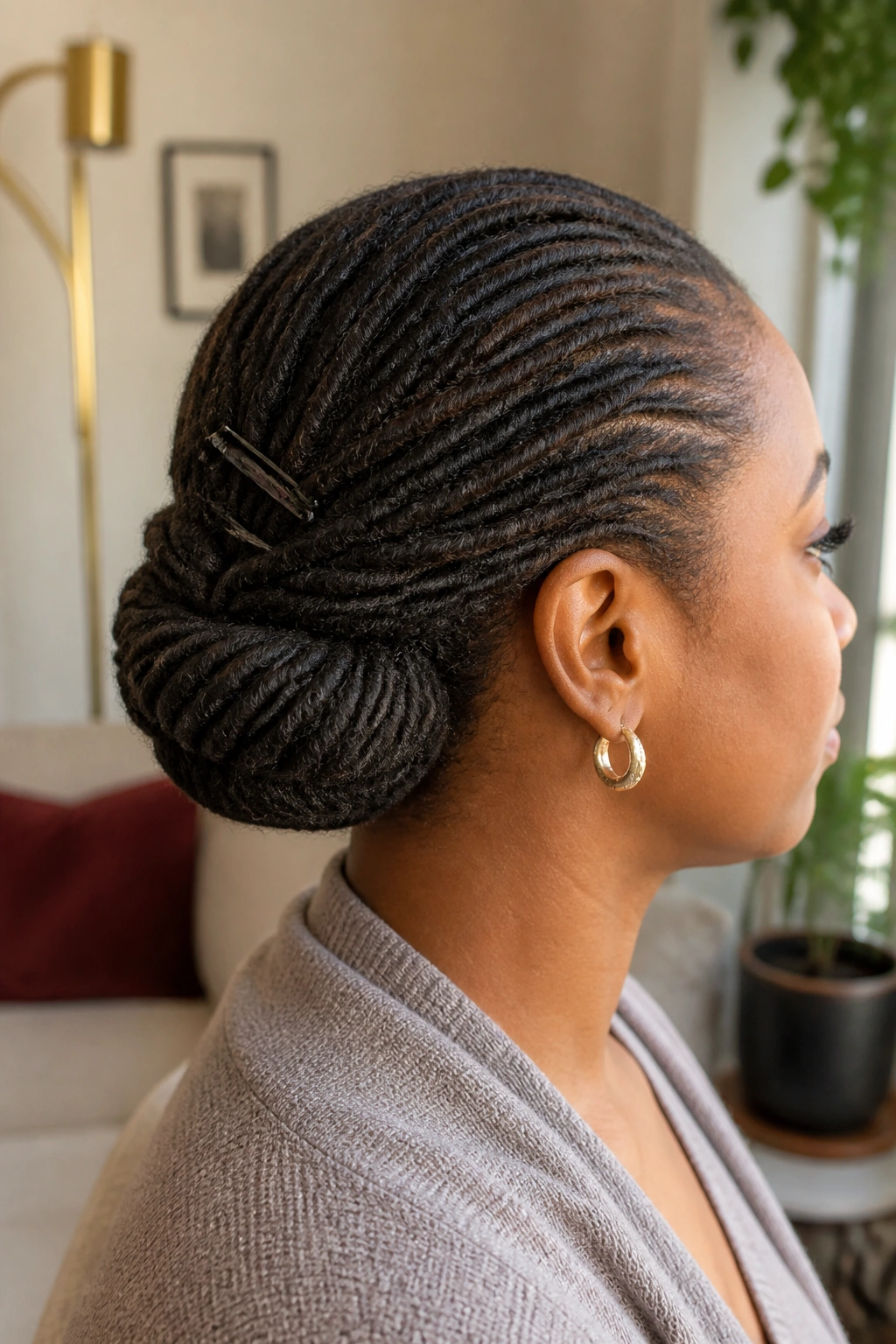
A tucked chignon is the grown-up version of “I need my hair off my shoulders, but I’m not trying to punish my scalp.” It folds the locs under themselves, so the ends stay hidden and there’s less rubbing against collars, jackets, and car seats. That matters more than people admit.
The clean part is nice, sure. The real win is that the chignon spreads the shape across a wider area instead of putting all the weight on one tiny anchor point. When you tuck the ends inward, the style feels calmer and usually lasts longer than a loose knot that keeps slipping and getting re-tied.
It should never feel like a wrestling match.
For longer locs, split the hair into two loose sections first, then fold the bottom section up and over before pinning. For medium locs, one large roll is usually enough. Use 2 long U-pins at the base and 1 or 2 more across the top to keep the shape without cinching the roots.
A chignon is also one of the better choices for formal wear because it looks deliberate without needing much product or a hard twist. If the scalp starts to ache after an hour, loosen the center and pin more through the length. Don’t keep tightening the same spot and hoping it “settles.”
3. The Side-Swept Roll for a Tired Temple Area
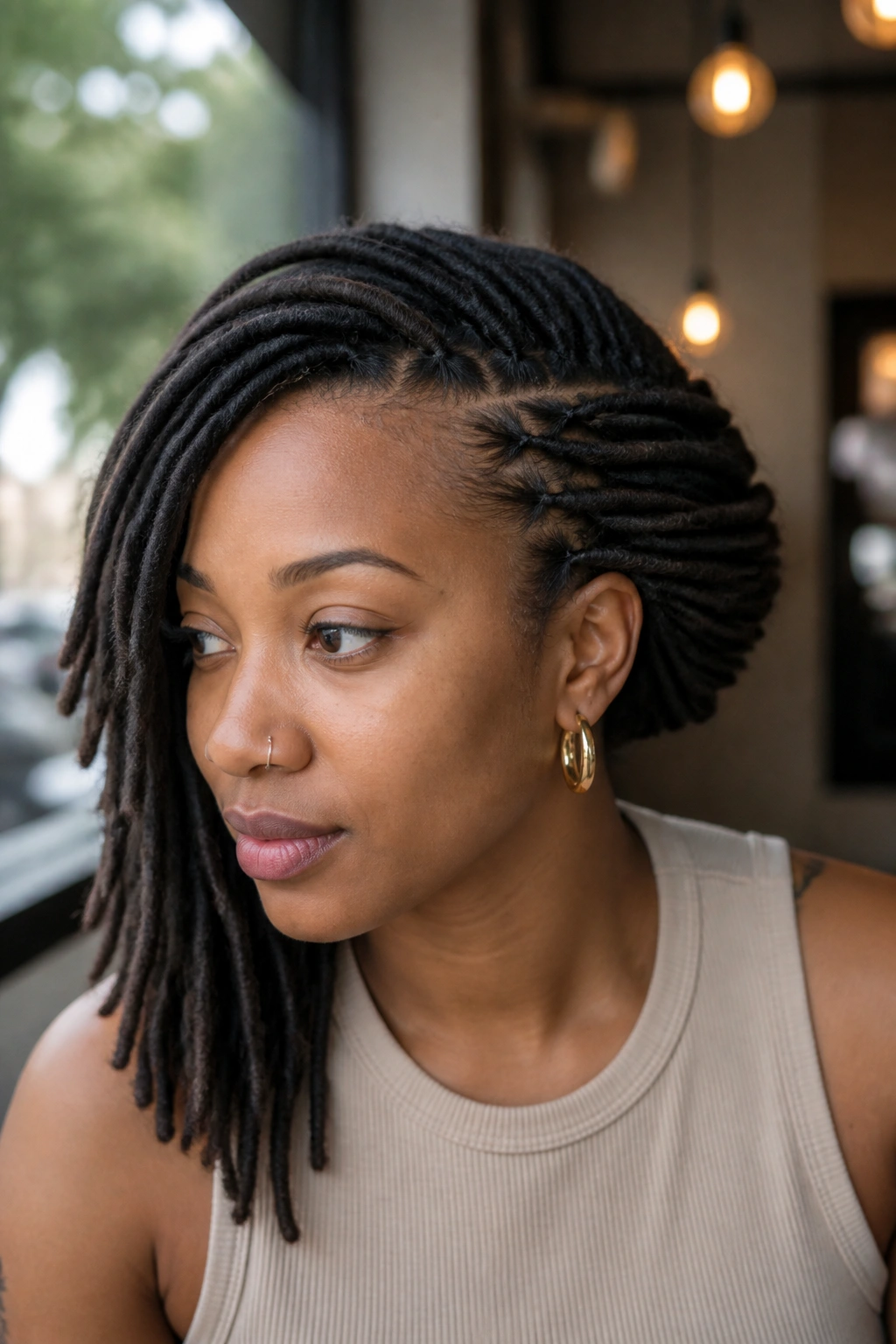
What if one side of your head feels more tender than the other? A side-swept roll helps with that. It shifts the weight off the center line and lets one temple and one side edge get a break, which is useful after a fresh retwist or a week of wearing the same part.
Why it feels easier on the scalp
A center-heavy style can put pressure on both temples at once. A side-swept roll changes the load path. The locs are gathered and directed to one side, then pinned at the back instead of being pulled straight up from the front.
How to wear it
- Make a deep side part, about 2 to 3 fingers off center.
- Sweep the heavier side back in one loose roll.
- Anchor the roll behind the ear or just below it.
- Use 3 to 5 pins, staggered so the support spreads out.
- Leave the front smooth, not flattened.
This style works especially well if one side of your hairline has been overworked by braids, ponytails, or repeated retwists. It also looks better than a lot of people expect. The shape is soft and a little old-school, which is not a bad thing. Old-school often means practical.
If a side-swept roll feels too loose, don’t crank it tighter. Add one more pin. That’s the smarter fix.
4. Half-Up Locs That Let the Back Hang Free
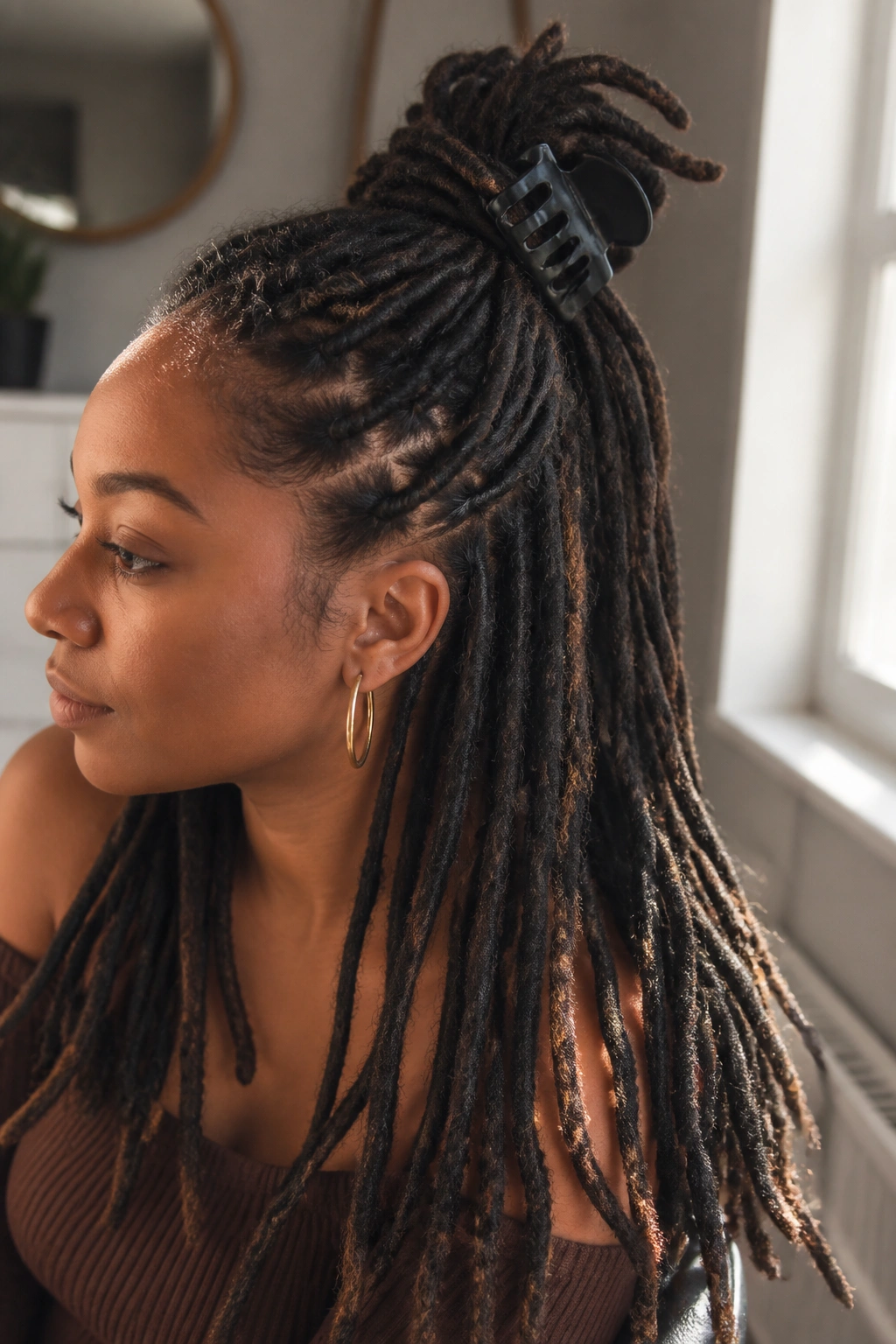
Some days you do not want a full updo. You want your face clear, your neck cool, and your scalp free from a heavy bundle. Half-up locs hit that middle ground nicely because they lift only the top section and leave the back to carry itself.
The key is restraint. Too much hair in the top section turns this into a tugging contest. Keep the top third or top half only, and let the rest hang loose. That way the style looks intentional without asking your roots to carry the full load.
A large claw clip or a soft tie works better than a tight elastic here. If you use a clip, pick one with smooth teeth and a wide opening. Cheap clips with sharp edges snag locs and make everything harder than it needs to be.
Half-up styles are also useful on thicker locs because they cut the visual bulk in half. You still get shape at the crown, but the back remains free, which often feels lighter than a full bun. And if the top starts slipping, don’t pull it tighter. Re-section it smaller.
5. The Low-Tension Flat-Twist Halo for Shorter Locs
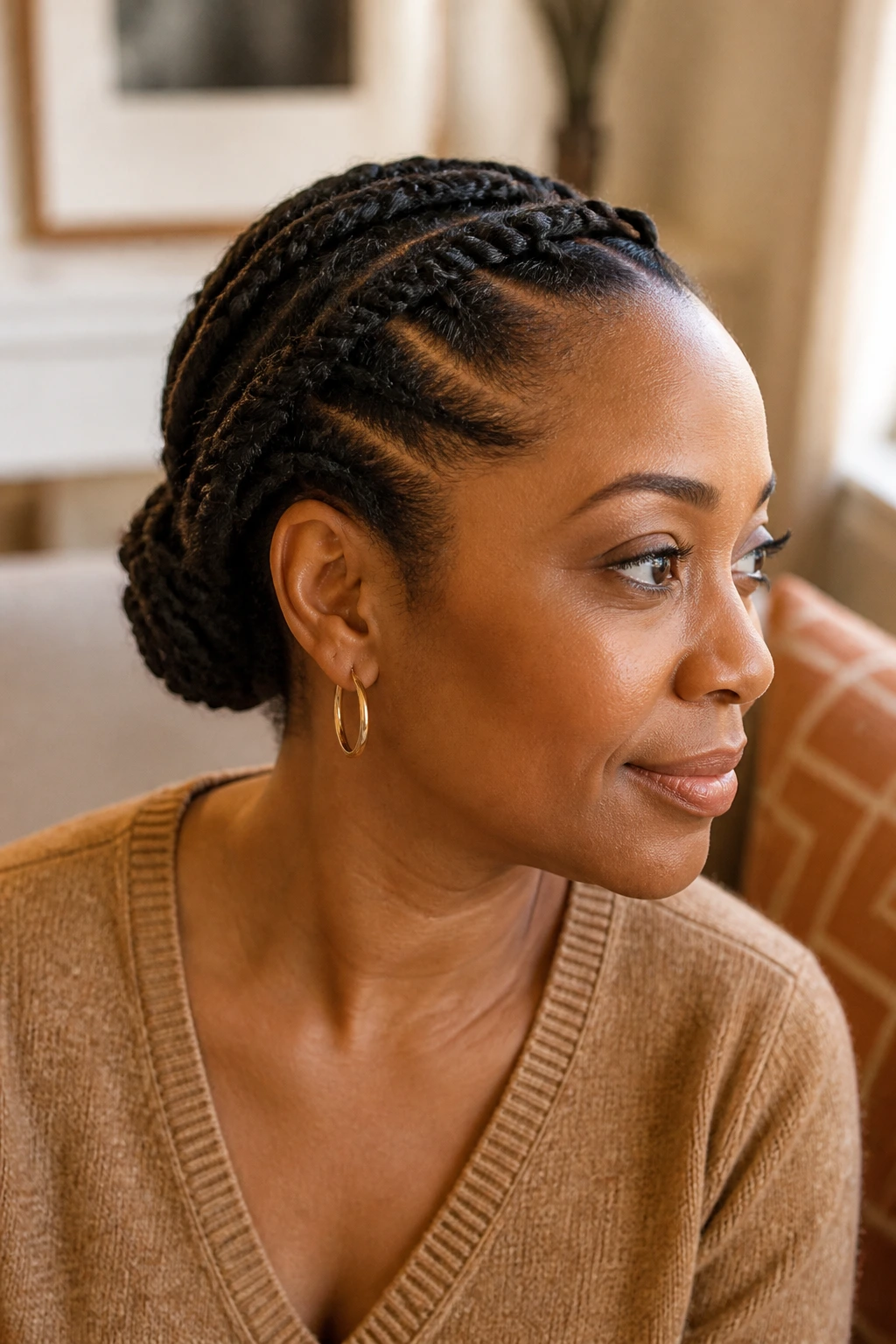
Shorter locs can be awkward to style when they first reach that in-between length. Too short for a full bun. Too long to ignore. A flat-twist halo solves that problem without forcing the roots into a tight grip.
Flat twists use broad, shallow sections that hug the scalp, so the tension is spread out instead of concentrated in tiny spots. That matters on starter locs and on fine hair, where small sections can turn into tiny pulls fast. Keep the twists loose enough that the scalp still moves a little when you touch it.
If you want the halo to sit neatly, make the side sections about 1 to 1.5 inches wide and guide them around the head toward the back. Tuck the ends under at the nape and secure them with 2 or 3 pins. No tiny rubber bands. No over-tight parting. No “snatched” anything.
Best use cases
- Starter locs that need shape without strain
- Shoulder-length locs that won’t stay in a bun
- Scalp days when you want the edges untouched
- Styles that need to survive a full workday
This is one of those styles that looks more complicated than it is. It also gives the impression that you spent forever on your hair when the actual work was calm, slow, and fairly simple. That’s my favorite kind of styling.
6. Two-Strand Twists Coiled Into a Soft Bun
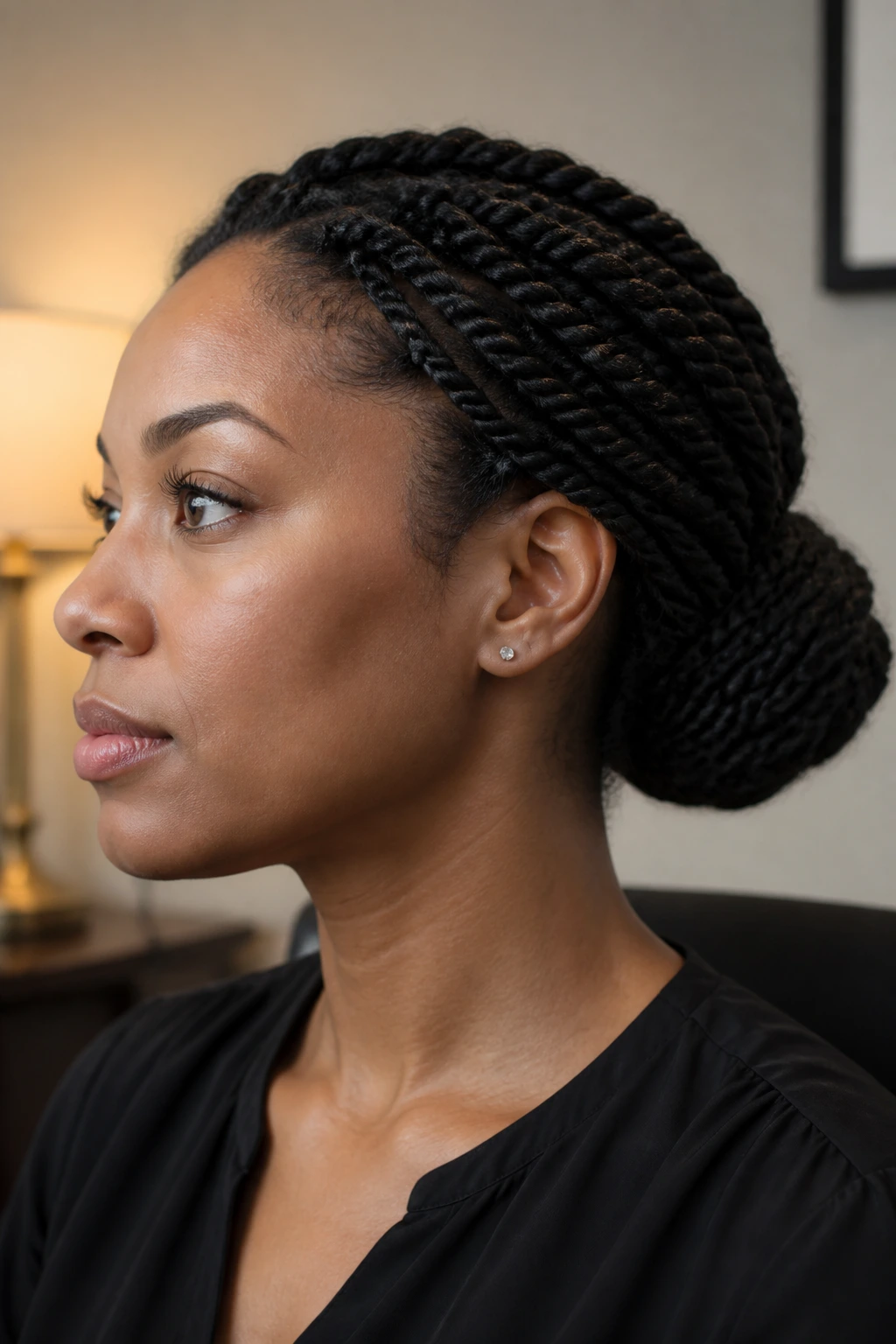
There’s a reason two-strand twists show up in so many loc routines. They hold shape without a hard grip. When you twist locs in pairs first, then coil those twists into a bun, the weight gets divided across more sections and the bun feels less like a single, heavy knot.
Unlike a one-piece bun that tries to trap all the locs in one loop, this style creates a little structure before the bun goes up. The twists also give the hair some grip, so the style tends to stay put even when the locs are freshly washed and a little slippery.
Use 6 to 8 paired twists for medium-density locs, more if the hair is thick. Keep each twist loose enough that it still bends easily. If the twist feels hard before you even pin it, you’ve gone too far.
A soft bun made from two-strand twists is a smart choice for days when you want the locs controlled but not flattened. It works well for errands, office wear, and long days in the car because it distributes the weight instead of letting one tie do all the work.
And yes, it can look polished. No need to overcomplicate that part.
7. The Loose Low Ponytail That Still Feels Put Together
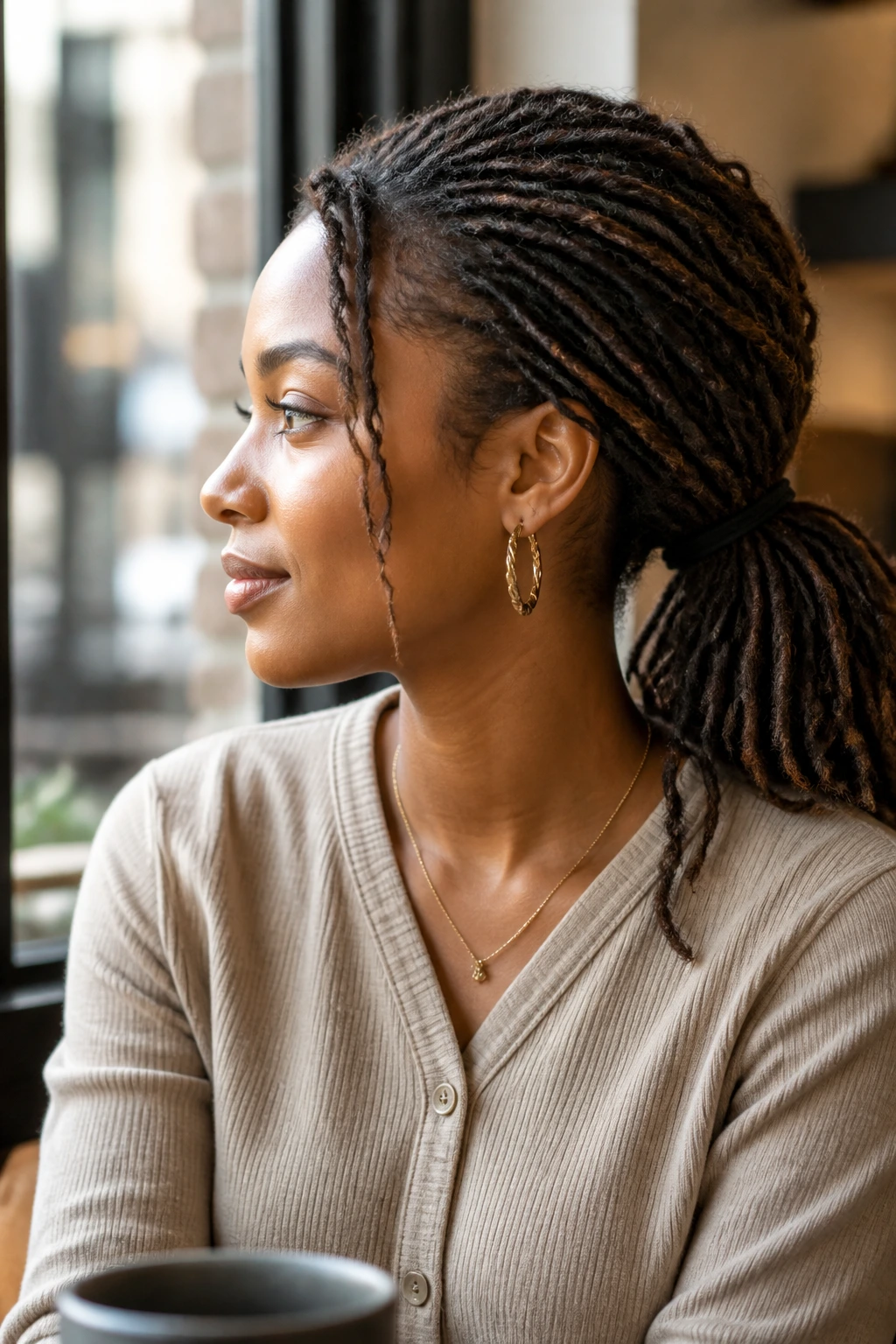
A loose low ponytail gets underrated because it sounds plain. Plain is not the same as boring. Sometimes the best style is the one that stays out of your way, holds for eight hours, and does not make your scalp complain halfway through the afternoon.
Why it works for heavy locs
The base sits low at the nape, which keeps the pull away from the temples and front edges. A ponytail at the crown has more lift, more leverage, and usually more regret. A low one moves with the neck instead of yanking against it.
Small details that matter
- Use a fabric-covered tie or satin scrunchie.
- Leave a little slack at the base; two fingers should fit easily.
- Keep the ponytail centered or slightly off-center, not high.
- Wrap one loc around the base if you want a cleaner finish.
- Avoid stacking multiple ties in the same spot.
The neatest-looking low ponytails are the ones that don’t try too hard. You can dress this style up with a side part, a wrapped base, or a scarf tied around the knot, but the base should stay soft. If the style gives you a headache, the tie is doing too much.
This is a good one for long locs that need a break from full updos but still need to be contained. Simple. Reliable. Useful.
8. Double Mini Buns That Split the Weight
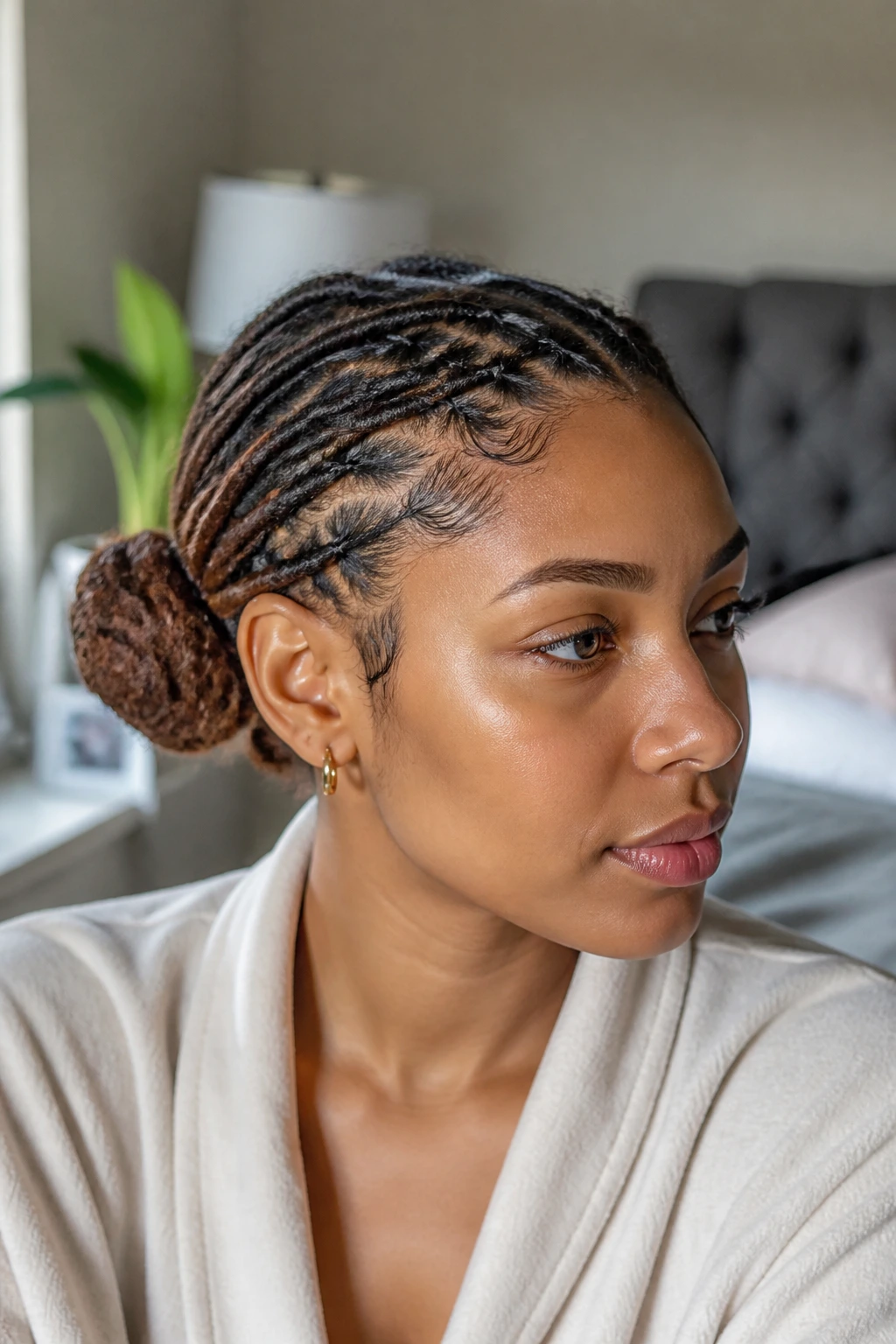
Two small buns can feel easier than one big one because the load gets split. That sounds almost too obvious, but it matters in real life. A single bun concentrates all the weight in one spot. Two buns spread it out, so neither side has to carry everything by itself.
Place them low and back, not up near the temples. If the buns sit too high, they start tugging the same fragile spots that high ponytails do. Keep them around the back half of the head, just above the nape or slightly wider than that, depending on how long the locs are.
This style works well on medium to long locs and looks especially good when the buns are slightly imperfect. The goal is not tiny, tight knots. The goal is balanced placement.
Use 2 soft ties or 3 to 4 pins per bun. If one side of your scalp feels more sensitive, make that bun smaller and keep it farther back. Little adjustments like that change how the style wears over the day.
Double buns also make it easier to rotate where the tension lands. One day the left bun can sit a touch lower; the next day the right one can shift. That rotation helps when you wear updos often and do not want the same spot taking a beating every time.
9. A Claw-Clip French Roll for Fast Days
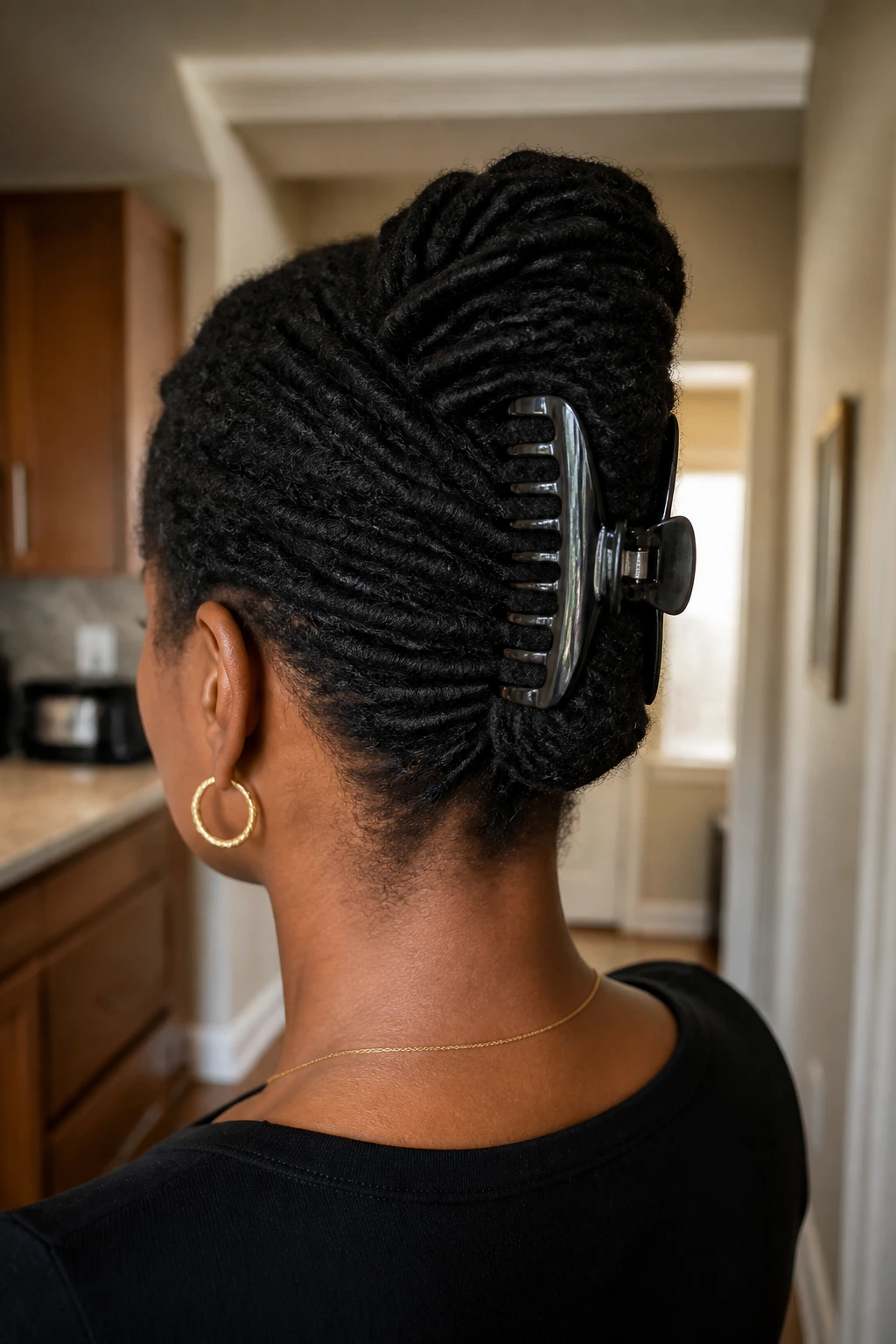
A good claw clip saves time and a sore scalp. The French roll version is even better because it uses the clip to hold a folded column of locs instead of forcing the roots to carry everything themselves. That makes it one of the easier low tension loc styles for busy mornings.
Start by gathering the locs at the back, roll them upward in a loose vertical fold, and clip the middle of the roll with a 4-inch or larger claw clip. The clip should grab the length, not clamp the base like a vise. If the clip has sharp teeth or feels flimsy in your hand, skip it.
This style works best on medium locs, though long locs can do it too if the ends are tucked carefully. You may need to fold the tail under the roll before closing the clip. A little trial and error is normal here. The first attempt is rarely the cleanest one.
The best part is how little scalp tension it creates. No tight elastic. No repeated wrapping. No need to pull the style tighter every time one side slips. You just reset the roll and clip again.
It’s a workhorse style. Not flashy, but it earns its place.
10. The Low-Tension Satin-Scarf Updo for Friction Control
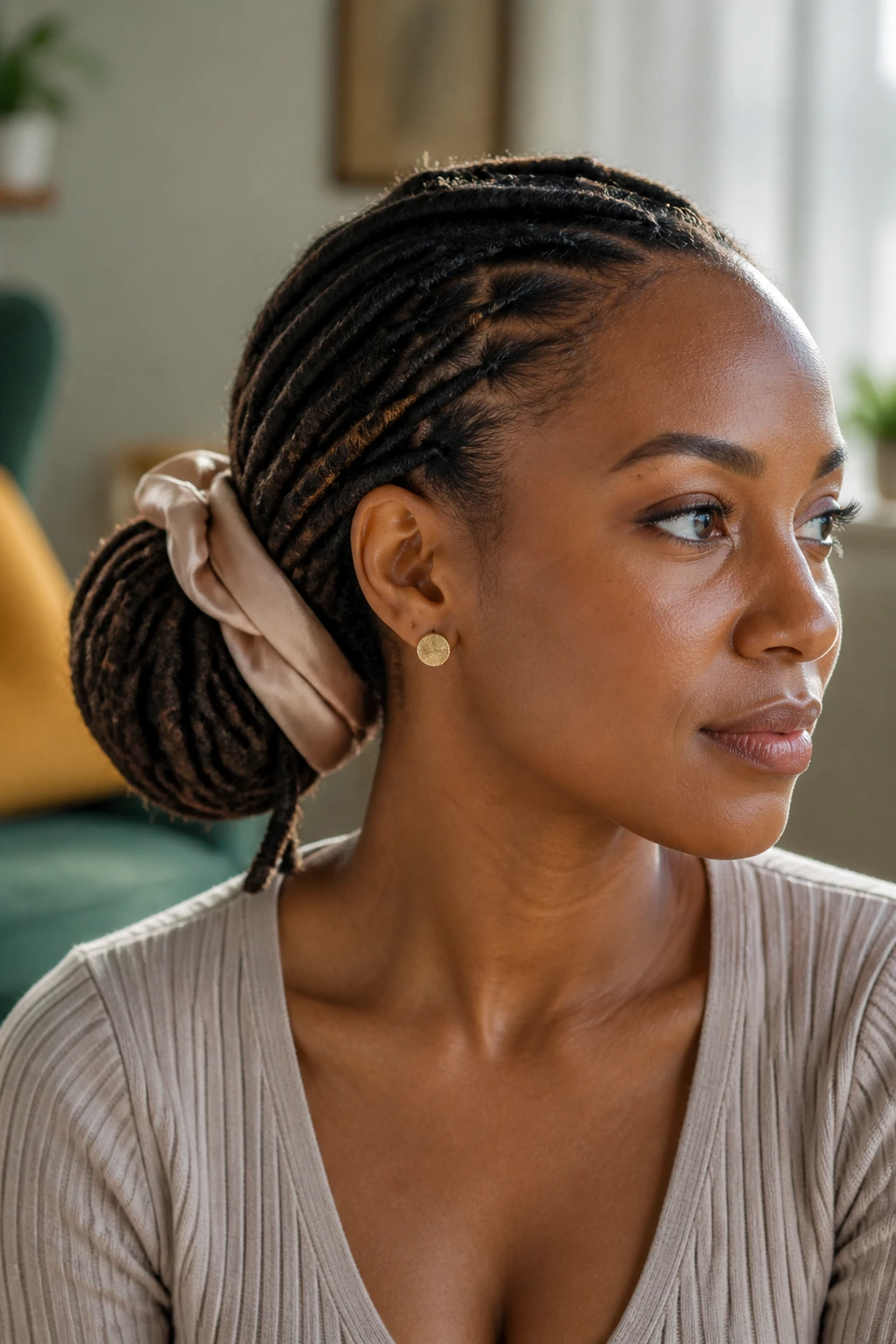
Need a style that protects the hair from rubbing against collars, jackets, and pillowcases? The satin-scarf updo does that well. The scarf supports the bundle instead of squeezing it, which keeps friction down and helps the style stay calm for longer stretches.
How to wrap it
- Gather the locs into a loose low bun or tuck.
- Fold a satin or silk scarf into a band about 3 to 4 inches wide.
- Wrap it around the bun or around the hairline once, not five times.
- Tie it securely, but not tight enough to flatten the front.
- Tuck the knot away from the nape if you’ll be sitting back in a chair.
This style works nicely on wash-day stretch, overnight wear, and days when the weather is dry and rough on the hair. Satin is the point. Cotton soaks up moisture and adds drag, which is the opposite of what you want.
You can wear the scarf as the main support or layer it over a loose bun for extra hold. If the front starts to feel squeezed, loosen the wrap and shift it half an inch back. Small moves matter here.
The scarf does not have to look fussy. A clean wrap with a low bun under it can look sharp, especially when the locs are fresh and separated.
11. A Faux Bob Tuck That Lifts Length Off the Neck
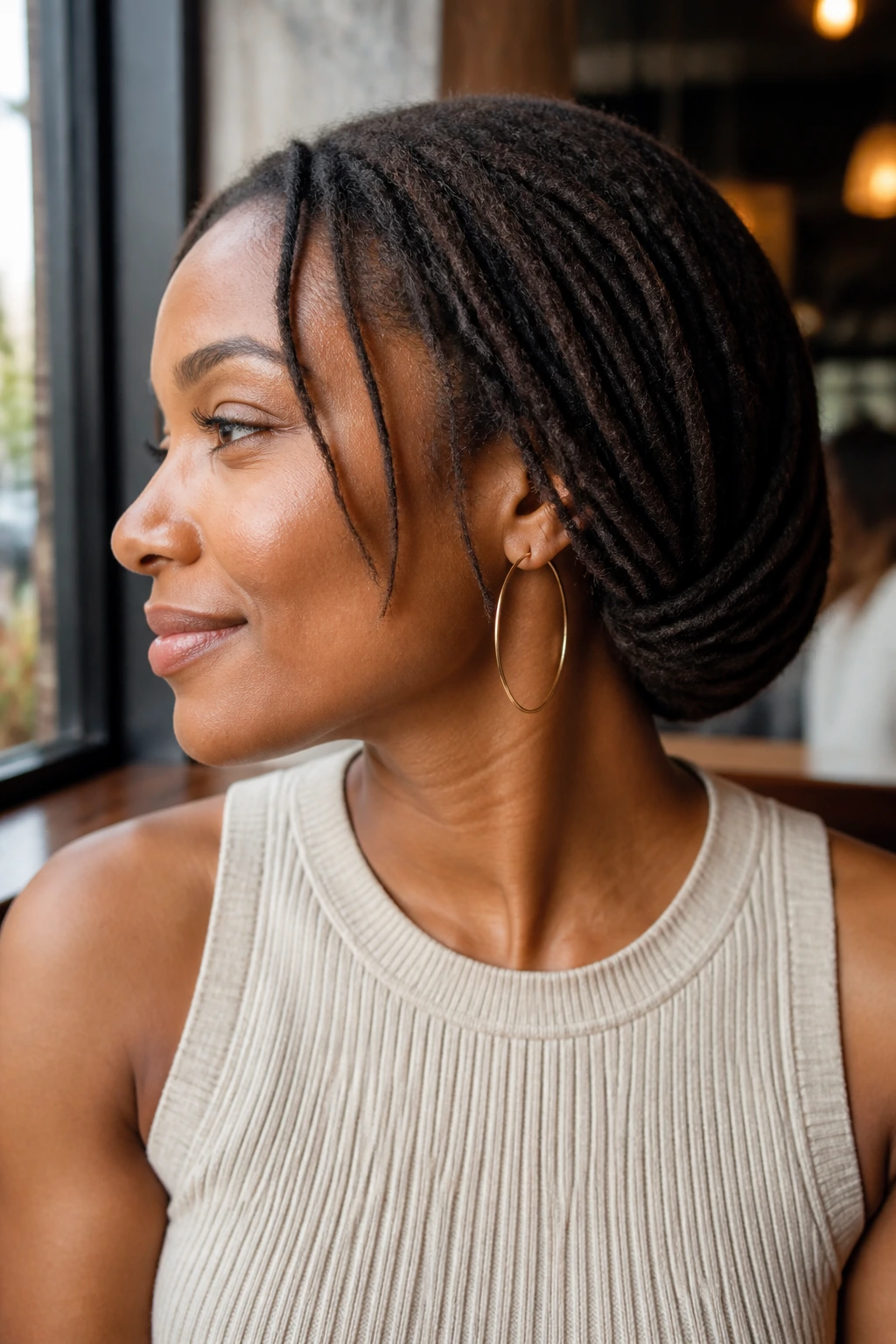
When locs start brushing the collarbone, the neck can get tired fast. Jackets snag. Scarves bunch. Hair gets caught in seat belts and purse straps. A faux bob tuck solves that by folding the length upward and creating a shorter shape without cutting anything.
The style works because the ends are pinned up, not dragged down. That reduces the swing of the locs and keeps the weight from hanging straight off the roots. Use 6 to 10 pins, depending on density, and place them parallel to the scalp so they don’t jab every time you move.
It helps to divide the locs into two or three sections before tucking. Work from the back up, then hide the ends under the middle layer. The silhouette should feel soft, not helmet-like. If it looks stiff, loosen the middle and let a little shape fall naturally around the face.
A faux bob is one of the smarter styles for events because it makes long locs feel lighter without a hard pull. It also photographs well, not because it’s “dramatic,” but because the shape is tidy and the neck area stays open.
That open neck matters. It just does.
12. Barrel Rolls Across the Crown
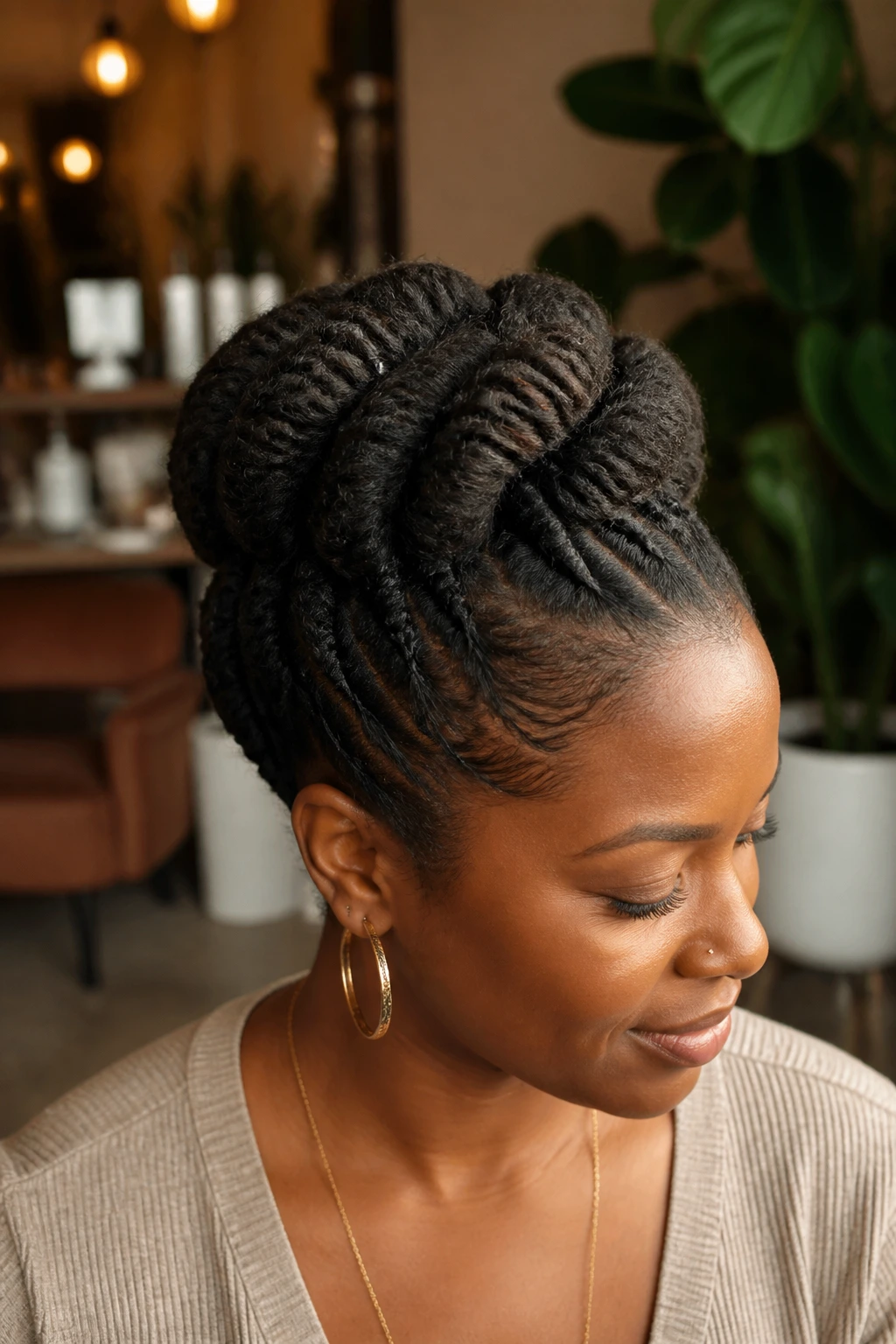
Barrel rolls are one of those styles that look more difficult than they are. The logic is simple: create broad rolls from the sides or top, guide them back toward the center, and pin them so the shape stays put without a tight braid or a tiny tie pulling the roots.
The trick is size. Bigger rolls mean less tension. Small, busy rolls create more points of pressure and often take longer to set, which defeats the purpose. Two or three generous rolls across the crown usually do more for the scalp than six tiny ones.
This style is especially useful on medium-to-long locs that need a cleaner shape but can’t handle a tight updo. It also gives the front a soft lift without forcing the hairline to carry all the work. You can keep the rolls symmetrical or slightly off-center if one side feels more tender.
Use 4 to 6 pins to anchor each roll, depending on length. If the roll starts to sag, add a pin lower down instead of tightening the whole thing. That keeps the base relaxed.
Barrel rolls have a nice side effect: they keep the top smooth while leaving the rest of the locs tucked and quiet. Sometimes quiet hair is the whole goal.
13. The Deep Side-Part Pin-Up
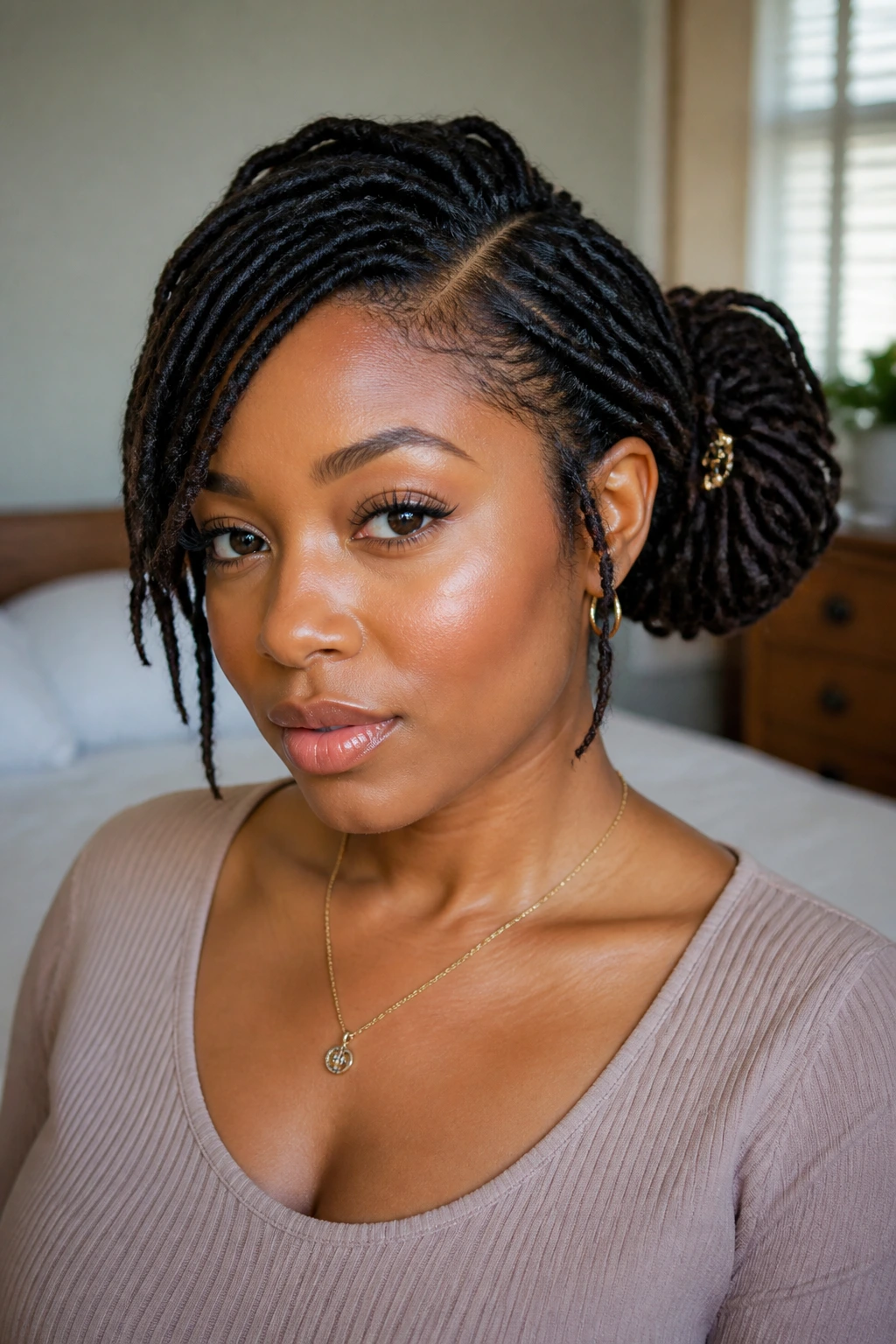
A deep side-part pin-up changes the balance in a way that can feel like relief. Instead of splitting the hair down the center and loading both sides evenly, you let one side rest more while the other side carries the shape. That small shift can matter if one temple, one edge, or one side of the scalp is feeling overworked.
Make the part about 2 to 3 inches from the center, then sweep the larger section across and pin it low at the back. The smaller side can stay closer to the head or disappear into the shape. Use 3 to 5 pins in staggered placement so the style holds without one hard anchor point.
This is a good choice when you want something a little more styled than a ponytail but not as formal as a chignon. It frames the face in a way that feels softer and less rigid, which helps if your locs are thick and the usual center styles make your head feel boxed in.
There’s also a practical benefit: the side part gives the scalp a break from the same center line getting all the stress. Rotate the part from left to right every so often and the comfort changes more than people expect.
A deep side-part pin-up looks deliberate. It also feels less demanding. That combination is rare enough to be worth using.
14. A Pineapple Puff for Long Locs
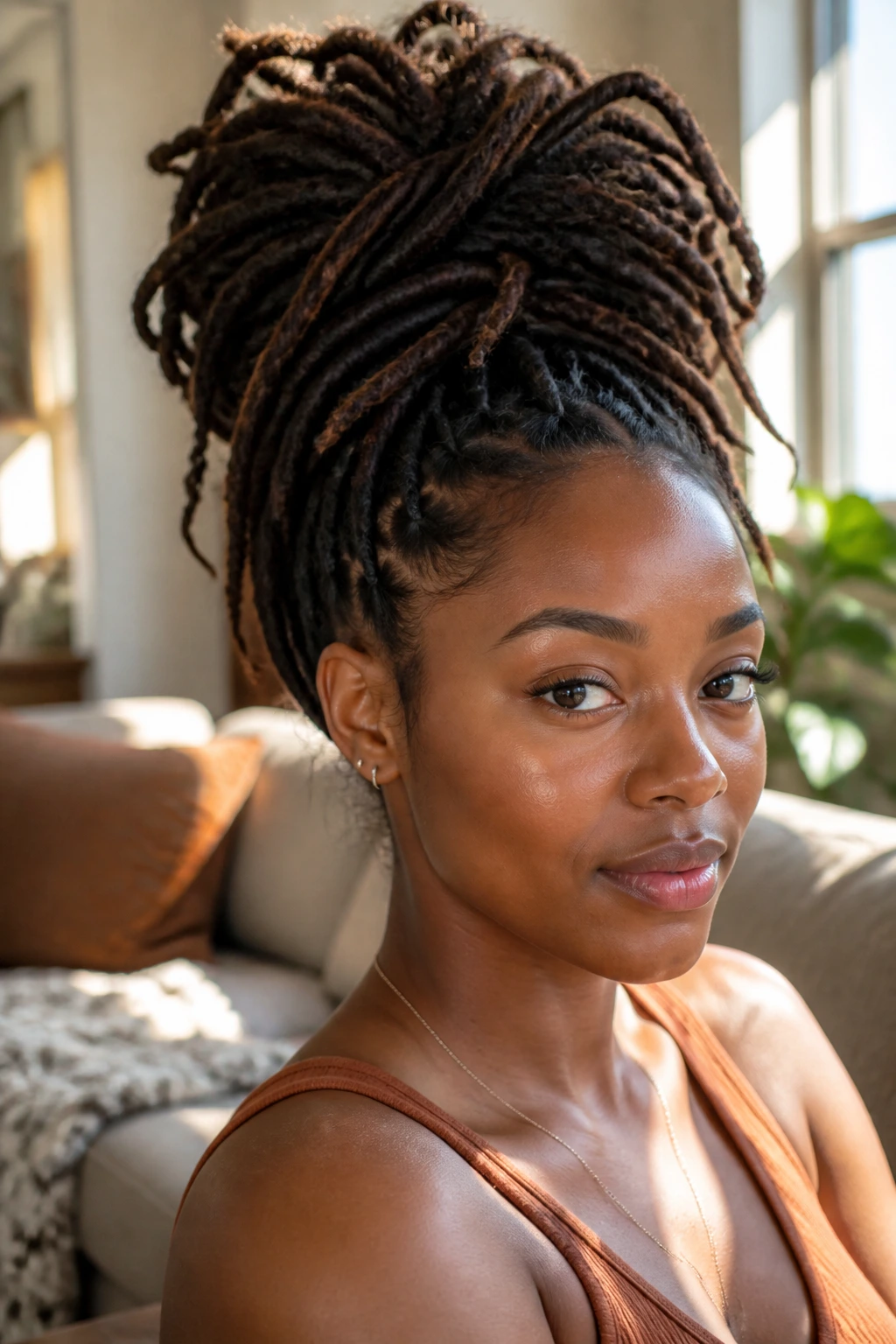
The pineapple puff only works as a low tension style if you keep it loose. Too high and too tight, and it turns into a headache. Done right, though, it keeps the locs elevated off the shoulders and collar while letting the roots stay relaxed.
Place the tie at the highest point you can manage without lifting the scalp. That usually means the top is gathered softly, not stretched upward hard. A satin scrunchie is better than a thin elastic because it holds without biting into the locs.
This style is especially useful for sleeping, lounging, and casual wear when long locs keep getting trapped under you. The ends stay up, the neck stays clear, and the hair rubs less against rough fabric. That alone can make a difference in how the locs feel by the end of the day.
A few things that keep it gentle
- Don’t loop the tie more than once or twice.
- Keep the front loose enough to slide a finger underneath.
- Use a scarf or satin cap if you’ll be moving around a lot.
- Lower the puff if you feel pulling at the temples.
A pineapple puff is only protective when the base stays calm. If the top aches, the puff is too ambitious.
15. A Rope-Twisted Bun That Hangs on Without Tugging
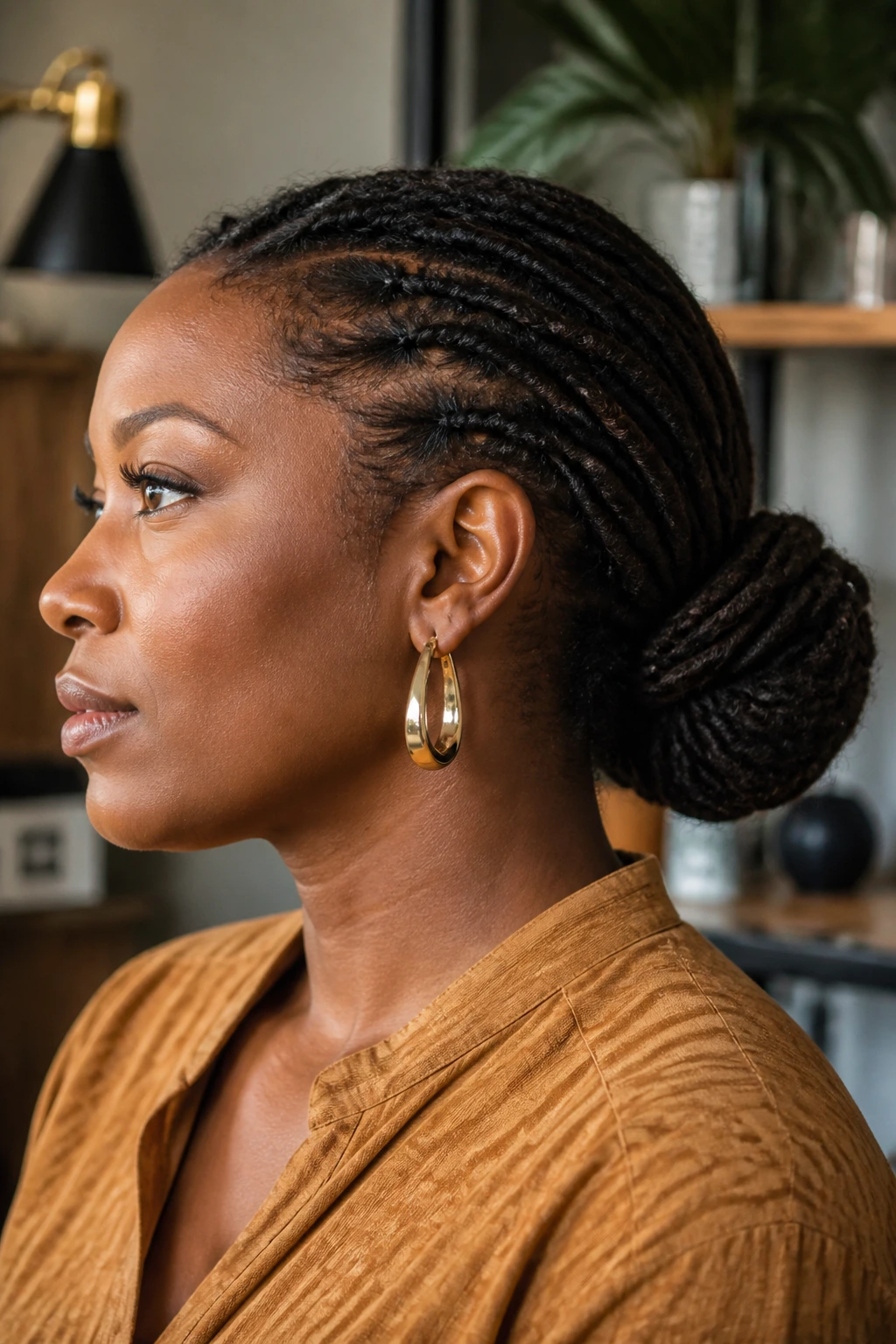
A rope-twisted bun gives you more hold without making the roots do all the work. Split the locs into two large sections, twist them around each other once or twice, then coil the length into a low bun. The twist builds structure through the body of the hair instead of asking the tie to clamp everything down.
That’s why it works so well on thick locs. The twist acts like a built-in brace. You usually need fewer pins, and the bun tends to stay put better than a loose wrap that keeps unraveling and getting tightened again.
Use 4 to 6 U-pins or long pins to secure the bun. Place them across the coil, not right at the roots. If the rope feels hard before you pin it, you’ve twisted too much. Back off. A soft rope is the point. A stiff one starts to pull.
This style can wear a little more formal than the low ponytail and a little more secure than a scarf wrap. It sits nicely in that middle space where you want staying power, but not strain. That balance is the whole reason it deserves a place here.
Soft is the goal. Stiff is a warning.
Final Thoughts
The easiest way to keep loc styles gentle is to stop chasing height and tightness. Low anchors, wider sections, soft ties, and enough pins to support the shape without squeezing the scalp — that’s the pattern worth repeating.
If a style leaves a dent, a headache, or a hot spot at the hairline, it is not low tension, no matter how neat it looks in the mirror. Your scalp tells the truth fast. Listen to it.
Rotate the styles, move the part, and let the weight shift around from week to week. That small habit matters more than people think, and it’s one of the simplest ways to keep low tension loc styles working with your hair instead of against it.
