



Side-swept braids have a way of looking simple right up until the part is off by half an inch. Then the whole style loses its shape.
That is why lemonade braid styles stay in rotation for so many Black women: the diagonal flow does more than decorate the head. It frames the face, gives the braids movement, and creates that clean sweep that feels sharp without looking stiff. When the parting is good and the tension is handled well, the style reads polished from the front, the side, and even the back.
I’ve always thought the best lemonade braid sets are the ones that feel practical first. They should survive a full day, a scarf, a long commute, and one of those nights when you fall asleep before taking the wrap off. Tight is not the same thing as neat. A braid set can look precise and still be gentle at the hairline, and that difference matters more than people like to admit.
So the fun part is not whether you can wear lemonade braids. It’s which version fits your face, your routine, and how much time you want to sit in the chair.
1. Classic Side-Swept Lemonade Braids

Classic side-swept lemonade braids are the clean, no-fuss version that made the style famous in the first place. The part is deep, the rows angle back toward one shoulder, and the ends usually fall somewhere between the collarbone and mid-back. It is the kind of set that looks finished on day one and still holds its shape after a little real-life wear.
Why this length hits the sweet spot
Medium-length braids do a lot of heavy lifting without feeling heavy. They do not drag on the neck the way waist-length sets can, and they do not shrink the side-swept shape into a lump of hair at the shoulder. The diagonal pattern stays visible, which is half the appeal here.
- Ask for braids that are small enough to move, but not so tiny that the install turns into a marathon.
- Keep the side part deeper than you think; shallow parts lose the lemonade look fast.
- A light mousse on the finished braids helps tame flyaways without making the hair feel crunchy.
- If your edges are sensitive, tell the stylist to keep the first row soft at the hairline. That matters more than extra-tight neatness.
This version works especially well if you want a protective style that can do weekday errands and still look good with hoop earrings and a clean lip. It is dependable. Not boring. Just dependable, and that’s a nice thing to be.
2. Jumbo Lemonade Braids With a Deep Side Part
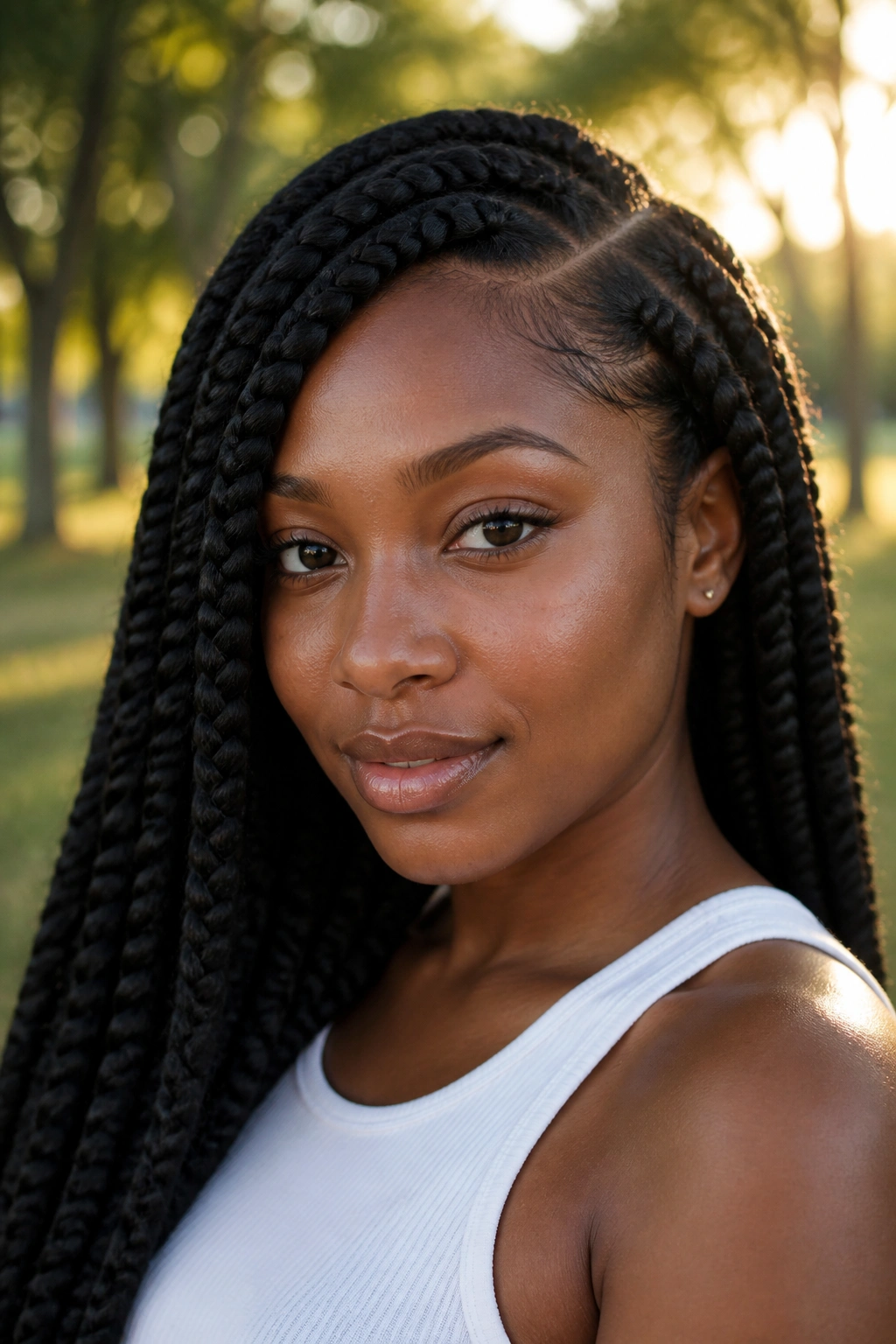
Jumbo lemonade braids are the fastest way to make the style feel bold without piling on extra styling tricks. Fewer, thicker braids mean the side part stands out right away, and the whole look lands with more weight and shape. If you want something that reads strong from a distance, this is the one.
The tradeoff is simple: jumbo braids install faster, but each braid carries more bulk. That can be a relief if you do not want to sit for hours, though the larger size does mean you feel more of the braid on the scalp. Some people love that. Others feel it by day two and decide they’d rather live in a medium set next time.
Jumbo lemonade braids look especially good when the braids curve cleanly toward the back and the ends are sealed neatly. Loose ends or fuzzy extensions will undo the whole effect. Keep the finish crisp. That’s the secret sauce, if you want to call it that.
I like this style for people who want drama without fuss. Big part. Big braids. Clean line over one shoulder. Done.
3. Small Feed-In Lemonade Braids
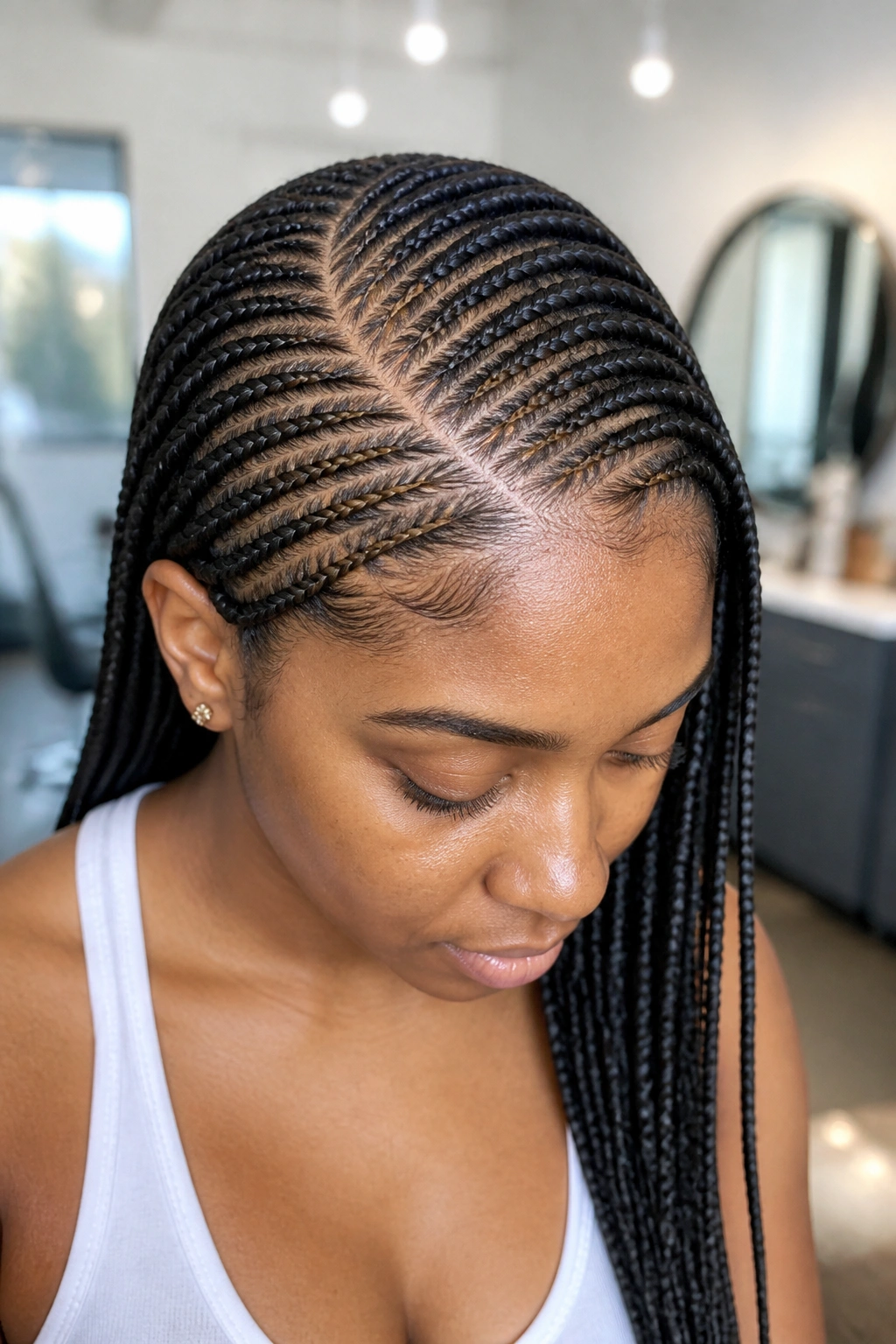
Why do small feed-in lemonade braids take so long and still get booked all the time? Because they have a finish that bigger braids can’t quite fake. The rows lie flatter, the side part looks more precise, and the whole style has that smooth, almost sculpted feel that shows up beautifully in person.
How to wear them without the bulk
Small feed-ins work best when the stylist adds hair gradually instead of starting with a thick chunk at the root. That gradual build gives the braid a sleeker start and keeps the scalp from looking crowded. It also helps the rows lay closer to the head, which is useful if you wear glasses, headbands, or anything that sits near the temples.
- Ask for even braid size from row to row; uneven rows make the pattern look messy fast.
- Keep the edges clean with a tiny bit of edge control, not a hard shell of product.
- Choose this style if you want a set that looks detailed and lasts longer before it starts looking tired.
- If your schedule is packed, book this on a day you can sit still. It is not a quick chair visit.
There is a reason small feed-in sets keep getting picked. They have a neatness that feels expensive without actually depending on accessories or color. The braids do the work all by themselves.
4. Stitch Lemonade Braids With Razor-Sharp Parts
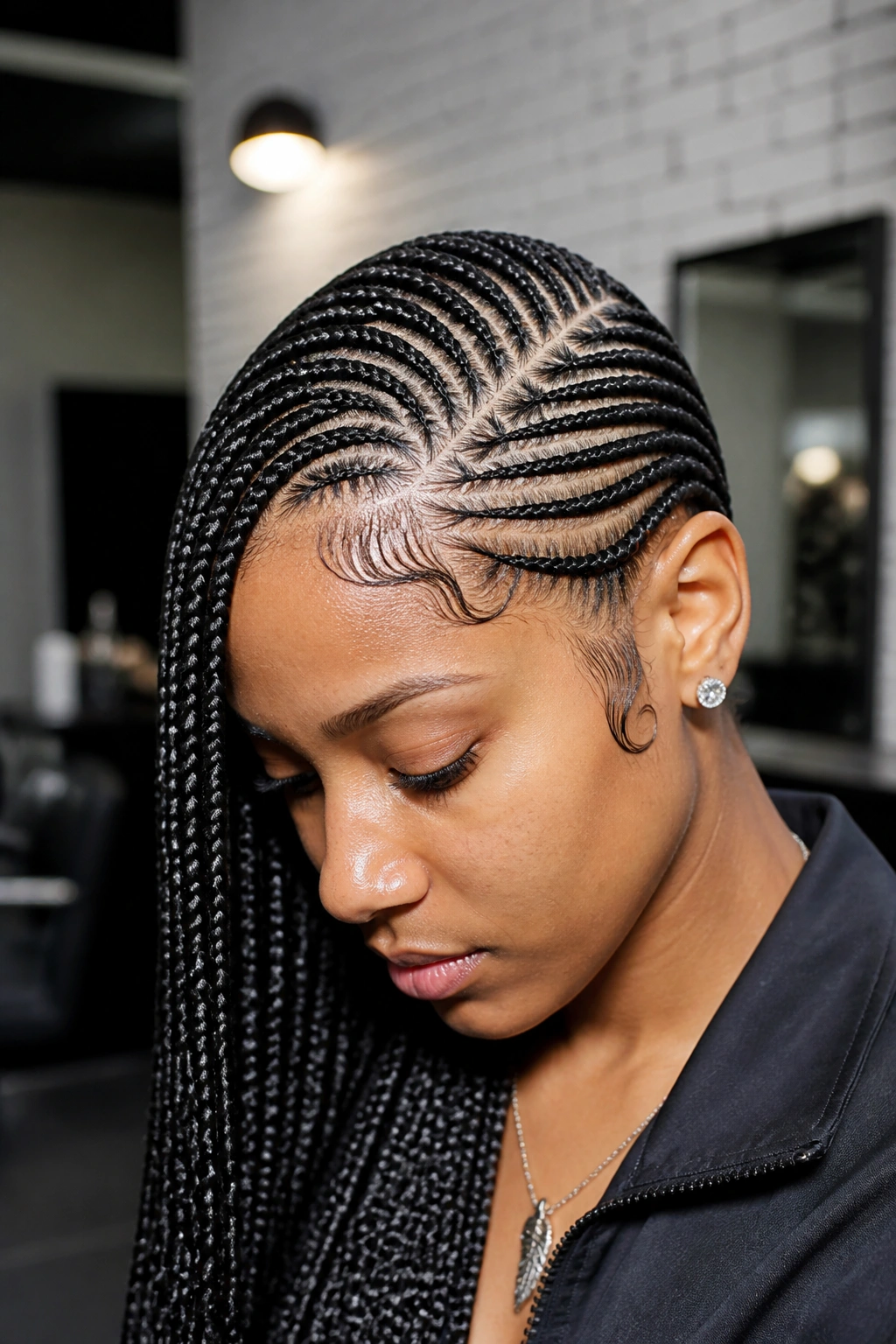
Picture a neat side part so clean it looks drawn on with a ruler. That is the appeal of stitch lemonade braids. The braider creates visible “stitch” lines across each row, which gives the style a more geometric look than softer cornrow patterns. It is sharp, structured, and impossible to ignore.
The stitch technique changes the entire mood. Instead of blending into the scalp, the braids have a defined lane, almost like fine-line art on hair. That can be gorgeous on Black women who like a crisp finish and want the braid pattern to show even from across the room. It does ask for a steady hand, though. Rushed stitch work looks crooked fast.
What to ask for at the chair
- Request straight, evenly spaced stitch lines across the side-swept rows.
- Keep the spacing consistent so the pattern does not wobble as it moves toward the back.
- Use this style when you want the braid pattern to be part of the look, not just a base for the look.
- Add cuffs or one small accent charm if you want, but keep it restrained. The structure is already doing plenty.
This is the style I’d point to if someone says they want braids that feel tailored. Not soft. Tailored.
5. Knotless Lemonade Braids

Knotless lemonade braids feel lighter at the root, and you can see it from the first inch. The braid starts with your own hair and gets fed in gradually, so there is no bulky knot sitting at the scalp. Compared with older feed-in methods, the root looks flatter and the first part of the braid feels less abrupt.
That softer start is why knotless versions are such a smart choice for people with tender scalps or anyone who hates that tight, helmet-like feeling some braid sets create. They can still be long, neat, and polished. They just do it with a gentler hand. That little difference matters on day one and day ten.
Knotless lemonade braids also move a bit better when you wear them loose over one shoulder. The braid doesn’t feel like it’s fighting the part line. It falls. It swings. It behaves like hair, which is exactly what most people want from a protective style.
If you like the lemonade shape but do not love tension at the root, start here. It’s the style that gives you the look without the hard start.
6. Lemonade Braids With Curly Ends
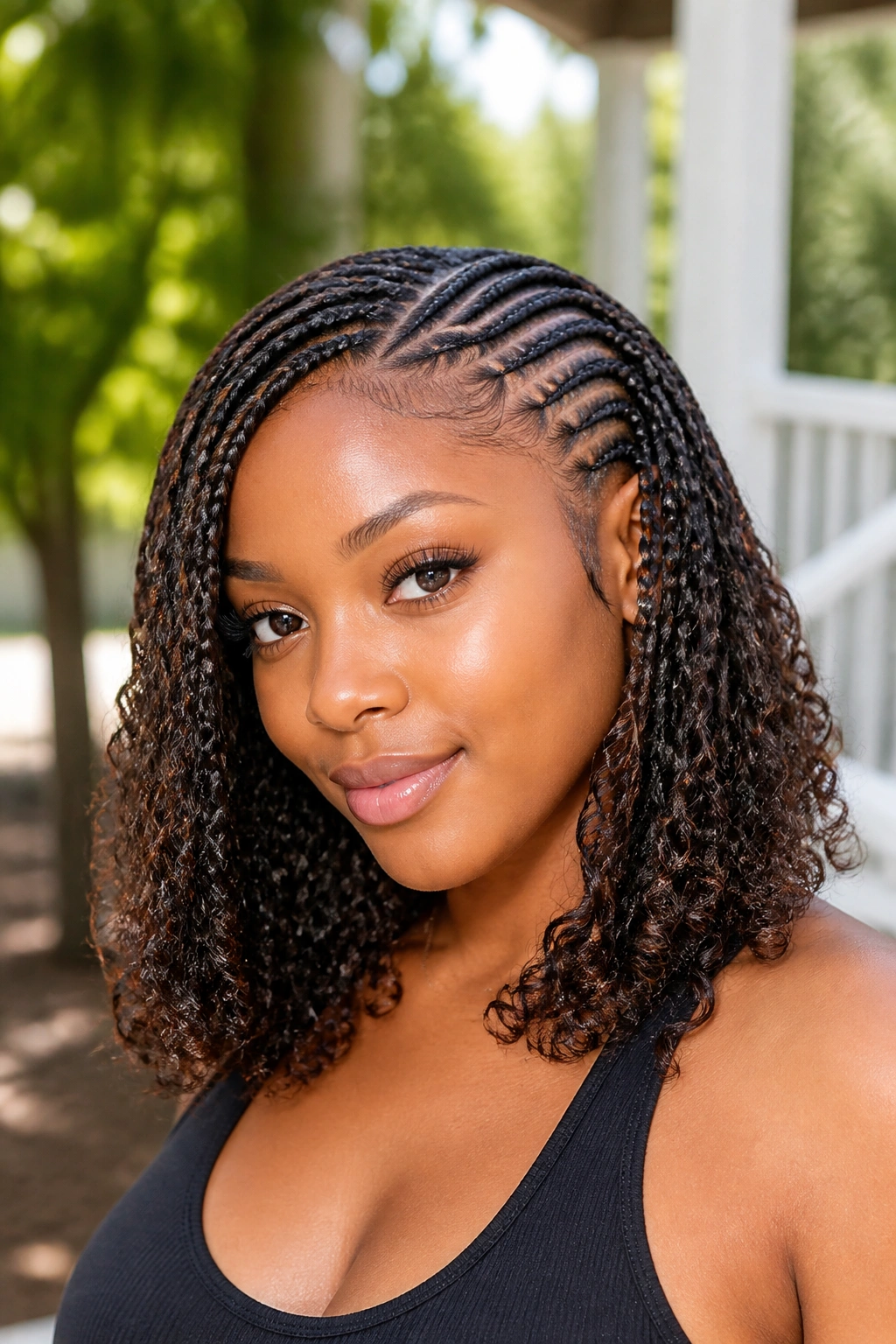
Curly ends change the whole mood of lemonade braids. Without them, the look can feel sleek and structured. With them, the style softens at the bottom and starts to move in a more playful way, especially when the curls brush the shoulder or bounce against a collarbone.
The easiest way to get this finish is to leave the last few inches of the extensions loose and set them on rods, or to use pre-curled hair if that is the method your stylist prefers. The important part is the transition. You want the braid to stay clean at the root and midshaft, then open up into curls that look intentional rather than random. Messy ends are a choice. These should not be a surprise.
I like this version because it gives the style more shape from top to bottom. The curls break up all the straight lines, which keeps the hair from looking too severe. That matters if you wear gold hoops, a soft makeup look, or just want the braids to feel a little less formal.
It is a small change, but a good one. Clean root. Curled finish. Suddenly the whole set feels lighter.
7. Chin-Length Bob Lemonade Braids
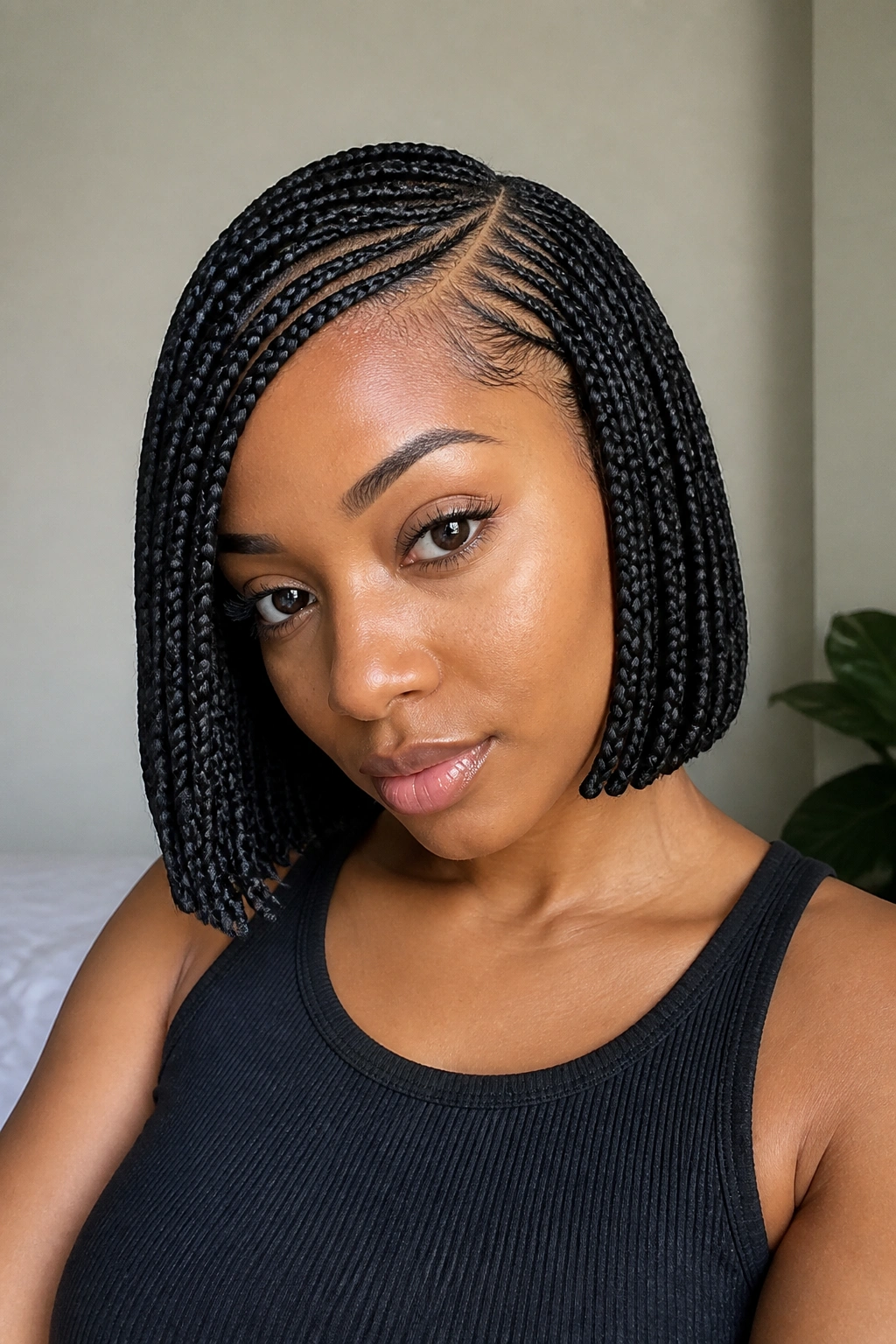
A chin-grazing lemonade braid bob can do more than waist-length hair ever will. That sounds blunt, but I mean it. Shorter lemonade braids put all the attention on the parting, the angle, and the face, which makes the style look sharp without leaning on length as a crutch.
This version is especially smart if you do not want braids brushing your shoulders all day. It is easier on the neck, less likely to snag on coat collars, and faster to dry after a wash. The shorter length also makes the braid ends look neater for longer because they are not dragging around in scarves, car seats, and purse straps.
A bob set works best when the cut line is deliberate. If the ends are uneven or frayed, the whole style can go from crisp to unfinished in a hurry. A clean blunt finish, even if it sits just under the jawline, gives the style its edge.
I think bob lemonade braids are underrated. They feel modern without trying too hard.
8. Waist-Length Lemonade Braids

Do waist-length lemonade braids have to feel heavy? Not if the parting and braid size are handled well. The length is dramatic, yes, but the weight comes more from the braid size, extension density, and how much hair is packed into each row. Get that balance right and the style can still feel wearable.
How to keep the ends neat
Long braids need extra care at the bottom because the ends are the first part to get rough. Keep them wrapped at night, and make sure the hair is fully dry after washing or refreshing the scalp. Damp braid hair tucked under a scarf is a recipe for that stale, slightly heavy feel nobody wants.
- Ask for lighter feed-in at the root so the scalp does not feel overloaded.
- Use a satin bonnet or long scarf that actually covers the full length.
- Refresh the ends with a tiny bit of mousse, not water-heavy sprays that make the braids puff.
- If you sit in cars a lot, tuck the braids forward or over the opposite shoulder so they do not fray against the seatbelt.
This style gives you motion. Lots of it. When the braids swing down the back and slide over one shoulder, the side part becomes part of the whole silhouette instead of just a detail.
9. Boho Lemonade Braids
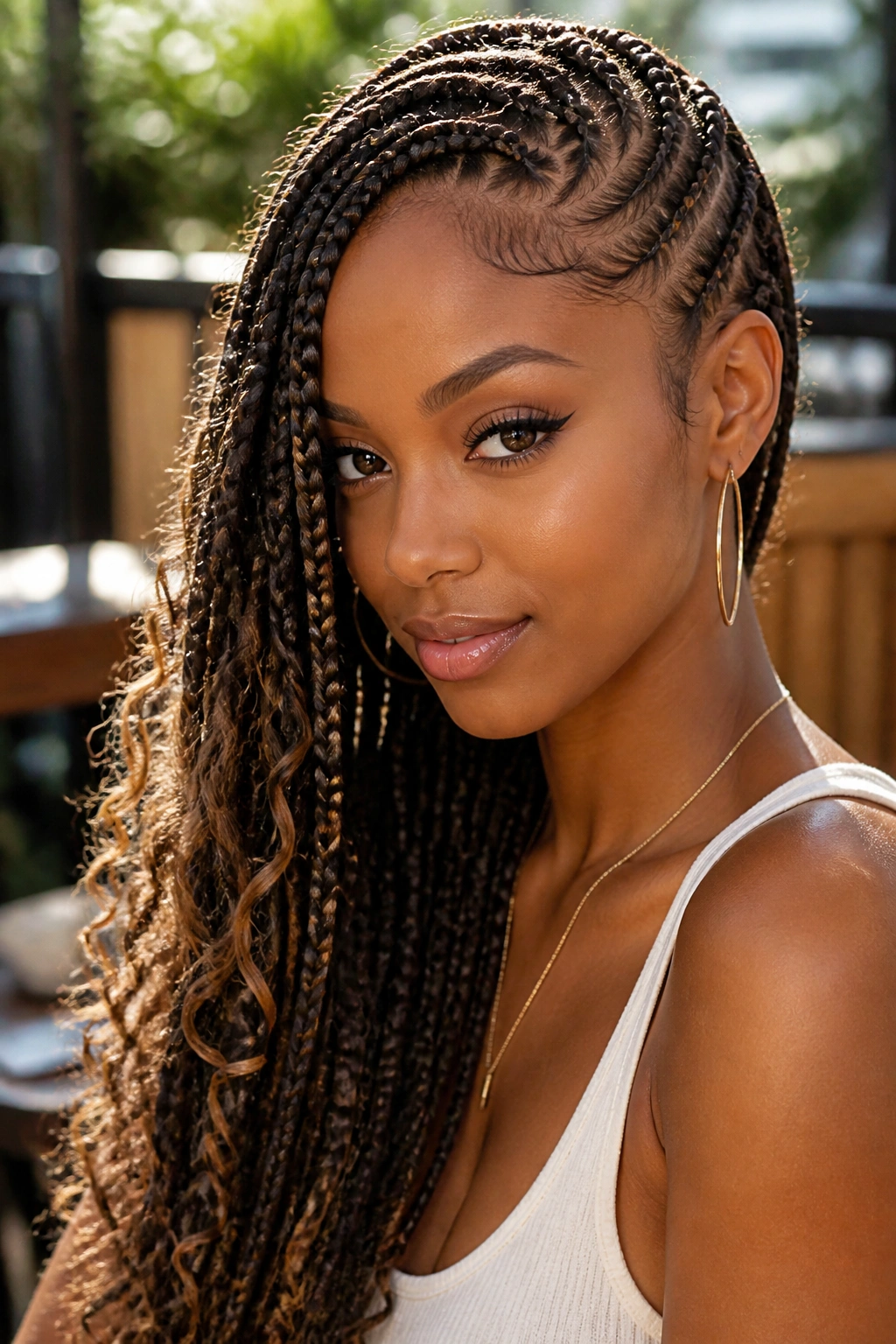
A few loose curls can change the whole braid set. That is the charm of boho lemonade braids. The base still follows the side-swept cornrow pattern, but some strands are left out or curled throughout the length so the style feels softer and less rigid.
This works beautifully when the rest of the braids are kept tidy. If the roots are already fuzzy, adding curly pieces can make the style look crowded. The trick is contrast. Sleek rows on top. Soft texture through the lengths. That split is what gives boho lemonade braids their appeal.
I’ve seen this style wear well on people who like movement more than sharp lines. It has a little freedom baked into it. Not too much, though. Too many loose curls can turn a braid set into a tangle by the second week, and that’s where the romance stops.
A small note: use curls that match the braid length and density. If the curl pattern is too tight or too loose, the style starts looking disconnected. You want the curls to look like they belong there, not like they were added because there was leftover hair in the bag.
10. Triangle-Part Lemonade Braids

Triangle-part lemonade braids change the look before the first braid even drops. The parts themselves do the styling work. Instead of standard square or rectangular sections, the hair is divided into triangles, which creates a sharper graphic effect and gives the whole set more edge.
The shape is especially nice on medium-size braids because the triangles stay visible without getting swallowed by the braid size. On very small braids, the pattern can get busy. On jumbo braids, the geometry can feel too heavy. Medium is the sweet spot here, and I’ll say that plainly because it matters.
Triangle parts also help the style feel less predictable. Side-swept braids already have movement; the angled sections add another layer of shape. When light hits the scalp, the parts create a pattern that reads from the front and side instead of disappearing after the install.
If you like your braids to look a little more styled and a little less standard, this is a good place to play. It’s still lemonade braids. It just has a sharper jawline.
11. Two-Tone Lemonade Braids

Color is the fastest way to shift lemonade braids from classic to noticeable. Two-tone braids do that with less effort than full-on bright color because the contrast can stay controlled. Dark roots with honey-blonde lengths, black with burgundy ends, brown with copper pieces — each one changes the mood a little differently.
I prefer two-tone sets when the color supports the braid pattern instead of fighting it. If the contrast is too loud from root to tip, the parting can disappear. If the color sits mostly through the lengths, the side-swept shape stays visible and the hair gets a second layer of interest. That’s the balance I’d aim for.
This style is a good pick if you want your braids to read as styled, not just installed. It also photographs in a more obvious way under soft indoor light, though that is not the real reason to wear it. The real reason is simpler: color makes the braid set feel like a choice.
Keep the shade close to your skin tone if you want a softer grow-out. Go brighter if you want the braids to announce themselves. Both work. The point is to choose on purpose.
12. Beaded Lemonade Braids

Beads do more than decorate. They change the way lemonade braids move, sound, and settle against the head. You hear them click softly when you walk. You feel the extra weight at the ends. And if the placement is done well, they can make a simple braid set feel finished without adding a lot of extra styling.
The best bead work is controlled. A few rows with beads near the ends look intentional. Every row loaded down with heavy pieces can pull the braids sideways and make the style feel fussy. Lightweight wood, acrylic, or seed beads are easier to wear for a full day, and they do not fight the braid line as much.
I like beaded lemonade braids on younger wearers, festival looks, family events, and any time a person wants the braids to feel a little playful. But they are not only for that. A well-placed set of beads in a monochrome braid style can look clean and grown, too.
One practical note: keep the bead count reasonable near the face. Too many near the front can make the style feel crowded at the cheeks, which steals attention from the parting.
13. Lemonade Braids Pulled Into a Low Bun

An updo turns lemonade braids from casual to sharp in one move. A low bun, especially one pinned at the nape or slightly off to the side, keeps the braid pattern visible while getting the length out of the way. It is one of those styles that looks deliberate without needing much extra work once the braids are installed.
The crown matters here. If the top rows are messy or the side part is weak, the bun won’t save it. Smooth the roots first, then gather the braids into a wrapped bun or a tucked chignon. The ends should disappear neatly, not stick out like you changed your mind halfway through. Clean finish. That is the whole game.
This style is smart for formal events, work settings, or humid days when long braids start sticking to the back of your neck. It also keeps the ends safer if you have a habit of sitting on your hair or catching it in zippers. Small victories. They count.
I reach for braid updos when I want the style to feel more grown without losing the shape that makes lemonade braids so flattering.
14. Half-Up, Half-Down Lemonade Braids

Can half-up lemonade braids stay neat without looking stiff? Yes, if the crown is handled carefully. The top section needs to sit flat enough to keep the side-swept pattern intact, while the lower braids stay loose enough to swing and move. That balance is what makes the style work.
A half-up, half-down version is useful when you want some of the face-framing effect of an updo but still like the length hanging free. It is also a good middle ground for people who find full-length braids too much on the neck but do not want to pin everything up. The top section can be wrapped into a small bun, a knot, or a braid loop. Keep it low enough that the lemonade angle still reads.
How to keep the top section smooth
Use a small amount of mousse or edge control at the front rows, then smooth the hair with your hands before securing it. A scarf pressed around the crown for a few minutes helps the rows settle. If the base is puffed out, the whole style looks rushed. If it’s too tight, the front starts to ache. That line is thinner than people think.
This one is easy to wear and easy to like. You get lift up top, motion below, and a shape that still feels like lemonade braids instead of a random half-up style.
15. Side-Swept Ponytail Lemonade Braids

A side-swept ponytail is the style I reach for when I want movement without losing the lemonade shape. The braids are gathered low and off-center, usually over one shoulder or just behind the ear, so the diagonal pattern stays visible while the length gets corralled into one clean swing.
The payoff is practical. The ponytail keeps the braids from spreading across your back, which helps on busy days, in warm rooms, or anywhere long loose braids would start to feel like too much. It also puts the ends in one place, which makes scarfing at night a little easier. Small thing. Huge difference.
I like this version because it preserves the side-swept attitude of the style. A high ponytail would erase that. A low side ponytail keeps the line, keeps the softness, and gives you a bit of drama when you walk. That’s not a bad bargain.
If you want one lemonade braid look that can move from errands to dinner without a full restyle, this is the one I’d keep close. It has enough shape to feel styled and enough ease to feel lived in.
