



A curly taper fade looks easy on paper, and that is exactly why people get it wrong. The cut works because it cleans up the edges while leaving the curl pattern alive on top, not because it erases texture and pretends straight hair is hiding underneath.
The difference between a sharp curly taper fade and a flat one usually comes down to shape. Where the taper starts, how much weight stays at the temples, how the neckline is handled, and whether the barber respects the curl pattern instead of fighting it — those are the details that make the haircut look expensive or rushed.
Simple. Sharp. Useful.
Some men want the cleanest possible outline. Others want volume, a softer front hairline, or a fade that plays well with a beard. Those are different goals, so they need different versions of the same cut. That is where the best curly taper fade styles for men separate themselves from the generic ones you see in bad barber-chair photos.
1. The Low Curly Taper Fade
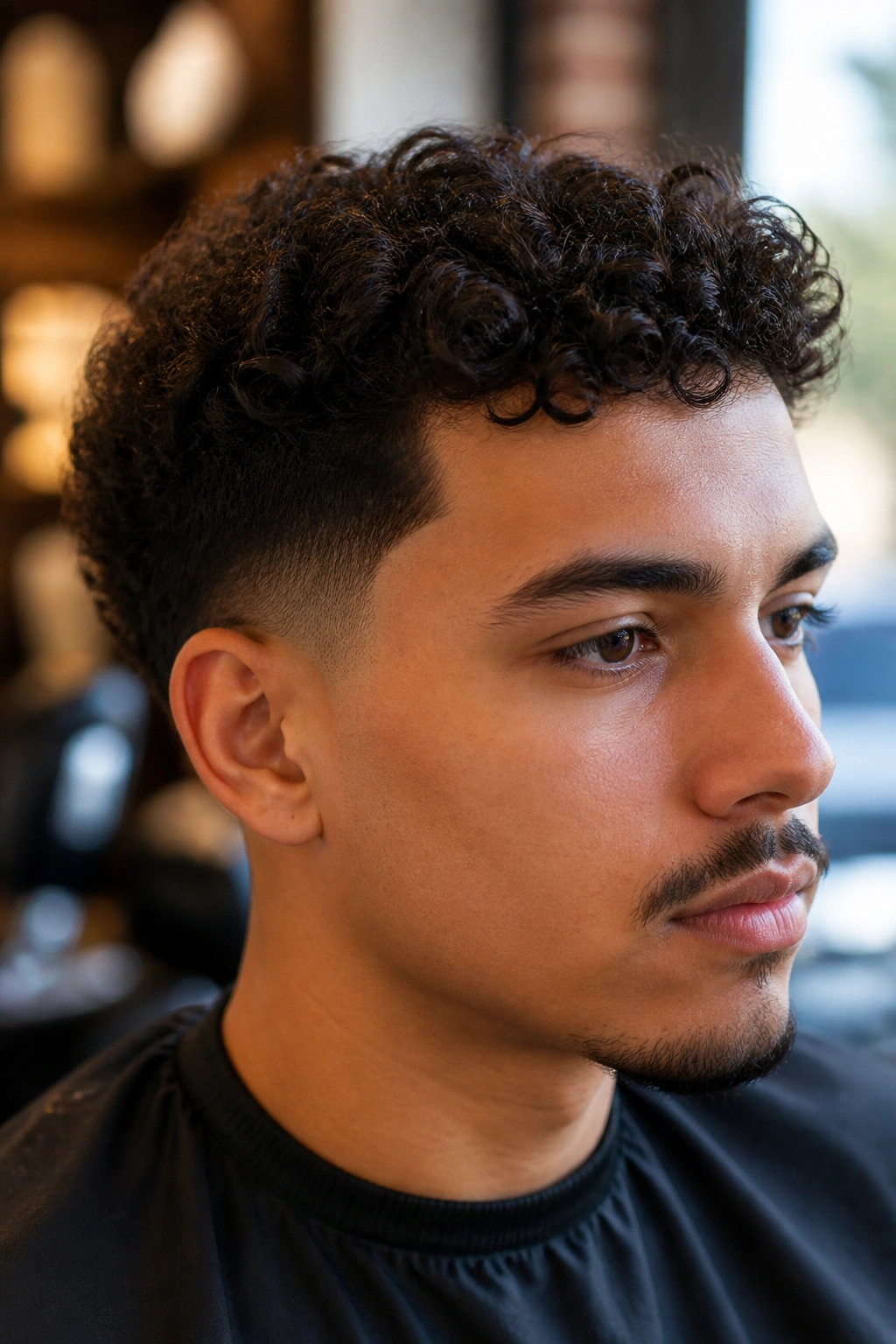
This is the safest place to start, and I mean that in the best way. A low curly taper fade keeps the taper tucked close to the ears and nape, so the curls on top stay full and the shape still feels controlled.
That low starting point matters if your curls shrink a lot after washing. Leave the top long enough to show the pattern — usually around 2 to 4 inches, depending on how tight your curls are — and the haircut keeps its personality instead of turning into a buzzed blur.
Why it works
The low taper is forgiving. It softens the cut without making the sides disappear, which is useful if you like texture but do not want a lot of skin showing through the fade. It also grows out more gracefully than a higher version, so the shape stays tidy a little longer between cuts.
Ask for the taper to stay low around the temples and neckline, then keep the blend gradual. If you want the top to sit cleaner, tell your barber to take a little bulk out with scissors instead of clippers. That keeps the curls from puffing into a triangle.
- Best for loose curls, soft waves, and medium-density hair
- Works well with a light curl cream or leave-in
- Easier to wear in professional settings than a high fade
- Good choice if this is your first curly fade
Tip: Keep the front a touch longer than the crown if your hair springs up after drying. That tiny bit of extra length helps the cut hold shape.
2. The Mid Curly Taper Fade
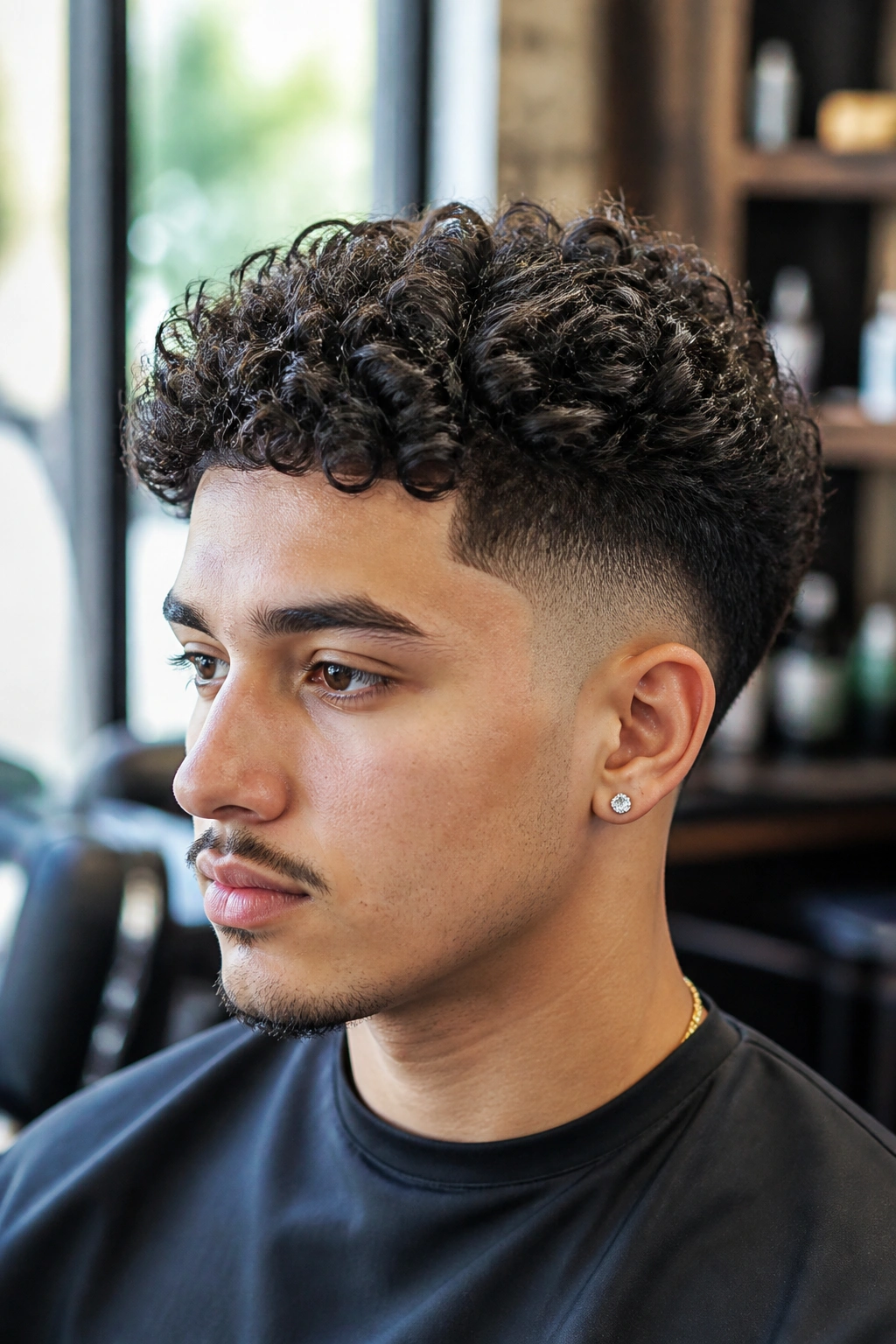
Why does the mid taper work so well? Because it sits in the middle of everything. Not too subtle, not too loud, and that middle ground is usually where curly hair looks its most balanced.
A mid curly taper fade gives the curls more contrast than a low taper, but it does not climb high enough to make the head look too narrow. That makes it a smart option if your hair is thick and your face already has strong angles. The cut adds definition without stealing all the weight from the sides.
What to tell your barber
- Keep the taper starting around the middle of the side area, not right at the temple
- Leave enough bulk on top for the curl pattern to breathe
- Blend the edges softly so the fade does not look choppy
- If your hairline is uneven, keep the front line natural instead of pushing it too hard
The mid taper is the cut I’d hand to someone who wants a clean look but still likes a little movement. It works especially well when the curls are arranged into loose clumps rather than blown out into a fluffy cloud. A small amount of matte curl cream is enough. Heavy product usually makes the top sit too hard.
3. The High Curly Taper Fade
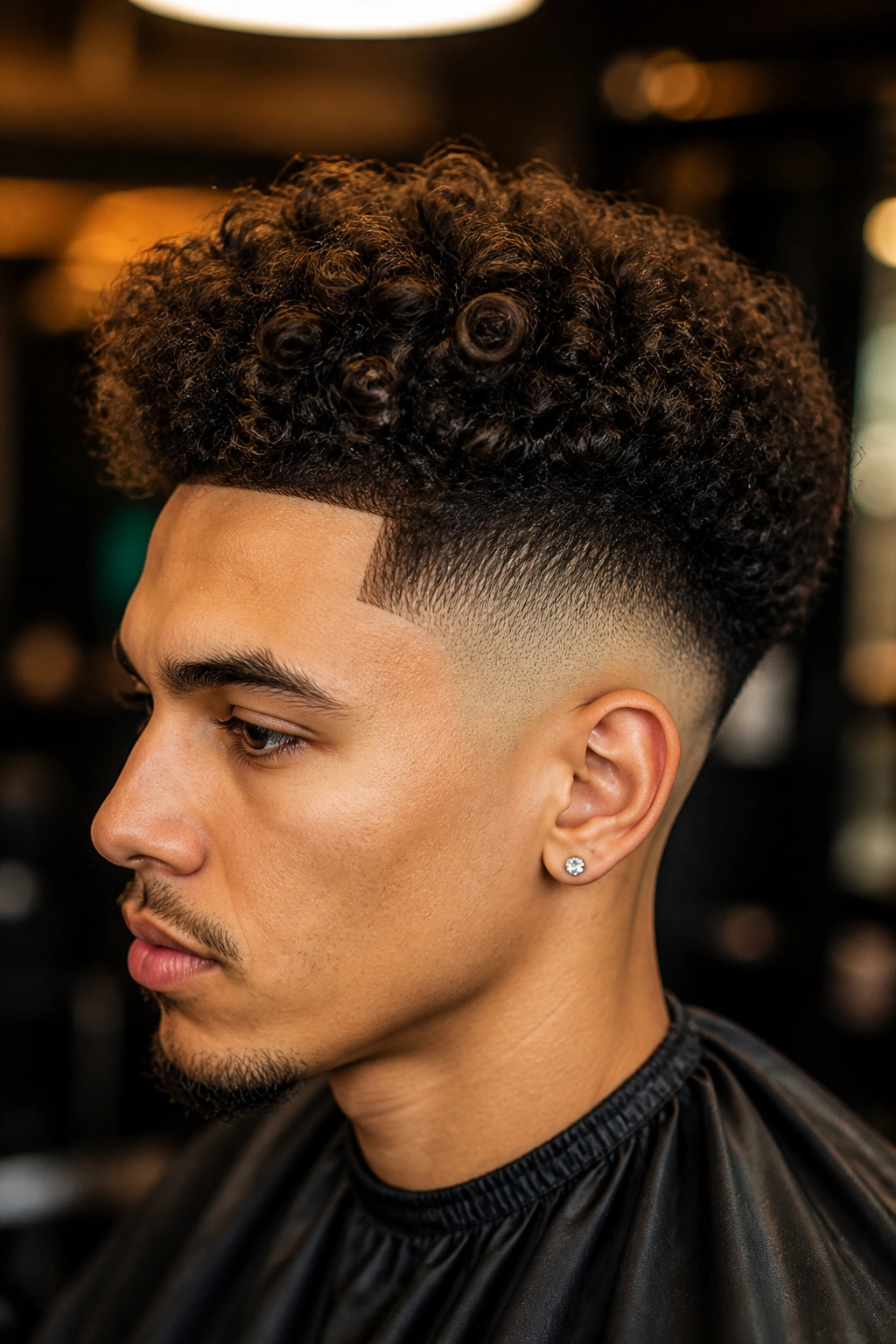
Walk into a room with a high curly taper fade and people notice the contrast first. The sides are tighter, the top stands out more, and the curl pattern gets framed instead of blended away.
This one is bolder. It gives thick curls a chance to look denser because the eye goes straight to the top, where the volume lives. If your hair grows wide at the sides or your curls puff out after a fresh wash, a higher taper can keep the whole cut from looking bulky.
The downside is maintenance. A high taper loses its crisp edge faster than a low one, so if you like a clean outline all the time, you’ll be back in the chair more often. Worth it if you like contrast. Not worth it if you hate frequent upkeep.
- Strongest on thick, dense curls
- Nice choice for square or oval faces
- Makes the top the main feature
- Needs regular edge cleanup to stay sharp
Watch this part: if your top is already short, do not go too high on the fade. The haircut can start to look top-heavy in a hurry.
4. The Curly Taper Fade with a Sharp Line-Up

A clean line-up can save an otherwise plain cut. The straight edge at the forehead and temples gives curly hair a frame, and that frame makes the texture look more intentional.
But the line-up needs discipline. Push it too far back and the whole haircut starts to look carved up, which is a bad trade when you have natural curls that already bring enough shape. A good barber keeps the corners clean without forcing the hairline into something fake.
What to ask for at the chair
- A crisp front line, but not an over-pushed edge
- Clean temple corners that match your natural hairline
- A taper that blends into the sideburns instead of stopping abruptly
- Light cleanup around the nape for a neat finish from behind
This version works especially well if your curls are tight enough to hold shape after drying. It also looks good with a plain tee and a jacket, which sounds trivial until you realize some haircuts only look right when the rest of the outfit is trying hard. This one does not need that help.
5. The Curly Taper Fade with a Beard Blend

If your beard grows faster than your curls, this cut can keep your face from looking disconnected. The taper starts at the temples, then eases into the sideburns and beard so the hair reads as one shape instead of two separate ones.
That connection matters more than people think. A sharp beard line under a loose curly top can look chopped up if the transition is too sudden. Blend the sideburns properly, and the whole face looks calmer, cleaner, and a little more finished.
The trick is not to drag the fade too high into the beard unless the beard is thick enough to carry it. Patchy cheeks and an aggressive fade do not get along. Better to keep the beard fuller on the lower face and let the taper do just enough work at the temples.
- Great for men with stronger jawlines
- Helps balance a fuller top
- Works best when beard length and haircut length are adjusted together
- Needs beard oil or balm if the facial hair feels dry
My take: this is one of the easiest ways to make a curly taper fade look grown-up without making it stiff.
6. The Burst Curly Taper Fade

The burst taper wraps around the ear like a curved frame. That little arc changes the whole attitude of the haircut.
Instead of fading straight down the side, the burst shape moves in a rounded line behind the ear, which leaves the top looking fuller and the sides looking more sculpted. It works especially well if your curls already have a rounded shape or if you like a slightly sporty cut with some attitude.
There is also a practical side to it. The burst taper keeps the area around the ear neat without stripping too much hair from the sides, so the cut still has some weight. That makes it a good fit for dense curls that would look too small with a very high fade.
The cleanest versions of this cut keep the curl clumps defined on top and the curve around the ear precise. If the blend is sloppy, the whole thing looks accidental. If it is done well, the silhouette feels sharp from every angle.
7. The Drop Curly Taper Fade

Unlike a straight fade, the drop version dips lower behind the ear. That small shift changes the outline in a way that flatters a lot of curly hair.
The drop taper follows the shape of the head more closely, which means the fade looks less boxy from the side. It also keeps a little more visual weight in the crown area, so the top can stay full without the haircut looking puffy. If your curls tend to sit high, this shape helps bring the eye down and around the head instead of straight across.
This cut is especially useful when the back of the head needs more shape. A drop taper gives the rear view a cleaner curve, and that matters more than people admit. Most men check the mirror from the front and forget that everybody else sees the back first when they walk away.
- Good for rounder curl patterns
- Helps reduce a blocky silhouette
- Works with both short and medium tops
- Needs even blending on both sides or it looks crooked fast
Keep the top soft and textured. If you try to pair a drop taper with a top that is too flat, the haircut loses the whole point.
8. The Curly Taper Fade with Sponge Twists

Need more definition without spending half the morning fighting your hair? Sponge twists are one of the easiest ways to get short coils to clump in a cleaner pattern.
The look works best when the top is short enough for the sponge to catch, but not so short that nothing forms. A little leave-in conditioner or light cream on damp hair helps the curls separate in a way that looks controlled rather than frizzy. Dry hair and a sponge usually give you rough, fuzzy results. Wet hair usually goes too limp. Damp is the sweet spot.
How to use it
Use the sponge in one direction for a more uniform look, or switch directions if you want a little messier texture. Either way, stop before the hair starts to feel gummy. That gummy feeling is buildup, and buildup makes the top look dull.
- Best for tight curls and coils
- Works on short hair that still needs definition
- Pair with a low or mid taper for balance
- Refresh with a small amount of water before restyling
One warning: do not overdo the product. A curly taper fade should look shaped, not coated.
9. The Curly Taper Fade with a Fringe

A curly fringe changes the whole mood of the cut. Instead of pushing all the texture up and back, the curls fall forward a little, which softens the forehead and gives the haircut a more relaxed feel.
This is a good move if your forehead is taller than you like or if your curls naturally lean forward anyway. The fringe can also help hide a rough hairline without forcing a severe line-up. That makes the cut feel easier and less engineered.
Leave the front slightly longer than the rest of the top if you want the fringe to hang with purpose. Too short, and it just sticks up in a weird little ridge. Too long, and it sits heavy on the brow. There is a narrow middle ground here, and that is where the cut looks best.
The key is light styling. A small amount of curl cream or foam is enough. Heavy gel turns the fringe into a stiff curtain, and that is not the look.
10. The Curly Taper Fade with a Hard Part
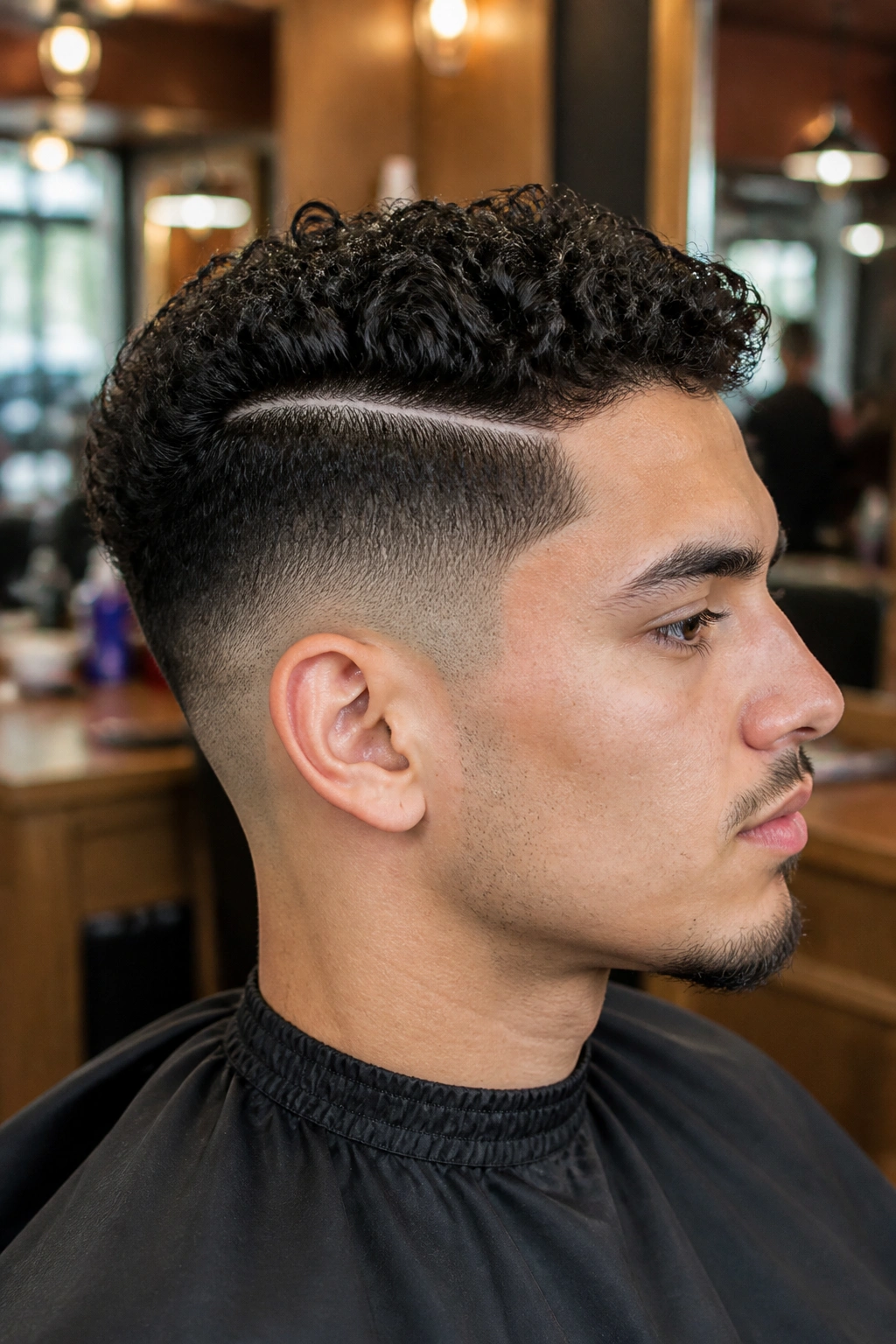
Some men need the haircut to say where it starts. A hard part does exactly that.
The shaved line gives the style a clear break between the top and the faded side, which adds structure to curls that might otherwise blur together. It works well when the top is thick or when the barber wants to create a side-swept direction without relying on comb marks alone.
That said, a hard part is not a low-maintenance detail. It grows out, softens, and eventually stops looking intentional if you ignore it for too long. If you like a crisp line, you have to keep up with it.
What makes it work
- Best with dense curls that hold shape
- Strong choice for side-swept styling
- Needs regular cleanup to stay visible
- Looks sharper with a clean beard or line-up
A hard part can look a little too styled if everything else is soft, so the balance matters. Keep the curls textured and a bit loose, and let the part do the organizing work.
11. The Longer Curly Taper Fade

Longer curls on top give you options. You can push them forward, sweep them to one side, or let them sit high and natural, and the taper keeps the edges from looking wild.
This version usually needs more patience from both you and your barber. The top should be shaped, not just left alone. If the length is all one size, the cut can balloon out in a way that looks unfinished. A good scissor shape keeps the curls from sitting like a round mop. That sounds blunt because it matters.
Longer curly tops also need a better styling routine. A leave-in conditioner gives slip, a curl cream adds hold, and a diffuser can help if you want volume without frizz. Air-drying works too, but you need to accept a softer finish and a little shrinkage.
This is the cut for guys who like changing their look without changing the whole haircut. It can read neat, relaxed, or a little bold depending on how you wear the front.
12. The Curly Taper Fade for Tight Coils
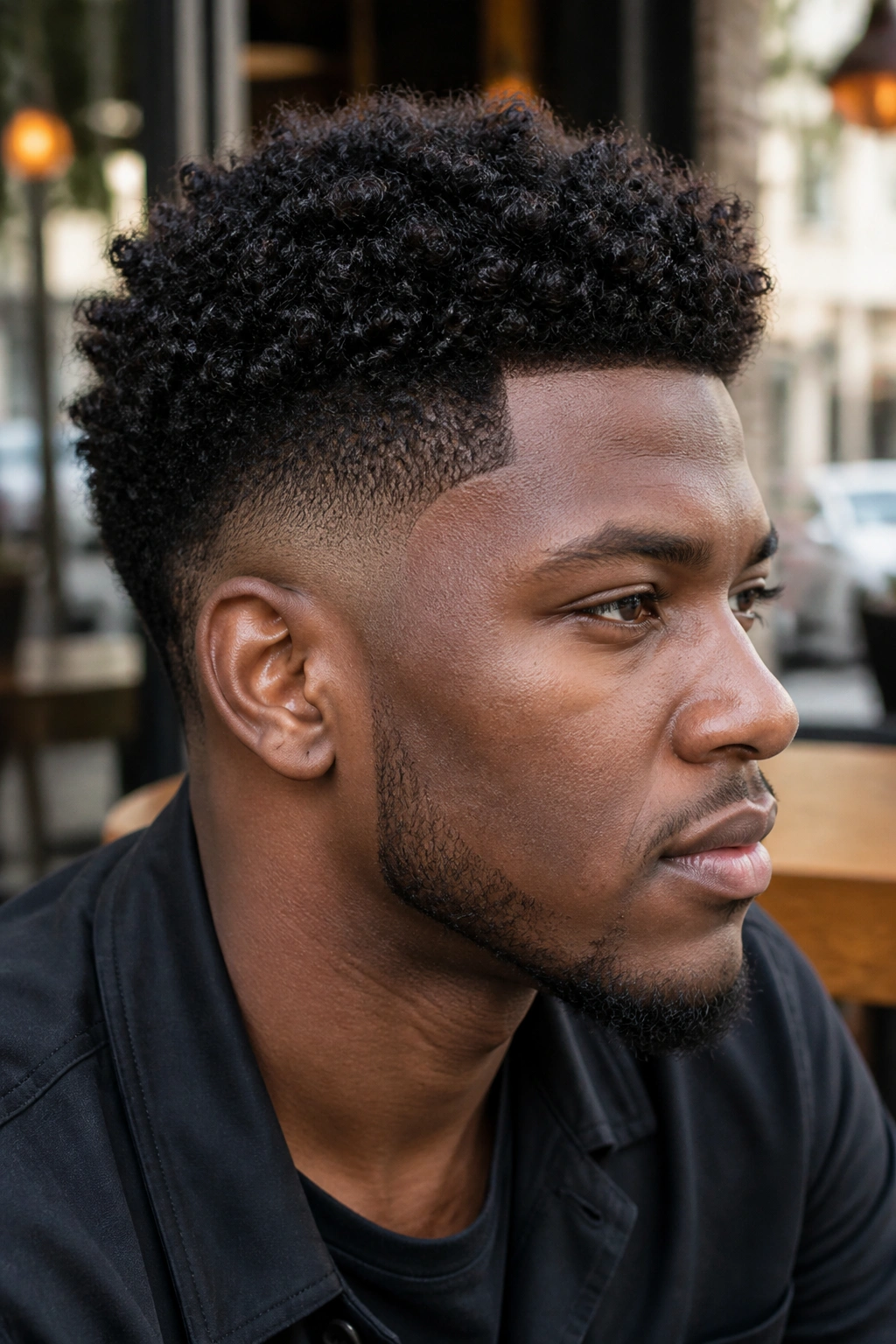
Tight coils need more respect than most haircut photos give them. They shrink, they spring, and they look best when the barber leaves enough length for the pattern to show.
A curly taper fade for tight coils should keep the fade clean but not aggressive. Over-blending makes the sides disappear and leaves the top floating. Under-blending makes the cut look heavy. The sweet spot is a smooth taper with enough texture on top to show the coil pattern without forcing it into a flat shape.
Moisture matters here. Tight coils look dry faster than looser curls, so a leave-in conditioner and a light oil can help the haircut hold its shape between washes. Heavy grease is a bad idea. It sits on the hair instead of helping it.
What to avoid
- Do not cut the top too short if you want visible coil definition
- Do not use too much gel unless you want a wet, stiff finish
- Do not ignore the back of the head; tight coils can look uneven there fast
A good taper on tight coils feels neat without looking overworked. That balance is rare, and that is why it stands out.
13. The Textured Crop Curly Taper Fade

What if you want curls on top but not a lot of length? The textured crop solves that problem neatly.
The crop keeps the top short, choppy, and easy to move, while the taper around the sides makes the whole thing look finished. It is a good option if your curls are thick enough to build texture but you do not want the extra height that comes with a longer top. The cut has a practical feel. No fluff. No drama.
The front can be worn slightly forward or chopped into a short, uneven fringe. Either way, the top should have enough separation to show the curl pattern. A barber who cuts it too blunt can make it look heavy. A barber who leaves too much length can make it start acting like a mini afro instead of a crop.
This one is a solid match for guys who like a low-fuss morning routine. A quick damp refresh, a little cream, and you are done.
14. The Temple Taper Curly Fade
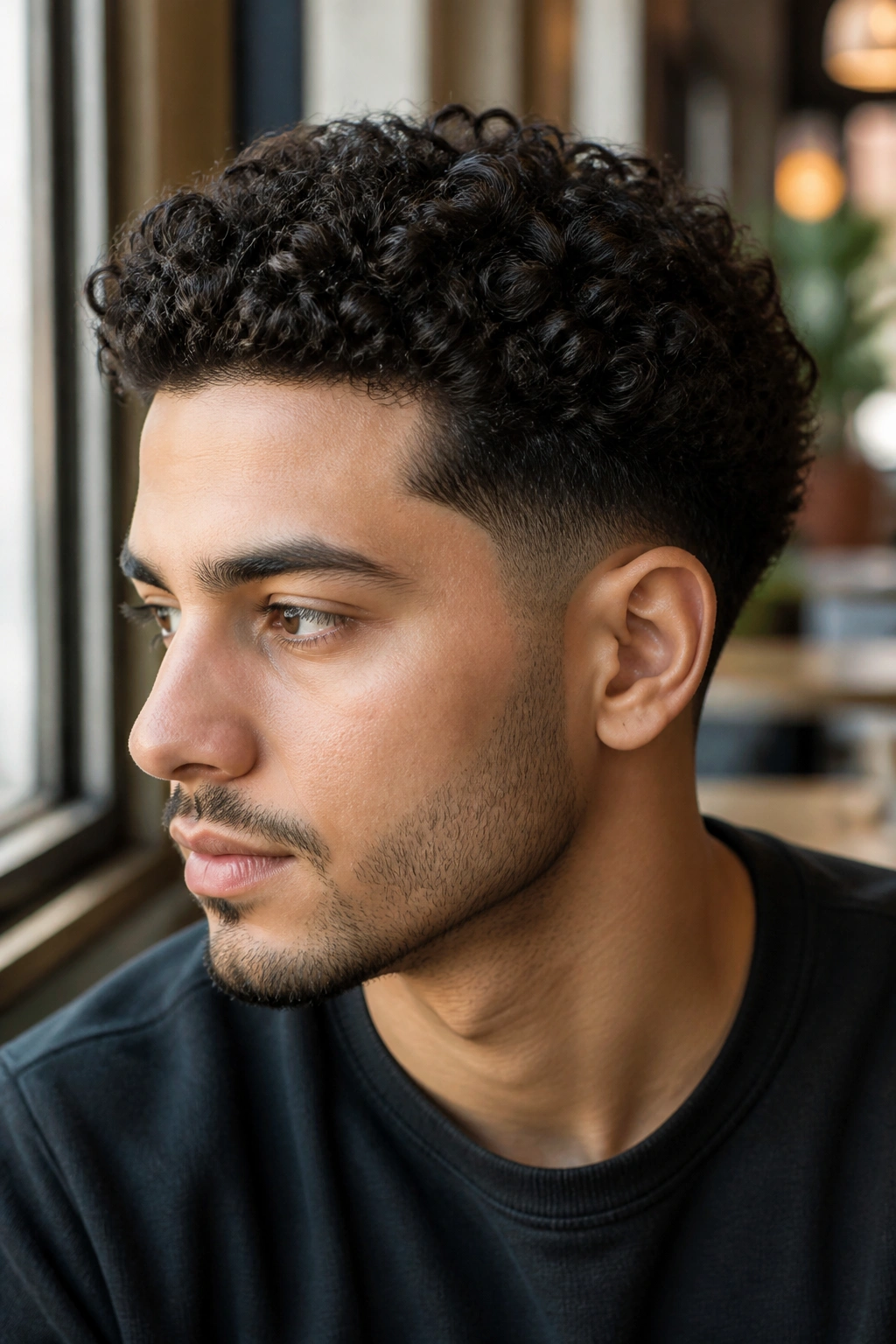
The smallest taper can matter more than a big one. The temple taper proves it.
Here, the cleanup stays focused around the temples and sideburn area, while most of the side still keeps its length. That creates a softer transition than a full fade and makes the haircut feel less strict. If your workplace leans conservative, this is the version that usually slides in without anyone making a fuss.
Why it stays neat
- Keeps the sides fuller than a standard fade
- Softens the area where curls often puff out first
- Works well for men who want structure without a dramatic drop in length
- Blends nicely with a beard or a clean-shaven face
A temple taper is also a good choice if you are nervous about going too short on the sides. It gives you the clean feeling of a taper without taking the haircut all the way into high-contrast territory. I like that. It is honest, controlled, and easier to live with than cuts that need perfect styling every morning.
15. The Curly Taper Fade with a Rounded Afro Top
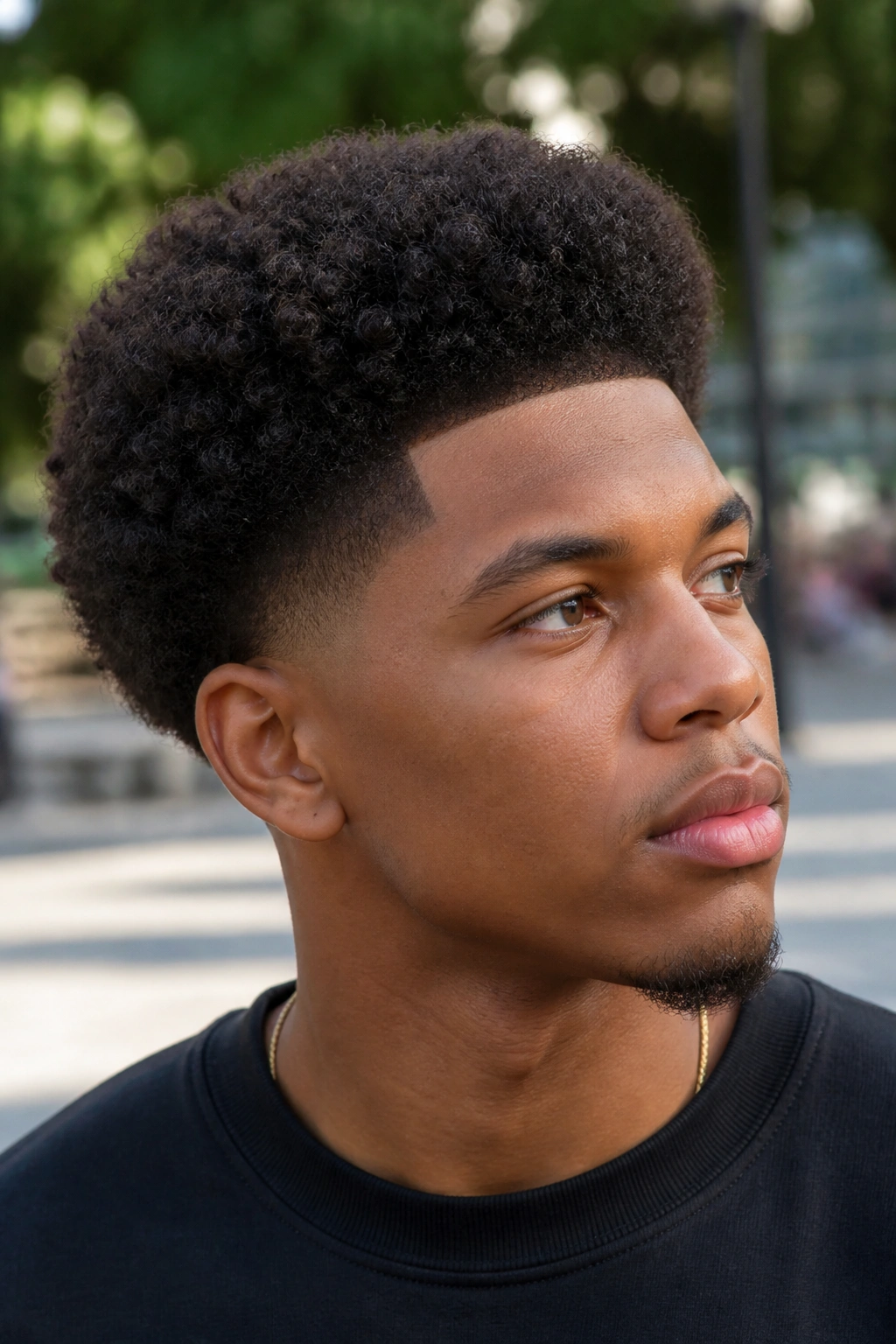
I like this one on dense curls because it respects the shape hair naturally wants to make. The top stays rounded, the edges stay tidy, and the taper just cleans up the frame.
A rounded top is different from a boxy one. A boxy cut can make curls look stiff at the corners, while a rounded shape softens the silhouette and feels more natural around the head. The fade supports the shape instead of competing with it.
This style does need occasional shaping with scissors. If you leave the top alone for too long, the round shape can widen and lose its clean profile. But that is not hard to manage, and the payoff is worth it if you like a fuller look.
The best version keeps the crown balanced with the front and sides. Too much height in one spot makes the cut feel lopsided. Keep it even, and the whole style reads calm and strong.
16. The Messy Curly Taper Fade
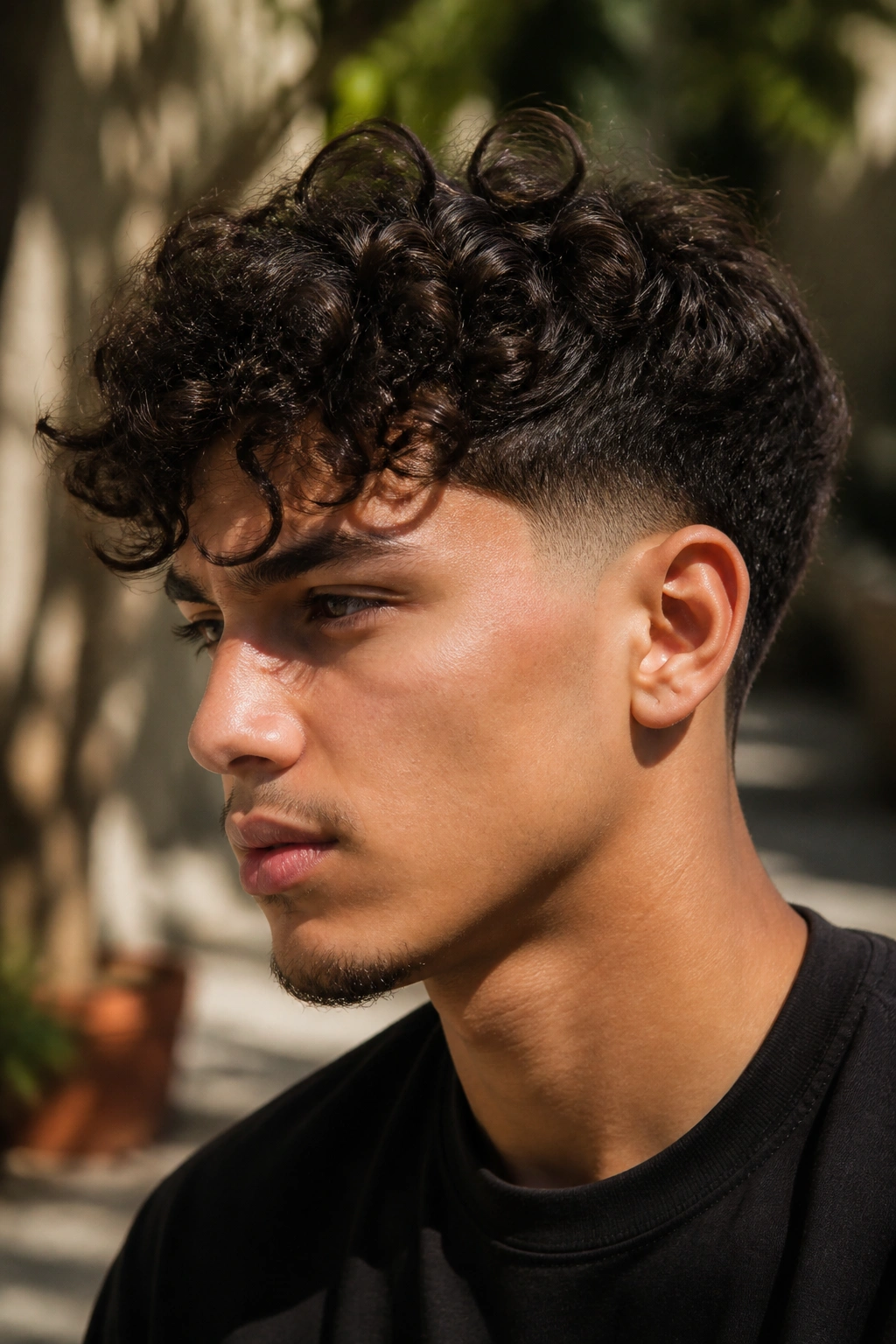
Messy does not mean unkempt. There’s a difference.
A messy curly taper fade is all about controlled looseness. The curls stay separate, the top keeps movement, and the taper prevents the whole shape from spreading too far around the ears. It is a good fit if you hate the crunchy feel of heavy styling products and you want the hair to move when you do.
The trick is to stop before the style gets lazy. A little leave-in, a little curl cream, and maybe a quick finger rake are usually enough. If you keep piling on product, the texture collapses and the top starts to look sticky instead of messy.
This cut suits men who like a casual finish and do not want their hair to look like it spent an hour getting dressed. Air-dry it, shake it out, leave a little frizz if that is part of your texture. Some curls look better with a touch of roughness than they do polished to death.
17. The Short Curly Taper Fade
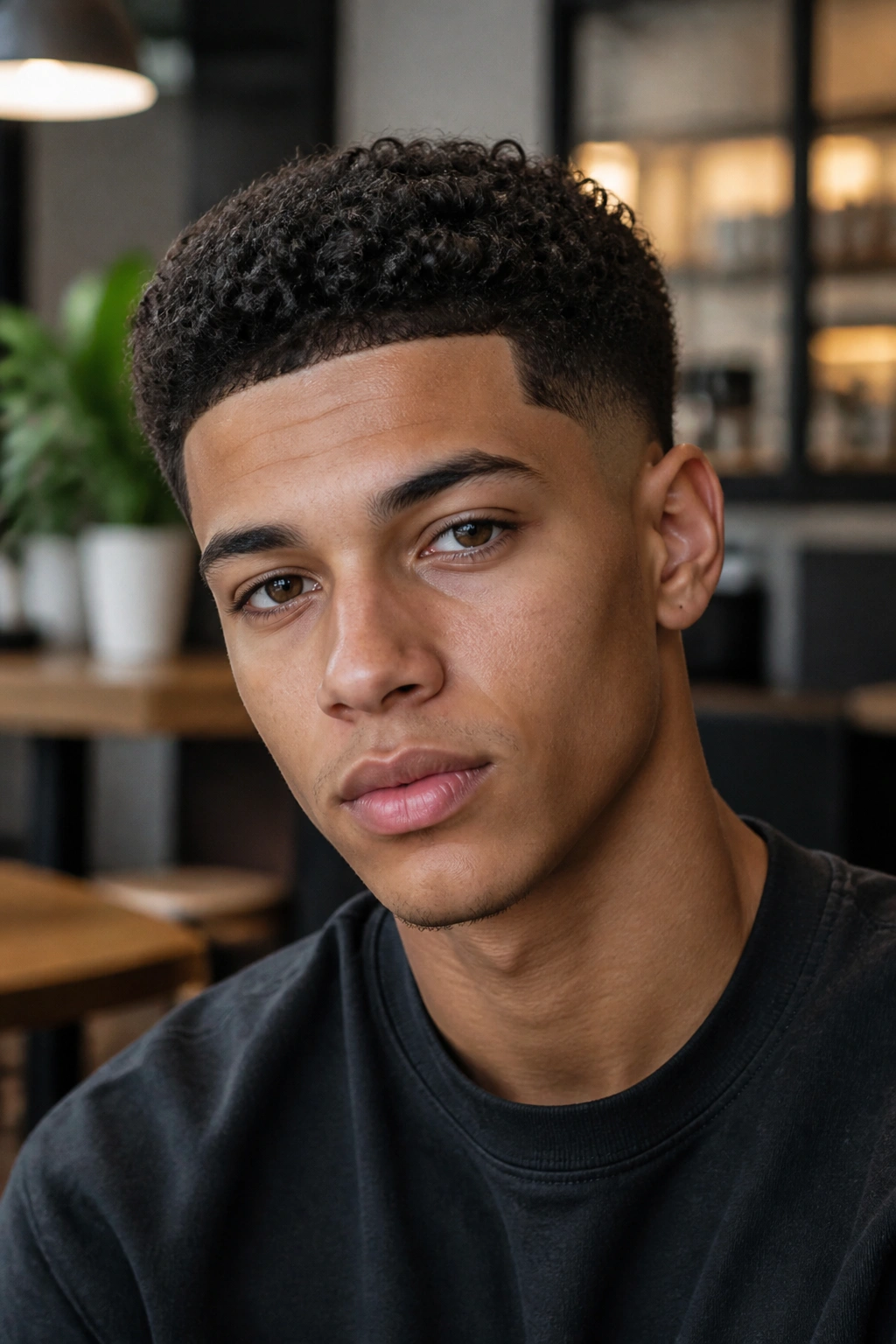
If you want the easiest version to live with, start here. A short curly taper fade keeps the top tight, the sides tidy, and the whole cut simple enough to style fast.
Shorter curls are easier to maintain because they do not fight gravity as much. You still get texture, but the hair stays compact, which helps if you work out often, wear hats a lot, or just do not want to spend 15 minutes fixing your hair every morning. The taper around the temples and neckline keeps the shape from feeling plain.
This version also grows out in a nice way. The edges soften before the top loses its shape, which means you do not hit the awkward stage quite as hard as you might with a longer style. That is a real advantage if you prefer fewer barber visits.
- Good for busy routines
- Easier to keep neat with a small amount of cream
- Works with most curl patterns
- Best when the taper is clean but not overfaded
If you are asking for one cut to bring to a barber and then wear without thinking too hard, this is the one I’d hand over first.
