



Long hairstyles for men can look sharp, but only if the shape is doing some work. Hair that just grows and hangs usually looks accidental; hair that lands at the jaw, collarbone, or shoulders can look deliberate in a way short cuts never do.
The hard part is the middle. Around the ears and at the nape, long hair likes to puff, split, or flip out at the worst possible angle, and that is where a decent barber earns the money. A few layers, a soft neckline, and a little weight removal can change the whole read of the cut.
Texture matters more than most guys think. Straight hair falls differently from curls, thick hair needs more shape control, and wavy hair can look put together with almost no styling if the cut is right. I’ve always thought that long hair looks best when the cut respects the hair’s own movement instead of fighting it.
Some of these styles are easy. Some need patience. All of them work better when you know what you’re asking for, where the length should sit, and how much upkeep you’re willing to live with.
1. Shoulder-Length Layers
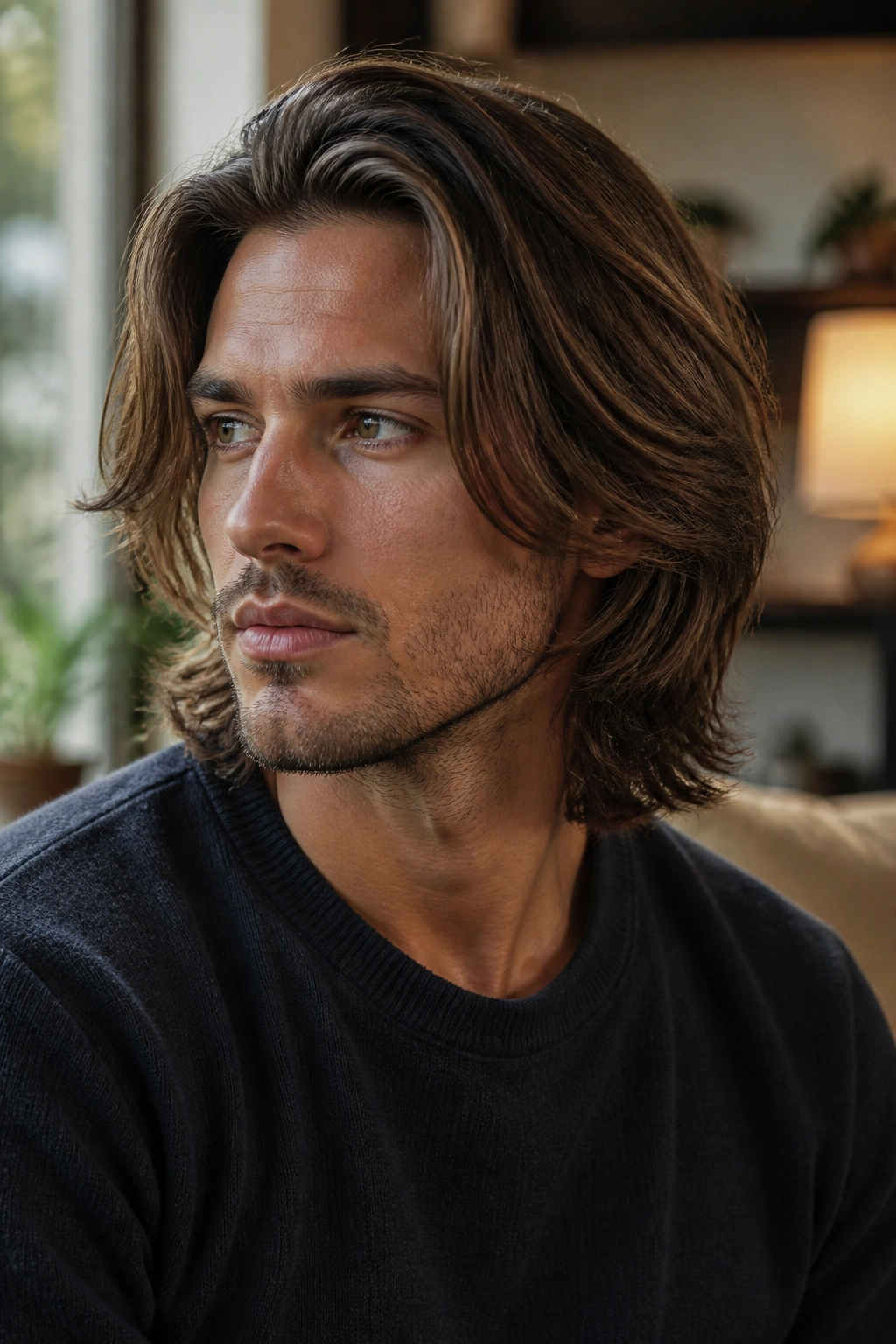
Shoulder-length layers are the safest long cut that still looks like a real decision. They keep the hair from turning into one heavy curtain, and they give you movement without making the ends look thin and scraggly.
The sweet spot is usually somewhere between the jaw and the shoulders, with the shortest layers starting around the cheekbone or just below it. That keeps the shape from puffing out at the sides. On straight hair, the cut reads polished. On wavy hair, it looks loose and easy. Thick hair especially benefits here, because layers remove weight without stealing length.
What to ask for
- Long layers that begin below the cheekbone
- A soft neckline, not a hard block
- Light face framing around the front
- Ends that are texturized, not razor-thinned
Pro tip: blow-dry until the hair is about 80% dry, then let it finish on its own. That tiny move keeps the layers from collapsing into your face.
2. The Bro Flow
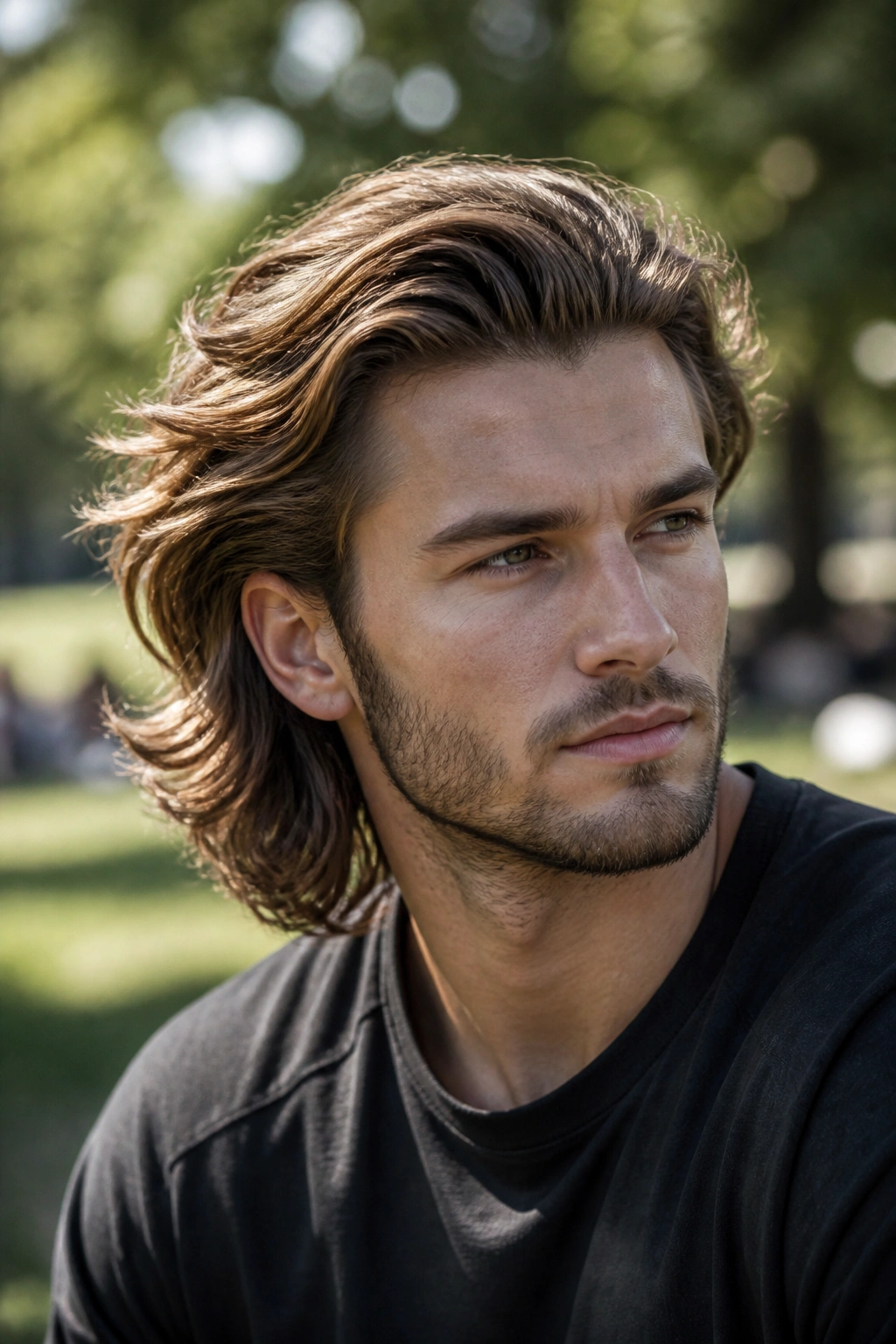
The bro flow works because it doesn’t try to overrule the hair. It lets length move backward and away from the face, which sounds simple until you see how many guys force it flat and ruin the shape. Done right, it has a loose, athletic look that sits somewhere between “I meant this” and “I didn’t overthink it.”
It usually looks best when the top and sides have enough length to sweep back naturally, often around 5 to 7 inches depending on density. Thick hair can handle more volume. Fine hair needs a lighter cut so it doesn’t fall limp by noon. A little wave helps, but straight hair can still pull it off if the cut has enough softness around the temples.
No hard part. No stiff helmet effect. That’s the whole point.
After a shower, towel-dry gently, rake a small amount of sea salt spray through the mid-lengths, and push the hair back with your fingers. If the front keeps dropping into your eyes, the cut probably needs a touch more layering around the fringe. Once it lands correctly, it has that relaxed, windblown shape that short hair just cannot fake.
3. The Man Bun
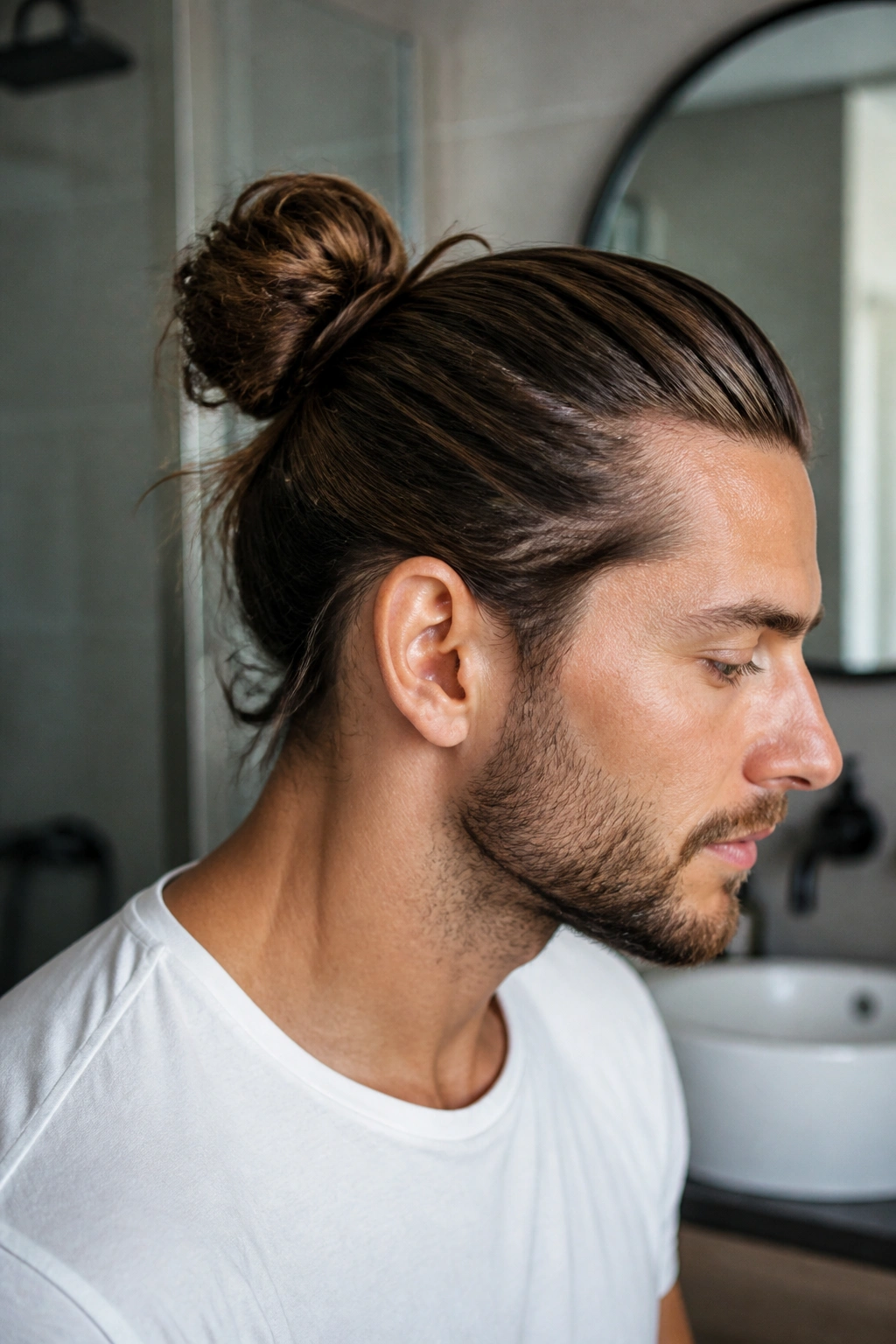
A man bun solves bad hair days, gym days, and shirt-collar chaos in one move. That sounds practical because it is, but the best versions still look intentional instead of rushed.
The biggest mistake is pulling the hair too tight and planting the bun too high. That makes the head look top-heavy and gives you that strained, shiny-skin effect around the temples. A bun placed at the crown or just above the occipital bone usually looks more balanced. If your hair is at least 8 inches long, you have enough length to make it work without a dozen pins or a tiny elastic wrestling match.
What makes it work
A bun gets better when the hair has some texture. Dead-straight, slippery hair tends to slide, so a little matte cream or a dry texture spray helps it hold. You do not need much. A pea-sized amount is enough for most heads.
If you wear a bun often, leave a few strands loose around the hairline once in a while. That keeps it from looking severe. And if you’re tying it every day, rotate the placement a little so the same spot does not get stressed over and over. Simple. Effective. Less breakage.
4. The Low Bun
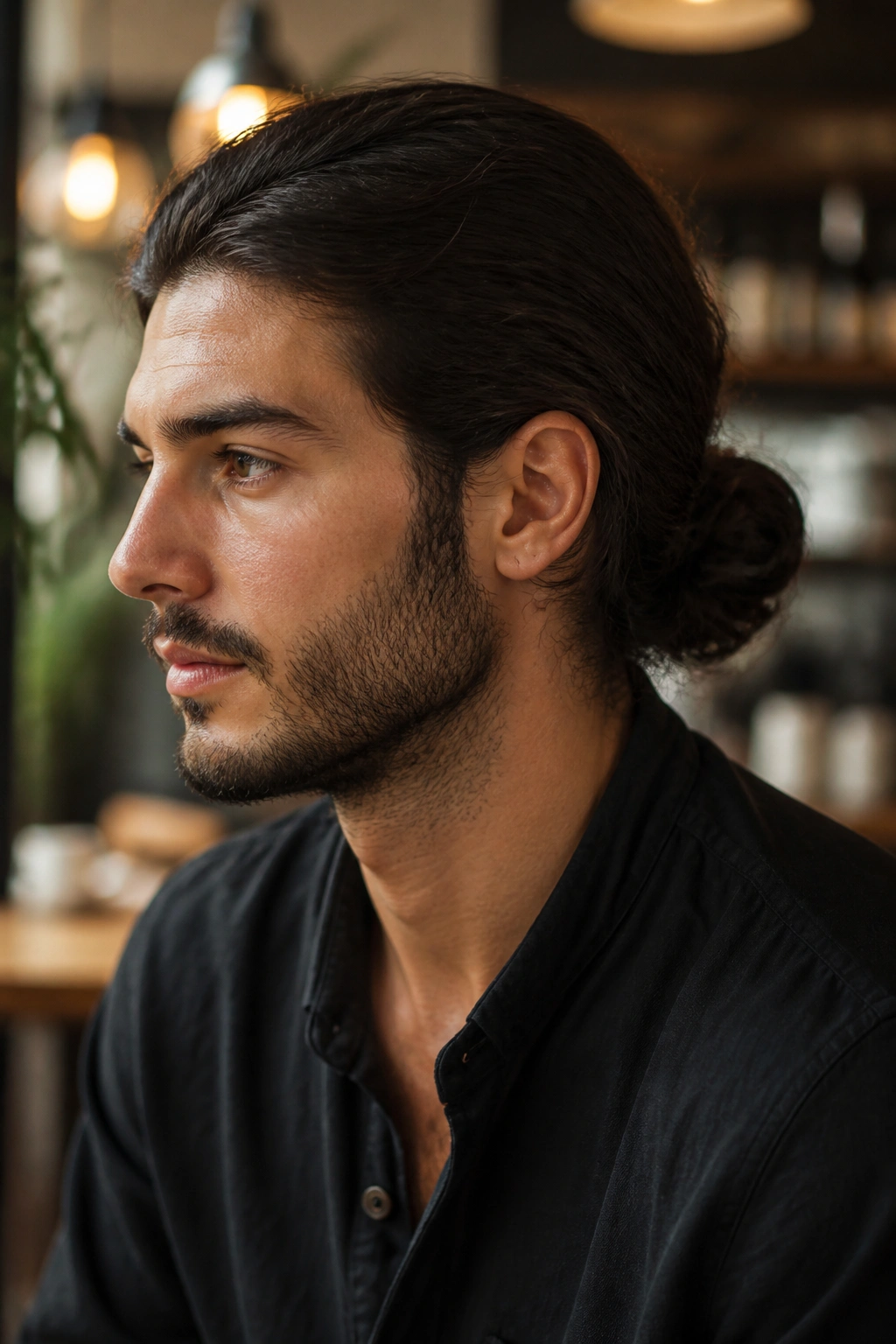
Why does a low bun look calmer than a top knot? Because it keeps the weight closer to the neck instead of stacking it on top of the head. That changes the silhouette immediately. The style reads more grounded, a little more tailored, and less like you were in a hurry.
The low bun works especially well if your hair is long enough to form a compact loop at the nape without puffing out. It’s a strong choice for thicker hair because the lower placement controls bulk. It also pairs well with a clean neckline, whether that’s natural or lightly tapered. If the hair is fine, a low bun can still work, but the bun itself should stay small and close to the head.
A few things to watch
- Keep the bun at the nape, not midway up the skull
- Use a snag-free elastic
- Leave the tension firm, not tight
- Keep the finish neat, not glossy
A low bun is one of those styles that looks better with a little care than with a lot of styling. A touch of matte paste on the sides is often enough. And if you want the easiest version, twist the hair once before wrapping it. It holds shape better than a loose pile of hair jammed through an elastic.
5. Half-Up, Half-Down
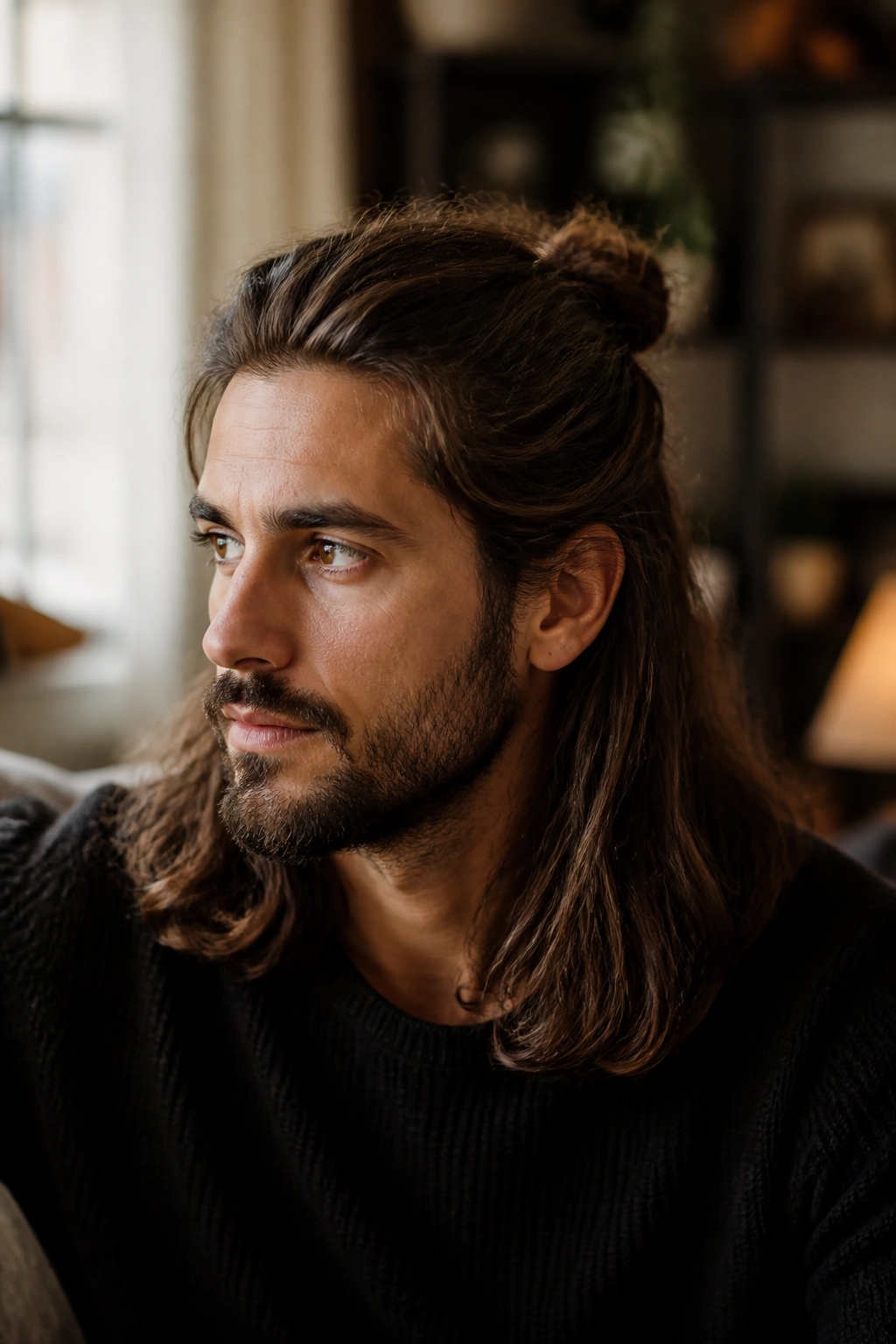
Picture hair that stays off your face but still shows its length. That’s the whole appeal here. The half-up, half-down style gives you control at the front and movement everywhere else, which is useful when your fringe is at that annoying stage where it either hangs in your eyes or flops sideways.
It usually looks best once the hair has enough length to create a top section without pulling the sides tight. If the top layer can’t reach back cleanly, the shape looks strained. Once it does, the style becomes one of the easiest ways to wear long hair without committing to a full tie-up.
Why it works
The upper section removes the visual mess around the face, while the loose back keeps the hair from looking over-managed. That contrast is the trick. If the top is sleek and the bottom is textured, the style has some life to it.
You can keep it casual with a small elastic and a few loose pieces at the temples, or make it neater by gathering the top more tightly. Either way, it’s a strong choice when you want to grow out length without looking like you gave up halfway through. And yes, that matters. People can tell.
6. Curtain Hair
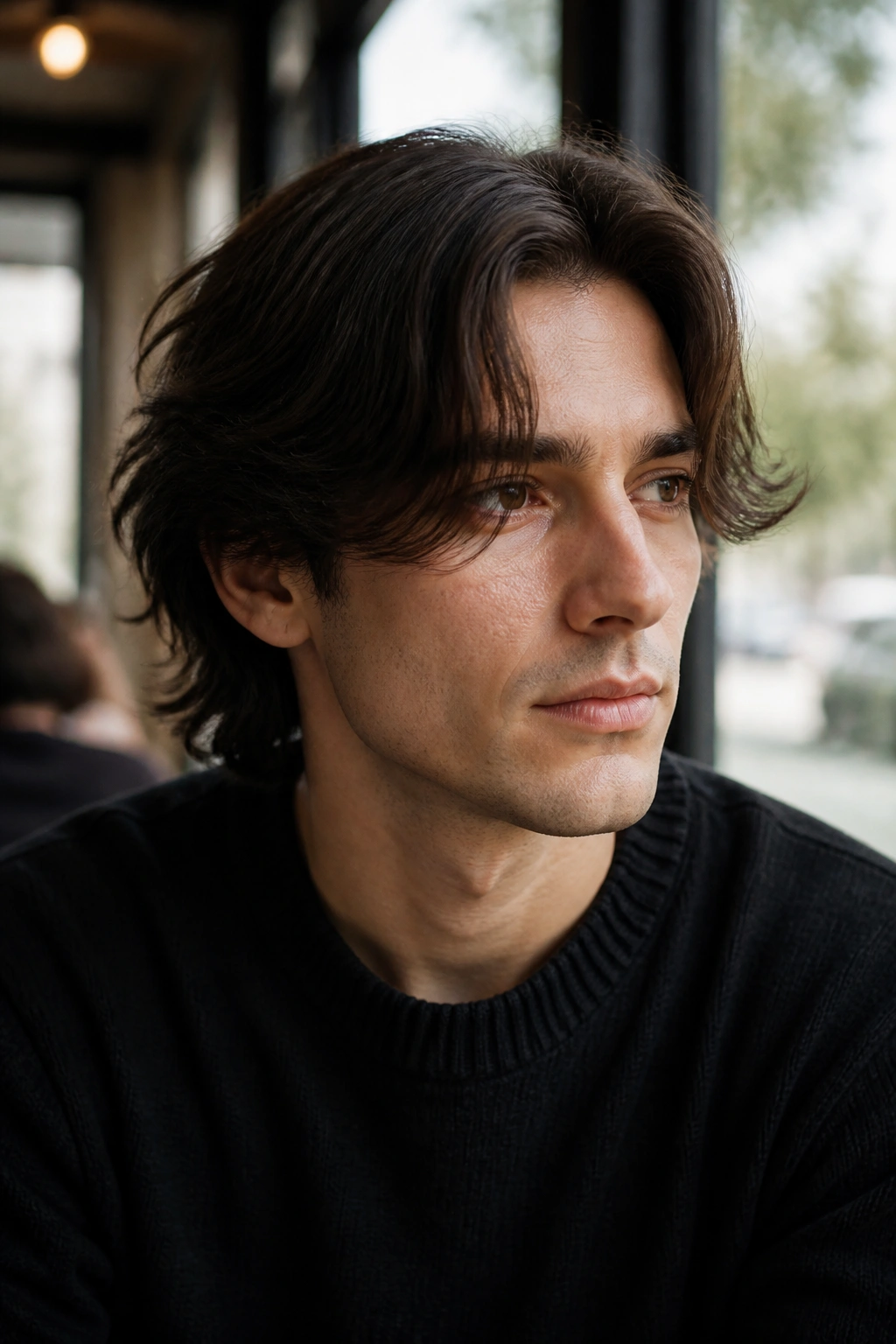
Curtain hair is what happens when the middle part is cut with intent. The fringe falls away from the center and frames the face instead of sitting like a flat sheet, and that small difference changes everything.
The style usually needs enough front length to hit around the brows, cheekbones, or just below them, depending on how hard you want the curtain effect. Straight hair gets the cleanest version. Wavy hair gives it more lift. Thick hair needs a little debulking near the front so the part does not split into two bulky wings.
A blow-dryer helps here, though not in a fussy way. Dry the front from side to side for a few seconds to teach the hair where to fall, then let it cool in place. A lightweight cream or lotion is usually enough. Heavy wax kills the softness and makes the part look greasy rather than deliberate.
Curtain hair is one of the few long men’s looks that can feel both laid-back and styled. That’s why it keeps hanging around. It works because it frames the face instead of hiding it.
7. The Textured Shag
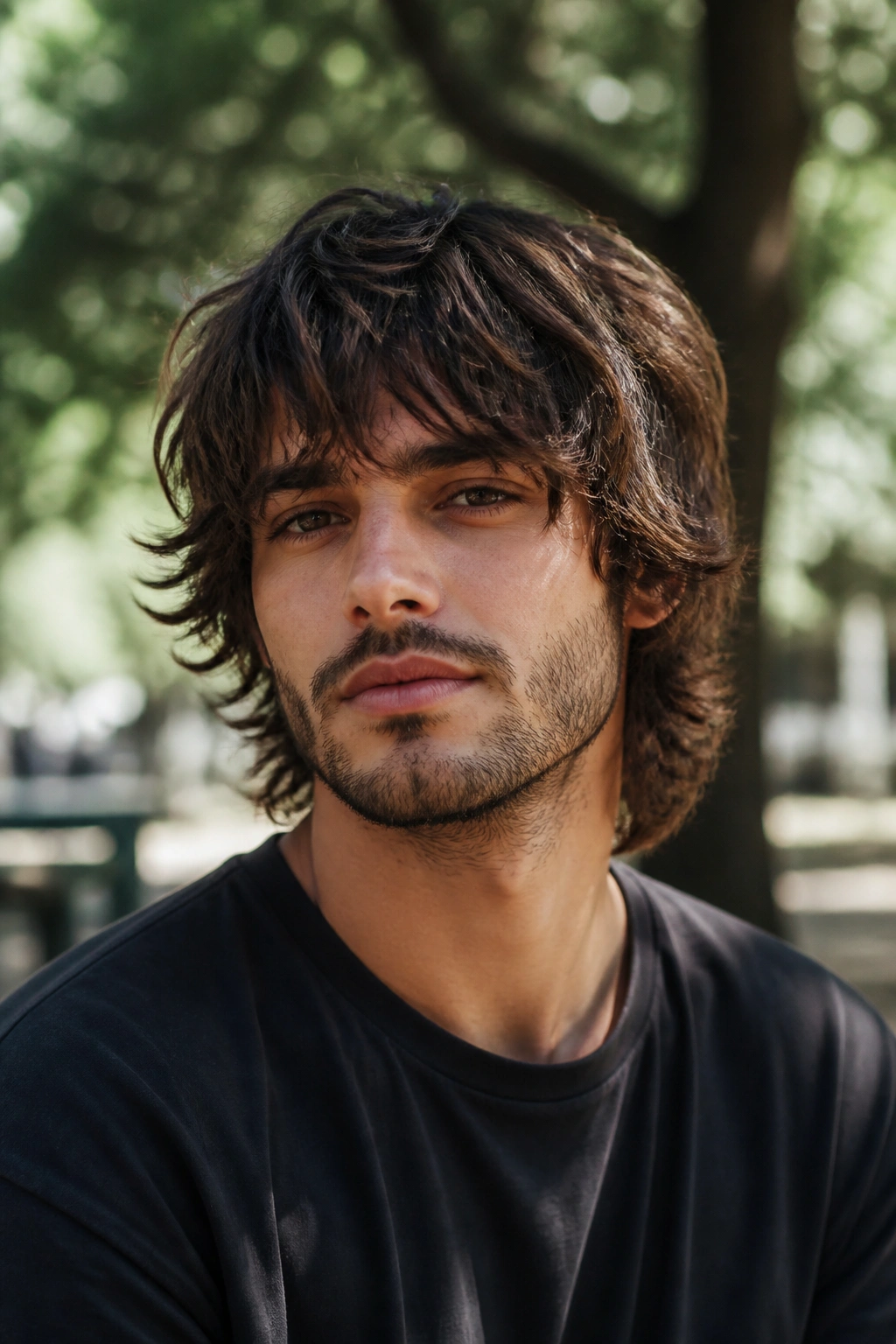
Why does the shag keep coming back? Because uneven layers create movement that a single-length cut can’t match. It looks lived-in, but the good versions are shaped with enough care that they never feel random.
The textured shag usually has shorter layers around the crown, longer pieces through the sides, and a fringe that lands somewhere near the eyes or cheekbones. It’s a strong choice for medium-density hair, especially if your hair has a natural bend. Too fine, and it can look stringy. Too heavy, and it needs smart layering or it becomes a triangle. That triangle shape is the enemy.
How to wear it
- Rough-dry with your fingers
- Use a small amount of matte paste at the ends
- Keep the layers piecey, not blown out
- Let the fringe fall a little messily
This cut likes texture more than polish. If you comb it into place too neatly, it loses the whole point. A little mess is part of the charm, but not an unwashed, flat mess. There’s a difference. A good shag should move when you turn your head.
8. The Wolf Cut
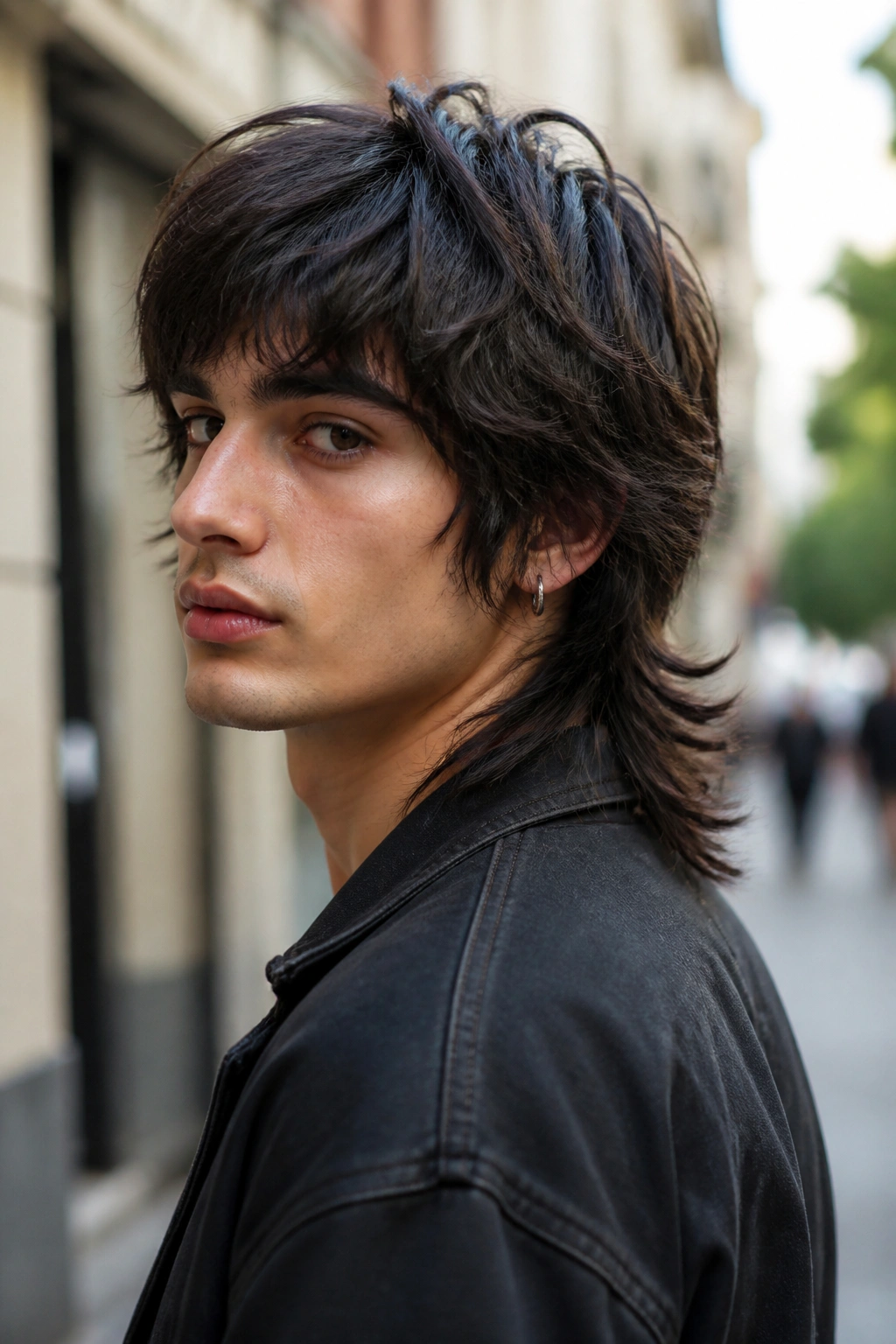
The wolf cut is the shag’s louder cousin, and I mean that in a good way. It keeps the layered top and the longer back, but the contrast is stronger, so the silhouette feels bolder and more deliberate.
This cut works best on thick or wavy hair because the shape needs some natural push. The crown stays shorter, the sides sit a bit softer, and the back hangs longer. That gives the whole cut a choppy, almost lived-in edge without turning into a mullet that forgot to finish growing. If you like volume, this is one of the more interesting long hairstyles for men. If you hate volume, skip it.
The maintenance is straightforward, but it does need regular shaping. The layers lose their bite when the edges grow out too evenly, so a cleanup every 6 to 10 weeks keeps it from turning floppy. A lightweight mousse or cream helps the top lift without freezing it in place.
It’s not a timid haircut. That’s the appeal. The wolf cut has teeth.
9. Slicked-Back Long Hair
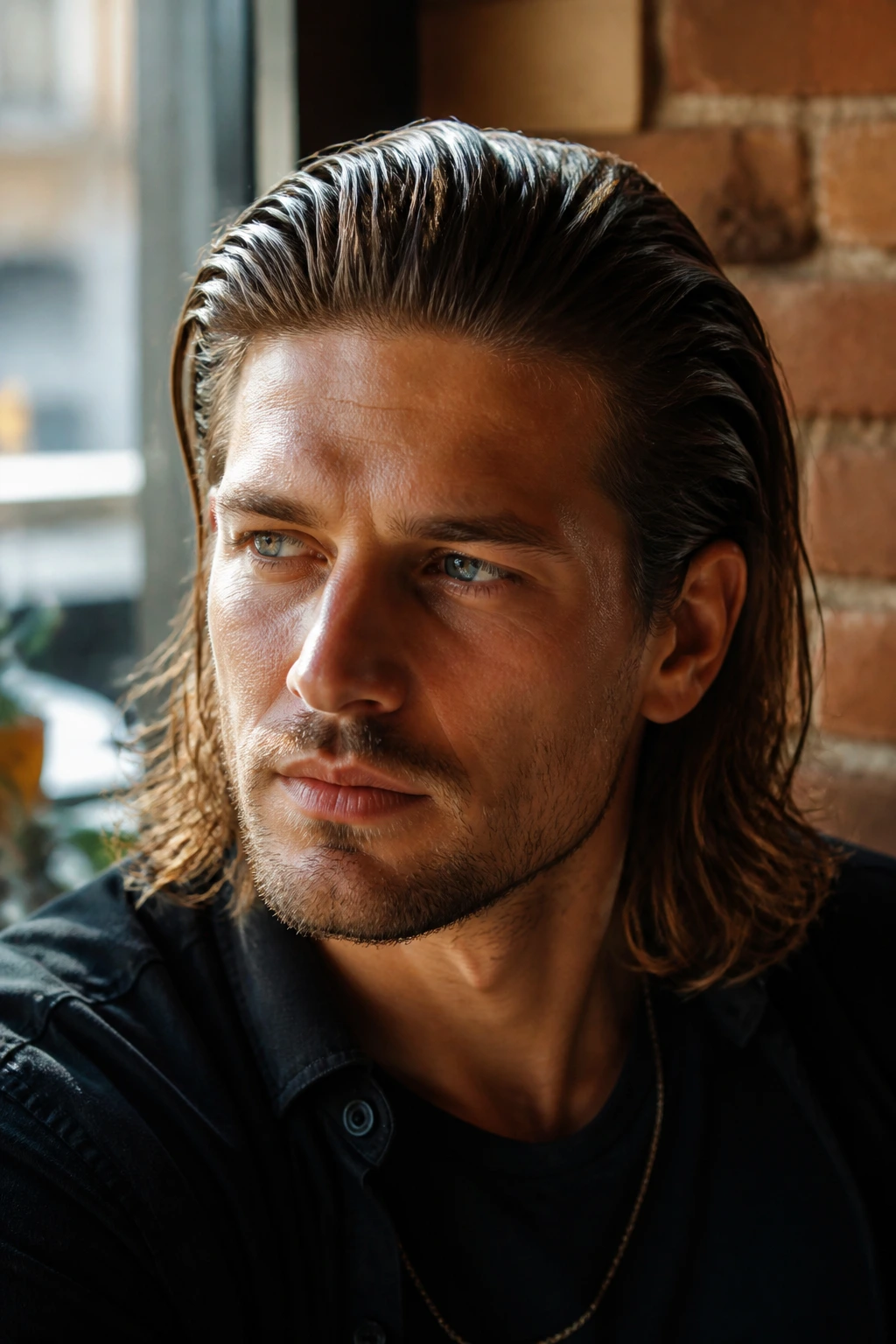
A slick-back changes the whole mood of long hair. Suddenly it looks sharper, a little more formal, and a lot more intentional, even if the length itself hasn’t changed.
The hair usually needs enough length to stay back from the hairline without springing forward again. Six inches is a workable starting point, though thicker or curlier hair often wants more. Straight hair takes to the style fastest. Wavy hair can still do it, but you need to control the surface so it doesn’t puff up after ten minutes.
The part most guys skip
The slick-back should start with damp hair, not soaking wet hair. That matters. If the hair is dripping, product gets diluted and the shape falls apart. If it’s bone-dry, the comb just drags and frizz shows up at the wrong spots.
Use a medium-hold gel or cream, rake it back from the forehead, then comb it once or twice in the direction you want. Stop there. Over-combing gives you a helmet. A few loose strands near the temples can soften the look, which helps if your hairline is strong or a little high. The style works because it’s controlled, not because every strand is pinned down.
10. The Long Undercut
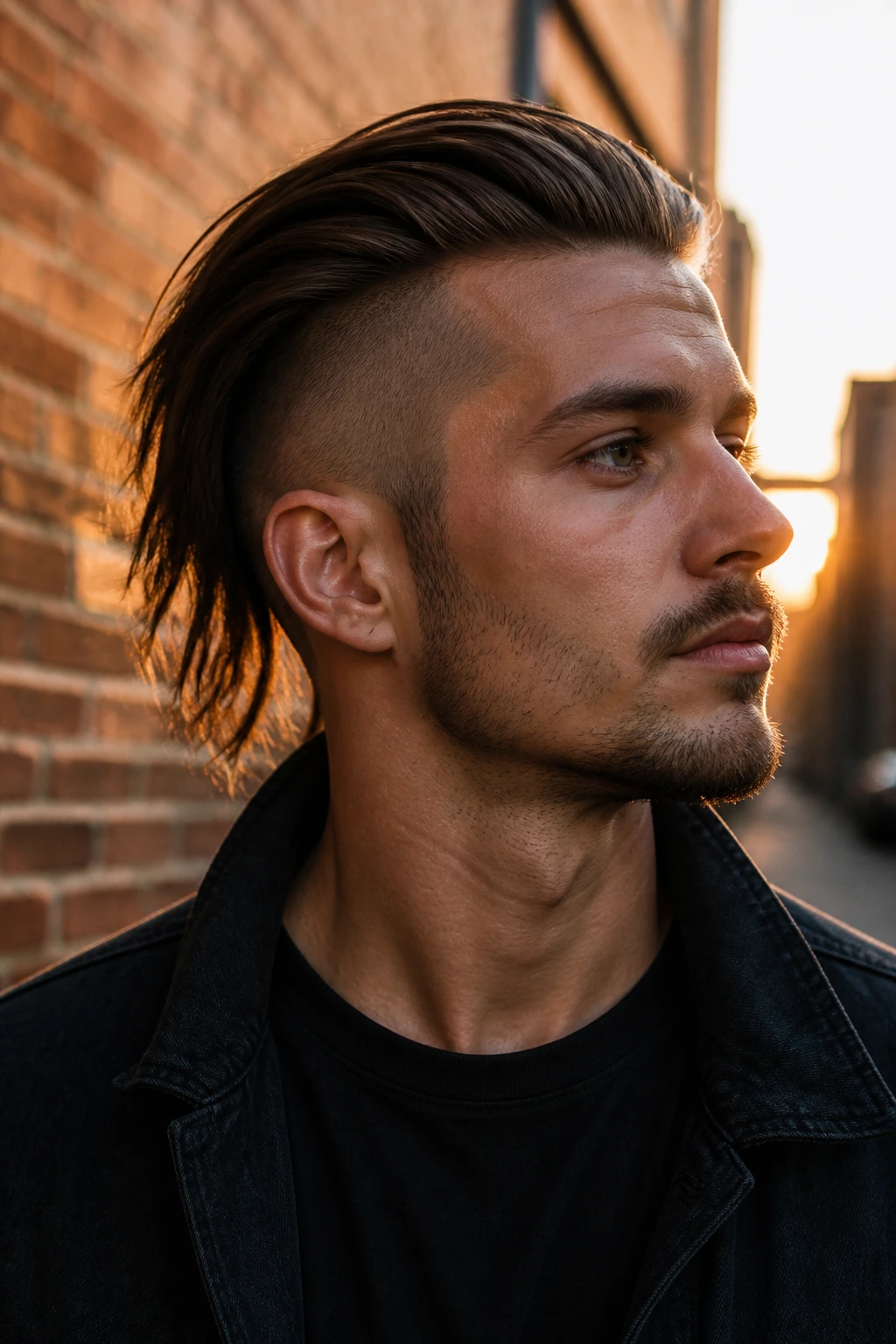
The undercut is the loudest shape in the long-hair playbook. Short or shaved sides throw all the attention to the top, so the contrast becomes the haircut. That is either exactly what you want or a bit too much, and there’s not much middle ground.
This style works when you want length without the bulk around the ears and neck. The top can be worn loose, pushed back, tied up, or swept to one side. If you’re growing out a long top and want the rest to feel cleaner, the undercut gives you room to breathe. It also suits thick hair well because the sides are doing some of the shape control for you.
What makes it different
Unlike a taper, the undercut usually drops the sides off more abruptly. That sharp break creates a strong profile. It can look edgy, but it can also look harsh if the contrast is too extreme for your face or your hairline.
If you choose this style, stay on top of the side length. Letting the undercut grow out too much kills the contrast and makes the whole cut look sloppy. That’s the trade-off. Big shape, more upkeep.
11. The Long Ponytail
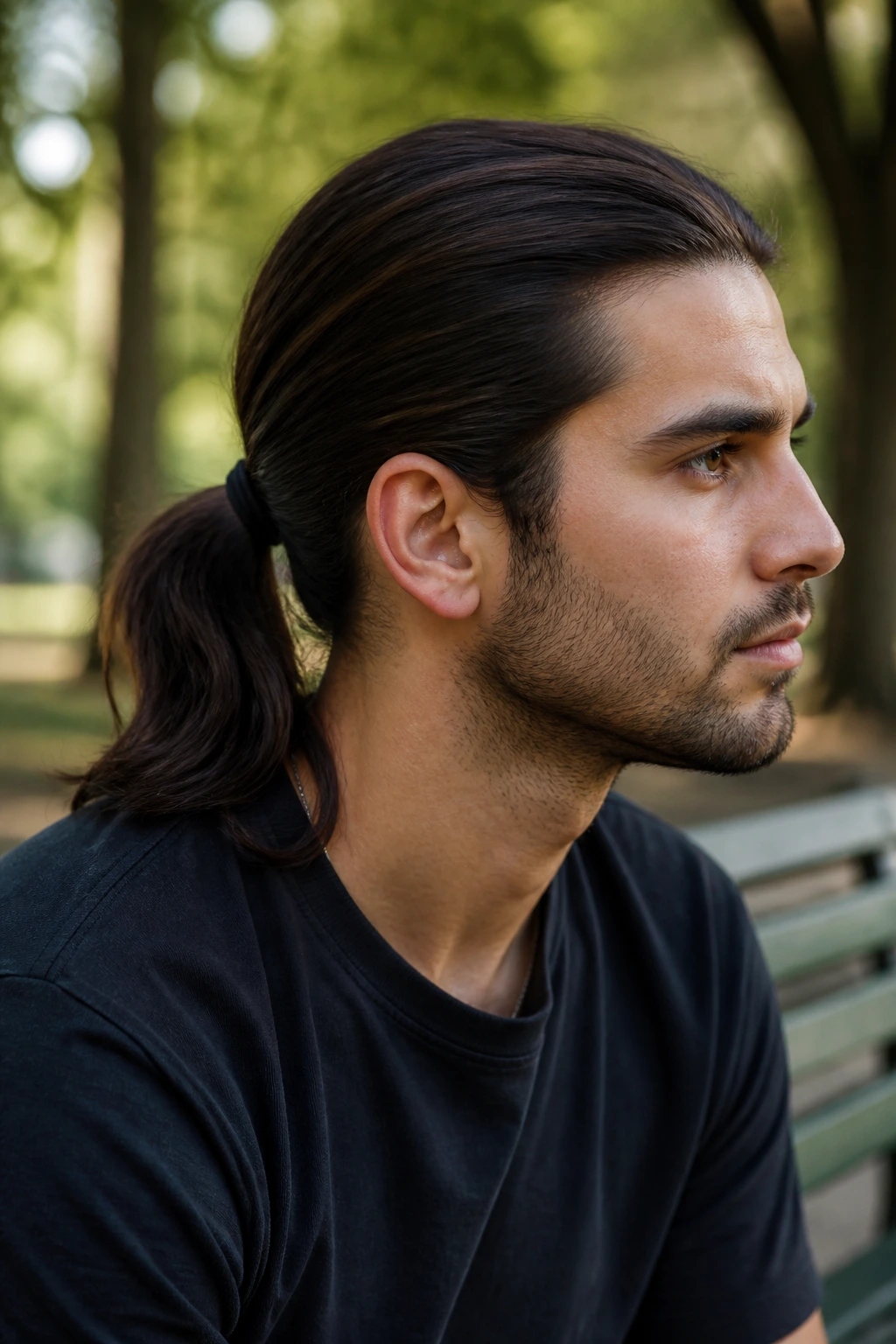
Some days you need the simplest answer. The ponytail is that answer, and when the hair is long enough, it stops looking like a fallback and starts looking like a real style.
The placement changes everything. A ponytail at the nape feels understated. A higher one looks more athletic and a little sharper. For longer, heavier hair, a low ponytail tends to control bulk better because the hair hangs with less tension at the crown. A tight elastic is a bad idea if you wear it often; it can leave dents and pull at the same spot every day.
Small details that matter
- Brush or finger-comb the hair back before tying
- Use a soft elastic, not a metal-tipped band
- Keep the tie snug enough to hold, not crank down hard
- Leave the ends free and healthy-looking
The ponytail is especially handy when the hair is past the shoulders and starts catching on collars, jackets, and backpack straps. It’s practical, sure, but the line it creates down the back can look clean when the hair is well-kept. A dull ponytail on dry, split ends tells a different story, though. Trim the ends. That part matters more than people want to admit.
12. The Single Braid
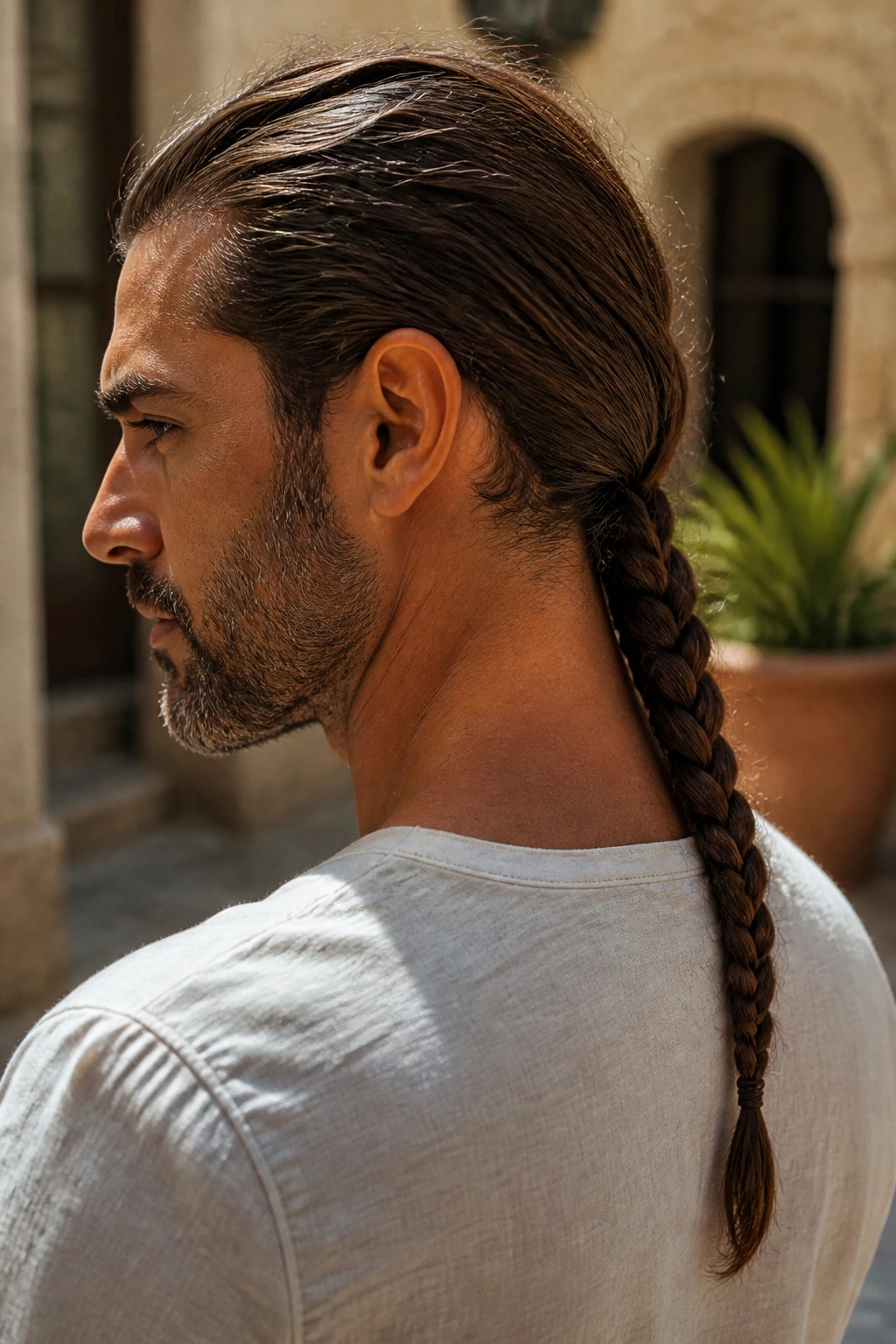
Does one braid read casual or sharp? It depends on the hair and the finish. A single braid down the back can look rugged, tidy, or almost architectural if the sections are even and the tension is consistent.
The easiest version is a three-strand braid that starts near the nape and runs down the back. If the hair is very long, a French braid gives more control from the crown downward. Medium-thick hair holds the shape well. Fine hair can still work, but the braid will look slimmer and may need a touch of texturizing spray first.
How to wear it well
Start with dry or barely damp hair. Wet hair takes longer to dry in a braid and can hold odor if you’re careless about it. Keep the part clean if you’re going for a neater look, or skip the part entirely if you want something rougher. A small elastic at the end is enough.
A single braid is good when you want length under control without losing the visual line of the hair. It keeps the back tidy, keeps the collar free, and works in a way that feels more considered than a plain tie. The braid itself becomes the statement.
13. Twin Braids
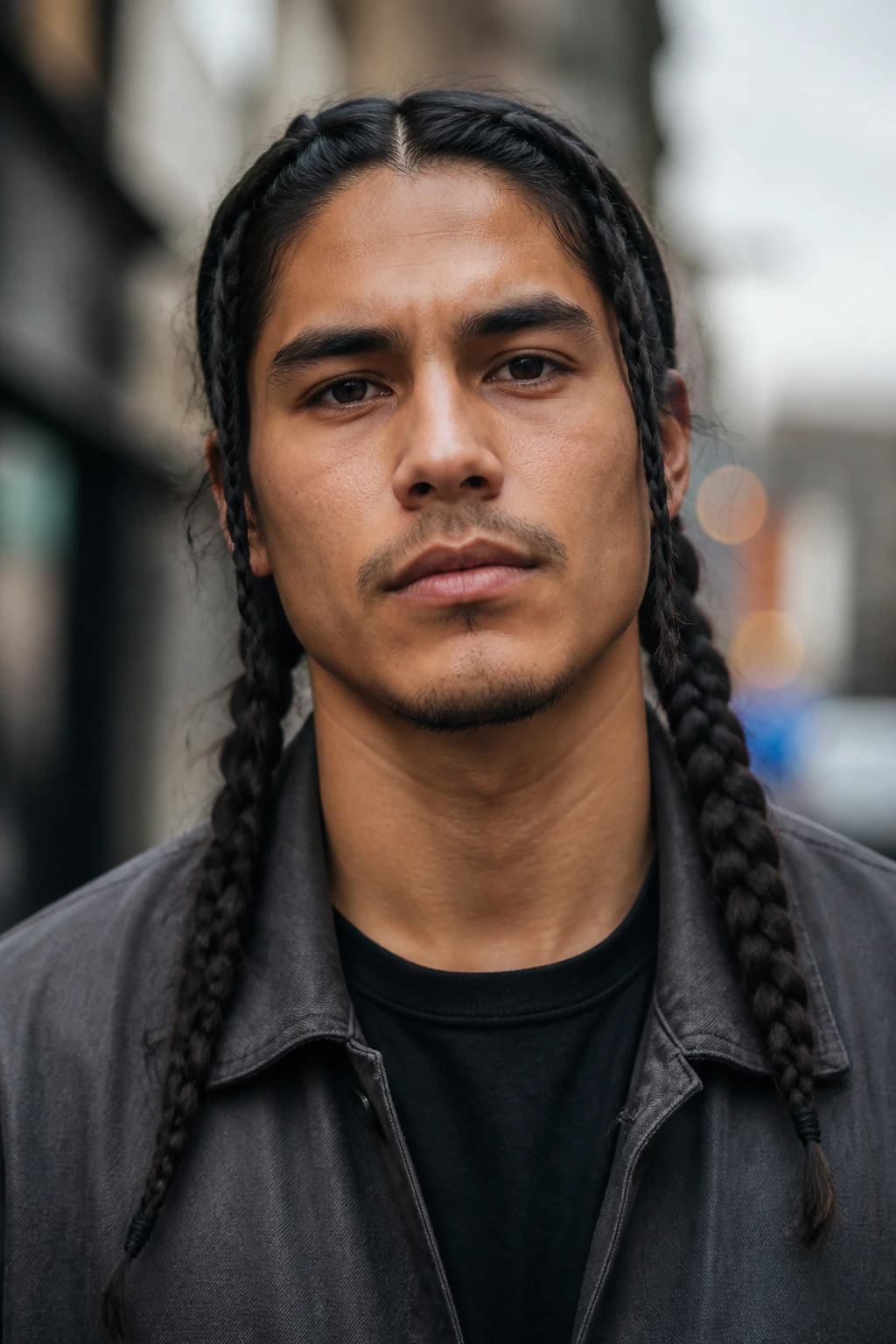
Two braids change the silhouette fast. They pull the hair into symmetry, which gives long hair a sharper, more athletic shape than a single hanging section ever could.
Twin braids work best when the hair has enough length to be divided cleanly from the crown or the hairline down to the nape. Straight and wavy hair braid with the least fuss. Dense hair can look especially strong here because the braids have more thickness and stay visible from the front and back. If the hair is layered, a little frizz at the sides is normal. Don’t panic and over-slick it.
The main details
- Keep the center part straight if you want a cleaner finish
- Braid with even tension on both sides
- Use small elastics so the ends don’t flare
- Soften the hairline with a little cream if needed
Twin braids are practical if you work out, ride a bike, or just hate having hair in your neck. They also hold up better than people expect once they’re in place. The look is not subtle, though. That is part of the appeal. You are choosing shape over softness, and the haircut should support that choice.
14. Cornrows

Cornrows aren’t a casual five-minute fix. They take time to install, and the result is a tight, scalp-following pattern that can last well if the parts are clean and the tension is right.
This style is one of the most useful long-hair options for men who want the hair controlled for days or weeks at a time. It can work with straight, wavy, or coily textures, though the finished look depends heavily on the braid work and the thickness of the sections. A bad cornrow setup looks bumpy fast. A good one lies flat, follows the head shape, and feels snug without pain. If your scalp hurts, it’s too tight.
A few practical notes
- Keep the parts even
- Moisturize the scalp lightly, not heavily
- Sleep with a satin bonnet or pillowcase
- Check for buildup around the roots
A lot of people forget the drying piece. If the hair is washed, it has to dry fully, because trapped moisture sits under the braids and gets unpleasant fast. Cornrows can look crisp for a long stretch, but they do ask for care. A good braider will tell you that tension matters more than speed, and they’re right.
15. Dreadlocks and Locs
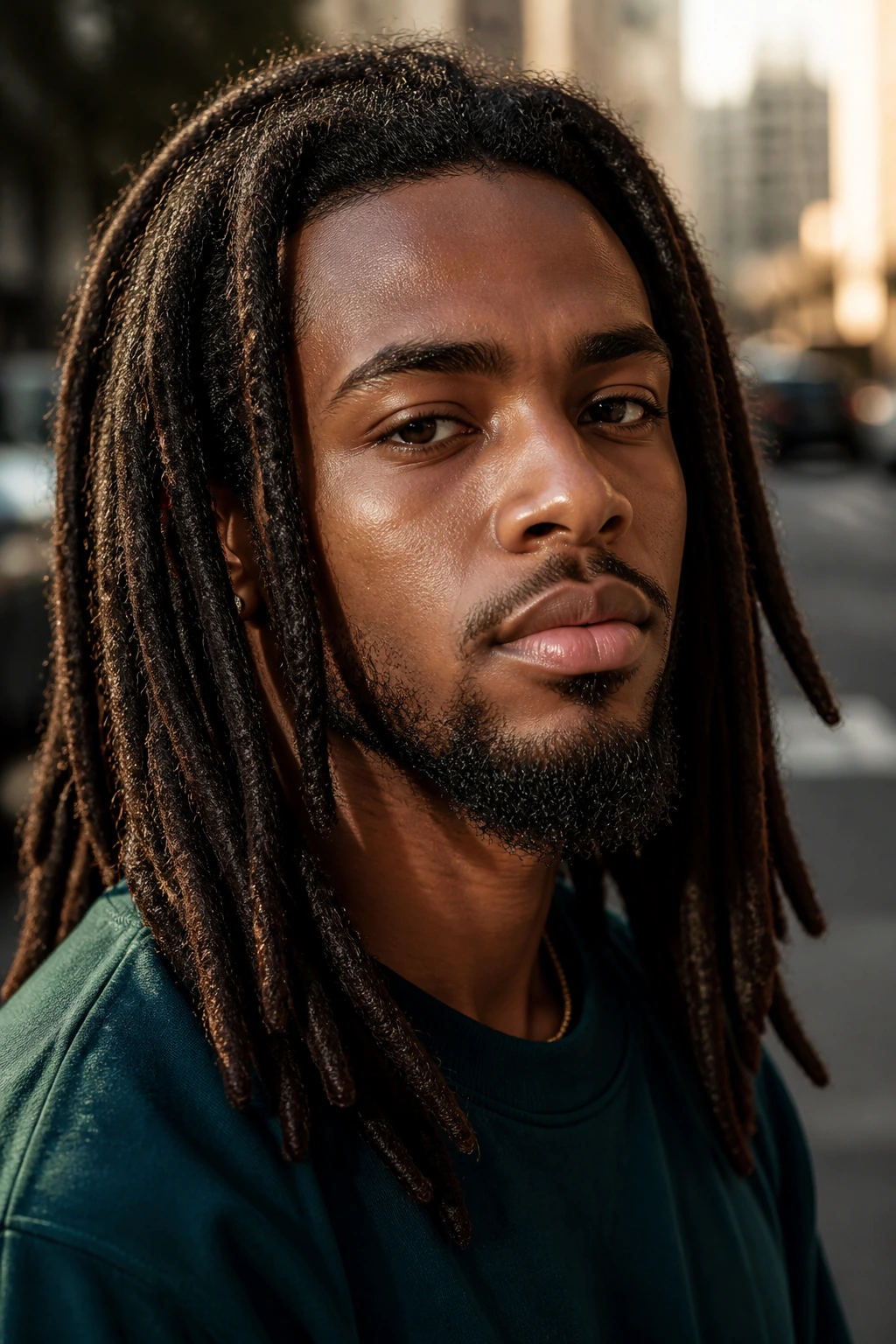
Why do locs stay on so many men’s shortlists? Because they create structure out of texture, and once they mature, they don’t need daily combing, brushing, or much decision-making before you walk out the door.
Starter locs can begin with coils, twists, braids, or interlocking, depending on your hair and the look you want. The early stage is messy. That’s not a flaw; it’s the process. Most people underestimate the first few months because the hair shrinks, frizzes, and settles unevenly before the shape starts to lock in. If you expect them to look finished on day one, you’ll be annoyed for no reason.
What to know before you start
You need a real maintenance plan. Retwists or maintenance appointments often land around every 4 to 8 weeks, depending on hair type and how fast the roots loosen. Washing is still part of the picture, but drying matters a lot. Thick locs that stay damp too long will smell off, and nobody wants that.
Locs are a commitment, not a weekend style. They can look excellent with a taper, a clean line-up, or a fuller freeform shape, but the real win is patience. If you want long hair that carries a strong silhouette without constant comb work, this is one of the few styles that truly delivers.
16. Long Curls
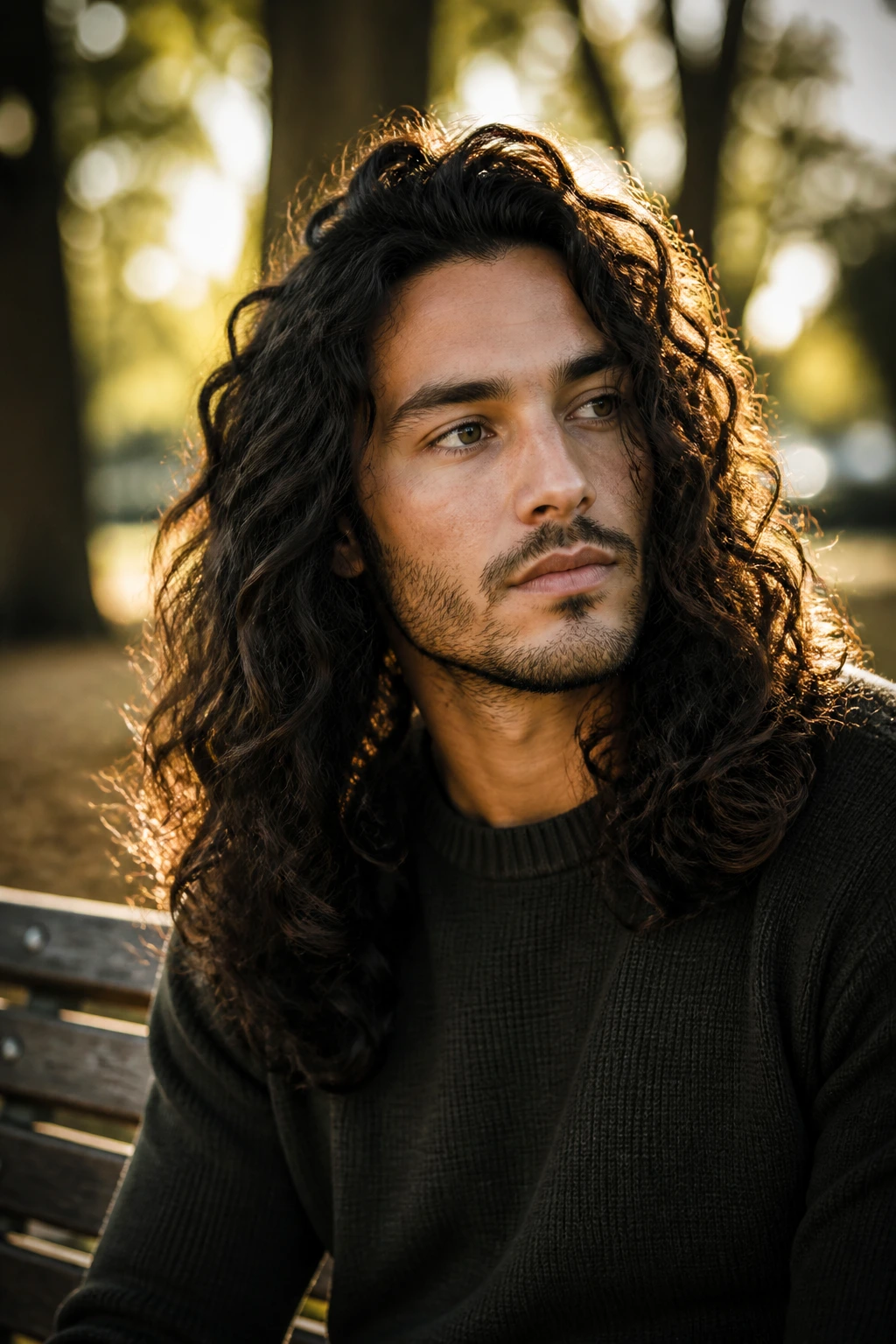
Curls with length can look huge in the best way. They bring shape, texture, and movement all at once, and they do not need much help once the cut respects the curl pattern.
The main mistake is cutting curls like straight hair. That usually creates a pyramid or makes the sides too heavy. A better approach is to build shape with layers so the curls stack instead of spreading out. Shoulder-grazing curls can look especially good because the weight helps them hang with more control. Shorter curls often bounce harder, which is fine, but longer curls have more presence.
The part most guys skip
Moisture is not optional here. A leave-in conditioner, curl cream, or light gel keeps the curls from turning into dry fuzz. Use a wide-tooth comb or your fingers when the hair is wet, then stop touching it while it dries. That last part is annoying, but it matters.
Diffusing on low heat helps when you want more definition. Air-drying gives a softer look. Both work. The important thing is keeping the ends healthy, because frayed ends make long curls look tired fast. When the cut and care line up, curly long hair has a shape that no straight style can fake.
17. Loose Waves
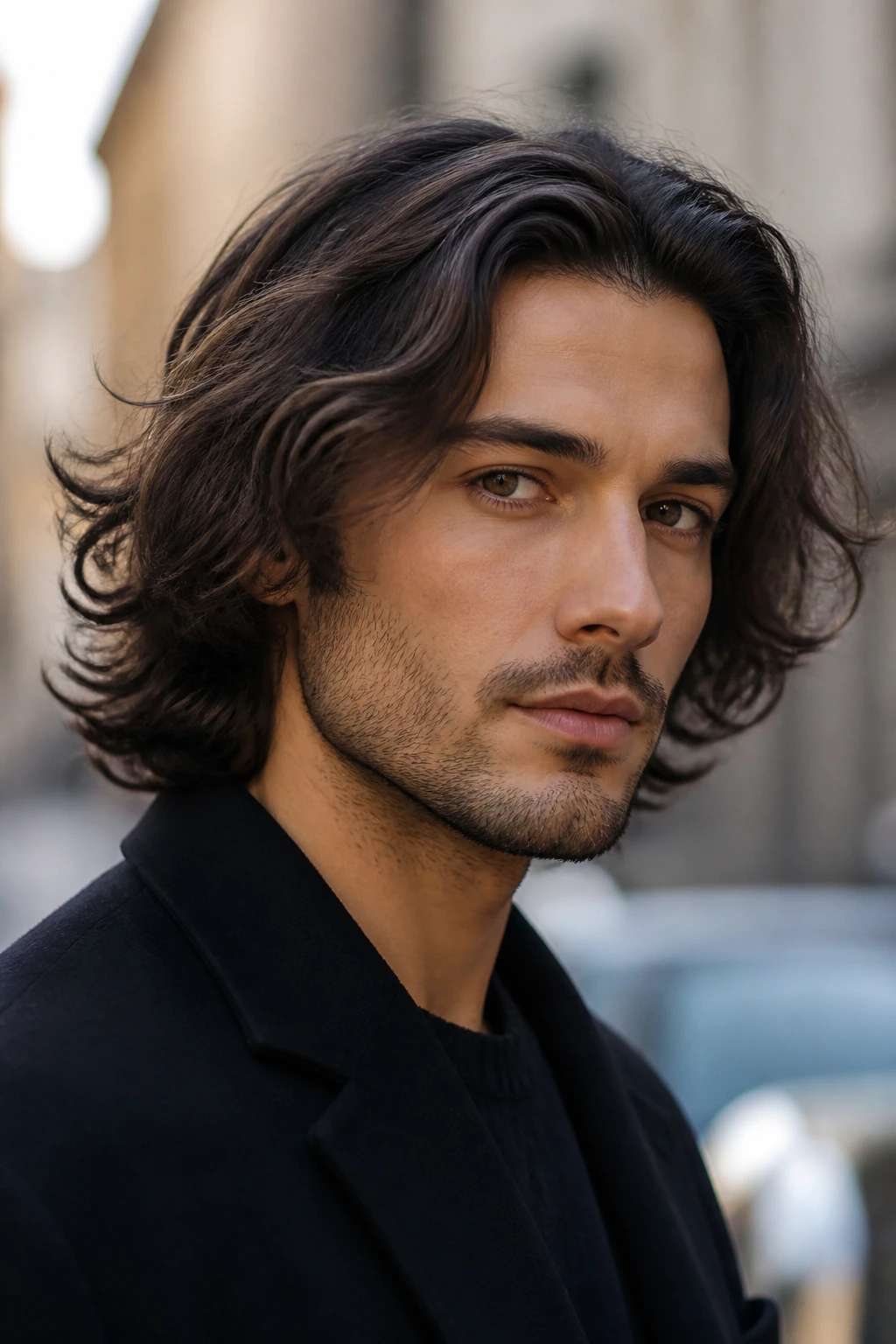
Loose waves are easier to live with than almost any polished long style. They move without looking busy, and they do not need much more than the right cut and a little restraint.
The best version usually starts with medium to long layers so the waves can fall in pieces instead of clumping into one solid block. Hair that’s naturally bent or slightly wavy benefits most, but straight hair can fake some movement with a rough blow-dry and a touch of salt spray. The goal is not crunchy beach hair. The goal is bend, separation, and a little softness around the edges.
How to keep the bend
- Towel-dry instead of rubbing
- Use a light sea salt spray through the mids
- Twist a few sections around your fingers while drying
- Skip heavy waxes that flatten the wave
Loose waves work well when you want hair that looks casual but not neglected. They are also forgiving during grow-out, which is a nice bonus. If the neckline is clean and the front has shape, the whole style reads better than it has any right to. That’s the charm of good waves. They do some of the work for you.
18. The Messy Fringe
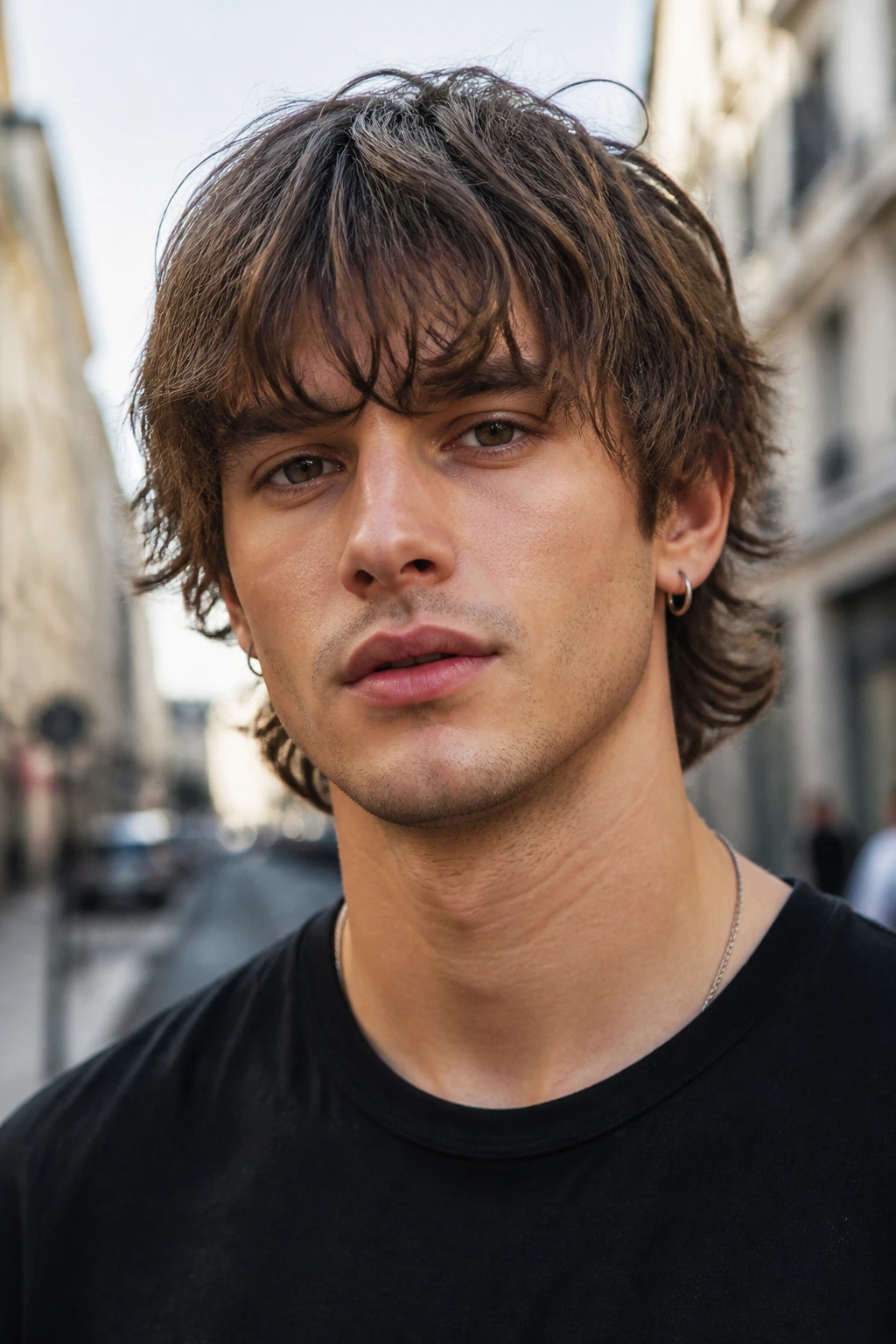
A fringe can work on long hair if you stop treating it like a perfect curtain. The messy version is choppier, a little looser, and far less precious than the neat center-part looks that everyone keeps copying.
This style usually uses longer front pieces that drop toward the eyebrows or just below them, while the rest of the hair stays longer through the sides and back. It suits guys who want a softer shape around the forehead or who want to break up a high forehead without making the haircut look formal. Straight hair shows the shape best. Wavy hair gives it extra texture.
What to watch for
- Keep the fringe piecey, not glued down
- Trim the front before it gets into your eyes
- Use a light matte product, not shine cream
- Let the hair fall forward on purpose
The downside is obvious: if you overgrow it, the fringe can start living in your face. That gets irritating fast. But when the length is right, the style has a young, slightly undone feel that works well with long hair elsewhere. It’s a good option if you like movement at the front and don’t want the whole cut pushed back all day.
19. Taper Fade with Long Top
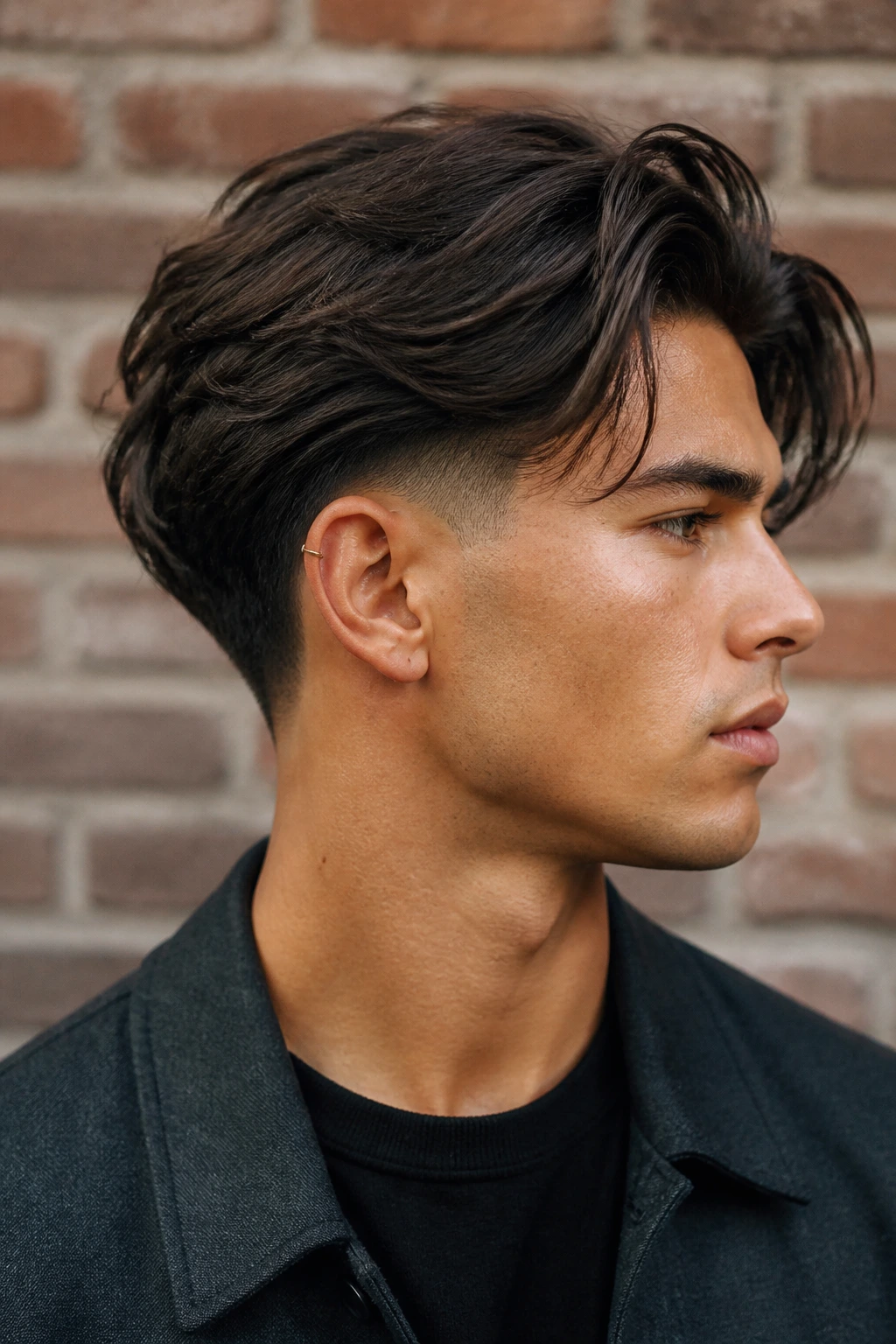
A taper fade gives long hair a clean edge at the ears and neck. It’s a softer version of the undercut, which means the transition blends instead of dropping off a cliff.
That matters. The taper lets the long top stay the main feature while the sides and neckline stay neat, so you get structure without a harsh disconnect. It works especially well if you want to wear the top loose, swept back, or tied up depending on the day. If you like long hair but hate the fuzzy sideburn stage, this solves that problem better than most cuts.
Why it stands apart
The fade is gradual around the temples and nape, so it grows out more naturally than a hard undercut. That buys you a little extra time between barber visits. The top can still be long enough for layers, curls, or a small tie-back, and the overall shape stays balanced.
It’s a strong match for guys with thicker hair, because the taper trims away visual bulk where you do not want it. If your top is long but the sides keep turning puffy, this cut cleans that up fast. It also looks good with a beard, though that’s a separate conversation and a long one.
20. The Modern Mullet
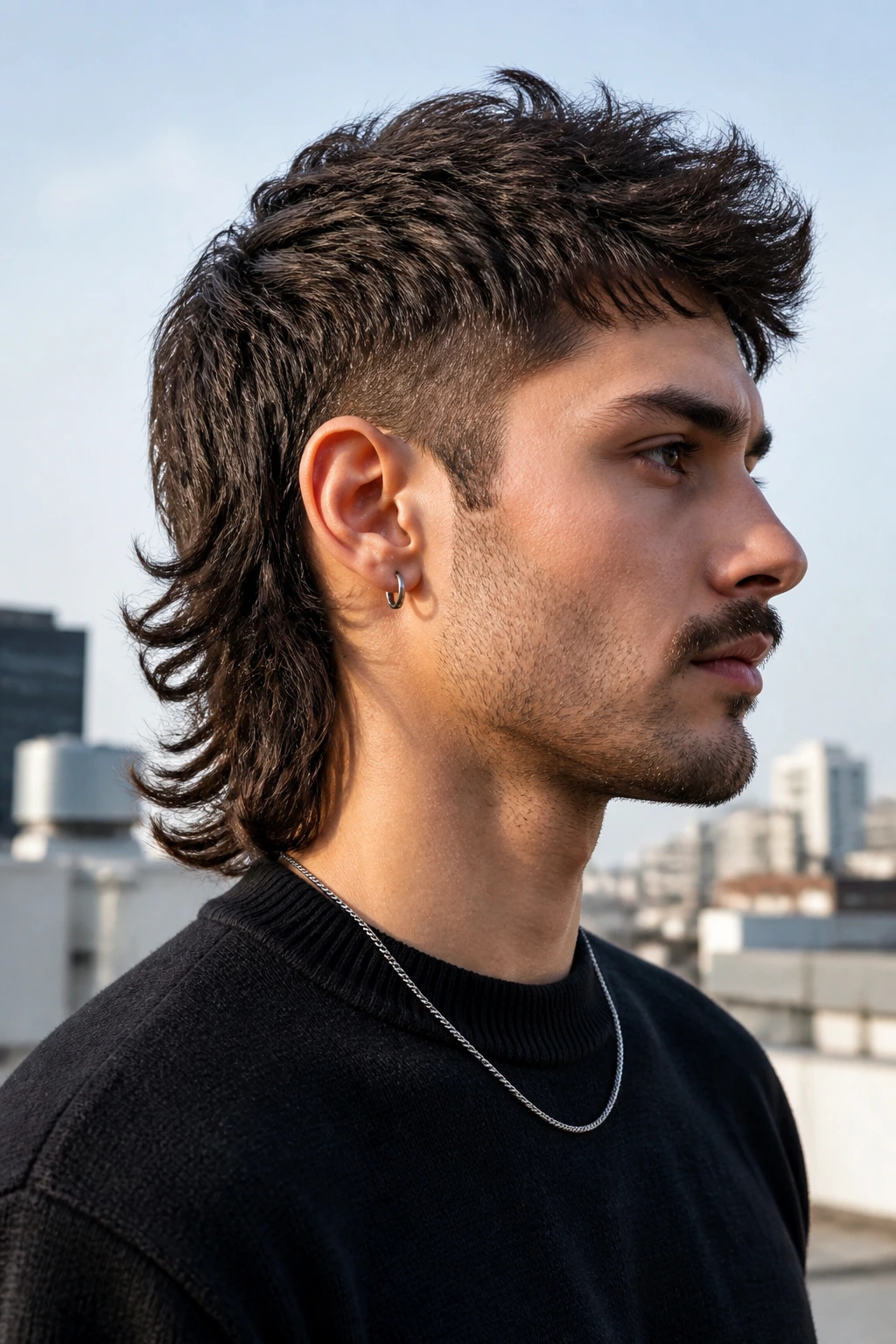
The modern mullet is the one style here that can still surprise people. It keeps length in the back, but the front and sides are cleaner, tighter, and more shaped than the old version everyone jokes about.
What makes it work is restraint. The top usually stays textured and controlled, the sides stay shorter without disappearing entirely, and the back gets enough length to read as a deliberate tail rather than a mistake. Wavy and straight hair both work here. Thick hair gives it more body, while finer hair needs careful cutting so the back does not look stringy.
If you want it to look intentional, keep the transition around the ears tidy and the top piecey. A mullet that is too flat up front looks tired. A mullet that is too heavy in the back starts drifting into costume territory. The modern version stays sharper than that.
This is the style for guys who want length with a bit of edge and don’t mind a haircut that has an opinion. There’s no pretending it’s neutral. That’s why it works.
Final Thoughts
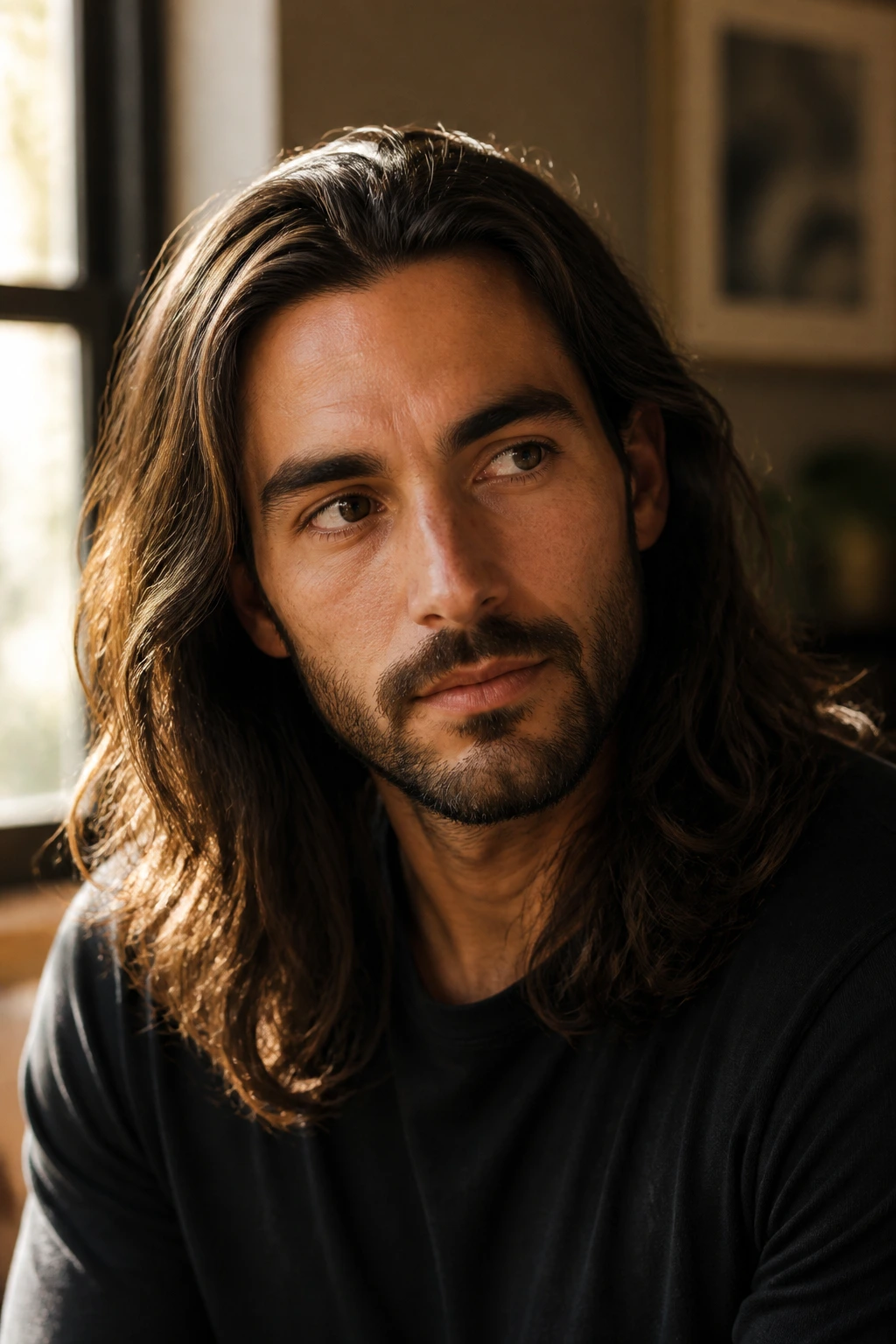
Long hair on men usually looks best when the shape is doing more than the length. Layers, fades, buns, braids, and textured cuts all solve different problems, and that is the real choice here: not “long or short,” but which problem do you want the haircut to fix.
If you’re growing your hair out, do yourself a favor and get small shape-ups along the way. A neckline cleanup, a little weight removal around the ears, and a trim that keeps the ends from splitting can keep the whole thing from collapsing into a mop. Small changes. Big difference.
The best long hairstyles for men are the ones you can keep wearing after the novelty wears off. Pick the shape that matches your texture, your routine, and your patience level, then give it enough time to settle. That’s usually when it starts looking like yours.
