



Straight hair is honest. It shows every line, every uneven end, every bad haircut you tried to ignore for a week and hoped would settle down. That honesty can be annoying, sure, but it also makes long hair easier to shape once you stop asking it to behave like curls or waves.
The best long hairstyles for men with straight hair do one of two things: they add movement, or they make the clean lines work for you. If the cut is right, straight strands can look sharp, calm, and expensive without trying too hard. If the cut is wrong, they go flat at the roots and hang like wet rope by lunch.
That’s the part a lot of men miss. Length alone is not a style. Weight distribution matters. So does where the hair sits around your ears, how much bulk stays at the back, and whether the ends are blunt or feathered. A barber who understands that can make straight hair look deliberate instead of accidental.
And once you know which long styles actually suit straight strands, the whole thing gets easier. You stop fighting the hair and start using its best trait: clean shape.
1. Shoulder-Length Layers
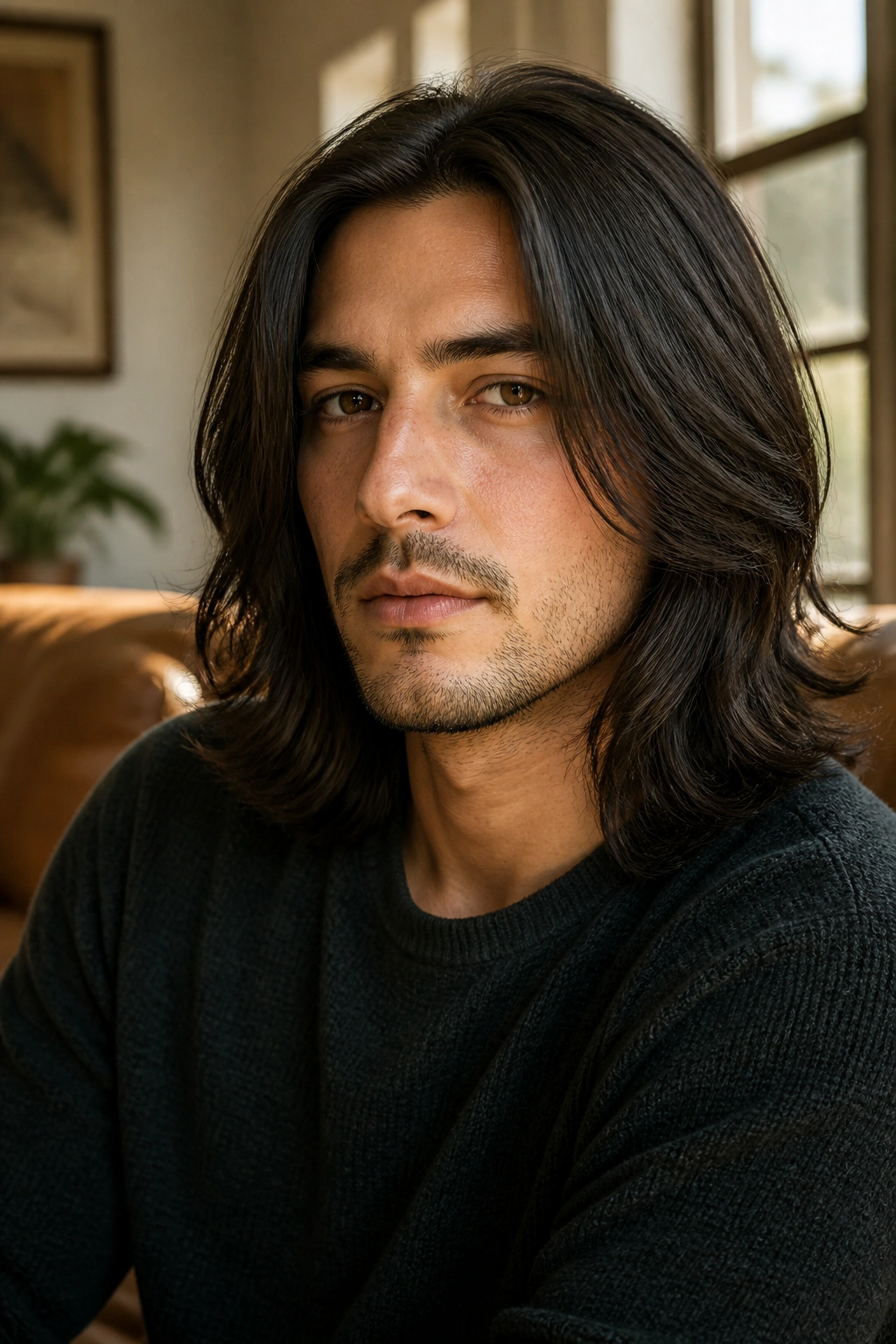
Shoulder-length layers are the safest place to start if you want long hair without the “helmet” effect. Straight hair can look heavy fast, especially when all the ends land in one hard line, so a few well-placed layers keep the shape moving. I like this look on guys with medium to thick hair because it keeps the length, but takes away that blocky feel.
Why It Works on Straight Hair
The trick is in the perimeter. If the ends sit right at the shoulders with soft internal layers, the hair moves when you turn your head instead of hanging in one sheet. That matters more than people think. A little movement makes straight hair look healthier, not thinner.
Ask for layers that start below the cheekbones, not up near the eyes. Too much layering near the front can make the cut look choppy in a bad way, like someone took a kitchen knife to it. You want shape, not shredded ends.
Quick styling notes:
- Use a pea-sized amount of lightweight cream on damp hair.
- Air-dry halfway, then finish with a blow dryer using your fingers to lift the roots.
- Trim every 8 to 10 weeks so the ends don’t split into little white forks.
Best for: men who want length, movement, and a cut that still looks clean in a blazer or a T-shirt.
2. Center-Part Curtains
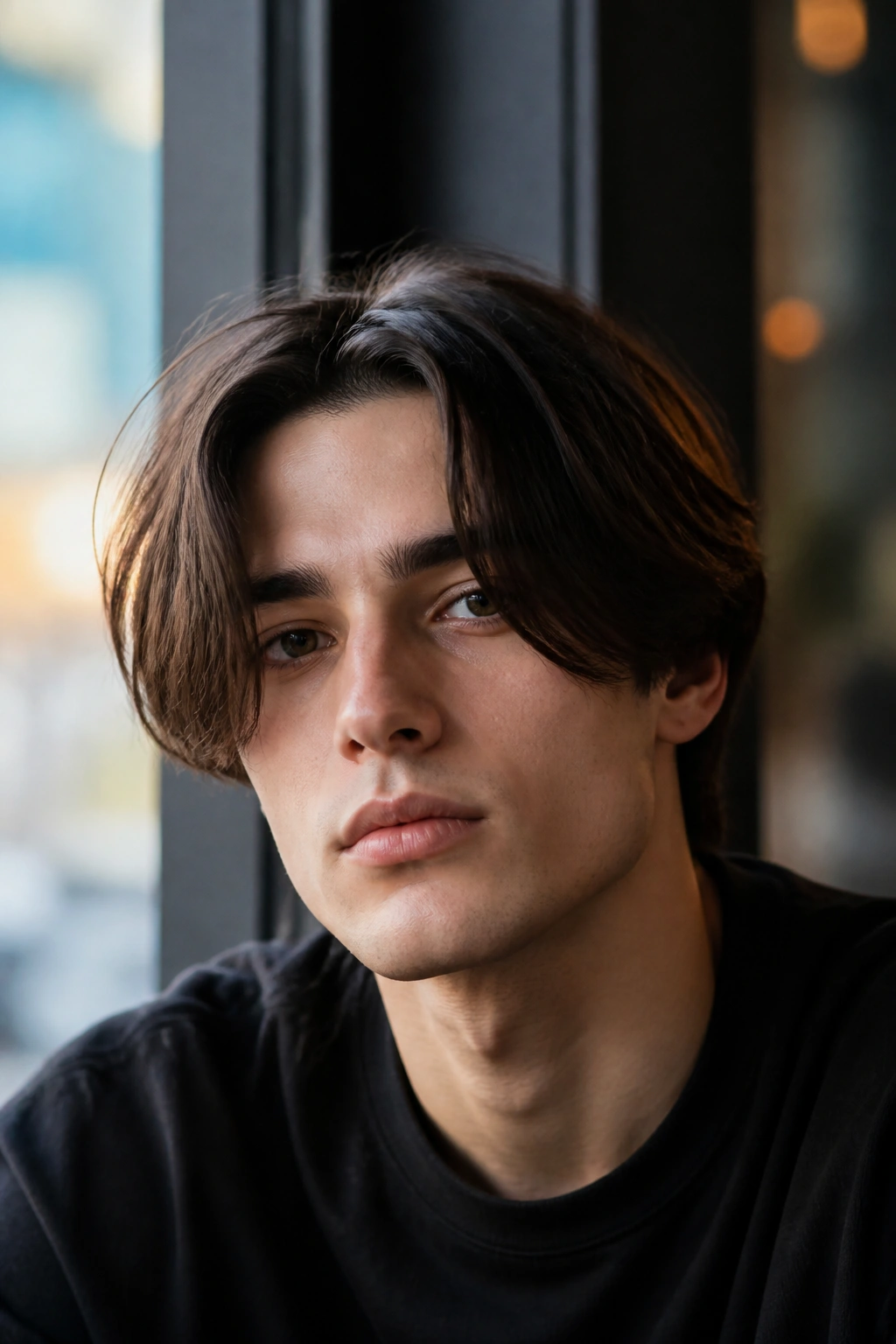
A center part sounds simple, and that’s exactly why it works. On straight hair, it creates a clean frame around the face without needing much product or fancy styling tricks. If your hair falls naturally in the middle, lean into it instead of forcing it back.
The curtain look gets better when the front pieces are just a touch shorter than the rest. That tiny difference lets the hair open away from the face instead of hanging straight down like a curtain rod. It softens a strong jaw and gives rounder faces a little more vertical line.
I’m a fan of this style for guys who hate a high-maintenance routine. A light sea salt spray, a quick blow-dry away from the part, and you’re done. No heavy wax. No crunchy finish. No helmet shine.
If your hair is fine, keep the part soft and loose. If it’s thicker, ask the barber to remove a little bulk underneath the top layer so the part doesn’t split too wide and puff out at the sides. Small adjustment. Big difference.
3. Slicked-Back Length
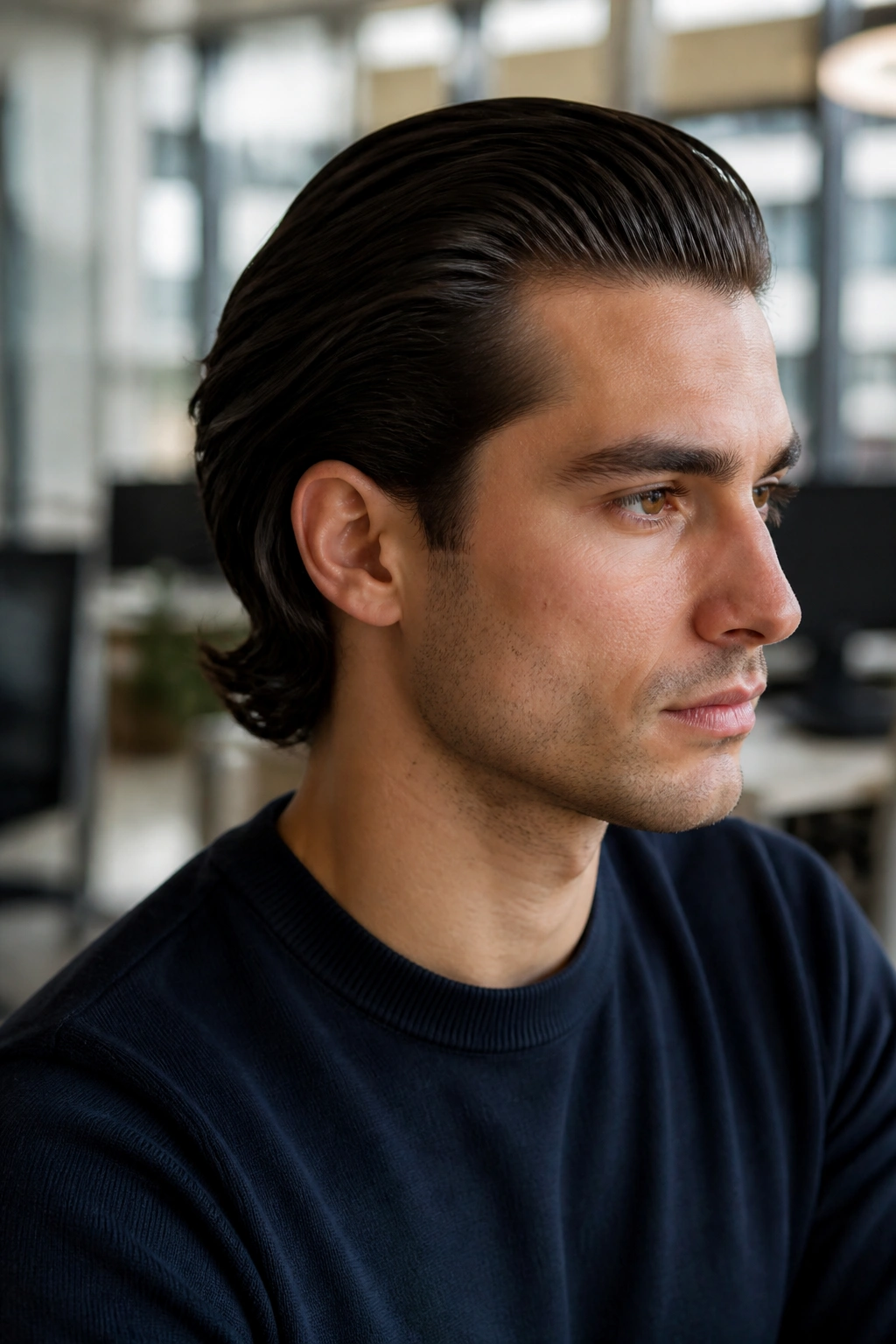
Slicked-back straight hair looks clean because straight strands already want to lie in one direction. That is the whole appeal. You’re not fighting the texture; you’re letting gravity do half the job.
The mistake men make here is using too much product. A palmful of gel turns the style stiff and shiny in the wrong way, and it exposes every scalp line if your hair isn’t dense. A better move is a small amount of medium-hold cream or light pomade on towel-dried hair, then a comb or just your hands to push everything back from the forehead.
This style works best when the top has enough length to sit back without springing forward again. Think 5 to 7 inches on top, with the sides kept tidy but not shaved bare. You want sleek, not severe. If the front is too short, it will keep popping up by noon.
Use this look when you want a sharper edge. It reads polished with a jacket, but it also looks good with a plain white tee and a bit of stubble. Not flashy. Just controlled.
4. The Bro Flow
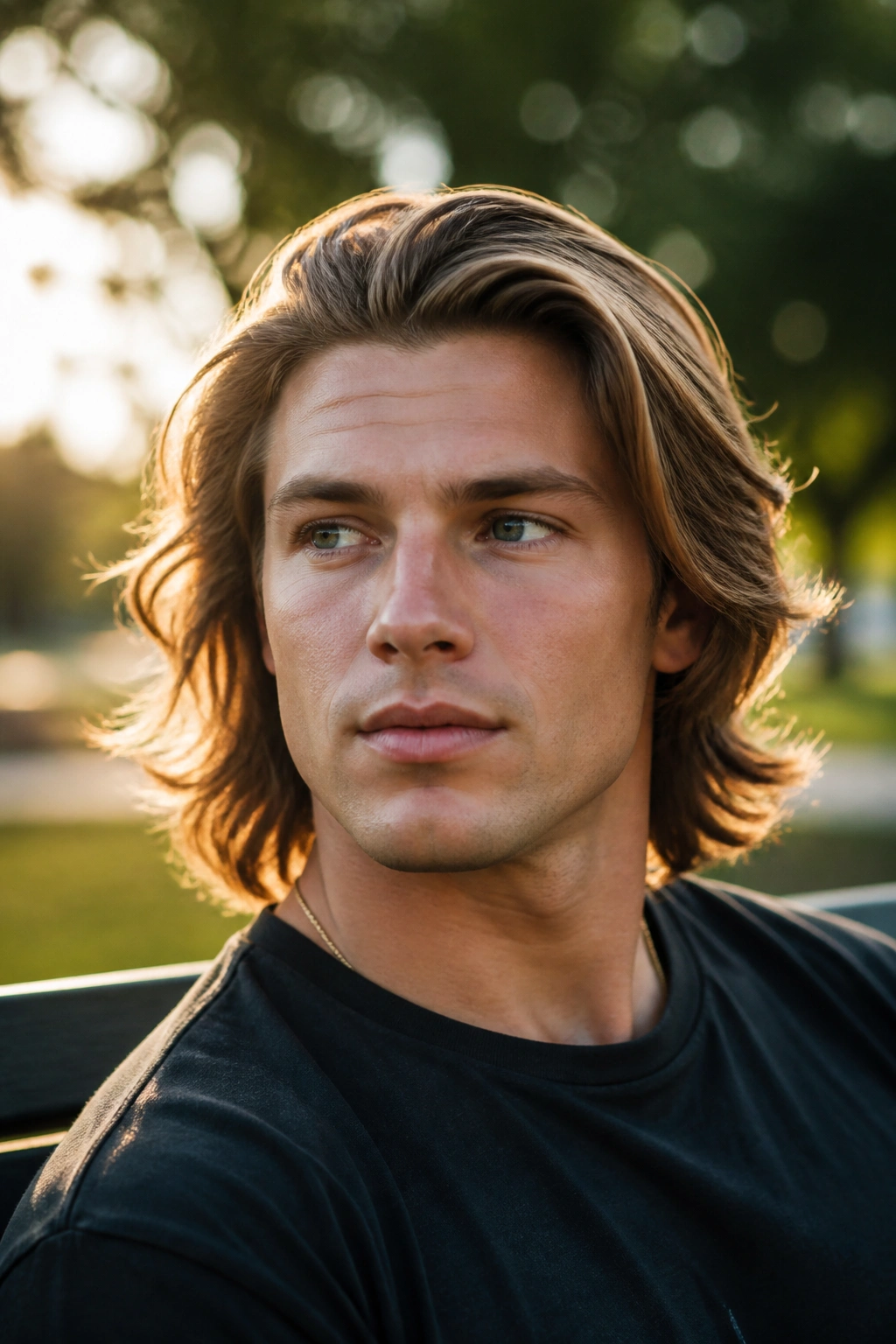
You know that awkward stage when your hair hits your collar and looks like it has no idea what it wants to do? The bro flow is what happens when you push through that stage on purpose and make it look easy.
This style suits straight hair because the length falls naturally, but the cut has to guide it. The ends should sweep back from the face with a little movement around the temples and ears. If the barber leaves everything one length, the hair can look lazy. If they add too much texture, it starts to look frayed. The sweet spot is somewhere in the middle.
What to Ask For
- Keep the top long enough to brush back from the forehead.
- Leave some length around the sides so the flow connects.
- Add light layering through the back, not choppy pieces near the crown.
- Clean up the neckline so the whole thing feels intentional.
The bro flow is for the guy who wants long hair but still wants to look like he pays attention. It’s one of those cuts that gets better when it’s lived in a bit. Freshly cut, it can look too neat. After a week or two, it starts to settle.
5. Long Hair with Tapered Sides
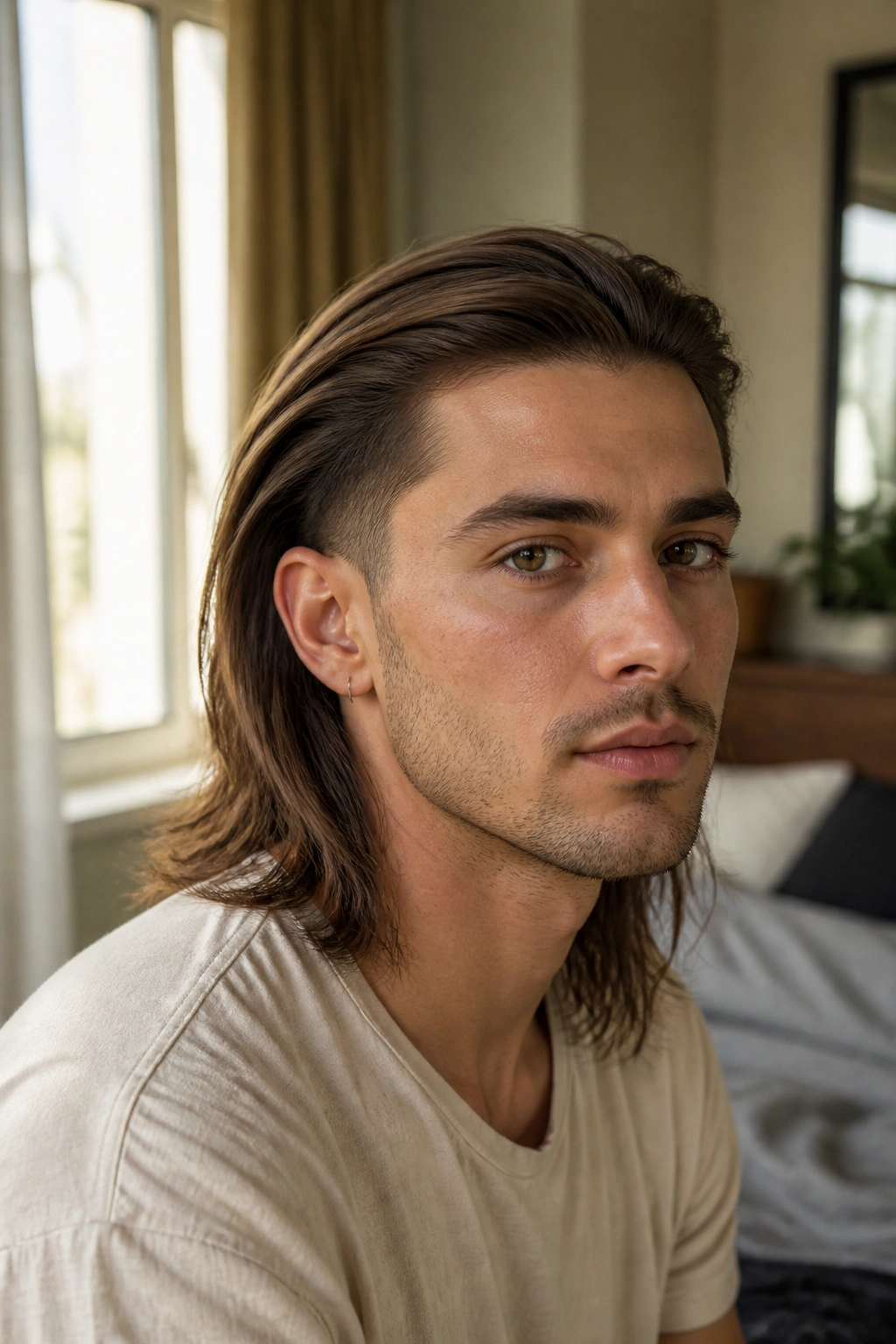
Why does this work so well on straight hair? Because the taper takes the weight out of the sides without forcing you into a full disconnect. That’s the whole game. Straight hair tends to spread at the sides when it gets long, and a low taper keeps that from turning into a triangle.
Ask for a gradual taper around the temples and the nape, while leaving the top and back long enough to tuck behind the ears or tie up. The haircut still reads as long hair, but the edges feel cleaner. On thicker straight hair, this can save you from that heavy, mushroom-like shape that shows up when the sides get too wide.
How to Wear It
If you want it casual, let the top fall naturally and keep the sides brushed back with a fingertip. If you want a neater look, tuck the hair behind the ears and use a small amount of styling cream just at the ends. Don’t ask for the taper to climb too high unless you want a stronger contrast.
This one is a strong pick if you’re growing your hair out and getting sick of the in-between stage. The taper gives the cut structure while the length continues to build.
6. The Man Bun
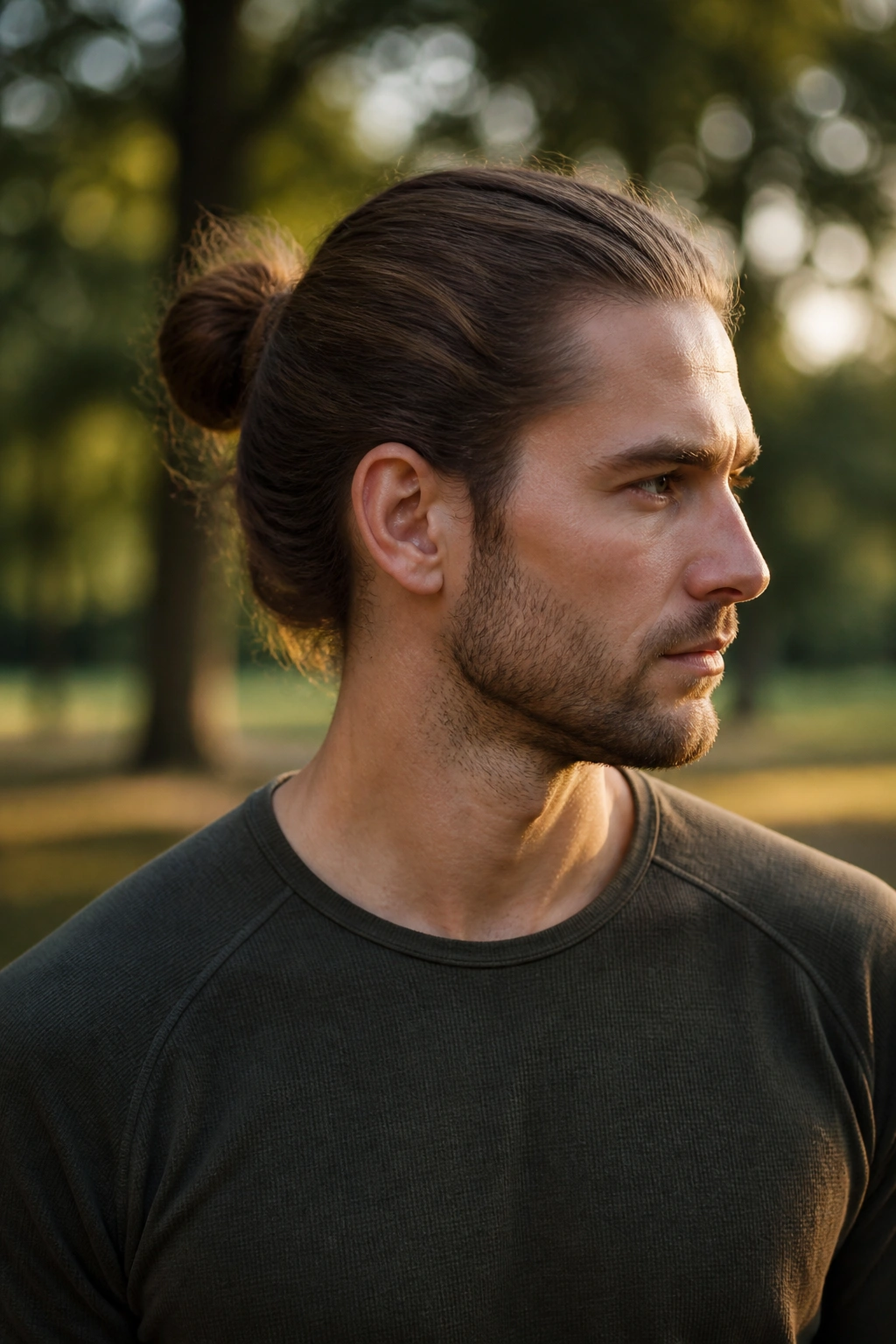
A man bun is not just a way to “get the hair out of the way.” That’s the excuse. The real reason it works is that it creates a strong shape out of hair that might otherwise hang flat and shapeless down your back.
Compared with a ponytail, the bun keeps the silhouette tighter and usually looks better on straight hair because the strands lie cleanly into the knot. That said, it only works if the hair is long enough to wrap properly. If you’re forcing the ends into a tiny knot at the crown, it starts to look strained fast.
The bun sits best at the mid-back of the head or slightly lower. Too high, and it gets fussy. Too tight, and it pulls at the hairline and makes the front look thin. Use a soft elastic, not a skinny rubber band. That tiny choice saves a lot of breakage.
I’d suggest this style for men who want one look for work, gym, and weekends. It’s practical, yes, but it can also look sharp if the sides are kept neat and the bun is compact rather than messy.
7. Half-Up, Half-Down
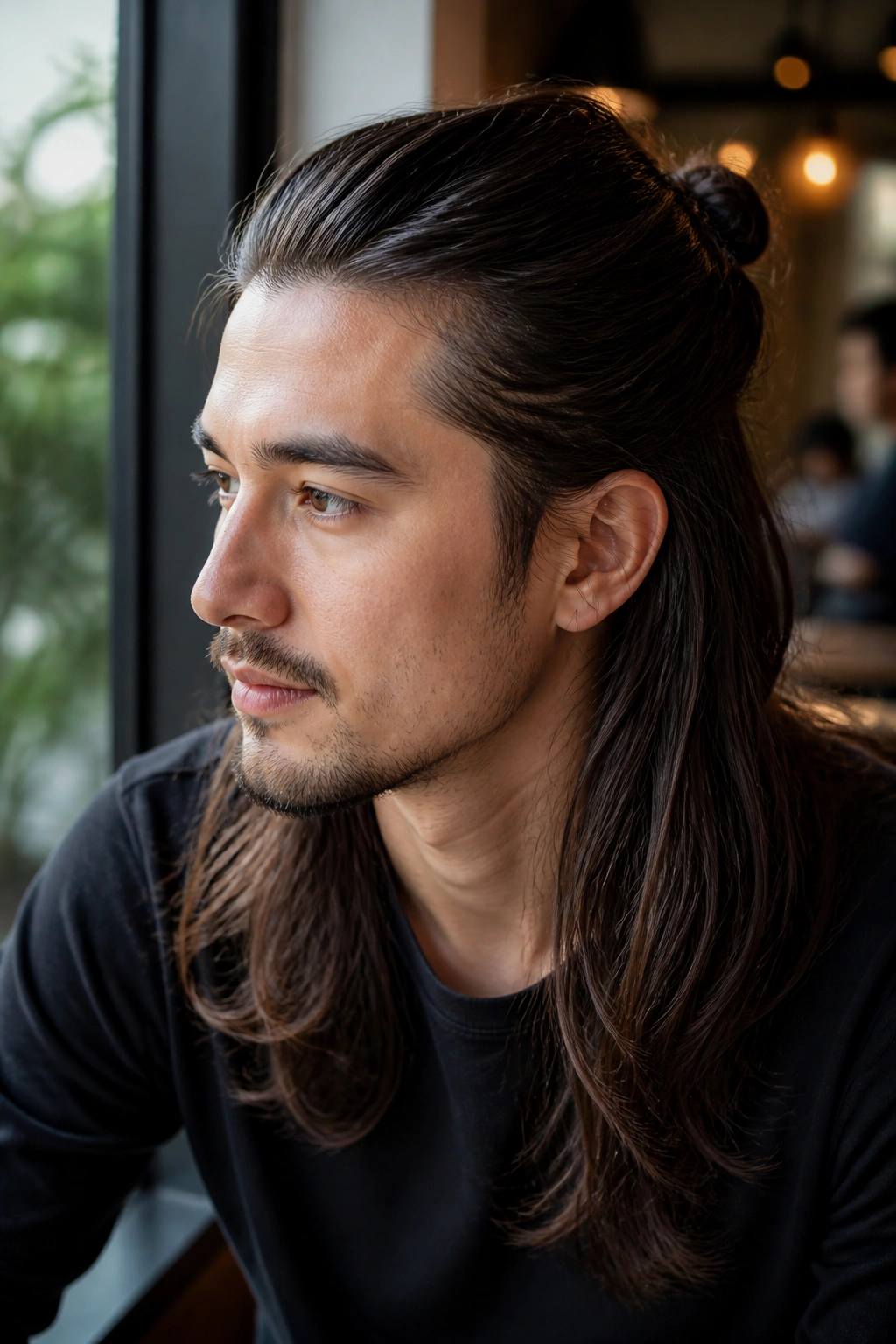
The half-up, half-down style gives you the best part of long hair without putting all of it in your face. For straight hair, that matters because the front section can fall into the eyes faster than people expect, especially if you bend forward a lot during the day.
The top half gets pulled back, which gives the face some lift and keeps the crown from collapsing. The lower half stays loose, so you still get that long-hair movement. It’s a nice middle ground if you’re not ready for a full ponytail or bun.
A lot of guys overcomplicate this one. Don’t. Pull back the top section from temple to temple, secure it with a small tie, and leave a little tension out of the front so it doesn’t look slicked tight. If you want it softer, let a few strands fall around the face. If you want it cleaner, smooth the front with a dab of cream first.
This style works especially well when your hair is between shoulder length and mid-back. Shorter than that, it can look unfinished. Longer than that, it gets more dramatic and starts feeling like a real signature look.
8. The Modern Shag
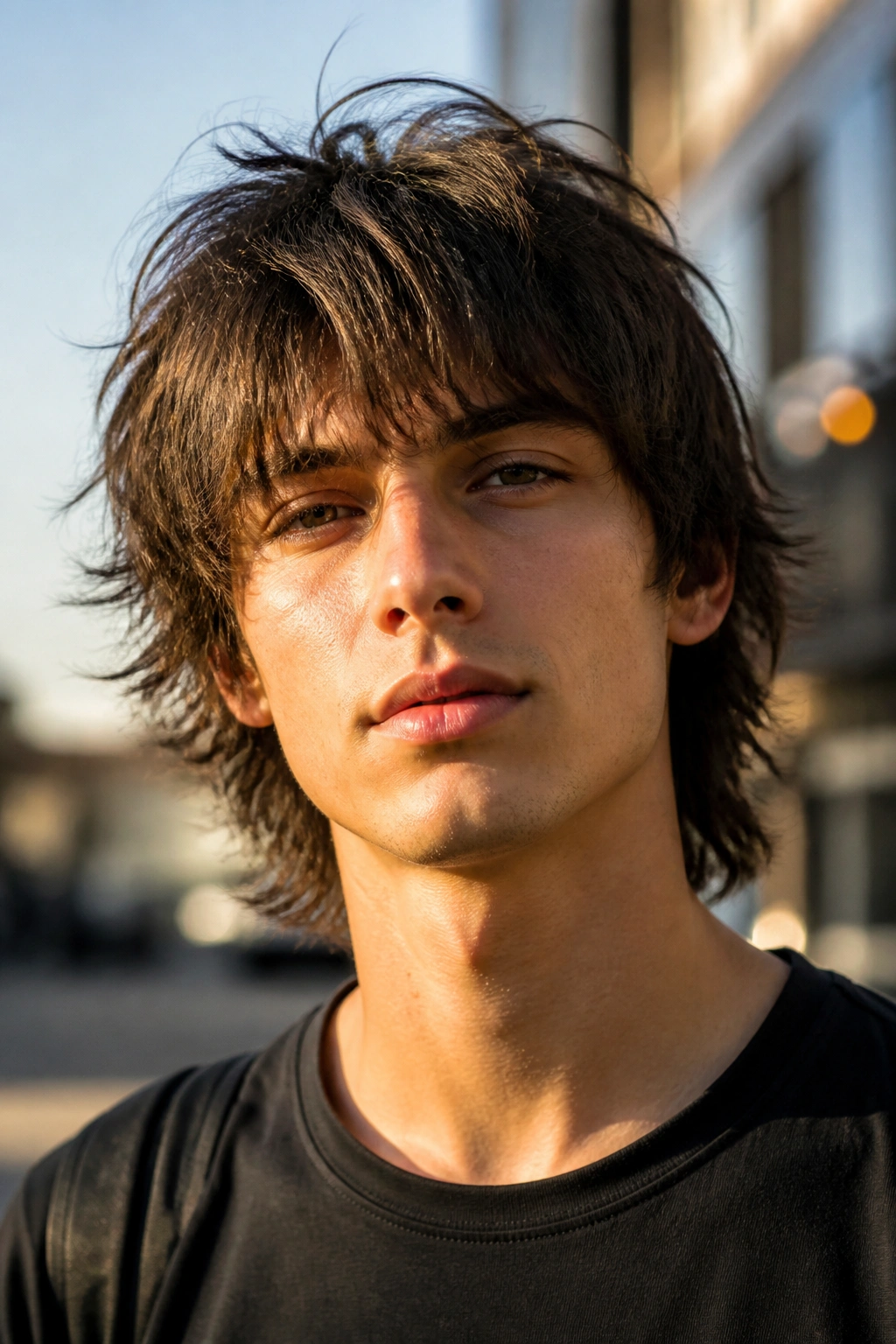
A shag is what straight hair needs when it starts looking too polite. The whole point is to break up the flatness with layers that move in different directions, especially around the crown and through the front. It should look lived-in, not messy for the sake of being messy.
The modern version is cleaner than the old rock-band shag. You still get choppy layers, but they’re controlled enough that the cut holds shape when you comb it back or let it fall forward. If your hair is fine, this is one of the best ways to make it look fuller without piling on product. If it’s thick, the shag removes some of the bulk and keeps the head from looking like one giant block.
What Makes It Different
The front fringe is usually soft and broken up. Not blunt. The back has more movement than a classic one-length cut. And the layers around the ears keep the shape from feeling boxy.
- Ask for long, uneven layers instead of sharp chopping.
- Keep some length at the nape so the cut doesn’t spike up.
- Use a matte texture spray on dry hair, then shake it out with your fingers.
- Skip heavy oils; they flatten the whole thing in an hour.
I like the shag on straight hair because it has attitude without needing a lot of work. It also grows out pretty well, which is a rare plus.
9. Long Undercut
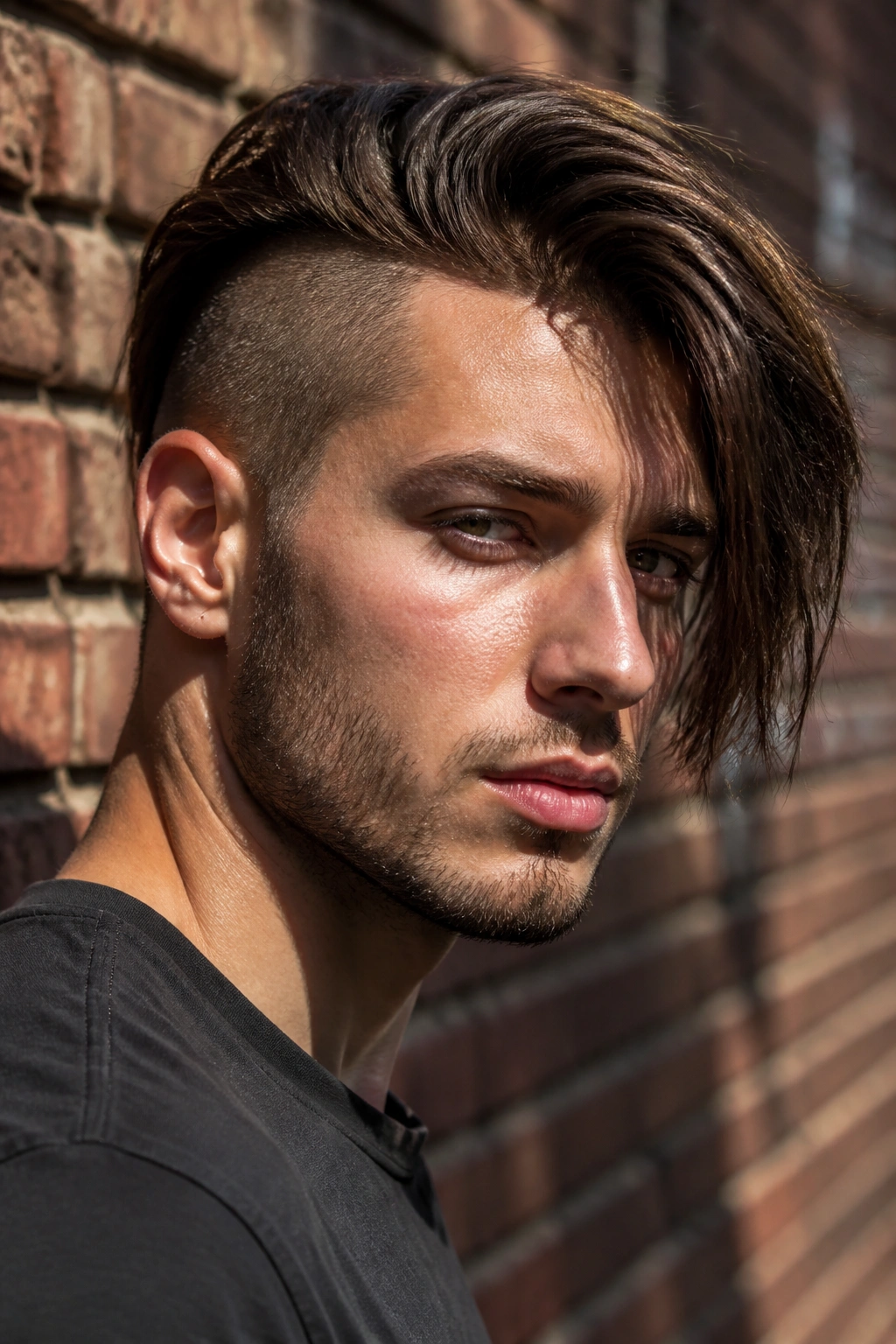
Unlike a taper, an undercut creates a hard break between the long top and the shorter sides. That contrast is the whole point. On straight hair, it gives you a very clean outline, and the long top becomes the main event instead of just more hair on the head.
This style is not subtle. Good. It shouldn’t be. If you want a long look that still feels sharp and a little bold, this is the one. The top usually needs to be at least 5 inches long so it can fall over, slick back, or sit in a knot without looking stubby. The sides are cut much shorter, often with a clipper guard that keeps them tight near the ears.
The tradeoff is obvious: you lose softness around the sides, and the grow-out can get annoying if you wait too long between trims. But if you like clear lines and strong contrast, that’s part of the appeal.
This one suits thicker straight hair especially well. On very fine hair, the disconnect can make the top look thinner than you want if the contrast is too extreme.
10. Tucked Behind the Ears
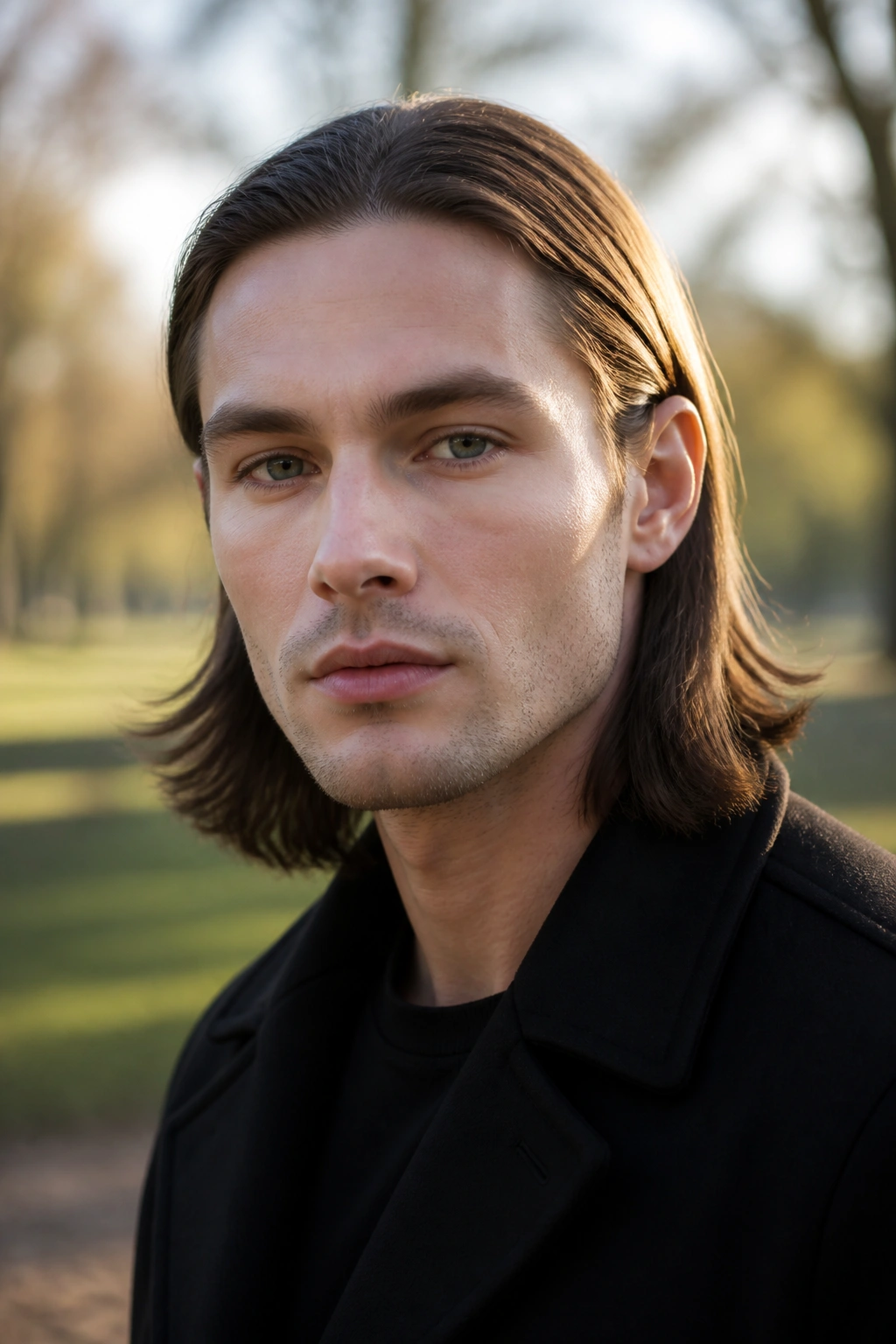
Have you ever noticed how a simple ear tuck can make long hair look ten times more intentional? That’s not an accident. It exposes the face, sharpens the jawline, and keeps straight strands from hanging like curtains on both sides.
This style works best once the hair reaches the jaw or collarbone. Any shorter and it tends to pop back out. A light cream or leave-in helps the ends stay smooth, but don’t load the roots. You want the tuck to look like a choice, not a trick to control a slippery haircut.
How to Make It Look Intentional
Start with a loose center part or a very soft off-center part. Then tuck one side behind the ear and leave the other side forward, or tuck both sides and let the front pieces fall slightly around the cheeks. The asymmetry keeps it from looking too neat.
This is one of those styles that looks especially good on guys who wear glasses or have strong cheekbones. It frames the face instead of hiding it. And if you hate styling tools, good news: this one barely needs them.
11. Blunt Shoulder-Length Cut
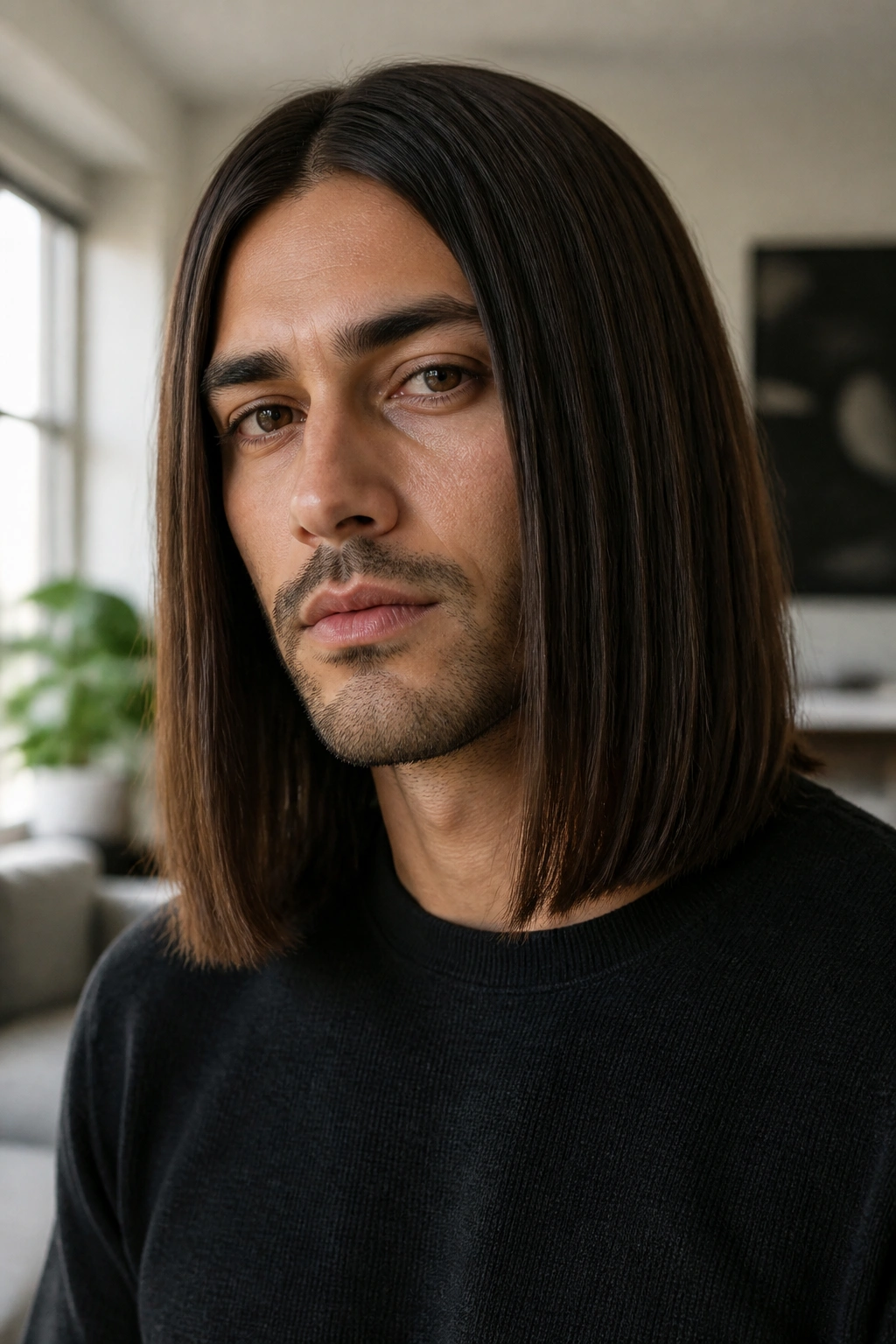
A blunt shoulder-length cut is the opposite of shaggy. The ends land in one clean line, and that line gives straight hair a sense of weight and purpose. It can look almost architectural when the hair is healthy and dense.
The biggest advantage is simplicity. No hidden layers. No messy texture tricks. Just a solid perimeter that sits at the shoulders or just below them. If your hair is naturally sleek, this cut can look expensive in a very quiet way. If your hair is damaged, though, it will show every split end. There’s no place to hide.
What to Watch For
- Keep the ends trimmed every 6 to 8 weeks.
- Use a smoothing conditioner so the bottom line stays clean.
- Ask for minimal thinning, because too much texturizing breaks the blunt look.
- Blow-dry with a paddle brush if you want the ends to sit flat and even.
I like this cut on men who want long hair but don’t want a “styled” look every day. It has presence all on its own. The downside is that it needs healthy hair, and that means you cannot ignore the ends forever.
12. Low Ponytail
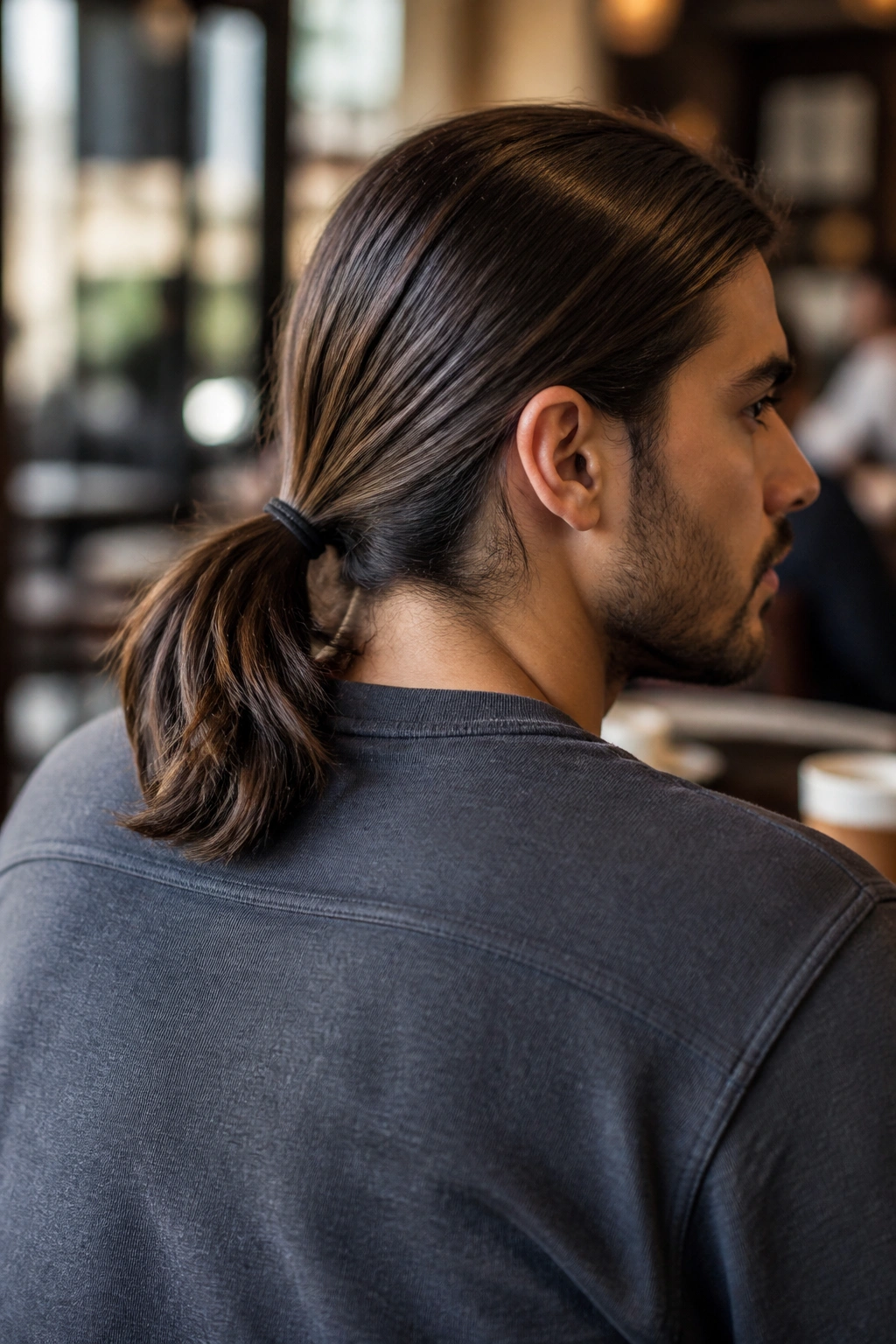
A low ponytail is one of the most useful long hairstyles for straight hair because it’s fast, tidy, and easy to wear without looking overworked. Put the tie at the nape of the neck, and the whole profile changes. The face looks more open, the back stays controlled, and the hair stops drifting into your collar.
This style is better than a high ponytail for most straight-haired guys because it feels less gym-class and more grown-up. It also keeps tension off the temples. A high tie pulls the front hair back hard and can show a receding hairline more than people expect. The low version is gentler and usually looks better with a shirt collar or jacket.
Use a soft elastic and leave the tie a touch loose. If the ponytail looks too tight, it can make the scalp look shiny and the hairline harsh. Wrap a small strand around the tie if you want it cleaner. That little move takes 20 seconds and makes a bigger difference than most styling products.
This is a strong everyday style, not a statement piece. That’s why people keep coming back to it.
13. The Samurai Knot
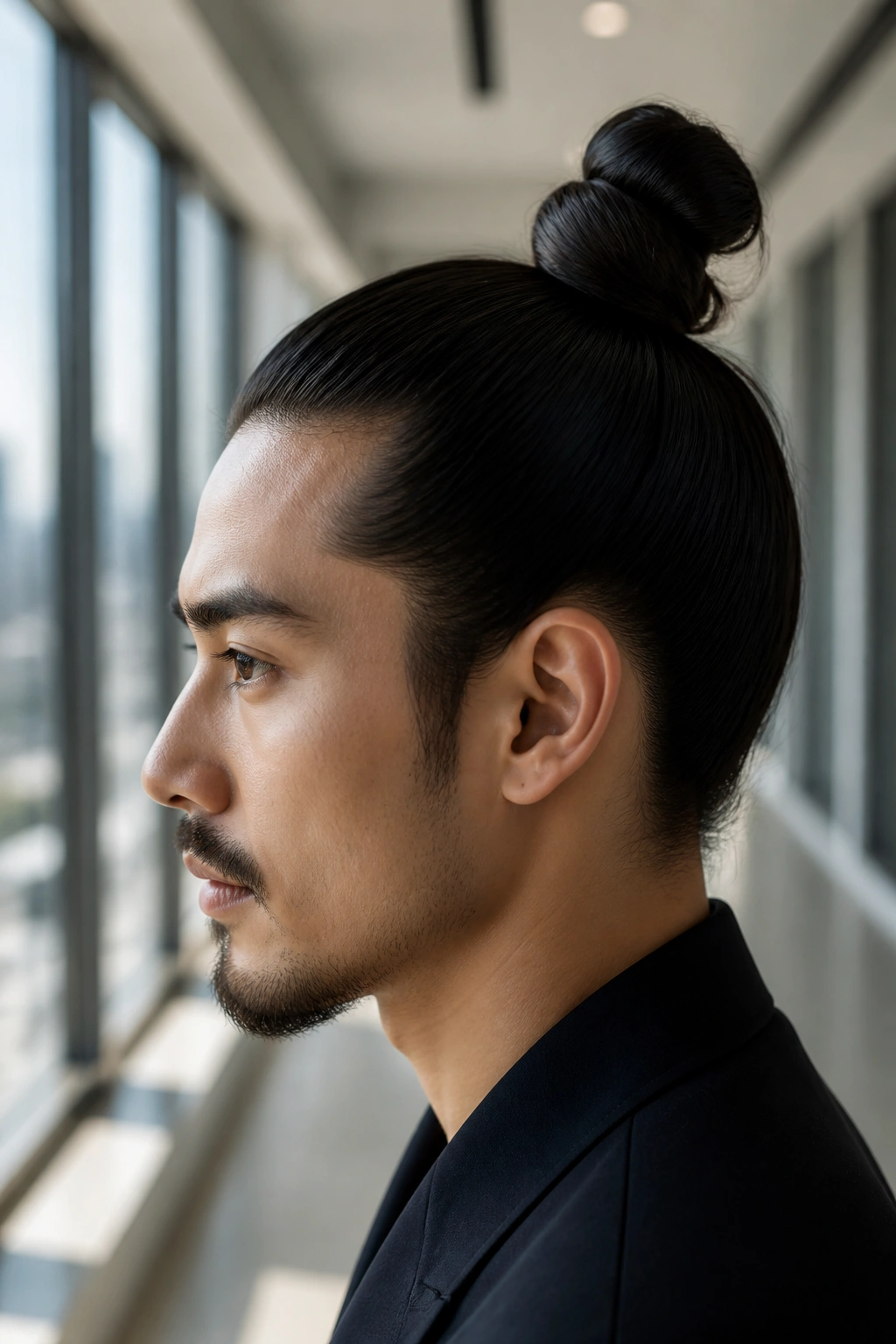
The samurai knot sits higher than a classic bun and gives straight hair a tighter, more deliberate shape. It has a bit more edge than a low bun, and on long straight strands it can look sharp instead of fussy.
Unlike the fuller man bun, this style pulls more of the length upward and leaves the back of the head cleaner. That makes the knot itself feel like the point of the look. It works well if your hair is long enough to wrap once or twice without falling apart. If the hair is too short, the knot ends up tiny and awkward. If it’s too long, it can get bulky at the crown.
I would choose this style if you like a neat profile and do not mind a look that feels more styled than casual. It suits men who want long hair but still need it out of the way for work, travel, or heat. Use a touch of cream on the front so flyaways do not stick up around the hairline. That part matters more than the knot itself.
Best of all, it grows out gracefully. The knot gets easier as the hair gets longer.
14. Layered Wolf Cut
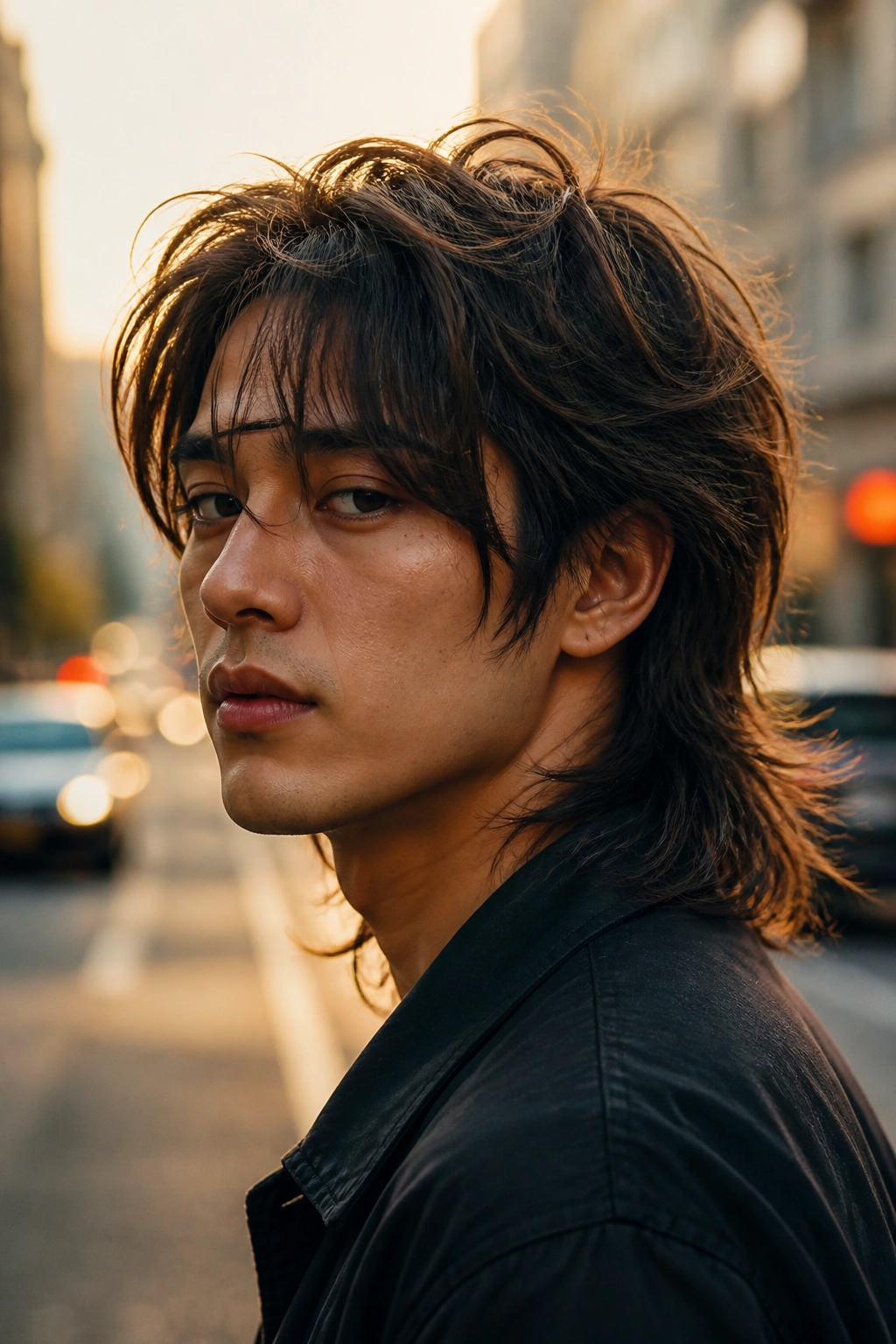
The wolf cut is a risky name for a haircut, and honestly, the style earns it. It’s loose, choppy, and a little wild around the crown and ends, which is exactly why it can wake up straight hair that has been lying too flat for too long.
The Science Behind the Shape
Straight hair reflects the cut very clearly, so the layering has to be purposeful. The top gets lifted with shorter, messier layers while the back stays longer and shaggier. That contrast creates movement even when the hair isn’t naturally textured. It’s a cut that can make fine straight hair look fuller and thicker without making it heavy.
What to ask the barber:
- Keep the top layered enough to stand away from the scalp.
- Leave the back longer so the cut keeps its edge.
- Soften the sides around the ears, but don’t make them neat.
- Use point cutting rather than blunt snips if you want a rougher finish.
This is not the haircut for someone who wants tidy every day. It looks best when it has some personality and a little mess. If you like sharp lines, skip it. If you like hair that moves when you do, it’s one of the most interesting long options for straight strands.
15. Side-Swept Sweep
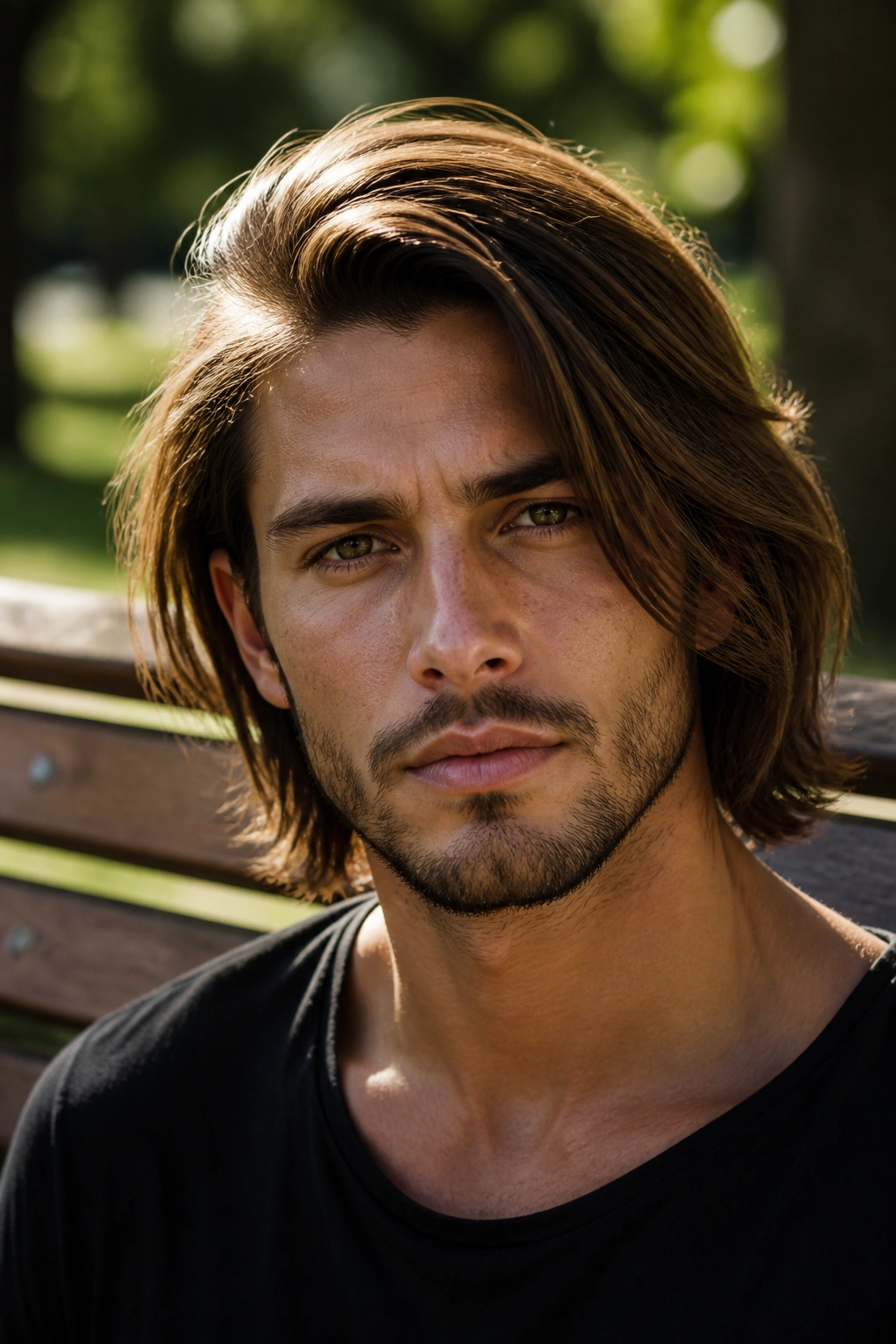
If your hair falls forward every time you look down, you might as well make that work for you. A side-swept sweep turns the natural fall of straight hair into a style instead of a problem.
This look uses a diagonal part and keeps the front longer on one side so the hair slides across the forehead and into the cheek area. It is softer than a slick back, less formal than curtains, and easier to wear than a full side part. Straight hair is useful here because the strands stay smooth and hold the sweep without much effort.
How to Get the Most From It
Blow-dry the front from the crown toward the chosen side while lifting the roots with your fingers. A small round brush helps if you want more bend at the front. Then use a light matte paste, not a heavy wax. The goal is movement with control, not a stiff shell.
This style suits men with fine to medium straight hair who want something clean but not severe. It also helps if your face is long, because the diagonal line breaks up vertical length. Small detail. Big payoff.
Final Thoughts
Straight hair gives you a clean canvas, but it also exposes every lazy choice. That’s why the best long styles for men with straight hair are the ones that make the shape feel intentional, whether you want layers, a bun, a blunt cut, or something looser around the face.
If you’re growing your hair out, the haircut matters as much as the length. Ask for the shape you want, not just “long on top.” That single conversation can save you months of awkward grow-out.
And one last thing: take a look at your hair in daylight, not bathroom lighting. Straight hair tells the truth there too.
