



Curly hair does not like to sit still.
That’s exactly why the curly undercut works so well. You keep the volume where it looks best — on top — and strip away the bulk on the sides so the shape feels clean instead of puffy. A good version of this cut can make loose waves look sharper, tight coils look more intentional, and thick curls look easier to manage before you’ve even touched a product.
The catch is that a curly undercut is not one haircut. It changes a lot depending on how high the sides are taken, how much length stays on top, and whether the barber leaves a blend or creates a hard disconnect. A guard #1 on the sides and 4 inches of curl on top gives a very different result from a high fade with a long fringe, and that difference matters more than people think.
Ask any barber who works with curls often: shrinkage changes everything. Hair that looks like 3 inches wet can spring up to 5 inches dry, and the top can flip from controlled to wild fast if the shape is off. That’s why the best curly undercut styles for men are built around the curl pattern first, not some generic fade template copied onto every head.
1. Classic Curly Undercut with Tapered Sides

This is the clean starting point. No drama, no weird tricks. Just a solid curly undercut with enough length on top for the curls to move and tapered sides that keep the shape from ballooning out.
What makes this version work is balance. The top usually sits around 3 to 5 inches, depending on curl tightness, while the sides stay shorter with a soft taper near the ear and neckline. That gives you shape without the hard slap of a skin fade. If your curls are medium-density, this cut tends to look neat even on a day when you skipped styling.
What to tell the barber
- Keep the top long enough to show curl pattern, not so long that it droops into the eyes.
- Taper the sides with a low or mid guard, then leave the transition soft.
- Ask for the neckline to stay tidy, not square and blocky.
A small amount of curl cream goes a long way here. Work it through damp hair with your fingers, then let the curls fall where they want. Do not brush this style out dry unless you want frizz and a mushroom shape by noon.
2. Low Fade Curly Undercut for a Softer Edge
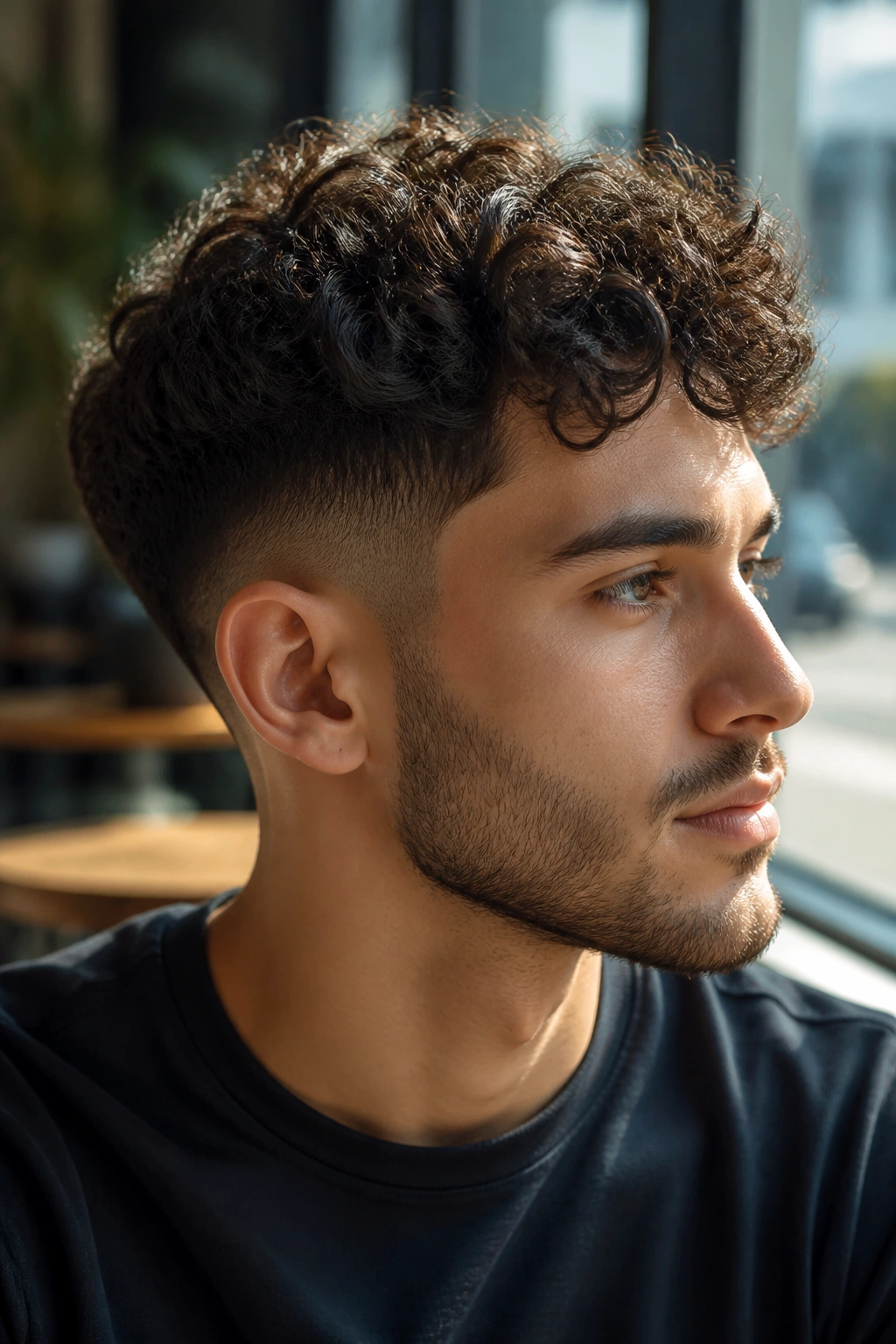
Why does a low fade matter so much on curly hair? Because it keeps the haircut from looking harsh when the curls themselves already have a lot going on. The fade starts lower, usually around the ear, so the whole cut feels smoother and a little less aggressive.
That softer edge helps if your face is rounder, wider at the temples, or if you wear your hair every day and do not want a sharp contrast. A low fade also grows out better than a higher one. You can usually stretch the shape a few more weeks before it starts looking shaggy.
Why it works
The low fade narrows the lower half of the head without stealing attention from the curls on top. That means the eye goes upward, which makes the hair look taller and the jawline look cleaner. It’s one of those cuts that looks more expensive than it is. Probably because it looks thought-out.
How to style it
- Use a dime-size amount of curl cream on damp hair.
- Scrunch from the ends up to the roots.
- Air-dry for a softer finish, or use a diffuser on low heat.
If your curls are fine, skip heavy butters and oils. They can flatten the top and make the fade look disconnected in a bad way.
3. High Fade Curly Undercut for Sharp Contrast

A high fade says you want people to notice the top first. That’s the point. The sides disappear fast, the curl pattern becomes the focus, and the cut gets a much bolder profile than a low or mid fade can give you.
This version looks especially good on dense curls that need space to breathe. If the top has real volume — and I mean actual lift, not just frizz pretending to be texture — a high fade gives it room to stand out. It also works well if you have a strong hairline and want a more sculpted shape around the temples.
The downside is maintenance. High fades grow out faster in the visible part, so the line between clean and messy shows up sooner. That is not a flaw if you like frequent barber visits. It is a flaw if you only go in when the shape starts begging for help.
A matte cream or light mousse usually beats gel here. Gel can make the contrast too stiff, and curly hair looks better when it still feels alive.
4. Curly Undercut with a Hard Part

The hard part is for men who like structure. A shaved line gives the haircut a clear direction, which can be a lifesaver when curls want to split in random places and do their own thing.
This style works best when the top has enough length to sweep slightly to one side, usually 3 to 4 inches. The hard part creates a visual break between the lifted curl section and the shorter side, so the whole cut feels more deliberate. It’s a good move if your curls are loose enough to be brushed into a side-swept shape without fighting back too hard.
A barber-friendly detail
Ask for the part to be placed where your natural separation wants to live. If the line gets forced too far from your growth pattern, it looks fake fast. A strong part can sharpen the face. A bad one just looks like someone drew on your head with a trimmer.
Keep the line fresh with a quick trim every couple of weeks. The rest of the haircut can be a little forgiving, but the part loses impact once it starts softening.
A light pomade or styling cream works better than thick wax. You want control, not helmet hair.
5. Disconnected Curly Undercut for Thick Hair

This one is blunt, and I mean that in a good way. The top does not blend into the sides at all. There’s a visible jump, almost like two different haircuts stacked together, and that sharp edge can look fantastic on dense curls.
Disconnected styles are useful when your hair has a lot of bulk. Instead of fighting that thickness, you let the top stay full and keep the sides short enough to expose the contrast. The shape reads clean, not puffy. It also gives barbers more freedom with top length, because they do not need to spend forever blending every inch of the fade.
What makes it different
- No soft graduation between top and sides.
- Strong contrast around the temple area.
- Better for men who want a sharper silhouette.
This cut is not subtle. That’s the appeal. If you want something understated, skip it. If you want curls that look framed and intentional, it delivers.
Use a diffuser to build lift at the roots, then stop. Too much product will weigh down the top and make the disconnect look accidental instead of styled.
6. Curly Fringe Undercut
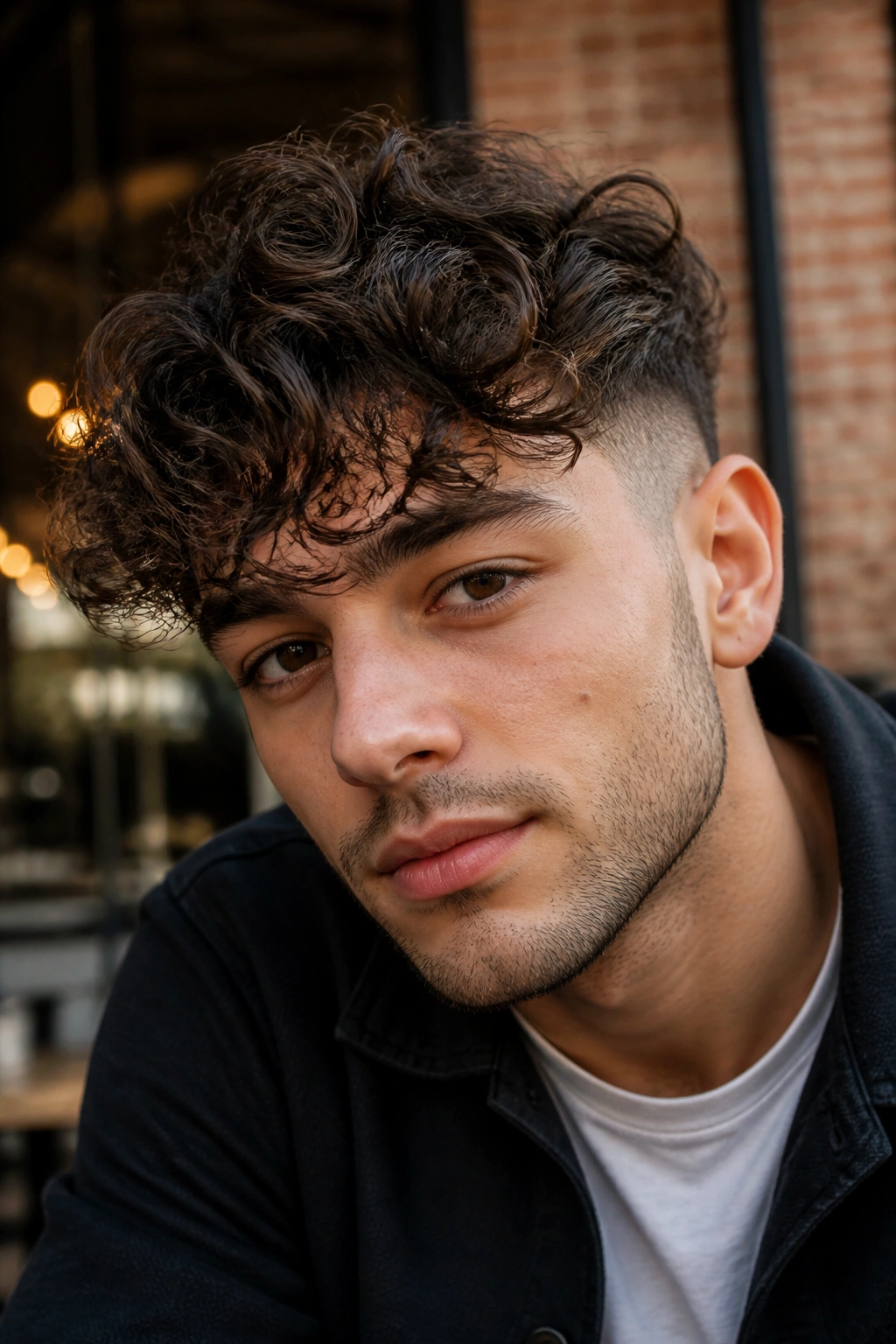
A curly fringe changes the whole mood. Instead of pushing the curls back or upward, you let them fall forward across the forehead, where they soften the face and take some attention off a tall forehead or sharp hairline.
This style can look relaxed or polished depending on how much definition you keep in the fringe. Shorter curls near the front give a choppier, more textured feel. Longer ones drape a bit and look almost effortless, though the work is still there behind the scenes. Hair never grows that way on its own.
How to keep the fringe from turning messy
Keep the sides tight enough that the front remains the main feature. If the sides get too bulky, the fringe loses its shape and starts looking like an afterthought. A little curl cream or leave-in conditioner is usually enough. Heavy gel tends to make the front clump and hang in a way that looks tired.
You can comb the fringe forward with your fingers after washing, then let it set naturally. If your hair is especially springy, a light blow-dry with a diffuser can stop the front from bouncing too high.
This is one of the better curly undercut styles for men who want movement without too much structure.
7. Curly Pompadour Undercut

Here’s the flashy one, but it can be done tastefully. A curly pompadour undercut keeps the sides short and builds height through the front and crown, which gives the curls a lifted, almost sculpted shape.
The trick is not to flatten the curls while chasing height. That ruins the whole point. You want the front to rise, yes, but still keep some texture. Think volume with shape, not a shiny retro wave pasted onto curly hair. That usually means using mousse or a light volumizing cream, then drying with a diffuser while lifting the roots with your fingers.
A practical styling note
Start with damp hair, not dripping wet hair. Work the product through the roots first, then the mid-lengths. Push the front upward and slightly back while it dries. If you have a round face, this can help stretch the profile a bit. If your face is already long, keep the height moderate or the top can start looking top-heavy.
The pompadour version does ask more from you in the morning. It is not a wash-and-go cut. But when it’s done right, the silhouette is hard to ignore.
8. Textured Curly Top Undercut

Some guys want their curls neat. Others want them separated and a little wild, but still under control. That’s where the textured top version lives.
This style keeps the top longer and encourages piecey definition instead of one solid curl mass. The sides stay short, the top gets broken up with the fingers, and the whole thing ends up looking relaxed without turning fuzzy. It’s a good choice if your curls are loose to medium and you like a dryer finish.
The products that help
- Sea salt spray for light grip
- Matte paste for separation
- A small diffuser if your hair collapses when air-dried
The biggest mistake here is overloading the hair. Too much cream or oil will make the curls merge together, and then you lose the texture that makes the cut interesting. You want separation at the ends and enough movement near the crown to keep it from feeling frozen in place.
This is one of my favorite options for casual styling because it looks better the less you overthink it. Run your fingers through it. Stop fiddling.
9. Slicked-Back Curly Undercut
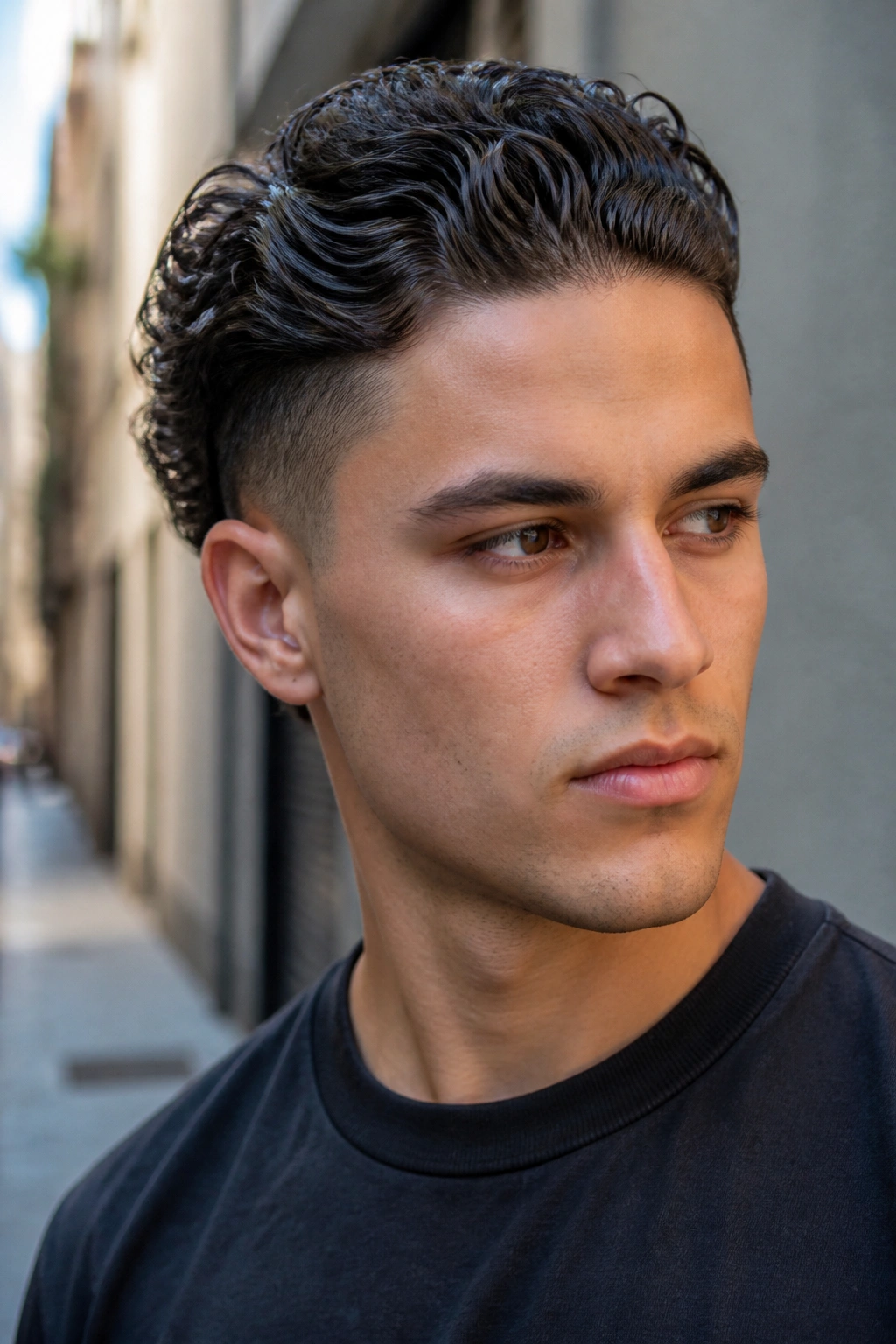
Yes, curly hair can be slicked back. No, it should not look wet all day.
The slicked-back curly undercut works best when the curls are loose enough to be guided backward without fighting into a frizzy puff. The top usually needs a bit of length — around 4 inches or more — so there’s enough material to move. The sides stay short and clean, which keeps the whole look from getting bulky around the temples.
Use a light gel-cream or styling cream with a bit of hold. Comb the top back gently while it is damp, then press the shape into place with your hands. A hard, shiny gel can make curly hair look stiff and strip out the texture that gives the style its edge.
If your curls are coarse, this cut can actually make your morning easier. You are not forcing them flat. You are directing them. That’s a very different thing. The result reads sharper than a loose curly top and more polished than a messy one.
10. Long Top Curly Undercut
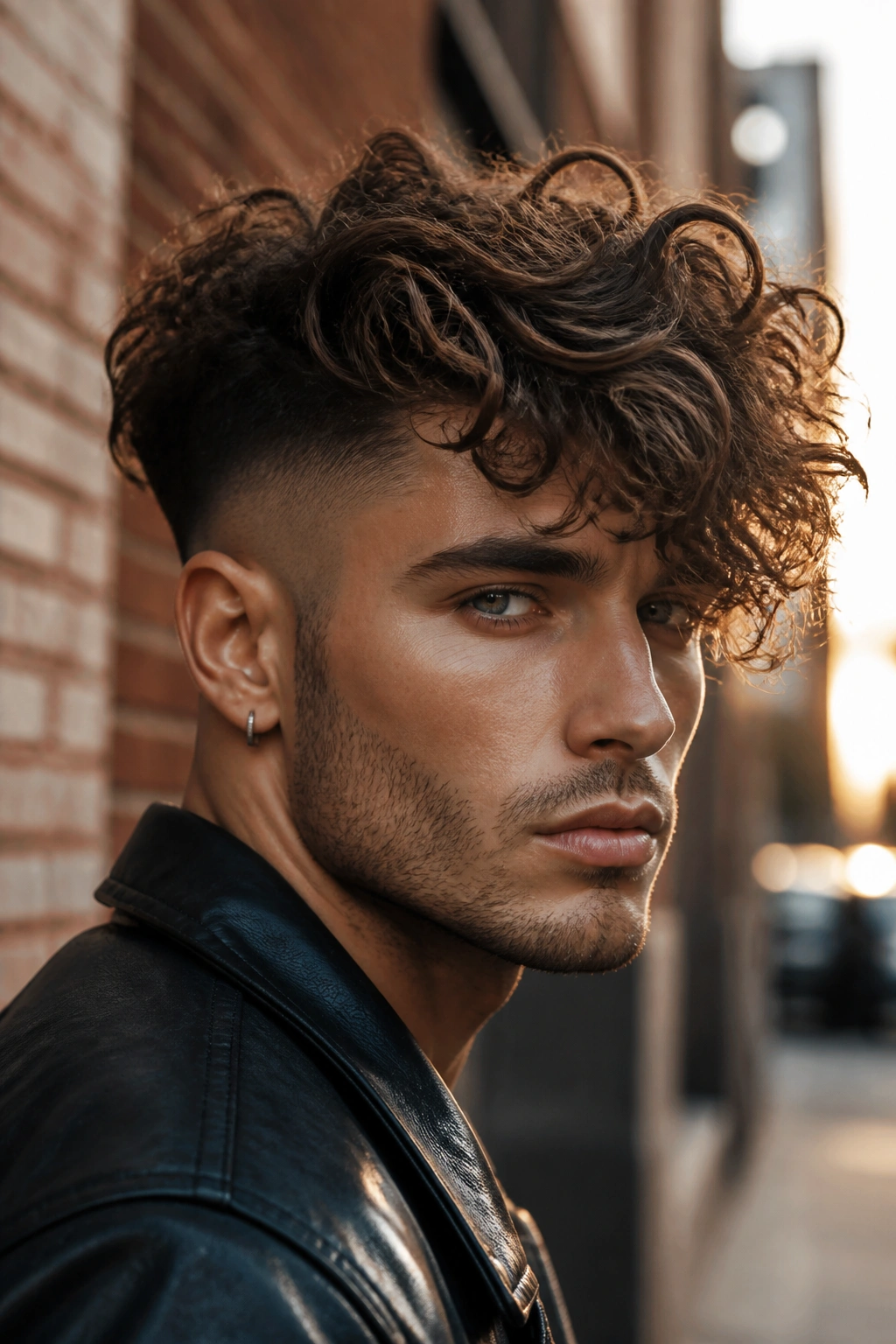
Longer curls change the rules. Once the top gets past about 5 inches, the cut starts behaving less like a neat crop and more like a shape you have to manage on purpose.
That extra length brings movement, and movement is the point. It can drape to one side, lift at the front, or hang loose with a bit of natural swing. The sides need to stay controlled, though, or the whole haircut turns into a triangle. Nobody wants that. The undercut is what keeps the silhouette tight while the curls do their thing above it.
Best habits for longer tops
- Condition well, especially if your curls dry out fast.
- Detangle in the shower with a wide-tooth comb.
- Dry with a microfiber towel instead of roughing it up with a regular bath towel.
This style is forgiving in the sense that it gives you options. It is not forgiving if you neglect the shape. A trim every 4 to 6 weeks helps keep the weight from dragging the curl pattern down.
Long-top undercuts tend to look best when they have a little freedom. Over-styling kills the charm.
11. Temple Fade Curly Undercut
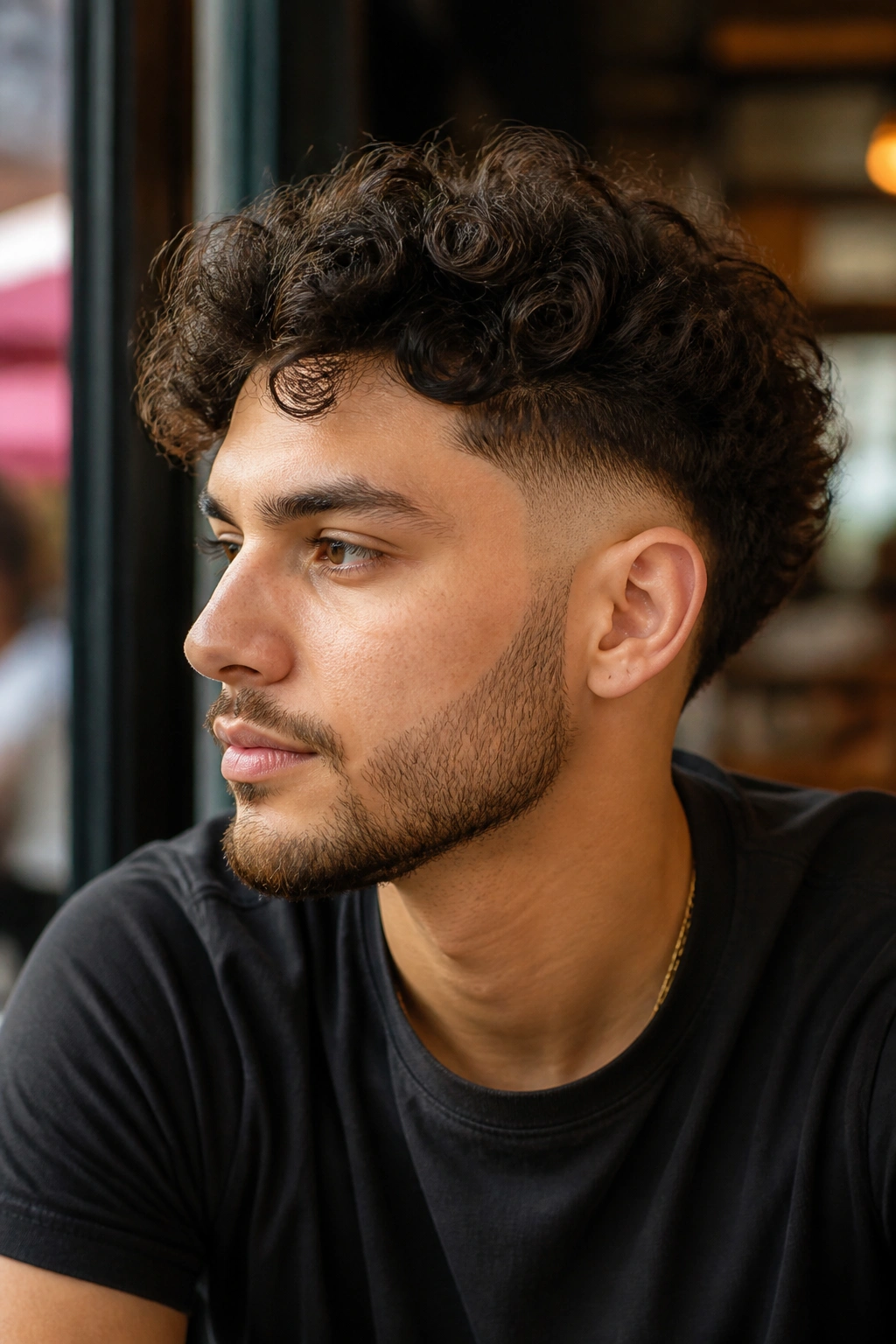
The temple fade is the cleaner cousin of the high fade. It keeps the fade focused around the temples and sideburns, which leaves more of the side length intact below that point.
That small shift changes the whole haircut. It softens the upper edge of the face, and it works especially well if you wear glasses, have a beard, or want the haircut to blend into facial hair without a hard break. A temple fade can make the top look fuller because the fade doesn’t eat too far into the sides.
This cut is quietly useful. Not loud. Not flashy. Just smart. It works with medium curls, loose waves, and tighter textures because the fade adds shape without demanding a dramatic contrast. If you want something neat for the office that still has personality, this is one of the better choices.
Keep the temples clean with a quick line-up. The rest can grow a little before it feels off.
12. Curly Undercut with a Shaved Line Design

A shaved line can save a haircut that would otherwise look too plain. Or ruin it, if the line is overdone. There’s no middle ground there.
This style is for men who want a bit of edge without going full graphic design on the scalp. One clean line above the temple or near the part can give the cut a focal point, especially when the curls on top are dense and the sides are short enough to frame the detail. It works best with simple shapes. Add too many lines and the haircut starts shouting.
Where this style shines
- One or two precise lines only
- Best on darker hair, where the line shows more clearly
- Works well with mid or high fades
The line needs upkeep. If it grows out, it just looks like a scratch. That’s the risk with detail work. You have to be honest about whether you’ll keep up with it.
I like this style on younger guys or anyone who wants the haircut to look a little sharper from across the room. Keep the rest of the cut simple. Let the line do the talking.
13. Curly Undercut with Beard Blend

This is one of the easiest ways to make curly hair look stronger through the jawline. When the fade or undercut on the sides blends into a beard, the whole face gets a cleaner frame.
The key is not to let the beard and the hair fight each other. If the hair is tight on the sides but the beard is left too bulky, the transition looks clumsy. A good beard blend uses the same logic as the haircut: shorter near the top of the cheek, fuller below, with the fade disappearing into the beard line instead of stopping awkwardly at the sideburn.
This style suits men with square, oval, or round faces because the beard adds structure where the curls add height. It can also help if your hairline is receding a little and you want the focus to move lower.
Use beard oil sparingly and keep the neckline clean. A thick beard without shape makes the whole haircut feel heavier than it should.
14. Loose Wave Curly Undercut

Not every curly undercut has to be built around tight spirals. Loose waves can carry this cut beautifully when the sides are kept short and the top stays relaxed.
The appeal here is softness. The waves don’t need much product, and they don’t need to be forced into a strict shape. A little sea salt spray or a light cream is enough to give the top some separation. If you use too much hold, the hair starts looking stiff and loses the easy movement that makes wavy hair attractive in the first place.
How to wear it well
A low or mid undercut usually works better than a harsh skin fade. The wave pattern itself already has a softer edge, so the cut looks better when the sides support that feeling. You can comb it to one side, push it back loosely, or let it fall forward a bit.
This is a good pick for men who want the look of a curly undercut without committing to a lot of styling every morning. It’s easygoing, but not lazy. There’s a difference.
15. Curly Undercut for Tight Coils and a Clean Shape-Up

Tight coils need a different kind of respect. They do not behave like loose curls, and they definitely do not want to be flattened into a shape borrowed from another hair type.
A clean shape-up undercut keeps the sides short and crisp while leaving the top full enough to show the coil pattern. The edges around the hairline matter a lot here. A sharp lineup at the forehead and temples can make the whole haircut look intentional, even if the top itself is full and natural. That contrast is the magic. The haircut feels neat without losing texture.
If your hair is very coily, you might use a curl sponge or finger twisting on the top to encourage pattern, but don’t overdo it. Too much manipulation can make the hair fuzzy and tired. A rich leave-in conditioner and a light oil on the ends often work better than heavy stylers.
This version is probably the most honest of the bunch. It doesn’t pretend the curls aren’t there. It frames them.
A good barber will understand the difference between “shorter” and “better.” For tight coils, that difference matters.
