



Long straight hair on men looks sharp when the cut is doing its job. Left to its own devices, it can hang heavy, split at the ends, and collapse into one flat curtain by lunch. The difference between those two outcomes is usually not some dramatic routine or a shelf full of products. It’s shape. A few smart inches in the right places can change everything.
Straight hair is honest. That’s the blessing and the headache. It shows shine, it shows density, and it shows bad cutting in a way wavy hair sometimes hides. If the ends are rough or the sides are bulky, you’ll see it. If the part is off, you’ll see that too. Which is why long straight hairstyles for men need more than length; they need a plan.
That plan can be clean and polished, loose and easy, tied back, parted, layered, or somewhere in between. A good long style should make your face look more balanced, not make you fight your hair every morning. And if your hair lies pin-straight, the trick is usually restraint. Too much thinning can make it wispy. Too much product can make it greasy. Too much “texture” can turn into frizz that has no business being there.
The 15 styles below are the ones that actually make sense in real life: some are neat enough for work, some look better with a bit of length and movement, and a few are ideal when you want your hair out of the way without looking like you gave up. The best one for you is the one that fits the way your hair falls when you’re doing nothing at all.
1. Center-Part Curtains for Long Straight Hair
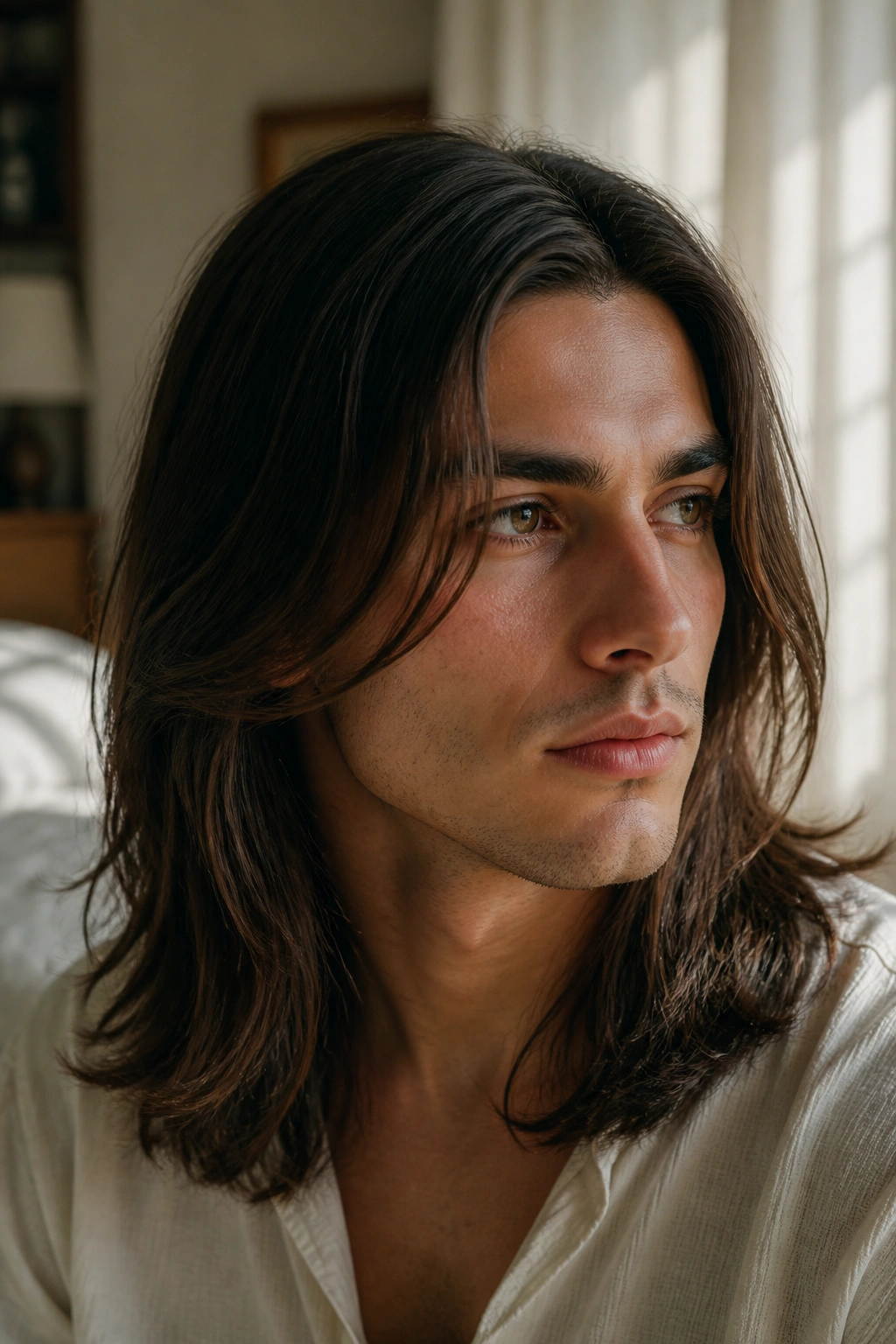
A clean center part is the most forgiving starting point if your hair already falls straight and fairly evenly. It gives the face a frame, keeps the style simple, and makes long hair look intentional instead of accidental. On straight strands, that middle line reads crisp fast.
Why It Works
The center part works because it uses symmetry to control length. When the hair reaches the cheekbones or jaw, the two sides fall in a way that opens the face without exposing too much forehead. That’s useful if your hair is medium-thick and you want movement without spending half the morning styling it.
Ask for soft face-framing layers, not choppy chunks. You want the perimeter to stay neat, with just enough internal movement so the hair doesn’t hang like one solid sheet. A light leave-in cream or a few drops of serum on damp hair is usually enough.
- Best on hair that reaches the cheekbone, jaw, or collarbone
- Works well with oval, square, and longer faces
- Needs a trim every 6 to 8 weeks to keep the part from looking shaggy
- Styles fast with a comb and a light cream
- Looks best when the ends are clean, not fuzzy
Pro tip: blow-dry the part first, while the hair is still damp. Once the roots set the wrong way, straight hair likes to stay stubborn.
2. Blunt Shoulder-Length Cut
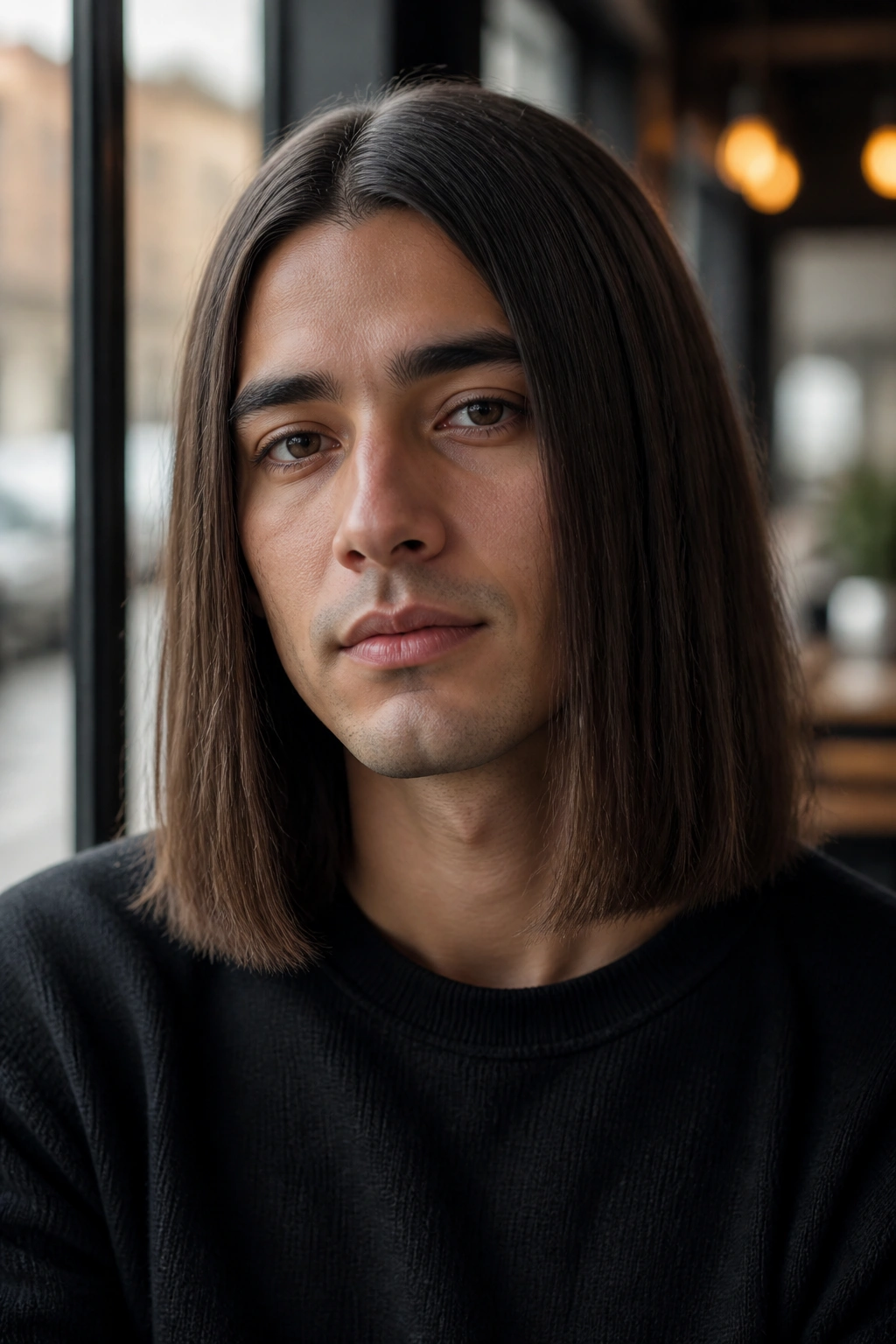
Compared with layers, a blunt shoulder-length cut is the no-nonsense option. It gives straight hair weight, density, and a cleaner edge, which can be a lifesaver if your strands are fine or medium-fine. No feathers. No extra drama. Just a solid line that makes the hair look fuller.
That blunt perimeter matters more than people think. On straight hair, wispy ends can make the whole style look thin, even when you actually have a fair amount of hair. A blunt cut keeps the bottom line heavy, so the style reads thicker from the front and from the side.
This is the one I’d steer toward if you want to wear your hair down most days and do not want to fuss with shape every morning. Ask for a one-length finish at the shoulders, then very light point-cutting only around the nape if the bottom feels too boxy. That tiny bit of softening helps the hair move without ruining the clean edge.
It suits men who like a simple, modern look and are fine with regular trims. If your hair is thick, this can still work, but the barber needs to be careful. Too much bulk at the ends makes the cut feel heavy. Too little, and you lose the point of the style entirely.
3. Layered Wolf Cut for Long Straight Hair
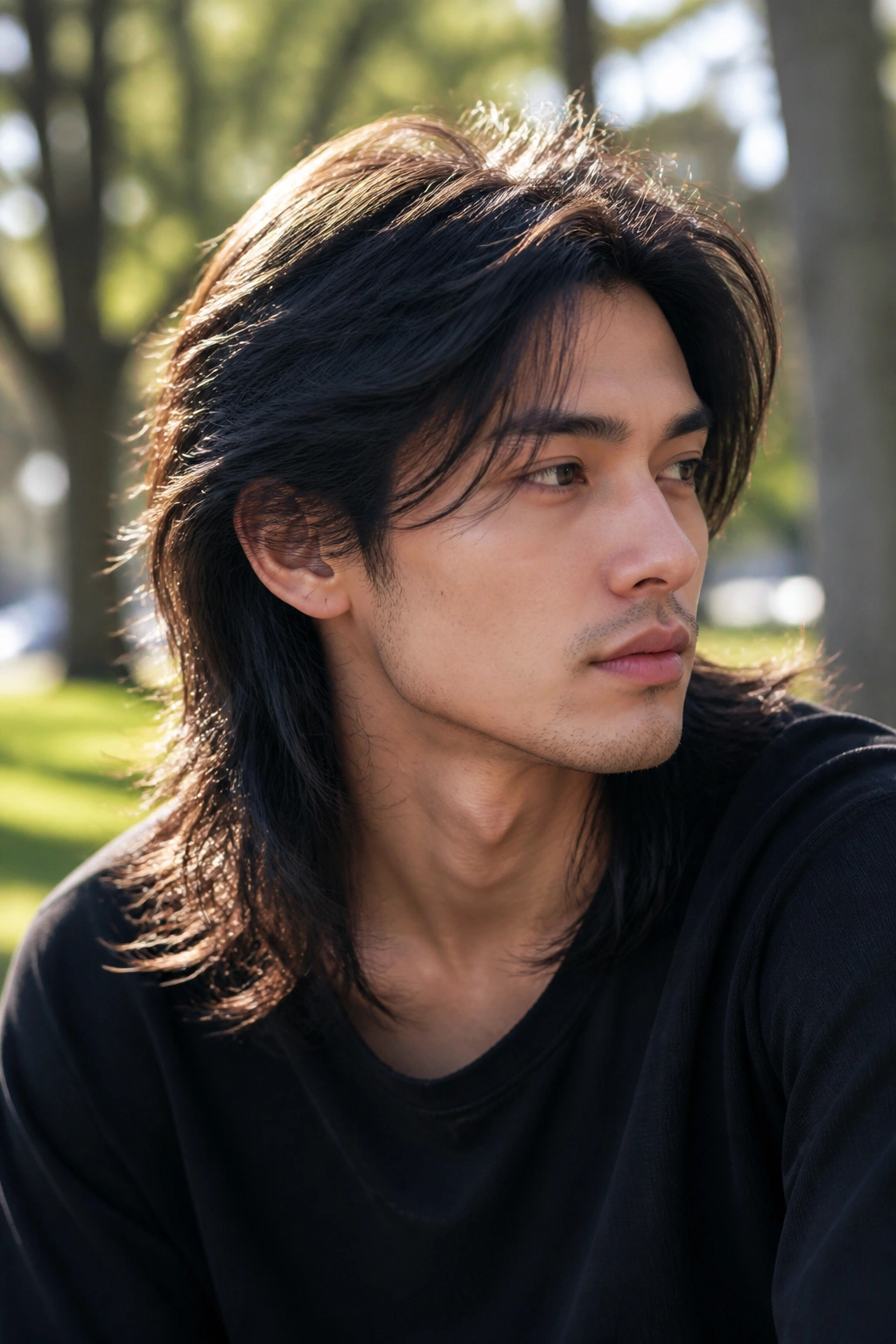
Why does the wolf cut keep showing up on straight hair? Because plain long straight hair can go flat at the crown, and the wolf cut fixes that without making you look overstyled. It mixes shorter layers on top with longer length below, so the head has lift and the ends have movement.
What Makes It Different
The wolf cut is more relaxed than a standard layered cut and less polished than a classic curtain style. That is the whole appeal. Straight hair can sometimes look too neat, almost helmet-like, when it grows out. Adding layers around the crown and mid-lengths breaks that blocky shape.
The key is restraint. You want the top layers to create lift, not a jagged mess. A barber should keep the shortest pieces around the cheekbones and upper crown, then leave the back long enough to keep the style connected. Over-thinning this cut is a mistake. It turns sleek hair into flyaway hair.
How to Wear It
- Use a light texturizing spray on damp hair
- Scrunch only a little; straight hair does not need rough treatment
- Let the top air-dry for a softer shape, or use a diffuser on low heat
- Ask for layers that start around the cheekbone, not at the temple
- Avoid heavy waxes that flatten the crown
Best for men who want movement without a polished finish. If you like hair that looks a little lived-in, this is one of the better options on the list.
4. Tucked-Behind-the-Ears Flow
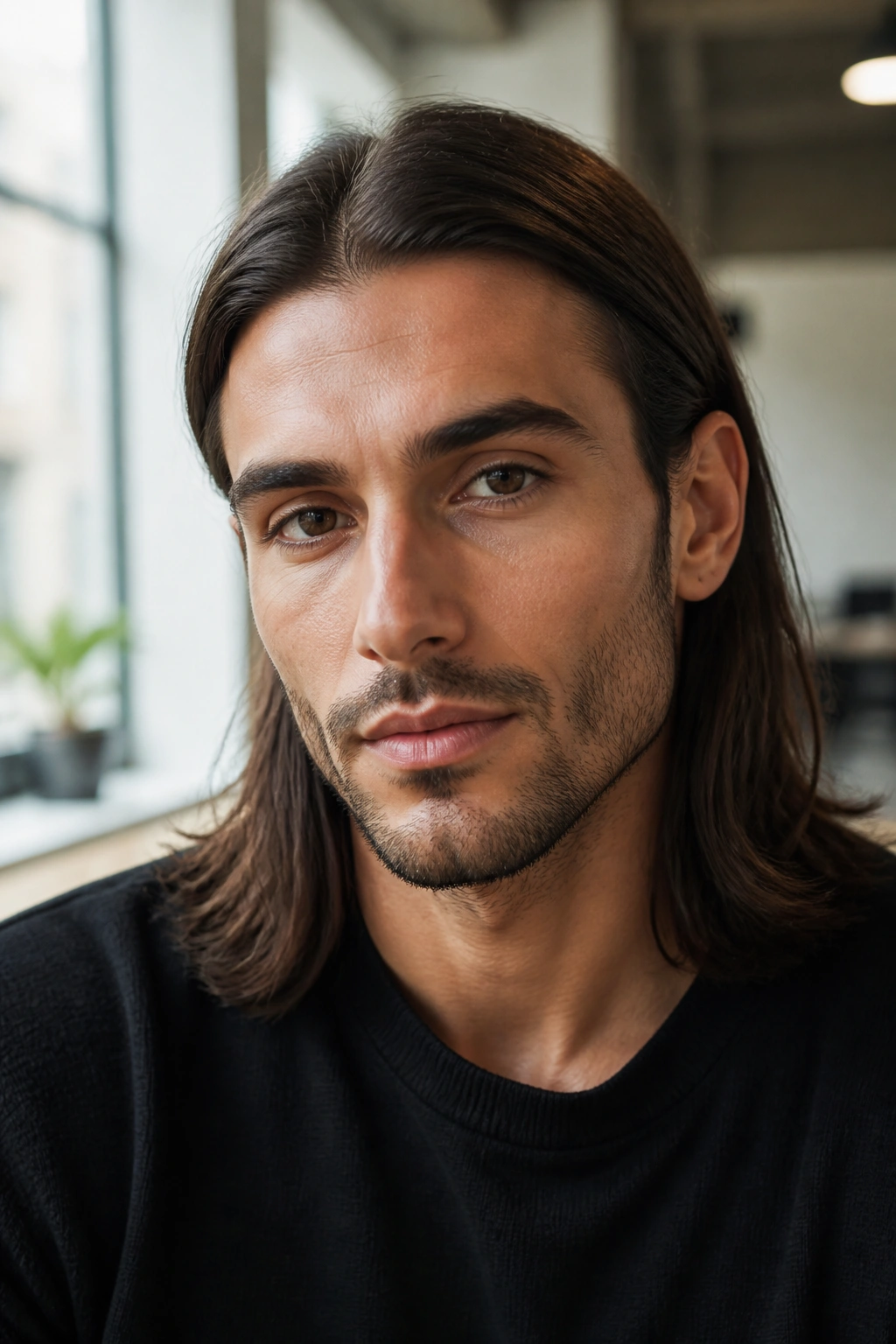
You know that look where the hair falls past the jaw, then gets tucked just enough to show the ears and the side of the face? That’s the tucked-behind-the-ears flow. It looks casual, but it’s not lazy. There’s a difference.
The style works because it keeps straight hair from sitting like a curtain in front of everything. One quick tuck exposes the cheekbones, cleans up the profile, and makes the length feel lighter. It also helps if your hair naturally wants to fall forward, which straight hair often does when it’s a little heavy at the front.
What I like about this one is that it does not demand perfect symmetry. You can tuck both sides, or only one side if you want a more relaxed shape. If the hair is clean and cut with soft layers, it will settle into place without much convincing.
- Best when hair reaches just below the ears or the jaw
- Works with a center part or no obvious part at all
- Needs a touch of cream or leave-in so the tuck stays smooth
- Good for office settings, creative work, or casual days
- Looks sharper when the ends are trimmed blunt
A tiny detail helps here: tuck the hair while it is still slightly damp, then let it dry that way for 10 or 15 minutes. It holds the shape better than trying to force it after the fact.
5. Slicked-Back Length
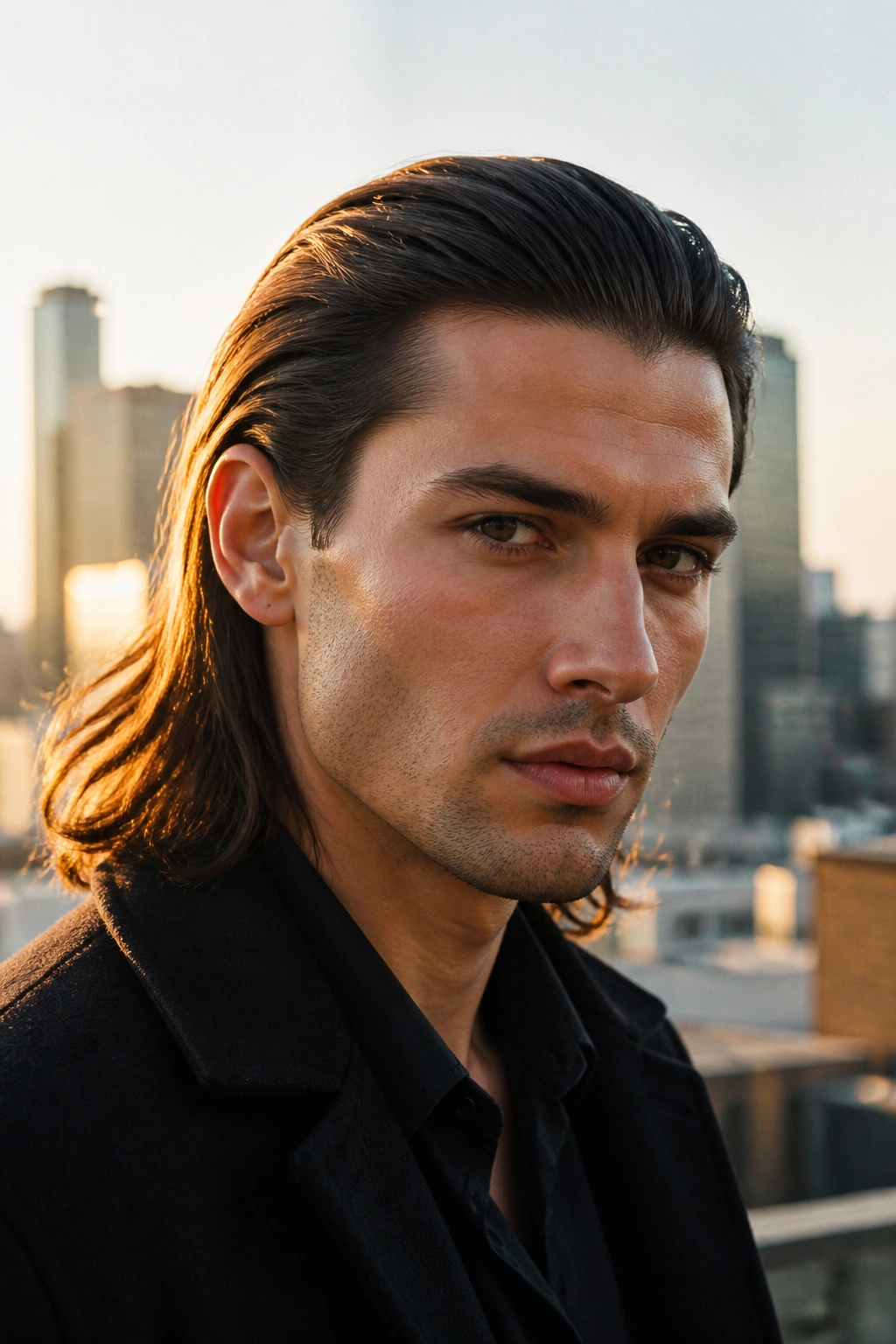
Straight hair is one of the few hair types that can pull off a proper slick-back without looking like it was glued to the scalp. That said, the slick-back only looks good when the hair has enough length and the product stays light. Heavy gel is the wrong move here.
The strongest version uses a vent brush, a blow-dryer, and a small amount of medium-hold cream or pomade. Start with damp hair, comb it straight back from the forehead, then dry it backward while keeping the sides close to the head. The goal is smooth control, not shiny armor.
This style works especially well if your face is angular or if you want a more dressed-up look without cutting the length off. It can make a strong jawline look even stronger. It can also expose a receding hairline, which is why I would not push it on every man. Some hairlines look better left alone.
One-sentence truth: the slick-back is unforgiving.
If your hair is very fine, use a lighter product and keep the top a little looser. If it’s thick, you can go a touch sleeker, but stop before it starts looking wet. The difference between neat and greasy is about half a teaspoon of product.
6. Long Fringe with a Taper
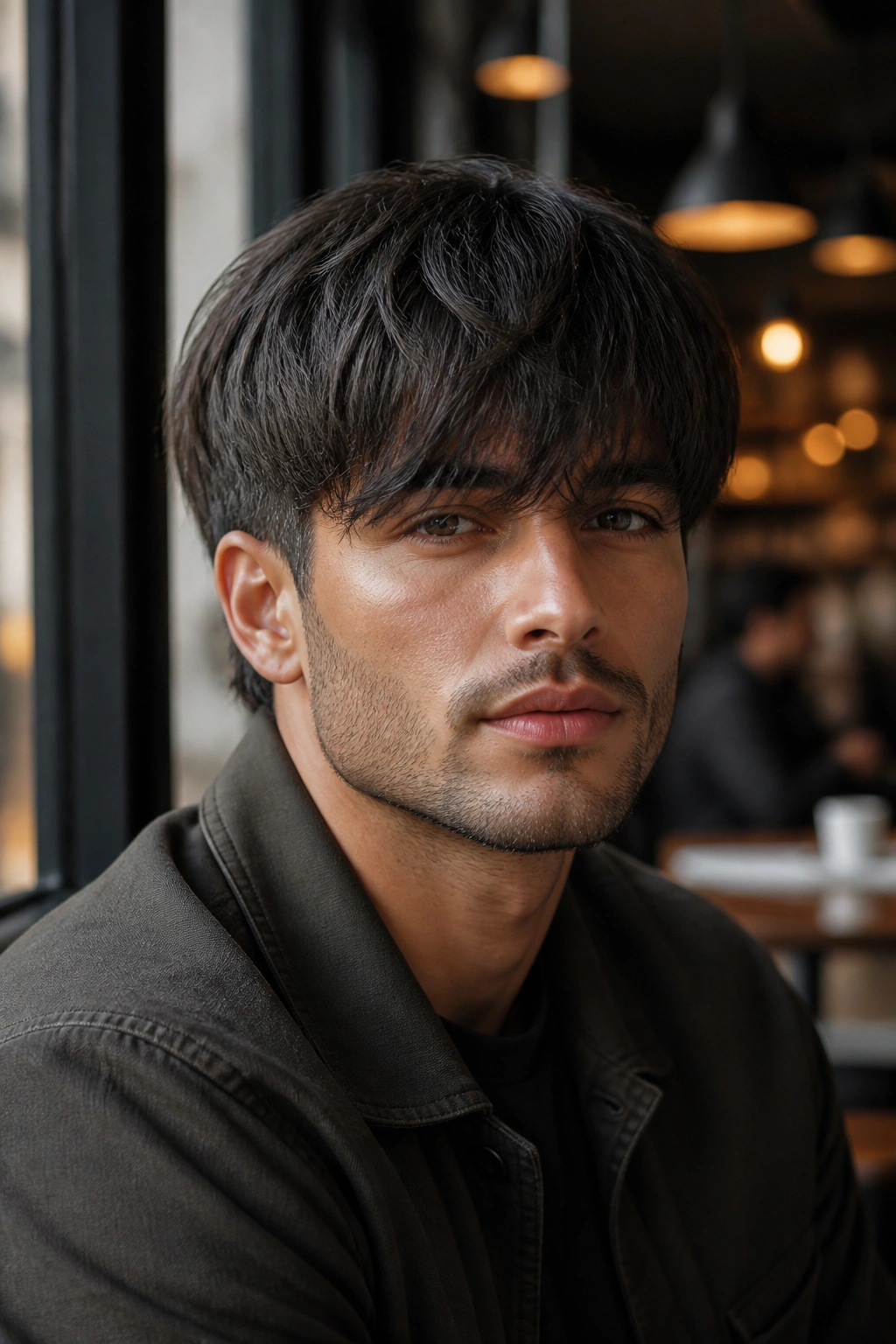
Long fringe changes the shape of the face in a useful way. Instead of letting all the length sit at the back, you bring some of it forward so the cut has weight around the eyes and cheekbones. On straight hair, that fringe falls cleanly, which makes the whole style feel deliberate.
This cut is especially useful if your forehead feels long or your hairline is a little high. A fringe softens both without looking fussy. Keep the front long enough to graze the eyebrows or sit just above them, then taper the sides and nape so the shape does not get bulky. That taper matters. Without it, the style turns heavy fast.
The fringe should not be cut like a blunt bowl. That look is hard to wear unless the rest of the haircut is very controlled. Better to keep some softness at the ends, then style the front with a round brush or a quick finger-dry. If the hair is super straight, a small bend at the front helps it sit instead of sticking flat to the forehead.
This is one of those cuts that looks best when the barber respects the hair’s natural fall. Fight the growth pattern and you get an annoying shelf. Work with it and the fringe frames the face in a clean, easy way. No drama.
7. Half-Up Knot
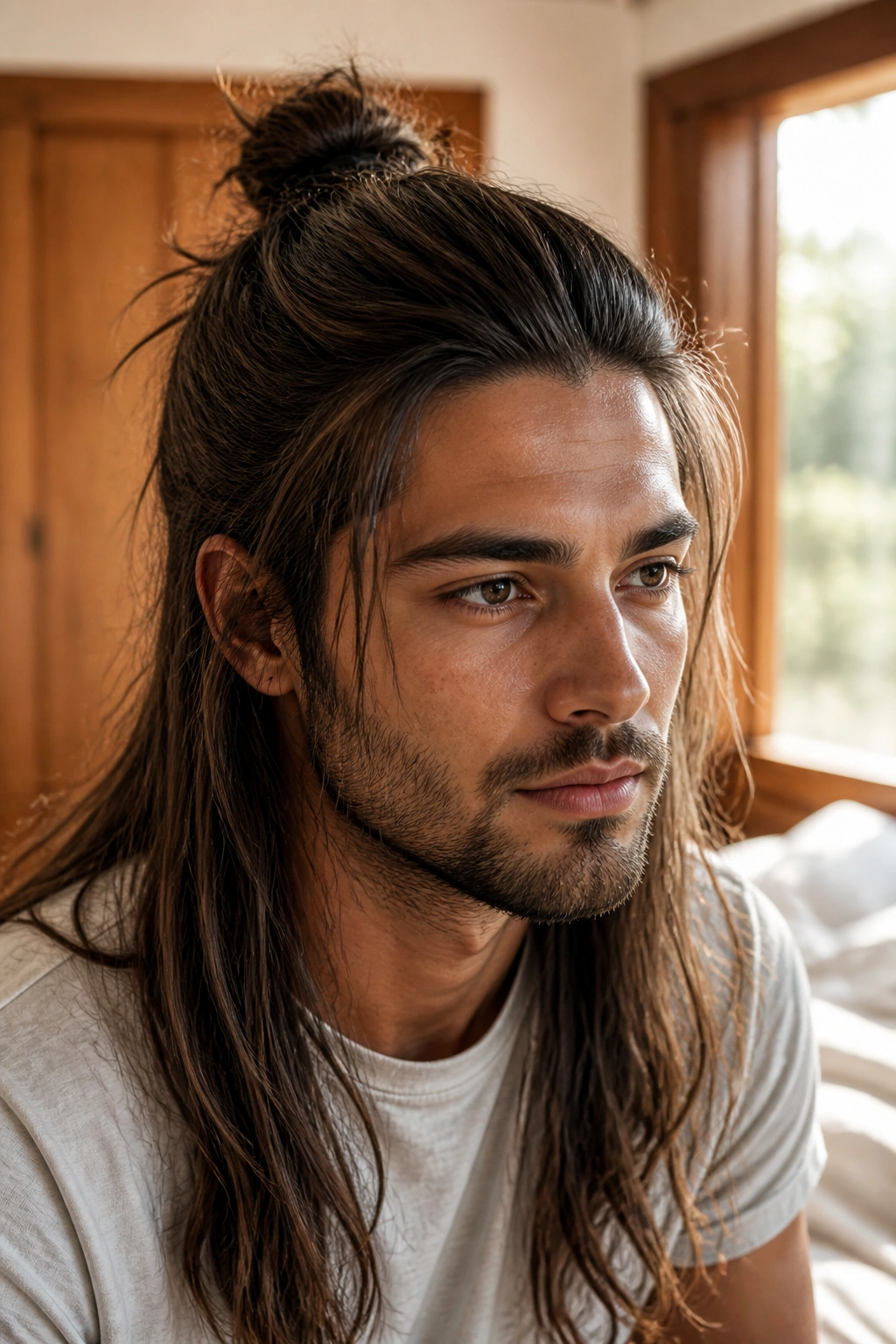
Why do some long-haired men look put together the moment they tie half the hair back? Because the half-up knot keeps the face clear while leaving enough length down the back to keep the style from feeling severe. Straight hair especially benefits from this. It stays tidy without puffing out.
The trick is not to pull everything too tight. Gather the top section from about temple level up, secure it with a small elastic, and let the rest fall. If you twist the knot once or twice instead of winding it into a tight bundle, it looks relaxed rather than staged. That tiny bit of looseness matters.
How to Keep It Clean
Use a comb if your hair gets messy at the crown, but don’t chase perfection. A little texture at the top keeps the knot from looking too neat. If the sides flare out, smooth them with a pea-sized amount of cream on your palms before tying.
- Best for hair past the ears and into the collarbone range
- Good on active days, windy weather, and long work shifts
- Use a thin elastic that won’t snag straight strands
- Keep the knot below the crown so the top does not stick up
- Leave a few face pieces out if the front feels too severe
This is the style I’d recommend to someone who wants one practical option and doesn’t want to think about it much. It is not fancy. It works.
8. Bro Flow
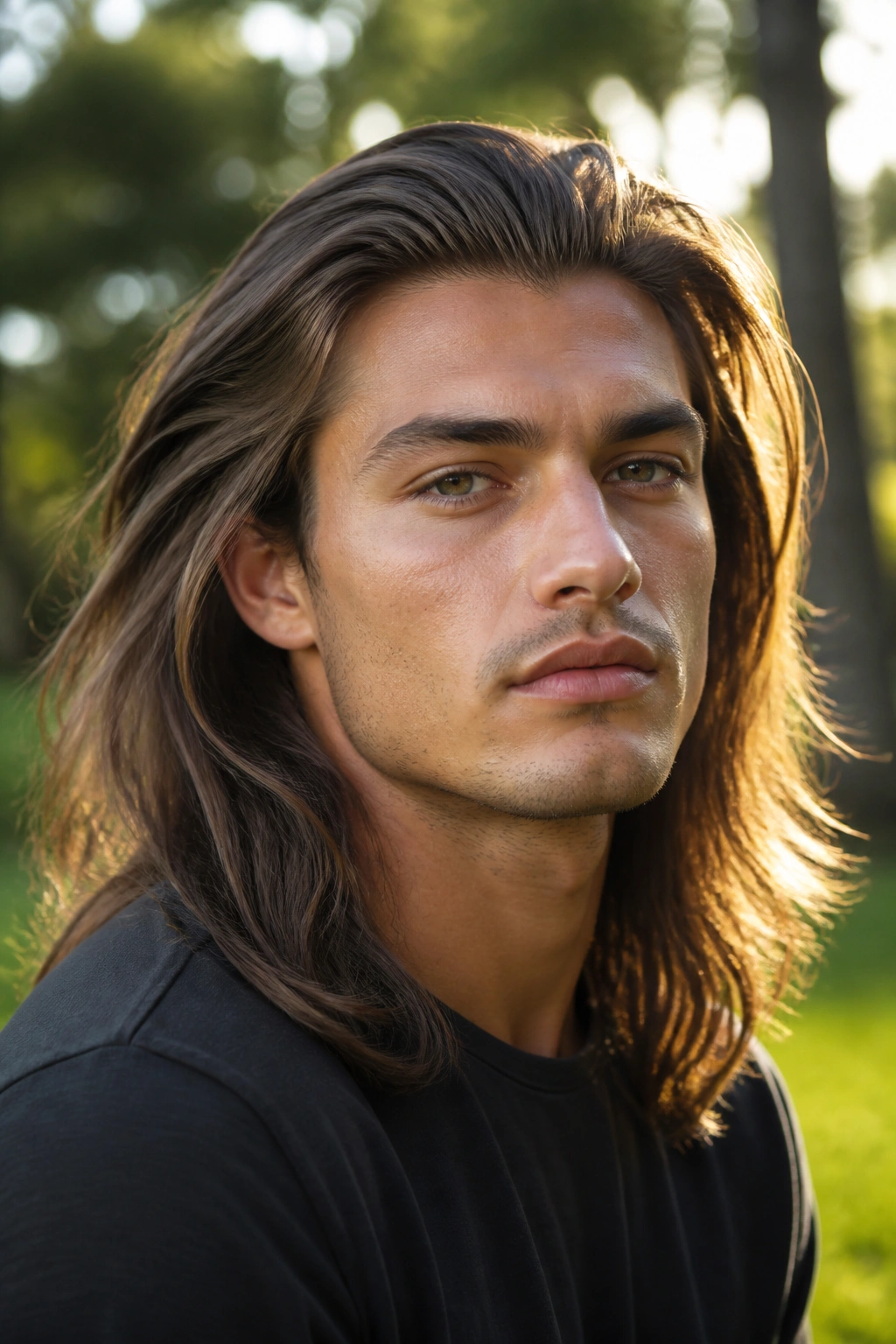
The bro flow is what happens when straight hair grows long enough to fall back naturally, then gets just enough shaping to avoid looking like a middle school haircut that never got an update. It’s easygoing, but it still needs the right cut. Otherwise it turns heavy through the sides and puffy at the ends.
Picture hair that sits off the forehead, sweeps back from the temples, and lands around the collar or shoulders. That’s the shape. The movement comes from subtle layers, usually starting around the jaw or lower cheek, so the hair bends back instead of dropping straight down like wet rope.
The Mechanism Behind It
A bro flow works best when the front has a little lift. If the roots are smashed flat, the whole style loses its shape. A quick blow-dry with fingers lifting the front is enough for most men. No need to overcomplicate it. A small amount of leave-in conditioner or lightweight cream keeps the ends from going dry and rough.
- Best at medium-to-long length, from jaw to shoulder
- Looks better when the hair has a slight bend, even if it’s mostly straight
- Needs regular end trims so the back does not split
- Works well with side-swept movement or a loose middle part
- Feels casual without looking unfinished when the layers are clean
The bro flow is one of those styles that can look expensive when it is maintained, and cheap when it is neglected. Same cut. Very different result.
9. Low Man Bun
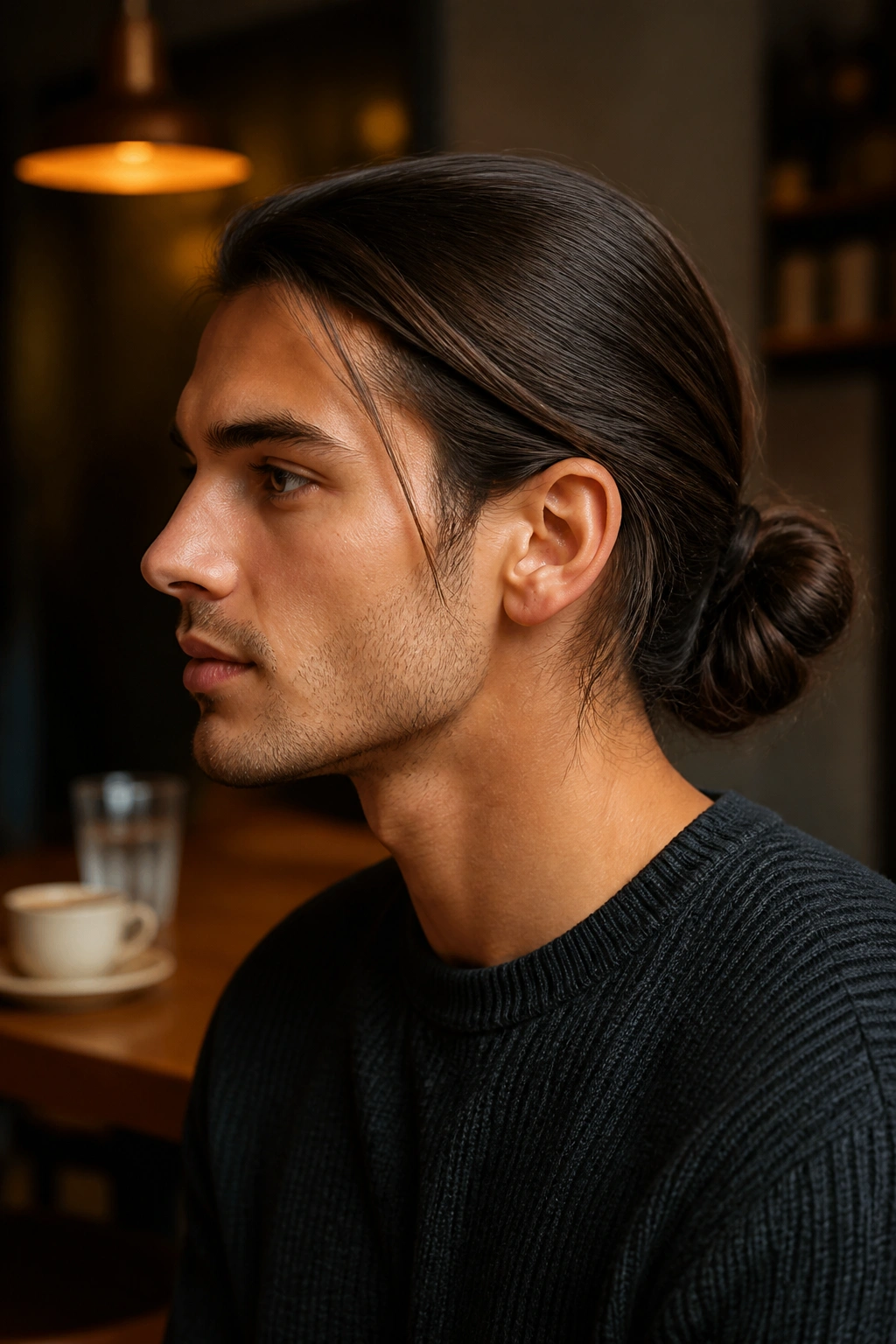
A low man bun is calmer than a high knot and neater than a loose ponytail. That’s why it works so well on long straight hair. It keeps the bulk close to the nape, where the shape looks deliberate instead of bouncy or top-heavy.
This style is best when the hair is long enough to wrap around twice without straining the elastic. If the bun is too small, it looks like a sad knot. If it’s too tight, the whole scalp can start to feel pulled by midday. Leave a bit of slack at the front and sides so the bun sits low and flat.
The low bun also pairs well with straighter hair because the strands pack together smoothly. You do not need a lot of product to make it look tidy. A small amount of cream on the hands is enough to tame flyaways, and maybe a quick comb through if the part around the crown gets messy.
Compared with the half-up knot, the low bun is more contained and less casual. It suits men who spend part of the day in a hat, at a desk, or in a place where hair in the face gets annoying fast. Clean around the hairline, a little loose at the nape, and you’re done.
10. Side Part with Length
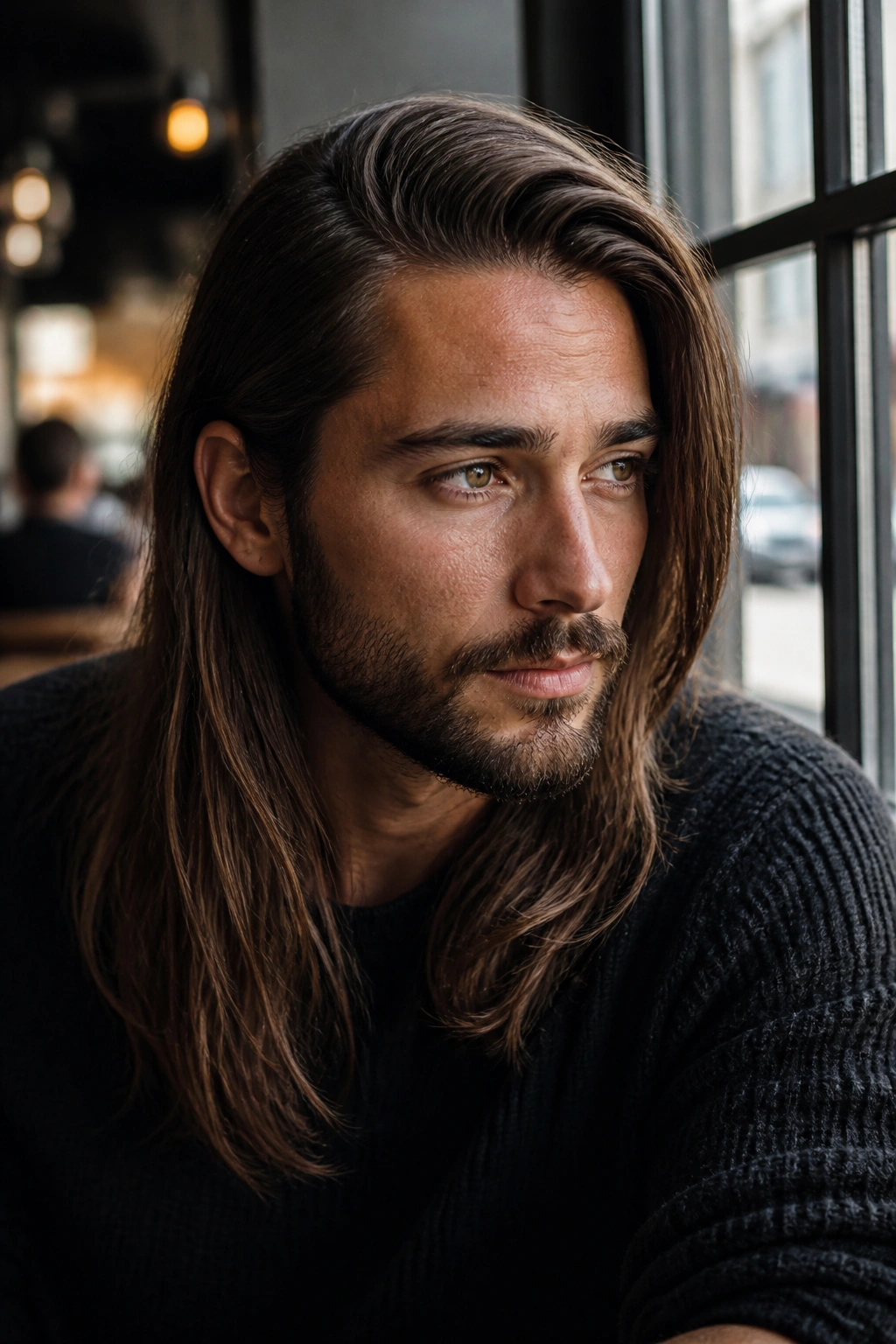
A side part can rescue straight hair from looking too symmetrical. That sounds minor, but it changes the whole mood of the cut. Instead of two equal curtains or one straight block, the hair moves to one side and creates a little weight shift that flatters a lot of face shapes.
This is one of the better choices if you want long hair but still need it to read polished. The part can be soft or sharp. A soft side part looks relaxed and modern. A sharper one leans more formal, especially if the hair is brushed over with a little hold and the ends stay neat.
The styling part is simple. Make the part while the hair is damp, then direct the heavier side down and away from the face as it dries. A comb gives you control, but fingers are fine if you want a looser finish. Light mousse at the roots helps the part stay where you put it without making the lengths stiff.
This works well on round faces because the side shift adds angles. It also helps square faces by breaking up the width. What it does not love is a haircut that was thinned too much near the top, because then the part looks flimsy instead of clean. Keep the thickness in the lengths and let the part do the work.
11. Straight Shag
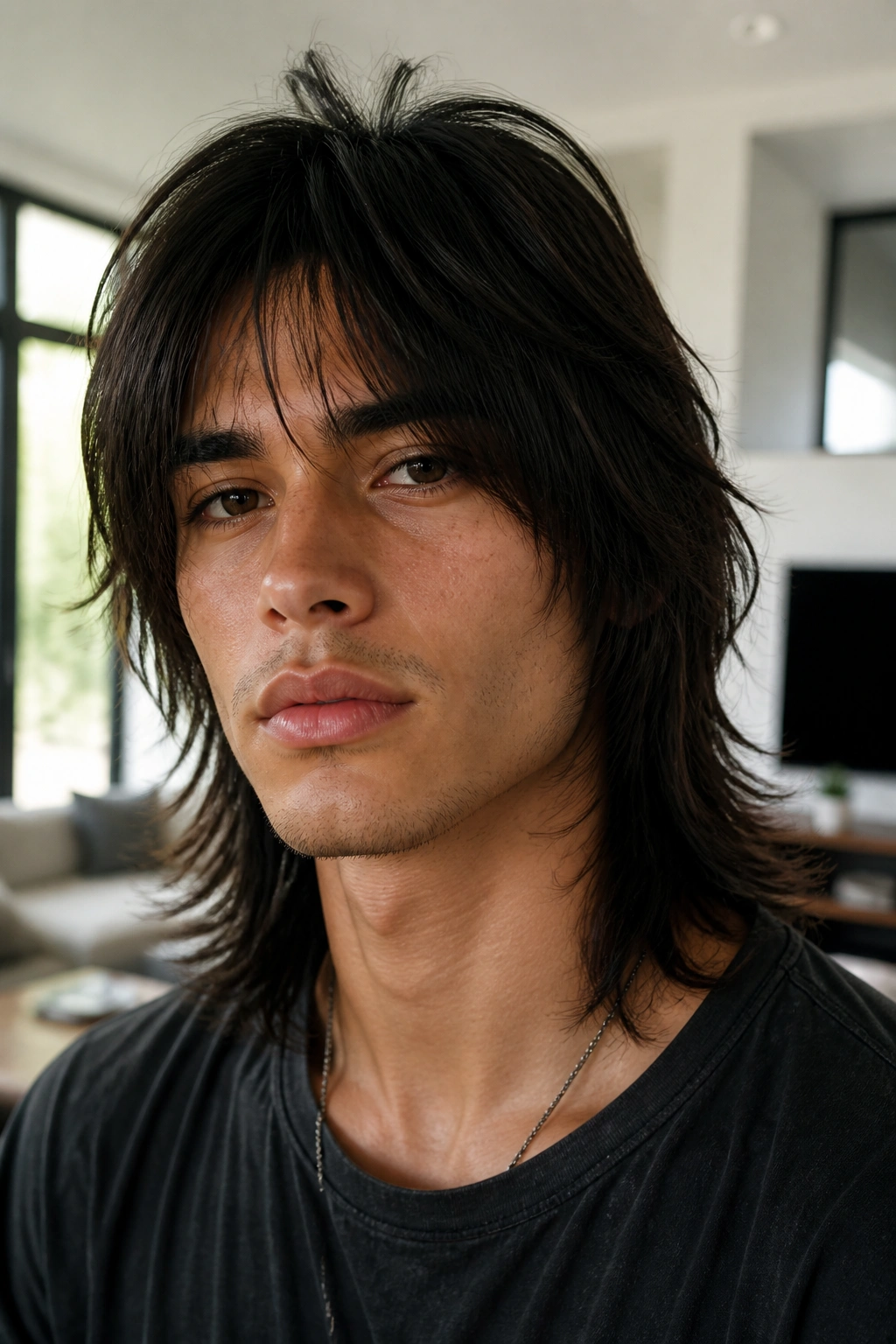
Can a shag work when the hair is straight and not wavy? Yes, and that’s exactly why it deserves a spot here. The straight shag uses layers to create motion that the hair does not naturally give you. Without those layers, the style would just fall flat. With them, it gets shape around the crown, temples, and nape.
The best version is not choppy for the sake of being choppy. It should feel a little edgy, sure, but still wearable. Ask for layers that break up the length from the cheekbones down, plus a fringe that can sit loose across the forehead or split near the middle. The ends should be point-cut so they move instead of sitting in one blunt line.
What to Watch For
Straight hair reveals bad shag cuts fast. If the layers are too short on top, the head can look puffy. If they are too long, the shape disappears. The sweet spot is a cut that gives lift at the crown and softness through the sides.
- Works best on medium to thick straight hair
- Needs some texture cream or spray to keep the layers separated
- Looks better with a little imperfection than with hard combing
- Can be worn messy, center-parted, or pushed slightly forward
- Needs trimming before the ends start looking stringy
This is a good pick if you want movement and a bit of attitude without going full retro. Straight hair and shag layers can get along nicely. They just need clear boundaries.
12. Undercut with a Long Top
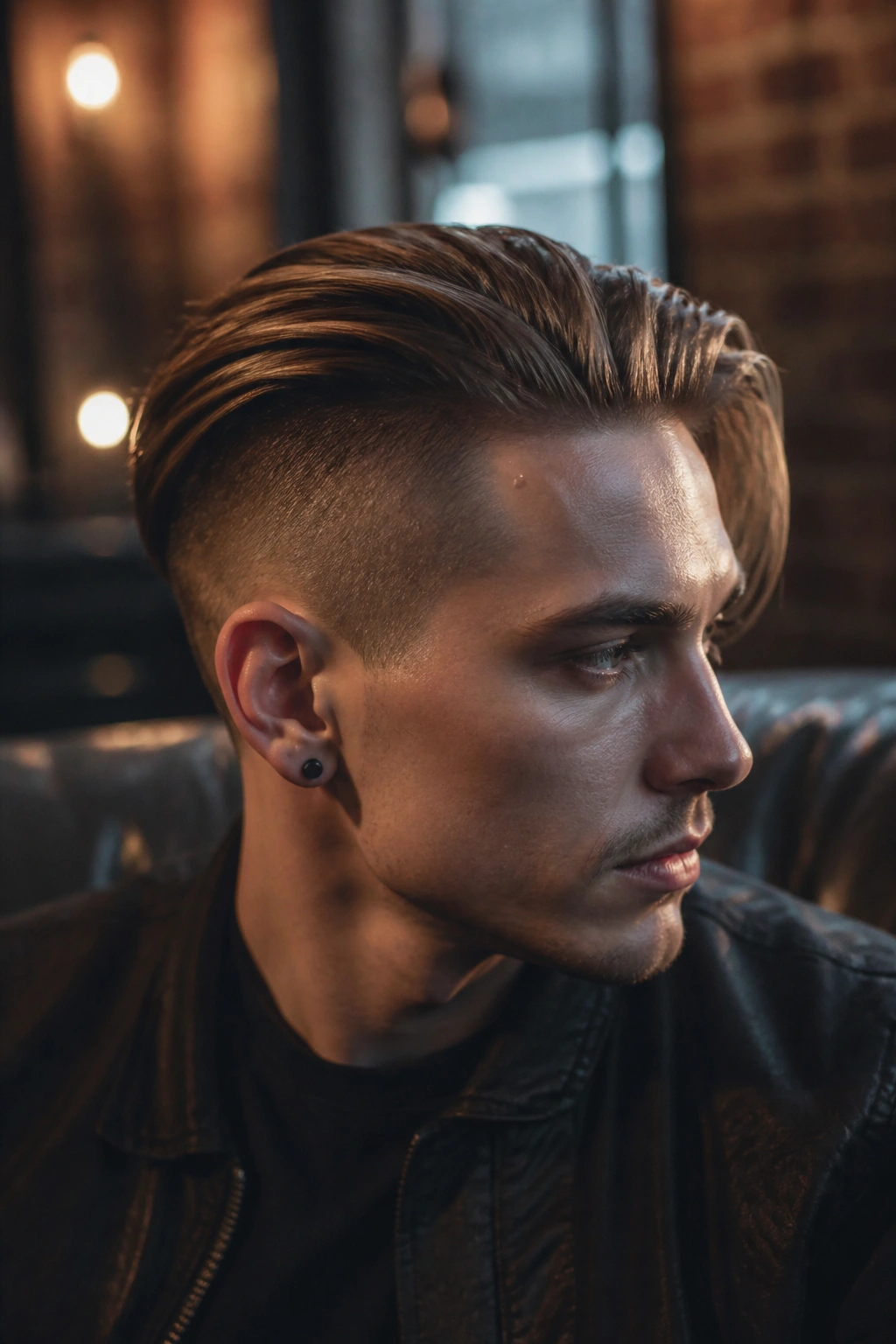
If you like contrast, an undercut gives it to you fast. The sides are cut short or clipped down, while the top stays long and straight. On the right head, that tension looks sharp. On the wrong one, it looks harsh. So the fit matters.
This style leans modern and a little bold. It gives long straight hair a cleaner outline because the shorter sides stop the head from looking wide. The long top can be worn back, parted, or left loose. That flexibility is a big reason people keep coming back to it.
But here’s the catch: if the top is thin, the contrast can become awkward. The shape needs enough density to hold its own against the short sides. Thick or medium-thick straight hair usually works best. If your hairline is receding or the top is sparse, a softer taper may be kinder than a hard disconnect.
Best styling move: blow-dry the top in the direction you want it to fall, then finish with matte paste so the length stays movable. You want the top to sit with some life, not stand at attention. A clean undercut looks best when the long section still feels like hair, not a pasted strip.
13. Low Ponytail
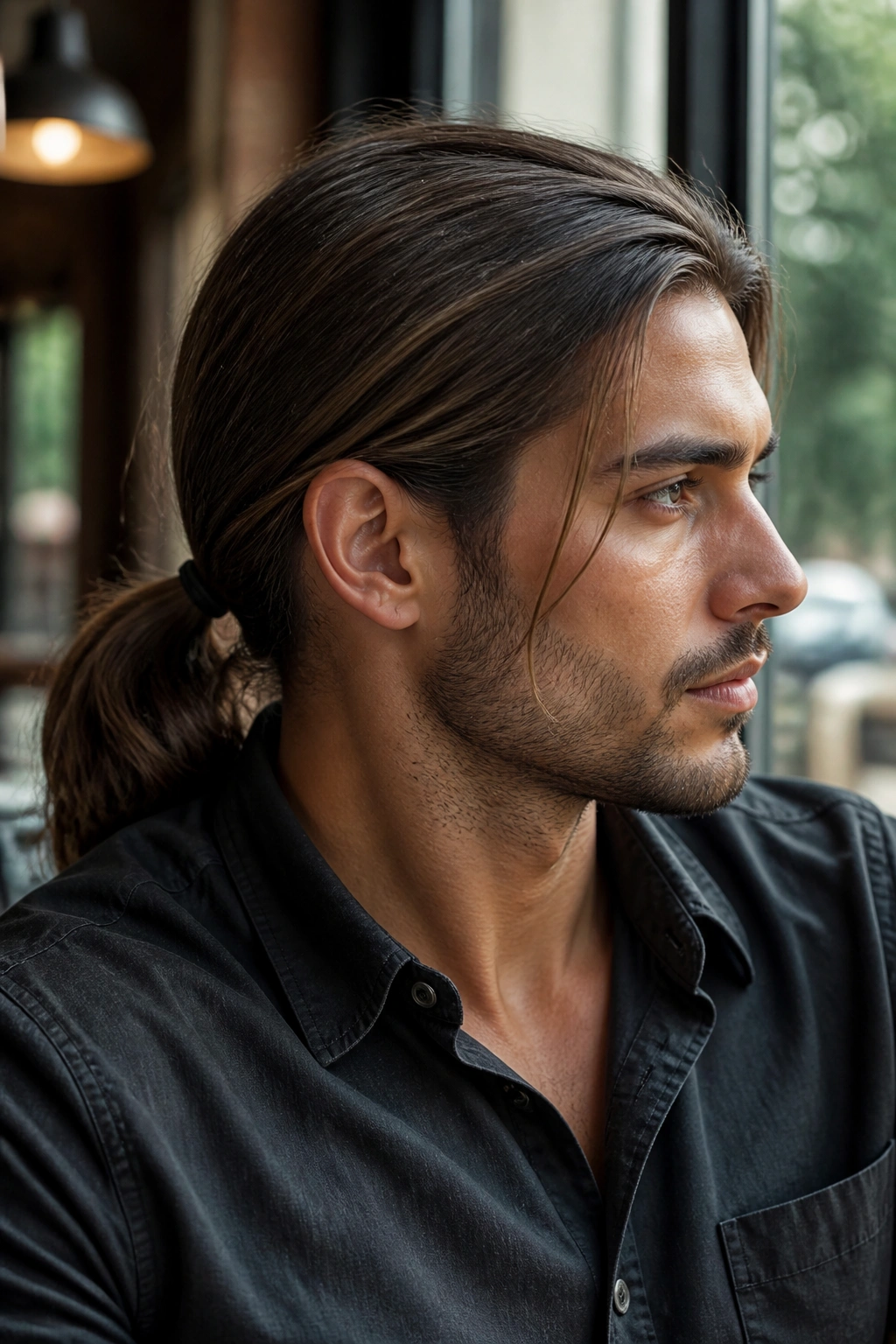
A low ponytail is one of the most practical long straight hairstyles for men because it solves the obvious problem: hair in your face. It also keeps the top neat without flattening all the length into a bun. The result is clean, simple, and a little more casual than a tied knot.
The placement matters. Tie it at the nape, not halfway up the back of the head. That lower placement looks calmer and keeps the silhouette from turning awkward. Use a soft elastic and avoid yanking the hair tight enough to leave a visible ridge around the hairline.
How to Make It Look Intentional
A ponytail on straight hair can either look sleek or look like you ran late and grabbed whatever was nearby. The difference comes from the finish. Brush the hair back before tying it, smooth the top with your hands, and leave the tail hanging freely. If the ends are dry, a tiny bit of serum helps them lie flatter.
- Best when hair reaches past the shoulders
- Works for gym days, travel, and long work sessions
- Needs regular trim-outs at the ends so the tail does not fray
- Looks better with a slight middle or side part at the front
- Can be dressed up by wrapping a small strand around the elastic
I like this style on men who want the least amount of fuss possible. It is plain, yes, but plain is not a flaw when the hair is healthy and the lines are clean.
14. Face-Framing Layers
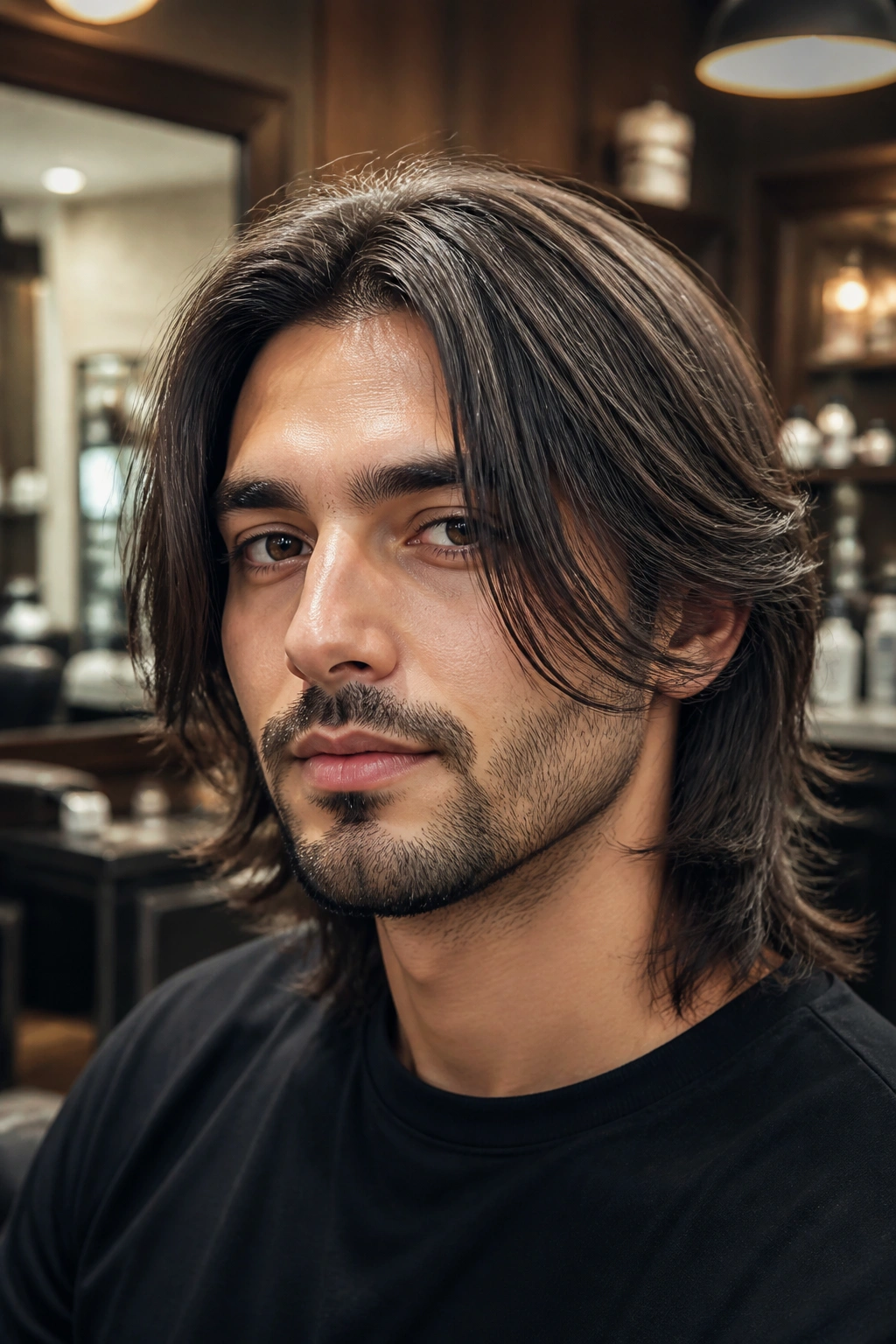
Face-framing layers can do more for long straight hair than a lot of people expect. They take the weight off the front, guide the eye toward the jaw and cheekbones, and stop the hair from hanging like one big curtain. If your long hair feels too heavy, this is usually the first move I’d make.
The shortest pieces should fall somewhere around the chin or upper jaw, depending on the shape you want. From there, the lengths can taper into the rest of the hair so the cut keeps its flow. The goal is to soften the outline, not chop the whole thing into pieces.
Where to Ask the Barber to Cut
Tell the barber or stylist you want the front opened up without losing length through the back. That phrasing matters. A lot of people ask for “layers” and end up with too much taken off. Be more specific. The front should be shaped to frame the face, while the lower lengths stay long enough to keep the style grounded.
A few useful points:
- Shortest layer around chin level for a softer frame
- Longer face pieces for square or round faces
- A little more lift near the temples if the hair feels flat
- Very light texturizing only if the ends are thick
- Best styled with a round brush or quick finger-dry
This is one of the most flattering choices on the list because it solves a real problem: too much weight at the front. Clean, simple, and easy to live with.
15. Loose Shoulder-Length Flow
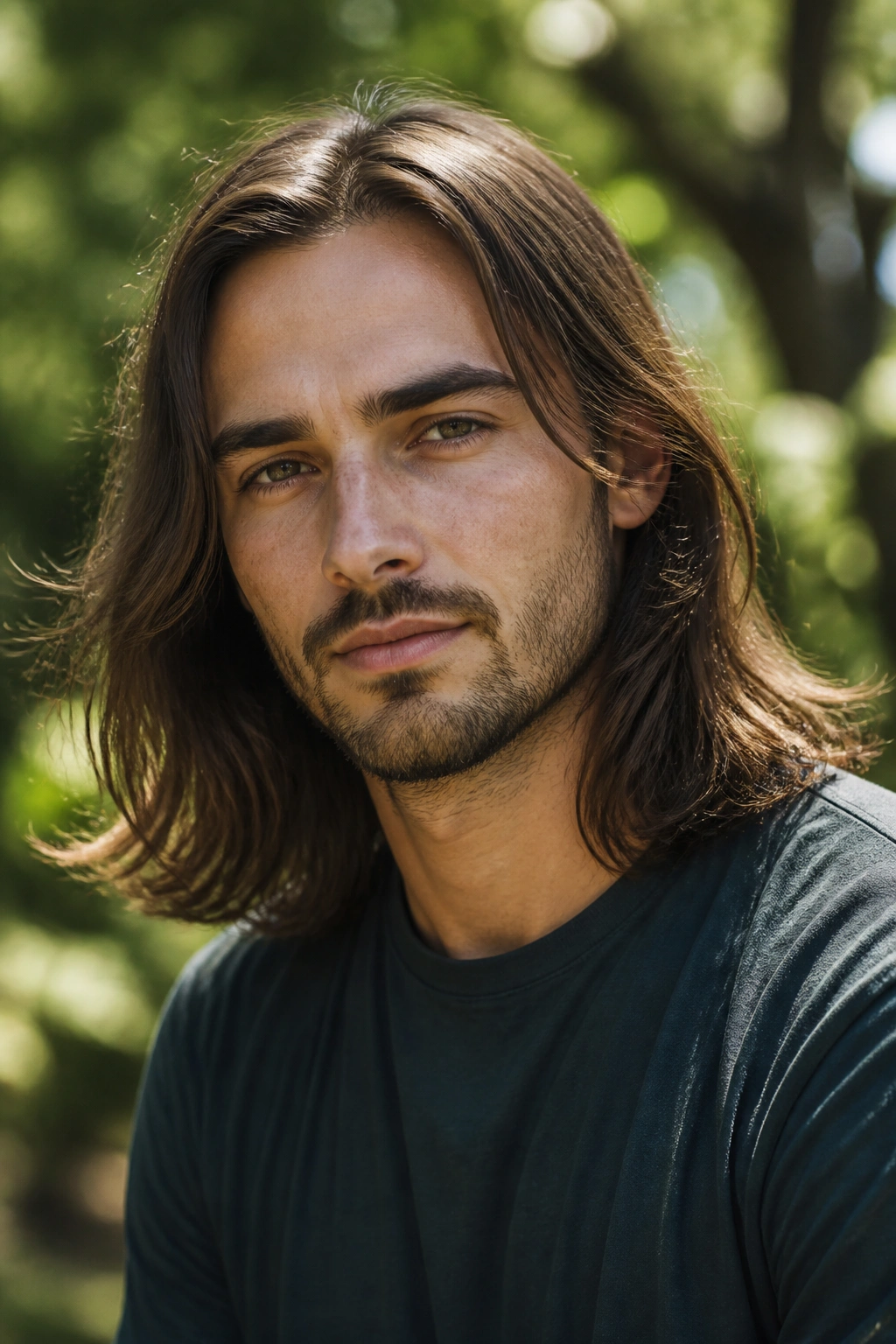
Not every long hairstyle needs a trick. Sometimes the best move is a shoulder-length flow that stays loose, healthy, and just shaped enough to follow the head instead of fighting it. On straight hair, this can look elegant in a low-key way, which is rare. Most of the time, low-key is where the good stuff lives.
The key is keeping the ends in good shape. If the bottom looks frayed, the whole style starts to feel older than it should. Ask for a blunt or softly rounded perimeter at the shoulders, then keep the layers minimal unless your hair is extremely thick. That gives the cut a solid base and keeps the hair from turning stringy.
A style like this works best when you accept what straight hair wants to do. It wants to lie down. Fine. Let it. A small amount of leave-in conditioner, a clean middle or side part, and an occasional tuck behind the ear are often enough. If the roots puff up, a quick pass with the blow-dryer on low heat can calm them without killing the shape.
My honest pick: if you are not sure where to start, start here. It is one of the easiest long straight hairstyles for men to wear well because it does not depend on a perfect face shape, a perfect hairline, or a perfect morning. Clean ends beat clever tricks. Every time.
