



Curly haircuts for men with thick hair can look sharp or chaotic in about the same amount of time. The difference is rarely the curls themselves. It’s the shape underneath.
Thick curls pile up fast at the sides, puff out at the crown, and shrink once they dry. Leave too much weight in the wrong place and the cut turns boxy. Remove too much, and it goes limp or uneven. That’s the tightrope.
The cuts that work best respect three things: shrinkage, bulk, and natural curl direction. A decent barber will often check the shape dry, or at least dry parts of it, because a curl that looks tame when wet can spring up an inch later. That one detail changes everything.
Some guys want a fade. Some want length. Some want both, which is where the real decision starts. Start with the shortest, cleanest shape if you want control, then move toward fuller cuts once you know how your hair behaves.
1. Curly Crop With a Mid Fade
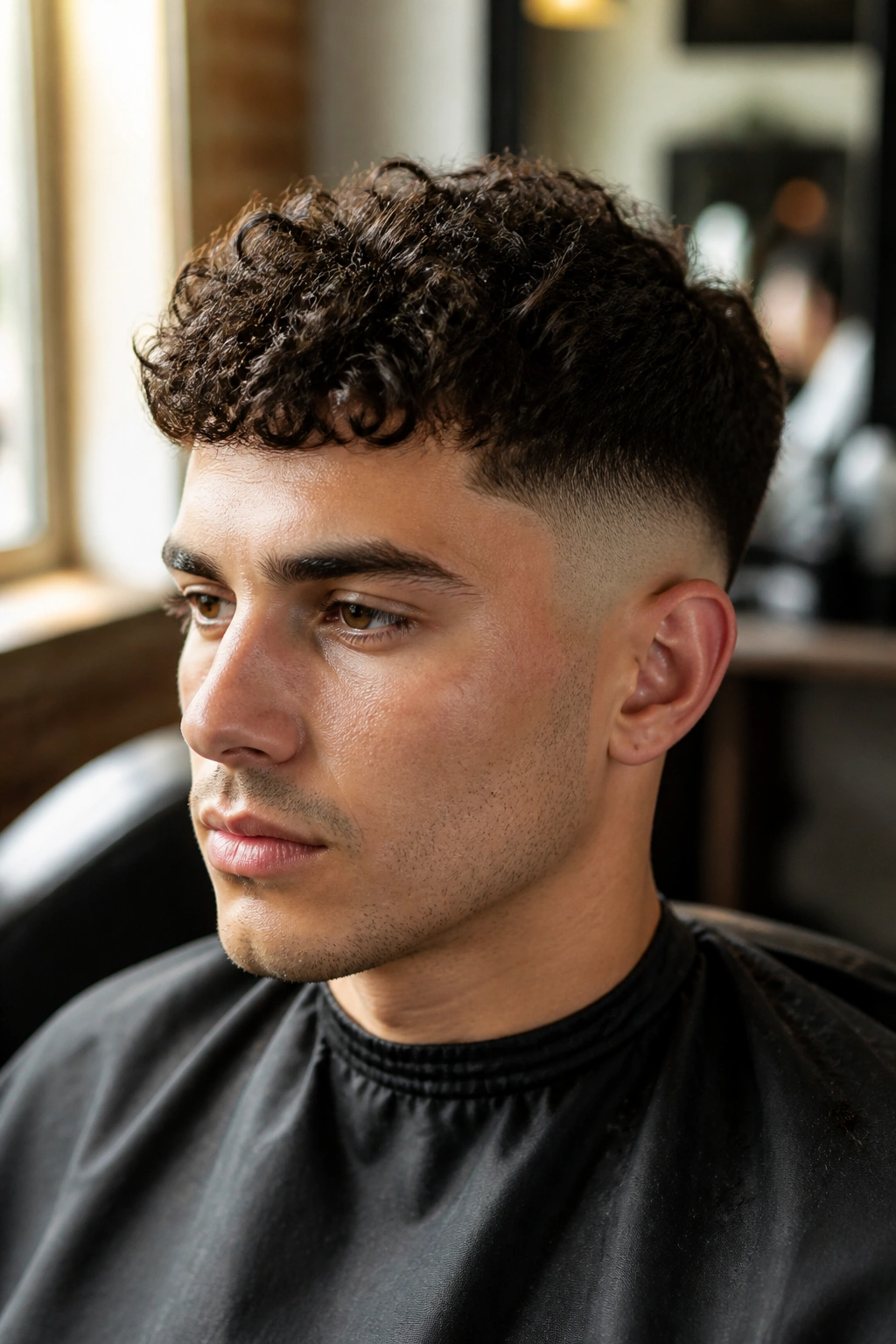
If your curls are dense and springy, this is the fastest way to make them behave. The curly crop trims the top short enough that the hair stops ballooning, while the mid fade clears out the heavy sides that thick hair loves to build up.
Why It Works on Thick Hair
The sweet spot is usually 1.5 to 2.5 inches on top with a fade that starts around the middle of the head. That keeps the curls visible without letting the shape spread outward like a mushroom. I like this cut because it looks intentional even when you do almost nothing to it.
Ask your barber to leave a little extra length through the front and crown, then soften the top with point-cutting or texture shears. A blunt top on thick curls can look stiff. A little texture helps the curl clumps sit apart instead of forming one heavy block.
- Top length: 1.5 to 2.5 inches
- Sides: mid fade, often between a #0.5 and #2 guard
- Best styling product: curl cream or light leave-in
- Maintenance: every 2 to 3 weeks if you want the fade crisp
Best tip: dry the top with your fingers first, then add product. If you put too much cream in wet curls, the crop can collapse into one flat shape.
2. Low Taper With Natural Curl Top
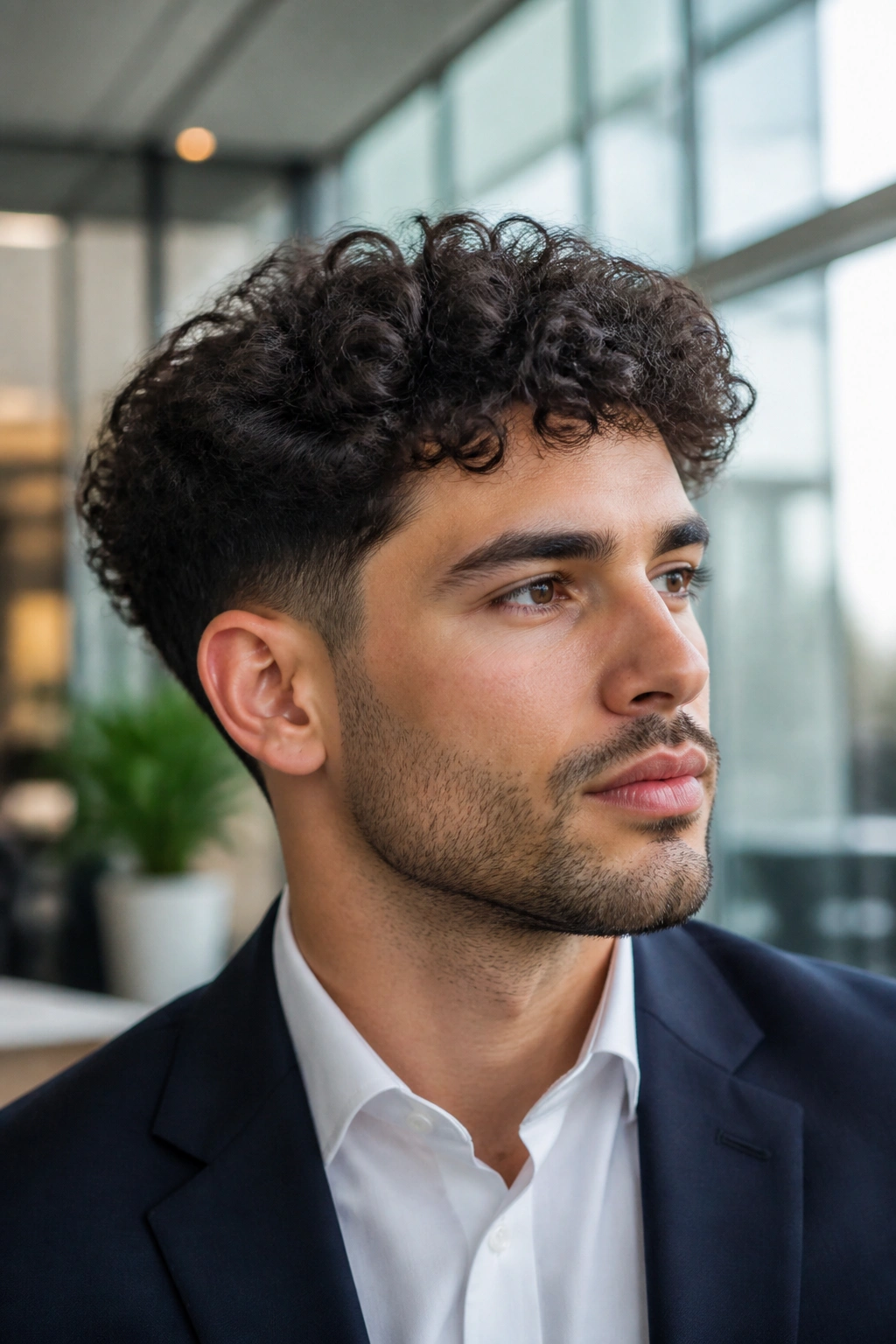
A low taper is the haircut I’d send to a guy who wants his curls to look neat without looking heavily styled. The sides and neckline stay clean, but the taper is low enough that the cut still feels relaxed.
The top usually sits around 3 to 4 inches, which gives thick curls enough room to form shape without forcing a dramatic silhouette. It’s a good fit for office settings, family functions, and anyone who hates the look of a severe fade. The haircut feels calm. That matters.
What I like most is the way it grows out. A low taper does not fall apart as fast as a skin fade, so you can stretch visits a little farther. Use a leave-in conditioner on damp hair, then let the curls dry on their own. A diffuser helps if your hair tends to dry in odd directions.
Keep the neckline tidy every 3 to 4 weeks. The taper is doing the quiet work here, and once it gets fuzzy, the whole cut loses that clean outline.
3. High Fade Curly Quiff
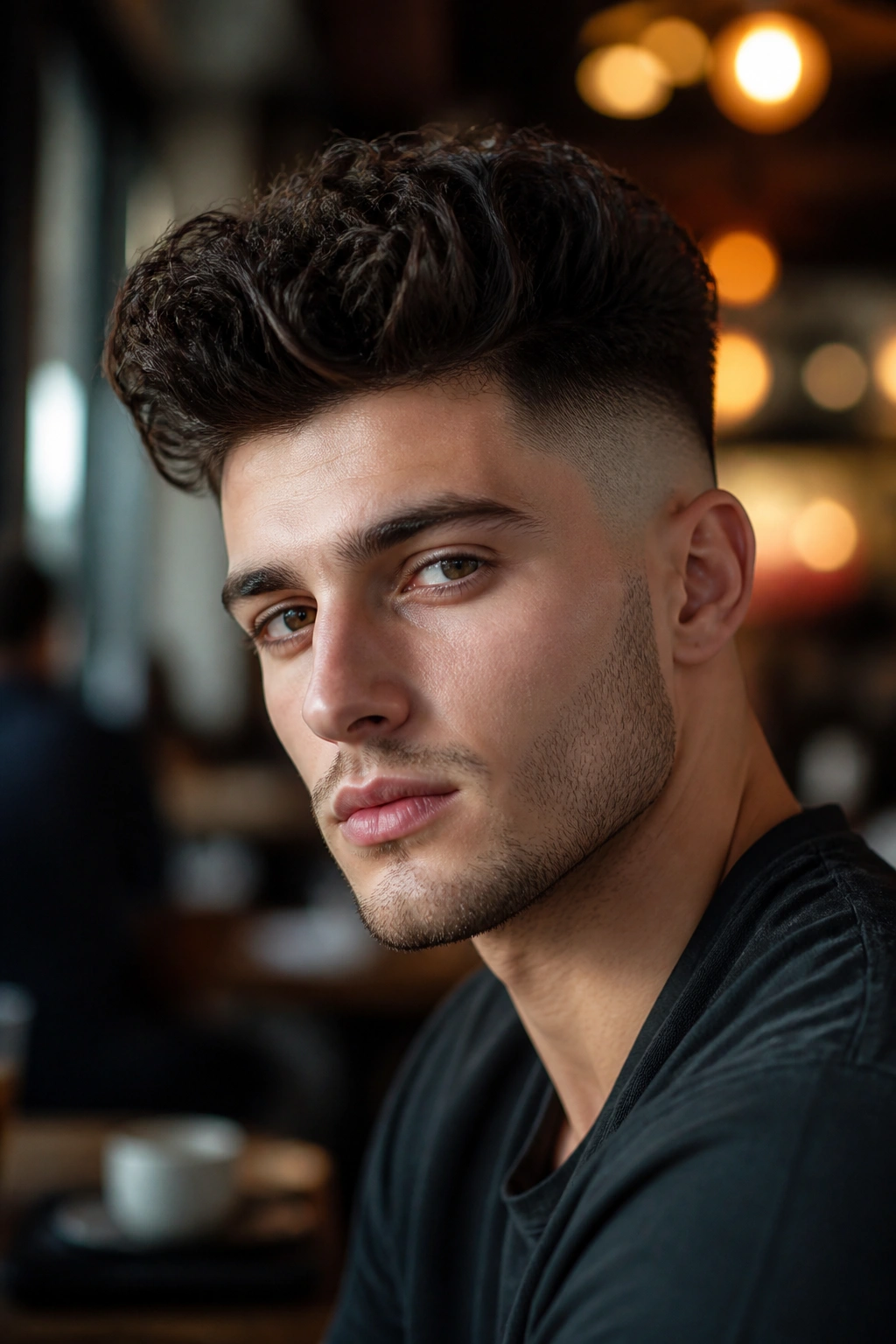
Why does a high fade curly quiff work so well on thick hair? Because it moves the weight upward and stops the sides from fighting the volume on top.
That higher fade clears the temples and sides almost entirely, which makes the front section look taller and more deliberate. The quiff itself usually needs 3 to 5 inches at the front, depending on how tight your curls are. If your curls are springy, you do not need as much length as you think. A little goes a long way.
How to Style It
Blow-dry the front section upward with a diffuser or a vent brush, then press a small amount of matte paste through the roots. Don’t rake product from root to tip like you’re combing straight hair. Curly hair needs lift first, separation second.
This cut suits guys who want some drama without committing to a full pompadour. It also works if your hair grows forward in the front, because the quiff can work with that direction instead of against it.
Skip it if you hate styling. A high fade quiff needs a few minutes in the morning, or it turns into a sleepy ridge.
4. Curly Undercut With a Hard Part
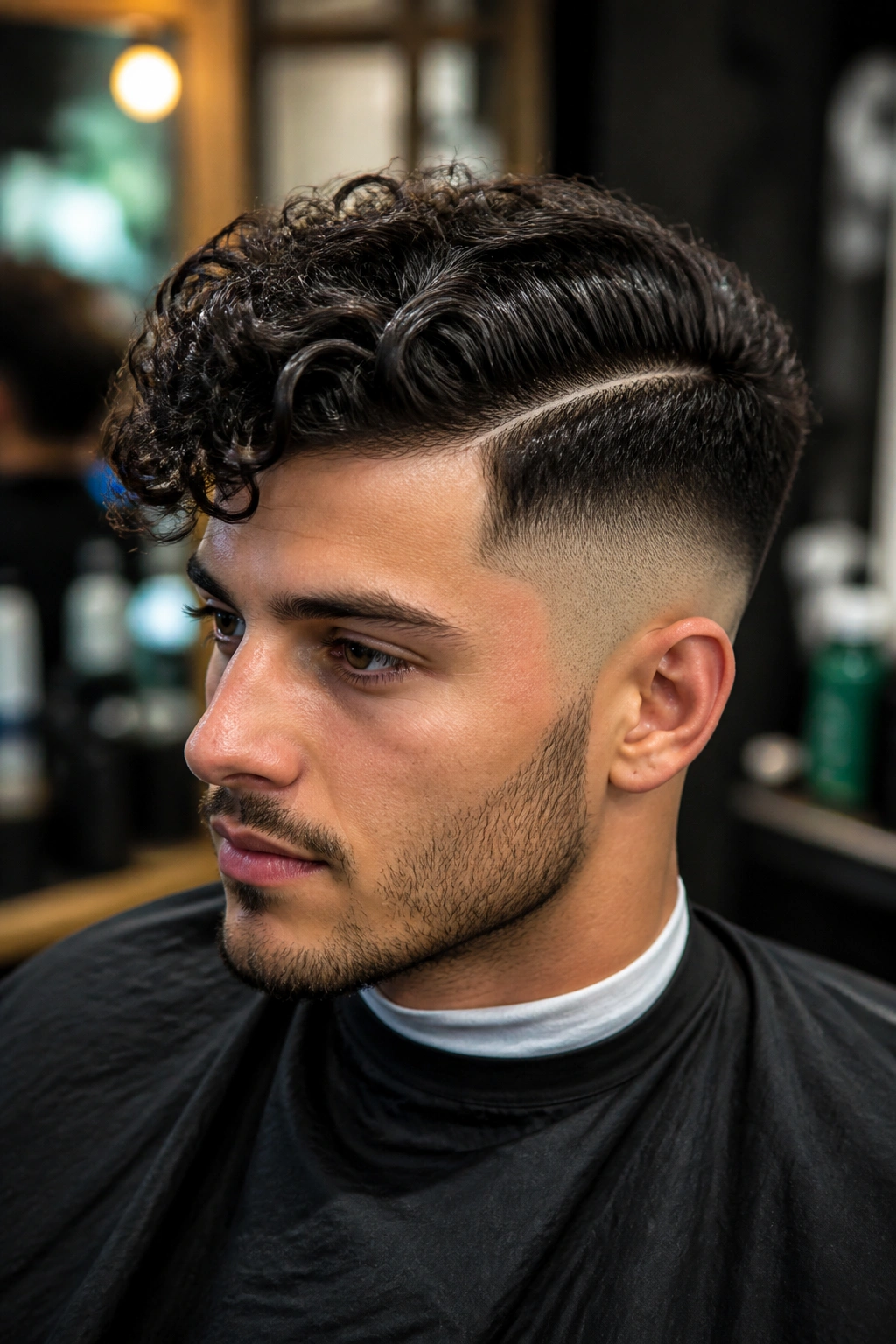
Picture a barber chair, a thick head of curls, and a client who wants the top to stay long while the sides disappear almost completely. That’s where the curly undercut with a hard part earns its keep.
The contrast is the whole point. The top can sit at 4 to 6 inches, while the sides get taken down close with clippers. A hard part adds an obvious line that keeps the style from looking accidental. On thick hair, that line can be a lifesaver. Otherwise, the top and sides can blend into one dense mass.
Key Details to Ask For
- Keep the top long enough to show curl pattern
- Cut the sides short and disconnected
- Place the part where your hair naturally wants to split
- Leave some texture at the crown so it doesn’t puff upward
This is not the haircut for someone who wants a soft grow-out. The undercut announces itself fast, and when it starts to grow, you’ll see the disconnect more clearly. Still, if you like a sharper look and don’t mind product, it’s one of the cleanest ways to handle thick curls.
5. Drop Fade Curly Fringe
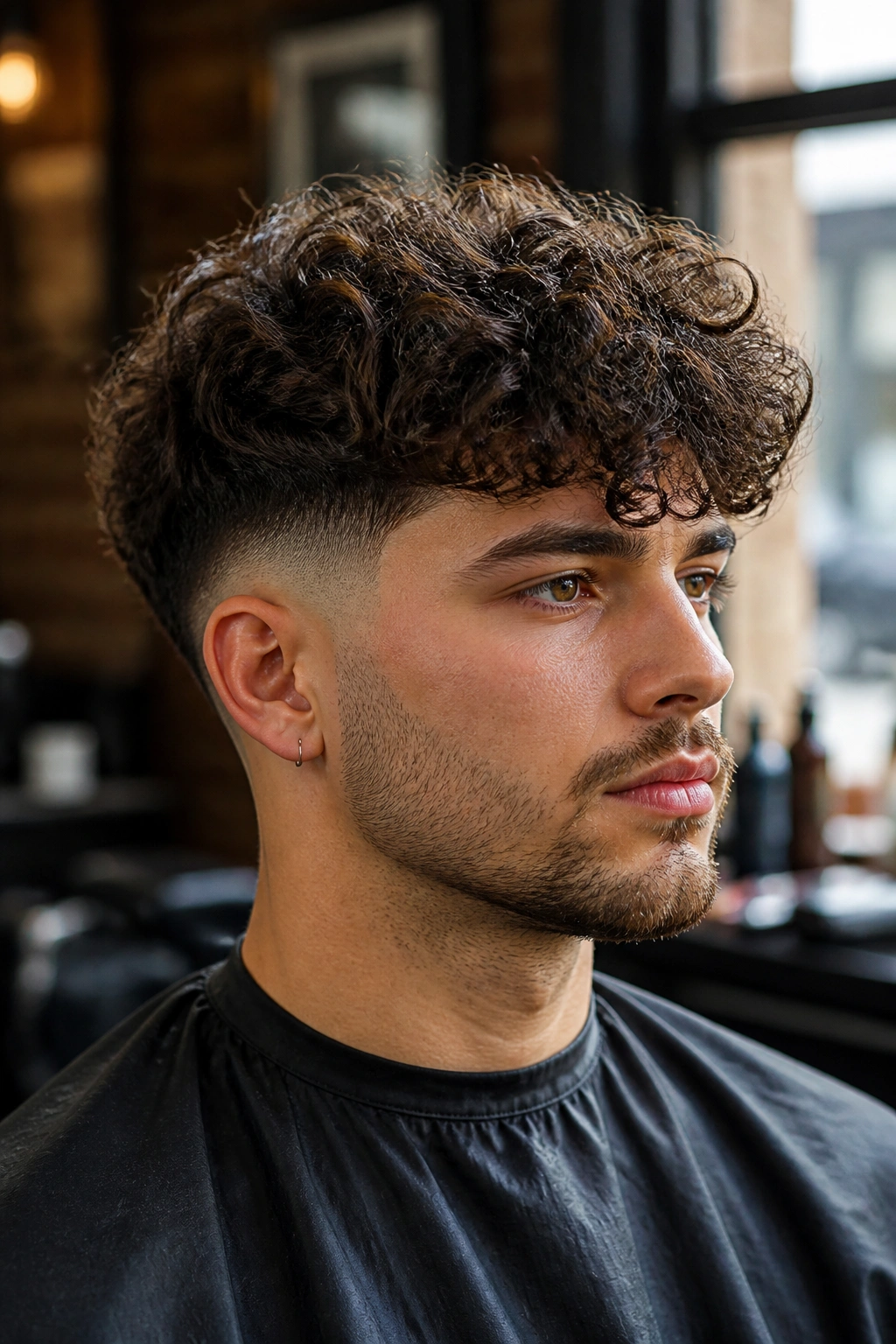
A drop fade curved around the ear is one of the better answers to thick curls that want to spread sideways. It follows the shape of the head, dips lower behind the ear, and gives the fringe room to sit forward without the sides turning into a helmet.
The fringe is the main event here. It usually lands around 2 to 3 inches long, enough to fall over the forehead in a soft line. That makes the haircut useful if you want to soften a big forehead or bring more attention to the eyes. It also works well if your curls are tighter in front than on the crown.
I prefer this cut on guys who want something a little easier than a quiff. You can scrunch in a light cream, push the fringe forward with your hands, and go. No need to force a polished shape.
The one catch: the front will shrink as it dries. Leave more length than you think, especially if your curls bounce tight. Too short, and the fringe sits straight up like a bad joke.
6. Scissor-Cut Curly Shag

Unlike clipper-heavy cuts, the scissor-cut curly shag keeps the bulk where it belongs—inside the shape, not on the sides. That makes it a smart choice for thick hair that wants movement more than structure.
The shag usually works best at medium length, somewhere between the ears and the collar, with internal layers cut throughout. Those layers break up the mass so the curls fall in pieces instead of one big wall. If you have heavy density, this is one of the few cuts that can actually make your hair feel lighter without making it look thin.
What Makes It Different
A good curly shag should look a little messy on purpose. Not sloppy. Just loose enough to breathe. Ask for soft layers around the crown and through the sides, and keep the outline natural rather than boxed in.
It suits guys who do not want to chase a fade every few weeks. It also suits people who like a bit of rock-and-roll in their style. If you want crisp edges and neat geometry, skip it. If you want shape with some swing, this one’s a keeper.
7. Burst Fade Curly Mohawk
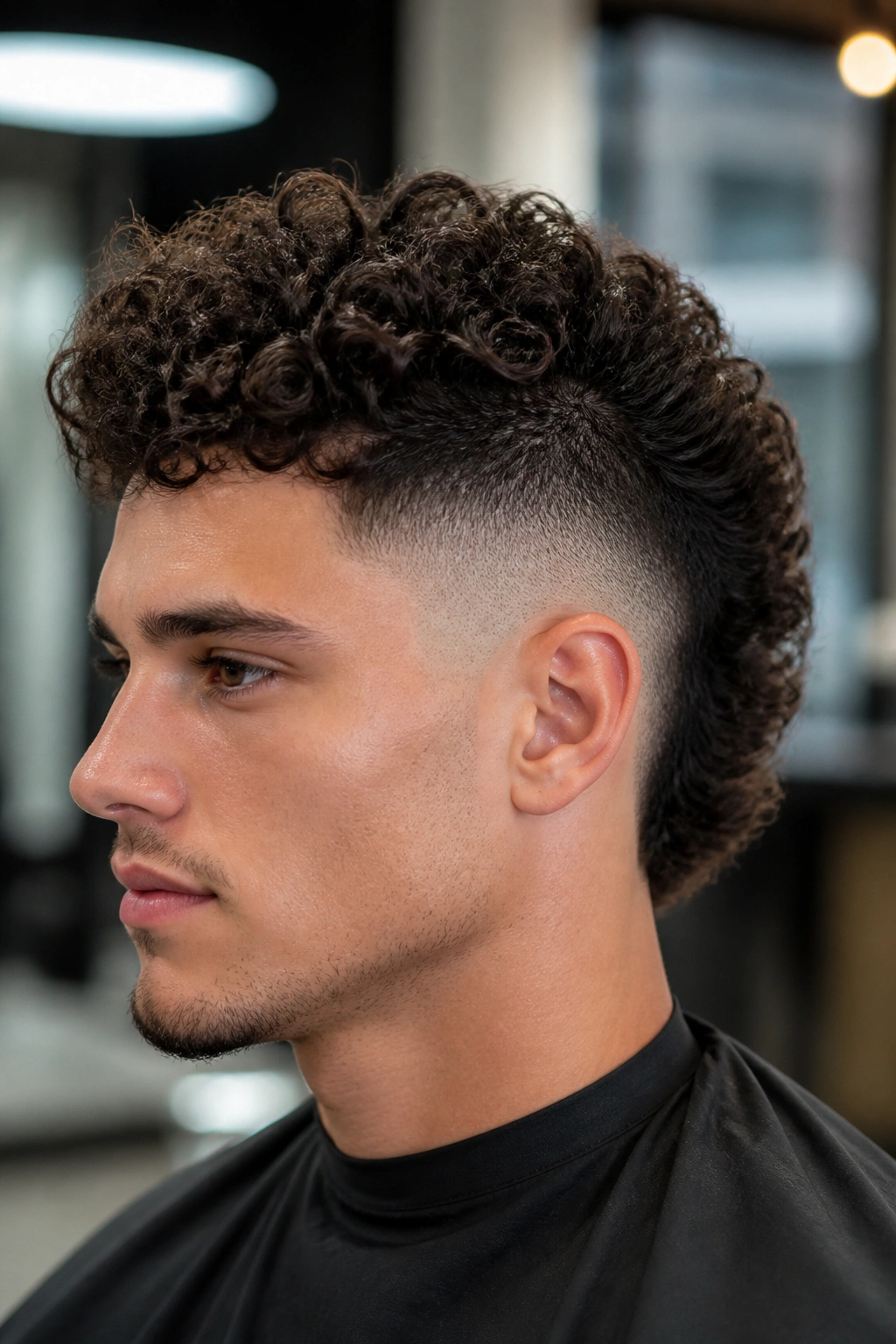
This cut has personality, and it knows it. A burst fade curly mohawk keeps the curls concentrated down the center while the fade curves around the ear in a tight arc.
The reason it works on thick hair is simple: it funnels volume instead of fighting it. The top can sit around 3 to 5 inches, and the sides get cleaned up hard enough to make the center strip stand out. That center strip does not need to be pin-straight. Curls make it better.
What to Tell Your Barber
- Keep the fade tight around the ear
- Leave the top dense through the middle
- Taper the neckline so the back doesn’t look heavy
- Shape the mohawk width to match your face
I like this cut on guys who want edge without going full gimmick. It still looks wearable if the top is textured properly. Use a matte cream or a light curl paste, then push the curls upward with your fingers. Don’t slick it down. That kills the whole point.
If your hair grows fast on the sides, you’ll need cleanup every 2 weeks or the shape loses its punch.
8. Temple Fade With Tight Sides
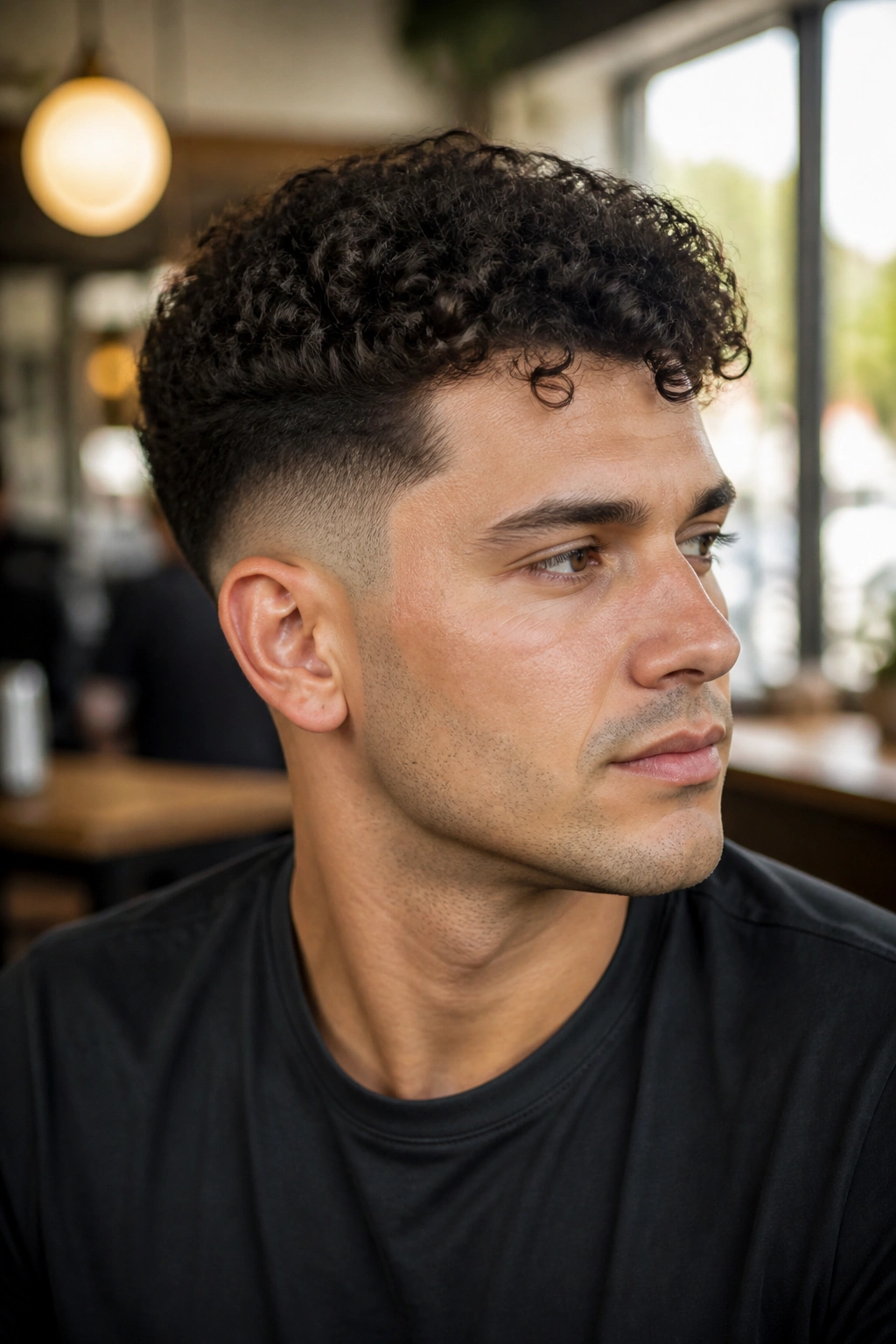
A temple fade is the polite version of a sharp haircut. It trims the temples, front corners, and sideburn area while leaving the rest of the sides a little fuller, which is perfect for thick curls that need control without being wiped out.
The top can stay moderate, around 3 to 4 inches, and that’s enough to keep the curl pattern visible. What you get is a clean frame around the face instead of a full-on skin fade. That matters if your hair gets puffy around the temples first, which is common with dense curls.
It also pairs well with facial hair. The fade can roll neatly into the beard, or stop cleanly above it if you want more separation. That little bit of choice makes this cut more useful than people give it credit for.
I’d send this to anyone who wants a crisp haircut that still feels grown-up. It looks put together without screaming for attention. And that’s not a bad thing.
9. Curly Caesar Cut
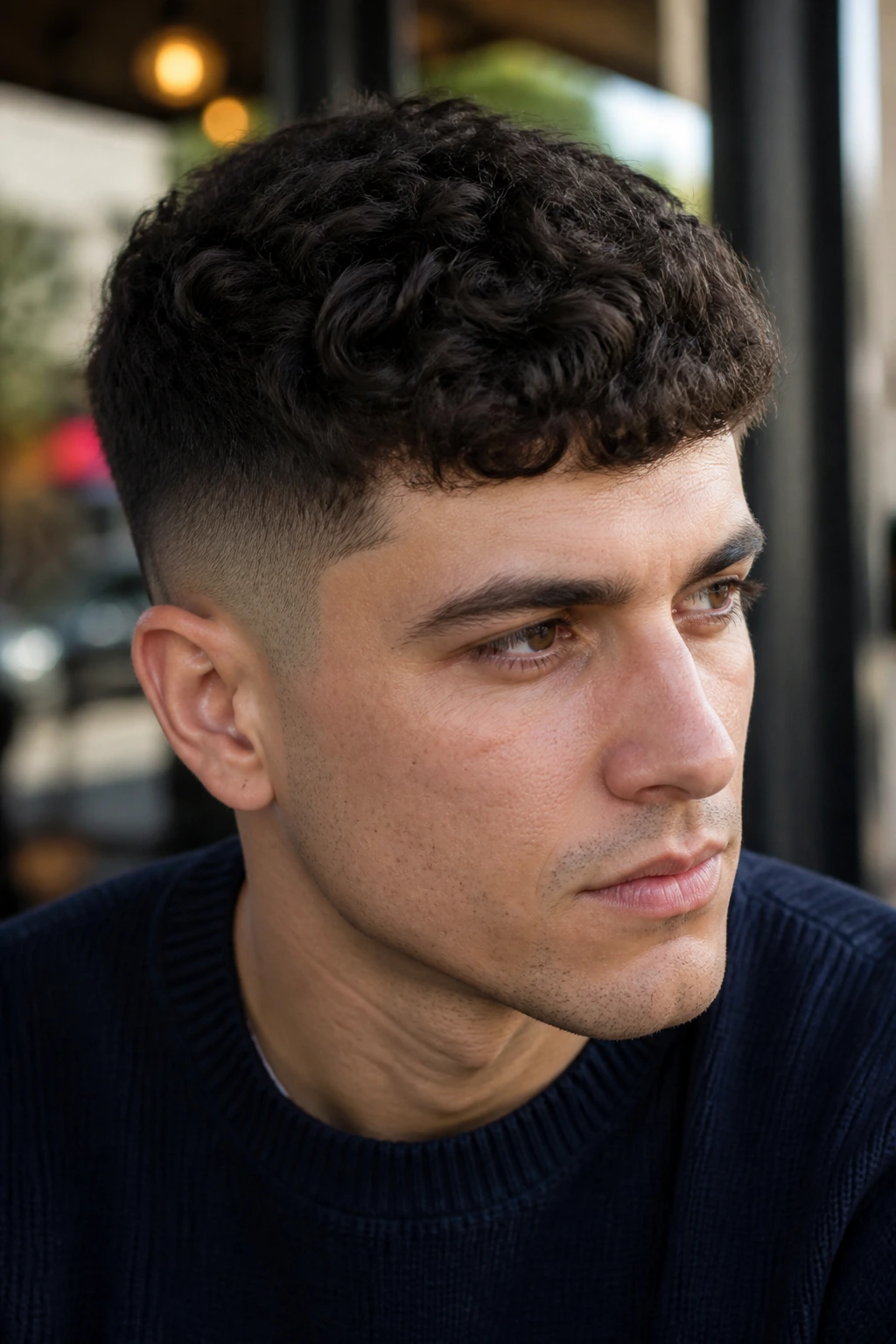
Why does the curly Caesar work on thick hair when so many short cuts fail? Because it uses density instead of fighting it.
A Caesar keeps the top short and pushes the fringe forward in a controlled line. On curls, that gives you texture across the forehead without the awkward blockiness that straight hair sometimes gets. The top usually sits around 1 to 1.5 inches, with the fringe cut a touch longer if the curl pattern is tight.
How to Keep It from Looking Too Square
The danger with thick curls is going too blunt. A Caesar needs shape, but it also needs softness at the edges. Ask for light texture on top and a soft fade or taper on the sides. If the barber leaves the front too heavy, the haircut can look like a brick.
This cut is solid for men who want low maintenance and a little structure. It is not flashy. It just works. You can wash, add a touch of cream, and leave. No elaborate morning ritual required.
For tight curls, I’d avoid taking the fringe too short. Shrinkage will bite you, and then the cut ends up looking more aggressive than intended.
10. Long Layered Curls With Shape-Up
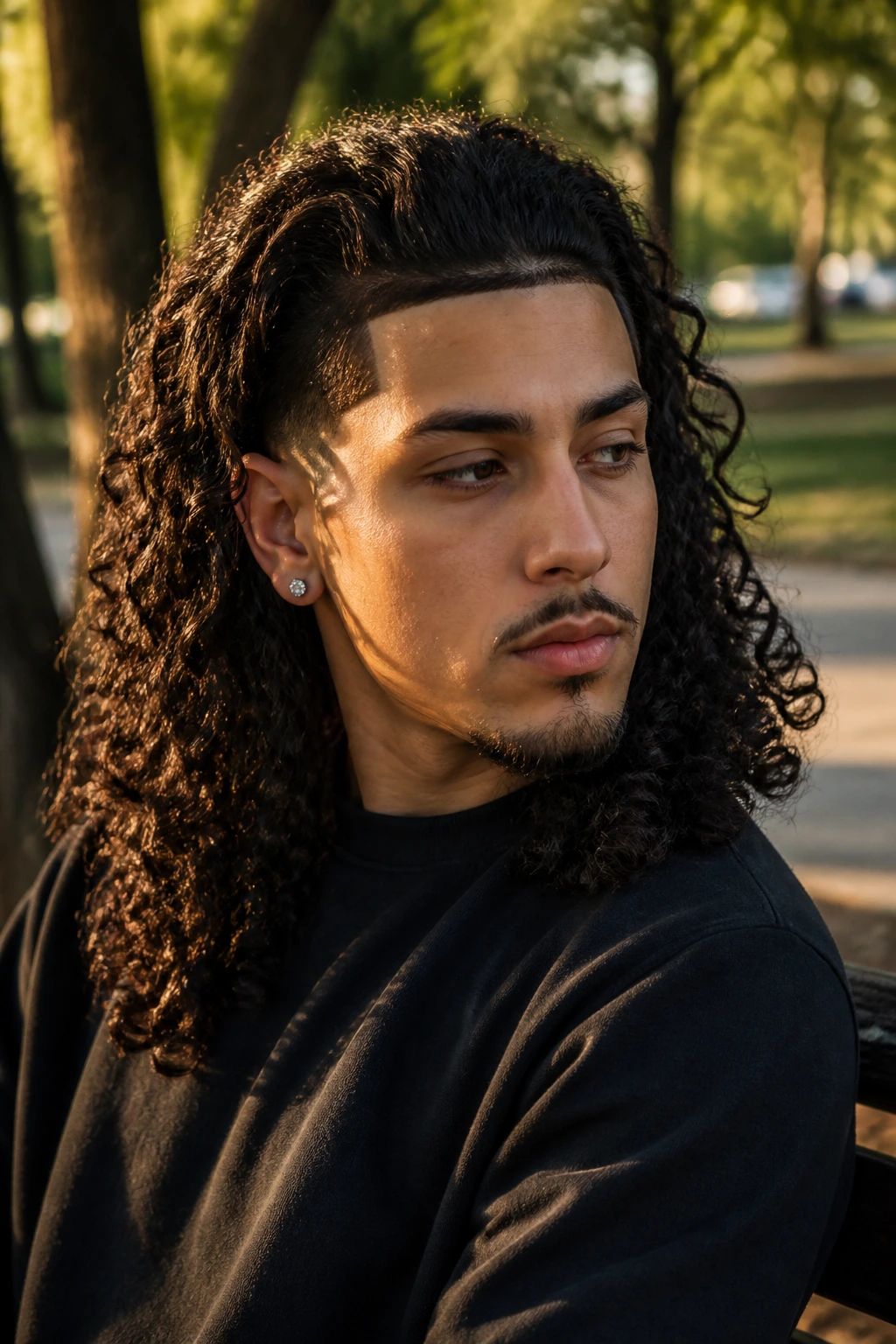
A guy walks in wanting length, but not the triangle. That is the usual story. Long layered curls with a clean shape-up solve that problem better than almost any other option.
The trick is to keep enough length for the curls to hang—usually 5 to 8 inches depending on density—while removing bulk with long internal layers. The shape-up at the temples, neckline, and maybe along the beard line gives the haircut a deliberate finish. Without that edge, long thick curls can drift into “I forgot to get a haircut” territory.
Quick Barber Notes
- Keep the crown slightly longer if it sticks up
- Thin only the heavy spots, never the whole head
- Clean the outline around the ears and neck
- Trim every 6 to 8 weeks to keep the layers alive
This cut rewards patience. It looks better on day three than day one, once the curls settle and stop fighting the fresh cut. Use a leave-in conditioner and a wide-tooth comb in the shower. Then leave the hair alone.
11. Side Part With Curly Volume
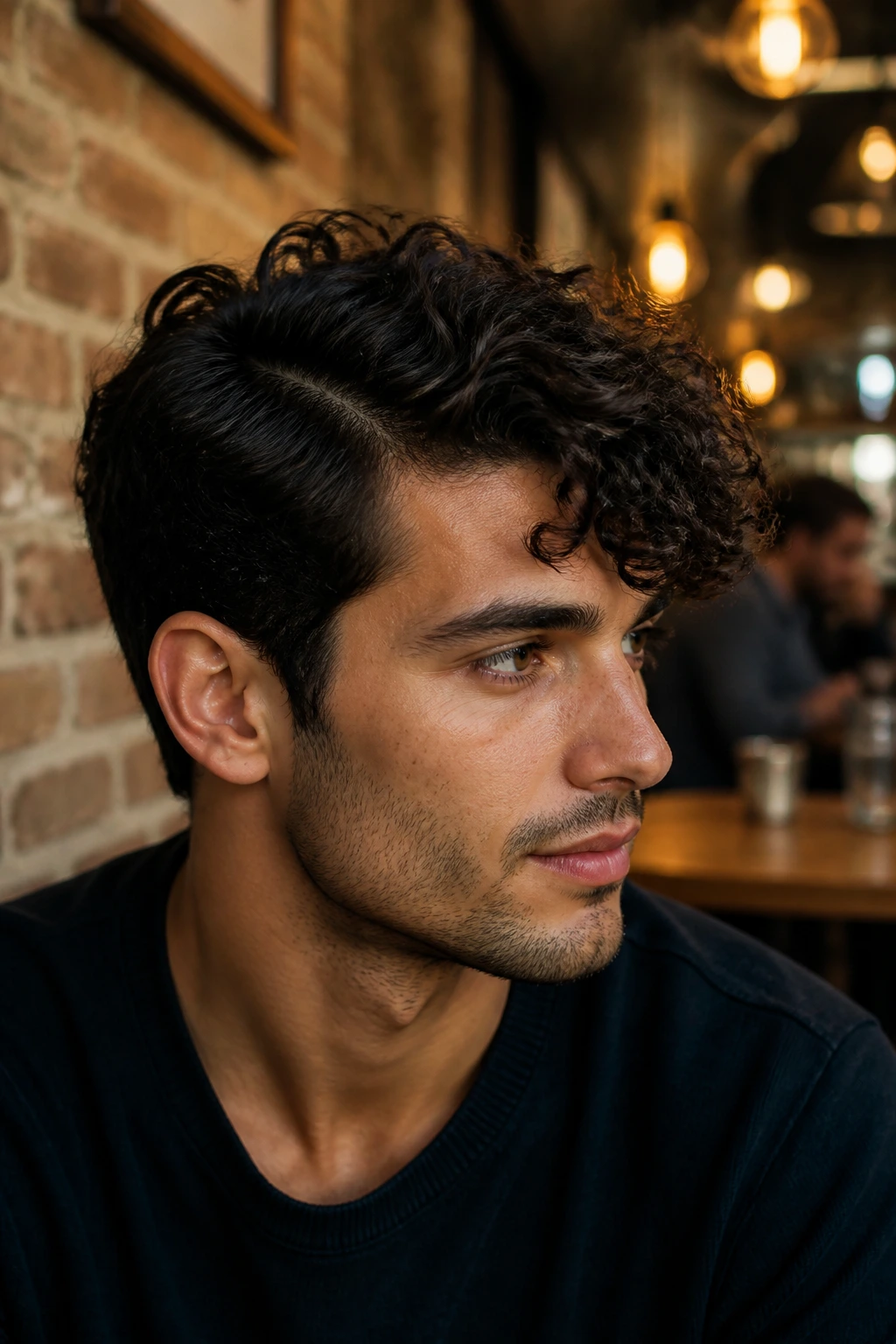
A side part on thick curls can look excellent, but only if you treat it like a shape, not a slicked-down ceremony. The goal is separation, not flattening.
Keep the top around 3 to 5 inches, with the part placed where the hair naturally wants to fall. A hard part is optional. I usually prefer a soft part on curls because it looks less stiff and grows out better. The sides can be tapered or faded, depending on how neat you want the finish.
This cut works especially well when the top has some lift at the root. Use a light mousse or a thin cream, then guide the curls across with your fingers. A comb can help establish the part, but don’t force every strand into place. Curly hair remembers resistance, and it tends to rebel later.
It’s a strong choice for men who want a more classic, polite look without giving up texture. Clean. Slightly old-school. Not boring.
12. Curly Pompadour With Skin Fade
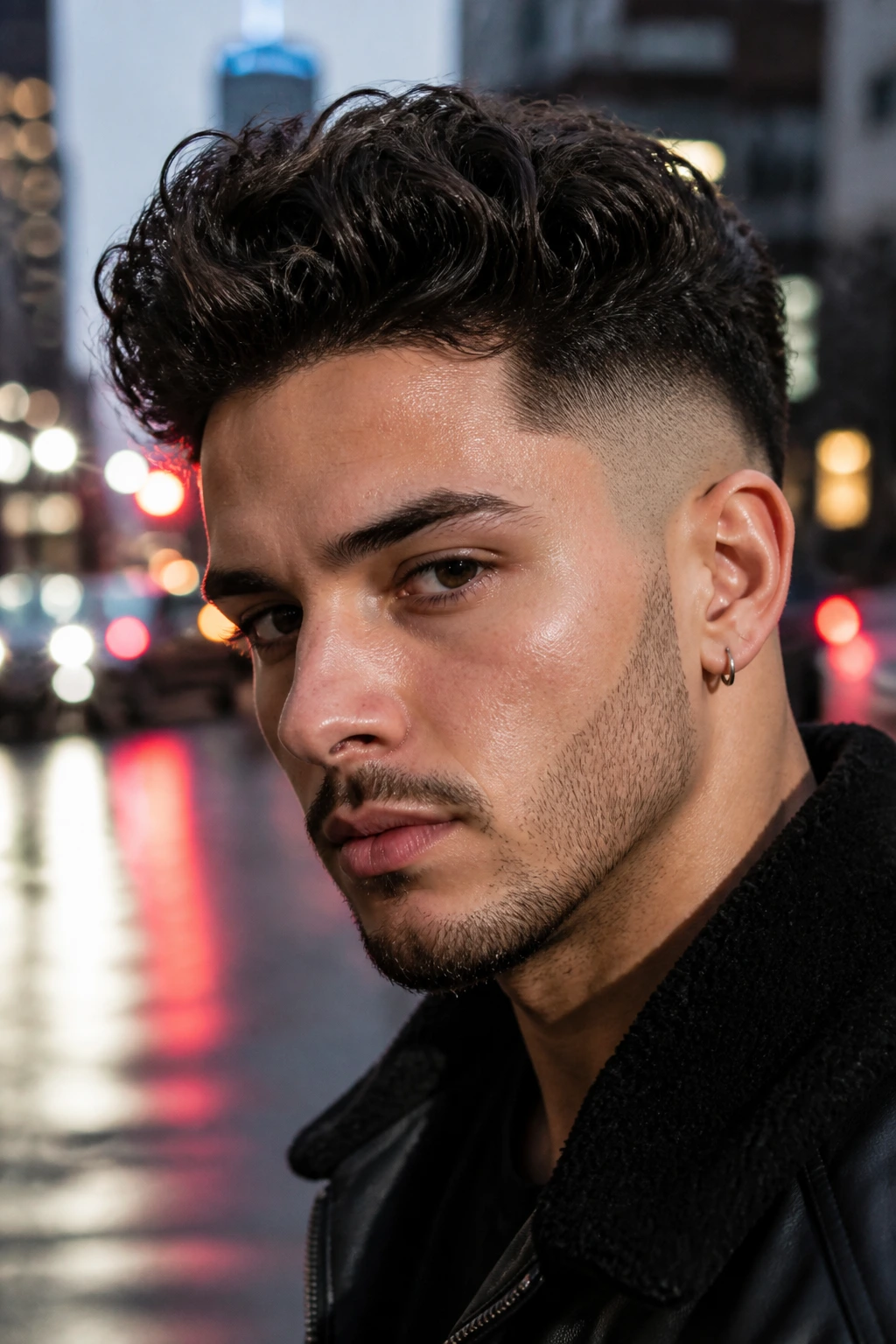
Unlike a straight-haired pompadour, a curly pompadour has to manage lift and control at the same time. That’s why the skin fade matters so much: it clears the sides and lets the height on top read as a shape, not as extra bulk.
The top usually needs 4 to 6 inches in the front, tapering slightly toward the crown. Thick curls don’t need to be ironed flat. They need root control. Blow-dry the front section up and back, then press in a matte paste or a light clay once the hair is dry enough to hold.
What to Watch For
If the curls are too tight and the top too short, the pompadour can puff instead of lift. That’s a bad trade. Leave the front long enough that it can bend backward with some weight. A round brush helps, but it’s optional if your curl pattern already gives you height.
This cut suits guys who like strong structure and don’t mind spending a few extra minutes in the mirror. It looks especially good with a clean hairline and a sharp fade. It does not tolerate laziness very well.
13. Frohawk With Tapered Sides
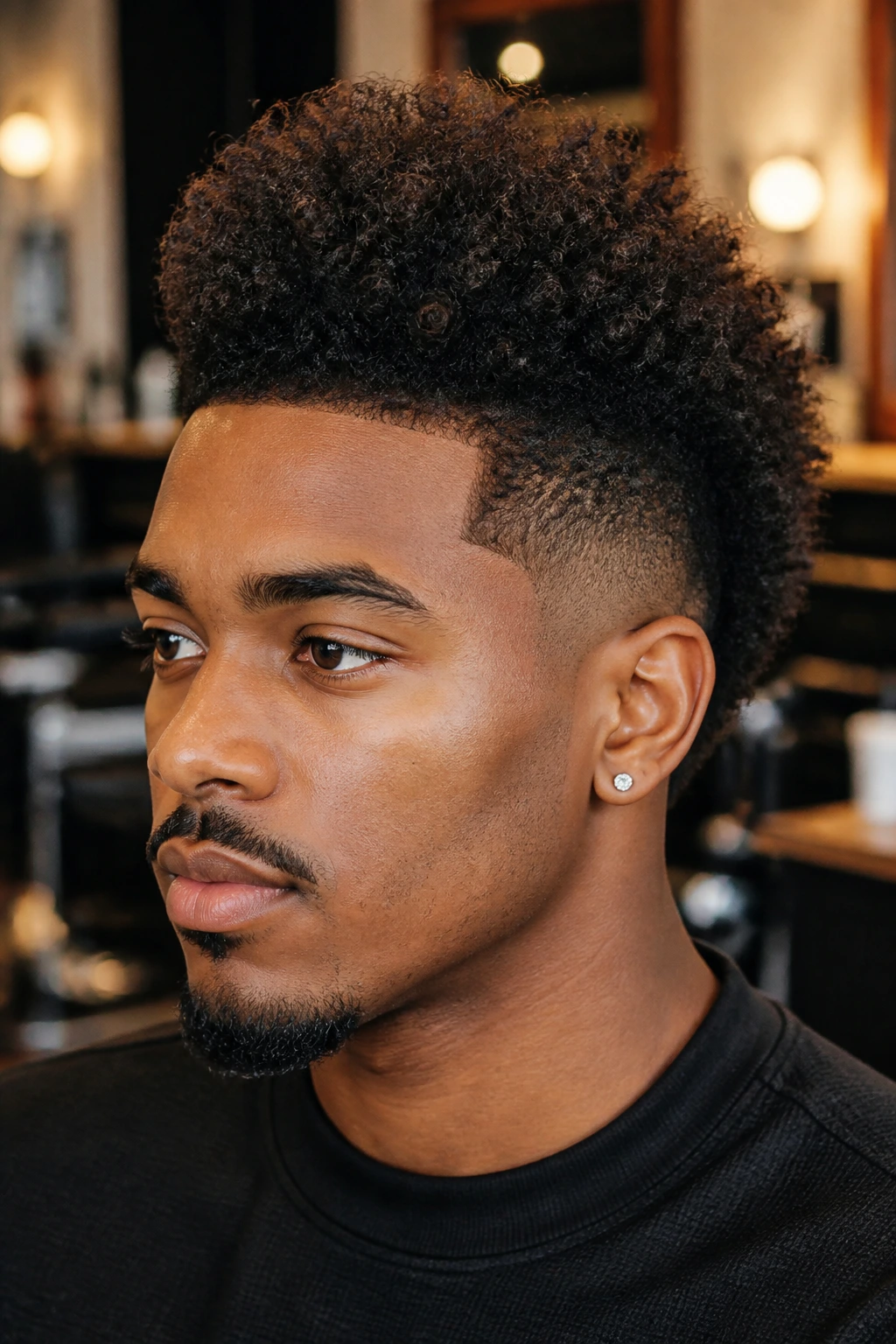
The frohawk is for men who want the curls to be the statement, not the sides. It keeps a fuller strip through the middle and tapers the sides instead of shaving them down to skin.
That softer taper changes the whole vibe. The haircut still has lift and edge, but it doesn’t look quite as aggressive as a burst fade mohawk. For thick curly hair, that’s a smart compromise. The middle section can sit around 4 to 6 inches, while the sides drop short enough to keep the silhouette narrow.
Quick Facts
- Middle strip stays the fullest
- Sides taper from short to shorter
- Works best with strong curl pattern
- Needs shape-up around the neckline every 2 to 3 weeks
I like this one for guys who wear their hair with confidence but still want a clean finish. It pairs well with a beard, too, because the taper can help the whole head shape feel balanced. Use a curl cream with a little hold, then push the curls upward and slightly forward.
14. Bro Flow With Layers
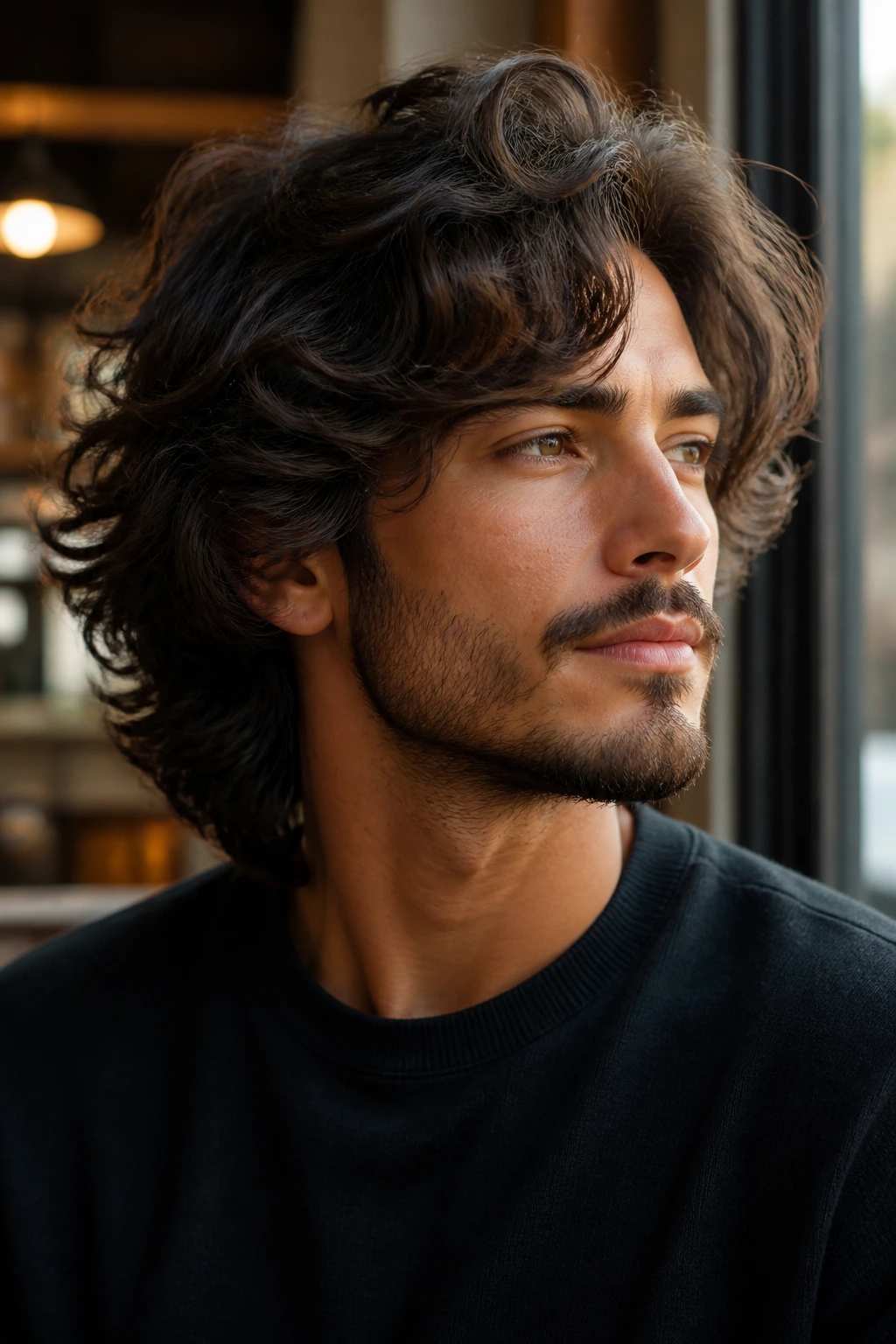
Thick curls look expensive when they move. That’s the short version of the bro flow.
This cut keeps the hair medium to long, usually brushing the ears and grazing the collar, then uses layers to stop it from turning into one huge sheet. The point is flow, not bulk. If your hair is dense, the layers are what let the curls fall instead of sticking out at the sides.
A bro flow works best when the ends are soft and the shape is a little loose. You do not want a perfect outline. You want the hair to look like it naturally settles into place after a quick push back with the hands. A little conditioner goes a long way here. So does patience. Thick curly hair at this length can take a while to dry.
This is one of my favorite cuts for guys who hate the feeling of short hair but also hate fussing with it. It reads casual, but not careless. That difference matters.
15. Textured Ivy League Curls
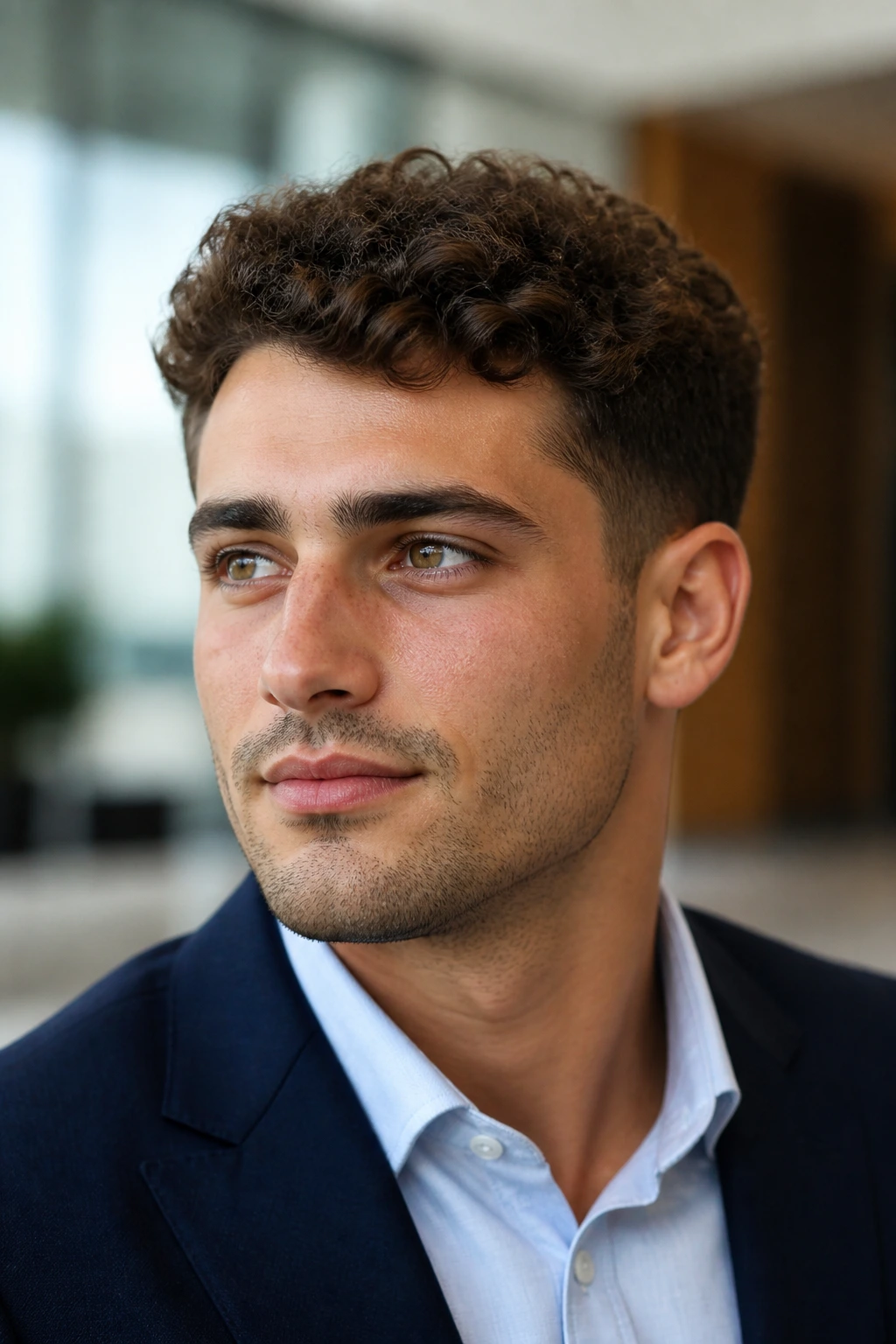
Can a curly Ivy League still look clean? Absolutely. It just needs a little more respect than the straight-haired version.
Keep the top short to medium, around 1.5 to 3 inches, and let the curls keep their texture instead of forcing a glassy side part. The sides can be tapered low or mid, which keeps the overall shape neat. The result is tidy, but not flat. That’s the whole point.
How to Keep It Sharp
The front should be controlled, not puffed up. Ask your barber to soften the top with texture shears and leave enough room near the hairline for the curls to settle naturally. A tiny bit of cream or mousse is enough. Heavy pomade will make it look greasy before lunch.
This cut is a good choice if you want something professional without looking stiff. It works in offices, weddings, dinners, and anywhere you want the hair to say “I made an effort” without shouting it. It also grows out nicely, which is rare for short curly cuts.
16. Disconnected Curly Top
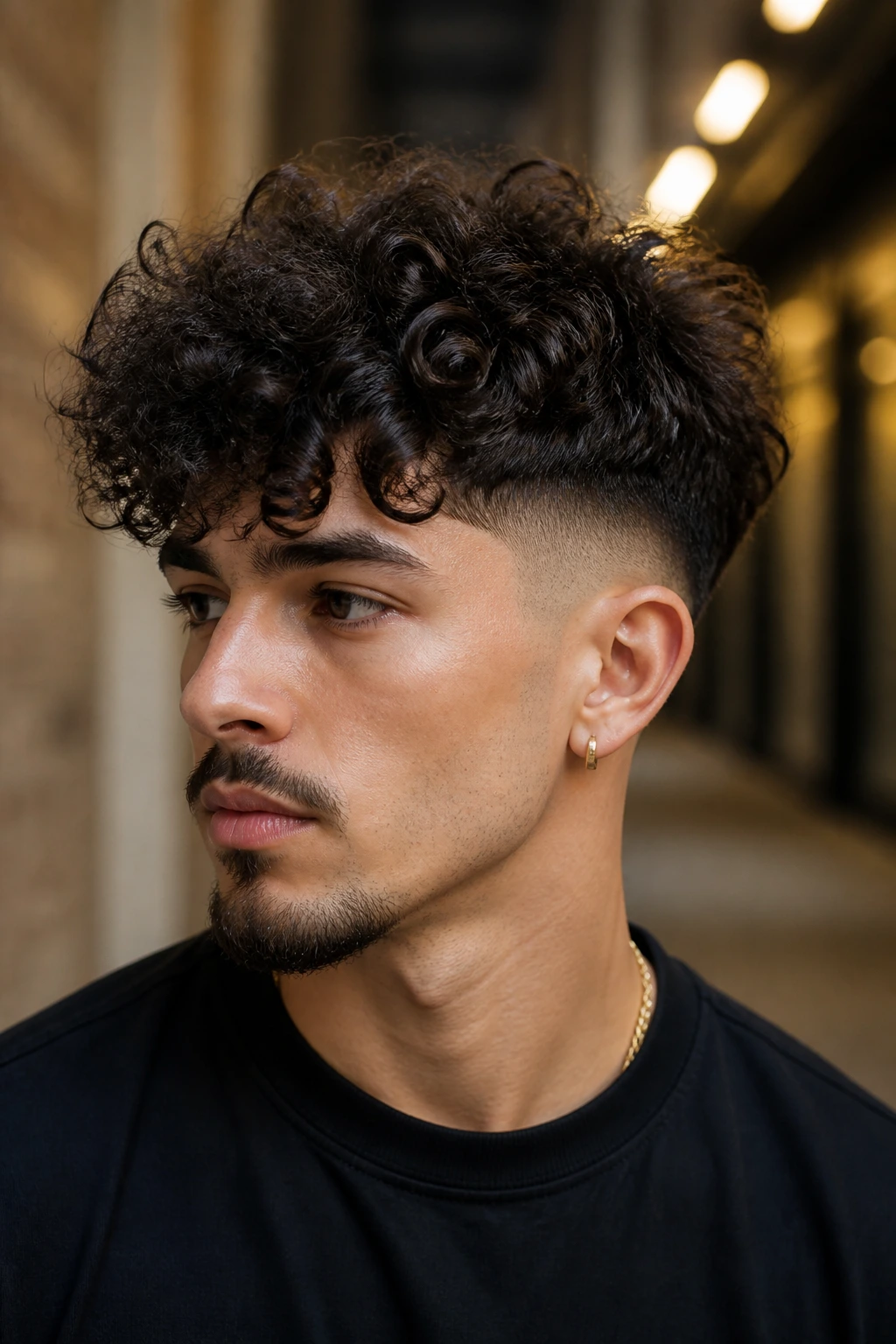
A disconnected curly top is not subtle, and that’s exactly why people like it. The long curls sit on top of very short sides with a visible break between the two sections.
That break matters. It keeps thick hair from blending into one giant shape and makes the curls on top look fuller by contrast. The top usually sits around 4 to 6 inches, while the sides can be taken down to a #0.5 or #1 guard. No blending. No apology.
What Gives It Its Edge
This cut works best when the top has enough weight to fall naturally. If the top is too short, the disconnect looks accidental. If it’s long enough, the style has real presence. It’s a strong fit for guys who want a modern, bold cut without needing extreme length.
The downside is maintenance. You’ll see the grow-out line fast. The upside is that the shape stays interesting even when it softens a little. I’d recommend this one for thicker curl patterns that hold form well and don’t collapse the second the barber cape comes off.
17. Curly Mullet With Tapered Nape
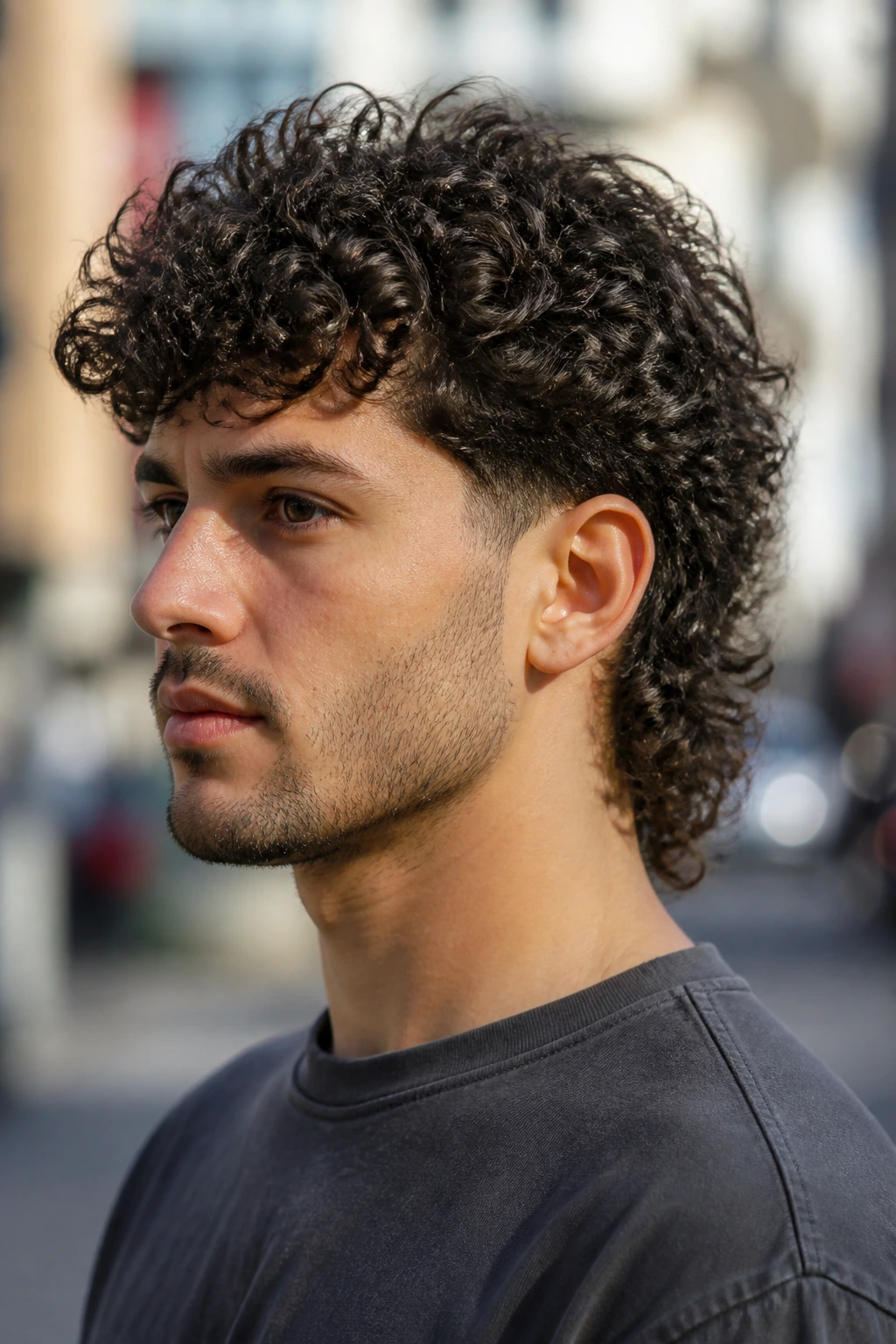
This one is for men who know exactly what they want, or at least think they do. The curly mullet with a tapered nape keeps the front and top controlled while letting the back stretch out enough to show off the curl pattern.
The taper at the neck is what saves it from looking ragged. Without that, the mullet turns into a shapeless grow-out. With it, the cut feels deliberate. The sides can stay relatively short, the crown can keep some lift, and the back can run a bit longer—usually 2 to 4 inches more than the sides.
It suits thick curls because the texture gives the shape movement. Straight hair can look flat in a mullet. Curls make it interesting. Not every man wants that, and that’s fine. This cut has personality in a way a clean fade never will.
If you like a haircut that gets noticed, this is one of the stronger options on the list. If you hate attention, skip it.
18. Shoulder-Length Layered Curls
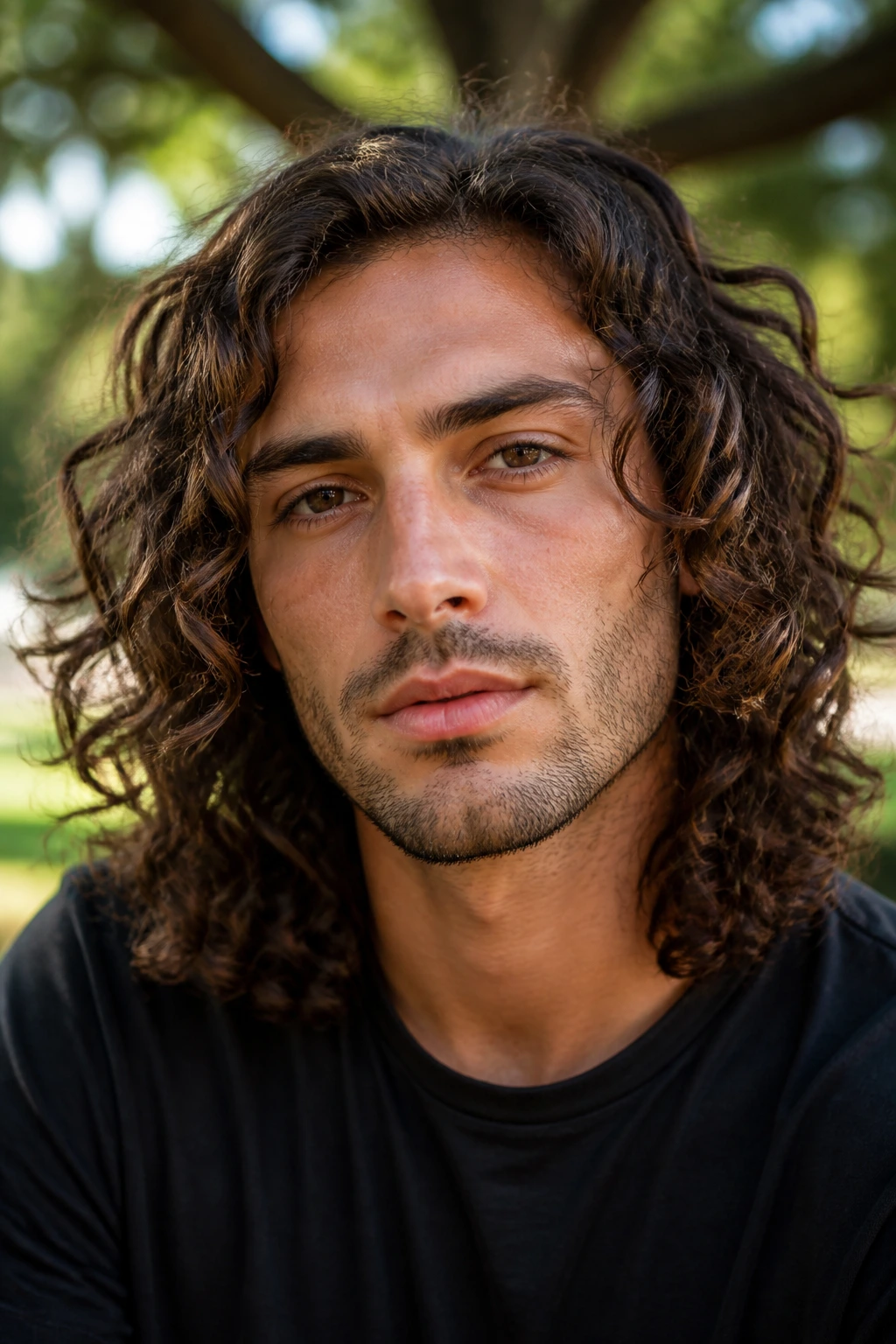
Unlike shorter cuts, shoulder-length layered curls need patience more than product. You are not trying to “control” the hair so much as keep it from stacking up at the bottom.
The layers are the whole game. Thick curly hair at this length will form a triangle if the weight stays at the ends. Long layers remove that bulk and let the curls fall in a looser line. Ask for shaping around the face, too, because heavy front pieces can drag the whole style down.
Why the Layers Matter
Without layers, shoulder-length curls can look like a blanket. With them, the hair gets movement and a better silhouette. This cut works especially well if your curls form defined ringlets or loose coils, because the pattern stays visible as the hair moves.
You’ll need conditioner more often, and a deep mask every so often won’t hurt. Detangling in the shower with your fingers or a wide-tooth comb helps, too. This isn’t a fast haircut. It’s a commitment. Still, if you want length and density to work together instead of against each other, it’s hard to beat.
19. Curly Flat Top
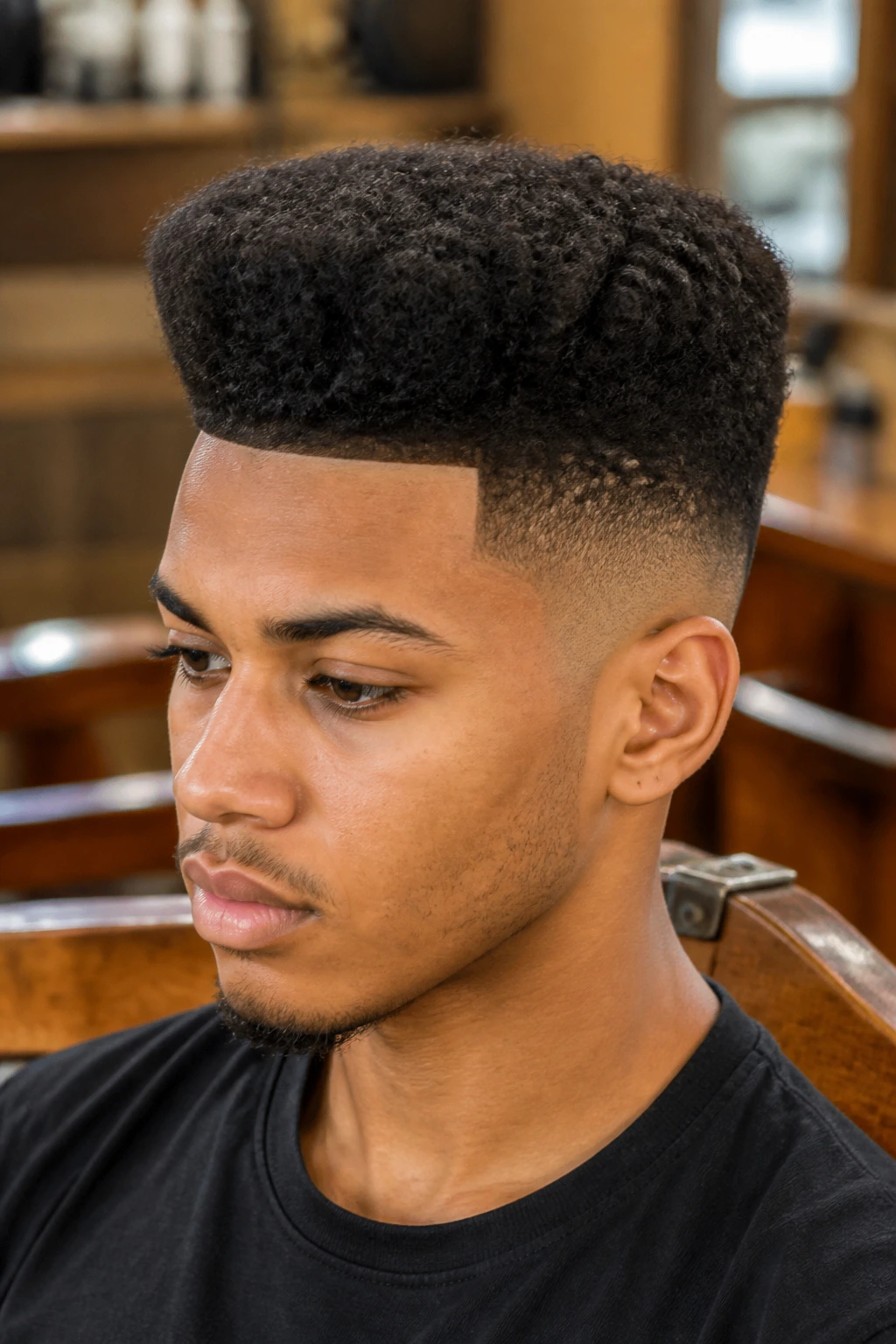
The curly flat top is bold, boxy, and unforgiving if the barber gets lazy. When it’s done well, though, it uses thick curl density to create a clean shape that stands up on its own.
This cut depends on strong structure. The top is cut level across, often with the sides tapered or faded short so the upper shape reads clearly. The silhouette can sit around 2 to 4 inches tall depending on the curl pattern. Tight curls make this style easier; loose curls can be trickier because the top may want to collapse at the edges.
Barber Notes
- Keep the top even across the head
- Clean the perimeter with a line-up
- Taper the sides to reduce width
- Check the shape dry before you leave
A flat top is not for everyone. It can look fantastic on men with very dense curls and strong facial features, but it asks for confidence. It also needs regular line-ups, because even a little grow-out changes the geometry fast. If you want a haircut with attitude, this is one of the loudest on the list.
20. Blunt Fringe With Tapered Sides
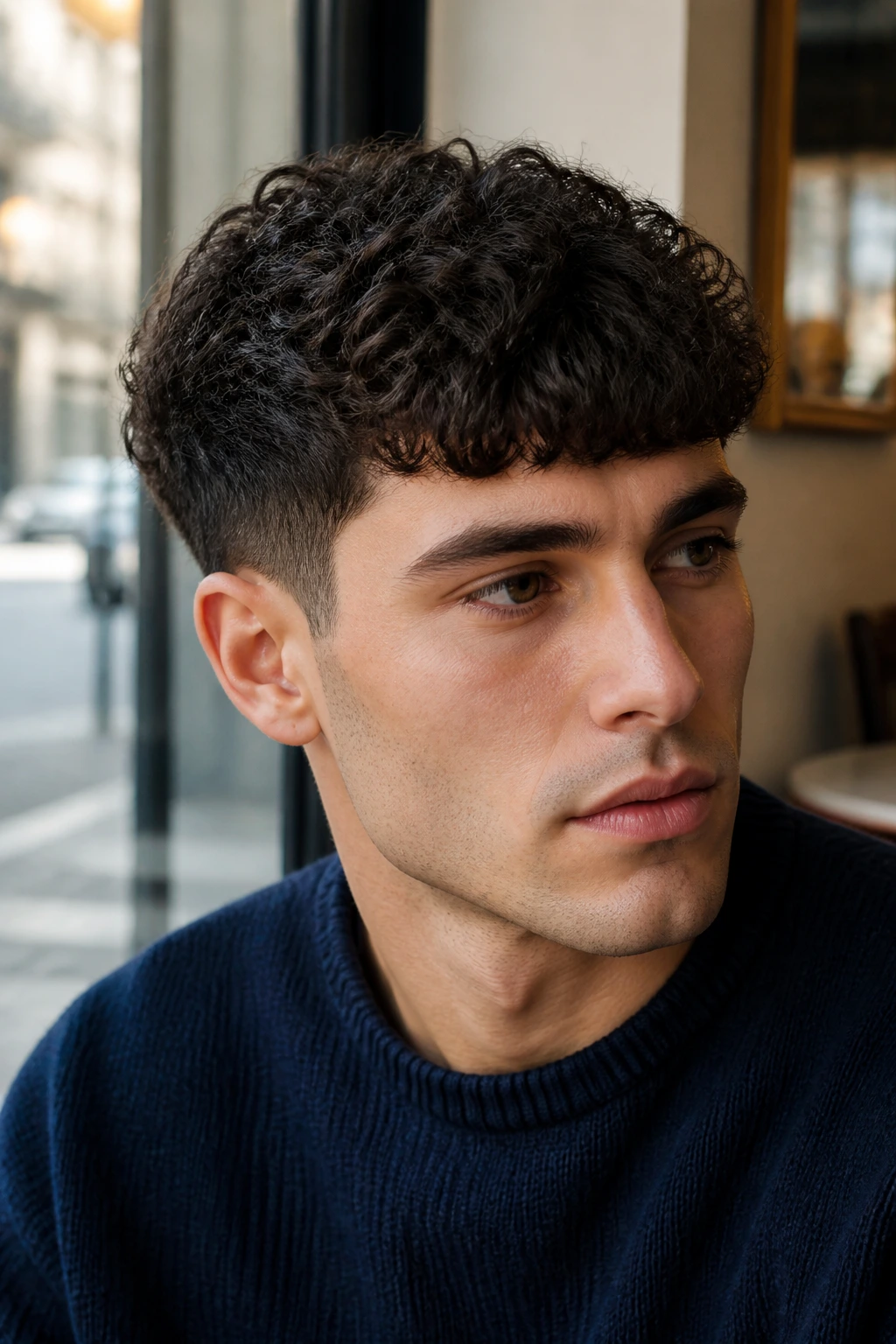
A blunt fringe on curly hair can be a killer look, but only if you keep the sides under control. Otherwise, the top and sides compete, and the haircut turns heavy.
The fringe usually lands somewhere around the eyebrows or just above them, depending on shrinkage. The tapered sides keep the shape neat while the front creates that strong, straight-across visual line. It feels fashion-forward without needing a dramatic fade.
The main thing to watch is length. Thick curls shrink more than people expect, so the fringe needs extra room. A cut that looks slightly long when wet often settles into the right spot once dry. If the barber cuts it too short, there is no fixing it until it grows.
I like this style on guys who want something a little more editorial. It looks especially good if you wear darker frames or a beard, because the clean front line gives the face a stronger frame. A little texture at the ends keeps it from feeling helmet-like.
21. Brush-Up Curly Top
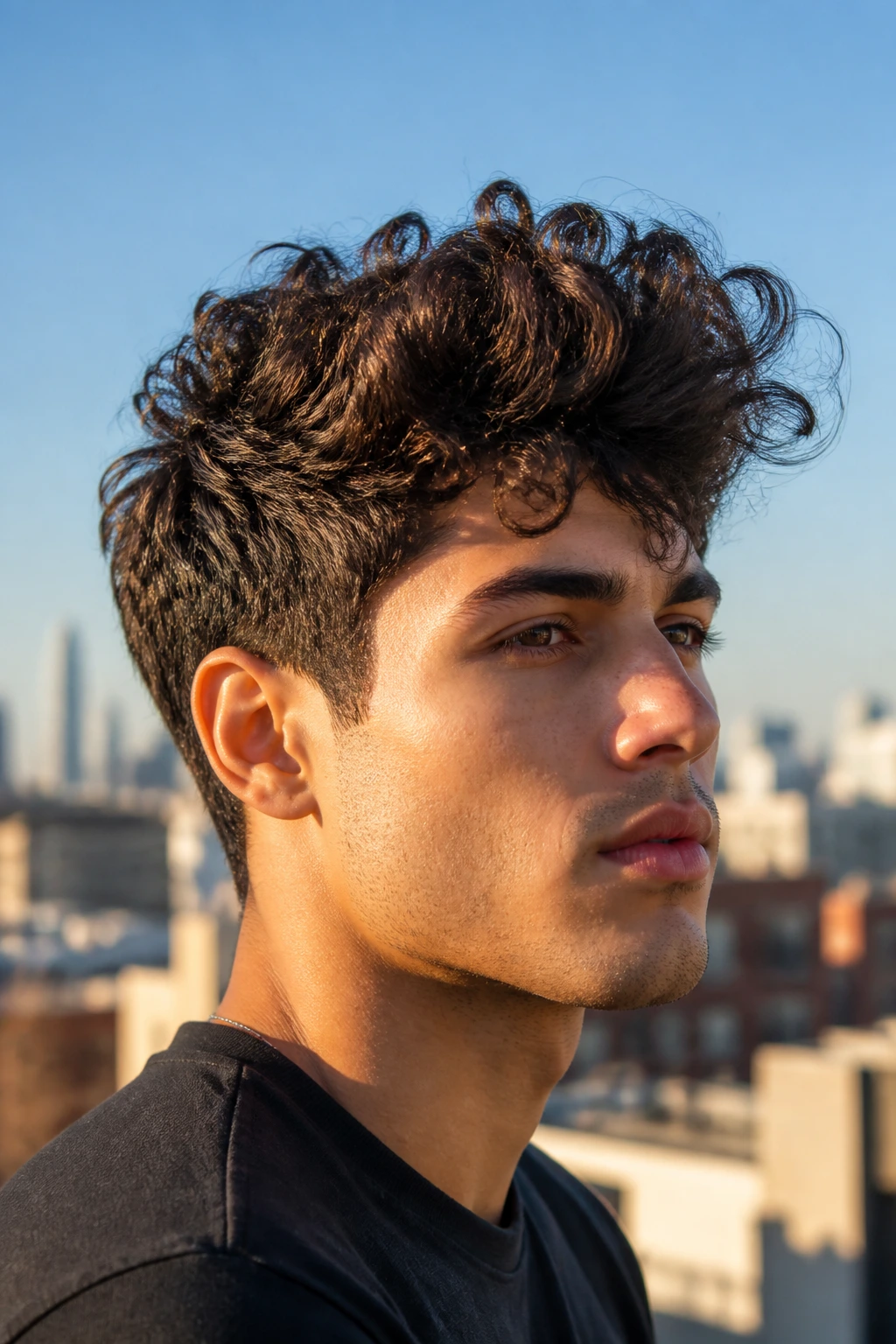
Can curls stand up without turning into a hedge? Yes, if the barber leaves the right length and you keep the sides in check.
The brush-up is a softer cousin of the quiff. Instead of pushing the hair straight back, you lift the curls upward from the front and crown so the shape has height but still looks airy. A top length of 3 to 4 inches usually does the job. The sides can be tapered or faded, depending on how sharp you want the finish.
How to Style It
- Start with damp hair, not soaking wet hair
- Work in a small amount of cream at the roots
- Blow-dry upward with a diffuser
- Use fingers to separate the curl clumps
The result is more relaxed than a pompadour and less fussy than a high quiff. It suits men who want height but not polish. If your curls are dense and tend to fall forward, this cut can open up the face without looking overdone.
22. Classic Taper Afro
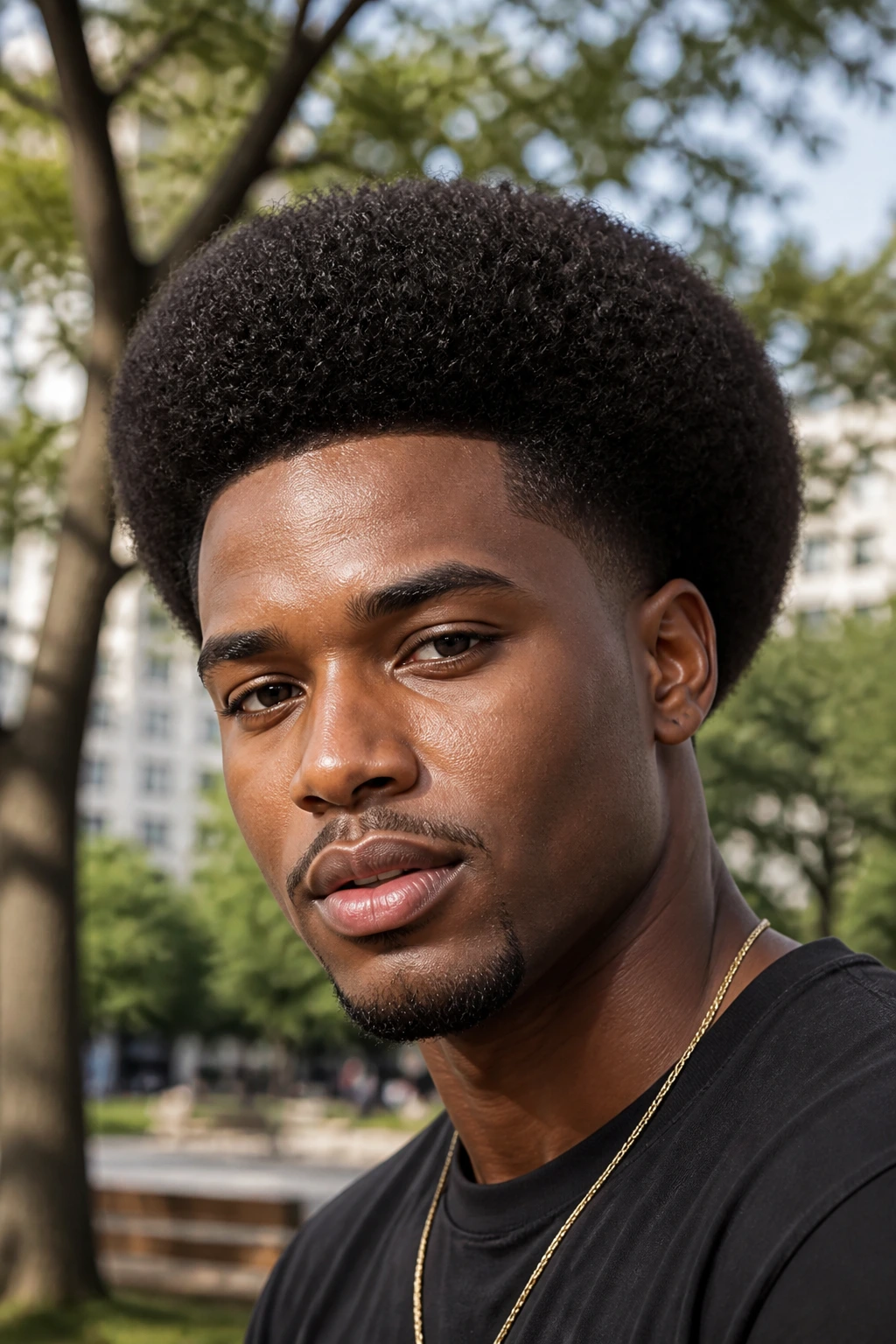
A classic taper afro has one job: keep the silhouette rounded and clean while letting the curls or coils do what they naturally do.
The taper around the temples, sideburns, and nape keeps the shape from feeling heavy at the edges. That’s what separates a good afro cut from a rough grow-out. The top stays fuller, the outline stays controlled, and the whole style feels balanced. On thick hair, that balance matters more than any one detail.
Why It Lasts
The afro shape ages well because it isn’t built on a fad. It’s built on proportion. The barber trims the perimeter, keeps the top rounded, and follows the head shape instead of chopping a square into it. For men with dense coils or tight curls, that creates a clean profile with almost no wasted effort.
A shape-up every 2 to 3 weeks keeps it looking crisp. You can stretch that longer if you don’t mind some softness at the edges. I wouldn’t over-style it. Moisture, a little pick at the roots, and a steady hand are usually enough.
23. Curtain Fringe With Loose Curls
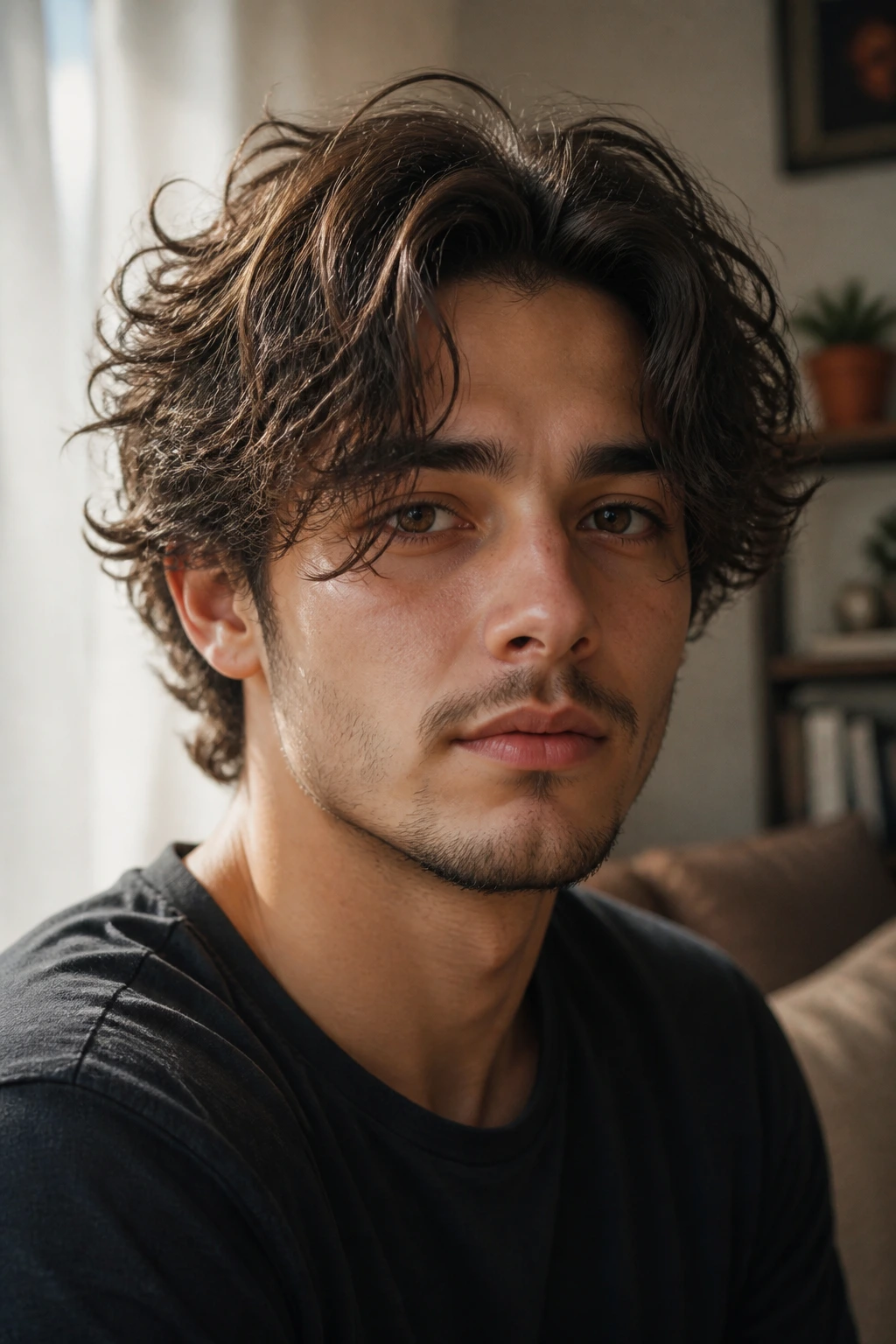
Curtain fringe works best when the curls are loose enough to split and fall around the face instead of standing straight out. Thick hair helps here, because the density gives the curtain shape some weight.
The top usually needs 4 to 6 inches, with the front left long enough to part near the center or slightly off-center. The sides can be tapered softly so the fringe becomes the main feature. If the curl pattern is too tight, the curtain effect gets lost. If it’s loose enough, the style looks easy in the best way.
This cut has a younger feel, but it isn’t childish. It frames the forehead and softens the edges of the face, which is useful if you have a strong jaw or broad features. A bit of leave-in conditioner is enough to keep the fringe from frizzing out.
I like this cut on men who want movement without a hard line. It feels casual, and that’s the point. The hair should look like it fell into place, not like it was arranged by committee.
24. Wavy-Curly Comb Over
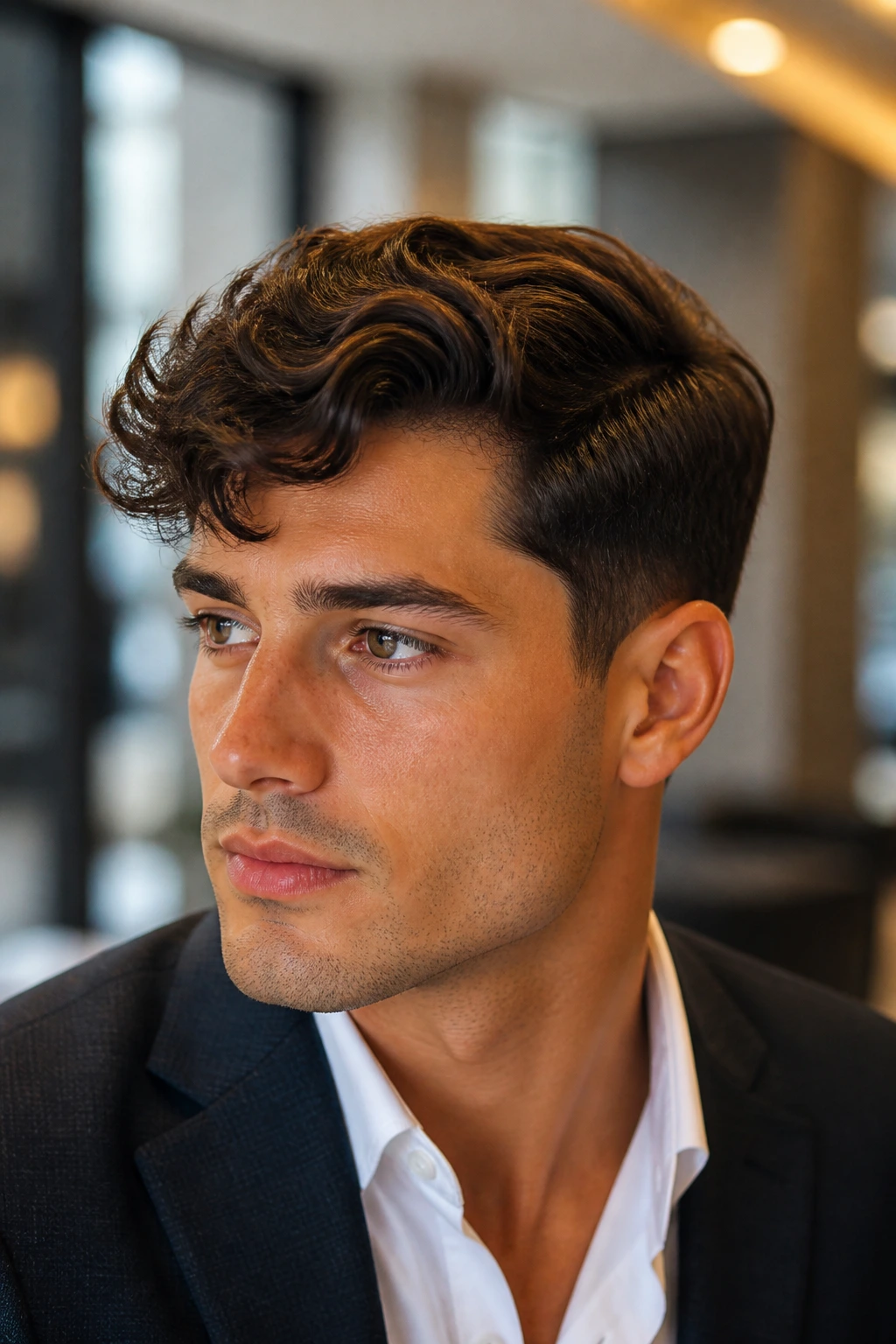
A curly comb over is not the same animal as the straight-haired version. Straight hair needs polish. Thick wavy curls need direction and a little space to breathe.
That’s why this cut works best with a soft side taper and a longer top, usually 3 to 5 inches, so the hair can sweep over without losing texture. If you force the curls flat, the whole style turns stiff. Leave the movement in place and guide it instead of wrestling it down.
How to Keep It from Looking Stiff
Use a light mousse or a thin cream on damp hair, then part it with your fingers or a wide comb. A hard part can work, but a softer part usually looks more natural with curls. The goal is to create a line, not a helmet.
This is a smart option if you want something clean for work but still want your curls to show. It reads mature without being dull. And unlike a slick comb over, it does not need a mountain of product to hold its shape.
25. Wolf Cut for Thick Curls
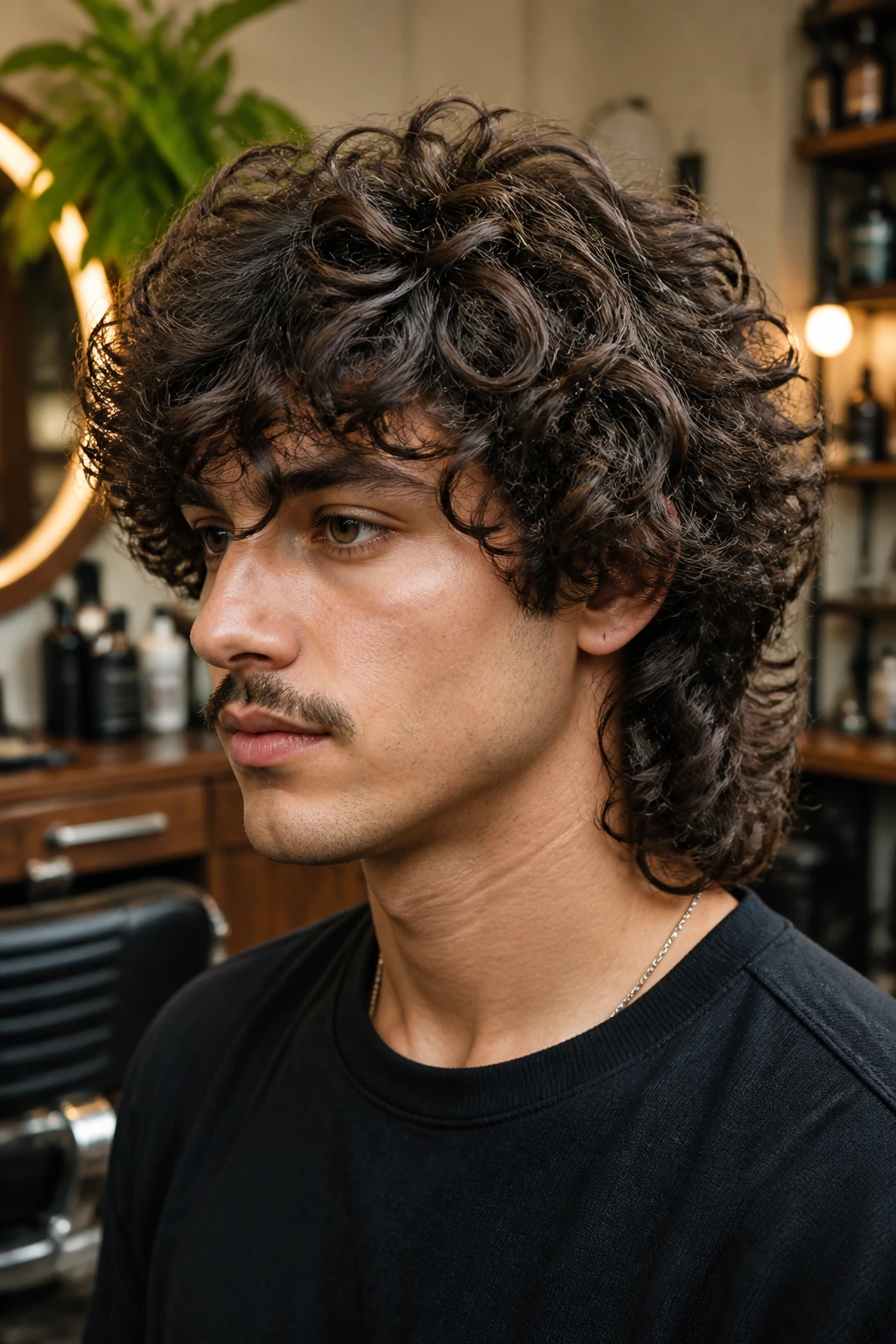
If you want movement, layers, and a little chaos in the best sense, the wolf cut is one of the strongest choices for thick curls. It borrows from the shag and the mullet, then cuts enough layers to let the curls sit high through the crown and looser through the ends.
The beauty of this cut is that it turns density into shape. Thick hair can handle the stacked layers, and the curl pattern keeps the style from looking flat. The top usually stays medium length, while the back carries a little more length for that shaggy finish. The sides are layered enough to avoid the triangle effect, which is the whole battle with thick curls.
What to Ask For
- Heavy layers through the crown
- Soft, feathered ends instead of blunt lines
- A little extra length in back
- Face-framing pieces that fall naturally
This cut is not tidy. That is the appeal. It looks better when it has some air in it, and it works especially well if your curls have a loose-to-medium bounce. Use a leave-in conditioner, scrunch the hair, and let it dry without overhandling it.
A wolf cut is a good last stop for guys who have tried the neat options and want something with more personality. It keeps thick curls from looking too managed, and honestly, that’s part of the charm.
