



A formal haircut can rescue a lot of bad outfits. The right formal hairstyles for men make a plain suit look deliberate instead of borrowed, and they do it without shouting for attention. That’s the sweet spot: neat, controlled, and sharp enough to hold up under bright lights, a long dinner, or the slightly unforgiving mirror in a hotel bathroom.
What people often miss is that “formal” does not mean stiff. It means the shape is intentional. A side part can look boardroom-ready. A curly taper can look polished if the edges are tidy and the texture is controlled. Even longer hair can read formal when the ends are trimmed and the styling is disciplined, not heavy-handed.
The details matter more than the headline style. A clean neckline, a balanced sideburn, and the right amount of shine do half the work before anyone notices the cut itself. That’s why a good barber doesn’t just cut length; they control silhouette, weight, and how the hair falls after you’ve been wearing it for three hours.
The best place to start is with your hair type, your length, and how much effort you’re willing to put in before you leave the house. After that, the options open up fast.
What Makes a Men’s Hairstyle Look Formal

A hairstyle reads as formal when it looks planned. The outline is neat. The sides are controlled. The top has shape, not chaos. If you’ve ever seen someone in a tux with a haircut that still looked like they rolled out of bed, you already know how much this matters.
There are four details I check first: the hairline, the sides, the finish, and the neck. The hairline should look clean but not carved to death. The sides need either a taper or a fade that blends without harsh shelves. The finish can lean glossy or matte, but it should never look greasy. And the neckline? That tiny strip of hair at the back can ruin an otherwise solid cut if it’s fuzzy.
The small things that change the whole look
- A side part adds structure without needing much length.
- A taper keeps the haircut from looking bulky around the ears and neck.
- A controlled shine finish feels dressier than a dry, fuzzy surface.
- A tidy beard line helps the haircut read cleaner, even when the hair on top is simple.
One more thing. A formal haircut should still look good after you move around. If the style collapses the second you walk into humidity or sit under warm lights, it was never that formal to begin with.
Picking Formal Hairstyles for Men by Hair Type

The easiest haircut to admire in a photo is not always the easiest one to wear in real life. Straight hair takes parts and slick styles well. Wavy hair likes controlled movement. Curly and coily hair usually look best when the shape is defined and the sides are kept tight enough to create contrast.
Straight hair
Straight hair is the easiest to separate into neat sections, which is why side parts, Ivy League cuts, and comb-overs sit so naturally here. You can get away with less product than people think. A pea-sized amount of pomade or cream often does the job.
Wavy hair
Waves are useful when you want polish with a little life in it. A textured quiff, brushed-back style, or longer curtain cut can look formal if the waves are guided instead of flattened.
Curly and coily hair
Curly hair reads formal when the shape is intentional. That usually means a clean taper, shaped edges, and enough moisture to keep frizz from turning the cut fuzzy by noon.
Longer hair
Longer hair needs discipline. Trim the ends every 6 to 10 weeks, keep the parting deliberate, and avoid loading it with too much product. Loose does not have to mean messy.
Products That Keep Formal Hairstyles for Men in Place

The product matters almost as much as the cut. A formal haircut can look underdone with the wrong finish, or heavy and greasy with too much of the right one. I like to think about hold first, shine second, and texture third.
What to reach for
- Water-based pomade for slick sides, side parts, and comb-overs. It gives shine and washes out easier than oil-based products.
- Matte clay for quiffs, crops, and textured styles. It adds grip without turning the hair shiny.
- Styling cream for longer hair, curls, and anything you want to look controlled rather than stiff.
- Light hairspray to lock the shape after combing or blow-drying. A few passes are enough.
- Heat protectant if you use a blow dryer. Dry heat can flatten the cuticle and make hair look dull.
Tools that actually help
A fine-tooth comb gives you cleaner lines for parts and slick styles. A boar-bristle brush helps distribute product and smooth the surface. A blow dryer with a nozzle is underrated; it directs airflow so you can set volume where you want it instead of blasting hair into random directions.
If you only buy one styling product, buy the one that matches the haircut you wear most often. The wrong jar will sit in the cabinet forever.
1. Classic Side Part
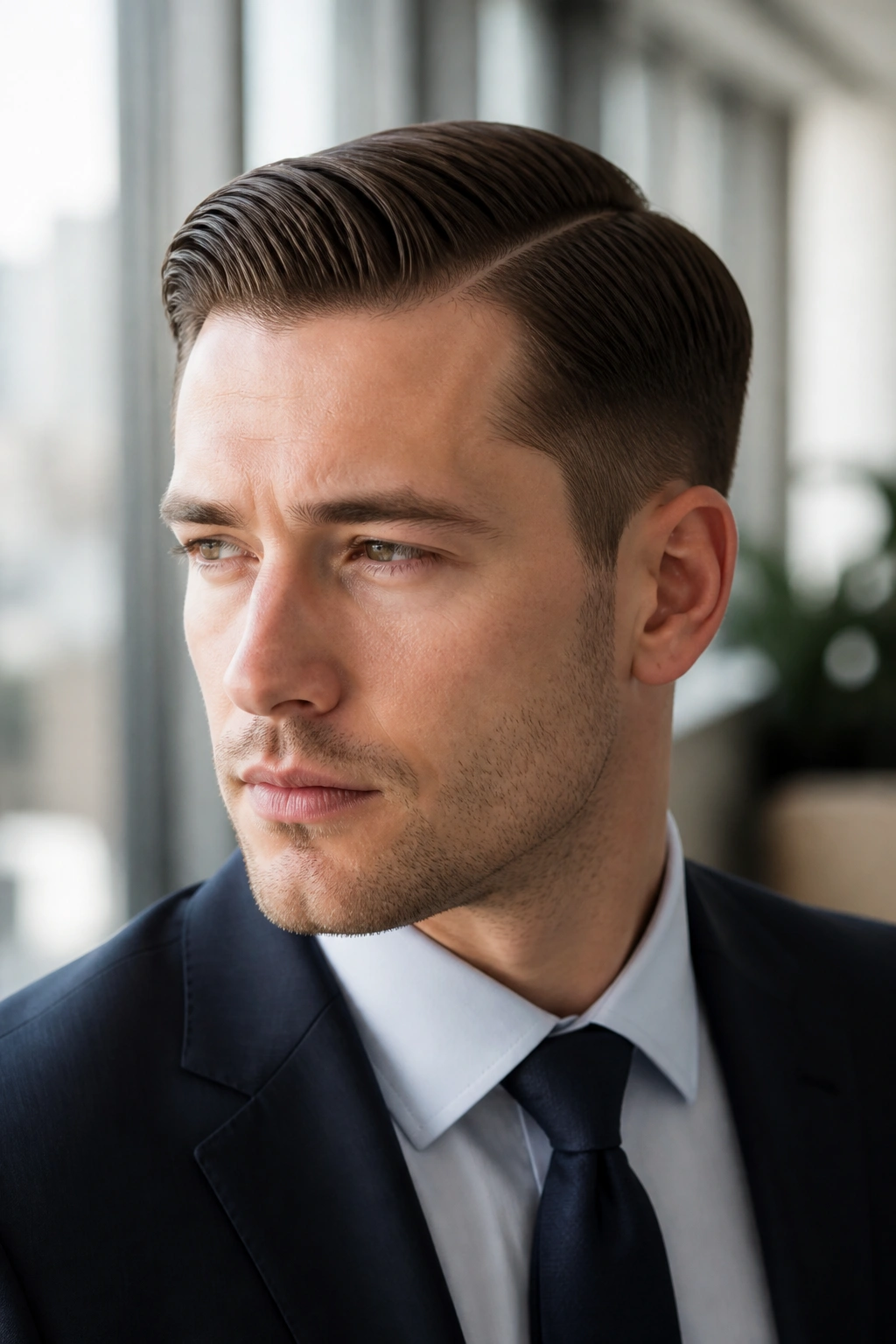
A classic side part is the old reliable of formal men’s haircuts. It works because it gives the eye an obvious structure: one clean line, one controlled sweep, and a shape that looks finished even with very little product.
Why it still works
The cut usually sits best with 2 to 4 inches on top and a taper on the sides. That’s enough length to create a clear part without making the style floppy. Ask for the part to be visible but not razor-drawn unless you want a sharper, more modern edge.
- Use a small amount of medium-hold pomade.
- Comb the hair while it’s still slightly damp.
- Keep the sideburns neat and the neckline clean.
- Finish with a light mist of hairspray if your hair is thick or coarse.
Best for: office settings, interviews, weddings, and anyone who wants a haircut that never looks out of place.
2. Slicked-Back Taper
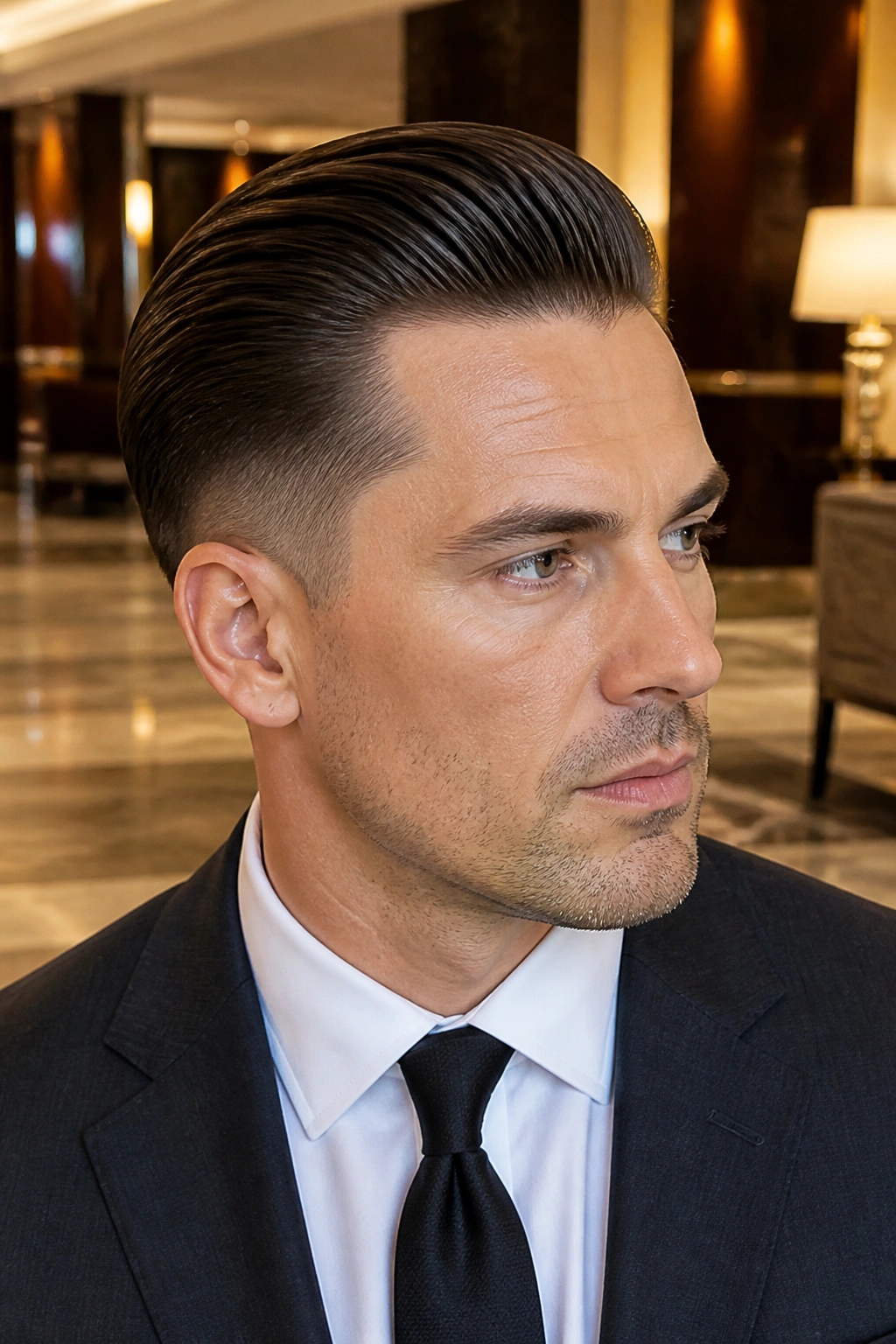
The slicked-back taper is the haircut equivalent of a dark suit with a crisp white shirt. It’s direct. It’s clean. And when the taper on the sides is done well, it looks sharper than most people expect.
Start with hair that’s around 3 to 5 inches on top and shorter through the sides, then use a comb and a blow dryer to guide the hair straight back. The trick is not drowning it in product. Too much pomade turns the roots flat and gives the whole thing a greasy shine that belongs nowhere near a formal event.
I prefer a water-based pomade here because it gives control without making the style feel heavy. Work it through damp hair, not soaking wet hair. That little difference matters. Damp hair holds direction better, while wet hair tends to slip and separate.
This style works especially well if your hairline is strong and your face already has some structure. It can look a bit severe on very round faces, which is not a dealbreaker, just something to keep in mind.
3. Ivy League

Why does the Ivy League keep showing up in formal style conversations? Because it sits in that sweet middle ground between “short and tidy” and “styled enough to matter.” It has the polish people want, but it doesn’t look like you spent half an hour getting ready.
The usual shape leaves about 1.5 to 3 inches on top, with the front long enough to sweep to one side or slightly upward. The sides are tapered or neatly faded, which keeps the cut from puffing out around the ears. That balance is what makes it dressy.
How to wear it
A small amount of cream or light pomade is usually enough. Comb it into place, then break the surface with your fingers so it doesn’t look too hard. If your hair is straight, the result looks neat and precise. If it’s wavy, the texture gives it a bit more character.
This is one of those cuts that gets better when the barber leaves enough room to move. Too short, and it becomes a basic crew cut. Too long, and it starts drifting casual. There’s a narrow sweet spot, and it’s worth asking for by length rather than by vague words.
4. Short Pompadour

I’ve seen the short pompadour save more dressy looks than I can count. Someone wears a fitted blazer, decent shoes, and then realizes their haircut is the weak link. A small pompadour fixes that fast, because it adds height and shape without turning the whole head into a retro costume.
The version that works best for formal wear usually keeps 3 to 4.5 inches on top and a low taper or fade on the sides. The front gets lifted with a brush or comb, then pushed back just enough to create a clean curve. You want height, not a helmet.
What makes it practical
- Blow-dry the front section upward first.
- Use a round brush if your hair is fine and needs a bit of body.
- Add a medium-hold clay or pomade depending on whether you want shine.
- Keep the sides tighter than you think, or the shape looks too broad.
It’s best for men who want a formal cut with presence. Not loud. Just visible.
5. Textured Quiff
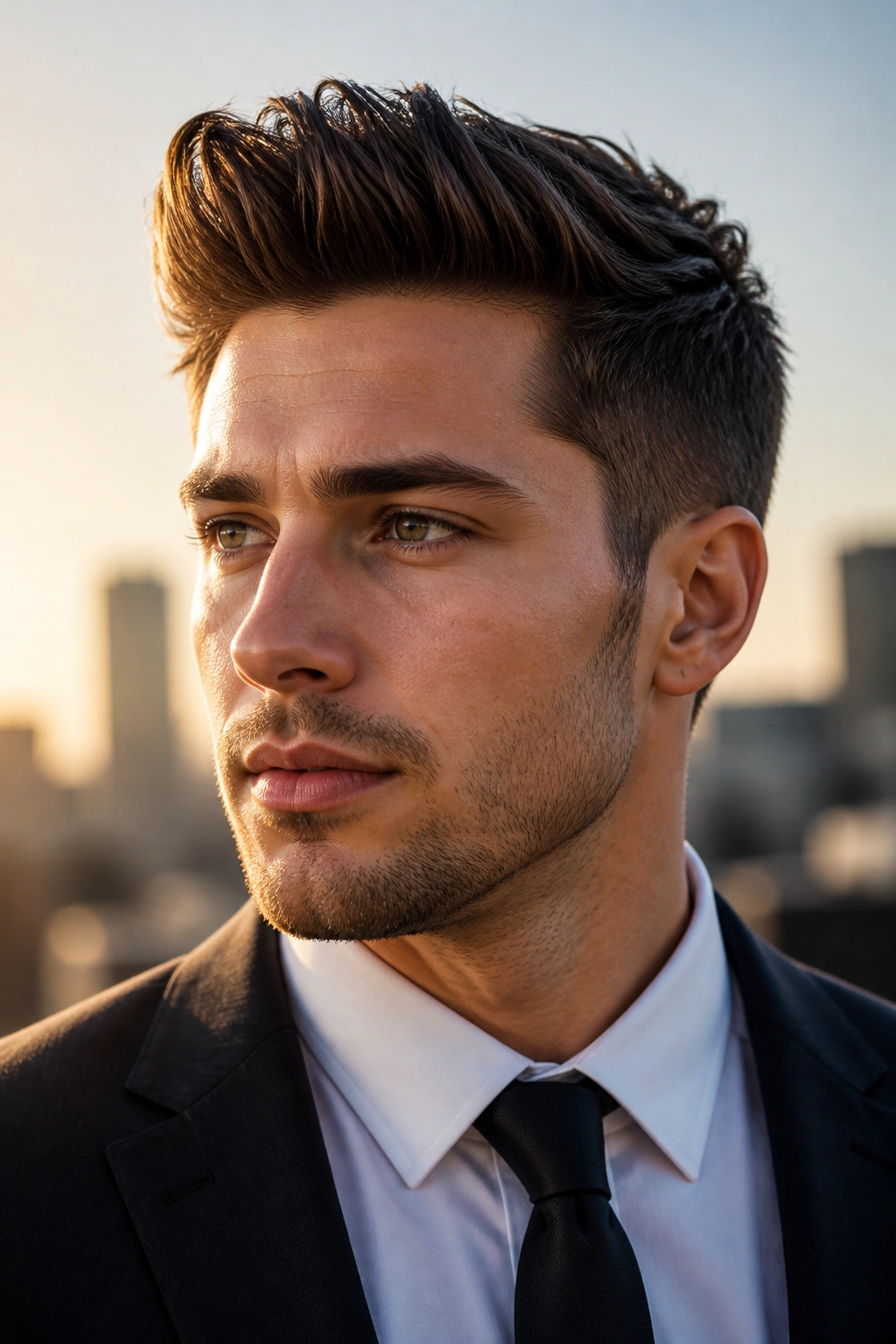
The textured quiff is the formal cut for men who don’t want their hair to look pressed flat against their skull. It keeps the front lifted, but the texture stops it from feeling stiff or overly groomed.
A good quiff needs enough length to build shape, usually 3 to 5 inches on top, with shorter sides that create contrast. Blow-drying matters here more than product. If you skip the dryer and try to force the volume with paste alone, the hair tends to slump.
The better approach is simple: dry the roots upward first, then pinch the top with a matte product so the shape holds without getting shiny. A tiny bit of mess is fine. In fact, it helps. The formal part comes from the structure, not from making every strand obey.
This style works well for weddings, evening events, and dress codes that allow a little personality. It also flatters men with thicker hair because it uses density instead of fighting it. Thin hair can wear it too, but the cut needs clean layering so the front doesn’t go wispy.
6. French Crop

The French crop is a smart choice when you want formal without fuss. Compared with a quiff or pompadour, it keeps the hair lower and closer to the head, which makes the whole look feel neat and controlled.
The cropped fringe is the part that does the work. It sits straight or slightly textured across the forehead, while the sides stay tight with a taper or fade. The result feels clean, and on the right face shape it can look expensive without trying to look expensive. That’s a nice trait.
It’s especially useful if your hairline is starting to change and you’d rather not build a style around it. The crop lets the fringe do some covering while still looking intentional. Ask your barber for enough length in front to move, but not so much that the fringe falls into your eyes when you smile.
This is a strong option for formal events if you like a matte finish. A small amount of clay and a comb-through at the front is usually enough.
7. Crew Cut with a Taper

The crew cut gets dismissed as plain, which is unfair. With a clean taper and a neat neckline, it becomes one of the easiest formal hairstyles for men to wear, especially if you prefer a low-maintenance morning.
Why it works
A crew cut keeps the top short enough that it never falls out of shape, usually around 1 to 2 inches at the front and slightly shorter at the crown. The taper on the sides gives it a finished edge, and that’s what lifts it out of gym-only territory.
How to ask for it
- Ask for a slightly longer front so the hair can lean forward or up.
- Keep the sides blended, not boxed.
- Tell the barber whether you want a low, mid, or high taper.
- Use a dab of matte paste only if the top needs separation.
This cut is ideal for men who want to look sharp with almost no effort after the shower. It’s also one of the easiest haircuts to keep formal under a suit because it never fights with collars, ties, or jackets.
8. 360 Waves

360 waves are formal in a different way. They’re not about height or parting. They’re about precision. When the wave pattern is clean, the line-up is sharp, and the shine is controlled, the haircut can look incredibly polished.
The cut starts short, often with very close clipper work on top, then the wave pattern is built and maintained with regular brushing. A durag or wave cap helps hold the pattern overnight, and a light moisturizer keeps the hair from drying out and frizzing up. None of this is complicated, but it does ask for consistency.
The reason waves read formal is that they’re symmetrical. The texture moves in a pattern the eye can follow, which feels deliberate and neat. Pair that with a crisp edge-up, and the whole style gets dressed up fast.
If you wear waves with a suit, keep the beard line tidy and the shine moderate. Too much grease looks messy. The right amount looks finished.
9. Tapered Afro
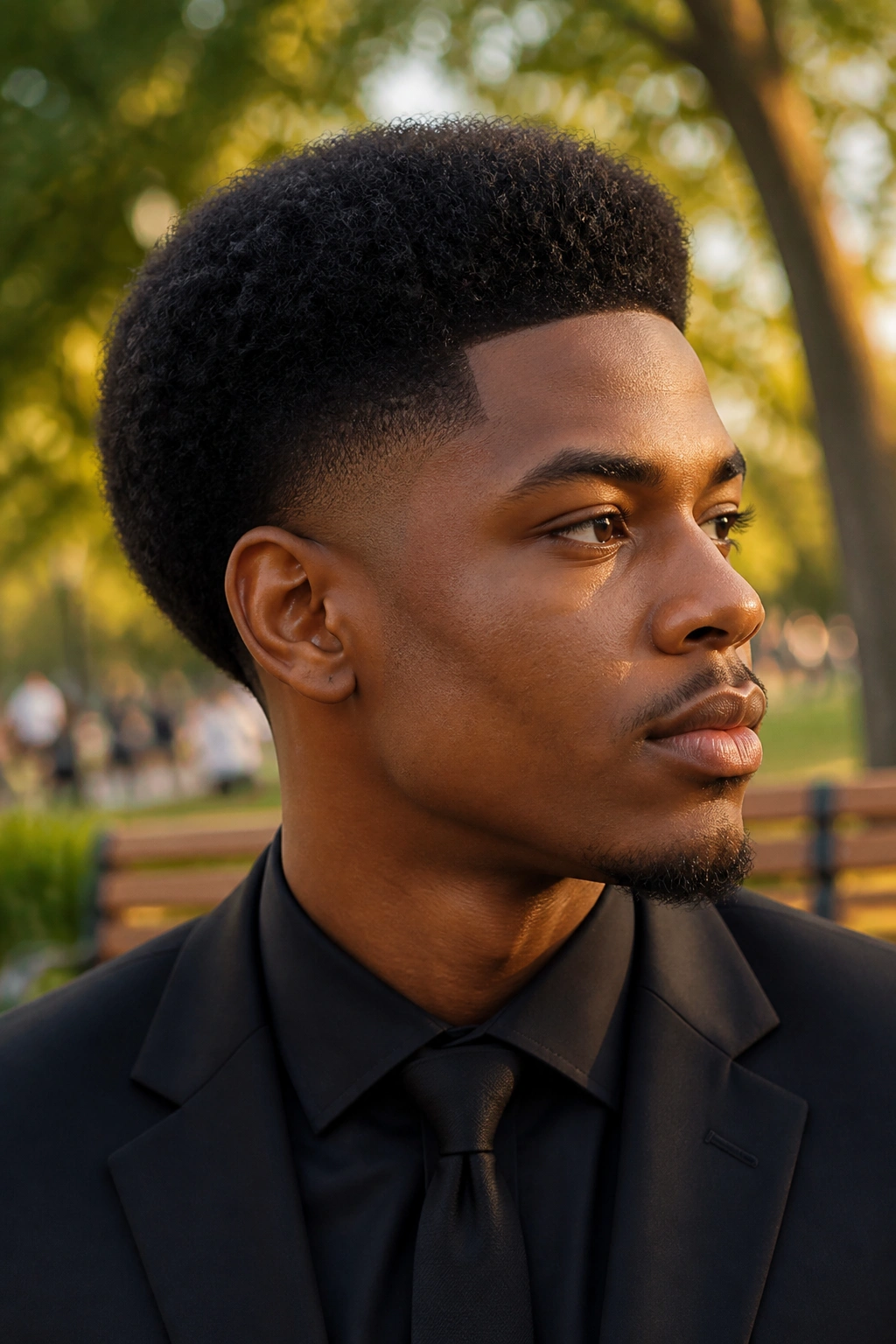
Can an afro look formal? Absolutely, if the shape is balanced and the sides are controlled. A tapered afro keeps the natural texture while trimming the silhouette so it sits clean around the head instead of spreading wide.
The key is the taper on the sides and back, which narrows the outline and gives the shape some lift. The top can stay rounded, but it should be trimmed into a deliberate dome, not left to grow wherever it wants. A shaped line-up around the forehead and temples helps a lot.
How to wear it well
- Moisturize first so the texture stays soft.
- Use a pick gently at the roots, not all the way through.
- Get the edges cleaned every 1 to 2 weeks if you want a crisp look.
- Ask for a shape that matches your head, not a generic round silhouette.
This style works especially well with formal wear because the texture adds character while the taper keeps it controlled. It’s one of the few cuts that can look both natural and sharp at the same time.
10. Hard Part Comb Over

A hard part comb over is not subtle. That’s the point. The shaved line gives the style definition right away, which makes the cut look deliberate even from across a room.
Think of it as a cleaner, sharper version of the standard comb over. The top is long enough to move across the part, usually 3 to 4 inches, while the sides are faded or tapered. The hard part gives the eye a fixed line to follow, and that visual break makes the hairstyle read dressier.
Key details to watch
- Keep the part shallow enough that it doesn’t look exaggerated.
- Use a comb with close teeth for cleaner separation.
- Apply a light or medium pomade depending on how much shine you want.
- Schedule trims regularly, because the hard part looks sloppy once it grows out.
This is a strong choice for men who like structure and don’t mind a style with a bit of edge. It works especially well for business settings, formal dinners, and sharp-looking daywear.
11. Caesar Cut
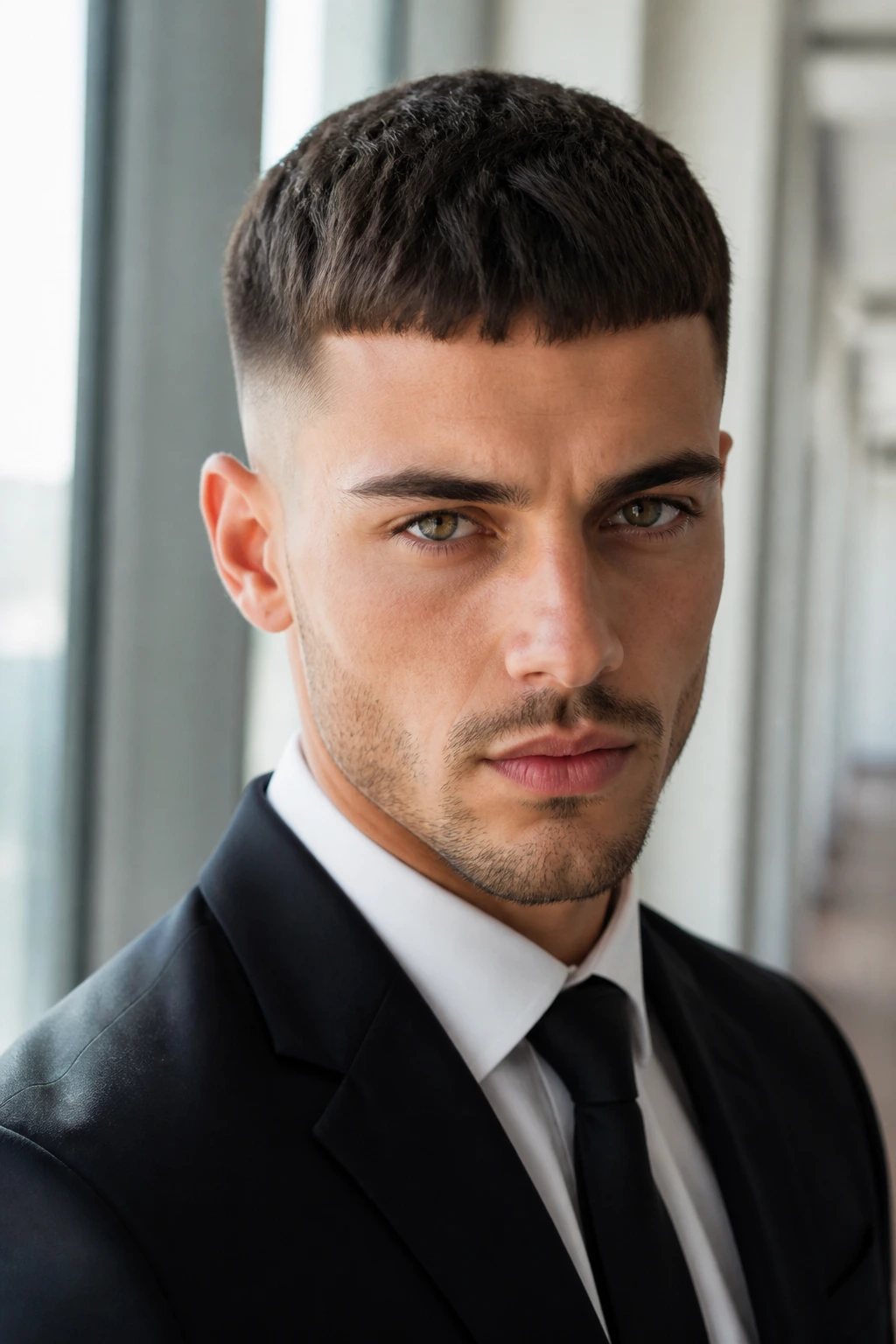
The Caesar cut is one of those styles that looks almost plain until you see it on someone with a sharp jawline and a clean fade. Then it makes perfect sense. The short fringe and even length give the haircut a tidy, settled feel.
The front is cut in a short horizontal line, usually with only a small amount of texture. The rest of the top stays short, and the sides can be faded or tapered for a cleaner profile. Because the shape is compact, it doesn’t need much product. A touch of matte cream is often enough.
This cut is a good formal option if you want to keep your routine simple. It’s low maintenance, but not boring when the edges are crisp. The clean fringe also works well under a hat or with a blazer, which sounds small until you realize how often hair fights with formal clothes.
It’s especially useful for thick hair that grows forward. Instead of trying to force that movement backward, the Caesar cut uses it.
12. Curly Top with Tapered Sides

Curly hair looks formal when the curls are shaped instead of bullied into submission. A curly top with tapered sides keeps the personality of the curl while cleaning up the shape enough for dressier settings.
Compared with a fuller curly shape, this version trims the bulk at the sides and back so the top becomes the focus. That contrast makes the haircut look intentional. A good curl cream or light leave-in conditioner helps the curls stay separated, and a diffuser can dry them without turning the surface frizzy.
What to ask your barber for
- A low or mid taper around the ears and neckline.
- Enough length on top to let the curls spring naturally.
- A rounded or slightly square shape depending on your face.
- Edge cleanup around the temples so the cut feels finished.
This is a good pick for weddings, formal dinners, and any event where you want texture without chaos. It also pairs nicely with a suit because the curls soften the look instead of making it severe.
13. Bro Flow
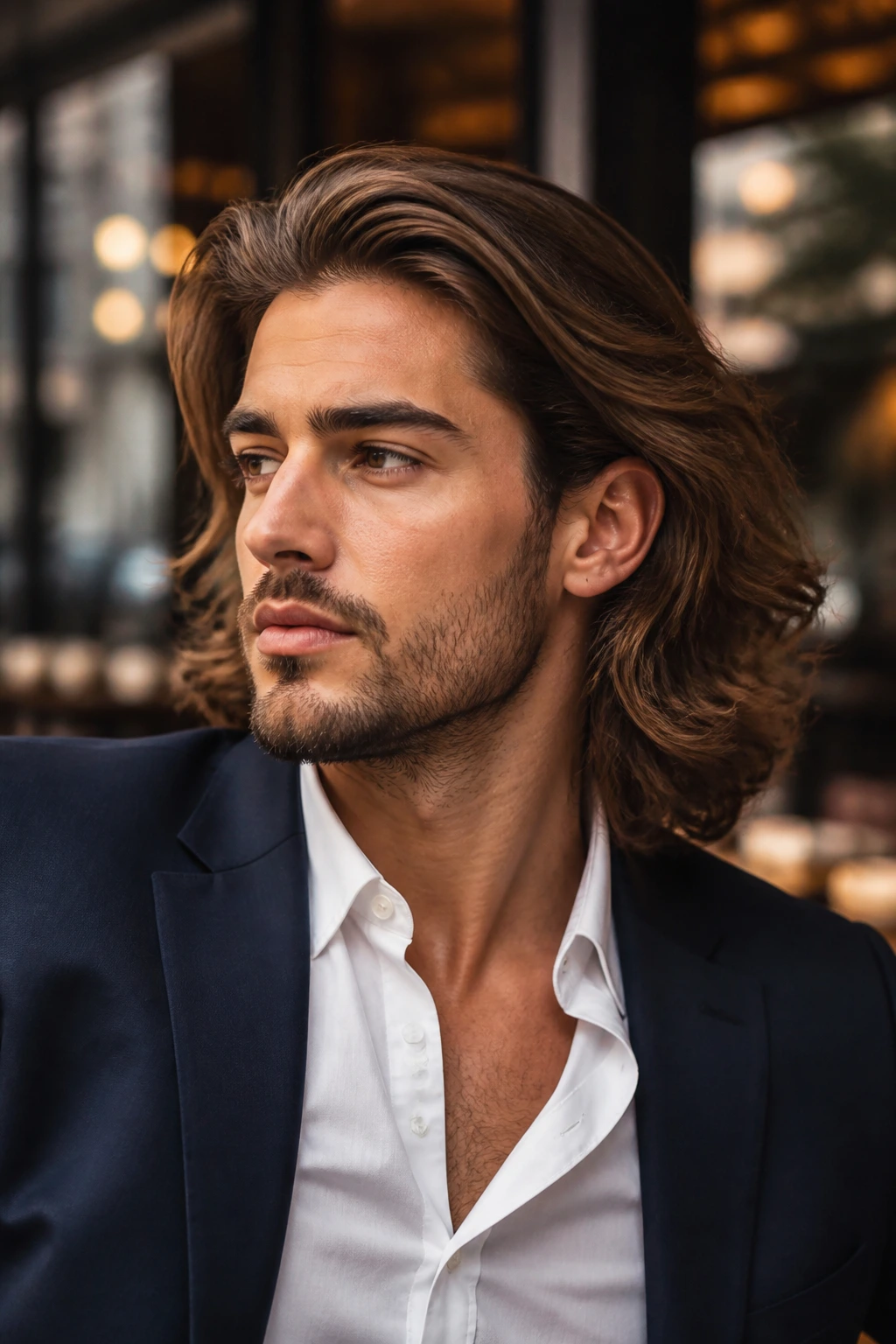
The bro flow gets a bad reputation because people picture it as lazy hair that just happened to grow long. A proper version is the opposite. It needs length, shape, and regular trimming, or it turns shapeless fast.
For formal wear, the trick is to keep the ends tidy and the top controlled. Hair usually needs 5 to 7 inches to fall back naturally, though some men need a little more depending on texture. Blow-dry it away from the face, then guide it back with a light cream. The goal is movement, not helmet-like hold.
A few practical rules
- Trim the ends every 6 to 8 weeks.
- Tuck the sides behind the ears if the length starts flaring outward.
- Use a small amount of leave-in or styling cream.
- Keep facial hair groomed if the haircut is long enough to frame the jaw.
This style works best when the clothes are sharp and the grooming is disciplined. Otherwise it can drift too casual. With the right maintenance, though, it’s one of the best longer formal options around.
14. Curtain Cut
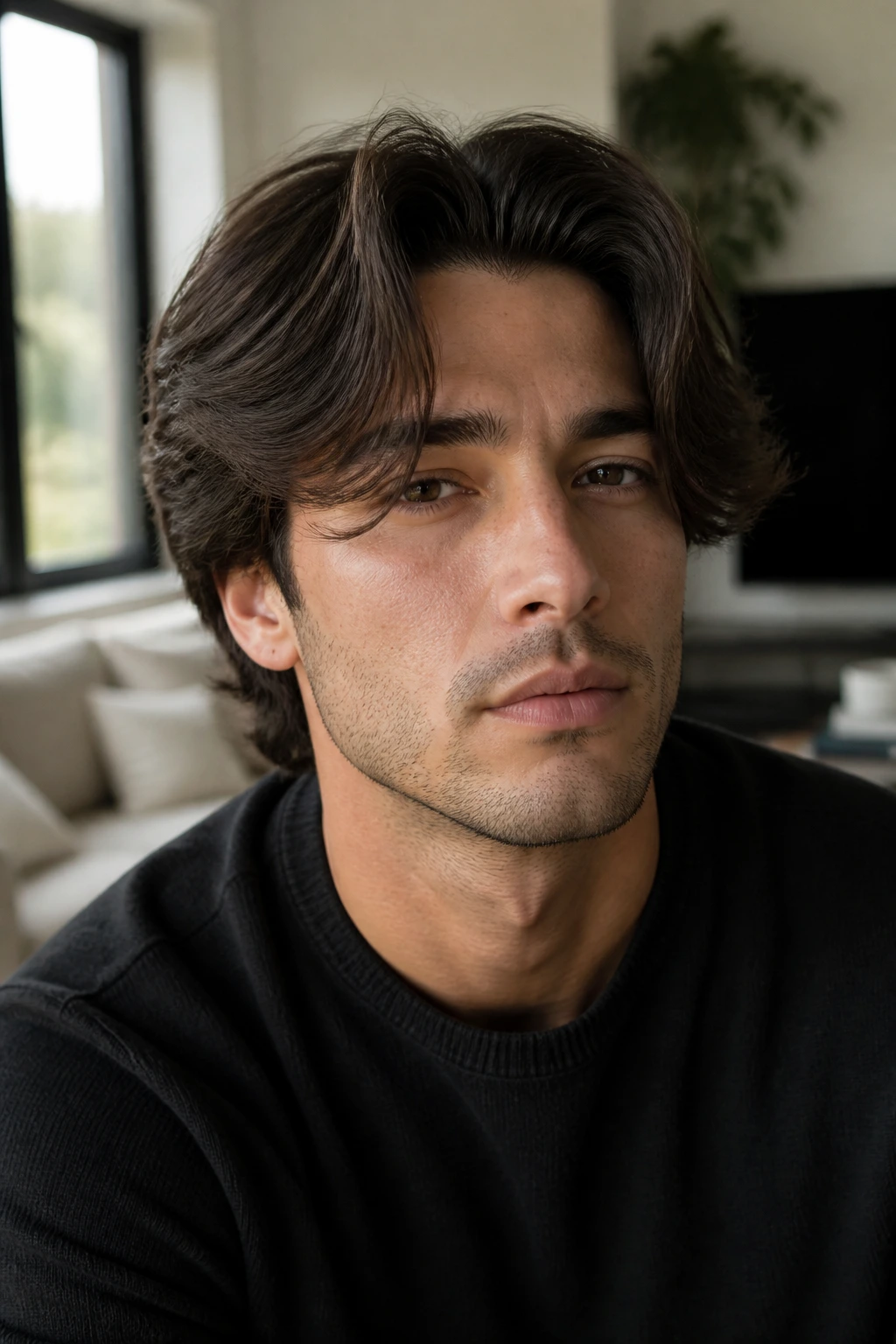
The curtain cut can look surprisingly formal when it’s cut with restraint. The middle or slightly off-center part gives the style a clean frame, and the longer top can fall in a controlled way instead of collapsing across the face.
The modern version usually keeps the sides cleaner than the nostalgic version people remember from old photos. That matters. Without some tapering around the ears and neck, the cut looks too loose. With a taper, it starts to feel deliberate, almost tailored.
Why it’s different
This style is better for men who want shape without the hard lines of a side part. It suits straight or wavy hair especially well, since those textures fall smoothly into the parted frame. A light styling cream or soft wax gives enough control without freezing the movement.
It’s best when the front pieces sit around the cheekbones, not halfway into the eyes. That small difference changes the whole mood. Too long and it looks accidental. Cut well, it feels calm and polished.
15. Low Bun or Neat Knot
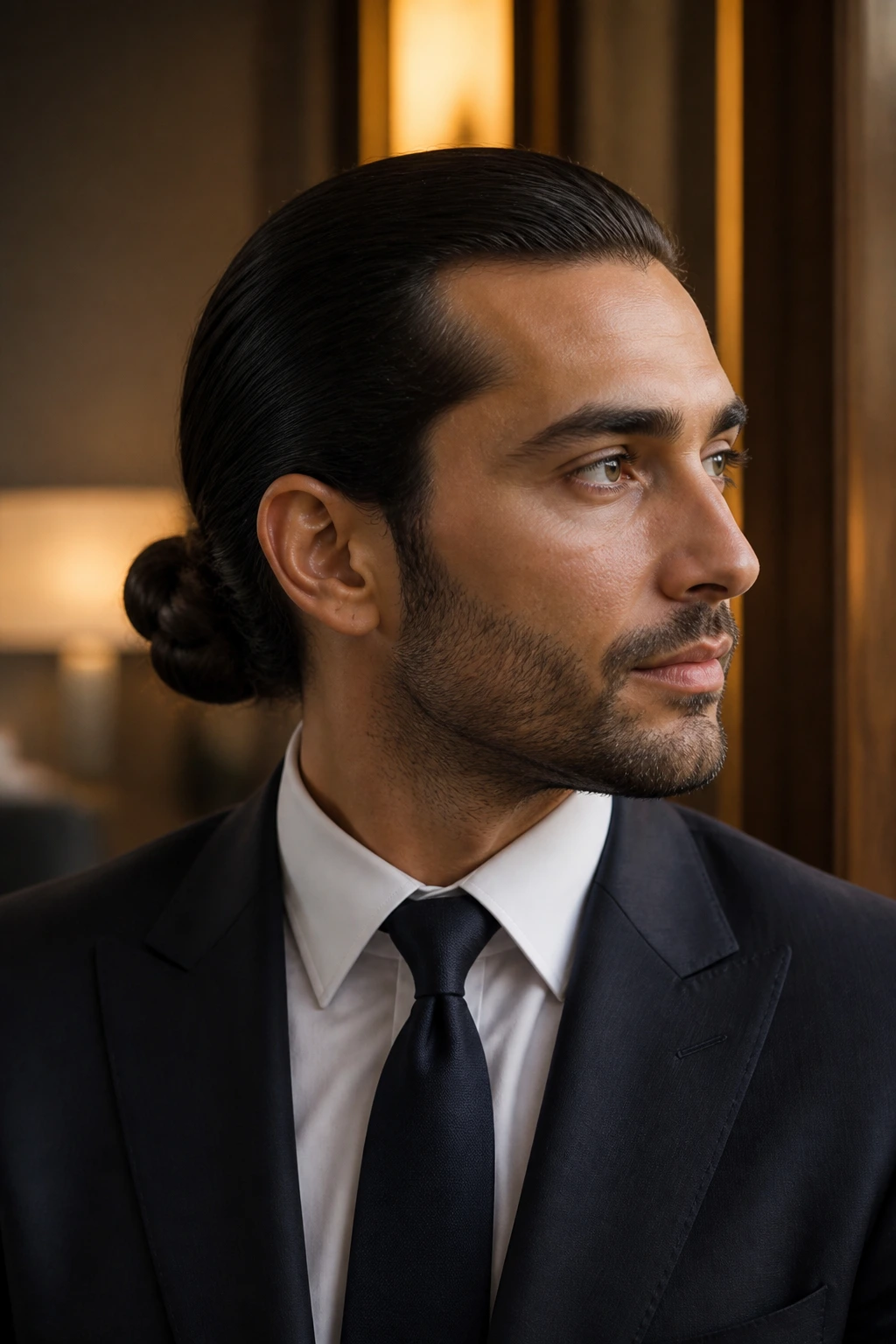
Can long hair be formal? Yes, if it’s tied back low and the finish is clean. A low bun or neat knot keeps the length under control and keeps the face clear, which is half the battle in dressier settings.
The bun should sit low at the nape, not high on the crown. High placement often reads casual or sporty. Low placement feels calmer and more dressed up. Before tying it, smooth the hair with a bit of cream or light gel so flyaways don’t stick out like tiny antennae.
How to make it formal
- Part the hair cleanly or brush it straight back before tying.
- Use a small elastic that matches your hair color.
- Keep the bun compact, not oversized.
- Tame the hairline and temple area with a touch of product.
This style works well for men with straight, wavy, or even thick curly hair, as long as the hair is long enough to hold together without sagging. It also pairs well with a suit jacket because it keeps the neckline visible and tidy.
16. Buzz Cut with a Skin Fade

A buzz cut sounds plain until you pair it with a sharp skin fade and a clean beard line. Then it becomes one of the neatest formal looks a man can wear, especially if you like simple grooming and strong structure.
The fade matters more than the length here. A blunt buzz all over can feel too casual or too severe depending on the face. A skin fade softens the sides and gives the cut shape, which makes the whole thing look more deliberate. Keep the top consistent, usually with a clipper guard that leaves a short, even finish.
The style works best when the scalp and hairline are cared for. Dry skin or rough edges are easy to see with such a short cut. A little moisturizer and a precise line-up go a long way.
It’s not flashy. Good. That’s the point. The haircut lets the suit do the talking while still looking cleaned up enough for formal events.
17. Side-Swept Undercut
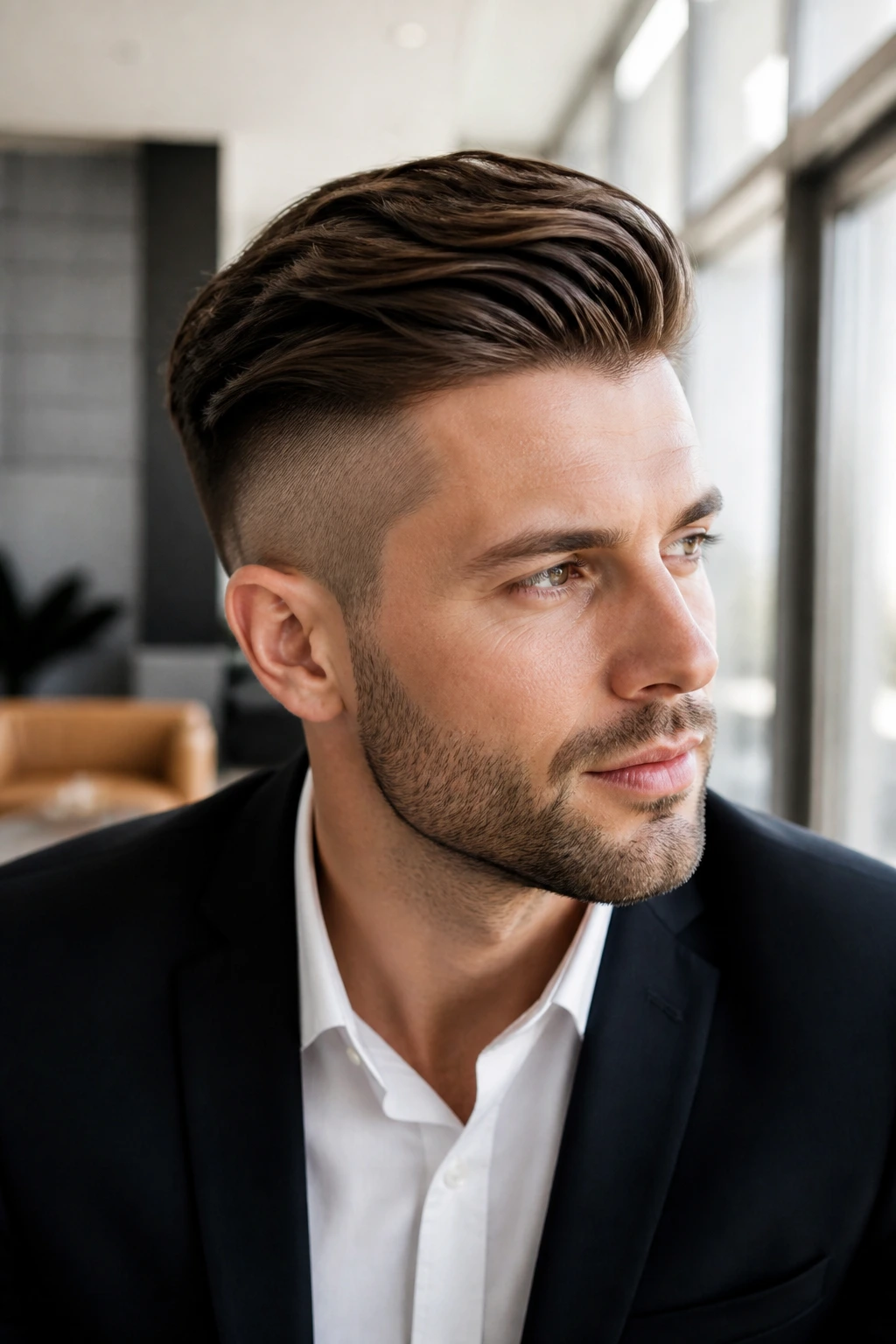
The side-swept undercut has a stronger silhouette than a classic side part, which is exactly why some men like it for formal settings. It gives you height and contrast without needing much styling once the cut is in place.
The top usually sits longer, around 3 to 5 inches, while the sides are cut much shorter. Because of that contrast, the sweep has real presence. You can push it diagonally across the head for a more dramatic look or keep it lower and smoother if the event calls for something quieter.
This style is a good fit for thicker hair, which can hold the sweep without collapsing. It does need maintenance, though. The undercut grows out fast, and once the sides lose their sharp contrast, the whole shape starts to blur. That’s the trade-off.
Use a medium-hold pomade or cream and comb the top in one clean direction. If you want the style to stay formal rather than edgy, keep the finish controlled and avoid letting the top get too tall.
18. Tidy Shoulder-Length Layers
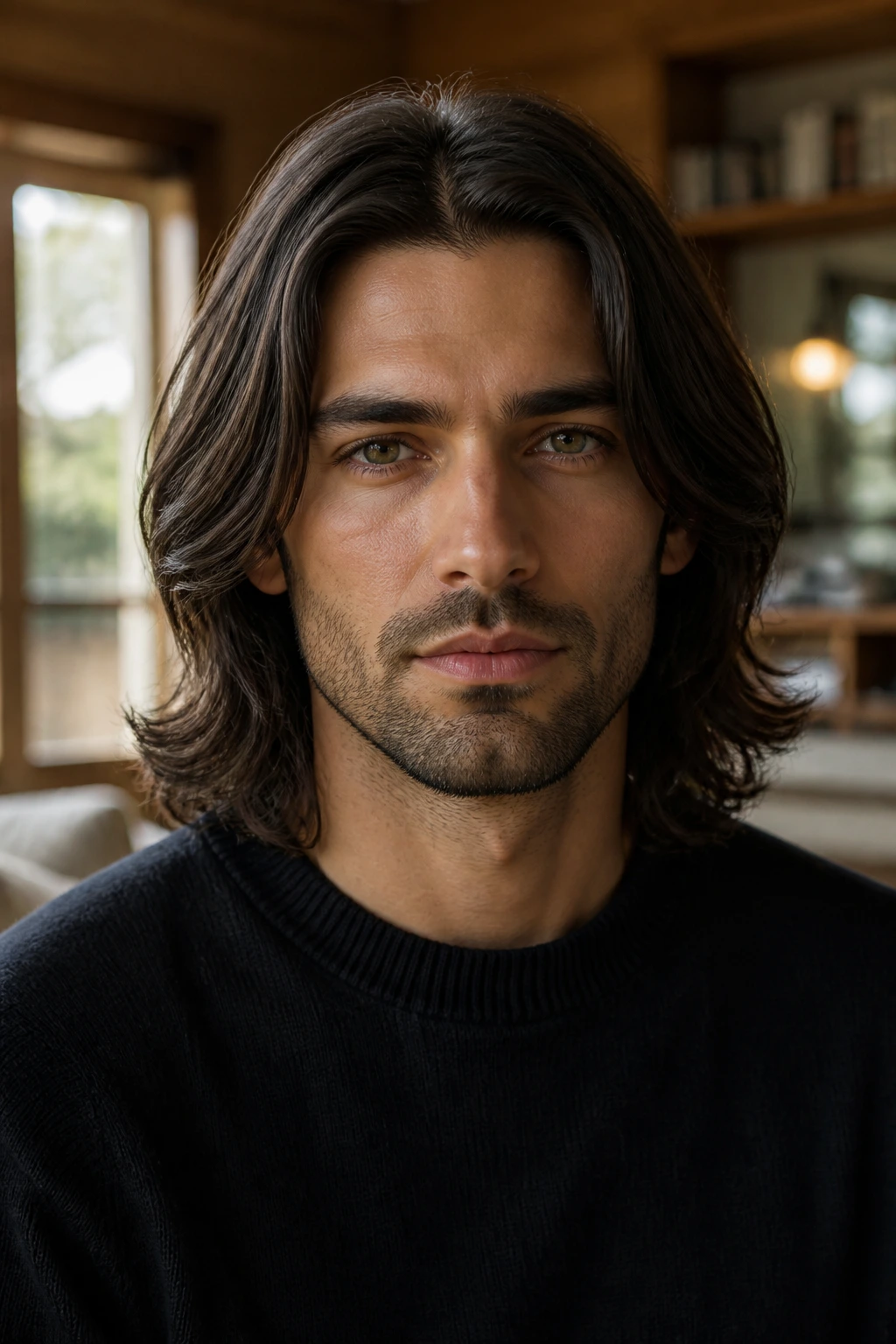
Long hair can look formal when the layers are trimmed with care and the ends don’t fray into a messy curtain. Tidy shoulder-length layers are the grown-up version of longer hair: less rock-show, more tailored.
The shape works best when the hair falls past the ears and brushes the shoulders, but not so far that it starts getting stringy. The layers should give movement without making the outline ragged. A center part can look clean here, though an off-center part often feels softer and more natural.
Why it stands apart
Unlike a low bun, this style keeps the hair visible. Unlike a bro flow, it tends to sit closer to the head and feels more controlled. That makes it a solid choice for men who want length at formal events without tying it back.
A little styling cream and a careful blow-dry are usually enough. If your hair is fine, avoid heavy oils, which flatten the shape. If it’s thick, ask the barber to remove bulk at the ends so the layers fall instead of puffing out.
Final Thoughts
The best formal haircut is the one that still looks neat after a long dinner, a handshake line, or an hour under warm lights. That usually means clean edges, controlled volume, and a finish that matches the rest of your outfit instead of fighting it.
A sharp side part, a tidy taper, a controlled curl shape, or even a low bun can all read formal. The real difference is in the details: necklines, sideburns, product amount, and how well the style sits when you stop touching it.
If you’re choosing between two cuts, pick the one you can maintain without checking a mirror every twenty minutes. That small bit of honesty saves a lot of bad hair days.
