



K-pop inspired haircuts for men work because they leave room for movement. The hair does not sit there like a helmet. It shifts, falls, parts, flips, and softens the face in a way that looks polished without feeling stiff. That’s a big part of the appeal, and it’s also why these cuts can look so good in real life, not just in a polished studio photo.
A lot of people get tripped up by the pictures. They show a cut that was blown out, pinned, sprayed, and lit from three sides, then ask a barber for “that exact look.” Bad move. The better approach is to read the shape: longer top, softer edges, deliberate texture, and a front section that frames the eyes or cheekbones instead of fighting them.
The nice part is that K-pop inspired haircuts for men are not locked to one hair type. Straight hair can wear the clean, airy versions. Wavy hair can lean into the soft shag and wolf cut shapes. Thick hair can be broken up with layers or a two-block cut, and flatter hair often wakes up fast with a little product or a loose perm.
Some cuts below are easy to wear every day. Others need a dryer, a comb, or a little patience. That’s fine. The point is to pick the shape that matches your hair, your face, and the amount of effort you’re actually willing to spend before work or class.
1. Two-Block Cut

If you want one K-pop haircut that barbers already recognize, start here. The two-block cut is the backbone of a lot of Korean men’s styling because it keeps the sides and back shorter while leaving the top long enough to move. It sounds simple. It is simple. That’s why it works so well.
Why It Flatters So Many Faces
The top usually sits around 3 to 5 inches, while the sides are taken much shorter, often with a low or mid taper around the ears and nape. That contrast makes the face look cleaner without shaving everything down. If your hair grows wide on the sides, this shape helps pull that bulk in fast.
A good two-block cut should not feel heavy around the temples. It should look lifted on top and neat near the edges. The best version has soft texture on top, not a blunt shelf. Ask your barber to leave the crown long enough for movement and to keep the transition under the top section clean, not boxy.
What to Tell the Barber
- Keep 3 to 5 inches on top.
- Taper the sides low and leave the top disconnected or lightly blended.
- Avoid a harsh square shape around the head.
- Leave enough length at the fringe so it can fall forward or split.
Pro tip: Use a pea-sized amount of matte cream on damp hair, then push the front slightly off-center. Flat, shiny product kills the shape.
2. Curtain Bangs
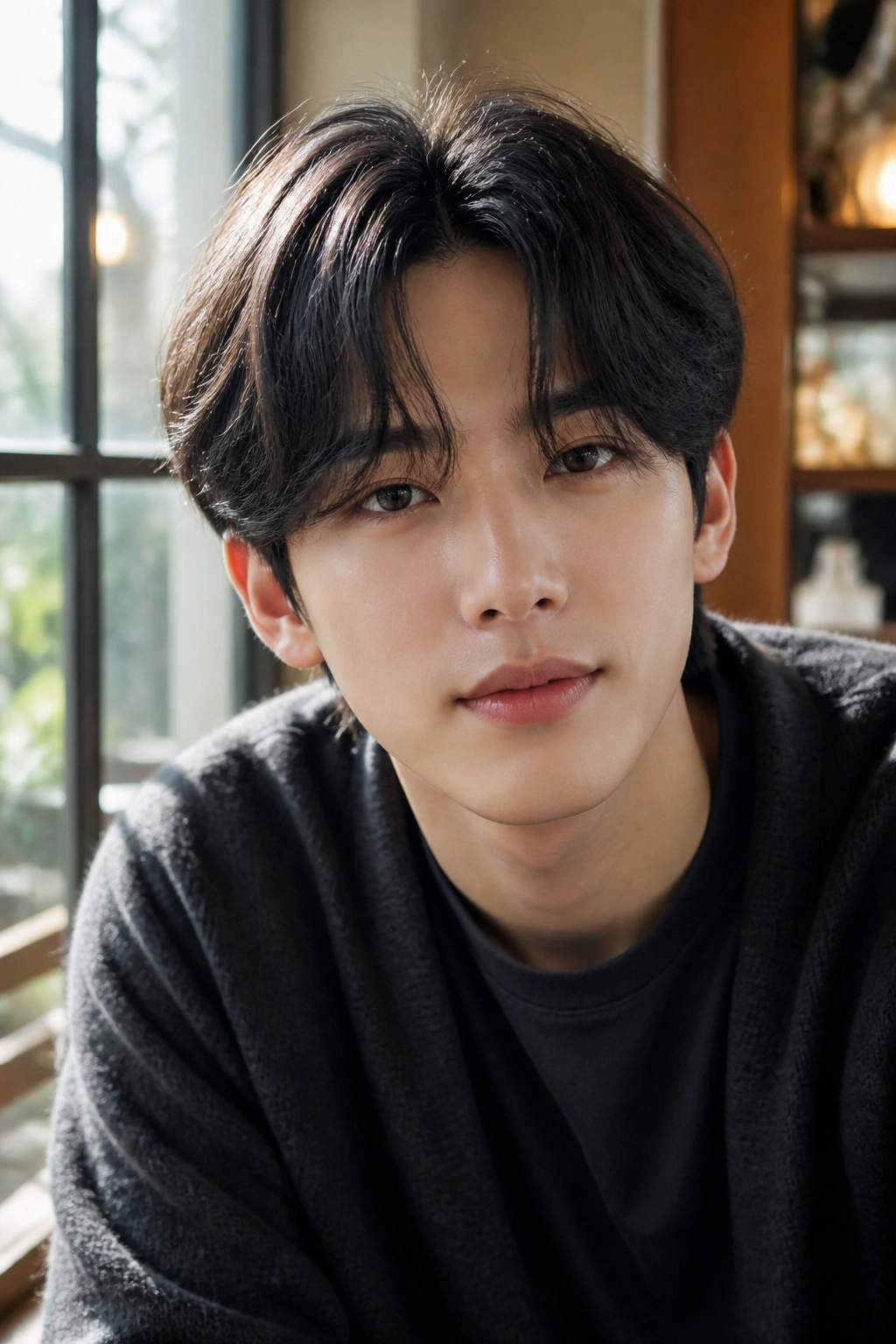
Curtain bangs are the easiest way to get that soft idol look without going long everywhere. The fringe opens in the middle or just off-center and falls away from the face in two loose panels. It gives the haircut motion right where people notice it most: around the eyes.
The trick is not making the bangs too thick. If the fringe is heavy, it starts looking like a sheet. If it’s too thin, it can feel stringy. The sweet spot is a light, layered fringe that sits around eyebrow level when dry, then lifts a little once you style it.
Curtain bangs work best when the hair has at least 4 inches in front. If your hairline is a bit high or your temples are starting to thin, this cut can still help because the part breaks up the forehead in a softer way. You do not need perfect symmetry. A little unevenness looks more natural, which is part of the charm.
Blow-dry the fringe away from the center first, then let it settle back. That small move keeps it from sticking flat to the forehead. And if you hate fussing with hair every morning, this one may still be worth it, because it grows out cleanly. The shape stays friendly even when it gets a bit longer.
3. Comma Hair
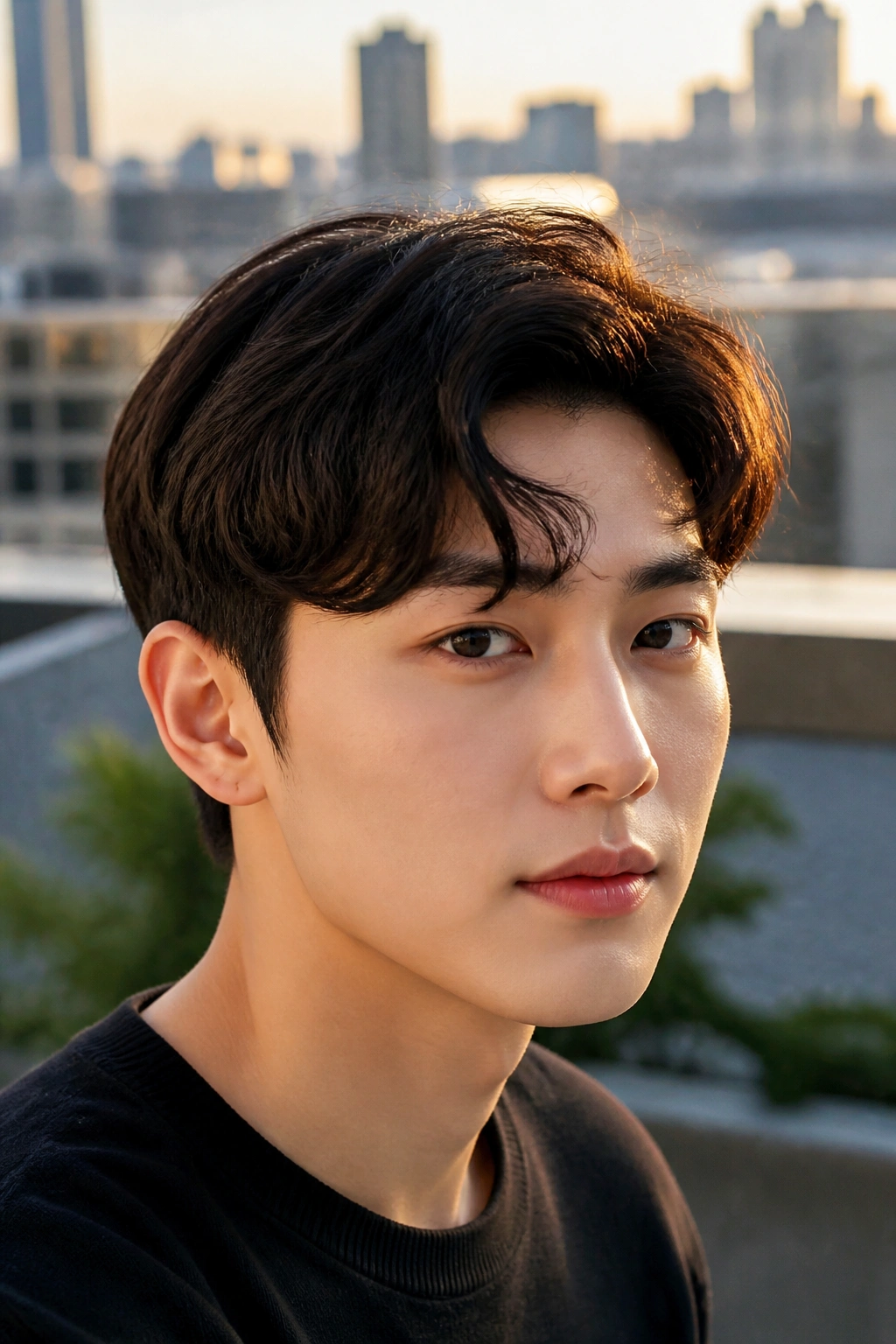
Why does comma hair show up so often in K-drama and idol styling? Because it does one neat thing better than almost any other cut: it gives the front section a controlled bend that looks intentional, not stiff. The front sweeps up and inward, like a comma mark, and that tiny curve changes the whole mood of the face.
The cut itself is not just about the front curl. It usually starts with a layered top that leaves enough weight for the front to shape. If the top is too short, the bend disappears. If it is too long and heavy, the front collapses. A lot of the effect comes from styling, but the haircut has to support it first.
How to Wear It
- Leave the fringe long enough to curl over with a round brush or flat iron.
- Keep the sides neat with a low taper or soft block shape.
- Use a 1-inch styling iron only on the front if your hair is stubborn.
- Finish with a light wax or cream so the bend holds without looking crunchy.
The best comma hair never looks frozen. It moves when you turn your head. That is the part people miss when they copy the style from a still photo. If the front feels too perfect, it starts looking fake fast.
4. Middle Part Flow

A center part can look flat in a barbershop mirror and sharp in motion. That’s the whole game with middle-parted K-pop haircuts for men. The hair falls away from the face, opens the features, and gives the jawline a little more space. It’s a soft shape, but not a weak one.
This cut usually needs 5 to 7 inches on top if you want the part to sit with any ease. Shorter hair can still part, but it tends to fight you. The sides can be tapered or lightly layered, depending on whether you want a cleaner finish or a looser, more romantic shape. I prefer the version that keeps some weight near the ears. It looks less like a school photo and more like actual hair.
A center part works best when the crown is not overworked. Too much product back there and the whole thing gets greasy. Too little product and it puffs out in the wrong places. A touch of leave-in conditioner on damp hair, then a little cream once it dries, is usually enough.
- Best on medium to thick hair
- Needs regular trim cleanup every 5 to 6 weeks
- Looks strongest when the front pieces graze the cheekbones
- Pair with a loose wave if your hair has any bend at all
The middle part is not flashy. That’s the point.
5. Wolf Cut
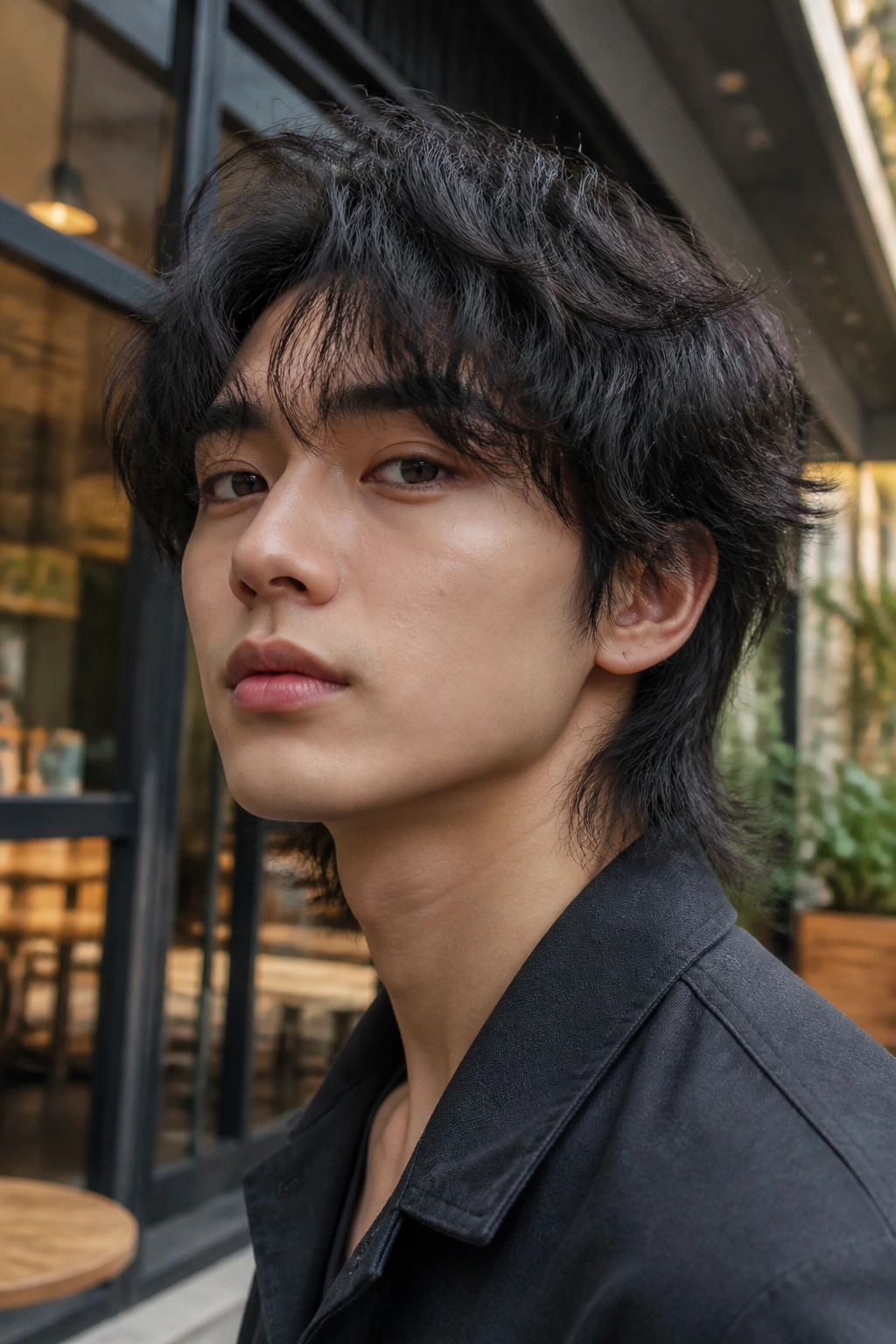
The wolf cut has a messy reputation, but the good version is more controlled than people think. It’s basically layered movement with a little edge. The top stays airy, the sides get broken up, and the back carries enough length to give the haircut some bite. Done well, it looks like hair that lives a little.
What makes it feel K-pop inspired is the way the layers frame the face. The front usually sits softer and shorter than the back, which keeps the cut from turning into a heavy mop. You want the ends to look feathered, not chopped. That feathered finish is what lets the cut swing when you turn your head.
This shape suits wavy hair especially well. Straight hair can wear it too, but it benefits from texture spray or a light blow-dry to keep the layers from falling dead flat. If your hair is fine, keep the layers longer. Too much cutting makes it stringy fast. Thick hair, on the other hand, often needs more internal layering to stop it from ballooning out at the sides.
I like this cut for guys who want something with personality but not a loud fade. It has movement without screaming for attention. That balance is hard to fake, and the wolf cut gets there more often than people admit.
6. See-Through Fringe

Unlike blunt bangs, see-through fringe leaves small gaps and soft space between the strands, so the forehead shows through a little. That tiny break makes the hair look lighter and less boxed in. It also gives the face a gentler frame, which is why this style keeps hanging around in Korean men’s hair.
The fringe should not be thick enough to hide the entire forehead. If it does, you lose the airy effect. Ask for a lighter front section with texture instead of a solid curtain. A barber can thin it out with point cutting or a razor, but the goal is not to shred the ends. It’s to make the fringe sit in soft pieces.
This one is best for straight to slightly wavy hair. Very curly hair can pull the look off, but the result is different. More texture, less transparency. That is fine if you want it. If you want the classic version, keep the top around 3 to 4 inches and let the front fall naturally after a quick blow-dry.
A small amount of dry wax goes a long way here. Work it through the front with your fingers, then leave the center open enough to show a little skin. Too much product closes the fringe up. That ruins the whole effect.
7. Hush Cut
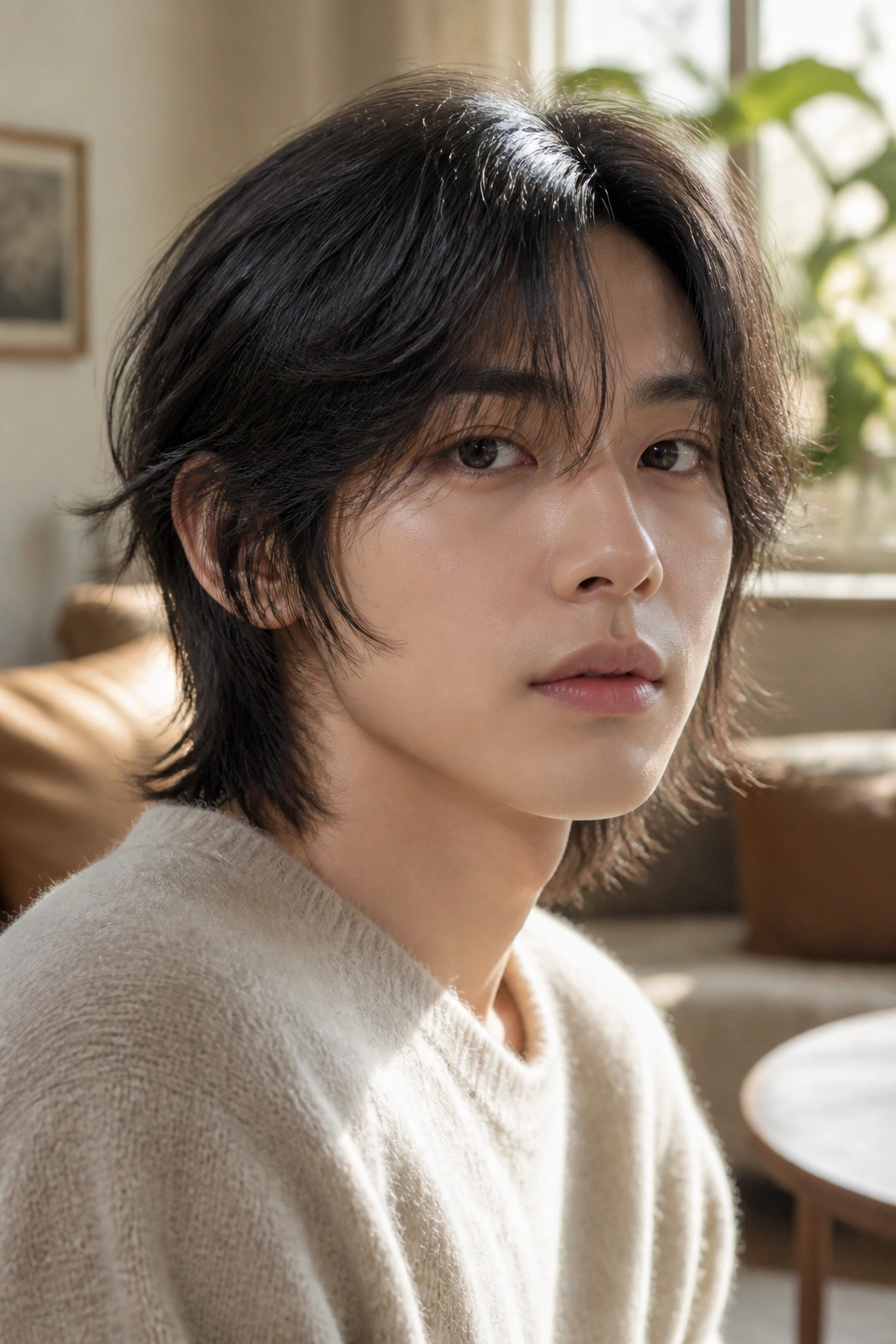
Hush cut is one of those styles that sounds soft because it is soft. The layers are the point. They frame the face without building a hard shape, and they keep the ends from feeling bulky. If the wolf cut has a little attitude, the hush cut has restraint. It’s calmer. More measured.
The cut works especially well on medium-length hair that tends to sit heavy around the cheeks or jaw. A stylist will usually soften the top, break up the sides, and leave a bit of flow through the back. The result is light, airy movement around the face instead of one block of hair hanging in place.
What to Ask For
- Keep the length around the collar or just above it.
- Add soft layers around the cheekbones and jaw.
- Avoid hard, blunt ends.
- Keep enough weight near the front so the shape does not collapse.
A hush cut looks best when the hair dries with a slight bend. If your hair is pin-straight, a round brush and a low-heat blow-dry help a lot. If your hair already has a wave, do less. Seriously. Too much styling steals the whole point of the cut.
This is a smart choice for anyone who wants a softer K-pop haircut without committing to a dramatic fringe or a sharp undercut.
8. Textured Crop
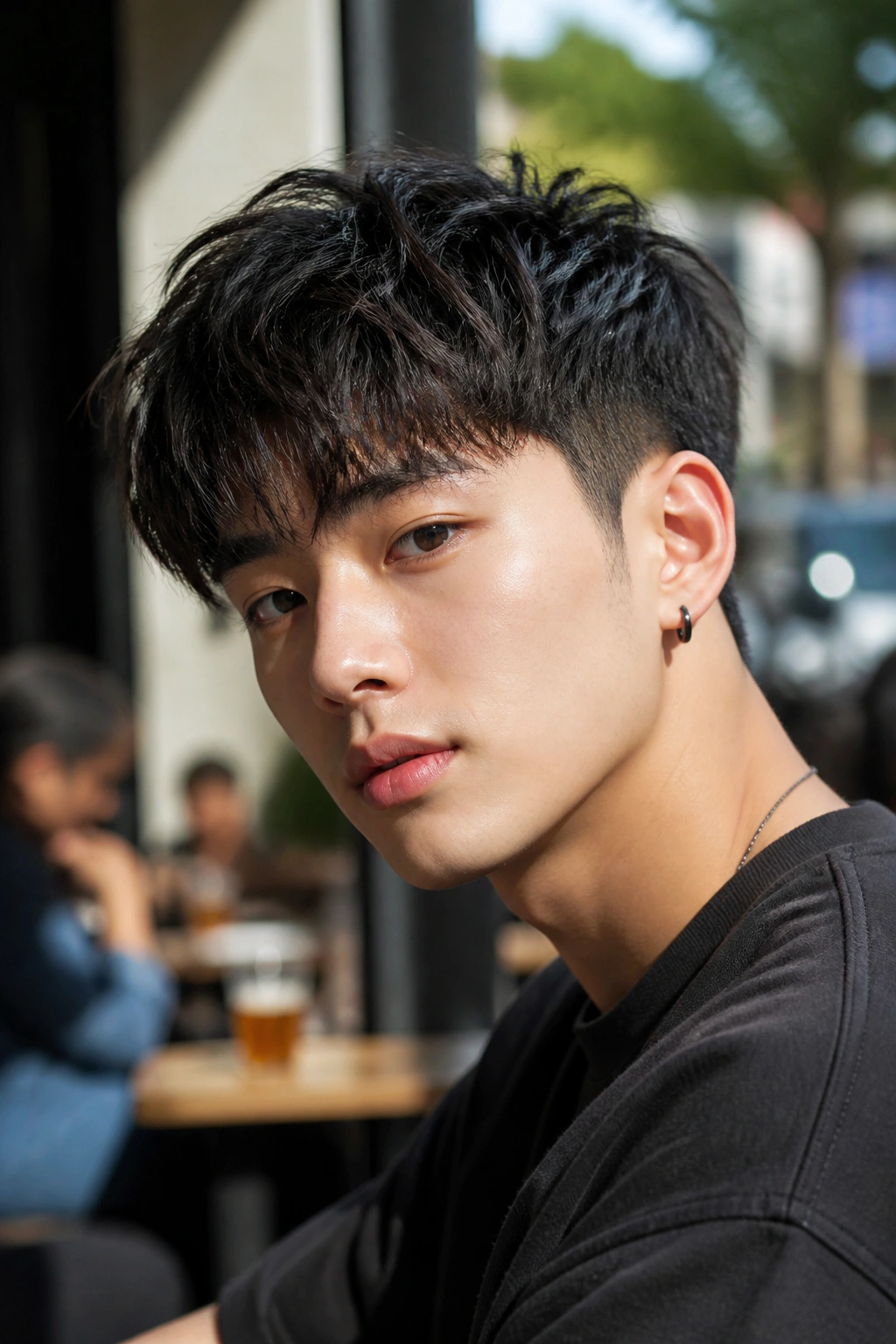
Short hair can still look very K-pop. The textured crop proves it. Instead of relying on length, this cut uses choppy layers, a short fringe, and a neat taper to create shape up front. It feels modern, practical, and a little sharp around the edges.
The best version keeps the top around 1.5 to 3 inches. That is enough to push the fringe forward, lift it, or mess it up with a little matte paste. The sides should stay neat, but not skin-tight unless you want a stronger contrast. A low taper usually works better than a high fade here because it keeps the cut softer and less harsh.
What matters most is texture. Ask your barber for point cutting on top so the ends do not sit in one flat line. If the top is too blunt, the fringe will fall like a wall. The crop starts looking more alive once the ends break apart.
- Great for thick hair that likes to puff up
- Easy to style in under 5 minutes
- Works with straight or slightly wavy hair
- Needs regular maintenance every 3 to 4 weeks to stay crisp
A dab of matte clay is enough. Push it forward, then pinch the front pieces apart with your fingertips. Done right, it looks clean without trying too hard.
9. Korean Perm Cut
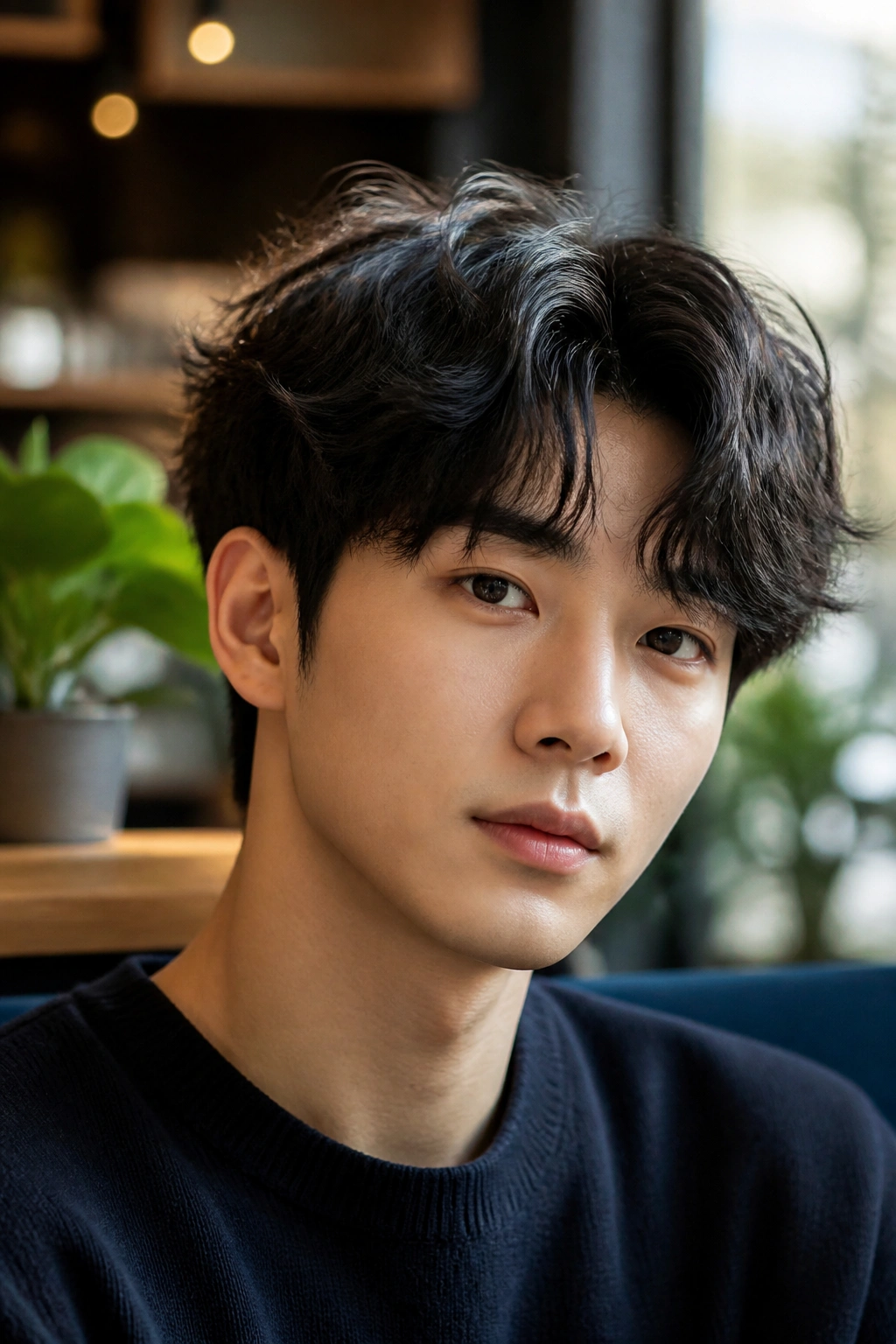
A perm is not cheating. It is a fix for hair that refuses to hold shape. In K-pop styling, loose waves or a soft C-curl perm can give a haircut body that straight hair just does not have on its own. The haircut matters, yes, but the texture is what turns it from plain to interesting.
Most Korean perm looks are built on medium length. The top needs enough length to catch the curl pattern, and the sides should be trimmed so the waves don’t explode outward. A loose wave on the top with softer sides is the sweet spot. Go too tight and it turns puffy. Go too loose and you wonder why you bothered.
The best perm cuts are tailored to the hairline and the way your hair falls after washing. A stylist can add a down perm on the sides, which simply means flattening the side hair so it lies closer to the head. That helps the top stand out without the whole shape looking wide. Useful. Very useful.
Styling Notes
- Use a sulfate-free shampoo if your hair feels dry.
- Scrunch in a light curl cream or mousse on damp hair.
- Skip heavy gels unless you want a wet look.
- Diffuse on low heat if you need more lift.
Permed K-pop hair looks best when it still moves. Stiff curls ruin the vibe fast.
10. K-Pop Mullet

The mullet got a softer job and better hair product. That’s the easiest way to think about the K-pop mullet. The back is longer, yes, but the whole cut is more layered and airy than the old-school version people picture. It has shape through the sides, movement through the top, and enough length in back to make the silhouette interesting.
A good K-pop mullet does not look like the hair forgot to get cut in the front. The front still needs structure. Usually that means a layered fringe, a loose curtain, or a soft side sweep. The back should feel connected, not slapped on. When it’s done badly, the top looks too short and the tail looks random. When it’s done well, the whole thing flows.
This cut works especially well if you like a little edge but still want something wearable. It can look neat with a blazer or messy with a bomber jacket. That flexibility is the whole draw. It gives you something to do with your hair without needing a dramatic color or a heavy style routine.
If you want to keep it from looking costume-y, leave the neck length modest and keep the layers soft. The mullet turns cheesy when the contrast gets too extreme. Soft edges, more movement, less joke haircut. That’s the rule.
11. Soft Side Part

A classic side part can feel stiff. The soft side part keeps the clean shape but loses the hard line and old-fashioned shine. That makes it a much better fit for K-pop inspired haircuts for men who want something neat enough for work but relaxed enough to move.
The trick is in the parting. You do not need a razor-sharp line. In fact, a hard part can make the style look too severe. A soft side part lets the hair separate naturally, then fall with a bit of bend across the forehead and temple. It works especially well if the top has 3 to 4 inches and the sides are tapered low.
This is a good cut for guys who do not want a fringe in their eyes. The hair stays off the face, but the overall shape still feels current. If you’ve got a strong cowlick, this can be a little annoying. Not impossible. Just annoying. A dryer and a vent brush usually solve most of it.
Use a light cream or a very small amount of pomade. Heavy product will pin the hair down and make the part look old. The goal is not a crisp corporate side part. The goal is soft control.
12. Layered Shag
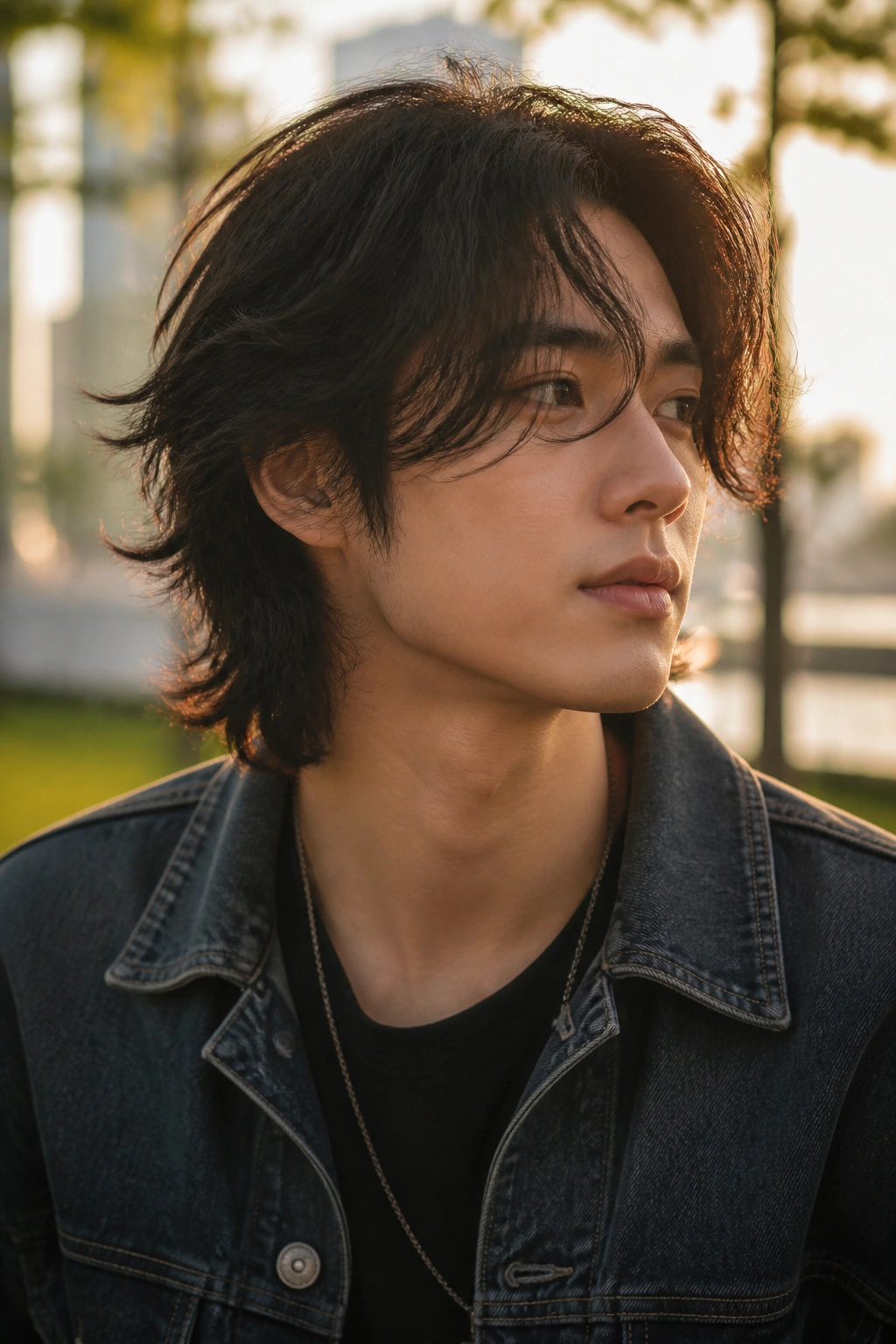
What separates a layered shag from a wolf cut? The shag usually feels a little more even, a little more face-framing, and a touch less dramatic in the back. It still has movement, though. Plenty of it. The layers break up the surface of the hair so it never sits as one flat block.
This cut is a strong choice if your hair has natural texture but tends to fall heavy around the jaw or ears. The layers lighten that weight and keep the shape from swallowing your face. A good shag should make the hair look a little wind-touched even when it’s dry and untouched. That’s the beauty of it. It does not need perfect styling.
How to Style It
- Mist damp hair with a light sea salt spray.
- Blow-dry with your fingers instead of a brush for a looser finish.
- Twist a few top sections as they dry to bring out the layers.
- Use a tiny bit of cream on the ends if the hair frizzes.
The shag is one of those styles that rewards a little imperfection. Too much combing kills the texture. Too much product weighs it down. Leave it a bit messy and it looks better.
13. Brush-Up Quiff with Taper
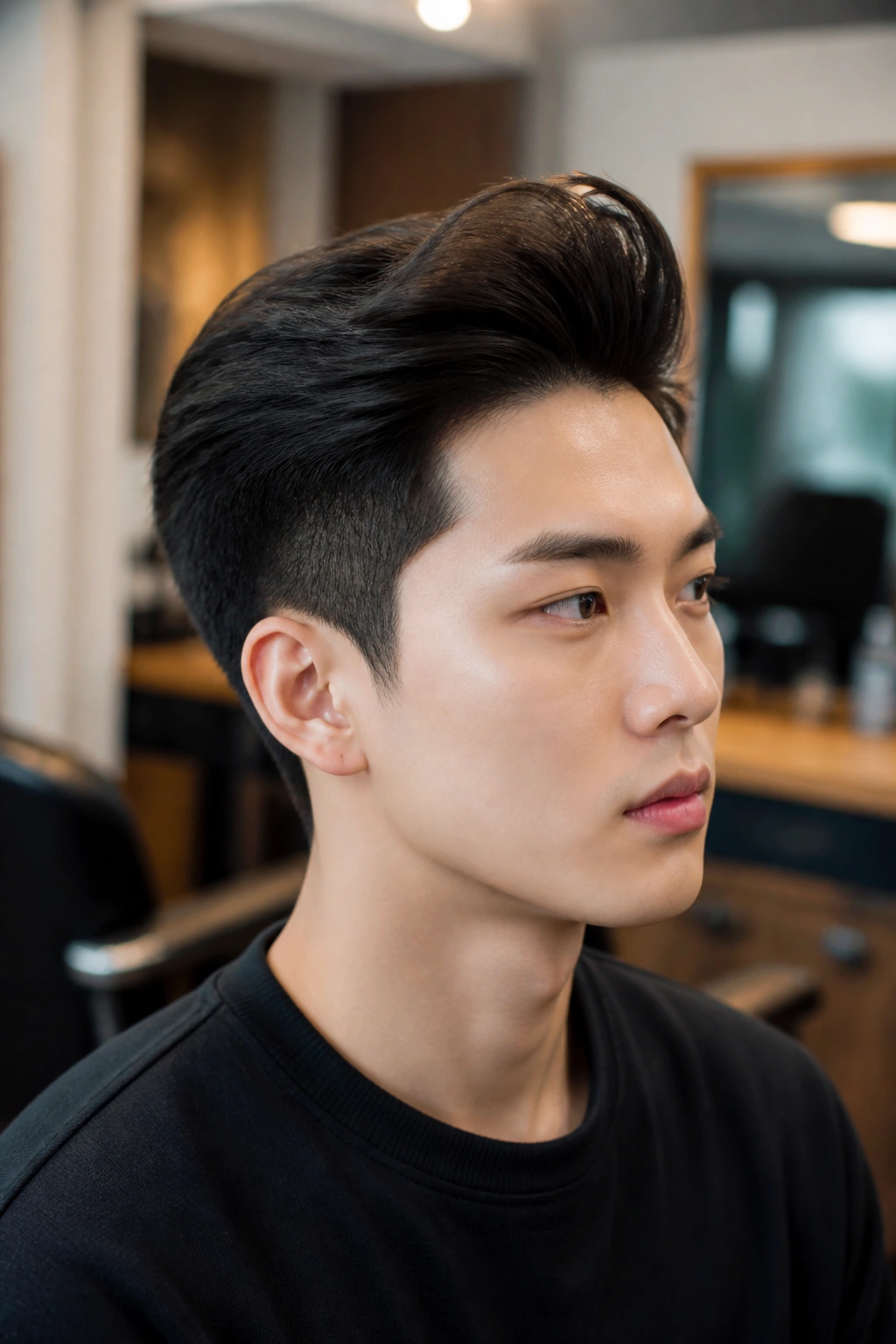
If you want height without hard edges, this is a strong move. The brush-up quiff borrows the lift people like in idol styling, then softens it with a taper instead of a blunt fade. The front goes upward and back, the top keeps some texture, and the sides stay clean enough to keep the whole shape balanced.
The best version starts with a front section that can stand up under a blow-dryer. Hair that’s too short in the front won’t hold much shape, and hair that’s too long can start flopping around. Around 2 to 3 inches at the front is often enough if the hair has some body. Thicker hair usually needs less help. Fine hair needs a little more structure and maybe a touch of mousse before drying.
A quiff like this works because it gives the face a lifted line. It can sharpen softer features and make the forehead area look more open. That said, if your hairline is receding, don’t force a huge front lift. A smaller version looks better and feels less obvious.
Brush the front up with a round brush, hit it with medium heat, and finish with a matte paste. Keep the finish touchable. If it feels crunchy, you used too much product.
14. Disconnected Undercut
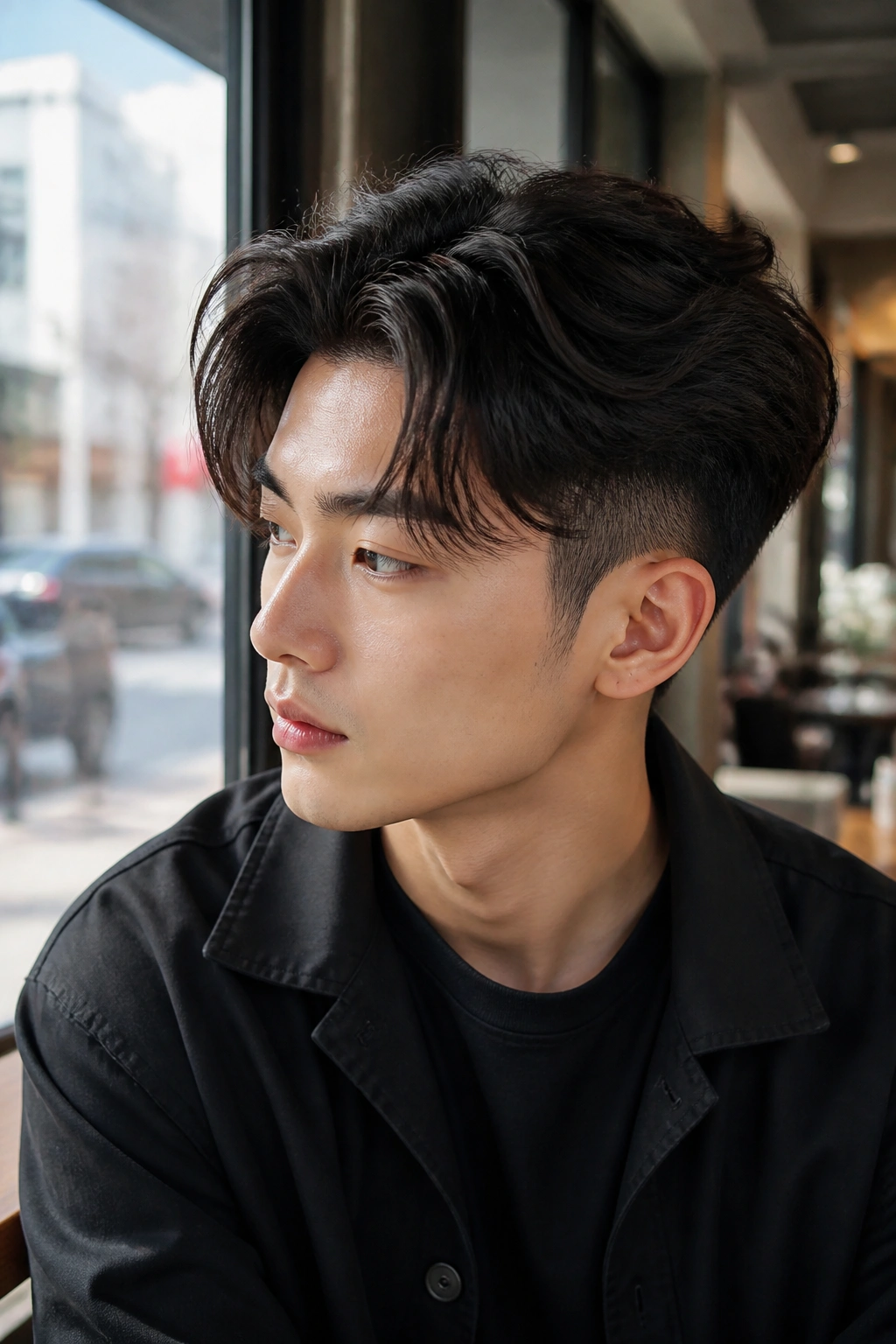
Unlike the two-block cut, the disconnected undercut makes the difference between the top and the sides more obvious. That sharper edge gives the haircut a bolder outline. In K-pop styling, though, the undercut usually gets softened with loose texture or a longer fringe, so it does not end up looking severe.
This is the cut for guys with thick hair that grows fast and refuses to stay flat. The short sides remove bulk fast, while the top can stay long enough for curtain pieces, a side sweep, or a bit of wave. Keep the top around 4 to 6 inches if you want options. Shorter than that and you lose some of the visual drama.
The danger here is going too high on the sides. A tall undercut can make the head look narrow and the top look like it’s floating. A lower disconnect works better for most faces. It gives you contrast without turning into a hard line from temple to crown.
This style likes straight or slightly wavy hair, and it can take product well. A cream or light clay is usually enough. You want separation, not a wet shell.
15. Soft Taper Crop
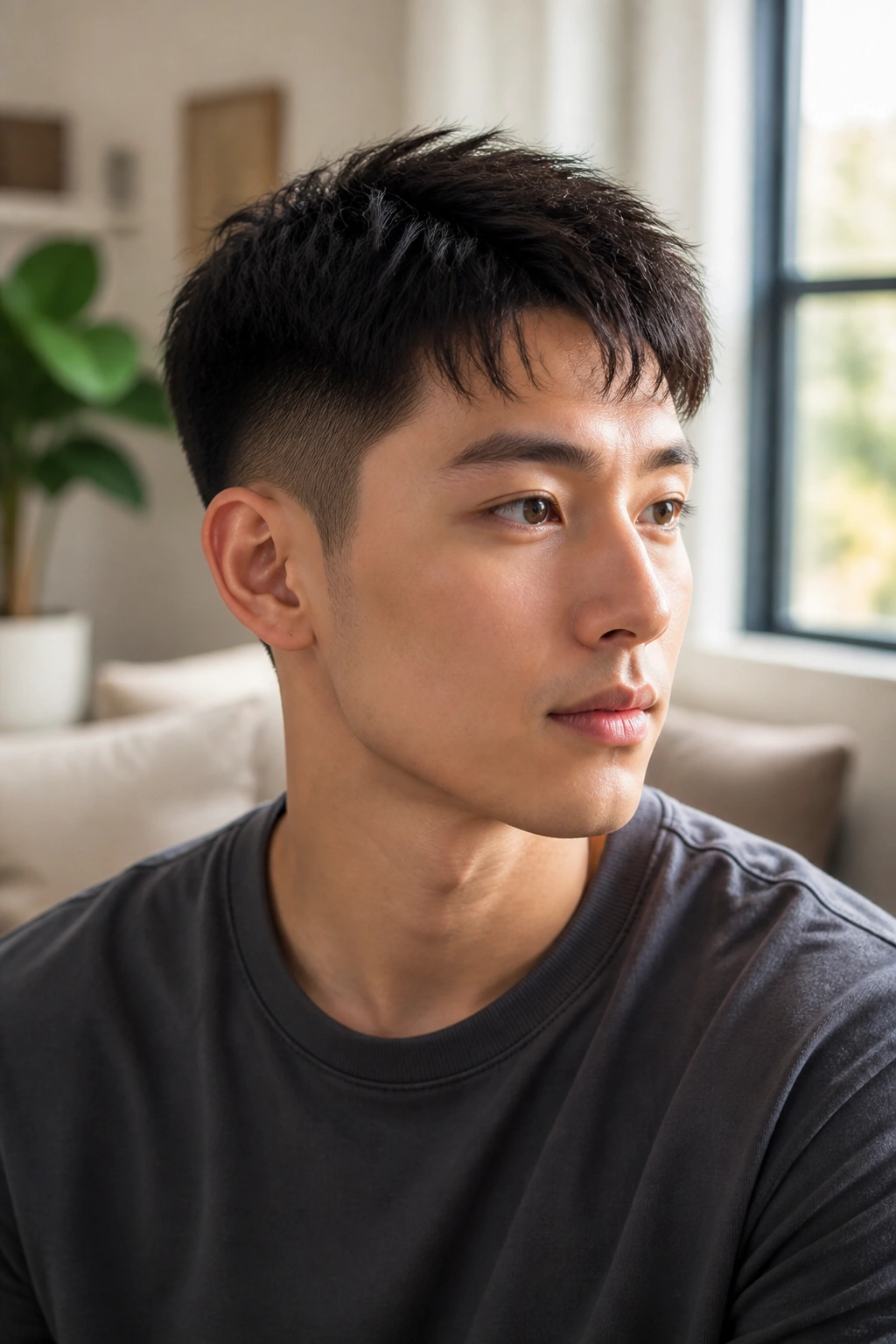
The soft taper crop is the one I’d hand to someone who wants a K-pop inspired haircut for men without a huge styling tax. It’s short, neat, and soft around the edges, but it still has enough top length to play with fringe, texture, or a tiny front lift. No drama. No helmet. No waiting twenty minutes before breakfast.
The shape usually keeps the sides tapered low and the top around 2 to 4 inches, with the front left a touch longer so it can lean forward or rise slightly. If you want something that grows out well, this is a smart choice. The cut keeps its outline longer than a more extreme fringe, and it does not turn messy the second your barber timer slips by a week.
A soft taper crop is especially good if you work with a strict dress code but still want a little personality. It looks tidy from the side, clean from the back, and modern from the front. That combination is hard to beat. It also suits a lot of hair types because the texture can be dialed up or down depending on how much movement your hair naturally has.
If you only save one photo, make it a cut like this: short enough to be easy, soft enough to feel current, and flexible enough to live through an ordinary week without constant fixing. That’s the version I keep coming back to.
