



Curly shag haircuts for women work because they stop fighting the hair and start shaping it. That sounds obvious, but plenty of cuts still behave like curls are an afterthought. They aren’t. Curls have their own spring, their own shrinkage, and their own little mood swings from one wash day to the next.
A good shag makes room for that movement. It gives the top some lift, the sides some swing, and the ends enough softness that the whole cut doesn’t collapse into one heavy triangle. The trick is not “more layers” in some blind, aggressive way. The trick is the right layers in the right places, which is a very different thing.
I always think the best curly shag starts with one question: do you want shape, edge, or easy styling? The answer changes everything. A collarbone cut with soft face-framing pieces behaves nothing like a micro-bang shag or a wolfier mullet-leaning version, and that’s exactly why the style keeps working across so many curl patterns.
Start with the version that fits your life first. The drama can come later.
1. Collarbone Curly Shag
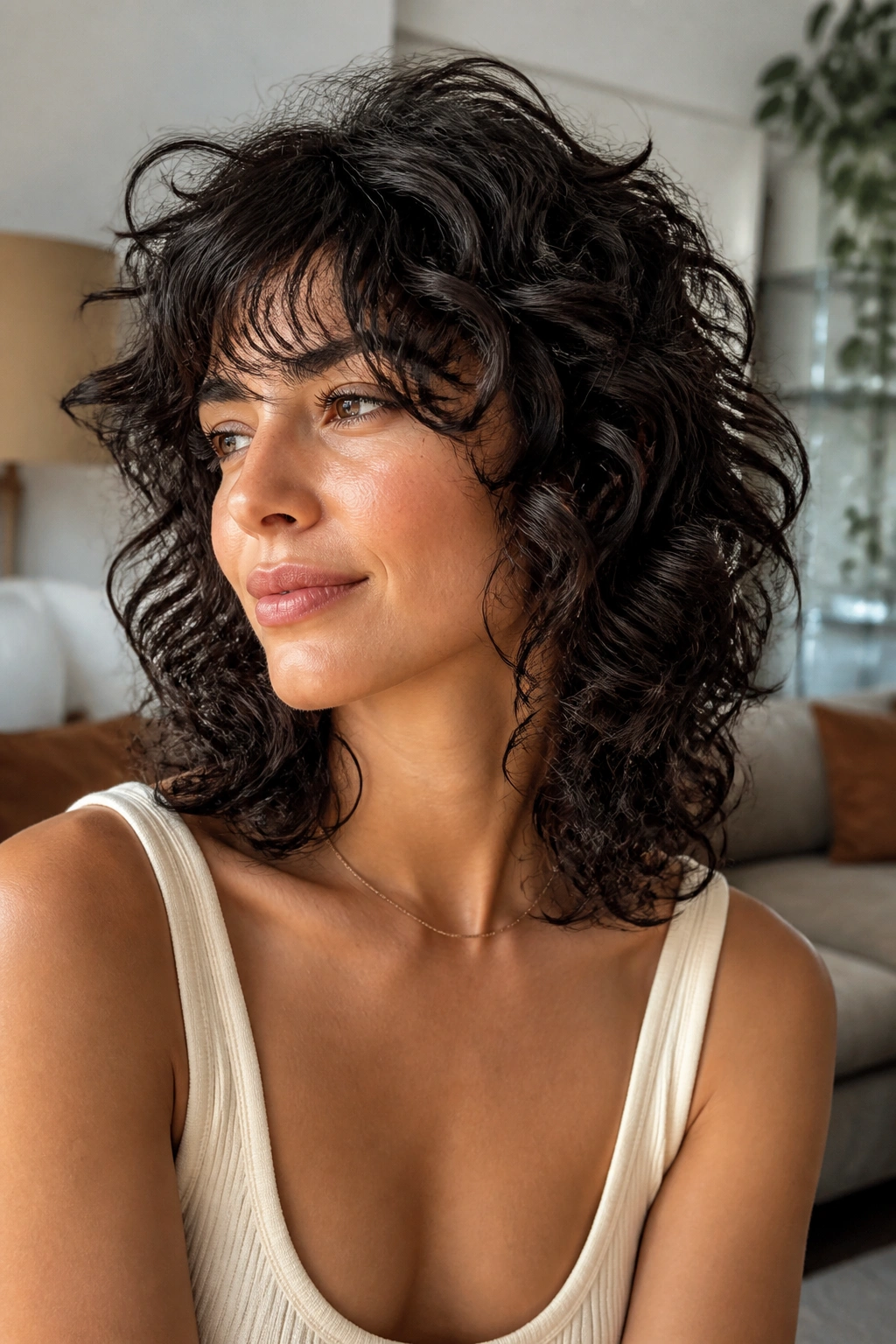
The collarbone shag is the easiest place to start if you want the shag shape without giving up too much length. It sits in that sweet zone where curls still have weight, but not so much that they drag the whole cut down. On most women, it lands just where the curls can bounce instead of hang.
What makes it work is balance. The shortest layers usually skim the cheekbone or chin, while the longest pieces graze the collarbone and keep the outline soft. That matters because curly hair shrinks when it dries, and a cut that looks “safe” when wet can turn into a surprise bob if the layers are too high.
Why It Flatters So Many Curl Patterns
- It keeps enough length for 2B through 3C curls to show their shape.
- It lets you wear the hair down without it swallowing the neck and shoulders.
- It gives you room for a side part, middle part, or quick tuck-behind-the-ear style.
- It grows out cleanly, which is a blessing if you do not want a salon visit every six weeks.
Ask for layers that start below the cheekbone if your curls bounce up fast. That one detail saves a lot of regret.
2. Short Curly Shag with Tapered Ends
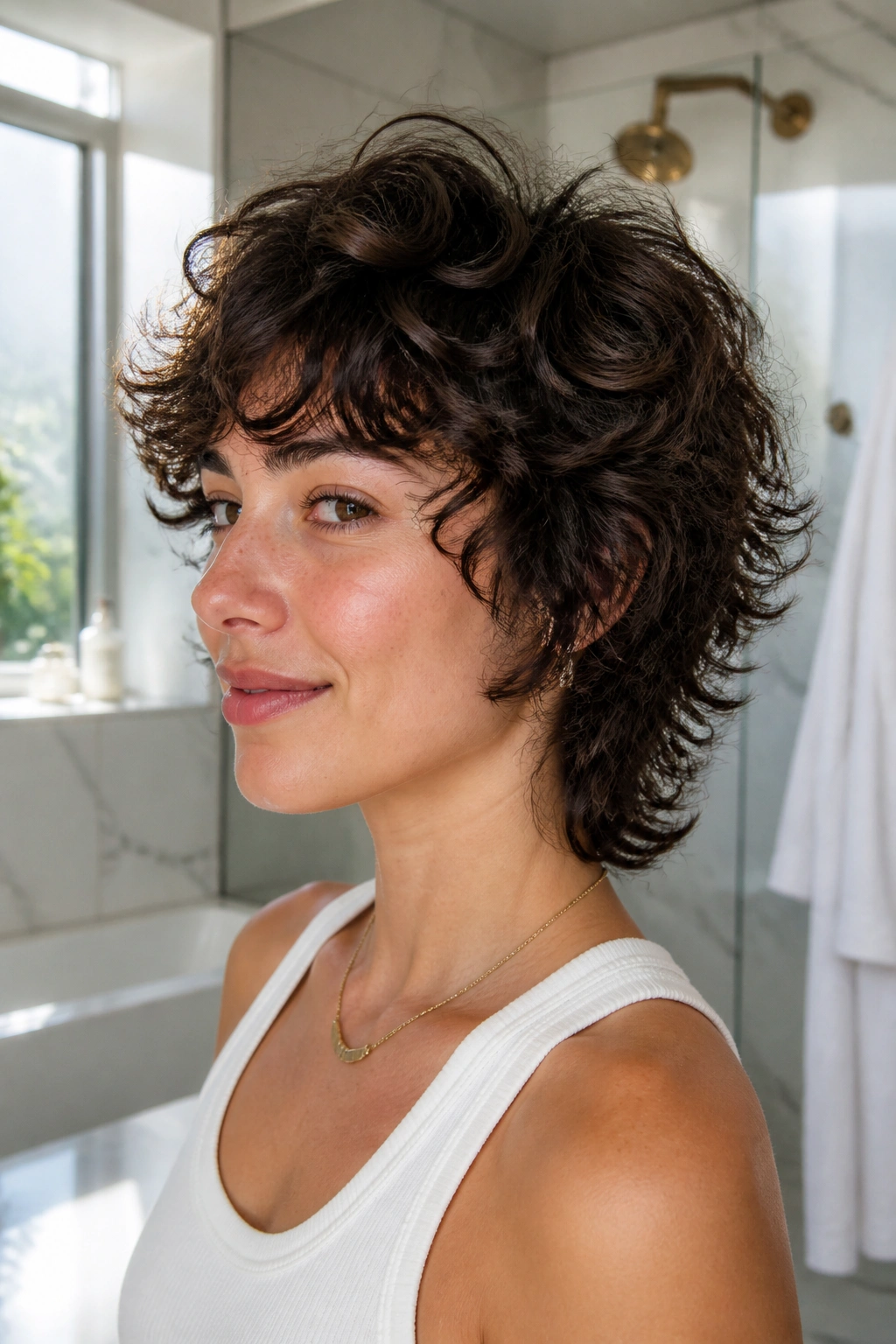
Short curly shags look bold, but the best ones are surprisingly easy to live with. When the ends are tapered instead of chopped blunt, the shape gets airy instead of boxy. That’s the difference between a cut that moves and one that just sits there like a helmet.
This version is especially nice for dense curls. The shorter length removes weight, which helps the curl spring up and show off the layer work. But there’s a catch: too much thinning at the ends can leave the perimeter looking wispy. You want soft edges, not see-through ones.
What to Tell Your Stylist
- Keep the back compact, not puffy.
- Let the side layers fall around the jaw, then blend them.
- Avoid over-texturizing the very ends if your hair is already fine.
- Dry-cutting helps here because the shape shows itself as the curls live and settle.
A short curly shag has attitude. It also has practical side benefits. Less hair means faster drying, fewer heavy products, and less of that damp weight that drags curls flat halfway through the day.
3. Long Curly Shag with Face-Framing Layers
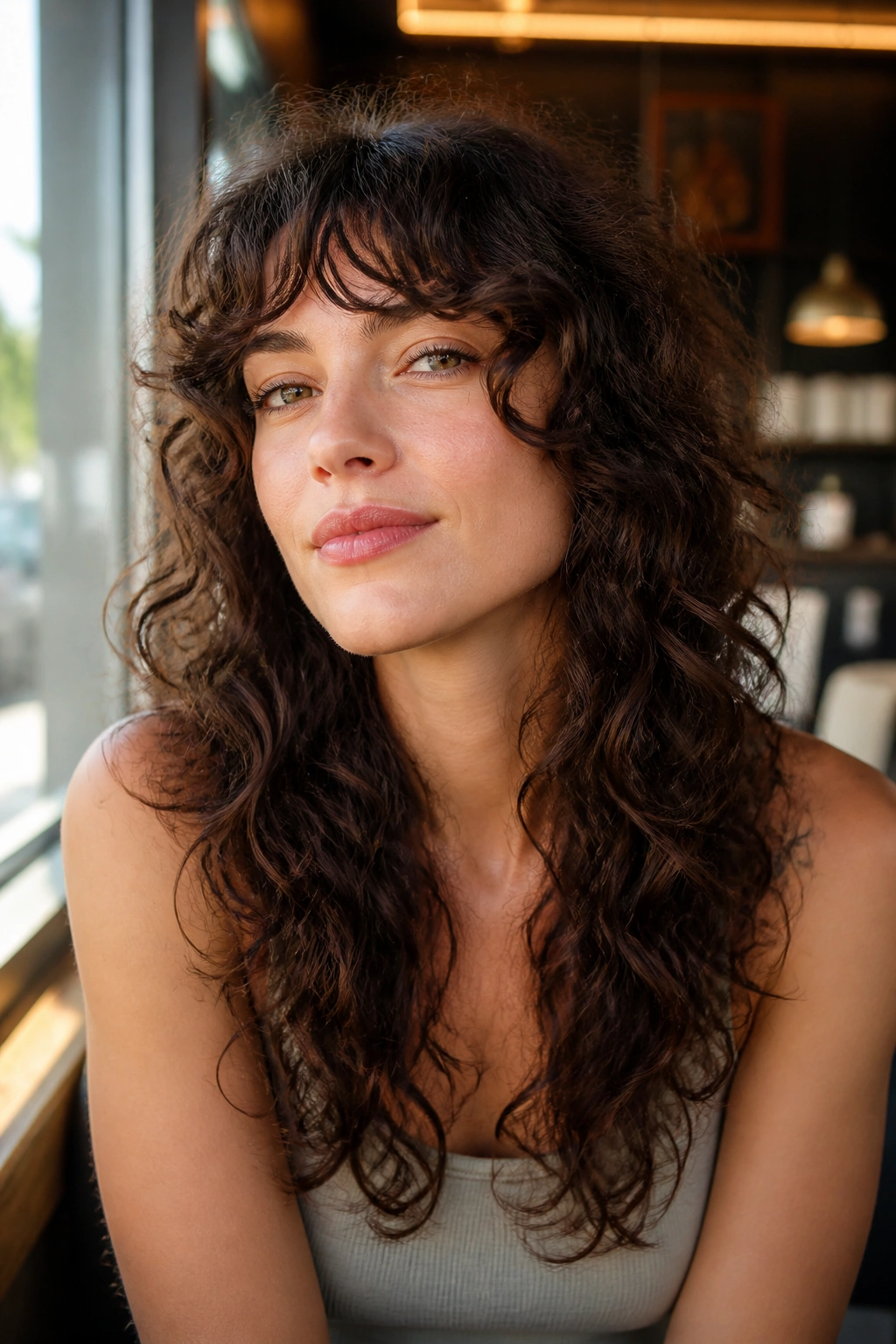
Want to keep the length and still get movement? This is the one. Long curly shag haircuts for women can look especially rich when the layers are focused around the face and crown instead of hacked through the whole length.
The result is a cut that still feels feminine and soft, but not plain. The front pieces pull attention to the eyes and cheekbones, while the back keeps enough weight to show off the curl pattern. It’s a smart choice if you like ponytail days but don’t want your hair to look dull when it’s down.
What to Ask For
A stylist should leave the bottom length mostly intact, then carve in face-framing layers that start around the lip, chin, or collarbone depending on how much shrinkage you get. If your curls are springy, those layers need to sit lower than you think. Really.
Long curly shags do one thing especially well: they break up heaviness without stealing your length. That is harder to pull off than it sounds. A bad version looks stringy. A good version looks like the hair was always meant to move that way.
4. Curly Shag with Curtain Bangs
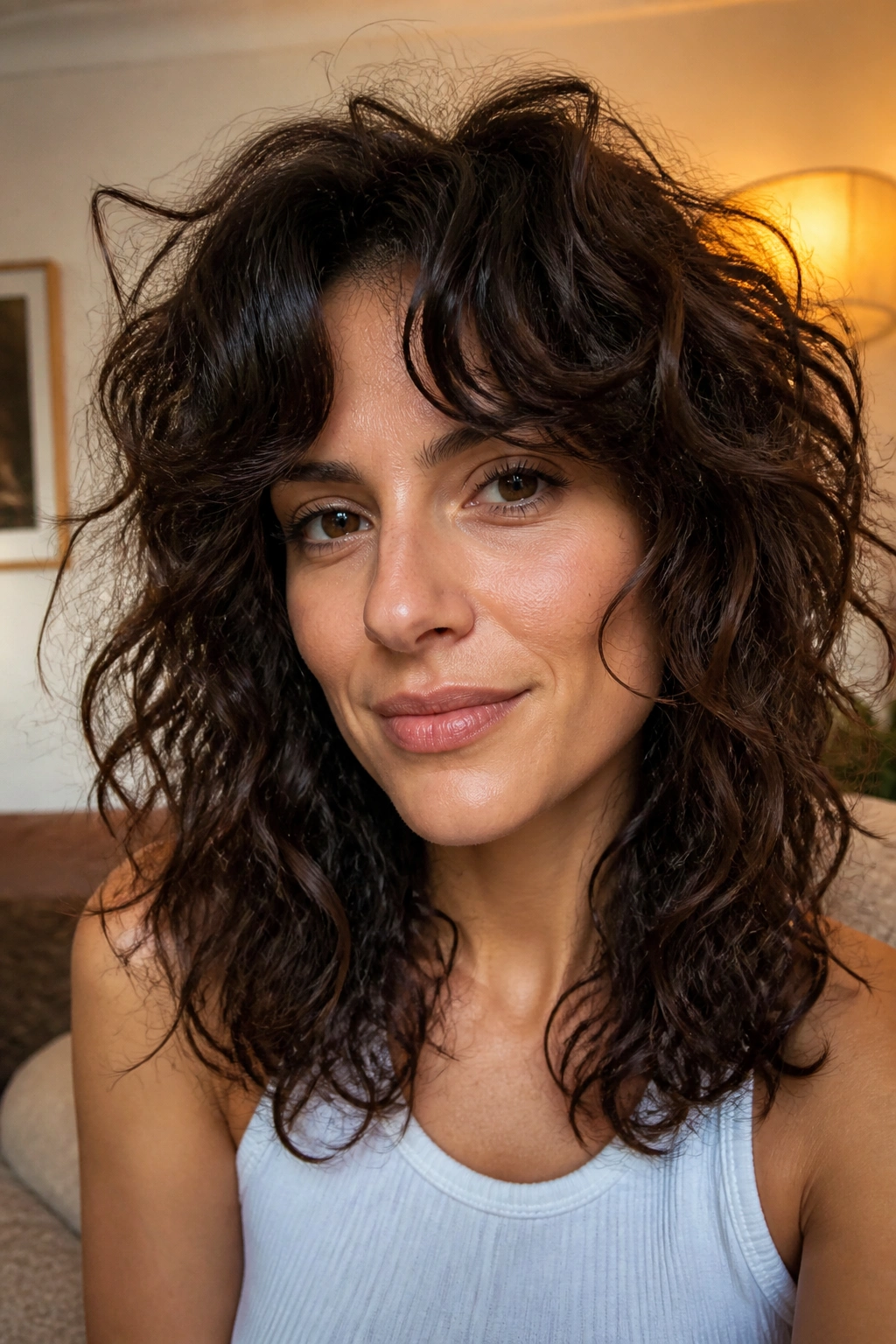
If you tuck hair behind your ears all day, curtain bangs change the whole feel of a shag. They open the face without the commitment of a blunt fringe, and they let the curls fall in two easy pieces instead of one heavy curtain across the forehead.
There’s a reason this combo shows up so often in curly shag haircuts for women. Curtain bangs soften the top of the cut, which can be a problem area on curly hair. Too much bulk at the crown makes the rest of the haircut feel boxy. A split fringe fixes that fast.
Styling Notes
A little round-brush work at the roots can help the bangs fall away from the face, but you do not need a huge blowout. Many people do better with a quick finger-coiled finish and a diffuser on low heat. Let the bangs land where they want to land, then nudge them a little.
The nicest part is the grow-out. Curtain bangs are forgiving. If one side dries a bit shorter, it still reads as part of the cut. That makes them a safe way to test fringe without locking yourself into a high-maintenance line across the forehead.
5. Curly Shag with Bottleneck Bangs
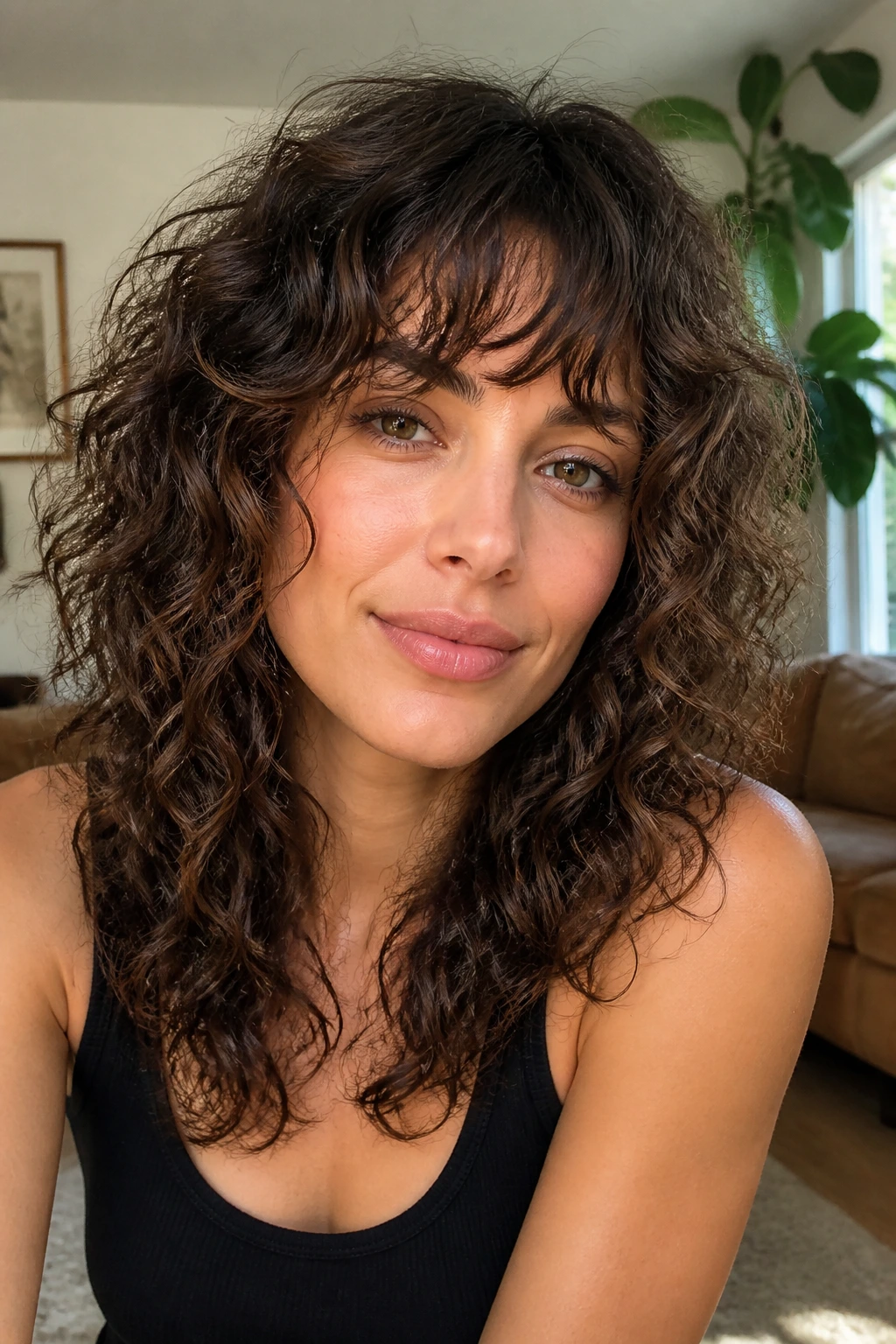
Bottleneck bangs are the quiet troublemakers of the shag world. They start narrow in the center, then open slightly toward the temples, which gives curly hair a softer shape than a full blunt fringe ever could. The look is less obvious from a distance and more interesting up close.
This style works because it gives the forehead coverage without boxing the face in. On curls, that matters a lot. A heavy bang can shrink straight up and look shorter than planned. Bottleneck bangs let you keep some air between the forehead and the rest of the layers, so the shape stays light.
When I see this cut done well, the bangs seem to belong to the hair instead of sitting on top of it. That’s the goal. If the front feels too thick, the whole shag can turn fussy. If the fringe is carved carefully, though, the haircut gets that slightly undone look people chase forever.
It suits women who want something softer than micro bangs but a little more styled than curtain bangs. You get a frame, not a wall.
6. Micro Bang Curly Shag
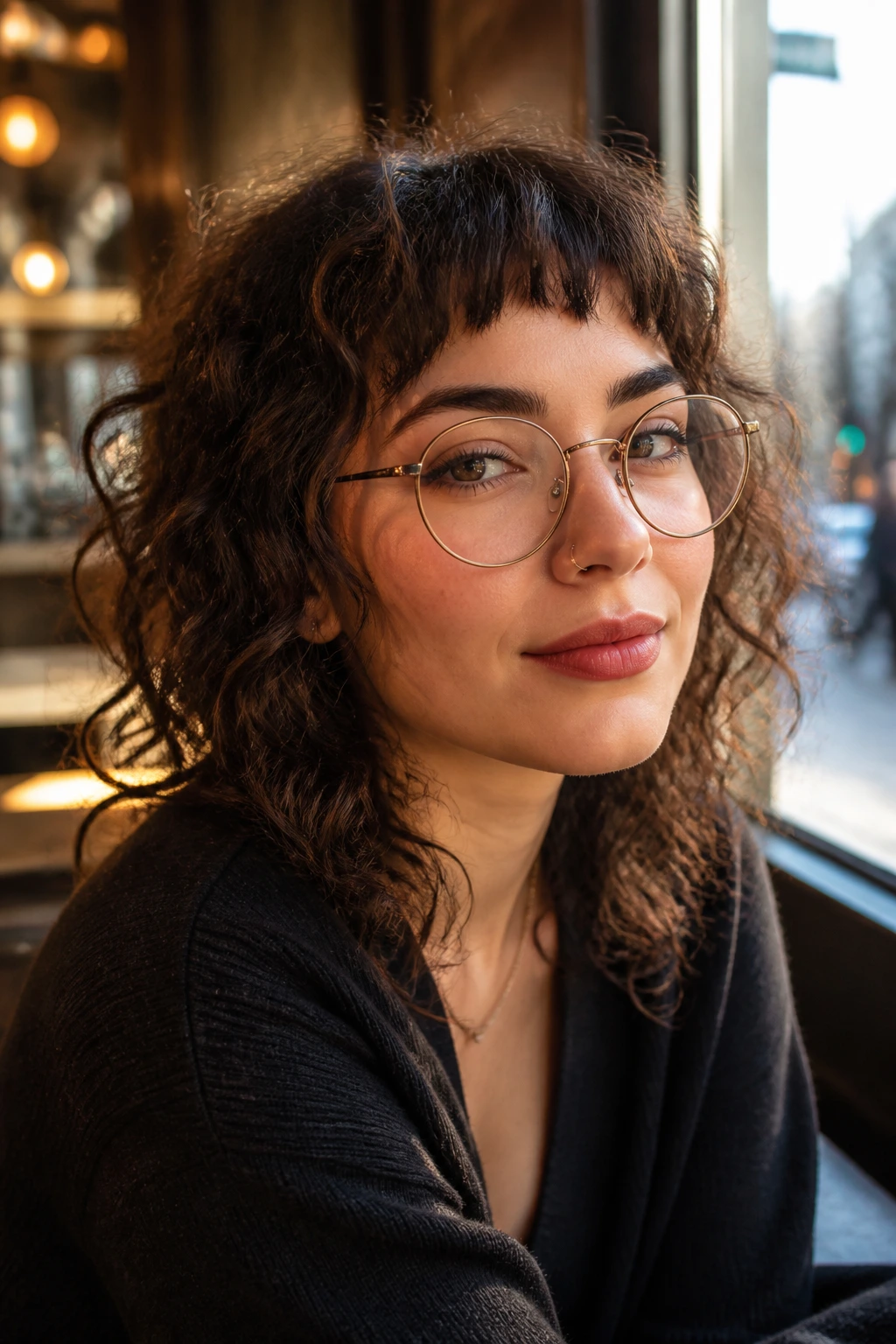
The first thing you notice is the line at the brows. Micro bangs on curls do not whisper. They announce themselves, and they can be brilliant when the rest of the haircut has enough softness to balance them out.
The Catch
Micro bangs need confidence, yes, but they also need the right curl shrinkage. Curls that bounce hard can pull the fringe up much shorter than expected, and that is how a chic choice turns into a surprise. The stylist has to leave enough room for drying and spring, especially if the hair has tighter coils at the front hairline.
The rest of the shag should stay piecey and loose. That contrast is what makes the look interesting. If everything is short and choppy, the cut can feel busy. If the fringe is bold and the layers fall softer around the cheeks and neck, the whole style lands in a better place.
Best for: women who like a little edge, wear glasses often, or want the eyes to be the first thing people notice.
Avoid if: you hate regular trims. Micro bangs show growth fast. No way around it.
7. Wolfy Curly Shag
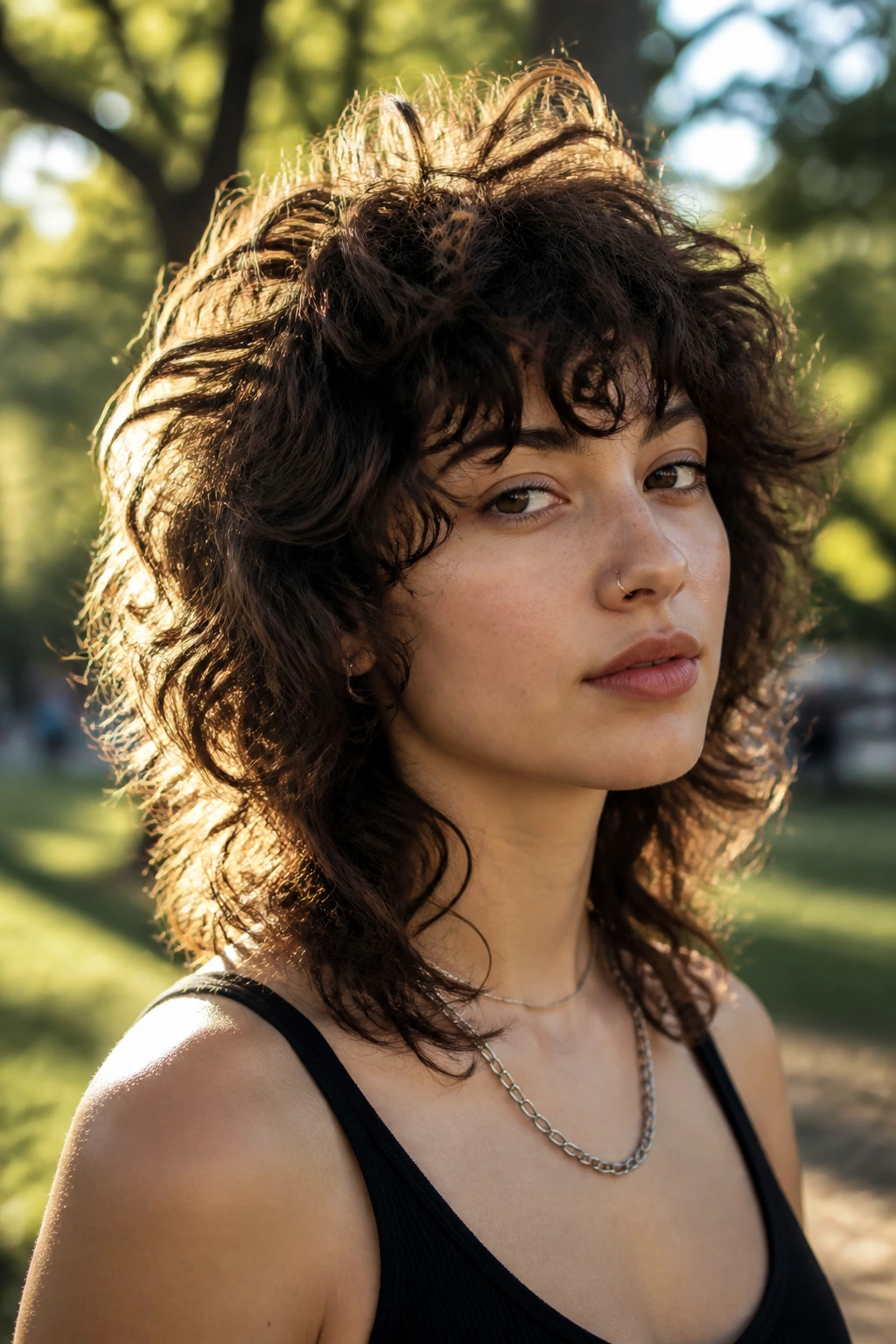
A wolfy curly shag is what happens when the shag leans a little wild and a little rebellious. The crown gets more height, the layers get choppier, and the silhouette starts to look less polished and more lived-in. That’s the point.
This version works especially well on thick curls that can handle a lot of internal structure. The shorter top layers keep the crown from going flat, while the longer back pieces stop the cut from feeling too abbreviated. It has some of the energy of a mullet, but with a softer, more wearable outline.
Why It Stands Out
- The crown looks fuller.
- The sides feel lighter.
- The neckline stays longer, which keeps the cut from feeling harsh.
- Styling can be as simple as scrunching in cream and letting the curls dry with a diffuser.
Ask for disconnection, not chaos. That’s the phrase I’d use here. You want visible difference between the top and the lower lengths, but you still want the layers to relate to each other. Otherwise, the cut goes from cool to messy in a hurry.
8. Mullet-Inspired Curly Shag
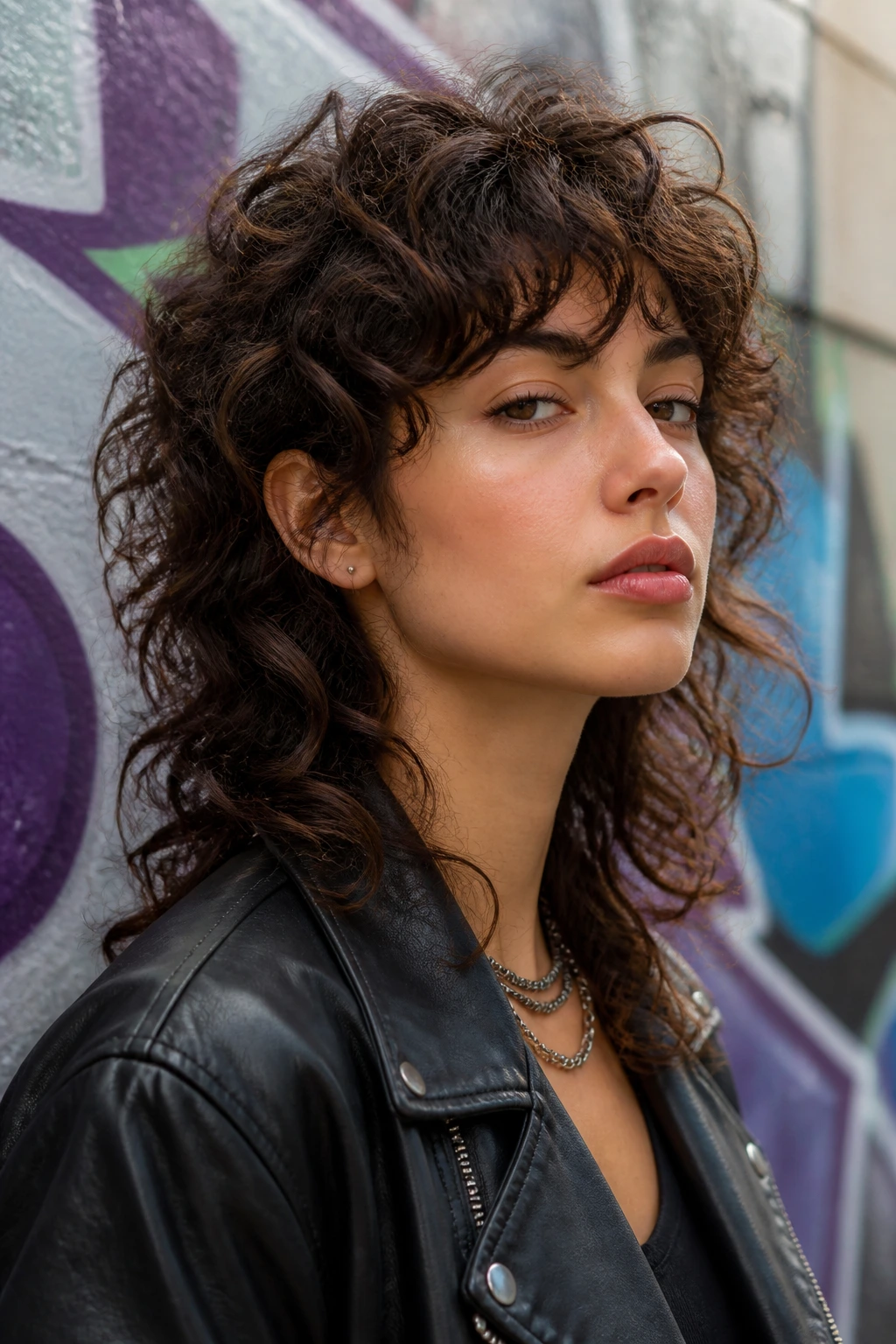
Picture shoulder-length hair in front, a little more length left behind, and curls that stack up around the crown. That’s the mullet-inspired shag, and it’s not as extreme as people imagine. On curly hair, the shape can be soft, not punk.
The reason it works is simple: curly hair naturally builds volume. A mullet-leaning shag uses that volume where it counts most, especially through the top and back, while leaving the front pieces lighter and more open around the face. The cut feels rebellious, but it can still look feminine and even a little romantic if the layers are blended well.
This is one of those styles that rewards a stylist who actually understands curl behavior. If the back is too long and heavy, it drags. If the top is too short, the silhouette can look top-heavy. The sweet spot is a controlled imbalance. Not perfect symmetry. Just enough shape to keep the eye moving.
If you like clothing with some edge—leather jacket, big earrings, boots—this cut fits that mood beautifully. It has personality built in.
9. Round Curly Shag for Thick Hair
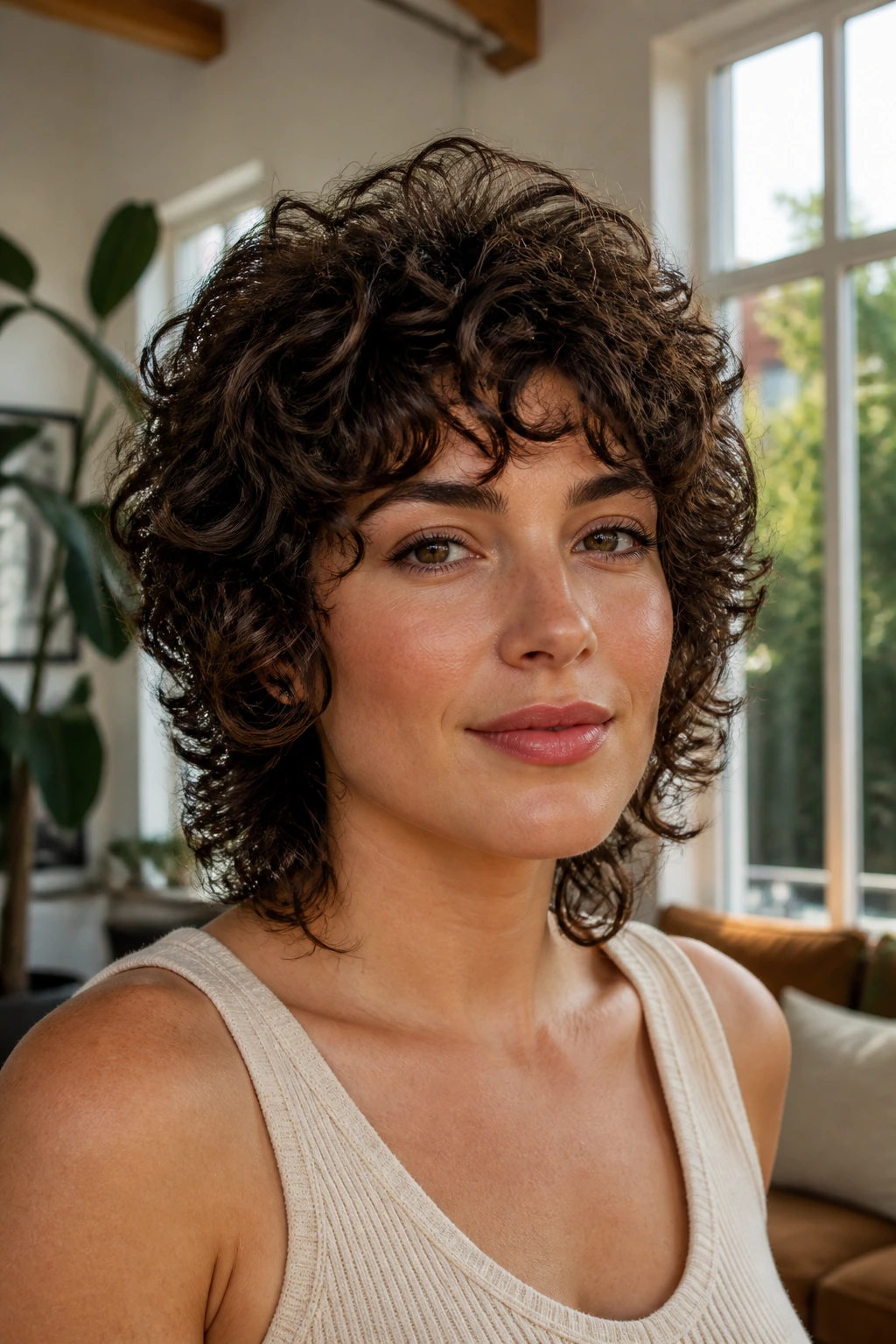
A round curly shag solves one of the most annoying problems thick-haired women run into: the dreaded boxy silhouette. Dense curls can puff wide at the sides if the layers are not placed carefully, and that makes the head look bigger in the wrong places. A rounded shape reins it in.
What the Shape Does
The goal is to keep width around the crown and upper sides while softening the heavy outer edges. Instead of letting thick curls sit like a square, the layers stack into a gentler dome. It’s flattering from the front and from the side, which is harder than it sounds.
This cut is especially good when you want volume but not bulk. The distinction matters. Volume lifts the shape; bulk just takes up space. A round shag gives you the first one and cuts back on the second.
A few stylists will thin thick curls too aggressively here, and I hate that move. It leaves the hair fluffy for a week, then weirdly flat and frayed later. Better to keep the body and remove weight through shape, not through random snipping.
10. Lightweight Curly Shag for Fine Hair
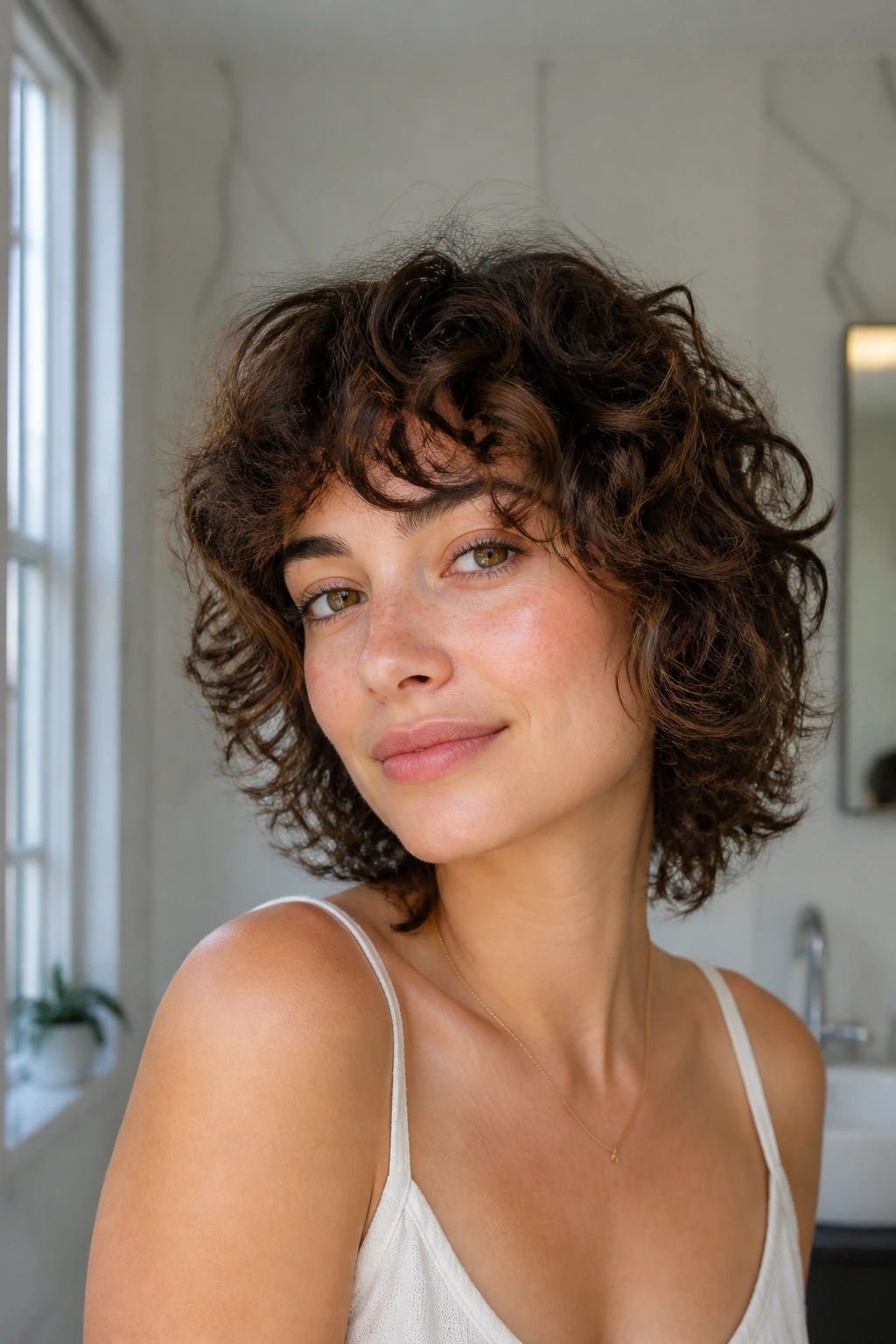
Fine curls need a different kind of kindness. Too many layers, and the hair starts looking see-through at the ends. Too little layering, and the whole thing lies flat against the head. A lightweight curly shag handles that balance with more restraint.
Unlike the thick-hair version, this one needs careful interior layering rather than aggressive texture. The goal is lift at the crown and a little swing around the face, not a shredded perimeter. If you can see through the ends from three feet away, the cut has gone too far.
Good Signs to Look For
- The crown has a bit of lift without standing up.
- The sides move when you turn your head.
- The ends still look full, even when dry.
- The part line does not expose a lot of scalp.
This is one of the best curly shag haircuts for women who want texture without a huge styling routine. A mousse at the roots and a light gel on the mids is often enough. Heavy creams can weigh fine curls down fast, so keep the product side light and the layering smart.
11. Razor-Cut Curly Shag
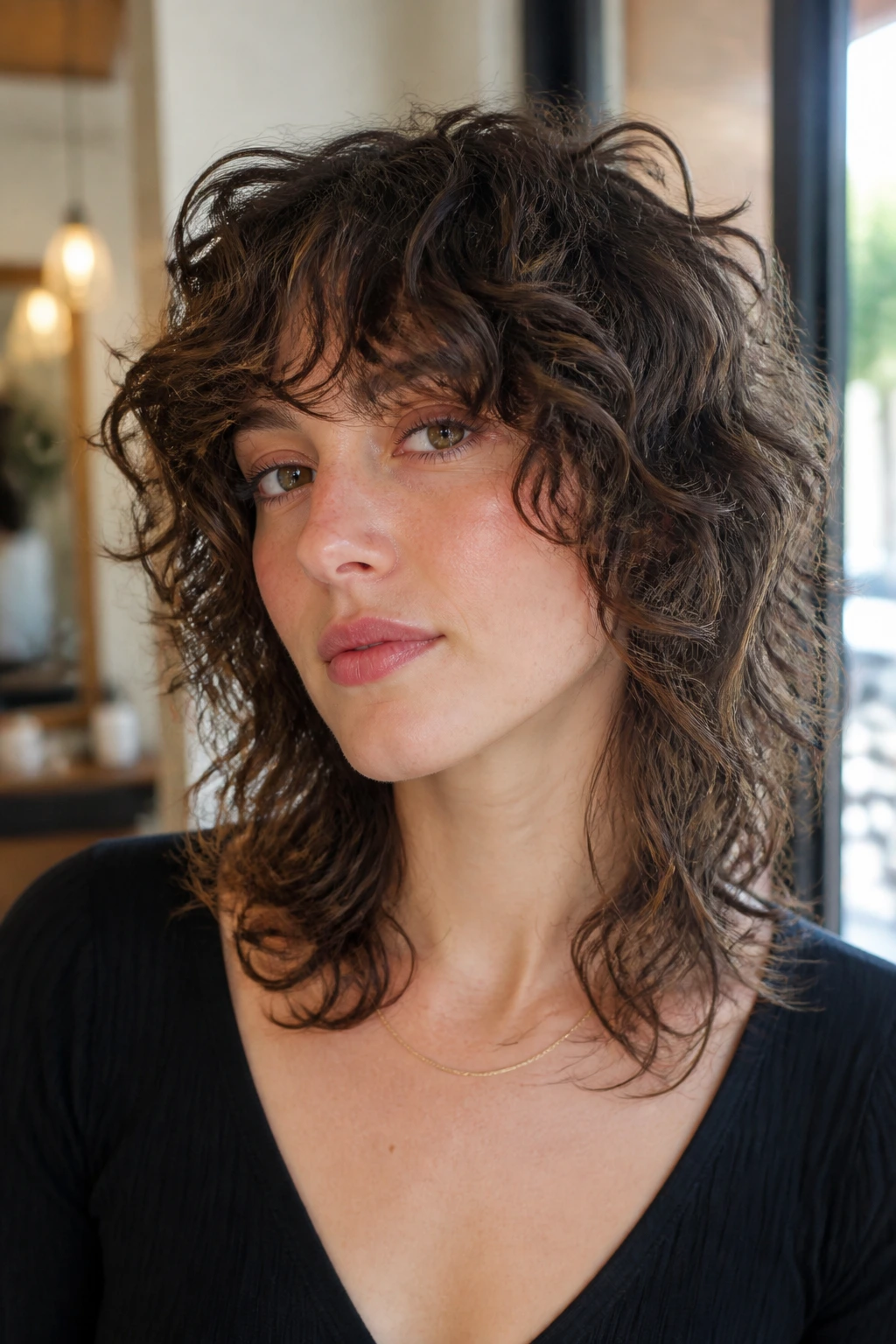
A razor-cut shag sounds edgy because it is. The tool softens the ends and creates a more feathered finish than scissors usually do. On curly hair, that can be a lovely thing—or a messy one—depending on the curl type and the hand doing the cutting.
Loose curls and strong waves usually handle a razor cut well. The edges look softer, and the layers melt into one another instead of forming hard steps. Tighter curls can also wear it, but the stylist has to be careful not to fray the perimeter. Frayed ends are not the same thing as textured ends. One looks airy. The other looks tired.
I like this cut for people who hate a crisp line. It has movement built in. Still, it is not the haircut I’d hand to someone with very fragile ends or lots of bleach damage. A razor can make weakness show faster.
If you’re curious, ask for a small test section first. That tells you a lot before the whole head gets touched.
12. Layered Bob-Shag
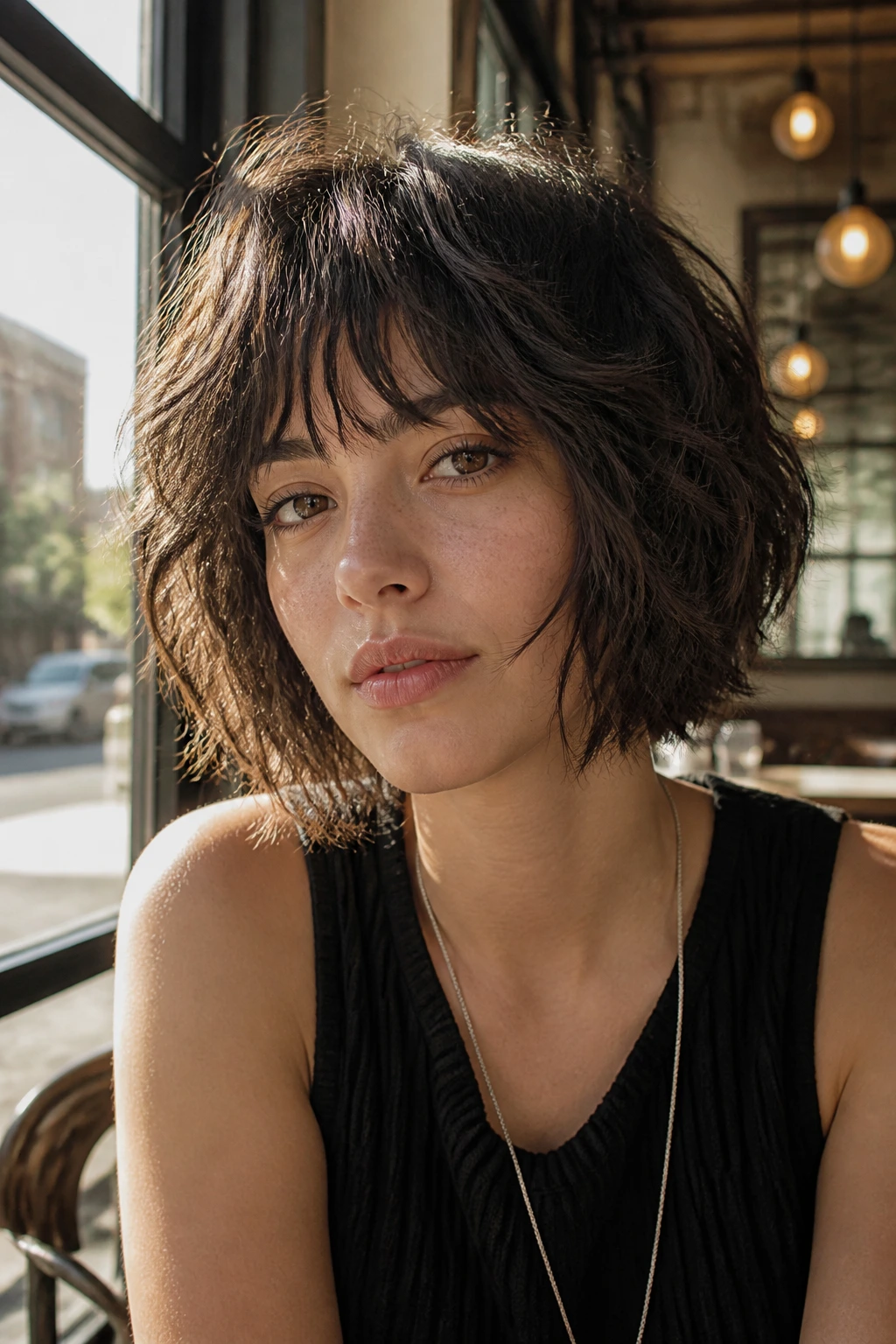
A bob-shag is what happens when a bob gets bored and decides to loosen up. The length usually sits somewhere between the jaw and the neck, but the shape is all shag: uneven layers, movement, and a little bit of cheeky mess.
This cut is a favorite for curls that need structure. A chin- or jaw-length shape keeps the hair from getting too heavy, while the layers stop it from feeling like a blunt box. It’s tidy enough for people who need a cleaner outline, but loose enough that it never looks stiff.
Why People Keep Coming Back to It
- It dries faster than longer shag cuts.
- It makes curls look springy instead of stretched.
- It works with side parts, middle parts, and ear tucks.
- It gives the neck and jawline some definition without going ultra-short.
The bob-shag is also one of those cuts that can look polished without trying too hard. That said, it needs regular shaping. Once the layers grow out too far, the bob part can overtake the shag part, and the whole thing gets heavy around the bottom.
13. High-Volume Crown Shag
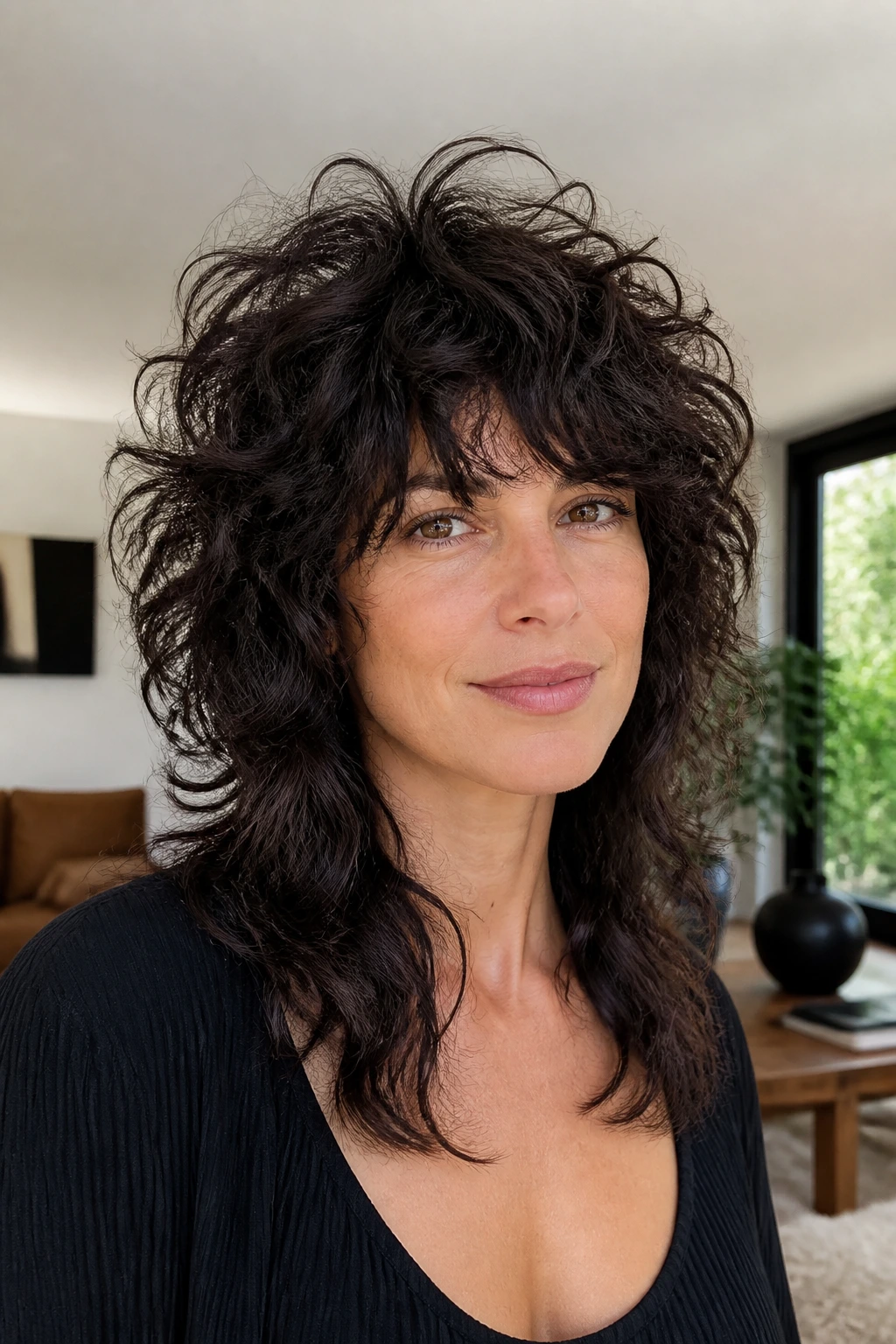
Want the crown to lift instead of collapse? Then this is the one to ask about. A high-volume shag puts its energy at the top of the head, where the roots can create height and the layers can fan out without dragging the face down.
How It Works
The shortest layers sit near the crown and upper sides. From there, the hair keeps length through the perimeter, so the silhouette feels airy on top and fuller around the outline. It’s a smart shape for women whose curls go flat at the roots but stay busy everywhere else.
A little root clipping while the hair dries can help, but the haircut does the heavy lifting. If the crown is cut too long, it never lifts properly. If it’s cut too short, you can end up with a pouf. The right version lands in between and gives the whole style a buoyant feel.
This cut looks especially good when you flip your part from time to time. Curl memory is real. So is root flattening. A haircut that encourages volume from several angles saves you from fighting the same flat spot every morning.
14. Side-Swept Fringe Curly Shag
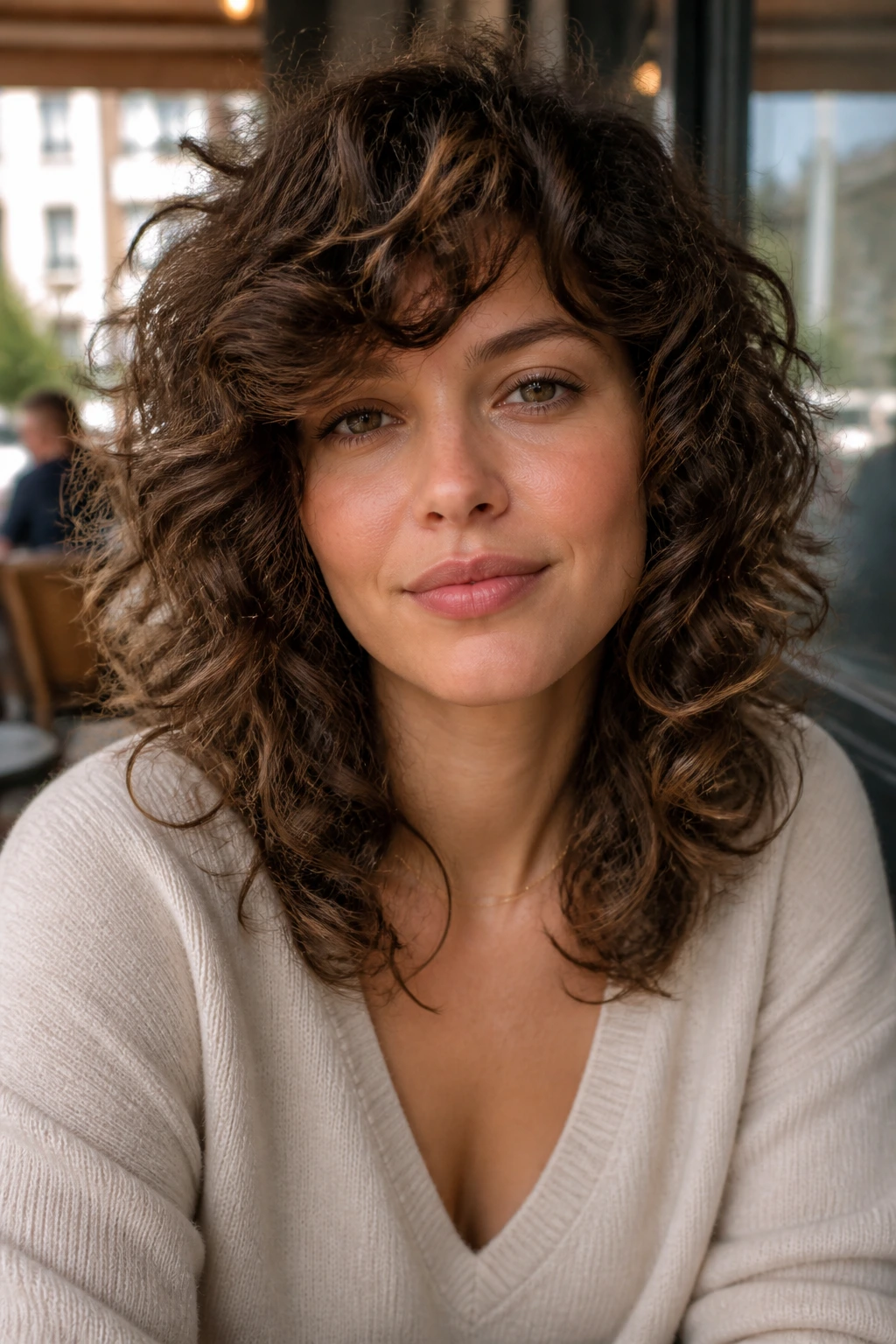
This is the shag for anyone who wants fringe but not the full forehead commitment. A side-swept fringe slides into the cut instead of cutting straight across it, which makes the whole style feel a little softer and a little more relaxed.
The fringe works well on curls because it can blend into the front layers instead of sitting as a separate piece. That matters. When bangs and layers talk to each other, the haircut feels intentional. When they don’t, the fringe looks dropped on at the last second.
What to Watch For
- Keep the longest fringe piece near the cheekbone.
- Let the shortest front pieces land where the curl pattern naturally bends.
- Avoid a deep undercut near the temple unless you really want a sharp finish.
- A side part usually helps the shape settle faster.
This style is good for women who want to soften a stronger jawline or simply move the attention a little off-center. It’s not flashy. That’s the appeal. It slides into daily life without asking for a full styling routine.
15. Grown-Out Curly Shag
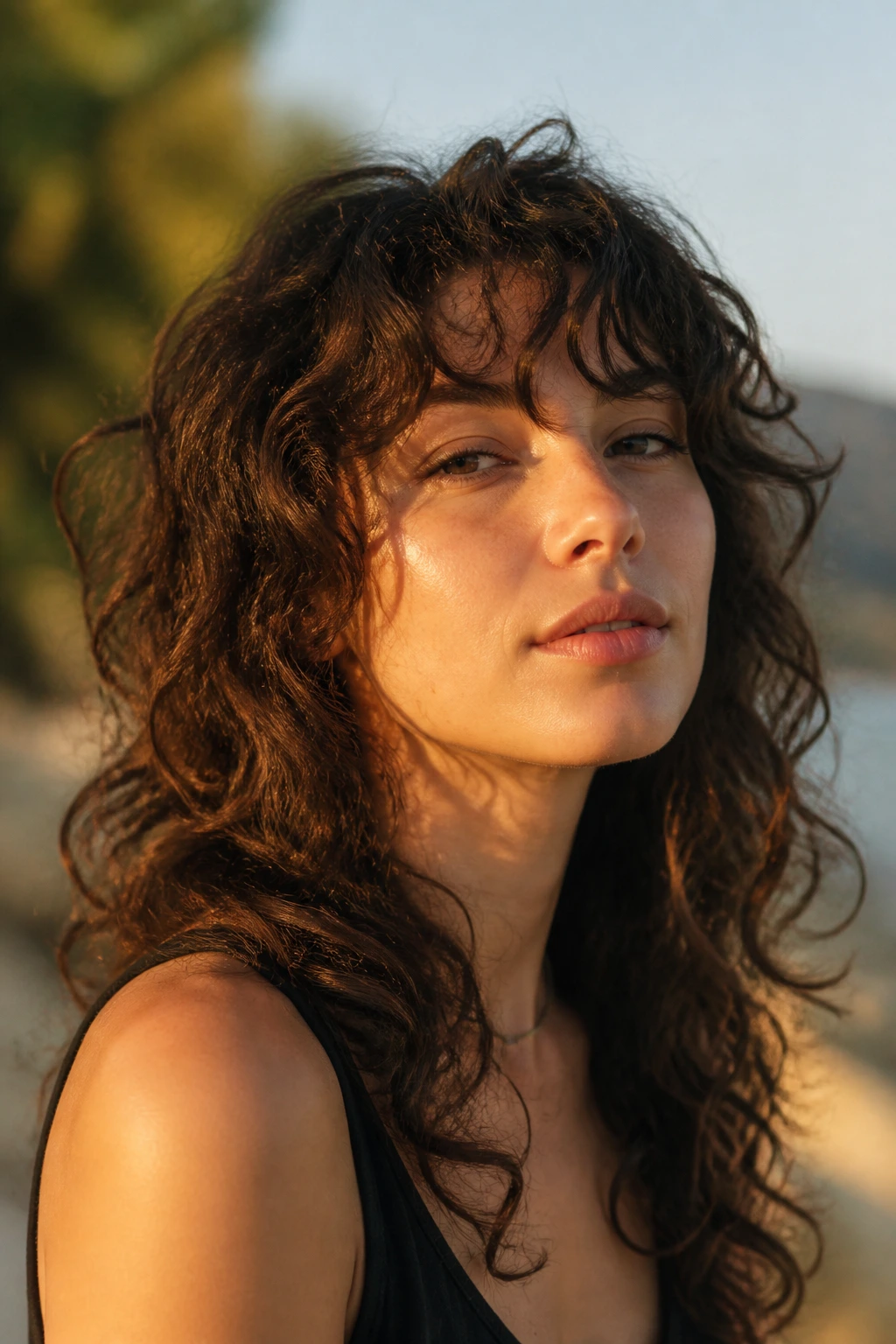
Some haircuts are made to look fresh on day one. This one is made to look good on day thirty, day sixty, and even after the layers have softened a little. A grown-out shag embraces that in-between stage instead of treating it like a problem.
The key is restraint. The layers should be visible but not severe, so when they grow, the shape still reads as deliberate. This is a strong option for women who visit the salon less often or who want a cut that won’t turn awkward the second it gains an inch.
One sentence, because it matters: not every shag should look freshly chopped.
A grown-out version often suits looser curls and waves, where a softer blend can look expensive without any hard edges. It also helps if you prefer hair that can be tossed into a clip, worn half-up, or left to dry without much fuss. If you like your curls a little wild and a little easy, this is probably the friendliest choice in the group.
16. Defined Ringlet Shag
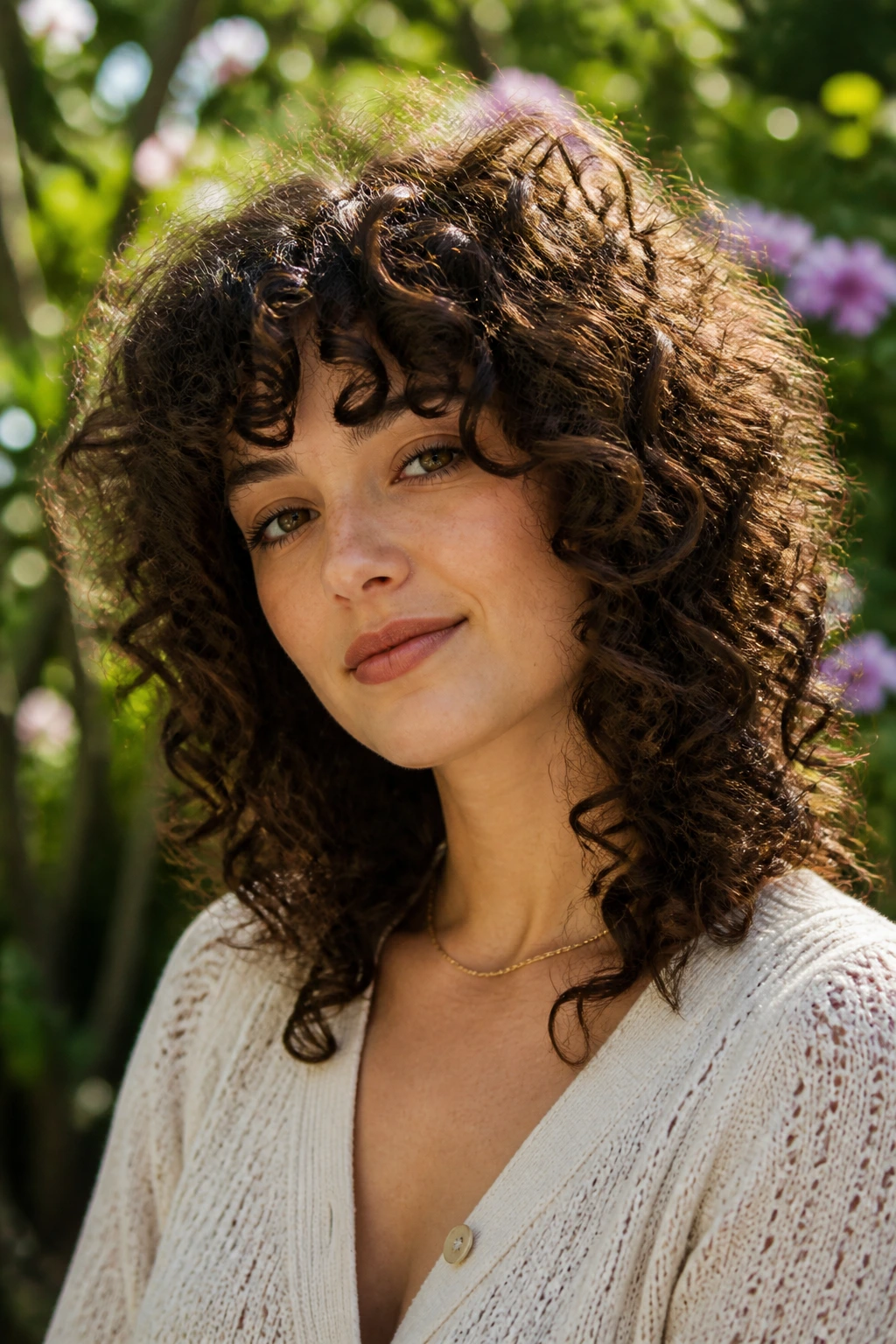
Unlike a messy shag, this version respects the curl pattern and lets each ringlet stay readable. That makes it a good choice for 3A to 3C curls that form clear spirals and need layers that support shape instead of breaking it up.
A defined ringlet shag usually has more careful sectioning and less random texture cutting. The layers are placed to encourage spring, not chaos. The result is a cut that looks structured from the first day and still has the loose, airy feel people want from a shag.
What Makes It Different
The ringlets keep their identity. That sounds fussy, but it’s not. If the curls clump naturally, don’t fight that. Let the layers work around the clumps instead of chopping through them. You get better definition, and the haircut lasts longer between trims because the curl pattern itself helps the shape.
This is a lovely cut for people who use gel or custard and like seeing each coil pop into place. It’s not the most rugged version on the list, but it may be one of the prettiest when the styling is done with a light hand.
17. Messy Wash-and-Go Shag
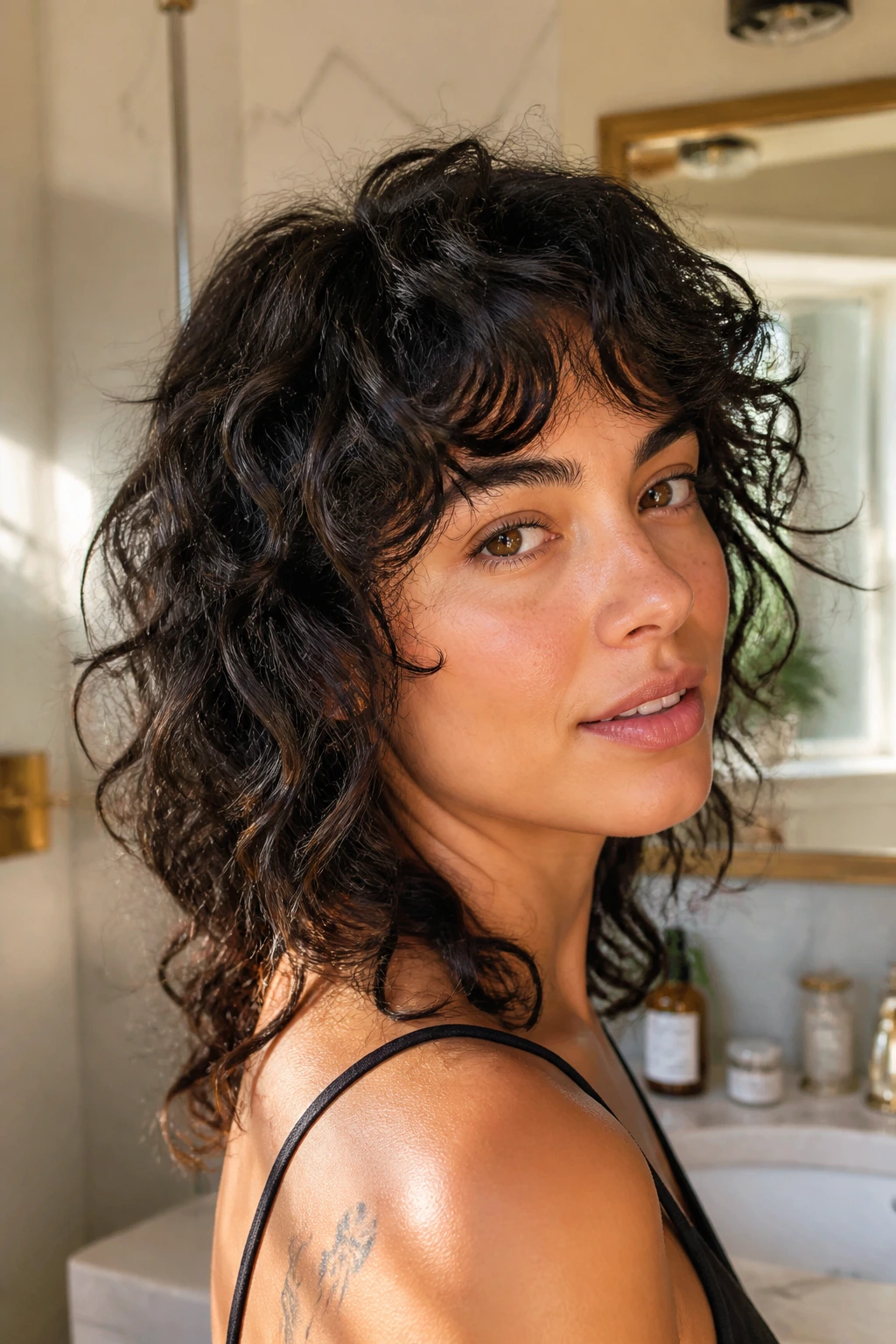
If your ideal morning routine is “scrunch, shake, leave,” this is the cut to look at. The messy wash-and-go shag is built for low effort, with layers that fall into place even when you don’t spend much time on them.
That said, messy does not mean random. The cut still needs shape through the crown, face, and perimeter so the hair doesn’t spread out in odd places as it dries. A good version has enough internal structure to look good even when you skip the perfect blow-dry.
A Simple Styling Habit That Helps
- Apply leave-in conditioner to soaking-wet hair.
- Add a light curl cream or mousse through the mids.
- Scrunch with a microfiber towel or cotton T-shirt.
- Let the hair air-dry halfway before touching it again.
The haircut should do the work here, not the products. That is the whole point. A wash-and-go shag gives you texture with fewer steps, which is why people stick with it once they try it. Nobody wants to fight the mirror before coffee.
18. Asymmetrical Curly Shag
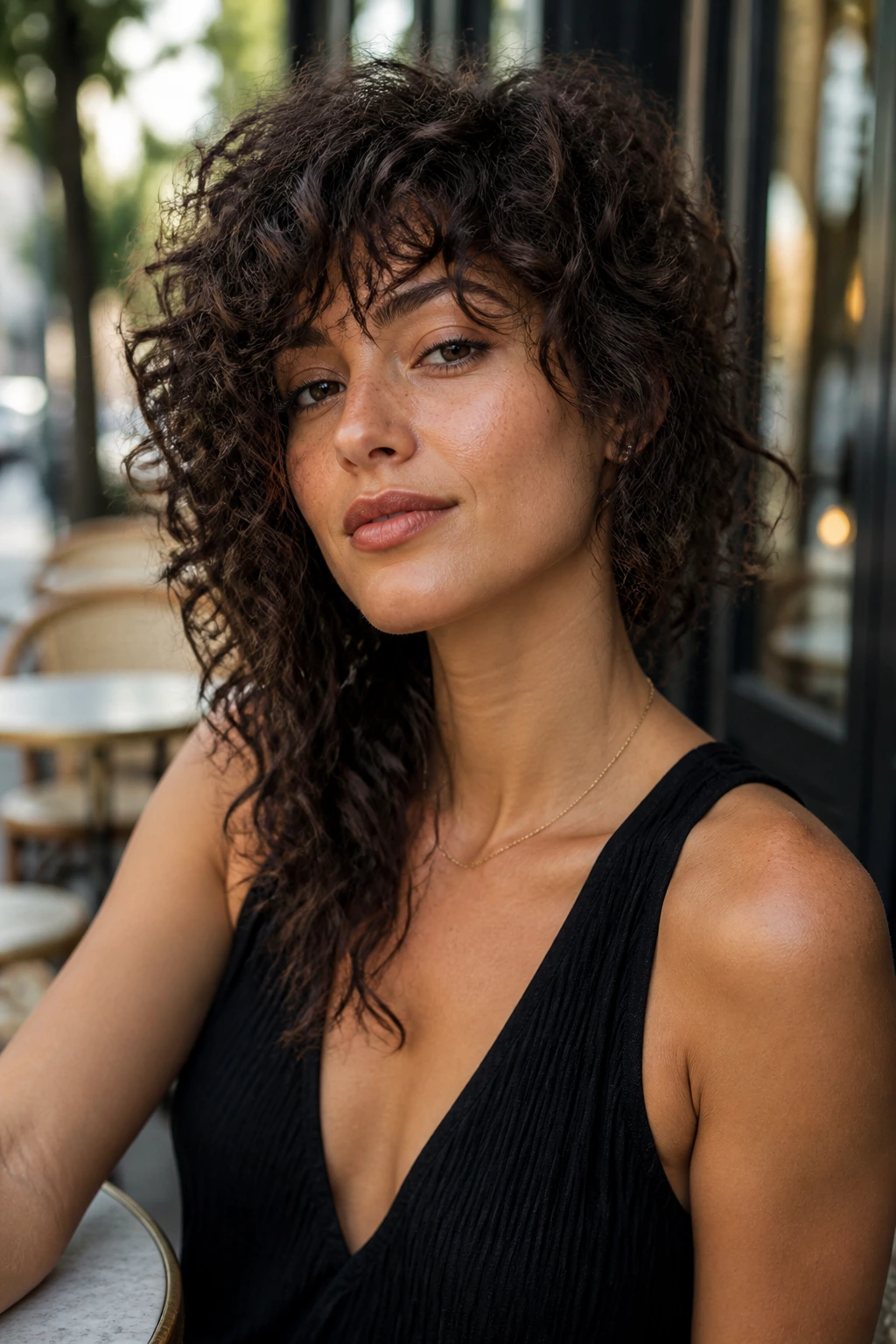
A little imbalance can look far more interesting than perfect symmetry. An asymmetrical curly shag uses that idea on purpose, leaving one side slightly longer or fuller so the cut feels modern without turning severe.
The trick is subtlety. If the difference is too obvious, the curl pattern can fight the shape and make the haircut look accidental. But a gentle lean to one side gives the style motion, especially when the hair is parted off-center or tucked behind one ear.
Why It Works
Curly hair already has movement, so a small asymmetry adds a fresh line without needing extra styling. It can also help soften facial features. A longer side near the jaw or cheekbone tends to draw the eye in a flattering way, especially when the rest of the layers stay soft.
This one is best for women who want a little art in their haircut. Not a costume. Just a clear design choice. It’s the sort of style that looks best when the cut is precise and the curls are allowed to do their own thing after that.
19. Shag with Tapered Nape
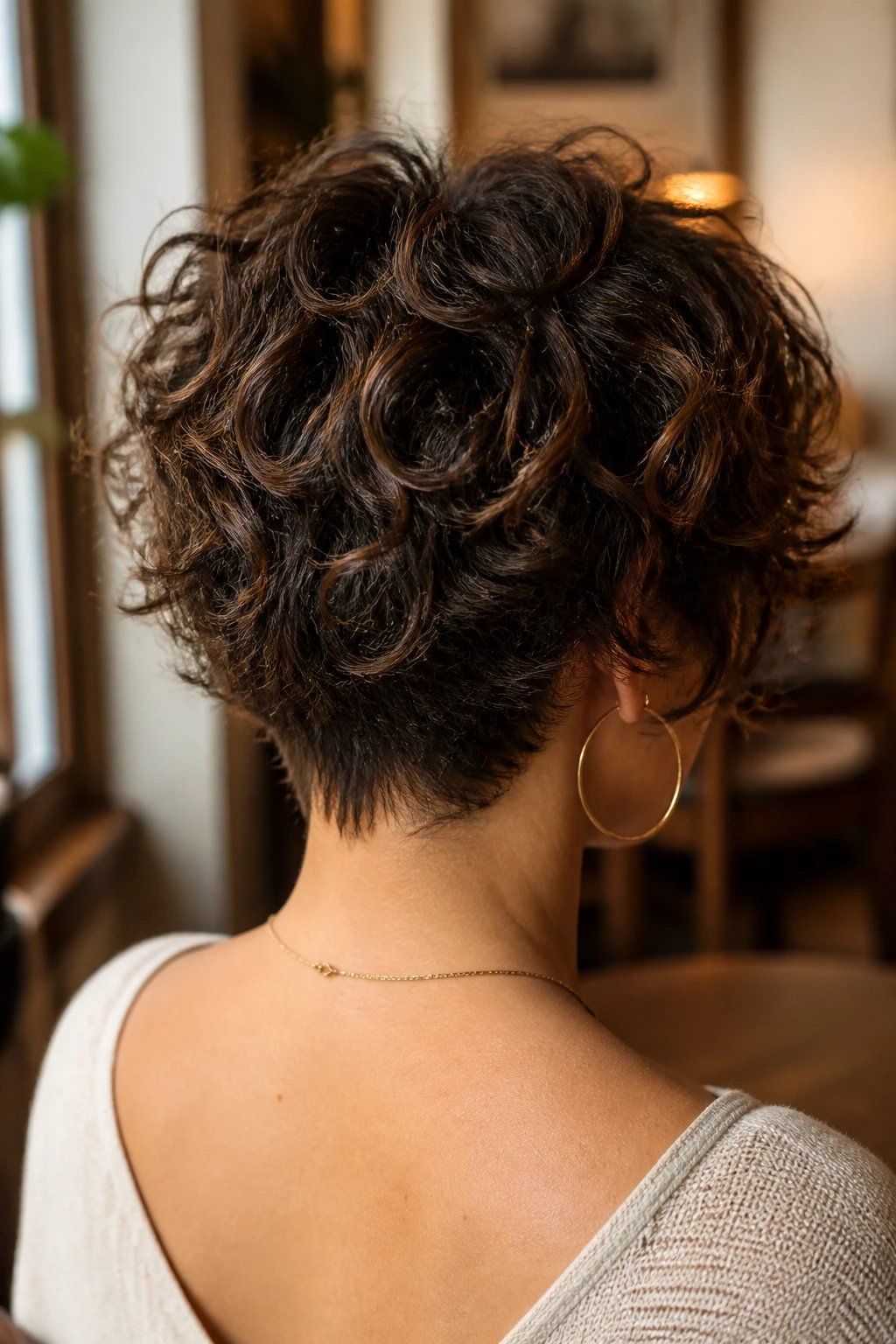
What happens at the back of the neck matters more than people think. A tapered nape keeps the cut neat where the hair touches skin, which makes the whole shag feel lighter and cleaner from behind.
That’s especially useful on thick curls. Without some tapering, the lower back section can puff out and pull the eye down. A softer nape keeps the silhouette from looking bulky under jackets, collars, or scarves. It also makes the haircut easier to live with if you prefer your hair off the neck in warm or humid weather.
This style suits women who like shape but not a lot of visible volume at the neckline. It’s practical, yes, but not boring. The top and sides can still have plenty of movement, so the cut stays playful while the back stays controlled.
If you wear your hair half-up a lot, this one looks neat from every angle. That’s a small thing until you notice how often people see the back of your head.
20. Heavy Fringe Curly Shag
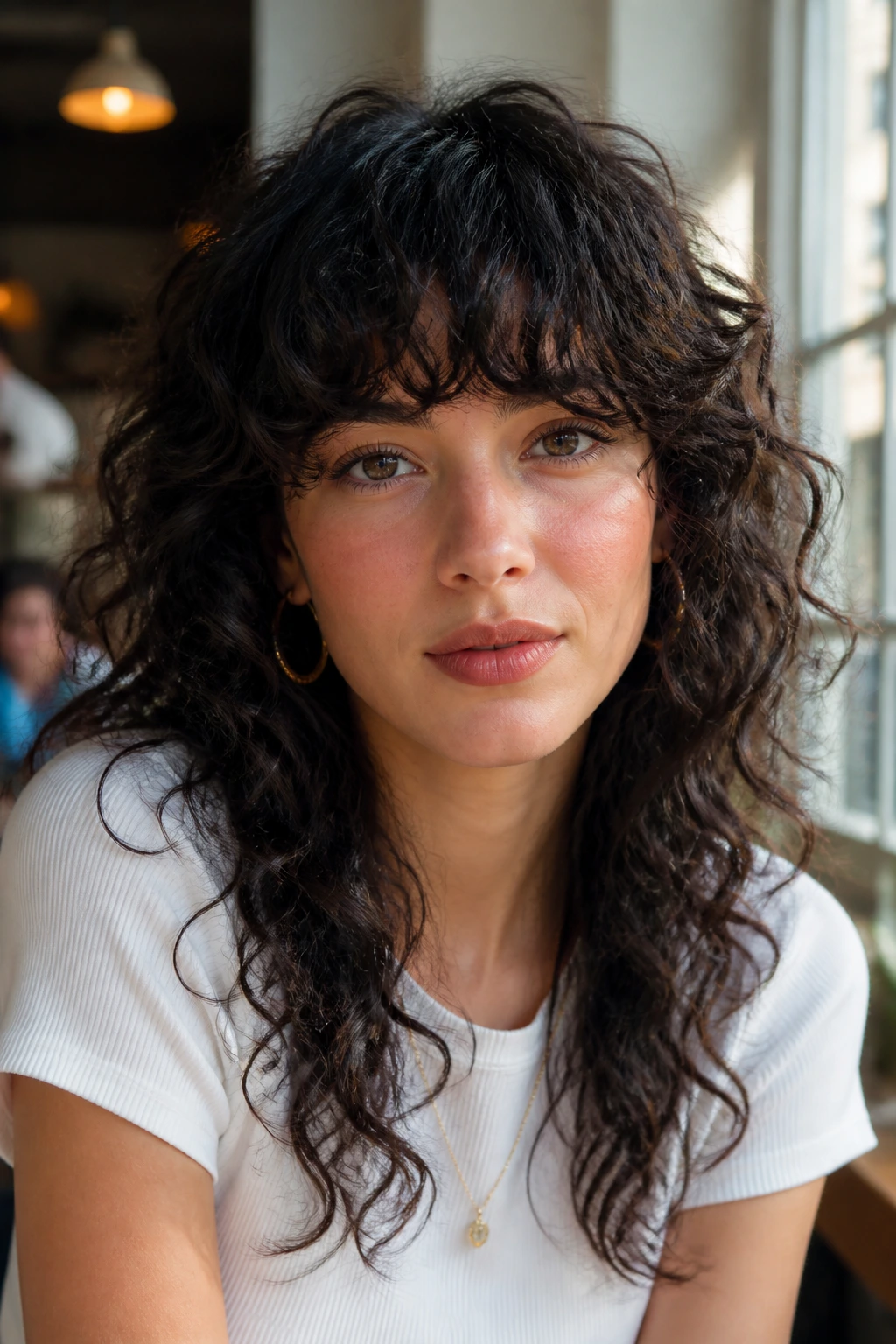
A heavy fringe changes the whole mood of a shag. It gives the cut a stronger face frame and a bit more drama through the front, which can be gorgeous on curls if the fringe is cut with the shrinkage in mind.
The main risk is weight. A fringe that’s too thick can sit on the forehead like a curtain that won’t move. A well-cut one has enough density to feel intentional but enough separation that the curls can break apart as they dry. That balance matters more than the exact length.
Best Uses for This Shape
- Softening a long face.
- Drawing attention to the eyes.
- Balancing a very full crown.
- Giving fine curls a stronger front shape.
This cut can look especially good when the fringe is paired with looser, shaggier layers through the sides. The contrast keeps the bangs from swallowing the rest of the haircut. It has presence. A lot of it.
21. Retro Feathered Curly Shag
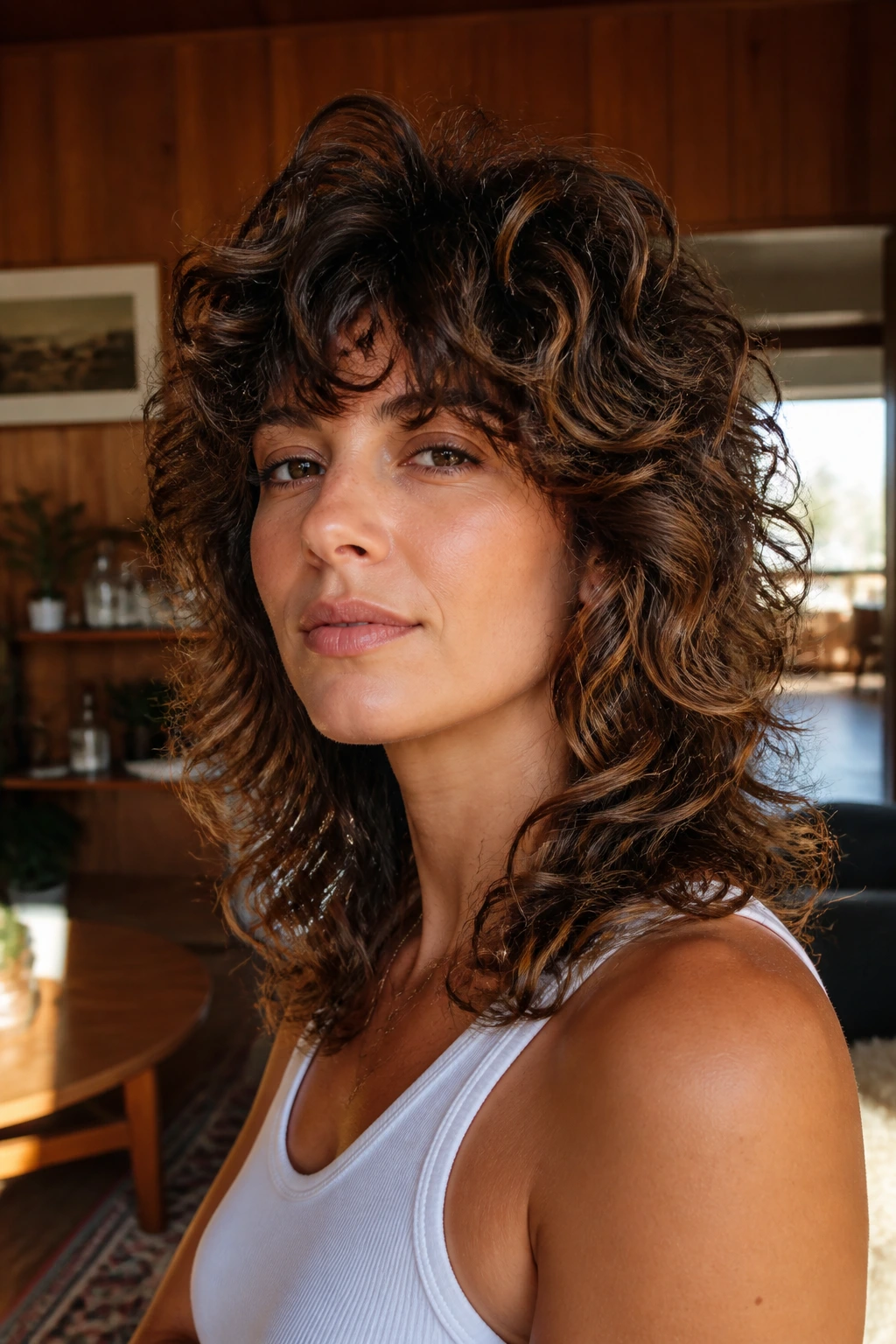
The retro feathered shag pulls from older layered cuts, but it doesn’t need to feel costume-y. The feathering softens the ends so the curls flick away from the face and neck instead of falling straight down. That gives the haircut a breezy, almost airy finish.
A little round-brush work can help here, especially around the front, but the cut still needs enough shag structure underneath to keep it modern. Without that, it can slide into something too nostalgic. With the right balance, it feels fresh and familiar at the same time.
What Makes It Feel Different
The perimeter is softer than a sharp shag, and the face-framing pieces tend to move outward rather than inward. That gives the style a lighter outline, especially on medium-density curls. If you like a slightly blown-out look but do not want stiff styling, this is a good lane to try.
There’s also a nice side effect: feathered layers tend to grow out in a friendly way. They blur instead of breaking, which means the haircut can keep looking decent long after the initial cut has softened.
22. Soft Curly Shag Haircut for Women Who Want Easy Styling
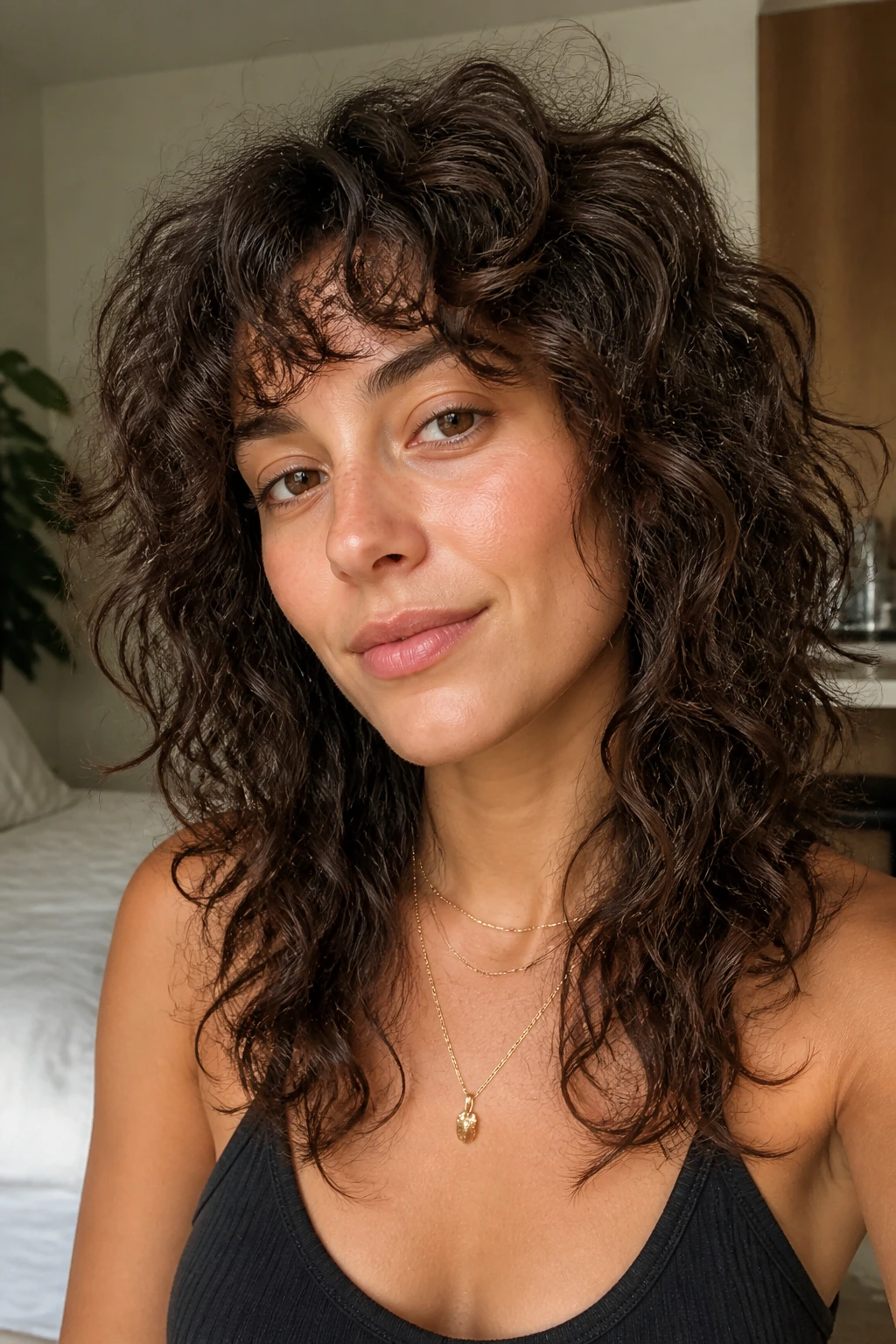
Some cuts want a diffuser, product cocktail, and a little pep talk before they behave. This isn’t that. A soft curly shag haircut for women who want easy styling keeps the layers blended, the edges gentle, and the shape friendly enough to dry without much drama.
This is the version I’d point to if someone said, “I want movement, but I do not want to babysit my hair.” The layers are there, but they are not screaming. The face frame is visible, but it doesn’t demand daily maintenance. It’s the calmest finish in the bunch, which is not a bad thing at all.
Best for everyday life: office mornings, school runs, long commutes, and anyone who wants curly hair that looks shaped even on a lazy day.
Ask for: soft internal layers, a little lift at the crown, and perimeter length that still feels full when dry.
Skip: overly choppy texture if your curls are already prone to frizz.
The best part is how naturally it settles. It feels like hair that knows what to do.
Final Thoughts
Curly shag haircuts for women work best when the layers are chosen with the curl pattern in mind, not copied from a straight-hair reference photo. That one decision changes everything. The right shag gives curls room to move without turning them into a puffball or a flat curtain.
If you’re stuck between soft and edgy, pick the softer cut first. You can always add more shape on the next trim. It is much harder to undo layers that were cut too high or too aggressively, and curly hair makes that mistake obvious fast.
The strongest shag is the one you can actually wear on an ordinary Tuesday. If it looks good after a diffused dry, a quick air-dry, and one lazy finger-combing session, you’ve found the right version.
