



Round faces do not need to be hidden. They need shape.
A blunt cut that stops at the widest part of the cheeks can make the whole face read wider. A good bob does the opposite, and the best choppy bob styles for round faces use broken ends, off-center parts, and a little length below the jaw to build angles where you want them.
I like a bob that moves. Not a fluffy, overworked one — just enough texture that the line feels soft and alive. The details matter more than most people think. Where the weight sits, where the front pieces land, and how much lift you leave at the crown can change the whole haircut.
Hair type still matters too. Fine hair needs a cleaner perimeter so it does not collapse, thick hair needs internal removal so it does not puff out at the sides, and curly hair needs the cut adjusted to its shrinkage. That is why one bob can flatter one round face and miss the mark on another. The silhouette comes first, then the polish.
1. Collarbone-Length Choppy Bob for Round Faces
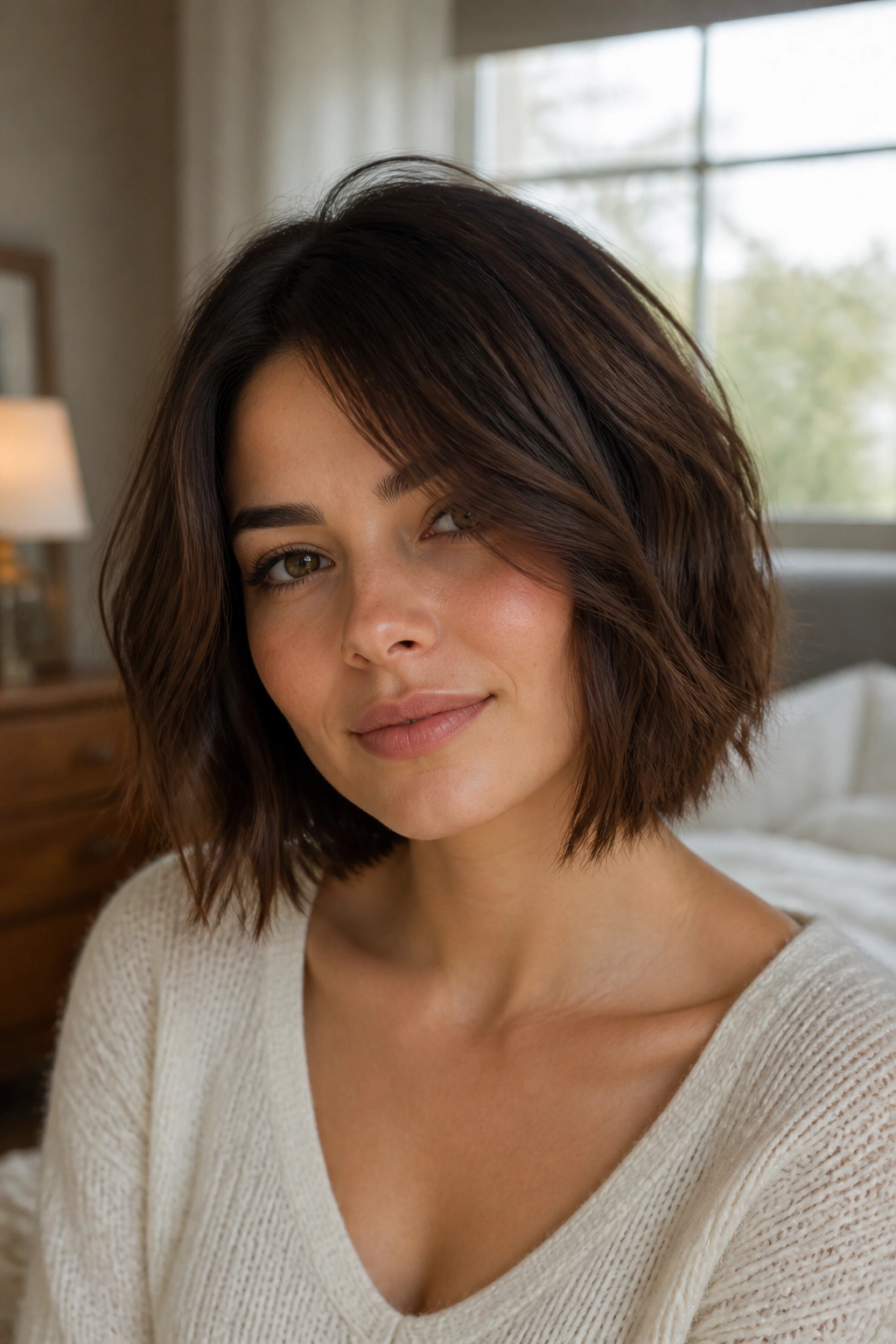
This is the bob I reach for when someone wants shape without giving up too much length. The collarbone length gives the face a vertical line, which is a gift on round faces, and the choppy ends keep the style from looking stiff or boxed in.
Why the Length Works
The sweet spot is a front line that falls below the chin. That one detail changes the whole feel of the cut. Instead of ending right at the fullest part of the cheeks, the hair keeps traveling downward, which makes the face look longer and the jaw a little sharper.
Ask for soft, broken texture through the ends, not heavy layering all over. If the layers start too high, the haircut can puff out at the sides, and that is the opposite of what you want. A little movement near the bottom is enough.
- Keep the front pieces 1 to 2 inches below the chin.
- Ask for light internal texture, not choppy layers around the cheeks.
- Part the hair slightly off center to break symmetry.
- Style with a small bend at the ends, not a full curl.
Pro tip: If your hair is thick, ask the stylist to remove weight underneath the top layer. That keeps the bob from ballooning at cheek level.
2. Side-Swept Jawline Bob
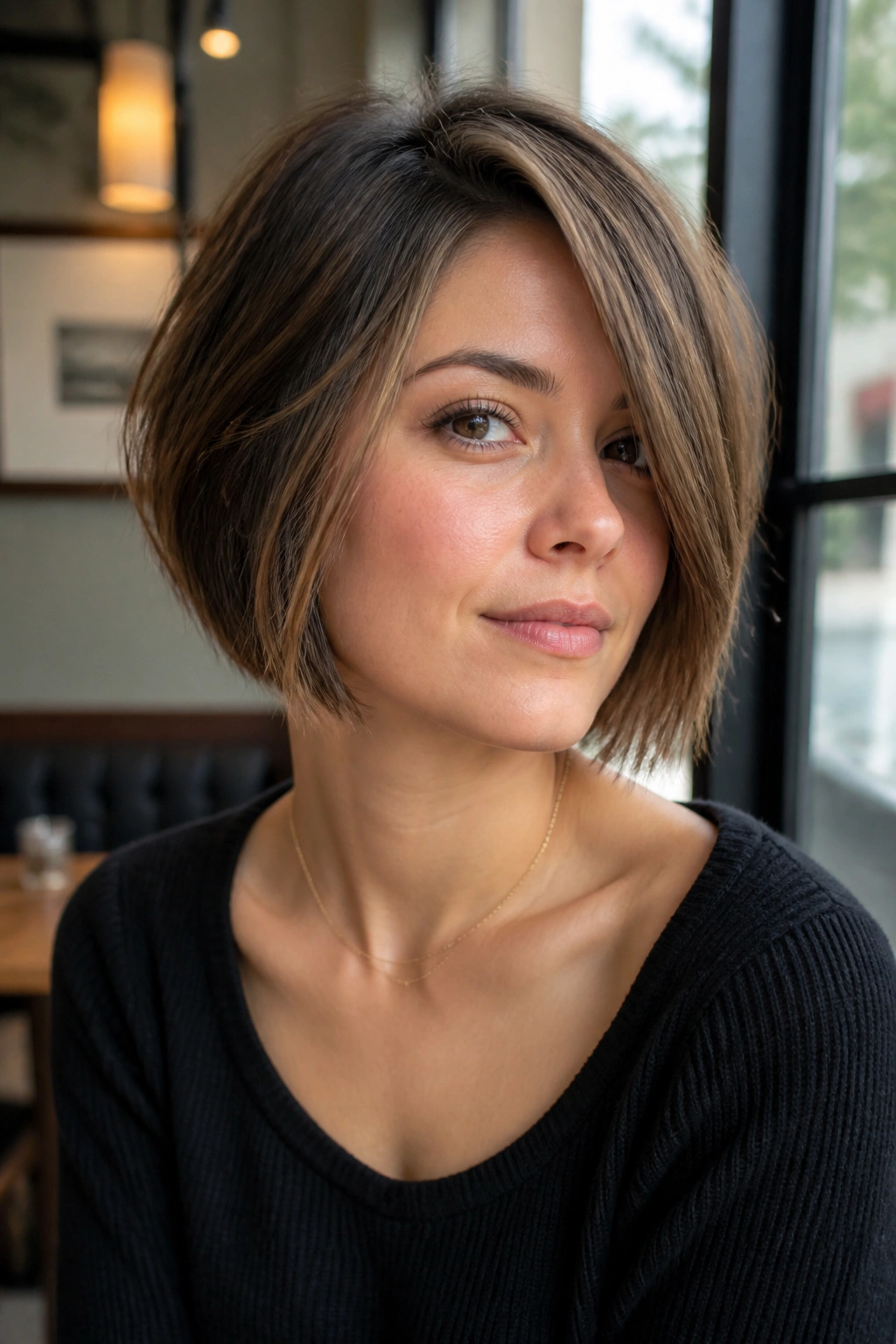
A side part can do more for a round face than a lot of people give it credit for. It shifts the eye line, cuts across the widest point of the face, and makes the cut feel less predictable in the best way.
This style sits around the jaw, but the softness comes from how it is cut, not from making it wispy. The ends should be choppy enough to move, yet blunt enough to hold a clean outline. That balance matters. Too much feathering and the shape gets fluffy; too much bluntness and it turns boxy.
What works here is the diagonal. Once the part swings over, the face reads longer and the cheeks feel less centered in the silhouette. It is one of those small changes that looks almost boring on paper and dramatic in a mirror.
Wear it with a tucked side if you want extra lift at the cheekbone. Leave the heavier side loose if you want a little mystery. Both work, and both beat a dead-center part for this shape.
3. Asymmetrical Choppy Bob

Want the quickest way to create angles? Make one side longer than the other. An asymmetrical bob gives a round face the kind of shape it cannot fake, because the eye follows the longer side downward instead of staying parked across the cheeks.
The cut should not look severe. That is the catch. A sharp asymmetry without texture can feel too hard, and that can be jarring if your features are soft. Choppy ends calm it down. They make the haircut feel lived-in instead of architectural.
How to Ask for It
Tell your stylist you want one side to fall a little past the chin and the other to sit closer to the jaw or top of the neck. The difference does not need to be extreme. Even a 1 to 2 inch shift can change the whole profile.
A deep side part helps the line feel intentional. So does a tiny bend through the front pieces. If your hair is straight, use a flat iron only on the last inch and curve the ends slightly under or away from the face. If it is wavy, let the asymmetry do most of the work.
This cut is especially good when you want something modern without going short-short. It has edge, but it still feels wearable on a normal Tuesday.
4. Stacked Choppy Bob With a Tapered Nape

If your hair lies flat at the crown and drops straight at the sides, a soft stack in the back can wake the whole haircut up. The nape gets a little lift, the back takes on shape, and the front can stay longer so the face still gets that lengthening line.
The key is keeping the stack modest. Not a helmet. Not a triangle. Just enough graduation to build volume where it helps and keep the cheek area from carrying all the weight.
What to Watch For
- Ask for a soft stack, not a sharp wedge.
- Keep the front longer than the chin.
- Leave the top with light, movable layers.
- Blow-dry the crown with a small round brush for lift.
A stacked bob can go wrong fast if the back is piled too high. Then you get width in exactly the place a round face does not need it. I prefer a gentle taper at the nape and a smooth drop in the front. That keeps the haircut compact from behind and lengthening from the front.
The result feels neat, structured, and a little polished without looking severe.
5. French Bob With Broken Ends

The French bob has a reputation for being chic and a little moody, but for round faces it needs a careful hand. Keep it too short and it can exaggerate fullness at the cheeks. Keep it just long enough to graze below the jaw, and it starts to work with the face instead of against it.
I like this cut best when the ends are chipped rather than bluntly chopped. That broken edge keeps it from looking like a tidy little box. It also helps the hair move when you turn your head, which matters more than people realize. A bob that sways a little always looks less heavy.
The fringe changes everything here. A soft, airy fringe that parts in the middle or slides slightly to one side gives the face room. A heavy, straight-across bang can make the top half feel crowded. That is not a hard rule, but it is the version I would avoid first.
This is the bob for someone who wants style with a bit of attitude. It feels put together without feeling precious. And on a round face, that balance is the whole point.
6. Wavy Choppy Lob With Invisible Layers

A blunt lob can sit there and do nothing. A wavy choppy lob, though, has enough movement to keep the eye traveling. The hidden layers are the real reason it works — they remove bulk inside the cut without turning the surface into a mess of steps.
That makes this style a smart choice for hair that naturally bends a little. The waves do half the styling for you, and the cut gives them a place to fall. On a round face, those soft bends help stretch the outline vertically, especially when the front pieces land below the chin.
What I like most is how easy it is to wear. You can air-dry it with a little mousse, rough-dry it with your fingers, or wrap random sections around a one-inch wand for loose movement. It does not need perfect curls. It needs a pattern.
If you hate the look of obvious layers, this is the one to ask about. It gives shape without shouting about it. That matters when you want your hair to look easy, not overworked.
7. Razor-Cut Bob With a Deep Side Part for Round Faces

A razor cut is not about making hair wispy for the sake of it. Done well, it softens the perimeter and lets the edges move. Done badly, it strips out too much weight and leaves the bob looking thin at the bottom. That is why the base has to stay controlled.
What the Razor Does
A razor shaves through the ends in a way scissors do not, which creates a softer, more broken line. On a round face, that can help the haircut feel less blunt near the cheeks. The deep side part adds another layer of shape by pushing the hair into a diagonal instead of a straight wall.
This version works best on medium to thick hair with some natural texture. Fine hair can look frayed if too much is removed. If your ends already feel dry or fragile, ask for point-cutting instead of a heavy razor pass. Same idea, less stress on the hair.
- Keep the part above the outer eyebrow.
- Ask for the razor only on the last 1 to 2 inches.
- Leave the front below the jawline.
- Use a light smoothing cream if the hair frizzes easily.
The result is soft, sleek, and a little undone. Not messy. Just relaxed.
8. Face-Framing Bob With Cheekbone Pieces

Want the haircut to work like contour? Then pay attention to where the shortest pieces land. On a round face, the goal is not to chop the front right across the fullest part of the cheeks. That would box the face in. The better move is to let the face frame start a little higher or a little lower, then sweep downward.
The most flattering pieces usually begin around the cheekbone and continue toward the mouth or collarbone. That creates a line the eye can follow. It also keeps the middle of the face from feeling crowded, which is where some shorter bobs go wrong.
Where the Shortest Pieces Should Sit
Tell your stylist you want the front to skim the cheekbone, then taper longer as it moves toward the neck. If you wear a side part, the shorter side can start a touch higher. If you wear a center part, keep both sides soft and slightly uneven around the face.
A little bend away from the face helps too. It opens the cheek area instead of sitting on top of it. Small detail. Big difference.
This is a strong pick if you like movement near the front but do not want the whole haircut to feel shaggy. It keeps the face open and the bob sharp.
9. Textured Inverted Bob
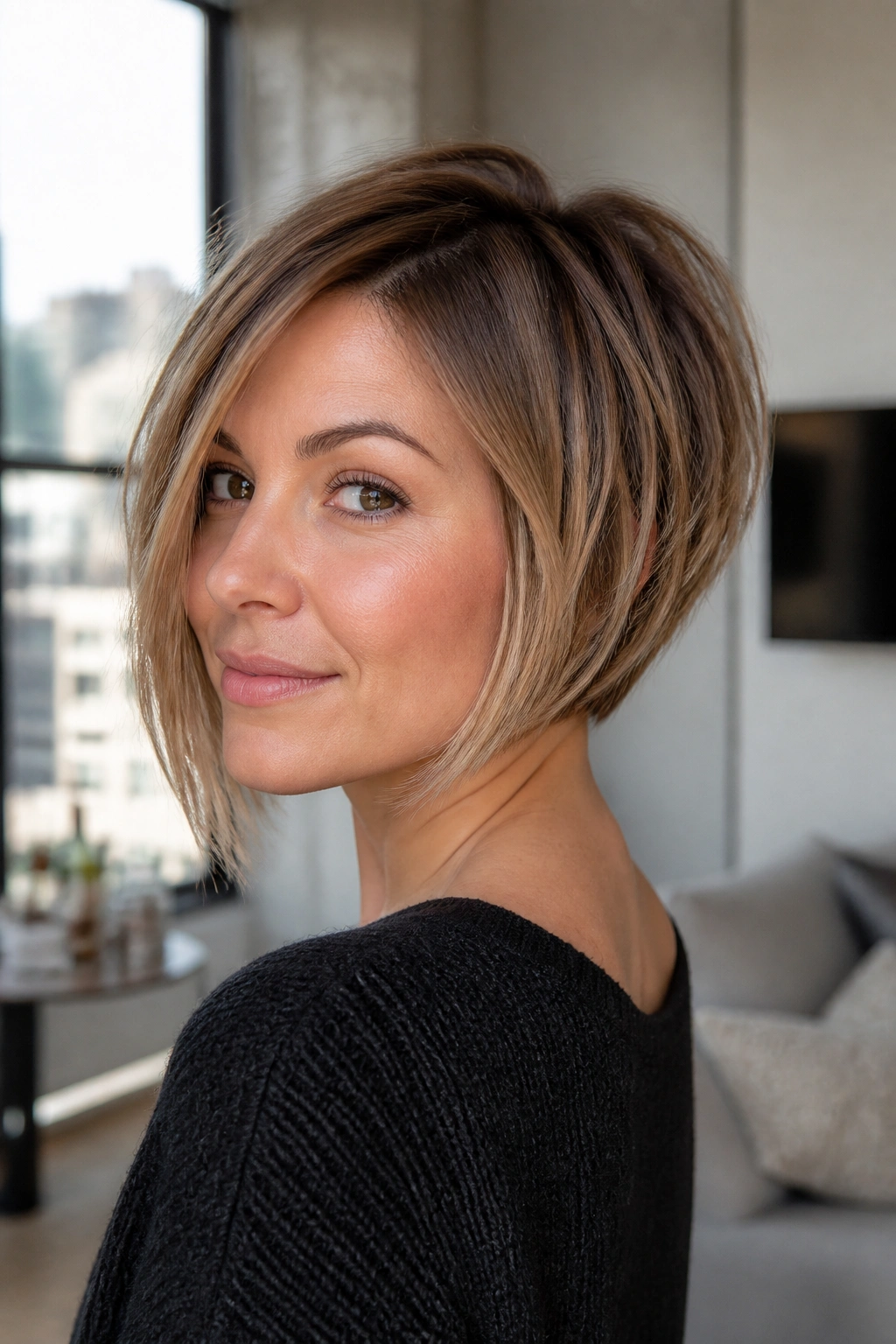
A textured inverted bob is what I suggest when someone wants structure, but not a haircut that behaves like a box. The back is shorter, the front is longer, and the line between them makes a subtle diagonal that flatters a round face without trying too hard.
The inversion gives the haircut lift, which is useful if your hair tends to hang heavy around the cheeks. The texture keeps that lift from feeling formal. It also helps the ends move, which matters because a stiff inverted bob can look a bit dated when it is too polished.
- Keep the angle subtle rather than dramatic.
- Ask for shattered ends through the perimeter.
- Style with a round brush at the crown only.
- Leave the front pieces at or below chin length.
This one shines on dense hair. The cut takes away weight where it tends to stack up and leaves enough length in front to soften the face. It is one of the cleaner options in the list, and that is part of the appeal. Some people want a bob that looks neat from every angle. This is that bob.
10. Choppy Bob With Bottleneck Bangs

Bottleneck bangs are a smart match for a round face because they open gently at the center and widen as they move toward the cheeks. The shape gives the forehead breathing room without drawing a hard line straight across the face. That little bit of give is why the cut works.
The bangs should blend into the sides, not sit like a separate piece glued on top. If they stop too short or get too dense, they can make the upper half of the face feel crowded. Keep them light, a bit piecey, and long enough to tuck if you change your mind halfway through the day. That kind of flexibility matters.
Why the Fringe Matters
A bob without fringe can still flatter a round face, but the bangs shift the balance in a useful way. They add motion up top, which keeps the eye from lingering on the widest section of the cheeks. It is a simple trick, and I think it works especially well when the bob itself is kept just below the chin.
If your hair has a cowlick at the front, dry the bangs side to side first, then direct them down. That one habit can save you from a split fringe. And if your forehead is short, keep the shortest bit of the bang lighter than you think you need.
The final look is soft, a little arty, and much easier to wear than a full blunt fringe.
11. Sleek Bob With Jagged Ends

Sleek does not have to mean flat and boring. A sleek bob with jagged ends gives you the smooth surface people like, but the broken hem keeps it from looking like a hard block around the face.
That difference matters on a round face. A blunt, one-length bob can sit like a shelf at the jawline. Jagged ends interrupt that shelf and make the cut look lighter. The hair still feels controlled, which is great if you like a polished finish, but the silhouette has more shape.
This style works best when the bob lands below the chin and the ends are chipped in a way that looks deliberate, not thinned out. Think edge, not fray. Think movement, not damage.
If your hair is straight or close to straight, a flat iron pass on the mid-lengths and a tiny bend on the ends is enough. Keep the roots calm. The line should look smooth from a few feet away and interesting when you get close. That is the sweet spot.
12. Shaggy Bob With Tousled Layers

If your hair goes flat by lunchtime, the shaggy bob is worth a look. It gives the crown some lift, keeps the perimeter light, and leaves enough uneven texture to make the whole cut feel alive.
The important part is restraint. A shaggy bob for a round face should not explode outward at the cheeks. It needs a little height at the top and a little softness around the face, but the base should still have some shape. Otherwise it turns into volume for volume’s sake, which is rarely flattering.
How to Wear It
- Work a small amount of mousse into damp roots.
- Rough-dry the hair with your fingers until it is about 80% dry.
- Twist a few random sections for a loose bend.
- Finish with a pea-sized bit of wax at the ends if they need separation.
This cut is good if you like hair that feels touched, not teased. It has a bit of grit, which gives it personality. And personality helps when a haircut sits close to the face.
13. Ear-Grazing Bob With a Long Fringe

A bob that hits around the ear can look sharp and modern, but round faces need a little help from the front. That is where the long fringe comes in. It stretches the eye downward and keeps the haircut from sitting too square around the widest part of the face.
The fringe should not be heavy. It needs to stay light enough to move, especially if the rest of the bob is cropped close. A soft side-swept fringe or a long, curtain-style piece helps a lot more than a thick, short bang.
What Keeps It Flattering
The front should lengthen past the cheek, even if the back feels short and neat. That keeps the face from getting boxed in. Tucking one side behind the ear can also open the line and show a little neck, which creates a cleaner shape.
This is not the easiest bob to live in if you hate neck exposure or you like a lot of hair around your face. But if you want something crisp and a little playful, it has real charm. It feels sharper than a classic chin bob and less heavy than a full one-length crop.
14. Blunt-Base Bob With Choppy Top Layers
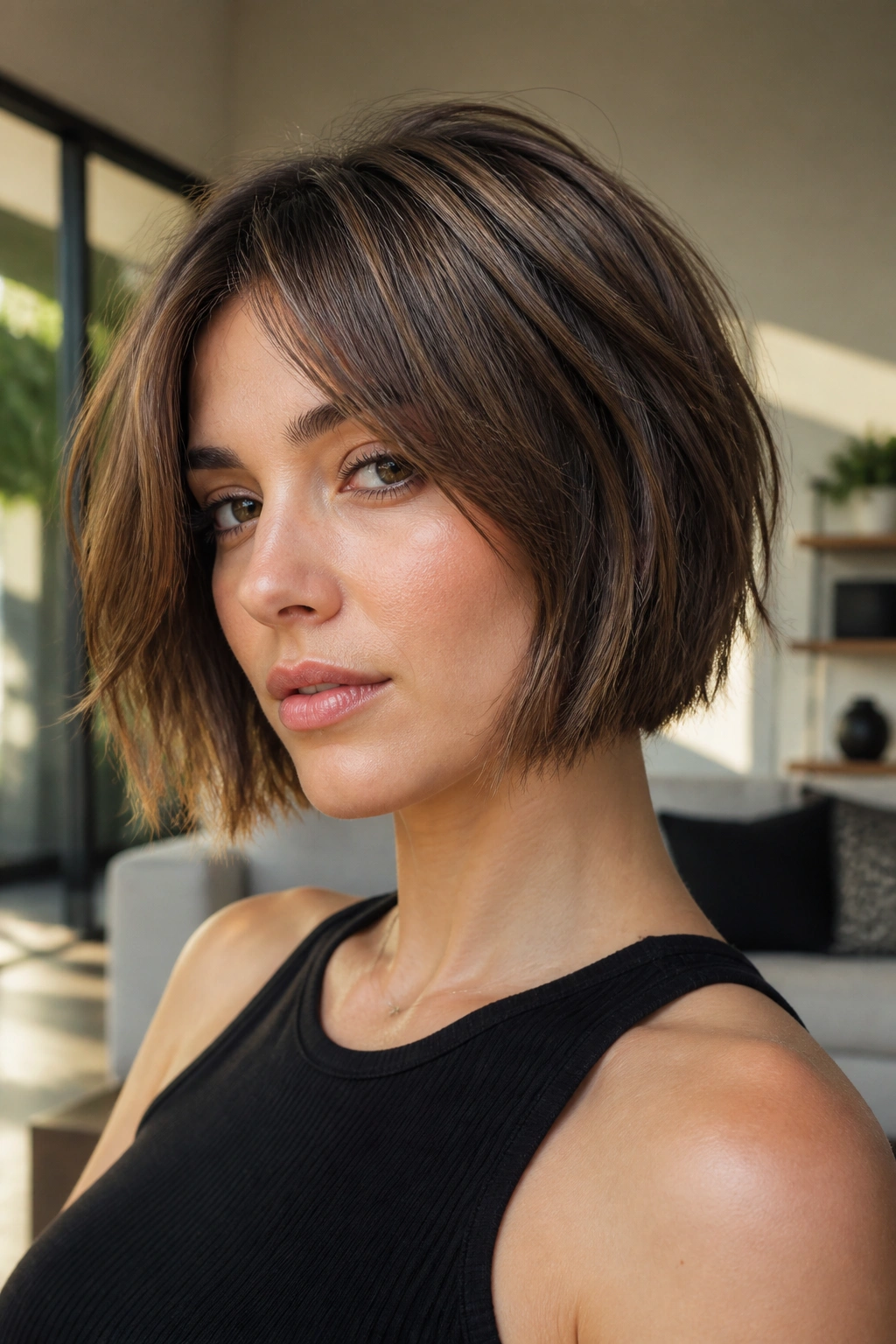
A blunt base gives the haircut a solid frame. The choppy top layers stop that frame from looking too rigid. Put the two together and you get a bob that holds its shape while still moving, which is a nice thing to have if your hair density is on the finer side.
On a round face, the clean bottom line helps create structure below the chin. The textured top layers add a little lift at the crown, which keeps the face from feeling too wide through the middle. That balance is what makes this cut work. It is not trying to be soft everywhere.
The blunt edge should sit below the jaw, not right on it. That one detail keeps the silhouette lengthening instead of widening. Then the upper layers can break up the surface a little and keep the style from feeling too buttoned-up.
This is one of the best choices if you like a bob that looks neat without looking stiff. It reads more tailored than shaggy, but it still has enough texture to move.
15. Curly Choppy Bob for Round Faces

Curly hair changes the rules because it does its own thing after it dries. Shrinkage, bounce, and frizz all affect where the cut ends up sitting, which means a choppy bob has to be shaped with the curl pattern in mind. If you ignore that, the result can balloon at the sides.
The best version keeps the front a bit longer and the layers soft enough to let the curls fall instead of stacking. Round faces usually do better when the curls frame the face without ending exactly at the cheekiest part of the cheeks. A little extra length buys you room.
What to Tell Your Stylist if Your Curls Shrink
Ask for the cut to be checked in its natural curl pattern, not stretched flat. Say you want the front pieces to sit below the chin once the hair springs up. If your curls are tight, ask for each section to be released and reassessed before the next cut is made.
- Cut with the natural curl shape in mind.
- Leave the front longer than it looks necessary.
- Keep the crown light, not puffy.
- Use a diffuser on low heat so the shape stays soft.
This cut can look gorgeous on a round face because curls bring their own movement. You just need the shape to cooperate.
16. Collarbone Bob With Flipped Ends

A little flip at the ends can make a bob feel lighter right away. It keeps the line from sinking straight down, and on a round face that tiny bit of movement helps the haircut travel instead of sitting flat against the jaw.
I like this version when the hair is a touch longer than a classic bob and the ends are styled with a bend away from the face. It feels playful, not childish. That distinction matters. A flip that is too cute can look costume-y. A soft, controlled bend looks intentional.
The collarbone length gives enough room for the flip to happen without widening the cheeks. If the cut is too short, the ends can spring outward in a way that adds width. Keep the base below the chin and the flip small.
This is one of the easier looks to style at home. A round brush, a medium blow-dryer, and a little heat at the ends are usually enough. You do not need perfect curl. You need a relaxed swing.
17. Neck-Length Choppy Bob With a Tucked Side

If I had to pick one version that feels sharp, wearable, and friendly to round faces, this would be near the top. The neck-length bob creates a clean line below the widest part of the face, and the tucked side breaks up the symmetry just enough to keep it interesting.
The tuck is doing real work here. It opens one side of the face, shows a little neck, and lets the other side fall with a softer edge. That small mismatch keeps the haircut from looking like a solid circle around the head. A round face does better with that tiny bit of interruption.
Ask for the ends to stay choppy, not wispy. Keep the front pieces a little longer than the back so the shape angles forward. If your hair is thick, remove weight underneath. If it is fine, keep the perimeter clean so the bob does not disappear after a few hours.
This is the cut I would hand to someone who wants the easiest version of a face-flattering bob without getting too precious about it. It feels neat. It moves. And it gives a round face more line, which is what most good bob haircuts are trying to do in the first place.
