



Sharp cheekbones are not the problem. A bob can either flatter angular faces or box them in, and the difference is usually only a half-inch of length, a softer edge, or a better part line. When the cut lands at the widest part of the jaw, it can make the whole face feel harder than it really is.
That matters.
I like bob haircuts on angular faces because they can do structure without adding stiffness. The trick is not to hide the bone structure; it’s to give the eye somewhere else to go — toward the eyes, the cheekbone, a bend at the ends, or a fringe that breaks up a straight line. A good bob should look intentional, not helmet-like.
The 12 cuts below solve that problem in different ways. Some soften with movement, some use asymmetry, and a few lean into the strong lines instead of fighting them. The first one is the safest place to start if you want polish without too much fuss.
1. Chin-Grazing Blunt Bob for Angular Faces
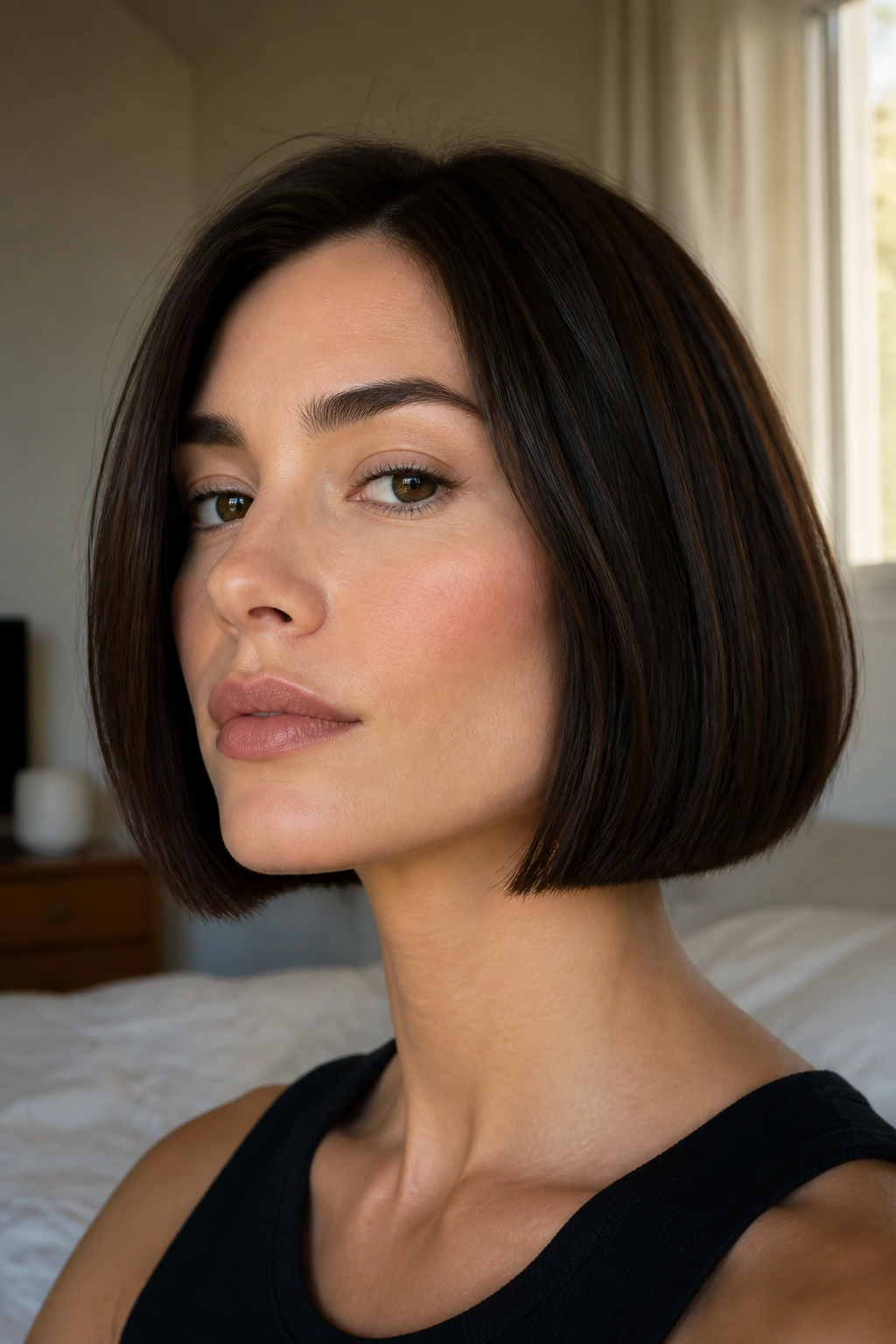
A blunt bob sounds harsh on paper. On an angular face, though, it can look clean, sharp, and expensive if it misses the jaw by a breath. The key is placement: if the hem lands exactly at the widest part of the jaw, the face can start to feel boxy. A line that sits just below it changes the whole mood.
Why It Works
The blunt edge gives structure, but the tiny bit of extra length keeps the haircut from echoing the jaw too closely. That little gap matters. It lets the face keep its shape while the hair creates its own line.
This cut is especially good if your hair is straight or only slightly wavy, because the shape stays crisp. It also works well for people who want something low-drama. No fussy layers. No complicated styling. Just a clean shape that does its job.
What to Ask Your Stylist For
- A chin-grazing length that falls about 1/2 inch below the jaw, not right on top of it.
- A blunt perimeter with light point-cutting on the last bit of the ends.
- A slight off-center part if your jaw is very square and you want a little softer balance.
- No heavy stacking in the back, unless you want a more dramatic shape.
How to Wear It
Blow-dry with a flat brush, then tap the ends under with a 1-inch round brush or a flat iron held at a tiny angle. Tiny. Not a curl. Just enough bend to keep the outline from feeling stiff. A small amount of smoothing cream on damp hair helps the finish stay sleek without turning greasy.
That’s the whole trick.
2. Slightly Angled A-Line Bob

A small angle changes everything. The A-line bob works on angular faces because it quietly pulls the eye forward and down, away from the strongest part of the jaw. The front is a little longer than the back, which creates movement without making the haircut look loud.
Too much angle can feel dated fast. A subtle A-line reads cleaner and more modern. Think 1 to 2 inches of difference from back to front, not that sharp, slanted shape from old salon posters. The best version looks like the hair naturally falls that way.
The Sweet Spot
For square or diamond-shaped faces, the longer front pieces soften the lower half of the face without hiding it. They also make the neck look a touch longer, which is a small thing that changes the whole silhouette.
This cut is a smart choice if your hair has some body but not a ton of curl. Straight hair shows the line best. Soft waves can work too, but very tight curls will blur the angle unless the cut is adjusted carefully.
A Few Practical Notes
- Keep the back clean and compact so the angle actually shows.
- Ask for the front to skim the jaw or just below it.
- Use a smoothing cream before blow-drying if your hair puffs at the crown.
- If the angle is too steep, the cut can start looking rigid instead of fresh.
I prefer this one on people who like a bob that feels sharp but not severe. It has enough edge to look deliberate. Not enough to fight your face.
3. French Bob With Eyebrow-Grazing Fringe

Can a short bob soften a strong jawline without hiding it? Yes, if the fringe does some of the work. The French bob is short, airy, and a little nonchalant, which is exactly why it flatters angular faces so well.
The fringe breaks up the vertical line of the face before the eye gets stuck on the jaw. That is the real win here. On sharp face shapes, a forehead-skimming fringe can make the whole face feel more open and balanced, especially when the bob itself sits around the mouth or jaw rather than dropping much lower.
What Makes the Fringe Matter
The bangs should not be heavy and helmet-like. They should hover around the brows, sometimes a touch shorter, sometimes a touch longer, with soft ends that move when you blink. That little bit of air stops the cut from reading too severe.
This style is a good fit for straight or lightly wavy hair. It also works for denser hair, because the fringe gives the cut shape even if the texture is simple. If your hair is very curly, the fringe needs careful tailoring, or it can shrink right into the face.
How to Style It Without Fuss
Dry the fringe first, using your fingers or a small round brush, then let the rest of the bob fall into place. A pea-sized bit of texture balm at the ends keeps the shape loose. Too much product ruins the whole point.
- Keep the fringe eyebrow to lash length.
- Ask for soft, point-cut ends, not a blunt shelf.
- Leave the bob jaw-length or slightly above if you want a more classic French feel.
This cut has a little attitude. That’s part of why it works.
4. Textured Bob With Broken Ends

If your ends tend to puff out the second they dry, a perfect blunt line can fight you all day. A textured bob with broken ends is the answer for that problem. It keeps the bob shape, but it takes the edge off the outline so angular faces look softer and less boxed in.
The texture should look lived-in, not shredded. There’s a big difference. You want movement along the perimeter, not a bunch of choppy pieces that stick out like they’re in a hurry. A skilled cut uses point-cutting or a light razor pass to soften the hem without destroying the shape.
Why It Flatters Strong Bone Structure
Angular faces already bring a lot of line to the table. This bob adds motion, which makes the face feel less geometric. The eye lands on the texture instead of tracing every hard line in the jaw and cheekbone.
It is especially good for thick hair, wavy hair, or hair that gets a little wide at the bottom. The broken ends stop the cut from ballooning into a triangle. That said, if your hair is fine, the texture needs to stay subtle. Too much thinning can make the ends stringy.
What to Look For
- A soft perimeter with ends that move.
- Minimal layering around the crown unless you want extra lift.
- A slight bend in the front pieces to frame the cheekbones.
- A styling product with a bit of grit, like a lightweight mousse or dry texture spray.
I like this bob because it forgives real life. It looks good with a quick blow-dry, and it still looks good when the day gets messy.
5. Deep Side-Part Bob That Dances Off the Jawline

Unlike a center-parted bob, a deep side part steals width from the middle of the face and moves it toward one side. On angular faces, that shift can be a gift. It softens the symmetry just enough to keep the haircut from feeling too square or too exact.
A side part also gives the front pieces somewhere to travel. Instead of dropping straight down and stopping at the jaw, they sweep across the cheekbone and change the profile. That sweep matters more than people think. It makes the face look longer, but not stretched.
If your jaw is the strongest feature on your face, this is one of the easiest ways to ease the focus. The bob itself doesn’t need to be fancy. The part does the heavy lifting.
Why I Keep Recommending It
This style works especially well if your hair naturally wants to fall to one side anyway. Fighting a cowlick every morning is annoying. A deep side part can turn that annoyance into shape.
It’s also a nice option if your forehead is broad or your cheekbones are pronounced. The diagonal line of the part and the fall of the hair balance those features without hiding them. You still look like yourself. Just a little softer at the edges.
A small round brush at the roots and a quick lift at the crown are usually enough. Don’t overbuild the volume. You want a bit of air, not a prom blowout.
6. Curly Bob With Rounded Shape

Curly hair changes the whole conversation. The curl itself softens an angular face, so the cut needs to work with that softness instead of forcing a hard outline on top of it. A rounded bob does that better than a stiff, one-length shape.
The length matters more than people expect. For curls, the bob often needs to sit a little longer than it would on straight hair because shrinkage is real. A cut that looks perfect wet can jump up two inches once it dries. Ask for the stylist to check the dry shape before they finish the line.
Shape Comes First
The goal is a smooth curve around the face, not a triangle on the sides. That means more weight at the perimeter and enough internal shaping to keep the curls from stacking awkwardly at the bottom.
This is where a lot of curly bobs go wrong. They get thinned too much, and the result is frizz, not movement. Keep the layers controlled. Let the curls have room, but do not shred the ends to pieces.
How to Style It
Use a curl cream or light gel on soaking-wet hair, then scrunch with a microfiber towel or cotton T-shirt. Diffuse on low heat if you need speed. High heat can make the cut frizzy and uneven, especially around the jawline.
- Best for loose waves through medium curls.
- Ask for a rounded silhouette, not a triangle.
- Leave the front pieces slightly longer if your jaw is very sharp.
- Avoid over-brushing dry curls. That ruins the whole shape.
Curly bobs on angular faces can look effortless, but they are not accidental. The shape has to be planned.
7. Asymmetrical Bob With One Longer Side

Why does asymmetry keep working on angular faces? Because it breaks the mirror effect. Sharp features already give you a lot of straight lines and clear angles. A bob with one side slightly longer interrupts that pattern and makes the haircut feel more fluid.
The difference does not need to be dramatic. One to 3 inches is usually enough. If the contrast gets too big, the cut starts to feel theatrical rather than wearable. The best asymmetrical bob looks like it was designed with the face, not pasted onto it.
This cut is a good pick if you like a little edge. It has presence. It also photographs well from the side, which is handy if your profile is strong and you want the haircut to work with that instead of flattening it.
How to Ask for It
- Keep the shorter side around chin length.
- Let the longer side skim the jaw or upper neck.
- Pair it with a side part if you want the longest line to sweep across the cheek.
- Trim it regularly, because asymmetry loses its shape faster than a basic bob.
If you wear glasses, this cut can look especially sharp. The diagonal line of the hair and the frame of the glasses play off each other in a nice way. Clean. Crisp. No extra noise.
8. Layered Bob With Hidden Internal Movement

Layers help here, but only if they stay inside the shape. That is the part people get wrong. A bob for angular faces does not need a lot of obvious face-framing chops around the jaw. It usually needs hidden movement that makes the hair swing instead of sit in a block.
Interior layers — sometimes called ghost layers — remove bulk without eating the outline. They’re ideal if your hair is thick, dense, or prone to sitting flat at the crown and puffing at the bottom. The bob still looks like a bob. It just moves better.
What Makes It Different
A visible layer around the cheek can make angular features feel sharper. Hidden layering does the opposite. It lightens the weight from underneath so the outer line can stay soft and clean.
That’s why this cut is one of my favorites for people who want something wearable every day. It looks polished when brushed smooth, but it doesn’t turn stiff when it air-dries. The shape has enough life in it to work with your face instead of sitting on top of it.
What to Tell the Stylist
- Ask for internal layers only if you want to keep the perimeter full.
- Keep the front pieces long enough to skim the cheekbone.
- Avoid short, choppy layers near the jaw unless you want a more editorial finish.
- Use a round brush only at the ends if you want movement without fluff.
This is a good bob for anyone who hates the feeling of too much hair at the neck. It trims the weight without making the cut look thin.
9. Sleek Glass Bob With a Clean Center Part
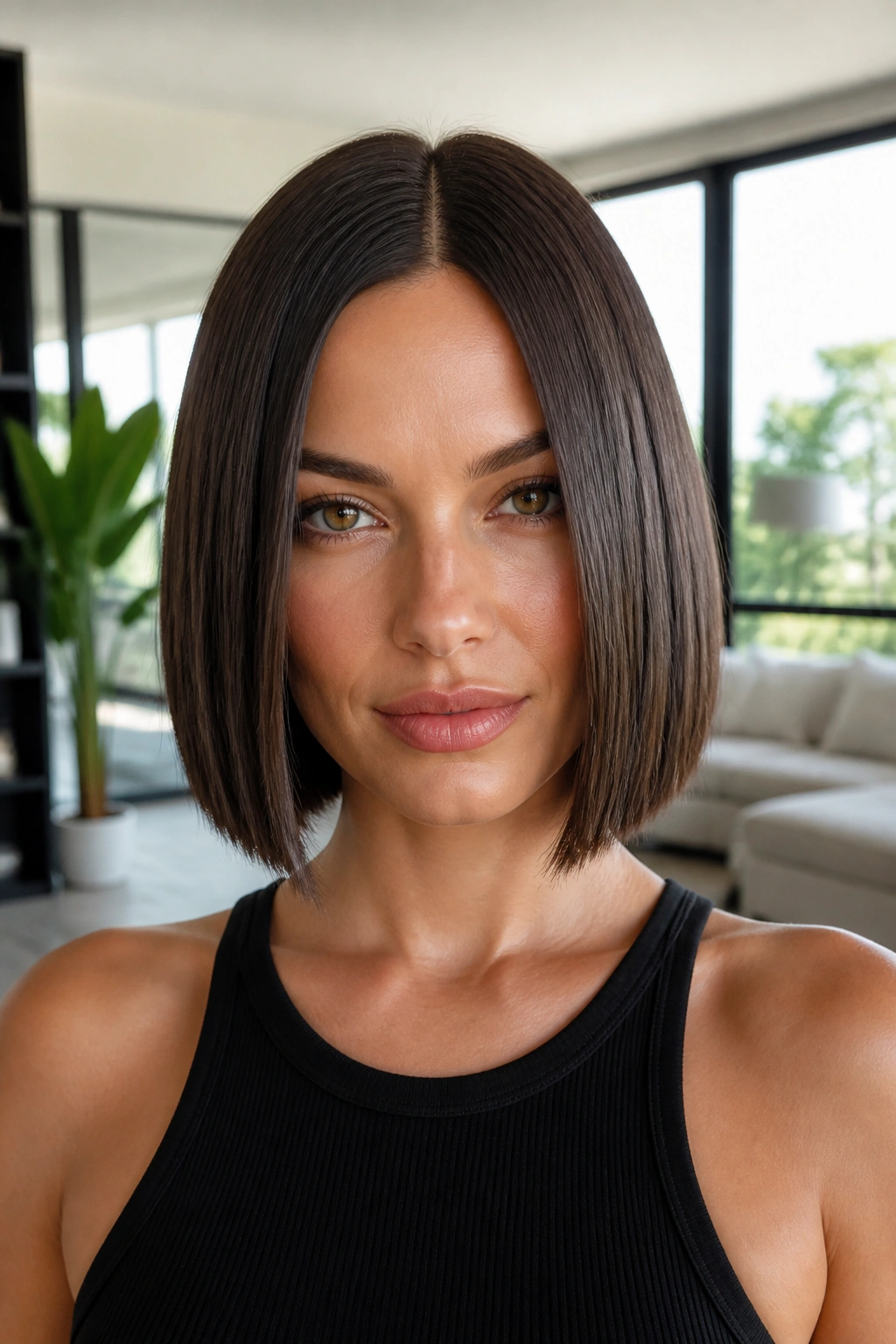
A glassy bob can look severe in the wrong hands. In the right hands, it looks calm, clean, and precise. Angular faces can carry that precision better than rounder ones, because the haircut and the bone structure speak the same language.
The center part is the boldest part of the look. It draws a straight line down the face and puts the focus on balance. If your face is very square, though, you can soften the effect by shifting the part a quarter-inch off center or curving the ends inward just a touch.
Why It Works on Sharp Features
There’s something satisfying about pairing a strong face shape with a smooth, reflective haircut. The face becomes the focal point, while the bob acts like a frame. No frizz. No broken texture. Just a clear shape.
This style asks for straight or well-smoothed hair. If your texture is coarse or wavy, you’ll need a bit more work with a flat iron and a heat protectant. Skip the heavy oil near the roots. A tiny amount from mid-lengths down is enough.
A glass bob also makes strong earrings look better. Small hoops, a sharp cuff, or even bare ears — all of it sits neatly against that clean line. It’s a quiet look, but not a soft one. There’s a difference.
10. Collarbone Bob With Soft Face-Framing Pieces

The collarbone bob is longer than a classic bob, and that extra inch or two matters. I know, it edges into lob territory. Still, it belongs on this list because angular faces often look better when the hair stops below the jaw instead of on it.
The longer length keeps the jaw from becoming the loudest thing in the frame. Soft face-framing pieces can start around the cheekbone and slide down toward the collarbone, which gives the haircut a gentler line without turning it into a long, shapeless layer cut.
Why It Flatters
This is a smart choice if you want movement but do not want to give up the bob feeling entirely. It gives you enough length to tuck behind the ear, clip back, or wave with a 1.25-inch iron. That small amount of extra hair also makes grow-out easier, which is a nice bonus if you’re not in the salon every month.
It works especially well on strong jaws, long necks, and faces where the cheekbones are the main event. The hair follows the face instead of cutting it off.
Best Way to Wear It
- Ask for the shortest front piece at the cheekbone.
- Keep the back blunt enough that the haircut still reads as a bob.
- Add soft bends, not uniform curls.
- Use a light styling cream, then finish with a dry spray for hold.
If you want a bob that feels a little easier than the shorter versions, this is the one I’d point you toward first.
11. Stacked Bob With Controlled Volume

Not every angular face needs softness. Some need lift.
A stacked bob builds volume through the back of the head, which can be a really good thing when the jawline is strong and the hair needs a bit of height to balance it. The short layers in the back lift the crown, while the front pieces stay longer and frame the face. It creates shape from the side, not just the front.
The danger is overdoing the stack. Too much and the cut starts to look boxy, almost old-school in the wrong way. The best version is controlled. You see the roundness at the back, but you still get a clean front line.
Who It Suits Best
This cut is especially friendly to fine hair, because the stacking creates the illusion of fullness. It also works well for straight hair that tends to go flat at the crown. The shorter back gives the top some spring without forcing you to tease it every morning.
Thicker hair can wear this cut too, but the bulk has to be managed carefully. Too much hair left in the back turns the shape into a wedge. No one needs that. A little internal removal helps the haircut sit better.
How to Style It
A root-lifting spray at the crown and a round brush through the back can make a big difference. Don’t pull the front pieces too tight. Let them curve naturally around the jaw so the volume doesn’t feel top-heavy.
This is a strong, tidy bob. If you like a little structure, it delivers.
12. Micro Bob With Curtain Fringe

Can a very short bob work on an angular face? Yes, if the fringe is right. The micro bob sits above or right at the jaw, which sounds risky for sharp face shapes, but the curtain fringe softens the middle of the face and keeps the cut from feeling too blunt.
This is not a shy haircut. It shows the neck, the jaw, and the cheekbones. That is the point. On angular faces, that kind of exposure can look striking instead of harsh because the strong structure is already there. The curtain fringe breaks the top half of the face into softer pieces, so the short length below it doesn’t feel severe.
Best if You Like a Little Edge
This bob suits people who are comfortable with regular trims. The shape grows out fast, and once the hem falls too far, the balance changes. If you want a low-maintenance cut you can ignore for months, skip this one.
It’s a nice match for straight hair, fine hair, and medium hair that holds a shape without much help. The fringe should fall from the middle, opening around the brows and cheekbones. Keep it loose, not thick. The lighter the fringe, the softer the whole haircut feels.
What to Remember
- Ask for a micro bob that clears the jawline.
- Keep the curtain fringe soft and split at the center.
- Use a light blow-dry cream so the ends stay tidy.
- Get a trim every 4 to 6 weeks if you want the shape to stay clean.
This cut is a bit daring. That’s what makes it interesting.
Final Thoughts
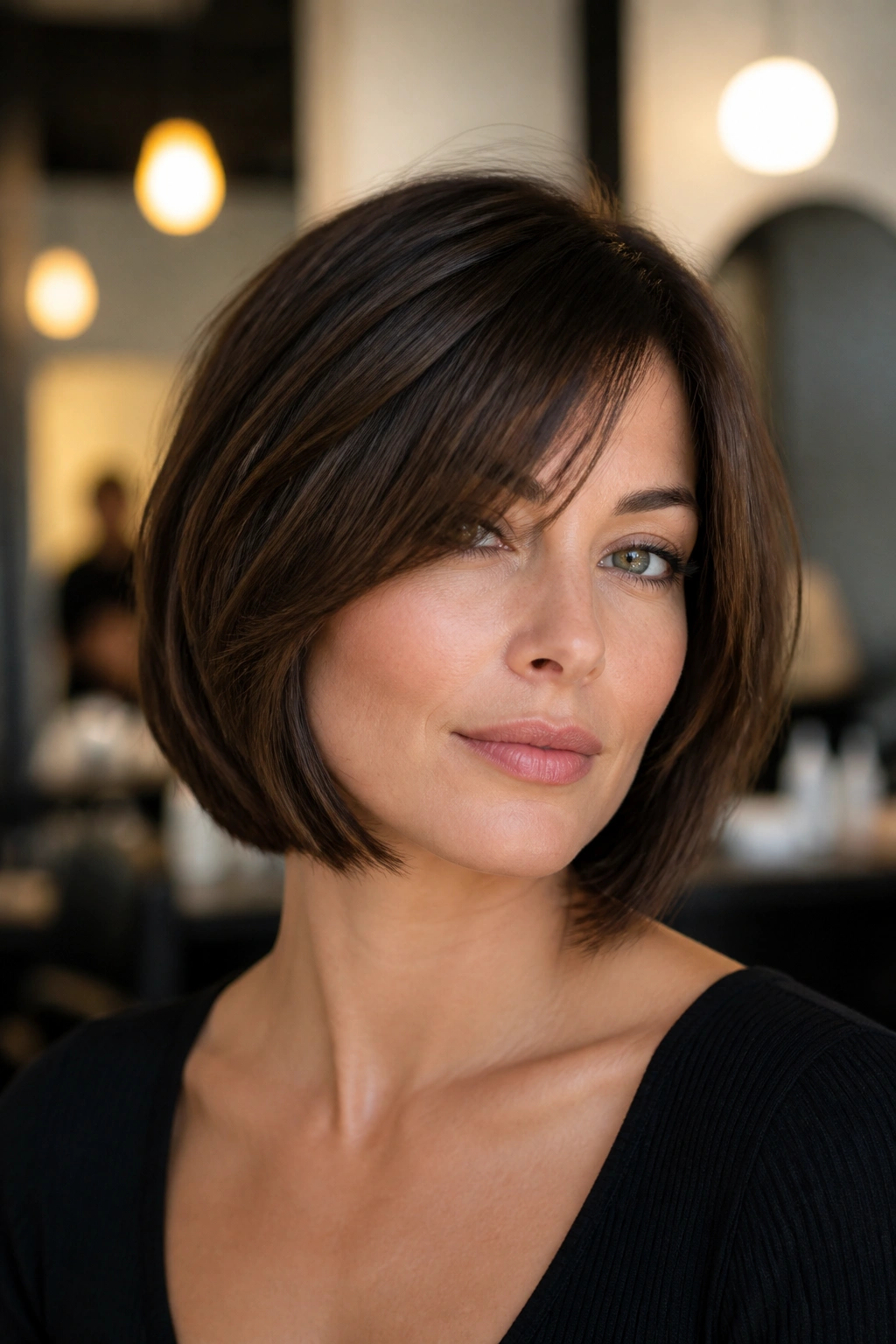
The best bob for an angular face usually does one of three things: it softens the jaw, moves the eye with a diagonal line, or shifts focus upward with fringe or volume. That’s it. The whole game is in where the hem lands and how hard the outline feels.
If you’re sitting in a stylist’s chair with a square jaw or sharp cheekbones, ask one simple question: where does the haircut stop when I turn sideways? That one angle tells you more than a front-facing mirror ever will.
And if the answer lands right on the widest part of your jaw, keep talking. A better bob is usually only an inch away.
