



A bob on wavy hair can look crisp and expensive, or it can puff out in all the wrong places by lunchtime. The difference usually comes down to where the weight sits, not how much hair you have. The best textured bob styles for wavy hair work with the bend you already have, so the cut falls into shape instead of fighting back.
Wavy hair likes movement. It also likes to surprise you on humid days, when a cut that looked neat in the mirror turns a little wider at the sides. That’s why texture matters so much here. A good bob for waves keeps the perimeter clean enough to look intentional, but light enough that the ends do not sit there like a shelf.
That middle ground is the whole trick. Too many layers near the bottom can make the hair frizzy and broken at the ends. Too few, and the cut goes heavy and square. A smart bob for waves usually uses point cutting, soft graduation, or hidden internal layers to remove bulk without stealing the shape.
And once you see how many directions that can go, the options start to feel much bigger than “short bob” or “lob.” Some cuts are polished. Some are shaggy. Some lean sharp and geometric, while others look like they were cut after a great beach day and a good night’s sleep.
1. Chin-Length French Bob with Soft Wave

A chin-length French bob is one of those cuts that looks simple until you watch what it does to wavy hair. The short length lets the wave pattern show up fast, and the soft perimeter keeps the whole thing from feeling hard or boxy. It sits right at the jaw, which is a smart place if you want the cut to frame the face instead of hanging past it.
Why It Works
The chin-length line gives you shape without too much weight. On wavy hair, that matters a lot. If the cut drops below the chin, the wave can stretch out and lose some of its bounce; if it sits too high, the ends can flip outward in a way that feels fussy. Chin length is the sweet spot for a lot of people.
A tiny bit of internal texture helps here—nothing shredded, nothing overdone. Ask for light point cutting around the ends so the bob moves when you shake your head. Air-drying with a nickel-size amount of curl cream usually gives this style the easy bend it needs.
- Best for: Loose to medium waves that want shape without a lot of styling.
- Length note: Keep it right around the chin, not lower.
- Styling note: Scrunch in cream and let it dry naturally, or diffuse on low heat for 5 to 8 minutes.
- Maintenance: Trim every 5 to 7 weeks if you want the line to stay crisp.
Pro tip: Tell your stylist you want the ends to look soft, not wispy. Those are not the same thing.
2. Collarbone Lob with Invisible Layers

A collarbone lob is the safe bet that usually ends up being the smartest cut in the room. It gives wavy hair enough length to move, tuck, twist, and air-dry without turning into a helmet. The invisible layers are the real story here—long, hidden bits of shaping inside the cut that remove bulk without leaving choppy lines all over the surface.
That is what makes this version so wearable. It behaves like a longer bob, but it does not sit flat the way one-length hair can. The ends still look clean, yet the middle of the cut has enough give to keep waves from stacking up awkwardly at the sides.
If your hair grows thick through the bottom, this is a relief. If your hair is finer, it keeps the ends from looking too thin. I like this cut especially for anyone growing out a shorter bob who still wants the outline to feel neat.
You can wear it straight, tucked behind one ear, or scrunched into a soft bend with mousse. Honestly, that flexibility is the whole point.
3. Razored Bob with Piecey Ends
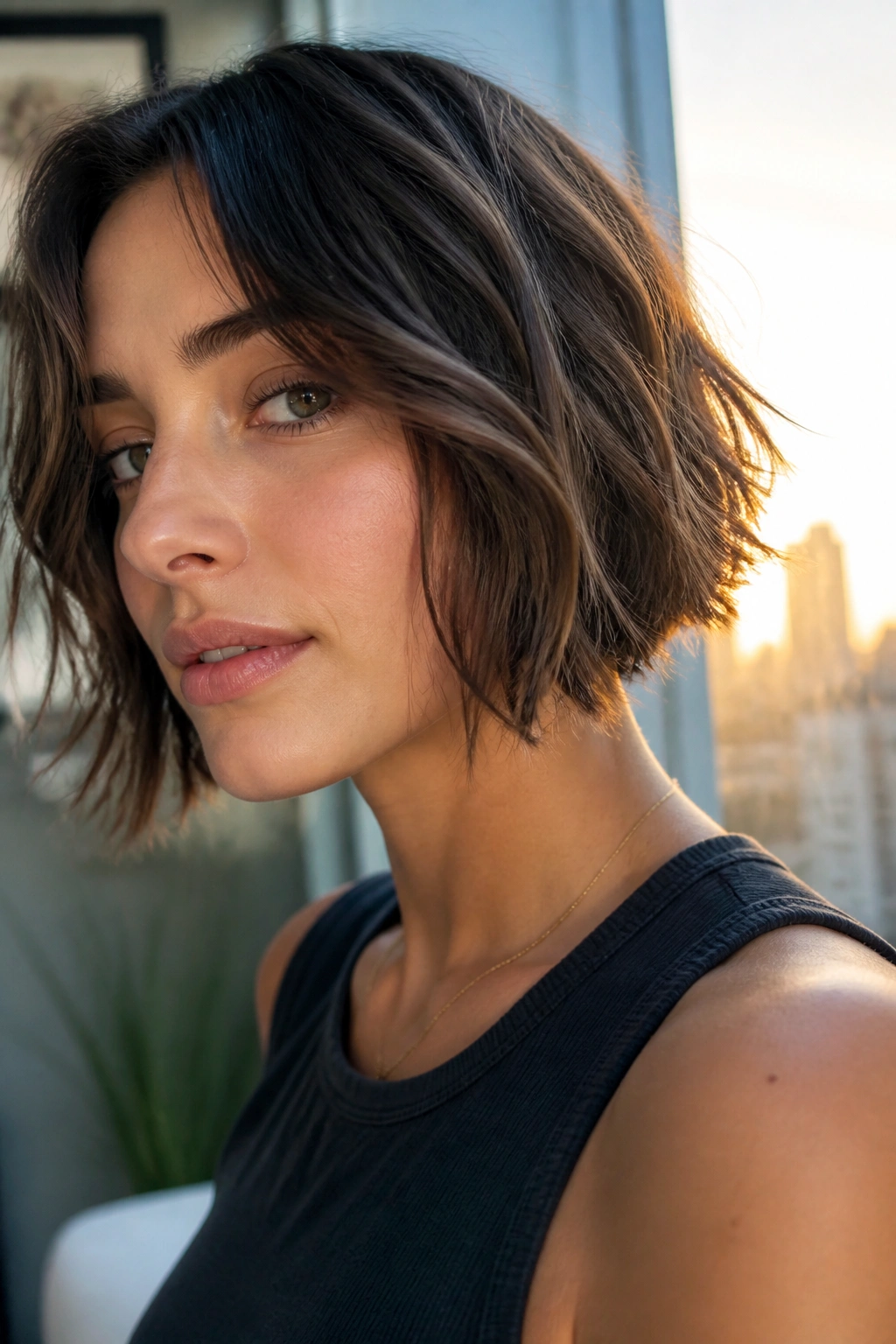
Why does a razor cut help wavy hair so much? Because it takes some of the bluntness out of the ends, and bluntness is where wavy hair can start to feel heavy fast. A razored bob gives the ends a little air, which makes the wave pattern read as separated and soft instead of thick and blocky.
The catch is that razor work has to be handled with a light hand. On dry, porous hair, too much razor action can make the ends look frayed. On healthy wavy hair, though, it adds a kind of casual edge that works especially well if you like a lived-in finish.
How to Wear It
Use a light mousse at the roots and a pea-size amount of cream through the mids. Then twist 1-inch sections around your fingers while the hair is damp. That small twist helps the waves land in pieces rather than one big puff.
Arazored bob looks strongest when the shape stays a little rough. Don’t fight it with a round-brush blowout every time unless you want the texture to disappear.
- Best for: Medium-density waves that need air between the strands.
- Avoid if: Your ends are already fragile or bleached to death.
- Styling shortcut: Diffuse on low speed until the roots feel dry and the ends are still a touch cool.
One small thing: if your wave pattern is uneven, ask for a dry cut or a dry check after the razor work. It saves surprises.
4. A-Line Textured Bob

If your hair flips out at the back and lies limp in front, an A-line bob can clean that up fast. The shape is shorter in the nape and longer toward the face, which creates a clean slope instead of a box. On wavy hair, that slope gives the bend somewhere to go.
This cut looks especially good when the front pieces skim the cheekbones or the lower jaw. It opens the face a little and keeps the back from feeling bulky, which is a common problem with thicker wave patterns. The line looks sharper than a shaggy bob, but it still has movement because the front length catches the wave.
A good A-line should not feel severe. If it does, the angle is probably too steep or the ends are too blunt. A little internal softening keeps the cut from turning into a triangle.
The nice part? It grows out well. You can stretch the trim schedule a bit longer than you would with a French bob, and the shape usually stays readable for a while.
5. Curly-Wavy Shag Bob

A shag bob is the cut for people who like texture more than neatness. It takes the bob shape and breaks it up with layers placed through the sides, crown, and sometimes the front, which lets wavy hair keep its natural bend without trying to force it into one clean line. The result is messy in a good way—soft, airy, and a little undone.
This cut can be a lifesaver for dense waves. Instead of the hair swelling outward at the bottom, the layers create movement from root to ends. The silhouette feels lighter, but not flimsy. That’s a fine line, and the good stylists know it.
What I like most is how forgiving it is on air-dried days. You can put in a bit of leave-in, rake through a mousse, and let the hair do its own thing. If you like polished every single morning, this may feel too casual. If you hate spending 30 minutes coaxing your hair into shape, it’s a lovely match.
A shag bob also gives you room to play with fringe, center parts, and messy clips. It never needs to look identical twice.
6. Blunt Bob with Softened Edges
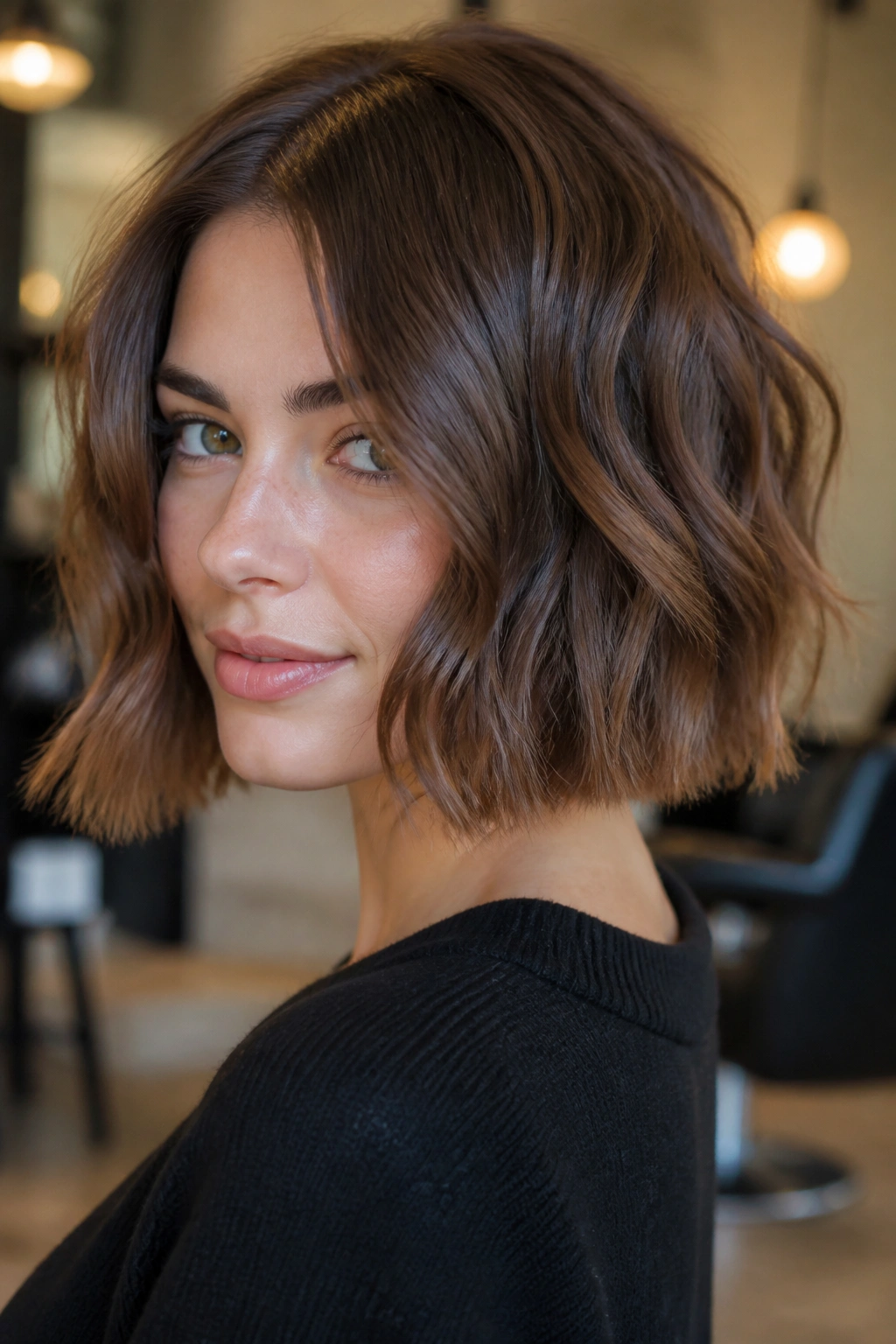
A truly blunt bob on wavy hair can look sharp in the salon and slightly puffy at home. This version keeps the clean perimeter, but the ends are softened with point cutting so the hair does not land like a block. That little bit of softness is what makes it wearable.
Compared with a shag, this style is neater. Compared with a classic blunt cut, it is kinder to waves. The shape still has structure, which is nice if you like a more finished look, but the ends do not fight the bend pattern as hard.
It works especially well on fine to medium hair that has loose waves. Thick, coarse waves can still wear it, but they may need more weight removal inside the cut so the bottom edge does not spread out. A center part keeps the shape clean; a side part makes it feel a little softer.
Use a light smoothing cream on the ends and keep the roots airy. That balance matters more than fancy styling. The cut should do most of the talking.
7. Jaw-Skimming Bob with Curtain Bangs

A jaw-skimming bob with curtain bangs gives wavy hair a face-framing shape that feels easy, not stiff. The bob lands just at or slightly below the jawline, while the bangs split away from the face and slide into the sides. That’s useful if you want movement near the eyes and cheeks without a heavy fringe sitting on your forehead.
Best Face Framing
This cut can help a round face look a bit longer, and it gives softer angles to a sharper jaw. The curtain bangs should start around the cheekbone area, not too high. If they’re cut too short, they lose the soft drape that makes this style work.
A little round-brush bend at the front helps, but you don’t need a full blowout. Blow-dry the bangs away from the face for 30 seconds, let them cool for 10, then sweep them apart with your fingers. That tiny cooling step matters more than people think.
- Best for: Waves that sit flat in the front and need lift.
- Length note: Keep the bob grazing the jaw, not the neck.
- Styling note: Use a light cream on the bangs so they don’t separate into frizz.
- Watch for: Over-thick bangs that steal too much air from the front.
My take: this cut looks better a little imperfect. If the bangs move a bit, that’s the point.
8. Feathered Bob with a Rounded Crown
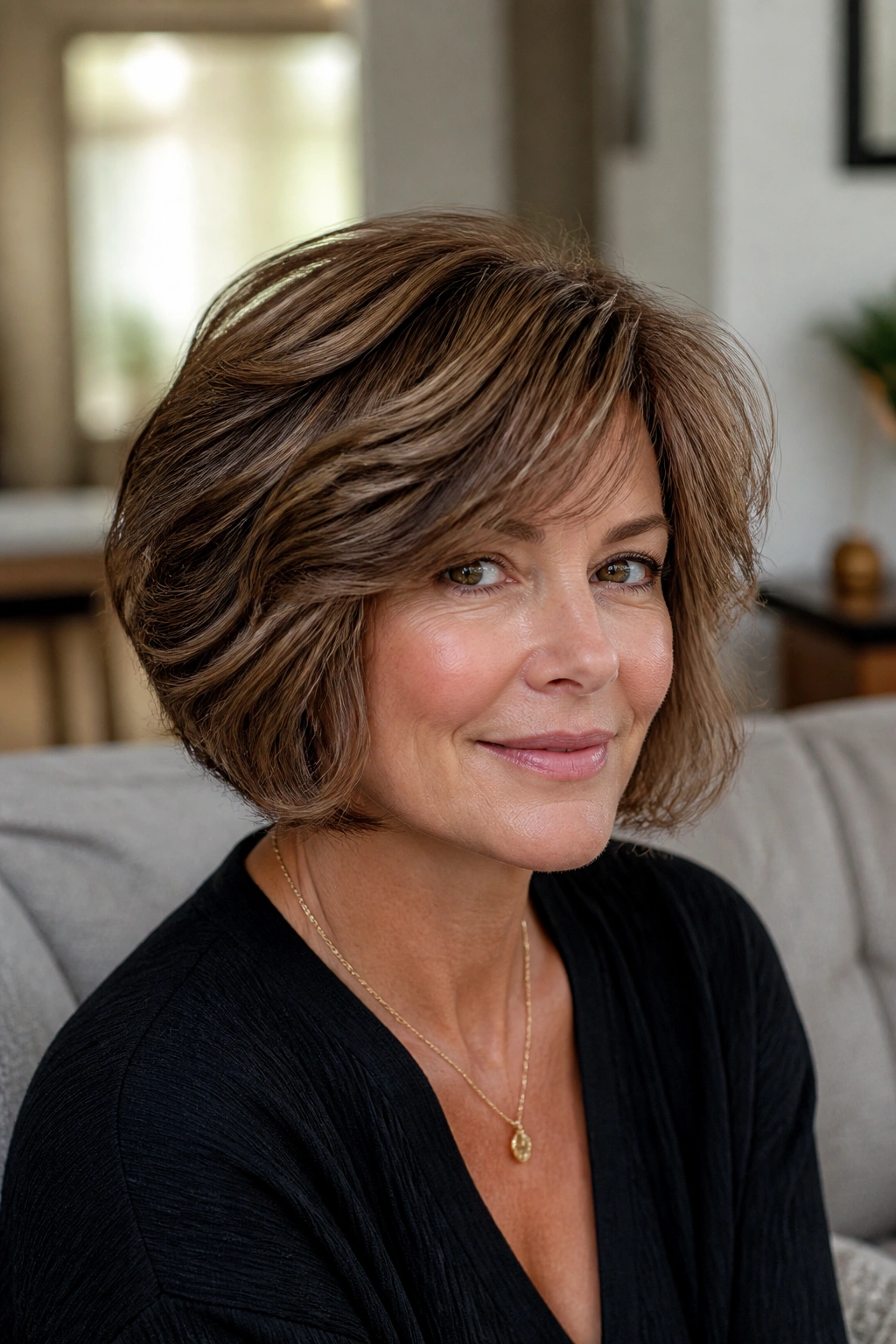
Flat roots can make a bob feel dull, even when the length is good. A feathered bob fixes that by putting softness and lift near the crown, then letting the sides taper gently toward the ends. The shape feels lighter on top, which keeps wavy hair from collapsing into one heavy line.
This is not the old-school feathering that looks blown-out and dated. It is cleaner. The layers are cut to move with the wave, not against it. When the crown has a little height, the whole face looks more open.
I like this one for people whose hair goes heavy at the top but frizzy at the bottom. The rounded crown gives balance, while the feathered edges stop the cut from feeling square. A diffuser on low heat can help, but the real win is in the cut itself.
If you usually tuck your hair behind your ears, this style behaves nicely. It still has shape from the front.
9. Choppy Side-Part Bob
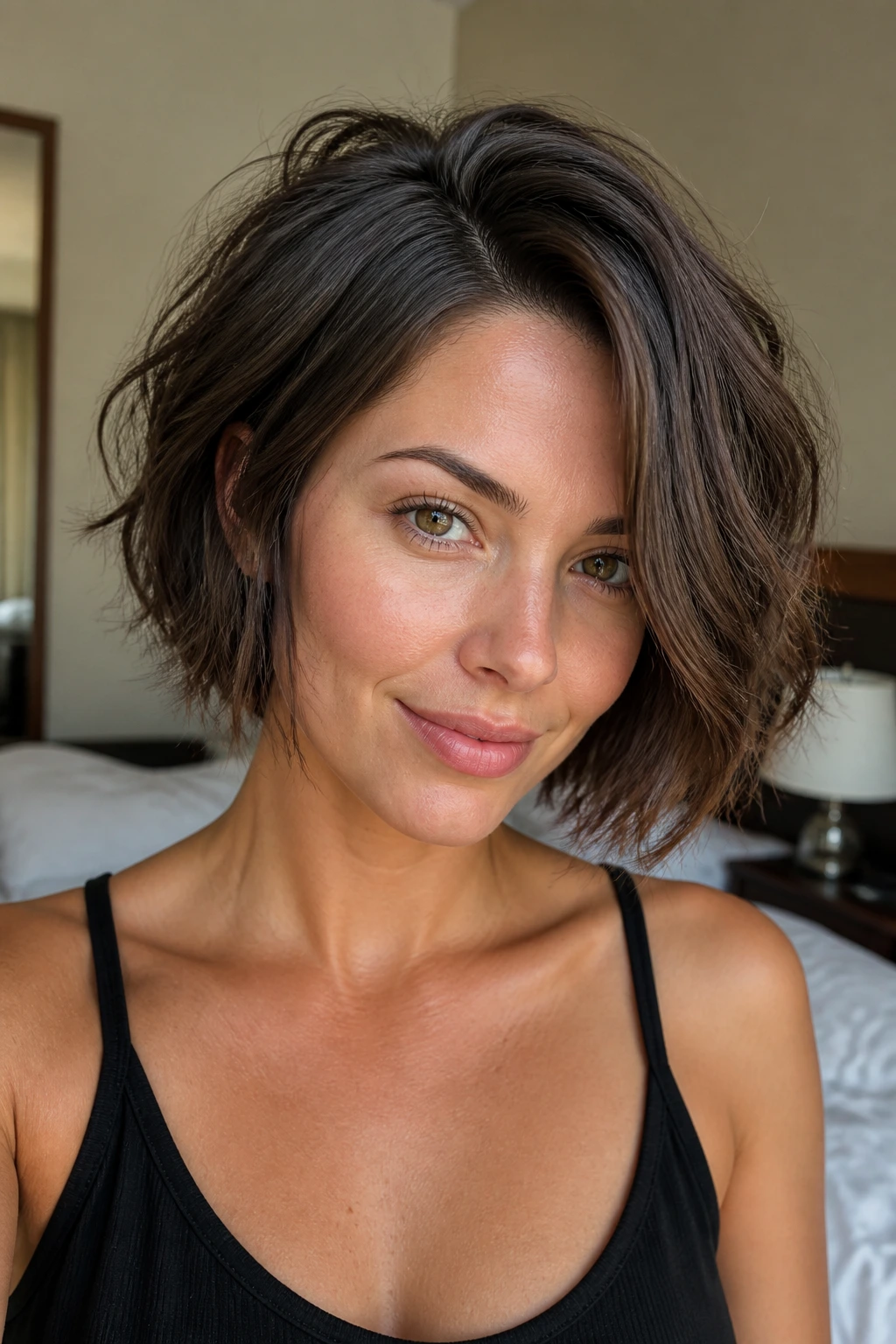
What if your waves always split in the same awkward place? A side-part bob can solve a lot of that in one cut. The off-center part adds lift on top, and the choppy ends keep the overall shape from feeling too neat or too serious.
The reason this works so well on wavy hair is simple: the part changes the way the wave falls. Hair that would normally collapse flat across the forehead gets a little air at the roots. Hair that sticks out on one side gets a better line to follow. It is one of those cuts that looks like styling, even when you didn’t do much.
How to Get the Most From It
Use a root-lift spray at the part line while the hair is damp. Then flip the front section away from the heavier side and let it cool there. That tiny habit gives the crown more shape.
A side-part bob also hides uneven density better than a center part. If one side of your wave pattern is stronger, this cut helps the whole head read as balanced.
Short, sharp, and a little messy. That’s the formula.
10. Inverted Bob with Tapered Back

An inverted bob gives you a stronger angle than an A-line. The back is stacked and tapered, while the front stays longer and more dramatic. On wavy hair, that shape can be gorgeous because it builds volume where the hair naturally wants to sit and then drops into length near the face.
This style does best on medium-density hair. If your hair is very thick, the back can get bulky unless the stylist removes weight carefully. If your hair is very fine, the stack can start to look see-through. That’s why the haircut matters more than the styling here.
The nape should feel neat and close without being shaved down. The front can land at the jaw or just below it, depending on how much contrast you want. I prefer a gentler angle on waves; the extreme version can feel too geometric unless you like a more fashion-y look.
This one does need regular trims. The shape loses its edge when it grows out too far.
11. Micro Bob with Lived-In Texture
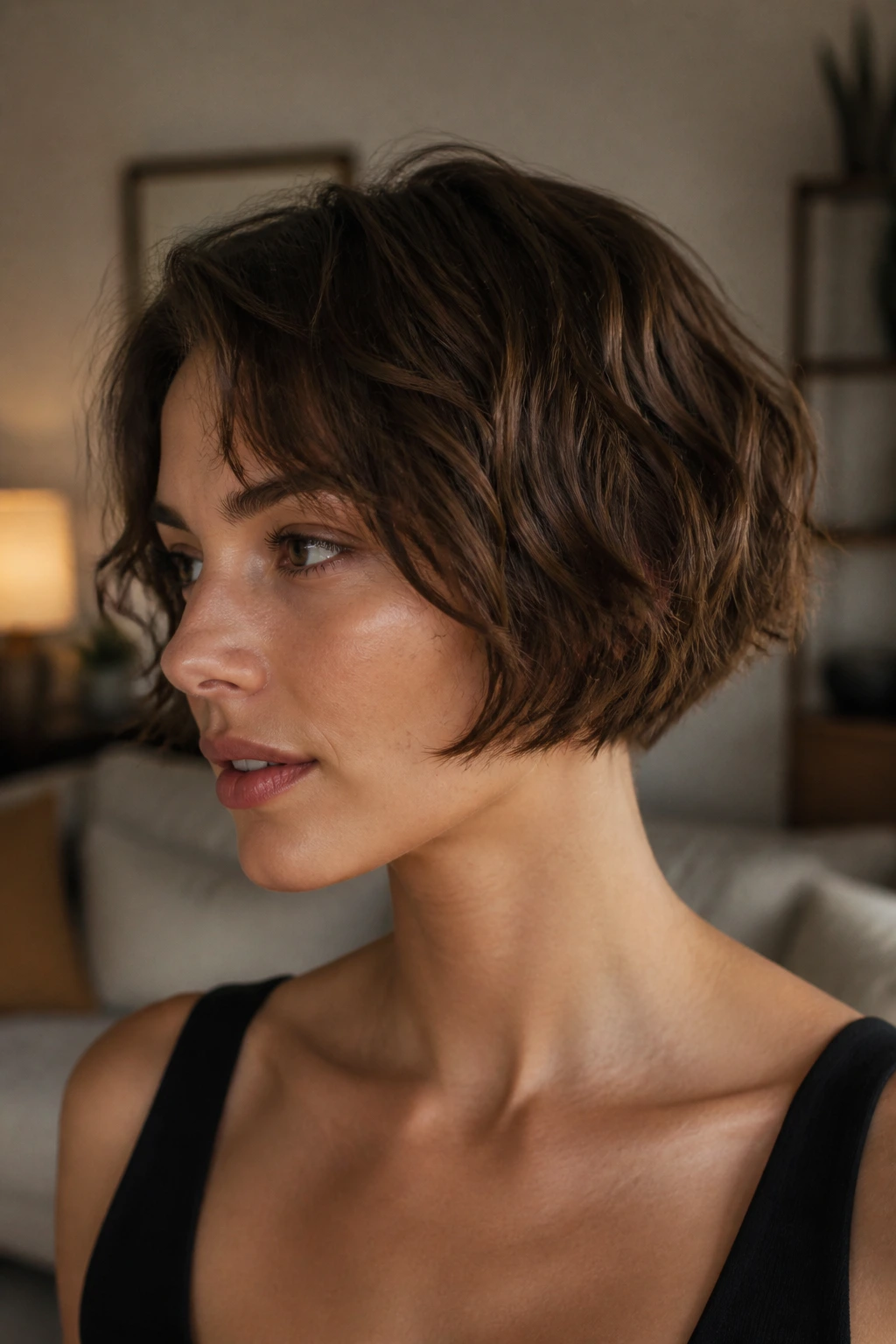
A micro bob is short enough to feel bold, but wavy hair keeps it from looking severe. The length usually sits above the jaw, sometimes close to the cheekbone. That makes the wave pattern pop, because there’s less length dragging the curl or bend downward.
The risk with a micro bob is obvious: if the cut is too blunt or too boxy, it can feel helmet-like. Texture is what saves it. A little soft layering through the inside and a gently broken perimeter keep the style from sitting stiffly against the head.
It’s a good option if you want your neck and cheekbones to show. It is less good if you rely on a ponytail, because there isn’t much to grab. Still, there’s something clean about it that I like. It removes fuss.
Use a matte styling paste only at the ends if they need separation. Too much product near the roots can make a short bob fall flat fast. No one wants that.
12. Wavy Bob with Bottleneck Bangs

Bottleneck bangs sit somewhere between curtain bangs and a straight fringe. They start narrow at the forehead, then open out around the brows and cheekbones, which gives wavy hair a softer frame than a full bang. The bob underneath can be chin-length or a little longer, depending on how much face you want to show.
Compared with curtain bangs, bottleneck bangs feel a touch neater at the top and a touch more sculpted at the sides. That shape works well if your face is long or if your forehead feels like the widest part and you want to rebalance it. The bangs should be airy, not thick.
A small round brush or a quick pass with a flat iron can help the fringe bend away from the eyes. Don’t overwork it. The charm of this cut is that the front still looks soft, not lacquered into place.
If your waves are looser, the rest of the bob can air-dry with cream. If they’re tighter, a diffuser helps keep the fringe from puffing apart.
13. Grown-Out Bob with Internal Layers

A grown-out bob sounds lazy, but when it’s cut well, it looks intentional and easy. The length usually sits between the jaw and collarbone, which gives wavy hair enough room to bend without getting stuck in a super-short shape. Internal layers keep the ends from turning heavy, while the outside line stays smooth.
This is a nice option if you hate constant salon visits. The shape still works when it grows, and the layers are hidden enough that they do not scream “new haircut” every six weeks. That can be a relief if you like low-maintenance hair but still want movement.
Why It Works
The outer shape stays clean, while the inside carries most of the softness. That’s the smart part. You get swing without a shredded perimeter.
- Best for: Anyone growing out a bob and wanting a neater in-between stage.
- Length note: Collarbone grazing usually gives the most flexibility.
- Styling note: A small amount of leave-in cream keeps the ends smooth.
- Trim rhythm: Every 8 to 10 weeks keeps it from sinking.
Worth asking for: internal debulking, not lots of visible layers. Those are not the same thing.
14. Beachy Lob with Long Front Pieces

A beachy lob works because it keeps the front pieces long enough to frame the face while the rest of the cut stays light and mobile. On wavy hair, those longer front sections catch the bend in a relaxed way, which softens the whole silhouette. It reads casual, but not sloppy.
This is one of the easiest cuts to wear if you like your hair to look fuller around the face. The long front pieces can be tucked back, pulled forward, or bent away from the cheekbones with a curling wand. They also help if your jawline feels too sharp and you want a little softness there.
Use a mousse through the mids and a tiny bit of oil on the ends after drying. That combination keeps the front pieces separated instead of stringy. If you love a side part, this cut welcomes it. If you prefer the middle, it still works.
The key is to leave enough length at the front that the wave can travel. Too short, and the beachy part disappears.
15. Undercut Bob with Hidden Weight Removal

Is an undercut too much for wavy hair? Not if it’s hidden. A small undercut at the nape or just behind the ears can take a surprising amount of bulk out of a thick bob, especially when the underside of the hair grows heavy and hot.
This cut is for people whose waves expand outward at the bottom no matter what they do. Removing a little weight underneath helps the top layer fall more neatly. The outside still looks like a regular bob, which is the nice surprise here. You don’t have to look shaved to get the benefit.
What to Ask For
Ask for a hidden undercut, not a dramatic one. Tell the stylist you want the bulk removed where the head gets warm and puffy, but you want the outline to stay full.
- Best for: Thick, dense waves that feel bulky at the nape.
- Maintenance: The undercut needs touch-ups more often than the visible shape.
- Styling note: Drying time drops because the lower layers are lighter.
- Caution: This is not the cut to get if you want easy grow-out everywhere.
A hidden undercut is practical. Plain and simple.
16. Rounded Bob with Airy Ends

A rounded bob can fix the boxy look that happens when wavy hair is cut too straight across. The shape curves gently around the cheeks and jaw, then tapers into ends that still move. It feels softer than a blunt bob and more polished than a shag.
What makes it work is the balance between fullness and air. You want enough body to see the curve of the cut, but not so much volume that it turns into a mushroom shape. That means the ends need a little internal lightness. Too much thinning is a mistake; it can make the bottom look see-through.
This cut is especially good for fine-to-medium hair that waves more at the mids than the roots. The round shape gives the illusion of thickness where you want it. A center part can look clean, while a soft off-center part gives it a bit more lift.
If your hair tends to flip out at the bottom, this cut usually calms it down. That alone makes it worth considering.
17. Side-Swept Bob with Deep Part

A deep side part changes the whole mood of a bob. It gives one side more lift, lets the wave fall across the forehead, and makes the cut feel fuller at the crown without teasing or heavy product. On wavy hair, that asymmetry often looks better than a dead-even center line.
This style is especially handy if you have a cowlick near the part. Move the part far enough off center and the hair often behaves better. The side-swept front also softens square or angular features, since the hair crosses the face instead of sitting straight down from it.
I like this cut when people want a bob that feels a little dressed up without needing a curling iron every morning. The natural wave provides most of the shape. A clip at the heavier side can help set the bend while the hair cools, and that’s usually enough.
You can tuck the shorter side behind the ear or leave it loose. Both work.
18. Razor-Cut Lob with Loose Bends
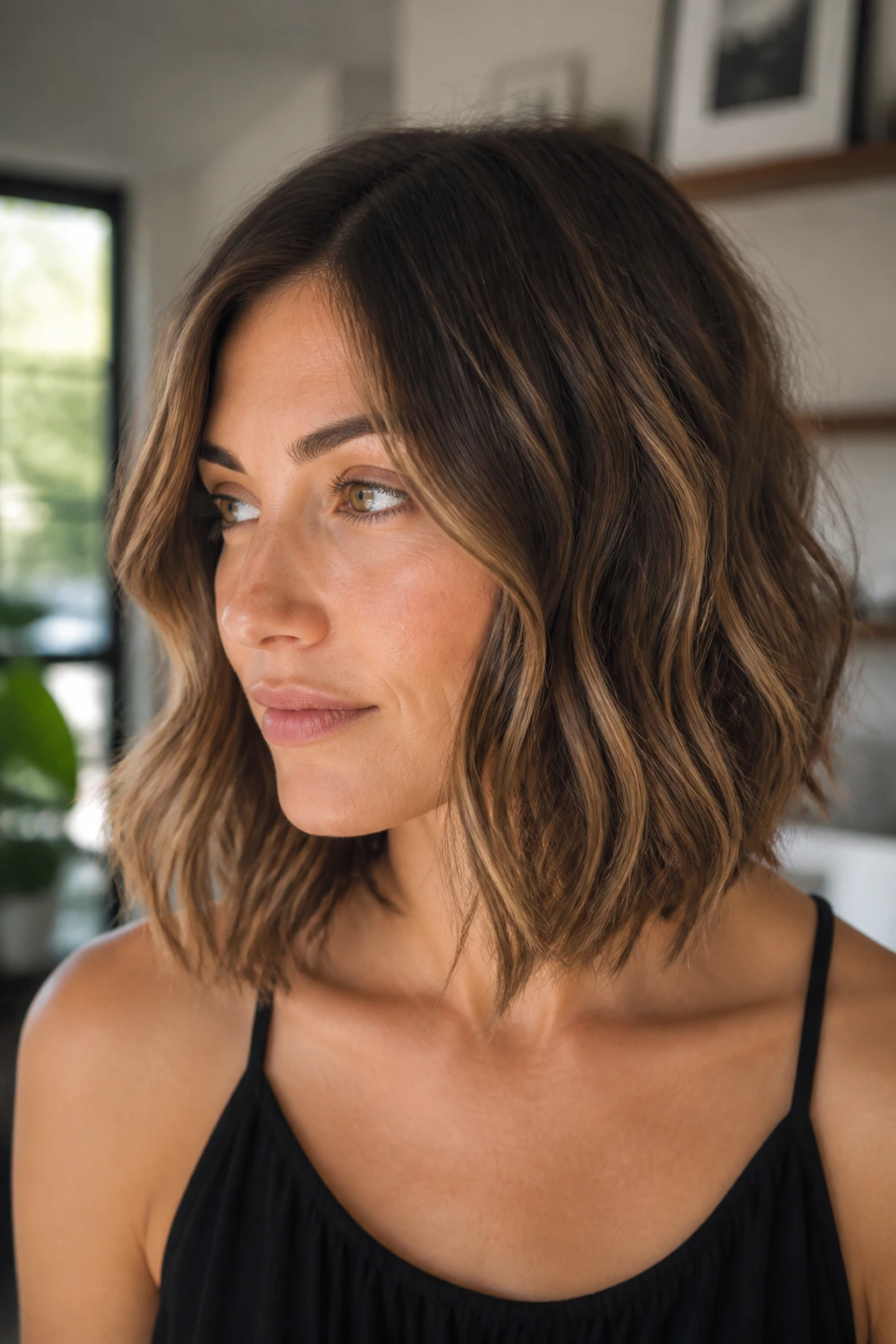
A razor-cut lob is not the same as a choppy bob. This one stays longer, usually around the collarbone or just below it, and the razor work is there to soften the movement rather than shred the shape. On wavy hair, the loose bends land beautifully because the length gives them room to travel.
The cut feels lighter than a blunt lob, but it does not have the scrappy finish of a shag. That makes it a solid middle path if you want movement without too much edge. The ends should look separated, not thin. There’s a difference.
A 1.25-inch curling iron can help if your natural wave is inconsistent, but you do not need to curl every piece. Wrap only the front sections and a few mids, then leave the rest alone. That keeps it from looking overdone. The best part of a razor-cut lob is that it still looks good when you’ve only half-styled it.
If you usually wear simple clothes and want your hair to carry a bit more shape, this cut does a lot with a little.
19. Soft Box Bob with Grown-In Fringe

A box bob sounds severe, but a soft version can be very flattering on wavy hair. The perimeter stays a little straighter and more geometric, while the fringe is kept light enough to blend instead of sit like a hard line. That mix gives the cut character without making it feel rigid.
The grown-in fringe matters here. It should skim the brow or land just above it, not sit in a heavy block. With waves, a little softness at the front keeps the whole cut from taking over your face. You want definition, not drama for its own sake.
Why It Works
The boxy base gives structure. The fringe softens the mood. Together, they make a bob that feels neat but still relaxed.
- Best for: Wavy hair that likes a strong outline.
- Styling note: Use a light cream only on the fringe so it doesn’t separate too much.
- Length note: Keep the sides even if you want the silhouette to stay clean.
- Watch for: Too much thinning at the front, which can make the fringe frizzy fast.
My advice: this cut looks better when the fringe can move. If it sits flat and stiff, something went wrong.
20. Soft Asymmetrical Bob

A soft asymmetrical bob is a nice choice if you want a little visual tension without going full edgy. One side sits maybe half an inch to an inch longer than the other, which sounds small, but on wavy hair it shows up fast. The bend catches the uneven line and gives it a nice swing.
This is not the cut for someone who likes symmetry at all costs. It works because the wave pattern makes the difference feel deliberate, almost like the hair is turning as you move. If you tuck one side behind the ear, the whole shape changes. That’s half the fun.
The asymmetry should be subtle enough that the cut still reads as wearable, not experimental. If the difference is too dramatic, it can start to look like a correction instead of a design choice. Keep the back balanced and let the front carry the variation.
It’s a good pick for round or square faces because the line breaks up the width. Simple trick. Good result.
21. Tousled Bob with Chunky Layers

What makes chunky layers different from softer, invisible ones? They show up. That is the point. A tousled bob with chunkier layering gives wavy hair obvious separation, so the ends and mids fall in pieces instead of one smooth curtain.
This cut usually suits thicker waves best. Fine hair can lose too much weight if the layers get aggressive. Thick hair, on the other hand, gets more swing and less puff. The shape feels casual, but it is not random. The layers still need to be placed with purpose so the bob does not collapse at the sides.
How to Style It
Work a light mousse through damp hair, then twist sections around two fingers and let them air-dry halfway. If you want extra definition, use a diffuser for just a few minutes at the roots. Stop before the hair gets stiff.
- Best for: Dense waves that need separation.
- Product note: Avoid heavy creams; they can make the layers stick together.
- Styling note: A little crunch from mousse is fine. You can scrunch it out later.
- Trim note: Keep the layers fresh, or the texture loses its shape.
This cut looks better when it moves. Static hair kills it.
22. Clean Bob with Movement and a Soft Side Part

A clean bob with movement is the style for someone who wants polish without stiffness. The perimeter stays tidy, the part shifts slightly off center, and just enough internal texture is built in so wavy hair can bend instead of sitting flat. It’s a calm cut. No fuss, no weird angles, no overworked texture.
I like this one because it feels grown-up without looking severe. You can wear it with a sweater and no makeup, and it still looks considered. You can also smooth it out with a blow-dry brush for a sharper finish, which makes it useful if your week swings between casual and dressed up.
The key is restraint. The stylist should keep the ends clean and make the movement happen inside the cut, not by shredding the perimeter. That gives you the neat line you want and enough bend to keep the bob from feeling stiff.
If you want a bob that works on good hair days and not-so-good ones, this is the safest place to land. It’s tidy. It breathes. And it gives wavy hair room to look like itself.
