



Flat blonde hair can look expensive or flat in about the same amount of time. A wolf cut solves that by breaking the silhouette into layers that move, flip, and carry a little grit at the ends, which is why blonde wolf cuts hit harder than a plain one-length blonde cut.
The color matters just as much as the shape. An icy tone makes every feathered edge show up; a honey or beige blonde softens the outline and makes the whole thing read less punk, more lived-in. If you have ever left a salon with a pretty blonde shade that somehow swallowed the haircut, you already know the frustration. The cut needs contrast, and blonde gives it — but only if the tone and texture are chosen with some care.
The best versions are not all the same. Some lean shaggy and soft, some lean mullet-heavy and sharp, and some sit right in the middle with a fringe that brushes the brows and ends that kick out at the collarbone. The difference between a cut that looks cool on day one and one that still works two weeks later usually comes down to root depth, layer placement, and how much weight stays around the perimeter.
Pick the version that matches your hair texture, your styling patience, and how much you want people to notice the haircut before they notice the color.
1. Icy Blonde Wolf Cut With Feathered Crown Layers
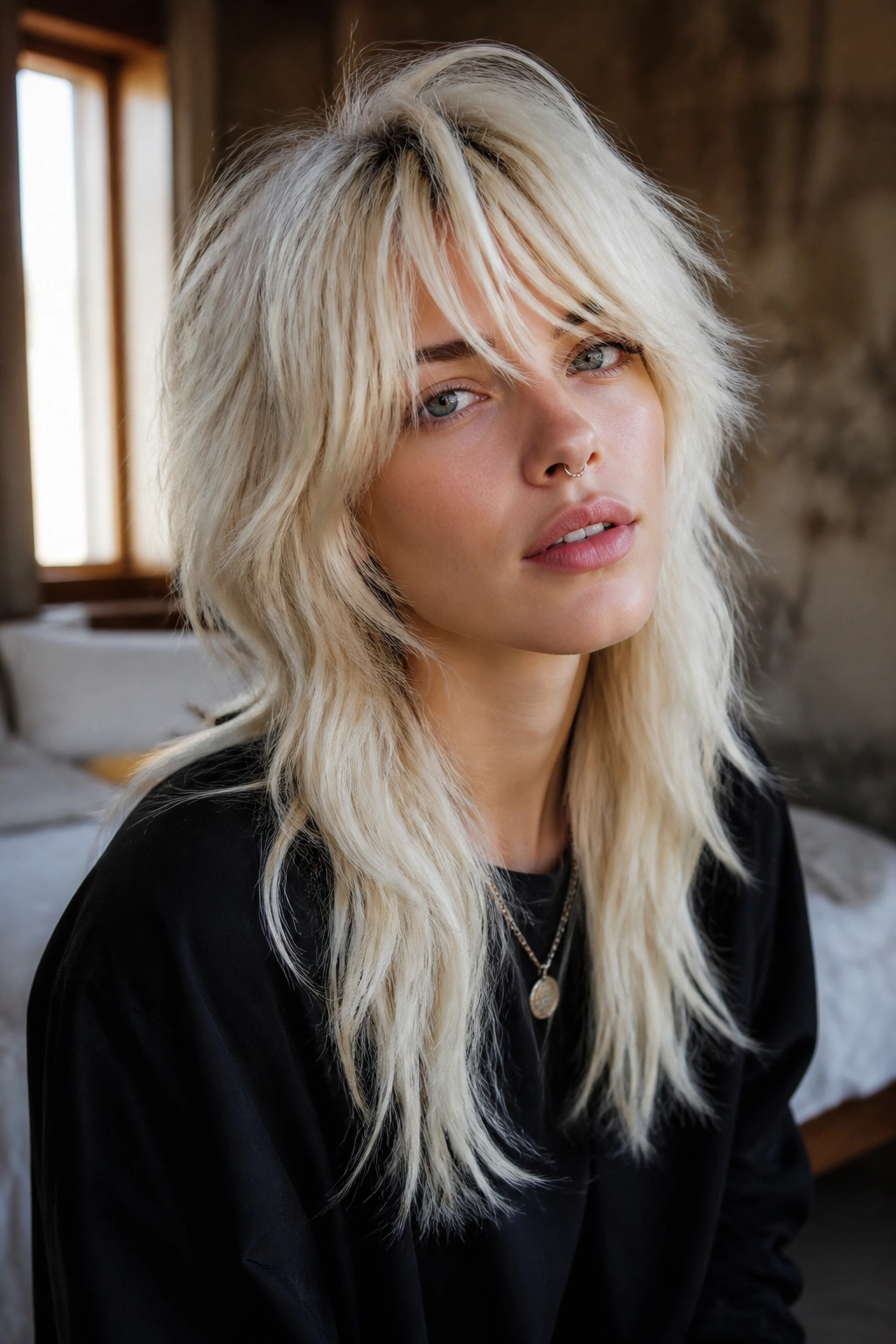
Icy blonde makes a wolf cut look sharper almost immediately. The pale tone throws every layer into relief, so the crown reads airy and lifted instead of heavy. If your hair is straight or only slightly wavy, this is one of the easiest ways to get that cool, editorial edge without adding more length off the bottom.
What I like about this version is the contrast. The top stays soft and feathery, while the lower layers can kick out a little more at the ends. That difference keeps the style from looking helmet-like, which is a real risk with very light blondes if the cut is too blunt.
What to Ask For
- Crown layers that start high enough to create lift, but not so high that the hair turns puffy.
- A soft fringe or curtain bang that blends into the side layers.
- Light texturizing through the mid-lengths, not the ends only.
A purple shampoo once a week helps keep the tone clean, but don’t overdo it. Over-toned icy blonde can look dull fast, and dull is the enemy here. Blow-dry the roots with a round brush, then let the ends stay a little wild. That tension is the whole point.
2. Honey Blonde Wolf Cut With Soft Curtain Bangs
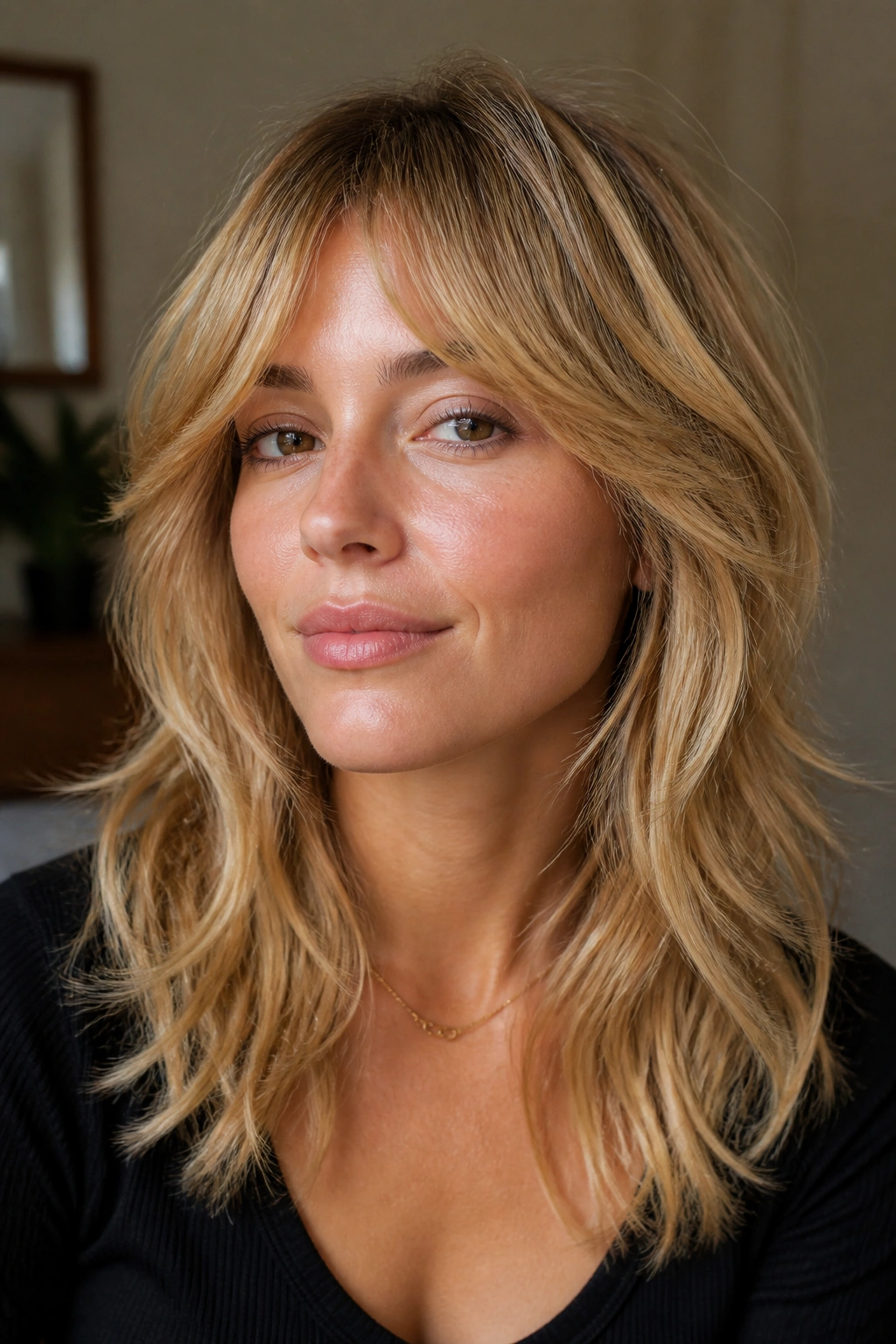
Why does honey blonde work so well here? Because it softens the rougher parts of a wolf cut and makes the whole shape feel more wearable. A warmer blonde catches light in a gentler way, so the layers look fluffy instead of choppy. That matters if you want movement without the hard, punkier finish.
This version is especially kind to medium-density hair. The curtain bangs break up the forehead area, and the honey tone gives the cut a glow that feels easy rather than severe. It is also a smart choice if your hair has a bit of bend but not enough wave to hold a super piecey finish.
How to Wear It
A light mousse at the roots gives the crown some push, and a quick twist with a medium barrel iron can encourage the front pieces to fold away from the face. Don’t curl every section the same direction. That makes it look too done.
The better move is to keep the bangs loose, then rough up the ends with your fingers once the hair cools. Honey blonde wolf cuts look best when the layers are obvious but not overworked. That little bit of mess is doing a lot of the heavy lifting.
3. Platinum Blonde Wolf Cut With Razor-Soft Ends
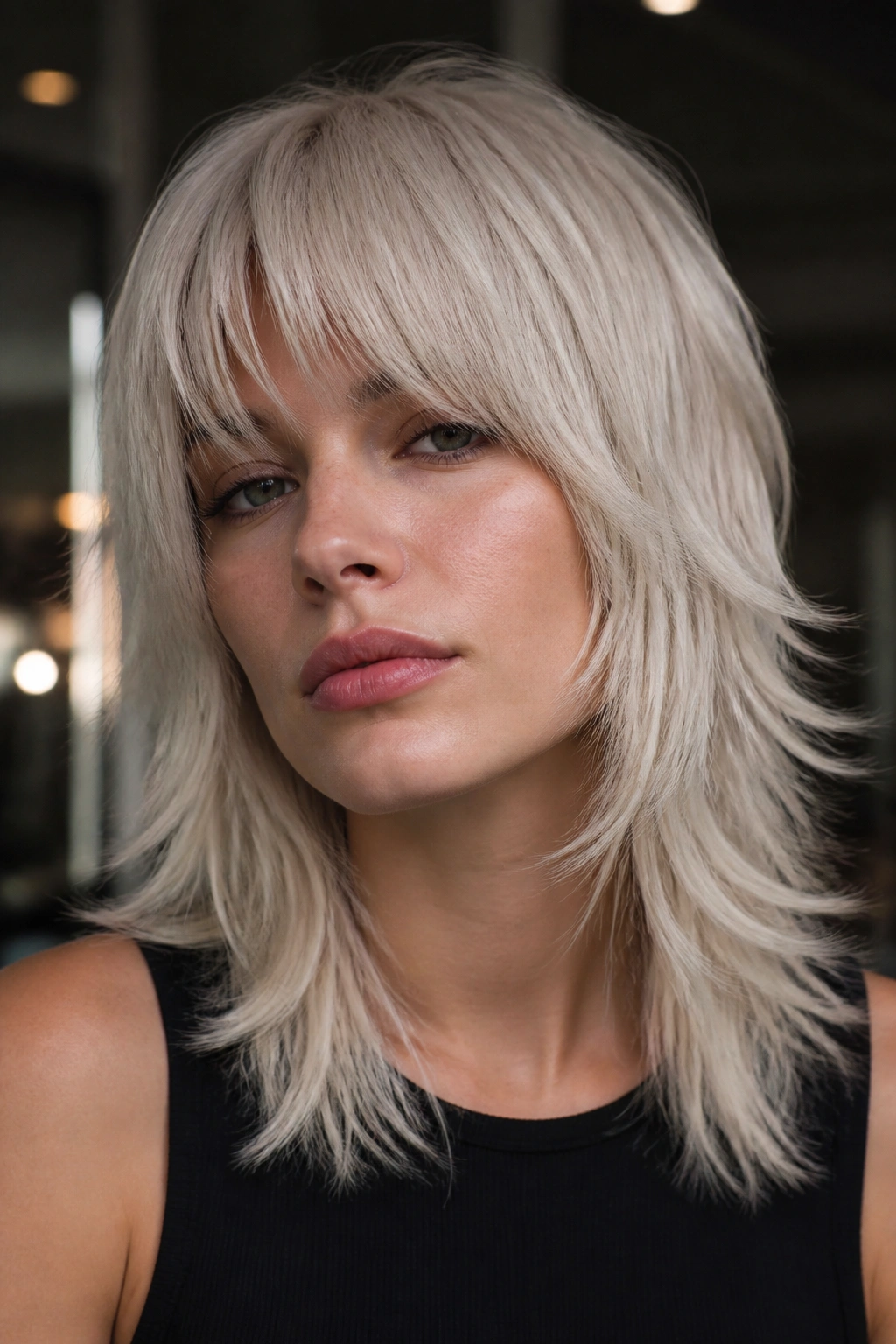
Platinum blonde is the loudest way to wear a wolf cut. It strips the style down to shape, line, and texture, which means the cut has to be clean. If the layers are uneven in the wrong way, you’ll see it right away. If they’re right, the result is sharp and expensive-looking in that slightly difficult way platinum always has.
The catch is upkeep. Platinum shows dryness, breakage, and dull toner faster than softer blondes, so the cut has to leave enough length on the ends to keep the hair from looking shredded. I prefer razor-soft ends here rather than heavy slicing, because blunt razoring on fragile lightened hair can leave the perimeter frayed.
A Few Non-Negotiables
- Ask for bond-care during the lightening process if your hair has been colored before.
- Keep heat under control; a 350°F styling ceiling is plenty for most people.
- Use a leave-in with slip so the layers don’t snag and puff.
This version is not the easiest to live with. It does reward discipline, though. A touch of serum on damp ends and a glossy finish spray can make platinum wolf cuts look sleek instead of brittle.
4. Rooted Blonde Wolf Cut With Dark Shadow Base
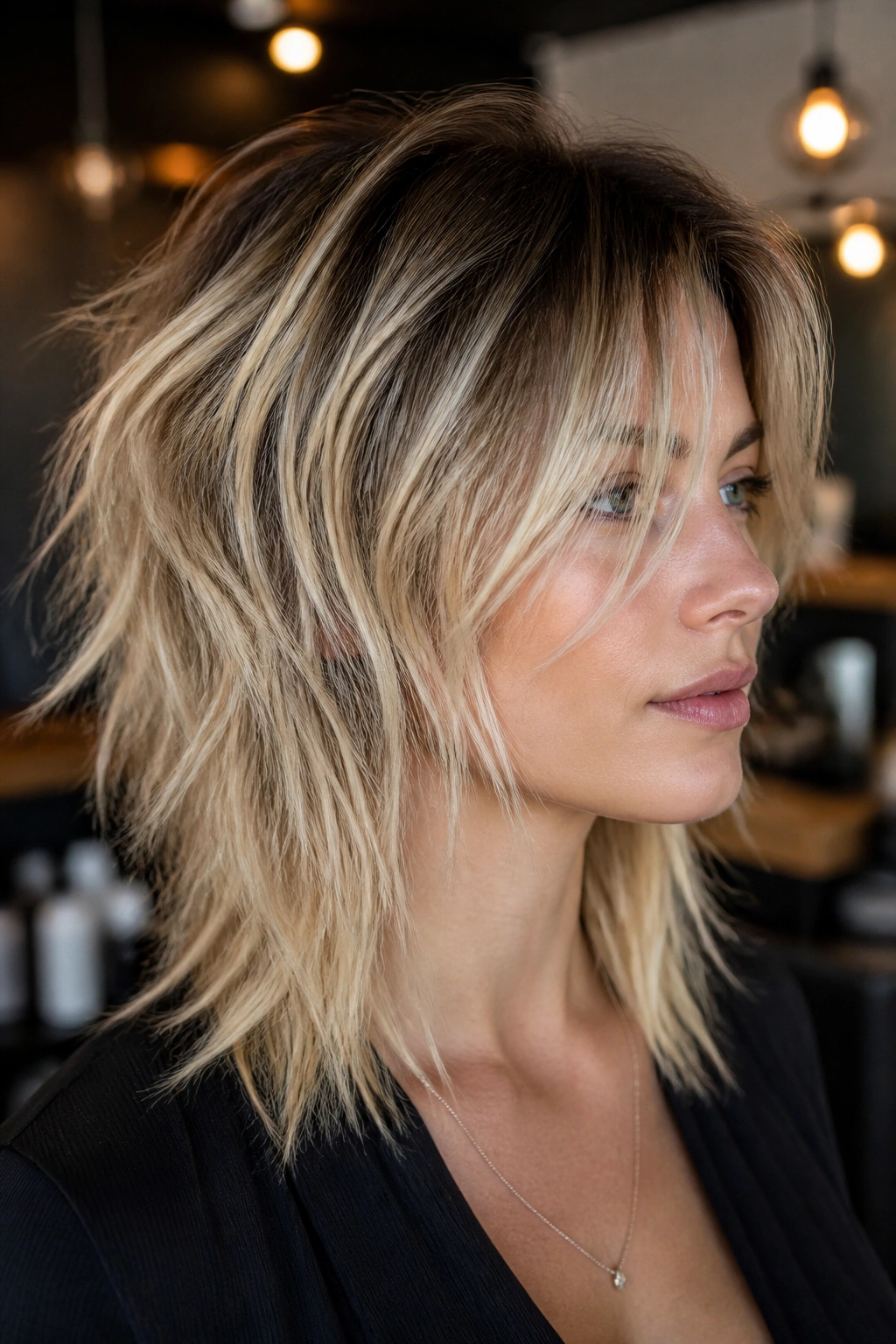
A darker root does not make the blonde look lazy. It makes the cut look fuller. That’s the truth of it. The shadow base gives the crown a thicker appearance, and the lighter lengths underneath pop harder because the top isn’t fighting for attention.
This is the version I point people toward when they want blonde hair but hate obvious regrowth. The root smudge keeps the maintenance softer, and the wolf cut shape does the rest. When the layers move, the darker root stays tucked under the brightness, which gives the whole style a bit of depth you can’t fake with all-over light color.
The best rooted versions usually keep the lightest pieces around the cheekbones and the ends. That keeps the face open while the back still has enough contrast to show the cut. It’s a practical move, not a boring one.
If you want the style to feel less salon-perfect, ask for a smoky root melt rather than a hard line. The difference is subtle on paper and huge in the mirror.
5. Champagne Blonde Wolf Cut With Airy Fringe
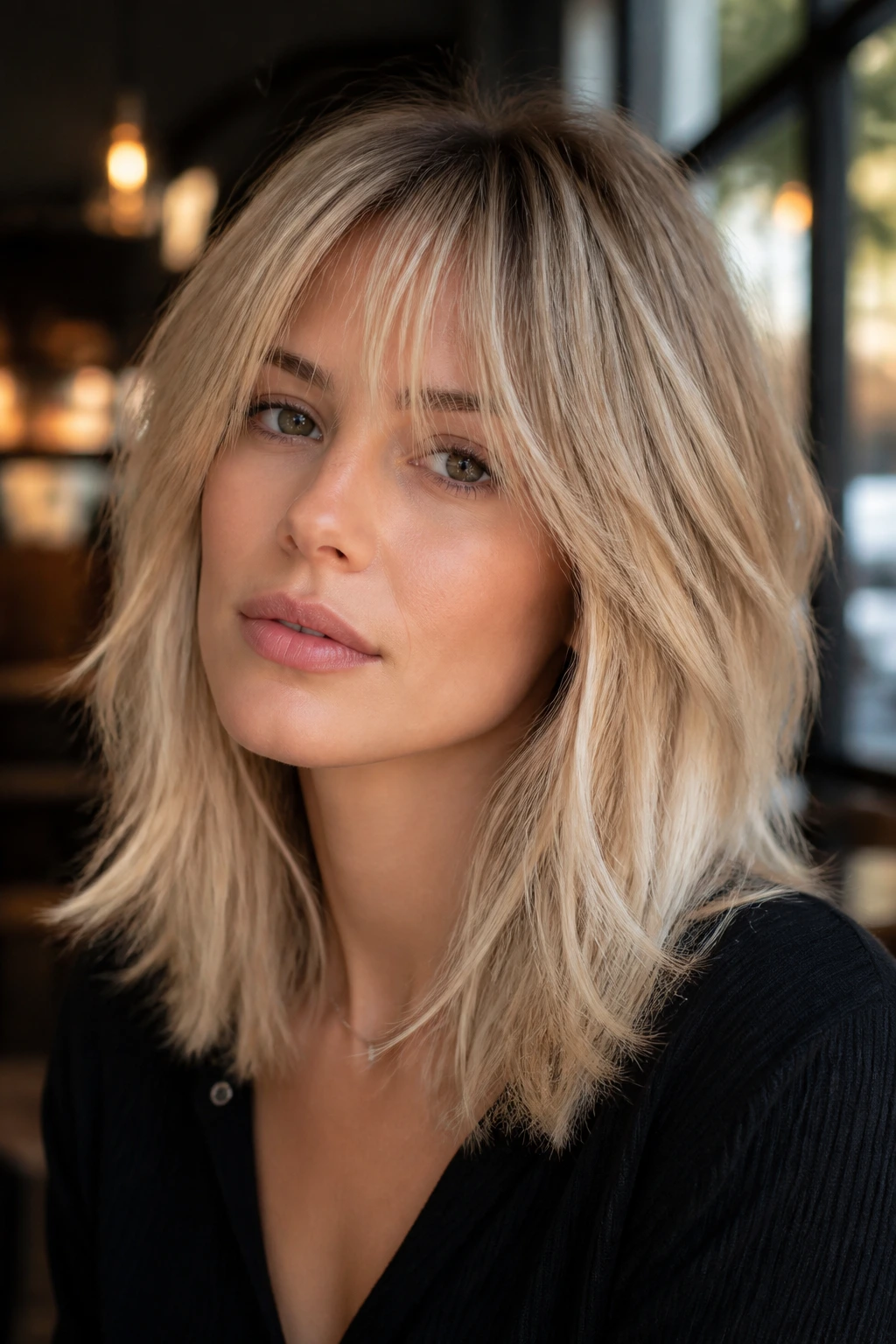
Champagne blonde is for people who want polish without losing the texture. It sits between icy and golden, so the color feels soft, clean, and a little glossy. Paired with a wolf cut, that balance keeps the shape from tipping too far into shag territory.
The airy fringe matters here. Heavy bangs can drag the whole cut down, while a light, separated fringe leaves room for the crown to lift. This is one of those styles that looks better when the front is a touch imperfect. If the fringe is too neat, the hair loses the charm that makes a wolf cut worth wearing in the first place.
Best Styling Move
Use a small round brush or a Velcro roller at the front for 5 to 10 minutes after blow-drying. That gives the fringe a bend without making it curl into a shape that feels dated. A little shine cream on the ends helps the champagne tone look smooth, not dry.
This cut is a quiet show-off. Not loud. Just expensive-looking in the best way.
6. Sandy Blonde Wolf Cut With Long, Loose Ends
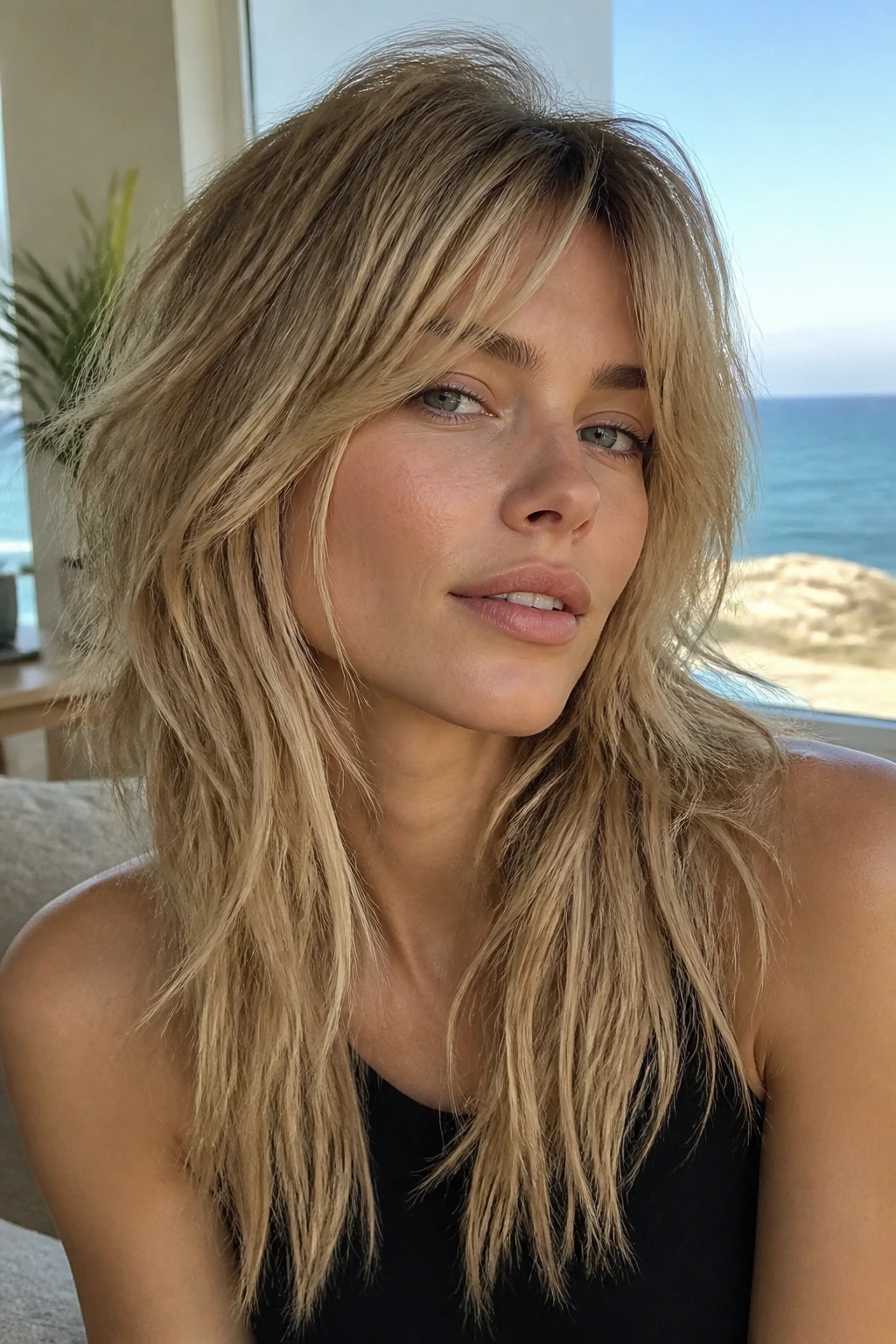
Sandy blonde is one of my favorite tones for people who want the wolf cut shape but do not want the haircut to announce itself from across a room. It has that dusty, beach-worn softness that makes layers look relaxed instead of aggressive. The long loose ends keep the silhouette fluid, which matters if you wear your hair at shoulder length or longer.
A lot of wolf cuts get too short through the middle and feel top-heavy. This version avoids that. The bottom length stays intact, the face framing does the work, and the blonde adds a little sun-faded texture without needing perfect styling.
It’s also forgiving on day two and day three. A dry shampoo at the roots, a quick bend through the front pieces, and you’re back in business. The shape still reads.
If your hair is fine, ask for soft internal layers rather than a lot of aggressive removal through the ends. You want movement, not holes. That’s the difference between airy and stringy.
7. Ash Blonde Wolf Cut With Razored Face Frame
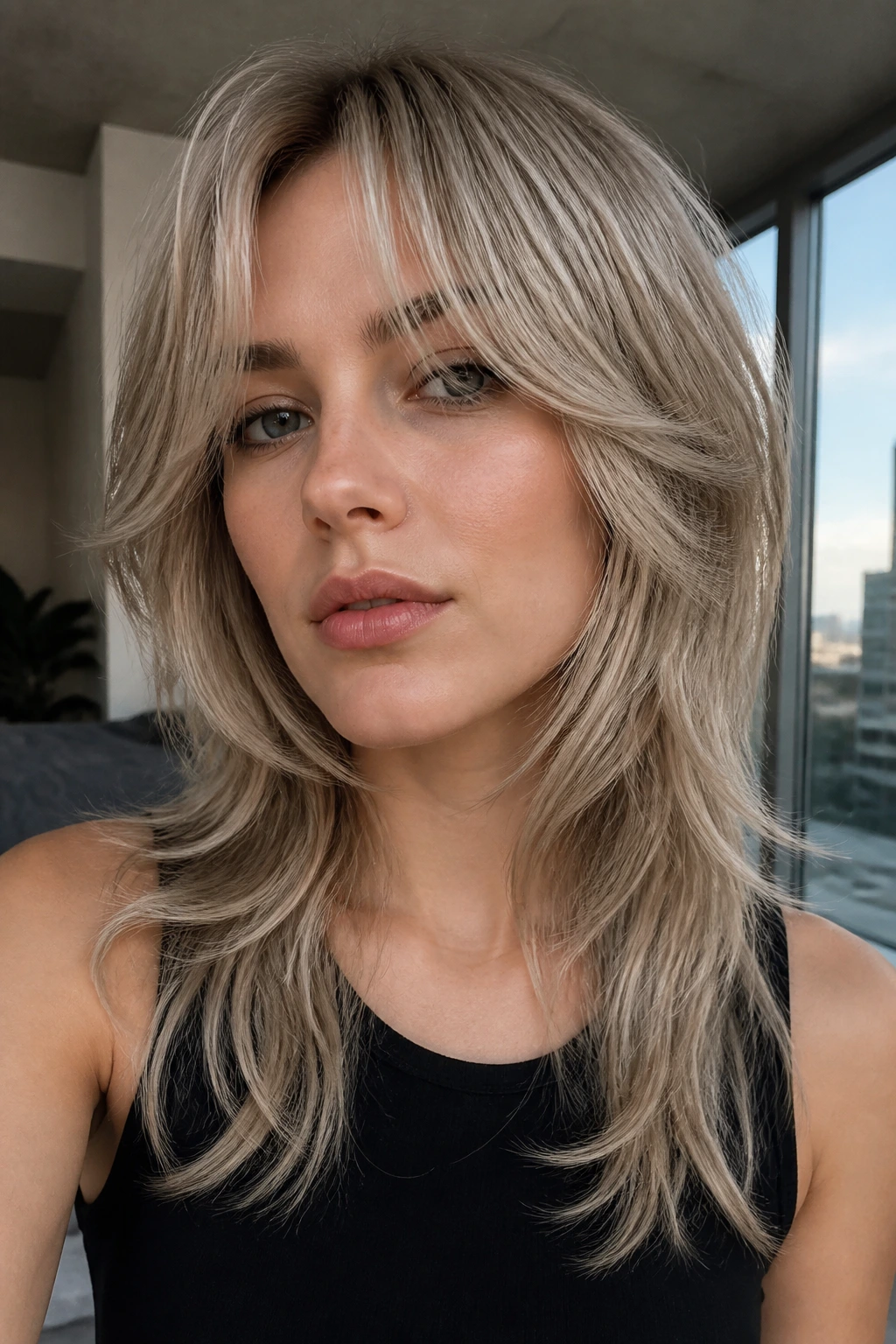
Ash blonde has a cool, smoky cast that makes the wolf cut feel cleaner and a bit sharper. The color pulls the eye to the shape of the layers, especially around the face, where razored pieces can swing away from the cheekbones and jaw. If you like hair that looks deliberate but not fussy, this is a strong choice.
The trick with ash tones is keeping them from going flat. A wolf cut helps because the texture gives the hair somewhere to go. When the face frame is cut with a lighter hand — not chopped, not blunt — the whole style gets that broken-up look that ash blonde wears so well.
What to Watch For
A razor can be useful here, but only in skilled hands. On coarse hair, it can soften too much and create frizz. On fine hair, it can make the front pieces collapse. That’s why I prefer a controlled razor finish only at the perimeter, with most of the shape built by scissors.
A blue or violet shampoo can help keep the ash tone cool, but don’t chase the coldest possible blonde. You still want dimension. Dead, flat ash is not the goal.
8. Golden Blonde Wolf Cut With Bottleneck Bangs
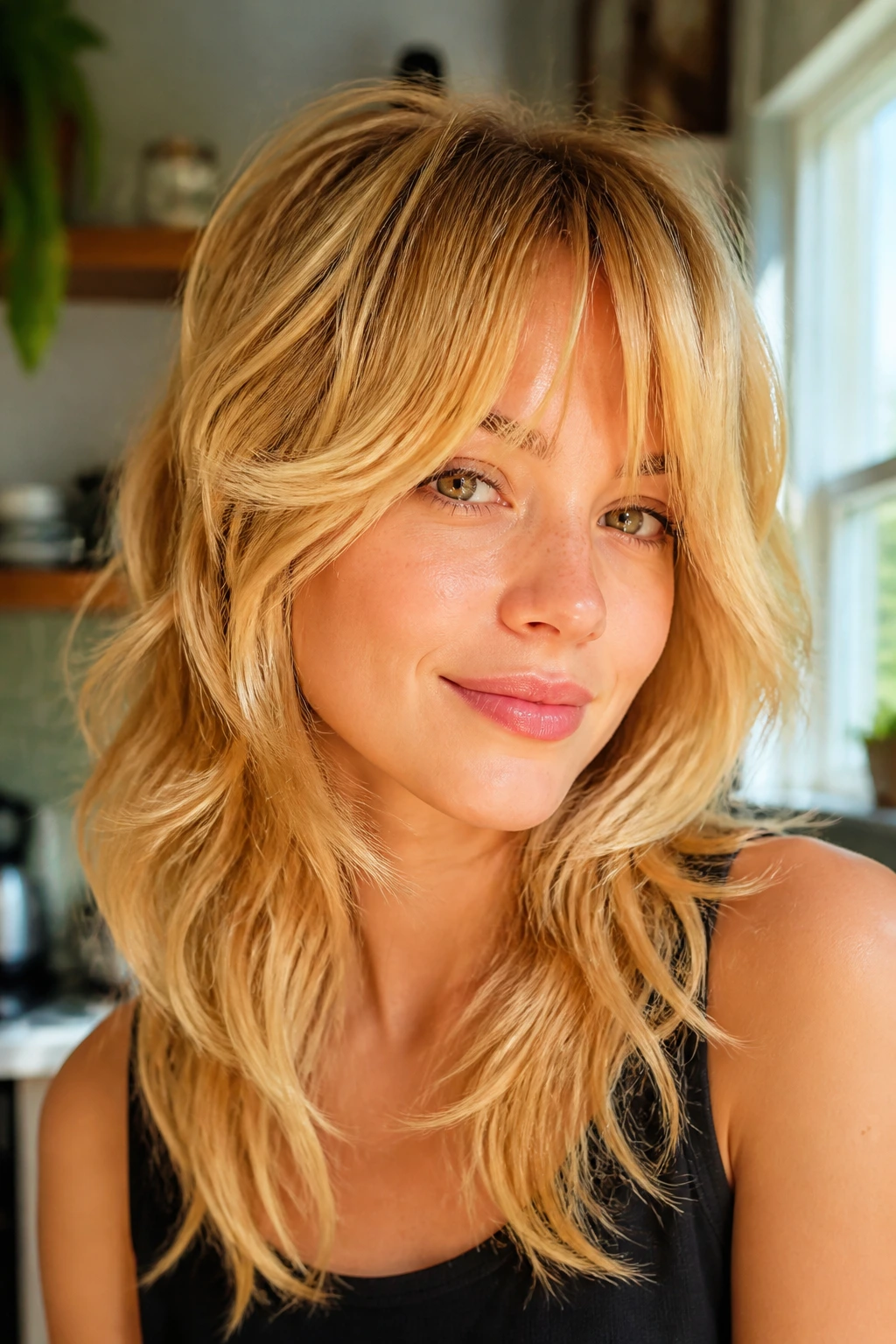
Golden blonde brings warmth back into the wolf cut, and bottleneck bangs are the perfect counterweight. The bang shape is narrower at the top and flares a little as it drops, which frames the eyes without boxing in the face. On a golden base, that shape feels soft but still intentional.
This is a good pick if you want the haircut to look flattering in natural light. Golden blonde catches warmth from the sun, indoor bulbs, even a window seat. It can make the layers look fuller than they are, which is useful if your hair is medium or slightly fine.
Who It Flatters Most
- People with oval or heart-shaped faces.
- Hair that bends easily but isn’t fully curly.
- Anyone who wants fringe without a blunt bang commitment.
A little blowout cream and a medium round brush are enough here. Don’t over-slick it down. The charm of this version is that the bangs should look feathered, not nailed into place. The ends can flip a little. That’s part of the appeal.
9. Curly Blonde Wolf Cut With Rounded Crown Layers
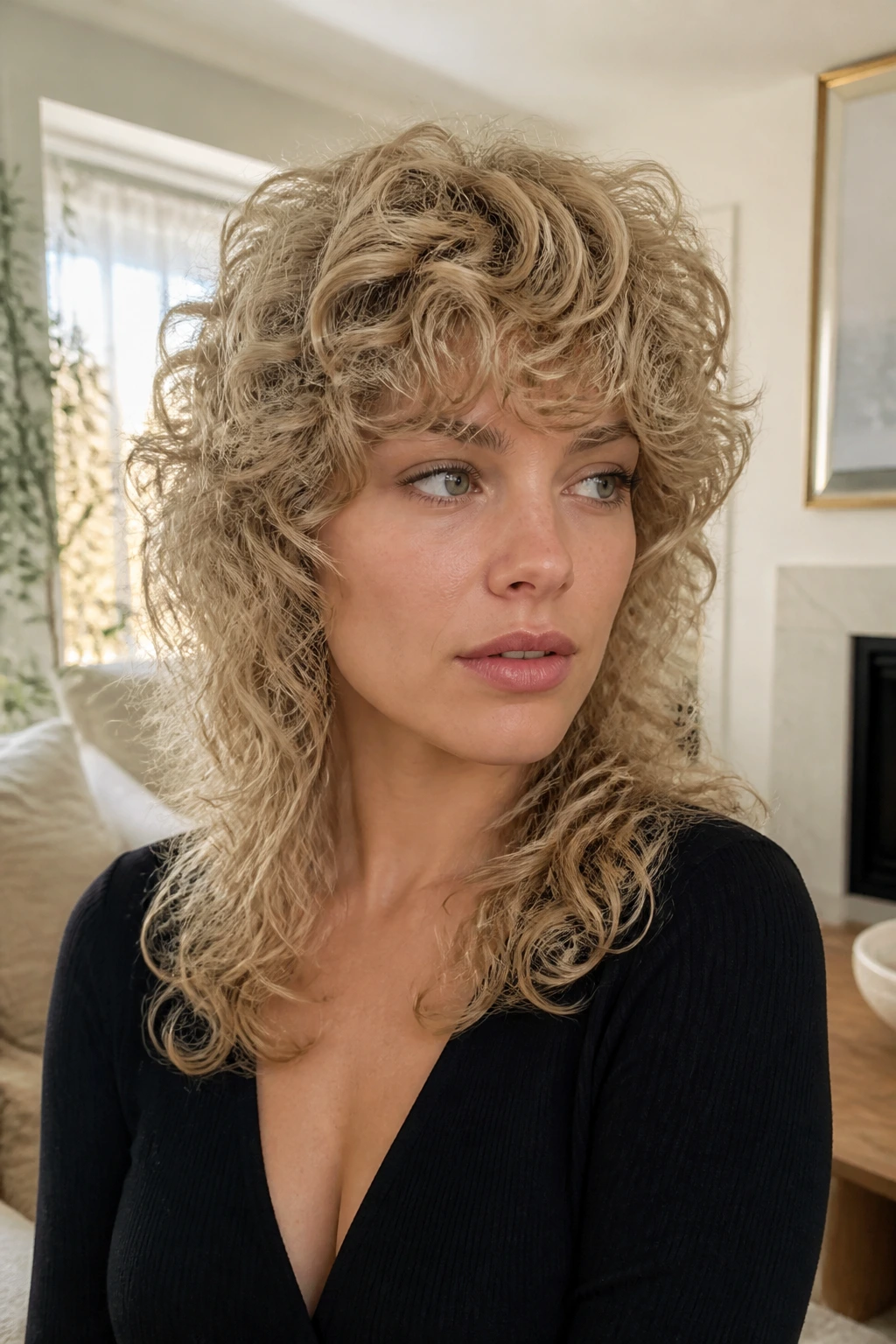
Curly hair and wolf cuts can be a mess if the layers are cut wrong. Too much removal at the top, and the curls balloon. Too little, and the whole shape turns triangular. The sweet spot is a rounded crown with enough length left in the upper layers to let the curl pattern stack naturally.
Blonde makes the curl pattern easier to read. Highlights and soft toners show where each ringlet lands, so the haircut looks fuller and more dimensional. That’s a gift if your curls need help separating, and a headache if the color is patchy. Both things are true.
How to Ask for It
Have the cut done in the natural curl pattern, ideally with the hair dry or mostly dry. Wet curls lie. They can look longer, then spring up later and ruin the balance.
Use a curl cream with a light hold, then diffuse on low heat. Once the hair is dry, lift the roots gently with your fingers. Do not rake through the crown too hard or you’ll wreck the shape you just paid for.
This version looks best when the curls stay touchable, not crunchy.
10. Wavy Beige Blonde Wolf Cut With Piecey Texture
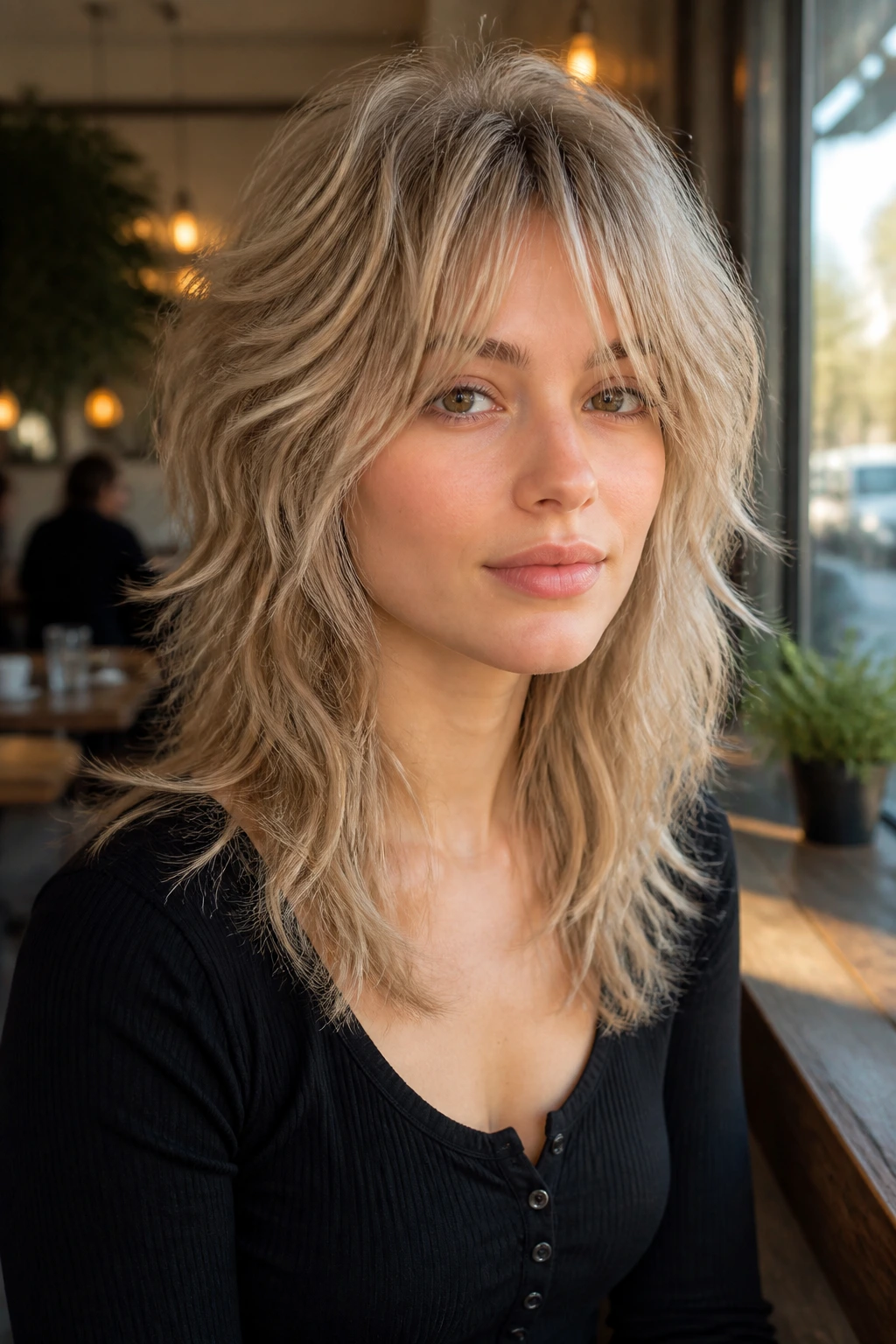
Wavy beige blonde is the kind of color that makes people think you woke up with naturally good hair. It sits in that soft neutral zone where the blonde isn’t too warm and not too icy, and the wolf cut gets to carry the personality. The texture does the talking here.
The piecey finish is what keeps this version from looking vague. A wave pattern that bends in different directions gives the layers a staggered feel, which is exactly what the cut needs. If your hair already has some bend, you’re halfway there. If not, a quick pass with a flat iron at the ends can fake the irregular movement.
A salt spray can help, but use a light hand. Too much, and beige blonde starts to look dry. I’d rather see a soft matte finish at the roots and a little shine through the ends than a crunchy beach look that falls apart by lunch.
This is the wolf cut for people who want texture without drama. Which, honestly, is a good place to be.
11. Bronde-to-Blonde Wolf Cut With Lived-In Dimension
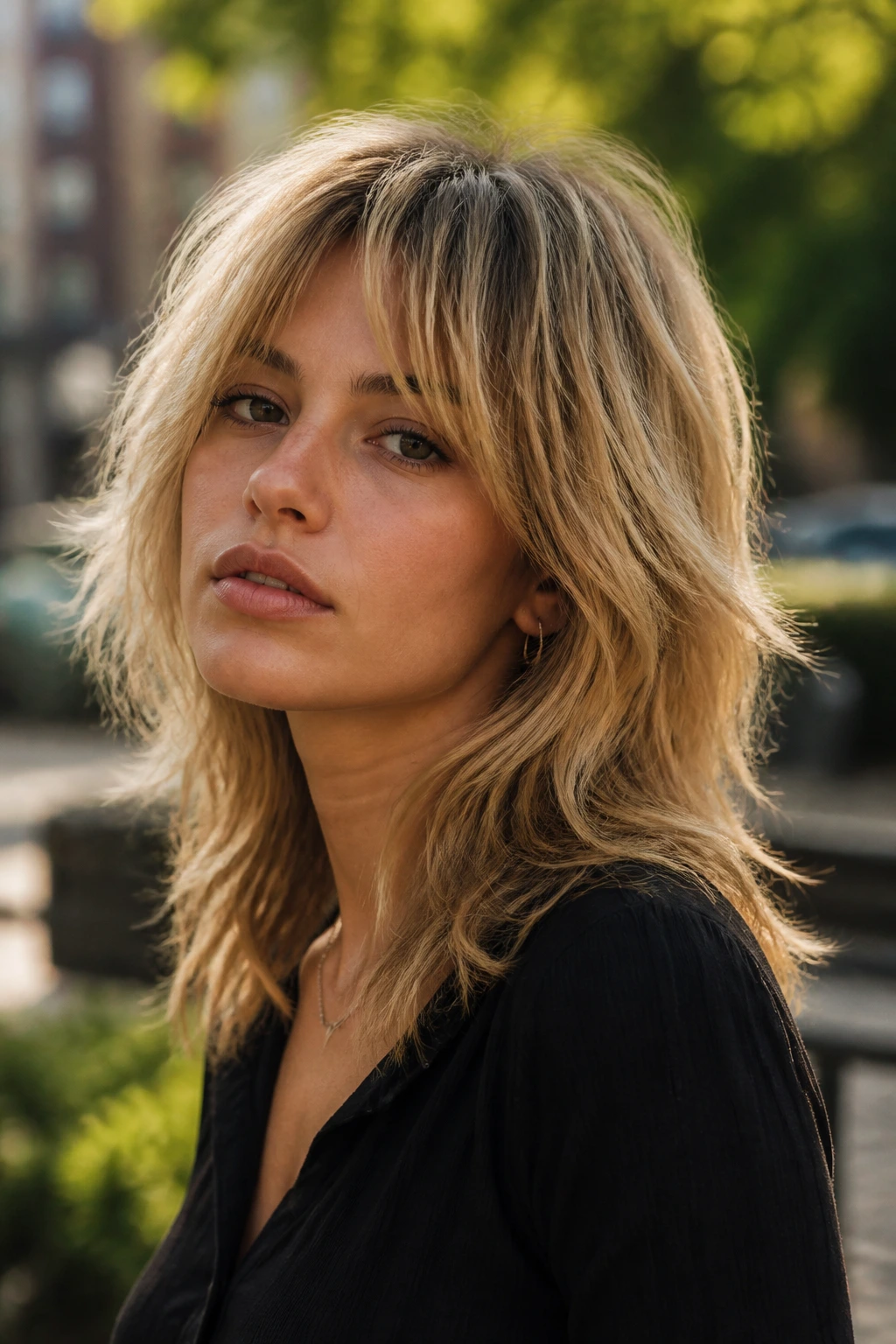
Trying to go lighter without frying your hair? This is the smart version. Bronde-to-blonde lets the darker base stay visible while the lighter pieces build brightness around the face and through the top layers. The wolf cut shape makes that transition look natural instead of patchy.
What makes this cut work is the dimension. The lower layers can stay a deeper beige or light brown, while the upper layers and fringe move toward blonde. That contrast gives the style depth, and it buys you a softer grow-out. You are not locked into a harsh root line every few weeks.
How It Feels in Real Life
The color reads different from every angle. In bright light, the blonde pieces stand out; in softer light, the darker base keeps the cut grounded. That means the haircut looks alive, not one-note.
Ask for hand-painted brightness around the face and crown, then leave some shadow beneath. It is a far better route than flattening everything into one pale shade. The hair keeps its depth, and the wolf cut keeps its bite.
12. Feathered Blonde Wolf Cut With Shaggy Mullet Tail
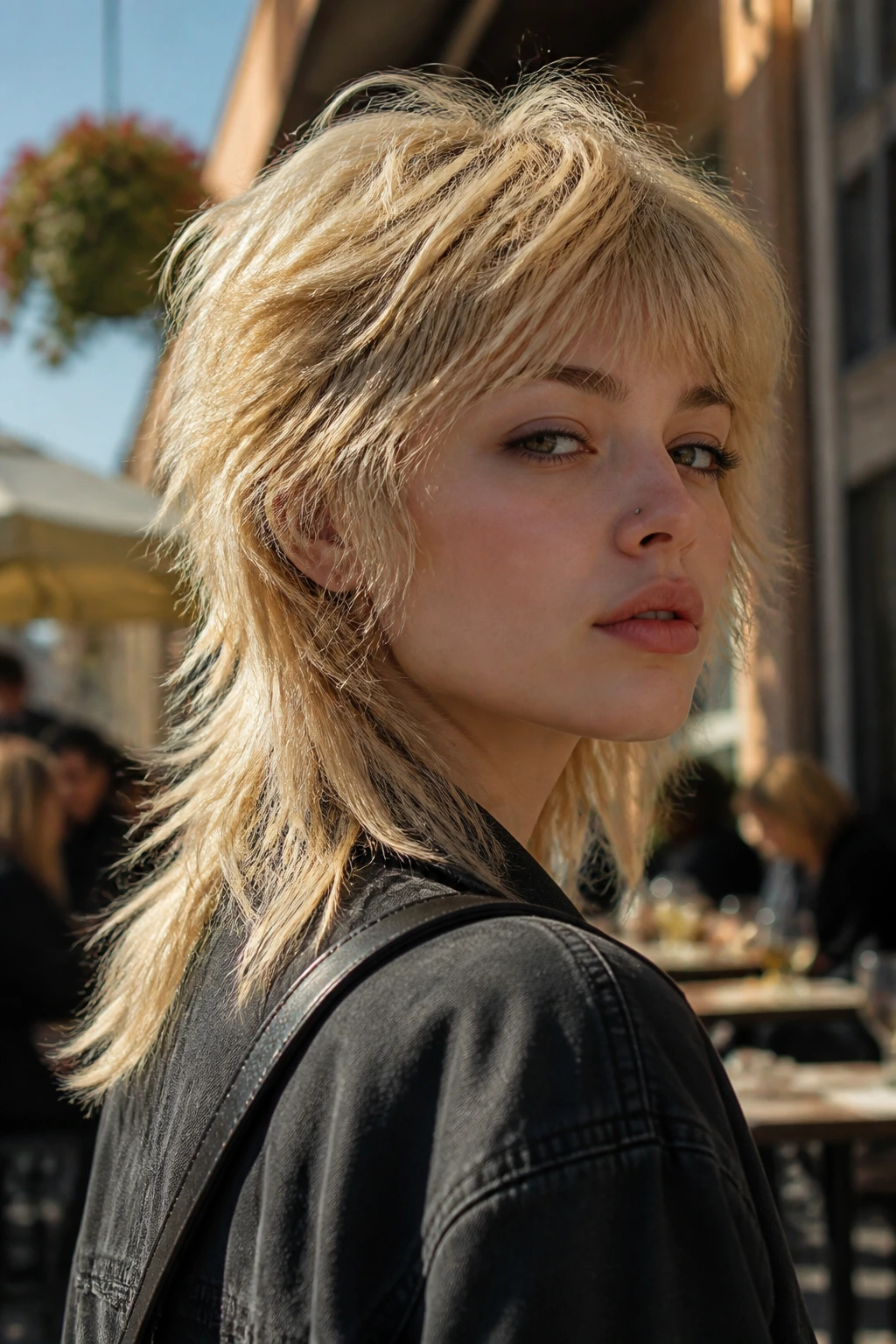
I keep coming back to this version because it has movement in all the right places. The feathered top gives height, the blonde pieces catch the ends of each layer, and the shaggy tail in back keeps the silhouette from looking too safe. It’s not subtle. That’s the point.
If you want the wolf cut to feel a little more rebellious, this is the one. The back length gives you that mullet nod without going full throwback, and the blonde color makes the layers easier to see. On straighter hair, the feathering gives some needed body. On wavy hair, it gives the pattern somewhere to break.
A light styling cream through the mid-lengths and a quick blast of texture spray at the crown are enough for most people. Don’t over-smooth the back. A little roughness is what keeps it from turning precious.
The best versions have longer nape layers and a face frame that opens fast. That shape feels modern without trying too hard, which is harder to pull off than it sounds.
13. Strawberry Blonde Wolf Cut With Soft Edge
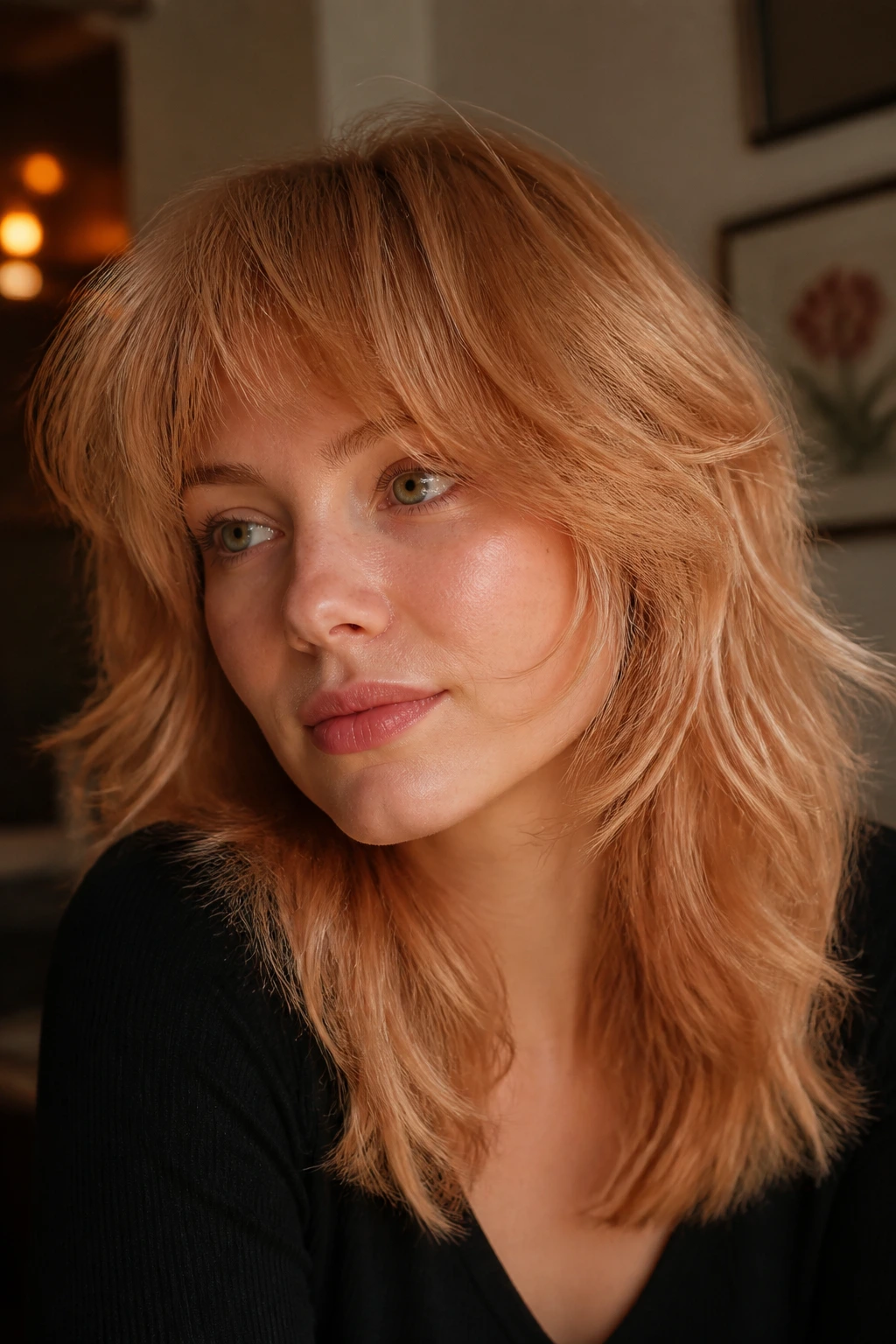
Strawberry blonde brings warmth, but it also brings softness that a lot of brighter blondes miss. The red-gold undertone makes the wolf cut look less sharp and more wearable, especially if you’re nervous about going too pale. It’s a good middle ground when you want color that feels special without screaming for attention.
The soft edge matters because strawberry blonde can get busy if the cut is too fragmented. You still want the layers, but they should flow into one another a little more gently. Think feathered, not shattered. The fringe can be light and wispy, and the ends can stay slightly rounded so the color has room to glow.
A gloss treatment helps a lot here. Strawberry tones can look flat if they’re dusty, and a clear or warm glaze gives them that fresh look hair color always loses after a few washes. It’s a small move with a big payoff.
This is one of the more flattering blonde wolf cuts for softer features. It has personality, but it doesn’t harden the face.
14. Creamy Butter Blonde Wolf Cut With Face-Framing Flip
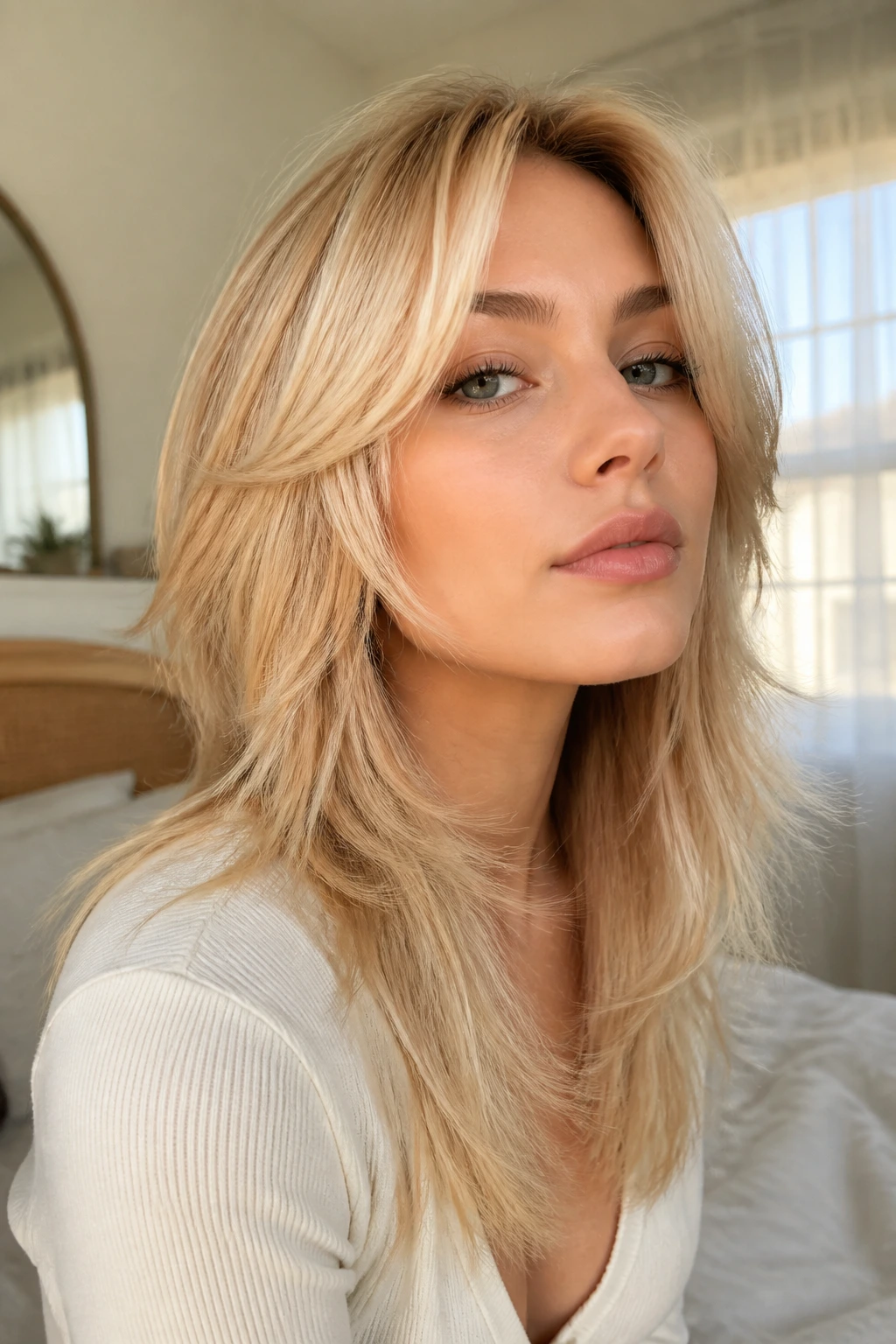
Creamy butter blonde is smooth, rich, and a little decadent in the best possible way. Paired with a wolf cut, it stops the layers from feeling rough around the edges. Instead of a hard, edgy finish, you get a softer flip through the front and a clean brightness around the face.
Why does it work? Because butter blonde has enough warmth to make the haircut feel healthy, but not so much warmth that it turns brassy. The face-framing pieces can lift away from the cheekbones with a round brush, and the rest of the layers can stay loose. That contrast makes the style feel polished without losing its swing.
This version looks especially good if your hair has medium thickness. Fine hair can still wear it, but the cut has to be gentle so the ends don’t look sparse. A lightweight smoothing cream is enough. Heavy oils can drag everything down.
The flip through the front is the detail I’d keep. It makes the whole haircut feel alive.
15. Frosted Blonde Wolf Cut With Choppy Air Bangs
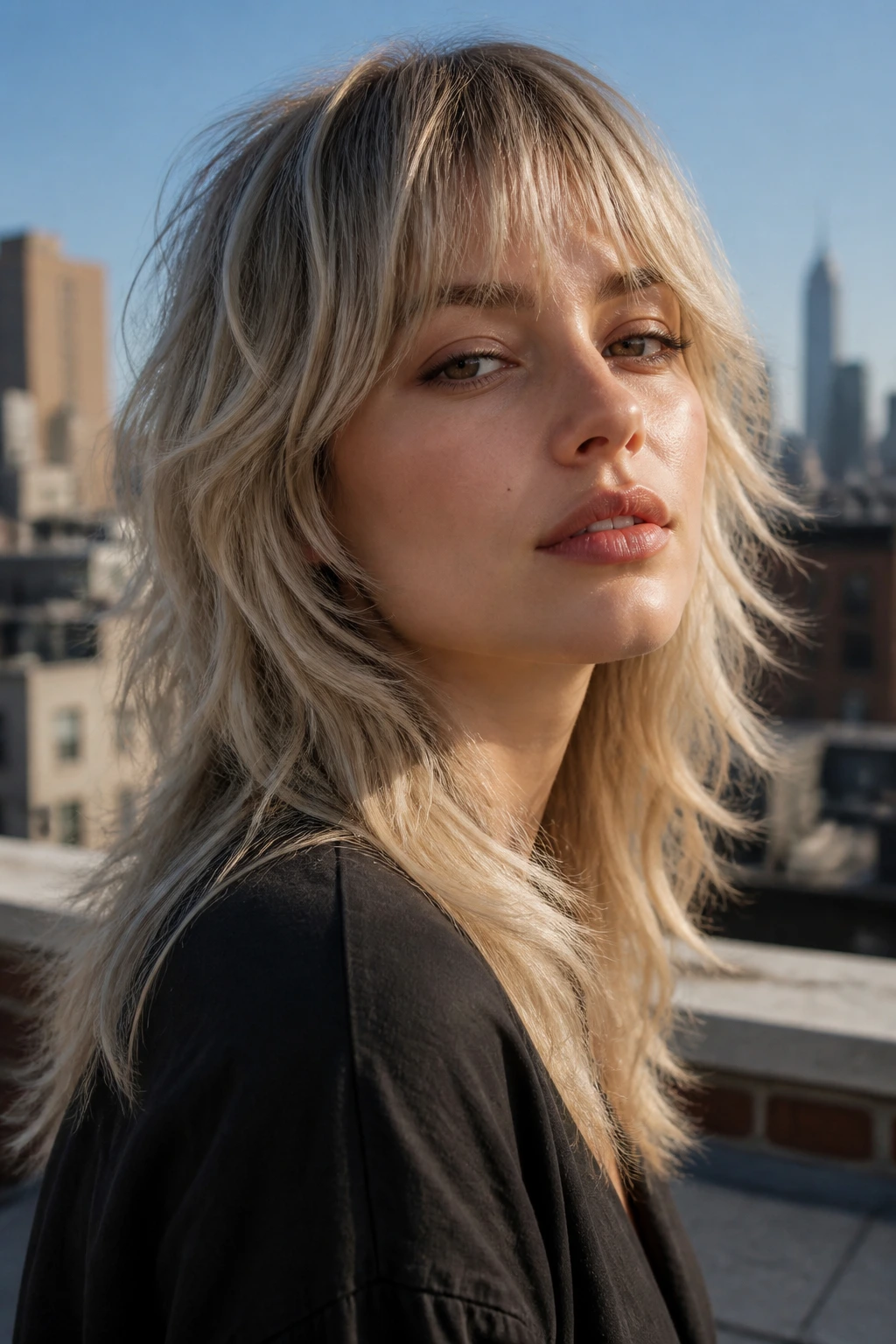
Frosted blonde pushes the wolf cut back toward something sharper and cooler. The tone is pale with a slightly muted finish, which makes the choppy structure stand out. Add air bangs — those airy, separated fringe pieces — and the cut suddenly has more attitude than a simple blonde layered style ever could.
There’s a practical side to this. Air bangs are easier to live with than a heavy fringe if your forehead is smaller or your hairline doesn’t like sitting flat. They break up the front without making the style feel crowded. On frosted blonde, the lightness of the bangs keeps the whole cut from looking dense.
A Few Things to Keep in Mind
- Keep the fringe a touch longer than you think you need.
- Dry it first with side-to-side movement from the blow-dryer.
- Finish with a tiny bit of dry wax or paste on the tips only.
That last part matters. Too much product and the fringe turns sticky fast. Frosted blonde is strongest when the texture stays soft, even if the shape is choppy.
16. Toasted Blonde Wolf Cut With Dimensional Ends
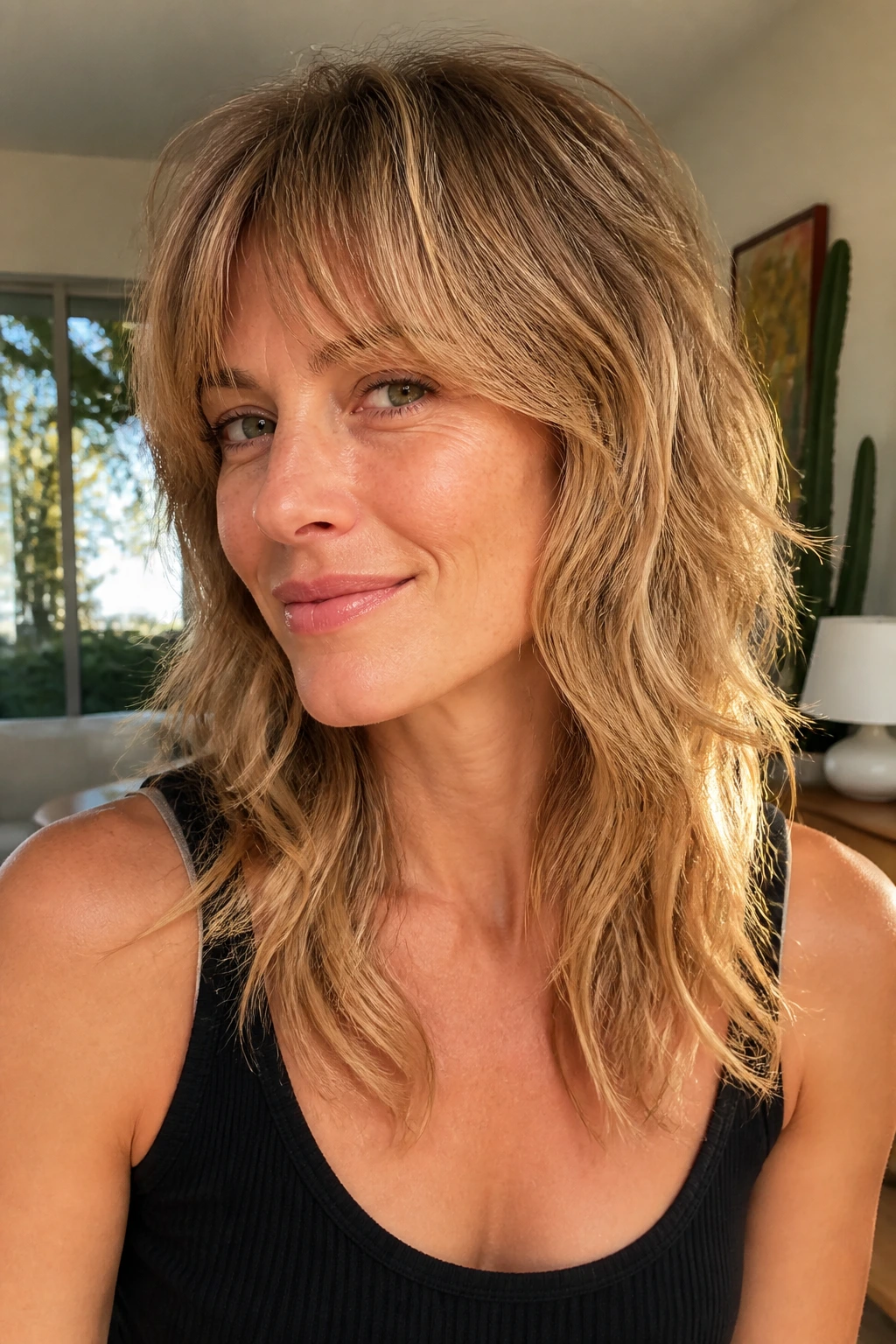
Toasted blonde is what happens when you want warmth, depth, and a little edge all at once. The color sits between beige and caramel, with enough tonal shift to keep the layers from disappearing into each other. In a wolf cut, that means the ends stay visible and the overall shape feels grounded.
I like this version because it does not overperform. It’s not icy. It’s not bright gold. It’s a little smoky, a little sunlit, and much easier to wear with everyday makeup and clothes. The dimensional ends keep the haircut from looking blocky, especially if you wear it past the shoulders.
A soft bend through the lower half of the hair helps a lot. Even a loose wave pattern will show off the color variation and make the layers sit with more movement. If you have naturally straight hair, wrap the front pieces around a curling iron for just a few seconds and leave the rest alone.
That small imbalance makes the style feel real. Which is what people usually want, even if they don’t say it that way.
17. Scandinavian Blonde Wolf Cut With Minimal Tonal Contrast
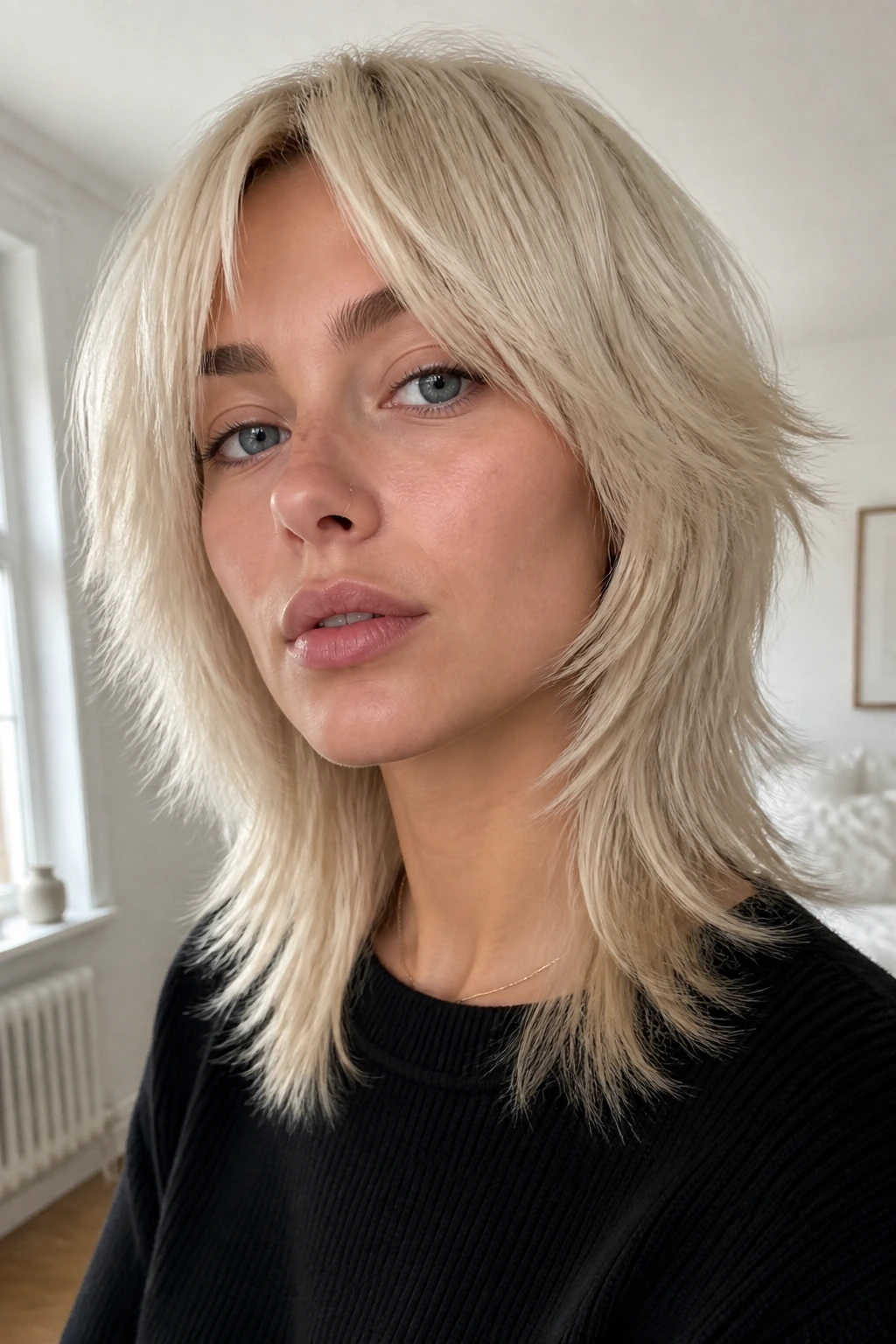
Scandinavian blonde is the lightest, cleanest version of the bunch, and it can be stunning on a wolf cut when the cut itself is disciplined. The color has very little tonal contrast, so the shape has to supply the interest. That means the layers need to be precise, with no bulky corners and no dead weight sitting at the bottom.
This is not the wolf cut for someone who wants softness everywhere. It’s leaner than that. The bangs can be light, the crown can be lifted, and the ends can stay blunt enough to keep the style from getting wispy. If the blonde is almost near-white, even a small variation in the cut shows immediately.
Who Should Consider It
- People with naturally light hair or hair that lifts cleanly.
- Anyone comfortable with regular toning.
- Those who like a crisp finish more than a messy one.
A silver or pearl toner can keep the shade cool, but it should still look like hair, not paint. The best Scandinavian blonde wolf cuts have movement at the edges and clarity at the top. Clean, but not sterile.
18. Beige Blonde Wolf Cut With Side-Swept Fringe
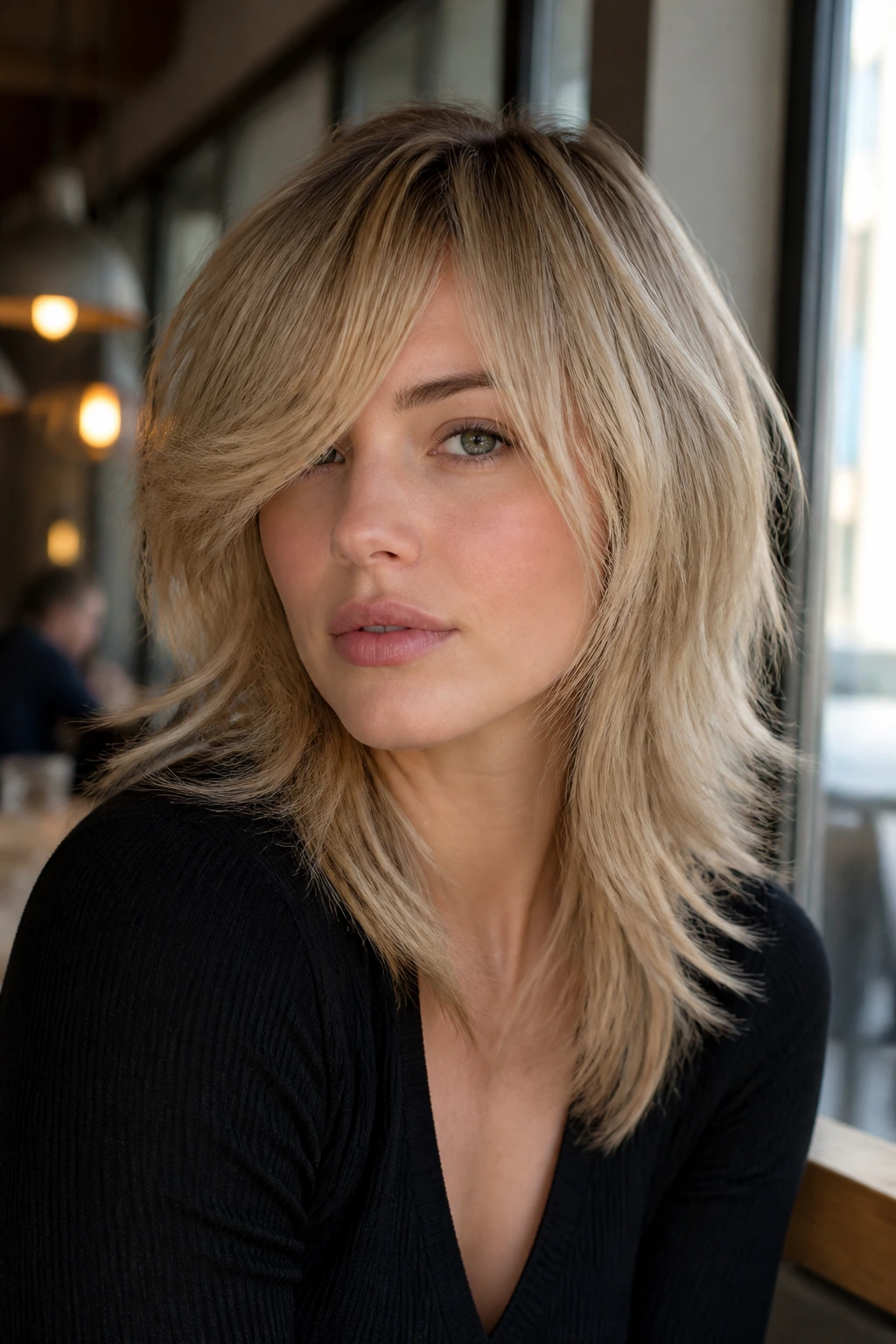
Side-swept fringe is underrated. Everyone talks about curtain bangs, but a side-swept front can be easier when your cowlicks fight symmetry or your forehead swirl refuses to cooperate. On a beige blonde wolf cut, that diagonal line softens the face and gives the layers a more relaxed path to follow.
The beige tone keeps the cut from getting harsh. It sits quietly in the middle, which means the fringe and the layers can do the visible work. If your hair is fine, this is a smart option because it avoids overloading the front with too much bang density. If your hair is thick, it keeps the front from becoming a curtain you have to wrestle every morning.
How to Style It
Blow-dry the fringe in the direction you want it to fall, then flip it back once with your fingers to loosen the line. That tiny reset stops it from looking pasted down. The rest of the hair can stay rough and piecey.
This is a low-drama version of the wolf cut. Not boring. Just easier.
19. Sun-Kissed Blonde Wolf Cut With Razor-Cut Layers
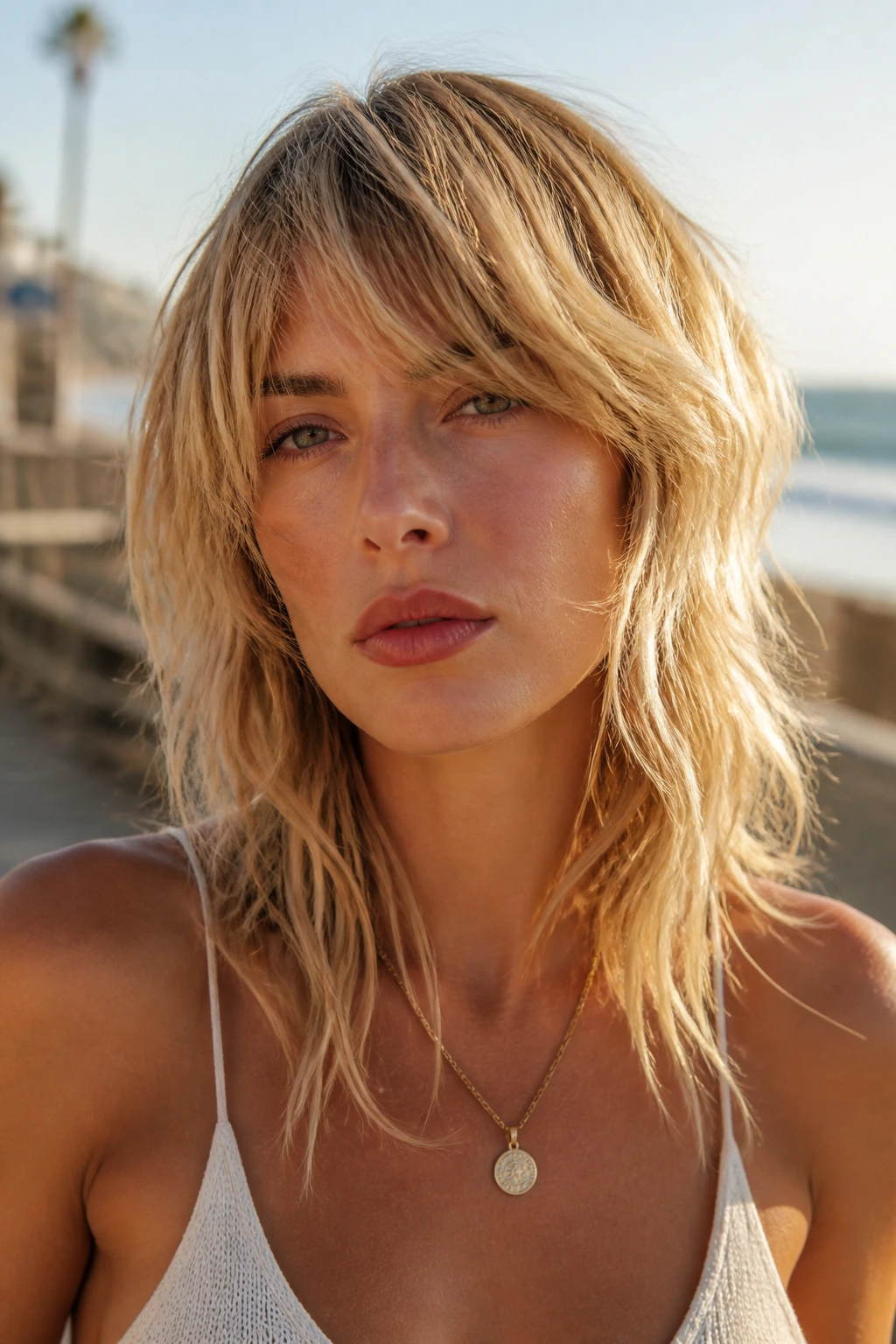
Not every blonde needs to be full foil work from root to tip. Sun-kissed blonde proves that a few strategic bright pieces can do more than an all-over lightening job. Around a wolf cut, the lighter panels at the face and crown create the illusion of even more movement, because your eye follows the brighter lines through the layers.
Razor-cut layers make sense here if the hair is medium to thick. They let the ends fall with a little softness, which keeps the sun-kissed color from looking too polished. The cut should feel feathered, not shaved down. That distinction matters more than people think.
A scalp-highlighting trick helps, too: leave a little darker depth near the root and brighten the pieces that would naturally catch light around the temples, cheeks, and upper back sections. The style ends up looking touched by sun, not painted all over.
This is one of the easiest versions to live with if you want blonde without a heavy maintenance schedule. The grow-out stays soft, and the wolf cut still reads with plenty of energy.
20. Muted Wheat Blonde Wolf Cut With Soft Mullet Length
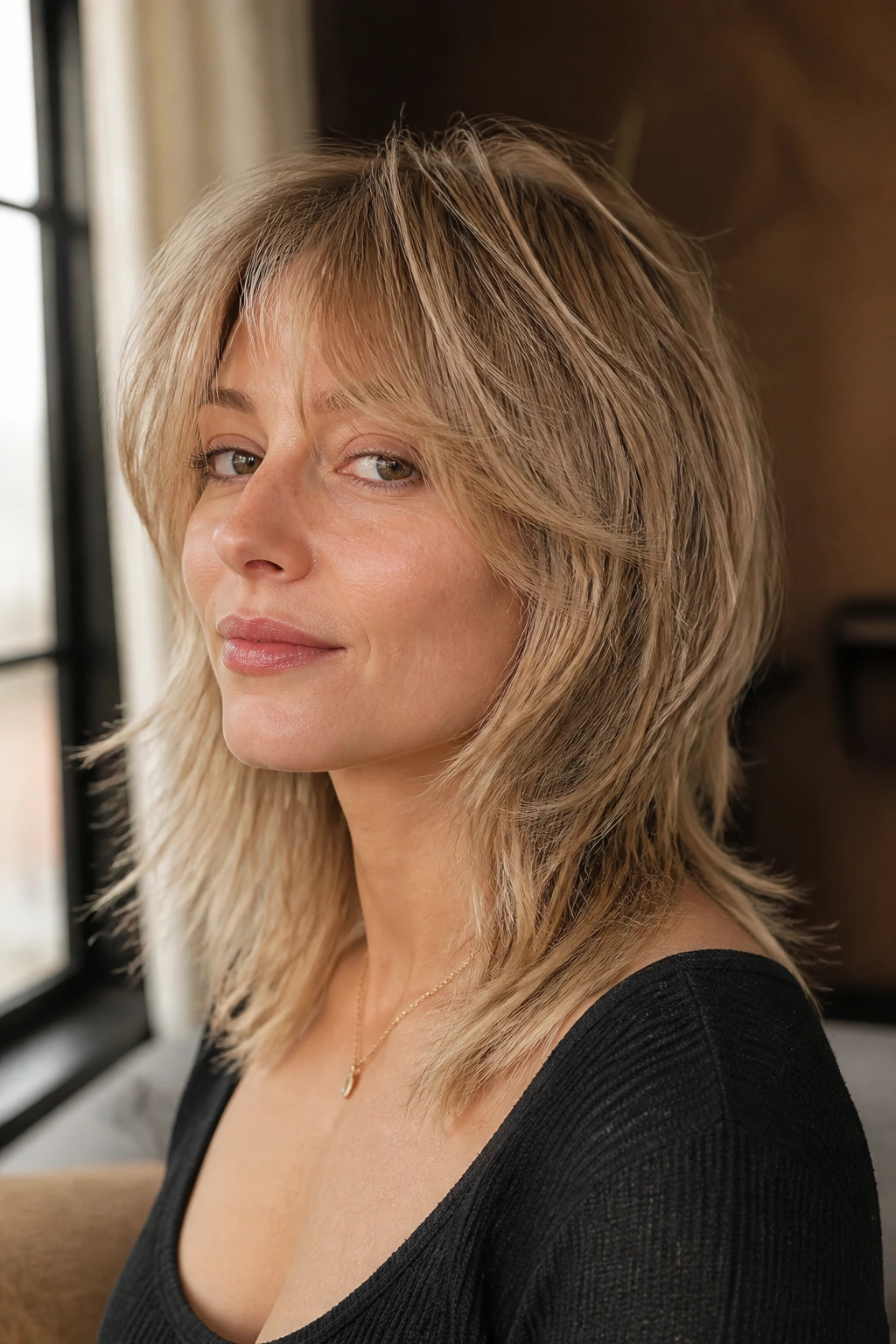
Muted wheat blonde has a dry, earthy feel that suits the wolf cut’s messier side. It is not flashy. It has enough warmth to keep the hair from looking flat, but the tone stays restrained, which makes the shaggy mullet length feel intentional instead of extreme. If you want a cut that looks cool on a Tuesday and still looks good after a hat, this is a strong pick.
The soft mullet length is the key. Keep the back long enough to swing, keep the front light enough to frame, and let the wheat tone tie everything together. The result feels lived-in without turning sloppy. That is a harder line to walk than it sounds.
A Good Fit If You Want
- Movement without constant heat styling.
- A blonde shade that does not need to be icy or golden.
- A wolf cut that grows out with some grace.
The best finish is a loose air-dry with a touch of cream through the ends. If your hair gets fuzzy, skip heavy sprays and use a light smoothing balm instead. Muted wheat blonde wolf cuts age well between salon visits, and that might be the nicest thing a haircut can do.
