



A sleek bob can do something most cuts never quite manage: it makes hair look deliberate in under five seconds. The right version sits flat at the crown, hugs the jaw or neck in a clean line, and keeps the ends looking dense instead of wispy. That’s the whole trick with sleek bob haircuts for smooth polished hair — the shape has to carry the shine.
A lot of people ask for a bob because they want something simple, then end up with layers that kick out, a back that puffs up, or ends that look thinner than they expected. Been there. The better bob cuts are usually more controlled than trendy, which sounds boring until you see how good a sharp line looks when the hair is freshly blown out and tucked behind one ear.
The styles below lean into that clean, expensive-looking finish in different ways. Some are blunt and glossy. Some are softer but still neat. A few give fine hair more body without wrecking the smooth surface, and a couple are smart picks if your hair has a little wave and refuses to stay flat without help.
If you want a bob that still looks polished after a commute, after a dinner, or after you’ve spent half a day touching it less than usual, the details matter more than the label. Length, weight, parting, and where the ends land can change everything.
1. Blunt Glass Bob
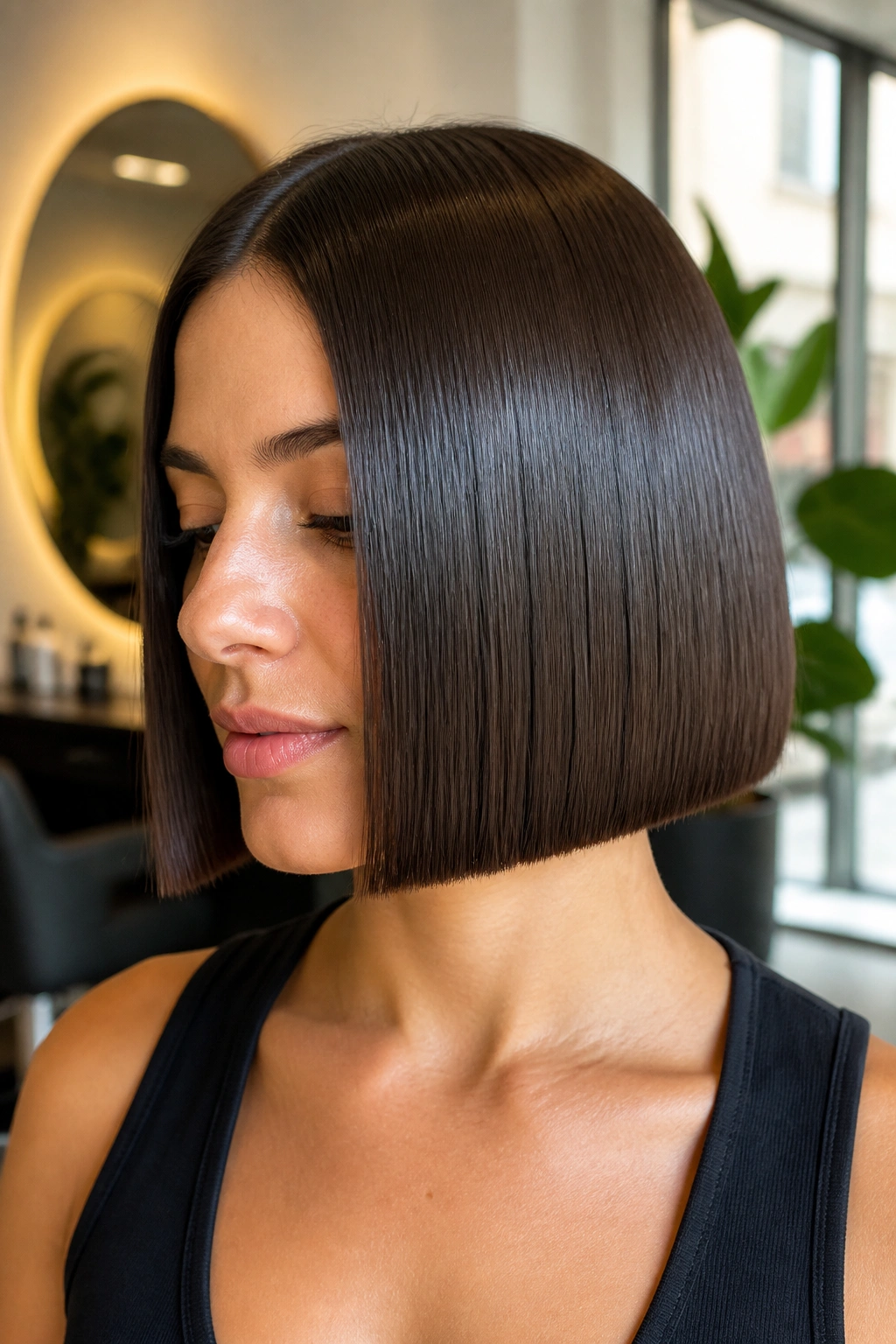
The blunt glass bob is the one I’d hand to anyone who wants their hair to look like it was pressed into place. No layers, no soft feathering, no broken line at the ends. That strict shape is what makes the shine read so well, because the eye catches the edge first and the smooth surface second.
Why It Works So Well
A blunt cut keeps the bottom line thick, which matters more than people think. If your hair is fine, the ends can look sparse fast once a stylist starts texturizing too much. A clean blunt bob avoids that problem and gives you a fuller-looking perimeter, even when the hair itself isn’t especially dense.
The styling is direct. Blow-dry with a flat brush, follow with a paddle brush if your hair is straight enough to cooperate, then run a flat iron through small sections only if needed. The goal is not pin-straight limpness. It’s that sleek, reflective finish where the hair still has shape at the edge.
Best For
- Fine to medium hair that needs more visual weight
- Straight hair that already falls fairly flat
- Anyone who likes a sharp, polished line around the jaw
- People who want a low-fuss cut that still looks intentional
Pro tip: Ask for the perimeter to stay as even as possible. Tiny uneven spots show up fast in a glassy bob.
2. Jawline-Length French Bob
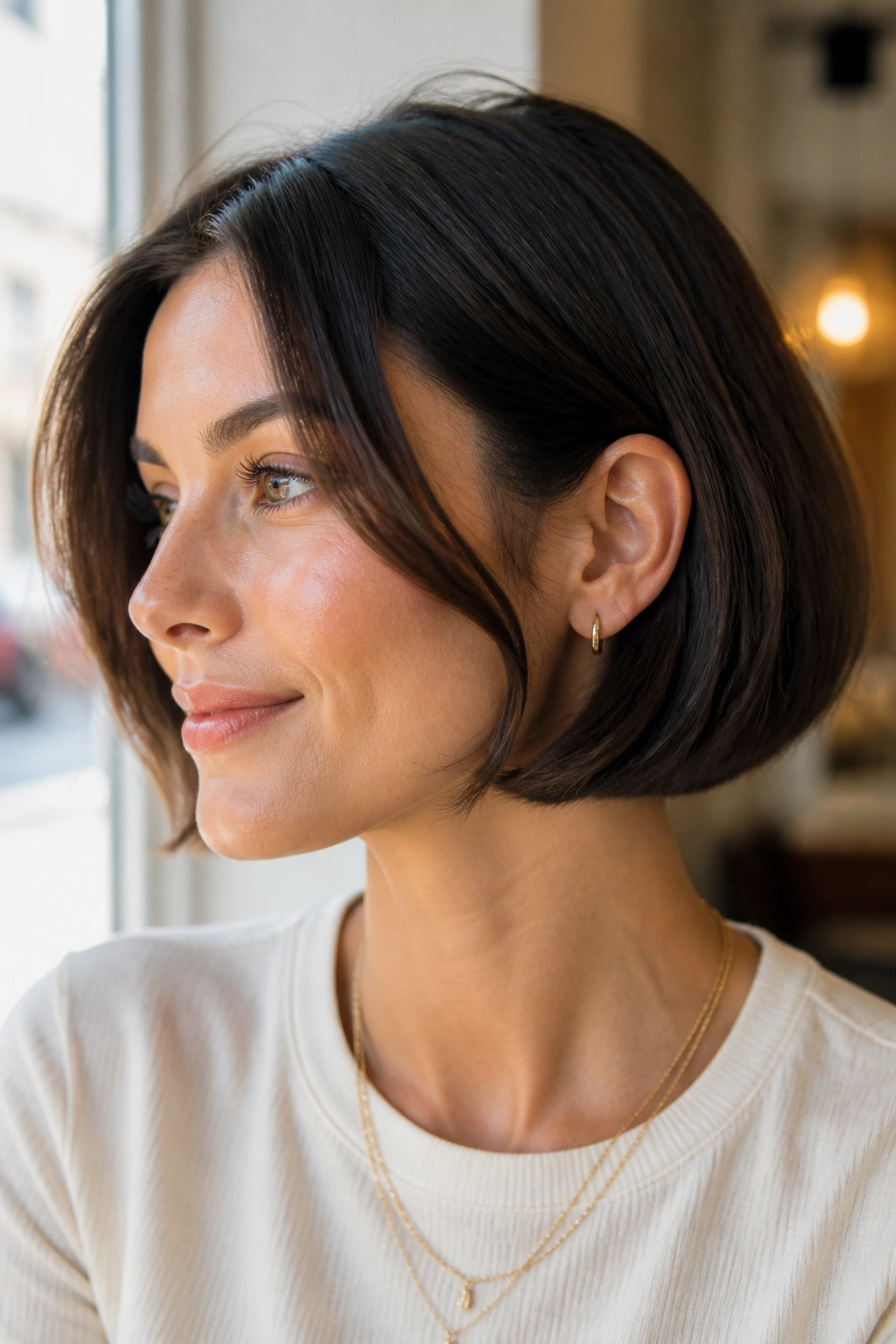
A French bob sits a touch shorter and a little flirtier than a classic blunt cut, but it still reads polished when it’s done right. The length usually lands around the jaw or just above it, which gives the face a clear frame without dragging the style into helmet territory. That’s a real risk with shorter bobs, and it’s why the best ones have a tiny bit of softness in the finish.
What I like about this cut is that it doesn’t need perfection to look good. The line can be crisp, but the overall feel is more relaxed than severe. If you tuck one side behind the ear and leave a slight bend through the mid-lengths, it suddenly looks like you meant every inch of it.
It’s a smart pick for hair that can take a little bend without exploding into frizz. The trick is keeping the crown smooth and the ends tidy. Too much root lift makes the cut feel puffy. Too little and it can look flat in a dull way. Right in the middle is where this one shines.
3. A-Line Bob With a Clean Angle
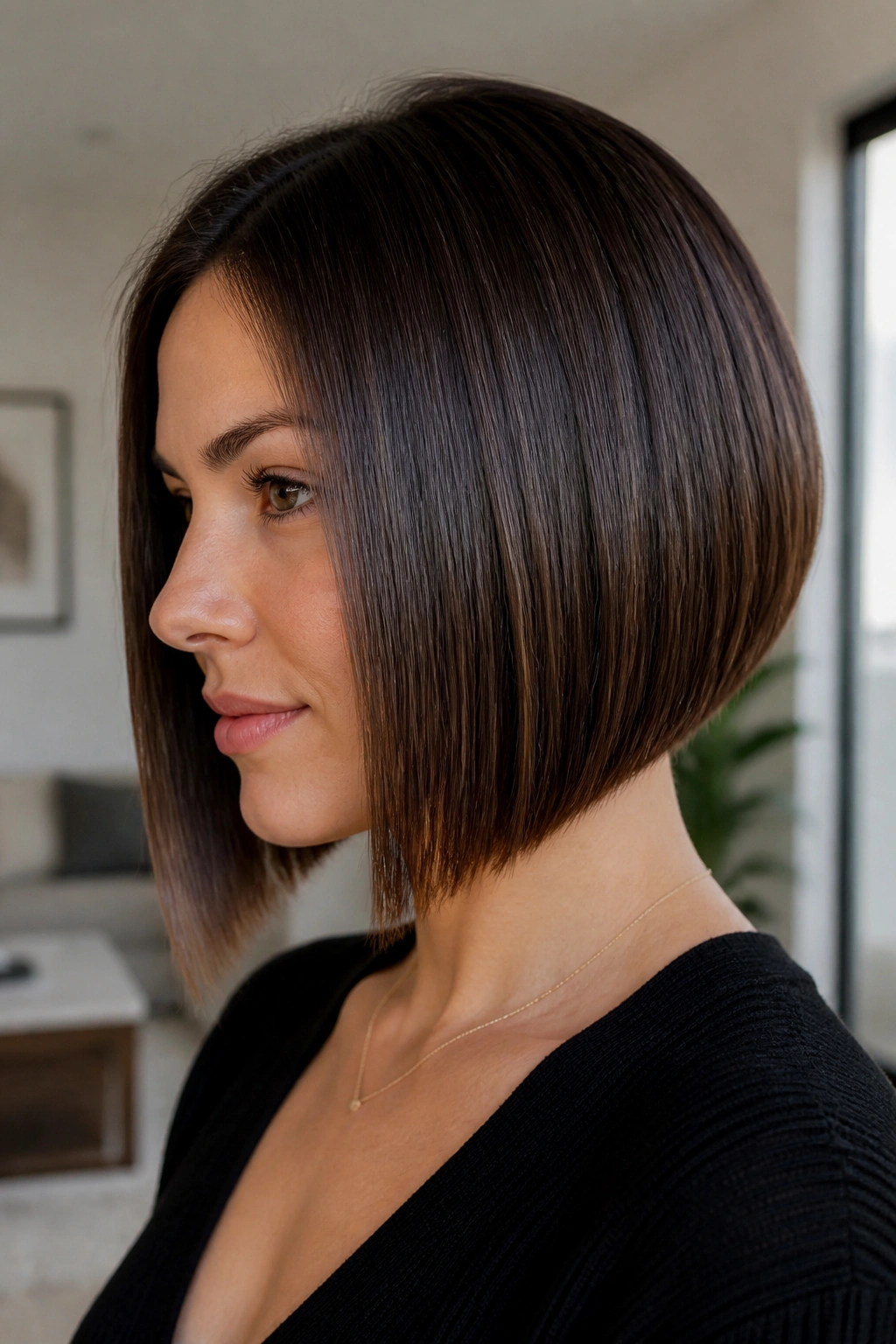
A clean A-line bob gives you that front-heavy shape that always looks a little sharper than people expect. The back sits slightly shorter, while the front skims longer toward the chin, so the whole cut carries a quiet angle. It’s tidy. It has attitude. And it does a lot of visual work without needing much styling.
The Shape That Does the Heavy Lifting
The angle is what keeps this bob from looking boxy. A slight diagonal from back to front makes the neck look longer and the jawline look more defined. If the angle is too steep, though, the style can start reading dated fast. I prefer a gentle slope over a dramatic one, because it feels cleaner and less fussy.
This is a strong option if your hair tends to flip out at the ends. The extra length in front gives the cut some weight, which helps the sides settle. Blow-dry the ends under with a round brush, then let them cool in place before you touch them. Cooling matters. Warm hair forgets its shape.
What to Ask For
- A subtle angle, not a sharp wedge
- Ends that are blunt enough to look dense
- Enough length in front to tuck behind the ear
- A back that sits neat against the nape
4. Chin-Length Bob With Tucked Ends
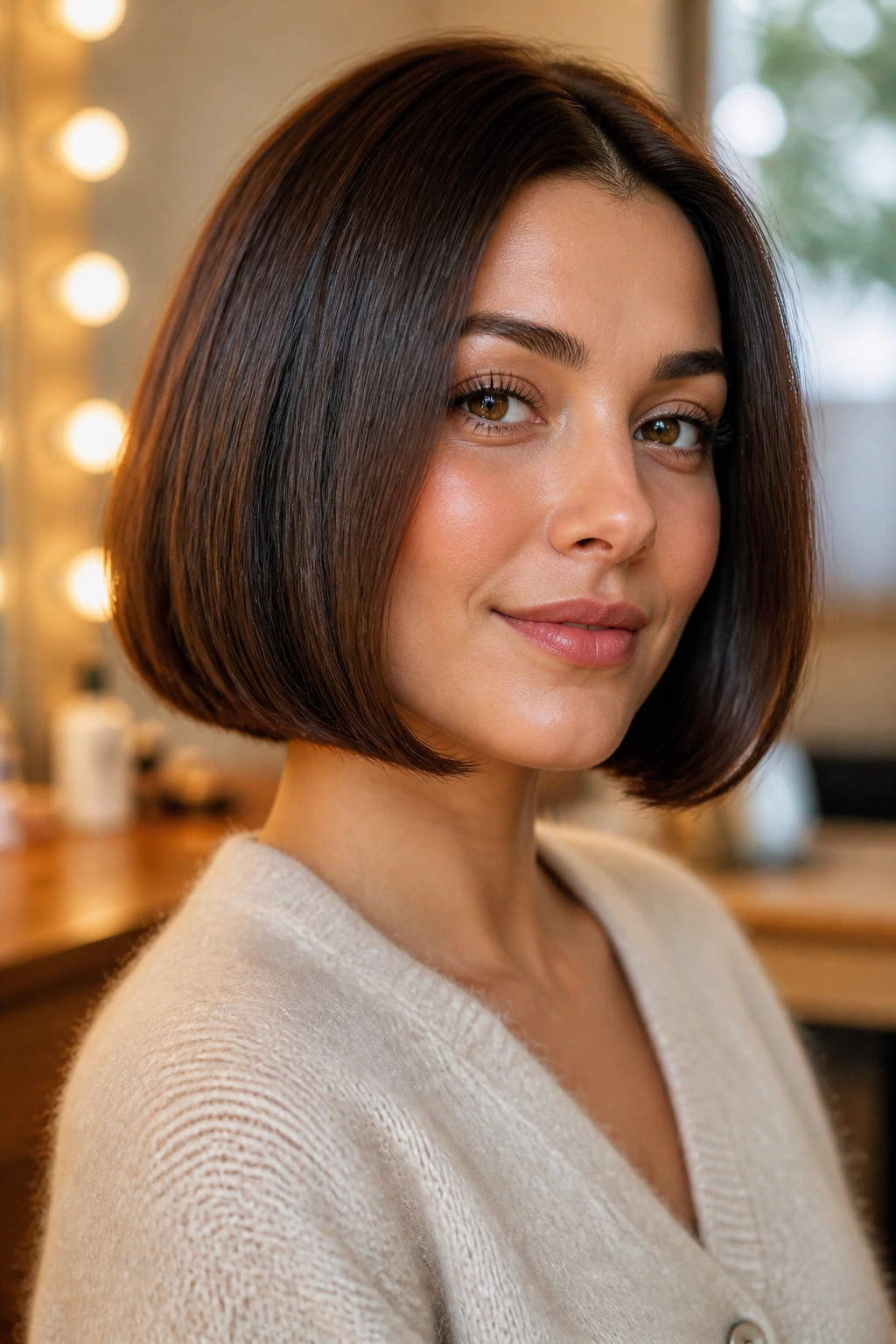
There’s something very chic about a bob that lands right at the chin and curves under just enough to look deliberate. It’s one of those cuts that seems simple until you notice how clean the line is around the face. If the ends are tucked in well, the whole shape looks smooth even on a day when the rest of life is doing its best to fight you.
This length is especially flattering when you want the hair to open up the neck and shoulders. It shows the line of the jaw without feeling severe. I like it on straight or slightly wavy hair, because the natural bend gives the ends a little help. If your hair is very curly, you’ll need more styling time than you probably want to spend.
The biggest mistake here is leaving the ends too blunt and too stiff. That sounds counterintuitive, but a tiny inward bend makes the cut look finished. A round brush, a low heat setting, and a light pass with a smoothing serum are usually enough. You want the hair to move as one shape, not sit there like a sheet.
5. Italian Bob With Soft Bend
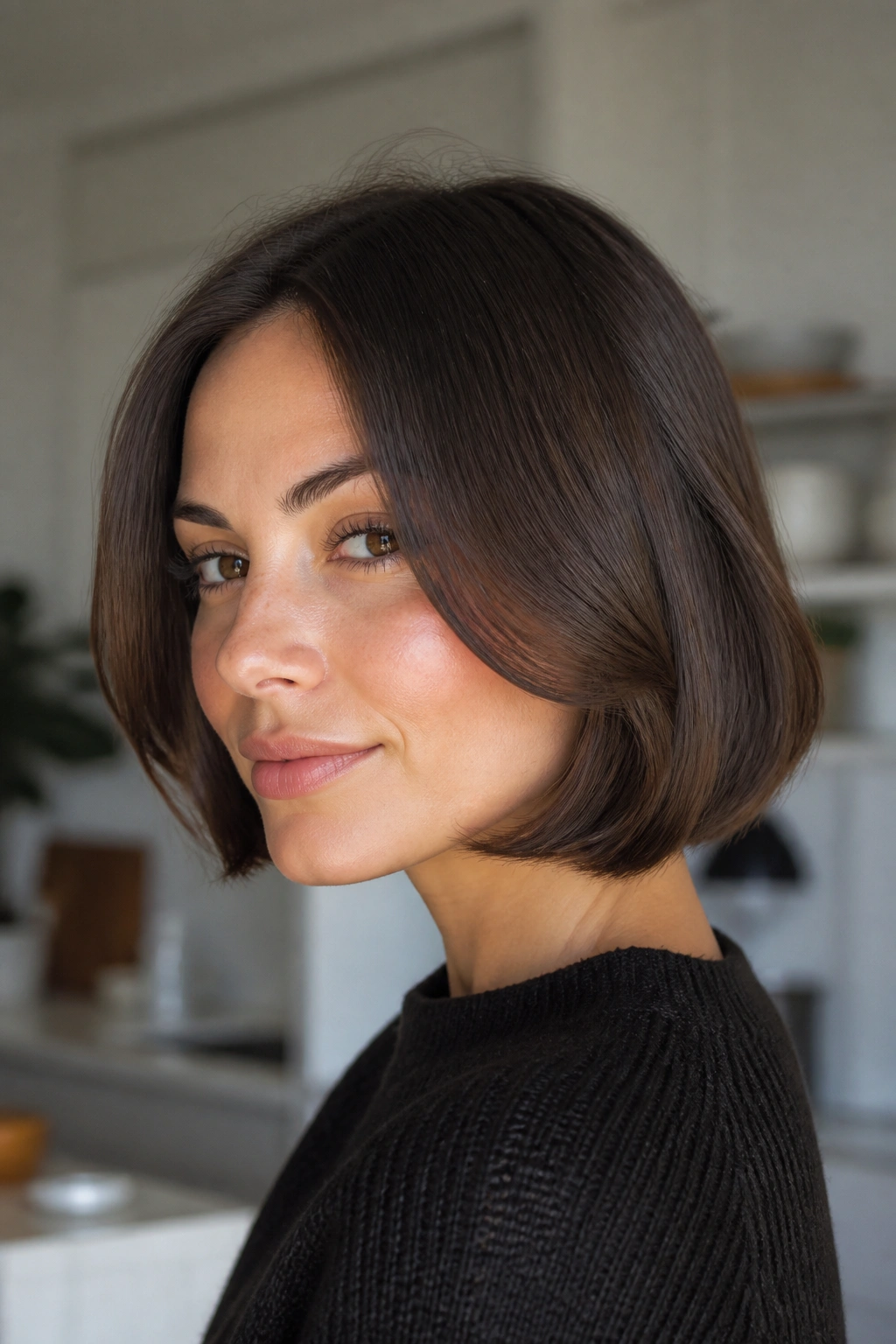
Why do so many people love the Italian bob? Because it gives you polish without the hard edge of a severe cut. The length usually sits around the chin or a little below, and the body of the hair feels fuller through the middle. It’s elegant, but not stiff. That matters.
What Makes It Different
The Italian bob usually has a little more volume than a classic blunt bob, and that subtle roundness is the whole point. You’re not chasing a poker-straight finish here. You’re building a smooth curve that looks expensive in a very quiet way. The bend through the ends keeps the style from feeling flat against the face.
This is one of the nicer choices for thick hair, because the extra weight helps the shape hold. It also works well if your hair has a soft wave that relaxes into place after blow-drying. Use a smoothing cream from mid-length to ends, then dry the hair in sections with a medium round brush. Don’t overload it with product. A heavy hand turns this cut greasy fast.
How to Get the Most From It
- Dry the roots first so the crown doesn’t collapse
- Aim the nozzle downward to keep the cuticle smoother
- Roll the ends under just a little
- Finish with a drop of shine oil, not a flood of it
6. Collarbone Bob for a Longer Finish
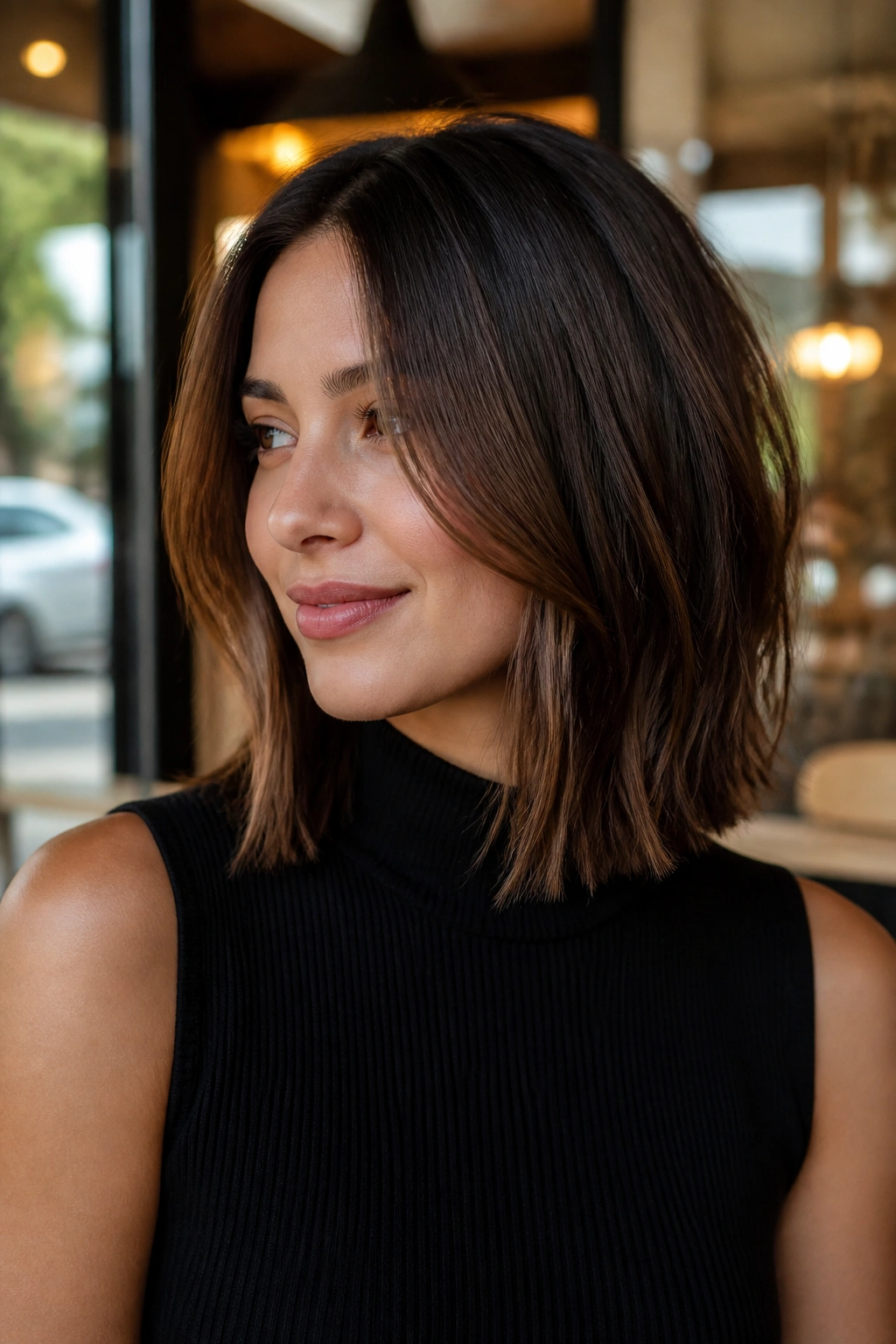
A collarbone bob gives you a safer entry point if you want sleek hair but aren’t ready to chop all the way to the jaw. The length skims the collarbone, which means it can still be tucked, clipped, or pinned back, yet it keeps enough shape to look like a real bob rather than an awkward grow-out stage. That balance is the appeal.
It’s also the easiest style on this list to live with when you’re busy. The extra length hides a bad bend better than a shorter cut does. If your blowout starts to loosen by the afternoon, the hair still falls into a neat line instead of sticking out every which way. That alone makes it worth considering.
I’d choose this one for medium to thick hair, especially if you want movement without sacrificing that smooth finish. A center part looks refined here, but a soft side part can be nicer if your face needs a little lift. Ask your stylist to keep the ends blunt and the interior light. Not choppy. Just light enough to move.
7. Micro Bob With a Sharp Edge
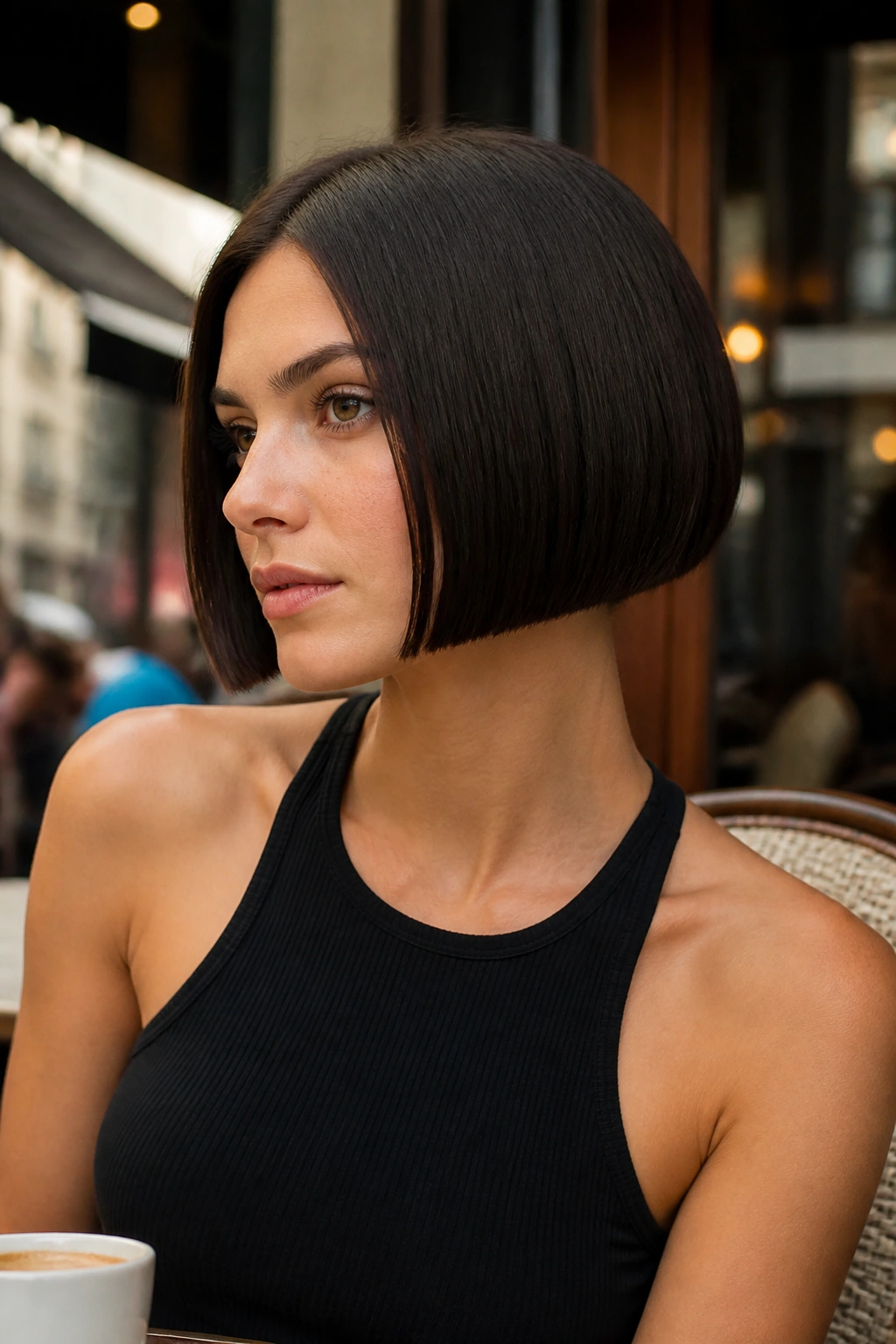
The micro bob is short enough to feel bold, but it can look incredibly polished when the cut is precise. It usually sits between the cheekbone and jawline, sometimes even higher. That shorter length gives the style a crisp outline, and crisp is the word here. If the line is off by even a little, you notice.
I’ve always thought this cut works best when the rest of the styling stays quiet. No big wave. No overdone texture. Let the geometry do the talking. The neck looks longer, the face looks more open, and the whole thing has a neat, edited feel that reads clean on straight hair.
- Best on hair that lies flat naturally
- Strong choice for finer strands
- Needs regular trims to keep the line sharp
- Looks especially good with a bare ear or small stud earrings
Do not ask for too many layers here. The point is density at the edge, not airy movement everywhere.
8. Side-Parted Sleek Bob
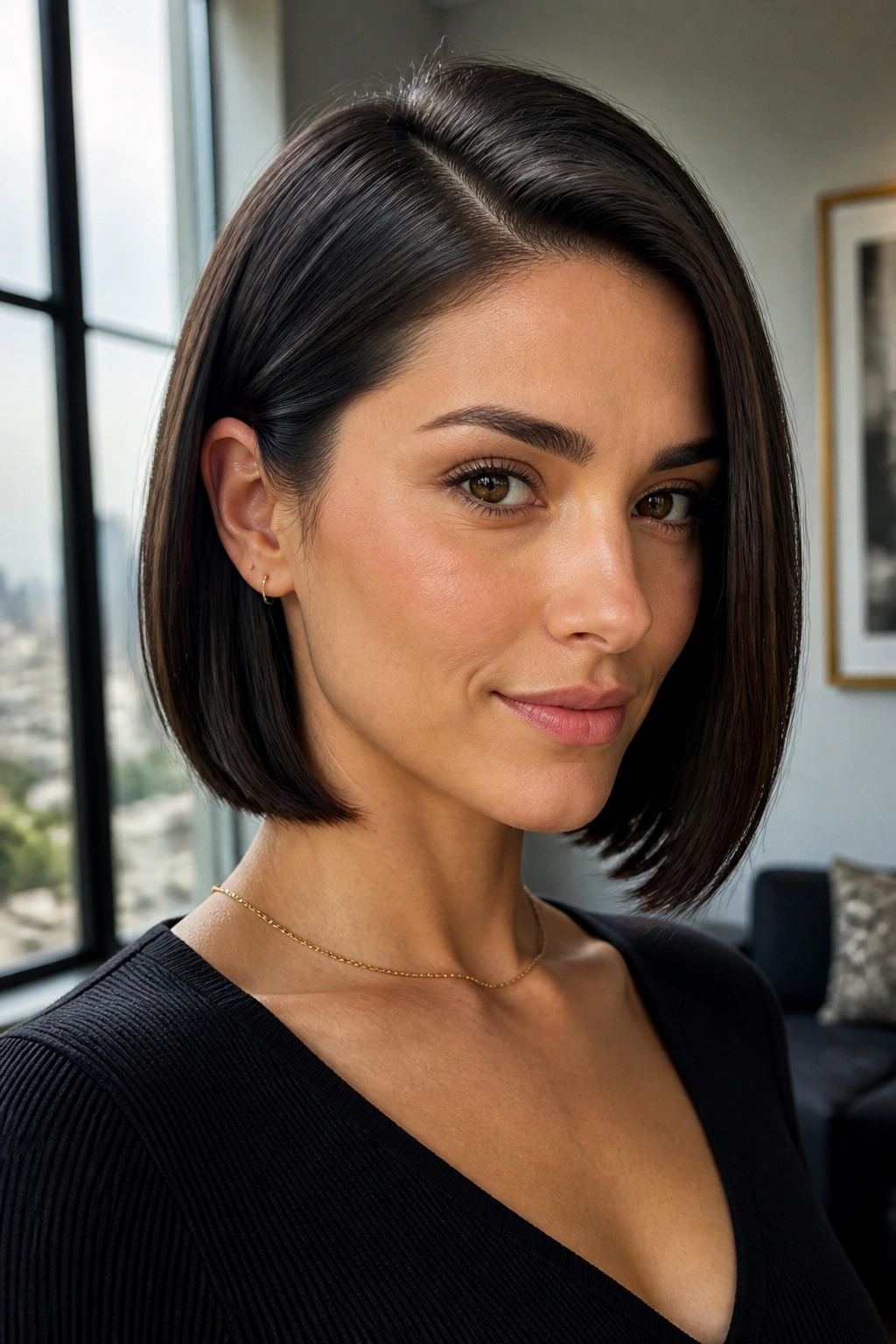
A deep side part can change a bob faster than a haircut can. That’s why I like this version for people who want something sleek but not too severe. The asymmetry adds a little lift at the front, which is handy if your hair falls flat near the face or if your part has been stuck in the same place for years.
The side part also softens a very blunt edge. Instead of one uniform curtain, you get a little sweep across the forehead and a cleaner line on the opposite side. It feels dressed up without trying hard. And yes, that matters. Hair that looks fussy in the morning is hair you stop trusting by noon.
This style works especially well on straight hair and on waves that calm down after a blow-dry. Use a fine-tooth comb to place the part while the roots are still warm, then clip the heavier side for a few minutes so it sets. That tiny step makes a difference. Really.
9. Center-Part Precision Bob
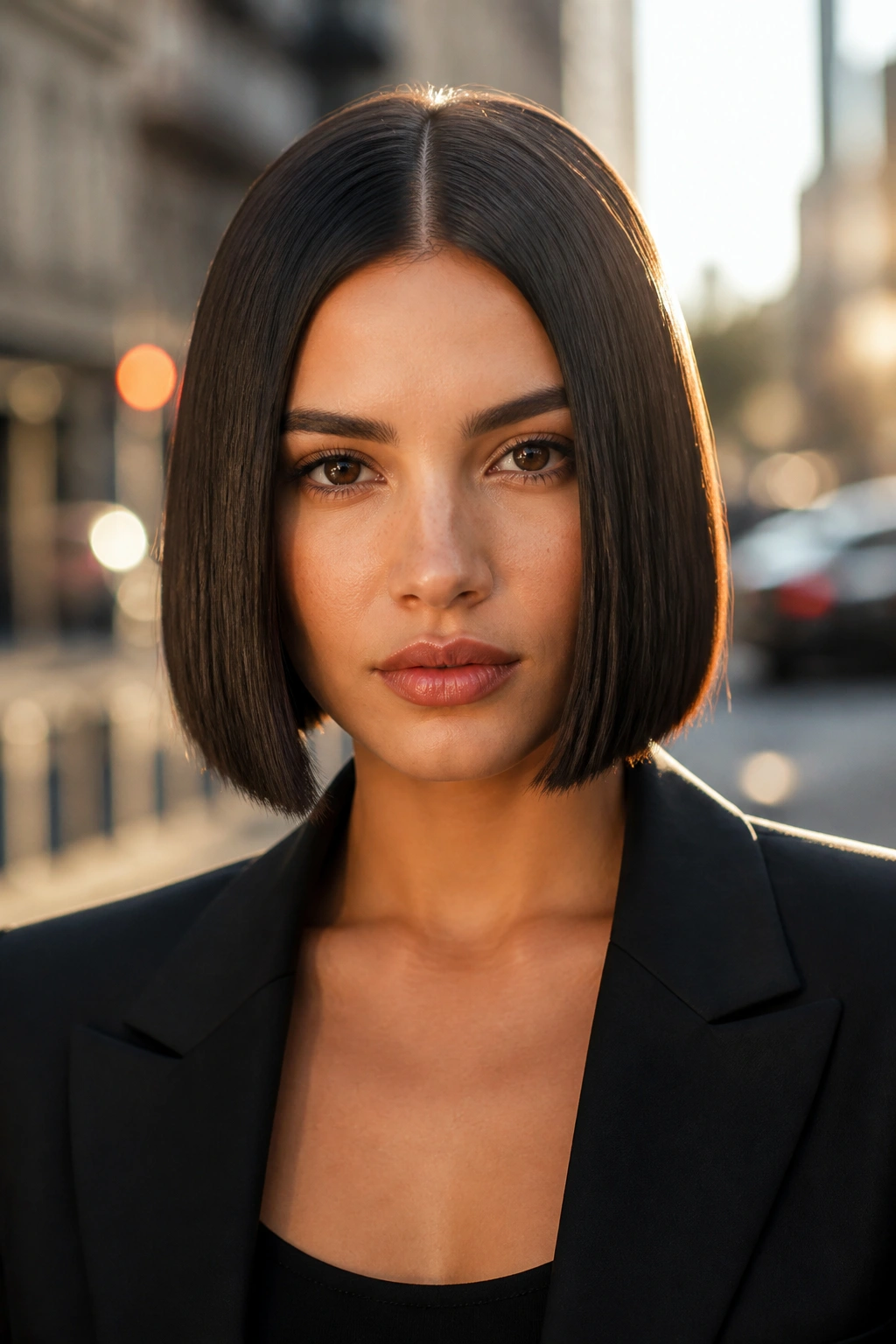
The center-part bob is the cleanest shape in the bunch when you want symmetry. It puts the haircut on full display, which means the line has to be good. No sloppiness. No hidden unevenness. Just a straight part and a bob that hangs evenly on both sides.
Why It Reads So Polished
A center part draws the eye down the face, and a well-cut bob underneath it looks almost architectural. If the ends are blunt and the surface is smooth, the whole style feels deliberate from root to tip. It’s one of the few cuts that can look serious without looking severe.
This is a nice option if your hair is naturally balanced and your face suits a little symmetry. Oval, heart, and longer face shapes can all wear it well, though the exact length matters. Too short and it can sharpen the jaw more than you want. Too long and the whole thing loses the clean bob feeling.
A center-part precision bob needs a little discipline in styling. Brush the roots flat, dry the hair in the direction you want it to fall, and avoid bumping the ends too much with a round brush. The best version is smooth but not stiff. A little swing is fine. A lot of volume is not.
10. Rounded Bob With a Polished Curve
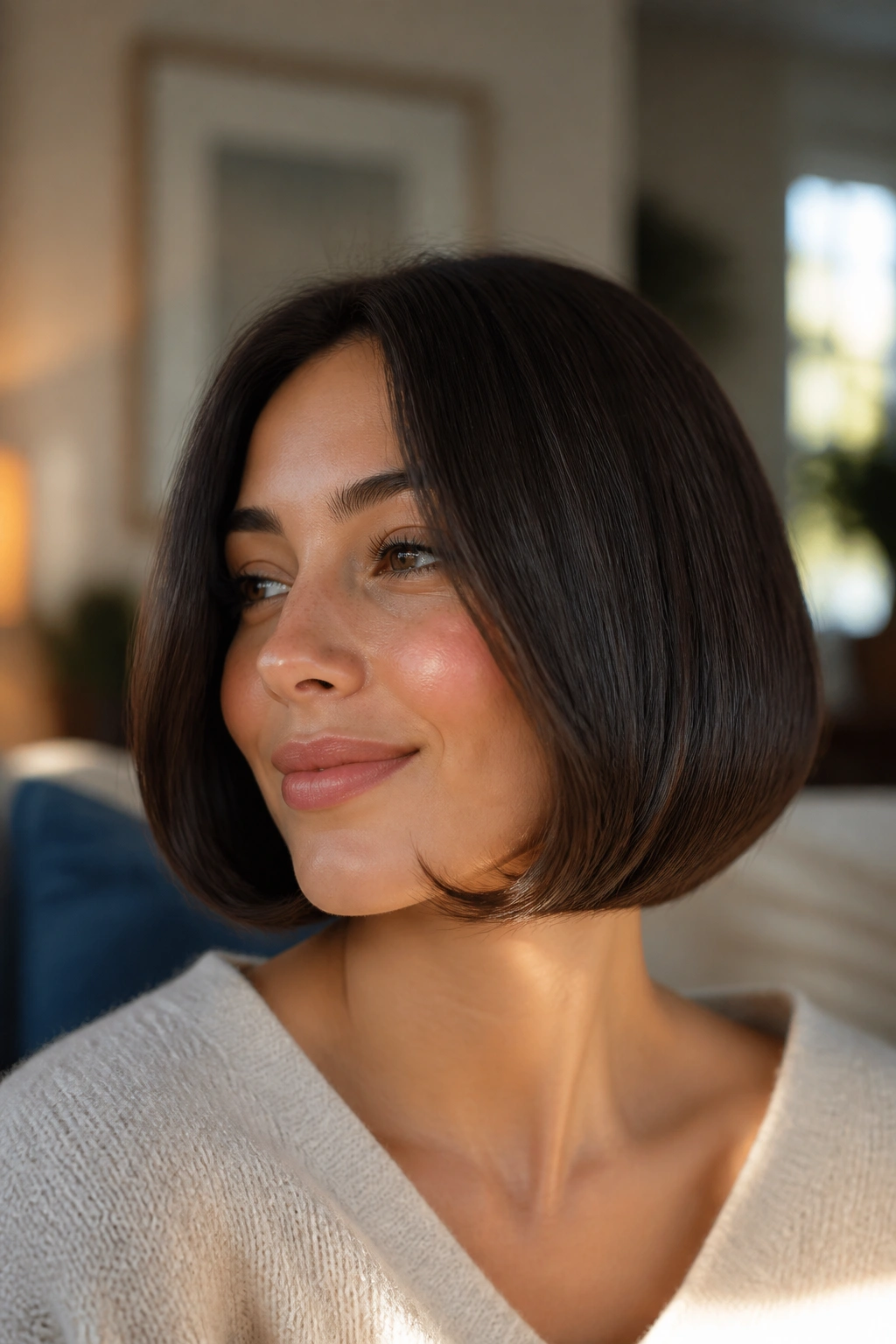
A rounded bob is the one I reach for when someone wants softness without losing structure. The shape curves gently under at the ends, and that bend makes the haircut feel finished even when the styling is minimal. It’s not the hardest cut on this list, but it may be one of the most flattering if your hair naturally wants to puff out.
What makes the rounded version different from a blunt bob is the silhouette. Instead of a straight wall across the bottom, you get a subtle curve that follows the shape of the head. That can be a mercy on thick hair, because it takes some bulk out of the look without turning the ends thin. It also works well if you have a strong jaw and want the hair to soften around it.
Ask for the ends to be polished, not choppy. Then style with a round brush that matches your hair length; a brush that’s too large won’t create enough bend, and a tiny one can make the ends flip too much. The sweet spot is a smooth tuck under with no obvious curl.
11. Sleek Bob With Hidden Layers
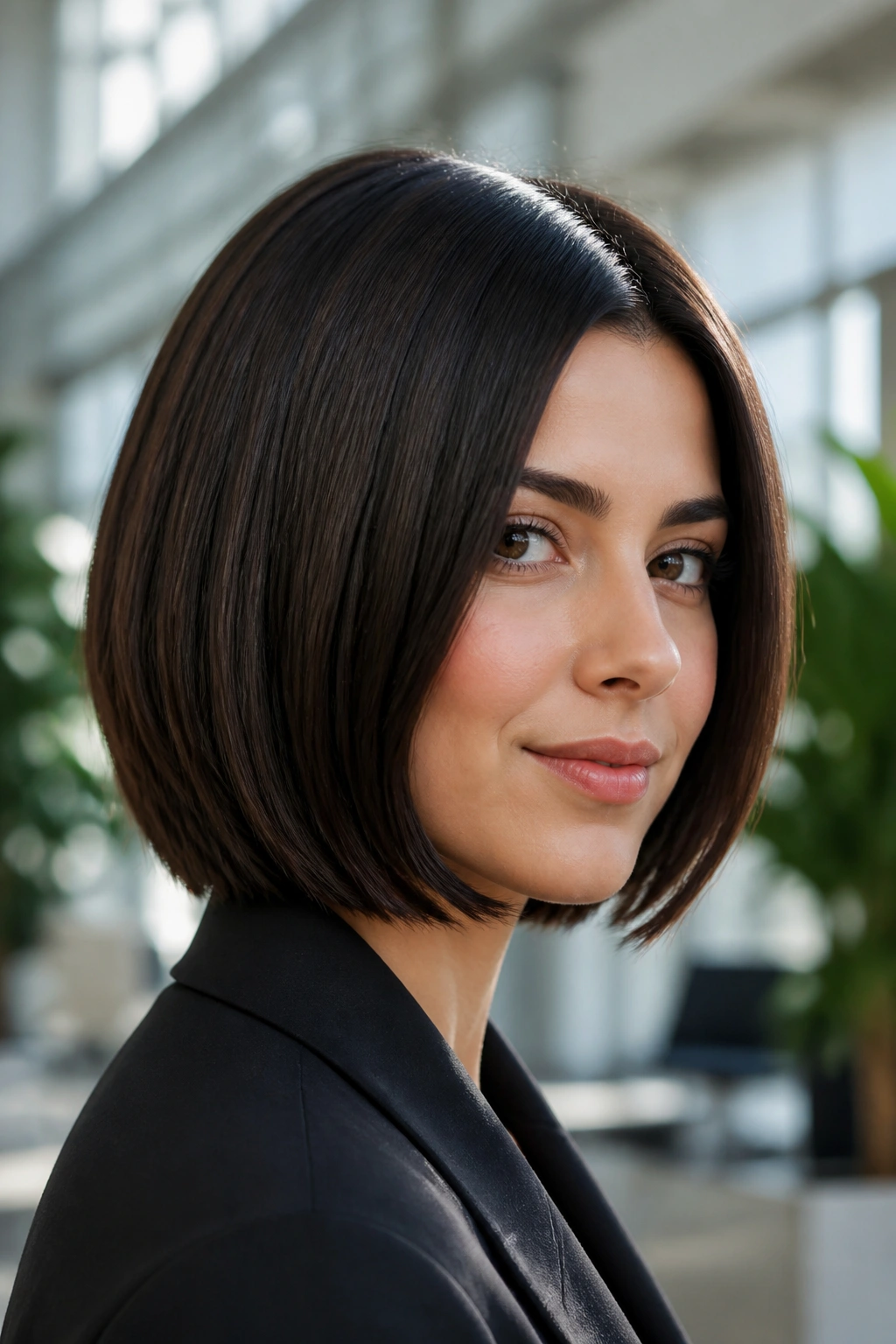
Hidden layers are the sneaky answer for people who want movement but refuse to give up a smooth surface. From the outside, the haircut still looks sleek. Underneath, there’s just enough internal shaping to stop the hair from sitting like a brick. That’s useful. Very useful, actually.
I like this cut on thick hair that needs a little breathing room. Too much bulk at the bottom can make a bob feel heavy and draggy, especially if your neck is short or your hair grows in a dense wave. Hidden layers remove some of that weight without wrecking the outline. The exterior stays clean. The interior does the work.
The one thing to watch is over-thinning. That’s the fast track to ends that flick out at odd angles. A good version keeps the perimeter full and only lightens the middle sections. You should still be able to see a strong shape when the hair is dry. If you can’t, the layers went too far.
12. Bob With Long Face-Framing Pieces
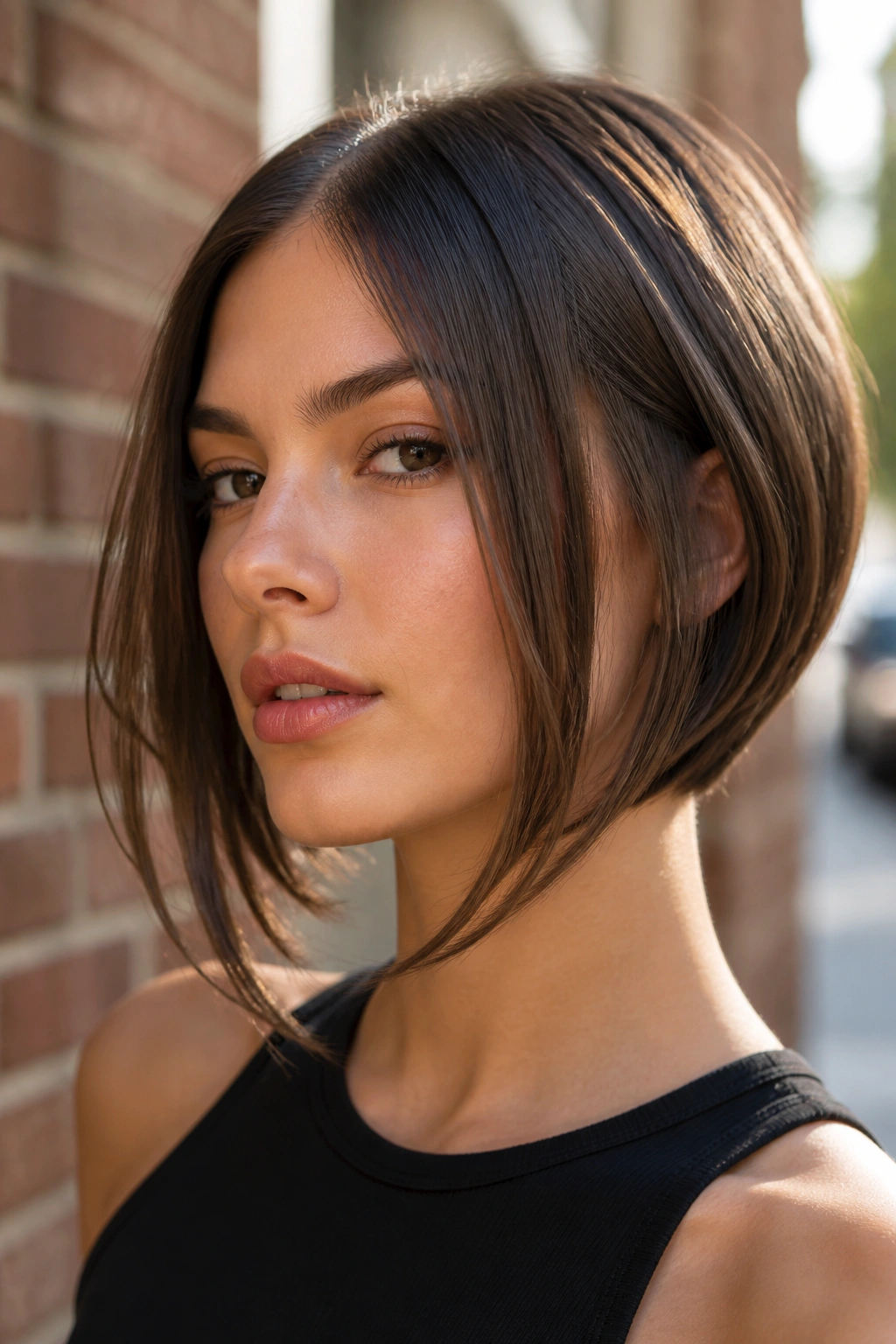
A bob with longer face-framing pieces is the cut I’d choose for someone who wants structure but needs a little softness near the front. The back can stay compact and smooth, while the front drapes down a bit longer to skim the cheek or jaw. That creates movement where the eye lands first.
Unlike a fully blunt bob, this version gives you room to shape the face. If your jawline is sharper than you like, the longer front pieces can soften it. If your face is round, they can stretch the look a little. The key is not to make those front sections so long that the haircut stops feeling like a bob. Keep them purposeful.
What to Ask Your Stylist For
- A compact back with a clean line
- Front pieces that start near the cheekbone
- A smooth transition, not a heavy visible step
- Ends that still look blunt enough to feel polished
I’m picky about this one. If the face-framing starts too high, the haircut turns into a layered lob and loses its sleek edge.
13. One-Length Bob With an Undercut
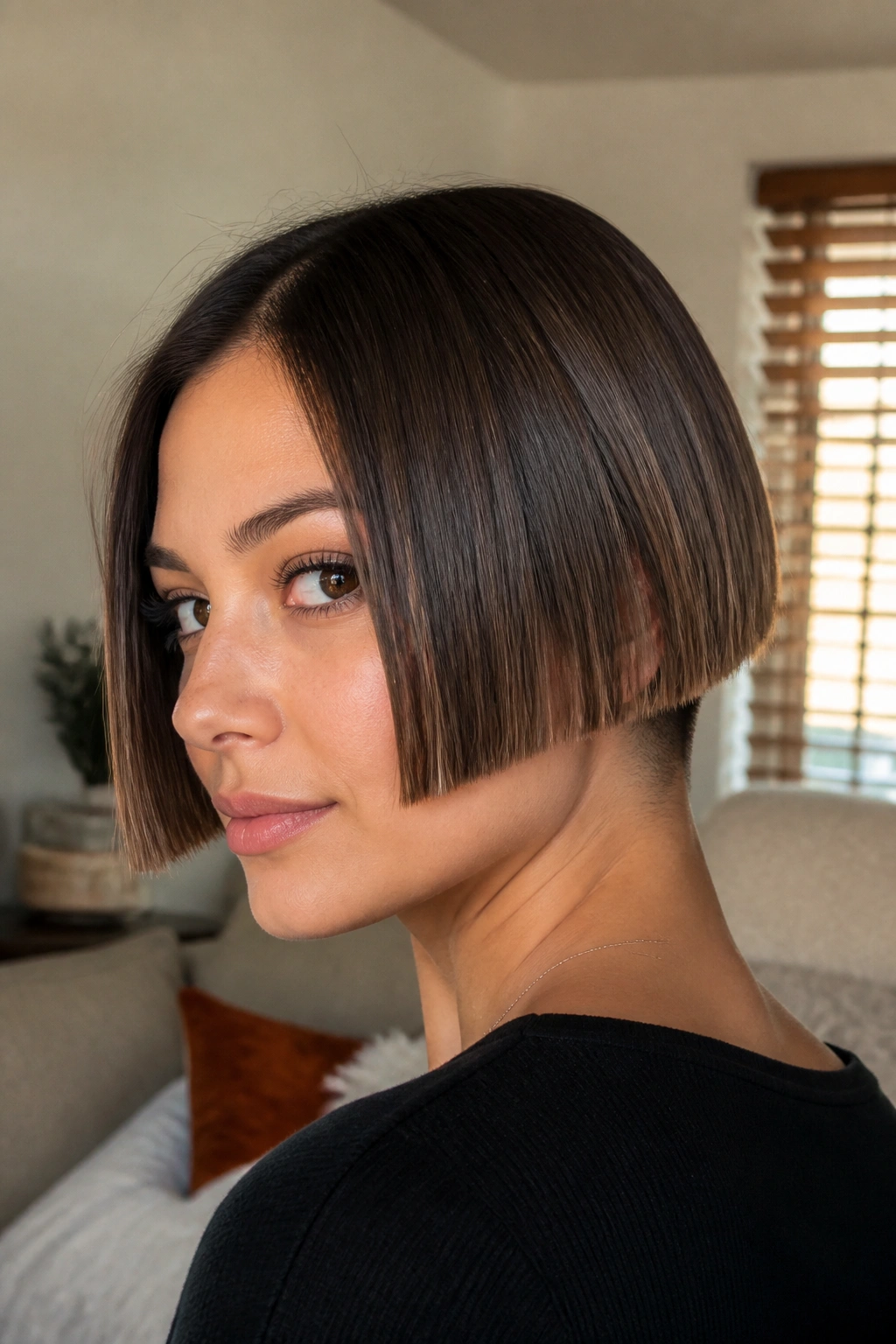
A one-length bob with an undercut sounds practical because it is. If your hair is thick, the underside can get bulky fast, and that makes a sleek finish harder to hold. An undercut removes some of that weight where nobody sees it, which lets the outer shape lie flatter and cleaner.
The outside still looks like a solid bob. That’s the point. The undercut just cuts down the bulk underneath the surface, so the top layer can sit closer to the head and move with less puff. It’s a smart fix if your hair grows wide at the sides or balloons at the nape.
This cut is not for someone who wants to air-dry and hope for the best. It behaves beautifully when blown out smooth, then goes a bit rogue if you skip the styling. But if you’re willing to spend ten or fifteen minutes with a dryer and brush, the result is tidy, sleek, and far lighter than it looks.
14. Inverted Bob With a Sleek Back View
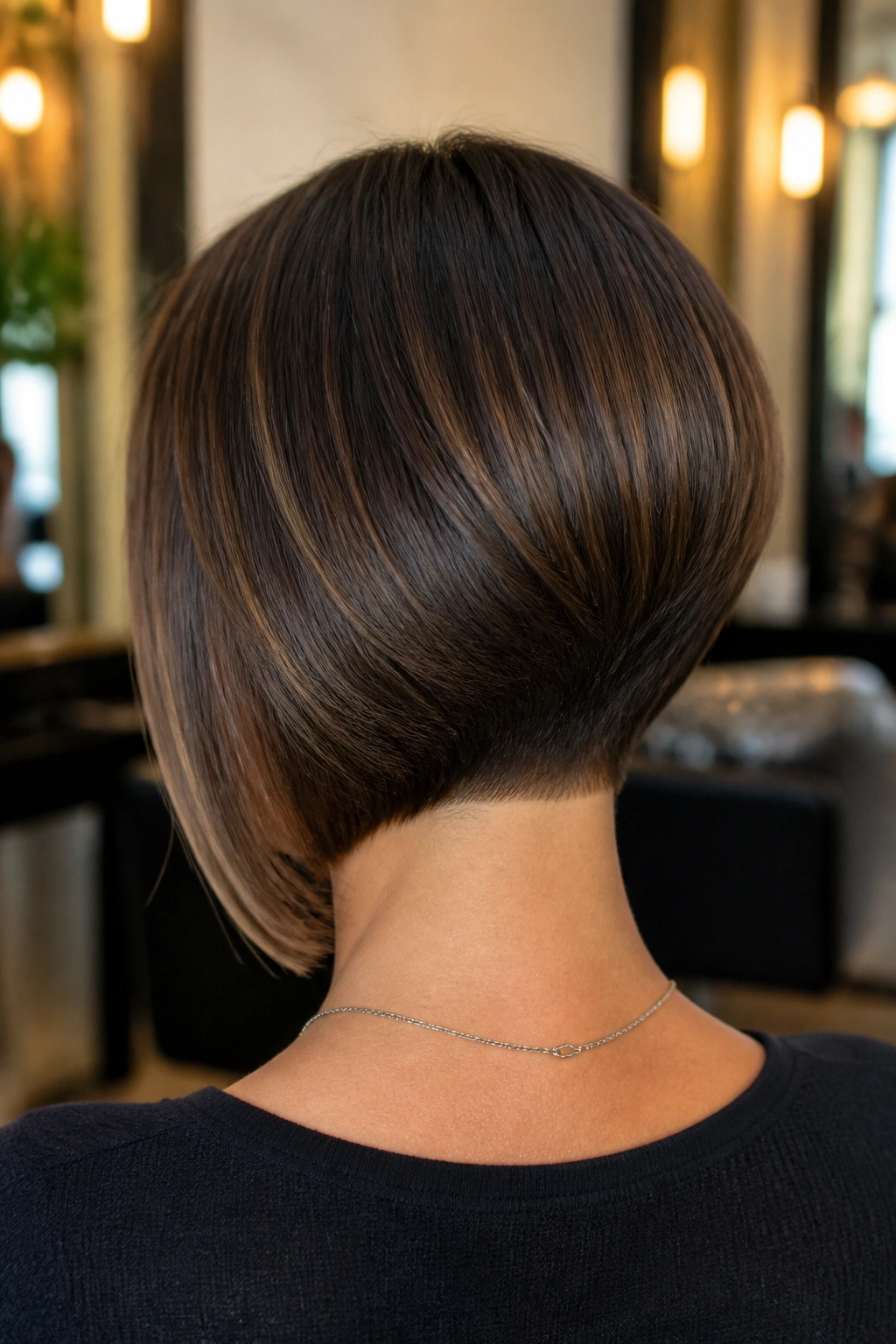
The inverted bob leans into shape from every angle, especially the back. Shorter in the rear and longer toward the front, it stacks the hair in a way that can make the neck look longer and the jaw look cleaner. When the back is cut well, it gives the whole style a neat, lifted outline.
Why the Back Matters
People often focus on the front of a bob and forget the back is what sells the cut when you move. A clean inverted shape creates a smooth curve from the crown to the nape, and that curve helps the haircut sit nicely against the head. If the back is too choppy, the effect falls apart fast.
This one is good for medium hair that wants shape without huge volume. It also flatters finer hair when the angle is subtle, because the stacked back gives the illusion of more body. Keep the layers controlled and the front pieces sleek. Too much stacking makes the style look dated. Too little, and the haircut loses its point.
A flat iron isn’t always needed here. Often a solid blow-dry with a nozzle and a round brush is enough. That’s a relief, because the more you can preserve the cut’s natural shape, the longer it stays neat.
15. Soft-Edge Lob Bob
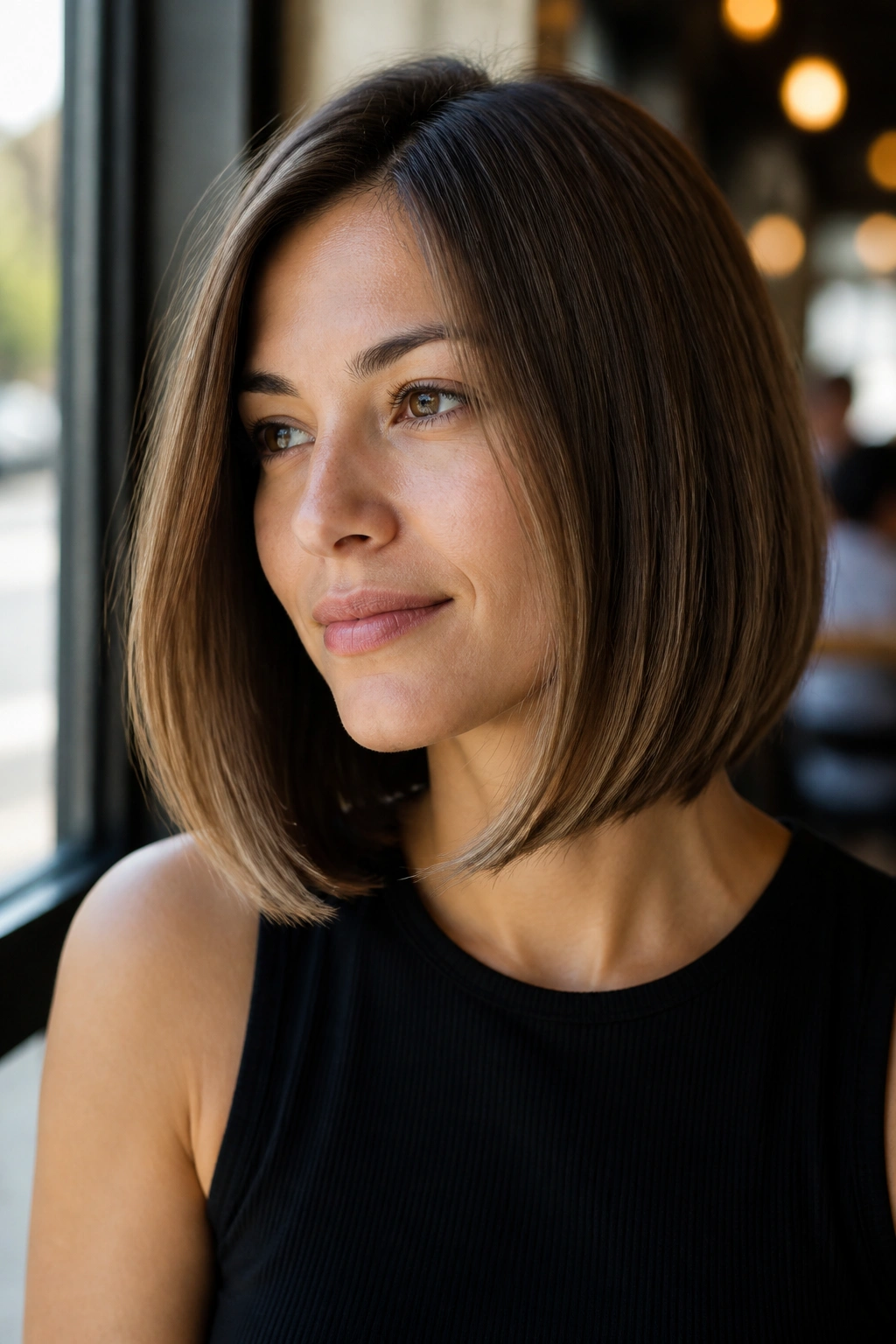
The soft-edge lob bob is the calmest option here, and maybe the most wearable if you want polish without a hard line. It sits a little longer than a classic bob, usually somewhere between the chin and collarbone, with ends that are blunt enough to look deliberate but soft enough to move. It’s the haircut version of a tailored shirt sleeve: clean, easy, and never try-hard.
I like this one for people who are nervous about going short. It gives you the feel of a sleek bob haircut while leaving enough length to tuck behind the ear or throw into a low clip. That makes it forgiving on busy mornings. It also grows out more gracefully than a shorter crop, which matters if you do not want a trim every few weeks.
The finish is where this cut wins. Blow it out smooth, keep the roots calm, and add a light shine product only to the middle and ends. Heavy oil will flatten the whole thing. A small amount of serum, warmed between your palms, usually does the job. The best version of this lob still has movement, but the ends lie neatly and the surface looks smooth from every angle.
If you want the safest, easiest-to-live-with choice from the list, start here. It’s polished without being rigid, long enough to feel flexible, and clean enough to read as a real sleek bob rather than a halfway cut. That combination is why so many people end up circling back to it even after they’ve flirted with shorter shapes.
