



Straight hair is brutally honest. Every line shows. Every uneven layer shows. That’s the upside and the downside of bob haircuts for straight hair: when the cut is good, it looks crisp, expensive, and deliberate; when it is off by even half an inch, the whole shape can feel flat or fussy.
That honesty is why bobs and straight textures work so well together. Straight hair makes a perimeter look clean, and a clean perimeter can make hair look denser than it really is. A blunt edge, a strong angle, or a soft bevel can change the entire read of the cut without asking for a lot of styling time.
The trick is choosing the right bob for the way your hair falls on its own. Some versions are built for fine hair that needs body. Others are better for thick hair that needs weight taken out in the right places. A few are pure attitude. No fluff. No hidden tricks. Just cuts that use straight hair instead of fighting it.
1. The Blunt Jaw-Length Bob

This is the cleanest, strongest bob for straight hair. A blunt jaw-length cut makes the ends sit together in one solid line, which is exactly why it looks thicker than softer shapes. On straight hair, that line is easy to see, and that’s the whole point.
What to ask for
- A one-length perimeter that lands right at the jaw or a touch below it
- A tiny bevel at the ends if your hair flips out
- No heavy interior layers unless your hair is very dense
- A center or slight off-center part, depending on your face shape
The beauty of this cut is its honesty. If your hair is fine, the blunt line gives it more visual weight. If your hair is medium or thick, the shape still feels polished without looking stiff. The jaw-length placement matters too — it shows the neck, sharpens the chin line, and keeps the haircut from drifting into awkward shoulder territory.
I like this one for people who want a bob that looks intentional even after a quick brush. Blow-dry it down with a paddle brush, tuck the ends under a little, and you’re done. No heavy styling. No drama.
2. The French Bob With Short Bangs

Why does this cut keep showing up in salons? Because it does something rare: it makes straight hair look cool without trying too hard. The French bob sits shorter than a classic bob, often near the cheekbones or just under the jaw, and the short fringe gives it that cropped, editorial feel.
Straight hair helps here because the bangs stay neat instead of splitting into wisps. The line across the forehead reads crisp, and the rest of the shape frames the face without too much volume. It’s a small haircut, but it carries a lot of personality.
This one works best when the ends are a little soft rather than razor sharp. You want the cut to feel light around the cheeks, not helmet-like. A round brush through the fringe and a quick bend at the ends are enough. If you like a wash-and-go look but still want the haircut to have a point of view, this is a strong pick.
3. The Italian Bob With Soft Fullness

Picture a bob with a little bounce in the ends and a fuller, richer shape through the sides. That’s the Italian bob. It usually sits somewhere between the jaw and the collarbone, and on straight hair it gives off a plush, polished look that feels more grown-up than severe.
The reason it works is weight. Straight hair can fall limp when a cut removes too much bulk. The Italian bob keeps enough density at the perimeter to look lush, while the styling adds a soft bend that stops it from looking flat. It is not a fussy haircut, but it does want a little round-brush help.
If your hair is medium to thick, this is one of the best ways to wear a bob without losing that sense of movement. The shape is flattering on longer faces too, because the fullness widens the silhouette a bit. Ask your stylist for a rounded outline with subtle face-framing, not choppy layers. That difference matters more than people think.
4. The A-Line Bob
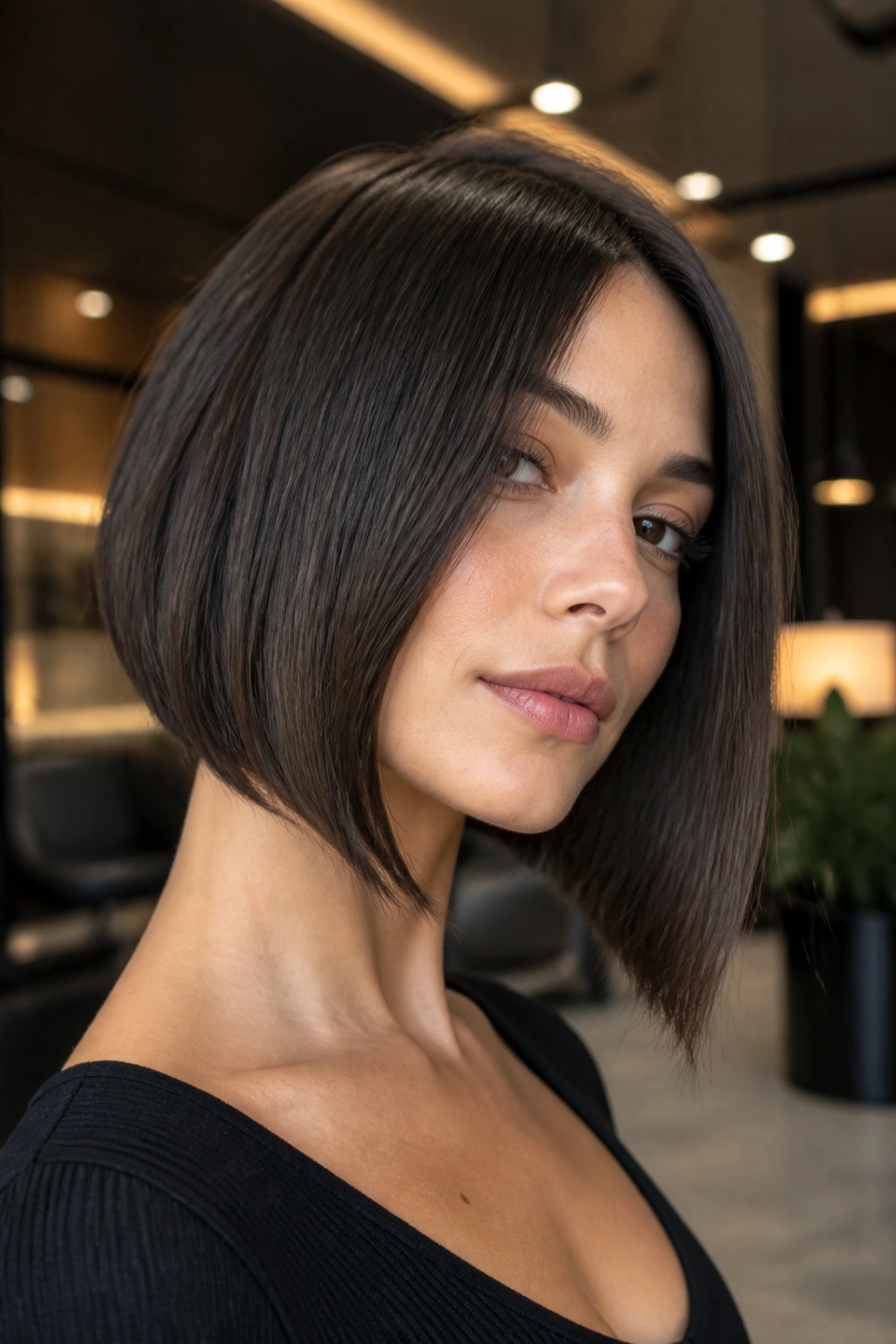
An A-line bob gives you the cleanest angle in the room. Shorter in the back, longer in the front, it creates a diagonal line that looks especially sharp on straight hair because there’s no wave pattern hiding the geometry. The cut has motion even when the hair is still.
Why the angle matters
The longer front pieces draw the eye downward and forward, which can narrow a round face and lengthen the neck. The shorter nape keeps the back from feeling heavy. If you have straight hair that tends to sit flat at the crown, the angled shape helps the haircut feel more lifted without requiring lots of styling.
A subtle A-line is easier to wear than a dramatic one, especially if you’re new to shorter hair. I’d ask for the front to be only 1 to 2 inches longer than the back unless you want a more obvious contrast. That small difference is enough to change the shape.
Styling note: use a flat brush, blow-dry the back down, then direct the front pieces slightly forward so the angle stays visible.
5. The Rounded Bob

A rounded bob feels softer than a blunt one, but it is still neat. The shape curves gently around the head and tucks in just a little at the ends, which gives straight hair a fuller silhouette without any visible layers. It’s one of those cuts that looks expensive because the shape has been thought through.
Straight hair is a good match here because the arc of the cut stays clean. On wavy hair, a rounded bob can sometimes puff out where you do not want it. On straight hair, it reads as smooth and controlled. That matters if you want polish but hate a severe look.
I especially like this shape for fine hair that needs the illusion of density. The curve makes the ends look thicker than they are. A small round brush, a little root lift, and a tuck under at the bottom are enough to keep it in place. It’s a quiet haircut. Not boring. Just steady.
6. The Micro Bob

Short. Bold. A little cheeky. The micro bob lands above the jaw, often near the mouth or just under the ears, and it makes straight hair look very deliberate. There is no hiding in a micro bob. The line is the whole story.
That’s why this cut can look so good on straight textures. The hair already falls cleanly, so the short length feels architectural rather than messy. If you have strong brows, a defined jaw, or a neck you like showing off, this shape can be striking in a way longer bobs never are.
There is a catch, though. The micro bob grows out fast, and because the line is so short, even a half-inch of growth changes the mood. If you like regular salon visits, fine. If not, you may find yourself annoyed after six weeks.
It works best on hair that has enough density to hold a shape. Very fine hair can wear it too, but the cut needs precision. No fluffy ends. No over-thinning. Keep it sharp.
7. The Chin-Length Bob With Tucked Ends
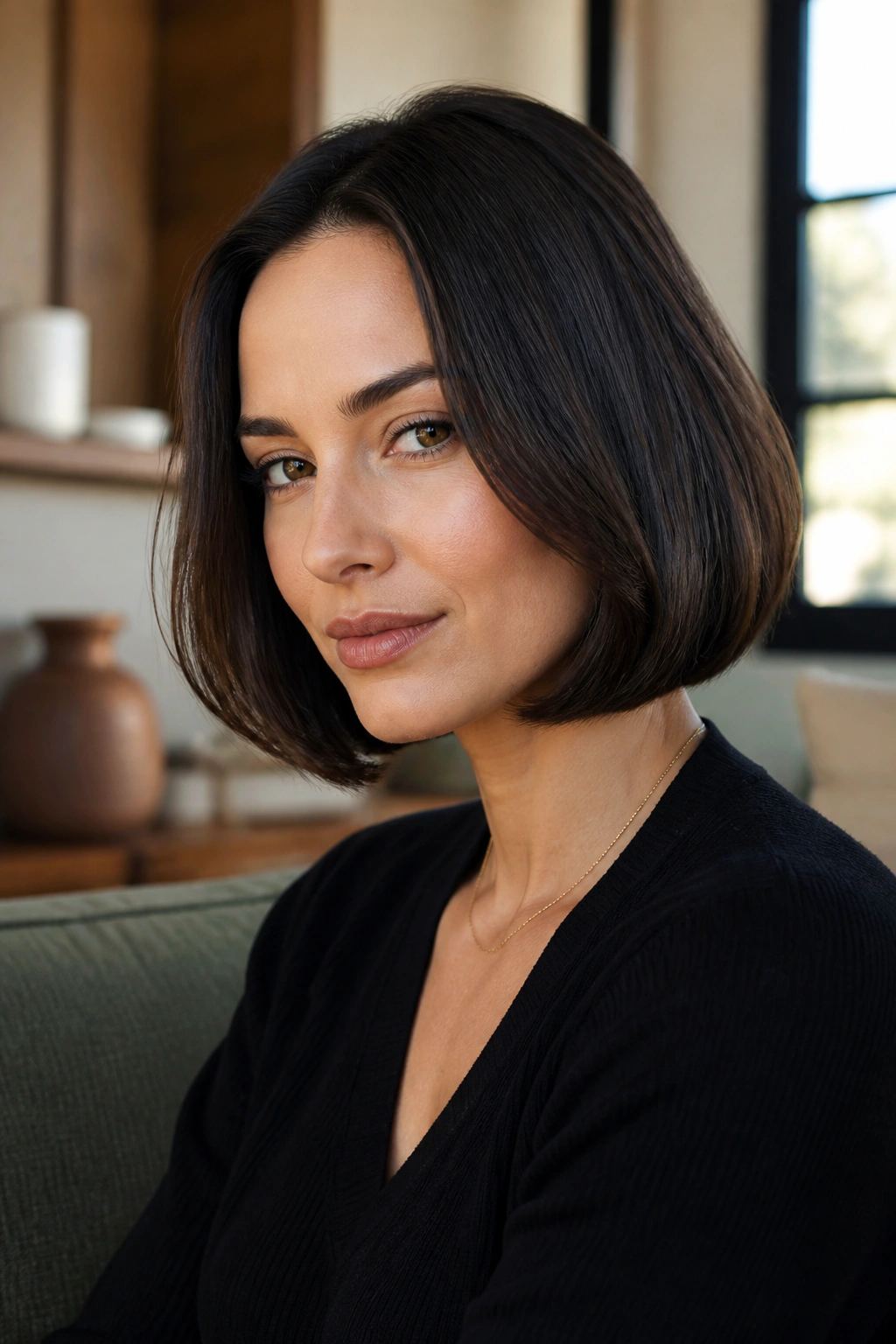
A chin-length bob sits in that comfortable middle ground where the hair feels short, but not severe. On straight hair, the ends can tuck in naturally or with a quick pass of a blow-dryer brush, which gives the cut a neat finish without looking overstyled.
The shape is flattering because it frames the lower face. A soft bend under the chin can soften a square jaw, while a center part can make the whole look feel balanced and clean. It’s one of the easiest bob haircuts for straight hair to live with day to day.
I like this version for people who want a haircut that can swing between casual and polished. Wear it tucked behind the ears for a sharper look, or let the front pieces fall forward for a softer frame. A slight bevel at the ends helps the bob hug the face rather than float away from it.
It’s also a forgiving grow-out. That matters. Not every short cut gives you that.
8. The Box Bob

The box bob is all edges and structure. Think square outline, strong perimeter, very little taper. On straight hair, that square shape stays visible from every angle, which makes the haircut feel graphic without needing extra styling tricks.
This cut has a certain authority to it. It suits straight hair because the texture will not blur the lines. If your hair is thick, the box bob can feel surprisingly balanced, since the weight sits evenly around the head. If your hair is fine, the same shape can make the ends look fuller, though you’ll want a stylist who knows when to stop cutting.
What makes it different
- A flatter side line than a rounded bob
- A strong baseline that sits level
- A denser appearance at the ends
- Less movement, more shape
It is not the haircut for someone who wants softness. It is for someone who likes a shape with a spine. Clean parting helps, and a flat iron can make the outline look even sharper if you want that smooth, graphic finish.
9. The Asymmetrical Bob
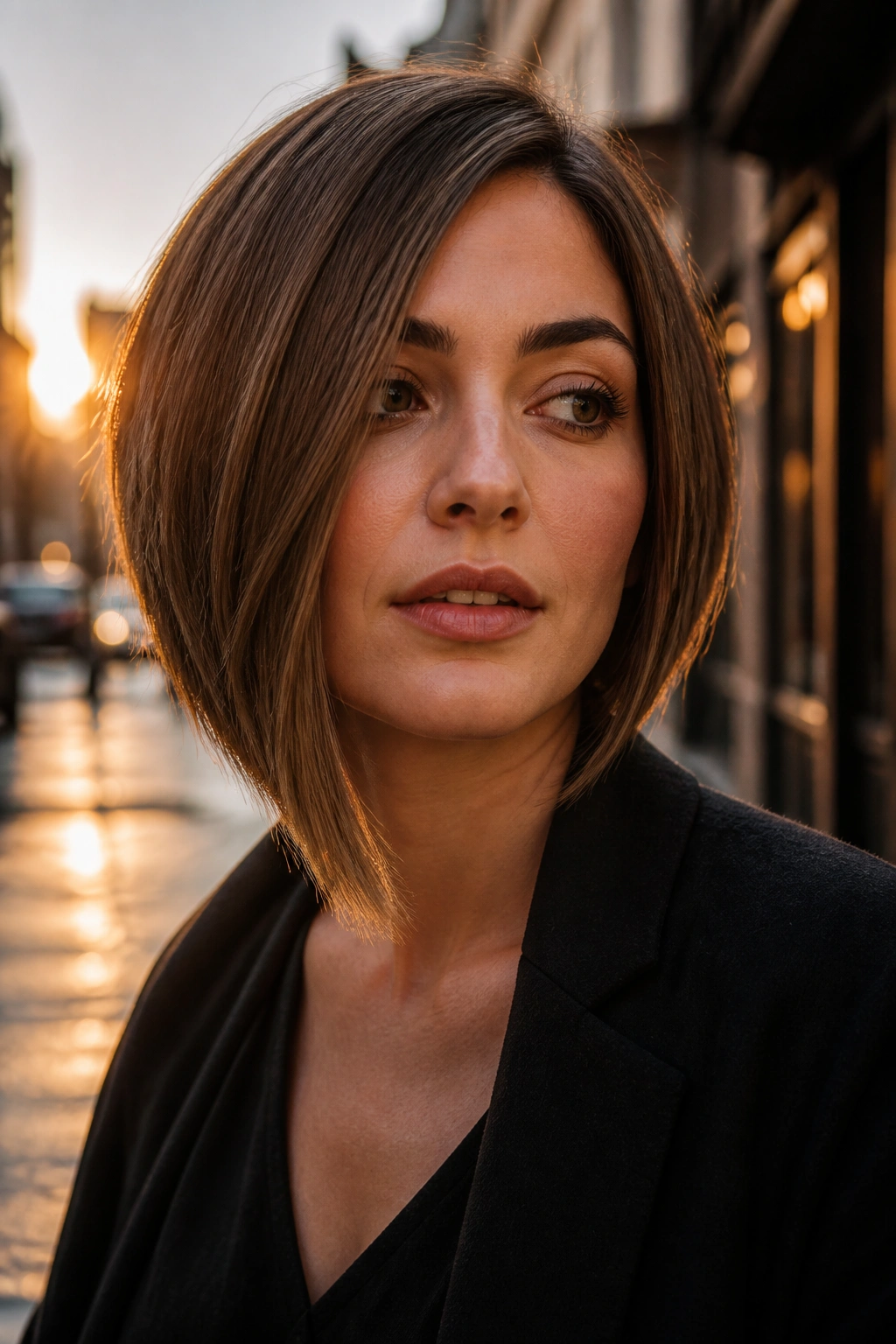
One side longer than the other. That’s the whole appeal, and on straight hair it reads immediately. An asymmetrical bob turns a familiar shape into something with a little tension, which keeps the cut from feeling too safe.
The difference between the two sides does not have to be extreme. In fact, a subtle asymmetry often looks better because it feels intentional rather than gimmicky. A one-inch or two-inch drop on one side can change how the haircut sits around the face, especially if one side hits the collarbone and the other sits closer to the jaw.
This is a good pick if you like a bob but want a little edge without adding layers or bangs. Straight hair shows the diagonal line nicely, and that line can make a round face look longer or soften a strong jaw from one side. It’s a small adjustment with a big visual payoff.
The haircut does ask for clean maintenance. Uneven growth is easier to spot here than in a standard bob. Not a dealbreaker. Just part of the bargain.
10. The Deep Side-Part Bob

A deep side part can change a bob more than people expect. It adds lift at the roots, makes straight hair look fuller at the crown, and shifts the whole haircut away from that flat, center-split feeling some bobs get after a few hours.
How the side part changes the shape
The heavier side creates volume where straight hair usually collapses. The lighter side gives the face a more open frame. That imbalance is useful when you want softness around the cheekbones or a little height at the top of the head. It also gives a blunt bob more personality without changing the cut itself.
A side-part bob works especially well if your hair falls flat on one side already. Instead of fighting it, you lean into the natural direction. Blow-dry the roots in the opposite direction first, then flip the part back. That little trick helps the roots stand up before they settle.
I’d choose this over a center part if your face is round, square, or you simply want more lift. It is one of the cheapest ways to make a bob look fresher. No scissors required.
11. The Center-Part Bob

Some haircuts ask for a side part. This one wants the center. A center-part bob on straight hair looks calm, symmetrical, and clean, which is probably why it has such staying power. The lines fall evenly on both sides, and the face gets framed without a lot of noise.
This cut works best when the ends are trimmed with precision. Straight hair will not disguise a crooked line. It will point at it. That is the whole bargain with this shape — if it is good, it looks excellent; if it is sloppy, you will know right away.
A center part is especially nice for oval or heart-shaped faces because it creates balance without crowding the cheeks. It can also make sharp features look softer. If your hair is very fine, ask for a small bevel or a slightly rounded edge so the ends do not look stringy.
There is something honest about this bob. No tricks. No drama. Just a clean frame.
12. The Glass Bob
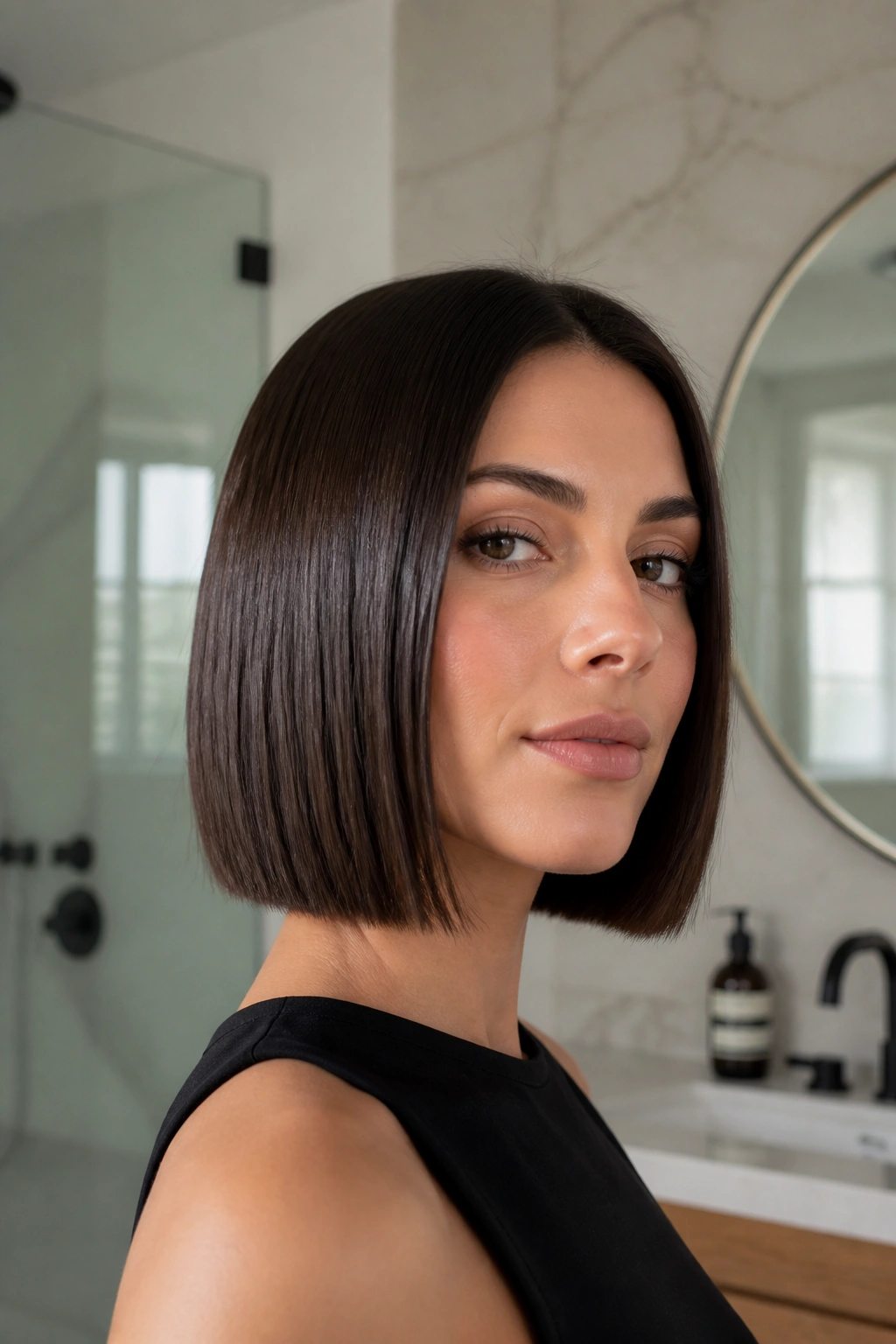
The glass bob is about finish as much as shape. It’s the bob that looks smooth enough to reflect light, with every strand lying close to the head and the surface appearing almost polished. Straight hair is already halfway there, which is why this cut can look so good on it.
The shape itself is usually blunt or slightly rounded, but the styling does a lot of the work. Heat protectant, a flat brush, a good blow-dry, and a flat iron in small sections can make the surface look sleek without frying the ends. A shine serum on the mid-lengths and ends helps, but a tiny amount goes a long way.
This is one of my favorite versions for thick straight hair because the density gives the style body while the smooth finish keeps it from feeling bulky. Fine hair can wear it too, but the cut has to be clean and the ends cannot be over-thinned.
What to avoid: too much layering, rough towel-drying, and heavy oils near the roots. They dull the effect fast.
13. The Collarbone Bob

Long enough to feel safe, short enough to feel like a haircut. The collarbone bob sits exactly where the name says, and on straight hair it lands with a nice, easy line that can be dressed up or down without much effort.
This is the bob for people who want movement but do not want to give up the option of pulling their hair back. It still feels light, but it does not have the commitment of a chin-length or micro cut. That makes it one of the easier bob haircuts for straight hair to live with if you are nervous about going shorter.
I like it because it grows out gracefully. A collarbone length can blur into a lob without looking awkward, and the straight texture keeps the outline neat even as it gets longer. Wear it with a center part for a cleaner look or tuck one side behind the ear for a softer shape.
It also plays well with scarves, collars, and jackets. That sounds small. It is not. Hair that rubs against everything gets annoying fast.
14. The Lob With Barely-There Layers

A lob does not have to be heavy to work. When the layers are very light — almost invisible — the shape keeps its length while shedding enough weight to stop straight hair from hanging like a curtain. That balance is the whole game.
The best version of this cut starts with a solid perimeter and only a little interior movement near the ends. You want enough texture to break up bulk, but not so much that the lob starts to look thin at the bottom. Straight hair can turn stringy if the layers are too obvious, and that is a mess nobody needs.
This version is especially good for thicker straight hair that feels puffy at the ends. The tiny layers let the cut fall closer to the head. For fine hair, the same cut can work if the layers stay minimal and the base line stays strong.
A soft bend from a flat iron or large round brush gives the haircut some swing. Without that, it can look a little too plain. The shape wants movement, not fuss.
15. The Layered Bob for Fine Straight Hair
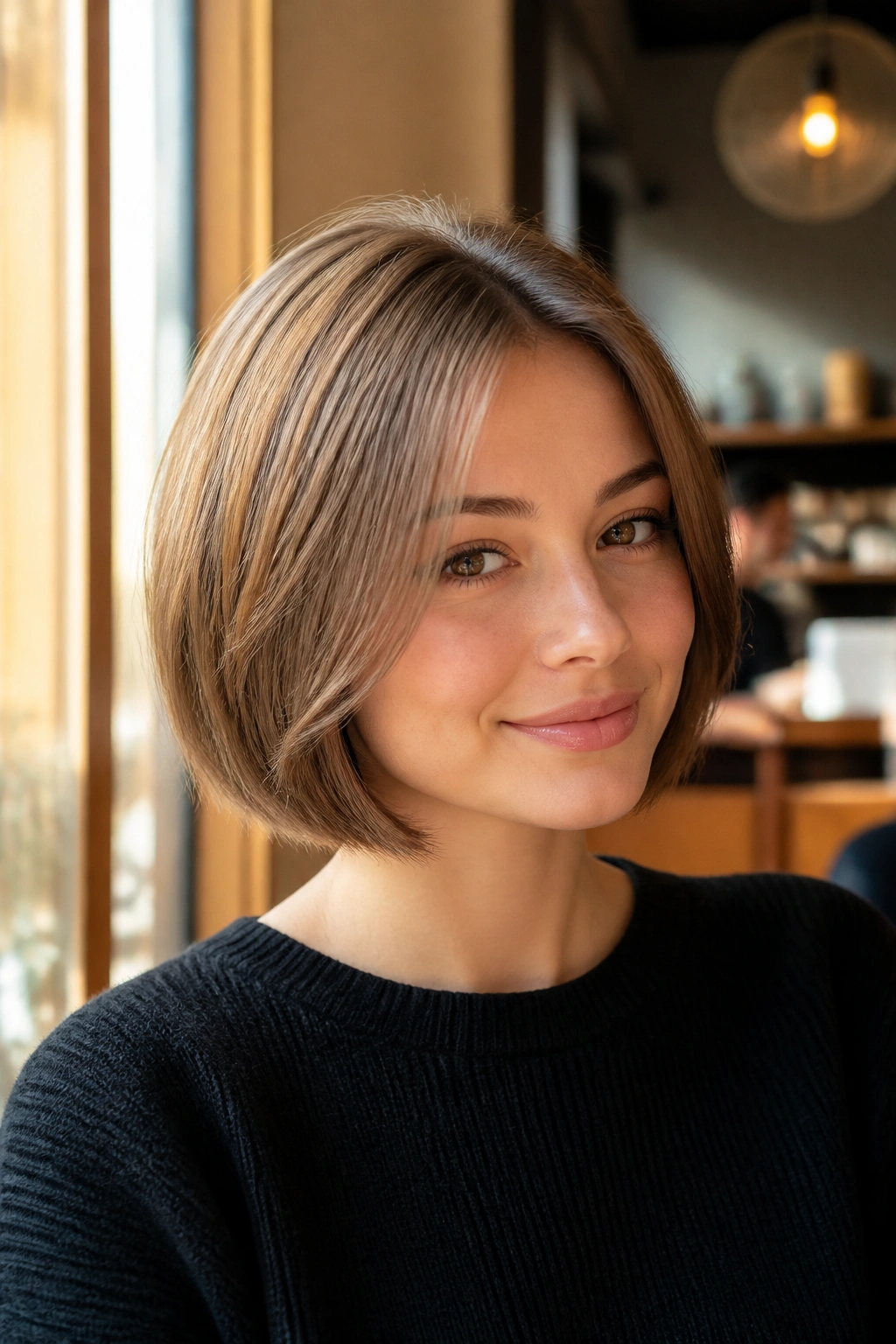
Fine straight hair can be tricky. Too blunt, and it may fall flat. Too layered, and it can look sparse. The sweet spot sits somewhere in the middle: a layered bob with a solid base and just enough lift to keep the roots from collapsing.
What the layers should do
- Add movement near the crown
- Keep the ends from looking too wispy
- Support a little root lift without exposing the scalp
- Leave the perimeter thick enough to look full
The mistake people make here is asking for layers because they think layers automatically mean volume. Not always. On fine straight hair, the wrong layers can carve the shape apart. A better approach is a blunt or softly rounded base with discreet internal pieces that help the hair move.
This cut works well if you like to blow-dry your hair with a round brush or velcro rollers. It also looks decent air-dried, provided the ends are not over-textured. Straight hair does not need a lot of help — it needs the right help. That difference matters.
16. The Ghost-Layer Bob
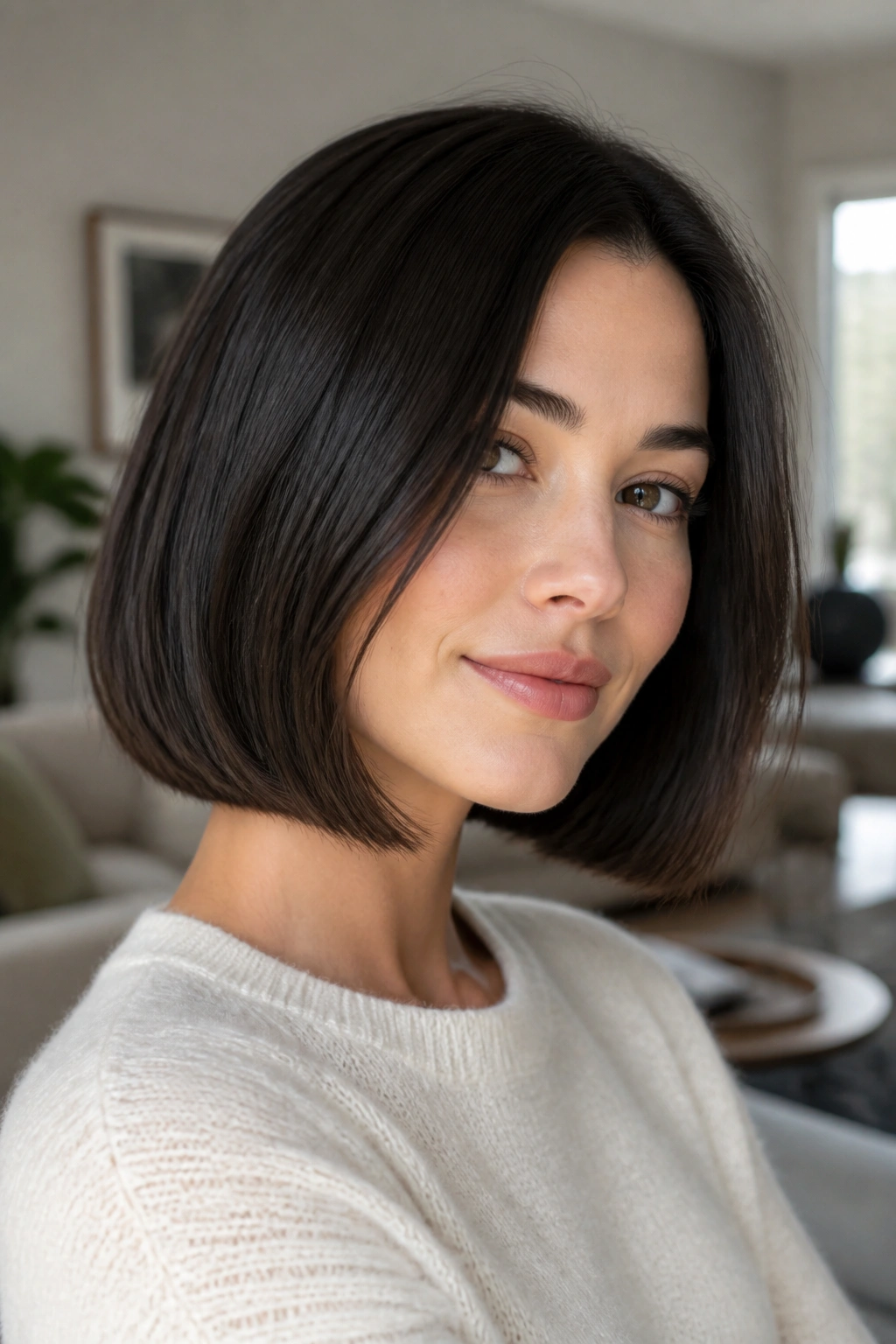
What makes ghost layers different? You can barely see them. That is the point. The cut keeps the outline clean while removing just enough bulk inside the shape to help straight hair fall with a little more movement.
This is one of those quietly smart haircuts. It does not shout. It works in the background. If your straight hair feels heavy at the bottom but you hate visible layering, ghost layers are a good compromise because they soften the mass without creating obvious steps.
The shape is especially useful on medium to thick hair that looks too boxy when cut one length. The hidden layers help the bob sit closer to the neck and jaw, which gives the cut more shape. On fine hair, they need to be used sparingly. Too much removal and the ends can feel thin.
I like this option for people who want a bob that still looks smooth from every angle. It’s a good salon move when you want movement but not “layered hair” in the obvious sense. Some cuts try too hard. This one does not.
17. The Bob With Curtain Bangs

Curtain bangs can soften a bob in a way that feels easy rather than precious. On straight hair, the fringe parts cleanly down the center and falls away from the face in a shape that opens the cheeks and cheekbones without boxing them in.
The length matters. Too short, and the bangs can look severed from the rest of the cut. Too long, and they lose the point. The best curtain bangs for a bob usually start around the brow or slightly below it, then angle into the sides so they blend into the front pieces.
How to style the fringe
- Blow-dry with a small round brush, directing the bangs away from the face
- Lift the roots at the center so the part does not collapse
- Keep the side pieces slightly longer than the center
- Trim every 4 to 6 weeks if you want the shape to stay open
This is a good choice if you want your bob to feel softer or more face-framing without giving up the clean line of straight hair. It has a relaxed feel, but it still needs shape. Lazy curtain bangs are not the same thing.
18. The Bob With Blunt Bangs
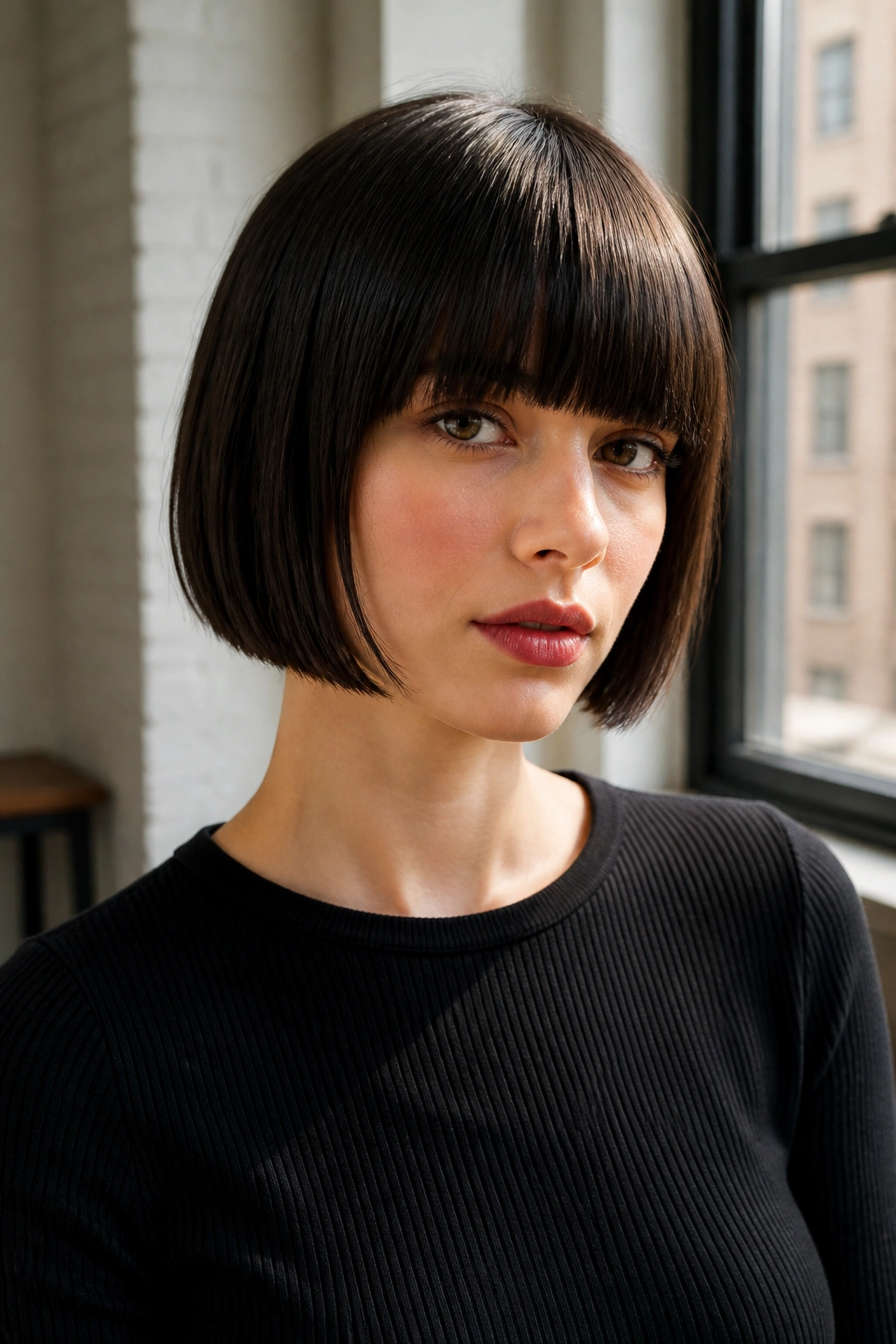
This is the bold one. A full blunt fringe with a bob looks sharp, graphic, and very deliberate on straight hair because the texture keeps both the bangs and the perimeter clean. There is nowhere for the shape to hide, which is exactly why it can look so striking.
It works best when the fringe is cut thick enough to sit solidly across the forehead. Thin blunt bangs can separate and look weak, especially on straight hair that falls too smoothly. The bob beneath them should stay equally neat, with a line that supports the fringe instead of competing with it.
I like this cut on people who want a strong frame around the eyes. It can make the face look shorter and the brows more pronounced. That is great if you want focus at the top of the face. If you already have a very short forehead, though, the fringe can crowd things. Measure twice, cut once. Hair follows the same logic.
Maintenance is real here. Fringe trims every 3 to 4 weeks are normal if you want the line to stay crisp.
19. The Undercut Bob
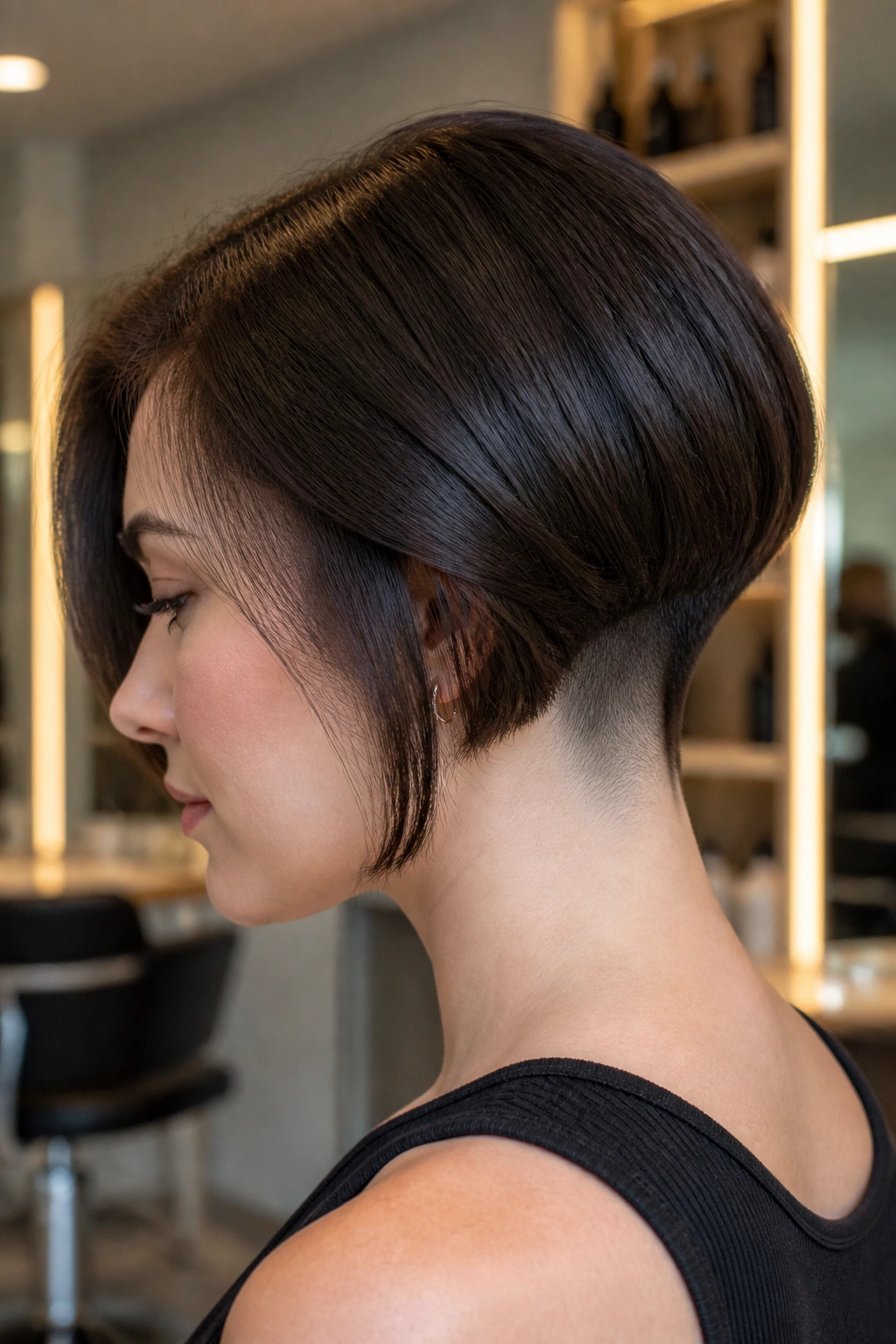
An undercut bob is a practical haircut disguised as a cool one. By removing bulk underneath the top layers, the stylist reduces weight where straight hair tends to puff out or hang too heavily. The surface still looks like a bob, but it moves with less drag.
Why people ask for it
- Thick straight hair can feel heavy around the neck
- The undercut lightens the shape without changing the visible outline
- Styling takes less time because the hair sits closer to the head
- The haircut grows out in a manageable way if the undercut is hidden well
This is not a timid choice, but it is a smart one if you spend half your life trying to tame bulky straight hair. The nape can feel cooler, the body line becomes cleaner, and the top layer often falls more smoothly.
I would not recommend this if your hair is already fine or fragile. There is no point removing bulk you do not have. On thick hair, though, it can be a relief. Quiet relief. The best kind.
20. The Razor-Clean Floating Bob
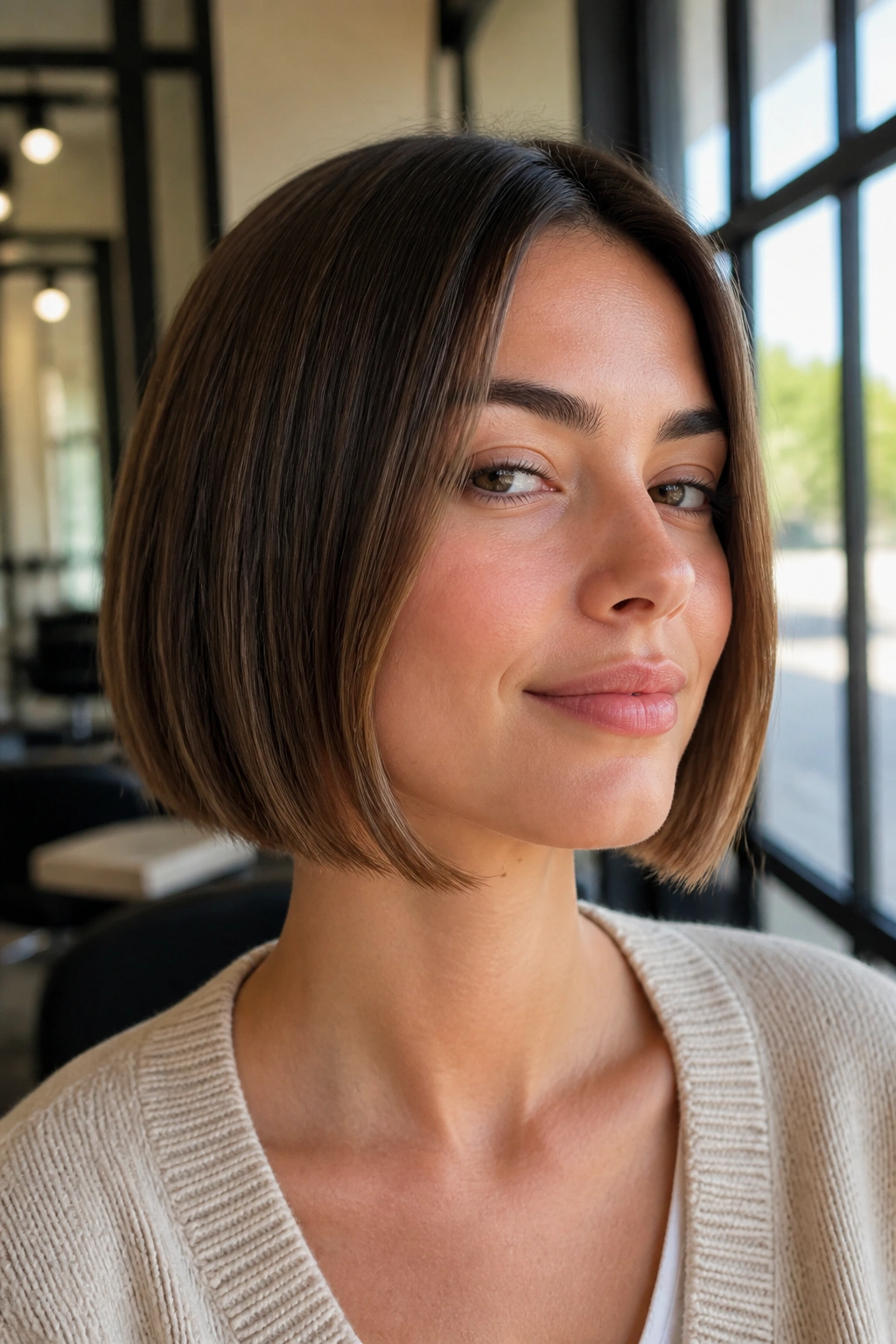
A floating bob sits lightly around the head, with the ends hovering rather than hanging heavy. On straight hair, that gives the cut a clean swing and a sense of movement without visible choppiness. It feels airy, but not soft in a weak way.
The magic is in the balance. The perimeter stays controlled, while subtle internal shaping keeps the hair from settling into a block. You still want a line. You just do not want it to look dense at the bottom. Ask for a soft bevel and very light internal removal, then keep the styling smooth so the shape can do its work.
This is a strong choice if your straight hair tends to get bulky at shoulder length or feel too blunt when it grows out. It can also make a bob feel less rigid than a box or micro version. The result is neat, but not stiff.
A floating bob does best with a clean blow-dry and a brush that directs the ends inward just enough. Not curled. Not flipped. Just settled. That tiny difference is what gives the cut its name.
Final Thoughts
The best bob for straight hair is the one that matches the way your hair behaves before you touch it. If your strands are fine and flat, a blunt or rounded shape can give them a fuller look. If your hair is thick and heavy, ghost layers, an undercut, or a collarbone length can take the pressure off without wrecking the line.
Short hair shows every decision. That sounds unforgiving, but it is also the reason straight hair looks so good in a bob when the cut is right. The outline stays honest. The shine stays visible. The shape either works or it doesn’t.
Bring photos, sure, but bring a clear idea of the line you want too — jaw-length, collarbone, angled, square, soft, cropped. A good bob should look like it belongs to your hair on a random Tuesday morning, not only after a perfect salon blow-dry.
