



Fine straight hair and a French bob can be a very good match—if the cut is built with enough shape to keep the ends from looking see-through.
That’s the whole trick. Fine hair does not need to be bullied into fake volume, and it usually looks worse when a cut is packed with too many short layers or overworked with product. A French bob works best when the line is clean, the length is deliberate, and the finish looks a little lived-in rather than over-styled.
The best versions have a clear edge at the perimeter, a little movement around the face, and enough control at the crown that the style does not collapse by midmorning. I’ve always thought the smartest French bobs are the ones that do less—they lean on shape, not heavy teasing or a mountain of mousse.
1. Chin-Length French Bob with a Blunt Edge
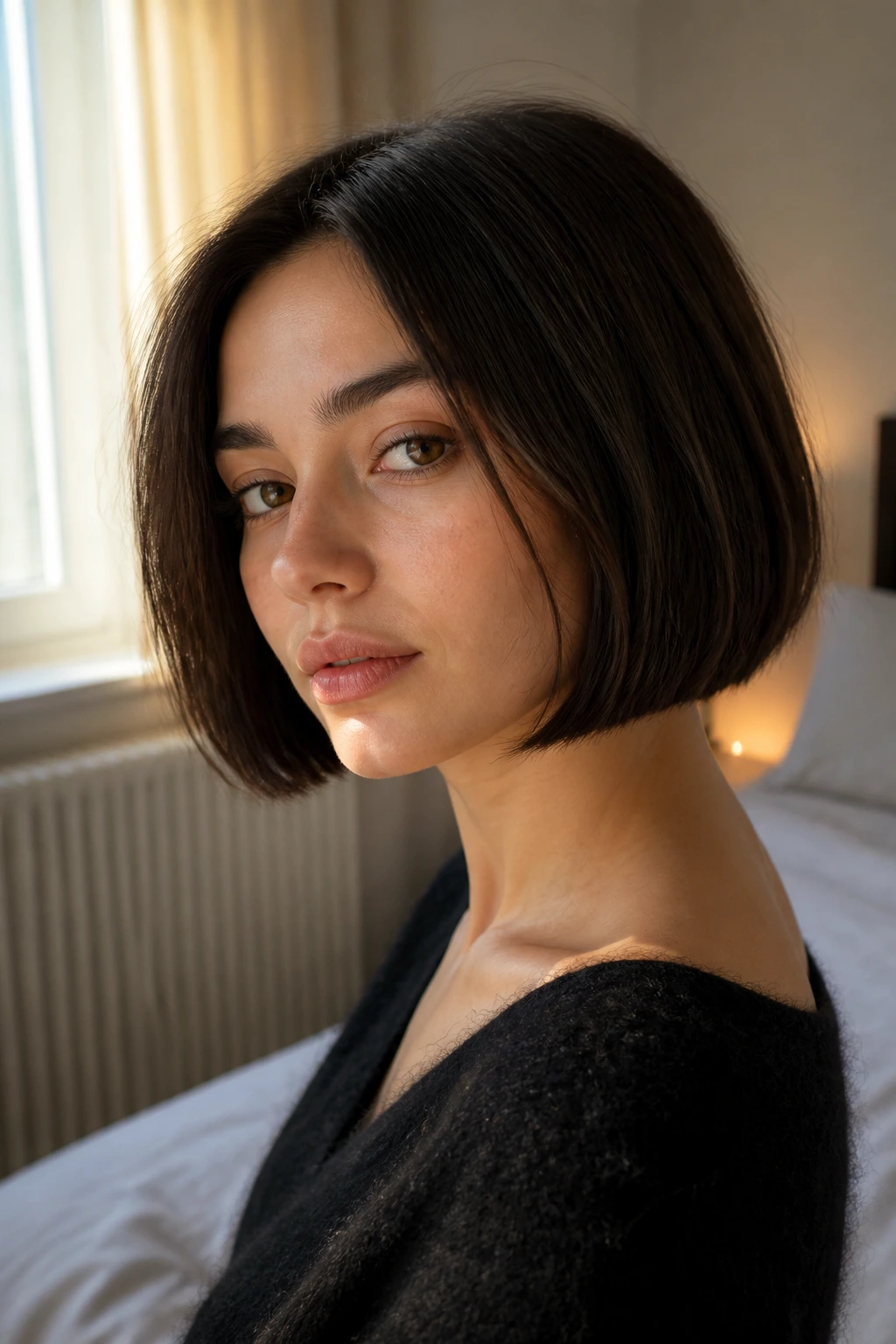
A chin-length French bob is the one I reach for first when someone says their hair is fine and poker-straight. The blunt edge gives the illusion of thickness, because the eye sees one solid line instead of a wispy finish that breaks apart at the ends.
Why This Length Works
At chin level, the bob sits close enough to the face to look intentional, but not so short that it starts to feel severe. On fine straight hair, that matters. You want the cut to feel crisp, not flimsy.
Ask for the perimeter to land right at or just below the chin, with minimal internal layering. A small amount of soft texturizing at the very ends is fine, but the shape should still read as blunt when the hair is dry.
- Best for: hair that falls flat at shoulder length
- Styling tool: a 1-inch round brush or a small flat iron bend
- Product cue: a pea-size amount of lightweight smoothing cream, not heavy oil
- Maintenance: trims every 6 to 8 weeks to keep the edge thick
Pro tip: keep the roots clean and the ends polished. That contrast makes fine hair look fuller fast.
2. Jaw-Grazing French Bob with a Soft Side Part
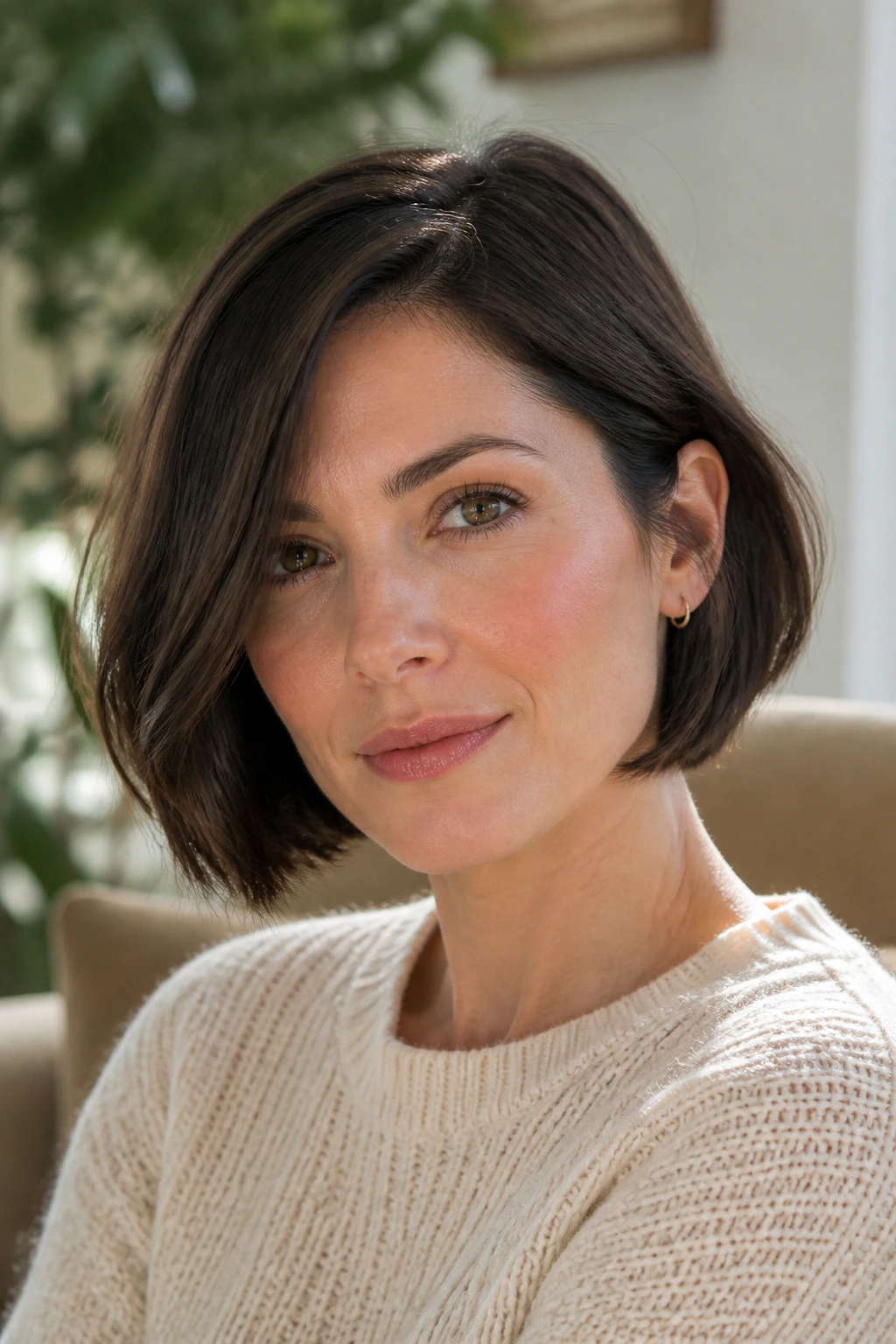
This version is quietly flattering in a way people underestimate. A jaw-grazing French bob with a side part gives fine straight hair a little lift at the front without asking the crown to carry the whole style.
The side part shifts some weight to one side, which breaks up that straight-down, flat-on-top look that fine hair can get after a fresh blow-dry. It also gives the front pieces a natural sweep, so the cut feels softer around the face.
I like this bob for anyone who wants movement without lots of layers. The length lands just at the jawline or a hair below it, and the front can be a touch longer by a quarter inch or so. That tiny difference matters more than people think.
Use a root-lift spray at the part, then blow-dry with the nozzle pointed down the hair shaft. Don’t rough up the ends too much. Fine straight hair looks better when the finish stays smooth and the shape does the talking.
3. French Bob with Micro Bangs and a Clean Line
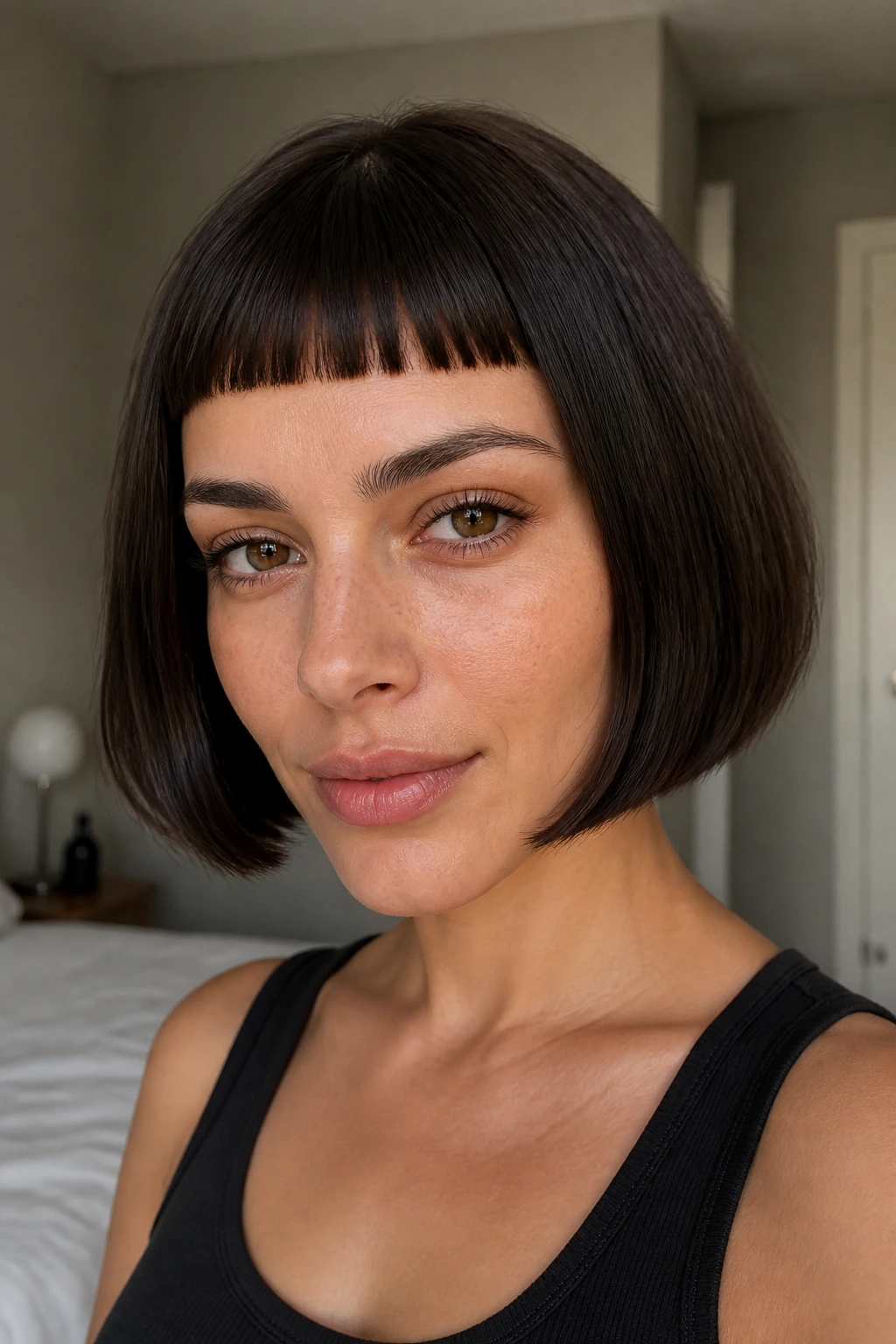
Can micro bangs work on fine straight hair? Yes, but only when the rest of the haircut is disciplined. A French bob with a clean line and short fringe can look sharp, airy, and a little unexpected without drowning a delicate texture.
What Makes It Work
Micro bangs keep the eye up near the face, which makes the bob feel more fashion-forward. On fine hair, that can be a gift, because you are not relying on bulk for impact. The fringe should sit above the eyebrows—never so short that it starts fighting the rest of the cut.
The key is balance. If the bangs are too thick, they can eat up too much density from the front. If they are too thin, they look stringy. The sweet spot is a light, clean fringe with enough width to match the cheekbones.
How to Style It
- Blow-dry the bangs first, before the rest of the hair gets damp again from steam.
- Use a tiny round brush, or your fingers if the fringe naturally falls neatly.
- Keep a small dry shampoo on hand for the roots, especially if your hair gets limp near the forehead.
- Skip heavy cream near the bangs. It will separate them in a bad way.
A micro-bang French bob is not low-commitment. It’s a specific look. But when it works, it looks deliberate in the best possible sense.
4. Collarbone French Bob for Fine Straight Hair
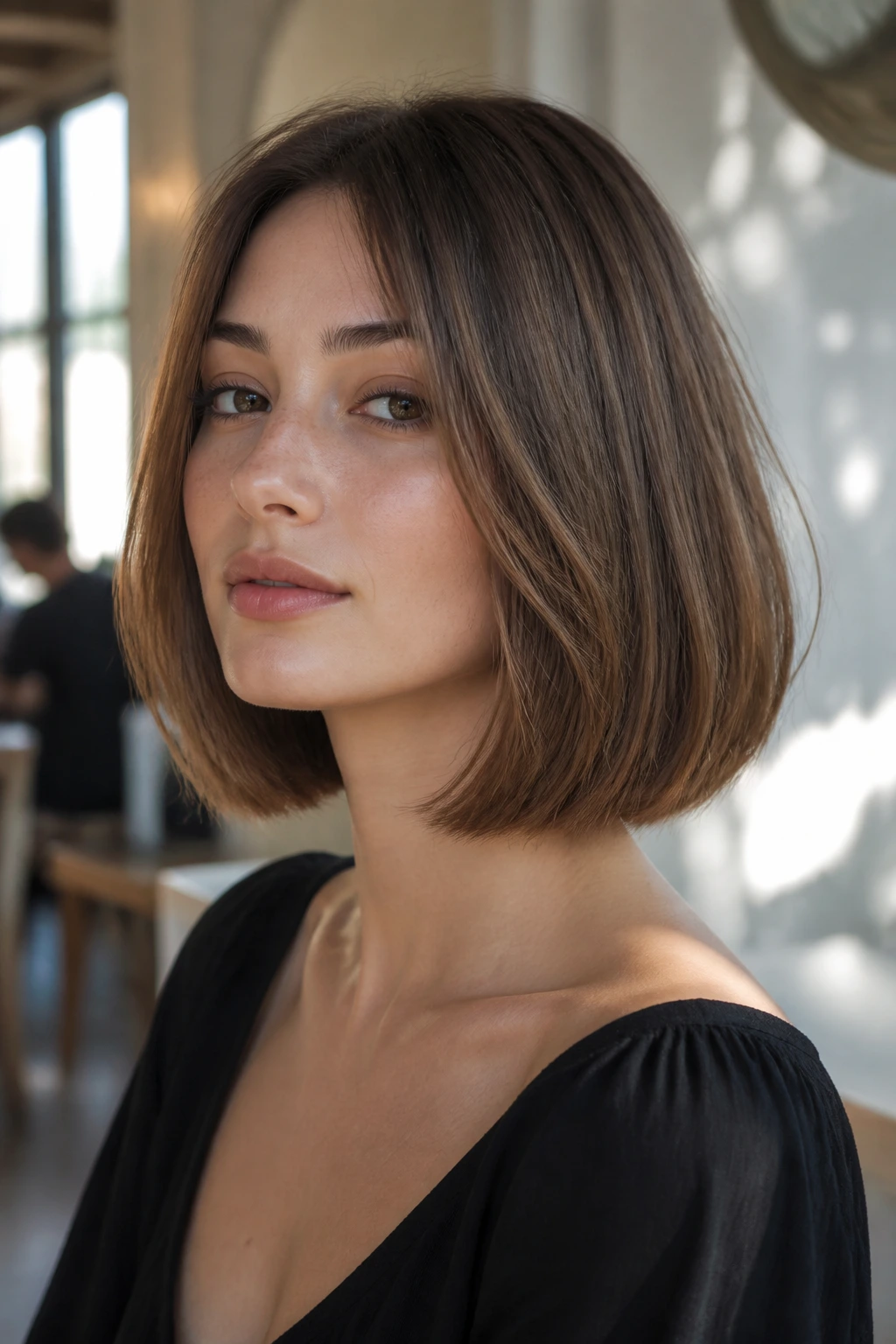
If you’re nervous about going too short, the collarbone French bob is the comfortable middle ground. It still has the spirit of the cut—lightness, a clean outline, a little Paris-on-a-cold-morning energy—but it gives fine straight hair a bit more room to move.
The extra length can help if your ends tend to look thin at chin level. That’s the trade-off with short hair on fine strands: too short can be great, but it can also expose every weak spot in density. A collarbone length hides a lot of that, especially when the cut is slightly beveled rather than dead straight.
I’d ask for soft, face-framing movement around the front and a clean perimeter in back. Nothing shaggy. Nothing over-layered. You want the ends to touch each other, not float away from the shape.
- Great if you air-dry half the time
- Easier to tie back on busy days
- Better for people who want a French bob without the full chop
- Works well with a gentle bend from a 1-inch iron
This is the one for the cautious person who still wants style. Fair enough.
5. Rounded French Bob with Soft Volume at the Crown
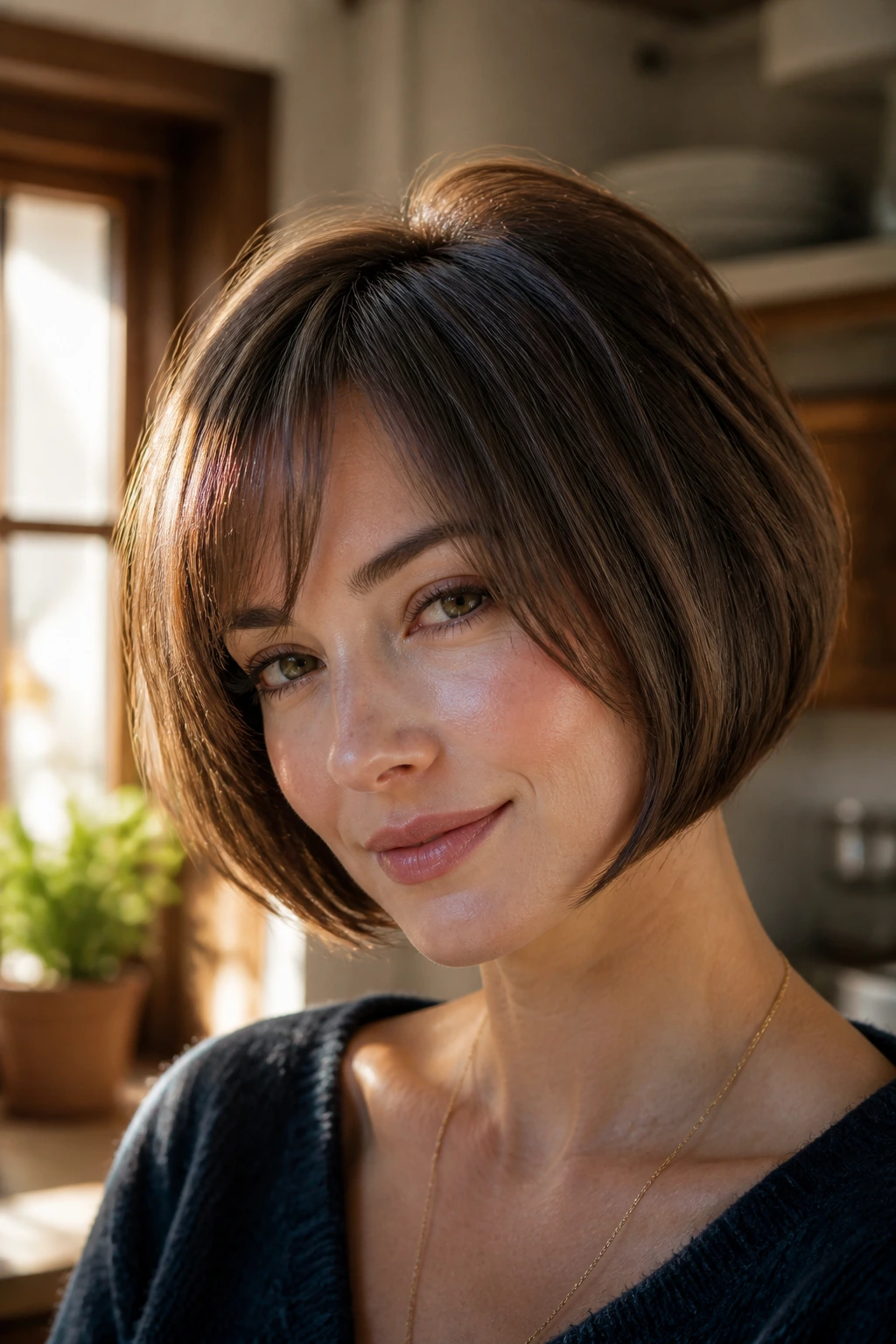
A rounded French bob gives fine straight hair something it rarely gets on its own: a shape that looks full even when the strands are light. The curve through the crown and sides makes the haircut read as denser than it is.
What I like here is the restraint. The silhouette is slightly curved, almost helmet-like in the best old-school sense, but not stiff. The sides tuck in a bit, the back hugs the neck, and the top has a small lift that keeps the cut from lying dead flat.
This cut depends on the blow-dry. If you let it air-dry without help, the roundness usually disappears. Use a medium round brush and direct the hair slightly upward at the roots, then curve the ends under as you finish each section.
A little mousse at the roots can help, but use a small amount. Too much and the hair gets crunchy. Fine hair shows that mistake right away, which is annoying, but also useful because it forces you to stop before overdoing it.
The rounded bob is especially good if your face is narrow or long. It brings a bit of width back in.
6. Tucked-Under French Bob with a Polished Finish
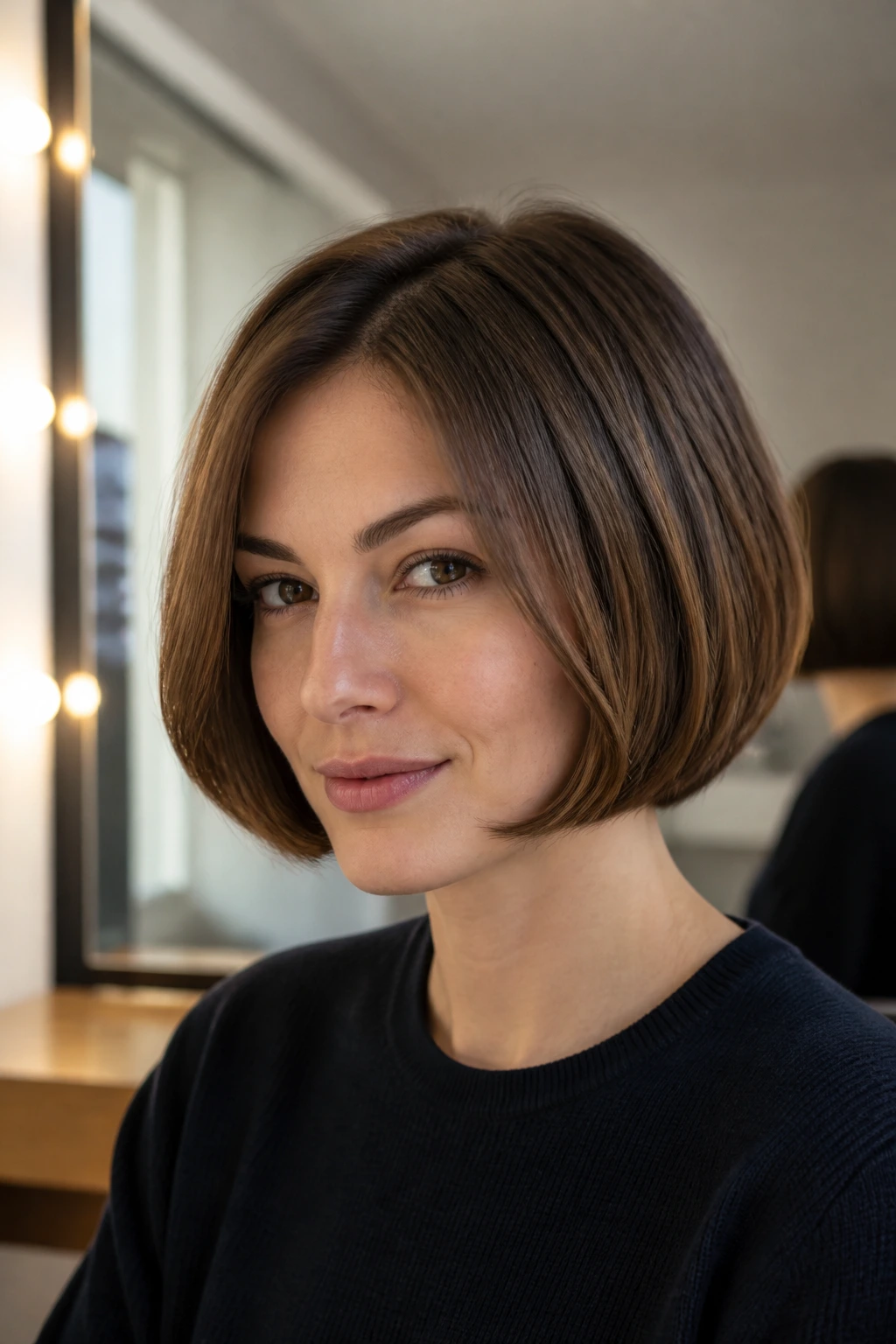
Unlike a messy bob, this one relies on polish. The tucked-under French bob has ends that curl inward just enough to frame the jaw, and that subtle inward bend can make fine straight hair look much thicker at the bottom.
The cut itself should be blunt-ish, with soft beveling only at the edges. If the layers get too loose, the tuck loses its shape and the bob starts looking unfinished. That’s the part people get wrong. They ask for “movement” and get a weak outline instead.
This style suits straight hair that already falls neatly when dried. If your texture is very slippery, a quick pass with a flat iron or a round brush will help seal the shape. I prefer a heat protectant spray with a little grip, not a silky serum that makes the hair slide apart.
How to Keep the Tuck Clean
A narrow paddle brush can smooth the mid-lengths before you bend the ends under. Then use a light mist of flexible hairspray, held at arm’s length, so the finish stays touchable.
If you like clean collars, sharp scarves, and tailored jackets, this bob makes sense. It has that same crisp feeling.
7. French Bob with Curtain Bangs and a Soft Bend
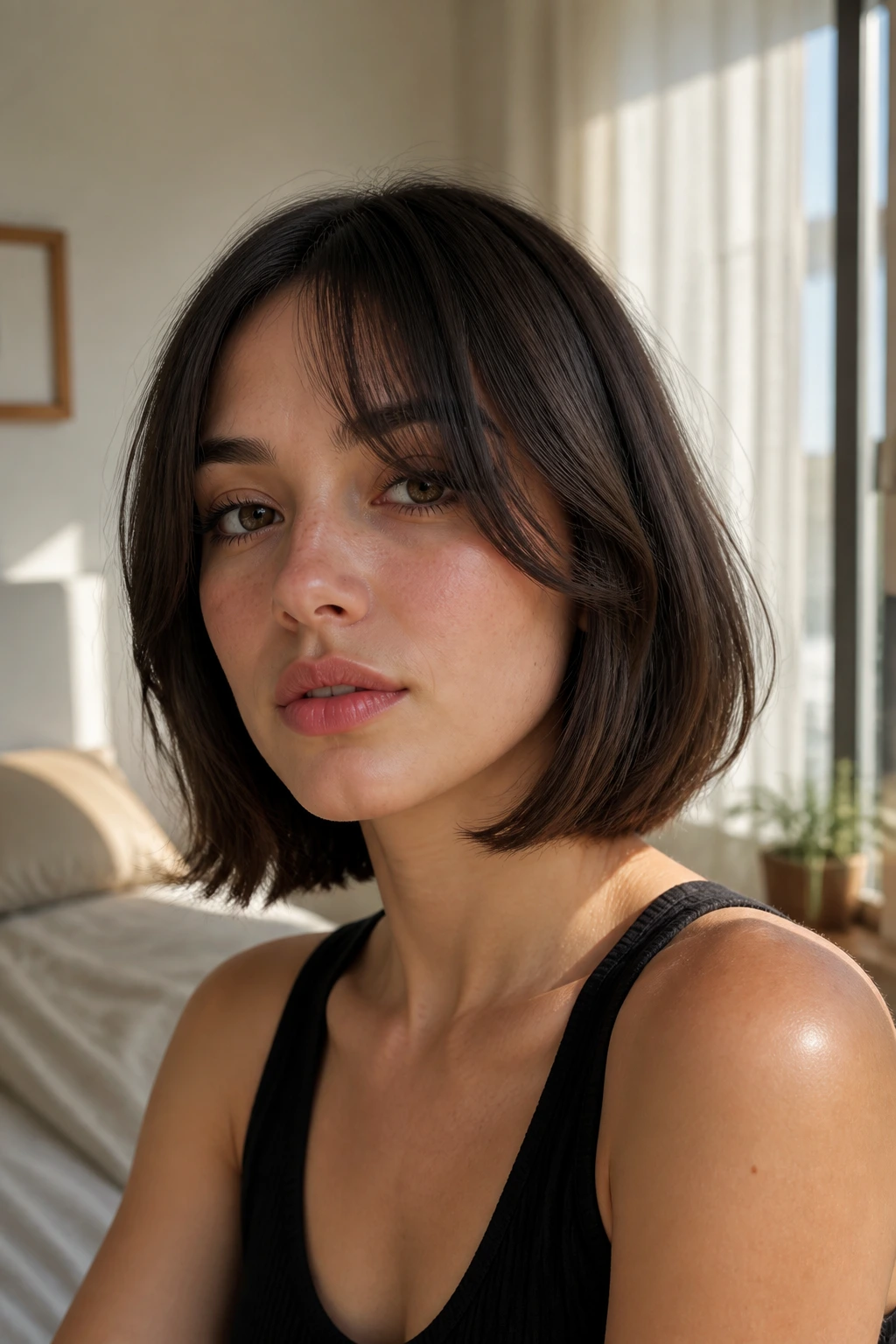
Can curtain bangs work on fine straight hair? Absolutely, as long as they are not too heavy. The French bob with curtain bangs softens the face and gives the haircut a little drift, which is useful when the rest of the hair is naturally sleek.
The trick is keeping the bangs light around the bridge of the nose and cheekbones. Heavy curtain bangs on fine hair can eat up too much density and make the front look sparse. Lighter pieces, cut to open at the center and blend outward, keep the style airy.
I like this cut for people who want the face-framing effect of bangs without the bluntness of a full fringe. It’s also easier to grow out, which is a real-world bonus nobody likes to say out loud until they’ve had bang regret.
A quick bend with a round brush or flat iron gives the fringe some curve, but don’t over-style the ends. They should look softly broken, not curled. If the fringe starts looking too perfect, the whole cut loses that French ease people are after.
This is one of the few bobs that works for both office hair and weekend hair without feeling like two different identities.
8. Piecey French Bob with Texture and Separation
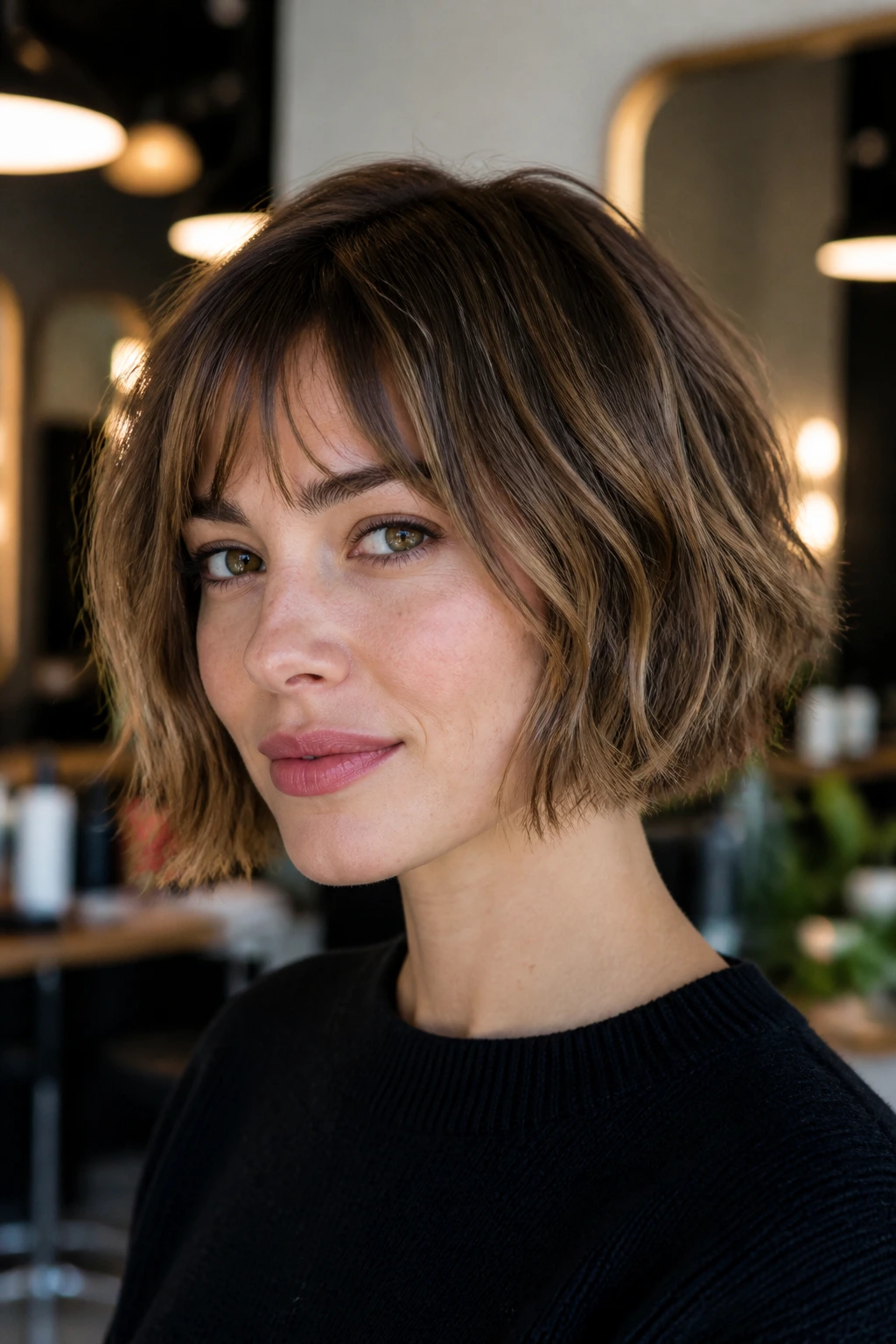
This is the bob for someone who wants a little edge without committing to a shag. The piecey French bob uses light separation, usually at the ends and around the face, to keep fine straight hair from looking too solid or too sweet.
A small amount of texture spray, worked into dry hair, can make a huge difference here. Not a lot. Fine hair can go from “coolly undone” to “dusty and dry” in about three seconds if you overdo it. I usually start with one spray at the mid-lengths, then rough it up with fingers and stop there.
The cut itself still needs a shape. If it’s too layered, the piecey finish turns stringy fast. A better version keeps a strong outer line and uses just enough internal movement to break up the surface.
What to Ask For
- A blunt perimeter with minimal thinning
- Soft point-cutting around the face
- Light texturizing only where the hair needs lift
- A length that sits between the lips and the jawline
This bob works when you want the hair to look touched, not styled within an inch of its life. That’s the sweet spot.
9. Sleek Center-Part French Bob
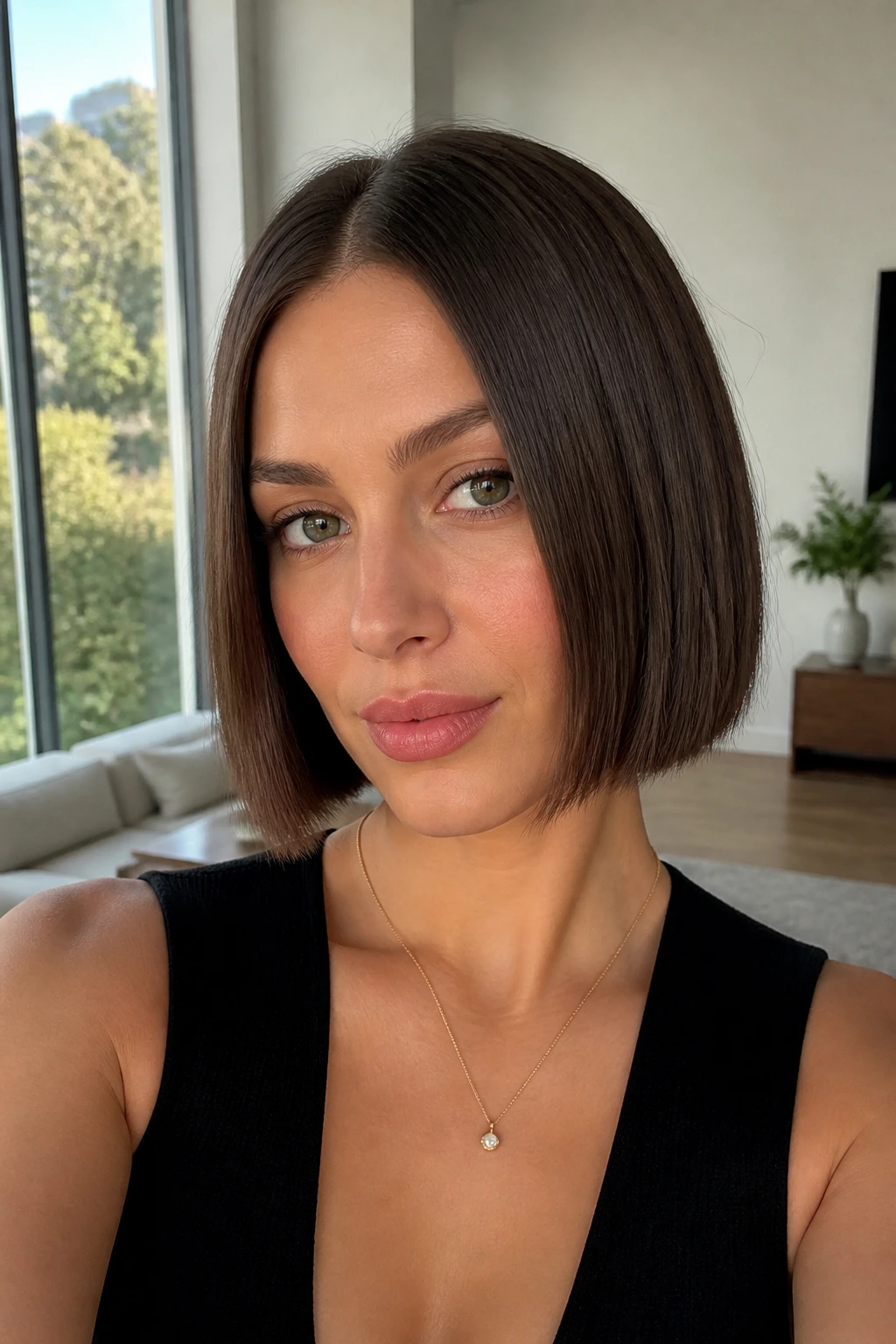
A center part sounds plain, but on fine straight hair it can look expensive in a quiet way. The sleek center-part French bob is all about symmetry, clean lines, and a finish that feels smooth from roots to ends.
The reason it works is simple: a center part creates two balanced panels of hair, which makes the perimeter read clearly. Fine hair often benefits from that clarity. You can actually see the shape instead of having it swallowed by messy volume tricks.
This version likes a flat iron bend at the very ends, just enough to stop the hair from hanging like a curtain. Keep the roots lifted with a lightweight spray or a tiny bit of mousse worked in before drying. If the top goes flat, the whole thing loses energy.
I would not pair this with thick, heavy bangs. The beauty of the cut is the open front and the clean line down the middle.
Best For
- Oval faces
- Straight hair that resists curl but holds a bend
- People who like a polished finish
- Anyone who hates a lot of morning fuss
There’s nothing flashy here. That’s the point.
10. Shag-Inspired French Bob with Airy Ends
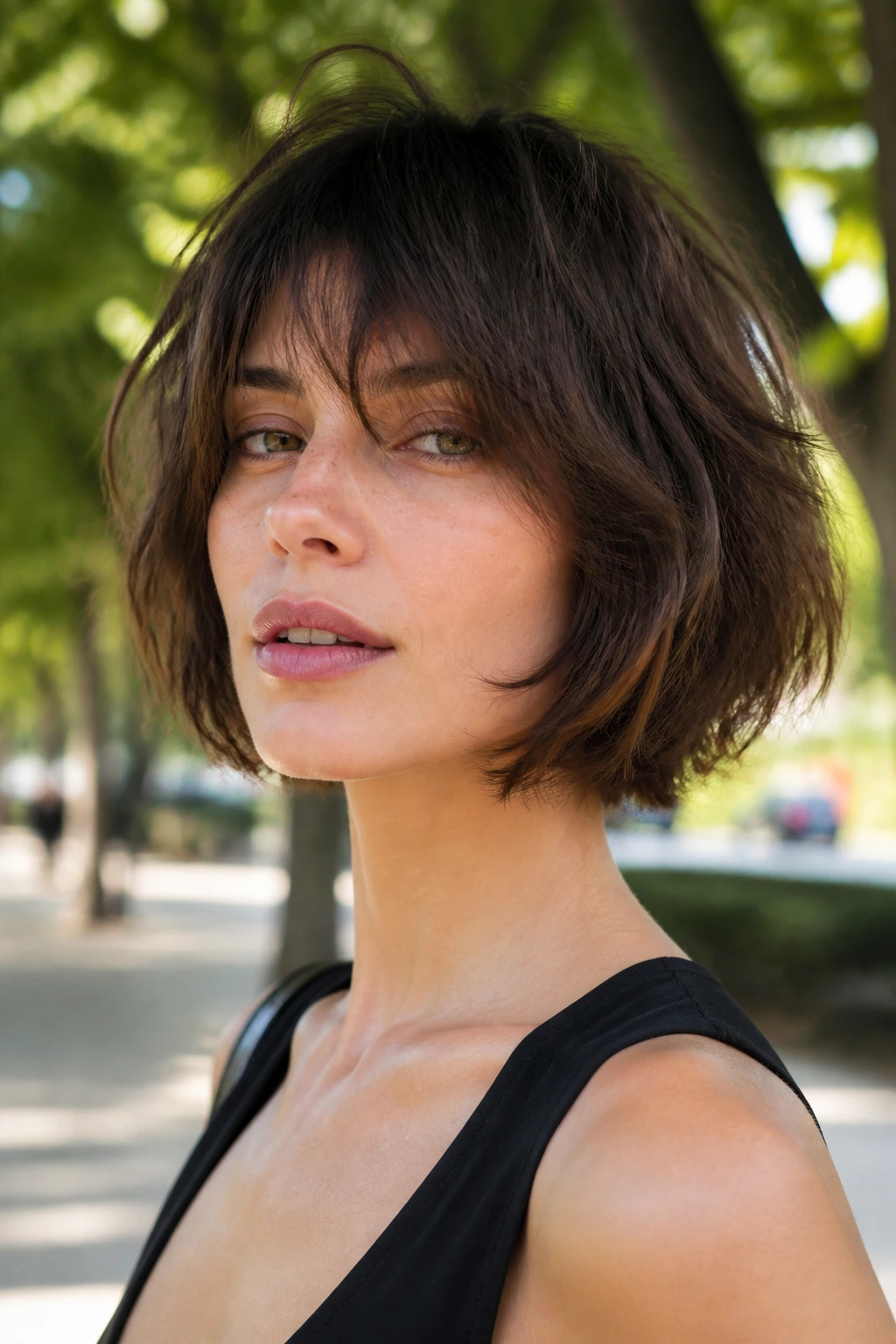
A shag-inspired French bob can be brilliant on fine straight hair, but only if the layers are feather-light. Too many steps in the cut, and the ends look scraped thin. The good version keeps the outline intact while loosening the interior just enough to create lift.
This is the bob for someone who wants movement first and neatness second. The ends are a little softer, the fringe may be slightly broken up, and the face framing can start higher than in a classic bob. It looks especially good when air-dried with a bit of natural bend, because the hair doesn’t need to be forced into a rigid shape.
The main risk is over-texturizing. Fine hair does not need aggressive thinning shears. It needs thoughtful removal of bulk, if any, and usually much less than people expect. I’d rather see a tiny bit of bluntness than a cut that looks airy in the chair and wispy after one wash.
If you like a jacket with frayed edges or boots with worn-in leather, this haircut has the same feeling. Not polished-polished. Just cool enough.
11. French Bob with Invisible Layers Around the Face

Invisible layers are one of those hair things that sound fussy and turn out to be useful. On a French bob for fine straight hair, they add just enough movement near the cheekbones and jaw to keep the style from looking flat, while the outer line stays full.
That outer line matters. A lot. If the perimeter is too shattered, fine hair loses the look of density immediately. Invisible layers work because they hide inside the shape instead of breaking it apart.
I like this option for people who want the bob to move when they turn their head, but do not want obvious choppy layers. The effect is subtle in the mirror and stronger in motion. Hair swings a little more. That’s the point.
A round brush helps, but you can also style it with a small amount of leave-in conditioner sprayed onto the mid-lengths and combed through lightly. Keep it away from the roots. Fine hair does not need help becoming flatter there.
This is a quiet haircut. But quiet does not mean boring.
12. Side-Swept French Bob with a Lifted Front

Why do side-swept fronts work so well on fine straight hair? Because they create asymmetry, and asymmetry makes a simple bob look fuller than it is. A side-swept French bob brings lift to one side and softens the other, which can be a lifesaver if your hair tends to lie flat across the whole head.
How to Style the Sweep
Start with damp hair and direct the front section away from the natural part while blow-drying. That little bit of resistance builds memory into the shape. Once it’s dry, tuck the heavier side behind the ear for a minute, then let it fall forward again. The hair keeps a gentle bend.
This bob is useful if your face is narrow, long, or slightly angular. The sweep breaks up the vertical line and gives the style a friendlier shape. It also works well with a jaw-length cut, since the front pieces can skim the cheekbone while the back stays neat.
A soft-hold hairspray is enough. If you spray too much, the hair loses movement and the whole thing turns helmet-ish. Nobody wants that.
13. Wavy-Set French Bob on Naturally Straight Hair
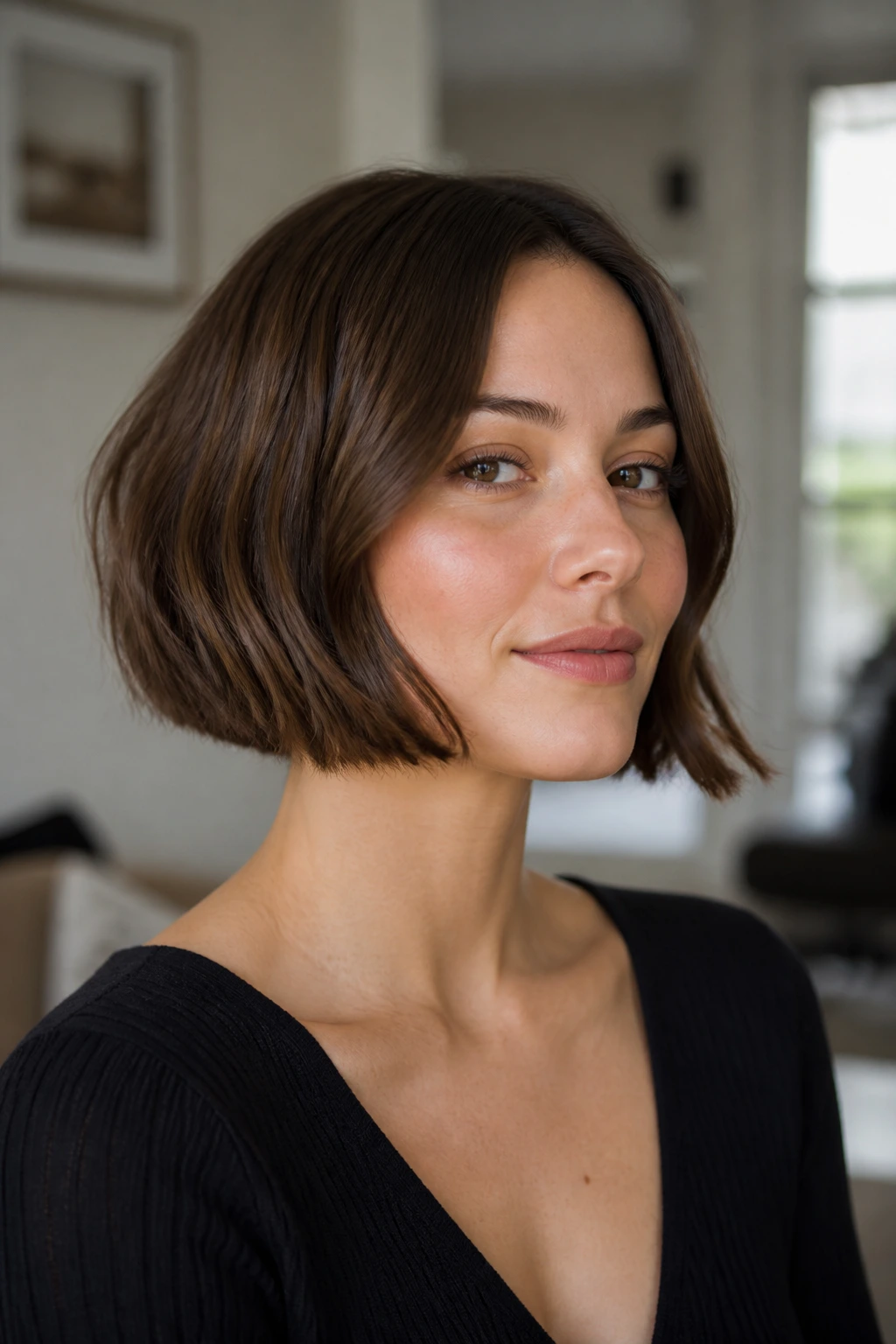
If your hair is straight but stubbornly flat, a wavy-set French bob can be the easiest way to fake body without making the cut look curled. The idea is not beach waves. It’s a gentle bend—barely there—that keeps the bob from hanging like one straight sheet.
I like this version because it respects the hair’s natural texture. You are not trying to force a big wave into fine strands, which usually backfires. Instead, you add a few bends through the mid-lengths with a 1-inch iron or a flat iron, then brush them out lightly so the shape stays soft.
A few practical details matter here:
- Use heat protectant on every section
- Wrap only the middle of the strand, not the ends
- Leave the tips straight for a modern finish
- Break the pattern with one or two bends, not a full head of curls
That last part matters more than people expect. Too many bends and the hair starts to puff out in odd places. A gentle, irregular wave looks better and wears better.
This is the bob I’d suggest for someone who wants movement but still likes a tidy outline.
14. Grown-Out French Bob That Sits Just Below the Chin
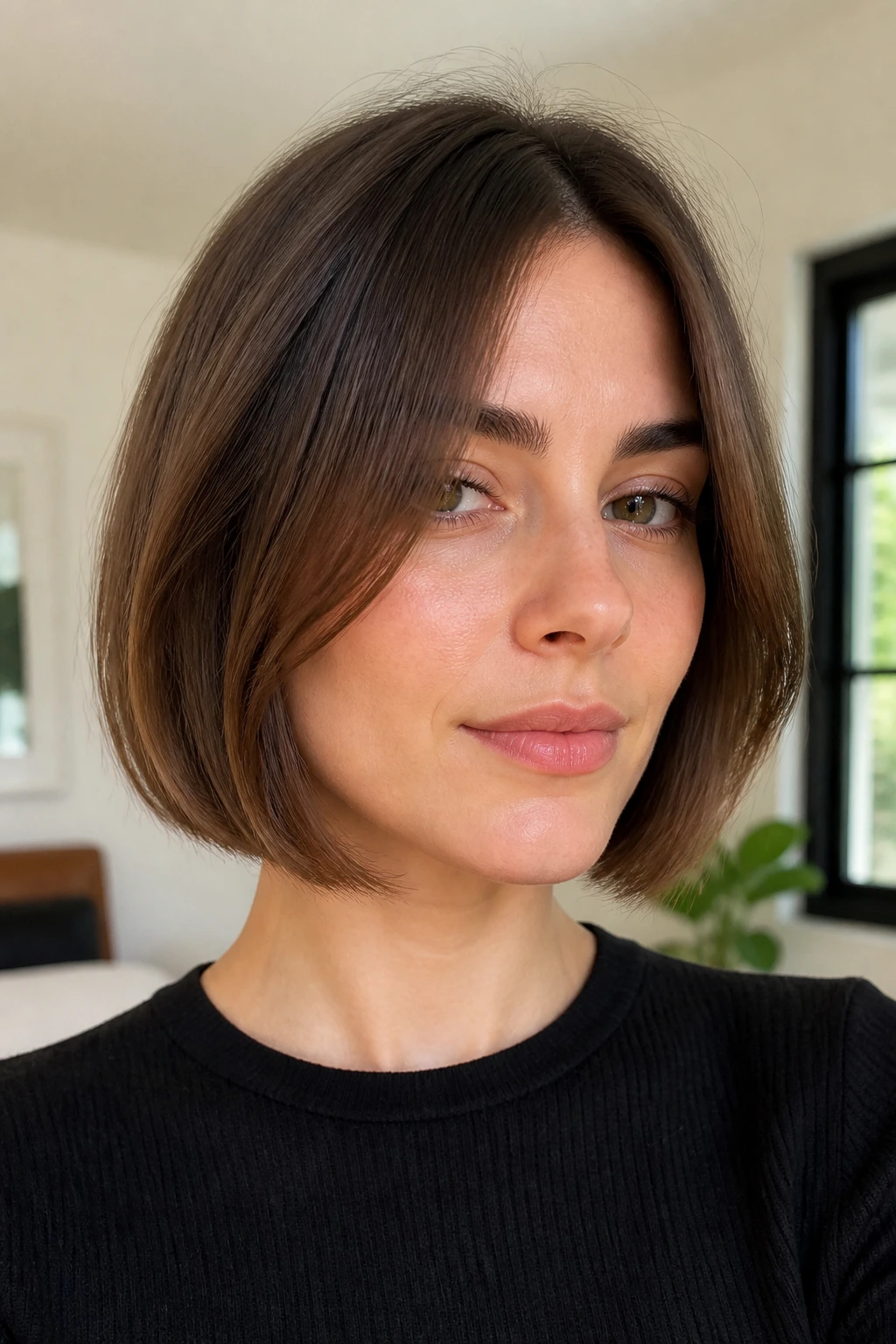
A grown-out French bob can be the smartest cut in the bunch. When the length drops just below the chin, fine straight hair often looks a little thicker because the ends are not sitting right on the jaw, where every thin piece gets picked apart by the eye.
That slight extra length also makes the style easier to live with. You can tuck it behind the ears, clip it back, or let it swing loose without feeling like you’re babysitting the haircut all day. The shape stays bob-like, but the maintenance gets easier.
I prefer this version with a clean line and tiny face-framing pieces, not long layers all over. A few millimeters of bevel at the ends is enough. If the hair is cut too aggressively, the shape gets ragged fast, and the whole point of a grown-out bob is that it still looks intentional.
It’s a strong choice for people who want the French bob look without the sharper bite of a chin-length crop. Less dramatic. Easier to wear. Still chic.
15. The Low-Fuss French Bob That Holds Shape All Day

A low-fuss French bob is the one that keeps showing up in real life, not just in salon mirrors. On fine straight hair, that usually means a bluntish perimeter, a soft front fringe or side part, and a finish that can survive a commute, humidity, and an afternoon of being touched too much.
The haircut should do most of the work. That’s the real test. If you need ten minutes of teasing and three different sprays every morning, the cut is not pulling its weight. A better version takes five minutes: a quick blow-dry, a small round brush at the ends, and one light product at the roots.
I like this style most when it lands somewhere between polished and loose. Not stiff. Not floppy. The ends should curve just enough to keep the line alive, and the crown should have a little lift without turning into a puff. That balance is hard to fake with product alone, which is why the cut matters so much.
For fine straight hair, the best French bob is usually the one that looks thicker because it is tidy. That sounds backward until you see it in a mirror. Clean edges, sensible length, a little movement around the face—that’s the combination that keeps the haircut from disappearing by noon.
If you’re choosing between going shorter, adding fringe, or keeping things easy, I’d lean toward the version that needs the least rescue in the morning. Fine hair likes a clean line. Give it that, and the French bob tends to behave.
