



A clean angled bob can change the whole mood of a haircut. It pulls hair forward, carves out the jawline, and makes even air-dried hair look like someone thought about it.
The shape is doing the heavy lifting. Shorter in the back, longer in the front, and usually cut with enough line to keep the outline visible from the side — that diagonal is what gives angled bob haircuts their edge. When the balance is right, the cut looks crisp. When it’s off, it can fall flat, puff out at the sides, or turn boxy in a way nobody asked for.
That’s why this haircut stays interesting. It can make fine hair look fuller, take bulk out of thick hair, or bring structure to curls that like to spread out. A good angled bob does not hide hair; it organizes it.
Some versions are neat and severe. Some are soft enough to feel easy. A few are bold in a way that makes earrings look better. The shape below starts with the classics and moves into the sharper, softer, and more specific versions that actually earn their place in the chair.
1. Classic Angled Bob

The classic angled bob is the version most people picture first, and for good reason. It gives you a clean diagonal from the nape to the front without leaning into anything too dramatic, which makes it a smart starting point if you want shape more than shock value.
Why the line matters
The back usually sits close to the neck, while the front lands somewhere between the jaw and just below it. That small difference creates a visible angle even when the hair is tucked behind one ear. It also keeps the sides from ballooning out, which is where a lot of ordinary bobs go wrong.
- Ask for a 1 to 2 inch difference between the back and the front.
- Keep the perimeter blunt if you want the edge to look crisp.
- Use a medium round brush and bend the ends under for a tidy finish.
- Best on straight, slightly wavy, or fine-to-medium hair.
Tip: If the front flips out too much, the angle is probably too shallow or the ends were thinned too hard.
2. Stacked Angled Bob
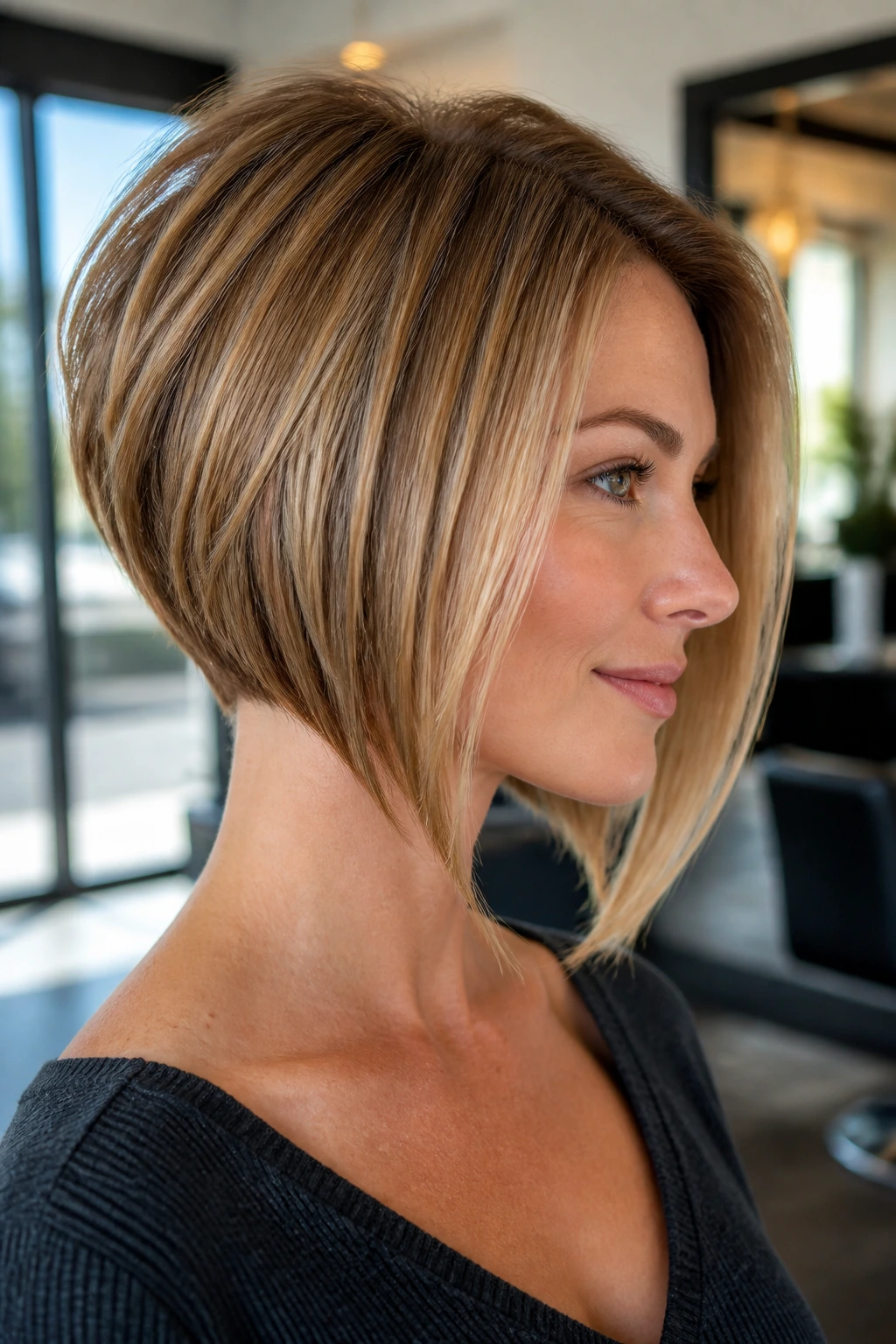
A stacked angled bob adds lift where most short cuts go flat: the crown and upper back. That stacked shape builds a small shelf of volume at the rear, then lets the front drop longer so the haircut still reads as angled instead of round.
This one is especially useful if your hair collapses at the roots by lunchtime. The stack gives the back some body without making the whole cut look bulky. It’s a strong choice for fine hair that needs help holding a shape, and it can make the neck look longer because the silhouette rises instead of sitting heavy.
The key is control. Too much stacking and the back starts to feel puffy or old-fashioned. Too little and you lose the clean lift that makes the cut worth wearing. A good version has a smooth graduation, not a hard ridge. You want the back to look built, not piled.
If you like a haircut that looks like it has been styled even when it hasn’t, this is the one to ask about. It does a lot of work for you.
3. Blunt Angled Bob
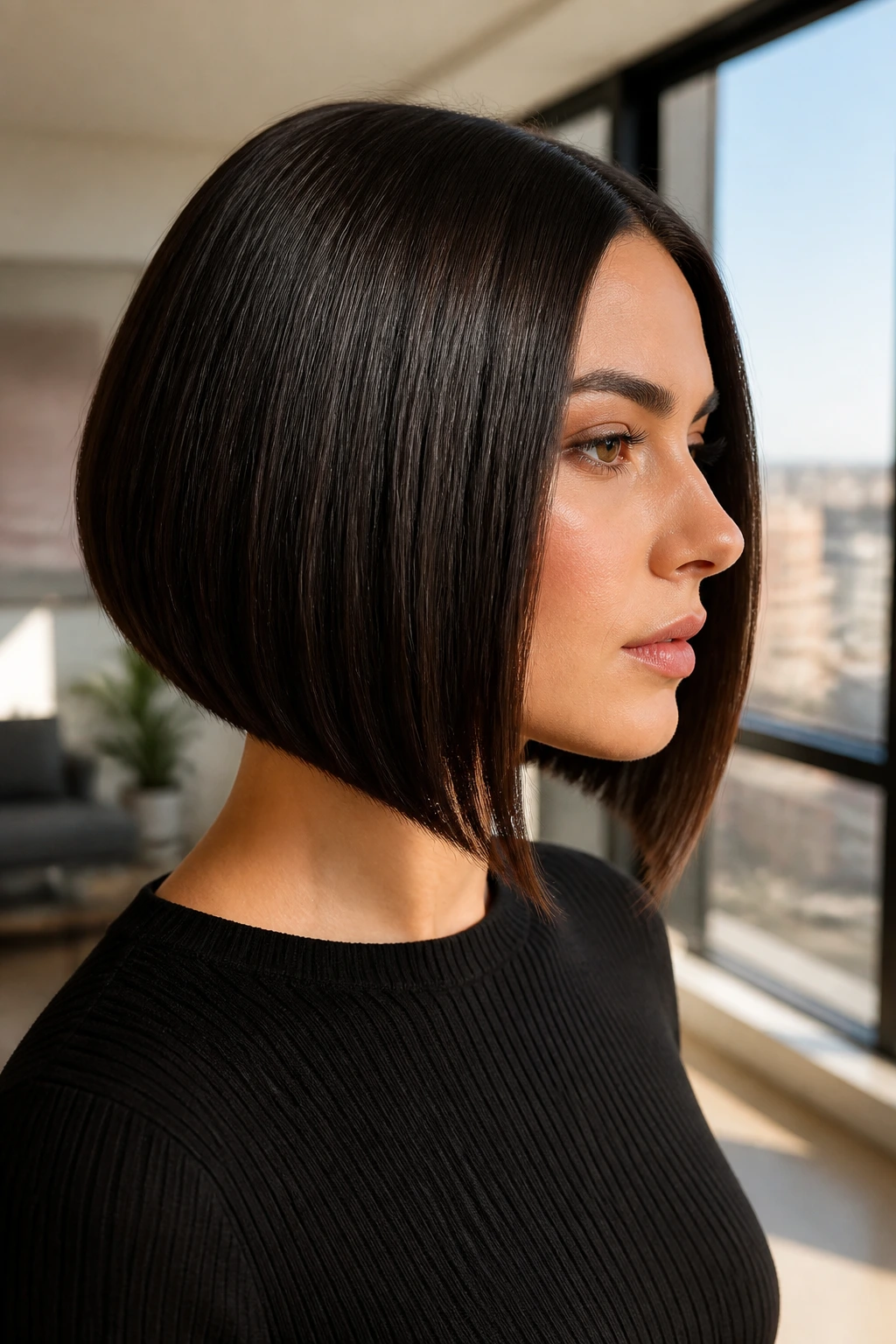
Why does a blunt angled bob look so sharp? Because the edge tells the eye exactly where to go. There’s no wispy finish softening the line, no broken perimeter hiding the shape. Just a straight, deliberate edge that angles down from back to front.
That makes this cut feel stronger than a layered bob. It also makes hair look thicker, which is a big deal if your strands are fine or medium and you want a fuller outline. The blunt ends catch the light in one clean line, especially when the hair is smoothed with a flat brush or a paddle brush.
How to wear it
A center part gives it a slightly cooler feel. A side part makes the angle show more clearly on the longer side. Either way, the haircut depends on polish. A little frizz can blur the line, and that is where people sometimes think the cut is “boring” when really it just needs smoother finishing.
This is the angled bob for someone who likes clean hems on clothes and wants the same feeling on hair. Very little fuss. Lots of shape.
4. Textured Angled Bob

The first time a textured angled bob lands well, it looks like the hair has decided to move on its own. Not messy. Not messy at all. Just broken up enough at the ends that the line feels easy instead of rigid.
This version works when you want the diagonal shape but not the crisp, glassy finish. A stylist usually point-cuts the ends or uses a light razor touch to remove some of the hard edge. That makes the haircut swing a little, especially around the front pieces near the cheekbone.
If your hair tends to sit in one heavy block, texture helps. If your hair already has a bend or wave, texture keeps the bob from turning into a triangle. The trick is not to shred the ends. Too much removal at the bottom can make the angle look thin and ragged.
- Best for hair that feels heavy at the ends.
- Nice with a salt spray or light cream.
- Works well when air-dried, then touched up with a flat iron on the front only.
A textured angle is less formal. It still looks thought through. It just doesn’t look like it spent the morning being convinced.
5. Asymmetrical Angled Bob

An asymmetrical angled bob takes the idea of an angle and pushes it one step further. One side is intentionally longer than the other, usually by about 1 to 2 inches, and that small imbalance changes the whole mood of the cut.
The reason it works is simple: the eye follows the longer side first. That makes the haircut feel sharp without needing a big color change or heavy styling. It can also flatter strong cheekbones and narrow faces because the unequal length breaks up symmetry in a way that feels modern, not fussy.
This is not the cut to get if you want something invisible. It wants to be seen. Still, it doesn’t have to be extreme. A subtle asymmetry can look more expensive than a loud one, especially when the shorter side is tucked behind the ear and the longer side sits against the collarbone.
What to watch for
- The part should support the imbalance, not fight it.
- The neckline needs to be clean, or the shape looks accidental.
- Flat ironing the longer side once can sharpen the whole cut.
If you like a little tension in your haircut, this one has it.
6. Curly Angled Bob

Curly hair changes the rules, and honestly, that’s what makes a curly angled bob so good. The angle gives the curls a direction, so they do not spread outward into a round cloud with no edge.
The biggest mistake here is cutting it like straight hair. Curls shrink. Some shrink a little, some shrink a lot, and the front and back may behave differently depending on curl pattern and density. A smart cut usually leaves the curls longer than the final target length because the spring will pull them up once they dry.
Cutting notes that matter
A dry cut or a curl-by-curl cut helps the stylist see where the angle actually lands. That matters more than the scissors brand, more than the blow-dry, more than anything else. If the front is supposed to skim the jaw, it should be shaped with shrinkage in mind.
The best curly angled bob has room at the ends. Not too much layering. Not too much thinning. Just enough structure to keep the front pieces from sticking out in weird directions.
One more thing: curly bobs look better when they are a little imperfect. If every curl is forced into the same line, the haircut can feel stiff. Leave some spring in it.
7. Wavy Angled Bob
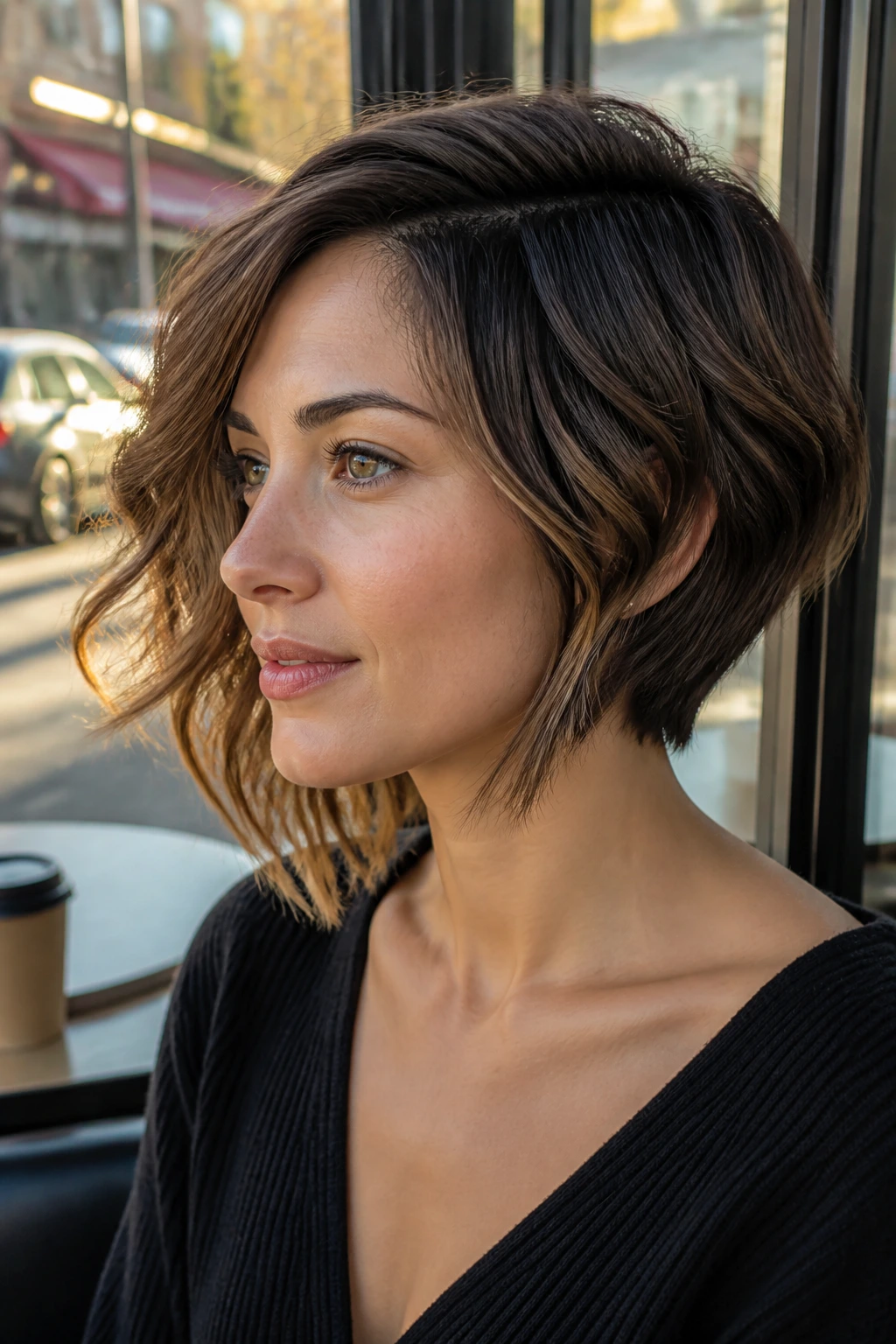
Wavy hair gives angled bob haircuts a kind of built-in movement that straight hair has to fake. The bend in the strand softens the diagonal, so the haircut reads as fresh and loose instead of sharp to the point of feeling severe.
This version is especially nice when the front pieces hit just below the chin and the back sits tight at the nape. The difference does not have to be huge. A 2 inch drop from back to front is often enough to make the line visible once the waves settle.
The styling part is easy, which is half the appeal. A bit of leave-in cream, a rough dry with fingers, and maybe a pass of a 1-inch iron on only the front pieces if they need help. That’s often enough. The haircut does not ask for a polished blowout every time, and that is a relief.
Waves also hide small imperfections in the cut. That can be a blessing. It can also make a sloppy angle hard to spot until the hair is fully dry. So if you have wavy hair, the cut should be checked dry before the chair is over.
8. Fine Hair Angled Bob
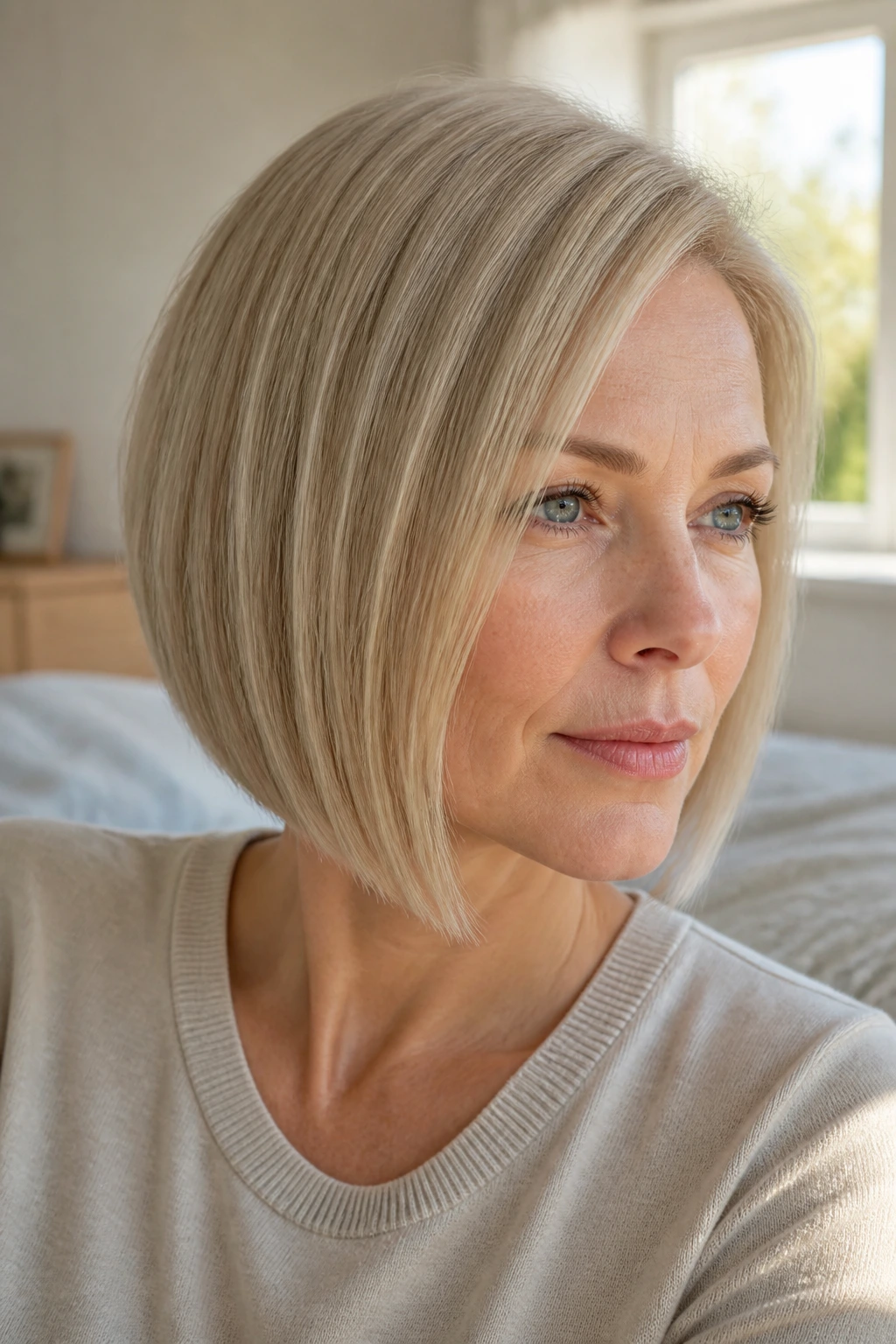
Fine hair loves a good angle because the diagonal creates the illusion of more body. The back can stay lighter and tighter, while the front keeps enough length to make the outline look fuller than it really is.
The trap here is over-layering. Fine hair does not need lots of internal removal. It needs a clean perimeter, a controlled amount of graduation, and enough length in the front to keep the ends from looking see-through. A blunt edge at the bottom usually works better than a heavily feathered one.
What to ask for
- Keep the lowest line blunt, not wispy.
- Use soft graduation at the back rather than stacked chunks.
- Avoid heavy thinning shears on the mid-lengths.
- Style with root lift at the crown, not all over the head.
This cut is especially useful if your hair goes flat near the temples or around the jaw. The angled shape pulls the eye forward, which makes the whole style look more intentional. And yes, it can make a very plain blow-dry look better than you’d expect. That is the real win.
9. Thick Hair Angled Bob

Thick hair is where an angled bob can either look expensive or look like a helmet. There is not much middle ground. The difference comes down to weight removal and how the line is built.
A strong thick-hair bob usually needs internal shaping so the back does not stick out. Hidden layers near the nape can remove bulk without destroying the outline. The angle itself can also be more pronounced, since thick hair holds a shape better and can handle a steeper drop from back to front.
What makes this version work
A razor can be useful here, but only in skilled hands. Too much razor work on thick hair can fray the ends, and frizz shows up fast. A better approach is often point-cutting around the perimeter and keeping the bottom line precise.
The finishing move matters too. Thick hair often looks best when the ends are beveled slightly under, which stops the cut from feeling wide at the jaw. If you leave every strand sitting exactly straight out, the shape can read as wide instead of sharp.
This is a haircut that rewards discipline. A little control goes a long way.
10. Chin-Length Angled Bob
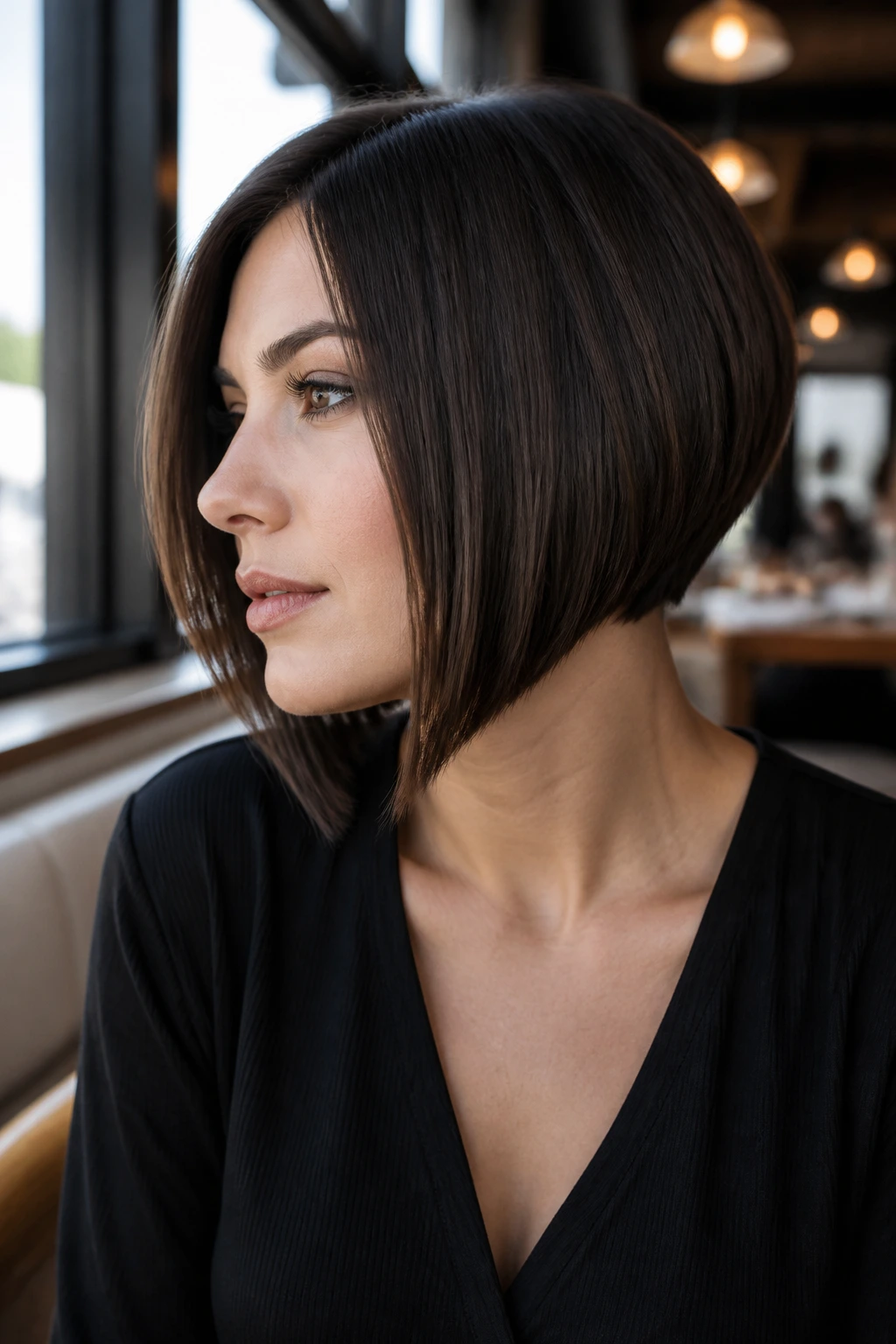
Chin-length angled bobs have attitude. They land high enough to show the jaw, which makes the face feel more open and the neck a little longer. The angle keeps them from looking blunt in a way that can feel boxy.
This is the kind of cut that works best when the neckline is clean and the front pieces are polished. If the nape is fuzzy, the whole thing loses force. If the front is too long, it stops reading as chin-length and starts sliding into lob territory.
A chin-length angle can be a good move if you want earrings, collarbones, and a strong jawline to do some of the talking. It also plays well with side parts because the longer front piece creates a nice diagonal across the face.
- Best when the ends sit just at or slightly below the chin.
- Strong with a tucked-behind-the-ear finish.
- Needs regular shaping if you want the line to stay crisp.
- Works especially well with straight or softly bent hair.
It is a little bolder than people expect. That is part of the fun.
11. Collarbone Angled Lob

A collarbone angled lob gives you the shape without the commitment of a short bob. The front pieces usually skim the collarbone, while the back sits a bit higher, so the cut still has that forward-leaning line.
This length is useful if you want something easy to grow out or you’re not ready for hair that sits above the shoulders. It also behaves well with ponytails, clips, and half-up styles, which short bobs can’t always manage. The angle keeps it from looking like an awkward in-between cut.
The best version has enough difference between front and back to be noticeable in profile. If the drop is too small, it can just look like long hair with a trim. If the drop is too steep, it loses the relaxed feel that makes the lob so wearable.
This is the friendly one. Less drama. More range. If your life needs a haircut that can go from smooth blowout to loose wave without a costume change, this is a sensible place to land.
12. Side-Part Angled Bob

A side part changes an angled bob more than people think. It shifts weight, changes how the front falls, and gives the haircut a built-in diagonal that works with the cut instead of against it.
If one side of your hair always lies flatter, a deep side part can make the higher side lift while the longer side hugs the face. That can make the bob feel sharper and more alive. It also helps if you want the angle to show more clearly from the front, since the part creates a second diagonal on top of the haircut’s own shape.
How to style it
Start the part just above the arch of the eyebrow and comb the roots in the opposite direction for a few seconds before letting them fall. That small flip at the root gives the shorter side more lift. Then bevel the ends under with a brush or a flat iron so the front pieces keep their clean line.
This version is especially good for people who want volume at the crown without a lot of teasing. The part does part of the job for you. Nice when you’re in a hurry.
13. Center-Part Angled Bob
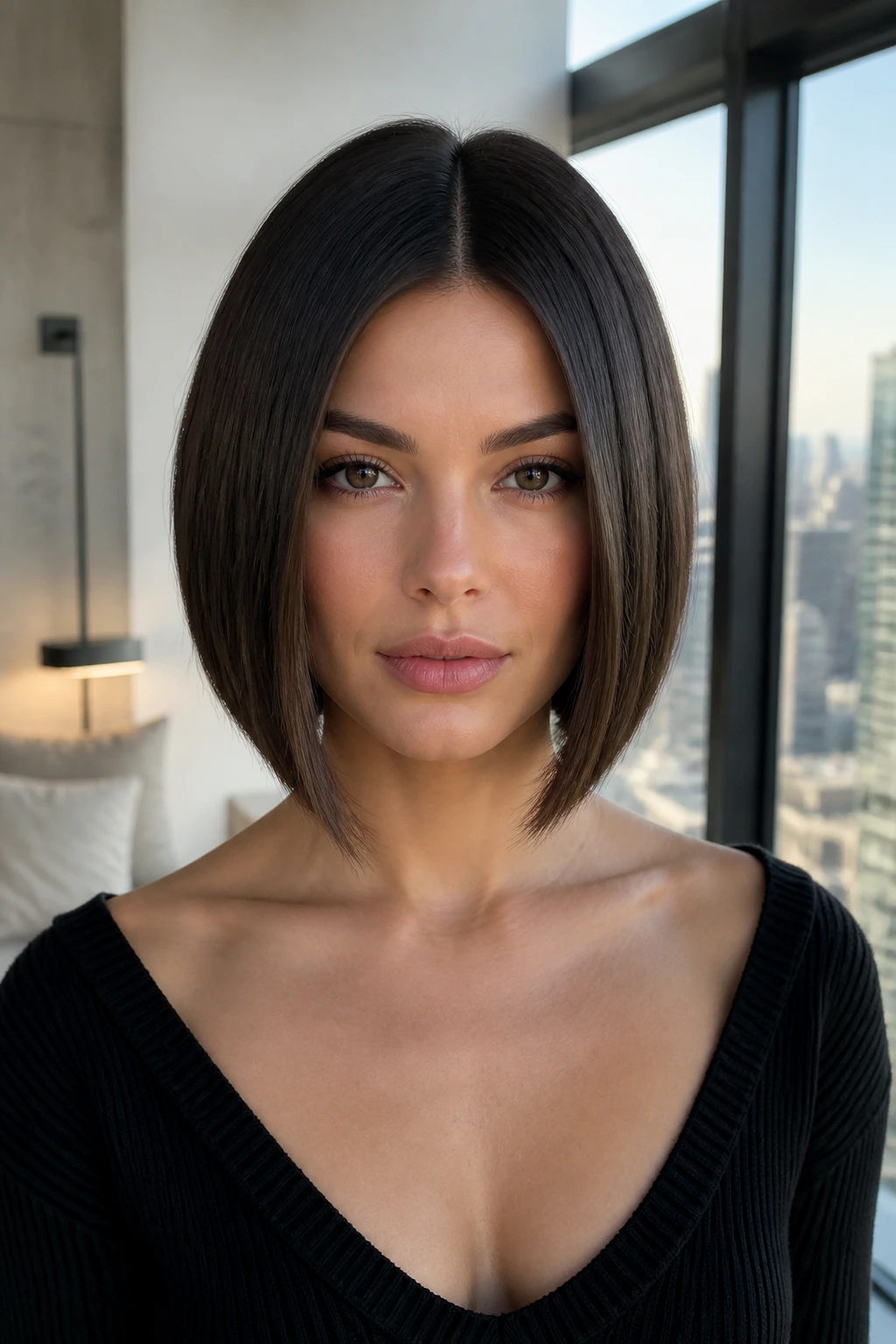
A center-part angled bob feels cleaner and a bit cooler than a side-part version. The symmetry of the part lets the angle itself do more of the talking, which is useful if you want the haircut to look precise rather than playful.
The catch is balance. A center part can expose any unevenness in the cut fast. If one side is even half an inch off, you’ll see it. That does not mean the style is unforgiving in a bad way. It just means the shape has to be honest.
This cut often works well with straight or lightly wavy hair, especially if the front pieces are long enough to graze the jaw or the top of the collarbone. Too short, and the middle part can make the front feel stiff. Too long, and the whole thing drifts away from the bob shape.
There’s a reason this one photographs so cleanly. The line is simple. The face stays open. The haircut looks thought-out without needing extra decoration. That can be a nice change.
14. Razored Angled Bob
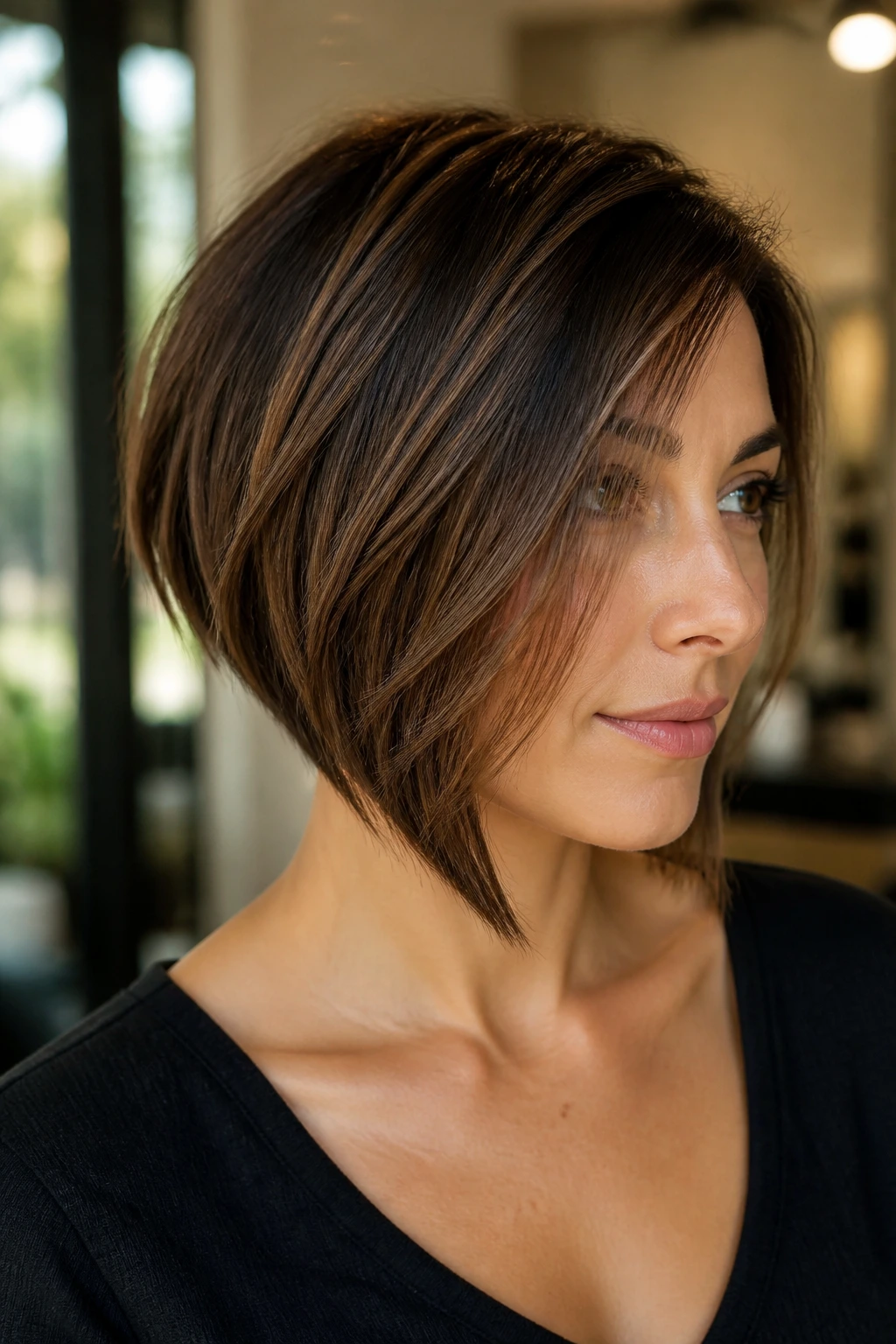
A razored angled bob softens the edge without losing the shape. The razor creates a lighter, more feathered finish at the ends, which can be useful if you want the haircut to move instead of sit in one hard block.
This approach works best on hair that is straight to softly wavy and not too fragile. Razor work on damaged hair can make the ends look frayed, which is a bad trade. On healthy, dense hair, though, it can remove some of the heavy feel that makes bobs lie flat.
The look is different from a blunt cut. A blunt bob looks like it was sliced. A razored one looks like the ends were softened by motion. Same basic shape, different feeling.
Who should skip it
If your hair is already fuzzy at the ends or tends to puff in humidity, too much razor work can make maintenance annoying. In that case, a scissor-cut perimeter with only a little texturizing is safer.
For the right hair, though, this cut has a nice edge. It feels lighter in the hand and less rigid at the jaw.
15. Face-Framing Angled Bob

A face-framing angled bob puts the spotlight on the front pieces. The back still stays shorter, but the real action happens near the cheeks and jaw, where the front sections are cut to land in a flattering spot.
This is the version I’d point to if someone wants the haircut to soften a strong jaw or pull attention up toward the eyes. The front pieces can hit at the cheekbone, the lip line, or the chin, depending on what you want to emphasize. That tiny difference changes the whole read of the face.
Why it feels balanced
The angled line gives structure. The framing pieces give movement. Together, they stop the haircut from feeling too hard. A few soft layers around the face can help, but they should not be so short that they detach from the bob.
This shape is especially good if you tuck hair behind one ear often. The front piece on the loose side becomes a clean line on its own, which is a small thing until you see it in a mirror and realize it fixes the whole haircut.
16. Undercut Angled Bob
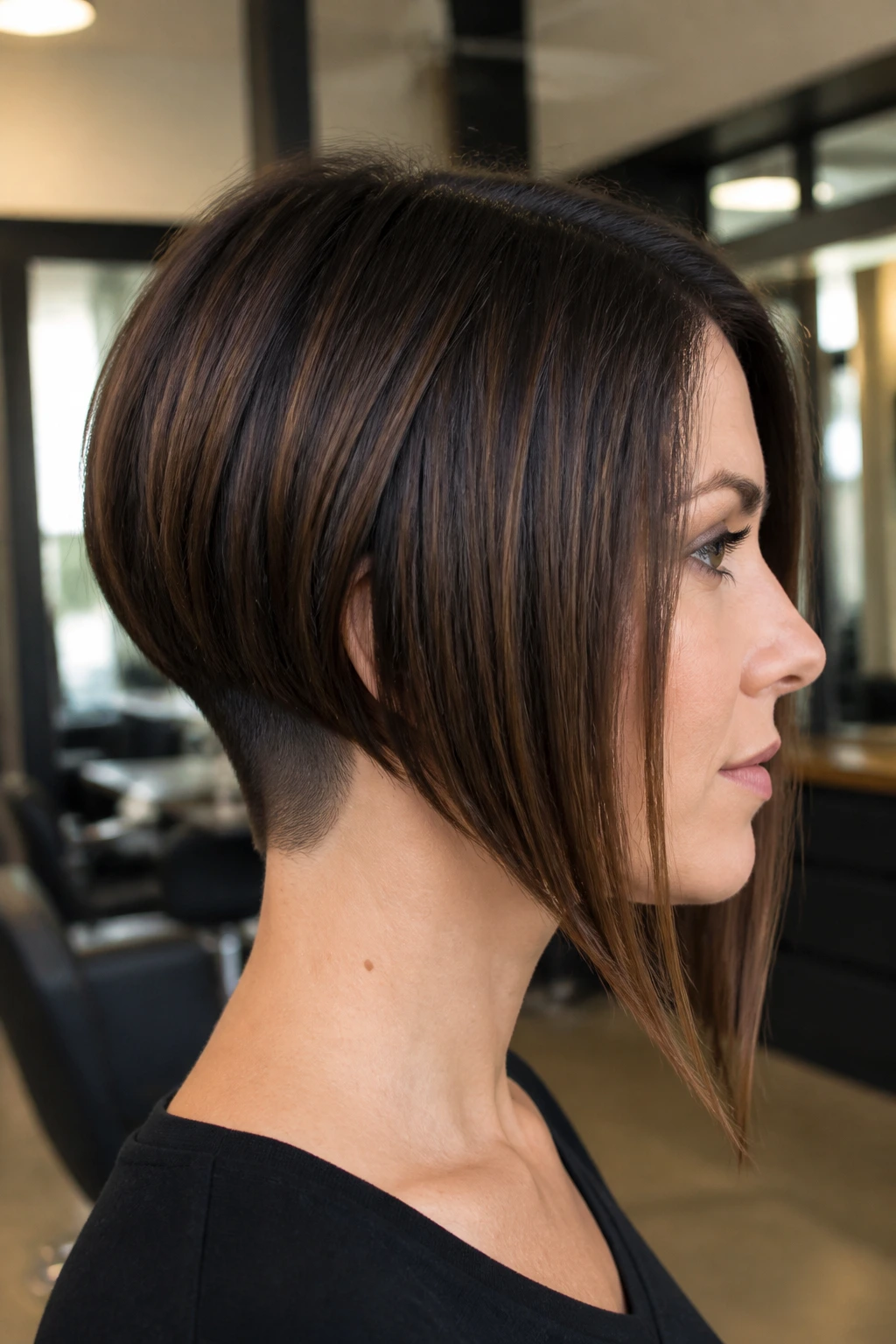
An undercut angled bob is for people who have a lot of hair and are tired of fighting it. A hidden undercut at the nape removes bulk where it builds up most, which lets the angled line sit close to the head instead of flaring outward.
The clean part is that the undercut stays mostly invisible unless the hair is lifted. So you get the shape benefits without shouting about the haircut from across the room. That makes it practical, not just edgy.
This style works especially well when the top layers are a little longer and the front is kept sleek. The result is a bob that feels lighter on the neck and dries faster than you’d expect. That matters on thick hair, where even a few ounces of removed weight can make the ends behave better.
Maintenance is the trade-off. The undercut grows out faster than the rest of the shape, so it needs regular cleanup if you want that neat fit at the nape. But if you’re already bothered by too much bulk, it’s a fair price.
17. French Angled Bob
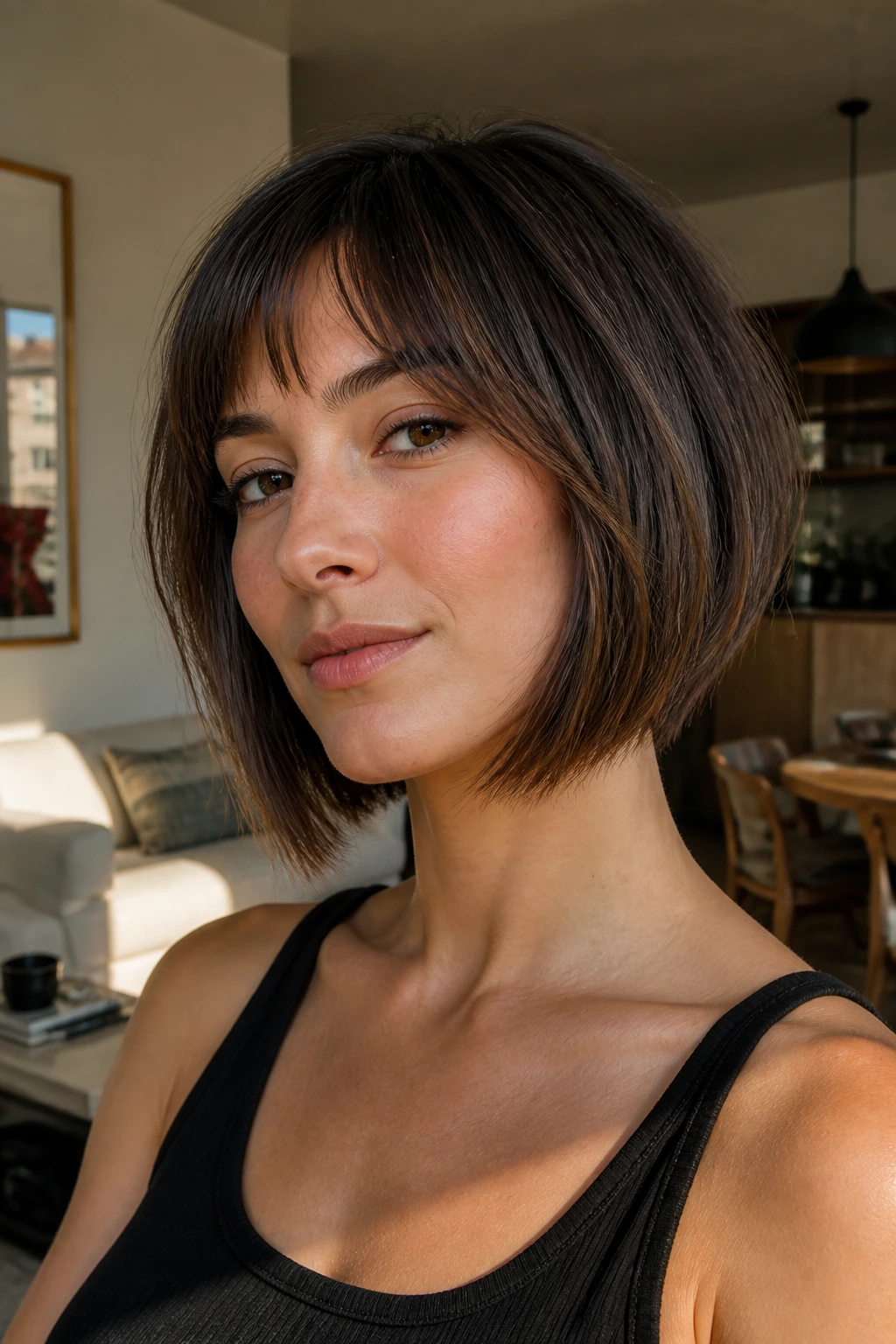
A French angled bob has a little charm in it. Not cute in a sugary way. More like a cut that looks as if it knows exactly how it wants to sit and is mildly annoyed if you fuss with it too much.
Usually, this version stays shorter, often around the jaw, and leans on soft movement rather than hard geometry. The angle is present, but not aggressive. That makes it feel relaxed while still giving the face a sharp outline. If you like a bit of fringe, a soft brow-skimming bang can sit nicely with it, though it is not required.
The beauty of this shape is its easy contrast. The back stays neat. The front has a little swing. The whole thing looks deliberate without being overworked, which is a hard line to hit.
This is a good choice if you want a bob that feels lived-in rather than stiff. It can air-dry well, especially when the cut is light enough to move but not so layered that it loses its edge.
18. Inverted Angled Bob

An inverted angled bob pushes the classic angle into a more dramatic shape. The back is cut noticeably shorter and often more stacked, while the front drops farther down, giving the haircut a stronger side profile.
It’s a cousin of the classic angled bob, but with more shape and more contrast between back and front. If the classic version is a clean line, the inverted one is a statement line. It can look especially good on straight hair because the geometry shows without needing much styling.
The danger here is going too steep and ending up with a wedge. That look can be sharp in a bad way if the graduation is too dense or the front is too thin. The best inverted bob has a smooth rise at the back and front pieces that still feel substantial.
Good match for:
- Hair that holds a round brush blow-dry.
- People who want a visible profile from the side.
- Anyone who likes a short back but does not want a pixie.
- Straight or slightly bent textures.
This one has energy. It is not shy.
19. Layered Angled Lob
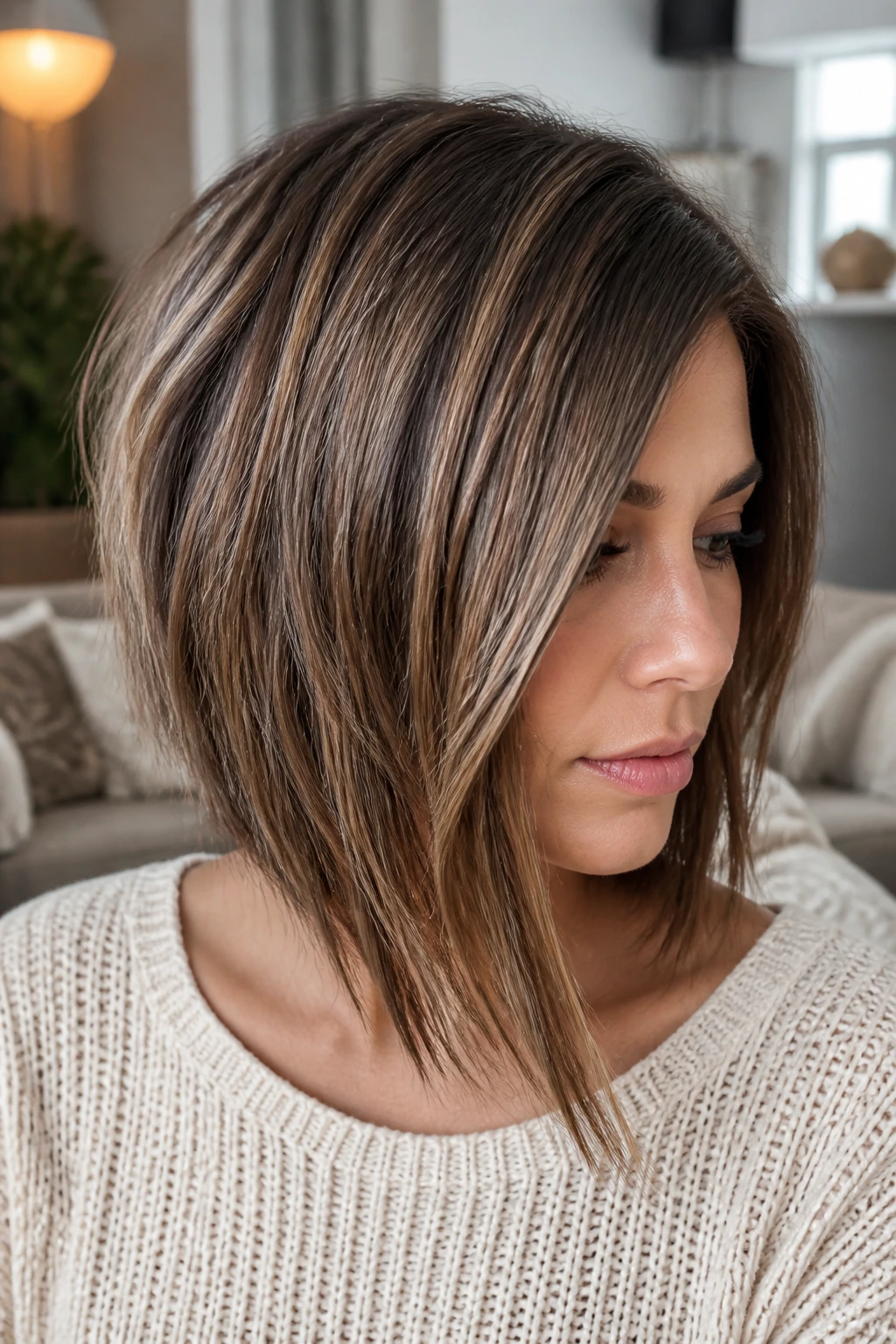
A layered angled lob gives you more movement than a blunt lob, but less edge than a short angled bob. The length usually sits around the shoulders or just above them, with the front pieces extending a bit longer to keep the diagonal visible.
Layers help here when the hair is dense or when you want the shape to bend around the shoulders instead of sitting heavy against them. They can also keep the cut from flipping out at odd spots, which is a real issue at this length. Done well, the layers sit inside the shape instead of stealing it.
This version is a good bridge haircut. If you’re growing out a shorter bob, it keeps the outline interesting. If you’re not ready for a full chop, it gives you shape without losing too much length.
The front should still matter. If the layers take over and the angle disappears, the cut turns into a generic layered lob. That’s not what we want here. Keep the diagonal visible, even if it’s softer.
20. Sleek Angled Bob
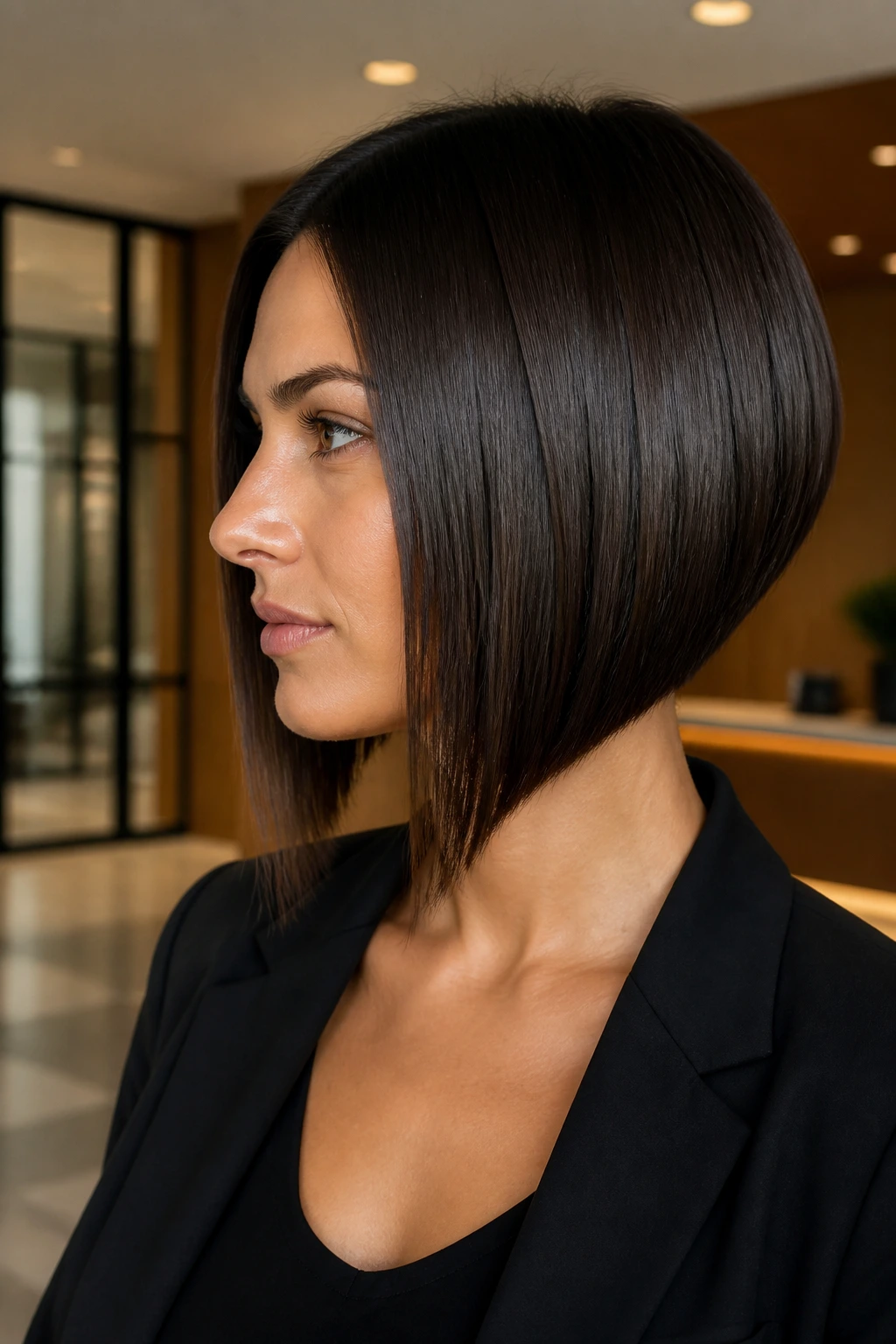
A sleek angled bob is the cleanest version of the bunch. No big texture. No loose ends pretending to be casual. Just a polished line that sits close to the head and falls in a deliberate angle from back to front.
This cut is at its strongest when the blow-dry is smooth and the perimeter is precise. A paddle brush, a flat iron with a light bend at the ends, and a smoothing cream are usually enough. The goal is not pin-straight stiffness. The goal is a surface that lets the angle show without distraction.
It works especially well for anyone who wants a haircut that makes simple clothes look more finished. T-shirts, sharp collars, hoop earrings — the whole thing lands better when the hair has this kind of clean line. And if you like a haircut that still looks controlled by day three, this one can hold up nicely with a quick refresh at the roots.
A sleek angled bob is plain in the best sense. No extra fuss. Just shape, direction, and a line that knows where it wants to go.
A well-cut angled bob does not need much help to look good. That’s the pleasure of it. The right version gives hair a shape you can see from across the room, and the wrong version shows its problems just as fast.
Pick the one that fits your texture, your patience, and how much edge you actually want around your face. The sharpest-looking bob is rarely the loudest one.
