



Thick hair and a short bob can be a beautiful match—or a helmet, if the cut is wrong. The smartest short messy bobs for thick hair do one job very well: they take out weight without stealing shape.
That means careful layering, not aggressive thinning; point-cut ends, not a chewed-up outline; and enough length left behind to keep the hair from sticking out like a shelf. Thick strands want room, but they also need a perimeter that still feels intentional. That’s where a messy bob earns its keep.
That balance is the whole game.
A good cut on dense hair usually has a little movement built in at the crown, some softness around the face, and a finish that looks better when it is not overworked. You want hair that falls, bends, and breaks up a little at the ends. Flat, polished, overly tidy? Usually not the move here.
Some shapes lean softer, some lean sharper, and a few do both at once.
1. Jaw-Length Choppy Bob for Thick Hair

This is the haircut I point thick-haired clients toward when they want movement without losing the strong outline that makes a bob look like a bob. Jaw length gives the style a clear edge, while choppy ends stop it from reading as heavy or boxy. It has a little bite.
Why It Works on Dense Hair
The jaw is a useful line because it shows off the cut instead of burying it under extra length. Thick hair at that point can still have body, but it will not drag the whole shape down. Ask for point-cut ends and light internal removal, not a blanket thinning job. Those are not the same thing.
The best version has a slight bend at the bottom, not a hard curl. That tiny bit of irregularity keeps the haircut from sitting like a shelf.
- Best on straight, wavy, or softly coarse hair
- Looks strongest when the nape is kept neat
- Works well with a center part or a slight off-center part
- Needs a quick refresh with dry texture spray, not a full styling marathon
Tell your stylist you want the ends to move, not fray.
A rough-dry finish with your fingers is often enough. If the last inch of hair has too much bulk, the shape loses that airy, piecey feel fast. If your hair is very curly, this cut can still work, but the jaw line may spring up higher than you expect once it dries.
2. French Bob with Soft Fringe

Can thick hair still feel light at chin length? Absolutely, if the fringe and the perimeter are handled with a little restraint. A French bob is usually shorter, cheeky, and a bit undone, which is why it works so well when dense hair tends to feel too serious.
The soft fringe matters here. It breaks up the front without making the cut look like a solid block of hair. If your hairline is strong or your bangs tend to separate, a slightly longer fringe that grazes the brows is easier to live with than a blunt little wall across the forehead.
How to Ask for It
Ask for a chin-skimming bob with soft, piecey bangs and a little movement at the temples. The fringe should not be heavy enough to press straight down all day. It needs some space.
A tiny amount of mousse at the roots helps the shape stay lifted while the rest of the hair dries with its own bend. If you want the style to feel more relaxed, tuck one side behind the ear and leave the other side loose. That tiny asymmetry makes a big difference.
This cut is happiest when the hair has a natural wave or a small bend from sleeping on it. Pin-straight hair can still wear it, but it usually needs a quick twist with a flat iron or a one-inch curling iron to get that slightly imperfect finish.
3. Stacked Bob with Lifted Crown
If your hair puffs out at the sides the minute it passes the shoulder, a stacked bob can clean that up fast. The shape is shorter in the back and fuller through the crown, which shifts the weight upward instead of letting it hang around the jawline. That change sounds small. It is not.
The trick is keeping the stack controlled. Too much stacking and you get a dated silhouette that feels hard around the back of the head. Too little, and the haircut never really clears the bulk. The sweet spot is a smooth rise through the crown and a clean drop at the nape.
A stacked bob works especially well on thick hair that also has a little stiffness to it. The back can support the shape without collapsing. If your hair is softer, you may need a round brush blow-dry to keep the crown from sinking.
One-sentence truth: the back of the cut has to be tidy for the whole style to look messy on purpose.
Ask for graduated layers at the back, but keep the front corners longer if you want a more modern feel. That little stretch in the front stops the cut from looking too round.
4. Collarbone Bob for Thick Hair with Invisible Layers

Short does not have to mean severe.
A collarbone bob sits in that sweet middle ground where thick hair gets to keep some length, but the shape still feels fresh and light. The invisible layers are the quiet part people miss. They are cut inside the haircut, so the outside line stays smooth while the inside loses weight.
That matters a lot on dense hair. If every layer is visible, the cut can turn fuzzy and overworked. Invisible layers keep the ends looking full while helping the hair fall instead of ballooning. It is a calmer look, and I think that calm is underrated.
Why It Grows Out Well
This one is smart if you do not want to live at the salon. Because the longest pieces sit around the collarbone, the cut still looks polished when it grows an inch or two. The shape softens instead of dropping apart.
- Good for people moving down from longer hair
- Easy to wear with a soft wave or a blowout
- Lets thick hair keep swing at the ends
- Feels less exposed than a jaw-length bob
If you part your hair in the same place every day, ask for a little extra face-framing on the heavier side. That helps the cut settle more naturally. And yes, it can still look messy. The mess just reads as relaxed instead of tousled-for-the-sake-of-it.
5. Razor-Cut Bob with Airy Ends

The ends of a razor-cut bob feel lighter before you even style them. There is a feathery softness to the shape, almost like the perimeter got brushed out by hand. On thick hair, that softness can be a gift—if the razor work is controlled.
Where the Razor Helps
A razor is useful when the hair is healthy and the stylist knows how to use it on dense strands. It removes mass in a way that scissors sometimes cannot, especially around the front and at the lower half of the cut. The result is a bob that bends instead of sitting stiff.
Where to Be Careful
Do not go heavy with the razor if your ends are already dry or fuzzy. Thick hair can hide damage for a while, then suddenly show it once the cut is shorter.
The best version leaves the outline clean and uses the razor for softness inside the shape, not all over the head. If the hair has a coarse texture, you want just enough texturing to break up the heaviness—nothing shredded. That distinction matters.
A light styling cream on damp hair can keep the airy ends from going wild. Blow-dry with a nozzle and aim the airflow downward for the last minute or two. That keeps the cut from puffing out at the edges, which is the main thing people hate about a bad razor cut.
6. Wavy Bob with a Deep Side Part
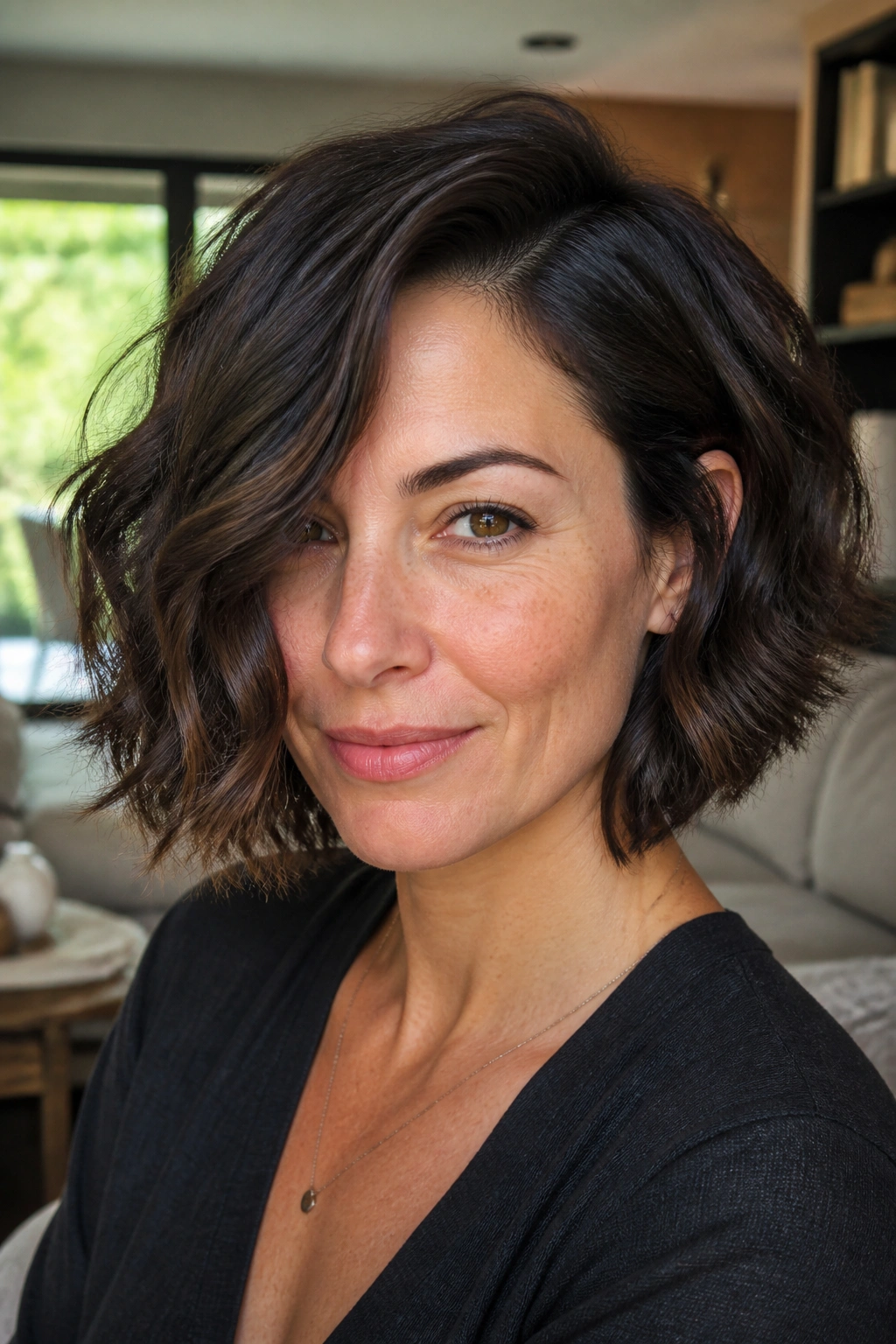
A deep side part can change everything.
On thick hair, it gives you instant movement without needing to remove much length. One side sits closer to the cheekbone, the other gets a little more lift at the root, and the whole cut feels less even in a good way. That unevenness is what keeps it from looking stiff.
This bob looks especially nice when the wave pattern is loose rather than tight. The side part lets the bigger waves fall forward a bit, which softens the face. If your hair is straight, a one-inch iron and a few bent sections around the mid-lengths can fake the same effect without making the style look curled.
The neat part is how little work it needs once the shape is right. A rough blow-dry, a touch of texture spray, and a shift in the part are often enough. Some mornings it looks better with the tuck. Some mornings it wants the front pieces left loose. Hair does what it wants.
If you have a square jaw or a broader forehead, this shape is especially kind. It breaks up the symmetry without hiding your face.
7. Boxy Bob with Broken Texture
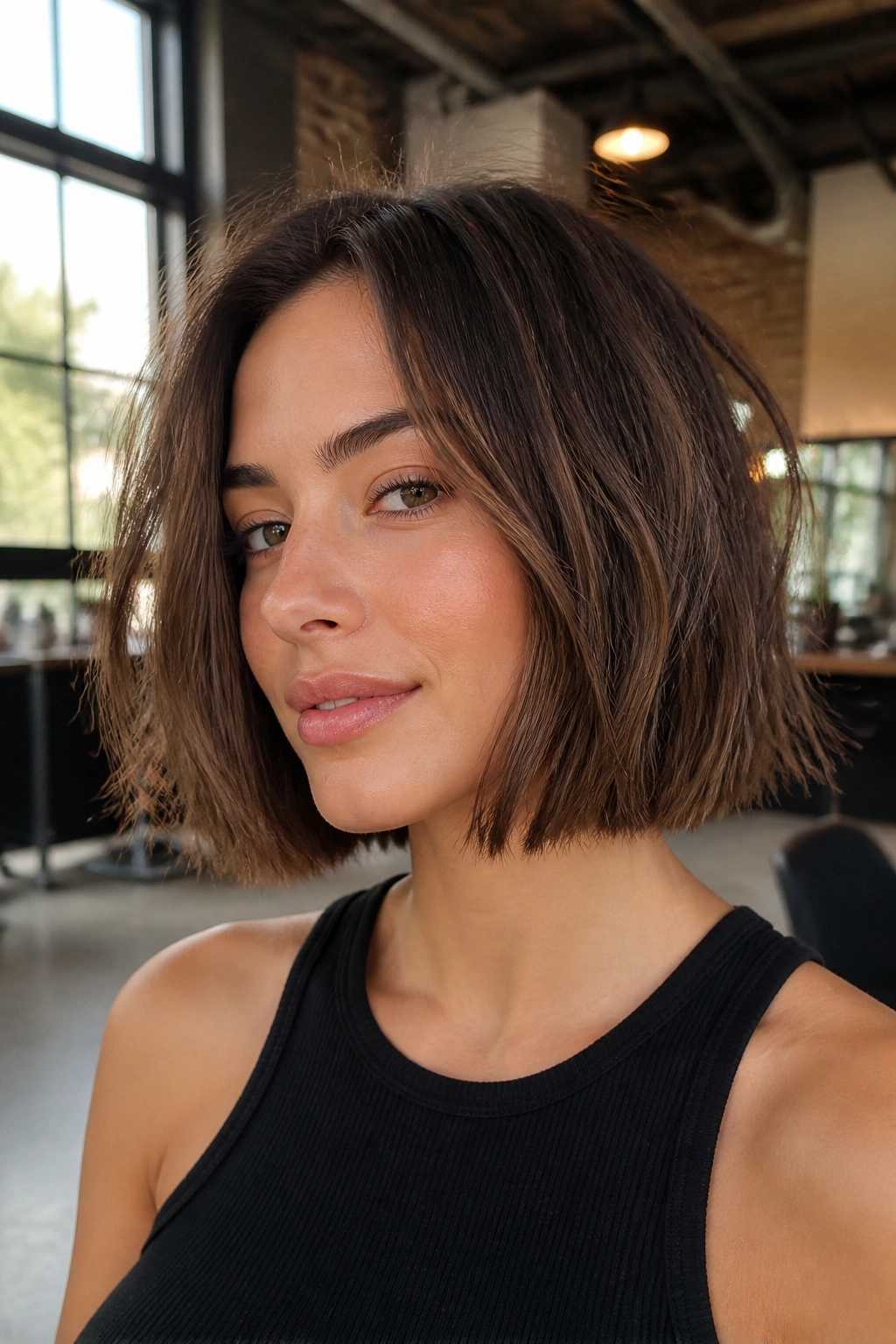
A blunt bob can still look messy. People forget that.
The boxy version keeps a strong line around the bottom, but the texture is broken up just enough so the shape does not feel rigid. Think of it as a clean outline with a slightly rough surface. Not shaggy. Not fluffy. Just a little undone at the ends and around the crown.
Best on Hair That Does This
This style tends to work best on hair that is dense, straight, or only lightly wavy. Coarse hair can hold the shape well, and the strong edge keeps it from looking too wide. If your hair has a lot of natural frizz, you will need to be more careful with the finish.
- Ask for a blunt perimeter with soft point-cutting inside
- Keep the length around the jaw or just below it
- Use a light cream, not a heavy oil
- Let the top stay a little imperfect
The appeal here is structure. Even when the hair gets a little mussed up during the day, the haircut still reads as deliberate because the line underneath is strong. That is a nice trick for thick hair, which can go from chic to shapeless if the base is too soft.
And no, it does not need to be perfectly smooth to work.
8. Curved Bob Tucked Behind the Ear
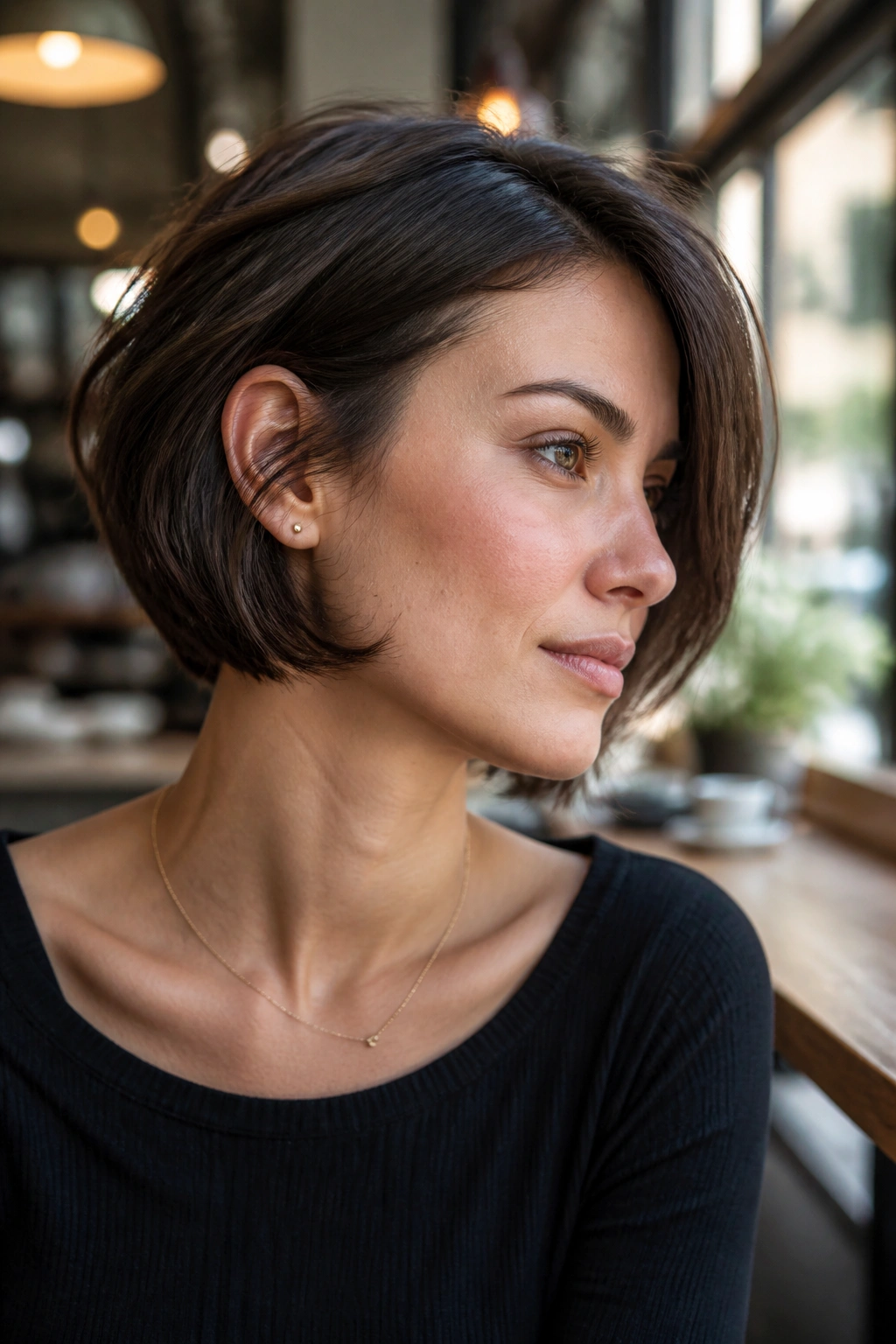
Unlike a square bob, this one curves in slightly toward the neck. That tiny bend changes the whole mood of the cut. It keeps thick hair from flaring out at the sides and gives you a shape that feels neater without looking severe.
The tuck-behind-the-ear detail is the part people remember. It opens the face, shows off earrings, and lets the haircut breathe around the cheekbones. On dense hair, that matters because the front pieces can get heavy fast. A tuck creates instant lightness without sacrificing length.
Styling Shortcut
Dry the hair with the front sections directed slightly forward, then tuck one side behind the ear once it is 80 percent dry. That small move trains the shape and keeps the curve visible. If the ends want to flip outward, a quick pass with a round brush at the last inch will calm them down.
This cut is great for people who wear glasses, because it keeps the side panels from fighting with the frames. It also works for anyone who wants a bob that can move between polished and casual without a big restyle. Messy, but not chaotic.
9. Bob with Curtain Bangs and Feathered Layers

I keep coming back to curtain bangs with thick hair because they make the front half of the cut do some of the work. Instead of piling all the bulk into one solid line, the fringe splits the weight and sends the eye outward. That makes the bob feel softer right away.
Feathered layers around the face help even more. They stop the front from looking heavy and let the rest of the cut sit lower without feeling bulky. The whole thing has a bit of air in it. Not much. Just enough.
What to Ask Your Stylist
Ask for a bob that hits anywhere from the chin to the upper neck, plus a curtain fringe that starts around the brow and blends into the front layers. The layers should be feathered, not shredded. There is a difference, and your hair will show it.
How to Wear It
- Split the fringe with your fingers after drying
- Add a little root-lift mousse at the front
- Twist the side pieces away from the face with a round brush
- Leave the ends of the bob slightly piecey
The best part is how forgiving this cut is on busy mornings. If the bangs separate a little, the style still works. If the front pieces bend wrong, the mess can look intentional. That kind of flexibility is worth a lot when your hair is thick and stubborn.
10. Asymmetrical Messy Bob
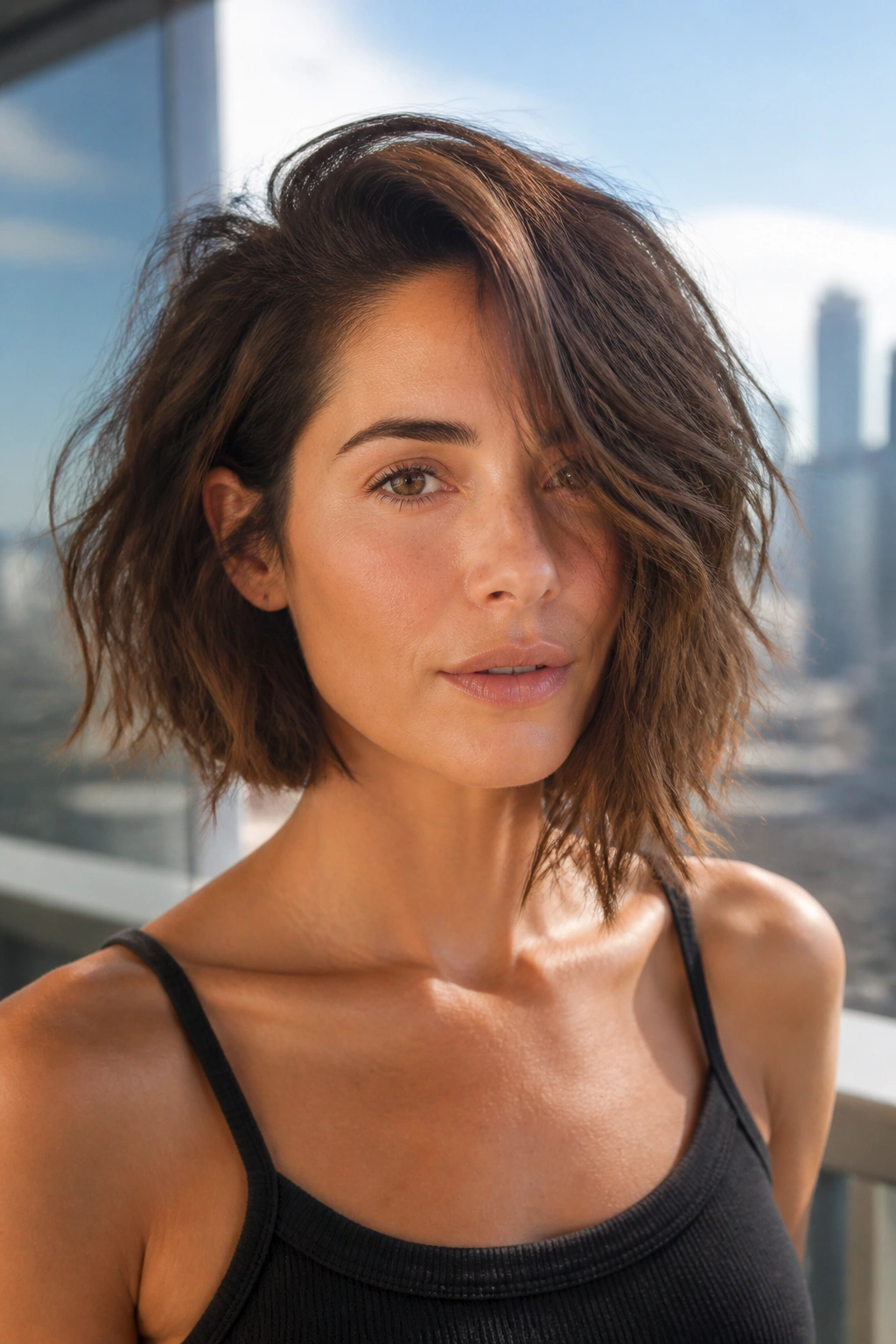
Do you want a bob that looks deliberate even when it is a little undone? An asymmetrical shape does that job nicely.
One side is kept a touch longer—sometimes by half an inch, sometimes by a full inch—so the cut has a built-in lean. That shift helps thick hair move away from the face instead of sitting evenly on both sides. It also gives you one of those cuts that looks different from every angle, which is half the fun.
The asymmetry does not need to be dramatic. In fact, the subtle versions usually age better. A tiny imbalance feels modern. A huge gap can feel like the haircut is trying too hard. Most people are happier somewhere in the middle.
This style works well if your hair naturally parts to one side, because the longer section can ride with the grain instead of fighting it. It can also soften a strong chin or jaw, since the uneven length pulls the eye diagonally.
If you like a haircut that still looks good when you toss it behind one ear, this is a solid choice. It handles a little chaos without losing shape.
11. Shaggy Bob with Micro Layers
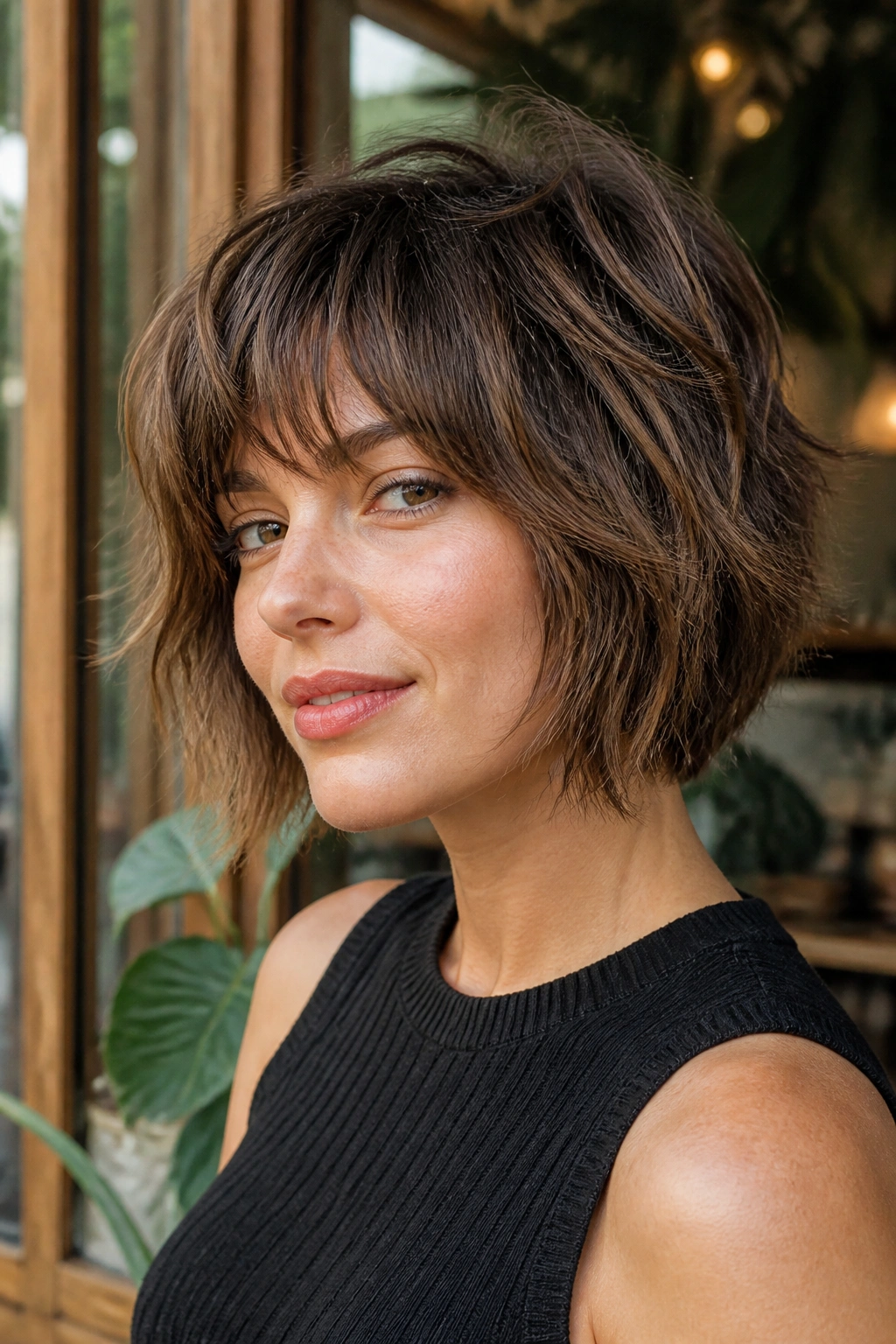
This is where a bob starts borrowing from a shag, but only just enough to stay wearable. Micro layers are the quiet engine underneath the style. They break up the bulk in tiny sections so the hair has movement without turning into a full-on shaggy halo.
What Makes It Different
The haircut is short, but not blunt. The bottom line is still there. You just get more texture through the inside and around the crown, which is perfect for thick hair that tends to look too solid when cut in one block.
- Good if your hair dries with a little natural bend
- Nice for people who like air-dried hair
- Needs a bit of texture paste at the ends
- Can get fluffy if you overbrush it
The trick is to treat the cut like it wants a little separation. Finger-combing beats a fine-tooth comb here. So does a small amount of salt spray scrunched into damp hair. You do not want every strand perfectly aligned.
This is probably my favorite option for thick hair that feels too heavy in straight shapes. It has body, but it also has air between the pieces. That makes the whole style look alive rather than weighed down.
12. Blunt Bob for Thick Hair and a Rough Dry Finish
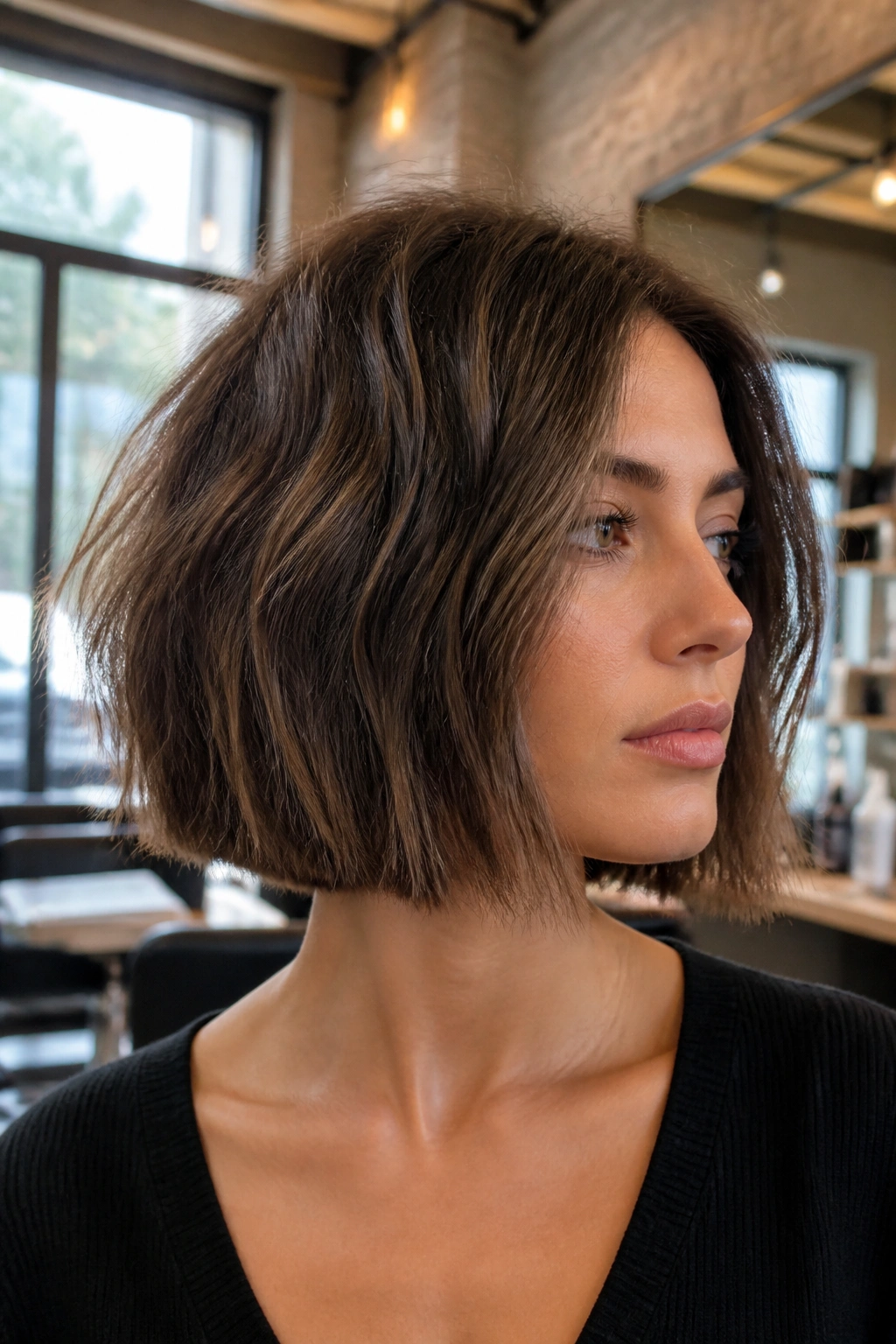
Yes, thick hair can pull off a blunt bob.
The secret is in the finish. If you blow it dry until every strand lies flat and shiny, the cut can feel too solid. If you rough-dry it instead—lifting the roots with your fingers, leaving the ends a little bent, and not chasing perfection—the blunt line suddenly looks strong rather than stiff.
That is why this version works. The shape is clean, but the texture around it stays loose. Thick hair already has the mass to support the line. You do not need to fight that. Use it.
Do not overload the hair with oil. A small amount on the mid-lengths is fine. Too much and the roots collapse while the ends stick out in sad little clumps.
This bob is best for people who want a haircut that looks neat by default but still plays nicely with a lived-in finish. It is especially good if you work in a setting where you need your hair to look tidy fast, because the underlying shape does the heavy lifting. A quick shake at the roots, maybe a bit of dry shampoo on day two, and it is back in shape.
13. Lob-to-Bob Chop with Face-Framing Pieces
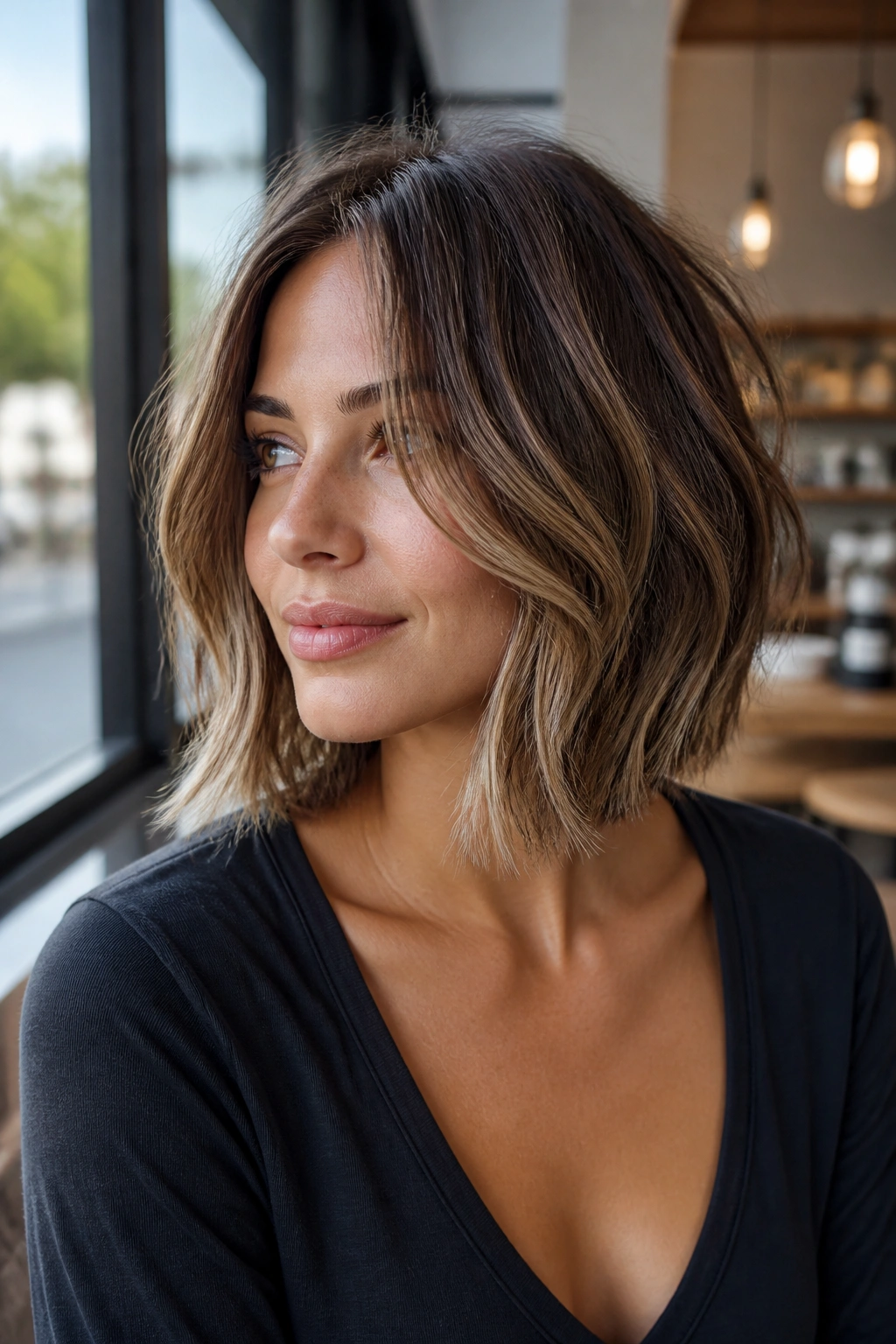
This is the haircut for the person who is flirting with short hair but does not want to leap off the cliff all at once.
A lob-to-bob chop usually lands somewhere between the chin and the top of the shoulders, but the important part is the transition. The front pieces are trimmed to frame the face, and the back may sit a little higher to remove weight. That gives you a shorter feeling without taking away all your options.
The face-framing pieces are what make the cut feel soft. They can start around the cheekbone or jaw, depending on your face shape, and they help thick hair move away from the front instead of stacking up around it. That alone can make the haircut feel lighter.
It is also a smart shape if you like tying your hair back on lazy days. You can still pin it, clip it, or half-up it without fighting a too-short cut. That flexibility matters more than people admit.
If you are nervous about commitment, this is the safe bet. Not boring. Just smart.
14. Chin-Length Bob with Undone Volume

At chin length, thick hair sits right where the shape matters most. Too flat and it looks heavy. Too puffy and it takes over your whole face. The sweet spot is a bob with volume at the crown and softer movement through the sides.
This version keeps the body, but not the bulk. A few carefully placed layers around the crown can give lift without making the bottom thin out. That is the mistake people make with thick hair: they remove too much at the wrong place. The cut then loses its line and starts to fray.
Where to Place the Lift
Ask for the extra support at the roots, not at the ends. A little root-lift spray or mousse at the crown helps the shape sit higher, while the mid-lengths and ends stay calm.
You can rough-dry this bob with your fingers, then finish the front section with a round brush to get a soft bend away from the face. That little curve opens the cheekbones and keeps the chin line from feeling boxed in.
It is a good cut if you want short hair that still feels feminine, easy, and a bit undone. The undone part matters. Chin-length bobs look best when they are not trying to behave too hard.
15. Inverted Messy Bob with Nape Taper

A short bob with a tapered nape is one of the cleanest ways to handle thick hair. The back gets shorter, the front stays longer, and the head shape gets a little lift without needing a huge amount of styling. It sounds simple because it is.
That taper at the nape makes the haircut sit close to the neck instead of kicking out. On dense hair, that small detail changes everything. It removes the visual bulk where the hair tends to pile up and leaves the front pieces free to swing a little.
This shape suits people who want a neat neckline but do not want the haircut to feel severe. The front can still be messy. The back just stays under control.
- Great if your hair gets bulky at the nape
- Looks crisp with a side part or off-center part
- Needs regular trims to keep the angle clean
- Works with straight, wavy, or lightly coarse texture
The grow-out is better than people expect, too. It softens into a rounded bob rather than turning into a flat block. That makes it easier to live with between salon visits.
The Bottom Line

Thick hair is not the problem. The wrong shape is.
The best short messy bob for dense hair is the one that respects the weight of the hair while trimming away the parts that make it feel bulky, stiff, or boxy. Some people need jaw-length structure. Others want a collarbone cut that feels a little easier to grow out. A few will be happiest with a shaggy finish or a sharp inverted line. None of those answers are wrong.
Bring photos, yes, but bring details too. Ask for point-cut ends, internal weight removal, or a dry finish if your hair tends to shrink and puff up when wet. That one conversation can save you from a cut that looks good only in the salon mirror.
The best messy bob is the one that still looks good after you run your fingers through it twice and walk out the door.
