



Flat, heavy hair has a habit of making even a good cut look tired. A razor bob haircut with choppy layers fixes that tension by doing two things at once: keeping the outline crisp while breaking up the mass inside the shape. That contrast is the whole point. Too much razor work, though, and the ends can go wispy in a bad way. Too little, and you lose the movement that makes this cut worth wearing.
The best versions feel lived-in without looking messy. You see the line of the bob first, then the little irregular pieces that move when you turn your head or tuck one side behind your ear. On fine hair, that softness can stop the cut from collapsing. On thick hair, it can pull out some weight so the shape does not sit like a helmet. On fragile or overprocessed hair, the same razor can do damage if the stylist gets too eager.
That is why these cuts are not all the same, even if they share the same basic bones. Jaw-length, collarbone length, angled, curled, blunt-at-the-edge, shaggy, clean, asymmetrical — each one changes the balance in a different way. Some look best with air-drying. Some want a round brush and a little bend at the ends. Some need a fringe to keep the face from feeling too open. The details matter more than the photo on the mood board.
1. Jaw-Grazing Razor Bob With Choppy Layers
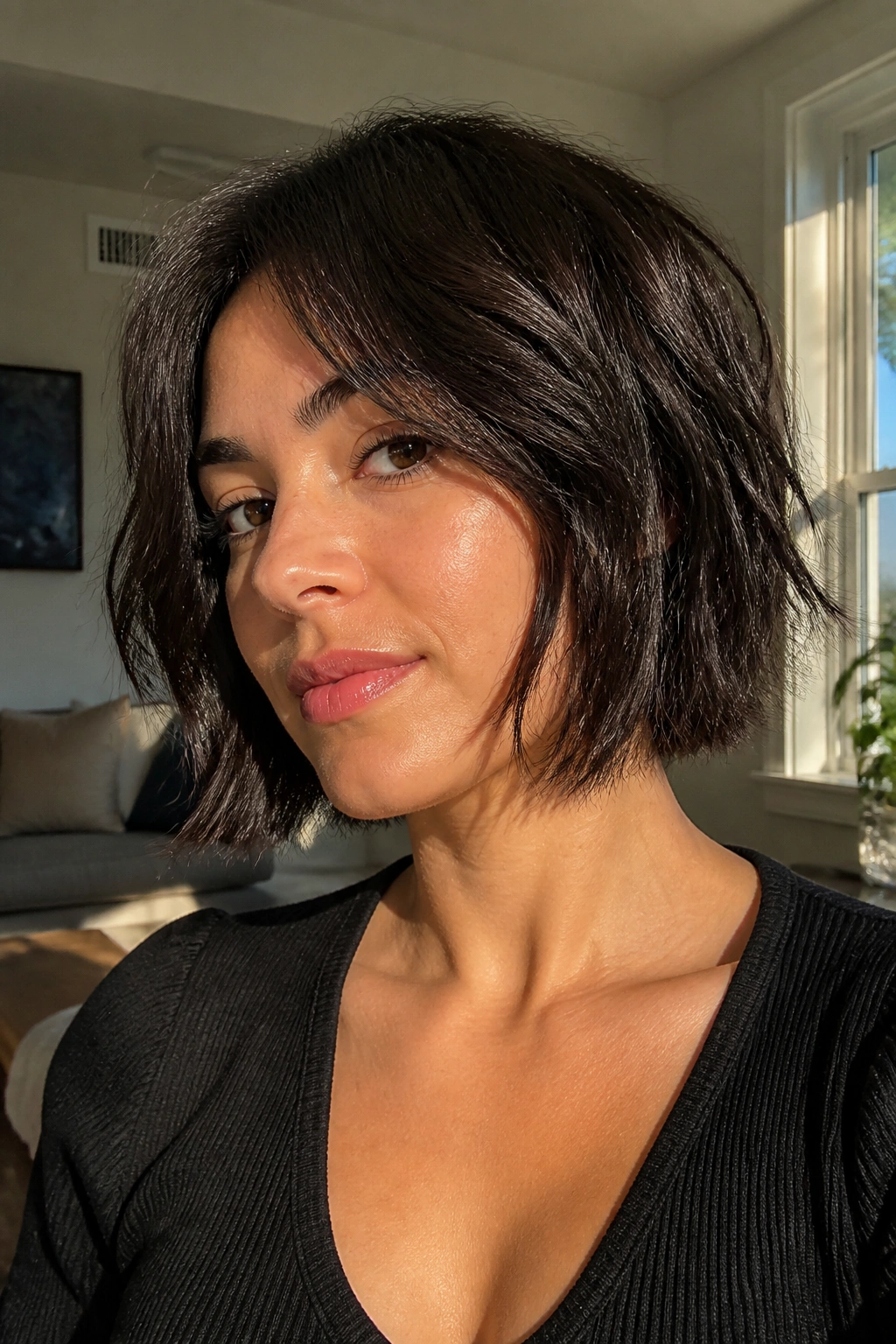
Jaw-grazing lengths have a sharp little confidence to them. They sit right where the face starts to narrow, which makes the cut feel defined before you even style it.
The choppy layers keep that line from turning stiff. A good razor pass through the interior gives the ends a broken, separated finish, so the bob moves instead of sitting in one flat sheet. That matters most if your hair tends to puff at the sides or drop straight with no bend. Ask for the perimeter to stay clean and the interior to be softened with short, uneven pieces.
This one works especially well with a center part or a slight off-center part. A quick blow-dry with a paddle brush, then a touch of lightweight cream on the ends, is usually enough. If you like a little edge, tuck one side behind the ear and leave the other side loose. The cut does the rest.
Best on hair that already has some natural movement.
2. Collarbone Razor Lob With Face-Framing Pieces

Why does this length work so well? Because it gives you a little more swing than a chin-length bob without losing the sharpness that makes a razor cut interesting. Collarbone length also buys you room for softer face-framing pieces, which helps if you want the cut to feel relaxed instead of severe.
Why It Stays So Wearable
The longer length keeps the ends from looking too thin, especially on fine hair. The choppy layers sit mostly around the front and mid-lengths, so the silhouette still feels full. A stylist can point-cut or razor the front pieces around the cheekbones, which gives the face some shape without turning the whole cut shaggy.
- Best if you wear your hair in a low bun sometimes.
- Good for people who want a bob but are not ready for a very short cut.
- Easy to style with a 1-inch curling iron for a soft bend.
- Works with curtain bangs, a side part, or no fringe at all.
Use a heat protectant and keep the ends slightly piecey, not puffy.
3. French Bob With Piecey Razor Ends

This is the cut that looks effortless even though it is carefully built. Shorter at the jaw, a touch fuller through the middle, and just rough enough at the ends to avoid that helmet shape some bobs fall into.
The French bob gets a lot of its charm from restraint. The layers should not be so chopped up that the line disappears. They should whisper, not shout. A razor helps here because it softens the perimeter just enough to make the bob feel a little airy, especially if you pair it with a soft fringe or a tiny bit of texture through the crown.
I like this style on hair that bends naturally. Straight hair can wear it too, but you usually need a few bends with a flat iron or a round brush to keep it from reading too severe. A pea-size amount of styling paste on the ends gives the cut a bit of separation. Not much more. Too much product and it loses that crisp little French-girl snap.
The trick is keeping the shape neat while the texture stays broken up.
4. Wavy Razor Bob With Airy Mid-Length Layers
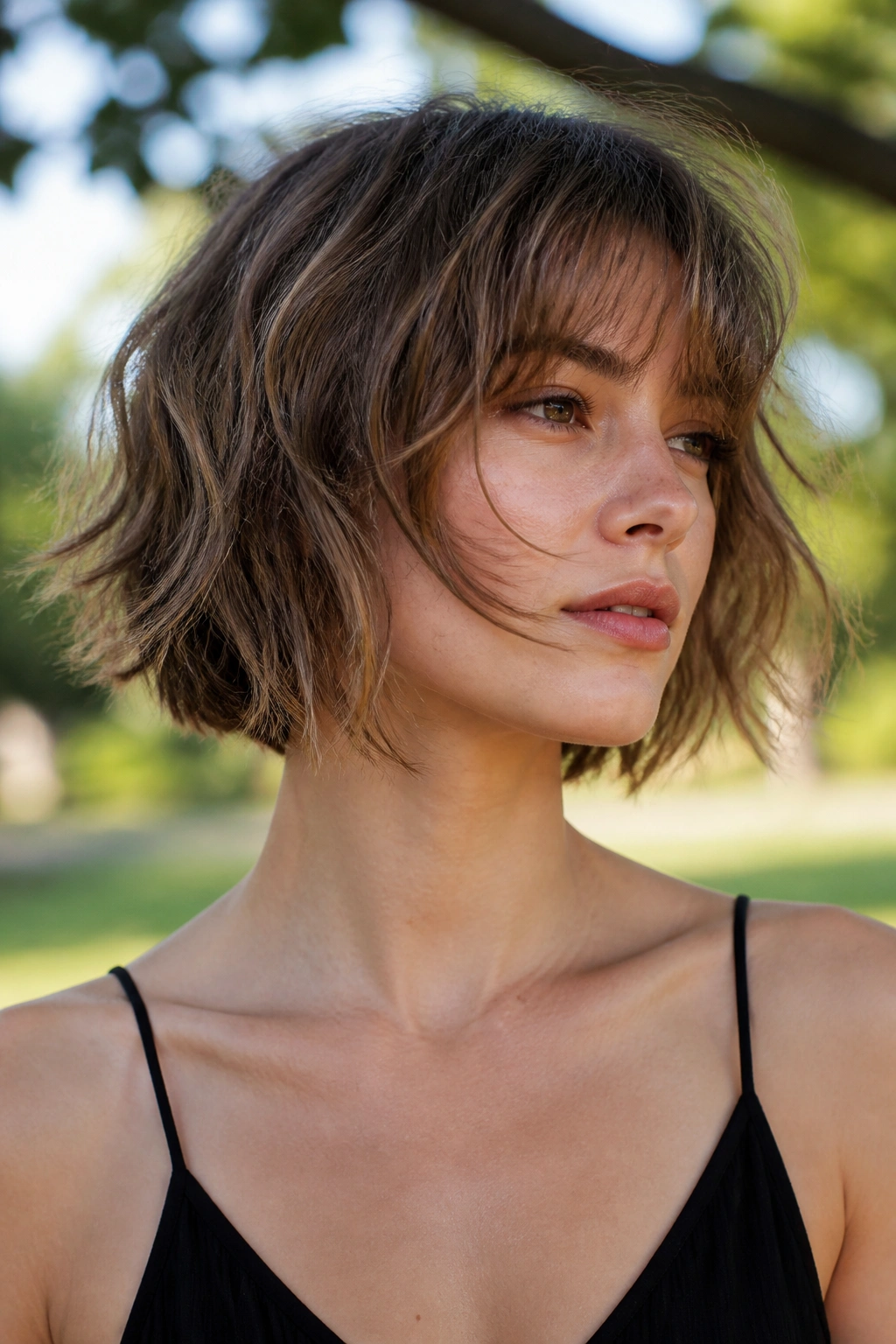
A wavy bob can look either soft or sloppy. The difference usually comes down to where the weight is removed.
When the layers are cut with a razor through the mids, the wave pattern has space to move. The hair does not stack up in one heavy line near the bottom, which is what makes some wavy bobs look triangular. Instead, the wave falls in loose clumps, and each bend has a little room around it. That is the whole win.
Styling Notes That Actually Matter
Start with damp hair and scrunch in a mousse from roots to ends. Not a mountain of mousse. Just enough to give the waves a bit of memory. Air-dry if your hair already has bend, or use a diffuser on low heat if you need more lift. Once dry, break the cast with a drop of oil on your palms and pinch the ends lightly.
If your waves tend to swell in humidity, keep the layers longer and the razor work lighter. Short, over-cut layers can spring up in a way that is hard to tame. This cut likes movement, not frizz.
5. Angled Razor Bob With A Tapered Nape

An angled bob changes the mood immediately. The back sits shorter and tighter, while the front falls longer toward the collarbone or jaw. That diagonal line gives the cut structure before the choppy layers even enter the picture.
The razor work belongs mostly inside the shape. You want enough softness to keep the front from looking boxy, but not so much that the angle disappears. That balance is what makes this style feel polished rather than fussy. It has a bit of bite. Good bite.
For styling, think smooth roots and lived-in ends. A flat brush at the crown, then a quick bend through the front sections with a round brush or a medium iron, is enough. If the nape is too bulky, the whole cut starts to puff outward. If the front is too wispy, the angle looks accidental instead of deliberate.
This is the bob I recommend when someone wants shape first and texture second.
6. Sleek Razor Bob With Internal Layers

Sleek does not have to mean boring. In fact, a razor bob with internal layers can look cleaner than a blunt cut because the shape lies closer to the head while the movement hides underneath.
What the Internal Layers Do
They remove bulk where you do not want it visible. The outside line stays smooth, but the inside no longer fights the silhouette. That matters a lot for thicker hair, where a bob can get wide through the middle if every section is left too heavy.
The styling is straightforward. Blow-dry with a nozzle attachment, brush the hair down and slightly under at the ends, then use a light serum on the lower third only. You do not want the hair so glossy that the layers disappear. You want the surface clean, not slick.
Who Should Ask for It
- People who like a neat outline.
- Anyone whose hair swells after a fresh cut.
- Clients who want movement without a shaggy finish.
- Hair that needs weight removed without losing fullness at the line.
A lot of people ask for “layers” and end up with too much obvious chopping. This version is quieter than that. Better, in my opinion, because you can wear it to work, dinner, or a casual weekend and it never feels overdone.
7. Razor Bob With Curtain Bangs

Curtain bangs change the whole read of a bob. They soften the forehead, open the face a little, and give the haircut a front-facing shape that feels finished even when the rest of the hair is barely styled.
What makes this combo smart is the way the bangs and layers talk to each other. The choppy pieces around the cheekbones echo the fringe, so the haircut feels connected instead of chopped into separate parts. A razor is useful here because it keeps the bangs light at the ends, which helps them sweep instead of sitting in one blunt curtain.
How To Keep The Fringe From Splitting Too Much
Dry the bangs first, with a small round brush or your fingers and a dryer on medium heat. Push the roots forward, then bend the ends away from the face. If you wait until the rest of the hair is dry, the fringe tends to dry flat and weird.
Curtain bangs like regular trims. They grow fast and start brushing into the eyes sooner than people expect. If you want a softer grow-out, ask for the shortest point to sit around the bridge of the nose and the longest point to fall near the cheekbones.
8. Shaggy Chin-Length Bob With Heavy Texture
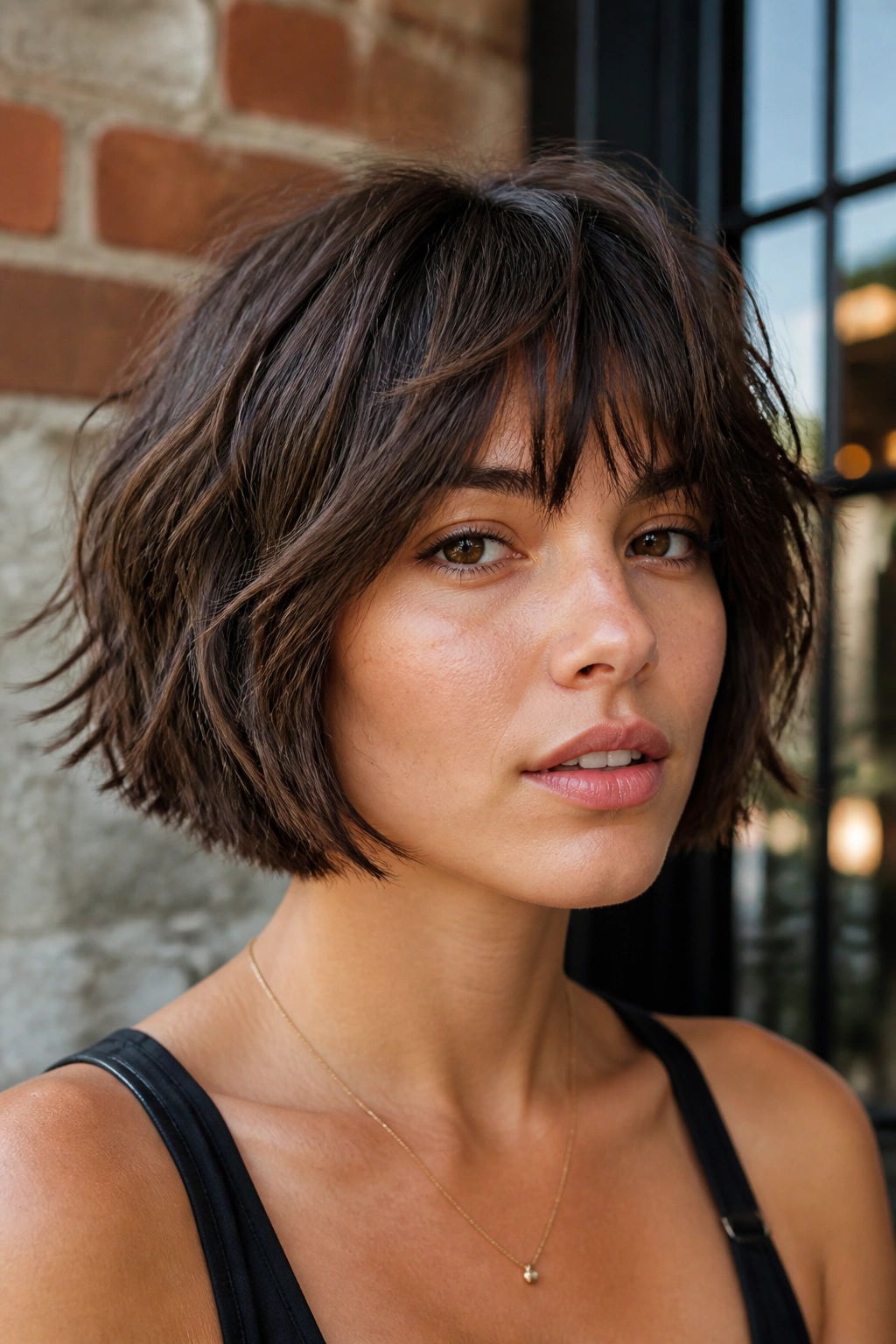
This cut has a little mess in its bones, and I mean that in a good way. It is the bob for someone who wants movement to show up even on lazy styling days.
The trick is to keep the perimeter visible while the inside gets roughened up. Too many choppy layers can turn a chin-length bob into a puffball, so the razor work needs a light hand and a clear plan. You want separation, not collapse. Short, broken pieces around the crown and sides are enough to create lift without losing the bob shape.
A sea-salt spray or texture mist helps here, but use a small amount. If the hair dries sticky, the ends clump in a bad way. I like this style air-dried on someone with a little wave, or rough-dried with fingers and then finished with a quick pinch of paste through the ends.
It is not the most formal cut on this list. That is the appeal.
9. Inverted Razor Bob With Crown Lift
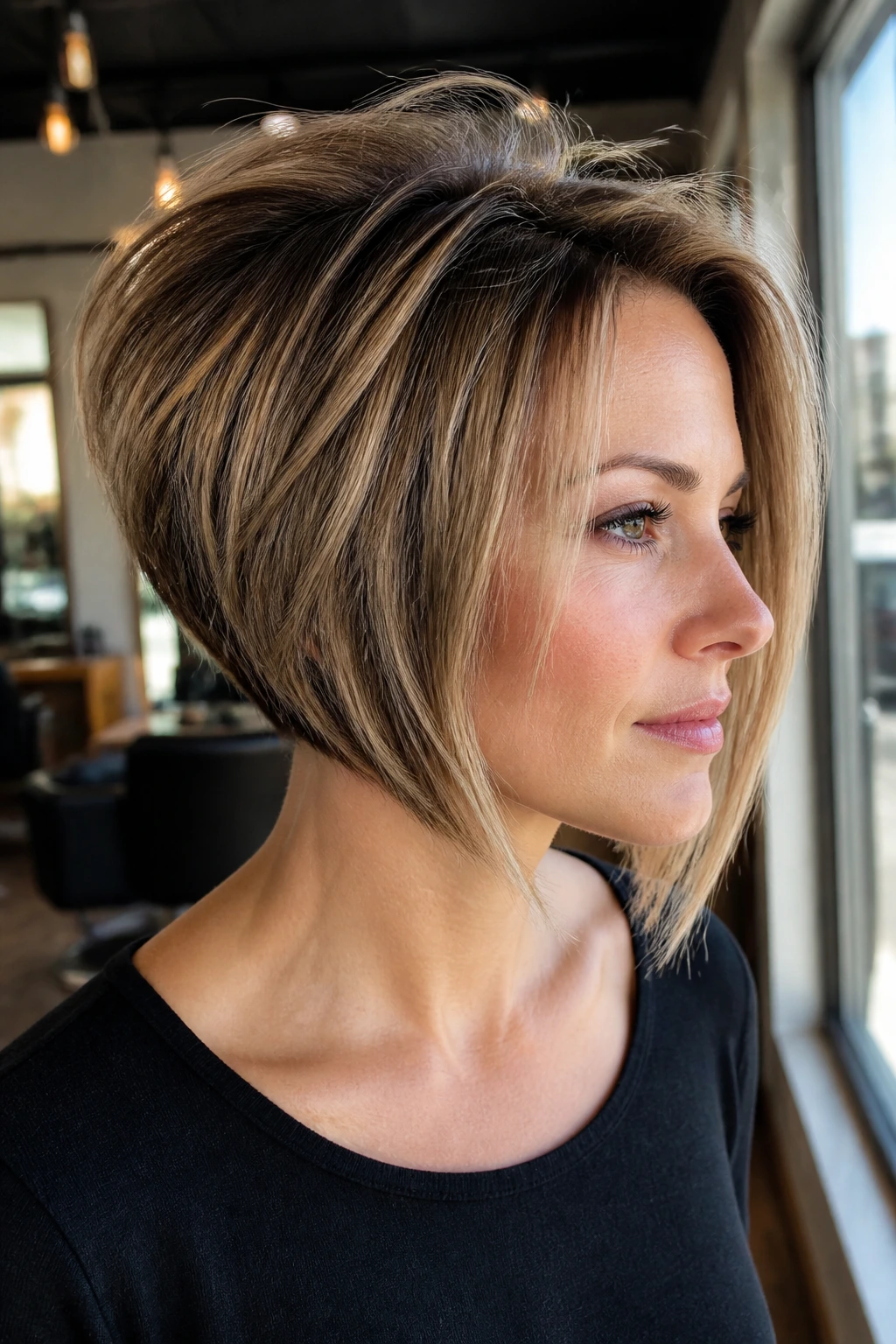
A flat crown can ruin a bob fast. This one solves that by building lift at the top and keeping the back tighter, so the whole cut rises instead of drooping.
What I like about an inverted shape is the geometry. The shorter back gives the neck a cleaner line, while the longer front pieces keep the face from feeling boxed in. A razor helps the crown area because it lightens the hair where it tends to sit heavy. Done well, it gives the illusion of more height at the top without obvious teasing or a pile of product.
Ask For This If Your Hair Falls Flat Fast
Tell the stylist you want crown lift and movement through the front, but no chunky shelf in the back. That wording matters. If the back is too stacked, the cut can look dated. If the crown is too thinned out, it loses support and starts to sag by midday.
A root-lifting spray at the scalp and a round brush at the crown are usually enough. Keep the ends a little separated. That is what makes the shape look modern rather than stiff.
10. Micro Bob With Feathered Ends
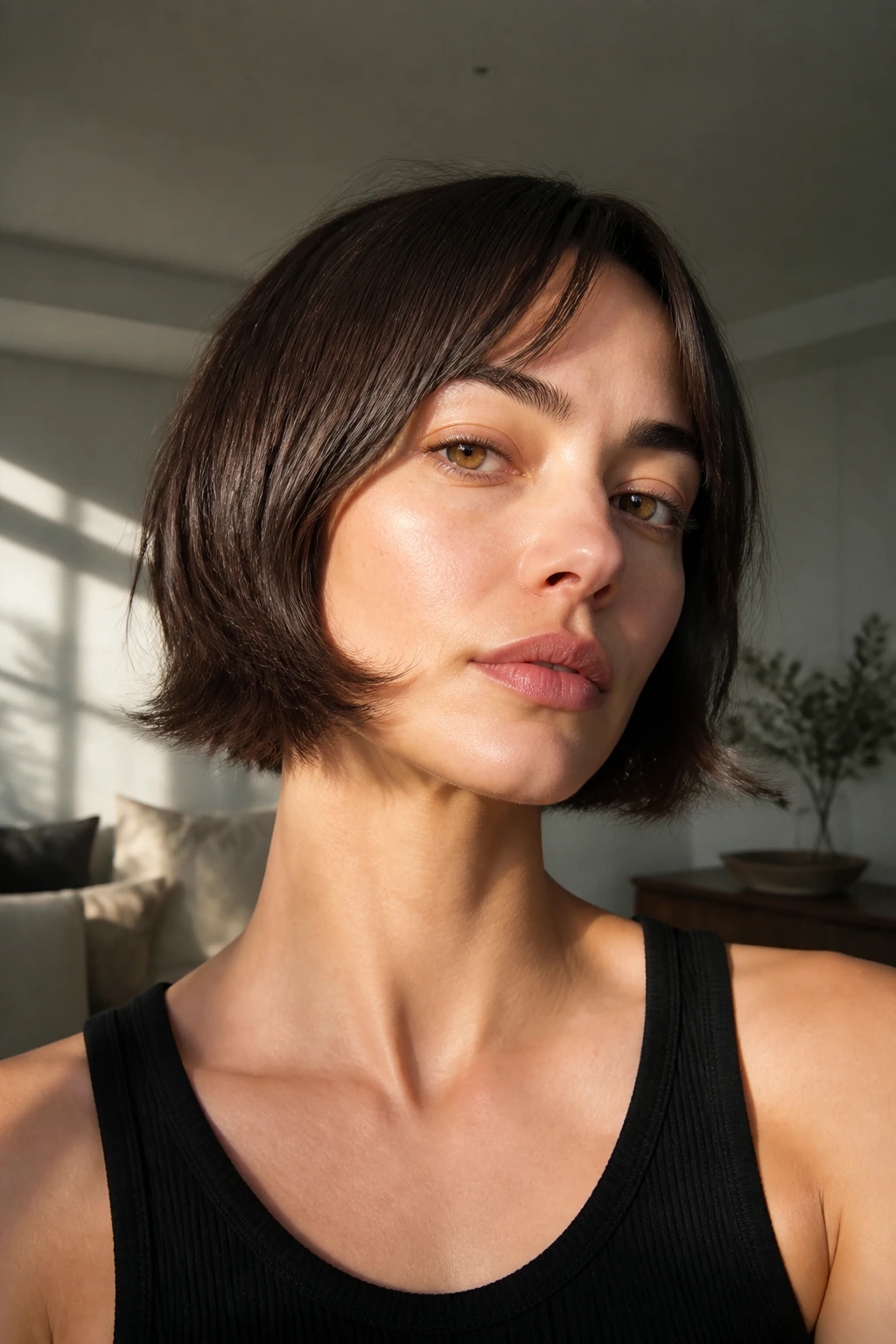
A micro bob sits shorter than most people expect. Usually it lands somewhere between the jaw and the ear line, which makes it a bold little cut even before any texture gets added.
The feathered ends are what stop it from feeling boxy. A razor can soften the bottom edge so the cut looks lighter around the face and nape. That matters because shorter bobs show every line. There is nowhere to hide a bad edge. None.
This style works best when the hair is in good condition. Short cuts expose dryness quickly, and a rough razor finish on already brittle ends can look scrappy instead of intentional. I would ask for a soft, controlled texture rather than a heavy chop. Let the silhouette stay neat.
It is also one of the easiest cuts to tuck behind the ears, slick back, or wear with a slight bend. Tiny cut. Big personality.
11. Side-Part Razor Bob With Long Front Pieces

A side part changes the balance of a bob more than people think. It gives the haircut a sweep, a direction, and a little asymmetry even before the layers kick in.
The long front pieces help the side part feel dramatic instead of lopsided. A razor cut through those front sections keeps them from looking bulky at the jaw, which is helpful if your face is rounder or you like a more angled line around the cheekbone. The back can stay compact while the front does the talking.
This is one of the easiest cuts to dress up. A round brush at the front, a touch of mousse at the roots, and a side part placed a little off center can make the whole thing look styled in ten minutes. Not more. If the part is too deep, though, the cut can feel heavy on one side and too bare on the other.
I like this one for days when you want polish without looking severe.
12. Curly Razor Bob With Soft Layers

Curly hair and razors can get tricky, so this cut needs a careful hand. The goal is to shape the curl pattern, not shred it.
What To Ask For
Ask for soft, longer layers that follow the curl rather than fight it. The razor should be used lightly, if at all, on the ends. Some curl types love a razor finish. Others fray instantly. That is one of those places where a stylist has to read the hair in front of them instead of following a formula.
What To Avoid
- Short choppy pieces near the crown that make the top frizzy.
- Over-thinning the ends until the curl loses its spring.
- Cutting the hair dry without checking how the curls sit together.
- Heavy creams that weigh the curl down and flatten the shape.
A curl cream and diffuser are usually enough. Scrunch, dry, then separate only what wants to separate. Do not rake through the whole cut. It breaks the pattern and turns the nice, soft bob into a fuzzy cloud.
13. Thick-Hair Razor Bob With Weight Removal
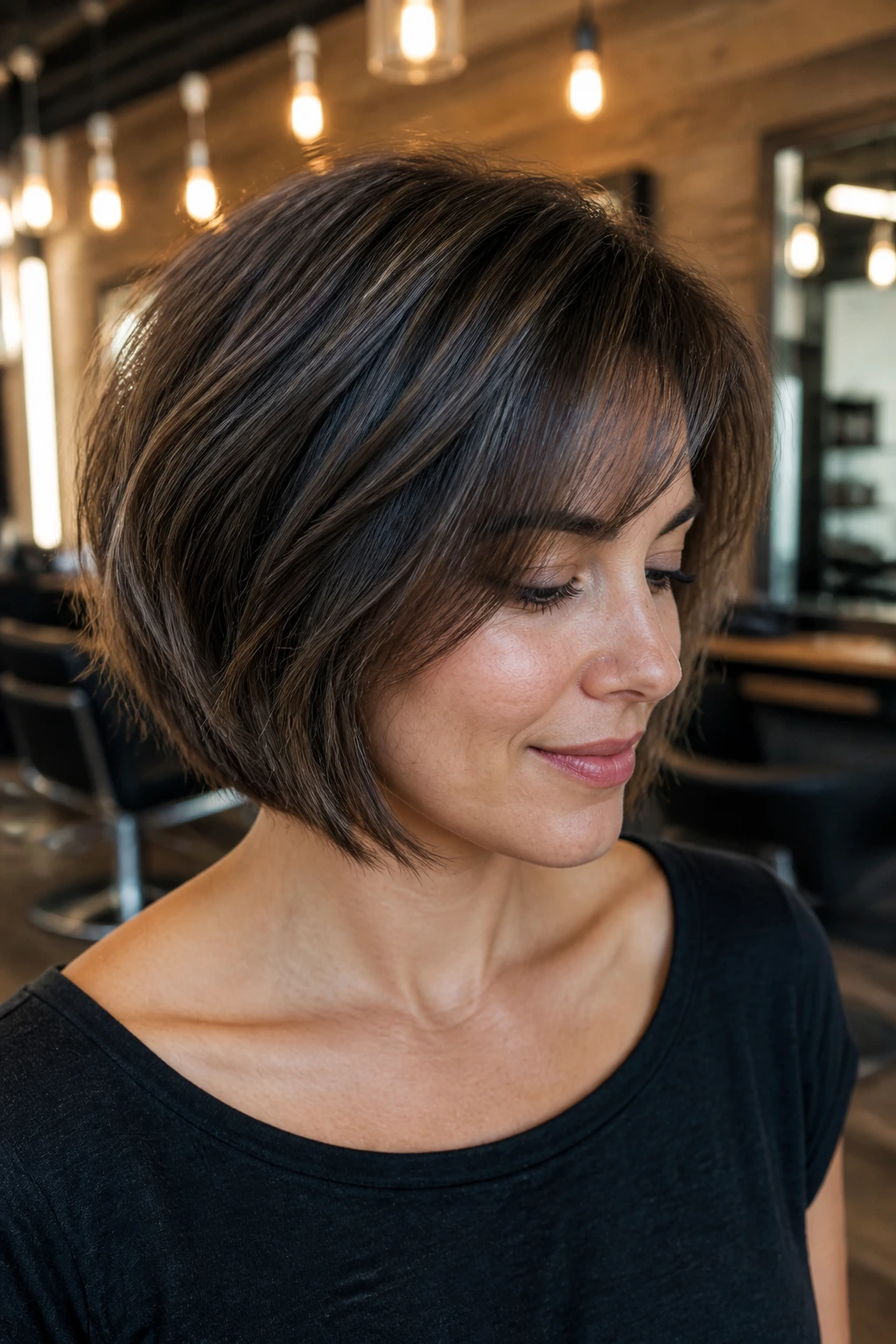
Thick hair needs space. Without it, a bob can turn into a block that sits away from the head and refuses to move.
That is where a razor bob haircut with choppy layers earns its keep. The razor can remove bulk from the inside, especially around the sides and back, so the cut lies closer while still looking full. I prefer this to aggressive thinning shears in many cases because the result can feel softer and less jagged. The caveat is control. If the stylist takes out too much weight near the bottom, the ends go thin and the whole cut starts to flick out.
The Shape To Request
Tell your stylist you want fullness at the line and weight removed inside the shape. Ask for a clean perimeter, plus layered pockets of movement through the middle. That keeps the bob from becoming wide through the cheek area.
A blow-dry with a medium round brush, focusing on smoothing the roots, usually does the trick. Thick hair often needs only one styling product: a cream with a little hold. Too many products pile up fast and make the hair feel dusty.
14. Fine-Hair Razor Bob With Light, Barely-There Layers

Fine hair can look gorgeous in a bob when the layers are handled with restraint. The cut should create the impression of body without leaving the ends see-through.
The temptation is to over-layer fine hair because people want movement. Bad move. Too many short pieces and the hair starts to look threadbare, especially at the hemline. A better approach is to keep the choppy layers long and scattered, mostly where the head needs a little lift. The razor should skim, not carve.
This is where product choice matters a lot. A light mousse at the roots gives support. A dry texture spray at the mids adds grip. Heavy oils are a mistake unless you use a tiny drop just on the very ends. Fine hair shows buildup fast, and once it gets coated, the cut loses all its bounce.
The best fine-hair bob looks fuller because the layers are subtle, not because they are obvious.
15. Razor Bob With Bottleneck Bangs

Bottleneck bangs fit a bob in a way that feels balanced and soft. They start narrower at the center, then open out toward the cheekbones, which gives the face some shape without covering too much of it.
Why They Pair Well With Choppy Layers
The fringe creates a focal point at the front, while the choppy layers keep the rest of the bob from feeling too neat. That mix matters. If both the bangs and the bob are blunt, the haircut can read blocky. If both are too textured, the shape disappears. Bottleneck bangs sit in the middle.
A razor is useful for the fringe because it keeps the ends light enough to move. You still want enough density at the center so the bangs do not split apart the moment they dry. That is the balance. Not too heavy. Not too wispy.
A quick blow-dry with a small round brush works well here, and a little styling paste on the sides can help the bangs sit in that soft open shape. I would not go heavy on this look. The beauty is in the loose, almost casual fall of the fringe.
16. Blunt-Edge Bob With Choppy Underlayers

This is the cut that surprises people. From the outside, it looks clean and sharp. Underneath, it has enough broken-up texture to keep it from acting like one solid block.
That contrast is the appeal. The perimeter stays blunt, which gives the bob a clear edge and helps it hold its shape. The underlayers get softened with a razor, which takes away hidden bulk and lets the hair move when you turn your head. You get structure and slack in the same cut.
Who This Works Best For
- People who want a tidy outline.
- Anyone who likes their hair to look neat from the front.
- Thicker hair that needs hidden weight removal.
- Straight to slightly wavy textures that can show off the line.
This is one of my favorites for people who say they want texture but get nervous when they see too much choppiness in photos. It looks restrained. Wearable. A little smarter than the usual messy bob.
17. Messy Air-Dried Razor Bob
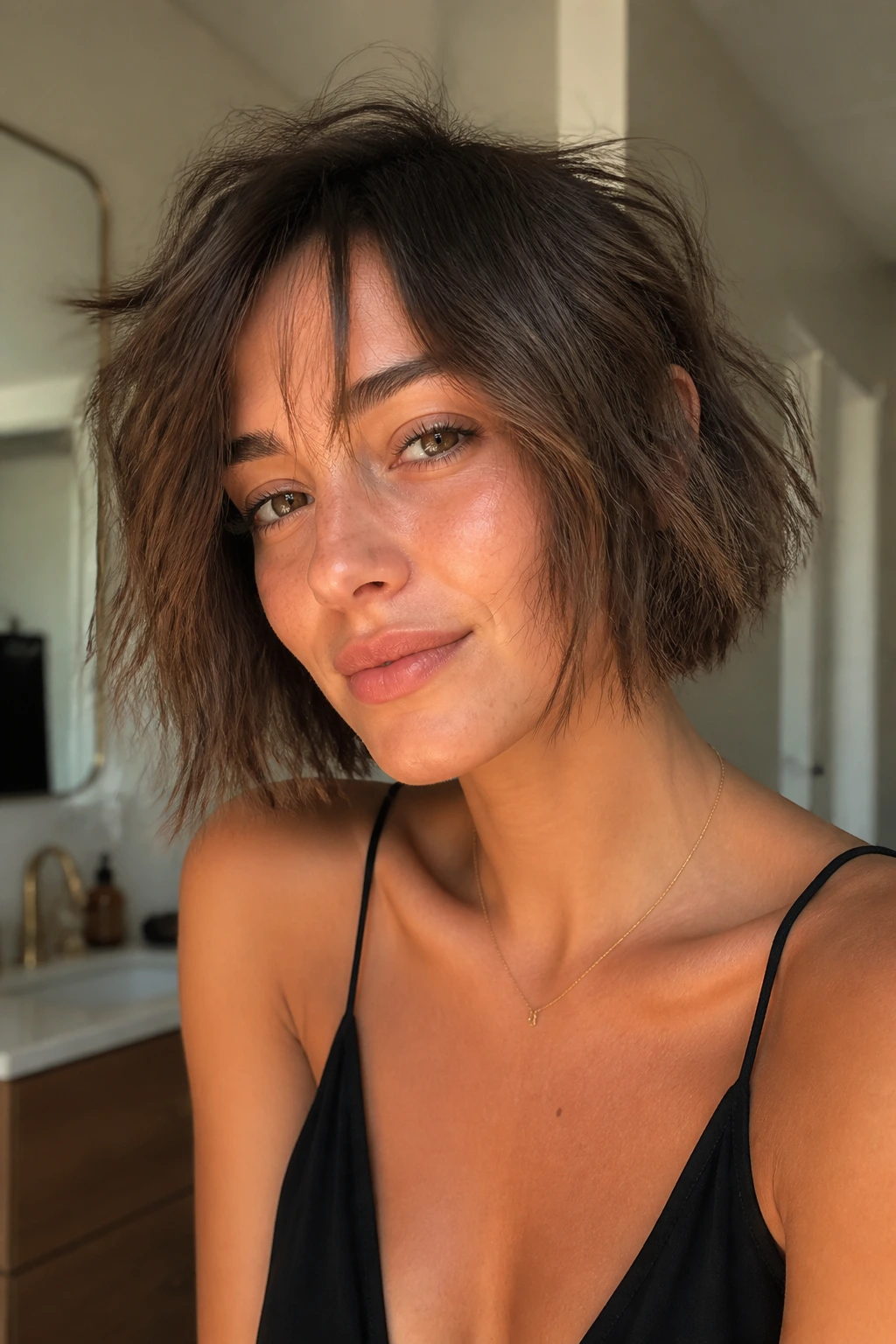
Air-drying sounds easy until your hair turns odd at the roots and flat at the ends. This cut is built to avoid that problem.
The choppy layers are placed to let the hair fall into loose pieces on its own. A razor works well here because it softens the interior enough for the hair to separate naturally as it dries. If you have a wave, it can look almost better with minimal handling than with a full blow-dry. That is the charm.
A small amount of leave-in conditioner, then a curl cream or texture lotion, is usually enough. Scrunch once or twice. Walk away. Touching it too much while it dries can make the surface frizzy, and then the whole point of the cut starts to blur.
This style is not precious. That is why people love it. It looks like you got ready quickly, even if a good haircut is doing most of the work.
18. Asymmetrical Razor Bob With One Longer Side

A little imbalance can be a good thing. One side longer than the other gives the bob motion even when the hair is still.
The razor helps the asymmetry feel intentional instead of lopsided. The shorter side can sit closer to the jaw or ear, while the longer side skims the collarbone or upper neck. Choppy layers soften the shift between lengths so the cut has a clean line but no hard block at the bottom. The result is sharp without feeling rigid.
This style suits people who like haircuts that look different from the front and side. It also works well if one side of your face is your favorite side. We all have one. The longer panel can frame it while the shorter side keeps the whole thing from feeling too heavy.
A deep side part brings out the shape. A center part can flatten it unless the layers are strong enough to support the line. Play with both before you decide.
19. Tucked-End Bob With Soft Graduation
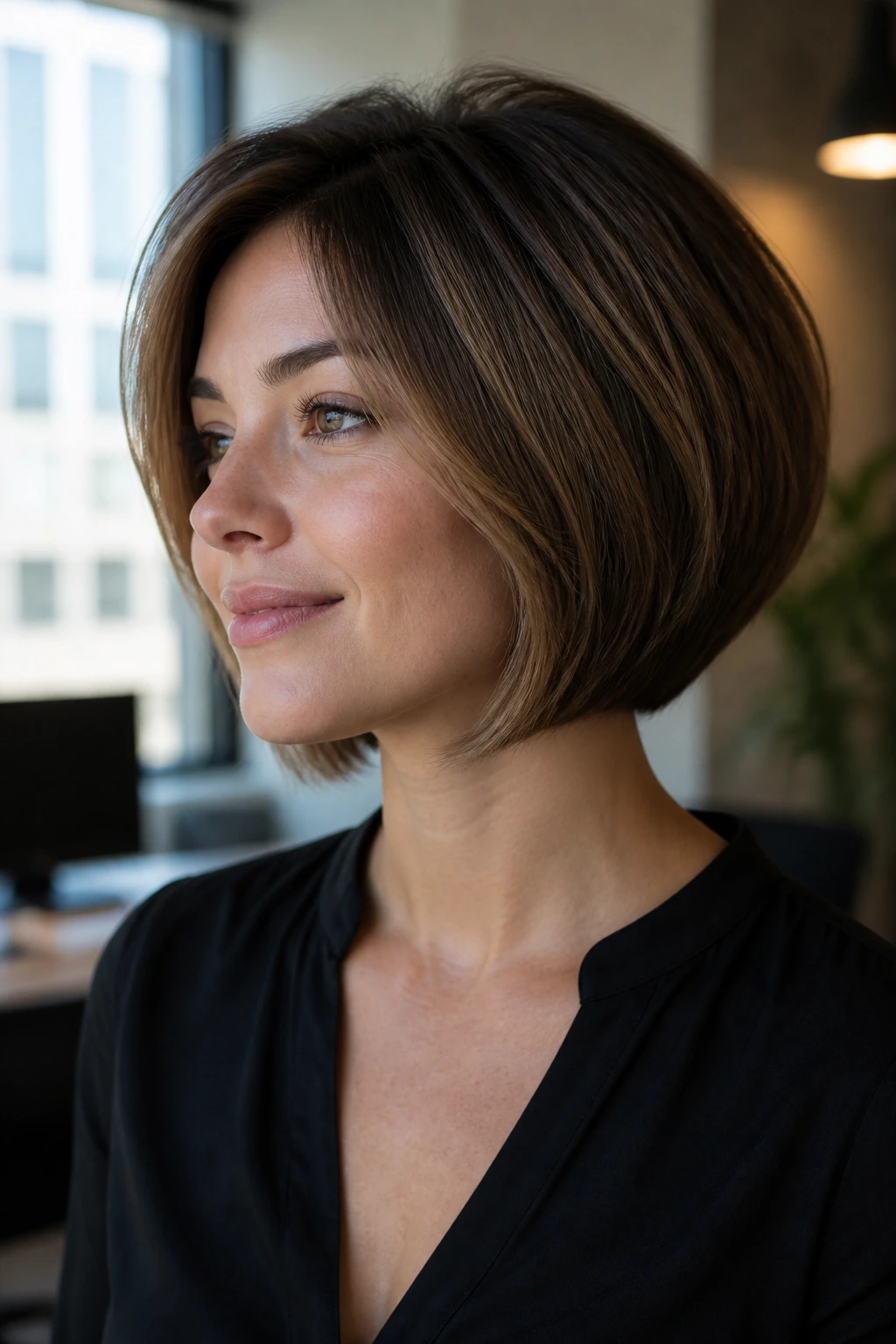
Tucked ends are underrated. They make a bob look neater without making it stiff, and they work especially well when the cut has soft graduation through the back.
The graduation gives the nape a slight lift, while the choppy layers prevent the lower edge from sitting too solid. When you tuck the ends under with a round brush or a flat iron, the shape looks smooth but not helmet-like. That is a hard balance to get right, and this cut gets there with less effort than a blunt bob usually requires.
Styling It Fast
- Blow-dry the back first so the shape sets.
- Use a round brush to curve the ends under gently.
- Finish with a small amount of shine cream on the mids.
- Keep the front pieces slightly longer so the cut still feels soft.
This is a very good office bob. It is tidy, but not boring. And yes, it still moves when you walk.
20. Edgy Razor Bob With An Undercut Detail

An undercut changes everything. Even a small shaved or closely clipped section at the nape or one side can make a bob feel much lighter and more deliberate.
The choppy layers above it stop the haircut from looking too severe. Without that texture, an undercut can feel harsh. With it, the style has balance. The soft pieces on top fall over the shorter section and create a little contrast, which is exactly what makes the shape interesting from more than one angle.
This cut is a good fit if you like low-bulk hair and do not mind maintenance. The undercut grows out faster than the rest, so it needs regular cleanups to stay crisp. If you skip that, the line starts to blur and the whole effect loses its edge.
It is not the quietest bob on this list. That is why some people will love it immediately and others will not touch it. Fair enough. Haircuts should have a point of view.
Final Notes

The best razor bob haircut with choppy layers is the one that matches your hair’s actual behavior, not the one that looks most dramatic on a screen. Straight, wavy, thick, fine, curly — each one needs a different amount of texture and a different place for the weight to come out.
A good cut still has a spine. That part matters. If the silhouette is strong, the choppy layers can do their job without turning the bob into fluff.
If you are taking a photo to your stylist, save one front view, one side view, and one back view. That tiny bit of prep saves a lot of guesswork, and guesswork is where most bob disappointments begin.
