



Short bob haircuts are the cuts that make hair look sharper before you’ve even finished styling it. Women ask for them when they want less weight, more shape, and a haircut that still behaves on the days when the blow-dryer never leaves the drawer.
The best short bob is never only about length. A jaw line that lands half an inch higher or lower can change the whole mood. So can a blunt edge, a few soft layers, a deep side part, or a fringe that falls at the cheekbone instead of the brows. Same family. Very different outcome.
That’s why the short bob keeps showing up in salons. It can be sleek, airy, piecey, polished, or a little messy without losing its shape. A good one frames the face, shows off the neck, and makes the hair look intentional even when it’s not perfectly styled.
These are the short bob haircuts women keep bringing in as inspiration, along with the details that actually matter when the scissors come out.
1. The Jaw-Length French Bob Women Keep Bringing In
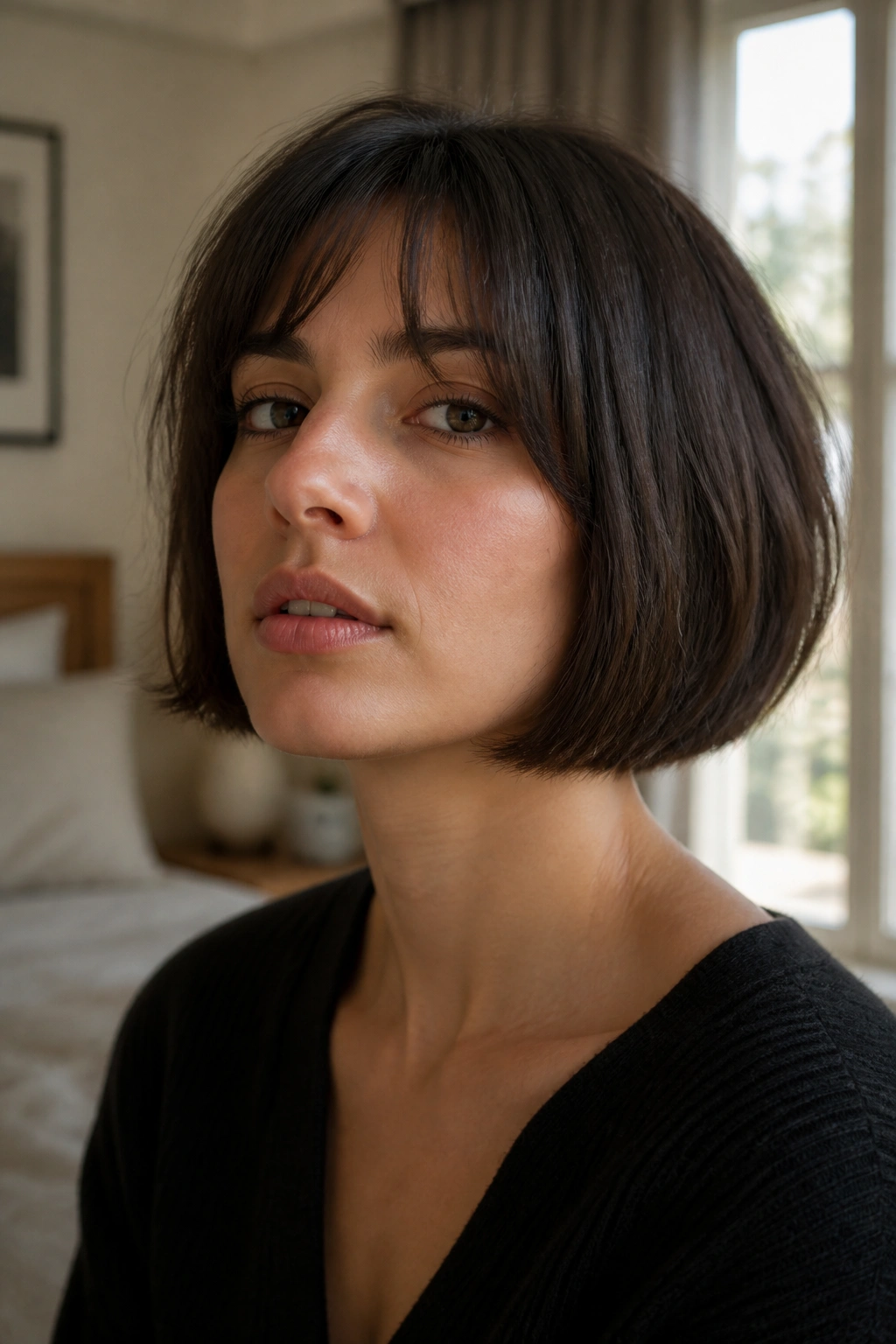
The jaw-length French bob has that neat, slightly cool finish that never tries too hard. It sits right at the jawline, which means it shows off the face instead of hiding it, and the best versions keep the line soft enough to move.
Why It Works So Well
A cut like this depends on restraint. Too many layers and it starts to lose the clean outline that makes it feel so sharp in the first place. Keep the perimeter tidy, then let the texture come from a light bend at the ends.
- Ask for jaw-grazing length with a soft, blunt line.
- Keep the crown close to the head so the shape doesn’t puff out.
- Style with a small round brush or a flat iron bend, not both.
Best for: oval, heart, and narrow faces.
Pro tip: if your hair is fine, a French bob looks fuller when the ends are trimmed blunt instead of feathered out.
2. The Blunt Short Bob That Makes Hair Look Denser
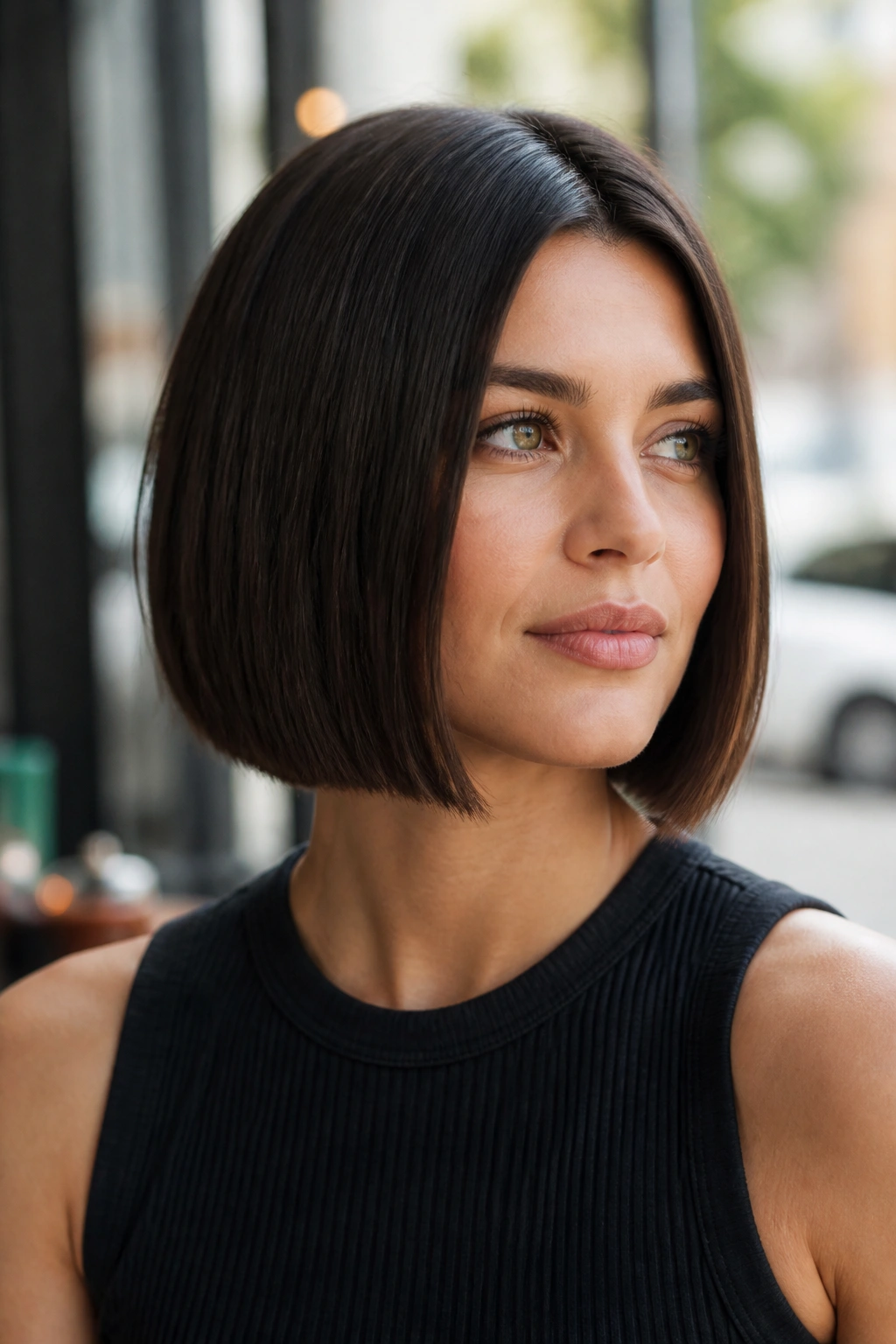
Why do stylists reach for a blunt bob when hair looks thin at the ends? Because a clean edge creates the illusion of density fast. The eye reads one solid line, not a scrappy finish, and that matters more than people think.
This cut usually lands at the chin or just below it, with very little tapering. That makes it a smart pick for fine or medium hair that tends to split at the bottom and look wispy. It’s also easier to style than a heavily layered cut. One pass with a smoothing brush, a little root lift, and you’re done.
If you like hair that looks expensive in a plain, unfussy way, this is a good bet. It does need regular trims, though. Let it grow too far and the line loses its snap.
3. The Soft Layered Bob For Hair That Falls Flat
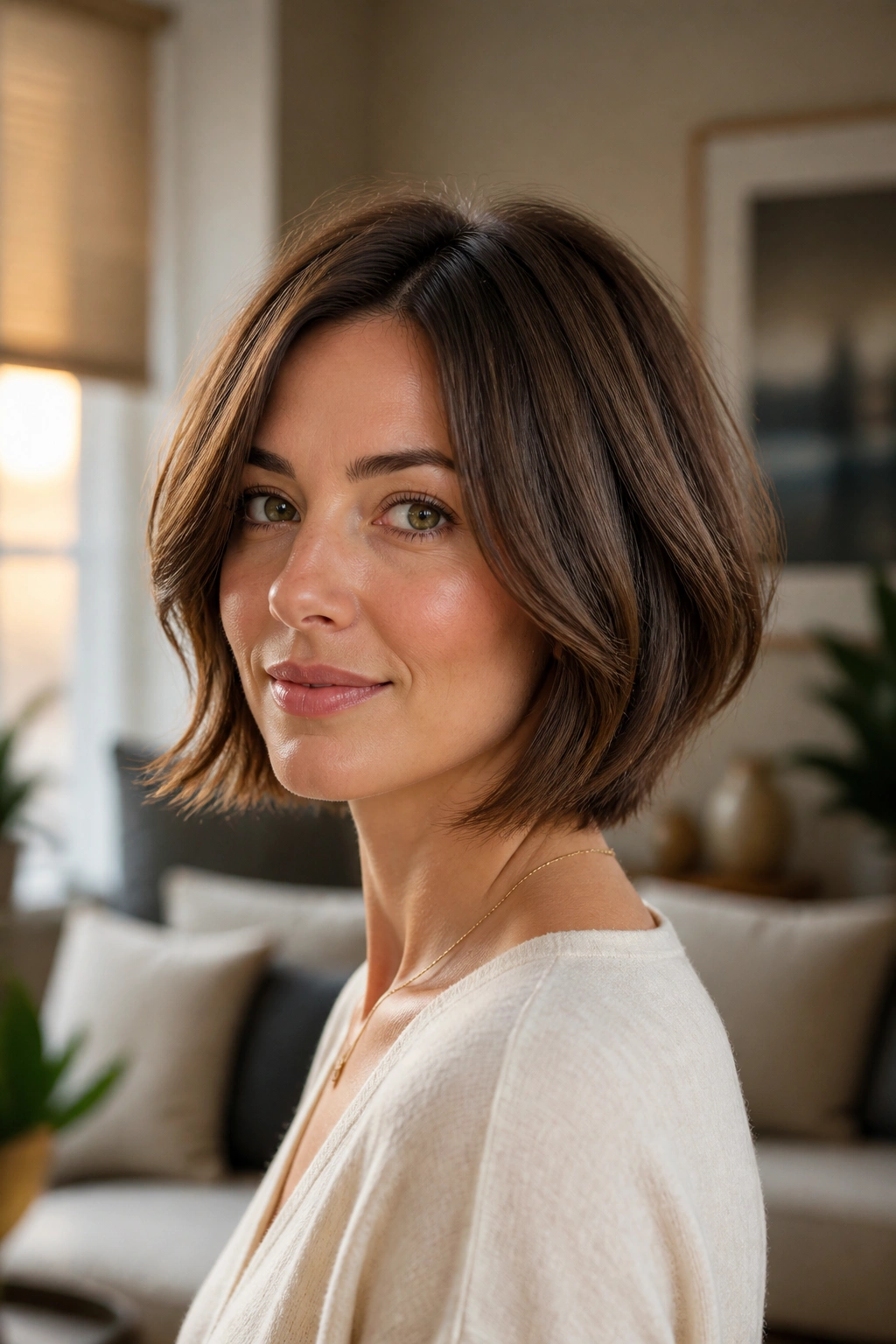
Picture a bob that looks great for ten minutes, then sinks into your cheeks and disappears. That’s the problem a soft layered bob fixes. It keeps the short shape, but it takes weight out in a way that lets the hair move instead of sitting there like a block.
Where the Layers Should Start
The best layers on a short bob are subtle. They begin below the cheekbone, not high up near the roots, and they should be cut with a light hand. Choppy layers can make the cut look busy. Soft ones make it breathe.
A stylist usually point-cuts the ends or slices into the interior to remove bulk without breaking the outline. That matters if your hair is thick but you still want a polished finish. The goal is movement, not fluff.
This is the cut I’d pick for someone who likes to tuck one side behind the ear and still have the shape fall back into place.
4. The Stacked Bob With Lift In The Back
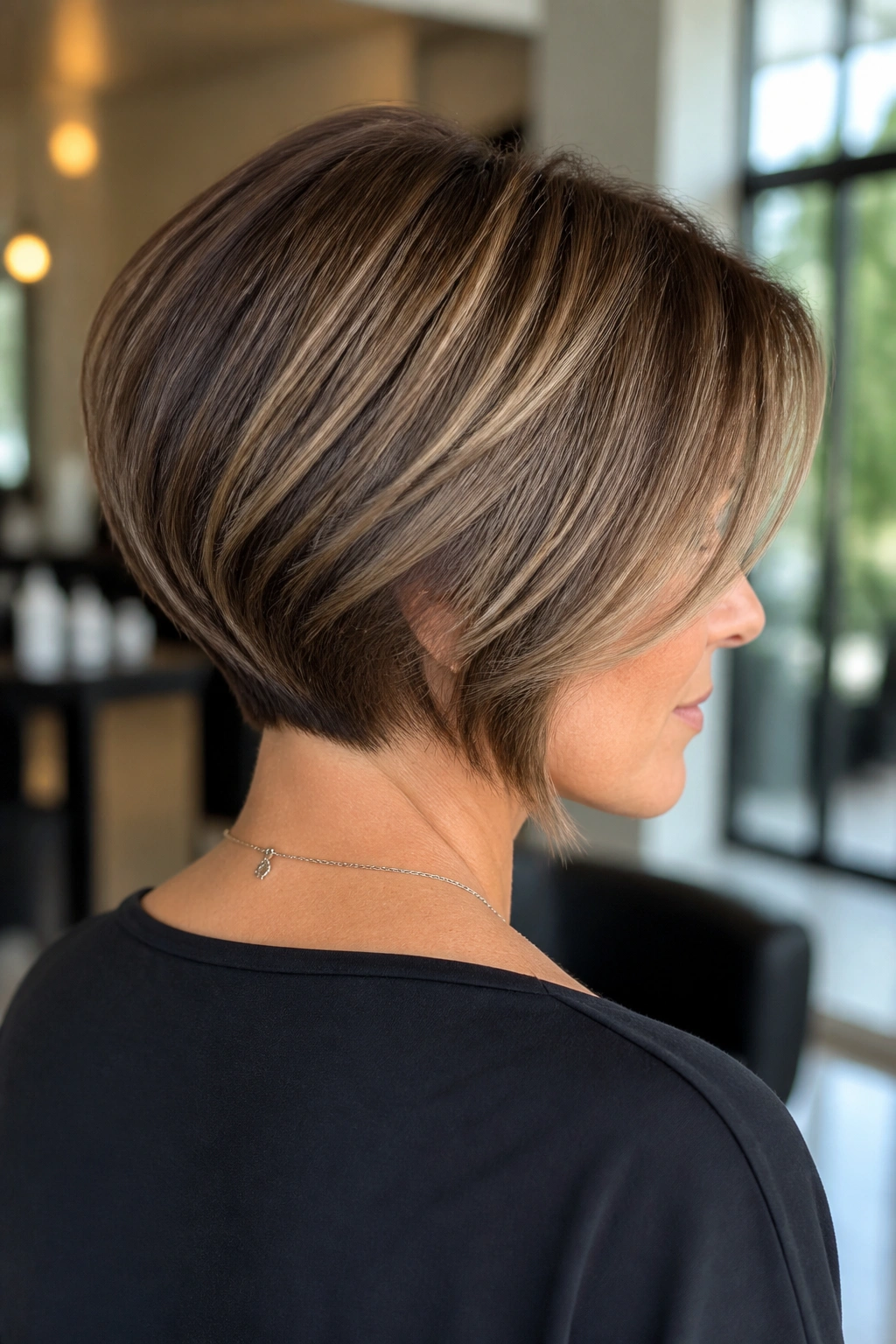
People assume a short bob has to lie flat. Not this one. A stacked bob builds height at the nape, so the back sits neat and lifted while the front stays a little longer and softer.
A lot of women ask for this when the back of the head feels flat or when their hair grows out looking boxy. The stacked shape fixes both. It gives the crown a little lift and creates a curved line that looks clean from the side.
- Shorter layers at the nape create the lift.
- Longer pieces in front keep it from feeling too severe.
- It works especially well on straight or slightly wavy hair.
What to watch for: too much stacking can turn puffy fast on very thick hair, so the cut needs balance.
5. The Italian Bob With A Full, Airy Shape
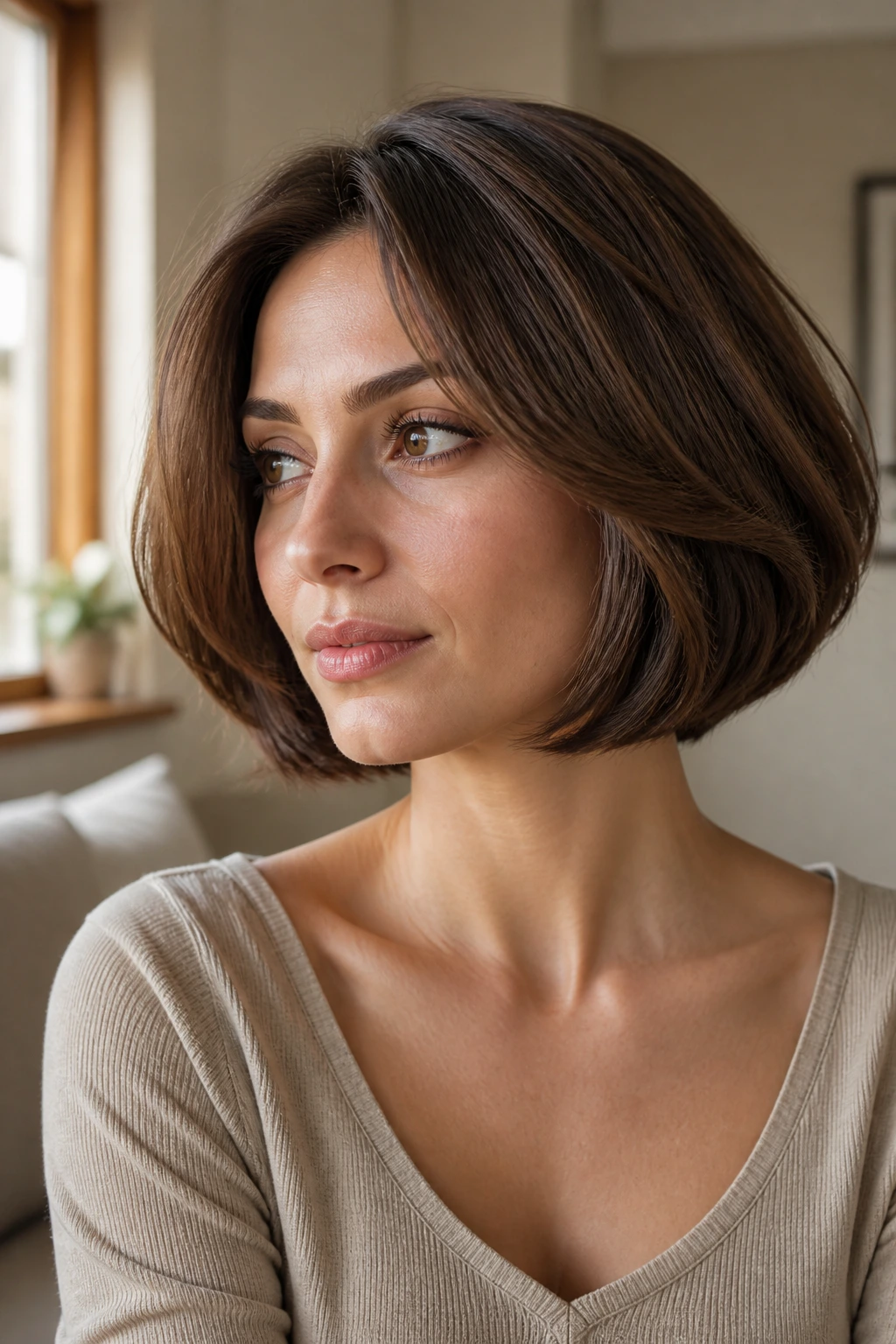
The Italian bob has a plush, brushed-out feel that sits somewhere between polished and relaxed. It usually falls around the chin or just under it, with enough length to swing but enough structure to hold a shape. That’s the part people like.
What makes it different is the fullness. The ends aren’t chopped thin, and the cut usually keeps a little width through the middle so the hair looks rich rather than stringy. It’s a bob that looks good with a quick blow-dry and even better with a loose bend from a large round brush.
This is not the bob for someone who wants razor-sharp edges and tiny details. It wants body. It wants touchable ends. If your hair is naturally straight, it can feel a bit glamorous without looking overdone. If your hair has a little wave, even better.
6. The A-Line Bob With A Longer Front
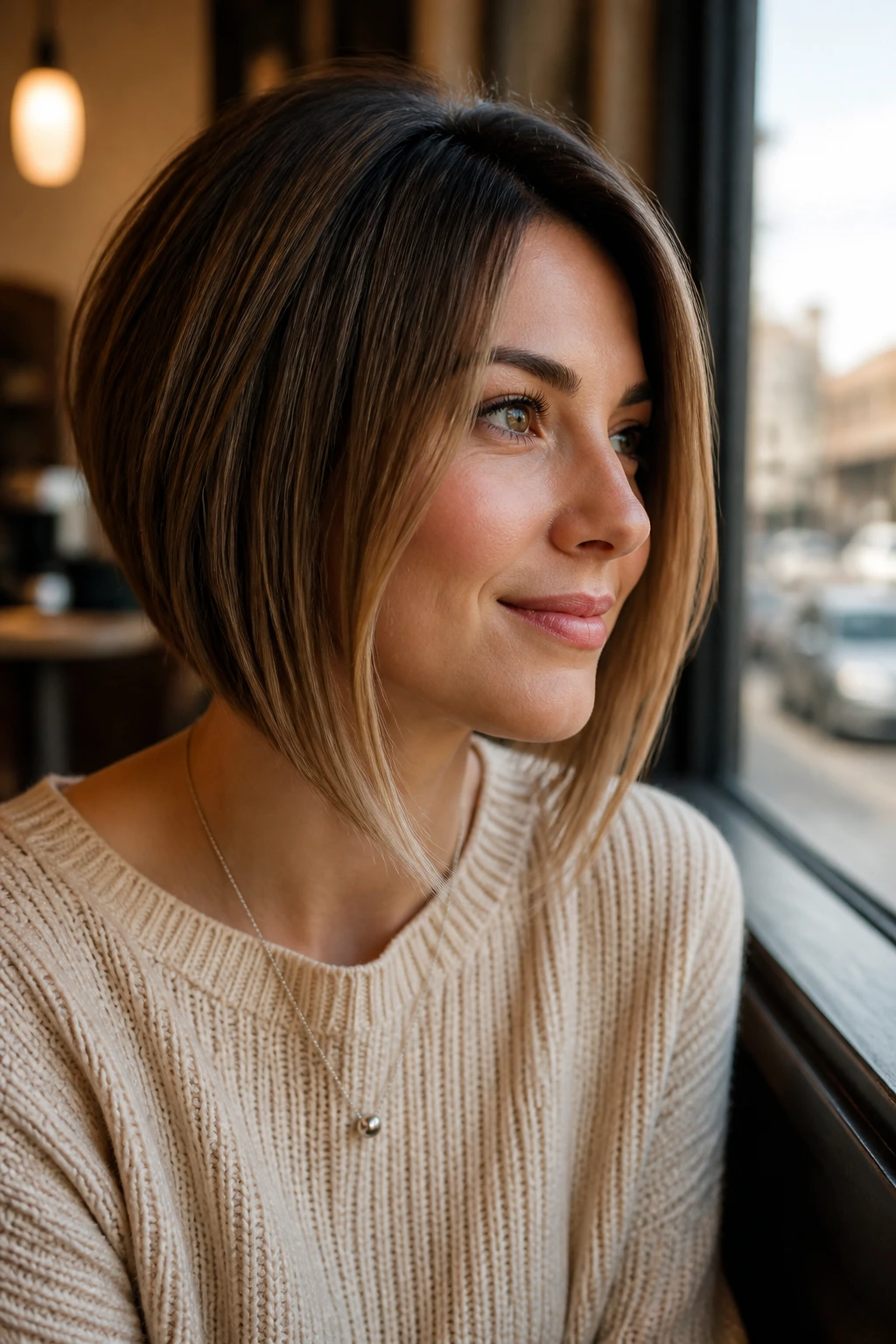
An A-line bob works because it gives you two things at once: structure in the back and a longer frame in front. That front length softens the face, while the shorter back keeps the whole cut feeling light and lifted.
Compared with a blunt bob, this one has more swing. Compared with a stacked bob, it feels less built-up in the back. That makes it a nice middle ground if you want shape but not too much drama. It also helps lengthen the neck, which is why it comes up so often in salons.
If you have a round or square face, ask for the front pieces to fall slightly below the chin and the back to sit closer to the nape. That keeps the angle visible without turning the cut into a triangle. Small change. Big difference.
7. The Curly Bob Shaped Right At The Chin
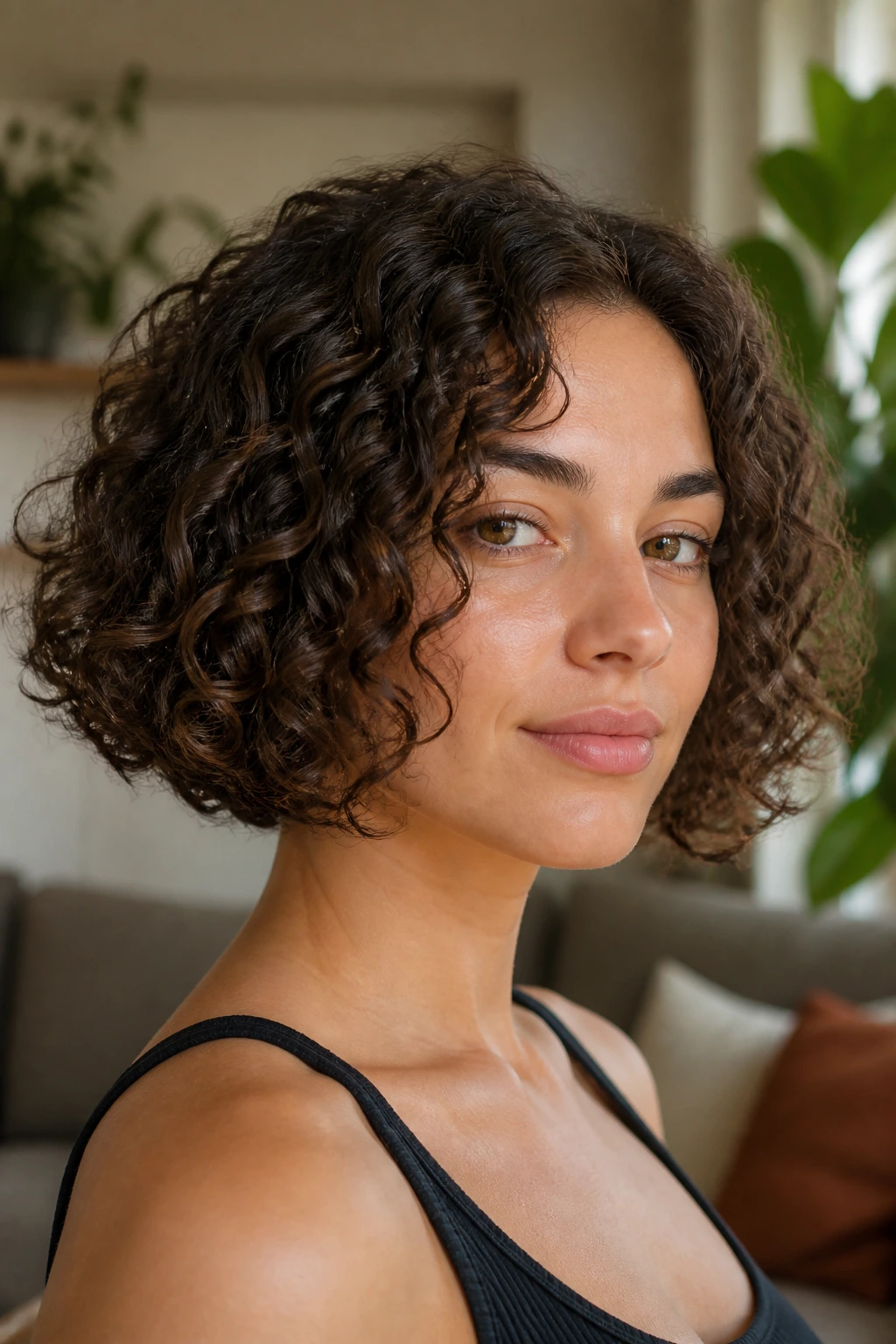
Curly hair and short bobs can be a mess if the cut is done like straight hair. They can also be brilliant when the shape respects the curl pattern. The sweet spot is usually the chin, with enough length for the curls to spring up without shrinking into a puff.
How To Ask For It
Tell your stylist you want the bob cut curl by curl or on dry hair if that’s how they work. Wet curls lie. They stretch, then spring back in unpredictable ways. A good curly bob keeps the line a little longer than you think you need, then is refined after it dries.
A chin-length shape works because it gives the curls room to stack without crowding the face. It also keeps the ends from looking triangular, which is the quickest way to ruin this cut.
Use a leave-in conditioner, then scrunch in a curl cream. Skip heavy brushing once it’s dry. That part matters.
8. The Wavy Bob That Dries With Bend
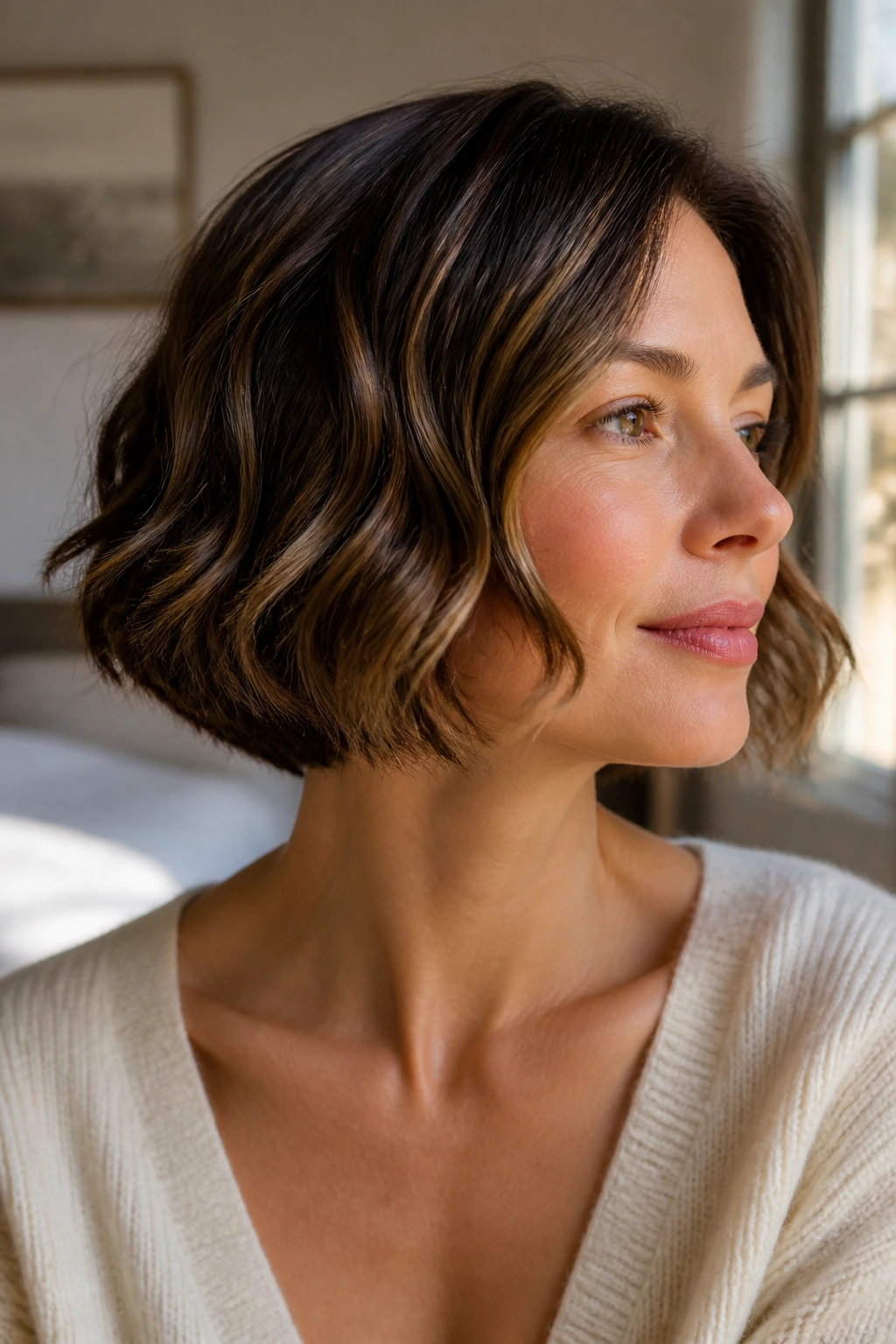
A wavy bob is the haircut version of a good white shirt: easy to wear, hard to mess up when the shape is right. The trick is leaving enough length for the wave to show without dragging the ends down.
This cut usually lands between the jaw and the top of the neck, with soft internal layers that help the wave break up cleanly. The result is movement that looks accidental, even when you spent ten minutes on it. A little mousse at the roots and a touch of curl cream through the mids are usually enough.
Air-dry fans love this one because it doesn’t demand perfect styling. The hair can dry into bends and curves on its own. If one side flips out more than the other, that can actually look better. A wavy bob gets its charm from a bit of irregularity, not symmetry.
9. The Side-Part Bob With Long Framing Pieces
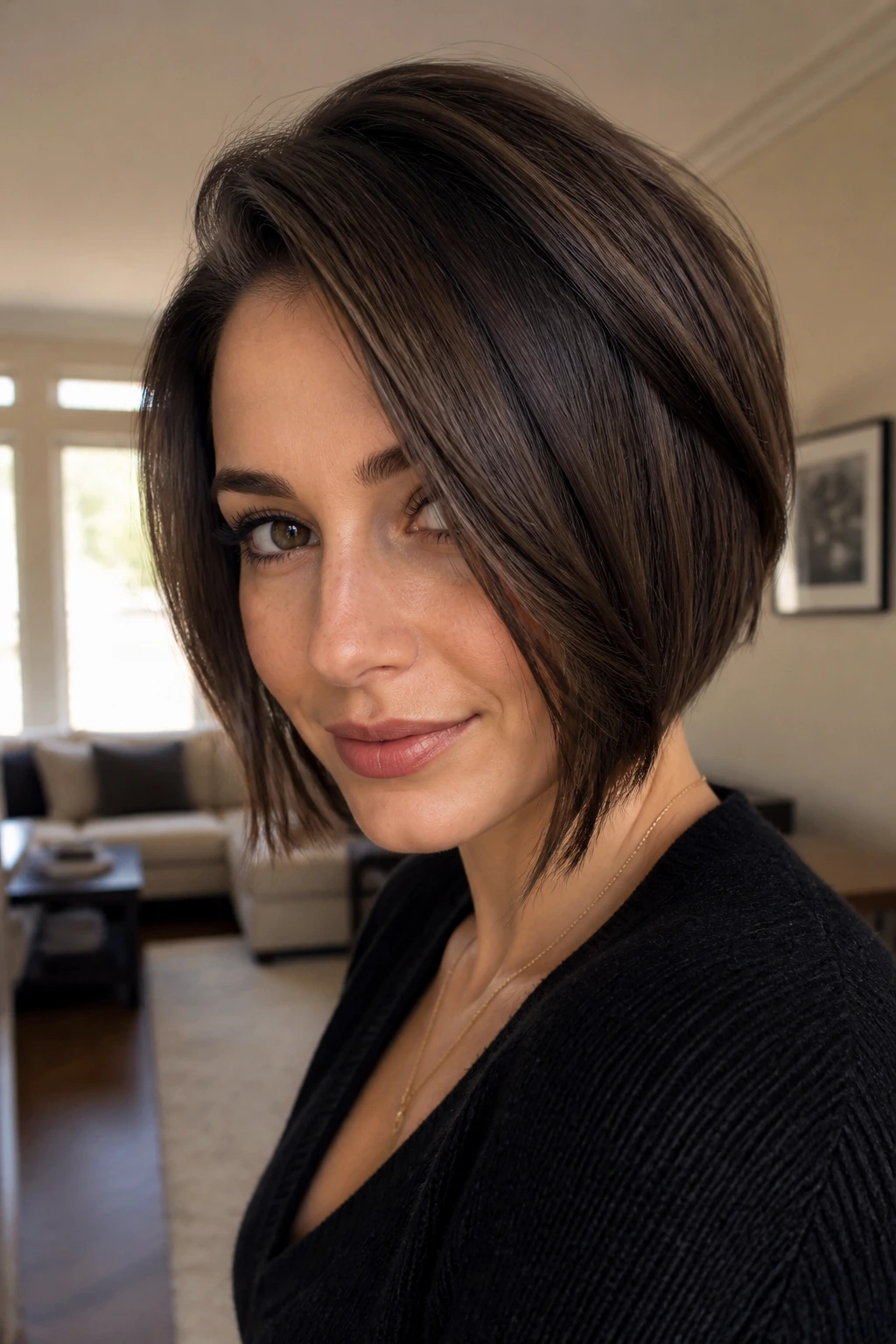
A deep side part can rescue a bob that feels too neat. It gives the crown more lift, drops some weight away from the center, and lets the front pieces fall in a way that feels softer around the face.
This haircut is a good choice if you like a short bob but hate the helmet look. The longer pieces in front help break up the line, while the part adds a little drama without asking for a dramatic cut. It’s also one of the easiest ways to make a plain bob feel more styled.
If your hair grows flat at the roots, this version gives you built-in volume without teasing or a pile of product. Use a blow-dry brush or a medium round brush, lift at the part, and let the ends curve under slightly. Clean, but not rigid.
10. The Short Bob With Curtain Bangs
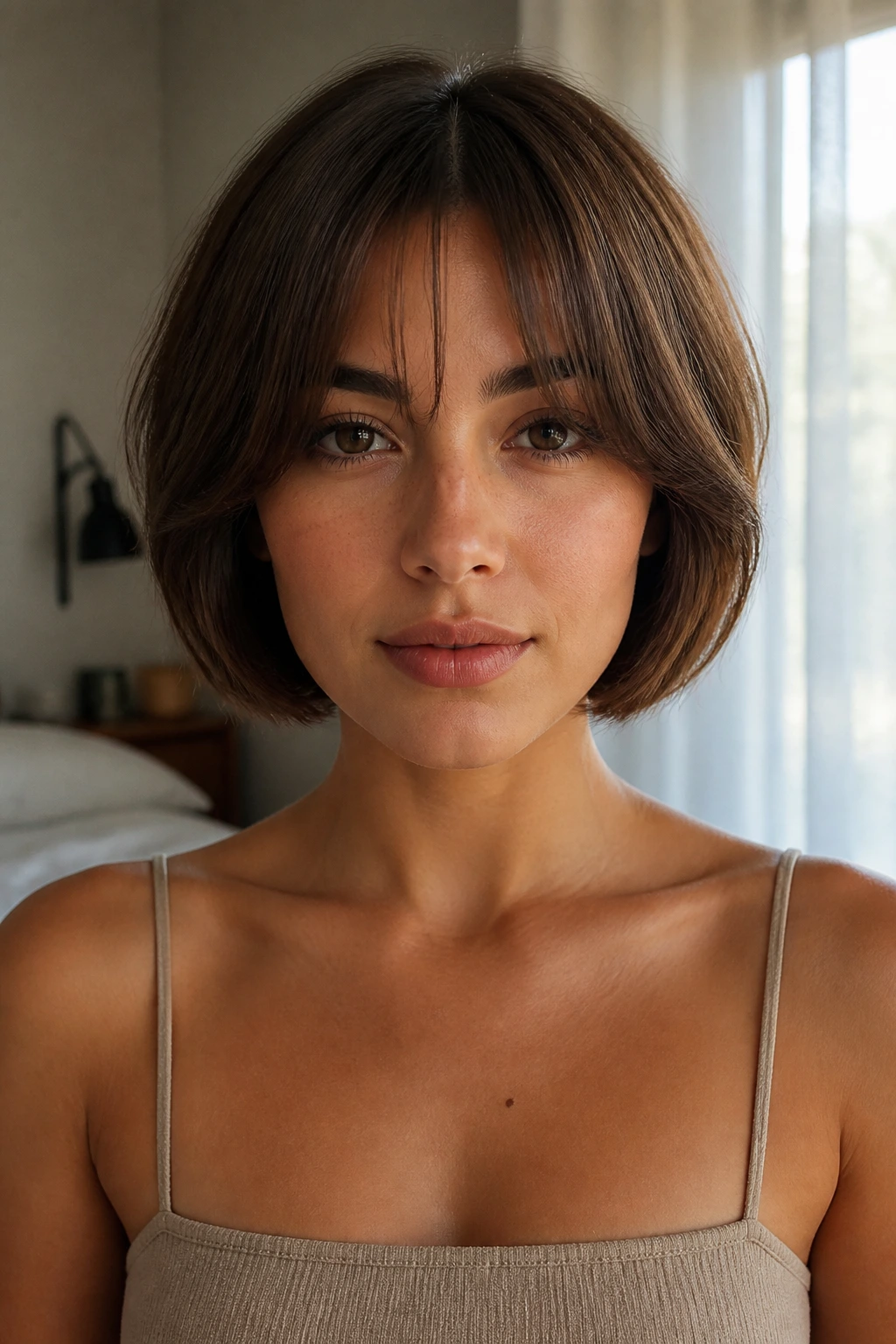
Curtain bangs change the whole mood of a bob. Without them, the cut can feel sharp. With them, it opens up around the eyes and cheekbones and loses some of that blunt edge people worry about.
Why The Fringe Matters
A curtain fringe starts shorter in the middle, then drops longer toward the sides. That shape lets it split naturally, which means less wrestling with it in the morning. It also grows out better than a heavy straight fringe, and that’s a real bonus if you do not want frequent salon visits.
This pairing works best when the bob itself stays simple. A short, clean line plus soft bangs gives you contrast without clutter. If the bob is already layered, keep the fringe lighter so the whole cut doesn’t fight itself.
Use a round brush or your fingers and a little bend at the ends of the bangs. Too much curling makes them look dated fast.
11. The Asymmetrical Bob With One Longer Side
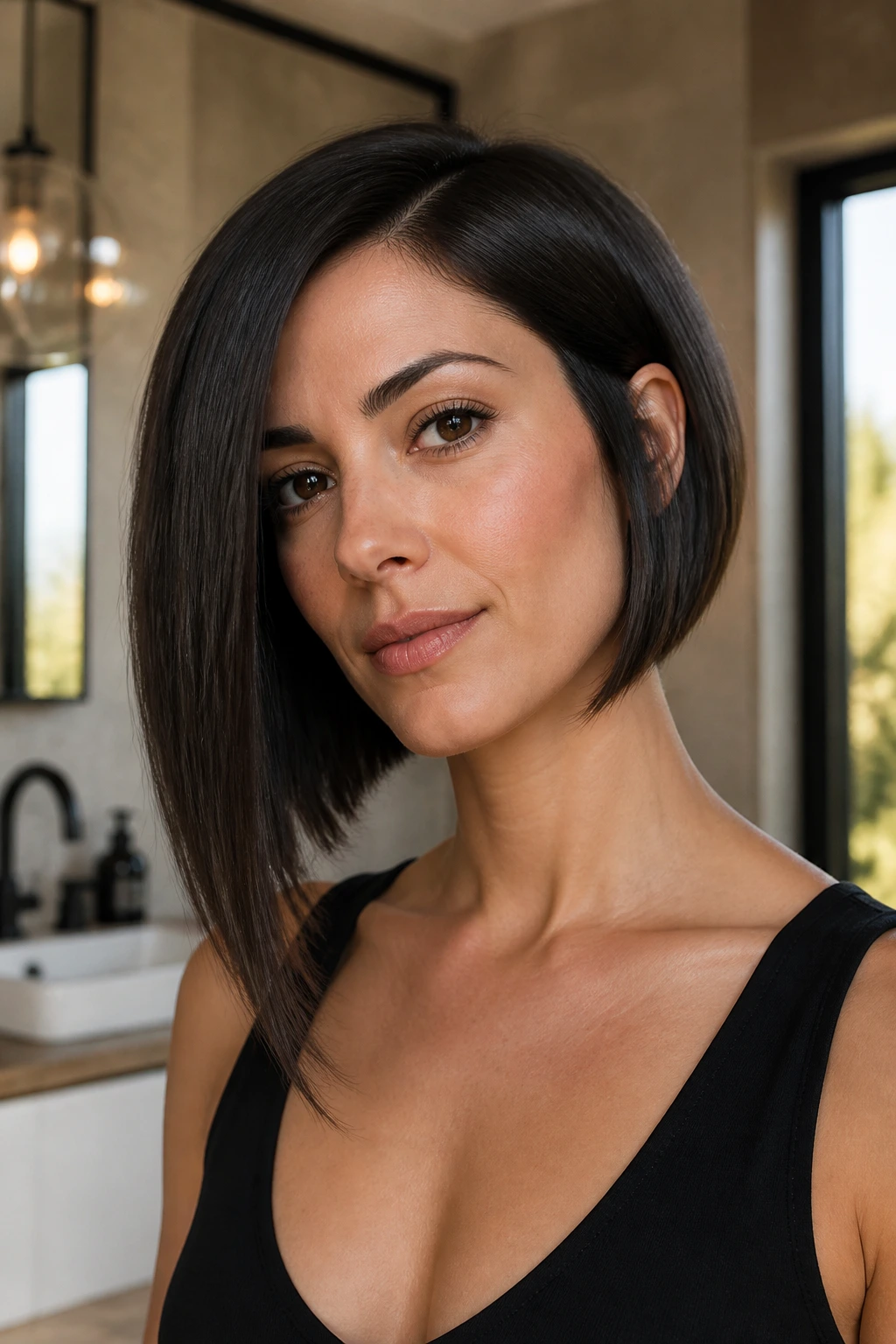
The asymmetrical bob has edge because it breaks the rule that both sides need to match. One side sits a little longer, and that single shift changes the whole balance of the haircut. It’s small on paper. Obvious in the mirror.
This cut works well if you want something modern-looking without going all the way into a fashion cut. The longer side can soften a stronger jaw, bring attention to the eyes, or just make the haircut feel less predictable. It also plays nicely with straight hair, where the angle stays visible.
I like this one on people who are bored by tidy, even cuts. It has enough structure to feel deliberate, but the uneven line keeps it from becoming stiff. Ask your stylist to keep the difference subtle if you want wearability, or more dramatic if you want the shape to show from across the room.
12. The Shaggy Bob With Choppy Ends
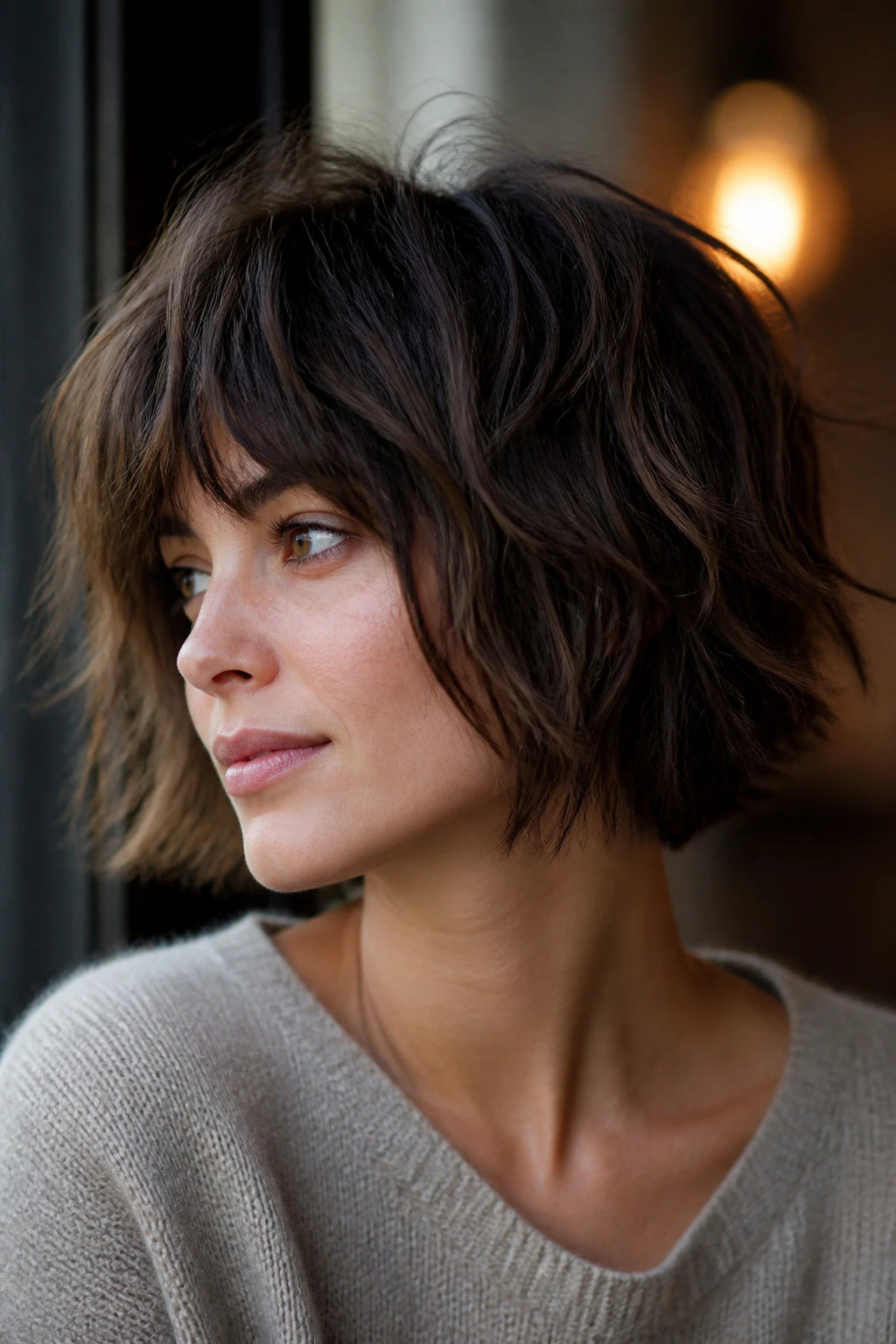
A shaggy bob is what happens when a short bob decides to loosen its collar. The ends are choppier, the layers are more noticeable, and the whole thing feels less polished in a good way.
This cut is a smart move for hair that falls flat or clings too tightly to the head. The texture creates air between the strands, so the style looks fuller and a little more lived-in. It can be especially nice on medium hair that gets heavy when it’s all one length.
The catch is over-thinning. Too much texturizing and the ends start looking frayed instead of piecey. That is a fast way to ruin an otherwise good bob. Keep the shape soft, not shredded. A matte paste, worked through dry hair with your fingers, usually gives the right finish.
13. The Micro Bob That Hugs The Jaw
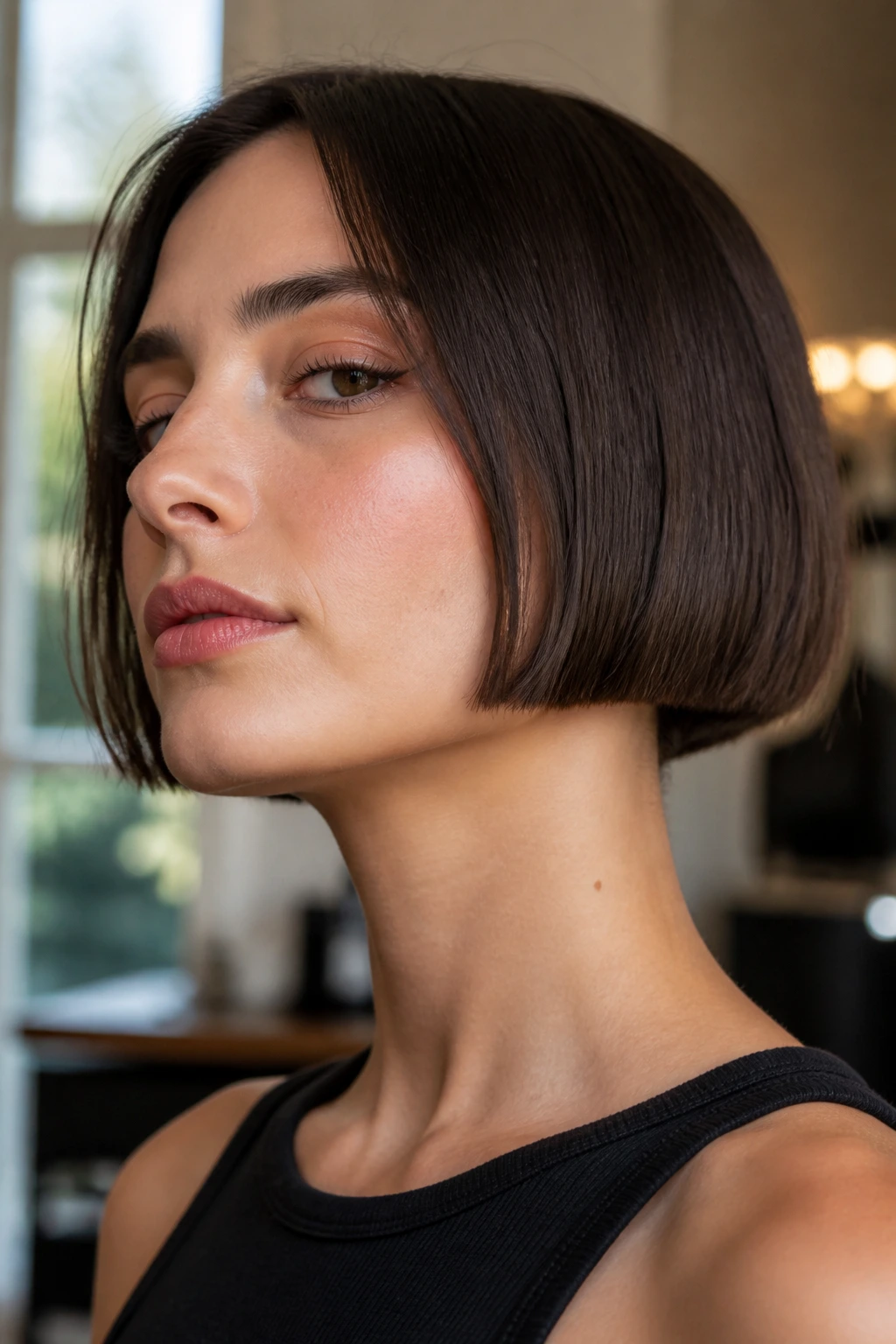
The micro bob is short enough to feel bold but not so short that it stops reading as a bob. It usually sits at or just below the earlobe, with the line hugging the jaw and neck in a very clean way.
What To Tell Your Stylist
Ask for a crisp outline with almost no length hanging past the jaw. If the cut needs movement, keep it inside the shape, not on the outer edge. That protects the strong line. A micro bob gets its power from precision.
- Keep the perimeter blunt.
- Leave the neck area neat and clean.
- Trim every 4 to 6 weeks if you want the line to stay sharp.
This haircut loves confidence, but it also loves good bone structure and a tidy neckline. It can make earrings stand out in a way longer cuts never do. Small, yes. Quiet, no.
14. The Rounded Bob With A Soft Curve
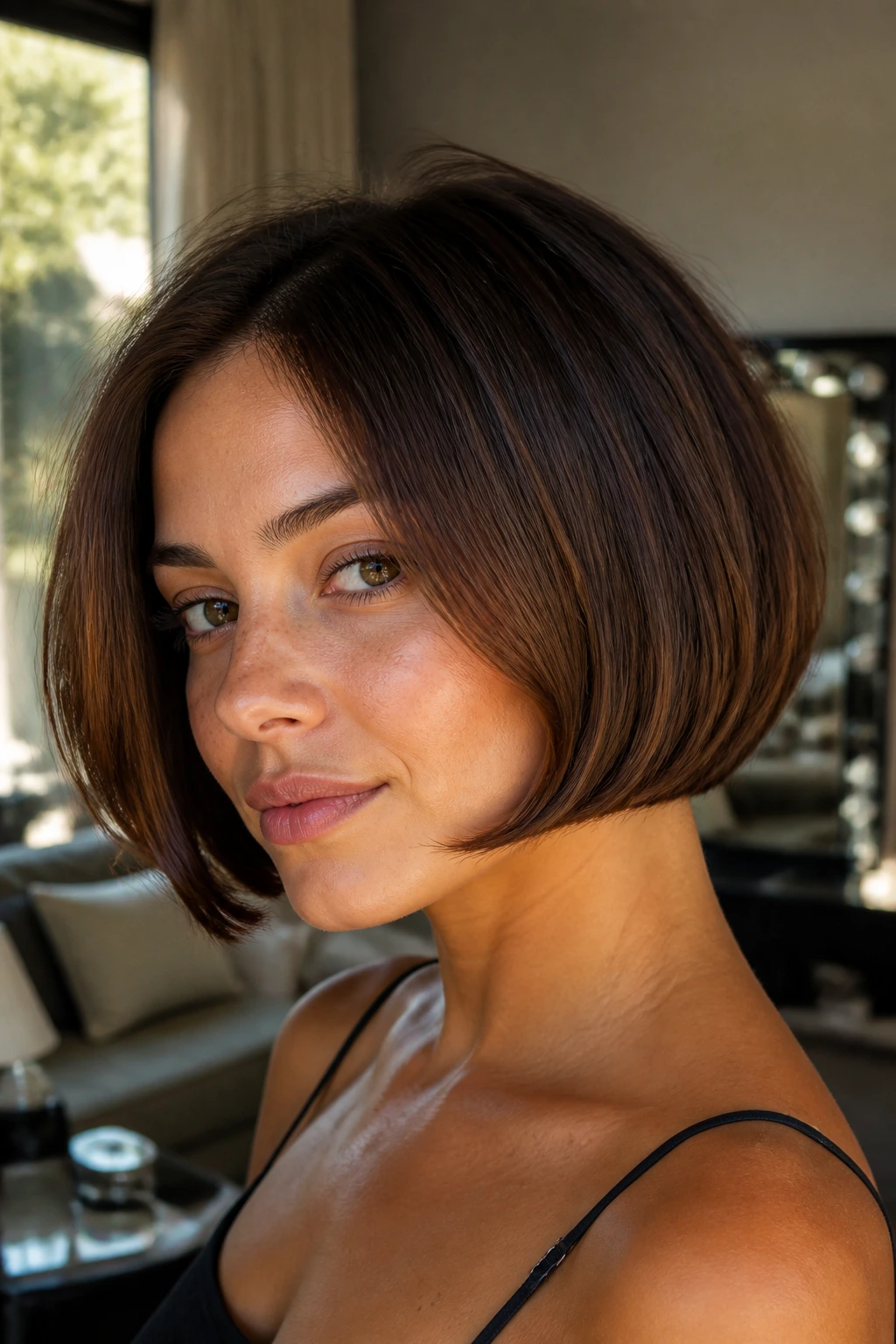
What if you want a bob that bends inward instead of falling straight down? That’s the rounded bob, and it has a softer, more controlled shape than a blunt line. The ends curve in slightly, which helps the haircut sit close to the face.
This is one of the easiest bobs to dress up. A round brush, a quick blow-dry, and a little setting tension are usually enough to make the curve show. It’s also flattering on people who want some width through the sides without the heaviness of a full mushroom shape.
The rounded finish can take the edge off a strong jaw or a long face. It’s not a loud haircut, but it does a lot of quiet work. Keep the layers subtle so the curve stays clean. If the inside gets too choppy, the shape loses that polished bend.
15. The Inverted Bob With A Steeper Angle
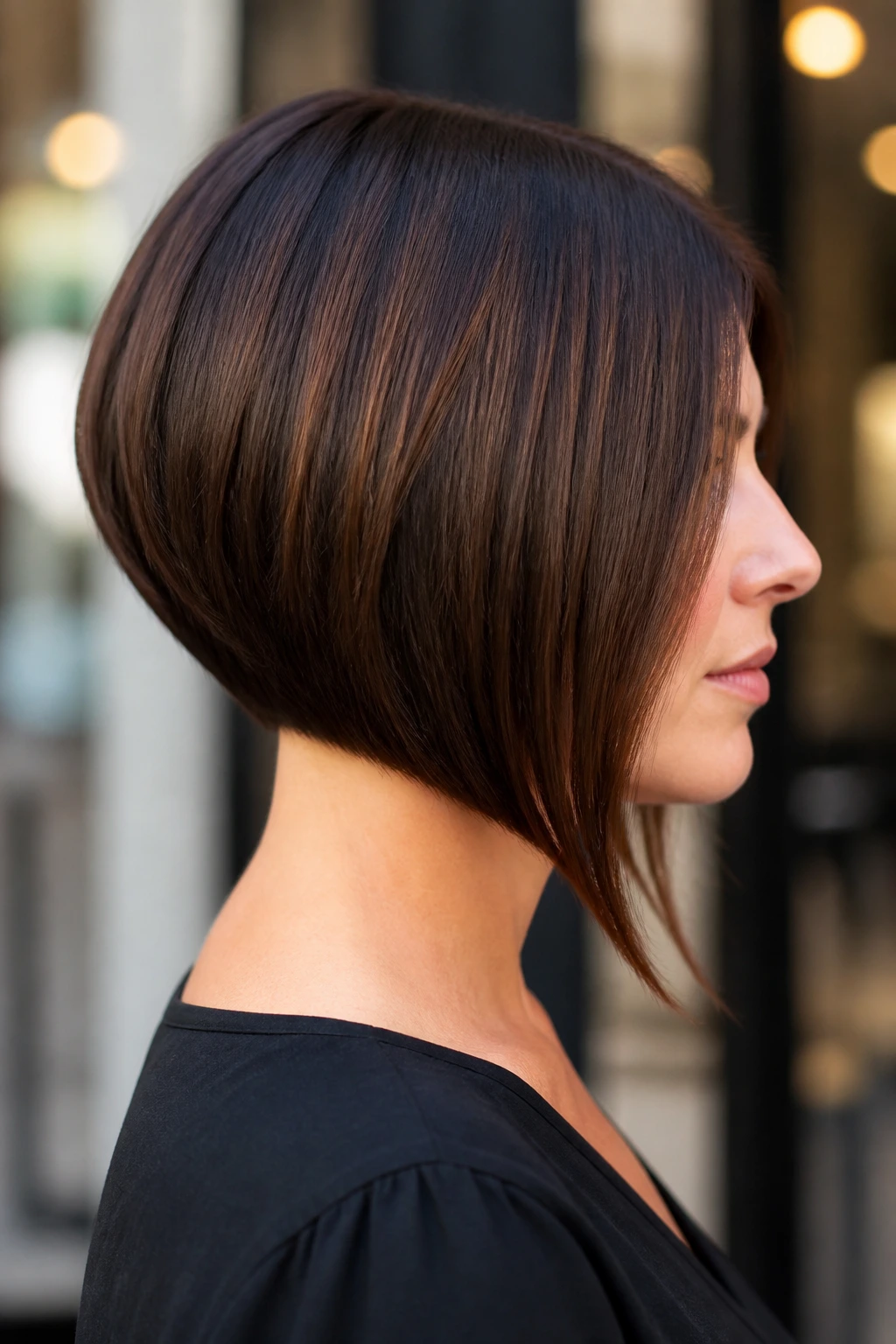
The inverted bob is like the A-line’s sharper cousin. The back is shorter, the front drops longer, and the angle is more obvious as it moves from nape to chin. That extra slope gives the cut motion even before you style it.
People often choose this when they want their hair to look sculpted. It makes straight hair feel more deliberate and can give wavy hair a nice directional fall. The angle also draws the eye down, which helps lengthen the face and neck.
A good inverted bob should not look overbuilt. If the back is too short or the front too long, it stops feeling chic and starts feeling dated. Ask for a clean graduation in the back and a front line that still brushes the jaw. The cut should move when you turn your head. That is the point.
16. The Bob With An Undercut At The Nape
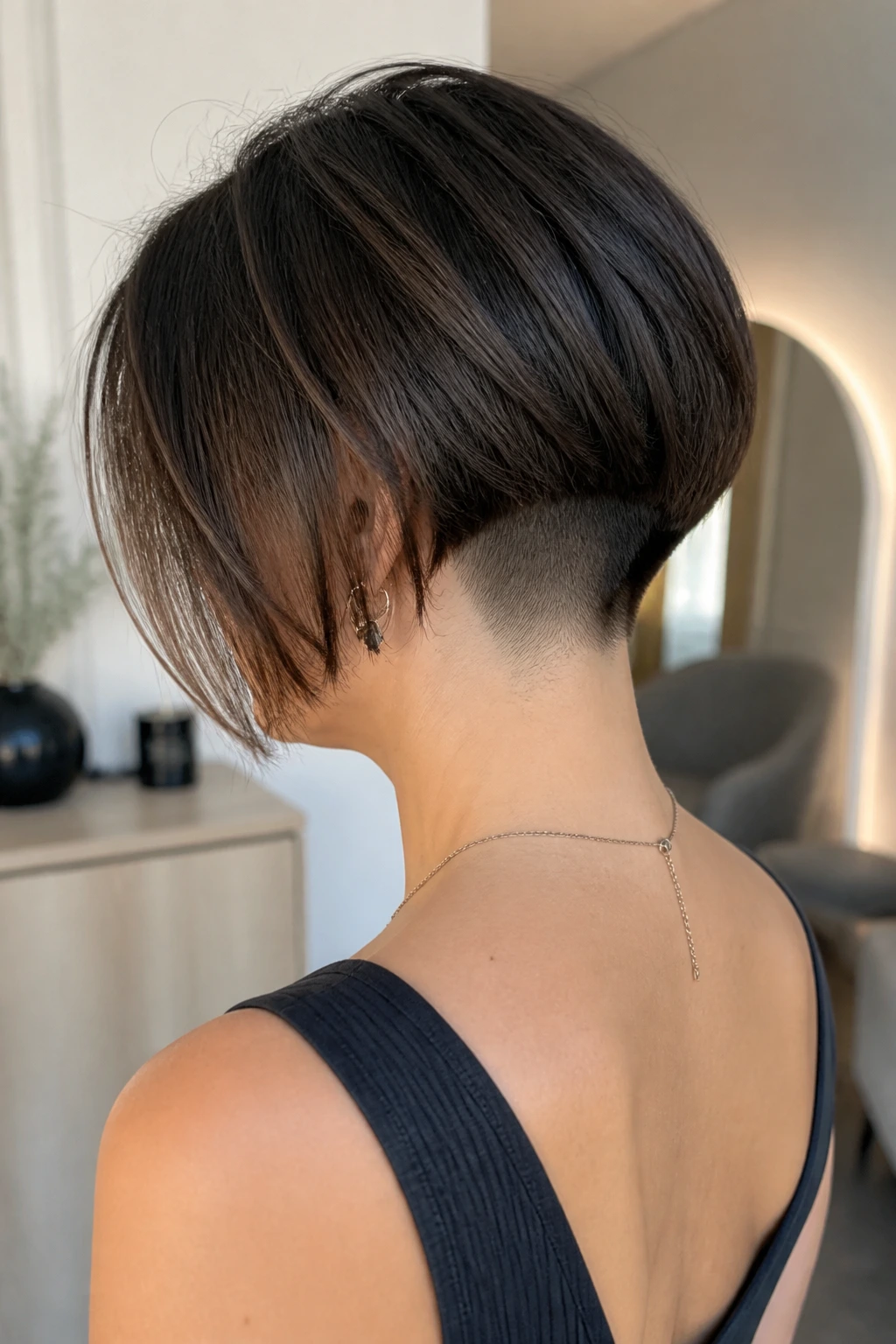
A bob can be cooler when part of it disappears. The undercut bob removes bulk underneath, usually at the nape, while leaving the outer shape intact. For thick or coarse hair, that hidden detail can make the whole haircut easier to wear.
Where The Relief Comes From
The undercut takes weight out of the bottom section, which means the hair can sit closer to the head instead of ballooning outward. That matters a lot if the nape gets hot, bulky, or hard to dry. It also keeps the ends from flipping out in random directions.
- Best for thick, dense, or coarse hair.
- Great if you want a shorter bob without a triangle shape.
- Needs maintenance because the undercut grows back fast.
This is not the cut for someone who wants softness everywhere. It has a practical edge. Still, when it’s done cleanly, it can feel like a relief every time you wash your hair.
17. The Box Bob With A Square Edge
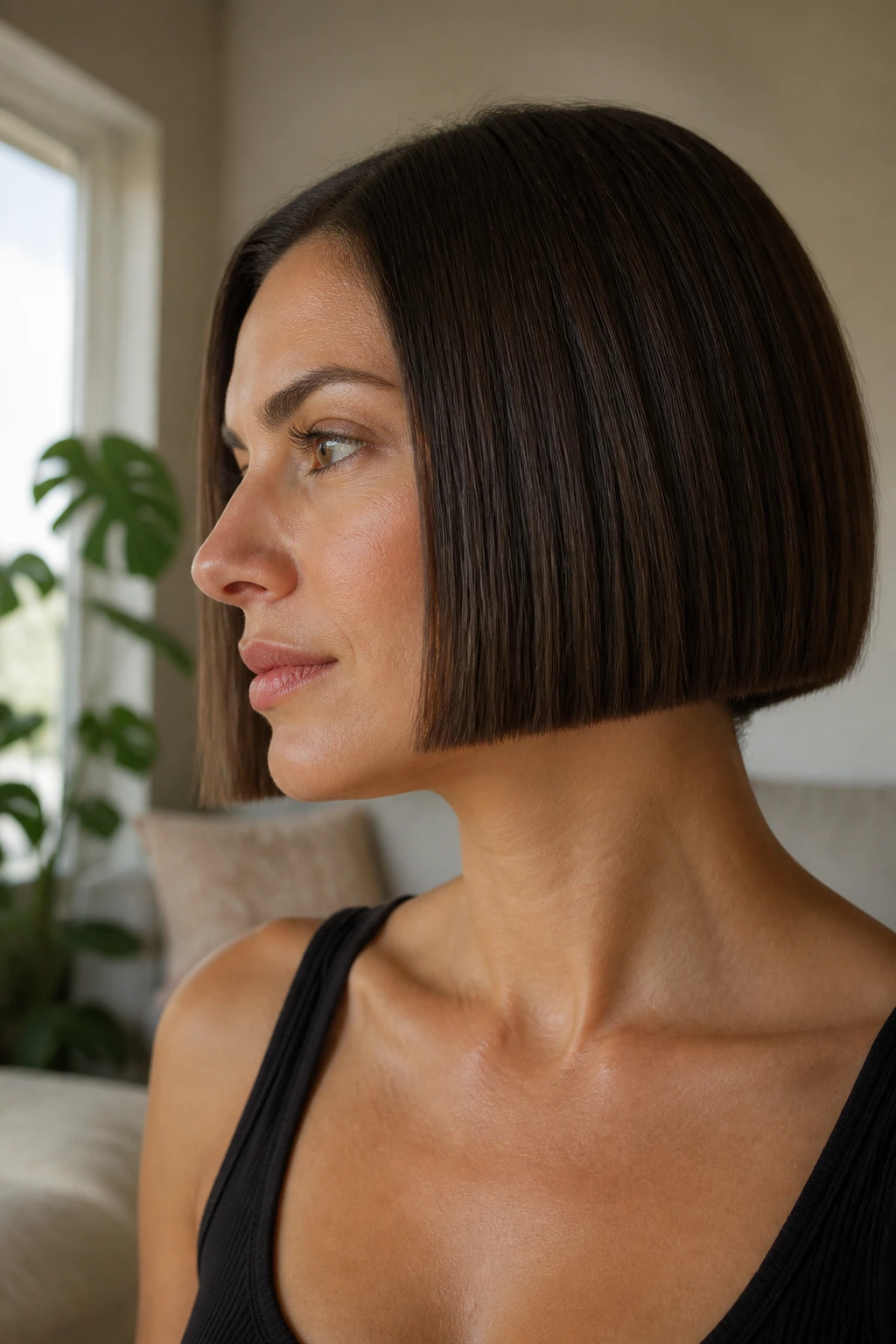
The box bob looks exactly how it sounds: strong, square, and clear. The perimeter is fuller, the lines stay straight, and the shape has a geometric feel that stands out right away.
This cut works best on straight or mostly straight hair because the edge needs to stay visible. On wavy hair, it can still work, but you’ll need to be okay with some movement breaking the line. That line is the whole point. It frames the face in a bold way and makes cheekbones and jawlines stand out.
I wouldn’t call it soft. That is not the job here. If you want a bob that feels neat and confident, though, the box shape is hard to beat. Keep the finish smooth with a blow-dry brush or a flat iron, and avoid too much internal layering. The outline should stay the star.
18. The Graduated Bob With A Hidden Stack
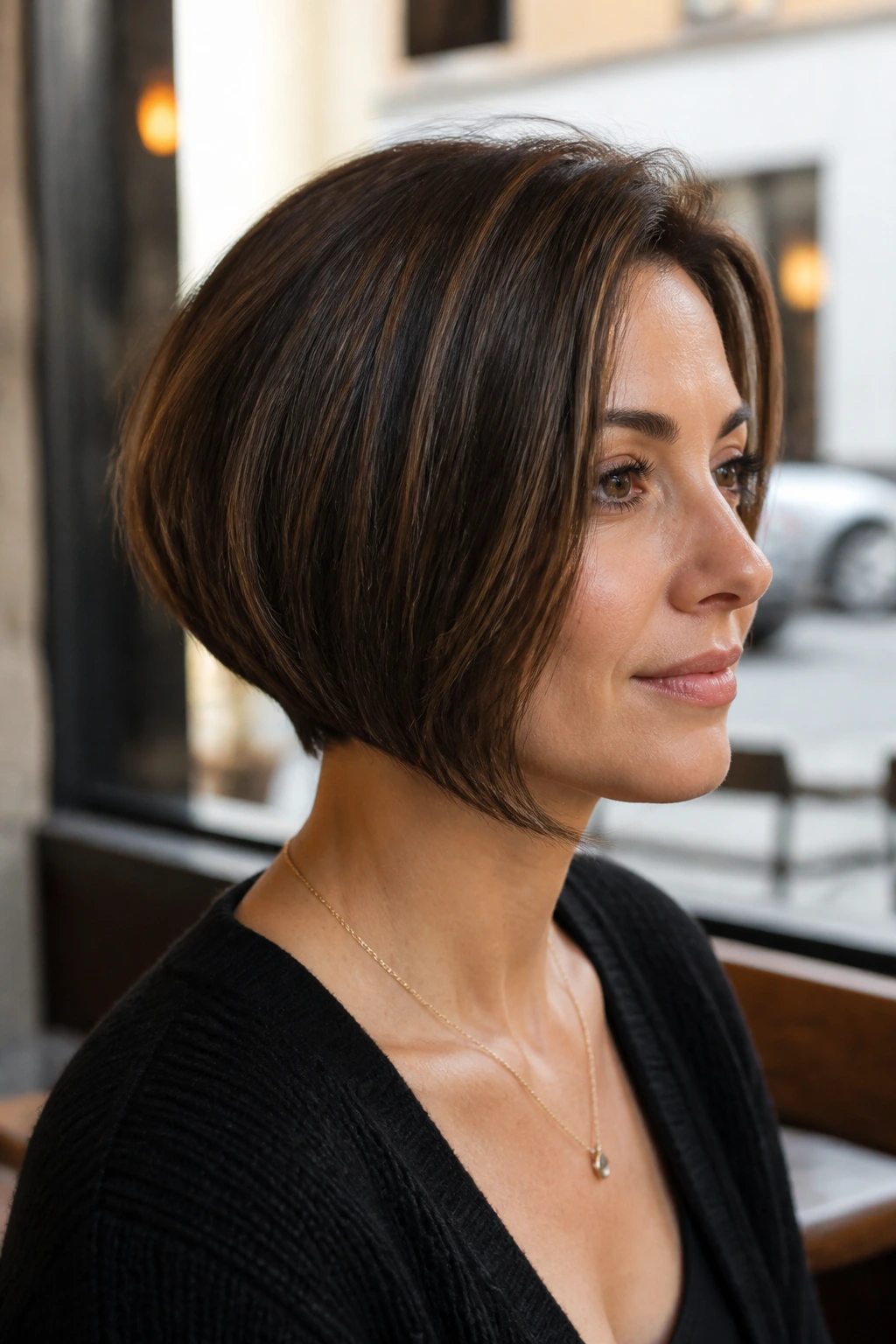
A graduated bob gives you lift at the back without the strong, obvious stack of a classic stacked bob. The graduation is there, but it’s tucked under the surface, which makes the haircut feel a little quieter and more wearable.
That hidden structure is useful if you want a bob that still looks polished at work, at dinner, or on a messy hair day. The shape holds better than a one-length cut, but it does not shout about itself. A lot of women like that middle ground.
This cut can be flattering on fine to medium hair because it gives the back a bit of body. It also keeps thicker hair from sagging. If you want to ask for it, mention that you want lift through the nape but a smooth silhouette at the sides. That one sentence helps a stylist know whether to keep it subtle or more sculpted.
19. The Chin-Length Bob With Face-Framing Pieces
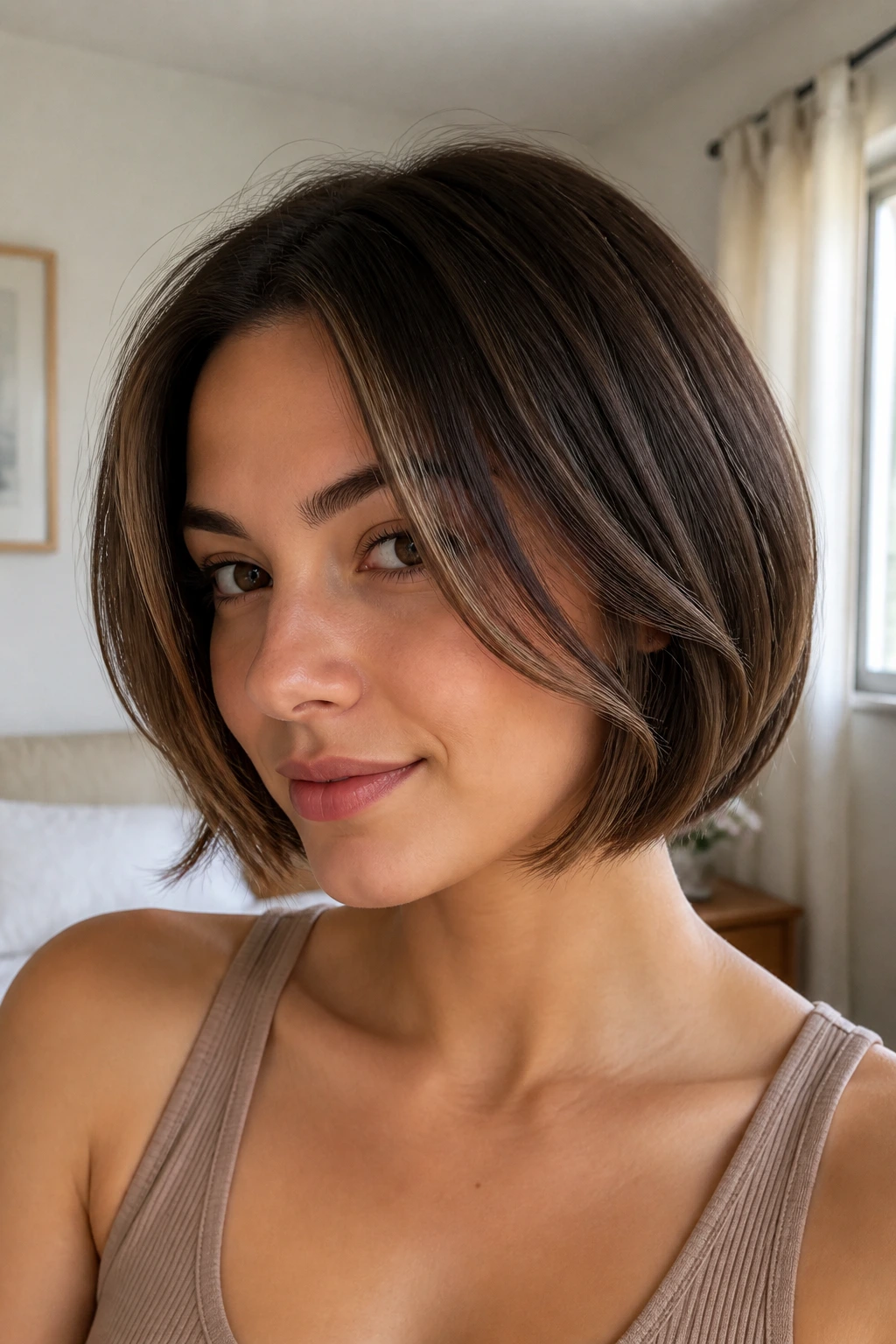
A chin-length bob with face-framing pieces is one of those cuts that solves more than one problem at once. It keeps the length short enough to feel fresh, but the pieces around the face soften the line so the haircut doesn’t sit too hard.
The Little Details That Matter
The framing sections should start around the cheekbone or just below it, then taper softly toward the chin. That gives the face a little contour without turning the whole cut into layers. The rest of the bob can stay fairly clean.
- Good for round or fuller faces that want a slimmer outline.
- Easy to tuck behind the ear on one side.
- Works with straight, wavy, or lightly textured hair.
This is one of the easiest short bob haircuts to wear every day because it gives you options. You can keep it tucked and neat, or let the pieces fall forward and soften everything. It’s practical, but it still has some personality.
20. The Bob With Bottleneck Bangs

Bottleneck bangs are the quiet fix for anyone who wants fringe without a heavy block across the forehead. They’re narrower at the top, then widen slightly toward the sides, which makes them pair well with a short bob.
Why does that matter? Because a short bob can look crowded if the fringe is too thick. Bottleneck bangs keep the center light and let the sides do the work of blending into the haircut. The result feels softer around the eyes and cheekbones.
This combo works especially well on oval, long, and heart-shaped faces. It also grows out in a way that is less annoying than blunt bangs. Ask for the shortest part to sit just above the brows, then let the sides fall longer. That shape gives you movement without losing structure.
21. The Sleek Glass Bob With A Sharp Finish
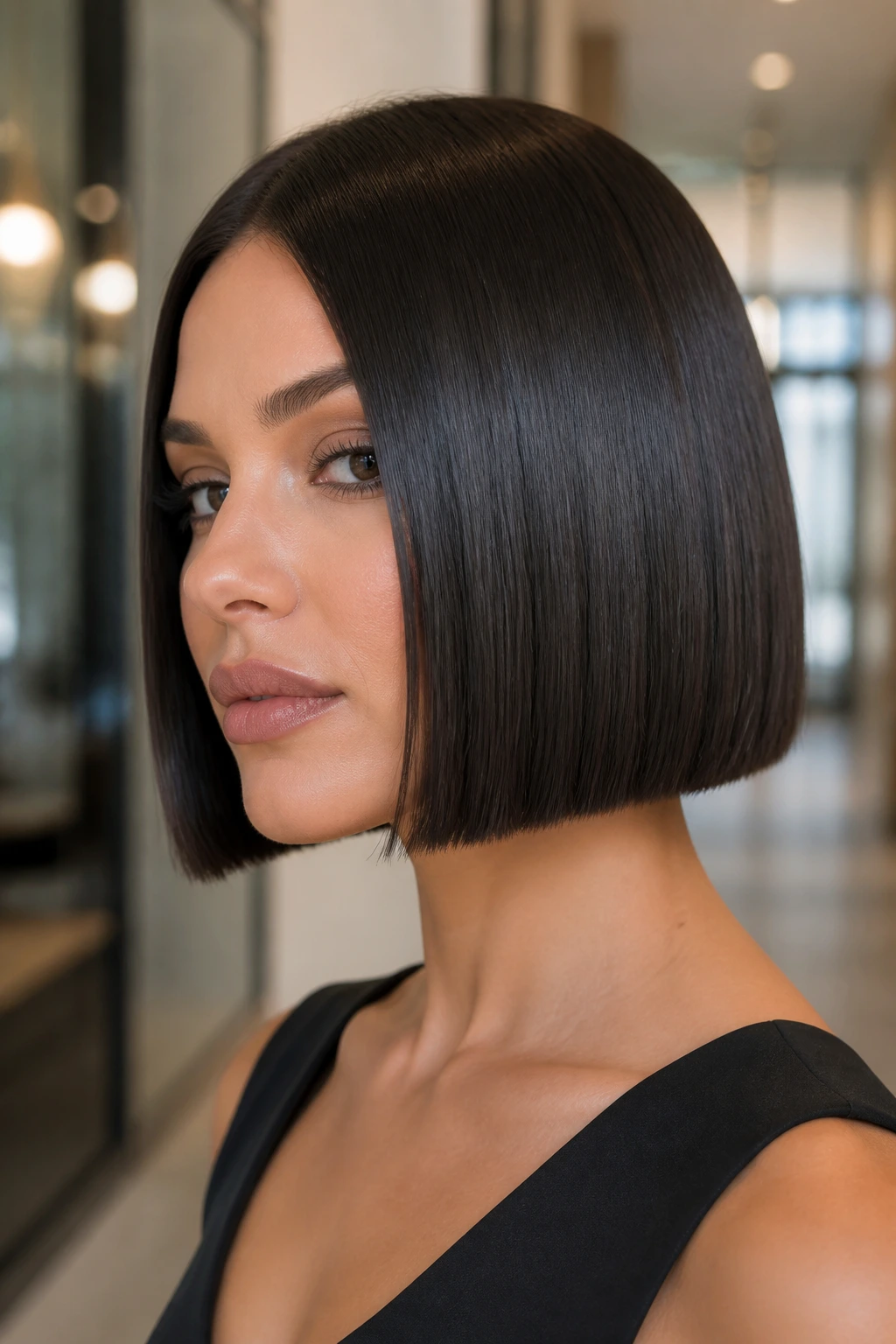
A sleek glass bob is all about finish. The line is crisp, the surface is smooth, and the whole thing looks like it was pressed flat on purpose. No fluff. No extra texture. Just shine and a clean edge.
This style works best on straight hair, or on hair that can be coaxed straight with a blow-dryer and flat iron. It asks for heat protectant, a paddle brush, and a small amount of serum on the ends. Use too much and it looks greasy. Use too little and the cut loses the glassy effect.
The shape itself should stay simple so the shine can do the talking. A blunt chin-length line is the safest bet. If you want a bob that feels sharp and a little dramatic without changing the cut itself, this is the one. It does take maintenance, though. Frizz shows up fast.
22. The Tousled Bob With Piecey Ends
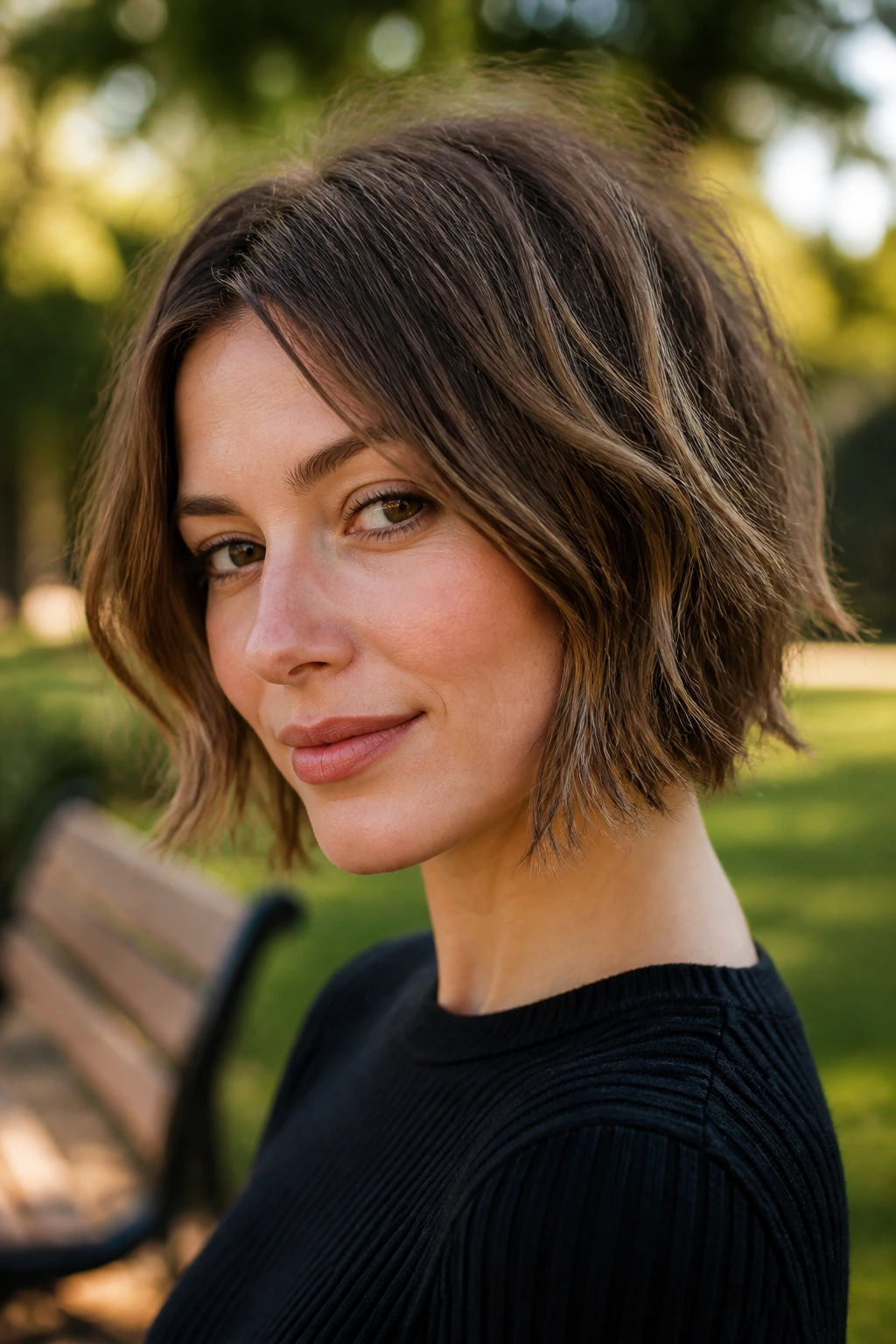
Not every short bob needs to look polished. The tousled bob earns its place by being loose, separated, and easy to wear when the hair has a little natural bend.
How The Texture Should Sit
The ends should look piecey, not crunchy. That means using a light cream, a touch of texturizing spray, or a bit of mousse while the hair is still damp. Then rough-dry it with your fingers and stop before it gets too perfect.
A tousled bob is useful when you want a haircut that survives a busy day without looking overstyled. It gives you movement even if the weather is doing its own thing. If your hair is fine, keep the texture product light. If it’s thick, work the product through the mids and ends so the crown stays airy.
This is one of the easiest bobs to wear with jeans and a tee, but it can still look good with a sharp jacket. That range is a big part of the appeal.
23. The Short Bob That Blends Gray Naturally
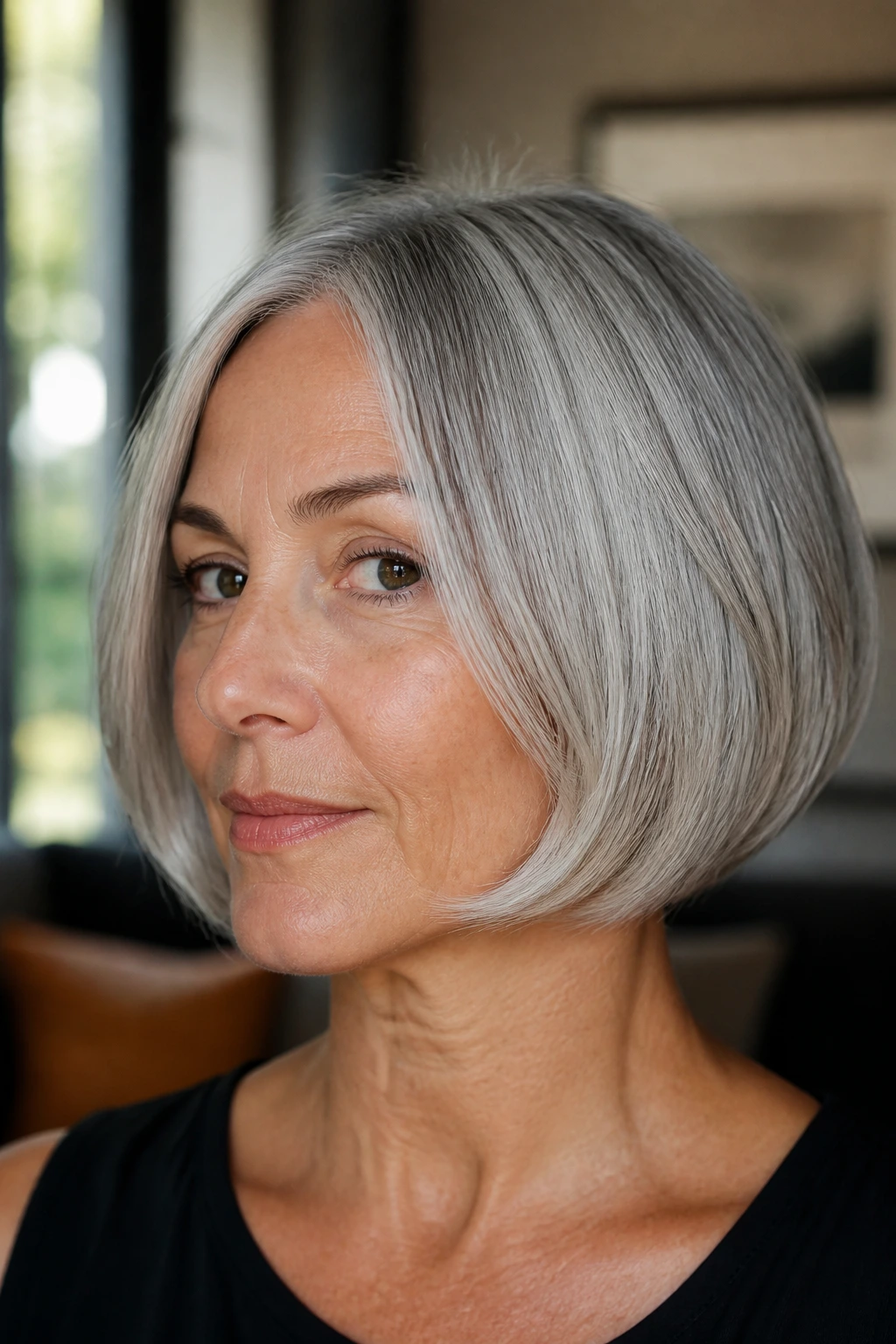
Gray hair looks especially good in a short bob when the cut lets the color do the work. A blunt or softly rounded shape gives the silver strands a clean frame, and the shorter length keeps the texture from hanging flat.
This is not about hiding gray. It’s about making it look intentional. A strong line and a glossy finish help the silver and white strands read as part of the design, not as an afterthought. If the hair is very coarse, a little internal softening can help the bob sit better, but the perimeter should stay clear.
A lot of women like this cut because it feels honest. No tricks. No busy layers. Just a shape that lets the color show. A lightweight smoothing cream or shine spray can keep the finish from looking dry, which matters more on gray hair than people expect.
24. The Thick-Hair Bob With Internal Weight Removal
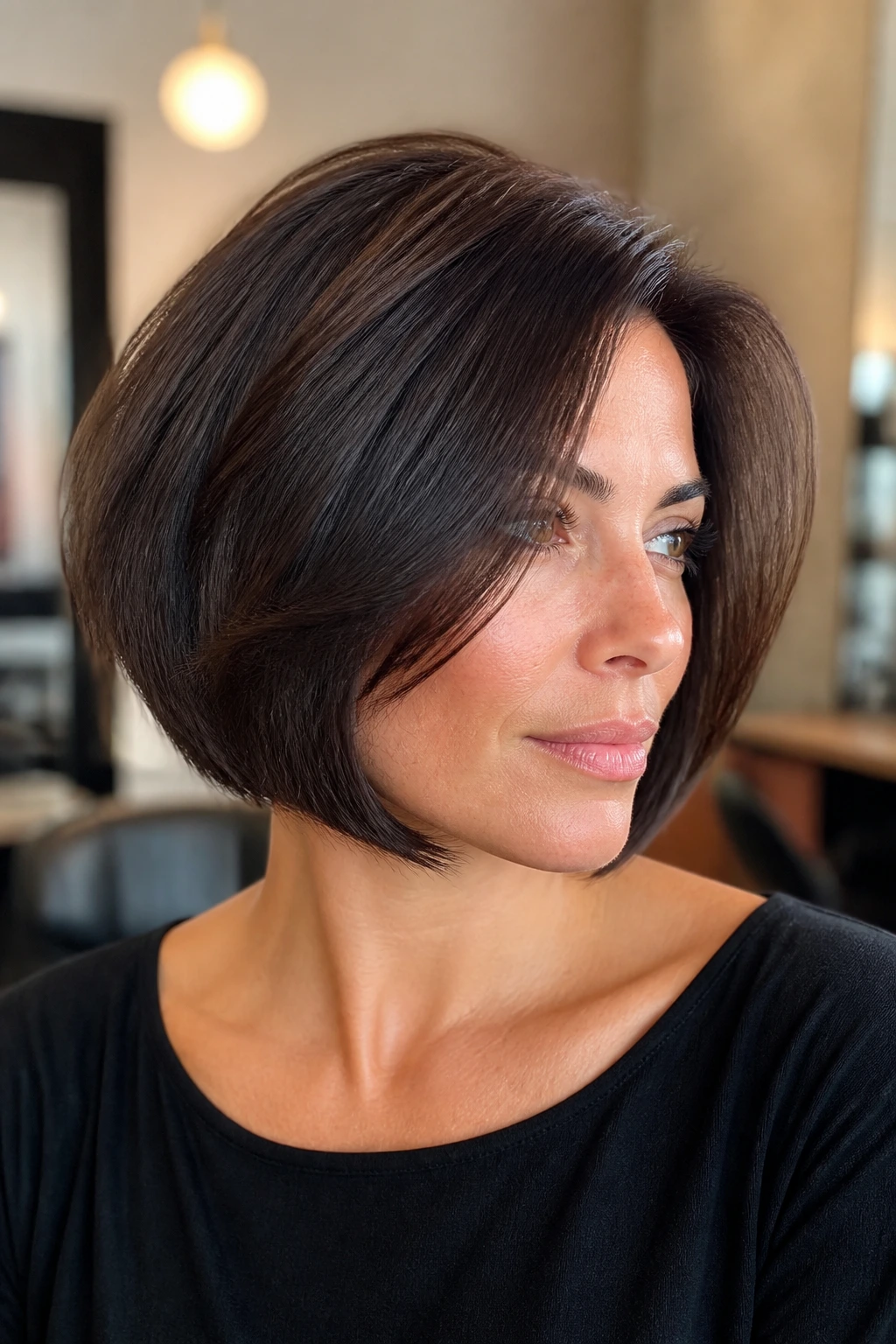
Thick hair can make a bob look amazing or puffed-out, and the difference usually comes down to how much weight the stylist removes inside the cut. A thick-hair bob needs internal shaping, not a lot of surface layers.
That means the outside line stays strong while the inside gets lightened enough to help the hair fall closer to the head. If the stylist just cuts lots of short layers on top, the shape can turn fluffy at the edges. That’s the mistake to avoid.
This cut is a lifesaver if your hair takes forever to dry or feels like it sits on your shoulders. Removing bulk from the right places can cut styling time down and make the bob feel lighter the second it’s dry. The best result still has body, just not that dense helmet feeling thick hair sometimes creates. Ask for hidden weight removal, not chunkiness.
25. The Fine-Hair Bob With A Strong Baseline
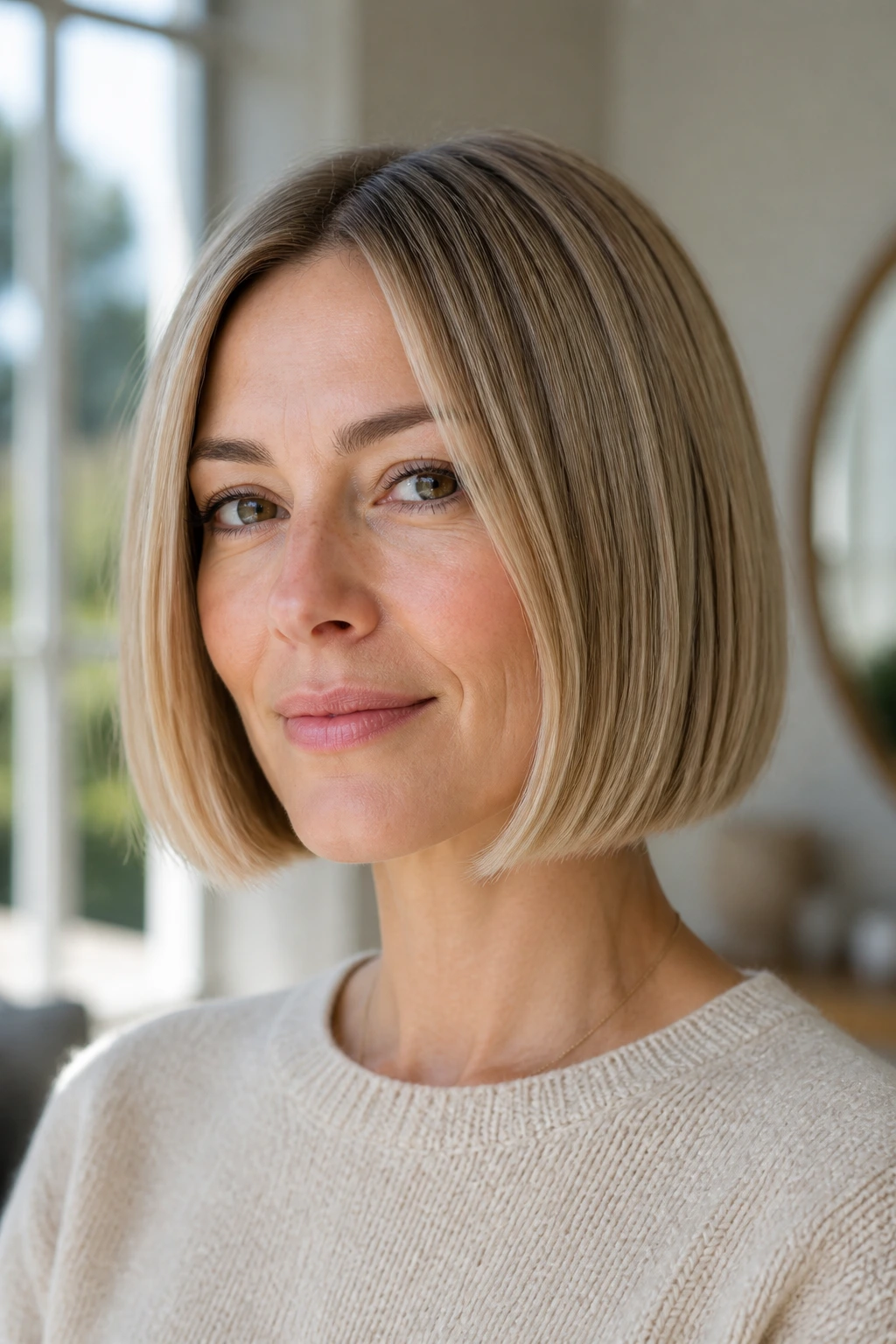
When women ask for short bob haircuts that make hair look fuller, this is usually the one they end up happiest with. The fine-hair bob depends on a strong baseline, minimal layering, and enough weight at the ends to make the whole cut look solid.
What Makes It Look Fuller
The line should sit at the chin or a touch below it, with the edge cut clean and blunt. That one detail does more than people expect. It gives the eye a place to stop, and that makes the hair read as denser than it really is.
- Keep layers light or skip them.
- Use a root-lift spray at the crown.
- Blow-dry with a small round brush for a slight bend under the ends.
This is the kind of bob that can look neat after a quick dry and still feel soft enough to wear every day. If your hair is fine, don’t let anyone talk you into too much texturizing. The thickness illusion lives in the line. Lose that, and the cut loses its point.
A good short bob is never just shorter hair. It’s a cleaner outline, a better fit around the face, and a cut that makes the morning feel less annoying. That part never gets old.
