



Long bang pixie cuts are the rare short haircut that can look tough, feminine, and a little mischievous all at once. The long front section gives you something to play with, while the cropped back keeps the cut honest.
The shape works because it shifts the focus. A fringe that falls to the eyebrow, cheekbone, or even the lash line changes the whole feel of the pixie; it turns a neat crop into something with movement and attitude. That’s why the same haircut can read punk, soft, or sleek depending on how the bang is cut and styled.
I keep coming back to this shape for people who want short hair without that abrupt, exposed feeling some pixies can have. The front gives cover. The sides give edge. And the back—if it’s cut well—keeps everything light enough that you are not fighting your own hair every morning. Start with the rougher, more piecey versions if you want the most attitude, because they set the tone fast.
1. Razor-Chopped Long Bang Pixie With Piecey Ends
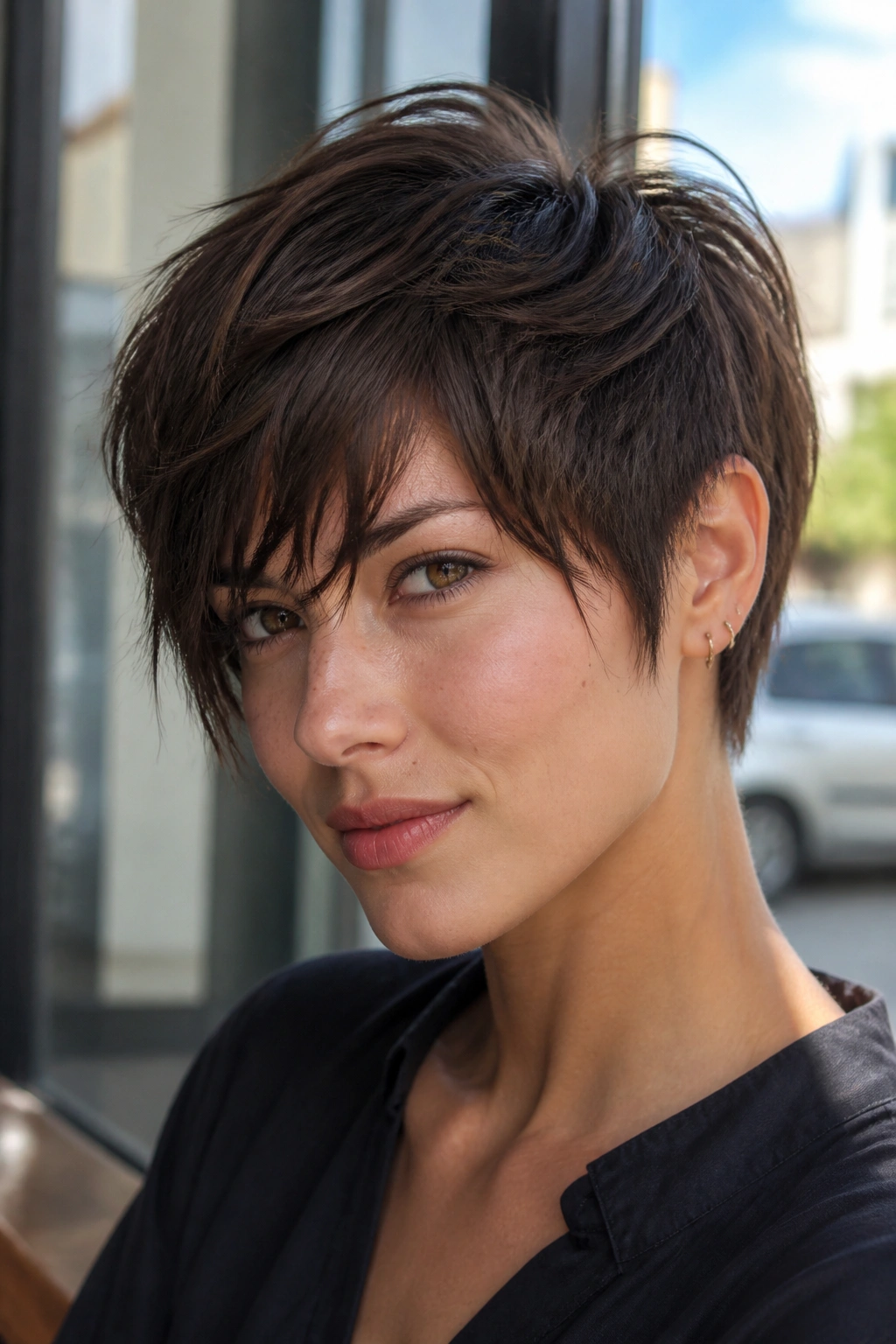
This is the version I’d hand to someone who wants their pixie to look a little feral in the best way. The razor work breaks up the line of the fringe, so the bangs don’t sit like a neat curtain. They fall in separated wisps, which makes the haircut feel lived-in instead of precious.
Why It Works
A razor-chopped fringe softens the transition between the long front and the short sides. That matters more than people think. Without that broken edge, a long-bang pixie can look heavy right across the forehead, especially if the hair is dense or naturally straight.
The best version keeps the bang long enough to skim the eyebrow, then uses short, uneven interior layers to stop it from collapsing into one solid block. That little bit of irregularity is the whole point. It gives the cut a jagged, modern finish without turning it into a mullet.
- Best for straight, wavy, or slightly coarse hair.
- Ask for the front to hit around the brow bone or just below.
- Use a matte paste or texture cream on dry hair, not wet hair.
- Plan on a trim every 5 to 6 weeks if you want the ends sharp.
Pro tip: pinch the bangs between your fingers and twist once after styling. It breaks up the line fast.
2. Deep Side-Part Long Bang Pixie
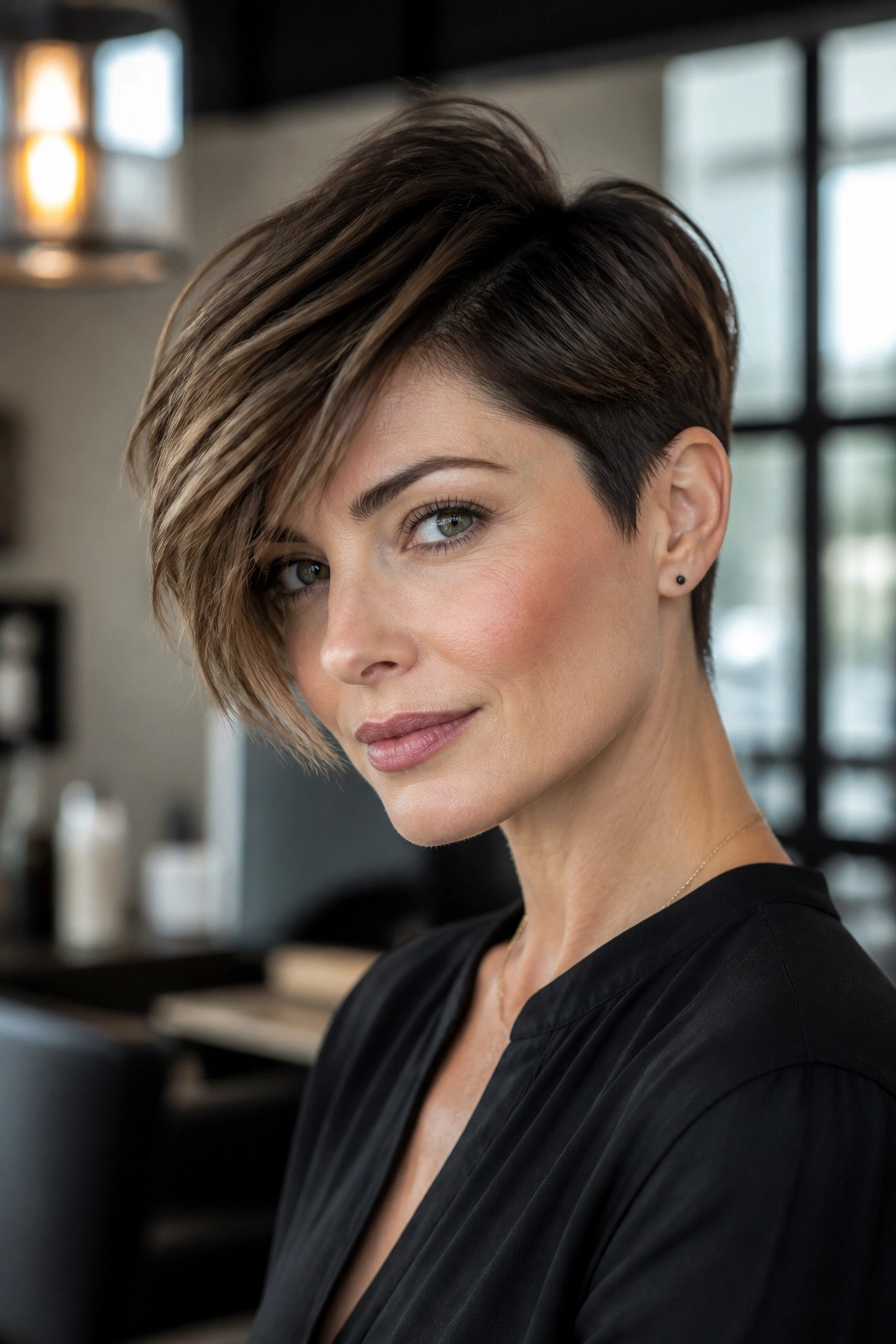
Why does a deep side part make a short cut feel so much more dramatic? Because it throws the whole front section off balance in a good way. Instead of sitting politely over the forehead, the longer bang sweeps across the face and creates a diagonal line that looks sharp immediately.
This version is especially good if you want the cut to slim the face a bit. A deep side part can make a rounder face feel longer and a softer jaw look a little more carved out. It also gives you room to play with height at the crown, which keeps the silhouette from going flat.
A blow-dryer matters here. Not a big glamorous blowout—just enough tension to make the part stay put while the roots cool in that lifted shape. I like a small round brush for this, or even a vent brush if you want less polish and more movement.
How to Wear It
The front should not be pushed too far over the eye. That reads heavy. Better to let it sweep from temple to cheekbone, then tuck a little behind one ear so the line feels intentional.
If your hair is thick, ask for some internal debulking under the top layer. That keeps the fringe from puffing out like a triangle. If it’s fine, a light root spray at the part line will do more for the shape than a tub of wax ever could.
3. Curly Long Bang Pixie With Airy Fringe
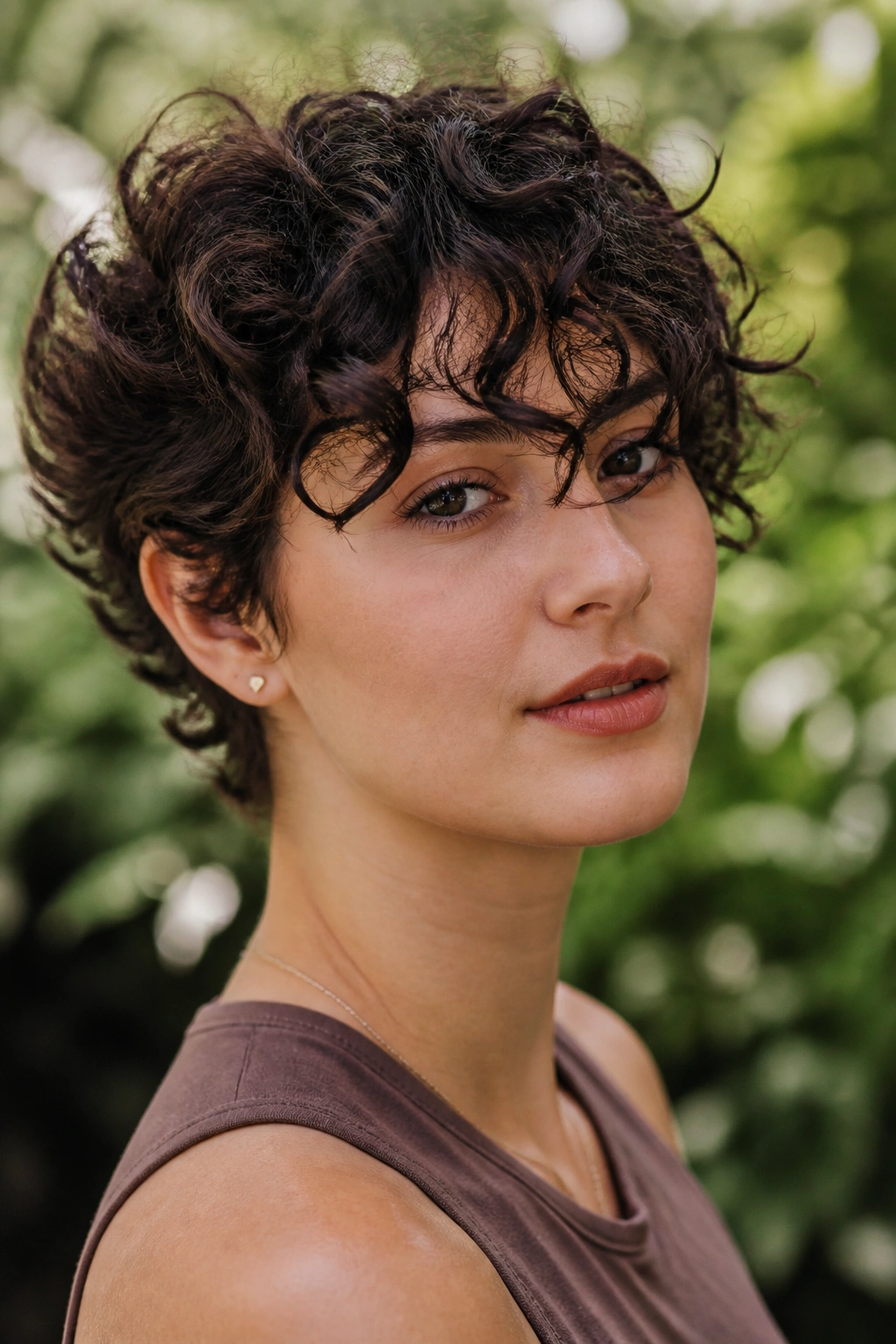
A curly long bang pixie has a different personality the minute it dries. The curl pattern does half the work for you, but only if the fringe is left long enough to spring up without becoming a tiny helmet. Short curly bangs can get bossy. Longer ones move.
The trick is to cut this one with the curl in mind, not against it. A good stylist will usually work with the hair while it’s dry or mostly dry, because curls shrink in their own strange, stubborn way. If the front is cut too short on a wet head, you end up with a bang that bounces up several inches higher than you planned. Been there. Not fun.
- Ask for the longest front pieces to sit near the eyebrow when stretched.
- Diffuse on low heat to keep the curl clumps intact.
- Use a lightweight mousse instead of a heavy cream if your hair frizzes easily.
- Leave a little extra length around the temples so the cut doesn’t balloon.
That airy fringe is what keeps it edgy. Tight curls with blunt edges can look formal. Curls that break apart a little at the front look cooler, looser, and more current without trying too hard.
4. Undercut Long Bang Pixie With Soft Front Length
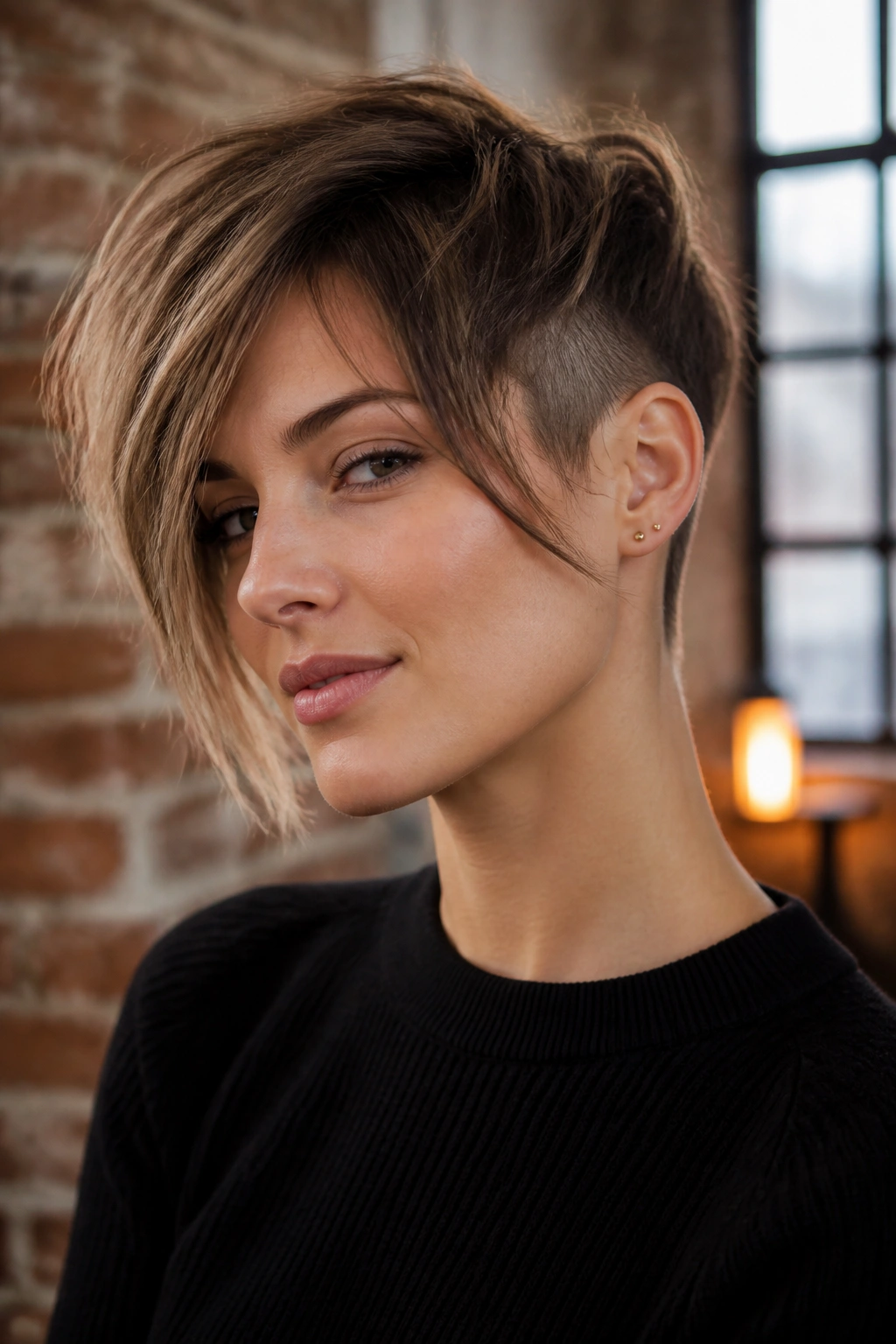
If you want a cut that looks blunt in the back and sly in the front, this is the one. The undercut clears out the bulk at the nape or around the sides, while the long bang gives you all the softness up front where people actually see it first.
The contrast is what makes it sharp. You can wear it smooth and polished, and the hidden undercut still gives the whole style a little bite. Or you can rough up the top with a paste and let the longer bang fall forward for something that feels more rebellious. Either way, the shape stays clean because the underside is doing quiet work.
This is not the cut for someone who hates salon upkeep. No sugarcoating that. The undercut grows out fast enough that the edges can start looking fuzzy after a few weeks, especially at the neckline. If you like a crisp outline, keep a trim on the calendar.
It works best on thick hair, honestly. Dense hair can get bulky in a pixie fast, and the undercut removes that puffiness without sacrificing the front length you want to keep. On finer hair, it can still work, but the contrast will be softer and less dramatic. That may be enough. Or not. Depends how hard you want the edge to land.
5. Asymmetrical Long Bang Pixie With One-Sided Fringe
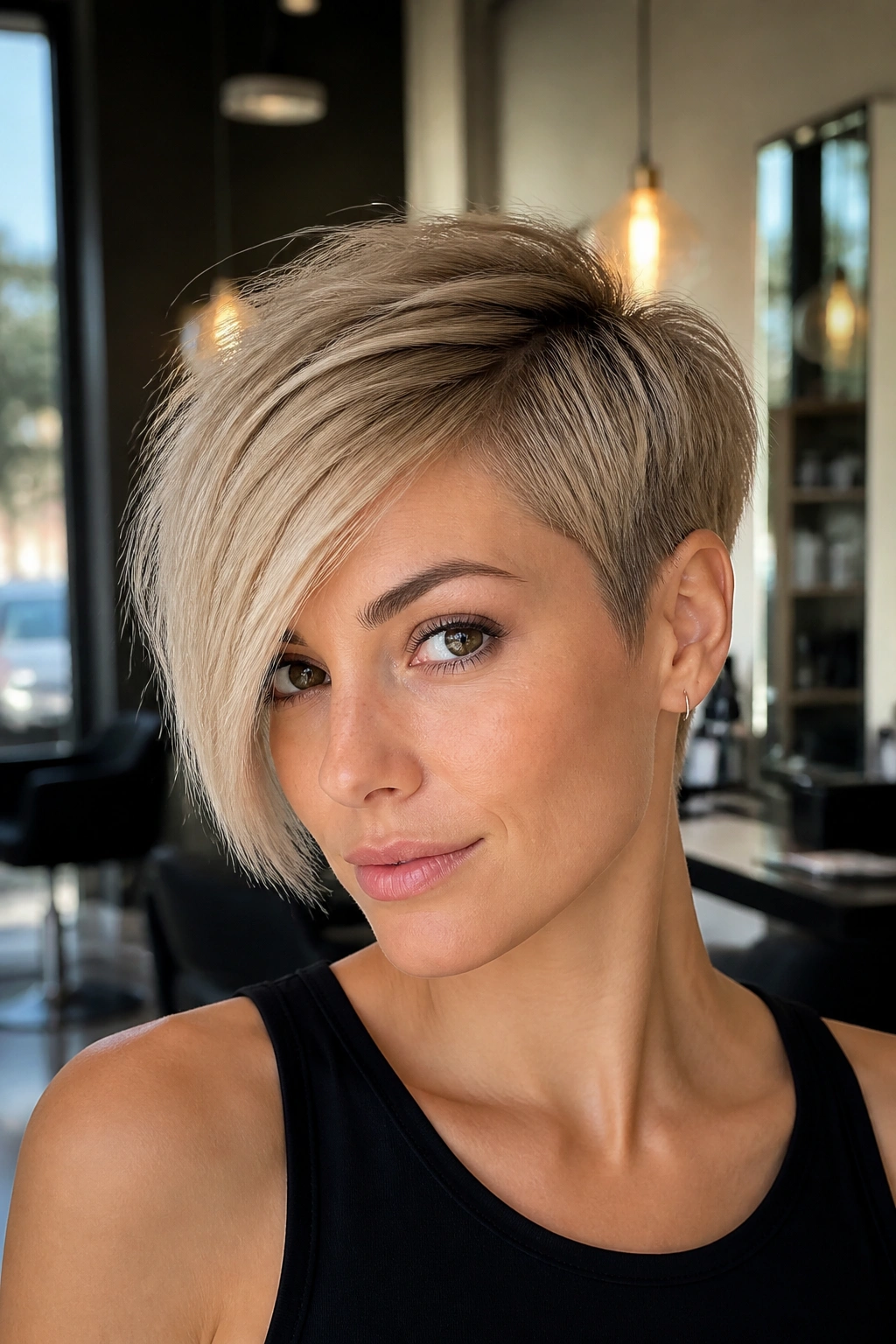
Unlike a balanced pixie, this one leans into the imbalance. One side stays longer, the fringe sweeps across the forehead, and the eye goes straight to that longer line. It feels sharper because it refuses to sit neatly in the middle.
That asymmetry does useful work. It can lengthen the face, draw attention to the cheekbone on the longer side, and make earrings or makeup stand out without much effort. If you like a haircut that looks styled even when you barely touched it, this is a strong pick.
I’d ask for one side to be roughly 1 to 2 inches longer than the other, depending on how bold you want the difference to read. Too subtle, and the point gets lost. Too extreme, and you can spend too much time fighting the shape when you tuck it or blow it dry.
A side part helps, but the real secret is keeping the longer bang light. A heavy asymmetrical fringe can drag down the face and make the cut feel lopsided in a bad way. Point-cut ends and a little movement through the middle solve that. Clean line. Messy texture. Good mix.
6. Shaggy Crown Long Bang Pixie
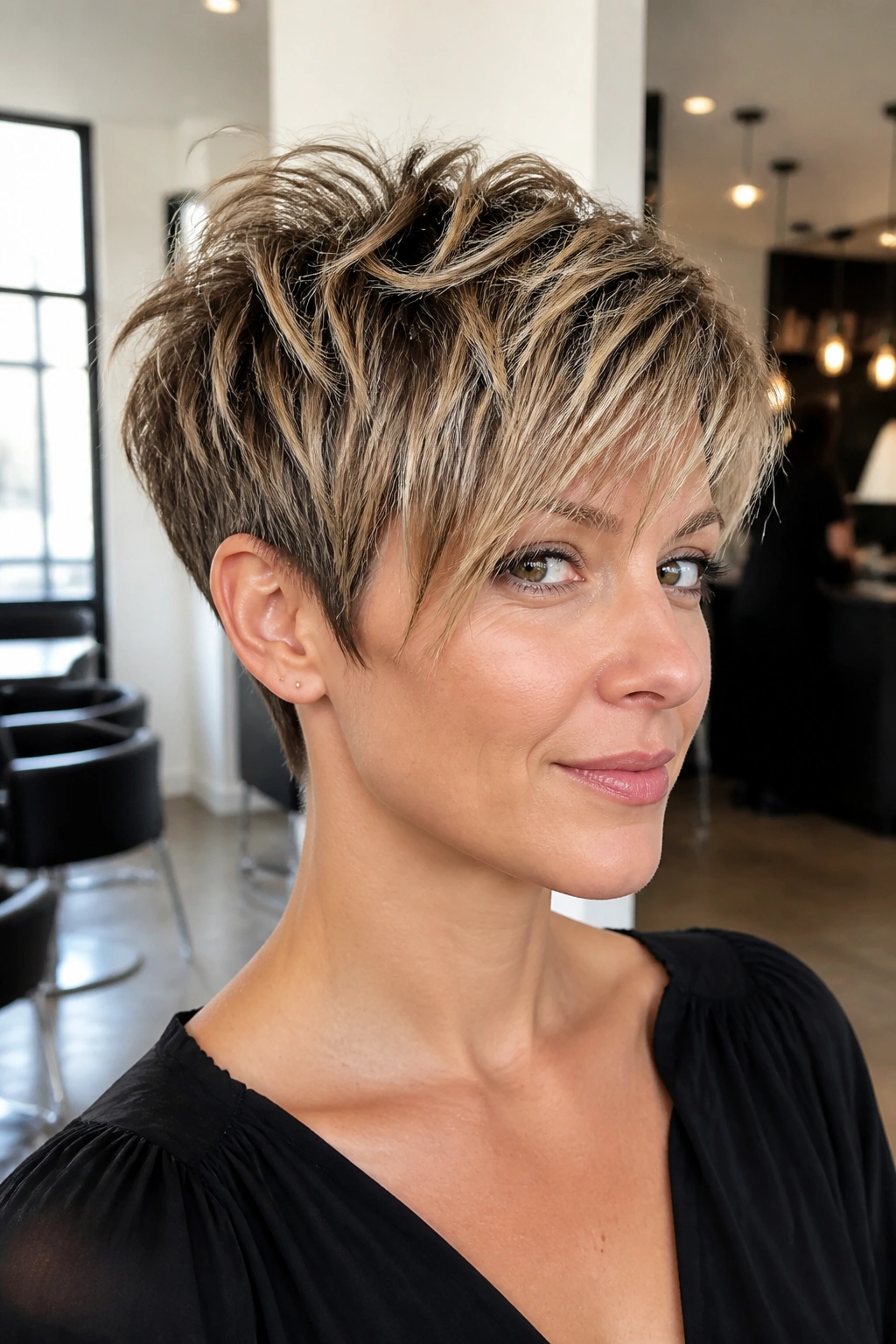
Want height without teasing the bangs into a helmet? A shaggy crown pixie is the answer that still feels cool. The crown is cut with choppy layers so it lifts on its own, while the long front pieces stay soft enough to fall across the forehead instead of sticking straight up.
The cut has a built-in swagger to it. Not polished swagger. More like a haircut that knows it has better things to do than lie perfectly flat. That makes it a smart choice if your hair tends to collapse at the roots by lunchtime. A little choppiness at the crown keeps the silhouette alive.
How to Get the Most From It
Blow-dry the crown first, directing the roots forward and then up with your fingers. That sounds fussy, but it takes maybe two minutes. Once the roots cool in that lifted shape, the whole cut holds better.
Use a dry texture spray, not a heavy oil. The spray gives grit; oil gives slip, and slip is the enemy here. If your hair is fine, a tiny bit of root-lift foam before drying can help the crown stand up without needing half a can of hairspray.
The fringe should look touched, not carved. That’s the difference. A shaggy pixie with long bangs works because the front and top feel like they belong to the same messy family.
7. Slicked-Back Long Bang Pixie With Glassy Finish
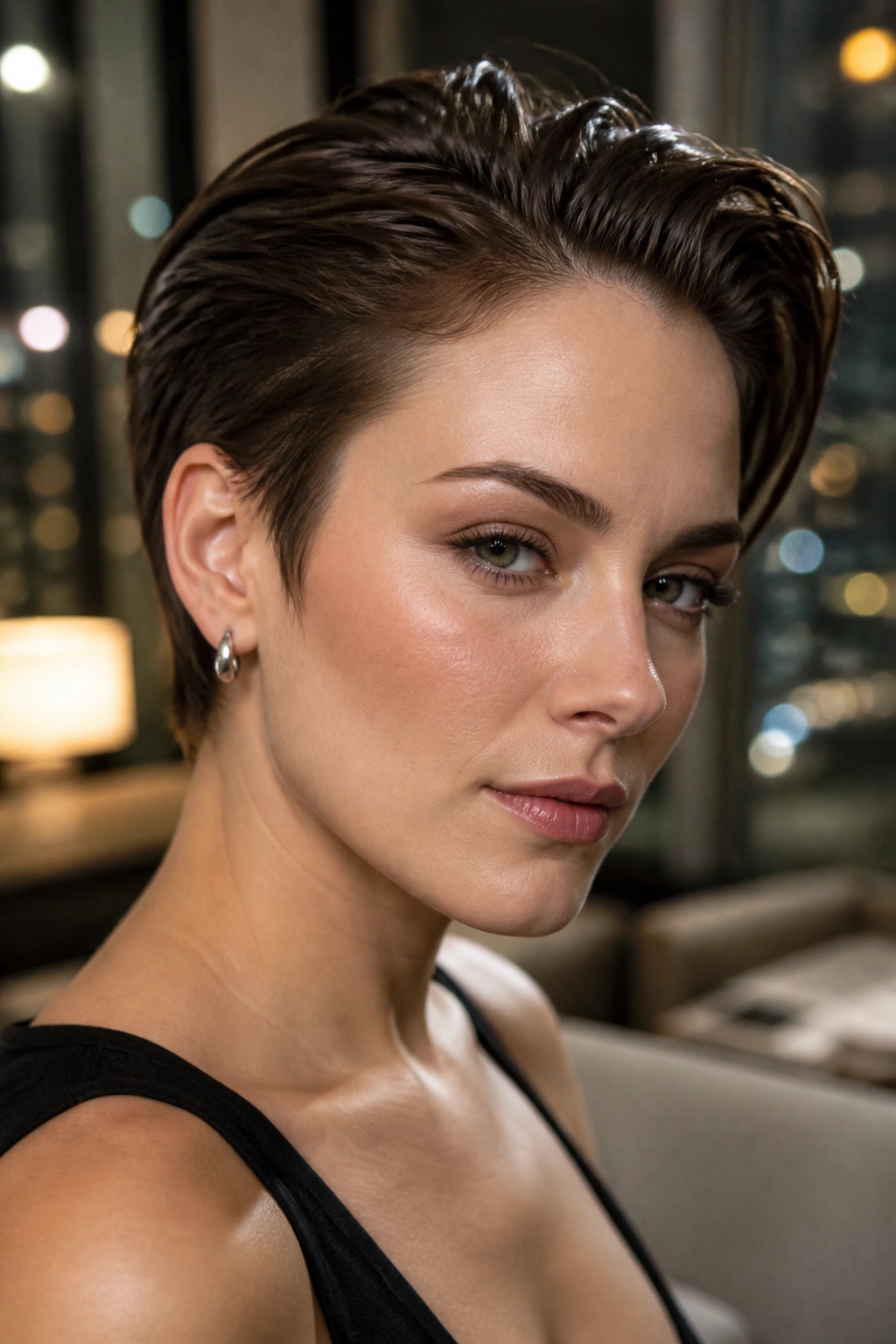
A slicked-back pixie is not trying to hide anything. It puts the shape on display and lets the face do the talking, which is why it feels so sharp when it’s done well. The long bang still matters here, but instead of falling forward, it gets pushed back or to the side with a glossy finish.
This version leans dressy without becoming stiff. A soft gel or a light pomade can keep the front in place while the sides stay neat against the head. The result is sleek, but not helmet-like if you use the product sparingly and work it through damp hair with your hands first.
It helps to think about this cut in terms of balance. If the front is long and the sides are close, the shape can start looking severe if the hair is very flat on top. A little root lift before you smooth the bang back prevents that. So does leaving a few short pieces loose around the hairline. Tiny details. Big difference.
I like this style for nights out, sharp earrings, and strong brows. It does not beg for softness. Good. Sometimes that’s exactly the mood.
8. Bowl-Inspired Long Bang Pixie With Jagged Fringe
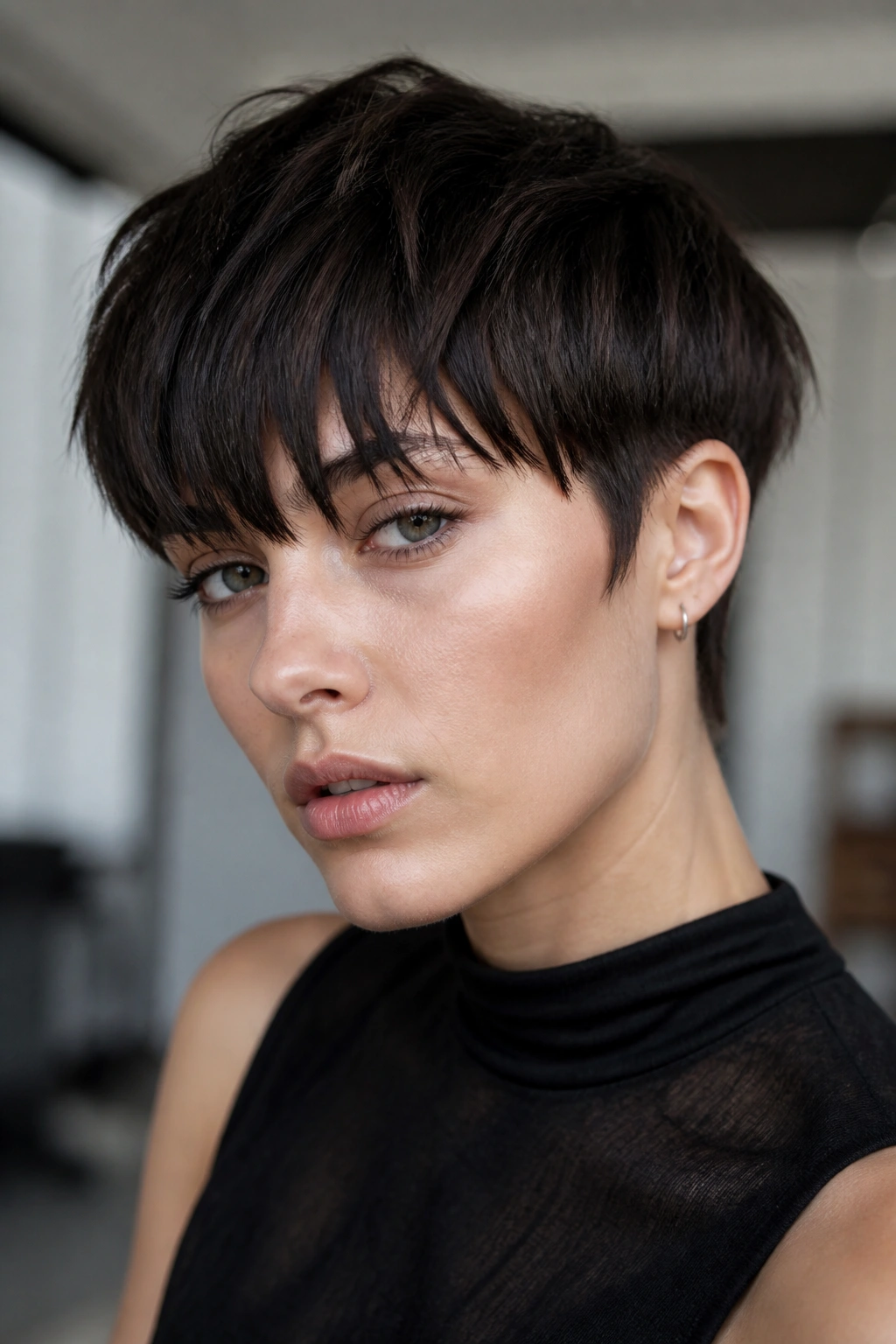
Picture a bowl cut’s cousin who spent some time listening to loud music. That’s the vibe here. The outline has a bit of that rounded influence, but the long bang is broken up and choppy, so it reads rebellious instead of retro costume.
This cut works best when the fringe curves just enough to frame the face without closing it off. The side pieces should be soft and jagged, not blunt and heavy. If the perimeter gets too exact, the whole thing can feel dated fast. A little unevenness keeps it alive.
- Good for strong cheekbones, smaller foreheads, and people who wear glasses well.
- Ask for the bang to graze the eyebrows in the center and angle slightly longer at the sides.
- Keep the nape tidy so the shape doesn’t drift into mushroom territory.
- Use a light wax to separate the ends after blow-drying.
The best part is the attitude. It has edge without screaming for attention. That matters if you want something unusual but still wearable with a blazer, a hoodie, or full makeup. The cut does the talking. You just show up.
9. Feathered Long Bang Pixie With Soft Edge
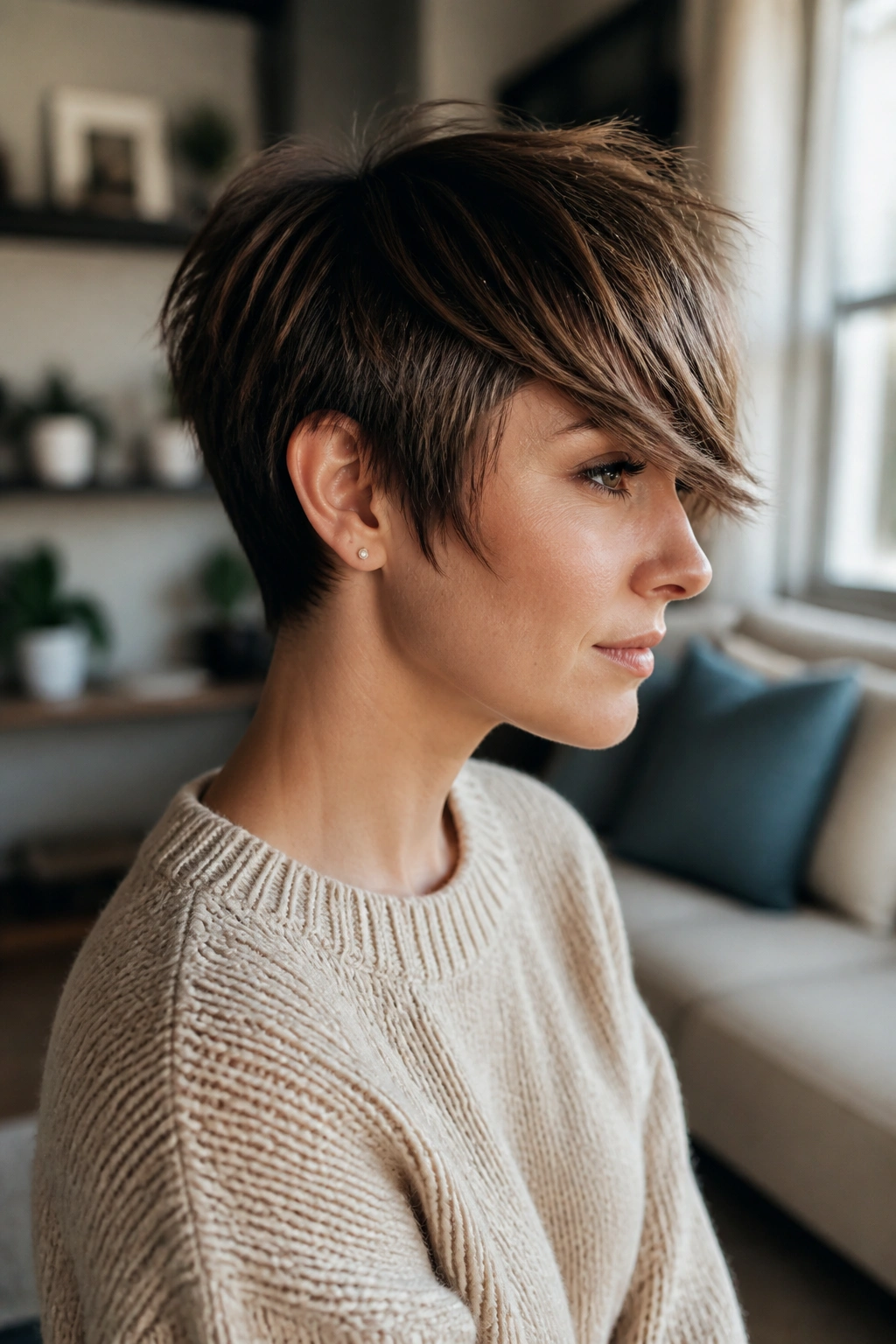
Feathering sounds mild, and in a way it is, but don’t mistake that for boring. A feathered pixie lets the long bang spill across the forehead in layers so light they almost float, which gives the whole haircut movement without harsh lines.
Why Feathering Matters
The technique removes bulk without removing shape. That matters most around the front, where a thick fringe can start feeling dense by noon. Feathered ends avoid that problem. They move when you turn your head, and they keep the cut from looking boxy.
It’s a smart choice if your hair is fine to medium and you want edge without severity. The style still has definition, but the finish is softer than a razor-heavy pixie. That can be useful if your face has sharper lines and you do not want the haircut to compete with them.
How to Style It
A vent brush and a quick blow-dry are enough most days. Aim the airflow forward at the roots, then sweep the bang across with your fingers so the ends stay separated. A tiny dab of styling cream on the very tips can stop flyaways, but skip anything too rich. Feathering looks best when the movement stays visible.
I like this cut on people who want short hair that does not look stern. It has attitude, sure. Just with a quieter voice.
10. Mullet-Leaning Long Bang Pixie With Longer Back
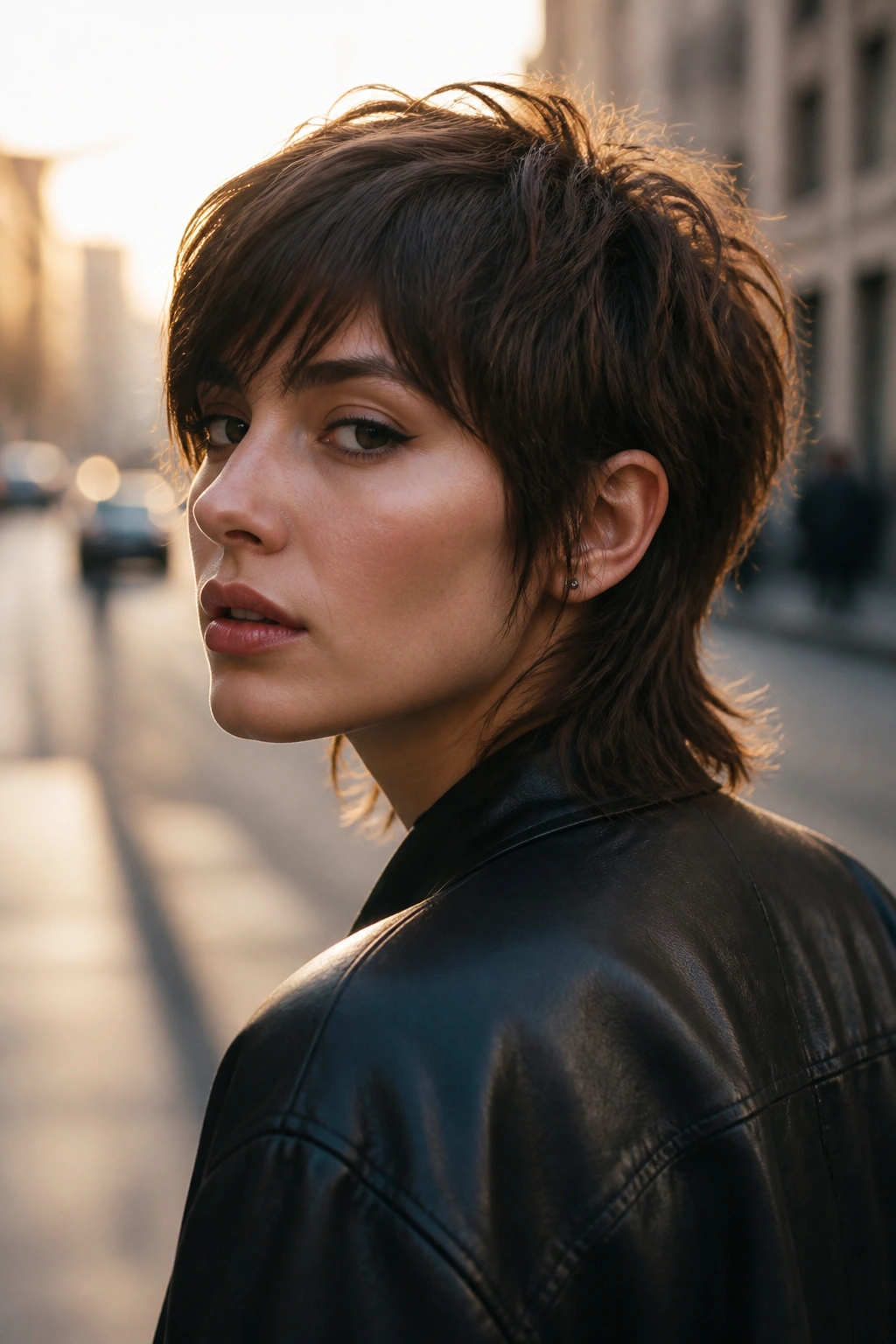
This cut is for someone who likes the idea of short hair but does not want the back and sides to be too polite. The front still carries the long bang, but the nape stays a little longer and the top has enough texture to hint at a shaggy mullet shape.
It’s more interesting than a standard pixie because the eye keeps traveling. Front to crown, crown to nape, nape back up again. That movement is the whole point. A classic pixie can sometimes look finished from one angle and flat from another. This one keeps going.
The key is restraint. You want the longer back to feel deliberate, not like a grow-out you forgot to fix. A clean taper around the ears helps, and the top should have enough layers to connect the front fringe to the back length. If the sections are too disconnected, the shape gets weird in a hurry.
For someone who likes vintage punk, indie-sleek, or just a haircut with some tension in it, this is a strong option. It has edge built right into the silhouette. No extra drama needed.
11. Platinum Long Bang Pixie With Sharp Contrast
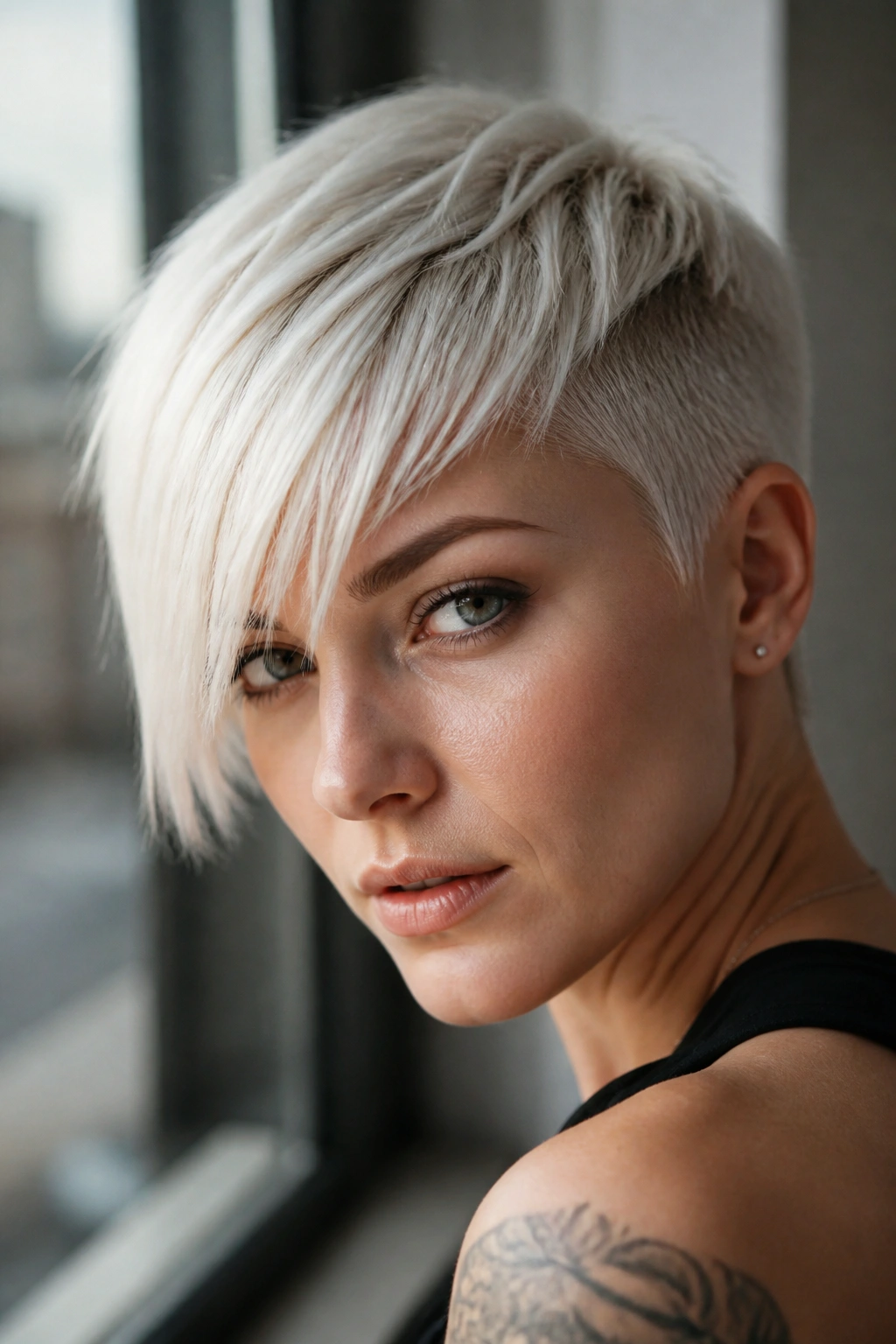
Platinum hair makes a long bang pixie look louder without changing the cut at all. That’s the trick. The shape is already strong, but when the hair is lifted into a pale blonde or icy white tone, every edge, seam, and texture line gets more visible.
This is a cut-color combo that does not hide its work. You can see the razoring, the layering, the way the bang falls across the forehead. That can be gorgeous, but it also means the color has to be maintained with some care. Root regrowth shows fast. Brass can creep in. A toner or purple shampoo will not solve everything, but it helps keep the tone clean between appointments.
The haircut itself should stay simple enough to support the color. Too many competing layers and the look turns busy. Better to keep the sides tight, the fringe long, and the texture crisp. Let the color do some of the drama.
A platinum pixie is not low-maintenance, and pretending otherwise is silly. Still, if you like a sharp, almost graphic look, the payoff is hard to ignore. It has that clean, edgy snap people notice from across the room.
12. Dark-Rooted Long Bang Pixie With Chunky Bangs
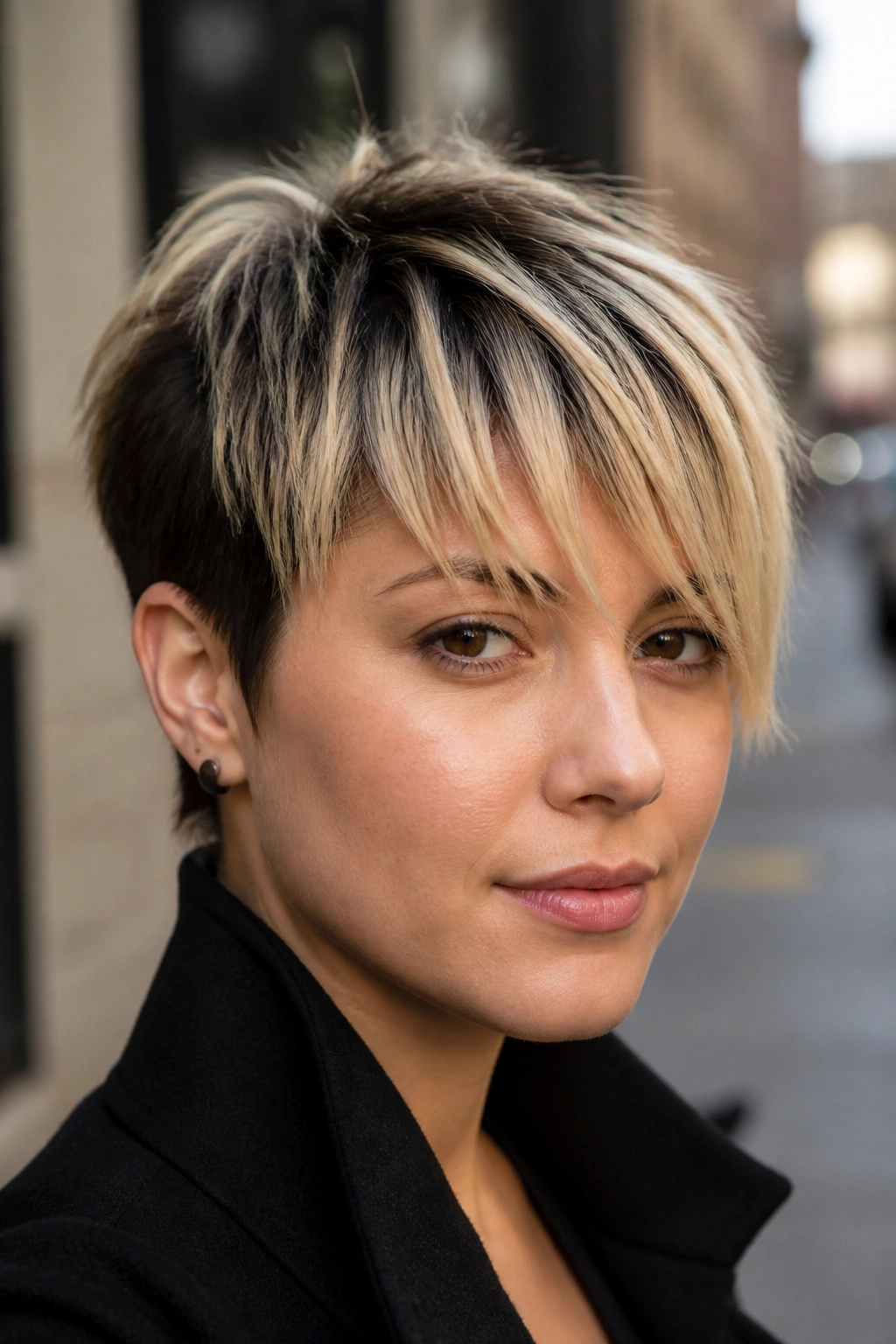
Do you want the edge without bleaching the life out of your hair? Start with dark roots and let the contrast happen through shape instead of a full color overhaul. A dark-rooted pixie with chunky long bangs keeps the base rich and the front pieces bold.
The visual trick is simple: darker roots create depth, and the longer fringe can be left a shade lighter, or just separated enough that it reads chunkier against the base. That makes the front feel dimensional even when the style is quick. No fuss. Good payoff.
What to Ask For
- Keep the roots untouched or slightly deeper than the mids.
- Cut the fringe so it lands around the brow, not mid-forehead.
- Ask for separation through the ends rather than a blunt straight edge.
- Use a light styling paste to keep the chunks visible.
This cut looks especially good on hair that has natural movement, because the contrast shows every bend. On pin-straight hair, you may need a bit more product to avoid the bangs flattening into one dark strip. A little grit fixes that. Too much makes it sticky. There’s a narrow line there, and you can feel it with your fingers when the texture is right.
13. Wet-Look Long Bang Pixie With Long Front Pieces
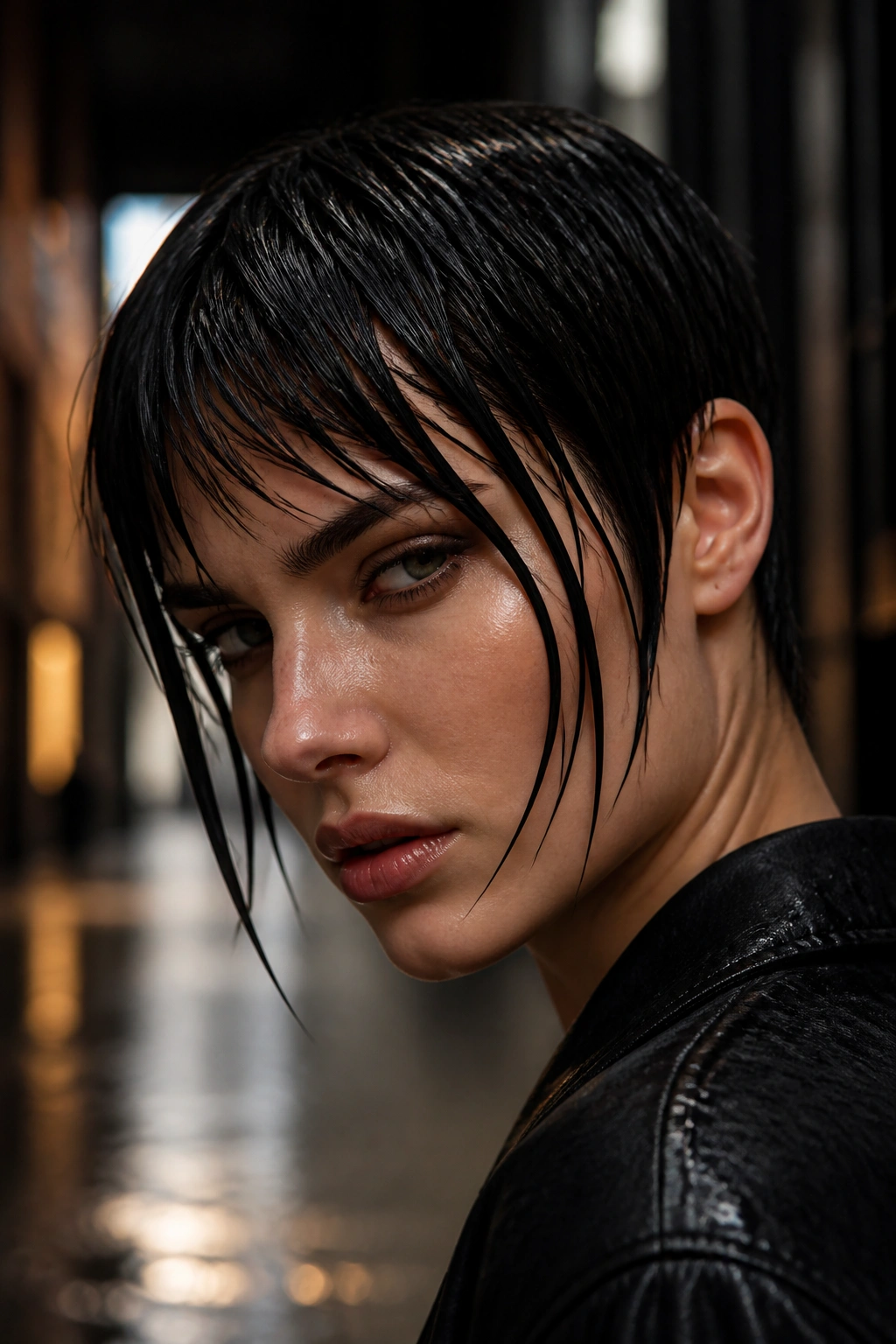
There’s something deliciously sharp about a wet-look pixie. The hair shines, the lines get cleaner, and the long bang seems to trace the face instead of floating away from it. It feels deliberate in a way that matte texture sometimes doesn’t.
The finish works because the product changes how the cut sits. A high-shine gel or glossing cream clings the hair closer to the head, which is useful if you want to show off cheekbones, brows, or a strong jaw. The fringe can be combed forward, pushed to one side, or split with your fingers for a piecey, damp finish that looks fresh instead of overworked.
This style is also forgiving on busy mornings. Damp hair, a small amount of product, fingers through the front, done. You do need to use the right amount, though. Too much gel and the bangs can harden into one flat sheet. Too little and the style loses the sleek edge that makes it worth wearing.
I like this on humid days, for evening events, or whenever you want your pixie to feel a little bit dangerous. It’s glossy. It’s sharp. It knows exactly what it’s doing.
14. Wolfish Long Bang Pixie With Tousled Layers
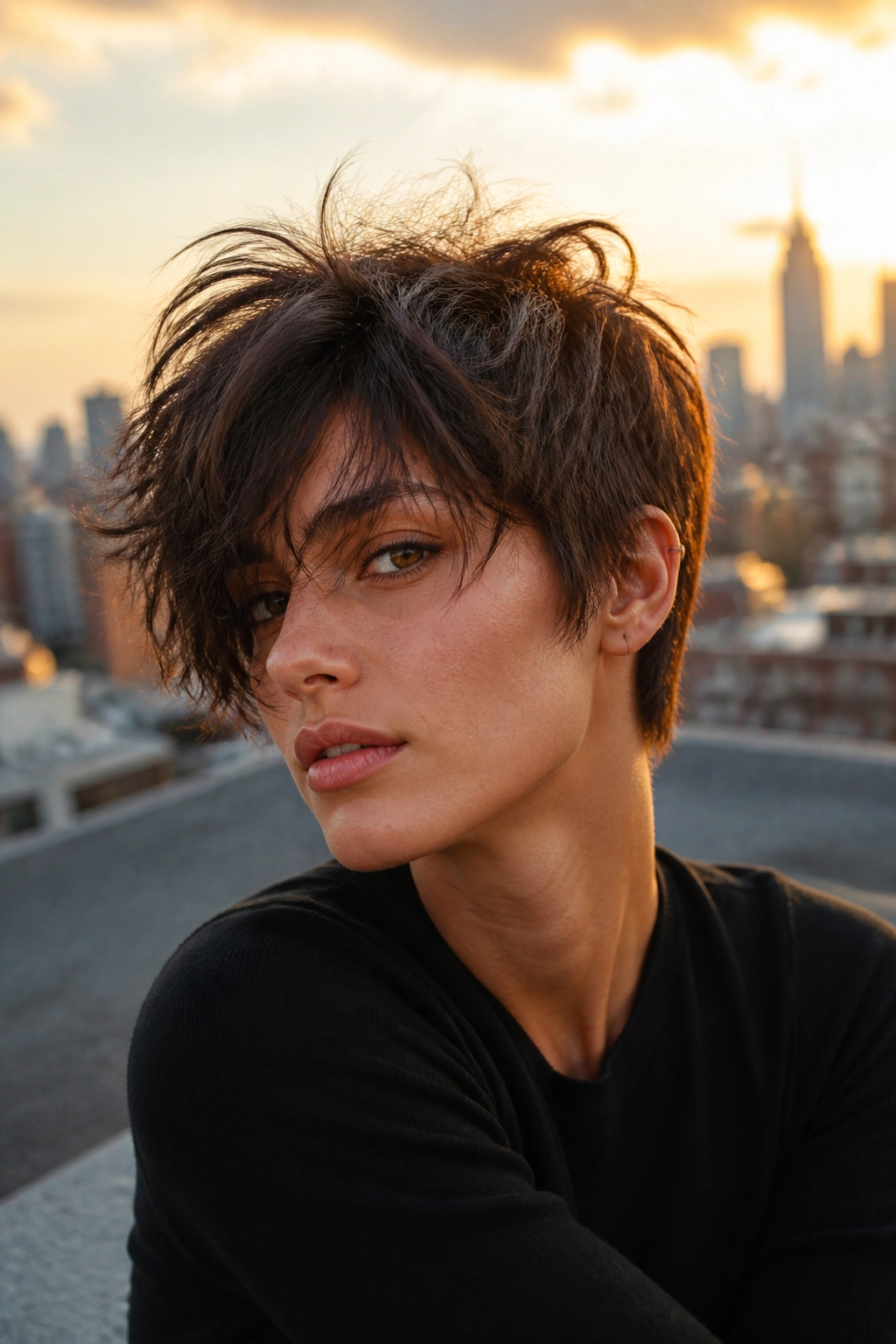
A wolfish pixie is what happens when a shag and a pixie stop arguing and decide to share a haircut. The crown stays full, the layers around the front are longer, and the sides taper enough to keep the shape compact. It has that slightly wild, not-too-neat energy people keep asking for.
Cut Shape
The top should have enough length to fall forward, then break apart with movement rather than sitting in one smooth block. The long bang is part of that messier system. It should blend into the top, not hang there like an afterthought.
Styling
Dry shampoo at the roots helps if your hair gets soft by midday. A little rough-drying with your hands works better than trying to smooth everything with a brush. Leave a few pieces imperfect. That’s where the attitude lives.
Who It Suits
This one loves medium to thick hair. Fine hair can wear it too, but the layers need to be handled carefully so the crown does not go sparse. If your hair is very straight and very flat, you’ll spend more time building texture than you might want. Still possible. Just more work.
The payoff is a cut that feels current without leaning too hard into any one trend bucket. It looks like you meant it.
15. Tucked-Behind-the-Ear Long Bang Pixie With Clean Edges
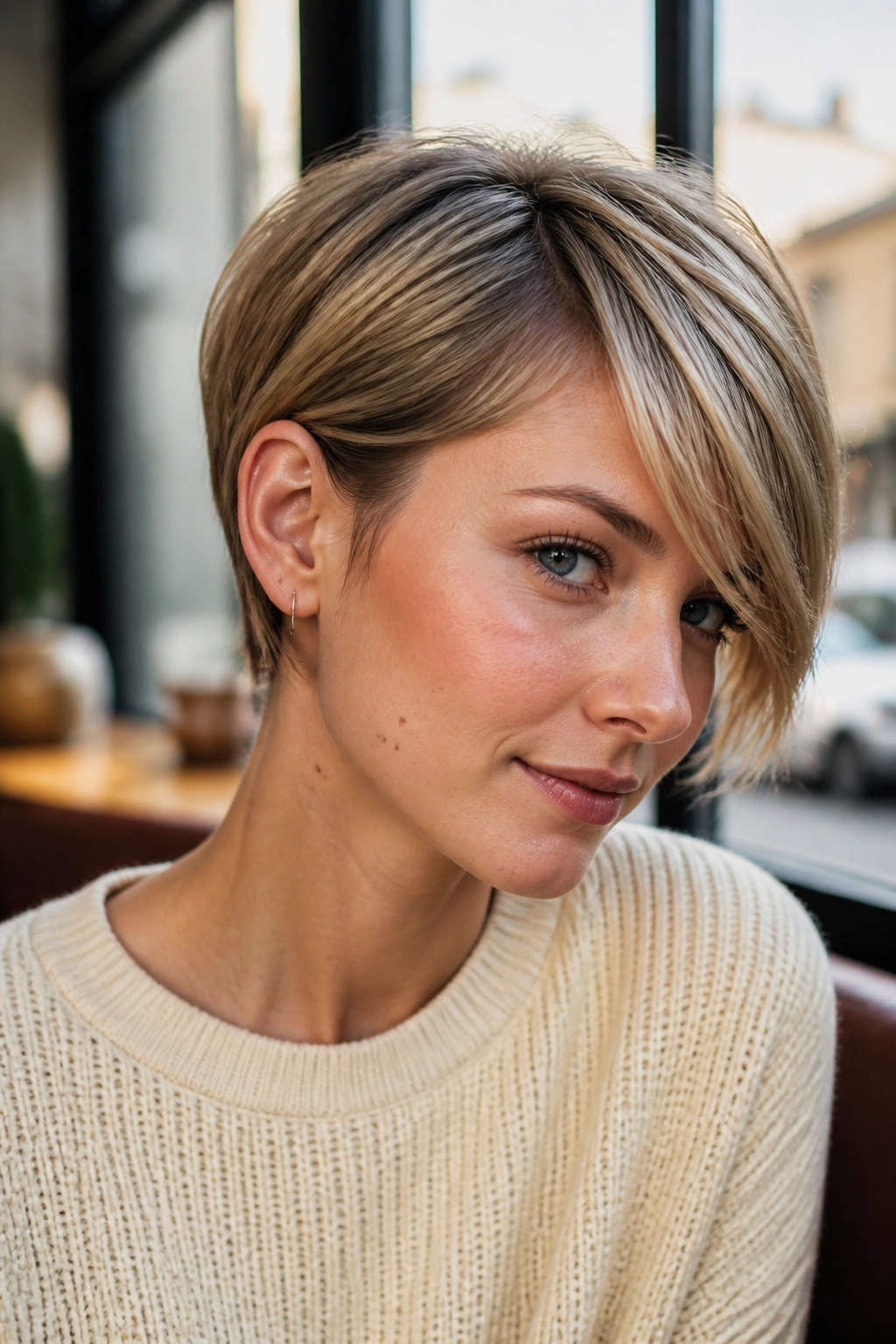
This is the pixie I recommend when someone wants edge but also needs to live a normal life. The front stays long enough to sweep, tuck, or drop across the brow, while the sides are neat enough to sit beside earrings, glasses, or a collar without fighting them.
That tuck behind the ear matters more than people expect. It opens the face in a clean, sharp way and gives the long bang a place to go when you want the style off your forehead for a few hours. The cut reads polished when tucked, a little rebellious when the front pieces fall loose. Same haircut. Different mood.
A tidy neckline makes this version work. If the back is sloppy, the whole illusion falls apart. Keep the nape snug and the sideburn area crisp, then leave just enough softness in the front to keep the bang from feeling severe. A light styling cream is usually enough; heavy wax can make the tucked section look greasy.
It’s the version I’d choose if I needed one pixie to do a lot of jobs without losing its attitude. Sharp in the morning. Softer by dinner. Still a little dangerous.
