



The best ponytail updo ideas do one thing well: they make a familiar ponytail look deliberate, polished, and a little more expensive than it really was. That’s the whole trick. A ponytail by itself can feel casual in a second, but change the placement, hide the elastic, and give the base a little structure, and suddenly it reads formal without becoming fussy.
That’s why this style keeps showing up for dinners, weddings, office events, and all the moments when a loose blowout feels too ordinary. The shape is simple. The details are not. A clean crown, a smart part, a wrapped base, or a bit of height at the right spot can shift the mood fast.
I’ve always thought the biggest mistake is treating the ponytail as an afterthought. It should feel like the point, not the shortcut. And when the hair is secured properly — not yanked, not flattened into submission, not left with a visible band staring back at you — the result can be elegant in a very practical way.
1. Sleek High Wrapped Ponytail
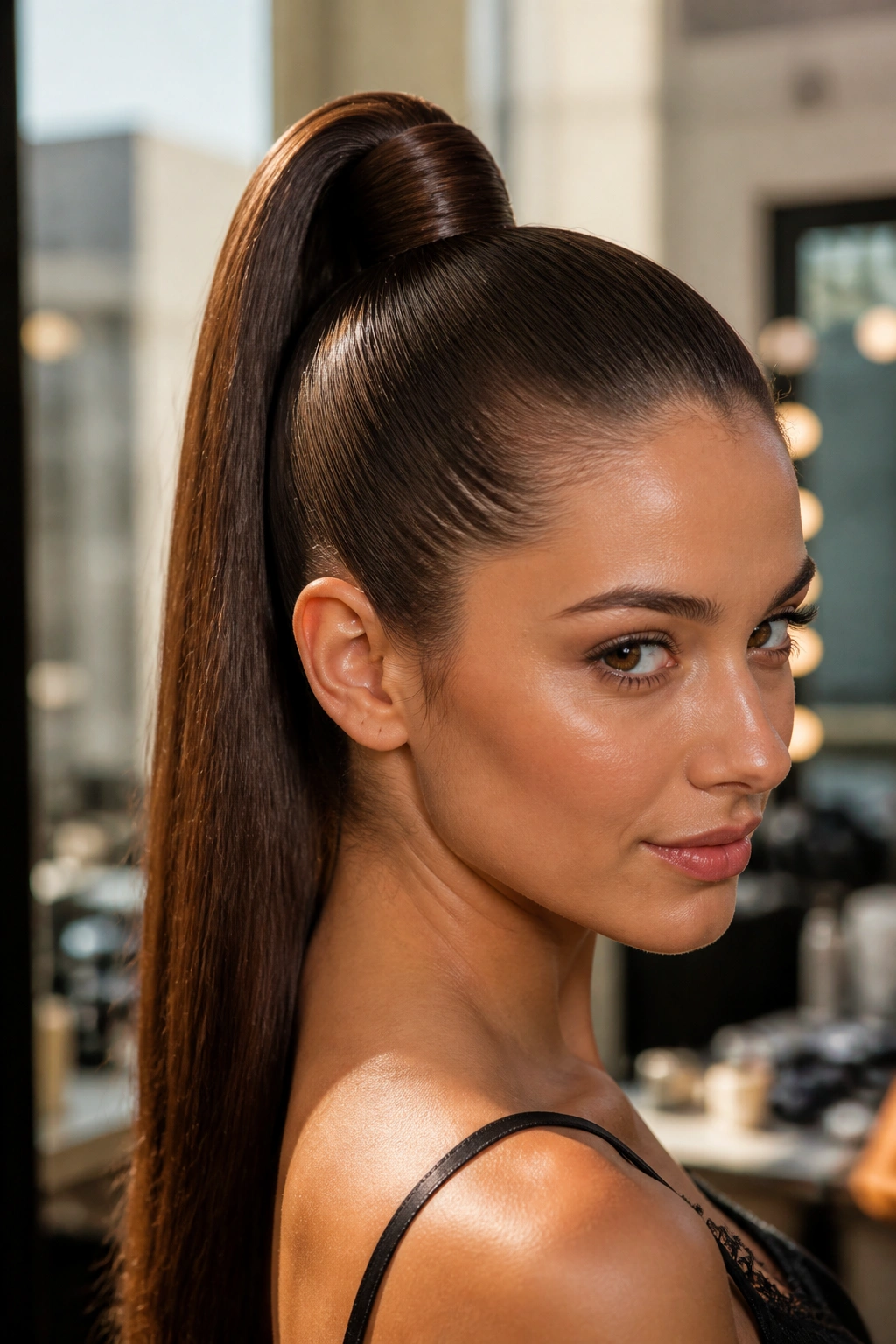
A high ponytail can look sharp instead of sporty when the crown is smooth and the base is hidden. That’s the version I reach for when the outfit already has enough detail and the hair needs to stay clean, lifted, and controlled.
Why It Looks So Clean
The height is doing half the work. A ponytail placed near the crown lengthens the neck and keeps the face open, while the wrapped strand around the elastic makes the whole style feel finished instead of rushed.
A small amount of smoothing cream at the roots helps, but don’t drown the hair in product. You want control, not grease. If your hair is fine, a light mist of texturizing spray at the root gives the ponytail something to hold onto.
- Use a boar bristle brush or a dense paddle brush to smooth the crown.
- Secure the tail with a clear elastic first, then add a stronger one underneath if the hair is thick.
- Wrap a 1½- to 2-inch section around the base and pin it underneath with a bobby pin.
- Keep the tail straight with a flat iron, or bend the ends slightly for softness.
Best tip: tilt your head back while tying the ponytail. It gives the base a cleaner lift and keeps the crown from sagging the second you stand up straight.
2. Low Side-Part Ponytail with a Polished Finish
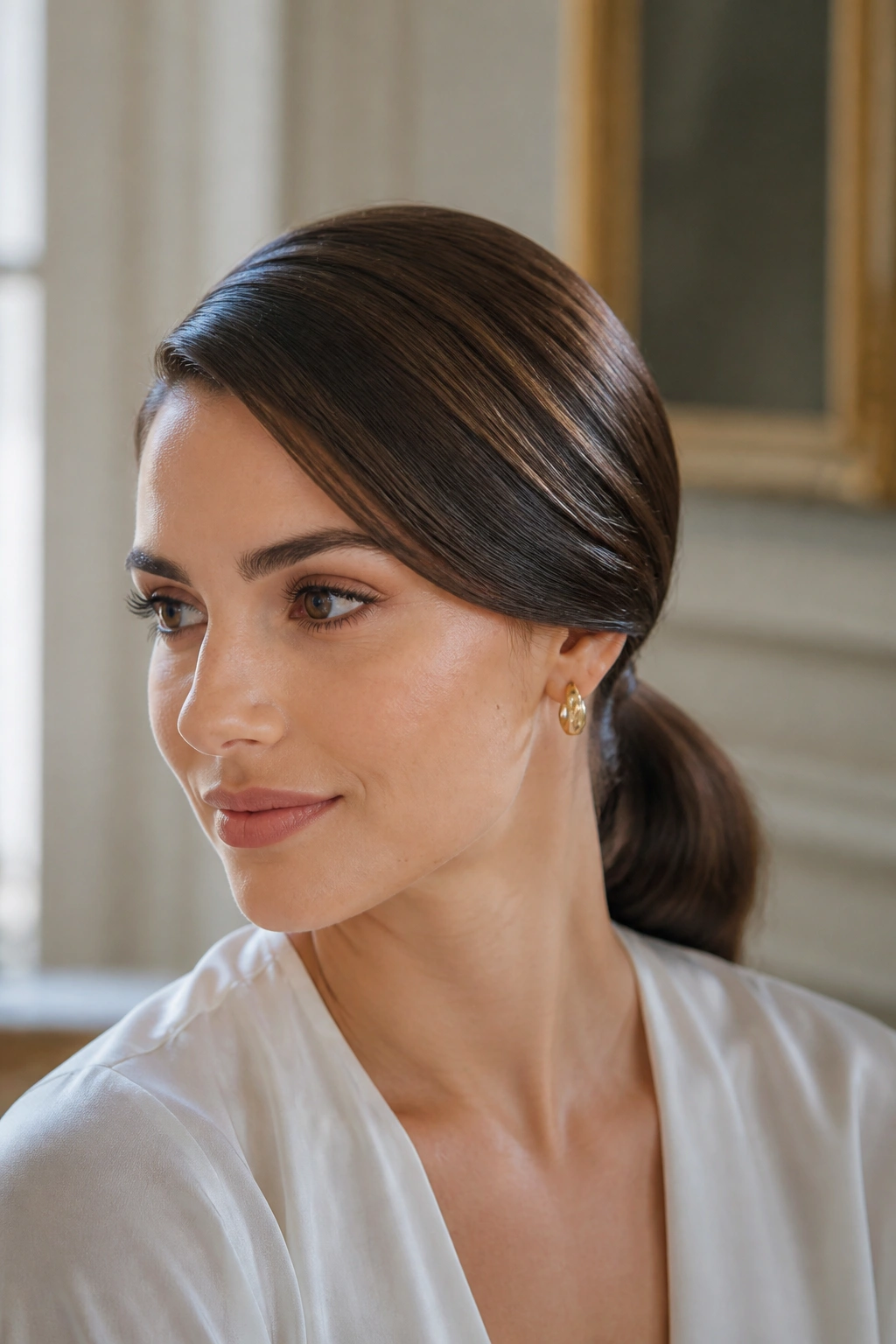
This one is for the person who wants elegance without looking like she tried to outsmart the room. A deep side part and a low placement do more than people think; the style reads calm, expensive, and a little old-school in the nicest way.
The side part matters because it softens the face and gives the front a shape that feels intentional. A straight center part can work, sure, but a side sweep tends to look richer around the hairline, especially if the front pieces are brushed back with a soft curve instead of pinned flat.
Keep the ponytail at the nape and secure it low enough that it almost brushes the collar. That placement looks especially good with earrings, a boat-neck top, or anything with open shoulders. If the hair is too sleek, it can feel severe, so I like to pull a whisper of volume at the crown with the tail of a comb before I tie it off.
A little shine spray goes a long way here. Not much. Just enough to make the surface look smooth when the light hits it.
3. Braided Crown Ponytail
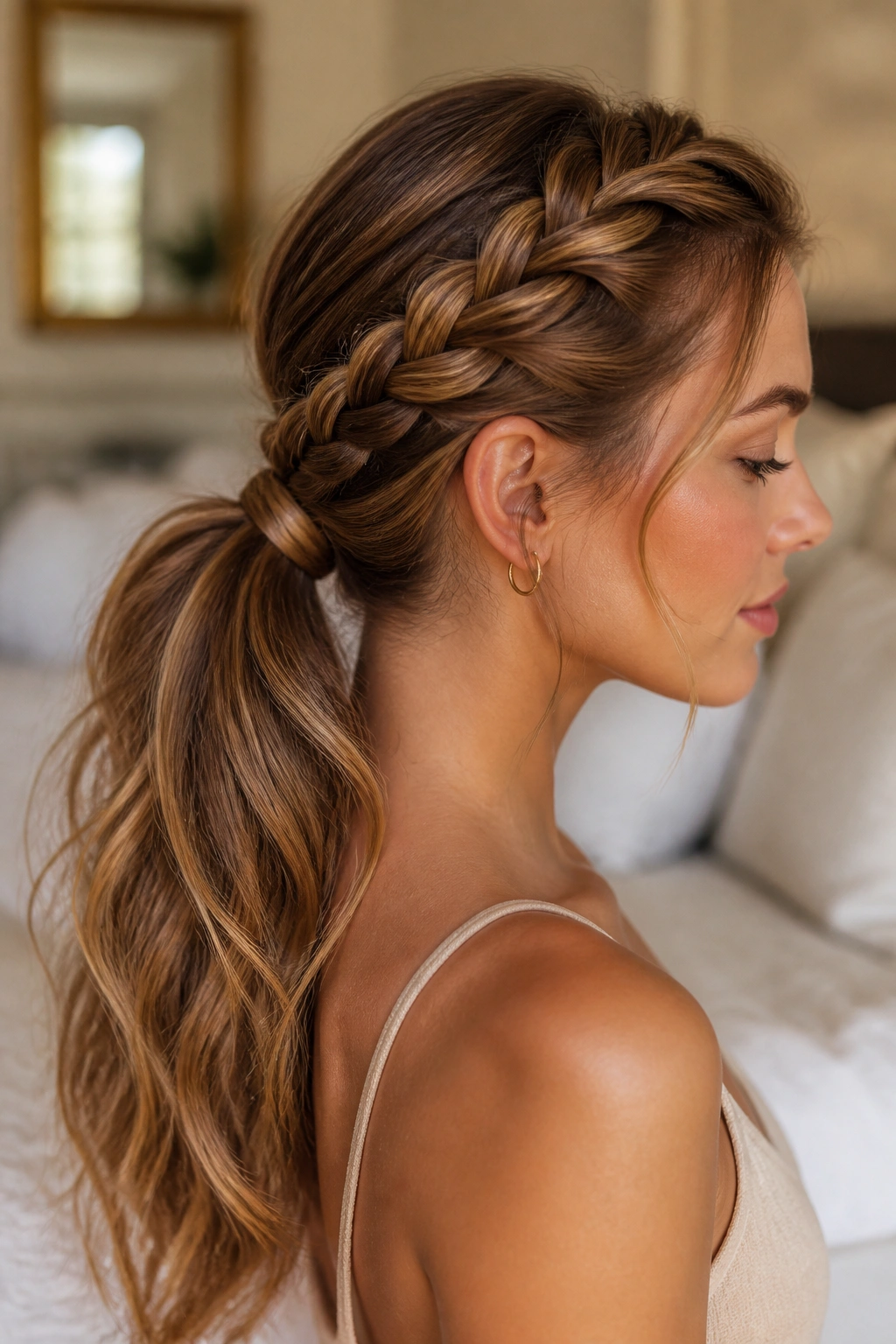
Why does a braid change the whole mood? Because it gives the hair a line to follow. The eye sees the braid first, then the ponytail, and the style suddenly feels more constructed than a plain pulled-back look.
This version starts with a braid along one side of the head — sometimes both, if you want symmetry — and gathers into a low or mid ponytail. The braid can be tight and neat for a cleaner finish, or a little loosened if you want the style to feel softer around the temples. Either way, the braid acts like a built-in frame.
How to Wear It
The cleanest version starts with a side part. Braid a section from the front hairline back toward the ear, then continue it along the scalp or simply pin it into the ponytail base. If your hair is long, the braid can blend directly into the tail for a seamless look.
This style is especially good for medium-to-long hair that needs staying power. It’s also forgiving if your ends aren’t perfectly even, since the braid distracts from any uneven layers. A small pearl pin near the braid base can make the whole thing feel dressier without crossing into costume territory.
4. Bubble Ponytail with Satin Wraps
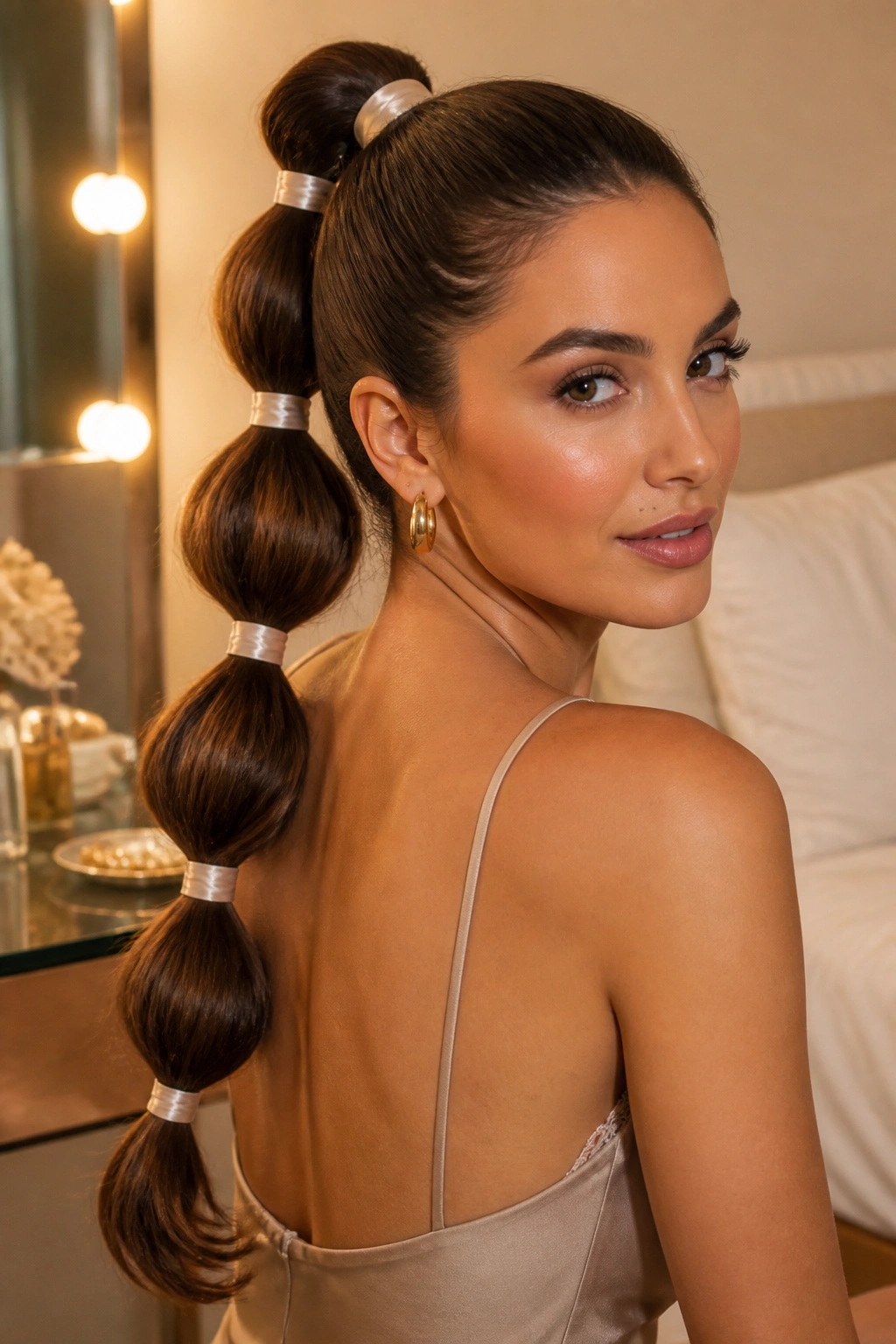
I still like a bubble ponytail when it’s done with restraint. The wrong version can look like a school-day experiment. The right one looks structured, glossy, and surprisingly elegant, especially if you use slim satin ties instead of chunky elastics.
The key is spacing. Each bubble should feel even, but not rigidly identical. When the sections are puffed gently between the ties, the tail gets shape and movement without losing polish. Long hair shows this style best, though shoulder-length hair can pull it off if the bubbles are smaller and closer together.
If you want the look to lean formal, wrap the elastics with narrow ribbon or choose ties in a tone close to your outfit. Black satin against dark hair, ivory against blonde, deep burgundy against brown — all of those read more refined than bright contrast.
- Leave 2 to 3 inches between each elastic for a long-tail bubble.
- Tug each section outward from the center, not from the sides, so the bubble stays round.
- Use a tail comb to keep the scalp section smooth.
- Add a light mist of hairspray only after the bubbles are set.
The style has a little attitude. That’s the appeal.
5. Twisted Low Ponytail at the Nape
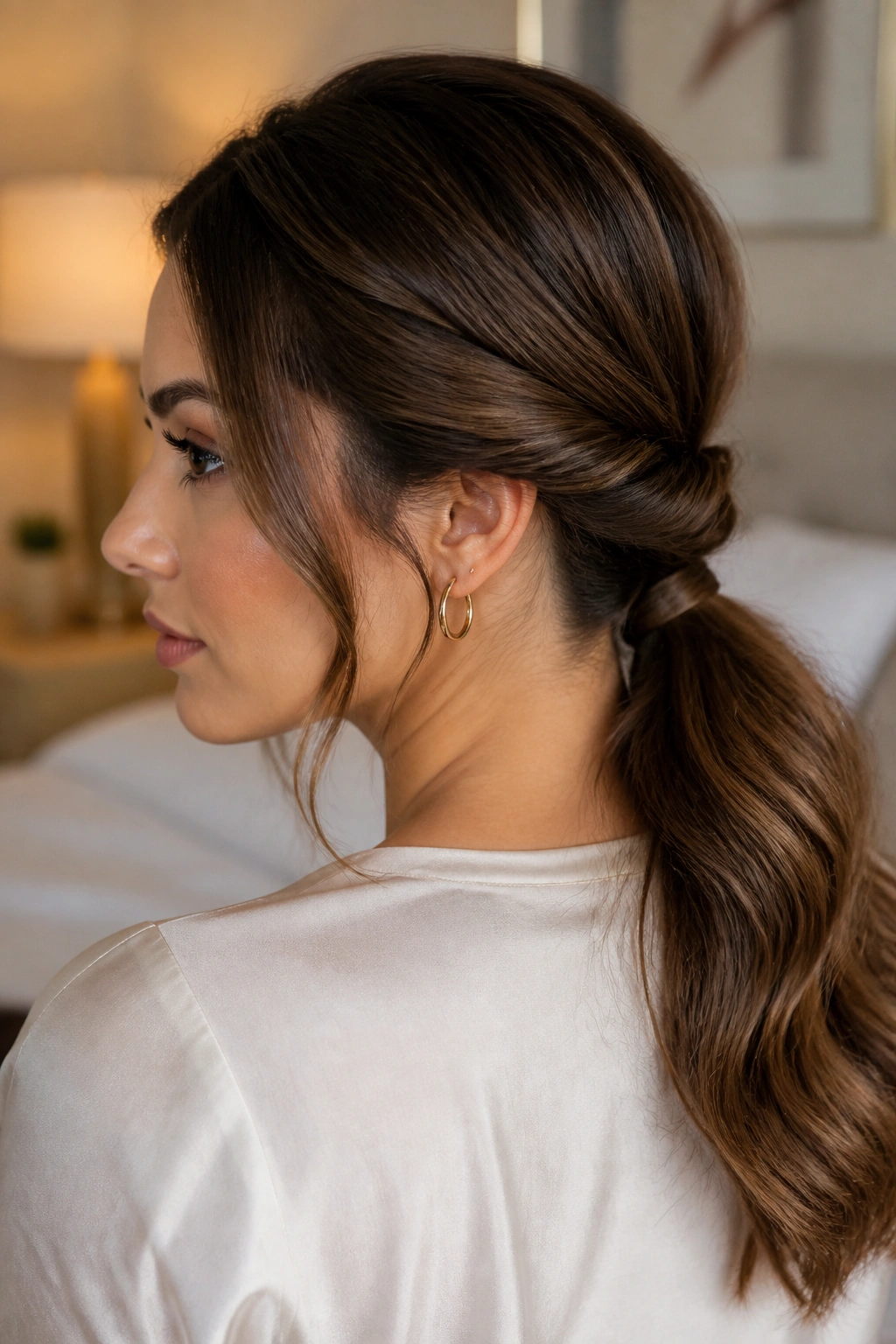
A twisted low ponytail has the kind of polish that sneaks up on people. It doesn’t scream for attention. It just looks finished, and that’s often more useful.
Start by dividing the front sections on each side of the head. Twist them back toward the nape, crossing one over the other before securing the whole set into a low ponytail. The twist creates a soft seam through the back of the head, which gives the style depth without needing braids or heavy teasing.
This is one of those styles that looks especially good on second-day hair. Freshly washed hair can slip around too much, while hair with a bit of texture holds the twist and the elastic better. If the front layers are short, pin them under the twist instead of fighting them. Loose pieces at the temples are fine too — just keep them deliberate.
A little shine balm on the ends makes the ponytail feel silkier. Don’t rub it near the roots. That’s where elegant turns into flat and tired.
The best thing about this style is its balance. Clean at the top. Soft at the back. No drama needed.
6. Voluminous Mid-Ponytail with Soft Lift
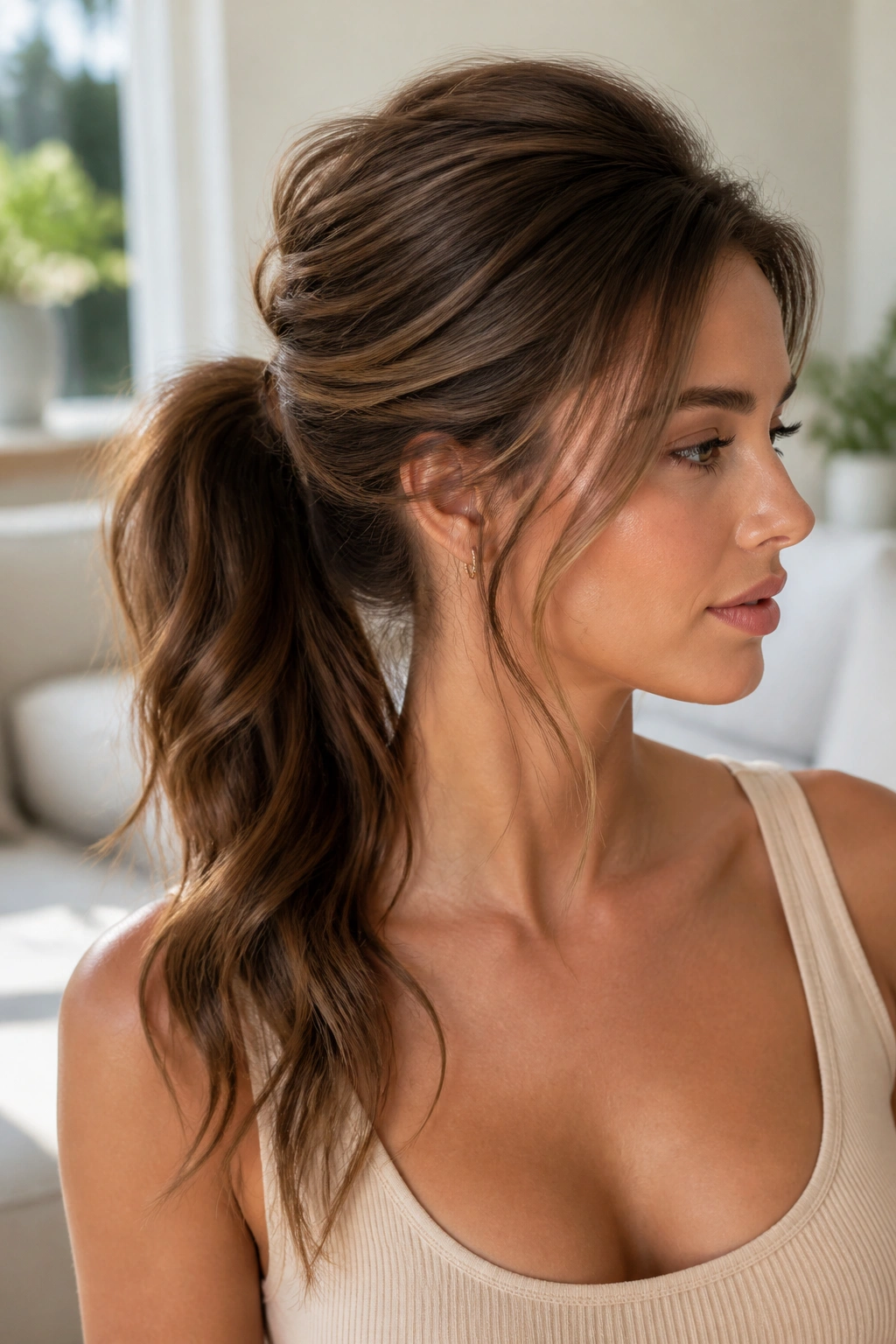
Unlike a tight high ponytail, a mid-pony with lift gives you shape without shouting. It sits in that middle zone that feels relaxed enough for daytime but dressed up enough for a nice dinner or a formal event.
The trick is the crown. A little root lift changes everything. I usually tease a small section at the crown, then smooth the top layer over it so the bump stays hidden. That’s the part many people skip, and it’s why their ponytail falls flat by the time they reach the car.
What Makes It Different
A mid placement keeps the style soft. It also flatters more face shapes than a very high tie, because the eye doesn’t go straight up and down the way it does with a gym-style ponytail.
If your hair is fine, use a volumizing powder or a dry texture spray near the roots before gathering the hair. If it’s thick, keep the lift lighter and let the ponytail itself carry the fullness. Either way, avoid dragging the sides too tightly back. You want a little air in the shape.
This is the ponytail I’d choose for a long event when comfort matters. It holds up well, and it never feels as severe as the ultra-sleek versions.
7. Side-Swept Ponytail with Old-Hollywood Waves
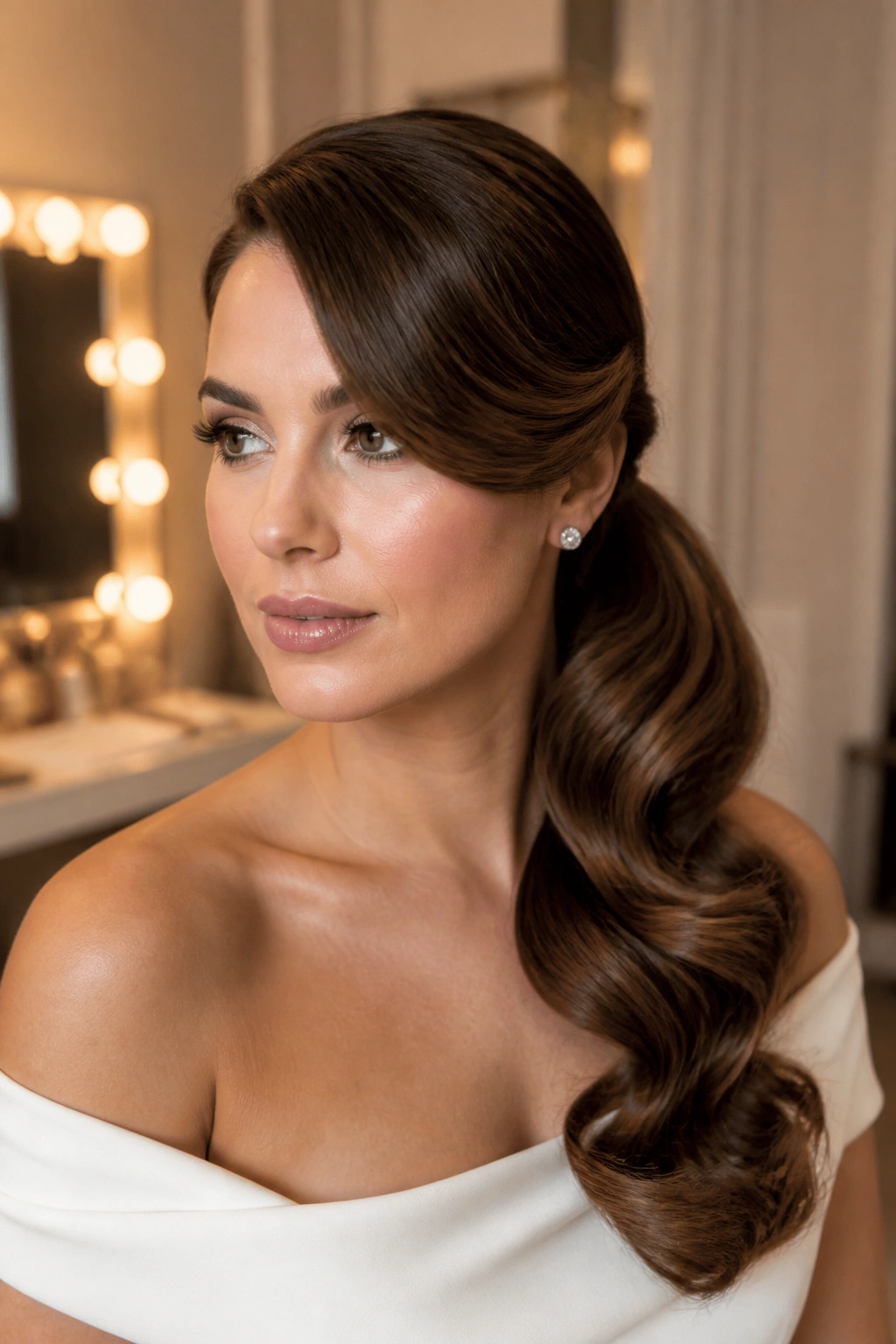
A side-swept ponytail gives you instant softness. The asymmetry is the whole point, and it works especially well when the tail is curled into smooth waves rather than left blunt or straight.
Begin with a deep side part. Sweep the hair across the forehead and secure the ponytail low and to one side, just behind the ear or at the upper nape. Then curl the tail in large sections with a 1-inch curling iron or hot rollers, letting the waves brush together instead of separating into tight spirals.
The result feels polished, but not stiff. That matters. Tight curls can fight the elegance here, while broad waves give the ponytail a calmer line. If the front needs help staying put, pin the heavier side with two hidden bobby pins and mist the hair lightly before it cools.
A side-swept ponytail also plays well with earrings and one-shoulder necklines. It leaves the collarbone visible, which does a lot of visual work on its own. You don’t need much else.
A small gloss spray at the very end is enough. Not more. Too much shine can make the waves look greasy under indoor light.
8. Half-Up Ponytail with a Tucked Base
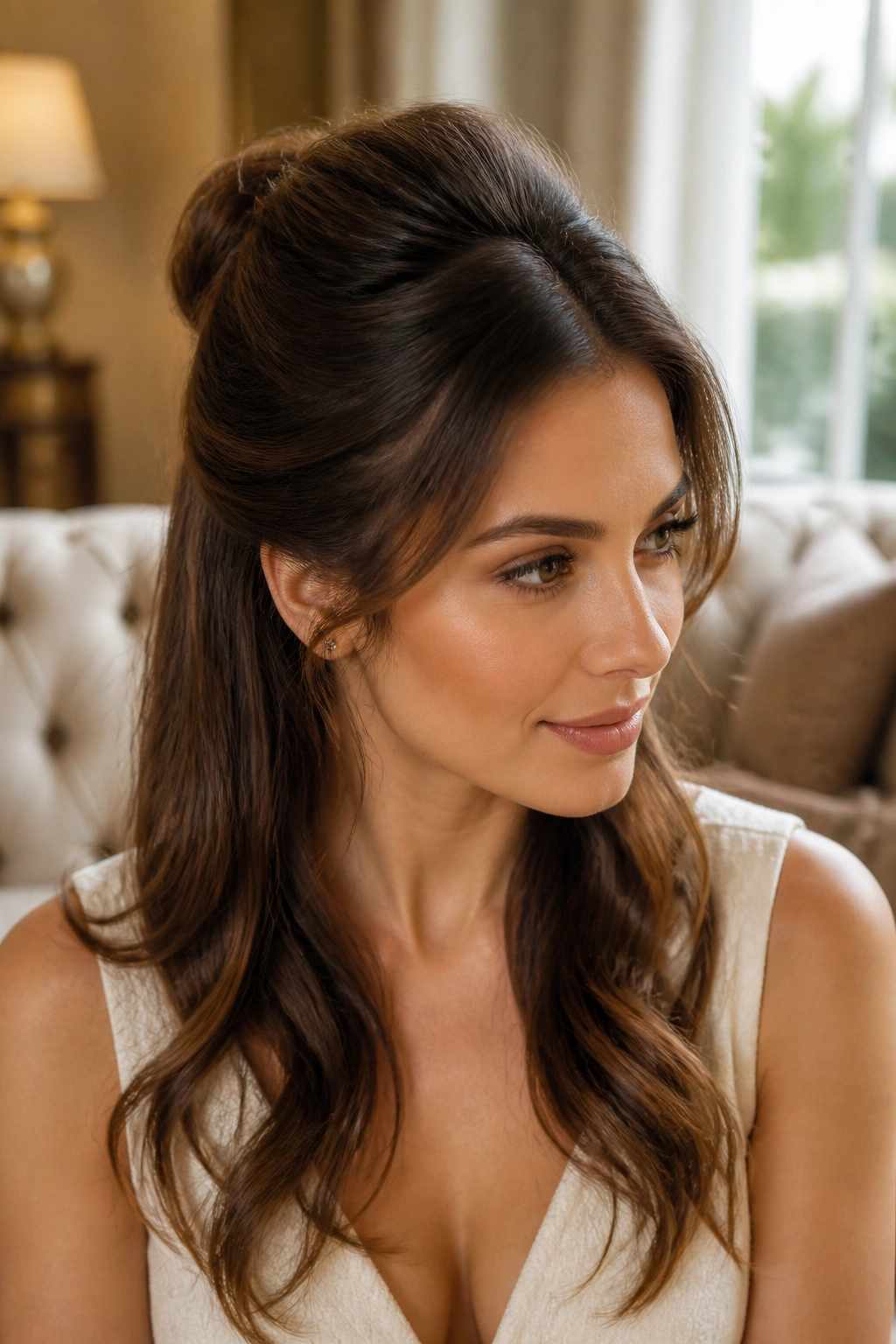
Can a half-up style count as an elegant ponytail? Absolutely, if the base is handled with care. The shape keeps some hair down, which softens the face, while the upper section still gives that lifted ponytail effect people want for dressier looks.
Gather the top half of the hair from temple to temple and secure it at the crown or slightly below it. Then tuck the tied ends under and pin them flat, or let them hang if the hair is long and thick enough to create a fuller silhouette. The style works best when the top section has a little bend, not poker-straight strands.
This is a good option for hair that has a clean blowout but doesn’t need the whole head pulled back. It also helps if your hair is layered or if the lower half has a shape you want to keep visible. The contrast between the lifted top and the loose bottom makes the look feel considered.
A curled under layer at the ends keeps the whole style from reading too casual. Straight ends can make it feel unfinished. Soft bend, better result.
9. Rope-Braid Ponytail
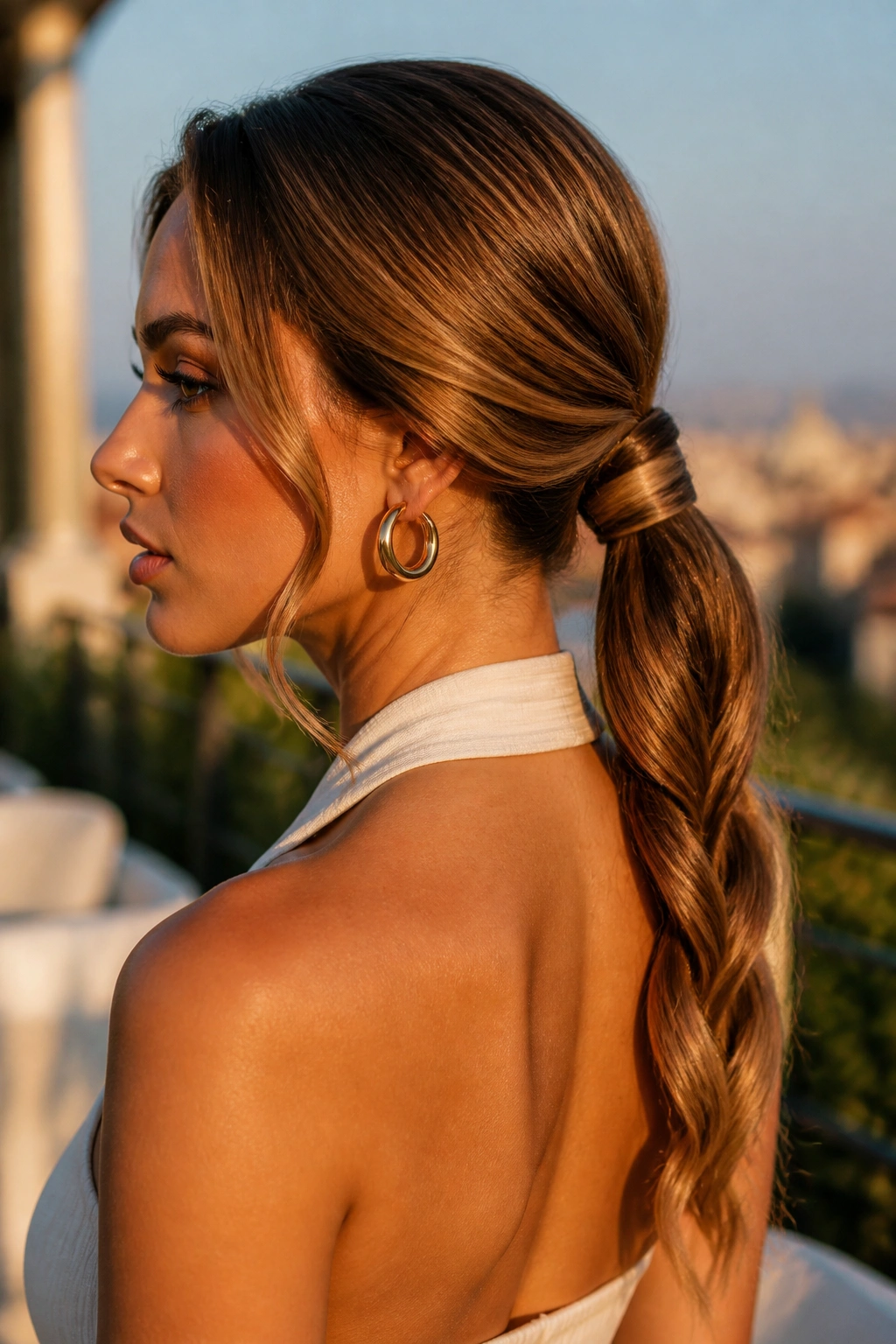
A rope-braid ponytail looks more intricate than it is. That’s one of the reasons I like it. The style gives the impression of extra effort, but the technique is basically a twist, and once you get the hand motion down, it goes fast.
Secure the hair into a mid or low ponytail first. Divide the tail into two sections, twist each section in the same direction, then wrap them around each other in the opposite direction. That reversal is what creates the rope effect. If you twist both pieces the same way, the braid loosens and falls apart. Annoying, but fixable.
The finish can be polished or slightly undone. I lean polished for elegant looks, since the clean spiral is the point. A rope braid is especially useful if your hair has one of those awkward in-between textures — not quite straight, not quite curly — because the twist disguises uneven smoothness.
A tiny elastic at the end keeps the shape tight. If the rope starts to puff out too much, rub a little serum between your palms and smooth only the outer layer.
10. French Twist Ponytail Hybrid
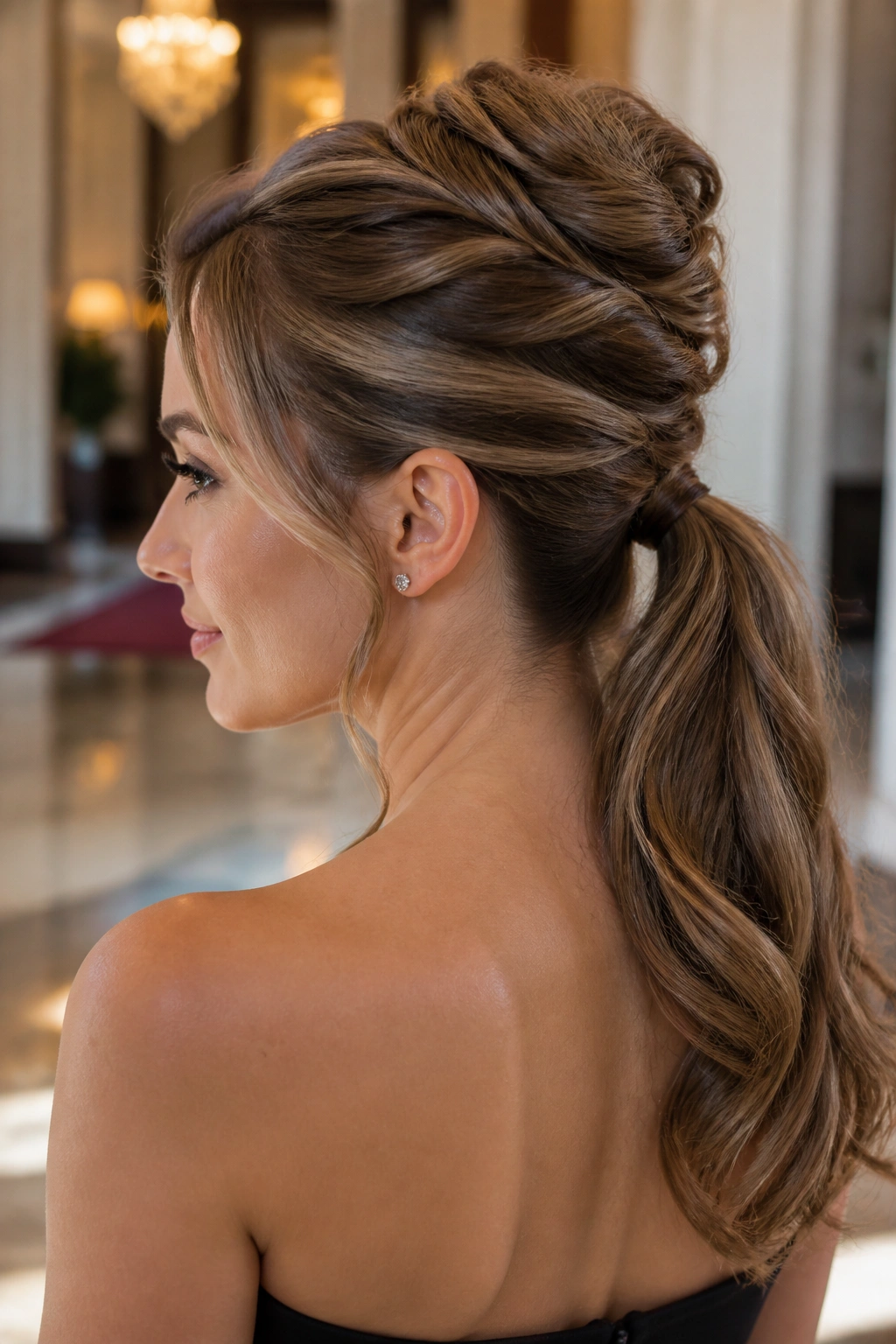
This is the most architectural style on the list, and I mean that in a good way. It borrows the vertical line of a French twist, then lets the rest of the hair fall into a ponytail, so you get structure at the back without losing length.
Start by gathering the top and middle sections of the hair as if you were making a low twist. Roll or twist them upward toward the crown, pinning the center line as you go. Leave the lower lengths free, then secure them into a ponytail just beneath the twist. The final shape looks deliberate from every angle.
Why It Feels Formal
The twist gives the head a cleaner outline, especially in profile. A simple low ponytail can disappear from the side, but this style has a built-in spine. That makes it a strong choice for events where you’ll be photographed from the back or three-quarter angle.
It’s best on medium to long hair, because the ponytail needs enough length to balance the twist above it. If your hair is thick, use two pins per twist section. If it’s fine, backcomb the hidden inner layer before rolling it up. You won’t see the tease, but you’ll feel the support.
A pinched pearl barrette near the twist can look very good here. Small. Not oversized. This style already has enough shape.
11. Velvet-Bow Wrapped Ponytail
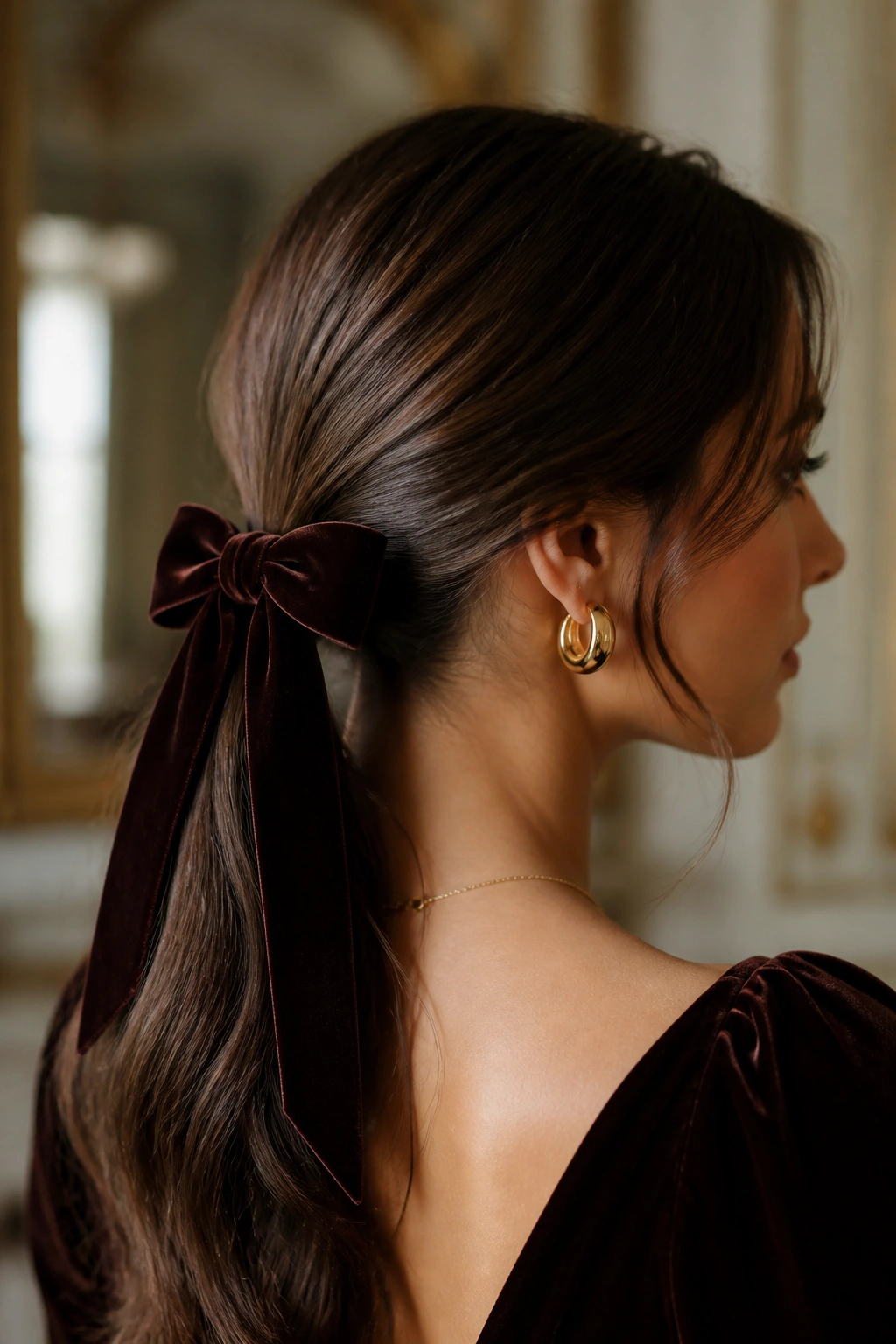
A velvet bow changes the tone fast. The ponytail itself can be simple, even plain, and the ribbon does the dressing-up. I like this one because it doesn’t pretend to be complicated.
Tie the ponytail low or mid-height, then hide the elastic with a wrapped strand if you want a cleaner base. After that, secure a ribbon bow directly over the tie. Velvet works better than glossy satin when you want softness with a formal feel; it has more depth and less glare.
Keep the bow proportionate to the head and the hairstyle. A huge bow can overwhelm fine hair, while a narrow ribbon can disappear on thick hair. Somewhere in the middle tends to look best. About 1 to 2 inches of ribbon width is plenty for most styles.
This is one of those looks that gets better when the hair itself is tidy. A smooth crown, a neat tail, and one thoughtful accessory are enough. You don’t need curls, braids, and three extra tricks fighting for space.
If the outfit already has strong texture — lace, velvet, satin, beading — keep the ponytail straightforward. The ribbon will do the work.
12. Curled Ponytail with Face-Framing Pieces
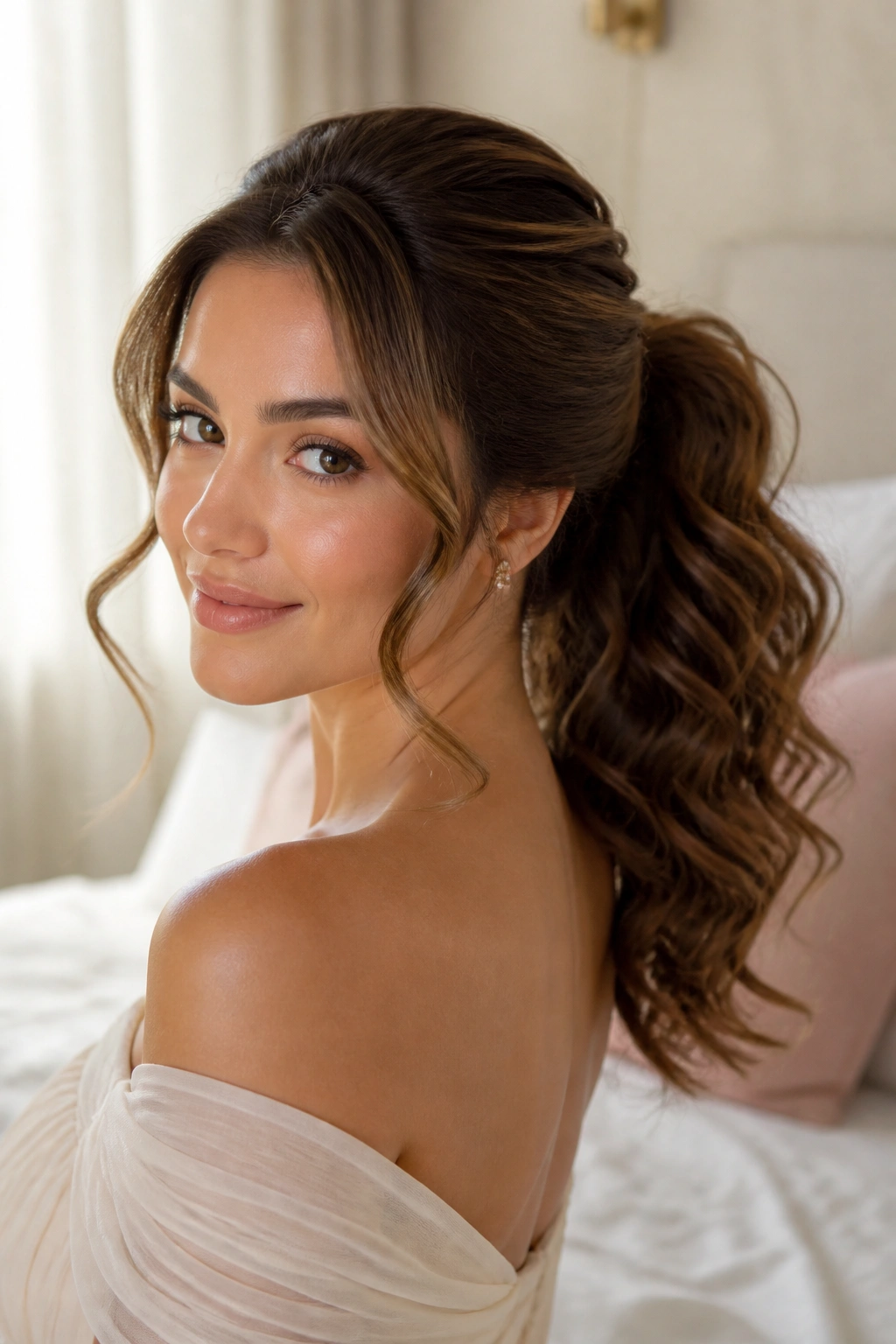
Soft curls make a ponytail look intentional in a way straight hair sometimes does not. Straight tails can feel a little bare unless the base is very polished. Curls bring shape, movement, and a more romantic finish.
Curl the tail in medium sections with a 1-inch or 1¼-inch iron, then let the curls cool before touching them. That part matters. If you brush them while they’re still warm, the shape drops faster and the ends go fuzzy. Once cool, break the curls with your fingers so they fall into loose waves rather than tight ringlets.
Leave two front pieces out if you want a softer frame around the face. Keep them cheekbone length or slightly longer, and curl them away from the face for a lifted effect. Too-short pieces can look accidental. Better to pin them back than force it.
This style is a nice bridge between formal and easy. It can go to a wedding, a cocktail event, or a dinner where you want your hair to feel dressed, not overly structured. A light-hold hairspray is enough. Heavy spray kills the movement, and the movement is the whole reason this one works.
13. Fishtail Ponytail with a Soft Pull-Apart Finish
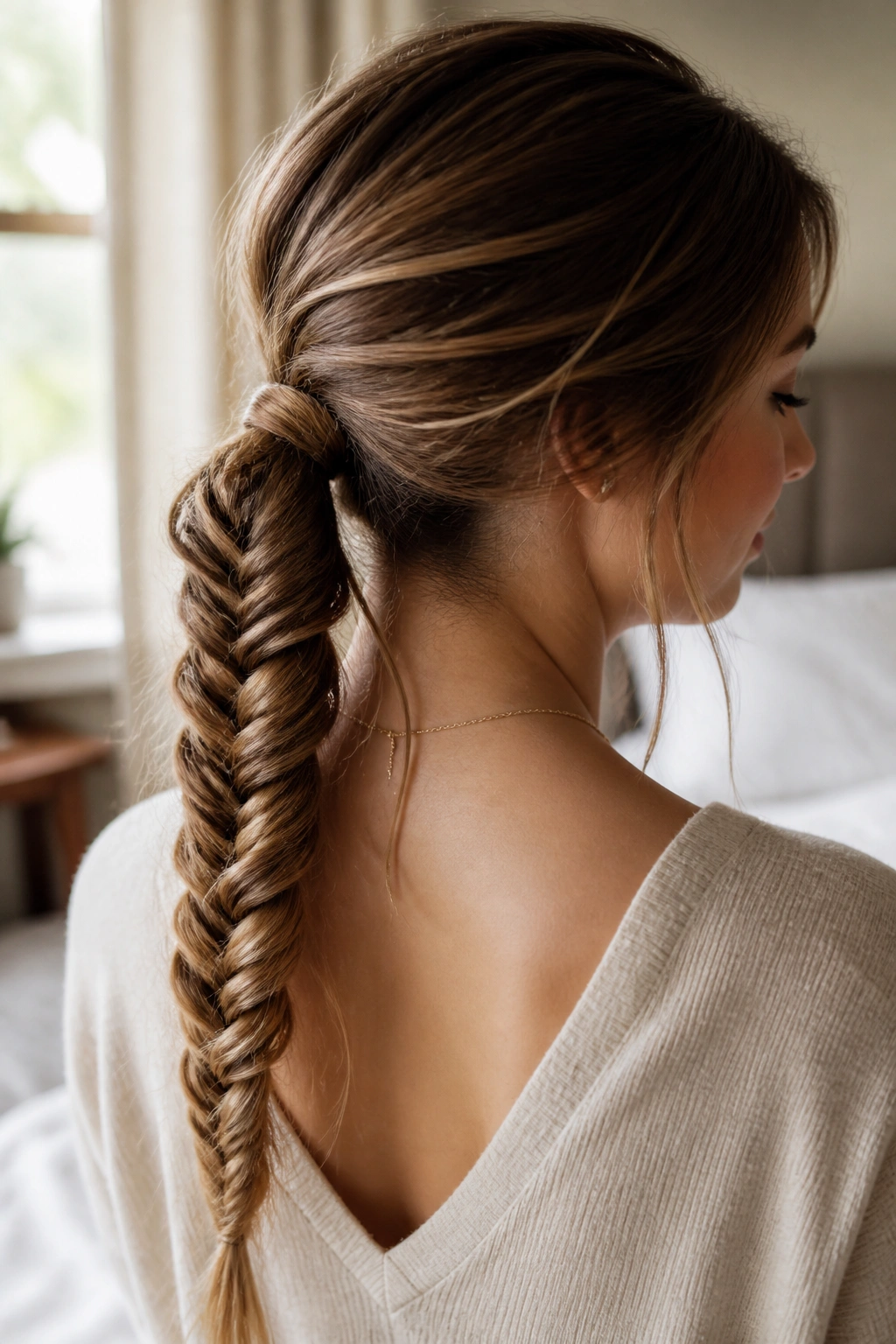
Why choose a fishtail instead of a regular braid? Because the texture looks finer and more refined. A fishtail reads intricate from a distance, but up close it still feels controlled, which is exactly what you want in an elegant ponytail.
Make a low or mid ponytail first, then fishtail the length from the base to the end. Once it’s secured, pull the braid apart gently with your fingertips to widen the pattern just a little. Not too much. Over-pulling can make the braid fray and lose its shape, especially if the hair is layered or freshly cut.
How to Get the Most From It
The braid looks best when the hair has a bit of grip. Dry shampoo, texture spray, or even a day-old blowout helps. Slick, freshly washed hair can be slippery and frustrating. If that’s what you’re working with, mist the ponytail lightly before braiding.
A fishtail ponytail is a favorite for long hair because the extra length shows off the pattern. It also pairs well with smooth roots and a polished crown, since the contrast between sleek top and detailed tail gives the style depth.
I’d skip chunky accessories here. The braid already has enough visual detail.
14. Low Ponytail with Crisscross Sections
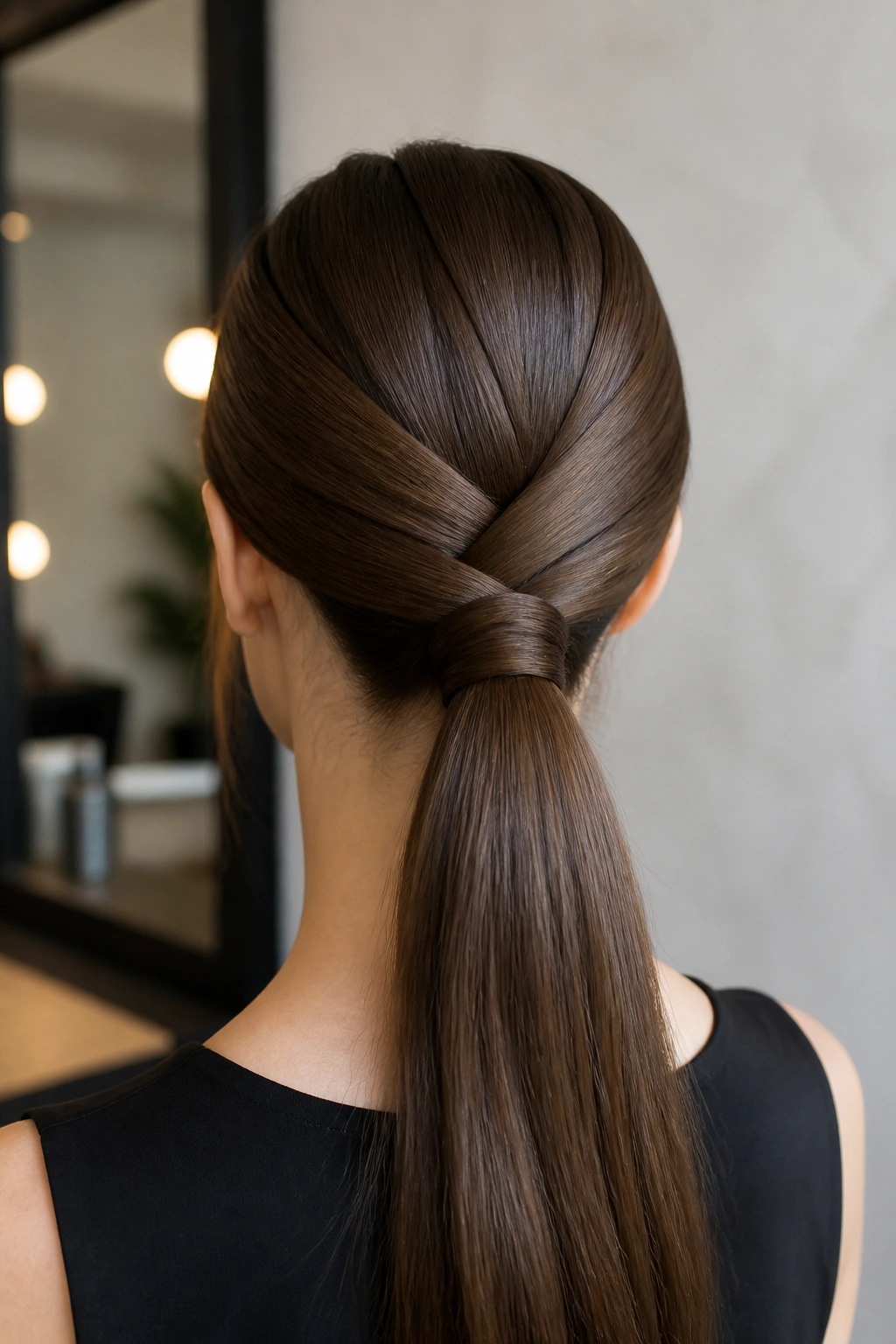
A crisscross ponytail has a clean, tailored feel. It’s one of the more polished ponytail updo ideas because it creates its own architecture at the back without needing braids or curls.
Take two sections from the front or crown area and cross them over each other before gathering the rest of the hair into a low ponytail. Pin each crossing point flat against the head so the movement stays smooth. Done right, the style looks like it was built in layers rather than tied in one quick motion.
This is a strong choice for straight hair, especially when you want the back to feel more interesting than a plain elastic. It also suits longer bobs and medium-length cuts, because the crisscross detail gives shorter hair more visual presence. Keep the sections clean and similar in size; if one side is thicker, the shape can lean to one side and lose that tailored look.
A thin decorative pin can sit just above the ponytail base, but I’d keep the accessory understated. The crossing itself is already the detail.
The overall effect is sleek, neat, and a little sharper than most low ponytails.
15. Textured Ponytail with a Hidden Pin-Curl Base
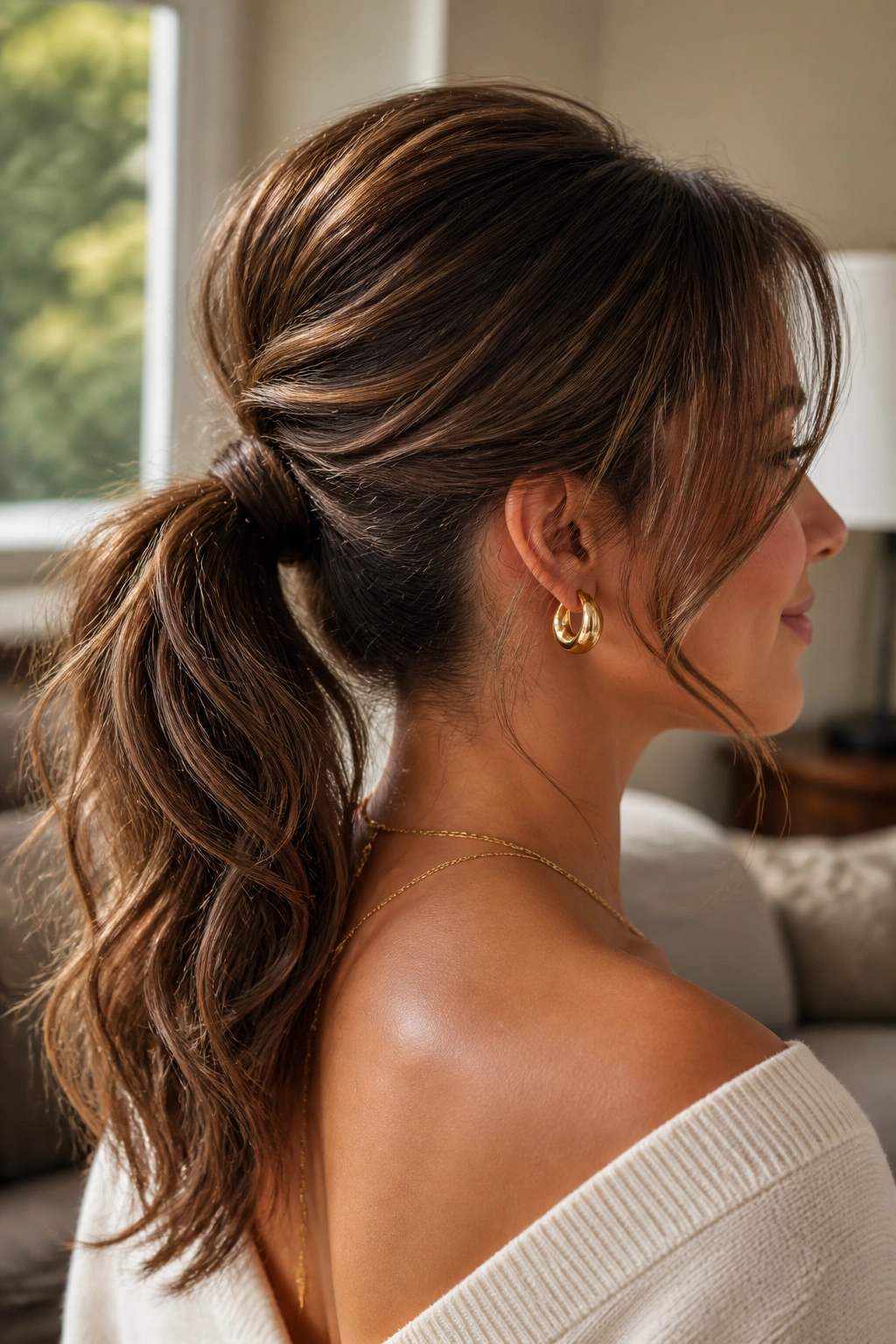
This is the version I’d choose when I want softness, height, and a little movement without making the style look overworked. The hidden pin-curl base gives the crown volume, while the textured tail keeps the rest from falling flat.
Start by sectioning the top crown area and creating a loose curl or pin-curl shape underneath the surface layer. Pin it flat and let it cool before brushing over it. That hidden set creates lift from the inside out, which is nicer than teasing alone because it holds shape without making the roots feel rough.
Gather the remaining hair into a low or mid ponytail, then bend the ends with a curling iron so the tail has motion. A few face-framing pieces can stay loose if you want the style to feel softer, but keep them intentional. Stray wisps are one thing. Random pieces are another.
This style is especially useful for hair that needs a little life after being straightened too often. The texture keeps the ponytail from reading stiff, and the hidden structure means you can wear it for hours without it collapsing immediately. That alone earns it a place in my book.
It’s polished, but not severe. That balance is hard to beat.
Final Thoughts
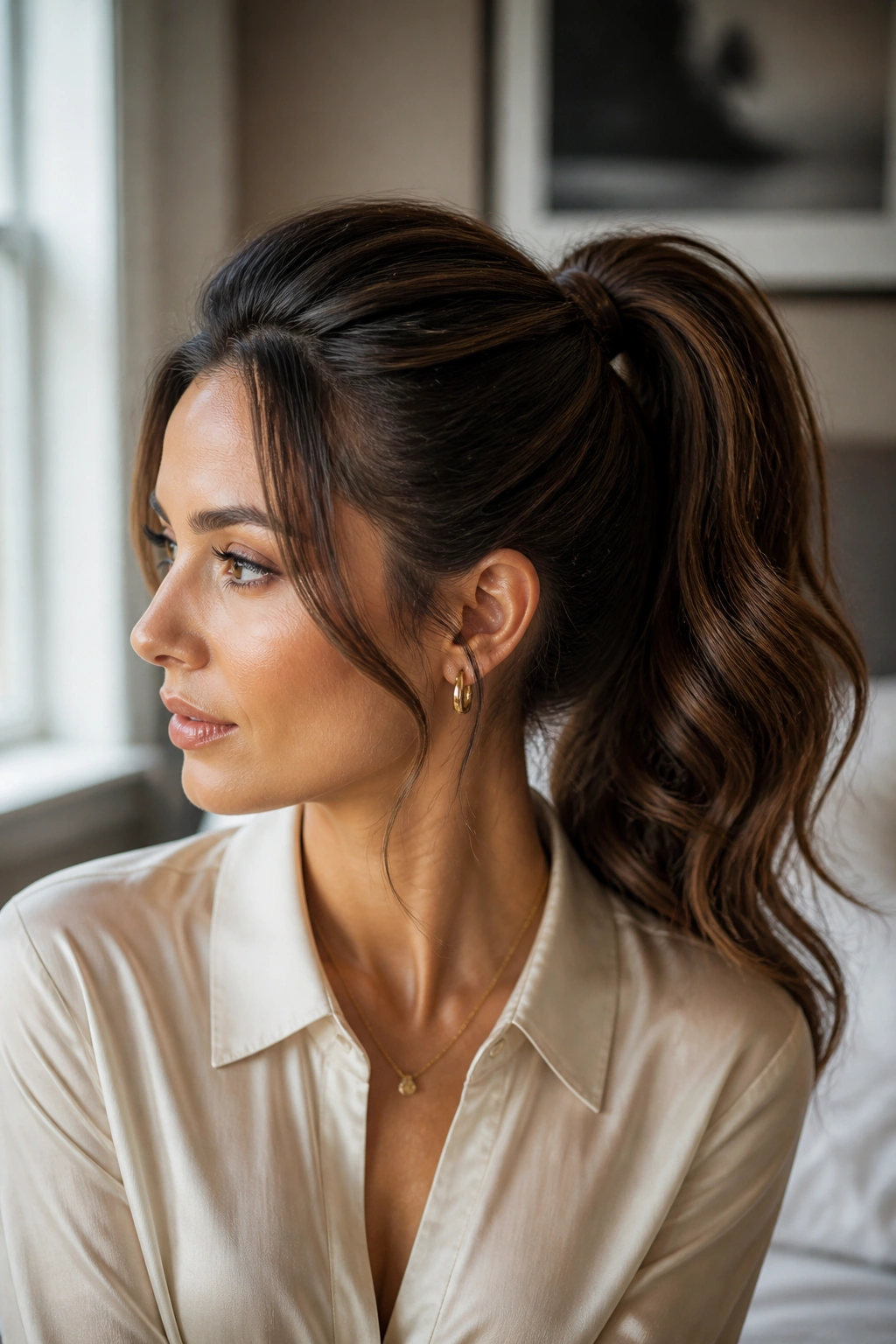
A good ponytail updo does not need to look complicated. It needs to look placed, smoothed, and finished on purpose.
If you’re picking one style from this list, start with the shape that matches your hair texture instead of the one that looks hardest. Fine hair usually wants lift, curls, or a wrapped base. Thick hair often looks best with twists, braids, or low structured styles that keep the bulk under control. And if you’re ever stuck, hide the elastic. That small move fixes more ponytails than people admit.
