



Flat roots ruin a ponytail faster than almost anything. That is why voluminous ponytail ideas matter so much: they change the whole shape of the style, not just the finish. A ponytail with lift at the crown, fullness through the middle, and a tail that looks plush instead of stringy has a completely different attitude.
The funny part is that big volume usually comes from tiny decisions. Where the elastic sits. How much you rough up the crown. Whether you curl the tail before or after tying it off. Even the brush you use matters — a paddle brush gives a smoother base, while a teasing comb can make fine hair behave for once.
I’ve always thought ponytails get unfairly dismissed as “easy” hair. They’re easy in the same way a white T-shirt is easy: the basic shape is simple, but the details decide whether it looks thrown together or deliberate. And if your hair is fine, long, layered, or a little too silky, those details are the difference between a sad little tail and something with actual presence.
1. Crown-Teased High Ponytail
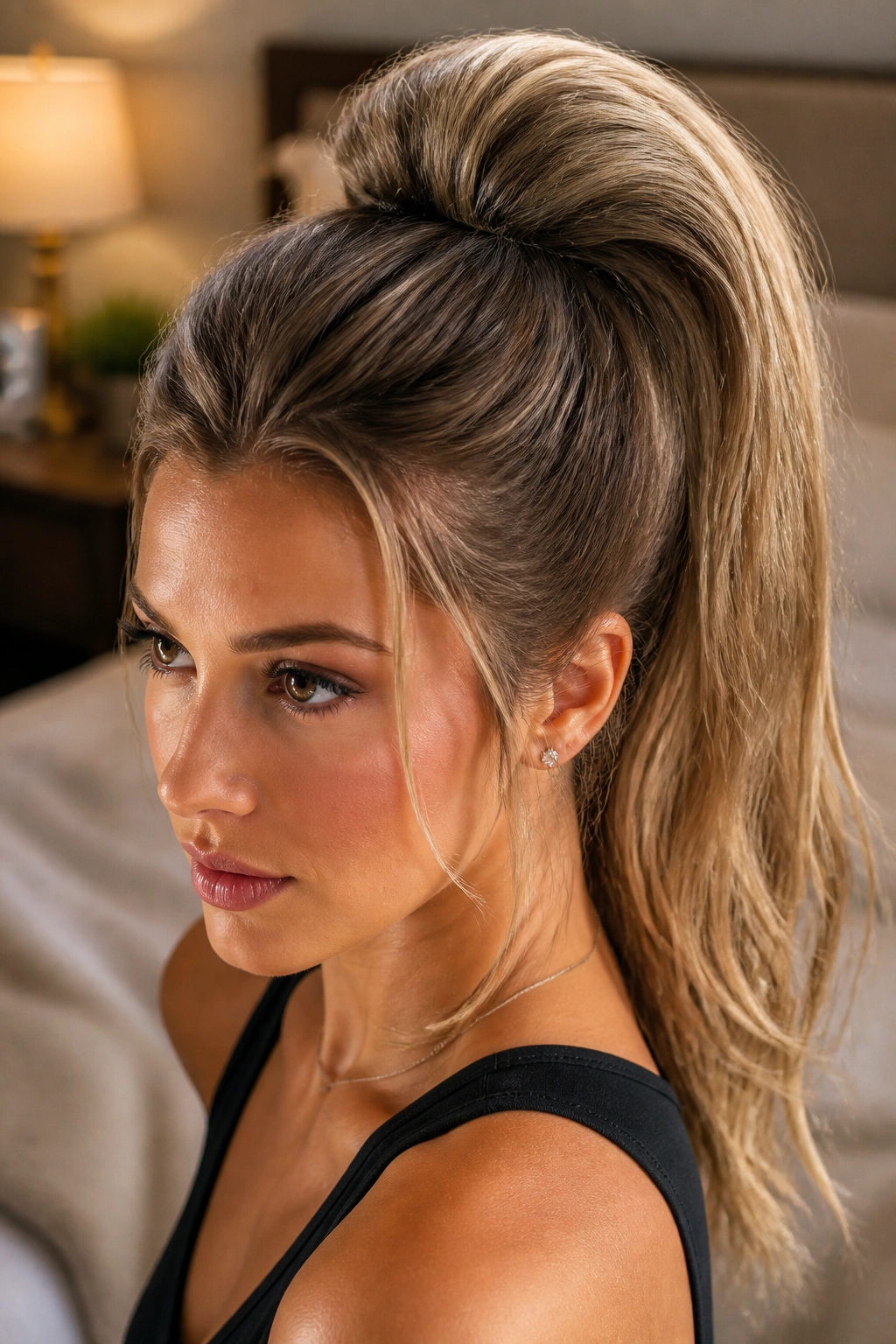
This is the one I reach for when I want height that reads from across the room. A crown-teased high ponytail gives you lift where people notice it first, which is the top third of the head. If the crown stays flat, the whole style looks smaller than it should.
How I build the height
Start by misting the roots at the crown with a light texturizing spray or a root-lifting mist. Blow-dry the top section forward for a minute if your hair tends to collapse; that tiny direction change helps the roots stand up instead of lying flat.
Then take 2-inch sections at the crown and tease them gently underneath the top layer. Don’t mash the comb in there like you’re trying to win a fight. A few controlled strokes are enough. Gather the hair high, slightly above the crown bone, and secure it with a strong elastic.
- Best on: medium to long hair, especially hair that falls flat at the top.
- Works best with: a soft bend or loose wave through the tail.
- Skip heavy oil at the roots: it kills lift fast.
- Good trick: pin the elastic a touch higher than you think you need; it drops a little as the day goes on.
A little tease goes a long way. Too much and the top starts to look dusty and stiff, which is not the goal here.
Pro tip: smooth only the surface layer. Leave the hidden sections rough enough to hold the shape.
2. The Wrapped-Base Power Ponytail
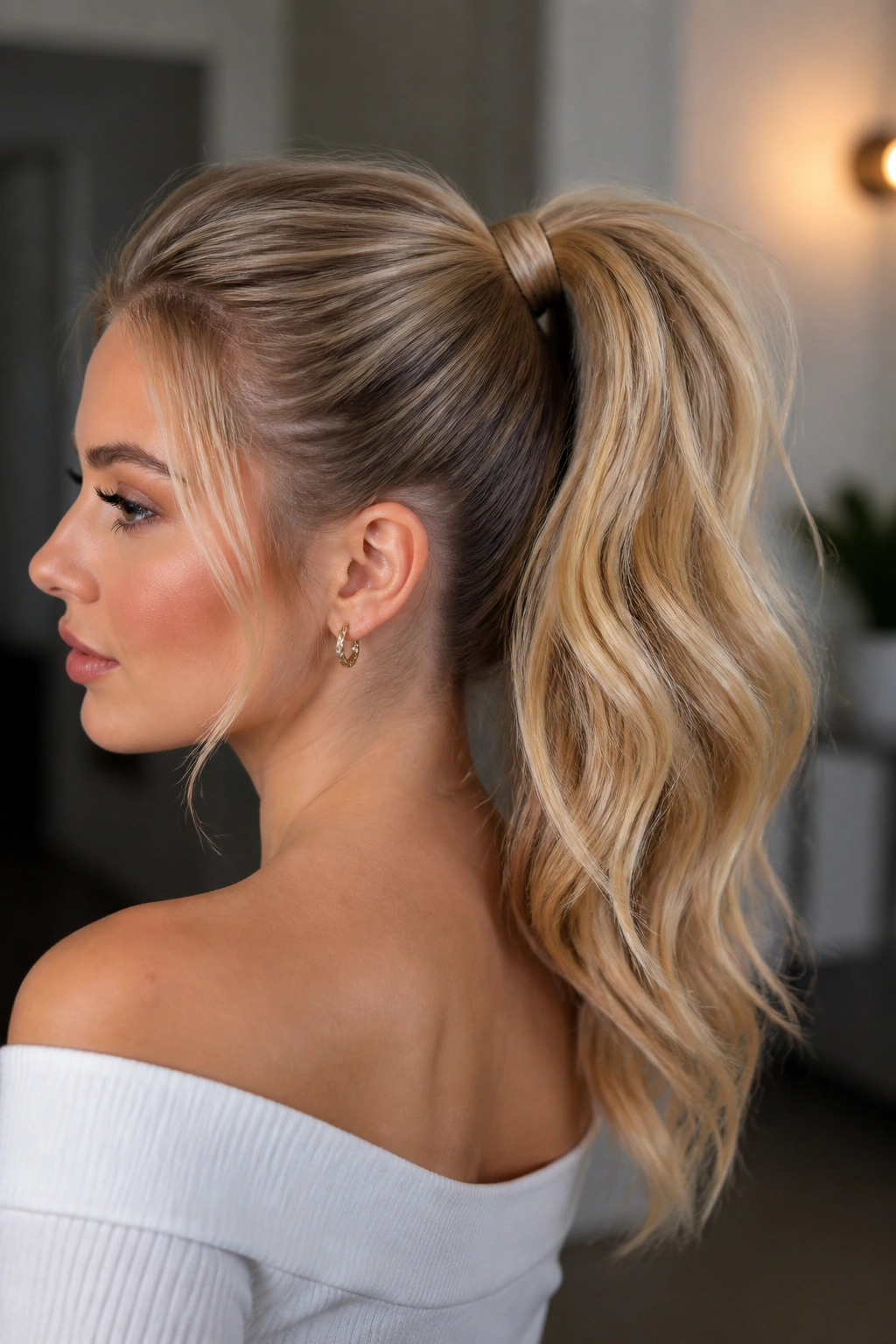
Why does a wrapped base make a ponytail look fuller? Because it hides the part that usually gives the game away. A plain elastic can make even thick hair look chopped off at the base. A wrapped section softens that hard line and gives the illusion of a thicker, more expensive-looking tail.
Take a small piece of hair from under the ponytail, about half an inch wide if your hair is fine or up to 1 inch if it’s dense. Wrap it around the elastic, keep it snug, and pin the end underneath with a bobby pin that matches your hair color. That one move does a lot of work.
The other trick is placement. Don’t put the ponytail too low. Mid-high usually gives the best shape because the wrapped base has room to sit without dragging the style down.
What makes it different
A wrapped-base ponytail looks cleaner than a scrunchie ponytail and softer than a tight gym tie. It’s the style I’d choose when I want volume that still feels polished enough for a dinner, a meeting, or any day when I’m tired of my hair looking like it gave up before lunch.
If your hair is layered, this style helps disguise shorter pieces near the neckline. If your hair is thick, it stops the base from looking bulky in a bad way. Small detail. Big payoff.
3. Bubble Ponytail With Loose Cushions
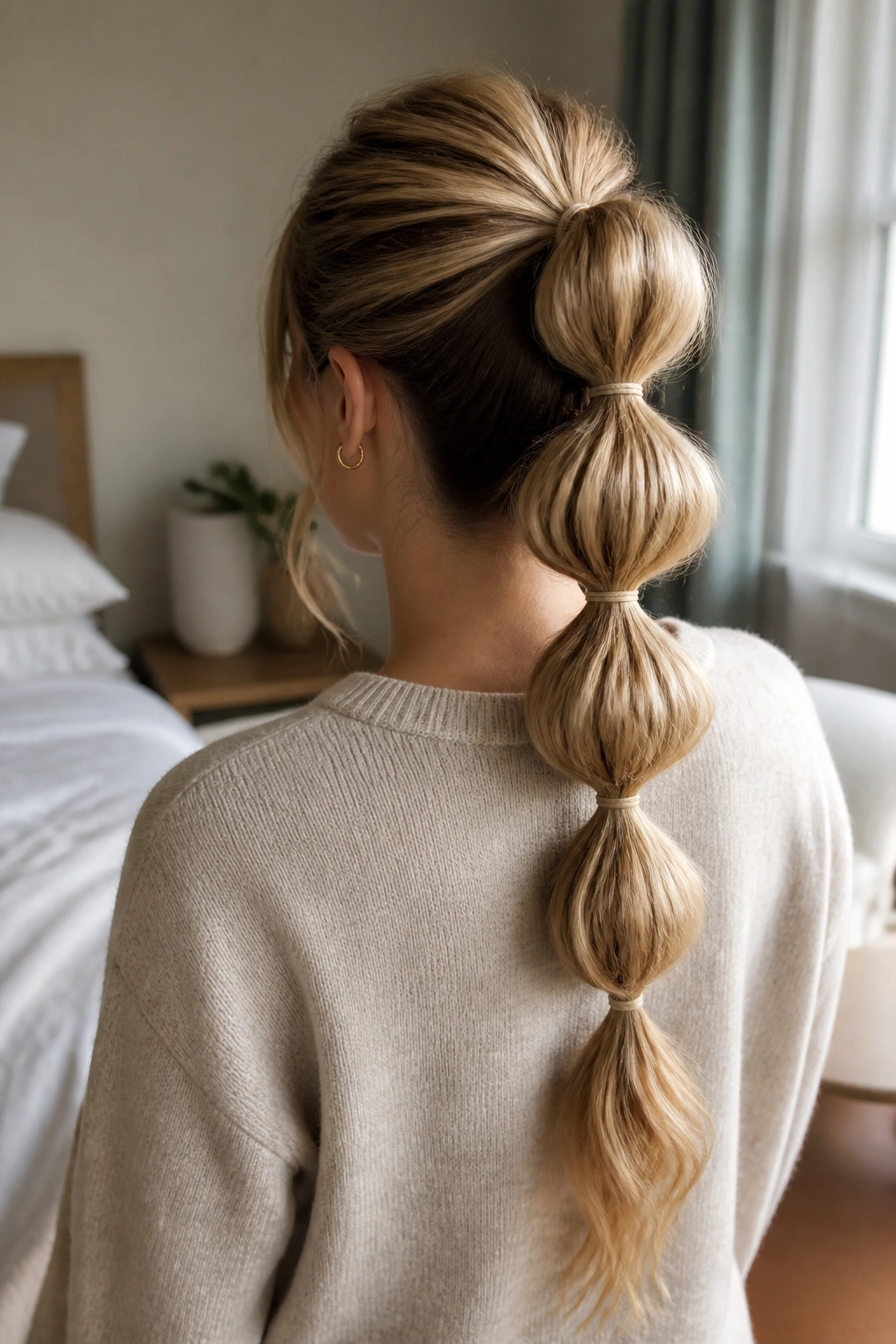
The bubble ponytail is not subtle. Good. It shouldn’t be. When you want volume that feels playful and full of shape, this style gives you it in chunks instead of relying on one big puff at the crown.
I like this version most on second-day hair, when the roots have enough grip to hold the sections without slipping. Tie the ponytail, then place small elastics every 2 to 3 inches down the length. Gently pull each section outward with your fingers until it looks rounded. Not stretched. Rounded.
That’s the whole trick. The “bubble” effect makes the tail look denser because your eye reads each puff as volume, even when the actual amount of hair hasn’t changed much.
- Use clear elastics for a cleaner look, or slim black ones if your hair is dark.
- Leave 1 to 2 inches of hair loose at the ends for a softer finish.
- Gently tug the bubbles from the sides, not the center, or they flatten.
- A light mist of hairspray on your hands helps control flyaways without freezing the shape.
This style is also good if your ends are a little dry. The bubbles distract from that and make the ponytail feel intentional instead of fussy.
One-sentence truth: It looks far harder than it is.
4. Curled-Through Glam Ponytail
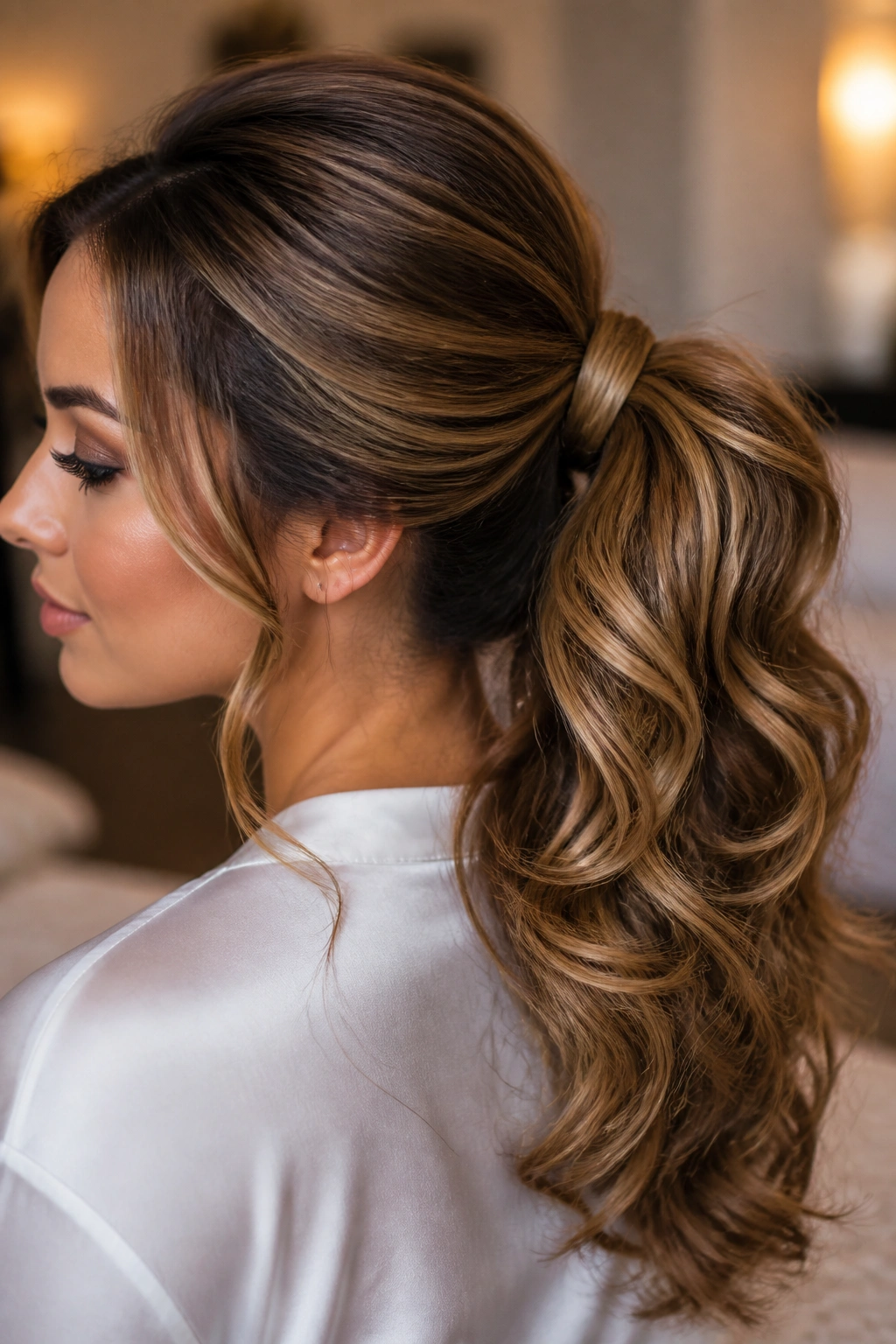
A curly ponytail has a sneaky advantage: the texture gives the illusion of thickness before you even start fluffing. That is why curled-through glam ponytail styles work so well when your hair needs more body. Curls create space between the strands, and space reads as fullness.
The key is not to overdo the curl pattern. Loose, brushed-out curls are better than tiny ringlets if volume is the goal. Use a 1.25-inch curling iron or wand, curl away from the face, and let the sections cool before you touch them. If you brush too soon, the curls collapse into frizz. Ask me how I know.
Gather the hair into a mid-height ponytail and curl the tail in 3 to 4 larger sections. Once it cools, separate each curl with your fingers and mist lightly with flexible hold spray. You want body, not a crunchy helmet.
Why it works in real life
Straight hair often shows every thin spot. Curled hair hides those gaps by creating a fuller silhouette. It also softens layers, which helps the ponytail feel thicker from the side.
If you want more drama, curl a few face-framing pieces away from the face and leave them out of the ponytail entirely. That keeps the front from looking too severe and gives the style some movement near the cheekbones.
5. Half-Up Ponytail With Lifted Roots
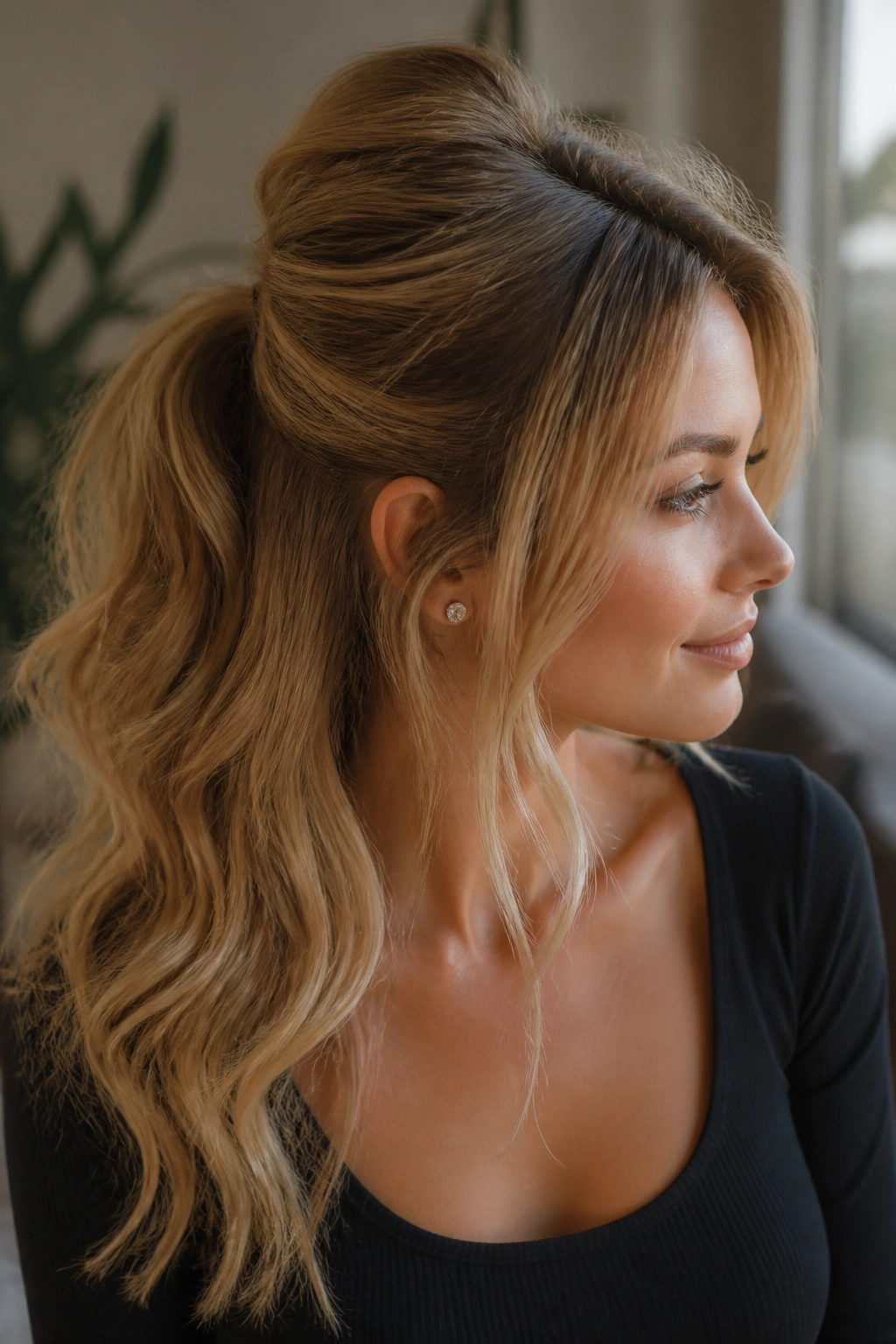
A half-up ponytail is underrated for fine hair. People assume it’s a softer, smaller style, and sure, it can be. But when you build it with lift at the roots, it becomes one of the easiest ways to fake a bigger ponytail without weighing the rest of your hair down.
The top section carries the volume. The loose bottom section gives the style more visual weight. That mix is what makes it work. If you gather too much hair into the half-up section, the ponytail gets thin. If you take too little, it sits limp and forgettable. The sweet spot is usually the hair from temple to temple and a few inches back from the hairline.
Backcomb the crown lightly, then smooth the top layer over it. Secure the half-up section with a small elastic, and tease the tail a little before curling it or waving it with a flat iron. The lower layers can stay loose and soft. That contrast is the point.
A half-up ponytail is also a lifesaver when your hair is flat at the roots but still has decent length through the ends. You get height where it counts and still keep the rest of your hair visible.
Best for
- Fine hair that needs a little lift
- Hair with soft layers
- Anyone who wants a bigger look without a full updo
- Days when a full ponytail feels too tight
6. Low Ponytail With a Puffy Crown
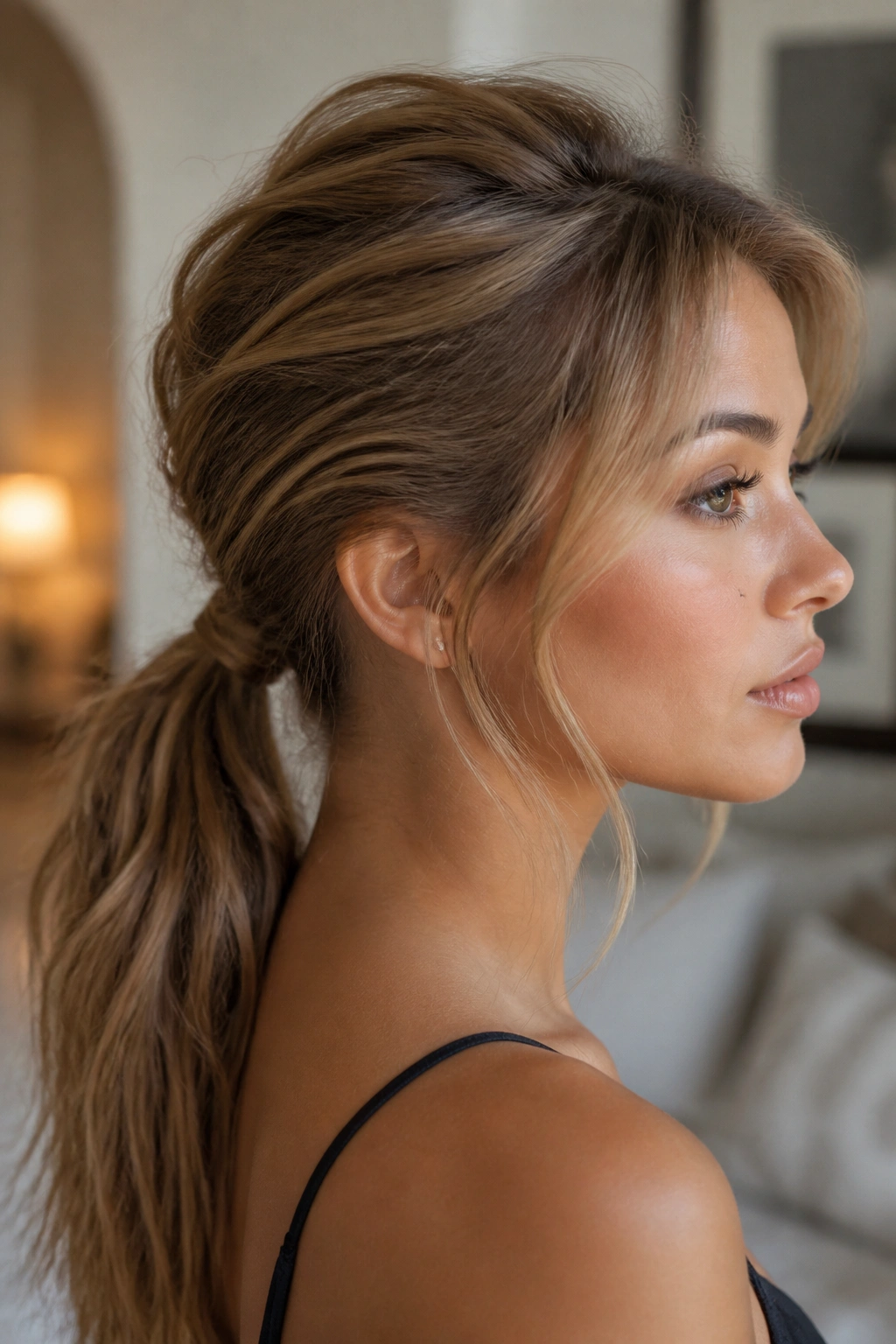
A low ponytail can still look full if you stop thinking of volume as “high.” That’s the mistake people make. Volume can sit lower, too, and when it does, the style feels plush and grown-up rather than sporty.
Tease the crown in 1-inch sections and smooth the top layer over the teased base. Then gather the hair at the nape, but keep the back a little loose before you secure it. That slight looseness gives the style a softer line from crown to tail, which keeps the head shape from looking flat.
This is one of the best ponytail ideas for thick hair because it lets the natural body of the hair do half the work. It also suits layered cuts, especially when the front pieces are longer and can fall around the face. A few loose strands near the temples keep it from feeling too stiff.
If you want the low ponytail to look fuller, curl only the lower half of the tail. Leave the top section smoother. That contrast makes the tail look bigger without making the crown look puffy in a messy way.
There’s a quiet confidence to this style. Not shy. Not loud. Just solid.
7. Side-Swept Volume Ponytail
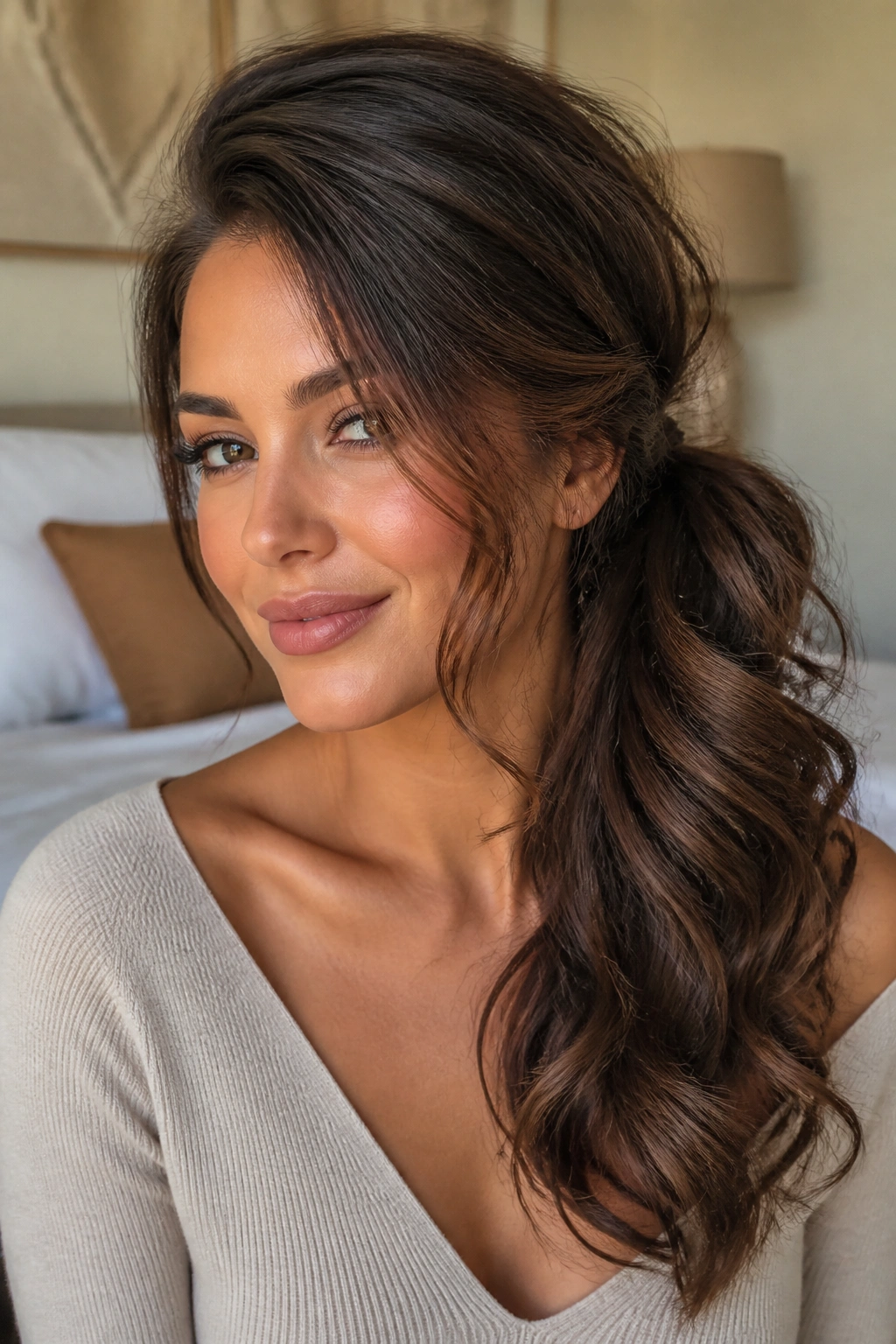
Why do side-swept ponytails look so much bigger than plain center-back ones? Because the angle changes the silhouette. Hair gathered to one side naturally creates a thicker visible mass, especially when it falls over one shoulder and the full length stays in view.
Start with a deep side part or a soft off-center part. Then brush the hair toward the heavier side and secure it just behind the ear or slightly lower at the nape, depending on how dramatic you want it. A ponytail that starts too far back loses that side-swept shape. Too far forward, and it can feel lopsided in a bad way.
This style is especially good for hair that’s layered around the face. The front pieces blend into the ponytail instead of fighting it. If your hair is straight, bend the lengths with a curling iron before gathering them. If it’s wavy, even better. The movement helps the tail look denser.
Where the side part should land
Aim for the arch of one eyebrow if you want drama. For a softer look, place it just off the center of the pupil. Small shift. Big change.
And if your hair slips out of side styles, rough up the roots on the heavier side with a texturizing powder before you start. That little bit of grit keeps the ponytail from sliding down by dinner.
8. Braided Base Ponytail
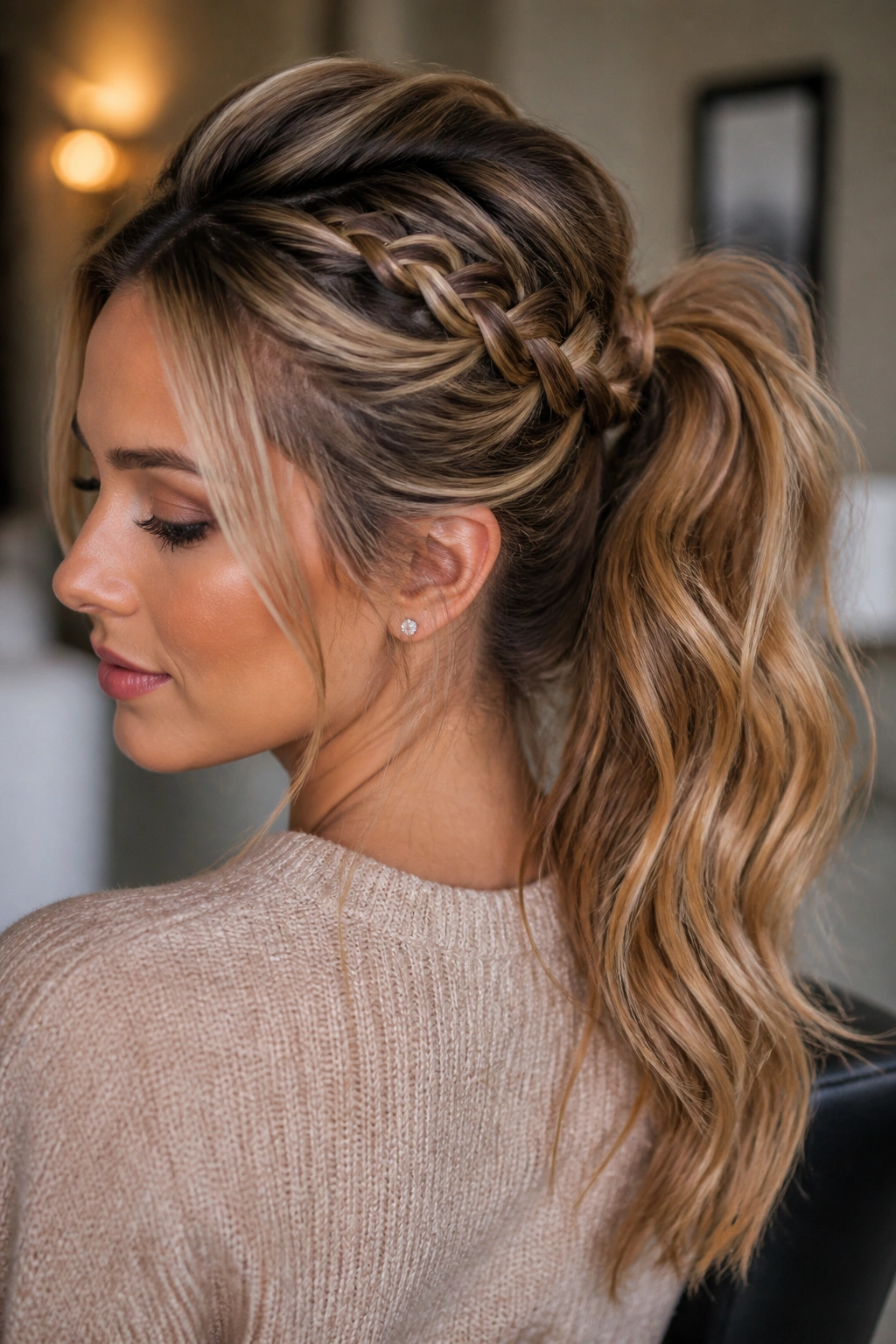
A braid near the base of a ponytail does something smart: it builds texture where the hair usually lies flat. That means the top part of the style looks thicker even before the tail starts moving.
You can do this a few ways. Braid two front sections and join them into the ponytail. Braid a small section from the crown and wrap it into the base. Or make one skinny braid on each side and let them meet in the middle. All three give the ponytail more body near the top, which is where thin hair usually gives itself away.
I like this on medium-thick hair that needs a little structure. The braid gives grip, so the ponytail feels secure. It also helps on freshly washed hair, which can be slippery and hard to tame. A quick braid can stop that clean-hair slide.
Braids that help, not hurt
- Keep the braid loose enough to stay soft.
- Don’t over-polish the strands before braiding.
- Pull the braid edges apart gently after tying it off.
- Use a small clear elastic at the end so the braid blends in.
If you’ve got layers, the braid can collect shorter pieces and keep them from poking out at the base. That alone makes the whole ponytail look neater. A little braid, a little volume, and suddenly the style has a backbone.
9. Crimped Underlayer Ponytail
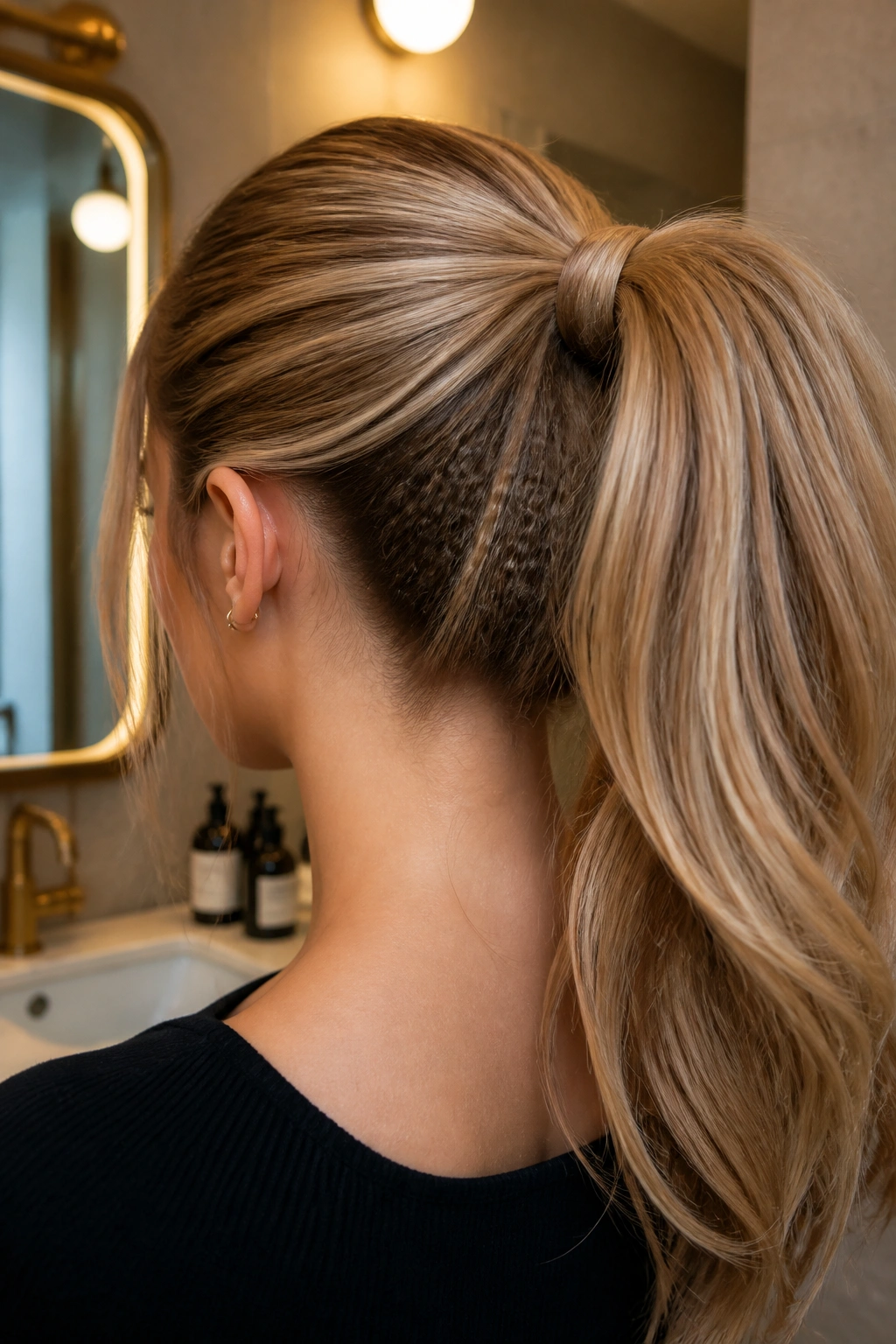
Crimped texture gets a bad reputation because people remember the stiff, zigzag versions from old hair photos. But used underneath a ponytail, crimping is a smart way to fake thickness. Hidden texture gives the tail more air and lift without showing the pattern on top.
Here’s how to do it without making the ponytail look dated: crimp only the lower half of the hair, or just the sections that will go inside the ponytail. Leave the top layer smooth. Then brush gently over the crimped sections so they sit under the surface instead of screaming for attention.
The result is a ponytail that feels fuller from root to tip. It also helps the elastic grip the hair better, which matters if your strands are silky and usually slip free. Crimped hair has tooth. That’s a good thing here.
If you want a softer version, run a flat iron through the crimped sections once they’re cool. That loosens the shape while keeping the bulk. Strange, but effective.
A lot of people think volume has to be visible. It doesn’t. Sometimes the best volume is the part nobody sees.
10. Extension-Boosted Ponytail
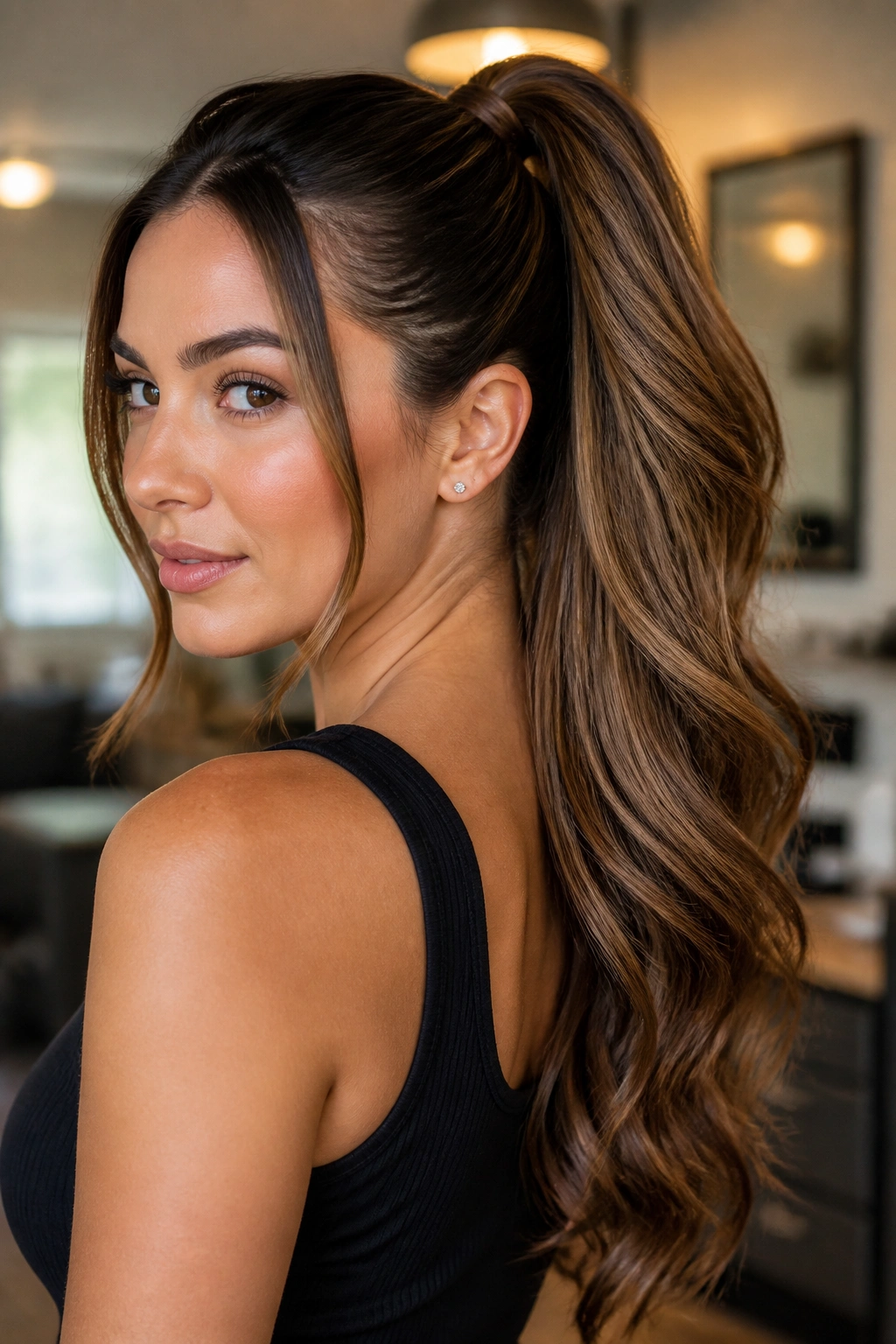
If you want a truly big ponytail, extensions change the game. Clip-ins or a ponytail extension can add both length and thickness, and that extra mass makes the whole style sit differently. It stops looking like a small bundle at the back of the head and starts looking like a full shape.
The important part is matching texture, not just color. Straight hair mixed with tight waves looks off. Fine hair with ultra-thick extensions can also look strange unless you blend the top section carefully. If your hair is wavy, choose extensions that already have a bend. If your hair is smooth, use straight or softly beveled pieces so the finish looks natural.
A good ponytail extension should anchor snugly without pulling. Wrap your own hair around the base first, then clip or attach the extension underneath so the join is hidden. After that, curl the ends together in large sections so your hair and the added piece share the same movement.
What to check before you buy or clip in
- The attachment should feel secure after a few head turns.
- The hair should match your ends, not just your roots.
- The piece should hold a curl if your own hair does.
- The base should sit flat. If it lifts, the style looks fake fast.
Extensions are not cheating. They’re a tool. Like eyeliner or a good blazer, they just change the scale.
11. Twisted-Section Ponytail
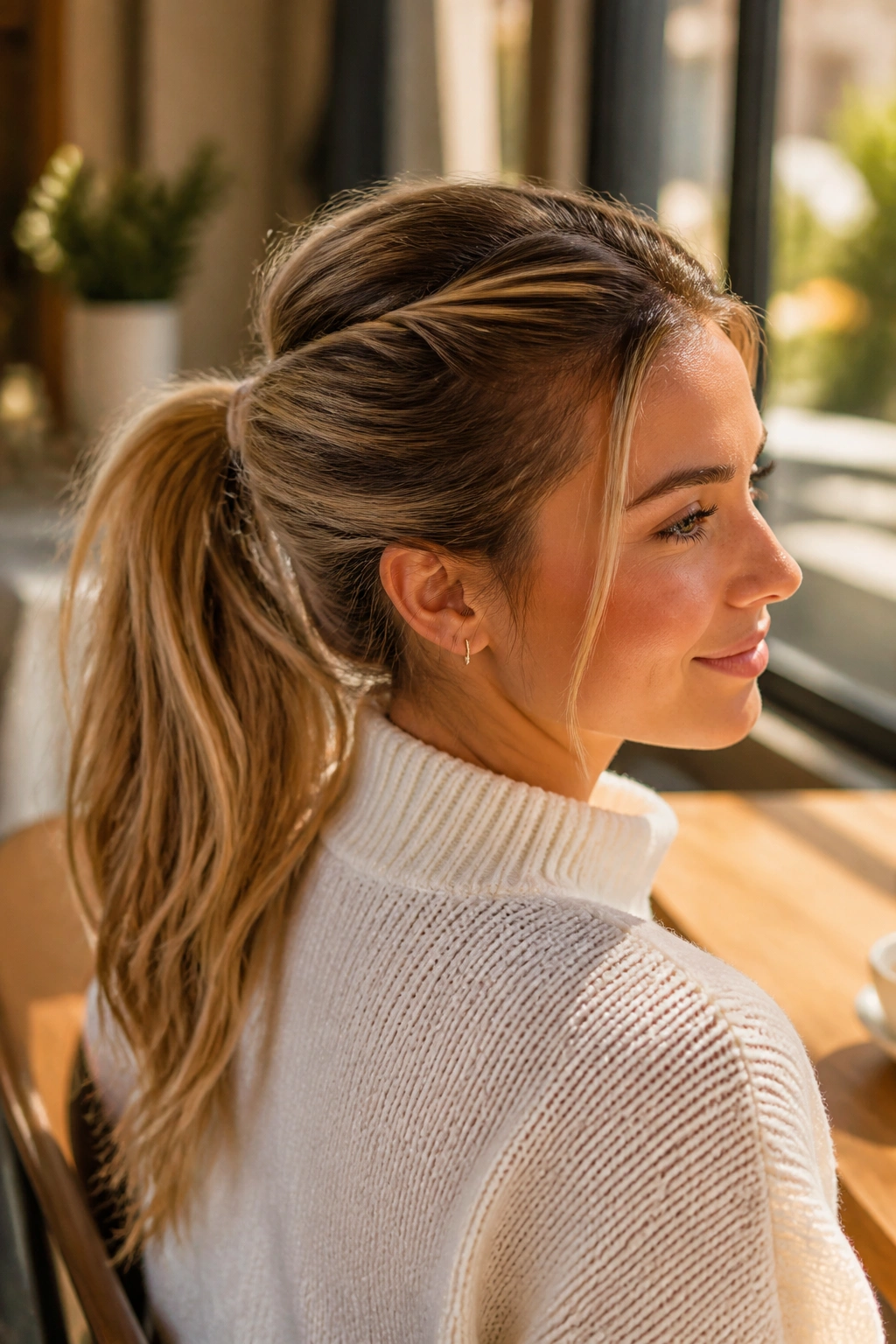
A twisted-section ponytail gives you volume without looking overworked. Instead of braiding, you twist two side sections back toward the center, which creates a soft ridge at the top of the head and a fuller-looking base. It’s a little more relaxed than braids and a little cleaner than loose sides.
I like this style when hair has some natural wave but not enough body on its own. Twisting the sides adds structure, and because twists don’t compress the hair as much as a tight braid, they preserve more of the fluffy texture. That matters if you want the ponytail to feel airy, not packed down.
Why twists beat a plain elastic
A single elastic gathers hair into one point. Twists create two lines that feed into that point, so the eye reads more width at the top. That’s the trick. More visual width equals more volume.
Use two small sections from just above the ears, twist them back loosely, and secure them into the ponytail. If your hair is slippery, add a touch of dry texture spray before twisting. If it’s curly, stretch the twists a little as you go so they don’t shrink too much. Simple move. Better shape.
The style has a soft, romantic feel without drifting into wedding-hair territory. That line is a little tricky, but this one stays on the right side of it.
12. Messy Textured Ponytail With Face-Framing Pieces
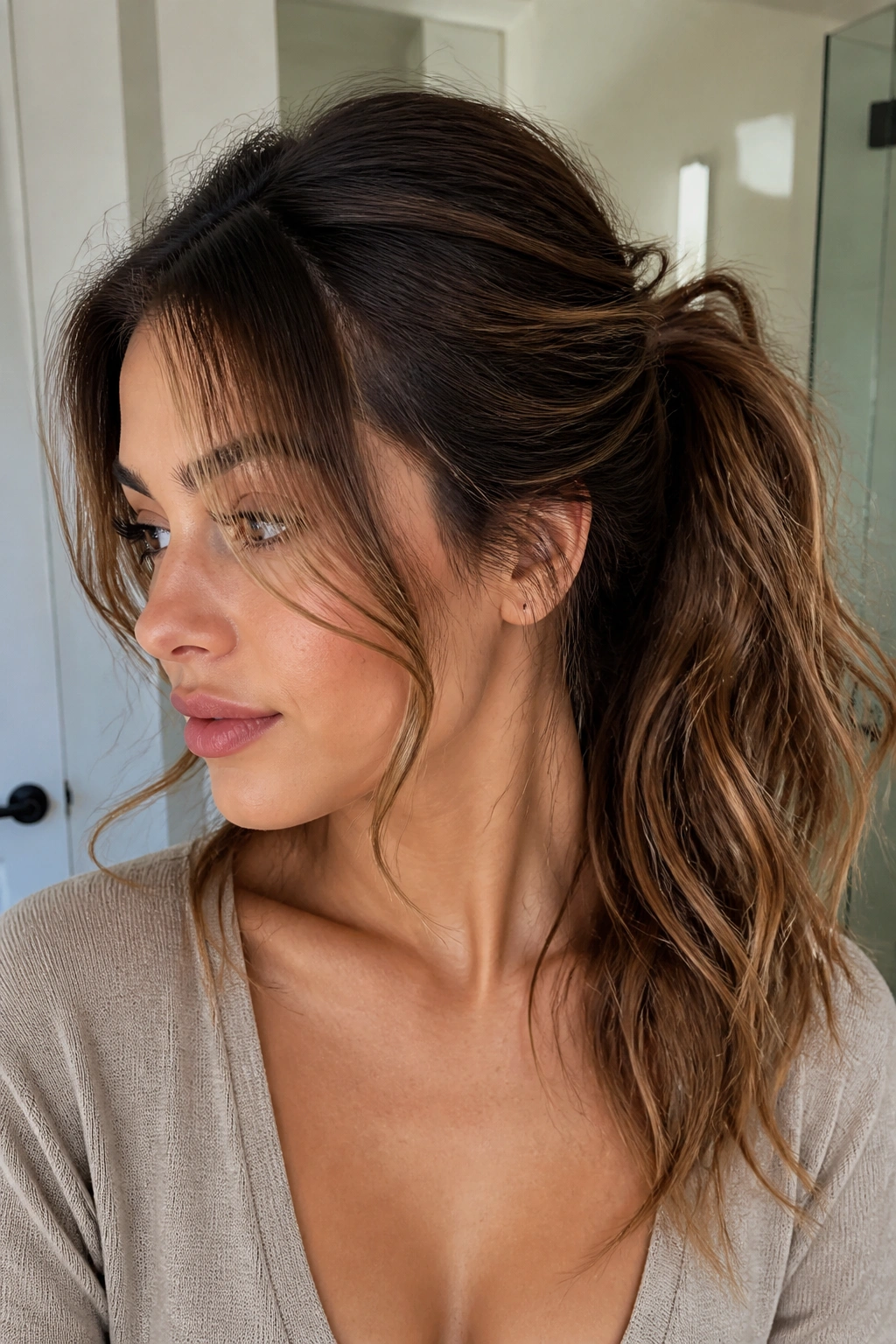
A messy ponytail only works when the mess is controlled. That’s the part people miss. The volume comes from texture at the roots and movement through the tail, not from skipping the comb and hoping for the best.
Start with dry shampoo or texture spray at the roots, even if your hair is clean. Clean hair can be too soft, and soft hair often collapses. Scrunch the mid-lengths, then gather the hair with your fingers instead of brushing it back flat. Leave out two face-framing pieces, one on each side, and curl them away from the face.
The tail should look full but touchable. If the ends are thin, backcomb the bottom few inches very lightly and mist them with flexible spray. That gives the tail a broader outline without hard edges. And yes, a little frizz helps here. Not a halo of fuzz — just enough roughness to keep the style from looking pressed.
One-sentence reality check: this is not a polished ponytail.
That’s the appeal. It has that undone shape that still feels styled, especially when the crown has a little lift and the front pieces soften the face.
13. Sleek Front, Huge Tail Ponytail
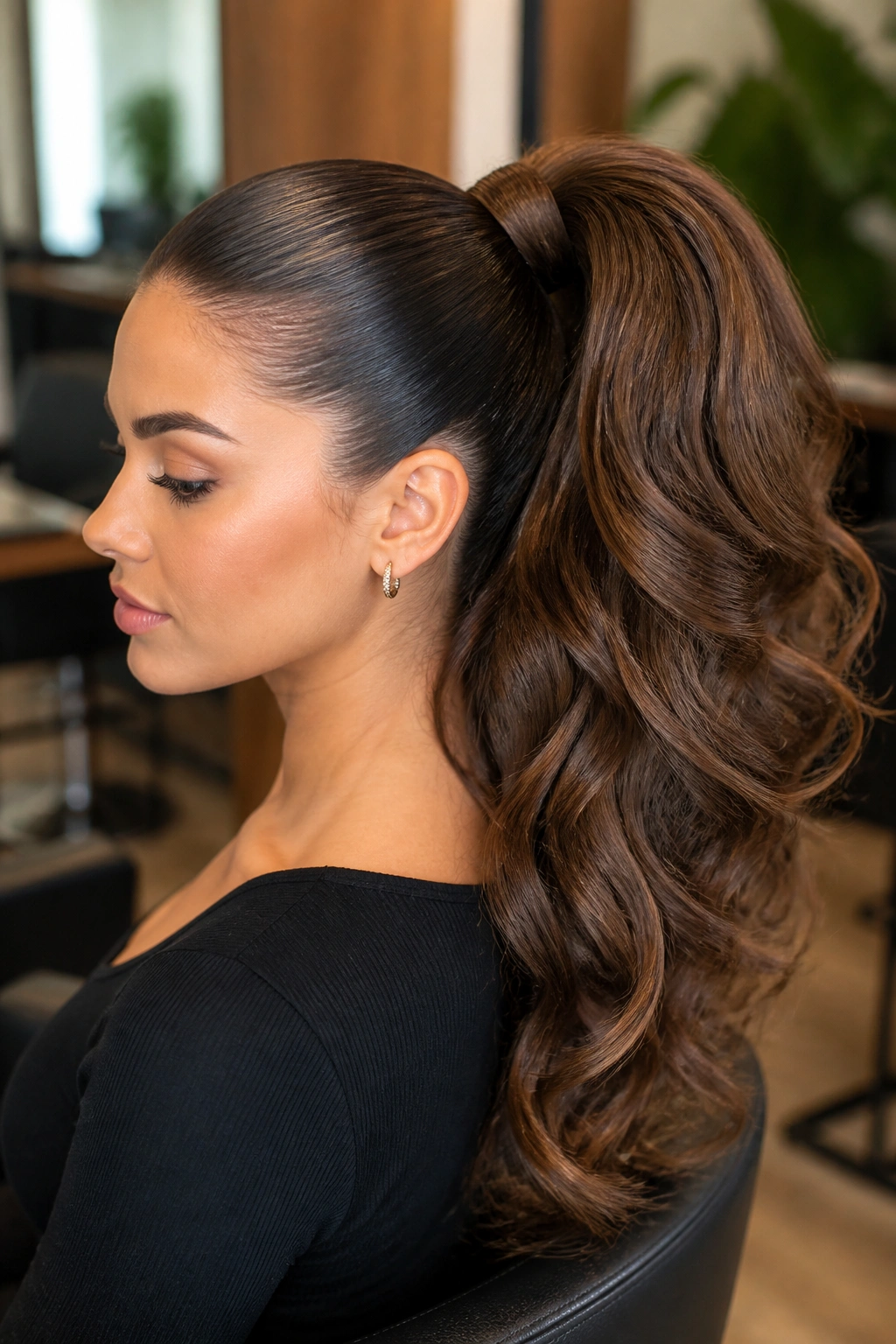
This one is all about contrast. The front stays smooth and almost severe, while the tail goes big, soft, and full of movement. That contrast makes the ponytail look larger because the eye gets a clean line at the top and a lot of volume at the bottom.
Brush the front sections back with a small amount of serum or styling cream, then secure the ponytail tightly. After that, curl the tail in large sections and break the curls apart with your fingers once they cool. The front should stay glossy and close to the head. The tail should not. That difference is the whole point.
If you want extra body, use a 1.5-inch curling iron on the lengths and brush the curls out once they’re set. Brushed-out curls create a fluffy, expensive-looking tail that doesn’t read as “formal prom hair” unless you push the shine too far.
The little details that matter
- Keep the part razor-clean if you want a sharper contrast.
- Use a smoothing brush, not a stiff gel, on the top.
- Curl the tail in alternating directions for more width.
- Leave the very ends slightly undone so the shape feels soft.
This style is one of my favorites for long hair because it makes the tail the star. The front does the quiet work. The back gets the drama.
14. Ribbon-Tied Soft Volume Ponytail
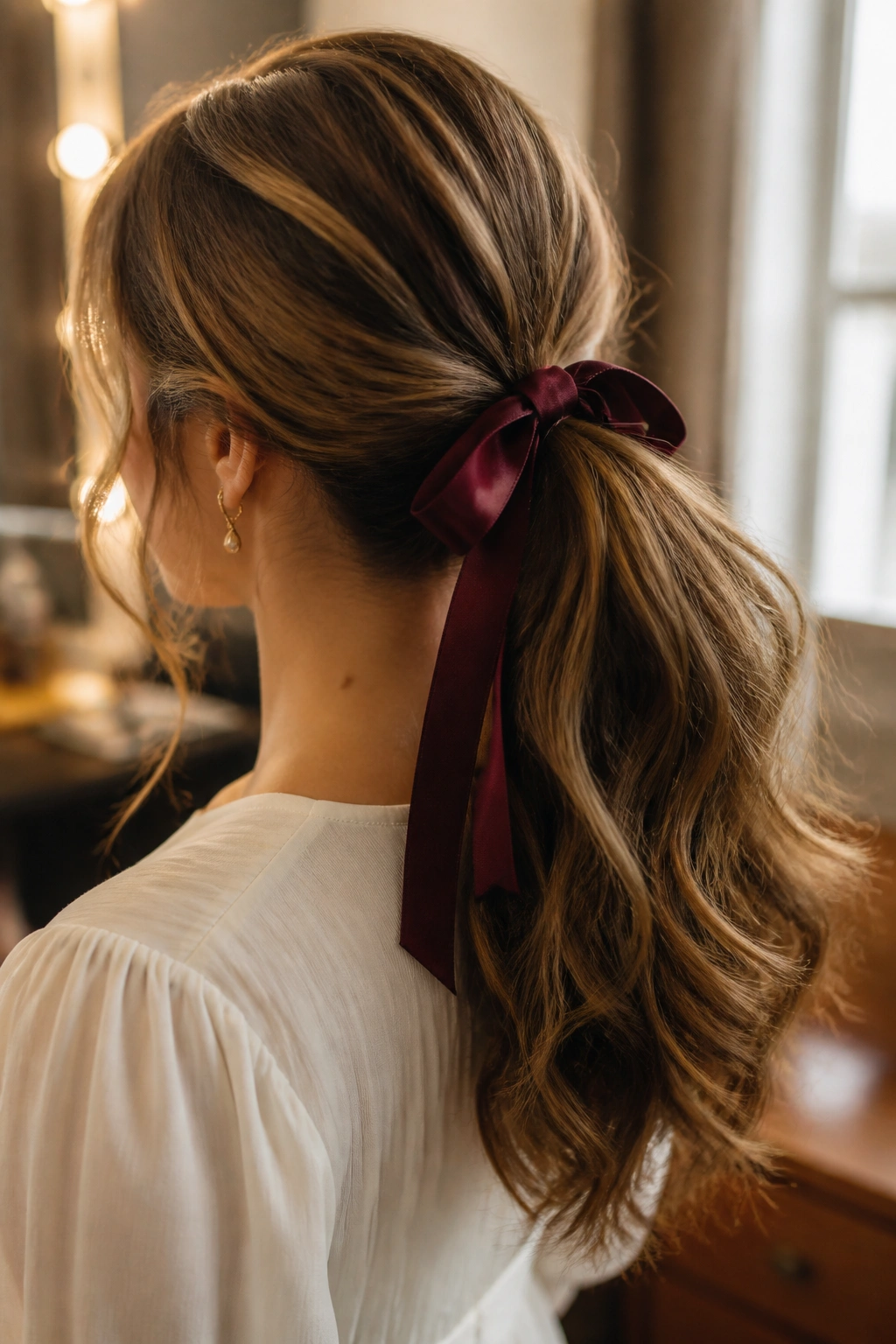
A ribbon tie changes the mood immediately. It makes a ponytail feel softer, a little more dressed up, and far less like an afterthought. When the tail already has some volume, the ribbon acts like a frame instead of a decoration pasted on top.
Choose a ribbon with some body — silk is pretty, but grosgrain or velvet holds shape better if you want the bow to sit upright. Tie the ponytail first, fluff the base, then knot the ribbon around it. Let the ends fall long if you want a romantic look, or keep the bow compact if the outfit is busy.
The volume comes from the contrast between the soft tie and the full tail. Loose waves or brushed curls work best here because they echo the softness of the ribbon. A dead-straight tail can look a little too severe with a bow unless the rest of the style is very clean.
If your hair is fine, try tying the ribbon over a wrapped base so the elastic stays hidden. That keeps the whole thing from looking thin at the attachment point. If your hair is thick, the ribbon can sit right on top without much help.
This is a good one for days when you want the ponytail to look intentional, not lazy. There’s a difference.
15. The Double-Decker Ponytail
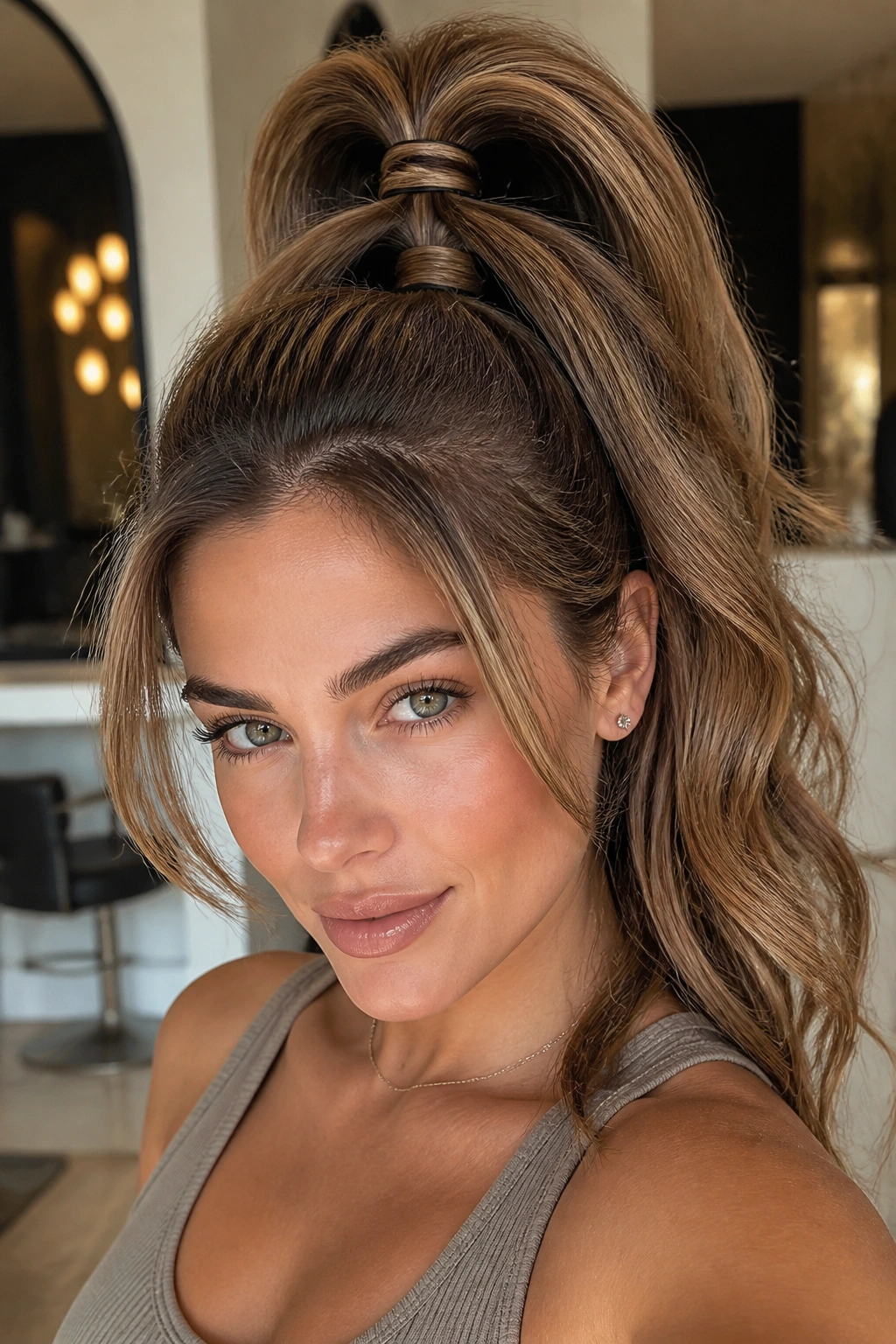
If your hair never seems to look thick enough in one ponytail, split the job in two. A double-decker ponytail — sometimes called a stacked ponytail — gives you more lift and more length by building the style in layers. It is one of the oldest tricks in the book for a reason. It works.
Start by dividing the hair horizontally from ear to ear. Clip the top section up. Secure the bottom section into a ponytail first, then release the top section and make a second ponytail directly above it. The top ponytail covers the base of the lower one, so the two act like one much fuller tail. Blend them with a brush, then wrap a small piece of hair around both elastics to hide the seam.
The shape is especially good for long hair that gets wispy at the bottom. Instead of one narrow tail hanging from a single point, you get a fuller column of hair that holds its body better. If you curl the ends together, the stacked effect disappears almost completely and the ponytail just looks thick.
Why this one earns a spot
- It adds visible thickness without extensions.
- It helps fine hair hold shape longer.
- It keeps layered cuts from looking sparse at the base.
- It gives the ponytail a better lift than one elastic alone.
I’d pick this style for anyone frustrated by ponytails that collapse halfway through the day. It has the most practical kind of volume: the kind that stays put.
