



A short pixie cut looks low-effort only after the shape is nailed down. Before that, it is all business: the nape, the temple line, the crown height, the fringe, and whether the whole thing grows out in a tidy way or turns fuzzy after ten days.
That is why some short pixie cuts look sharp and expensive even when they are air-dried in five minutes, while others seem to fight the person wearing them. A quarter inch at the hairline can change the mood of the whole cut. A little more length at the crown can make fine hair look fuller. Too much bulk at the sides can make the face feel wider than it really is. Tiny details. Big difference.
I’ve always liked pixies that know what they are doing. The best ones do not try to be everything at once. They give you one clear shape, one strong feature, and one easy way to style it on a tired morning when you have exactly zero patience for a round brush. Straight hair, curls, cowlicks, dense hair, baby-fine hair — all of them can wear a pixie, but not the same pixie.
1. Classic Tapered Pixie
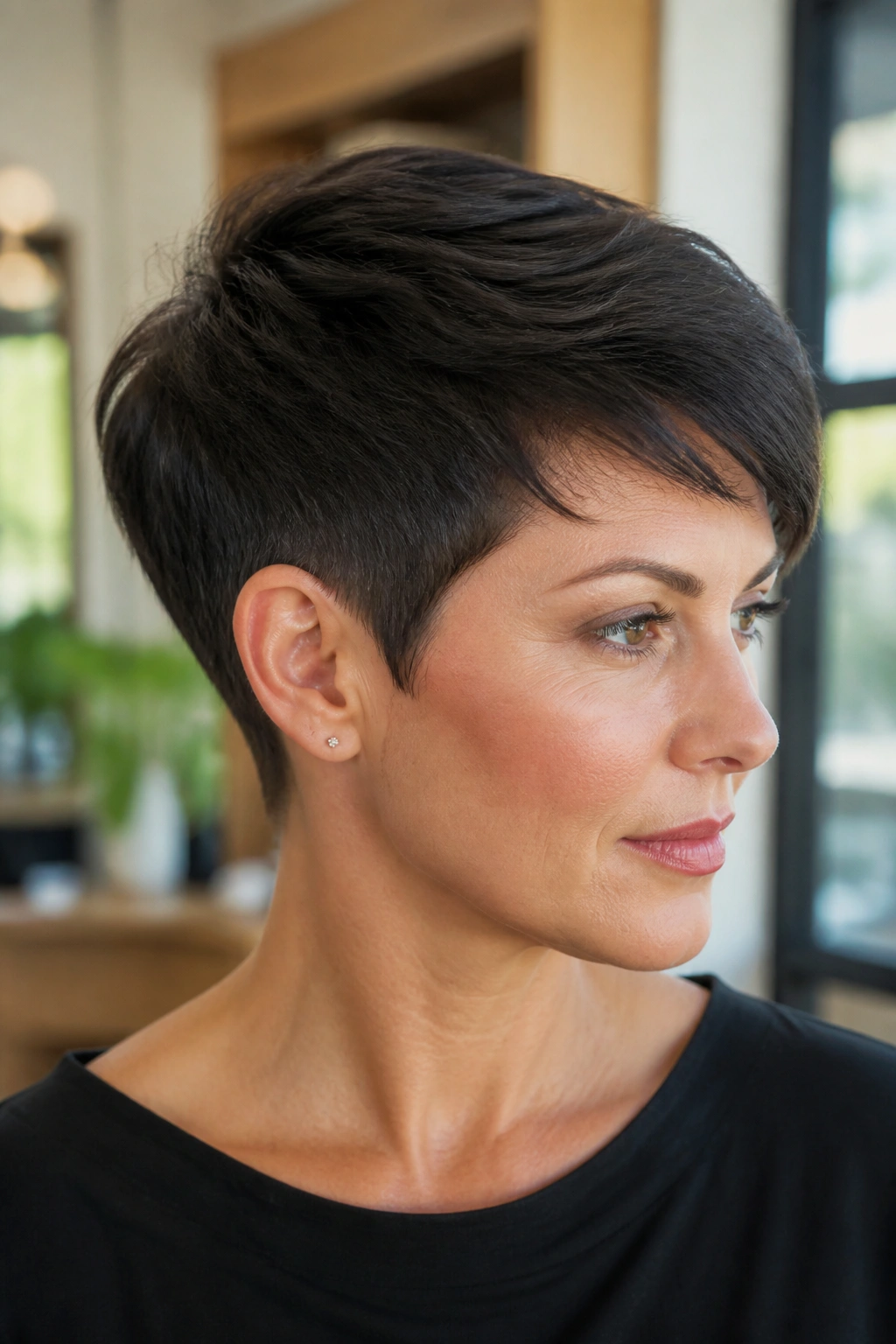
The classic tapered pixie is the haircut that keeps showing up for a reason. It has a close, neat outline at the nape and around the ears, with just enough length on top to keep the cut from feeling severe. That balance is the whole trick.
Ask for short, tapered sides and a slightly longer crown, usually around 1.5 to 3 inches depending on your texture. If your hair sticks out at the back, tell the stylist you want a soft taper rather than a hard clipper line. That small choice keeps the cut looking polished as it grows.
This is the pixie I recommend to people who want low drama in the mirror. It works especially well on straight to slightly wavy hair, and it behaves nicely with a dab of cream or light paste. Clean. Easy. Done.
2. Side-Swept Pixie With a Long Fringe
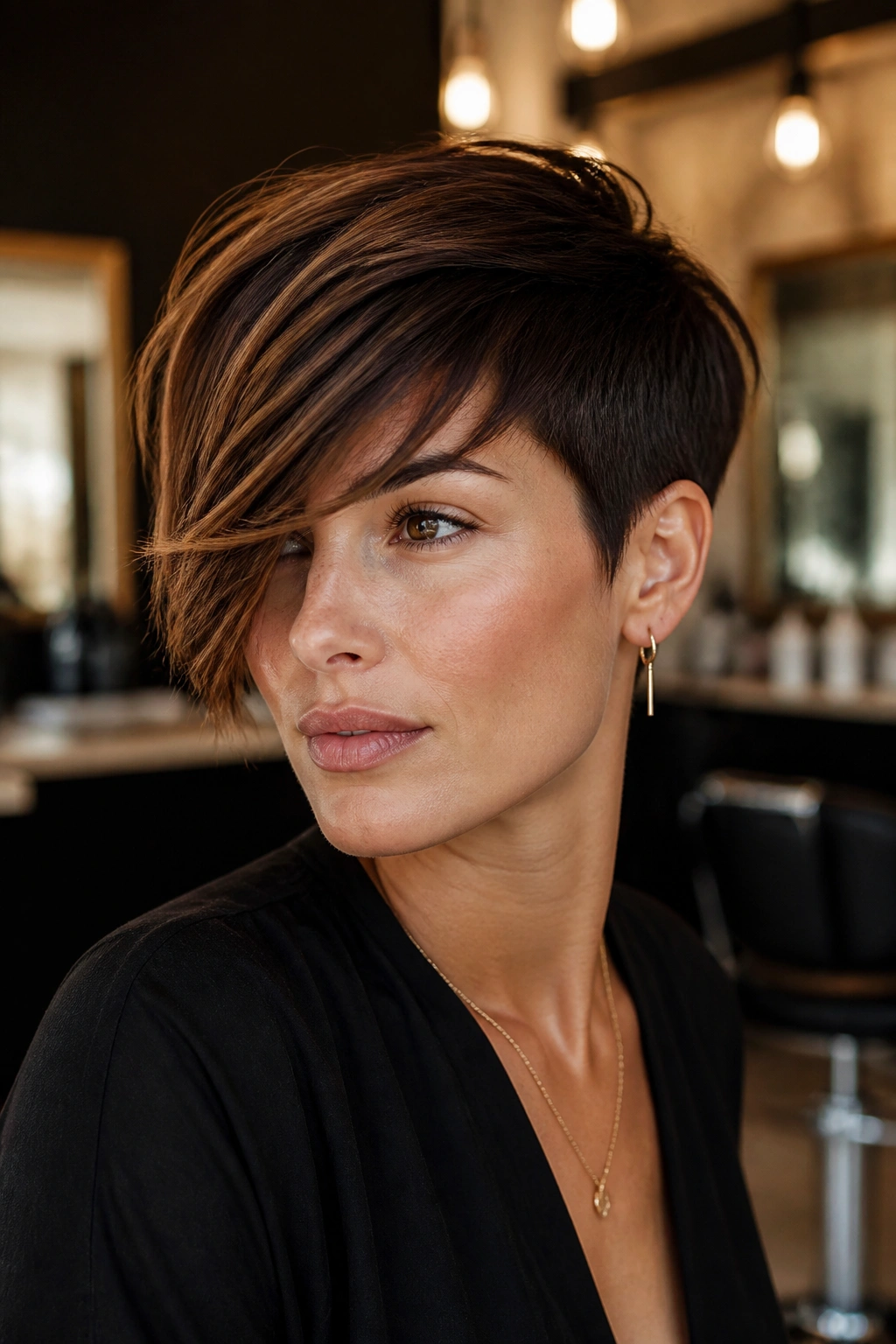
Need a pixie that does not put your forehead on full display? This is the one. A long, side-swept fringe softens the front of the face and gives you a little more room to play on days when you want the cut to look less cropped.
Why It Works
The longer fringe usually sits somewhere around the brow or just below it, then angles across the face. That diagonal line is flattering on long faces, strong foreheads, and anyone who likes a softer edge. It also grows out gracefully, which matters more than people admit.
Ask your stylist to leave enough length in the front to sweep across without fighting the natural fall of your hair. If your hair has a stubborn cowlick, this is where a blow-dryer matters. Dry the fringe in the direction you want it to sit, using a small round brush or your fingers.
- Best on straight, wavy, or lightly textured hair
- Looks good with a side part that is slightly off-center
- Can be pinned back on busy days
- Needs a trim around every 5 weeks
Tip: keep the fringe piecey, not helmet-flat. That one detail makes the whole cut feel lighter.
3. Choppy Textured Pixie
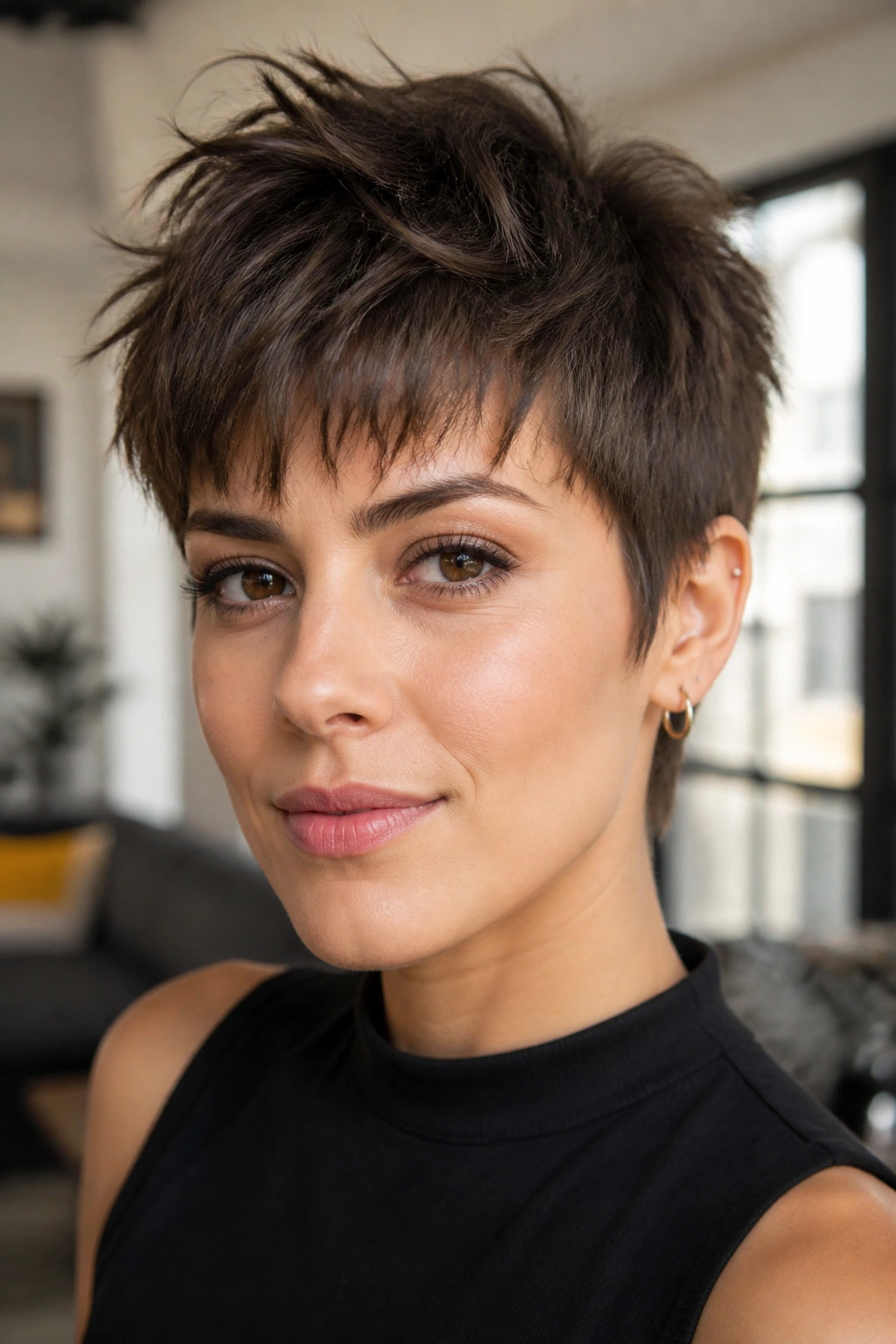
If your hair feels too flat in a neat crop, choppy layers can fix that fast. This is the pixie with a little bite — broken-up ends, uneven texture, and enough movement to stop the cut from looking too tidy.
The key is point-cutting, not blunt cutting. Point-cutting removes soft little notches from the ends so the hair separates instead of lying in one heavy sheet. On thick hair, that matters a lot. On fine hair, too much of it can leave the cut looking wispy, so you want a stylist who knows where to stop.
I like this one with a matte paste worked through the top after drying. Pinch, twist, leave a few ends a little messy. That’s the whole appeal.
4. Sleek Close-Cropped Pixie
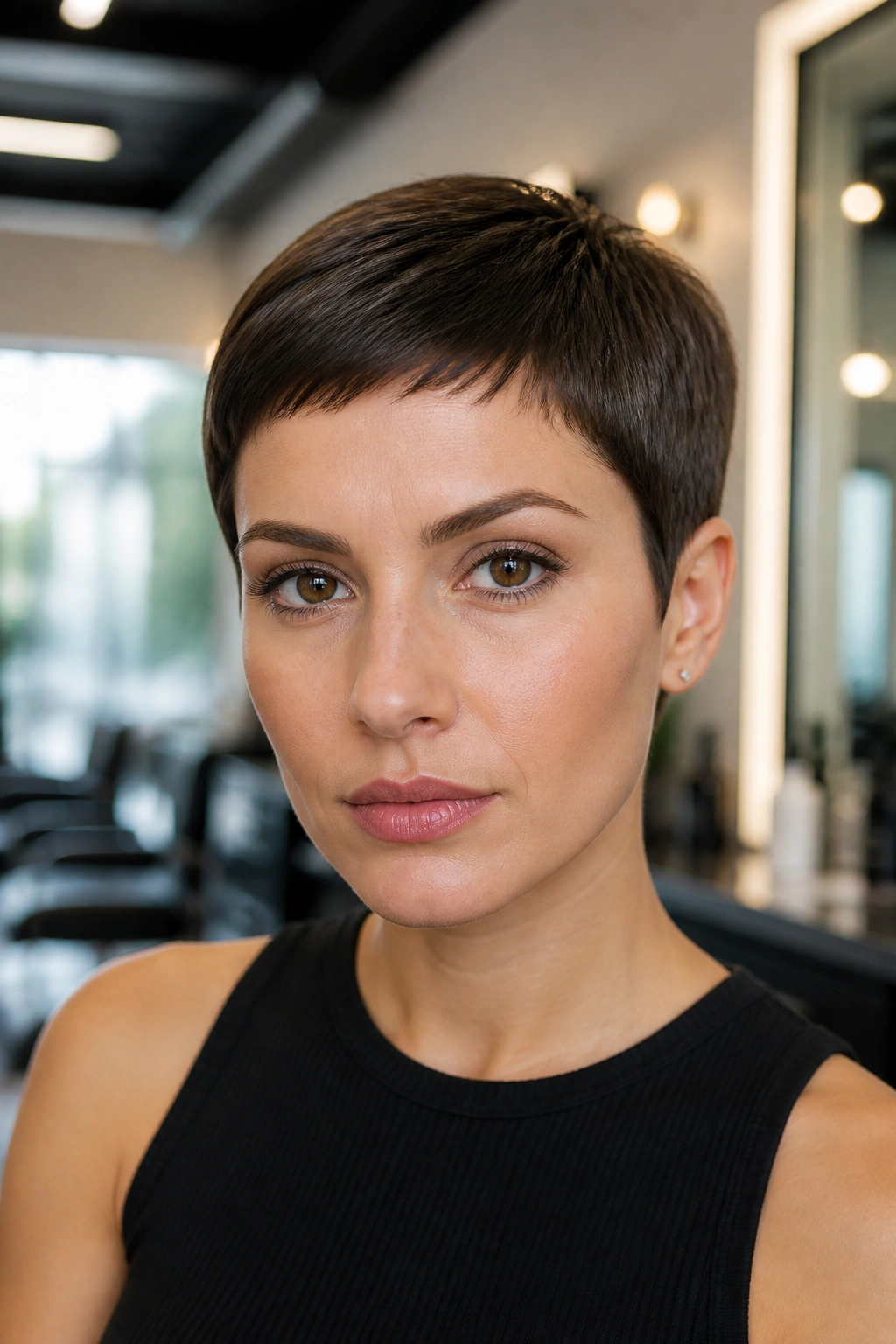
A sleek close-cropped pixie is not shy. It puts the shape of the head front and center, and when the line is clean, the result feels sharp in the best way. No fluff. No extra volume trying to make itself important.
This cut works best when the perimeter is tight and the top stays short enough to lie smooth. Think close around the ears, neat at the nape, and smooth through the crown. Straight hair is the easiest match, but a good smoothing cream can help wavy hair behave if you are willing to blow-dry for a few minutes.
I like this style on people who want the haircut to carry the whole look. It shows off earrings, jawline, brows, and neck all at once. One warning, though: if your hair frizzes easily in humidity, keep a tiny tube of finishing cream nearby. You will use it.
5. Curly Pixie With Soft Volume
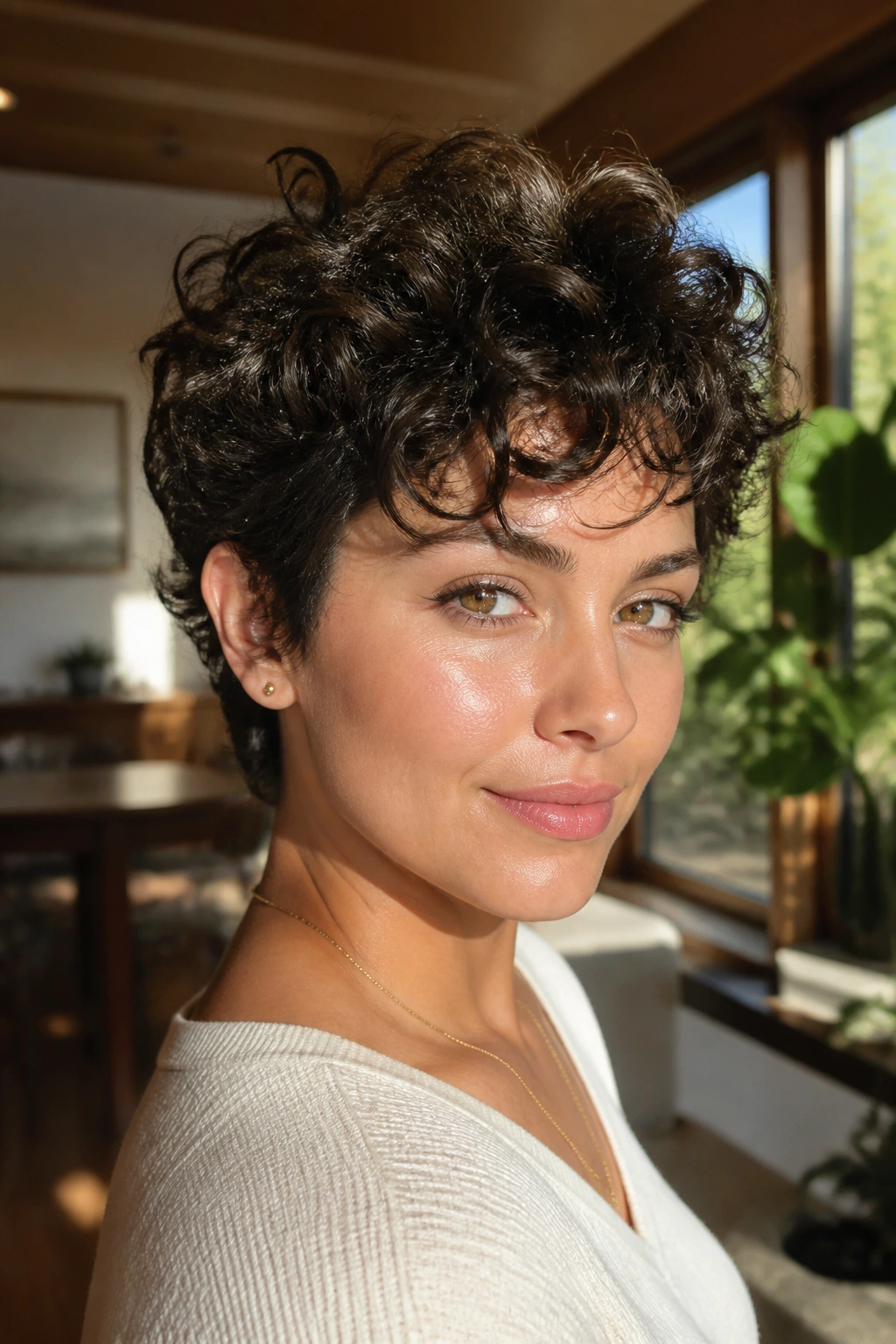
Can curly hair wear a pixie without turning into a puffball? Absolutely — if the cut respects shrinkage. A curly pixie with soft volume keeps the shape a little longer on top and around the crown so the curls can spring up instead of swelling sideways.
What to Ask For
Tell the stylist to cut it dry or mostly dry if possible. Curls lie, and they lie in different ways depending on the day. You want the shape to be judged where the curl actually sits, not where it looks when it’s wet.
Use curl cream or light mousse and scrunch it into damp hair. Then let it air-dry or use a diffuser on low heat. High heat roughs up the curl pattern and makes short cuts fuzzier than they need to be.
Short curls can look adorable when they have room to move. They can also look triangular if the sides are left too bulky. That is the balancing act.
6. Undercut Pixie With a Sharp Nape
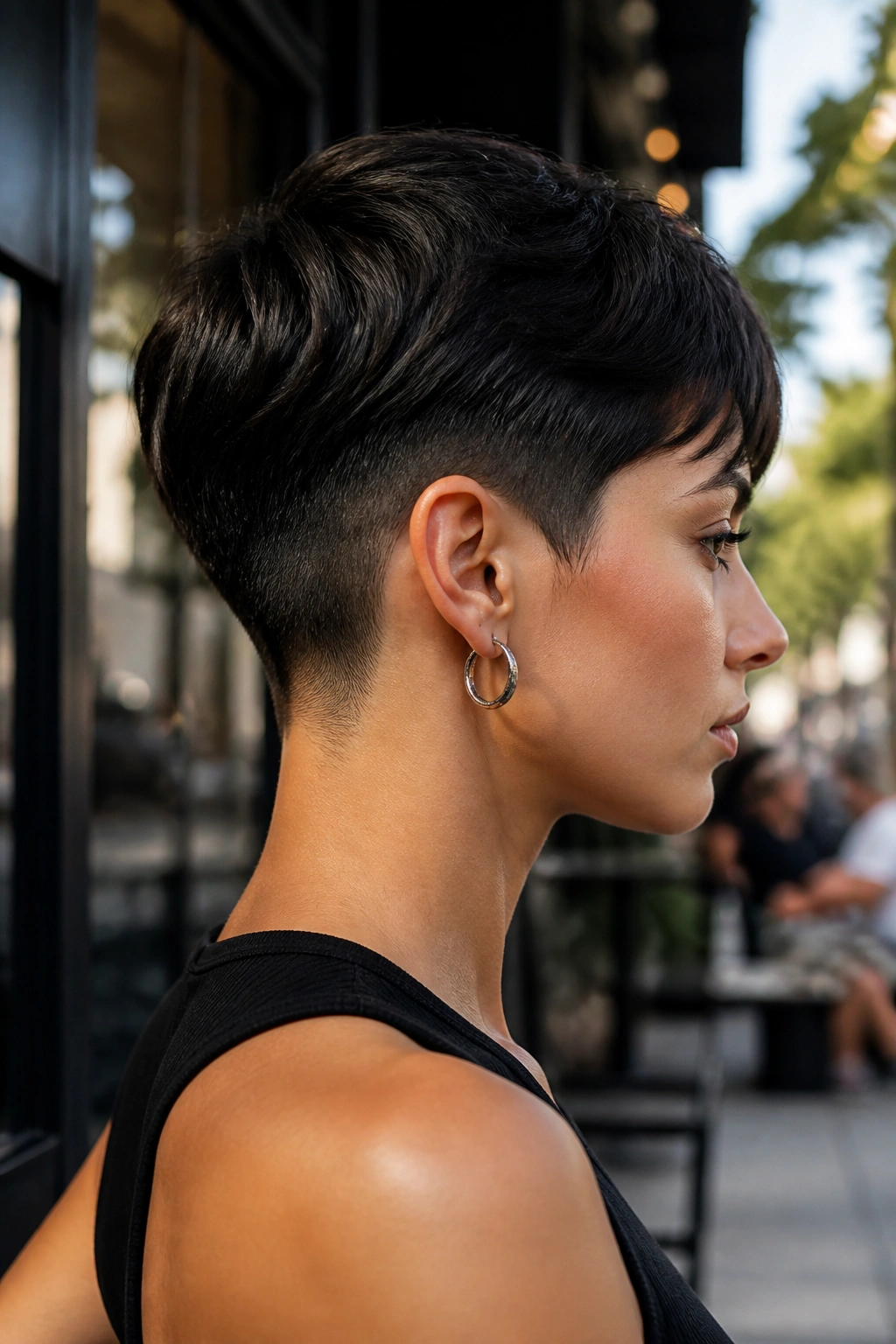
The undercut pixie is for someone who likes contrast. Shorter, tighter sides or back. More length on top. A stronger line at the nape. It has attitude even when the top is calm.
Compared with a classic tapered pixie, this one feels more deliberate and a little more graphic. That means it is great if you want the haircut to look striking from the side and back, not only from the front. It also helps thick hair behave, since removing bulk underneath makes the top sit better.
The catch is maintenance. An undercut shows regrowth fast, especially at the nape and around the ears. If you want the clean effect, plan on tidy-up trims sooner rather than later. No mystery there.
7. Asymmetrical Pixie With One Longer Side
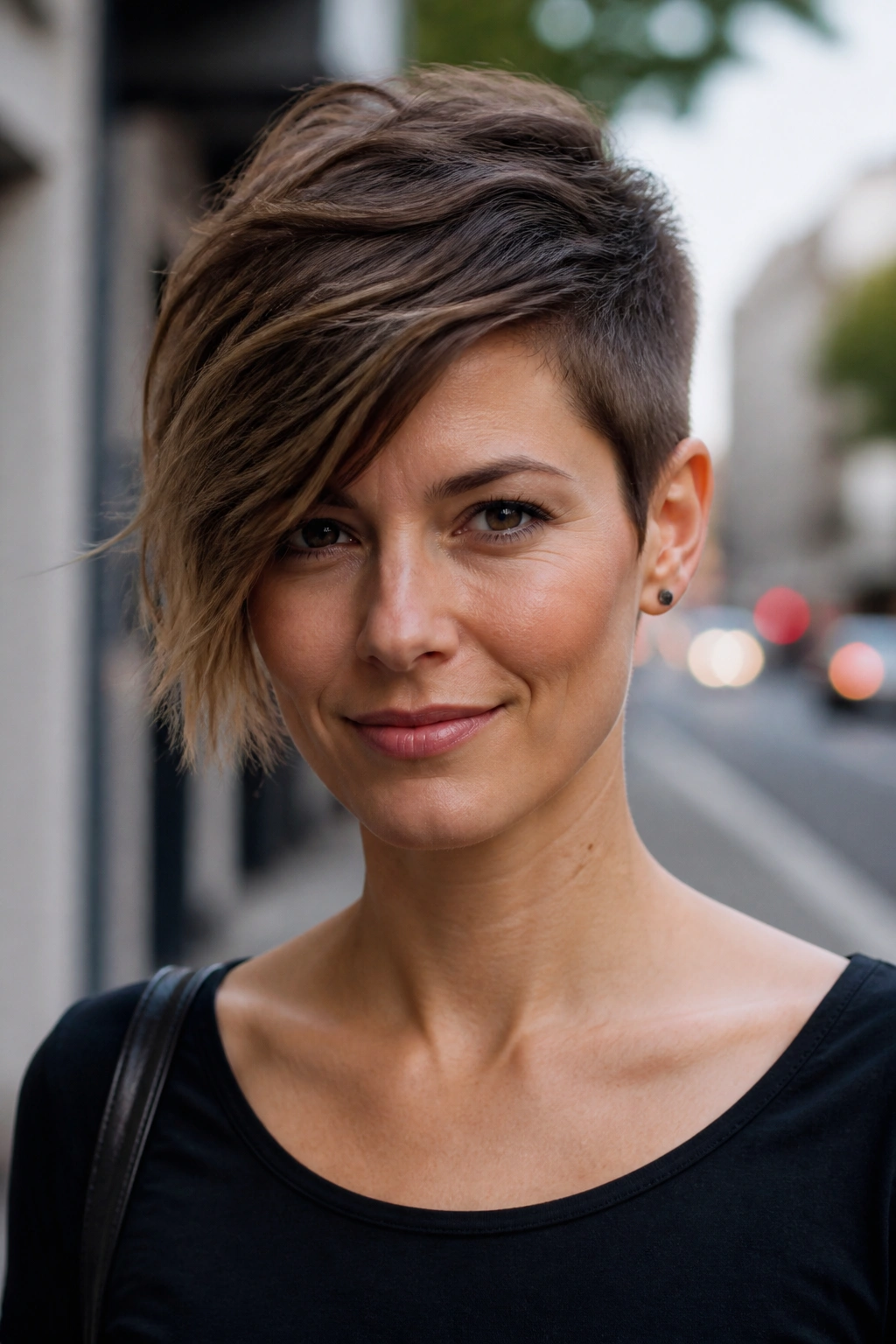
I love an asymmetrical pixie when someone wants edge without going full punk about it. One side stays longer. The other side gets trimmed closer. The imbalance is the point, and it works because the eye keeps moving across the face.
The longer side can skim the cheekbone or brush the jaw, which gives you some softness where you want it. On the shorter side, a neat taper keeps the haircut from tipping into chaos. The best versions do not look like one side was forgotten. They look planned.
A quick note: this cut is especially good if you like wearing one ear visible and the other side tucked or swept over. That little asymmetry makes earrings, makeup, and brow shape stand out more.
8. Feathered Pixie With Airy Layers
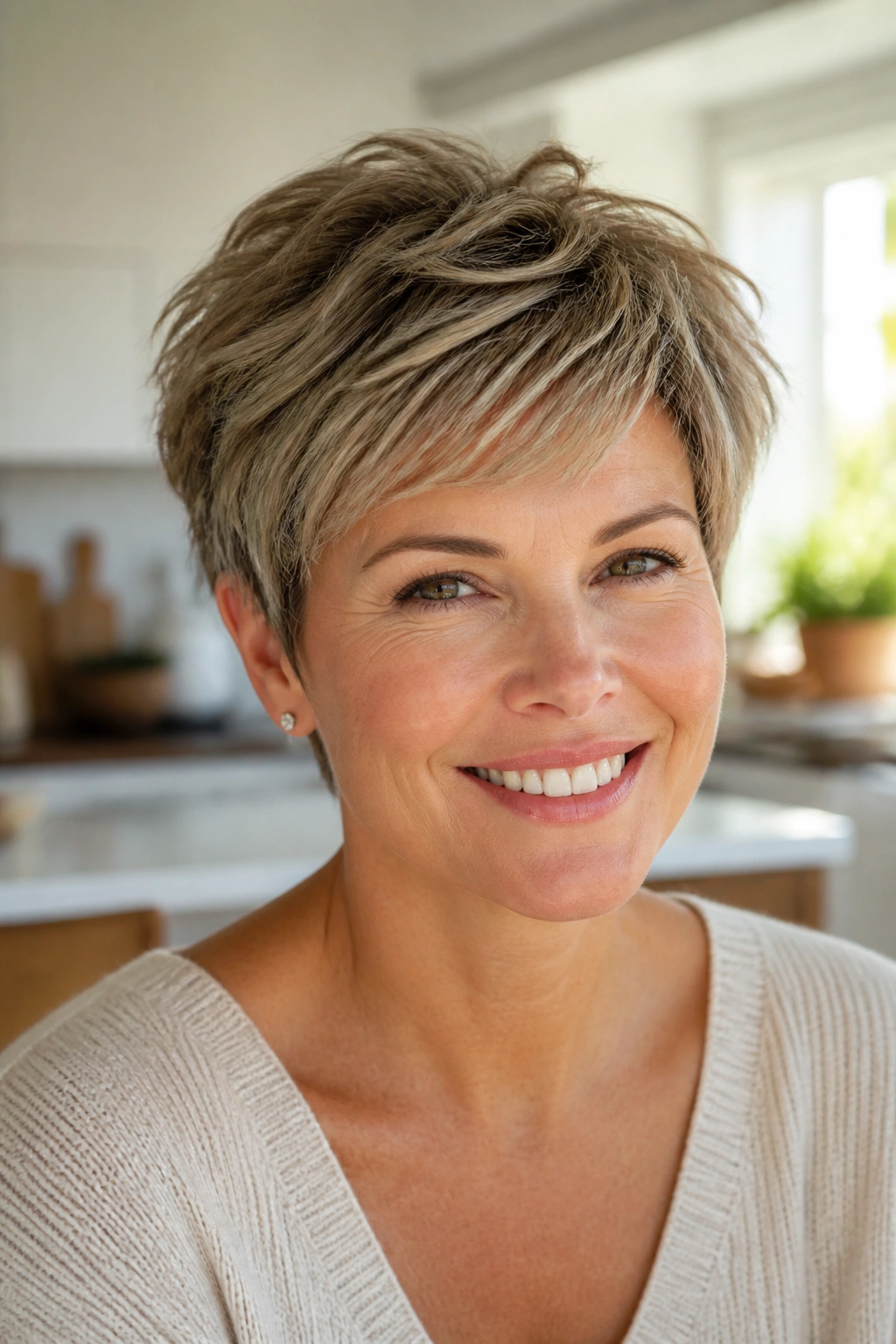
Feathered layers make a pixie feel lighter without making it flimsy. The cut has movement, but not the jagged, broken kind. More like soft slices that bend instead of sitting in one block.
The Shape Matters
Ask for feathering around the crown and sides, especially if your hair is medium density. The goal is to reduce bulk while keeping enough body so the cut does not collapse by lunchtime. A light mousse or volume spray can help, but you do not want anything sticky. Sticky products make short hair separate in clumps that look tired fast.
This is a nice choice if you hate the feeling of hair sitting heavy on your head. It also grows out well because the layers blend instead of forming a hard line.
A feathered pixie looks especially good when the front pieces are a little longer than the back. That tiny shift keeps the cut from reading too round.
9. Pixie Cut With Micro Bangs
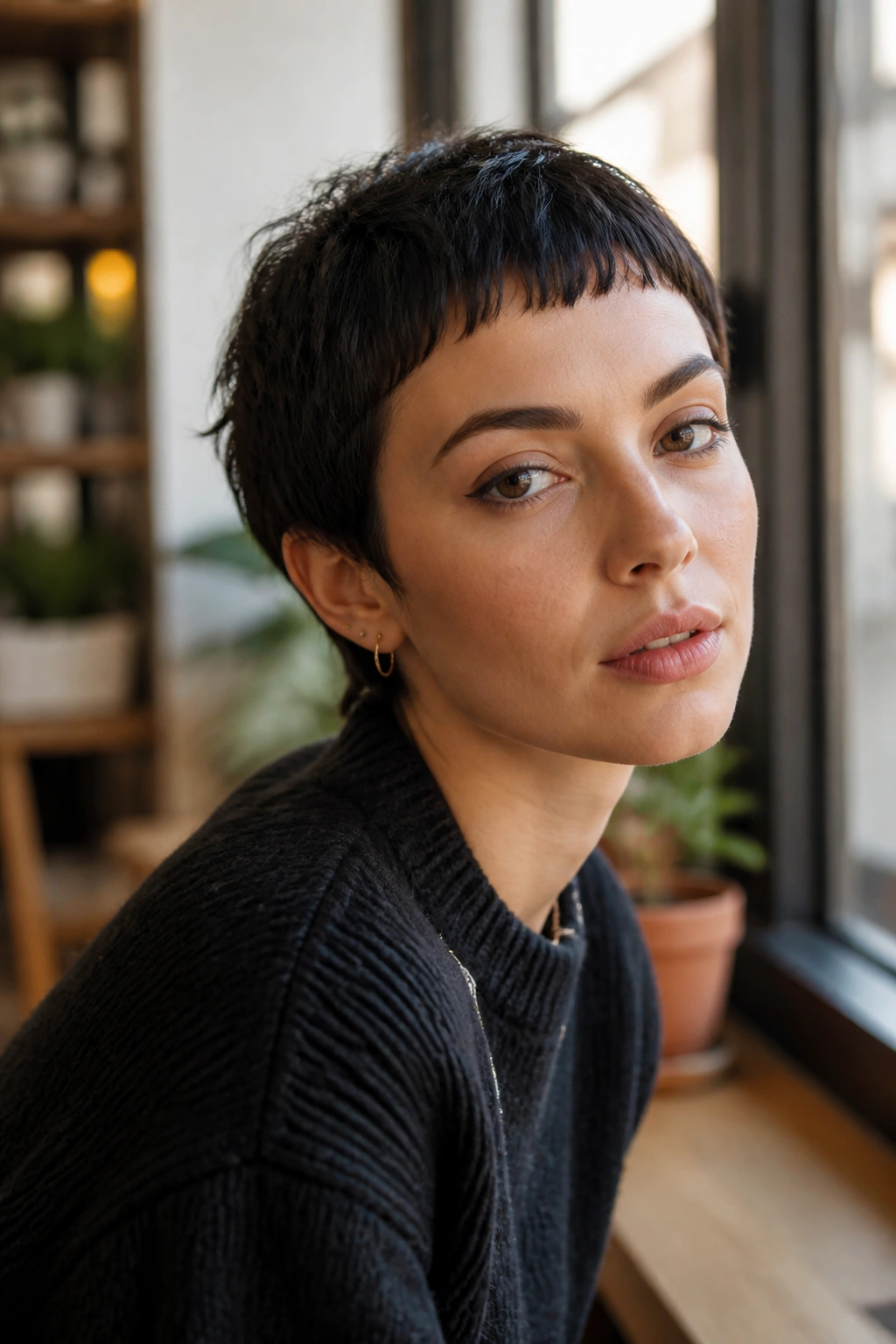
Micro bangs are not trying to blend in. They sit high on the forehead, short enough to show skin between the fringe and the brows, and they give the whole pixie a sharper, fashion-forward look.
The trick is to keep the rest of the cut balanced. If the bangs are tiny and the sides are bulky, the proportions get weird fast. A neat nape and a slim temple line help the fringe feel intentional instead of random. This cut also puts your eyebrows in the spotlight, so if you like a strong brow, that is a win.
I would not call micro bangs easy. They need regular trims, and they need a little confidence. But if you want a short pixie that feels bold without adding much length, this is one of the cleanest ways to do it.
10. Long-Top Pixie With Short Sides
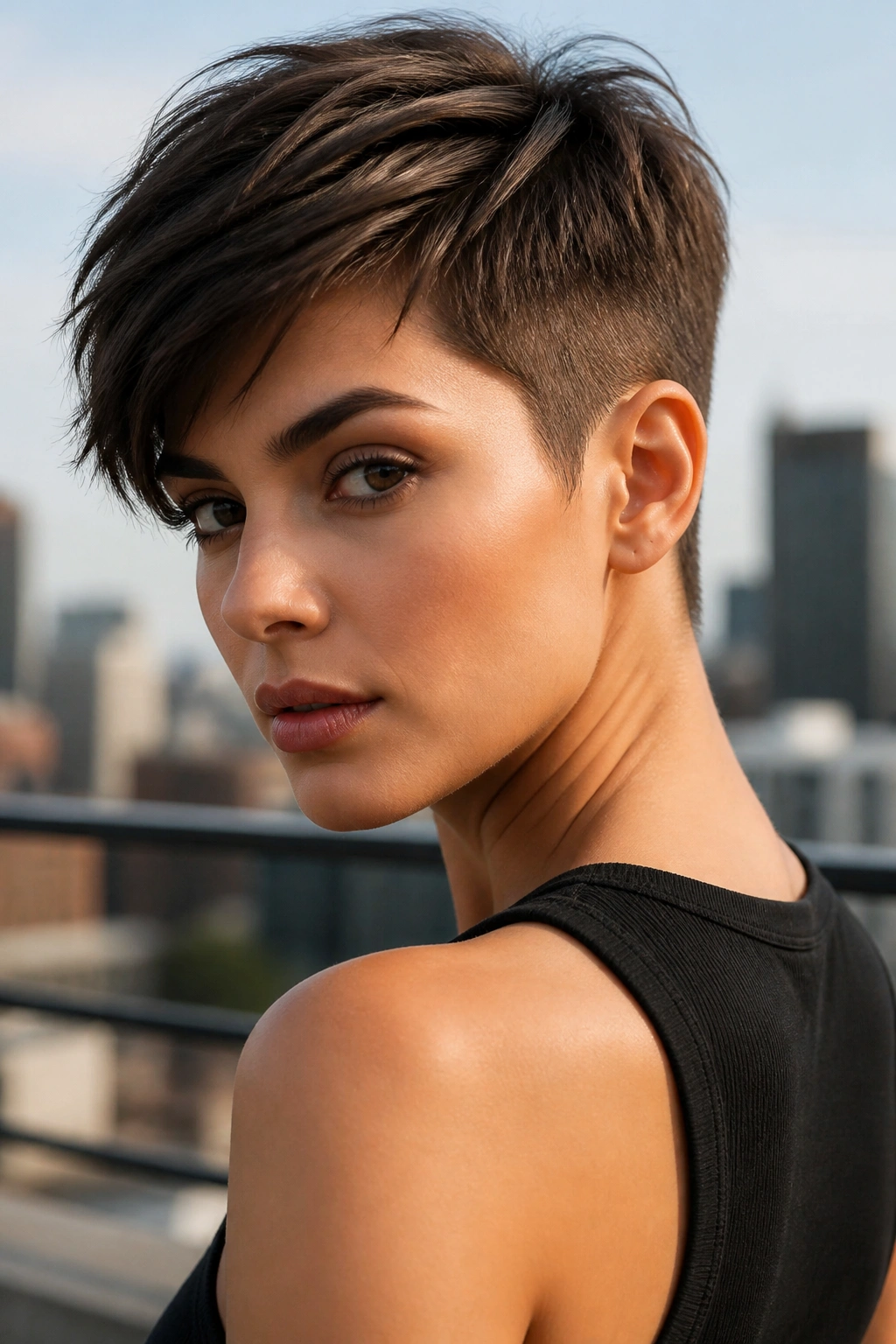
A long-top pixie gives you options, which is half the fun. The sides stay short and tidy, while the top leaves enough length to sweep forward, part to the side, or push up with a little lift.
How to Style It
- Blow-dry the top upward at the roots for 20 to 30 seconds
- Smooth the sides with a small amount of cream or wax
- Use your fingers if you want a loose finish
- Use a comb if you want a cleaner line
This is a smart cut if you are not sure how short you want to go. It gives you the sharpness of a pixie without taking away all your styling room. On days when you want polish, you can side-part it. On days when you want texture, you can rough it up.
That flexibility is the whole point.
11. Grown-Out Pixie With Soft Edges
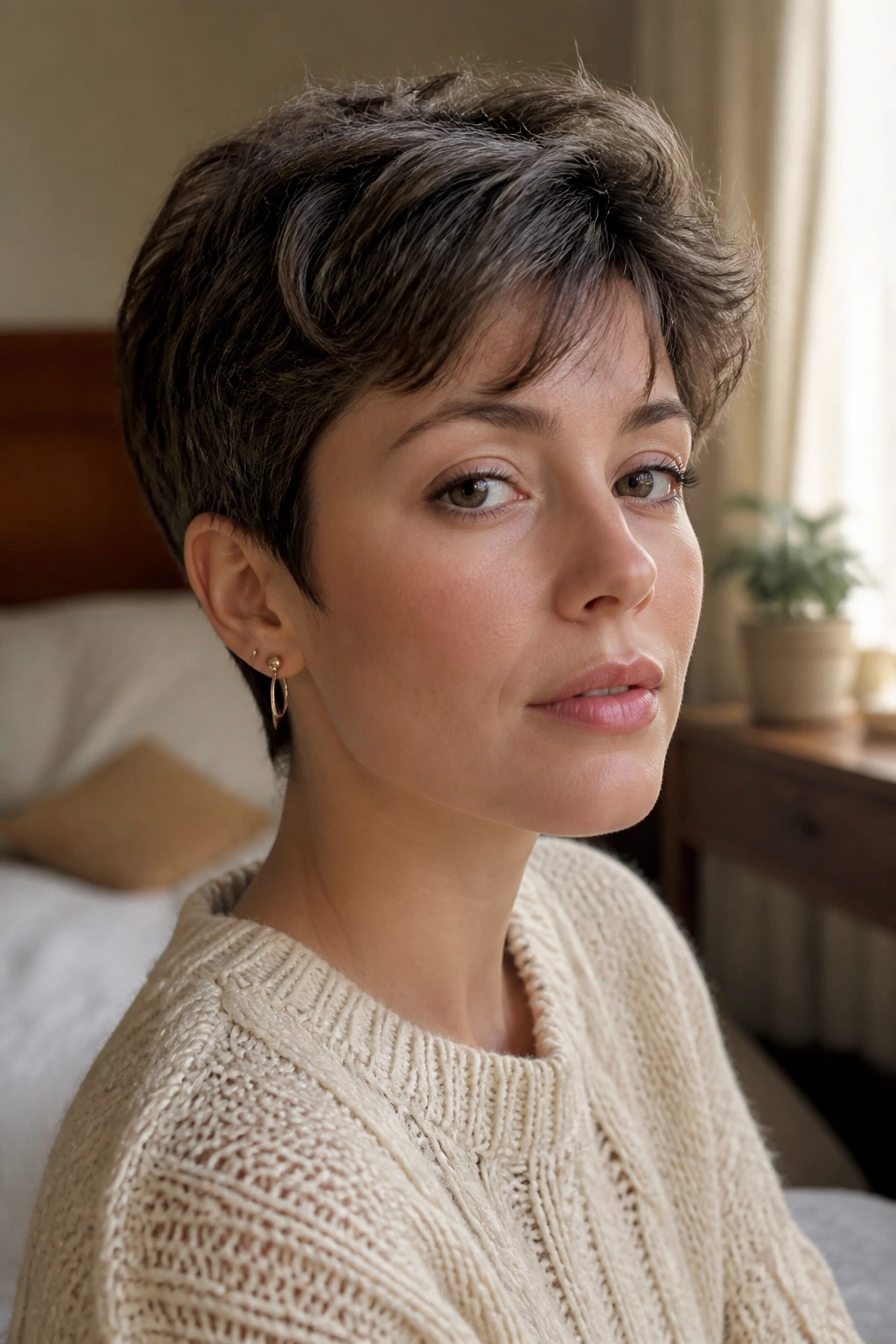
What happens when a pixie starts growing out and still looks good? Usually, it is because the edges were soft to begin with. A grown-out pixie with soft edges is not a mistake. It is a stage, and a pretty useful one at that.
This version keeps the perimeter gentle around the ears and neck, so the haircut blends into a slightly longer top without feeling awkward. It is especially nice if you are between lengths and do not want to rush into a bob yet. The shape should still have intention, though. Soft does not mean shapeless.
A bit of styling cream and a quick finger blow-dry can make this cut look polished in under five minutes. If you are busy and tired of fighting your hair, this is one of the easiest short pixie cuts to live with.
12. Spiky Piece-Y Pixie
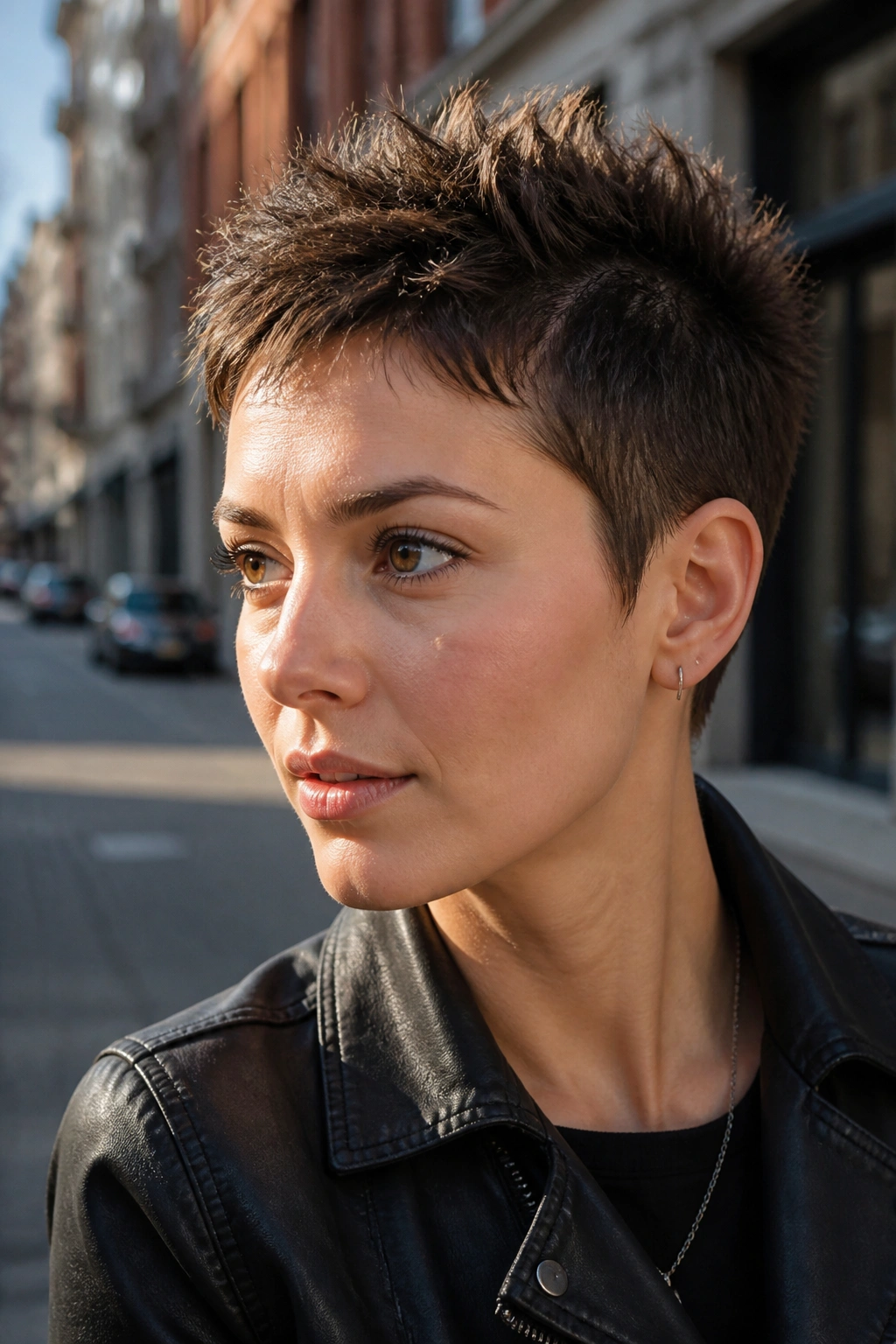
Spiky pixies work because they stop pretending hair should lie flat. A little lift, a little separation, and the whole cut suddenly feels more energetic. Not messy. Just alive.
Compared with a smooth pixie, this one depends on a matte product. A tiny amount of clay or paste rubbed between the palms, then pressed through the top, gives that separated finish. The sides stay tighter so the shape does not expand too much. If the top gets too long, the spikes turn limp instead of sharp.
This cut is a good match for short, dense hair that naturally wants to stand up anyway. It also suits people who like a more casual look and do not mind touching their hair once or twice during the day. For some cuts, that would be annoying. For this one, it is part of the charm.
13. Rounded Pixie for Fine Hair
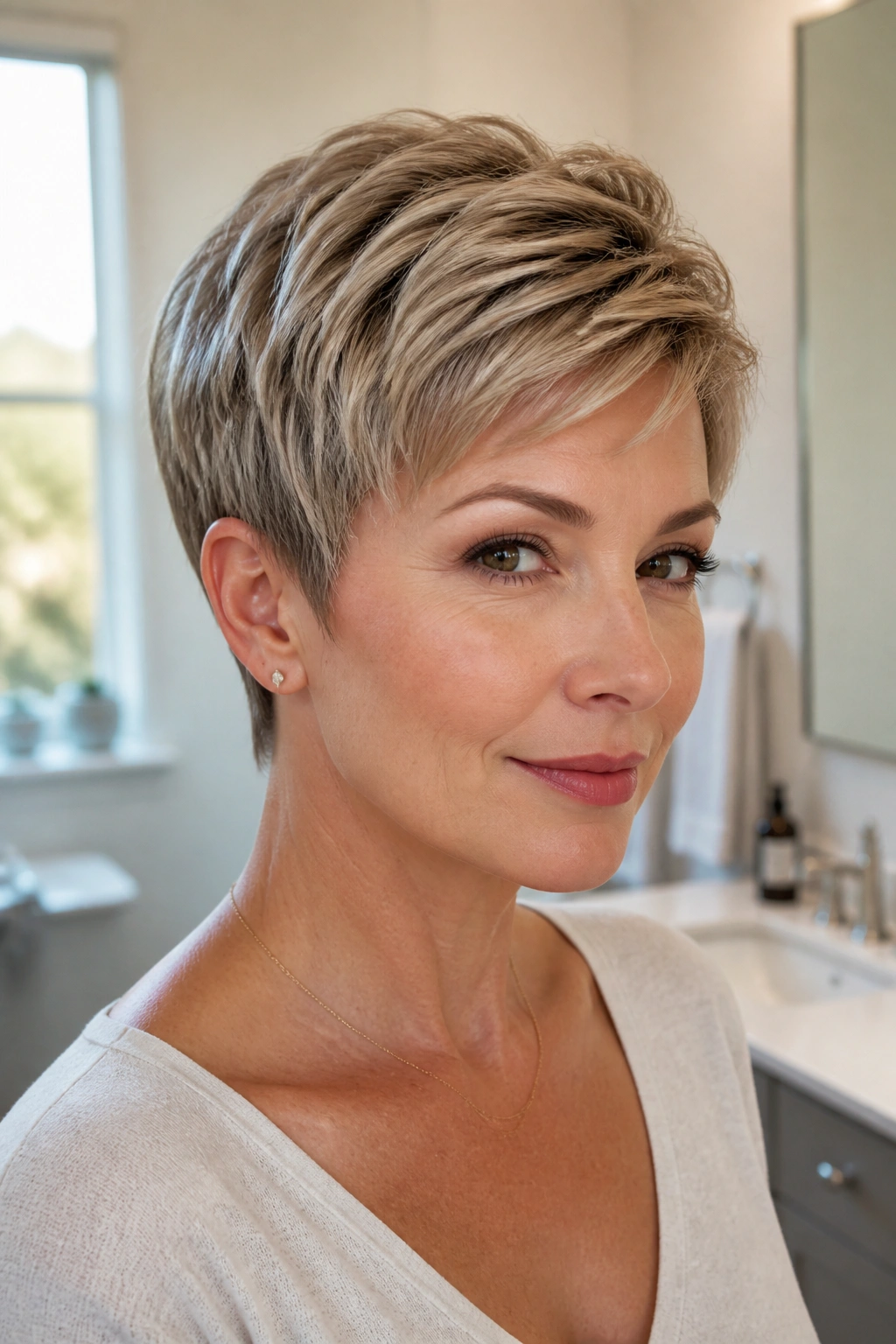
Fine hair does not always want height. Sometimes it wants shape. A rounded pixie gives fine hair a fuller silhouette by keeping the outline soft and curved rather than flat and stripped down.
What Makes It Work
The crown stays gently lifted, while the sides and back curve in toward the head. That creates the illusion of more hair without relying on heavy layers that can make fine strands look stringy. Ask for light layering, not choppy thinning. Those are not the same thing, and the difference shows.
- Blow-dry with a small round brush at the roots
- Use a volumizing mousse from mids to roots
- Avoid heavy oils near the scalp
- Trim before the ends start to fray
This is one of my favorite pixies for people who think their hair is “too thin” for short cuts. It is not too thin. It just needs the right shape.
14. Wavy Pixie With Tousled Ends
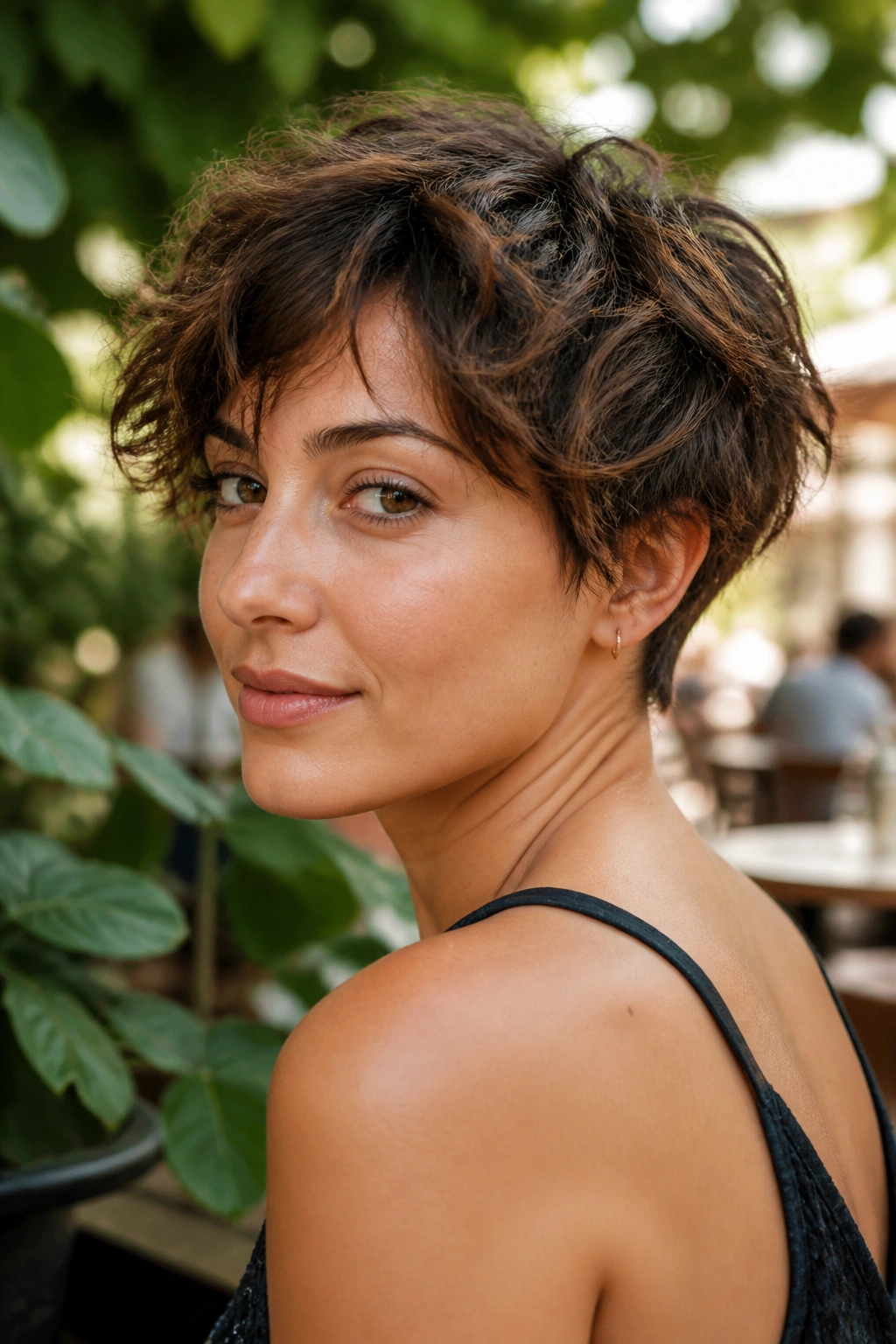
Waves and short lengths can make each other look better. The pixie keeps the wave from turning into a triangle, and the wave keeps the pixie from looking too severe. That’s the nice part.
This cut works best when the ends are left a little broken up, not blunt. A touch of wave cream or salt spray on damp hair is enough for many people. Then scrunch once or twice, let it dry, and leave it alone. Too much touching makes short waves frizz.
The thing I like here is the ease. You do not need a perfect styling session. You need a cut that respects how your hair already falls. If your wave pattern is loose and bends more than curls, this pixie will probably behave beautifully.
15. Pixie-Bob Hybrid With a Longer Nape
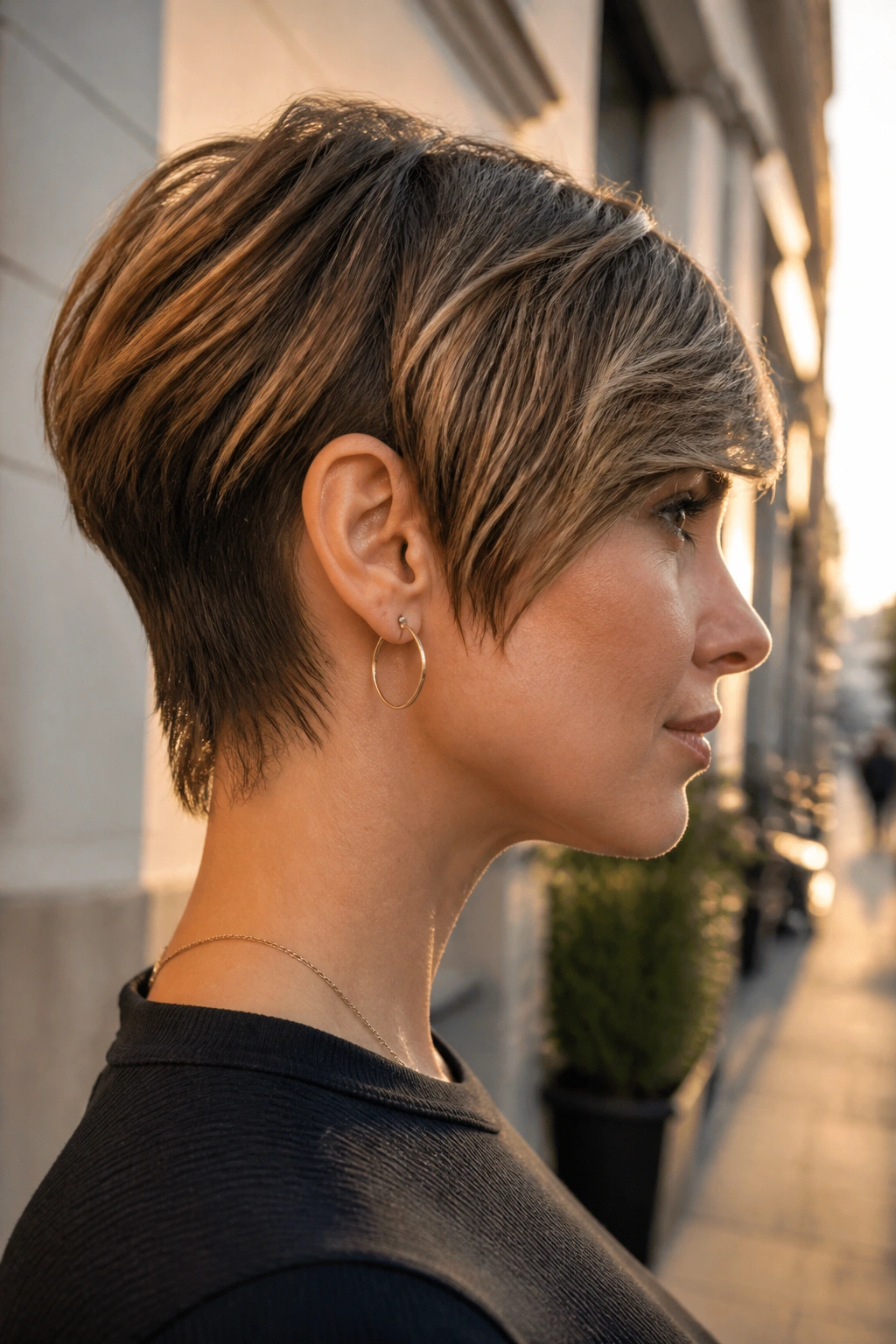
The pixie-bob hybrid sits in that useful middle zone between a very short crop and a true bob. The nape is longer. The front has more swing. The overall shape still feels short, but not abrupt.
That makes it a smart pick if you want to go shorter without losing the sense of hair moving around your face. It is also a nice transition cut for anyone growing out a pixie who is not ready for a full bob yet. The longer front pieces can tuck behind the ear, while the back stays tidy.
Compared with a classic pixie, this one asks a little less confidence. It is softer at the edges. If you have hesitated over short hair before, this is one of the safer ways in.
16. Wet-Look Pixie
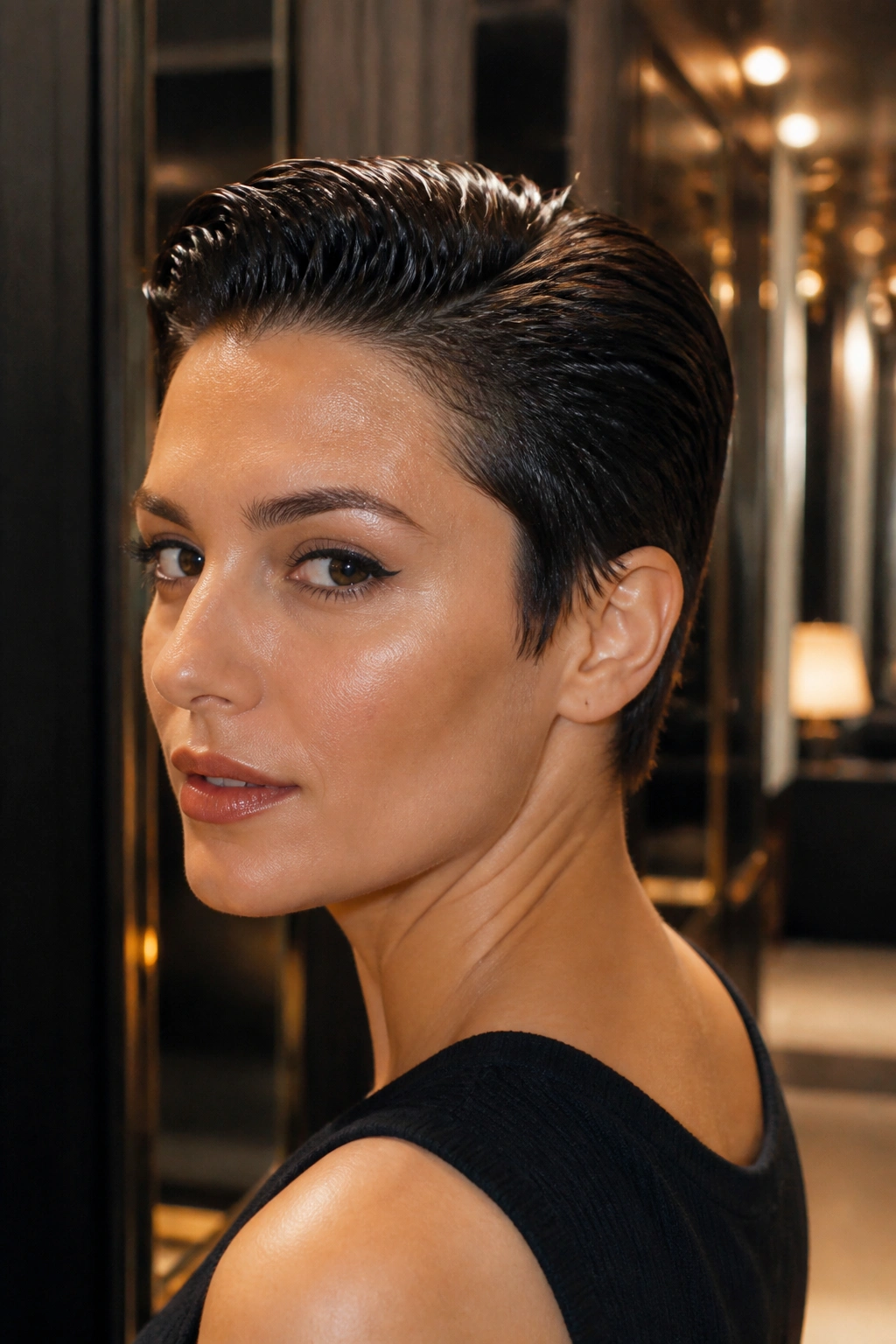
A wet-look pixie is the slickest possible version of short hair, and I mean that in the good sense. The shape is simple. The finish does the talking. A strong gel or gloss cream gives the hair that combed, glassy surface that feels a little dressier than the everyday cut.
Start with damp hair, not dripping wet. Comb the product from roots to ends, then shape the part with a fine-tooth comb or your fingers. The sides should stay close, and the top can be directed back or off to one side. If the hair starts to dry before you finish, add a touch of water on your palms and smooth again.
This cut is especially useful for evenings, events, or any day when you want a short pixie to look deliberate and a bit polished. It is not the most forgiving texture if you touch it a lot. Still, when it’s done right, it looks crisp in a way that matte styles don’t.
17. Shaggy Pixie Crop
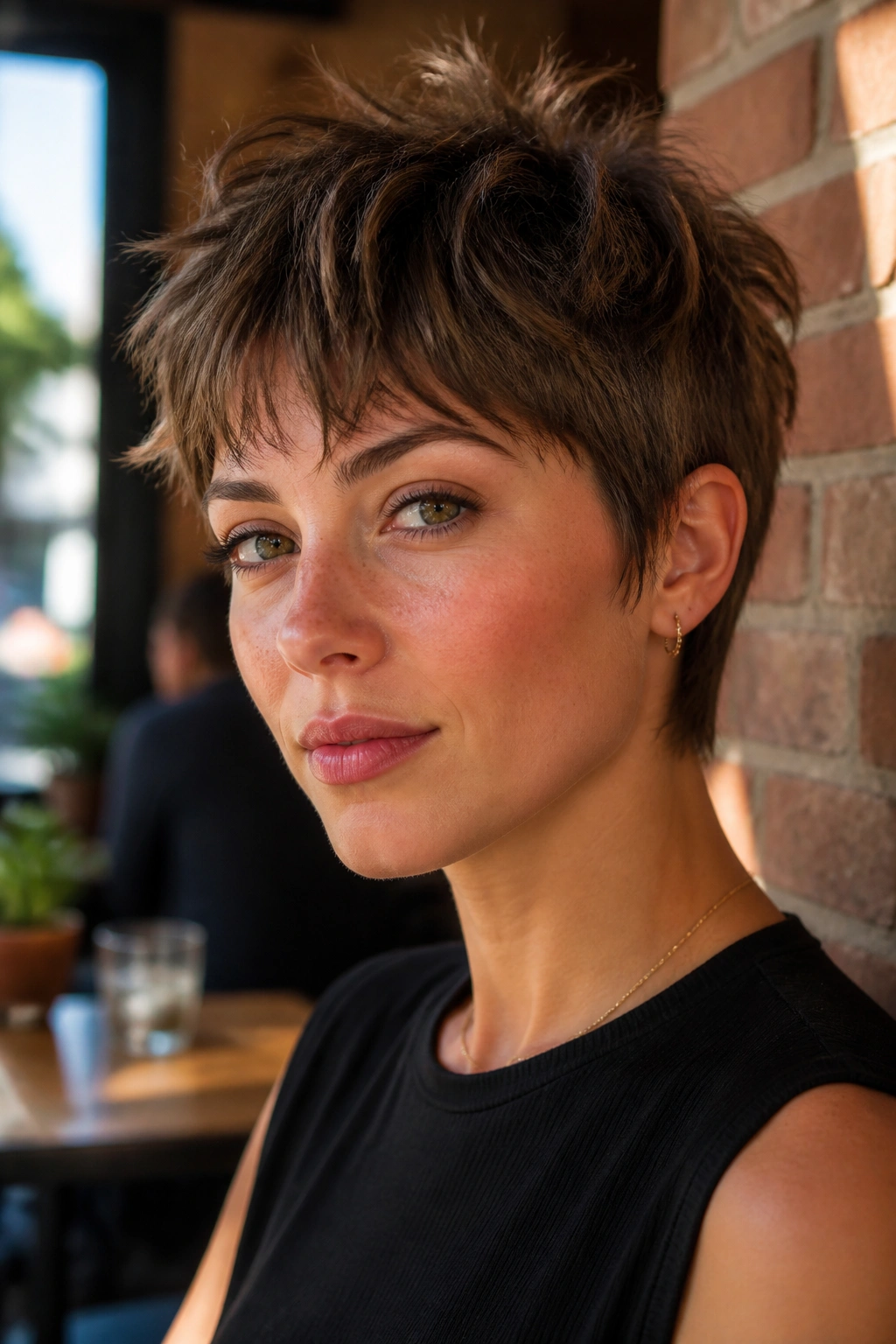
A shaggy pixie crop gives short hair a little rebellion without turning it into a full shag. The pieces are uneven in a soft, lived-in way, and the fringe usually sits a little messier than a classic pixie fringe.
Who It Suits
This is a good match for people who dislike hair that looks too “done.” Thick hair especially likes this shape, because the rougher layers can remove bulk and create movement at the same time. If your hair is fine, keep the layers lighter so the cut does not get scraggly.
A matte mousse or texturizing spray helps, but the haircut itself does most of the work. That is what makes it appealing. You can ruffle it with your hands, tuck one side behind the ear, or leave it alone and let it air-dry.
The shaggy crop has a relaxed attitude that a neat pixie does not. Different mood. Same short length.
18. Razor-Cut Pixie
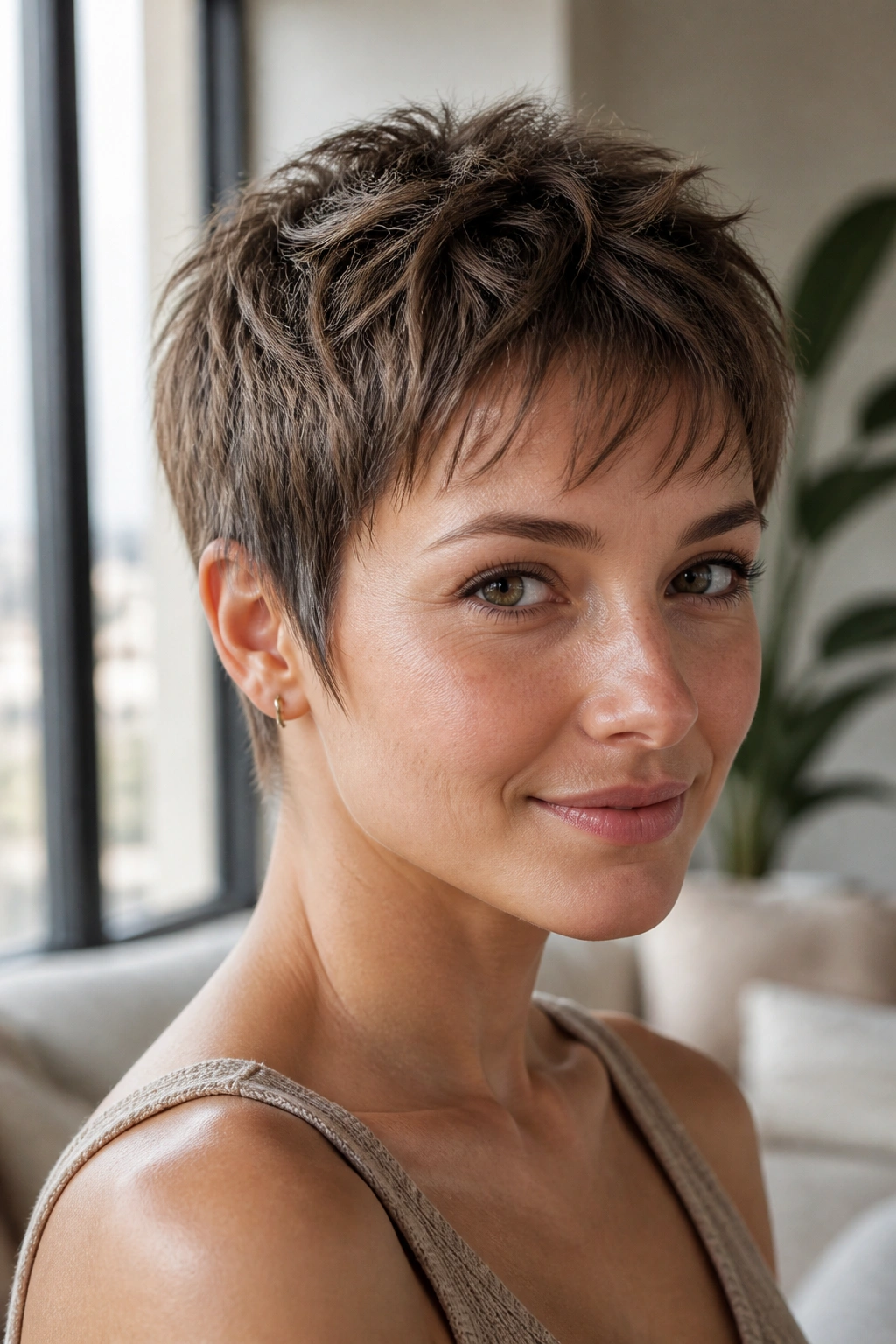
Should you ask for a razor-cut pixie? Sometimes yes, sometimes absolutely not. A razor can make the ends feel soft and airy, which is lovely on straight to slightly wavy hair. It can also rough up coarse or frizzy hair if the blade is used carelessly.
The best razor-cut pixies have pieces that separate cleanly around the face and crown. You get movement without obvious blunt lines. That can be a big help if your hair tends to puff when it is cut with scissors. Still, the razor is a tool, not magic. The stylist matters more than the blade.
If your hair is delicate, ask whether they would use a light razor finish rather than a full razor cut. Small difference. Big result.
19. Tucked-Behind-The-Ear Pixie
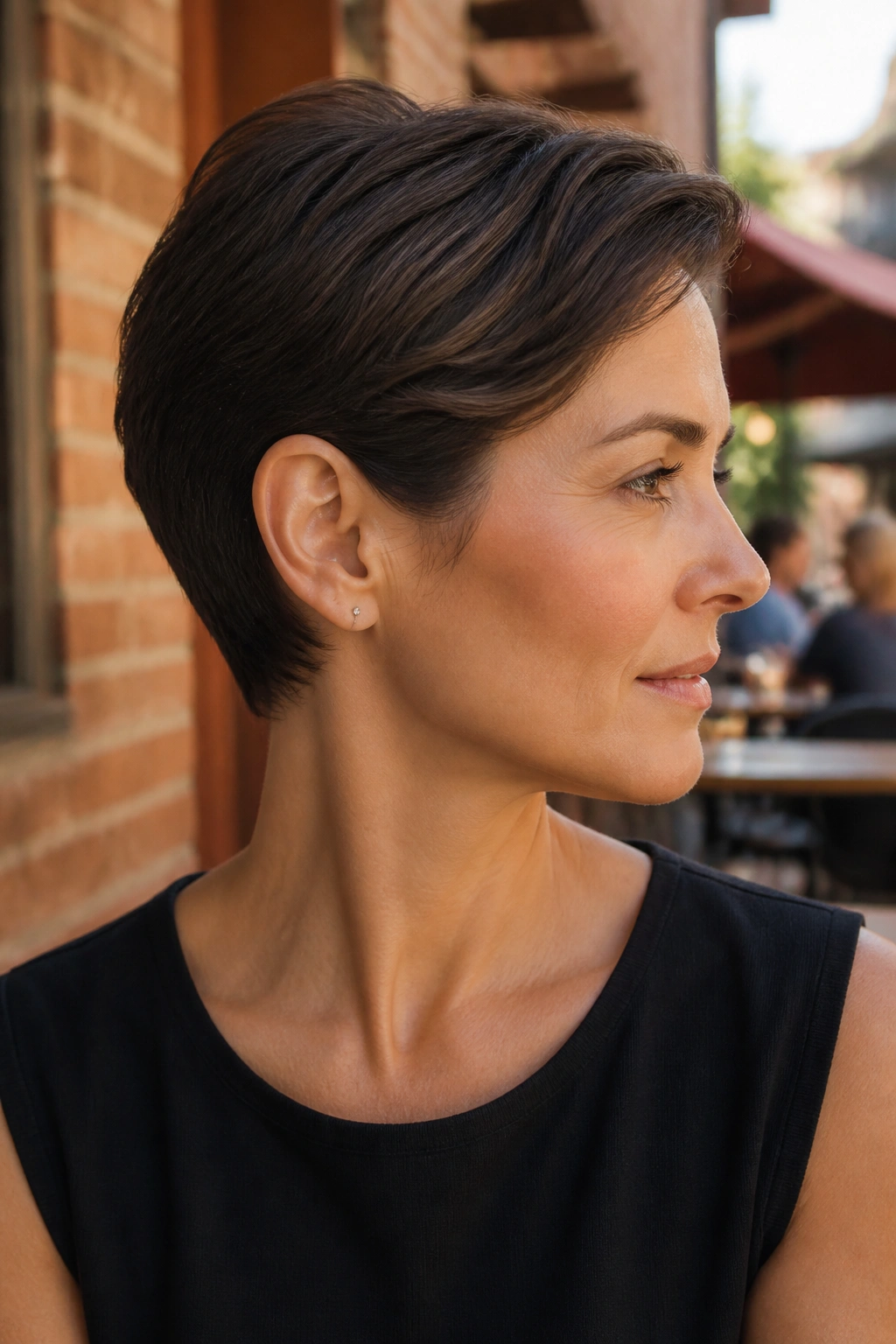
Some short pixie cuts are about the front. This one is about the sides. A tucked-behind-the-ear pixie leaves just enough length around the temples and upper sides so you can tuck the hair back and show the ear, the cheekbone, or a bold pair of earrings.
The beauty of it is in the little shift it creates. One moment the cut reads soft and face-framing. The next, it opens up the face completely. That makes it a nice choice if you like to change the mood of your hair without changing the cut.
I also like this one for people who wear glasses. The side length can sit neatly around the frames instead of fighting them. Clean sideburns help a lot here, too.
20. Nape-Hugging Pixie
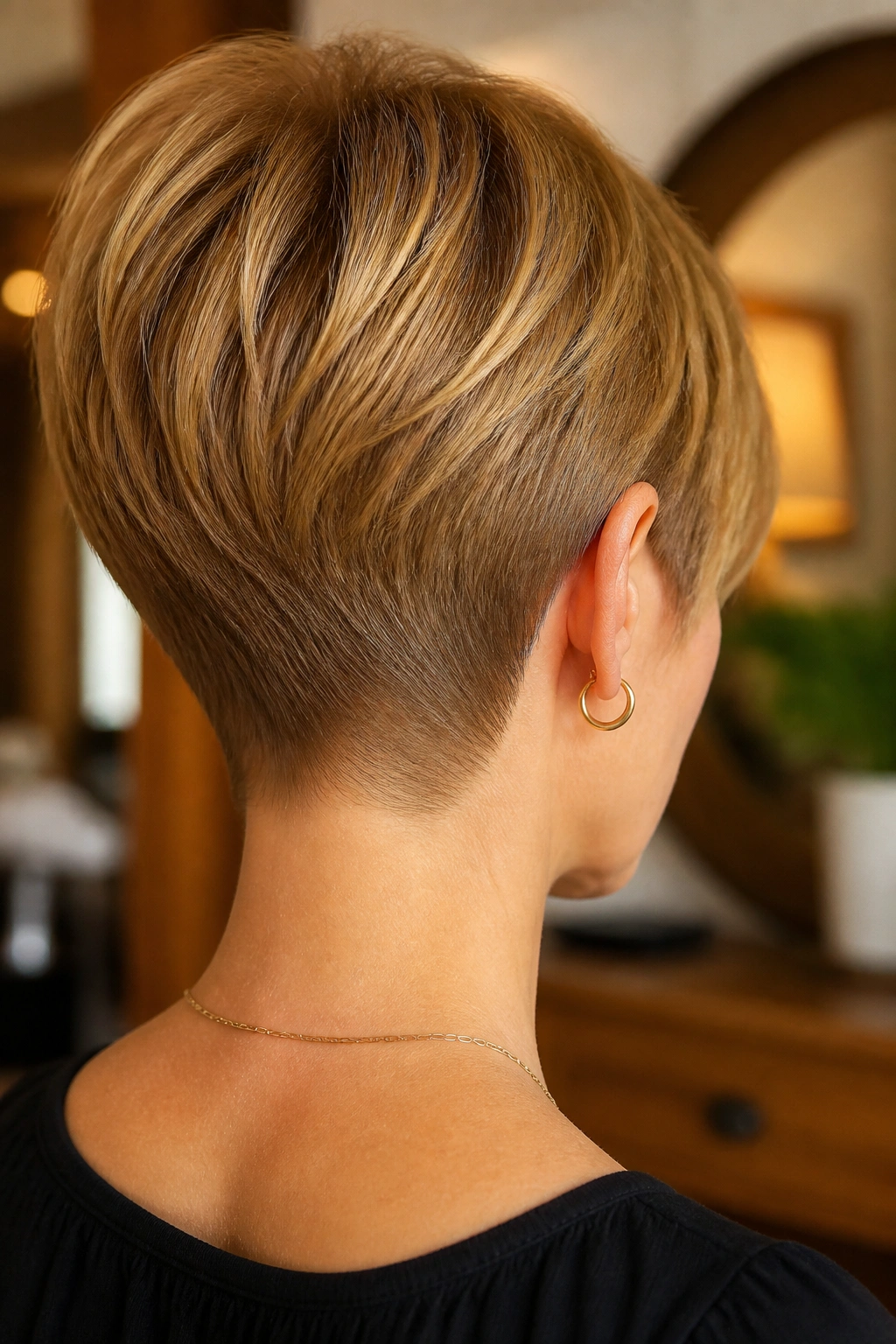
A nape-hugging pixie keeps the back tight and low, almost like the haircut is following the shape of the neck on purpose. The result is sleek and neat from behind, which is a detail many people forget until they see a photo of the back of their own head.
This cut is good if you want a sharp neckline and less daily fluff at the back. It can make the neck look longer and the whole profile look more streamlined. One-sentence truth: the nape makes this cut.
Ask for a soft blend at the back if your hair grows fast or sticks up when it is short. That tiny bit of graduation helps the cut last longer between appointments.
21. Crown-Volume Pixie
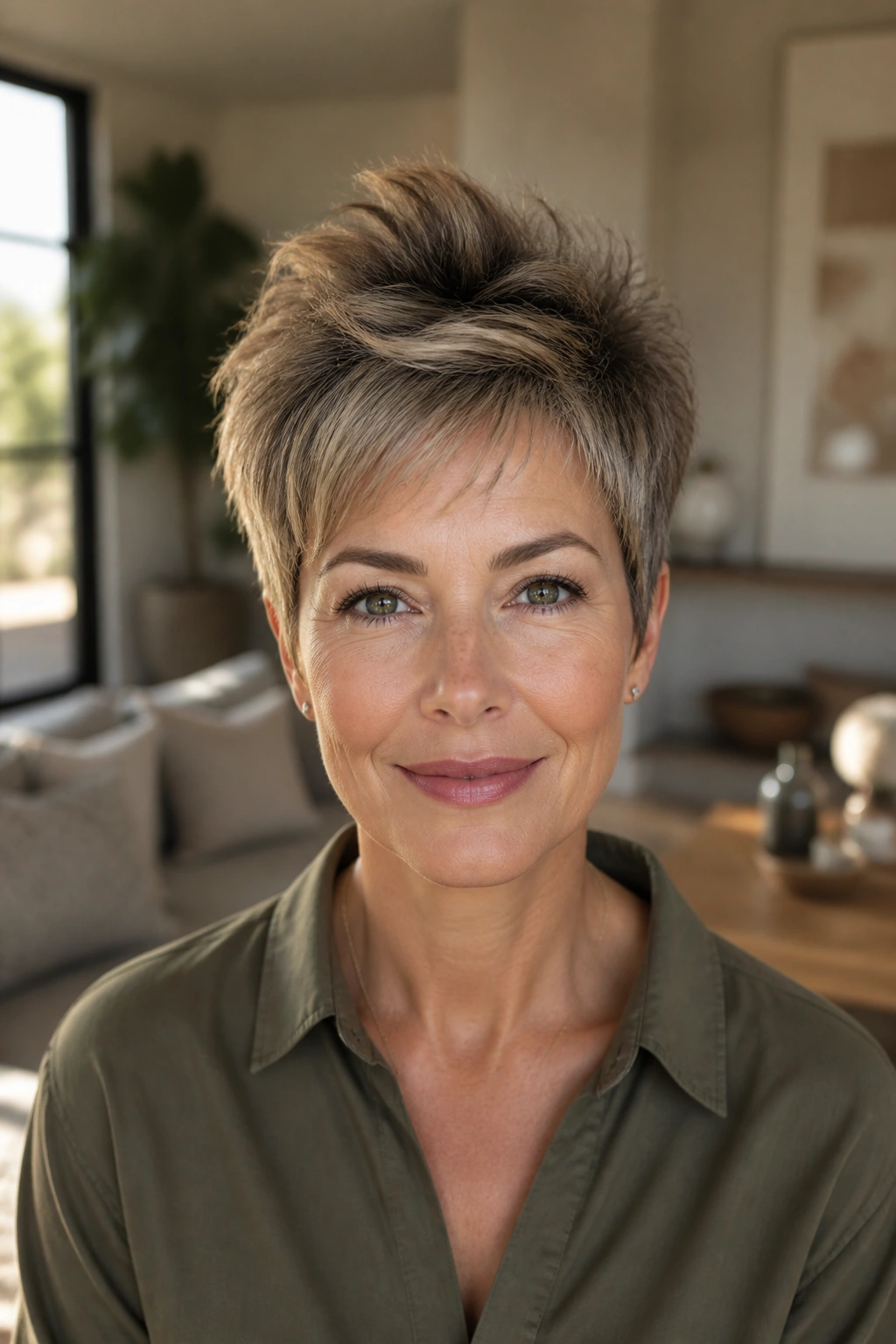
If the crown goes flat, the whole haircut can lose its energy. A crown-volume pixie solves that by keeping extra lift at the top and a tighter outline below. It sounds simple, and it is, but the result changes the whole face.
How to Style It
- Blow-dry the roots upward with a small brush or your fingers
- Use a pea-size amount of mousse at the crown
- Finish with a touch of dry texture spray, not heavy hairspray
- Direct the front slightly forward if you want the height to feel softer
This cut is especially flattering on round faces or anyone who likes a little vertical line in the silhouette. The height draws the eye up. The rest of the hair stays neat enough to keep the shape balanced.
Skip the heavy creams here. They flatten the exact part you are trying to lift.
22. Geometric Pixie With Clean Lines
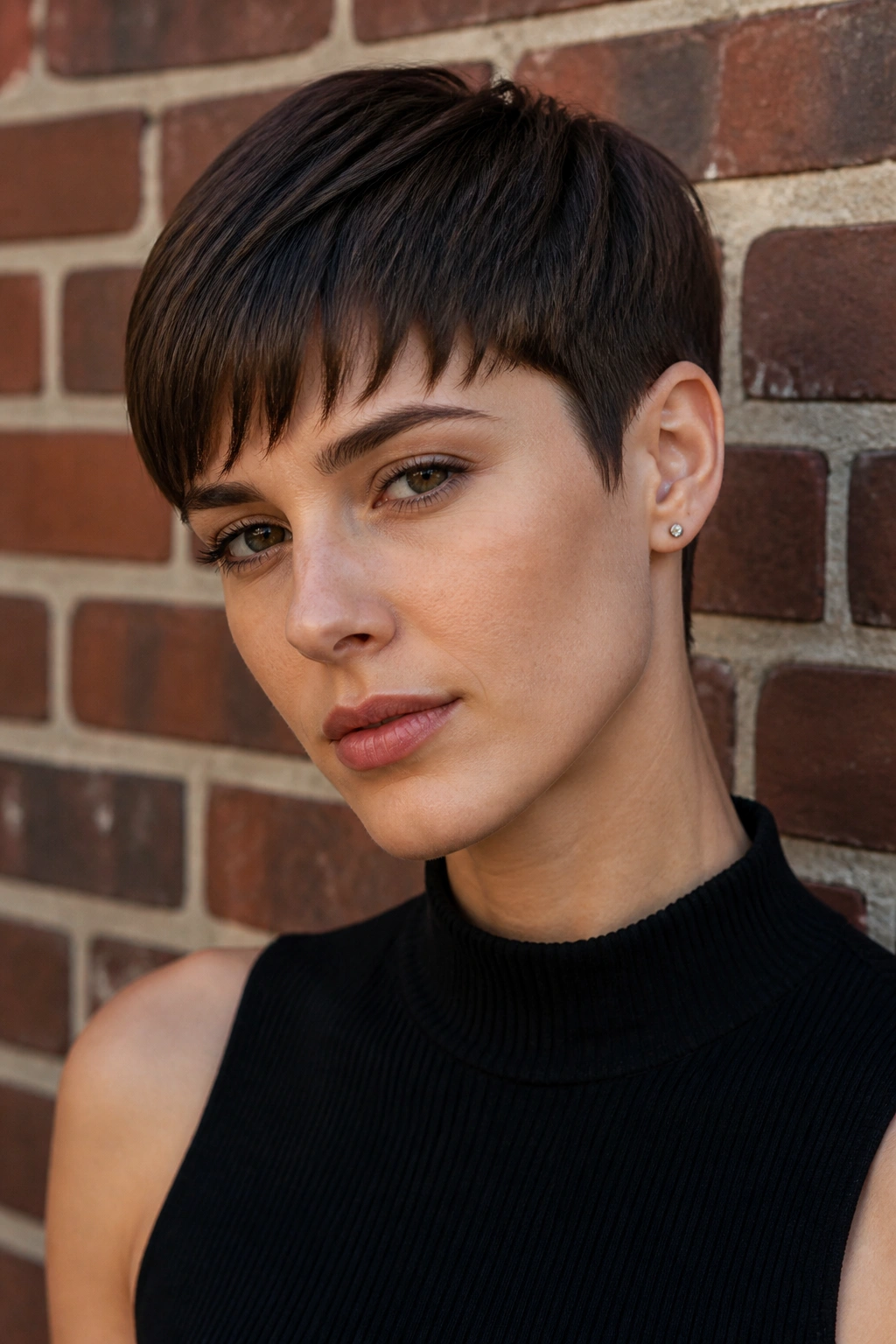
A geometric pixie is the clean-lined cousin in the family. The shape is more deliberate, the edges are sharper, and the whole cut feels like it was drawn with a steady hand. If you like crisp lines in clothing and architecture, this haircut probably makes sense to you.
Compared with a feathery or shaggy pixie, this one asks for more precision at the sides and fringe. It suits straight hair best because straight hair holds the line without much fuss. The payoff is strong: the shape stays readable even when you do almost nothing to it.
I would recommend this cut to someone who wants a short pixie that looks sharp in photos and in real life. No fluff. No extra movement trying to compete with the outline.
23. Boyish Crop Pixie
There is something charming about a boyish crop that does not try to dress itself up. The hair stays short all over, the edges are close, and the whole look depends on clean shape more than styling tricks.
This is a good cut if you want to shower, dry, and go. The shorter length means fewer bad-hair days, but it also means the haircut has to be precise. A sloppy crop can look accidental fast. A clean one looks deliberate and relaxed at the same time.
It suits strong brows, clear jawlines, and people who like a no-nonsense morning routine. If that sounds boring, fine. If it sounds like freedom, you’re the target.
24. Side-Parted Polished Pixie
A side-parted polished pixie takes the short crop and gives it a tidier finish. The part line helps guide the hair into a controlled shape, and the result feels a little more dressed up without adding length.
Styling Note
Use a light cream or soft wax, then comb the part while the hair is still damp. Blow-dry the front in the direction of the part so it does not fight you later. The key is control, not stiffness.
This look is nice for workdays, interviews, or any setting where you want a short haircut to read neat rather than edgy. It also grows out in a friendly way, because the part gives the hair a place to fall as it gets longer.
A polished pixie can be surprisingly easy once the part is trained.
25. Soft Fringe Pixie
A soft fringe pixie keeps the front light and touchable. The fringe sits lower than micro bangs, but it does not feel heavy or blocky. That little difference matters, especially if you want your forehead framed instead of covered.
This cut flatters heart-shaped faces, longer foreheads, and anyone who wants less focus on the center of the face. The front should be sliced lightly so it moves when you turn your head. If the fringe is too blunt, the whole cut gets stiff. If it is too thin, it disappears. There is a sweet spot, and that’s where the cut lives.
I like this one with a matte cream worked through the ends. Keep the fringe soft, not shellacked. That is the whole point.
26. Brush-Up Pixie
A brush-up pixie is all about height at the front. The hair gets lifted away from the forehead and pushed upward or slightly back, which gives the cut a lively profile. It is one of those styles that looks better when the roots have some energy.
This cut usually needs a little blow-drying, even if that blow-dry is only three minutes long. Use a styling powder or root spray, then direct the front up with your fingers. The sides should stay neat so the height does not spread too wide.
I like this cut on people with flatter crowns or narrower faces. It gives the hair a little attitude. Not much. Enough.
27. Short Pixie With Chiseled Sides
Chiseled sides make a pixie feel leaner and more exact. The hair around the temples and sideburns is trimmed close, which sharpens the outline of the face and keeps the whole shape from puffing out where it should not.
Unlike a fluffy pixie, this one relies on clean edges and a controlled top. It can be a smart pick if you have thick hair that tends to bulk up around the ears. A neat side line changes everything.
What to Ask For
- Keep the temples slim but not shaved bare
- Blend the sideburns into the nape
- Leave enough length on top to stop the cut from looking too harsh
- Trim every 4 to 5 weeks if you want the edge to stay clear
The result is sharp without being severe. That’s a useful distinction.
28. Air-Dry Pixie for Natural Texture
Can you let a pixie air-dry and still have it look intentional? Yes, if the cut is shaped for your texture instead of against it. That is the whole point of an air-dry pixie.
This version works well for waves and loose curls, but even straighter hair can benefit if the layers are placed carefully. A leave-in cream, a small amount of curl lotion, or a light styling milk can help the hair settle without crunch. Then you leave it alone. Hands off. That part matters more than product buying.
The cut should have movement built in, so the hair does not need heat to make sense. If your hair always fights a brush, this is one of the least annoying short pixie cuts to live with.
29. Salt-and-Pepper Pixie
A salt-and-pepper pixie can look fantastic because short hair puts the color pattern on display in a clean, crisp way. The mix of gray and dark strands reads like texture even before you style it.
The cut matters more here than the color. Keep the outline tidy, and let the natural streaks do the rest. If the shape is fuzzy, the color contrast can look random. If the shape is clean, the hair looks deliberate and sharp.
I like this cut on people who do not want to hide the silver. Why would you? A short pixie shows the streaks at the temples and crown in a way longer hair often hides. That is a feature, not a flaw.
30. Feathered Crop With a Soft Finish
If you want a pixie that feels easy without looking plain, a feathered crop with a soft finish is a strong final choice. It keeps the edges light, the crown airy, and the whole silhouette gentle enough to wear every day without thinking too hard about it.
This is the kind of cut that sits between polished and casual. The feathers keep it moving. The soft finish keeps it from getting brittle or sharp. It works well on straight, wavy, and lightly textured hair, especially if you like a cut that can be styled with fingers instead of a full tool kit.
One thing I appreciate here is how well it grows out. A lot of short cuts lose their shape fast. This one keeps a friendly outline for longer, which matters when you do not have time to be in the salon every few weeks.
If you want a short pixie that still feels soft around the face, this is the one I’d put near the top of the pile.
