



Straight hair gives a 90s pixie one big advantage: the cut shows exactly what the scissors did. No curl pattern is hiding the fringe, no wave is softening the nape, and no bend is blurring the outline. That can be a gift. It can also be brutal.
A good short cut from that decade lives or dies on shape. The best versions are not about shaving everything off and hoping for the best; they’re about crown length, temple tightness, fringe placement, and the way the back hugs the neck. Get those four things right and straight hair looks sleek, sharp, and expensive in the best old-school sense. Get them wrong and the whole thing can slide into helmet territory fast.
What I like about 90s pixie cuts is that they don’t all try to do the same job. Some are soft and feathered. Some lean boyish and clean. Some have a little attitude at the front and a tidy back. On straight hair, those differences matter even more, because the silhouette reads from across the room.
The trick is choosing the right mood for your face, your texture, and how much styling you’re willing to do before coffee. Some of these cuts need nothing more than a bit of root lift and a touch of paste. Others want a round brush, a comb, and five careful minutes. Tiny difference. Huge payoff.
1. Classic Rounded Pixie for Straight Hair

This is the safest 90s pixie, and I mean that in the best way. The shape hugs the head, the fringe sits short and soft, and the crown keeps just enough length to avoid looking flat.
Why It Works on Straight Hair
Straight hair lays close to the scalp, which makes a rounded pixie look polished instead of puffy. The clean line around the ears and nape gives the cut definition, while the slightly fuller top keeps the face from looking overexposed.
Ask for a short, rounded fringe, sides that taper neatly above the ears, and a crown that’s left about 1.5 to 2.5 inches long. If your stylist point-cuts the fringe, it keeps the front from feeling too hard.
- Fringe: just above the brows or lightly skimming them
- Sides: close to the head, but not clipped bare
- Crown: soft roundness, not a tall puff
- Styling: a dab of matte cream, then finger-comb forward
Best tip: dry the front first. If the fringe sets in the wrong direction, the whole cut starts fighting you.
2. Side-Swept Pixie With a Long Top
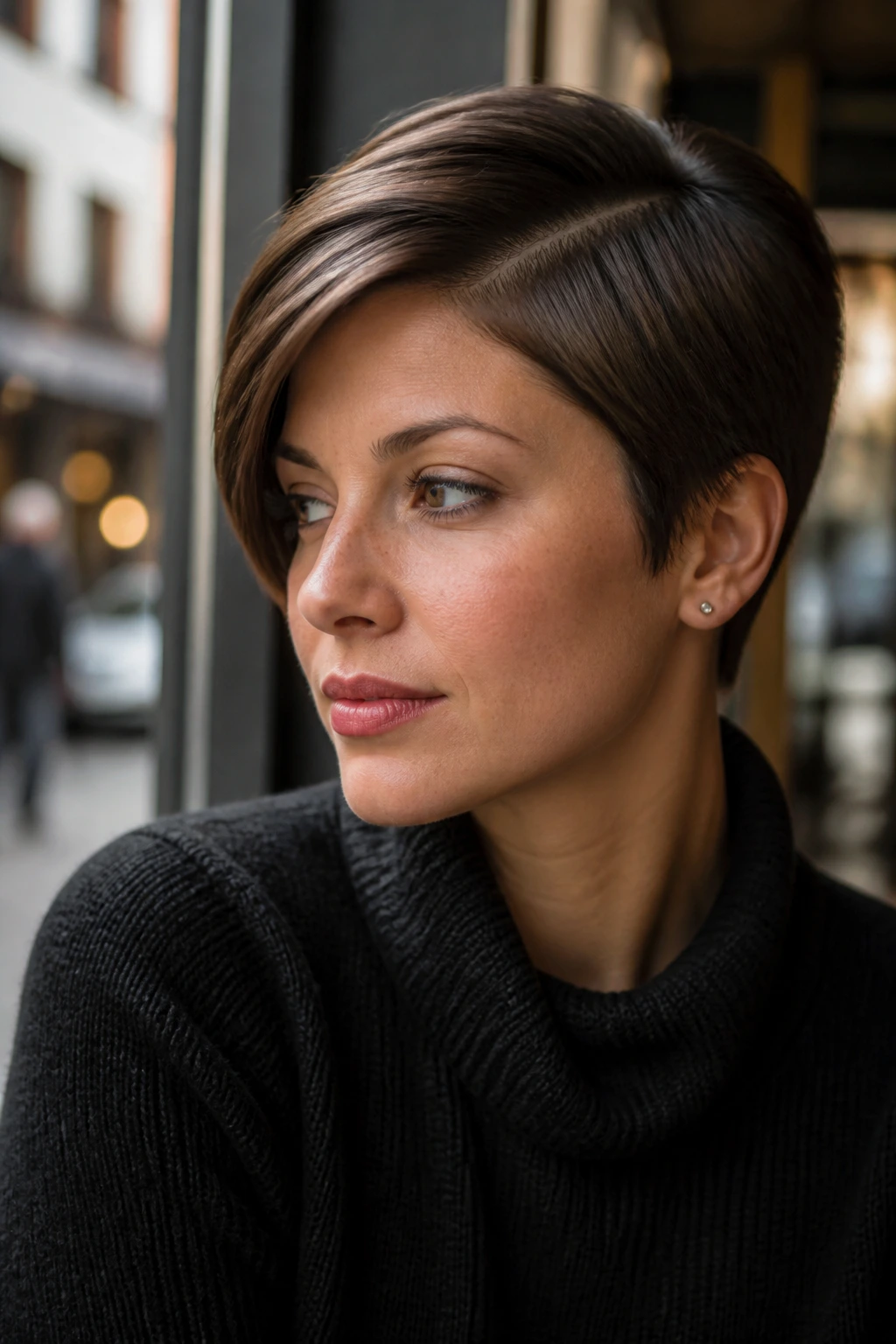
A side-swept pixie is what I’d hand to someone who wants short hair but refuses to look severe. The long top adds movement, and straight hair makes that sweep read cleanly instead of fuzzy.
The magic is in the part. A deep side part pulls the eye diagonally across the face, which is flattering on square, round, and heart-shaped faces. Keep one side cropped tighter and let the longer side fall over the forehead or temple. That contrast is the whole point.
This cut also plays nicely with a little shine. Not greasy shine. Just enough gloss so the longer top looks healthy and the side part stays visible. A lightweight blow-dry cream or a pea-sized amount of styling balm is usually enough.
I like this one when the hair is fine and straight because it gives you shape without needing huge volume. You don’t need a lot of product. You need direction.
3. Micro Fringe Pixie With a Sharp Little Forehead Line
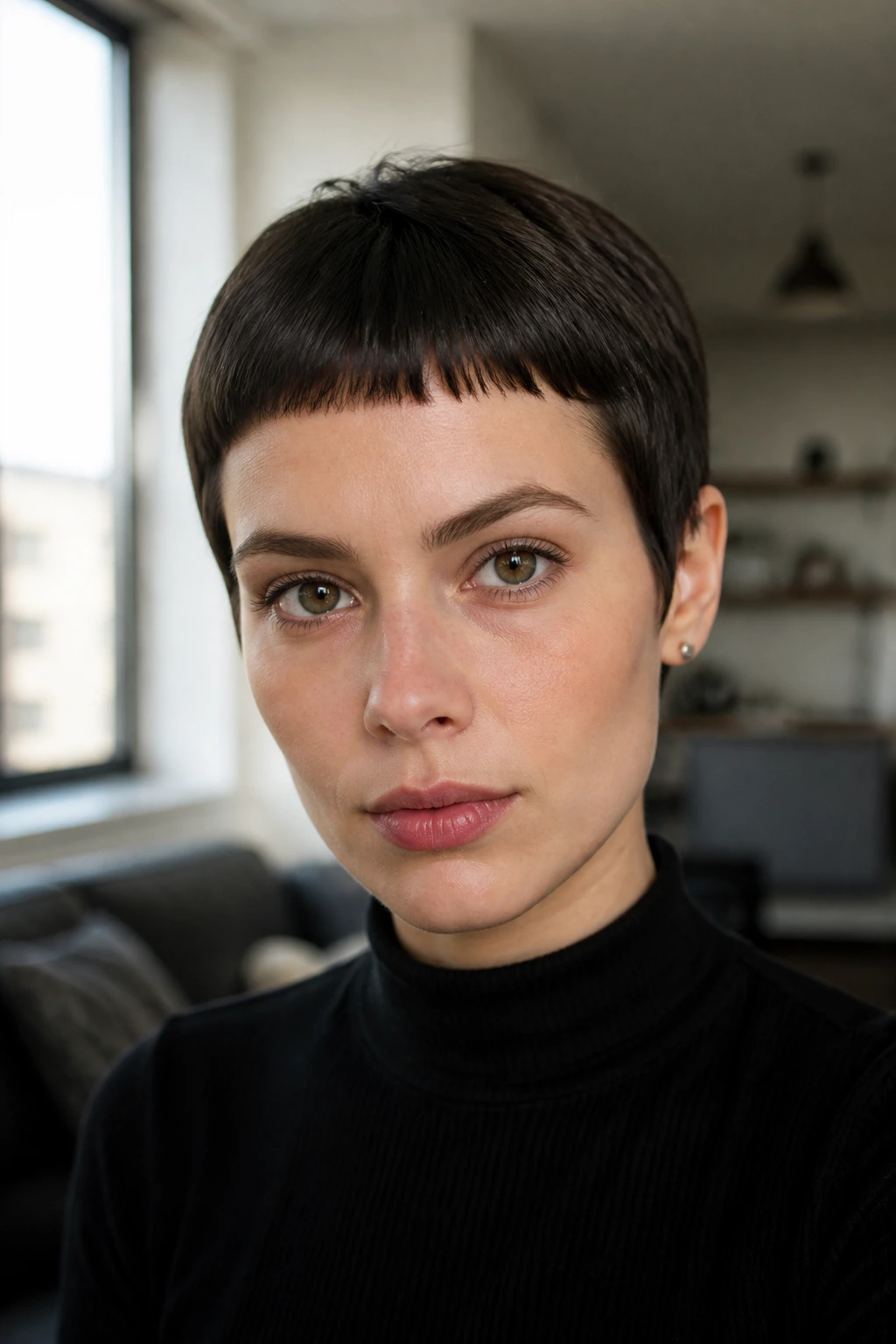
Why does a micro fringe change the whole mood? Because it turns a basic pixie into something a little sharper, a little more editorial, and a little more 90s club-kid than sweet salon crop.
On straight hair, micro bangs lie flat and crisp, which is exactly why they work. They draw attention to the eyes and cheekbones, and they make the cut feel intentional instead of accidental. The key is not to chop them into a hard, blocky strip unless that is truly the look you want. A soft, slightly broken edge looks better for daily wear.
How to Wear It Without Regret
Keep the fringe short enough to show skin, but not so short that it feels like a dare. One to two inches is the sweet spot for most people. Blow-dry the bangs straight down with a small brush, then tap the ends with a flat iron only if they kick out.
This one needs regular maintenance. Every 3 to 4 weeks is normal if you want the fringe to stay crisp. Let it grow too far and the whole point disappears.
A micro fringe is not forgiving, but it has a lot of personality. Tiny cut. Big opinion.
4. Feathered Pixie With Soft, Airy Ends
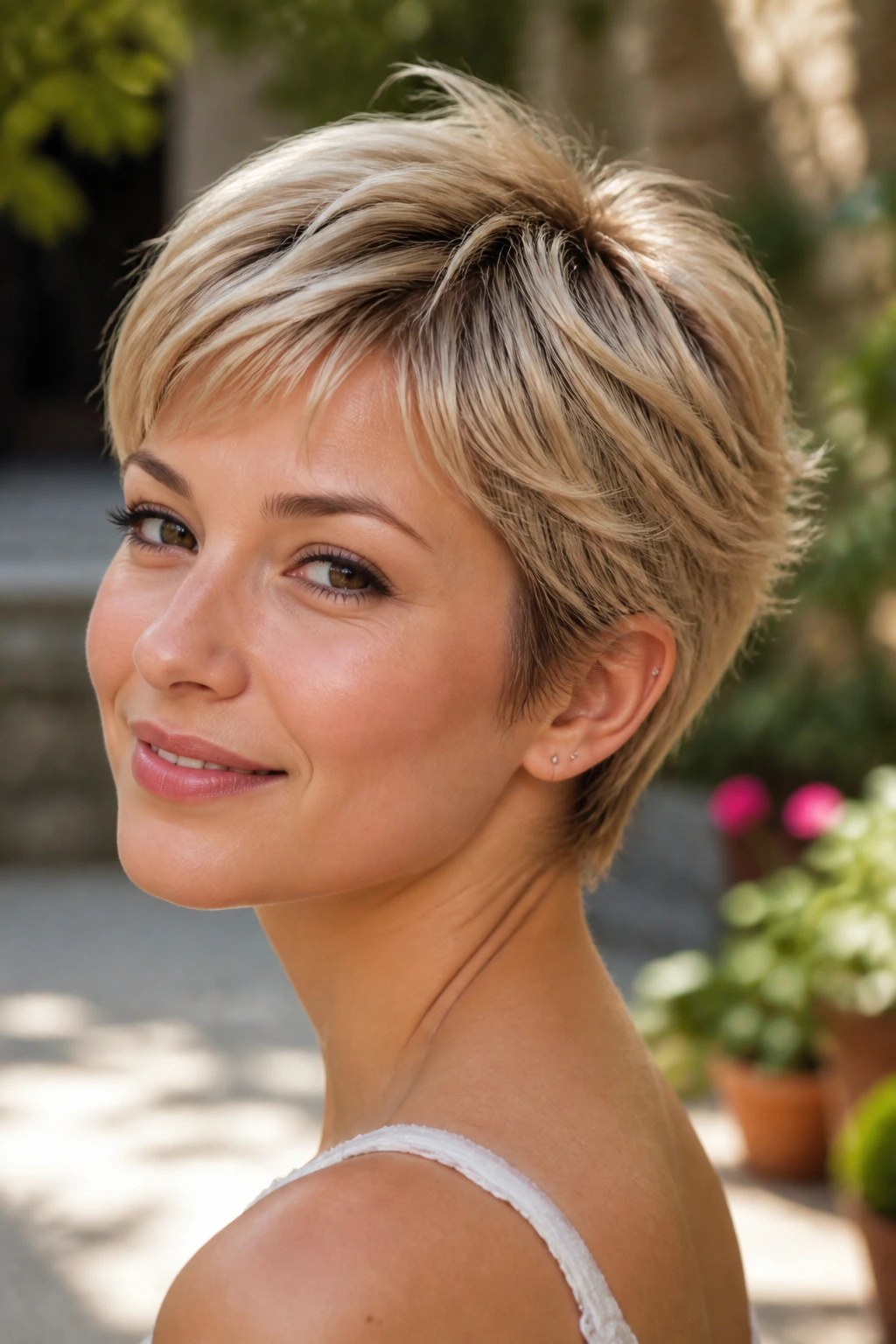
Picture a pixie that starts neat at the temples and then loosens up through the crown. That’s the feathered version, and it was everywhere in the 90s because it gave short hair a little movement without making it messy.
Straight hair is useful here because feathered layers show clearly. The ends flick away from the head instead of collapsing into one heavy block. You get that airy, broken texture that feels lighter than a blunt crop, but you still keep a proper outline.
There is one catch. Too much thinning can turn this cut wispy in a bad way, especially if your hair is fine. Ask for feathering at the top and around the sides, but keep the perimeter strong enough that the shape still reads from the front.
A round brush helps here, but not in a fussy way. Lift the crown, bend the front away from the face, then let the ends cool before touching them. If you rush it, the feathering falls flat.
This is one of those cuts that looks more expensive when it is slightly imperfect. Too neat and it loses the charm.
5. Spiky Pixie With Choppy Crown Layers
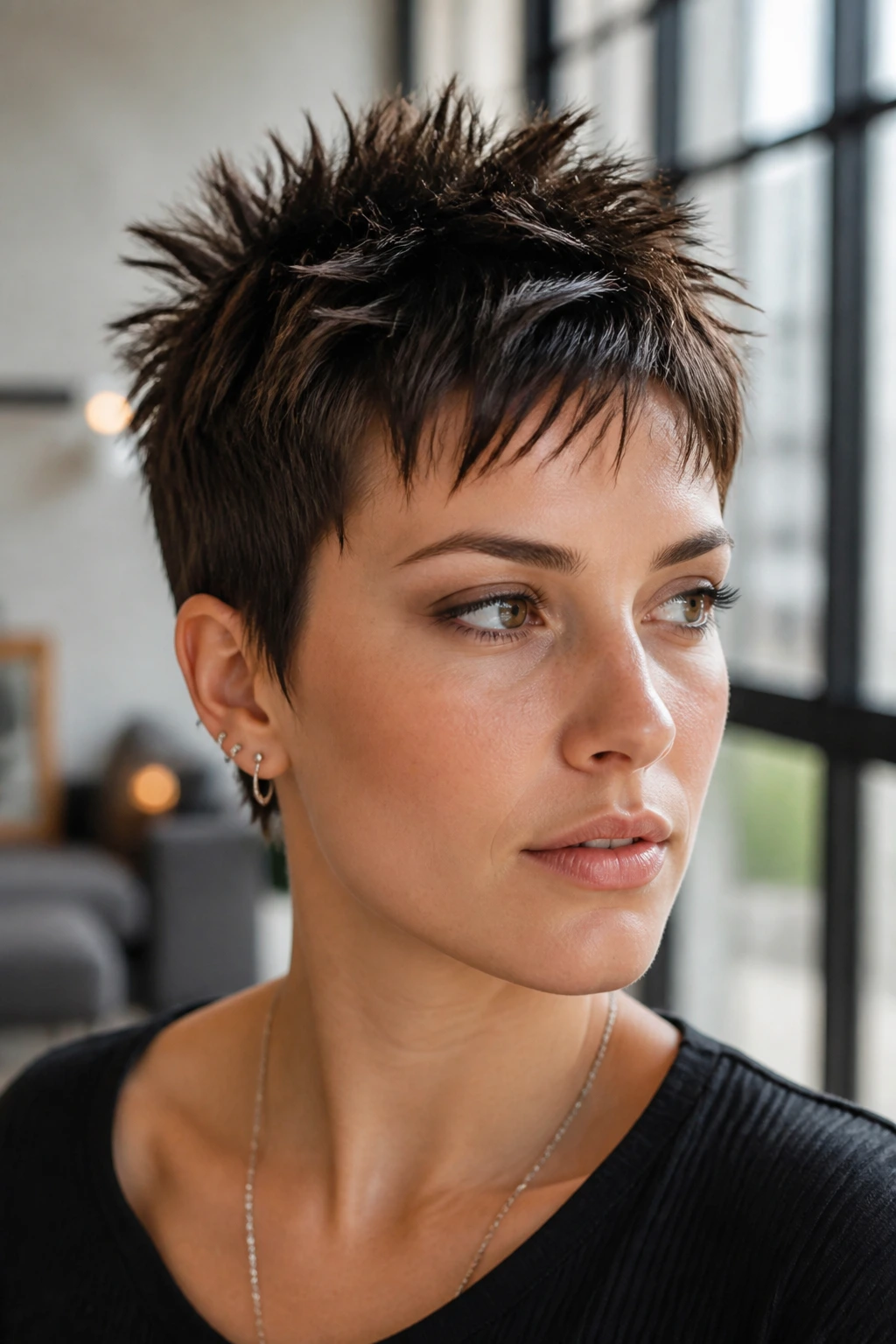
Spiky doesn’t mean crunchy. That’s the first thing I’d say to anyone nervous about this cut.
The 90s version of a spiky pixie was all about little pieces that stood up at the crown and broke apart at the front. Straight hair is a good match because it holds those tiny points without much effort. You only need a little lift at the roots and a matte paste that gives grip without turning the hair stiff.
Run the product through dry hair, not damp hair, if you want separation. Start with a pea-sized amount, warm it between your palms, then pinch small sections at the top. If the product starts looking white or dusty, you used too much.
What to Ask For
- Choppy layers at the crown, about 2 to 3 inches
- Tighter sides to keep the shape clean
- A little length at the front so the spikes don’t look cartoonish
- Soft, piecey ends instead of blunt tips
This cut feels bold, but it is also practical. On very straight hair, it can be one of the fastest styles to do in the morning. Fingers, paste, done.
6. Tapered Nape Pixie With a Clean Neckline
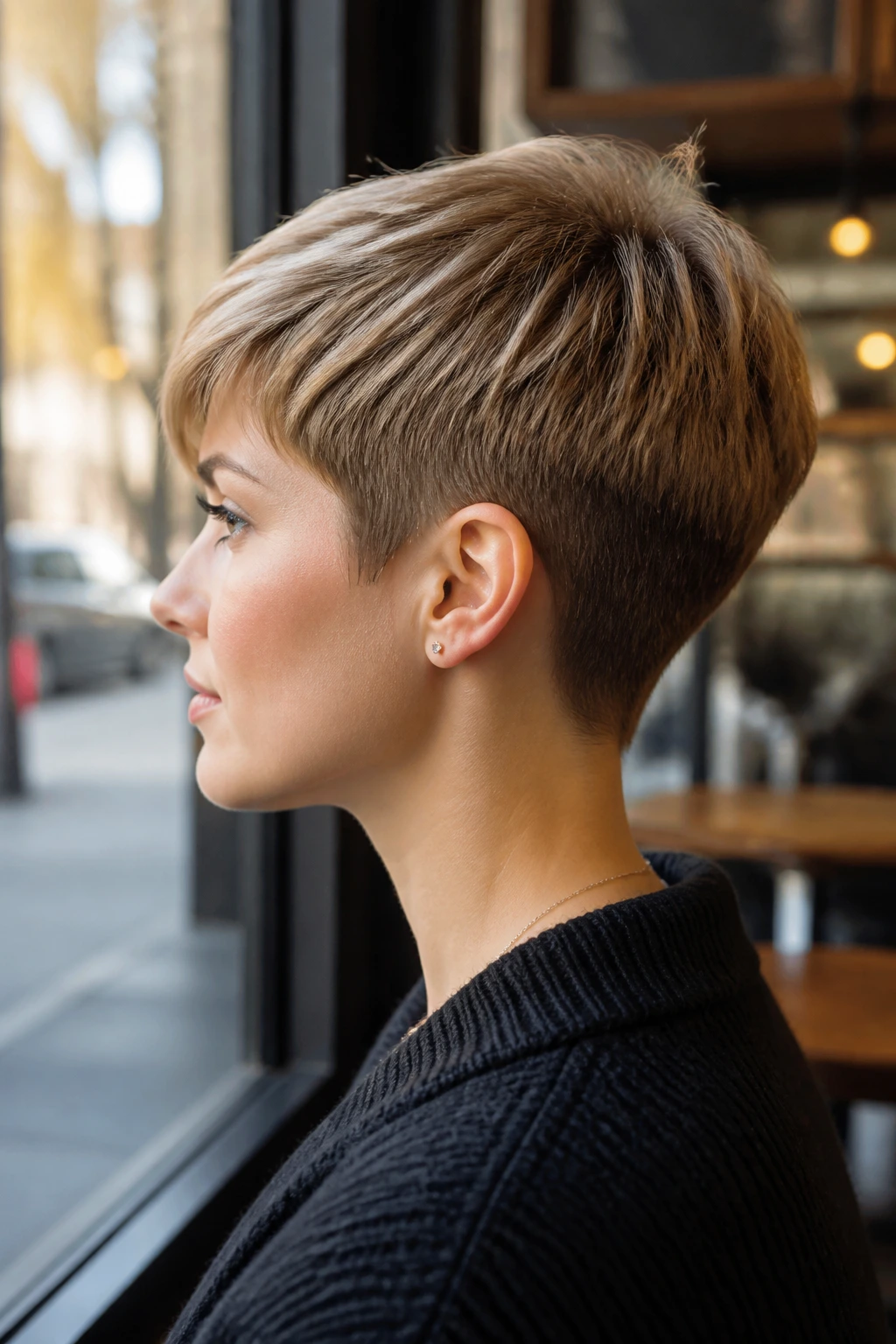
Unlike a fluffy crop, this one keeps the back snug. The nape is cut close and smooth, which gives the whole style a tidy finish and makes the top look fuller by comparison.
That contrast matters on straight hair. When the back is tapered neatly into the neck, the eye stays on the upper shape instead of wandering around for volume that isn’t there. It is a simple cut, but it has a lot of control. I’ve always thought that is what makes it feel so 90s: clean, unfussy, a little assertive.
The best version keeps the sides short enough to show the jawline and leaves just enough length on top to push forward or to the side. If the nape is clipped too high, the cut can get abrupt. If it is left too long, the whole shape loses its snap.
This is the pixie I’d pick for someone who likes collars, earrings, and a sharp neckline. It pairs well with plain tops too, which sounds boring until you see how much the cut itself does the talking.
7. Asymmetrical Pixie With One Longer Side
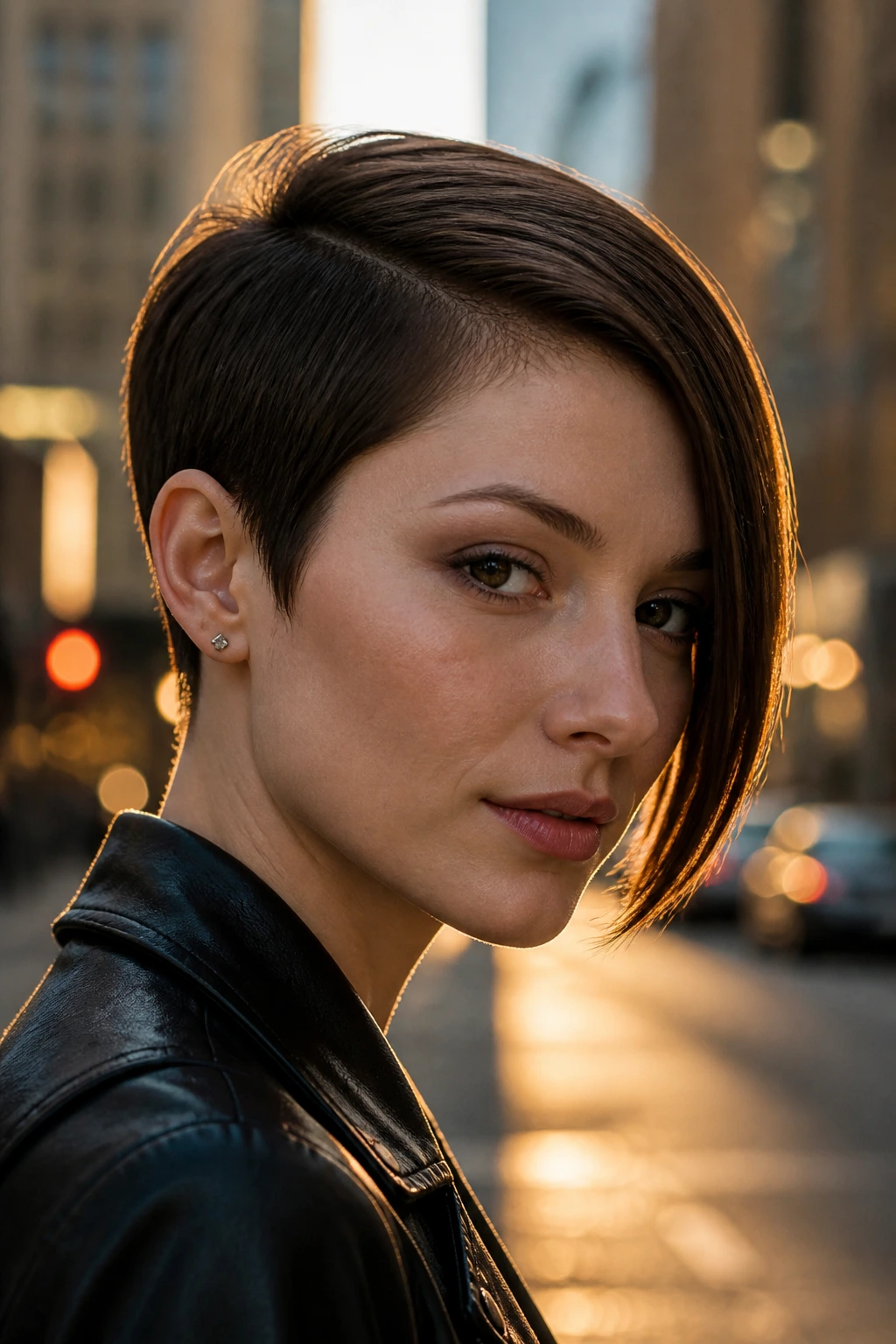
A strong asymmetrical pixie can save a haircut that feels too safe. One side skims the cheekbone, the other sits closer to the ear, and straight hair makes the difference between the two sides look deliberate rather than random.
Ask Your Stylist For
Tell them to leave one front section long enough to tuck behind the jaw, then shorten the opposite side so the shape angles across the face. The top should still have enough length to move, or the asymmetry can feel stiff.
This cut looks best when the longer side is smooth, not overbuilt. A little bend at the ends is fine. A lot of volume usually isn’t. Use a flat brush or a paddle brush and guide the longer side across the forehead, then smooth the shorter side close to the temple.
Why do I like this on straight hair? Because the line is visible. You can see the angle from across the room. Curly hair softens it. Straight hair announces it.
If you want a pixie that has some bite but still feels wearable at work, this is a strong choice. Not delicate. Not loud. Just sharp.
8. Bowl-Inspired Pixie With Soft Edges
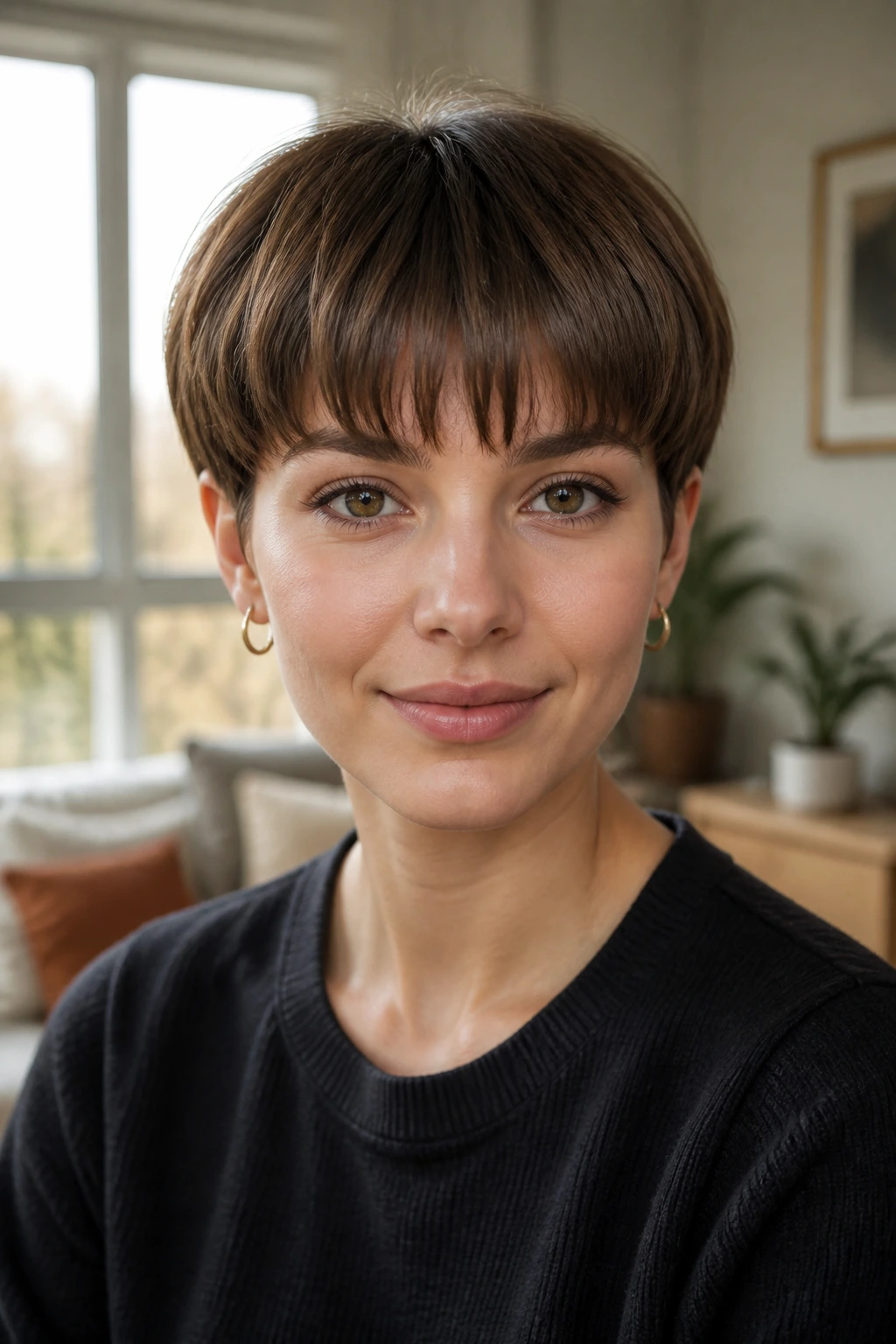
This sounds risky because, frankly, it can be. But the modern version is much softer than the severe bowl cuts people picture first.
The 90s had plenty of rounded pixies with a bowl-like outline, especially when the top stayed fuller and the fringe curved around the forehead. On straight hair, that curved shape shows beautifully. The trick is keeping the line soft at the edges so it feels like a cut, not a helmet.
The best bowl-inspired pixies have tapered sides, a rounded crown, and a fringe that bends gently instead of sitting in one hard shelf. Ask for light texturizing at the ends, especially near the temples, so the line doesn’t feel too boxy.
This is not the cut for someone who wants to forget about their hair completely. It needs a little combing and a little attention. But if you like strong shapes, it has presence. It looks especially good with plain makeup and simple clothes because the haircut carries the drama on its own.
A blunt version can be a headache. A softened version can be gorgeous.
9. Piecey Messy Pixie With Broken-Up Front Layers
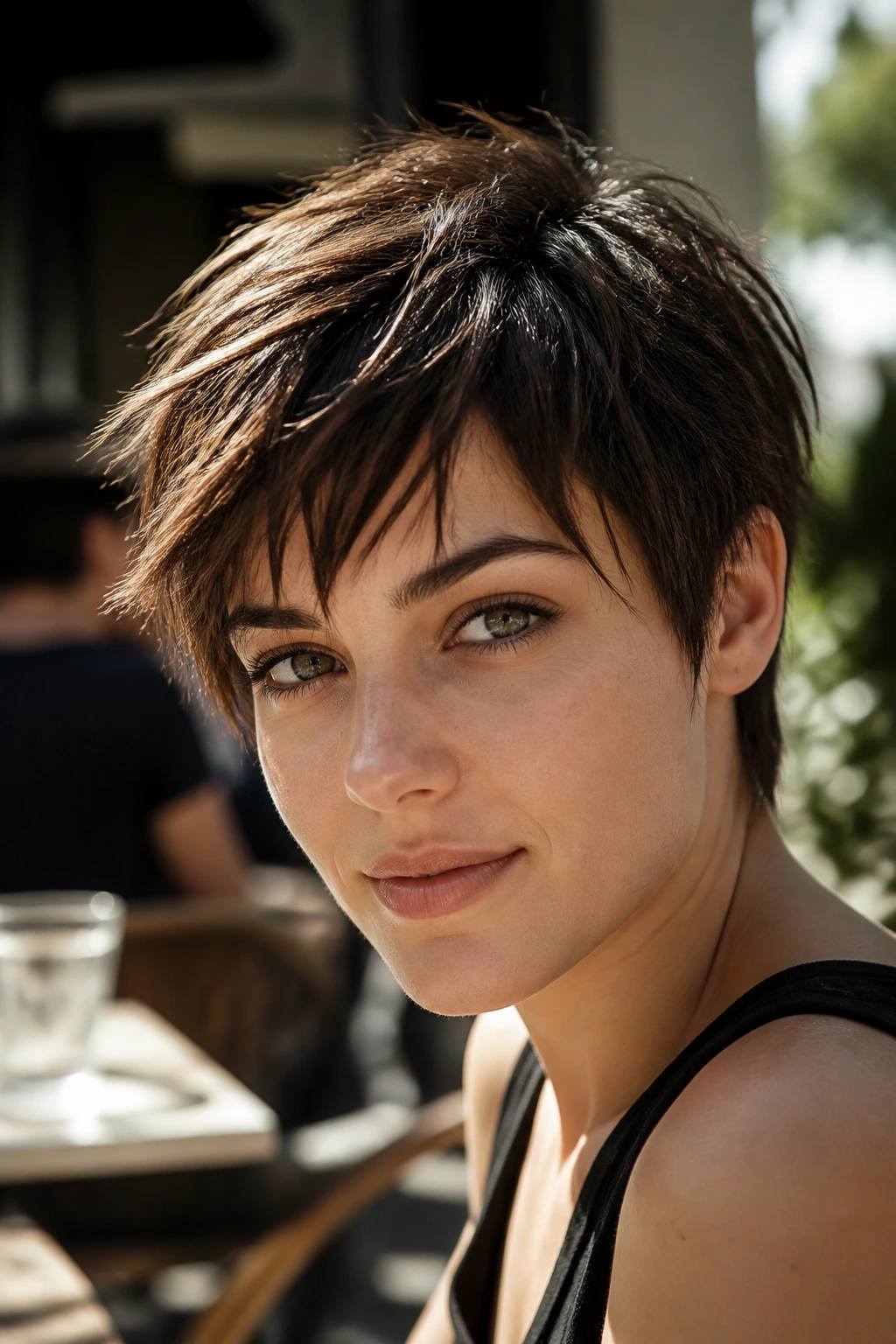
Messy is doing a lot of work here.
The piecey 90s pixie is for straight hair that needs a little disruption. Instead of one smooth cap of hair, you get separated sections at the top, some movement around the forehead, and a fringe that never looks too neat. It has that “I just ran my hands through it” feel, which takes more effort than people think.
The style works because the cut itself creates the mess. Don’t rely on product alone. Ask for choppy layers through the crown and front, plus a lighter weight around the ears so the silhouette stays open. Then use a small amount of styling paste or dry cream and break the top into pieces.
- Keep the product matte or low-shine
- Work it through dry hair
- Twist a few front strands between your fingers
- Leave the ends imperfect
I like this cut on straight hair that tends to go flat by noon. The broken texture gives it a second life. And if a few pieces move around during the day, that is part of the charm.
10. Curtain-Fringe Pixie With a Middle Part
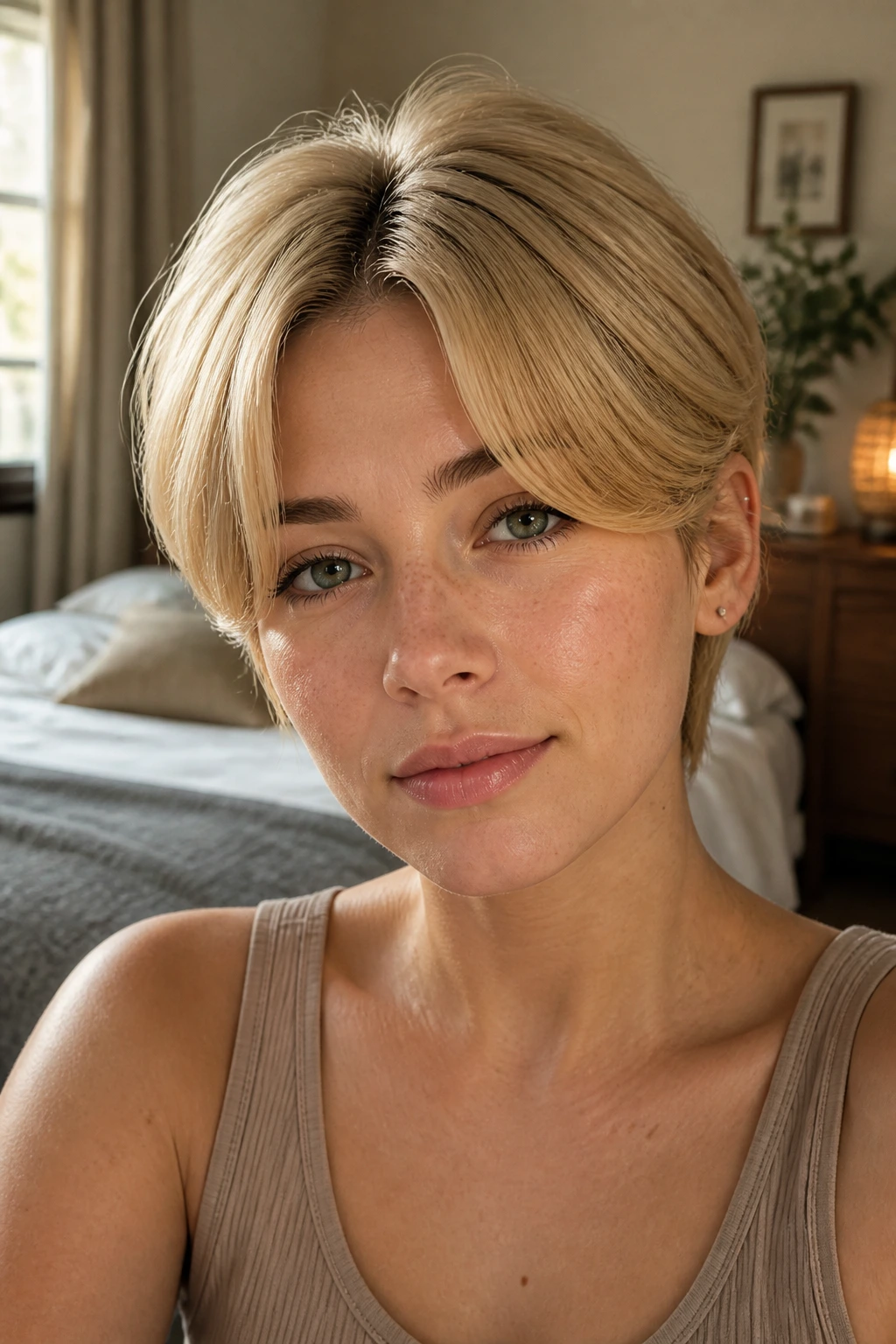
Why does a curtain fringe work on a pixie at all? Because it softens the face without losing the short-crop shape underneath.
This cut borrows the middle-part idea from longer 90s hair, then shrinks it down. The fringe starts short near the center and blends into longer front pieces that fall away from the face. Straight hair makes that part line clean and visible, which is half the appeal.
How to Style It
Blow-dry the front away from the face using a round brush, then split the fringe down the middle while it is still warm. If the hair wants to collapse inward, clip each side for a minute while it cools. That tiny step helps the curve hold.
This cut is softer than the micro fringe and less fussy than the side-swept version. It gives you forehead coverage without hiding everything. I also like that it ages well as it grows out, because the front just turns into more of a soft face frame.
If you want a 90s pixie that feels gentle instead of severe, start here. It has a calm shape. Nothing forced.
11. Sleek Tucked-Behind-the-Ear Pixie
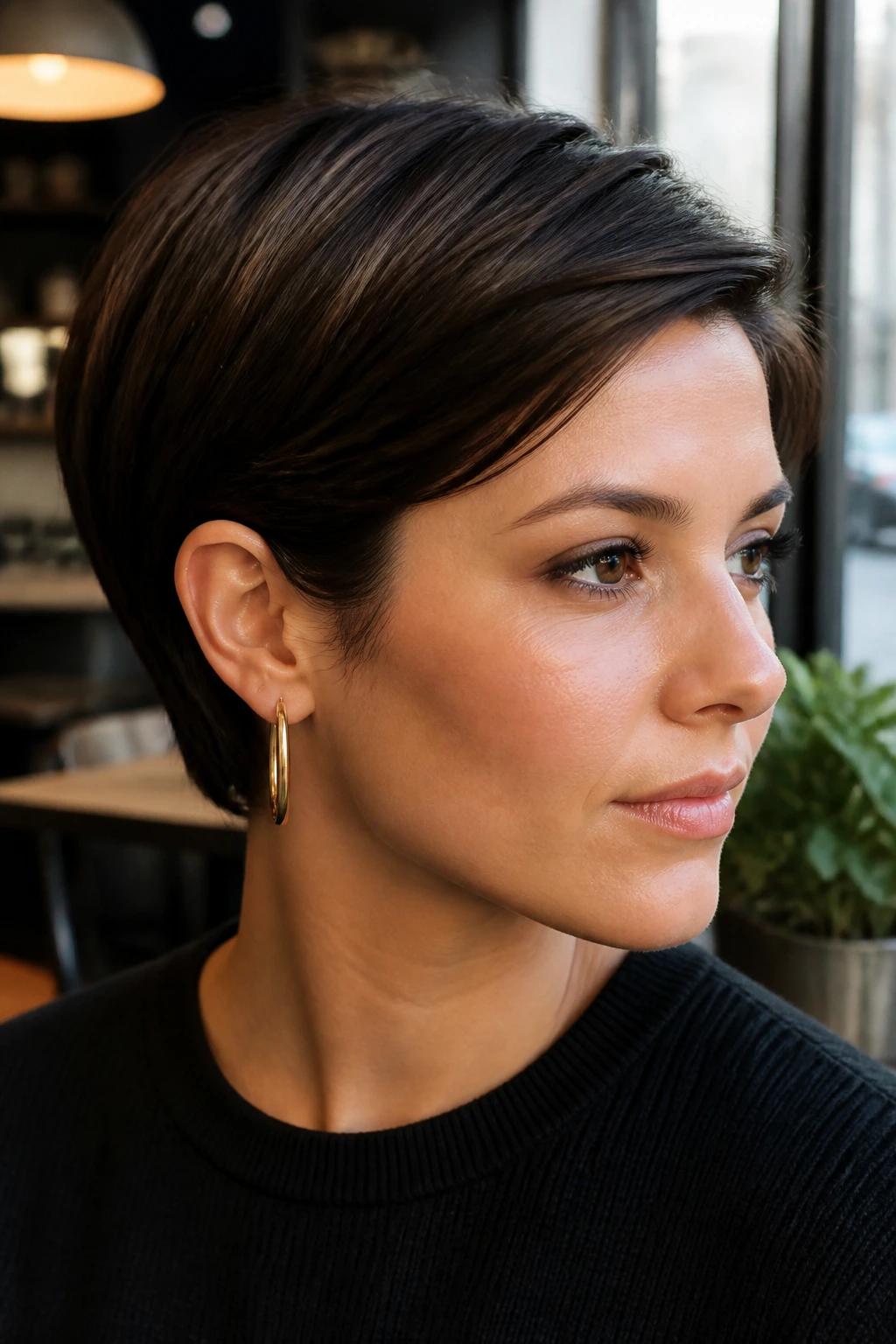
This is the cut for people who love a clean outline. The front stays smooth, the sides are close enough to tuck, and the whole look depends on shine, shape, and a good ear line.
Straight hair makes this style almost too easy, which is probably why it works so well. There’s no battle with texture. You comb it, tuck it, and let the shape do the rest. A side part helps if you want a little movement, but a center part can work too if the top has enough length.
A tiny amount of shine serum on the ends goes a long way. I’d avoid heavy oils here unless your hair is thick, because they can make the tuck look limp by lunch. The goal is smooth, not slicked down flat.
This one feels quietly confident. Not soft. Not fussy. Just neat in a way that makes earrings, collars, and jawlines stand out.
12. Wet-Look Pixie With Glossy Definition
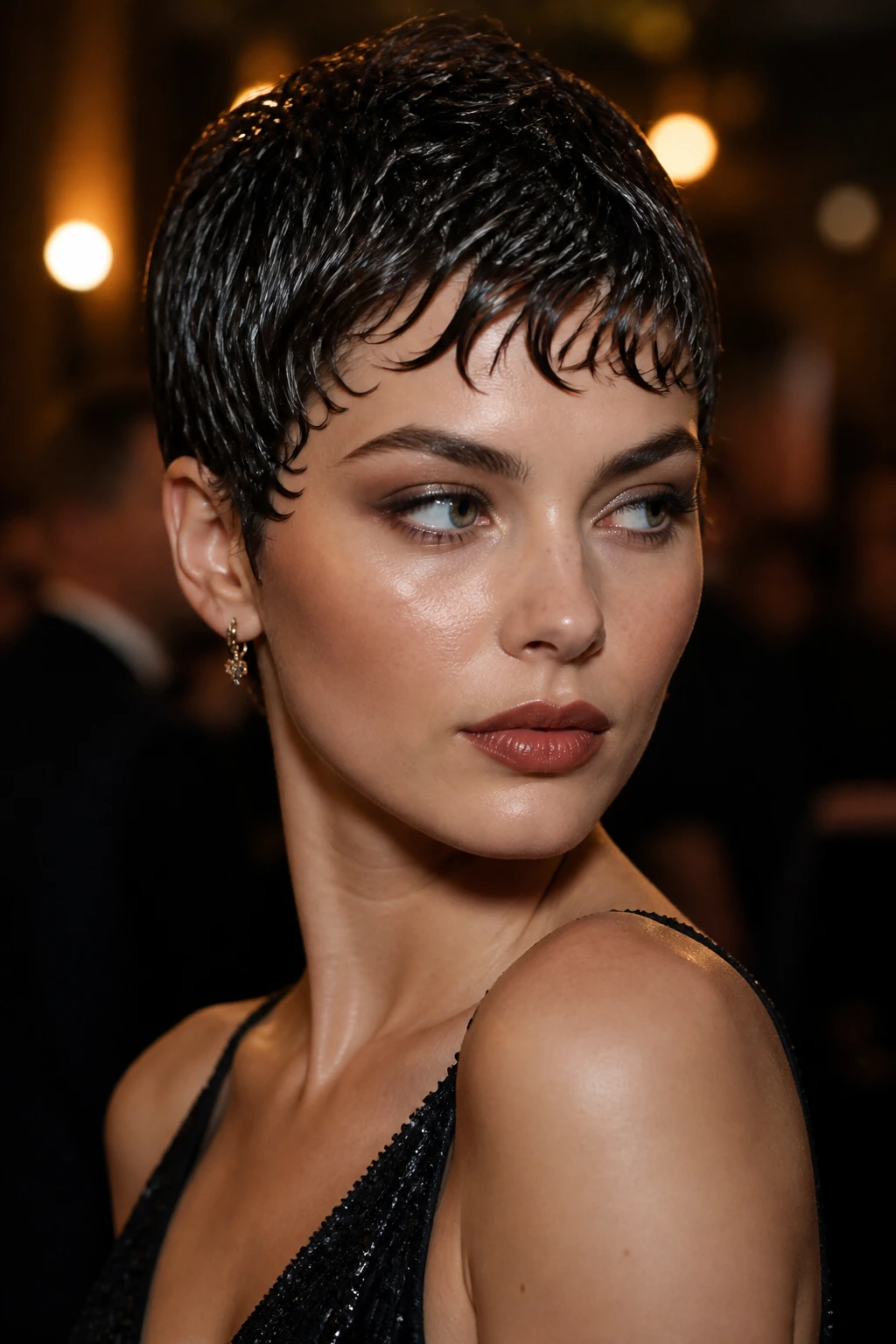
A wet-look pixie is the one you wear when you want the haircut to feel a little more dressed up than everyday. It’s also a smart move for straight hair, because the texture already wants to lie smooth.
The style depends on product placement. Use a medium-hold gel or a strong styling cream, comb it through the top and sides, then shape the fringe with your fingers before it dries. You want separated strands with gloss, not a hard shell. If the hair starts flaking, the product choice was wrong or you used too much.
This cut works well with a short neckline and a clean temple line. The shine exaggerates the geometry, so the base cut has to be precise. If the cut is messy underneath, the wet finish will reveal it.
Best use? Evenings, events, or any day you want a little drama without growing your hair out. It is one of the easier 90s-inspired looks to do on straight hair, which feels almost unfair. The hair already wants to behave.
13. Crown-Volume Pixie With Lift at the Roots
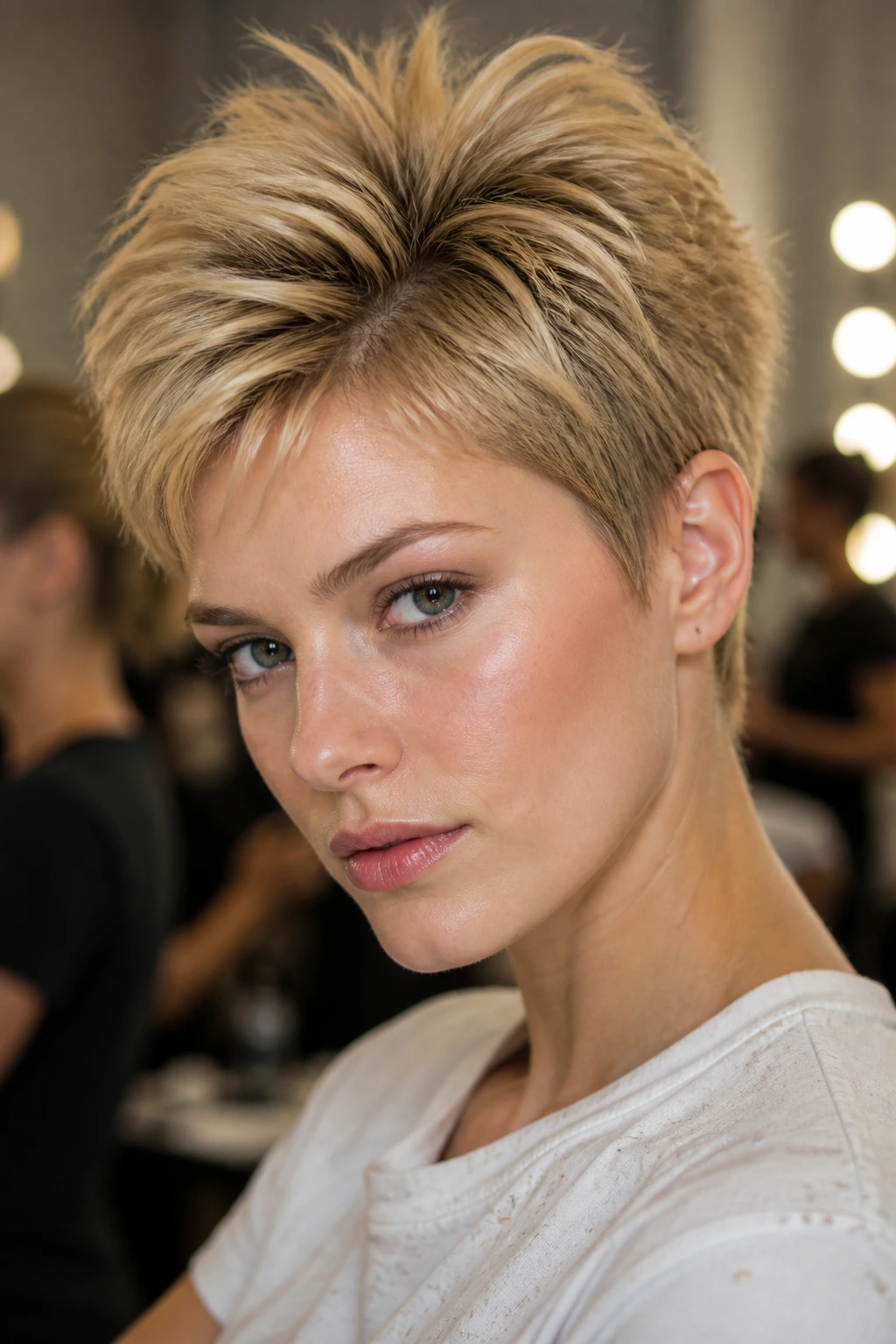
Flat hair hates being ignored. This cut fixes that.
The crown-volume pixie is built to give straight hair a little height at the top while keeping the sides close and the back neat. The shape feels very 90s supermodel to me: lifted at the roots, cropped around the ears, and full of movement right where the eye lands first.
How to Build the Lift
Start with a root-lifting spray or mousse at the crown while the hair is damp. Blow-dry the top section upward and slightly back, using your fingers or a small vent brush to push the roots away from the scalp. When the crown is dry, clip it up for two minutes while it cools. That small pause helps the lift stay in place.
The rest of the cut should stay simple. Too much layering everywhere else and the height loses its point. You want contrast: fullness on top, control everywhere else.
This is one of the best pixies for straight hair that goes limp easily. The height gives the cut shape even when the rest of the day gets busy. It does take a little styling, though. No free lunch here.
14. Razored Wispy Pixie With Soft, Airy Ends
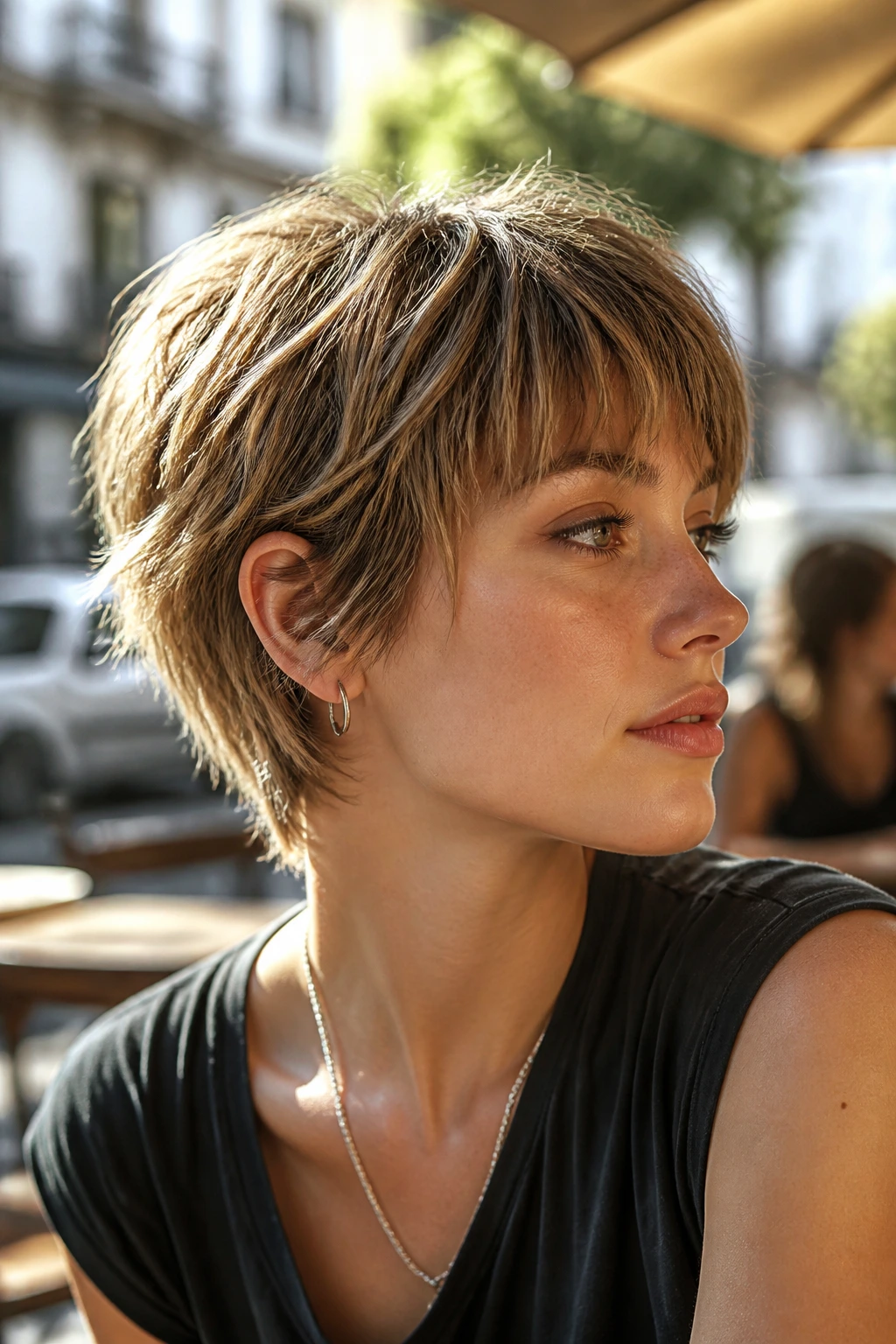
This is the cut I’d pick for someone who hates hard lines. The razored pixie keeps the outline loose, with wispy ends around the fringe, sides, and neckline that feel lighter than a blunt crop.
On straight hair, razor work can be a blessing or a problem. Used well, it removes bulk and gives movement to hair that might otherwise sit heavy. Used badly, it can leave the ends looking frayed. That’s why the stylist matters here more than the trend does.
The best version has soft separation around the face and a slightly tapered back. I’d avoid over-thinning the top if your hair is fine, because it can go see-through fast. Dense straight hair, though, often loves this shape because the razor can take the edge off without killing the style.
This cut doesn’t shout. It moves. That’s a different thing, and a better one if you like your hair to look lived-in instead of engineered.
15. Grown-Out Pixie With Bob Energy
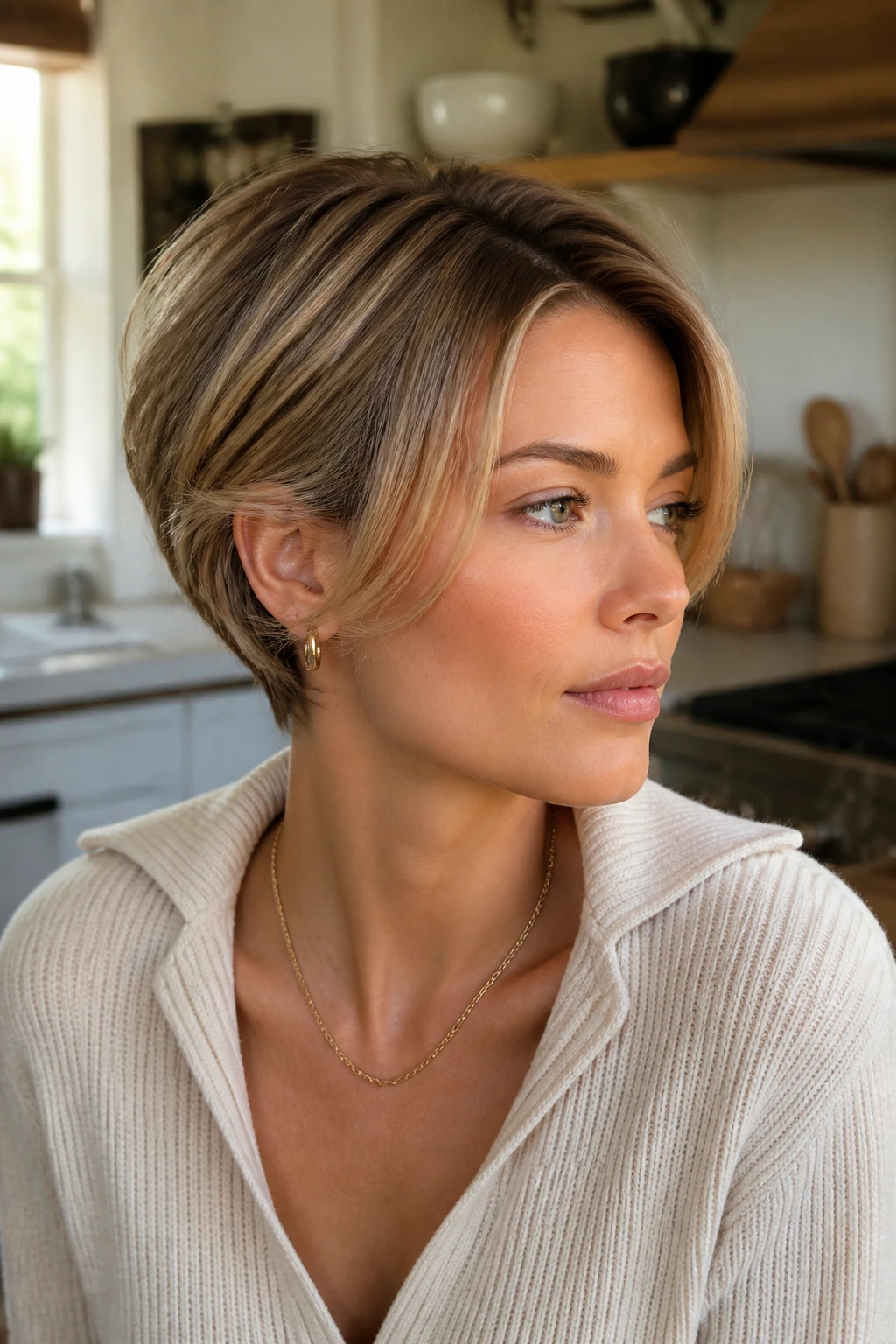
The grown-out pixie is the cut people forget to mention, mostly because it sits in that in-between stage where short hair starts flirting with a bob. On straight hair, that in-between shape can look polished instead of awkward.
Keep the top long enough to sweep behind the ears, leave the front pieces around the cheekbone, and let the neckline stay tidy so the silhouette still reads as a pixie. The whole point is balance. You want movement, not a shaggy no-man’s-land.
This version is especially useful if you’re growing out a shorter crop but don’t want a rough transition. Ask for soft blending around the sides and a clean neckline every 5 to 6 weeks so the shape doesn’t lose its edge. A little round-brush bend at the ends helps the front feel intentional.
It’s also one of the easiest shapes to live with on straight hair because it can be worn sleek, tucked, or lightly tousled without needing a full restyle. If you want a 90s pixie that doesn’t feel trapped in one mood, this is the one I’d keep near the top of the list.
A good grown-out pixie still has attitude. It just lets you breathe a little.
