



Sliced bob haircuts have a way of looking more expensive than they are. That’s the whole appeal, really. A blunt bob can sit there like a helmet if it’s cut too square, but a sliced version has a little air in it — the ends move, the shape bends, and the whole thing feels alive instead of locked in place.
The mid-decade bob wave leaned hard into that softer finish. People still wanted the clean line, but they did not want the heavy, sealed-off edge that makes hair look stiff. So stylists started using razor work, slide cutting, and point cutting to shave bulk from the last inch or two without turning the haircut into a shag. That tiny difference changes everything.
I like sliced bobs because they’re honest about hair texture. Fine hair gets some lift. Thick hair stops looking like a block. Straight hair gets a sharper edge, and wavy hair gets room to bend instead of fighting the cut every morning. The trick is keeping the perimeter intentional. Too much texture, and the bob goes fuzzy. Too little, and you’re back to square one.
The versions below all take that same basic idea and push it in different directions. Some are crisp. Some are softer. Some play nicely with curls, bangs, or a deep side part. A few are low-maintenance, which is always the real test.
1. Razor-Sliced Chin Bob
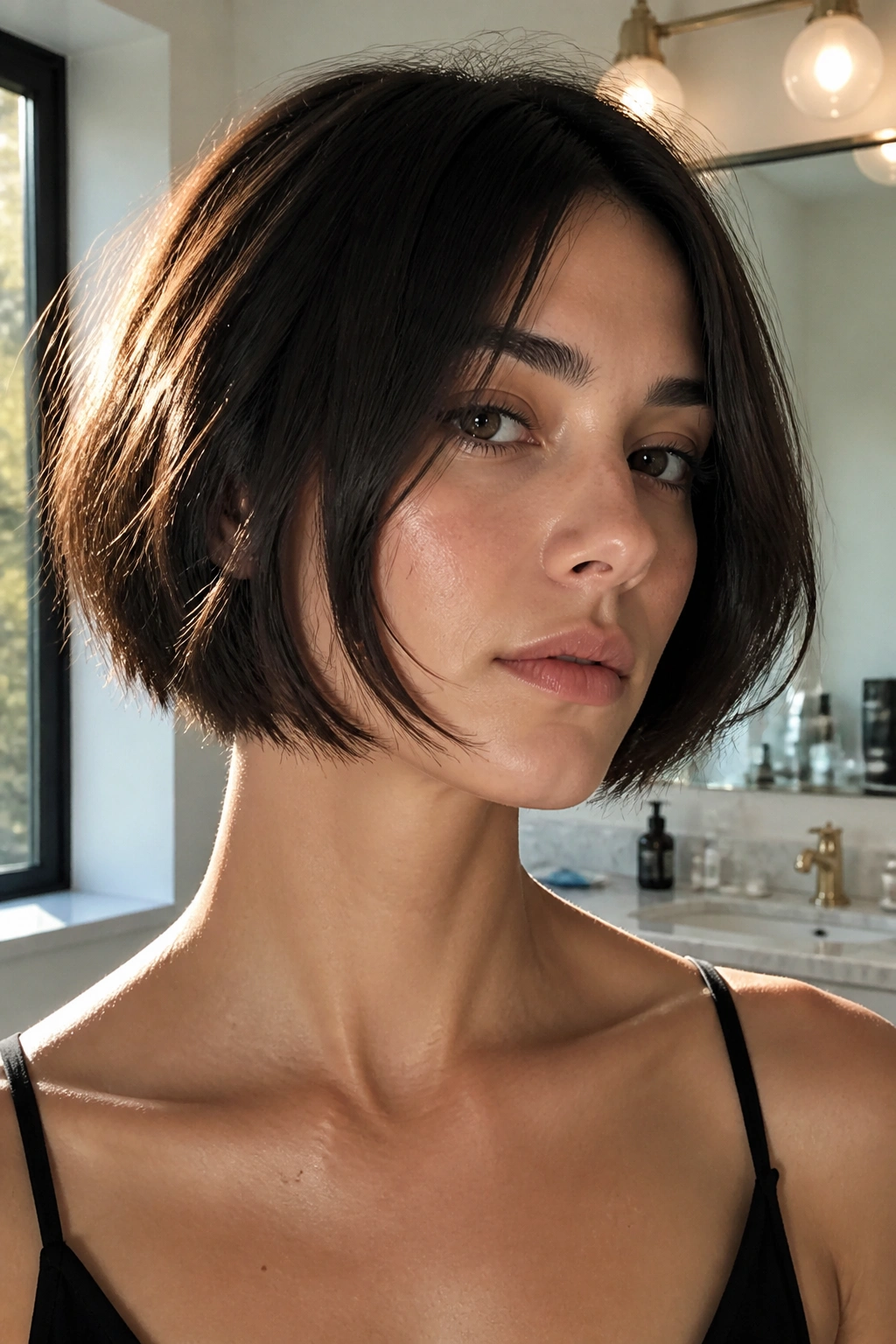
A chin-length sliced bob is one of the cleanest places to start if you want the shape to read sharp without looking severe. The line sits right around the jaw, so it frames the face fast, and the sliced ends keep it from feeling like a block of hair parked under your ears.
Why It Works
The cut is short enough to show the neck and jaw, which gives it a neat, tailored look. The slicing softens the bottom edge just enough that straight hair does not look too rigid, and thick hair loses some of that helmet effect people secretly hate.
I like this version on hair that naturally falls straight or close to it. You can still wear a slight bend, but the shape works best when the outline stays visible. If the stylist removes too much weight, the bob starts to fray at the ends. Keep the texture focused near the perimeter, not all through the head.
- Best length: just below the chin or right at it
- Best for: straight to softly wavy hair
- Styling time: about 10 to 15 minutes
- Ask for: a clean perimeter with light point cutting through the last 1 inch
My blunt take: if you want the sliced bob to look polished, keep the top simple and let the ends do the work.
2. Collarbone Sliced Bob

This is the version I’d hand to someone who wants the sliced bob shape without committing to a shorter crop. It lands at the collarbone, which gives you a little swing when you move and a lot more flexibility on lazy mornings. Tuck it, clip it, wave it, flatten it — it all still works.
The beauty of this length is that the texture can be more relaxed. A collarbone sliced bob does not need the same precision as a chin bob because the longer line already creates softness. A light slice through the ends keeps the whole cut from hanging heavy at the shoulders, which is where longer bobs often get stuck.
It’s also one of the easiest shapes to grow out. That matters more than people admit. Haircuts that look fabulous for three weeks and awkward after that are fun in theory, annoying in real life.
If your hair flips out at the shoulders, ask for the front to stay a touch longer than the back. That tiny adjustment helps the shape lie flatter and move better.
3. French Bob With Sliced Ends

Why does a French bob look better when the ends are a little broken up? Because that tiny bit of softness stops the cut from feeling costume-y. A classic French bob already has attitude — short, cheekbone-grazing, a little cheeky — and sliced ends keep it from becoming too perfect.
How to Wear It
This cut loves a fringe that sits just above or at the brows, but the fringe should not be thick and blocky. A lighter front works better, especially if you want the bob itself to stay the star. The sliced perimeter adds that loose, lived-in feel people keep trying to fake with too much product.
I’d avoid over-styling this one. A quick blow-dry with a small round brush or a rough dry with fingers is usually enough. If you iron every strand pin-straight, you can accidentally flatten the character right out of it. That’s the danger with a lot of polished bobs — they start to look borrowed from a mannequin.
A French sliced bob is strongest on oval, heart, and narrow face shapes, but the fringe length can be adjusted. A stylist who understands balance can make it work without turning the front into a curtain of hair.
4. Side-Part Glass Bob
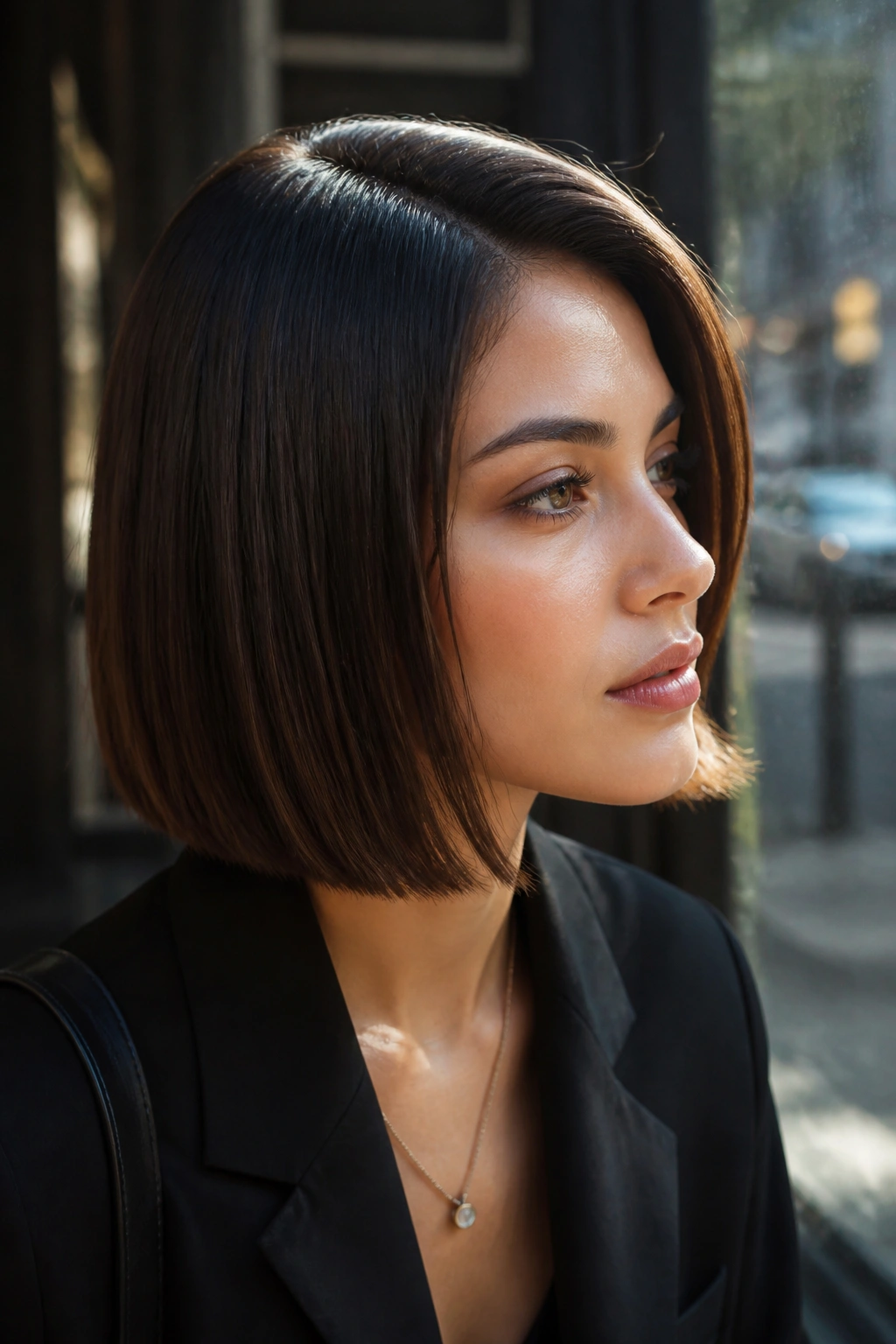
Pull a deep side part through a sliced bob, and the cut changes mood fast. It goes from soft and airy to sharp and deliberate, almost like someone swapped the lighting in the room. That contrast is the point.
The side part gives the bob height at the crown, which helps if your hair falls flat near the roots. The sliced ends stop the lower half from looking too solid, so you get lift on top and movement below. I think this is one of the better choices for people with fine hair who still want a clean outline.
What Makes It Different
- The part creates visible root lift without teasing
- The sliced ends keep the silhouette from feeling heavy
- A flat iron can polish the surface in 5 to 8 minutes
- A light shine cream works better than a heavy serum
The only real caution here is overdoing the gloss. A glassy finish is nice. Greasy roots are not. Start with a tiny amount of product, then add more only if the ends look dry.
This is the bob you wear when you want people to notice the shape before they notice the cut technique.
5. Sliced Bob With Curtain Bangs
Curtain bangs can make a sliced bob feel softer, and that matters if you do not want the haircut shouting at every angle. The bangs split around the face, which takes pressure off the jawline and gives the whole shape a little breathing room.
I like this version because it works even when it is not styled perfectly. The bangs can open a little, fall a little, or curve in a loose way, and the bob underneath still holds together. That flexibility is half the charm. Not every cut needs to behave like a showroom floor model.
A sliced perimeter keeps the lower half light, so the bangs do not feel like they are fighting a dense base. If the bob below is too blunt, curtain bangs can start to look disconnected. Here, the two pieces belong to each other.
You can wear this with a blowout, but I think it looks just as good with a quick round-brush bend and a bit of texture at the ends. The important part is keeping the front from puffing out too wide. That can happen fast.
6. Air-Dried Wavy Bob

Unlike a blow-dried bob, this one is built to look good while it dries on its own. That makes it a sensible choice for wavy hair, but it also works if your hair is straight-ish and picks up bend at the ends when it’s damp. The slice through the perimeter keeps the cut from drying into one heavy line.
The best versions of this bob do not rely on lots of hidden layers. They rely on controlled texture at the edge, a little weight removal in the right spots, and a shape that still makes sense when the hair isn’t brushed to death. That is a nicer way to live, frankly.
How to Get the Most From It
- Work a light mousse through damp hair
- Scrunch the ends once, not ten times
- Let the roots dry with a side part or a center part, then leave them alone
- Put a pea-sized bit of cream on the last 2 inches only if the ends puff up
If your hair frizzes fast, keep the slice subtle. Too much razor work can make the edge look fluffy instead of soft. There’s a line there, and it’s thinner than most salon photos make it seem.
This cut rewards patience. Touch it less, and it usually looks better.
7. Micro Sliced Bob
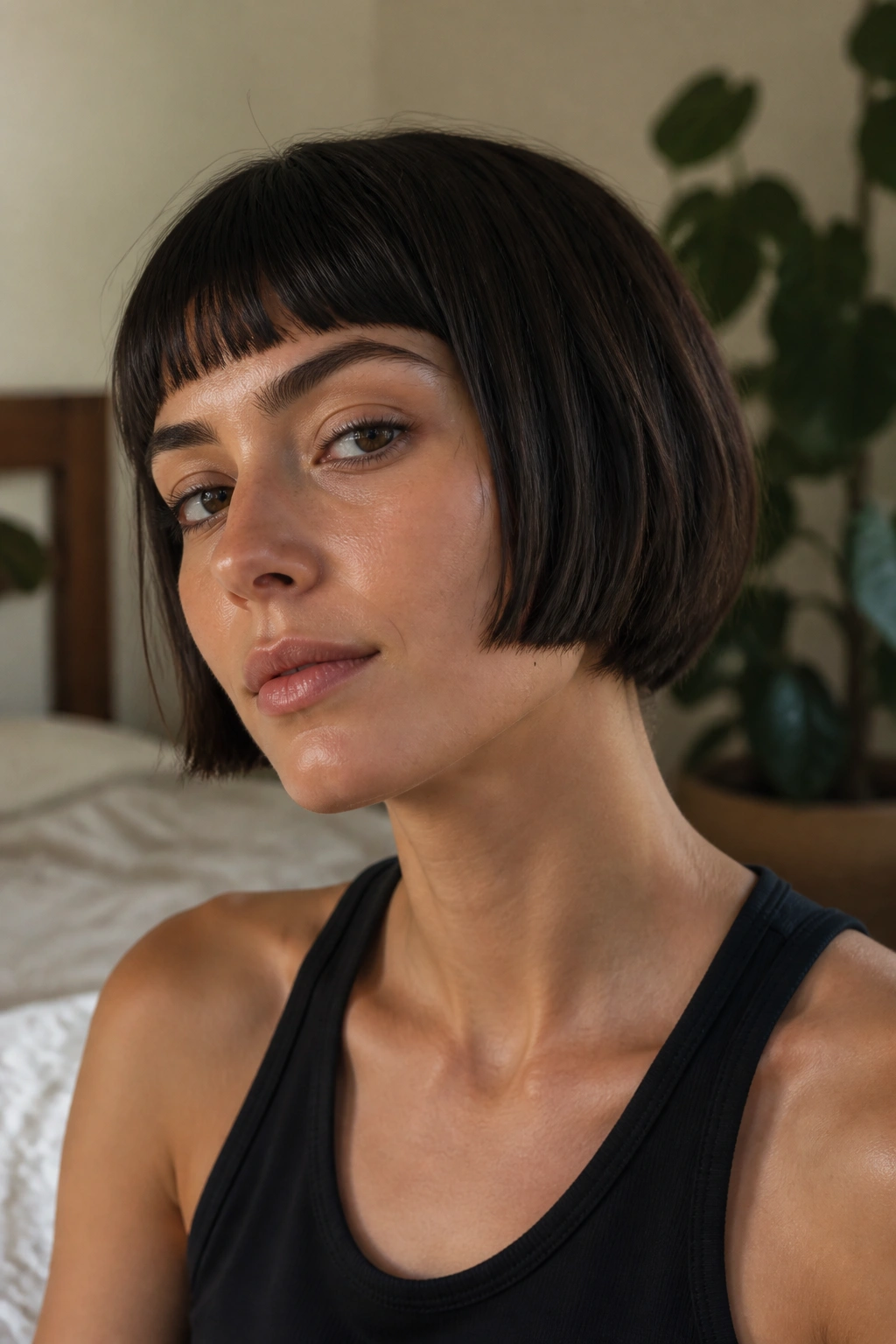
A micro bob is for people who like a haircut with nerve. It sits short, often above the jaw, and the sliced perimeter keeps it from looking too hard or too boxy. The result is small, sharp, and very visible. No hiding.
The shorter the bob gets, the more the outline matters. That’s why the slicing here has to be restrained. If the ends are over-thinned, the shape starts to wobble, and you lose the clean little cap of hair that makes a micro bob work in the first place.
This cut is strongest when the hair has some natural density. Fine hair can wear it, but the shape has to be handled carefully so it does not collapse around the ears. A soft undercurve at the bottom helps.
I think the micro sliced bob looks best with minimal styling. A quick flat-brush finish, a touch of anti-frizz cream, and you’re done. It does not want a lot of fuss. If you start piling on texture spray, the whole thing can look busy.
8. Graduated Nape Bob

This is the version that makes the back look expensive. A graduated nape bob is shorter and tighter at the back, then gently opens toward the front, which gives the head a neat, lifted shape. Add sliced ends, and the graduation feels cleaner, less chunky.
The back of the cut does a lot of the heavy lifting here. It lifts the hair off the neck and creates that little curve that makes the bob look sculpted from behind. The front can stay slightly longer, which keeps the haircut from feeling too severe.
Some people hear “graduated” and picture old-school stacked hair with a lot of volume. That is not what I mean. A modern sliced version is softer, more controlled, and much easier to wear. The line is still there. It just does not shout.
This is a good pick if you like the feeling of your hair being off your neck but still want some movement at the sides. It also grows out in a pretty usable way, which is more than I can say for a lot of sharper bobs.
9. Thick-Hair Sliced Bob

Thick hair can make a bob look luxurious, but it can also make the whole thing sit like a padded cube if the cut is too blunt. A sliced bob solves that by taking bulk out of the right places, especially through the ends and interior.
What to Ask Your Stylist
- Keep the perimeter clean
- Remove weight in small sections, not with aggressive thinning shears
- Use point cutting or slide cutting where the hair feels puffy
- Leave enough density at the edge so the shape still holds
That last point matters. A lot. Thick hair does not need to be shredded into pieces. It needs relief. There’s a difference, and your ends will show it the second you walk out of the salon.
I prefer this cut when the texture is dense but not super coarse. Coarse hair can still do it, but the finish needs to stay smooth or the sliced bits can look dry. A good blowout cream and a medium round brush usually help. A tiny bit of tension while drying makes the perimeter lie flatter and look more deliberate.
10. Fine-Hair Sliced Bob
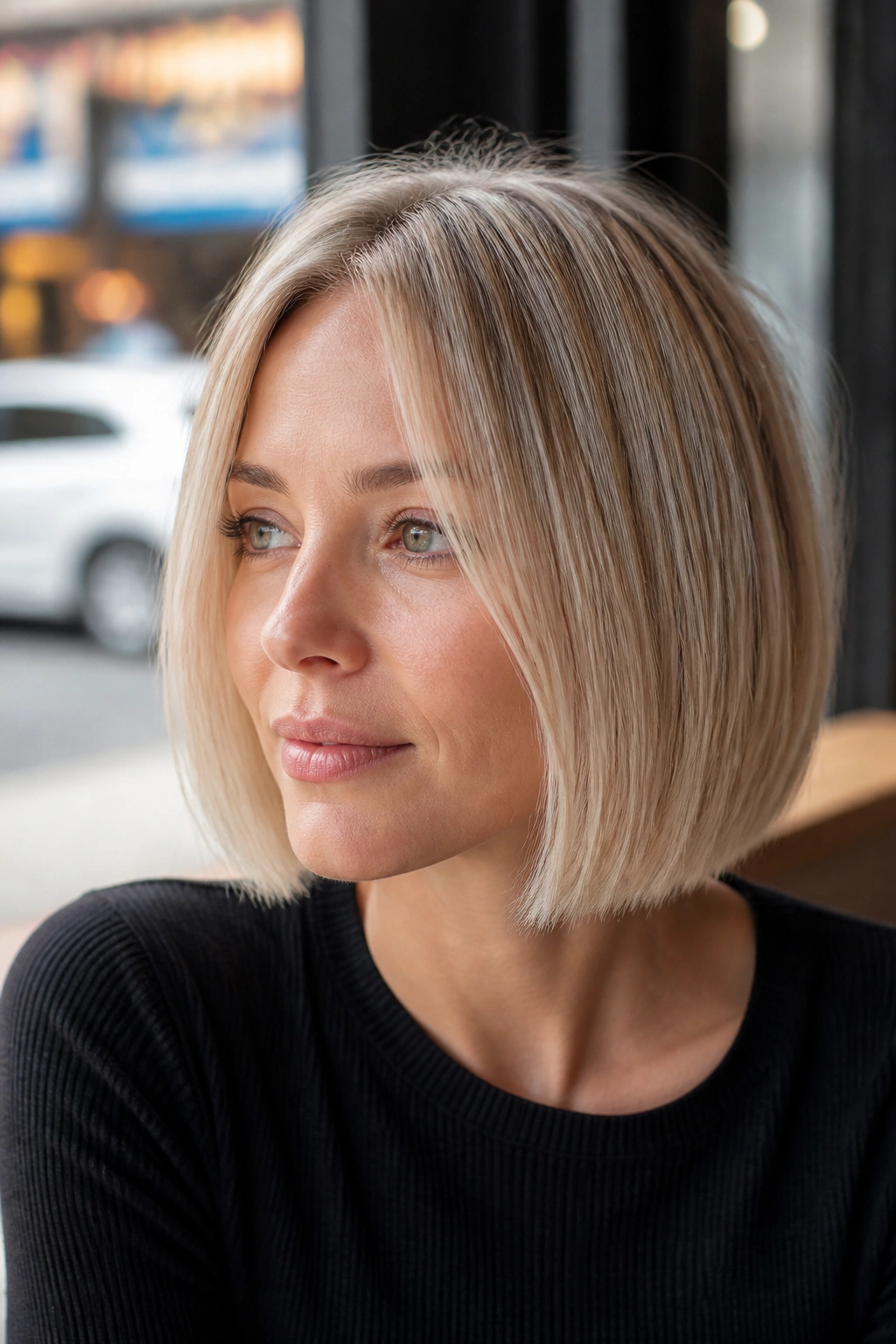
Fine hair needs air, not holes. That’s the mistake I see most often. People think they need lots of layers to make the hair “move,” then the bob collapses because there isn’t enough structure left to support the shape.
A fine-hair sliced bob keeps the outline blunt enough to hold weight, then softens the ends just enough to keep them from appearing rigid. It’s a careful balance. Too much slicing, and the cut can start to flick apart at the ends. Too little, and the hair can look limp.
The best trick here is root lift, not excessive layering. A mousse at the roots, a round brush at the crown, and a light bend through the last inch can make a big difference. You do not need a complicated routine. You need the right one.
This version is especially good if your hair is straight and tends to fall flat by lunchtime. The sliced ends create the impression of fullness because the outline does not sit like a single heavy slab. Small detail, big payoff.
11. Curly Sliced Bob
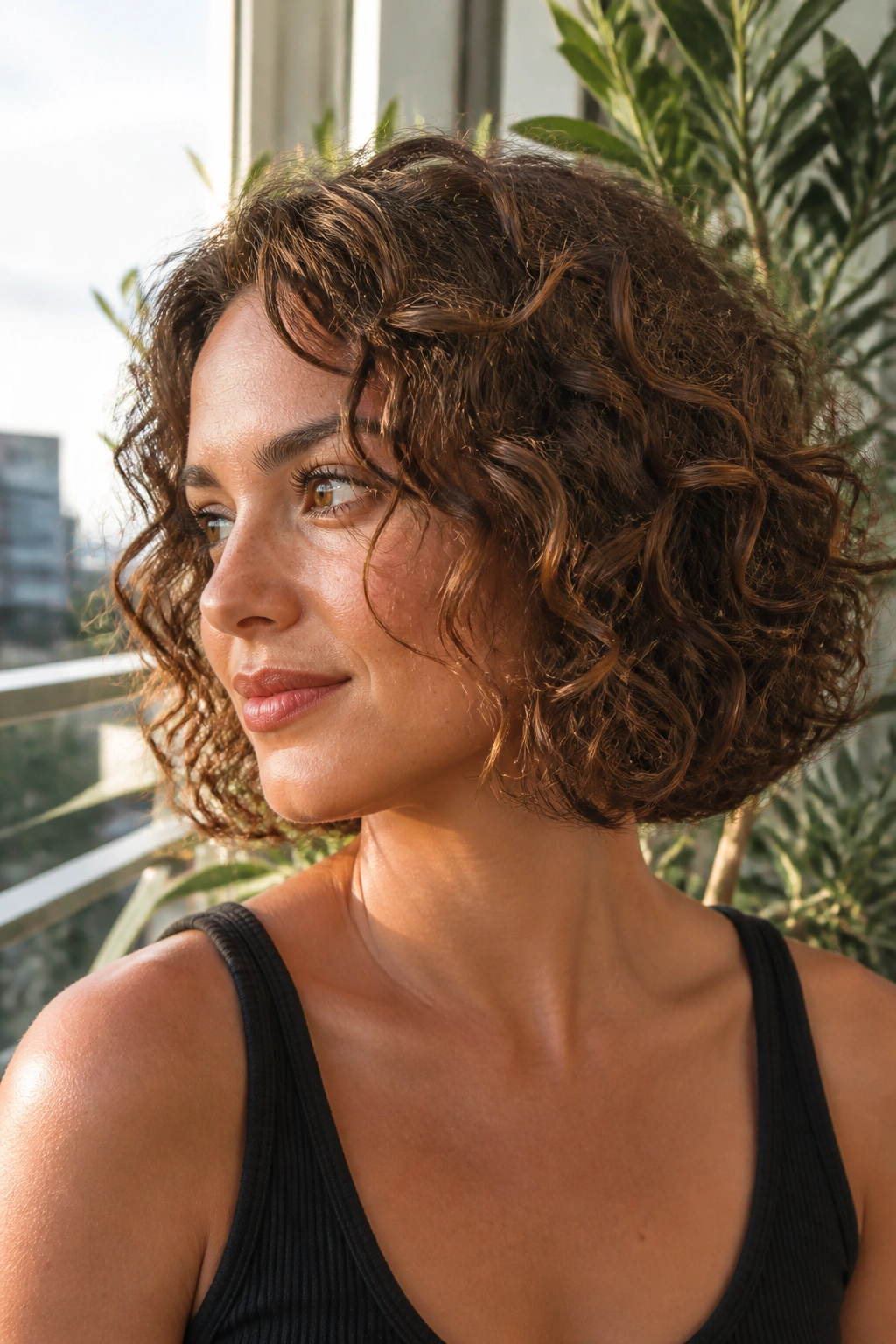
Can a bob be sliced and still work on curls? Yes — if the cut respects the curl pattern instead of fighting it. That part matters more than the label on the haircut. A good curly sliced bob keeps the shape loose and lets the curls stack naturally rather than forcing them into a flat perimeter.
What to Look For
- A stylist who cuts curls in their natural state, or at least checks the curl pattern carefully
- Enough length to avoid springing up too short
- Soft weight removal, not heavy thinning
- A shape that follows the curl family around the face
When curls are cut too aggressively at the ends, they can look frayed or puffy. That’s the downside. The sliced finish should make the bob feel lighter, not make the ends disappear. I think dry cutting works especially well here because you can see exactly where the curls sit.
The best curly sliced bobs have a little roundness at the bottom and a gentle opening around the cheeks. That keeps the silhouette from looking boxy. A curl cream and a diffuser can help, but the cut has to do the real work. It always does.
12. Asymmetrical Sliced Bob

A little imbalance can be a good thing. An asymmetrical sliced bob keeps one side slightly longer than the other, which gives the haircut a built-in point of interest without needing a loud color or a dramatic fringe. It’s subtle, but not shy.
The sliced ends are what stop this style from feeling too graphic. Without that softness, the asymmetry can look harsh. With it, the cut moves and settles in a way that feels intentional rather than edgy-for-the-sake-of-it. That distinction matters.
I like this shape on people who want their bob to look a bit more directional. It suits strong jawlines and straight hair especially well, though a soft wave can make the longer side bend nicely over the collarbone. If you wear earrings, this cut shows them off in a nice, easy way.
There is one practical point to keep in mind. Asymmetrical bobs need maintenance if you want the difference between the sides to stay crisp. If you prefer a haircut that can wander a little, this is not the one.
13. Flipped-End Blowout Bob
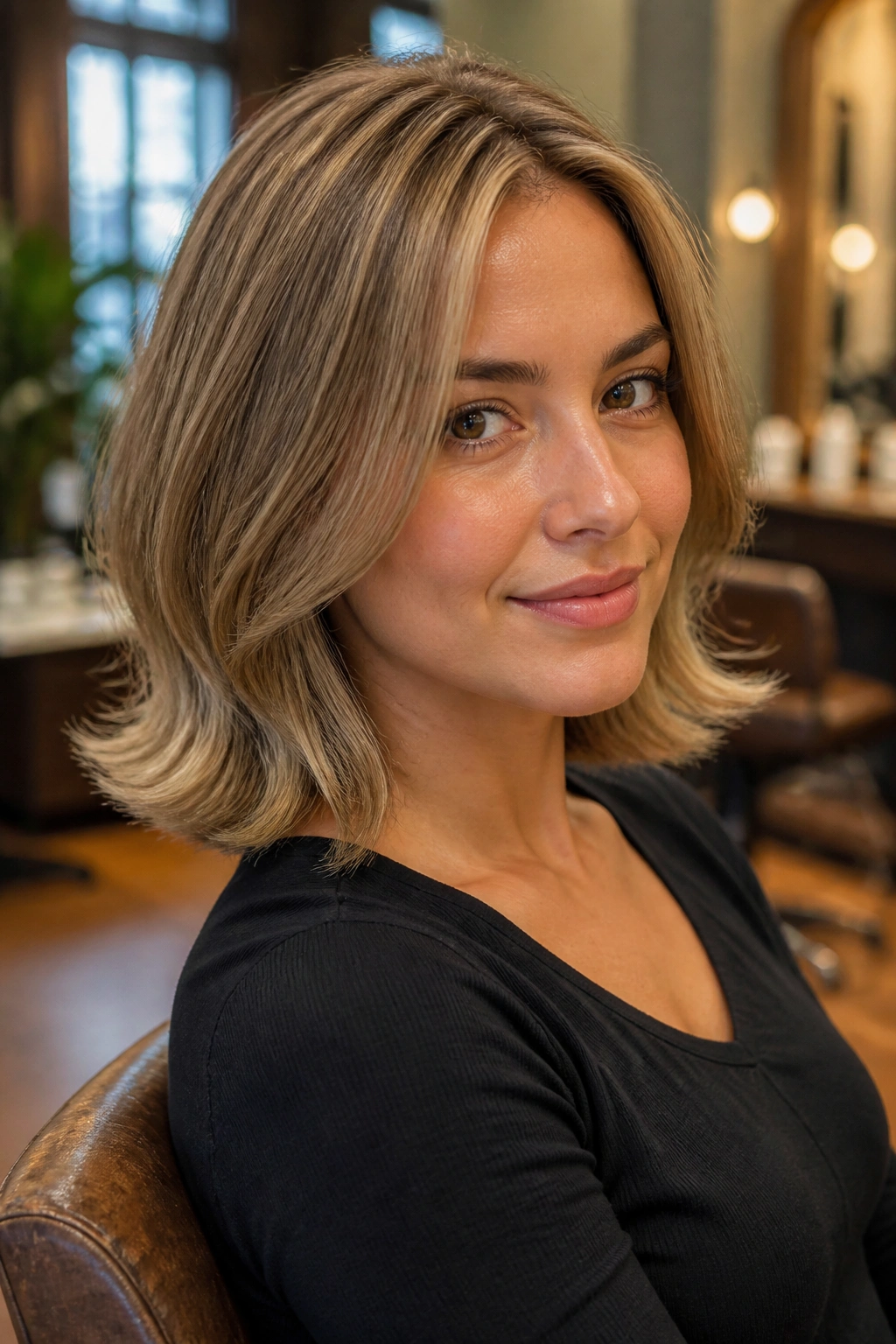
There’s a reason old salon blowouts keep coming back into style. They make a bob look finished. The sliced version adds movement at the ends, and the flip gives the whole cut a bit of bounce instead of leaving it glued to the head.
This is not the hard, pageant-style flip people imagine when they hear the word. It can be gentler. A small round brush or a flat brush with a curved finish is enough to turn the ends outward by half an inch or so. That tiny bend makes the cut feel light and alive.
The Science Behind It
The flip creates visual separation between the neck and the perimeter, which helps if your bob tends to sit flat. The sliced ends catch less density at the bottom, so the curve forms more easily and does not drag the hair down.
- Best on medium-density hair
- Works well with shoulder-skimming lengths
- Takes about 15 minutes with a blow dryer
- Looks best with a side part or a soft center part
I’m partial to this version for dinner plans, events, or any day when you want the haircut to look like it took effort, even if it didn’t take much at all.
14. Money-Piece Sliced Bob
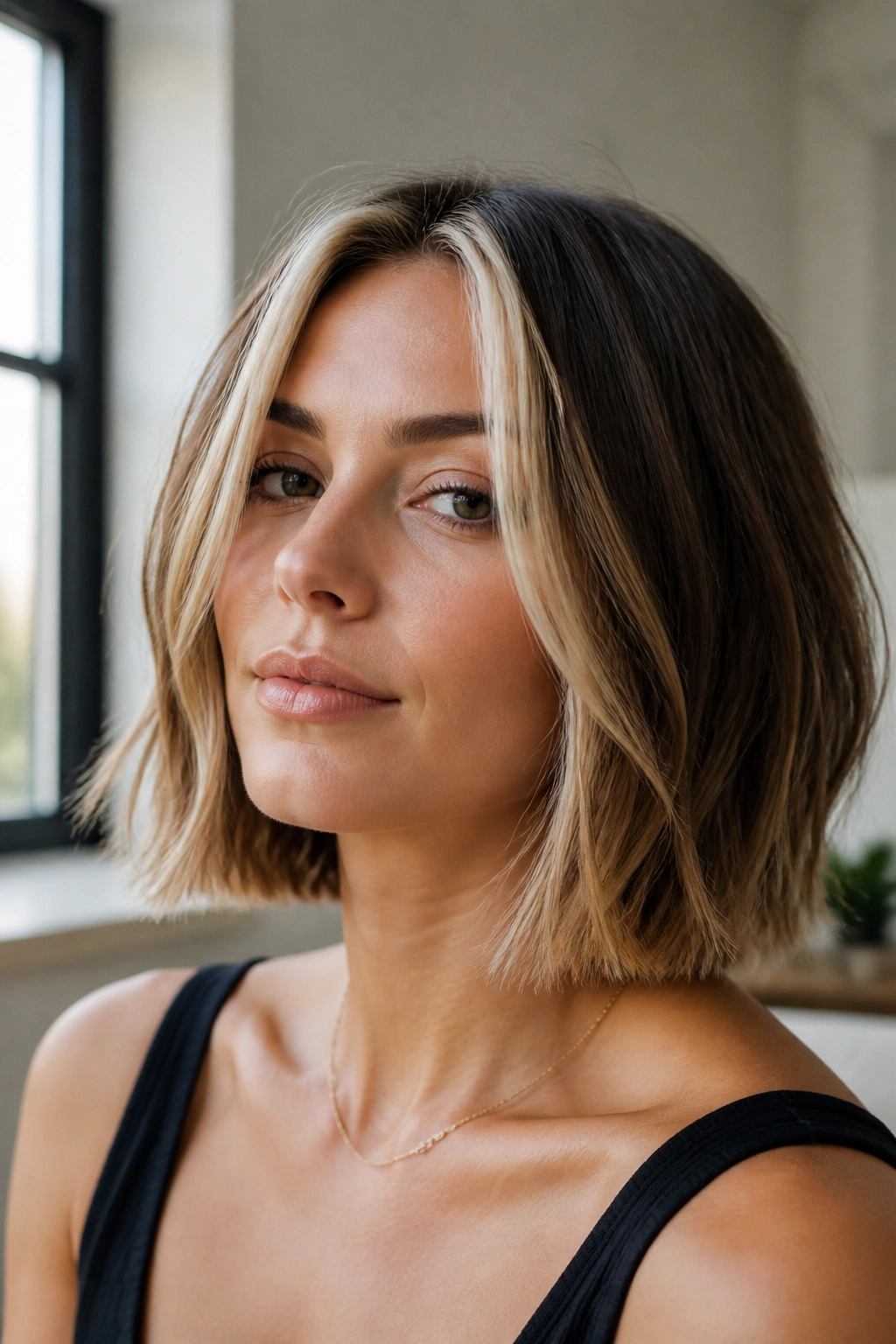
Color can make a sliced bob look louder without changing the cut. A money piece — those brighter face-framing strands — draws the eye straight to the front line of the haircut, and the sliced ends keep that front from looking too heavy. The result is bright, fresh, and a little more dimensional.
What I like here is that the color and cut work together instead of competing. The highlight lightens the face frame, while the sliced perimeter keeps the bob mobile. If the ends were blunt and thick, the color could look a bit trapped. Softening the edge gives the lighter pieces room to sit.
This is a good option if you like your haircut to feel a little more styled even on a plain day. The highlight does some of the visual work, so the bob reads faster from across the room. You do not need a dramatic color change either. A subtle lift around the cheekbones can be enough.
If you skip color, the haircut still works. The point is that this shape plays well with brightness at the front, and that’s useful knowledge when you’re planning the full look.
15. Sleek Wet-Look Sliced Bob

This is the most dramatic version in the set, and I mean that in a good way. A wet-look sliced bob takes the clean outline of the cut and turns the shine all the way up. The ends stay separated just enough to keep the style from becoming flat paste, which is where a lot of wet looks go wrong.
You want the product distribution to be deliberate here. A light gel through the roots and midlengths, then a touch of shine cream at the ends, usually does the trick. Too much product, and the bob collapses into one shiny sheet. Too little, and the look loses that slick finish.
This version suits evenings, photos, and short hair that naturally holds shape well. It can be a little unforgiving on hair that frizzes easily, because the sleek finish shows every rough patch. Still, when it works, it really works.
I like this as the closing note because it shows how wide the sliced bob family can stretch. The same haircut can look soft, sharp, romantic, or glossy depending on where you push it.
Final Note
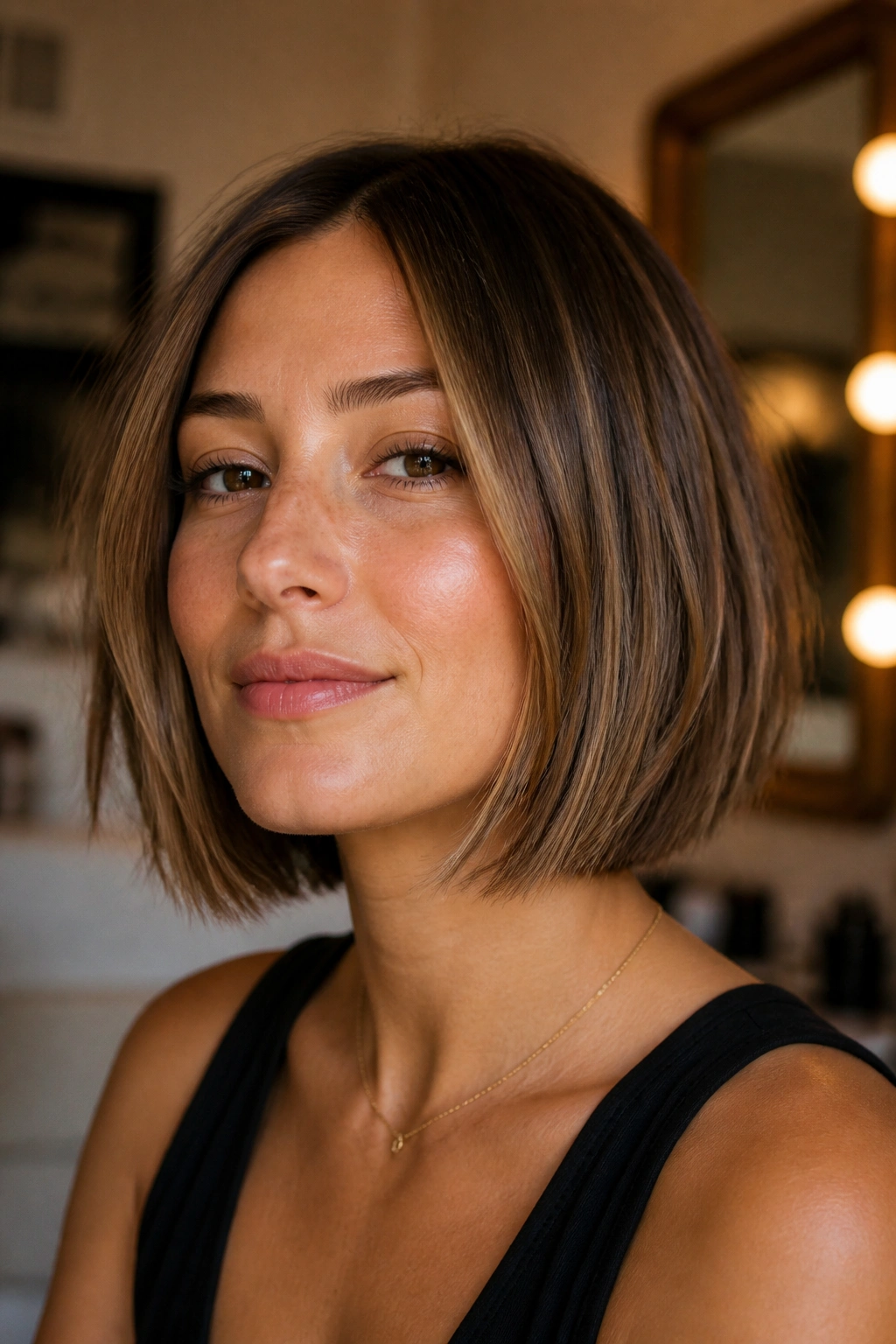
A sliced bob only looks good when the cut and the styling agree with each other. That sounds obvious, but plenty of bobs fail because the shape is one thing and the finish is another. Clean perimeter, controlled texture, no random puffiness. That’s the formula.
If you’re bringing a photo to the salon, choose one that matches your hair density and your part line, not just your dream mood board. A good bob on the wrong hair type can get fussy fast. A slightly simpler version, cut well, usually wins.
