



The early 2000s loved a pixie cut with attitude. Not the tiny, polite, angelic kind. These were short cuts with side parts, sticky-up crowns, frosted tips, and fringes that looked like they had been pushed aside in a hurry, then checked in the mirror and approved.
That mix still works because a pixie does not have to be neat to look deliberate. A good short cut can be sharp, messy, sleek, or a little rebellious, and the early 2000s had a way of making all of that feel easy.
What I like about these cuts is how different they are once you strip away the nostalgia. One version leans punky with gel and height. Another skims the cheekbone and softens the face. Another uses a tiny flip at the ends that sounds minor until you see how much shape it adds.
If you want a short haircut that feels familiar without turning into a costume, these are the ones worth keeping in your notes. The details matter here—the fringe, the crown, the neckline, the shine level—and that is exactly where the good stuff starts.
1. Choppy Crown Pixie
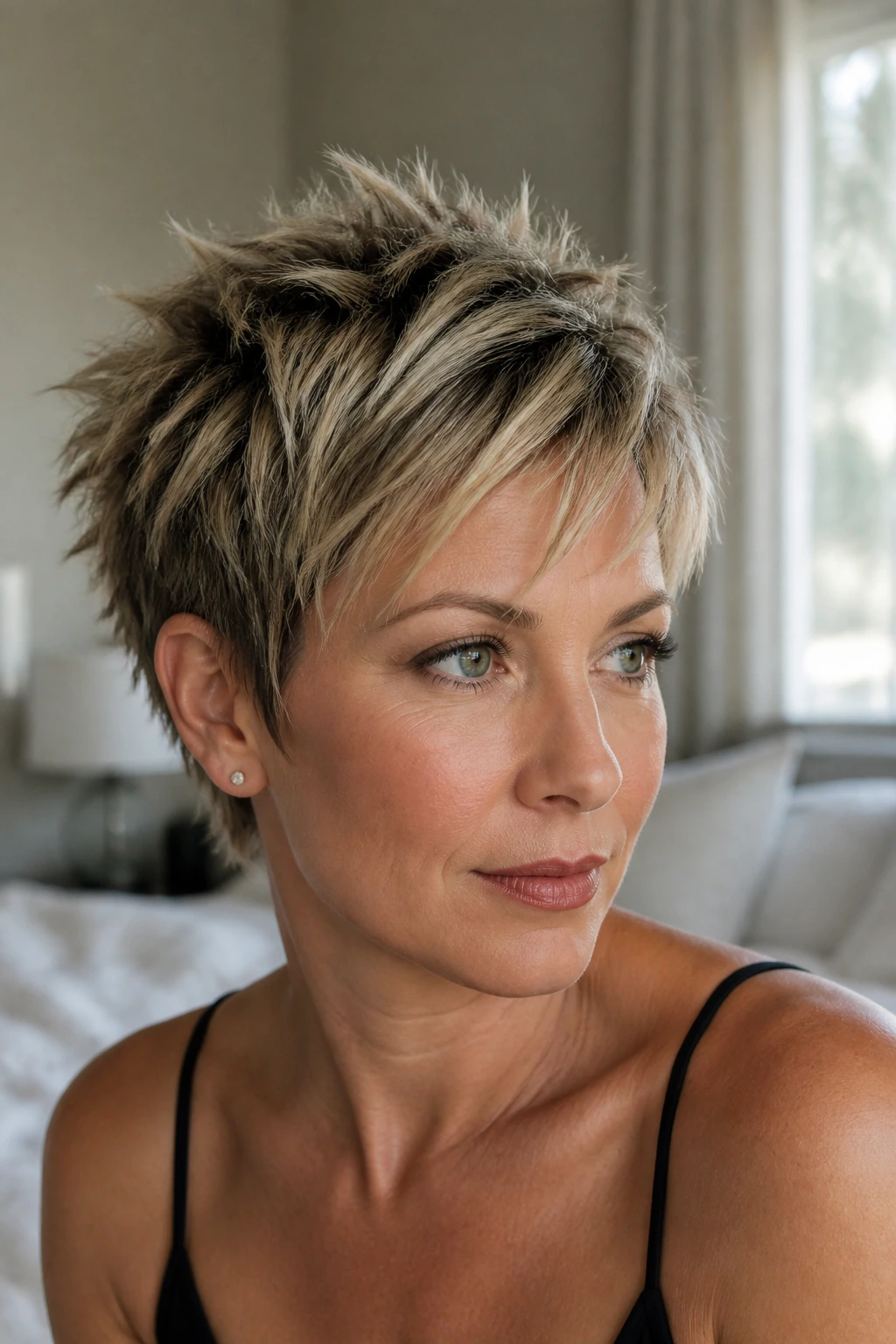
A choppy crown does the heavy lifting here. The cut stays short around the sides and back, but the top has broken-up layers that move in little pieces instead of one flat sheet. That’s the charm. It feels a little messy, a little playful, and never precious.
Why It Feels So Right
The choppy crown gives fine hair a faster route to volume. You do not need a lot of length; you need a few well-placed layers and a little grit from a matte paste or texture cream. A tiny amount goes a long way.
- Best on straight to slightly wavy hair
- Ask for point-cut ends so the top looks broken up, not blunt
- Blow-dry the crown forward first, then push it up with your fingers
- Finish with a pea-sized dab of matte paste
Tip: If the top falls flat by noon, your layers are probably too heavy. A good choppy crown should feel light at the roots and piecey at the ends.
2. Side-Swept Fringe Pixie
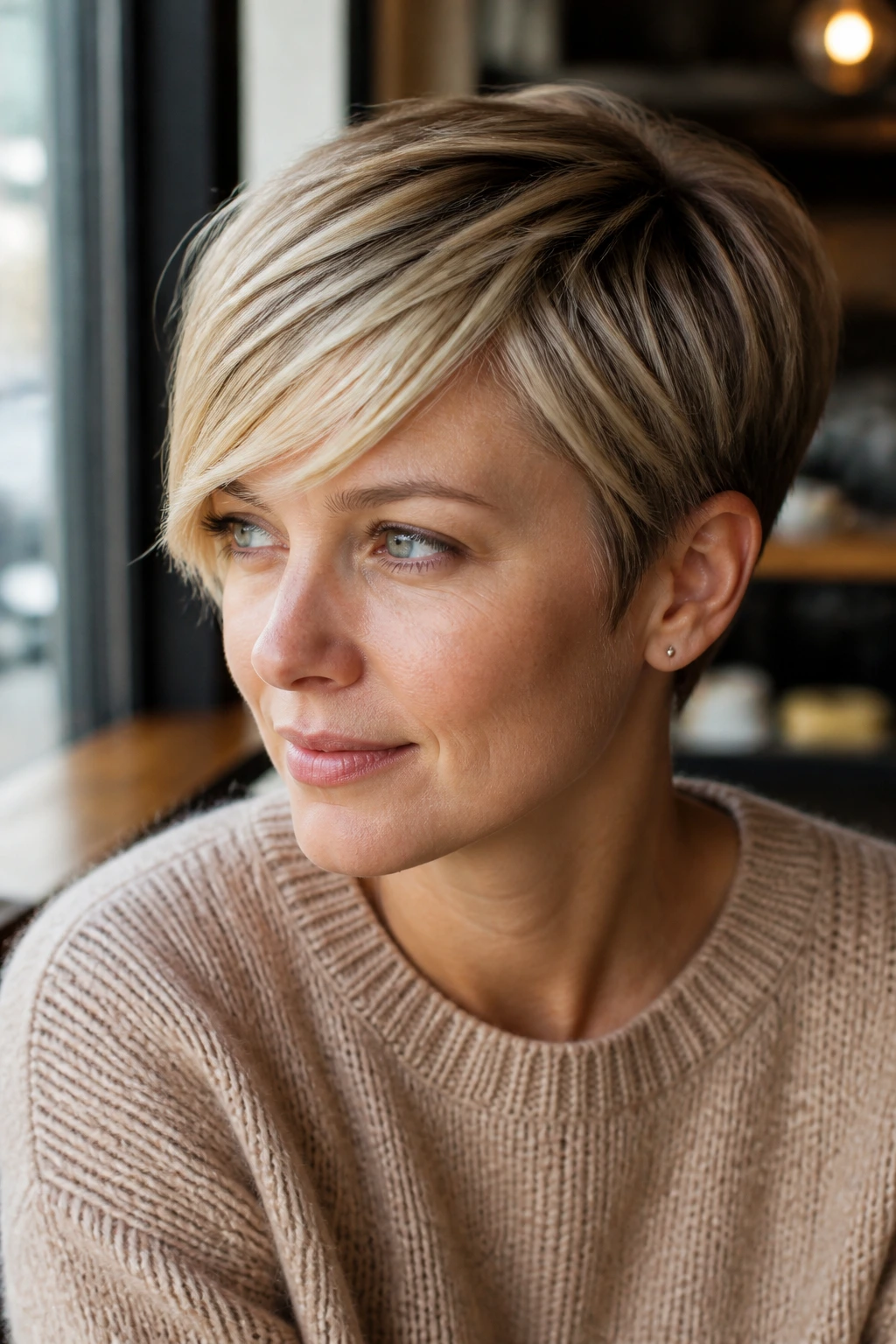
A side-swept fringe is the easiest way to make a pixie feel softer. It brings the focus to the eyes and cheekbones instead of leaving the forehead fully open, which is why this version has lasted through so many hair moods.
The trick is in the sweep, not the weight. You want enough length at the front to bend across the forehead, but not so much that it drops into your lashes and turns fussy. A round brush, a quick blast from the dryer, and a light cream usually do the job.
It’s also a forgiving grow-out shape. When the fringe gets a little long, it still looks styled. That matters more than people admit. Short hair that can survive a few weeks without looking neglected is worth its weight in dry shampoo.
This version works especially well if you want an early 2000s pixie cut that feels wearable at dinner, at work, and on the days when you do not feel like fussing with it. It’s soft, but not sleepy.
3. Spiky Gel Pixie
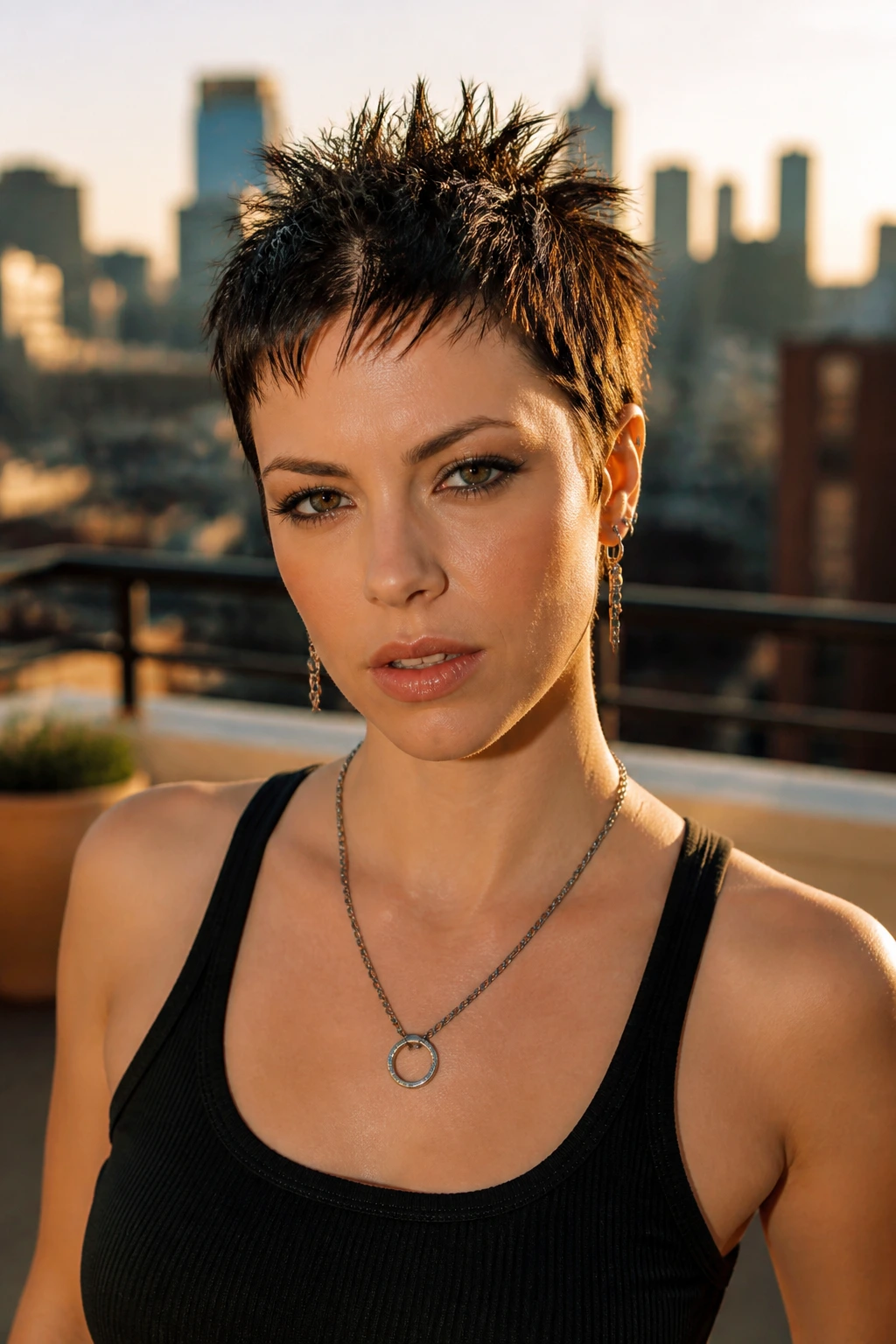
Why did this look catch on so hard? Because it has attitude in five minutes or less. The spiky gel pixie is all about separation at the crown and little upright bits that hold their shape, which gives the cut that unmistakable early-2000s edge.
The best version starts on damp hair. Work in a strong-hold gel from roots to mid-lengths, then use your fingers to pinch small sections upward. If you smear the product around too much, the style collapses into one shiny helmet. If you use too little, the spikes wilt. There’s a narrow middle ground, and it matters.
How to Wear It
- Use strong-hold gel on damp hair
- Lift the crown with your fingertips, not a comb
- Let some ends stay softer so the shape does not look stiff
- Skip heavy oils; they flatten the texture fast
If you hate crunchy hair, this cut may annoy you. But if you like a little grit and shape, it’s a fun one. The spiky pixie looks best when it still has a bit of movement at the sides.
4. Piecey Razor Pixie
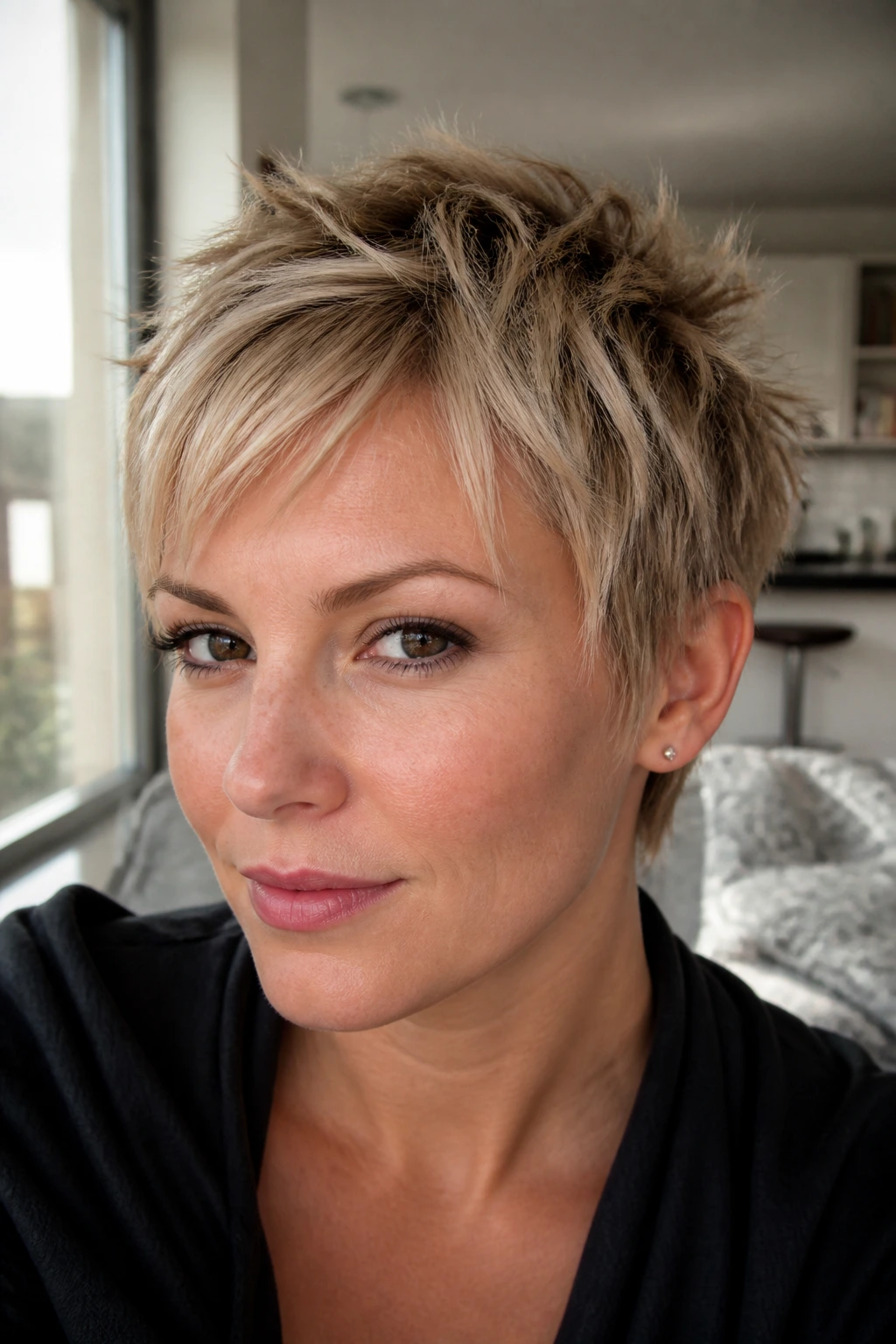
Picture a cut that looks sliced into thin ribbons instead of clipped into one tidy block. That’s the piecey razor pixie. The razor work creates soft, separated ends, and the whole shape feels lighter than a blunt crop.
This is one of my favorites for dense hair because it removes bulk without making the cut look bulky in other places. The strands fall in narrow sections, which gives you shape even when you air-dry it. You can still style it, of course, but it does not demand a perfect blowout to make sense.
What Makes It Different
- A razor creates softer edges than scissors alone
- The ends fan out a little instead of sitting in one line
- Texture cream brings the pieces back after drying
- It grows out with a bit more grace than a hard-edged crop
That last part matters. A clean razor pixie can look sharp on day one and still look decent three weeks later. Not every short haircut can say that.
5. Frosted-Tip Pixie
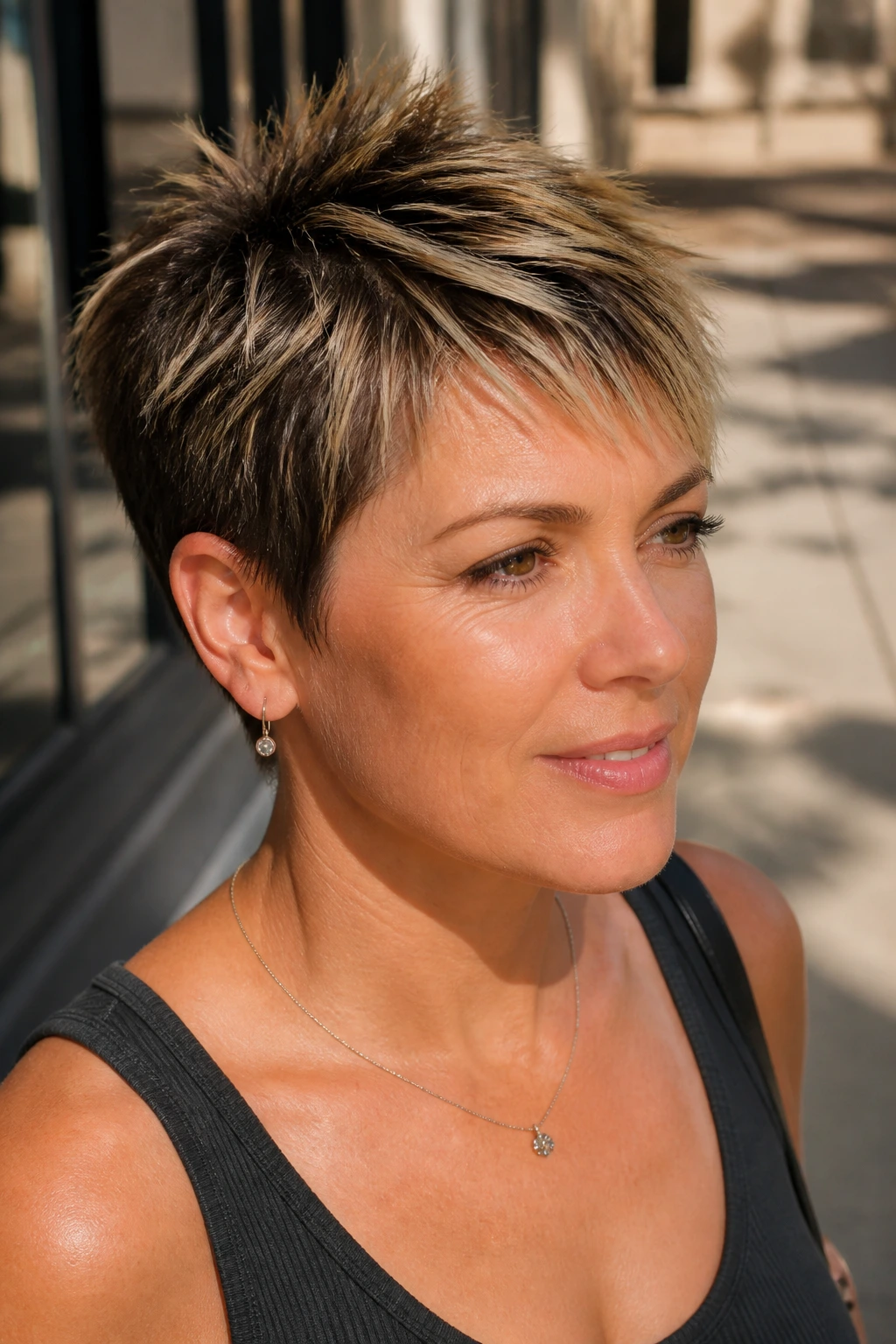
The frosted-tip pixie has a specific kind of confidence. It keeps the base close and dark, then lifts the ends with lighter color so the cut reads as layered even before you touch it with product. It is a little flashy, and that is the point.
This style works because the color does half the styling for you. The eye catches the lighter ends, so the top feels more textured and the shape looks busier without needing a lot of hairspray. On dark brown or black hair, the contrast is especially strong. On lighter hair, the effect is softer, more sun-kissed than streaky.
The key is restraint. When the highlights are too chunky or too high-contrast everywhere, the cut stops looking clean. A few strategic frosted pieces near the fringe, crown, and temple usually give the right early-2000s mood without tipping into costume territory.
I like this one on hair that needs a little edge. The cut itself can be simple; the color does the talking. And sometimes that’s enough.
6. Tucked-Behind-the-Ear Pixie
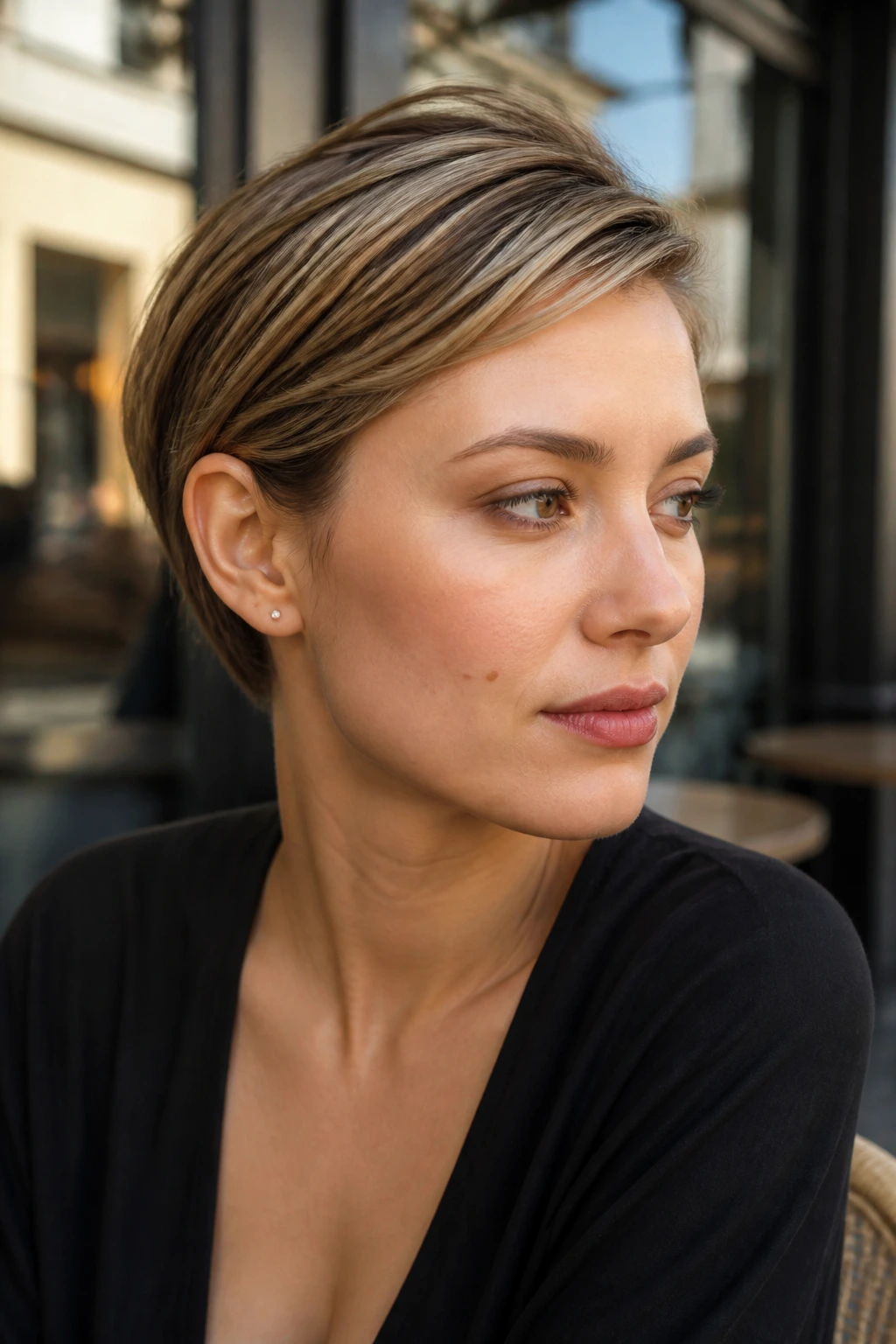
Unlike the spiky cuts, this one does not ask for attention from every angle. The tucked-behind-the-ear pixie is about sleekness, sideburns, and the tiny gesture of tucking one side back so the haircut opens up the face.
It’s a good move if you wear earrings, if you like a clean neckline, or if your hair grows around your ears in a way that needs a little structure. The cut usually keeps enough length at the sides to tuck easily, while the back stays neat and close.
A touch of smoothing cream helps, but the real work is in the shape. You want the side pieces long enough to stay behind the ear without springing out the second you blink. That means asking your stylist not to cut the sideburn area too short.
This one has a very specific charm. It feels calm, a little cool, and easier to dress up than people expect. Give it a sharp earring and a clean side part, and it wakes up fast.
7. Long-on-Top Pixie
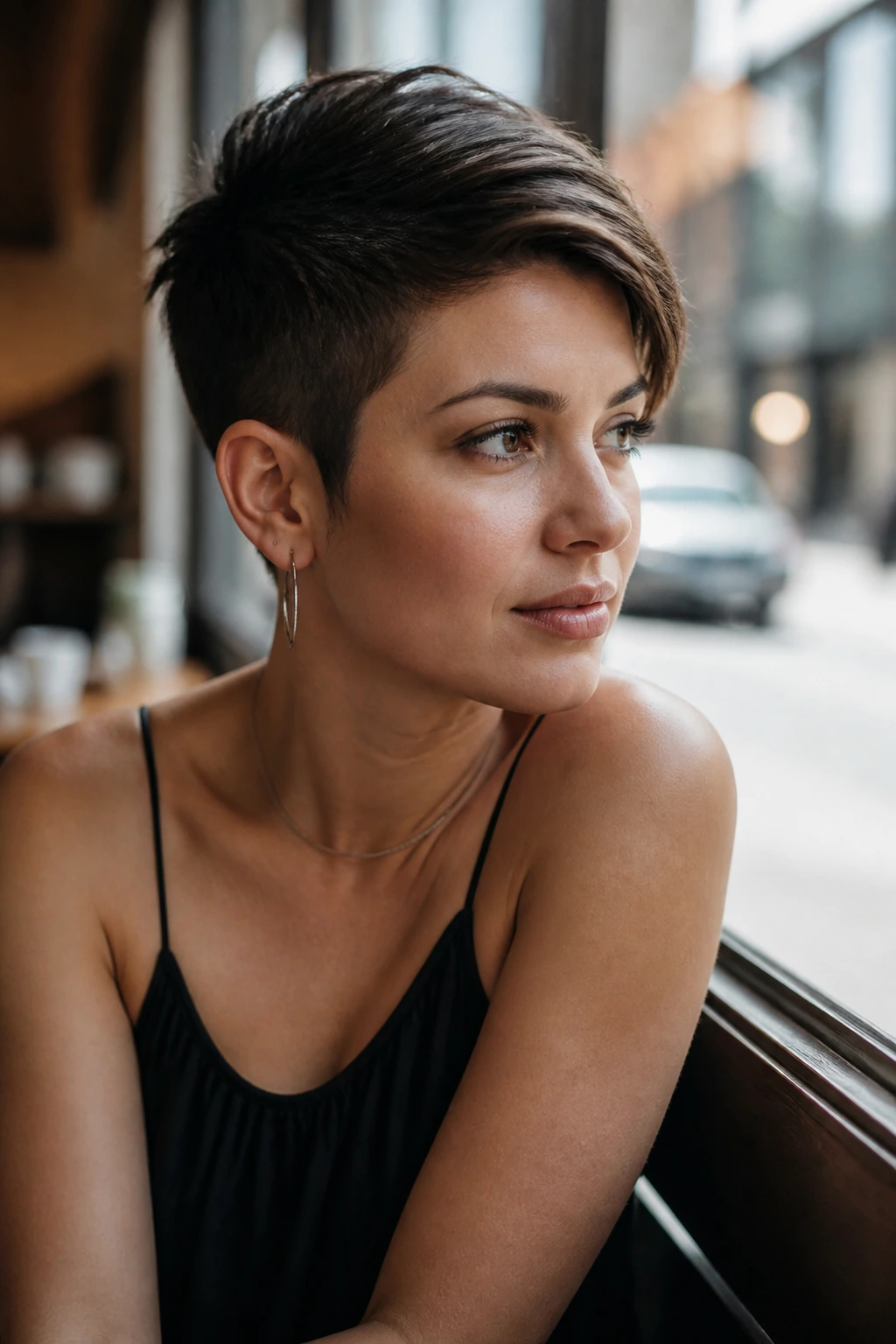
A little extra length on top changes everything. The long-on-top pixie keeps the sides and back tight, then leaves enough hair at the crown and fringe to sweep, flip, or push forward depending on your mood.
Why the Extra Length Matters
That added length gives you options without turning the cut into a bob. You can create lift at the crown with a round brush, sweep the front across the forehead, or push the top back with wax for a more open look.
- Best for hair that needs shape on top
- Works well with side parts and light layering
- A small round brush gives the cleanest bend
- Use wax at the ends, not the roots
I prefer this version on people who like to change their styling from day to day. Some mornings call for a controlled sweep. Some mornings call for a little mess. This cut allows both without losing its line.
8. Micro Pixie with a Clean Nape
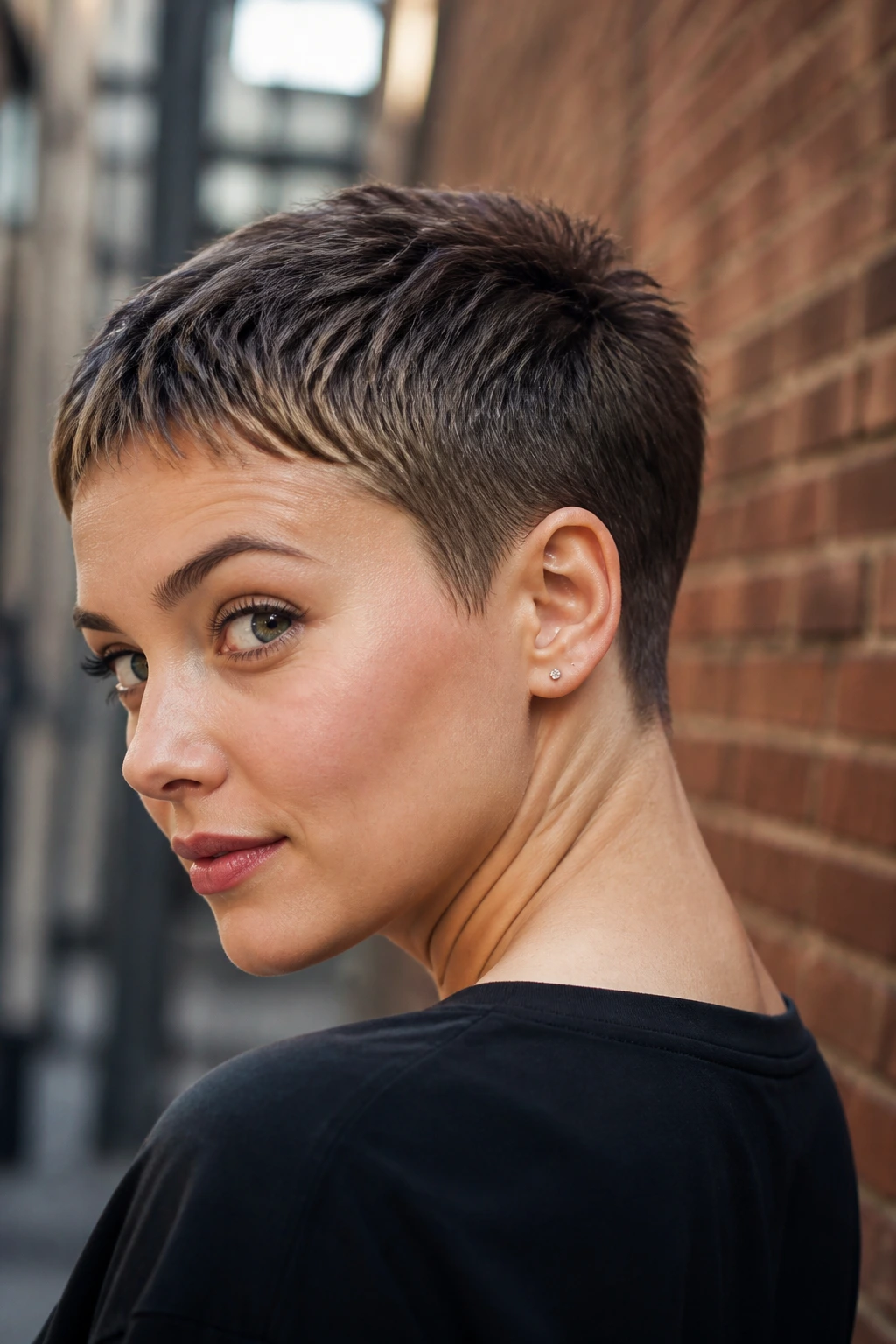
The shortest pixies can be the most demanding. A micro pixie with a clean nape leaves very little hair at the back and sides, which makes the neckline part of the design instead of something you forget about.
That clean nape is the whole point. The cut looks crisp when the bottom edge is neat, the sideburns are controlled, and the top stays slightly longer so the shape does not become a helmet. It is a sharp look. Almost severe, in a good way.
The maintenance is real, though. If you dislike frequent trims, this may annoy you fast. Short hair this cropped grows out visibly, and that growth shows first at the ears and neckline. Still, when the line is fresh, it looks polished with almost no styling effort.
This version suits people who like a hard edge and do not mind upkeep. It is one of the most direct early-2000s pixie cuts in the bunch.
9. Soft Rounded Pixie
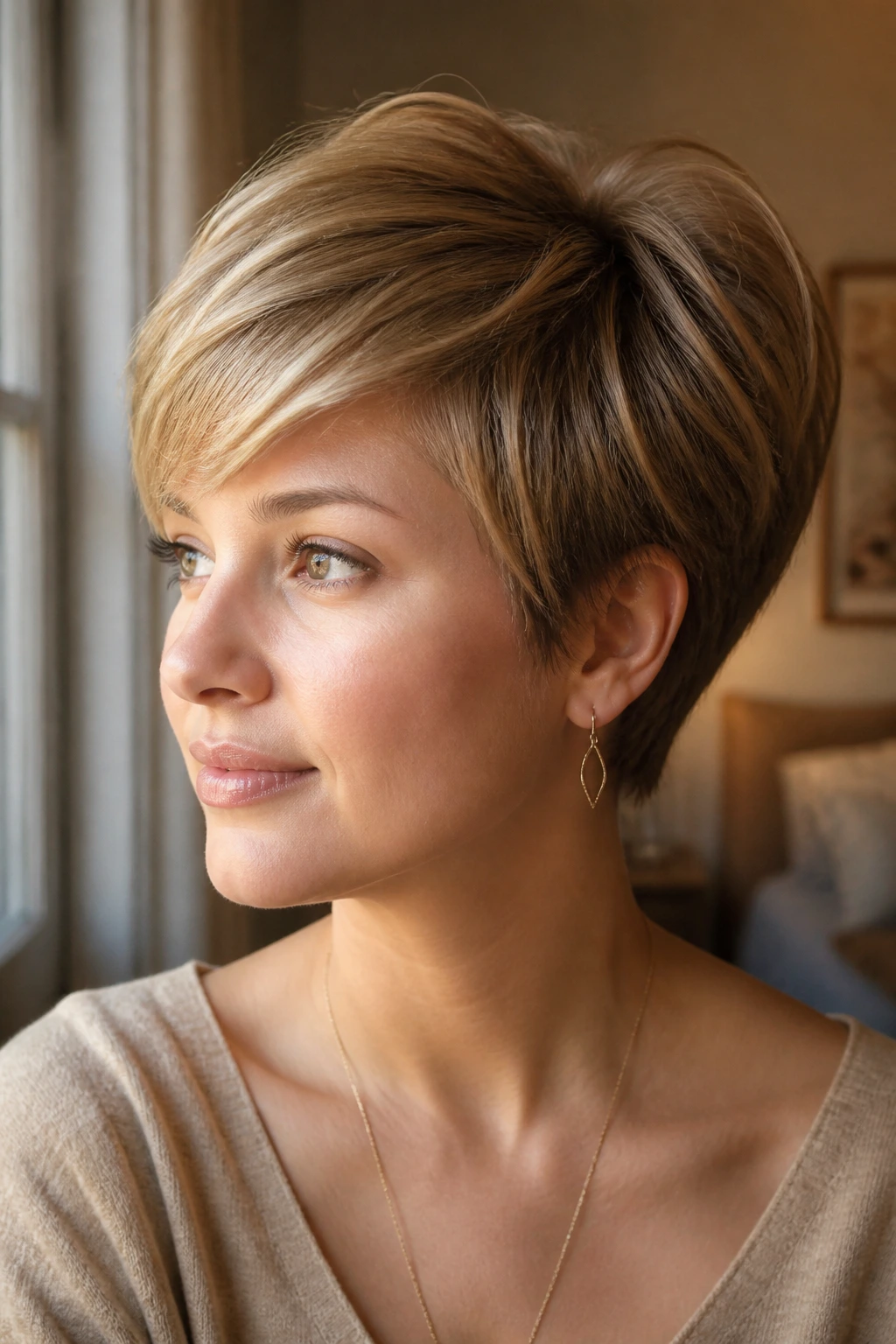
Can a pixie feel gentle? Absolutely. The soft rounded pixie curves around the head instead of spiking out or collapsing flat, which gives it a smoother silhouette and a more polished finish.
The shape usually comes from keeping the top slightly fuller and tapering the sides with care. You are not chasing height here. You are chasing balance. A little curve around the temples, a little softness near the crown, and a neckline that tapers in rather than stopping abruptly.
How to Get the Shape
- Ask for rounded layers instead of sharp, choppy pieces
- Blow-dry with a small brush to bend the hair inward
- Use a light mousse if your hair slips flat fast
- Keep the fringe soft, not blocky
This cut is a good fit for someone who wants a short haircut but does not want it to read as harsh. It has that early-2000s feel, but with a gentler outline.
10. Deep Side-Part Pixie
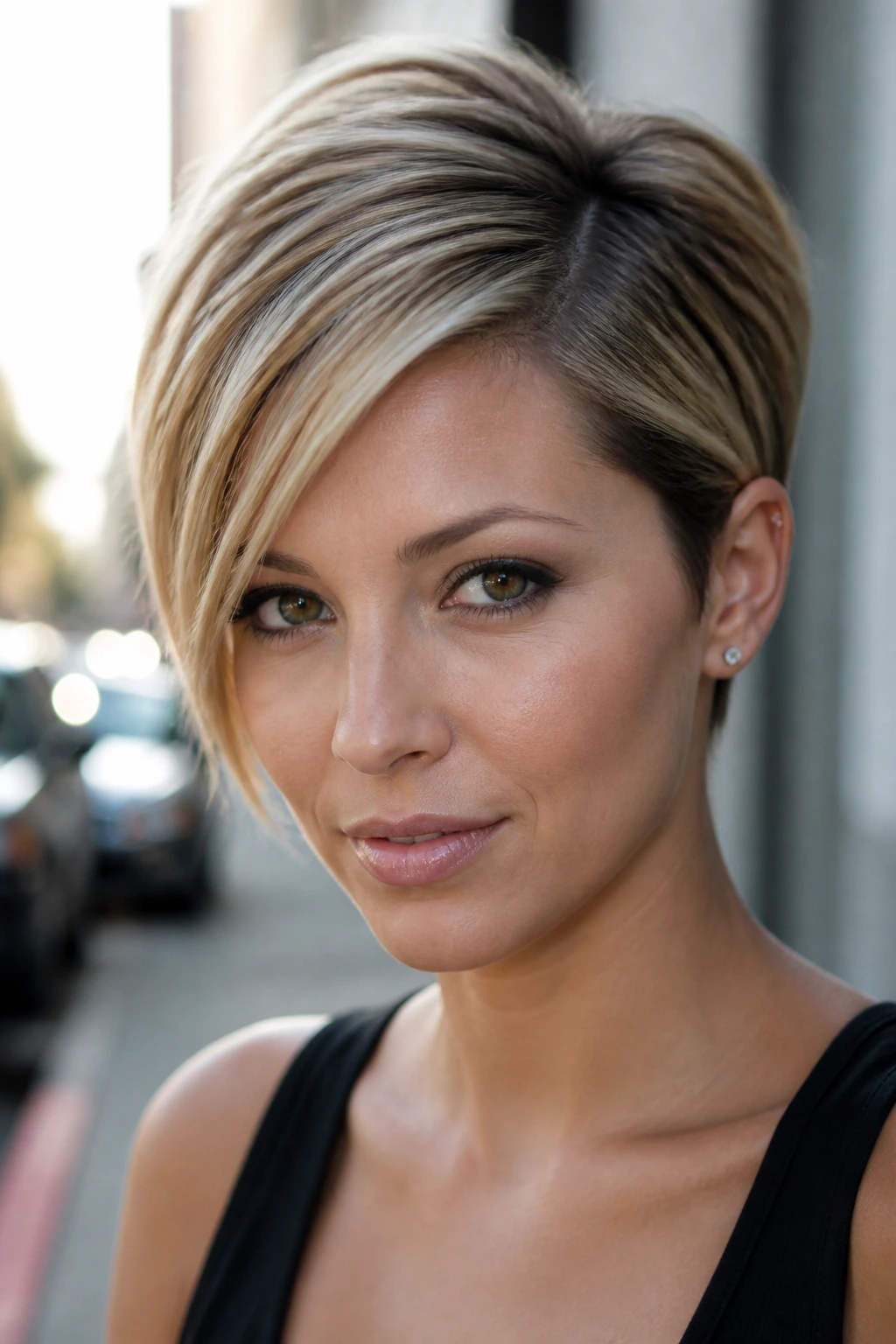
A deep side part can turn a plain pixie into something with a little drama. The line creates lift on one side, fall on the other, and a clean angle that makes the whole haircut look more deliberate.
That side part does a lot of work on straight or fine hair. It gives you height at the crown without asking for heavy teasing, and it pulls the fringe into a shape that feels controlled. A small amount of pomade near the part helps hold the line, but don’t drown it in product or you’ll lose the lift.
The version I like most leaves one side a touch fuller so it can tuck behind the ear while the other side falls forward. That contrast is what keeps it interesting. Without it, the cut can look too neat.
This style is an easy pick if you like a little structure and a little asymmetry, but not a full-on dramatic shape.
11. Baby-Bang Pixie
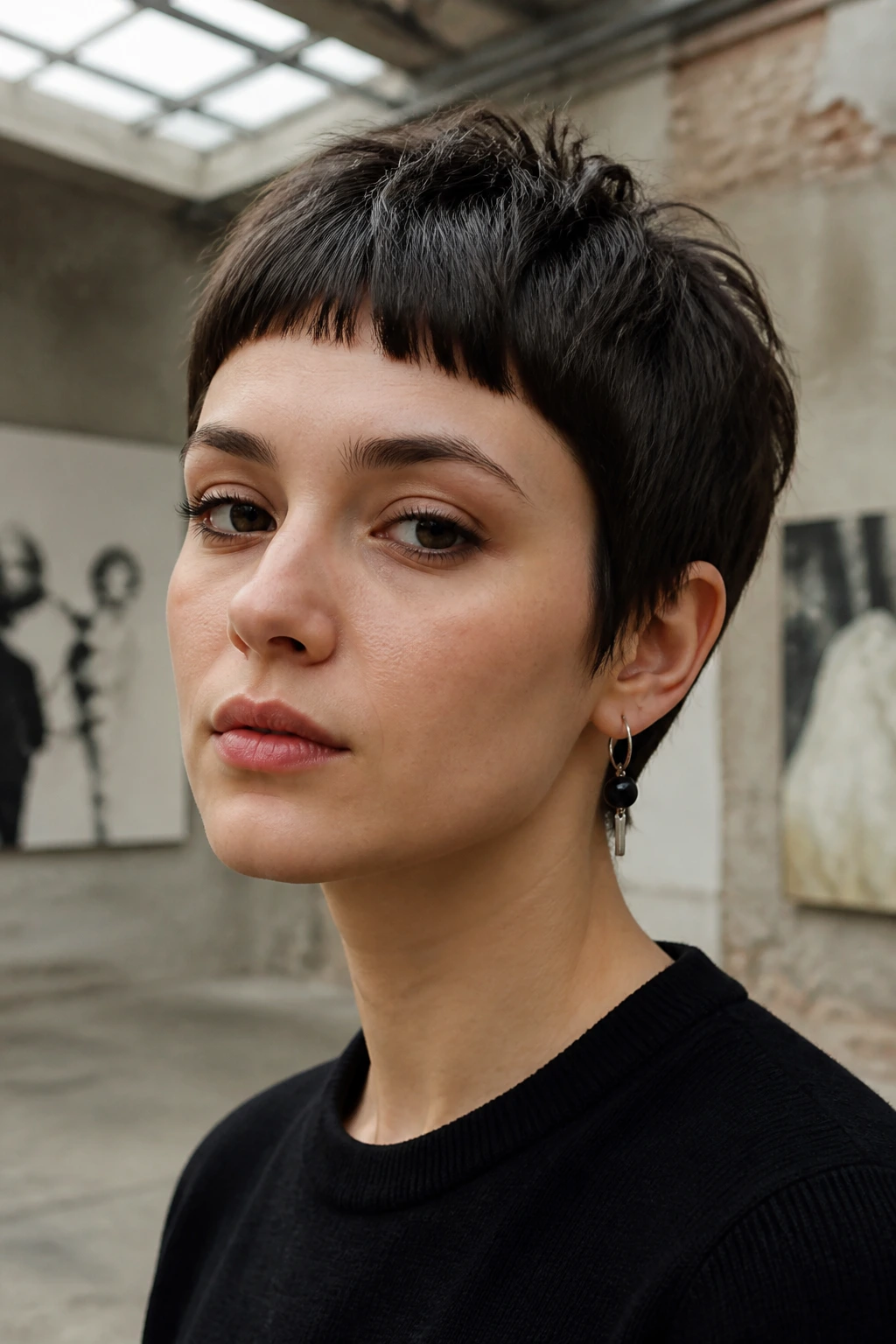
Baby bangs are a bold move. They sit high on the forehead, usually well above the brows, and they change the mood of a pixie in a hurry. The face opens up, the eyes look sharper, and the haircut starts to feel artsy whether you planned it or not.
The catch is maintenance. Tiny fringe grows out fast, and it shows. If your hair grows quickly in the front, you will be trimming often or living with a shape that keeps drifting lower than you want. Some people love that. Some do not.
Baby bangs also bring attention to your eyebrows and forehead shape, which is why they can look stunning or a little unforgiving. The cut works best when the fringe is blunt but light, not heavy and helmet-like. A touch of texture at the ends keeps it from looking too severe.
I like this style for people who want a pixie that feels graphic. It has that early-2000s bite, but it still looks fresh when the edges are kept clean.
12. Faux-Hawk Pixie
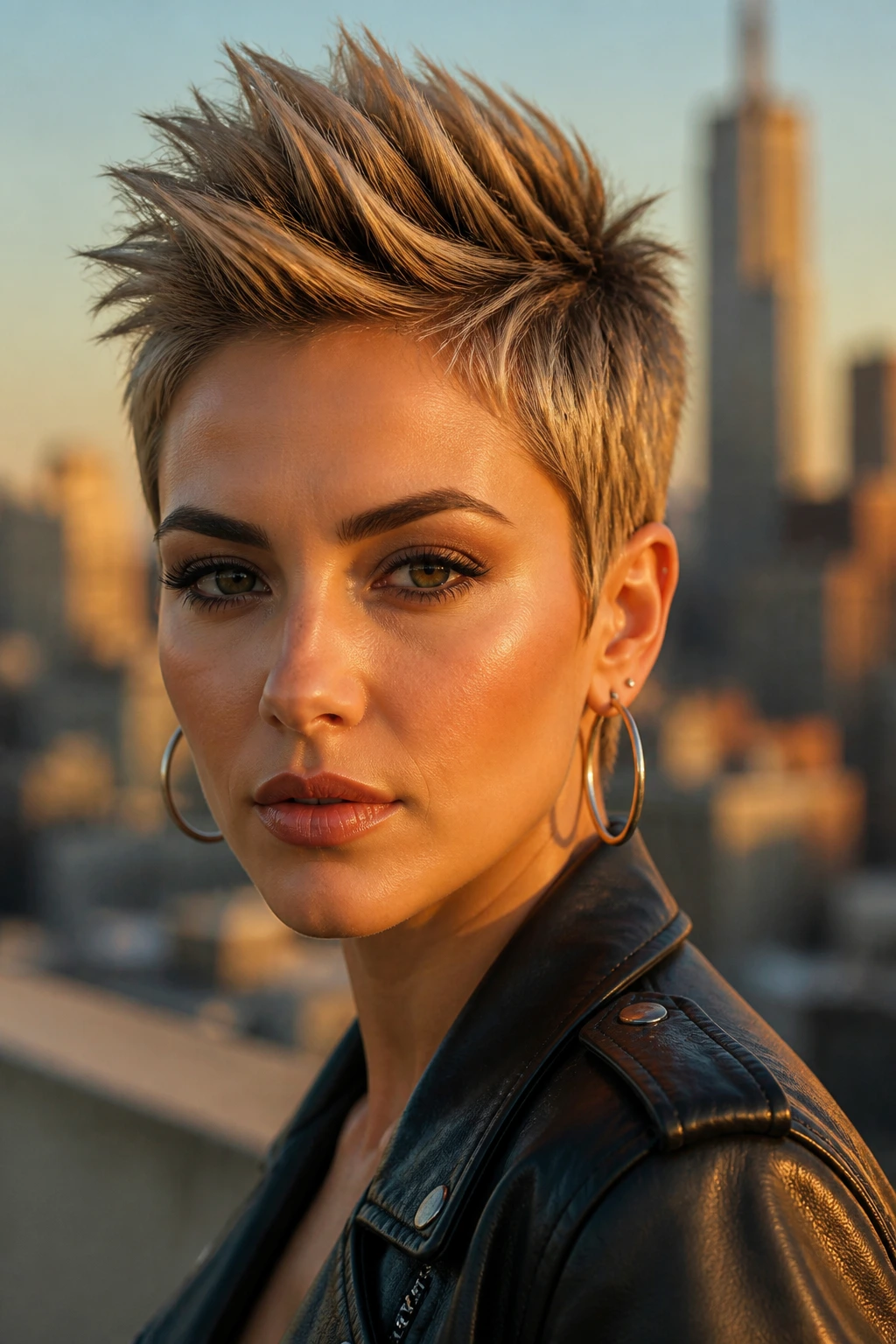
Unlike a true mohawk, the faux-hawk pixie keeps the sides wearable. That is the whole appeal. You get lift through the center, shorter sides that hug the head, and enough shape to feel rebellious without becoming a full statement haircut.
The center strip usually starts at the front hairline and runs back toward the crown. Product matters here. A little mousse for grip, followed by wax or paste for definition, gives the top enough structure to stand up and lean slightly forward or back. If you use too much, it turns stiff fast.
This cut is best for someone who likes edge but still needs a haircut that can sit under a jacket collar or a bike helmet without falling apart. It has personality, but it is not as extreme as it looks in photos.
If your style leans sharp, graphic, and a little sporty, this one delivers. It still reads as a pixie. It just comes with more volume and more attitude.
13. Flipped-End Pixie
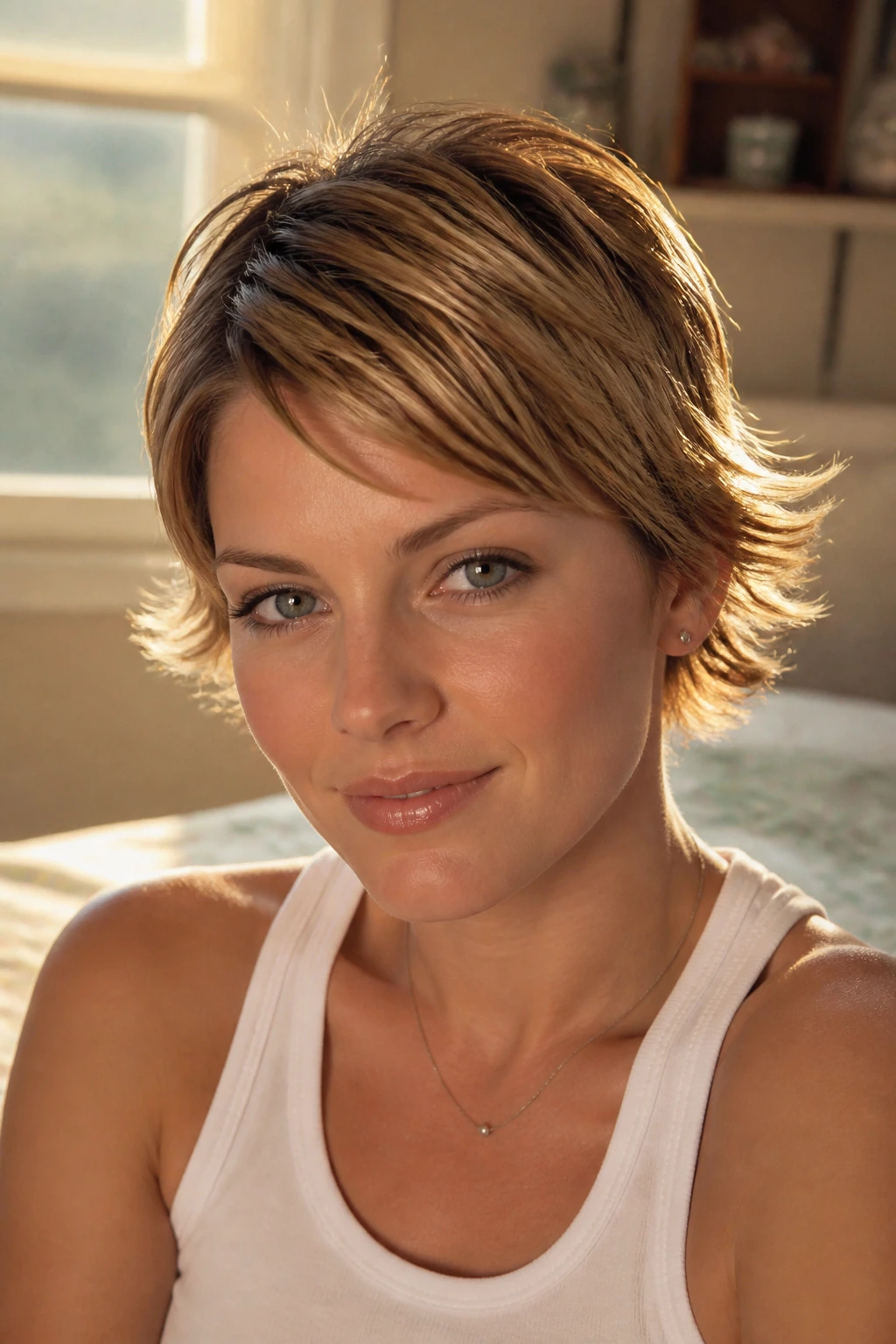
A flipped-end pixie sounds small on paper. In practice, it changes the whole mood of the cut. The ends turn outward instead of lying flat, which gives the style that unmistakable early-2000s bounce.
Styling the Flip Without Making It Look Theatrical
You want a bend, not a curl. Use a small round brush or a flat iron at the ends only, then flick the hair outward for a clean edge. The movement should look casual, even if it took ten minutes to coax into place.
- Start with a light blowout or rough-dry to remove dampness
- Flip only the last inch of the hair
- Keep the crown smooth so the ends stay the focus
- Use a medium-hold spray to lock the shape
This cut works best when the rest of the style stays simple. If every part of the hair is fighting for attention, the flip looks dated in the wrong way. If the rest is clean, the outward bend feels playful.
14. Asymmetrical Pixie
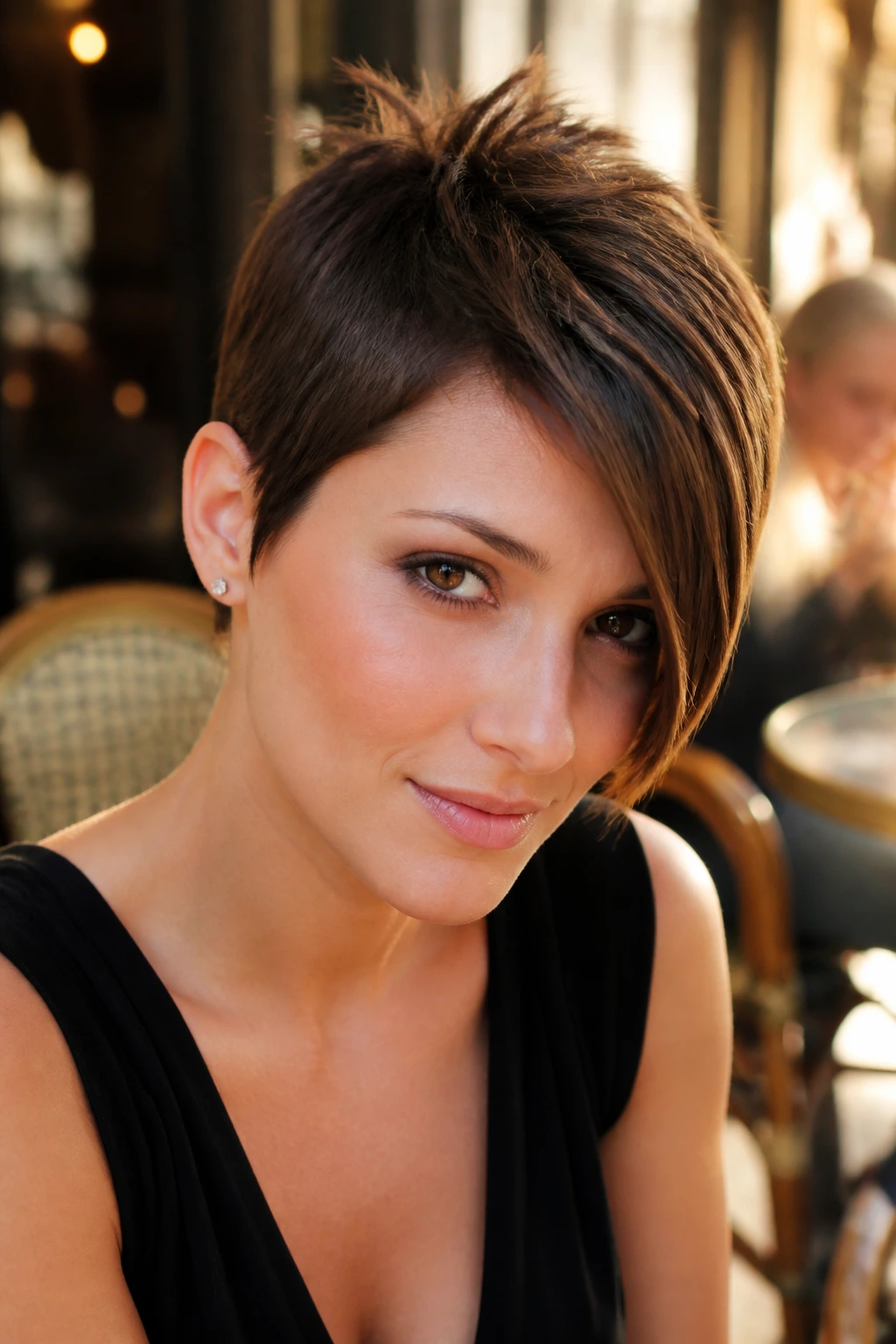
Why does one longer side make a pixie feel so intentional? Because asymmetry gives the eye somewhere to travel. The haircut stops reading as a neat crop and starts looking architectural, which is exactly why this style stuck around.
The longer side can skim the cheekbone while the shorter side opens up the face and neckline. That contrast creates shape even when the rest of the hair is kept simple. A side part usually helps, but the real point is the imbalance itself.
It’s a smart choice if your face has a strong jaw or if you want a cut that softens one side without losing edge on the other. I would not call it low-maintenance, though. The balance needs clean trimming, or the style starts to look accidental instead of designed.
This is one of those haircuts that can look expensive when it’s cut well. If it’s off by even half an inch, you notice. Fast.
15. Bixie-Inspired Pixie
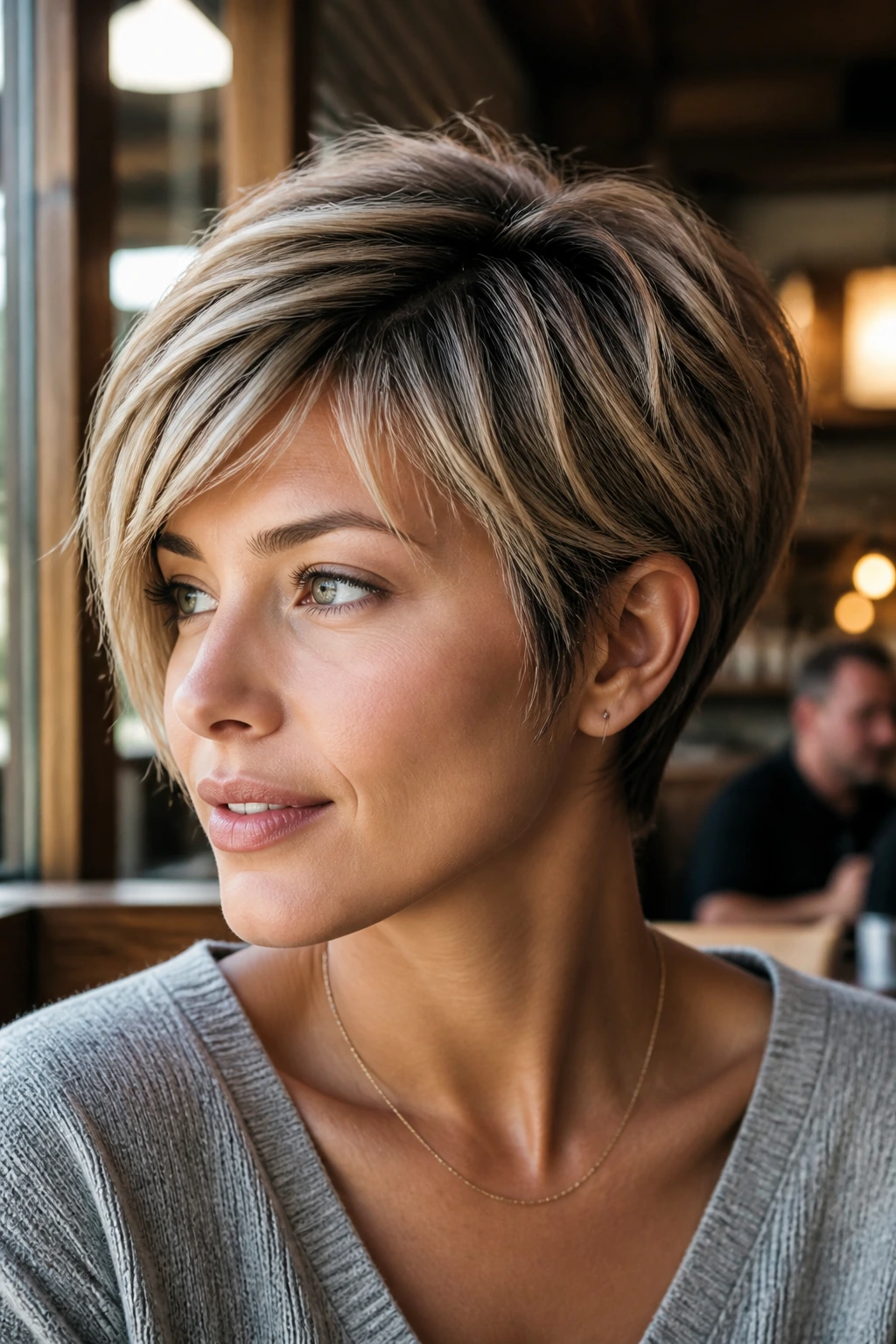
Is it a pixie or a tiny bob? The bixie-inspired cut sits right between the two. It keeps the shortness and lightness of a pixie, then adds a little length through the sides and nape so the silhouette feels softer and more layered.
That extra length changes the texture of the whole style. The hair can swing a bit, curl under, or rest against the jaw in a way that a tighter pixie never does. It also makes the grow-out stage less awkward, which is one reason this shape has such staying power.
How to Ask for It
- Keep the nape shorter than the sides
- Leave enough length to skim the jaw
- Add soft layers through the top
- Ask for a fringe that can sweep or tuck
This is a good middle ground if you want an early-2000s pixie cut but hesitate at going full crop. It gives you movement without losing the short-hair feeling.
16. Wet-Look Pixie
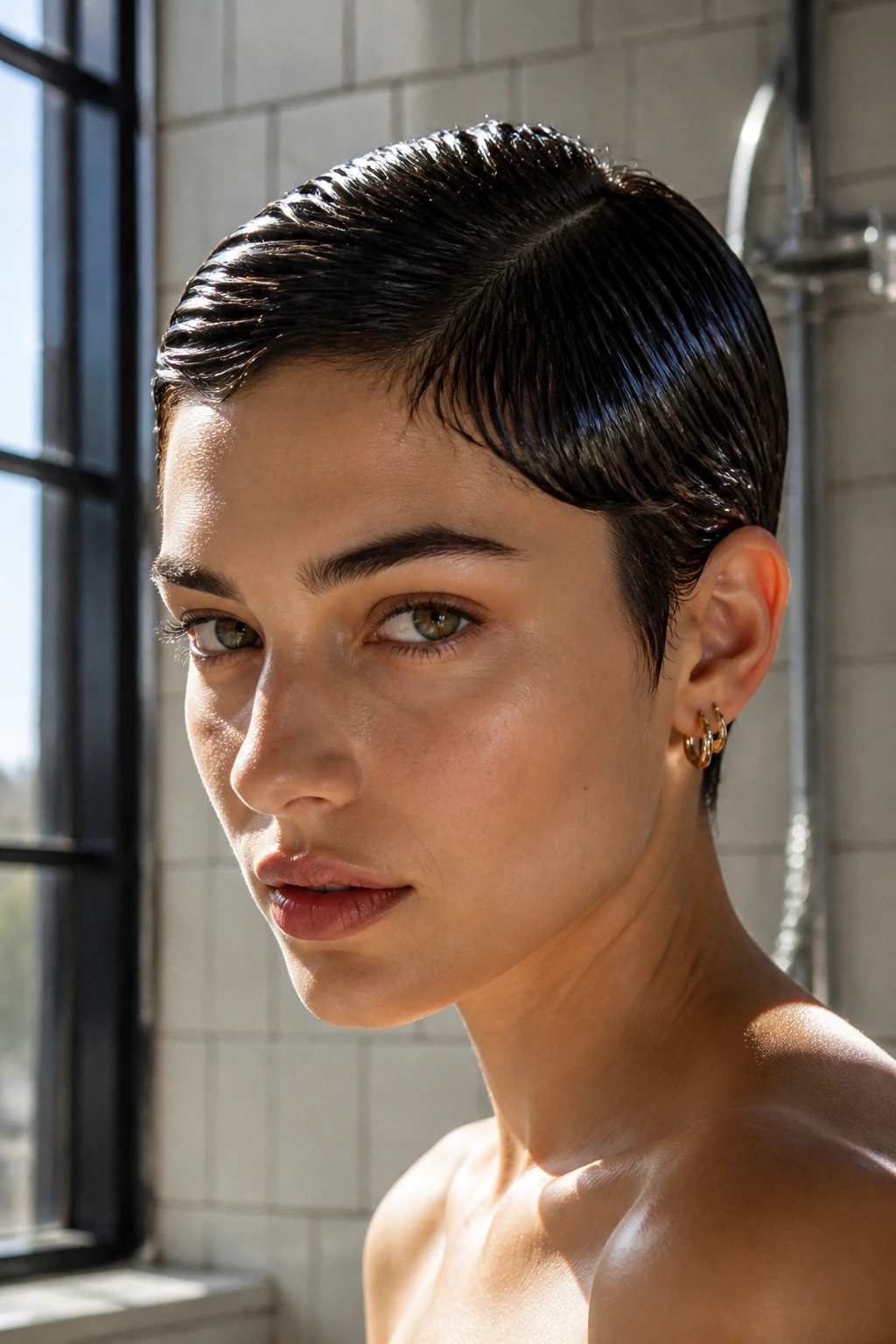
A wet-look pixie can read elegant or greasy, and the line between the two is thinner than people think. The style works when the hair is slicked close to the head with shine, but the shape still has to be clean underneath.
The best base is a cut with clear layers around the crown and sides, because the slick finish shows every line. Start with damp hair, work in a strong gel or shine cream, then comb the hair into the direction you want before it dries. Finger-combing after the product goes in tends to make it messy in a bad way.
- Use gel or gloss cream on damp hair
- Comb the top into one direction
- Leave the ends smooth, not frayed
- Keep the neckline neat so the shine looks intentional
This cut is a good pick for nights out, dressy events, or any day you want the hair to look sleek without looking flat. It has a hard sheen that suits the early-2000s mood well.
17. Swoopy Layered Pixie
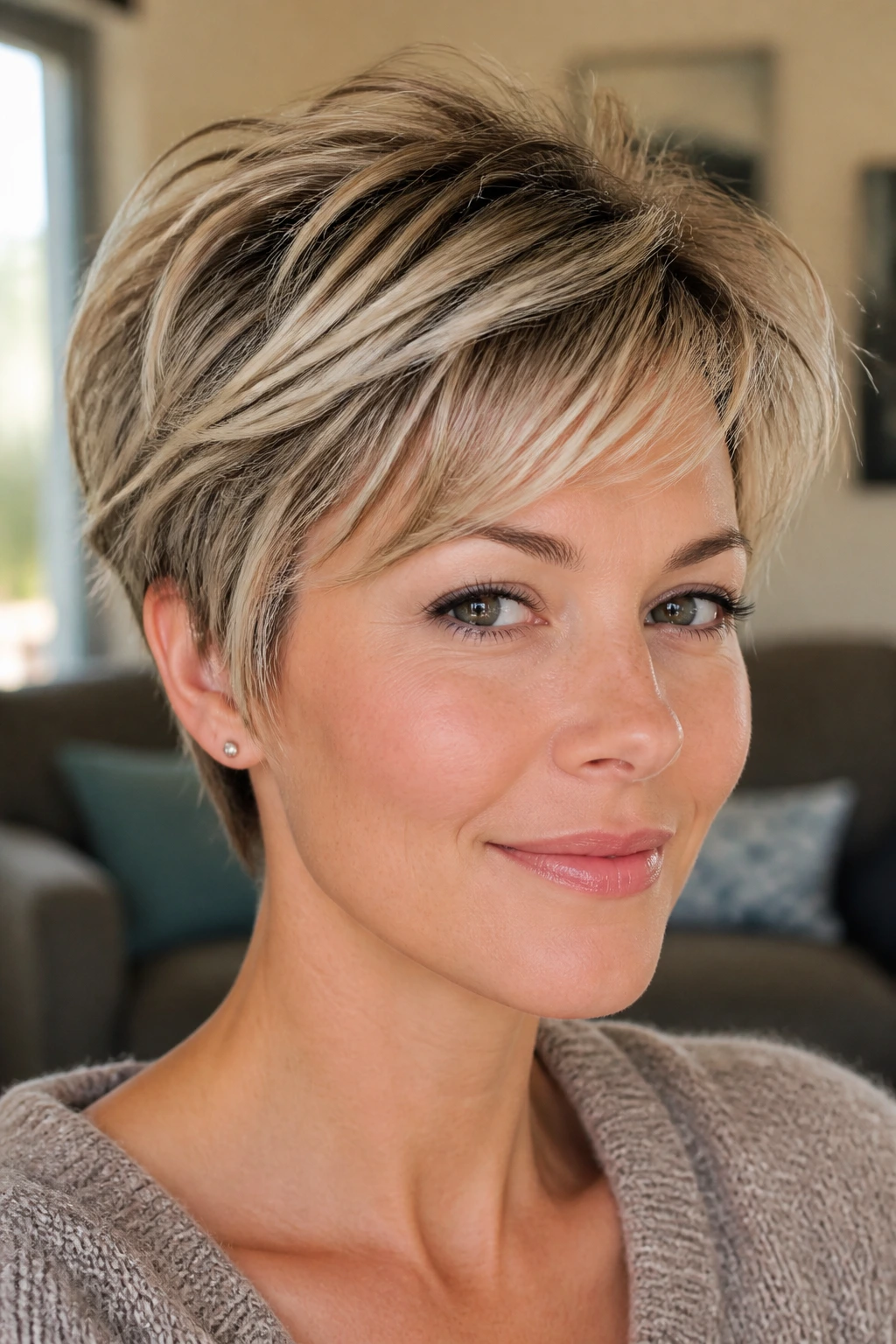
Soft movement changes the whole temperature of a pixie cut. The swoopy layered version uses longer top pieces and curved layers to create a shape that flows instead of standing still.
I like this one because it feels lived-in fast. A little blow-drying with your fingers, a little side sweep, maybe a touch of mousse at the root, and the cut takes on shape without needing a ton of product. The movement should look airy, not blown out and stiff.
It also plays well with side fringe. The front can sweep across the forehead, the crown can lift a little, and the ends can curve around the ears or cheekbones. None of it has to be perfect. That’s the point.
This is one of the most forgiving early-2000s pixie cuts if you want softness but still want the short shape to show. It looks better when it’s touched, bent, and slightly imperfect.
18. Feathered Face-Framing Pixie
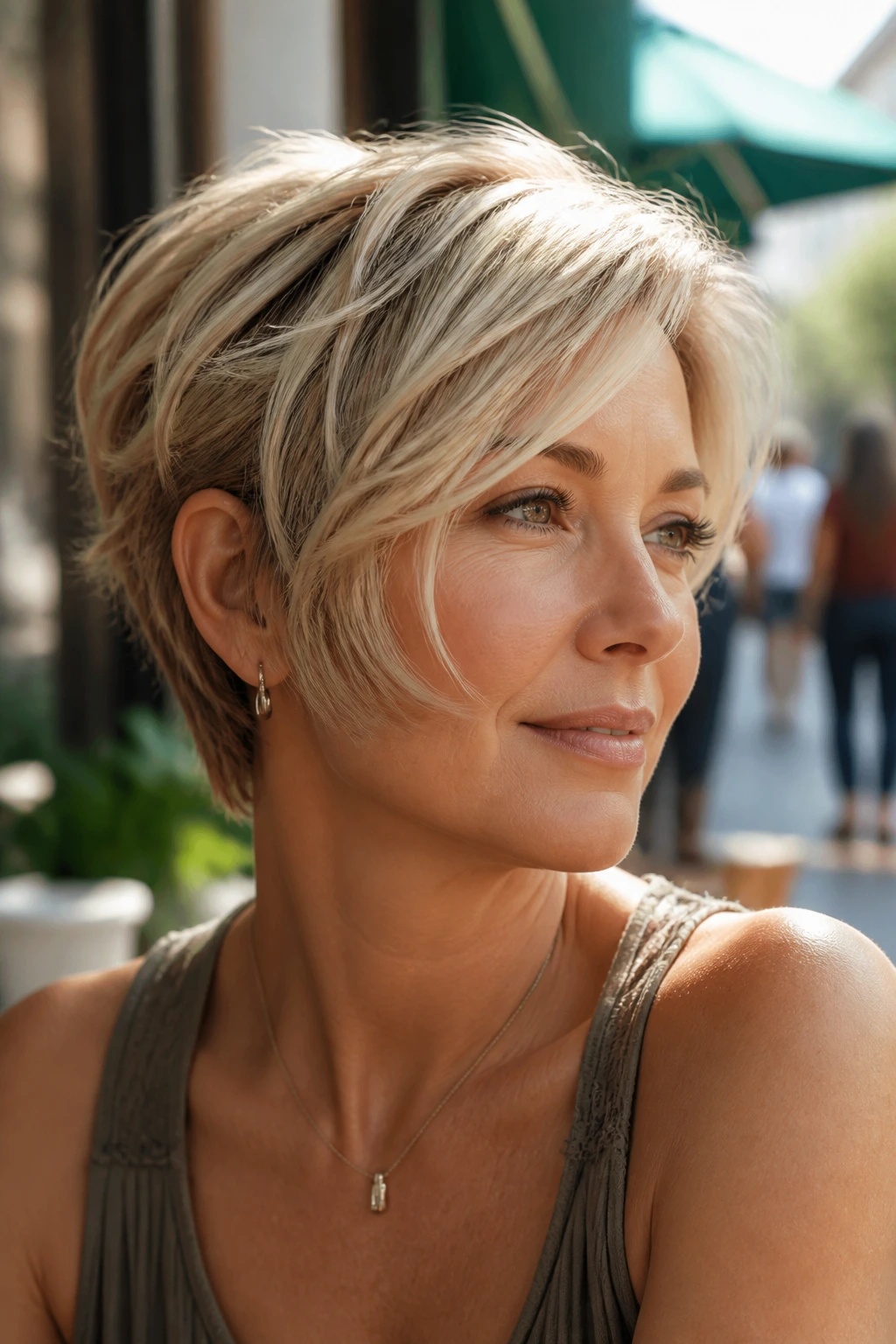
Compared with the harder crops, the feathered face-framing pixie feels lighter around the edges. The temple pieces and front layers are cut to skim the face, so the haircut softens the cheeks and forehead instead of outlining them too sharply.
That feathering matters more than people expect. A few airy pieces around the front can make short hair feel less abrupt, especially if your hair is thick or if you do not like a blunt line near the jaw. The back can stay tapered, but the front gets the movement.
- Best for people who want softness around the cheeks
- Works well with a light side part
- Use a small brush to bend the front pieces away from the face
- Keep the layers light so they do not collapse into a wedge
If you want one of the early 2000s pixie cuts that feels easy to wear day after day, this is a strong pick. It has shape, but it does not shout.
Final Thoughts
The real trick with early 2000s pixie cuts is not the era marker. It’s the silhouette. Crown lift, fringe length, and neckline shape decide whether the haircut feels sharp, soft, or a little bratty in the best way.
I would always look at how a pixie moves after a day of wear, not just how it looks at the salon mirror. If it can survive a little wind, a little sleep, and one more pass of your fingers, that’s the cut worth keeping.
