



A good mod haircut does not whisper. It sits there with a blunt fringe, a clean edge, and enough shape to look deliberate even when you shove it behind one ear and keep moving. That’s the whole appeal of mod haircuts: they’re neat without feeling fussy, retro without slipping into costume, and sharp enough to give even simple clothes a bit of bite.
If you want a style with retro edge, the trick is not to pile on layers or texture until the shape disappears. The best mod cuts keep their outline visible from across the room. A fringe that skims the brows, a bob that lands at the jaw, a pageboy curve that turns under instead of fraying out — those details do the heavy lifting.
I’ve always liked mod haircuts for one reason: they still make sense when the styling gets imperfect. A bit of wind, a little humidity, a rushed blow-dry — none of that ruins the idea, because the idea is built into the cut itself. That’s a more useful kind of style than something that only works under ideal conditions.
The cleanest place to start is the blunt bob. It tells you almost everything about the mod look in one glance, and once you understand why that haircut works, the rest of the list falls into place fast.
1. Blunt Mod Bob With Eyebrow-Grazing Fringe
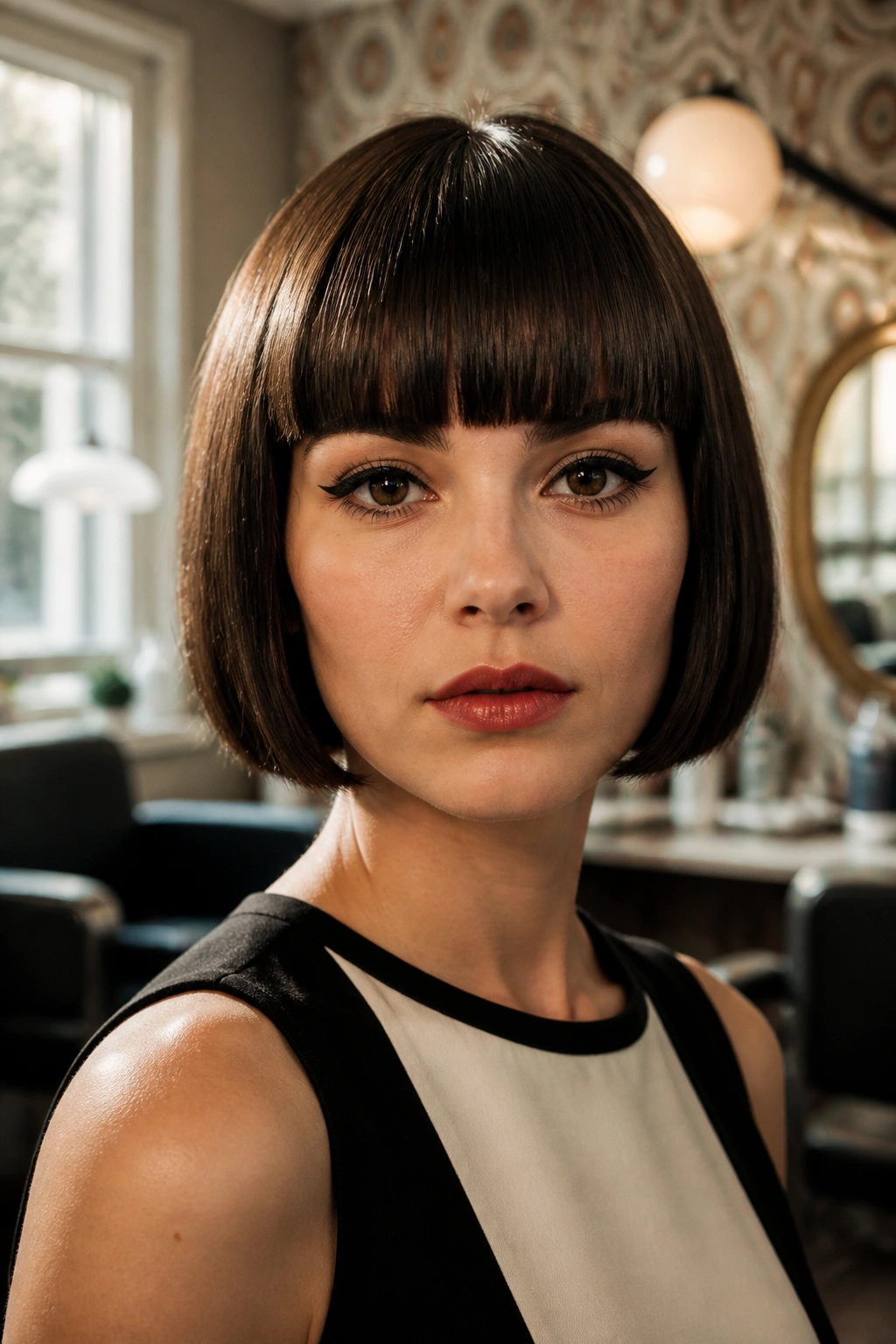
This is the haircut that wears the mod label without explanation. The line is hard, the fringe is straight, and the whole shape sits close to the face like it knows exactly what it’s doing.
What Makes It Mod
The magic is in the perimeter. A blunt cut at the jaw or just below it gives the hair a graphic edge, and the eyebrow-skimming fringe pulls the eye straight to the face. There’s no softness to hide behind, which is why this cut feels so crisp.
It also has real history behind it. Think of the clean, architectural shapes that came out of the classic 1960s salon world — the kind of haircut that looked finished before you even touched it. That’s the spirit here.
Styling Notes
- Blow-dry the fringe first, using a small round brush or a paddle brush.
- Keep the ends slightly tucked under, not curled into a perfect ringlet.
- Use a pea-size amount of smoothing cream through the mid-lengths.
- Ask for the fringe to sit about 1/4 inch above the brows if you want a sharper effect.
Best for: straight to slightly wavy hair, especially fine or medium textures.
Watch out for: too much layering at the bottom. It kills the line.
Pro tip: if your fringe splits in the middle, dry it side to side with the nozzle aimed downward before letting it fall back into place.
2. Rounded Pageboy With Curved Under Ends
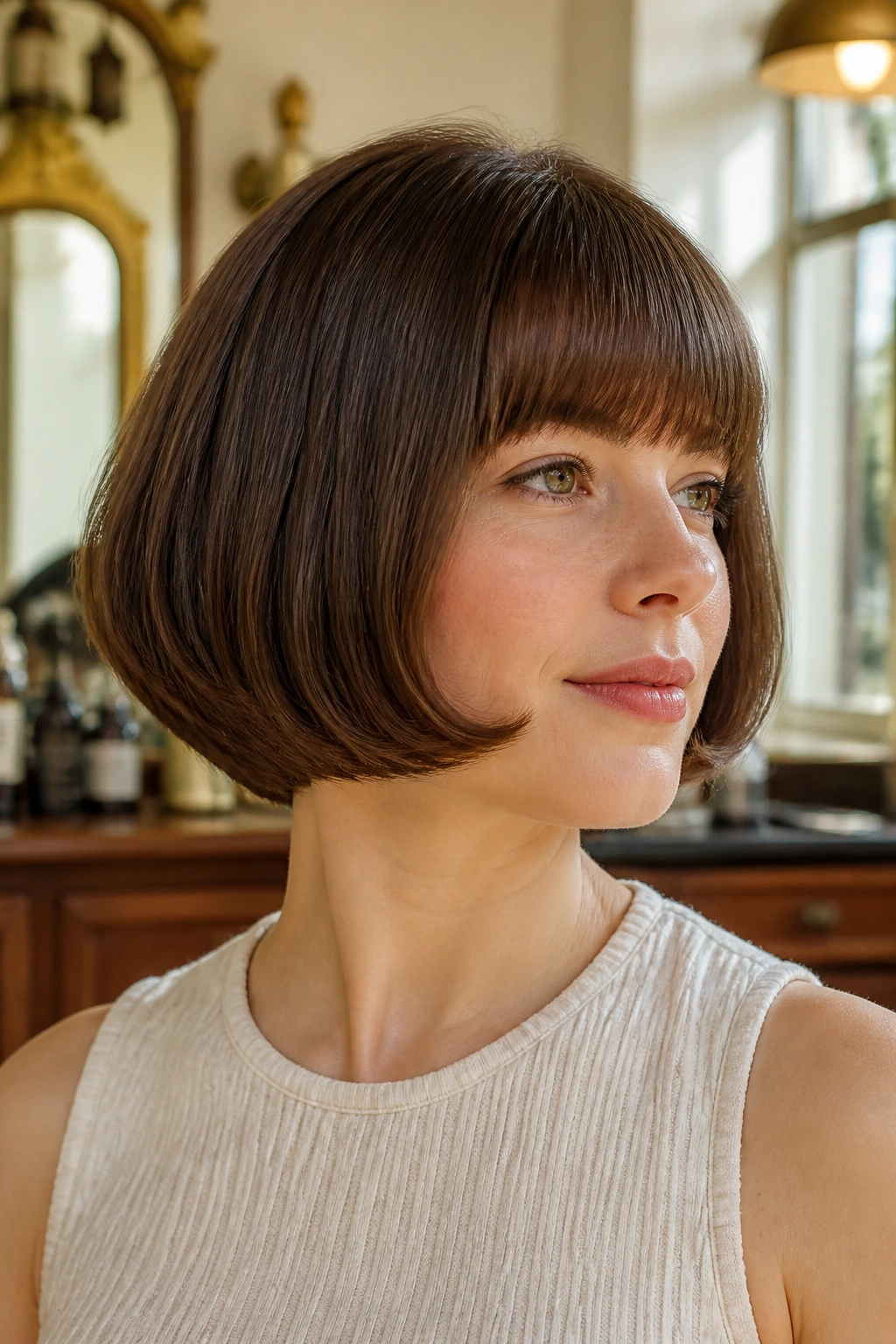
If the blunt bob is the sharp suit, the pageboy is the polished coat with a softer shoulder. It still has structure, but the shape feels rounded and a little more forgiving around the jaw.
The reason this cut works so well as a mod haircut is the curve. The hair turns under at the ends, often with a little volume through the crown, which gives the whole style a neat, contained look. That inward bend is doing more work than people think.
Why It Looks So Good
A pageboy flatters thick hair because the perimeter helps keep bulk under control. It also suits hair that wants to puff outward, since the cut encourages the ends to fold back in. You get control without the flat, helmet-like result that bad pageboys used to have.
The prettiest versions stop around the chin or just below it. Longer than that, the silhouette starts to lose its old-school charm. Shorter than that, and it can tip into a bowl shape if the graduation is too heavy.
How to Wear It
A medium round brush is your friend here. Dry the hair in sections, turning the brush under at the ends and holding each bend for a second or two with the dryer pointed down the shaft. A light spray of flexible-hold mist will keep the curve in place without making the cut crunchy.
This is one of those styles that looks a little more expensive when it has movement, not stiffness. Good movement. Not mess.
3. Graphic Pixie With Side-Swept Fringe
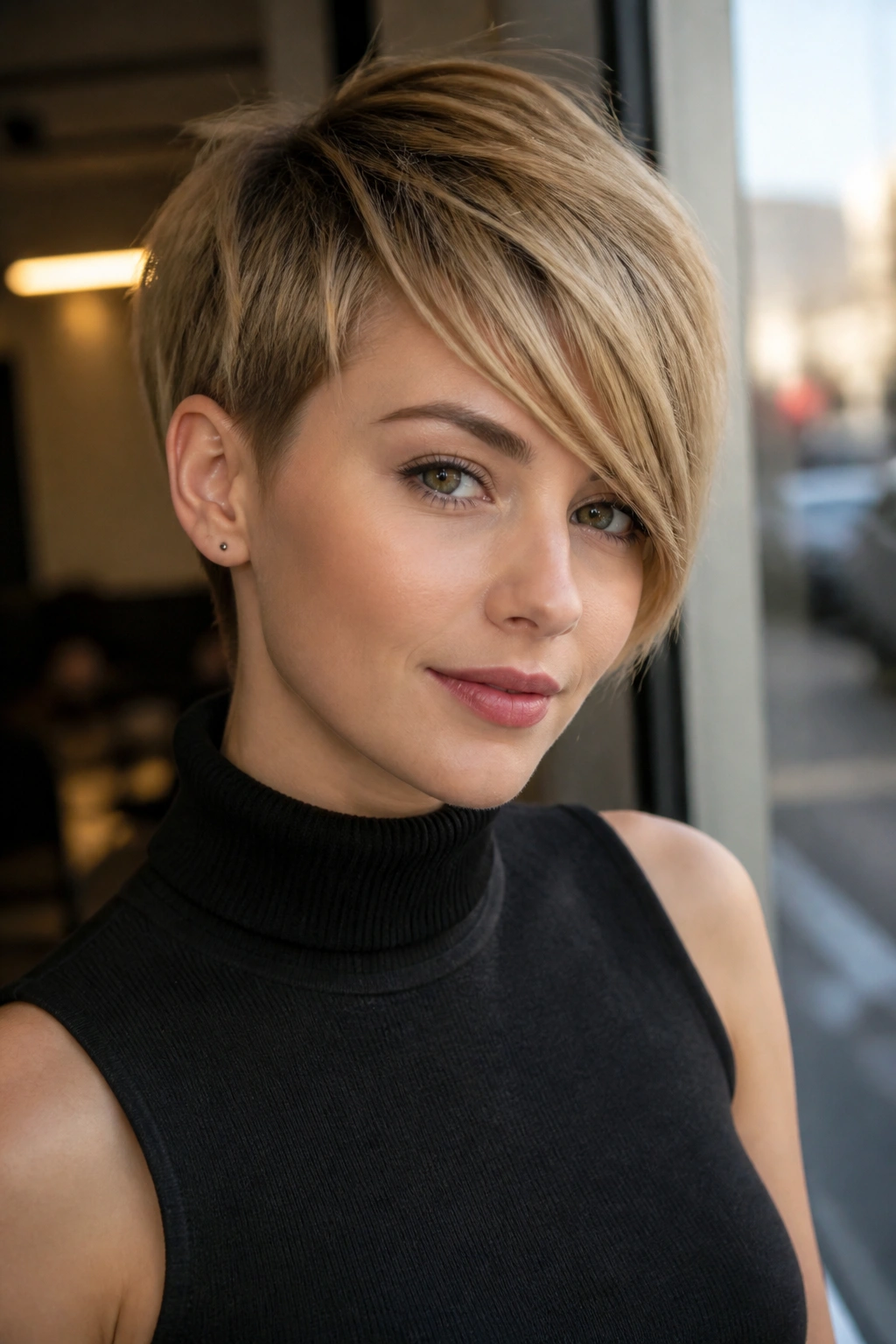
Why does a pixie suddenly read as mod instead of just short? Because the shape is clean and directional. The top is a little longer, the sides are neat, and the fringe moves across the forehead with intention.
The Shape That Matters
The best mod pixie has a strong outline. It is not a choppy, tousled crop that relies on random texture to feel interesting. You want clear edges at the nape and around the ears, plus enough length on top to create a forward sweep or diagonal fringe.
That diagonal line matters a lot. It gives the haircut the same graphic feel you see in mod makeup and clothing — a little sharp, a little severe, but still fun. And yes, it can be incredibly flattering with glasses or strong brows because the face gets room to show off.
How to Get the Most From It
- Ask for short, tapered sides and a longer top that can be combed forward.
- Keep the fringe heavy enough to fall in one clean sweep.
- Use a dab of cream or light pomade, not a greasy wax.
- If your hair is fine, a root-lifting spray at the crown helps the shape stay visible.
A pixie like this doesn’t need much fuss. It needs clean cutting and a little control. That’s all.
4. Flipped-Out Lob With Clean Ends
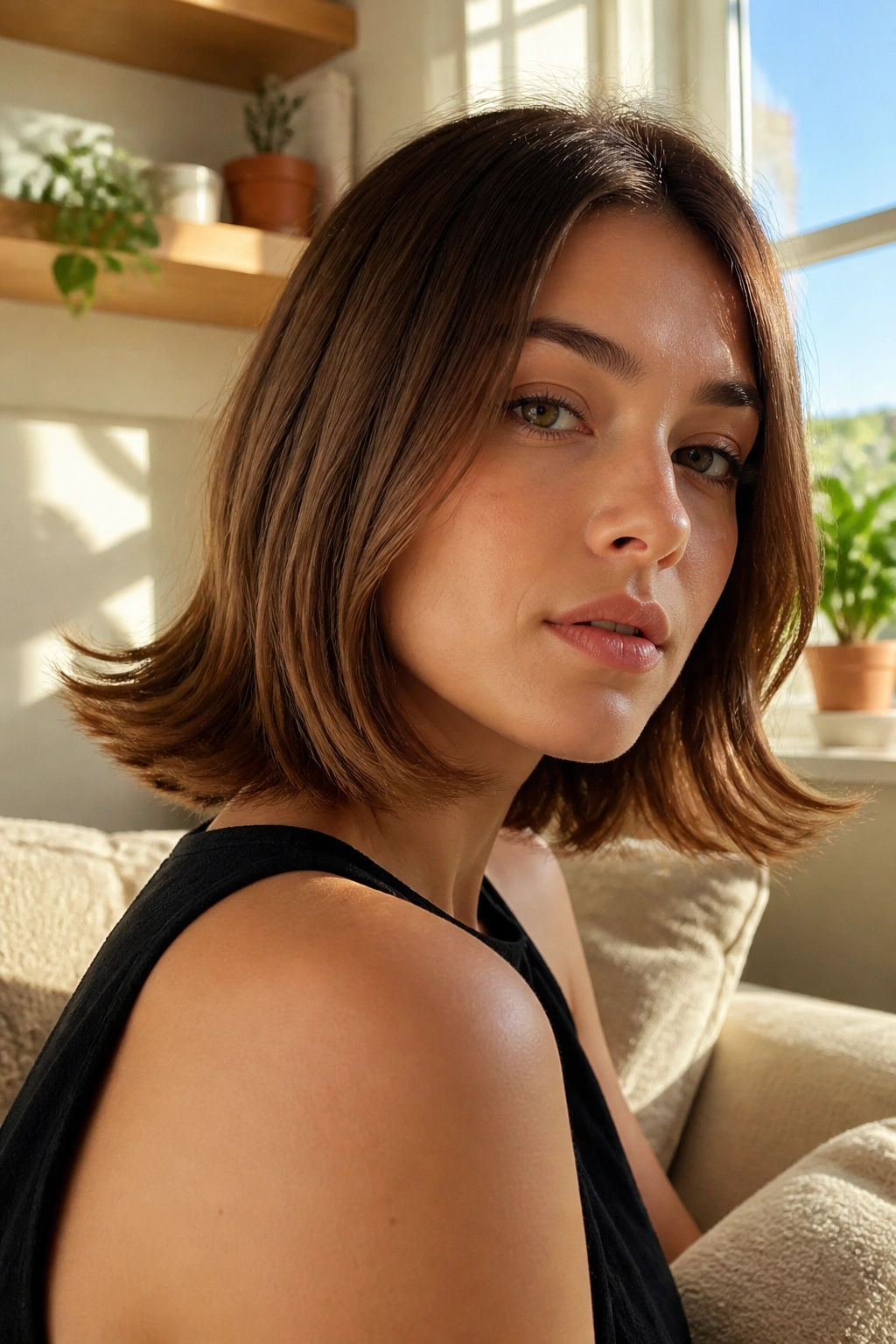
Picture shoulder-length hair with ends that kick outward just a bit, almost like they caught the wind at the right moment. That’s the flip-out lob, and it gives a mod haircut a looser, more playful edge.
The key is restraint. Too much flip, and you drift into costume territory fast. Just a slight outward bend at the ends keeps the cut looking fresh and deliberate. It should feel like a nod to the era, not a full dress-up moment.
Where the Shape Comes From
The cut usually sits somewhere between the chin and the collarbone, with enough weight at the bottom to make the outward turn hold. If the layers are too heavy, the ends collapse. If the hair is too thinned out, the flip goes wispy and weird.
A 1.25-inch curling iron or hot brush can create the shape, but only if you curl the ends away from the face for a few seconds and let them cool before brushing. That cooling step matters more than people think. Hair sets while it cools, not while it’s hot.
A Quick Reality Check
- Best on straight or lightly wavy hair.
- Needs a trim every 6 to 8 weeks to keep the line tidy.
- Works well with side parts, especially a deep side part.
- Looks best when the bend is relaxed, not ringlet-tight.
This is a good cut if you want retro without losing length. Easy to wear. Hard to mess up.
5. Beatles Mop Top With Tapered Sides
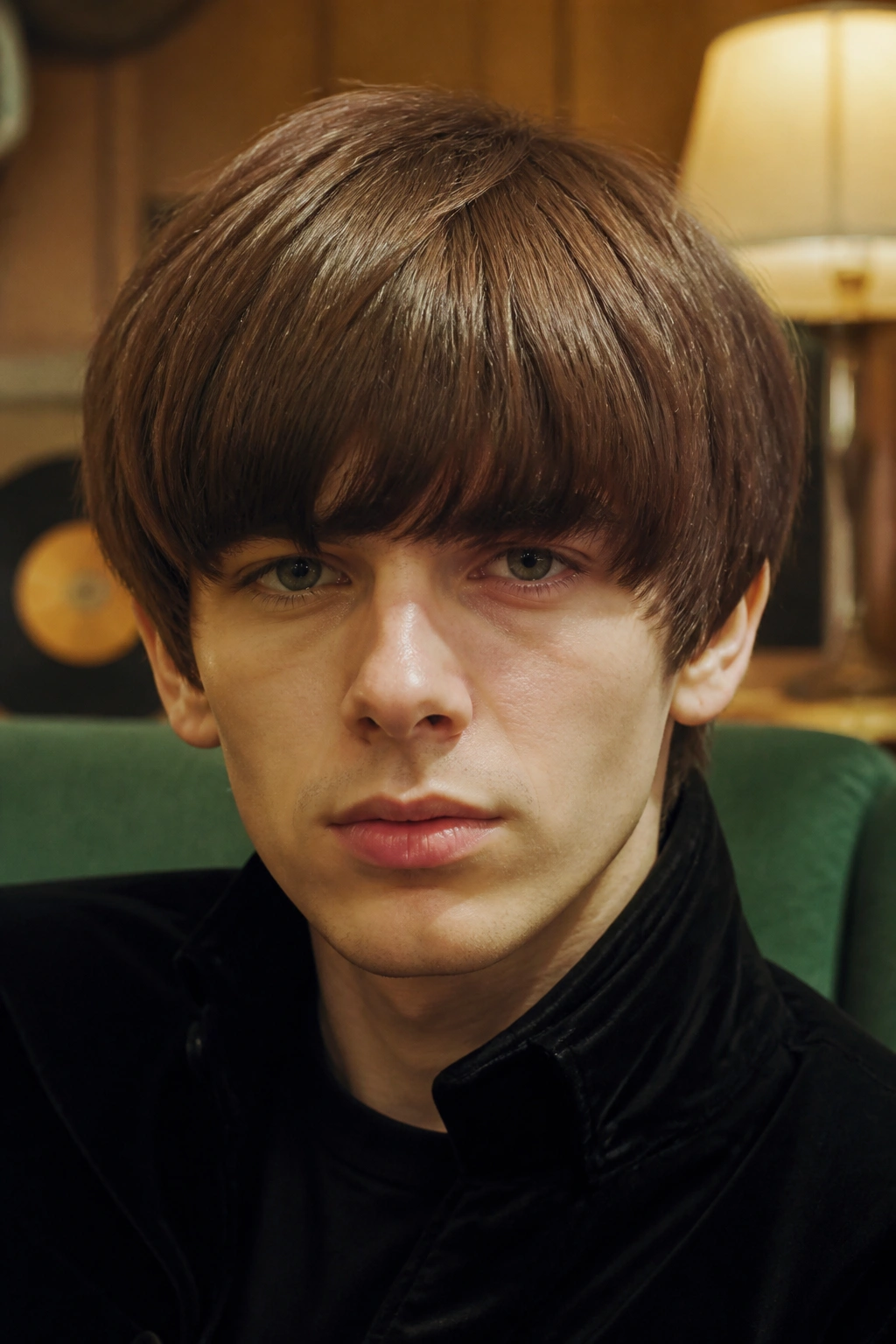
The mop top is one of those cuts that people recognize instantly, even when they can’t name it. It has that rounded, fuller shape through the crown and a fringe that falls forward instead of sitting stiffly across the face.
What keeps it from looking dated is the taper. The best version is not a mushroom cap sitting on a heavy block. The sides should narrow a bit around the ears, and the nape should stay neat so the whole shape feels intentional rather than overgrown.
This cut loves hair with a bit of bend in it. Straight hair can wear it, sure, but wavy hair brings the shape to life in a way that flat hair sometimes can’t. A little air-drying cream, a quick scrunch, and you’re there. No drama.
There’s also a nice trick with this style: if the fringe is cut just long enough to skim the eyes, you get that unmistakable mod mood without needing a super-short bang. That softness makes the cut easier to live with day to day.
Best for: medium density, naturally wavy hair, or anyone who likes a more relaxed mod shape.
Skip it if: you want a severe line. This one has movement baked in.
6. Shaggy Mod Crop With Curtain Bangs
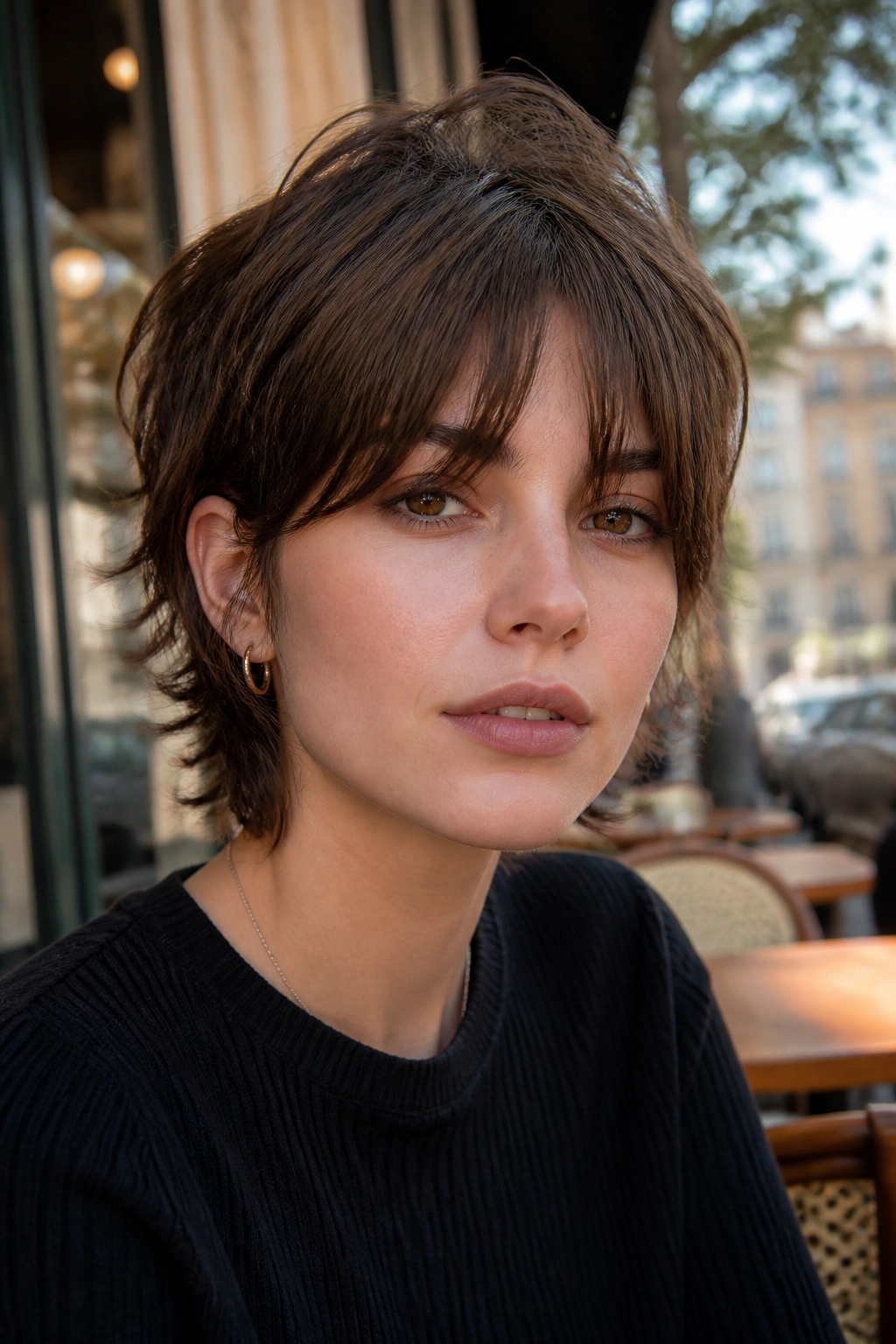
Unlike a blunt bob, this version doesn’t hold still for long. It’s for people who want the mod silhouette but refuse to wear their hair like cardboard.
What Makes It Different
The shaggy mod crop keeps the top and fringe soft, with curtain bangs that split around the eyes and a cropped shape that still hugs the head. The trick is to keep the edges tidy while letting the interior move. That balance is hard to fake. Either the haircut has it, or it doesn’t.
Curtain bangs can look too boho if they’re over-layered. Here, they’re cleaner. Think of them as a frame that opens the face instead of hiding it. The rest of the cut stays short enough to keep the retro edge.
How to Ask for It
- A cropped length around the ears or upper jaw.
- Soft graduation through the crown.
- Curtain bangs that fall from a central part and hit around the cheekbones.
- Light texturizing only through the interior, not the outline.
If your hair tends to puff up, this cut needs a careful hand. Too much shagging, and the whole thing loses the mod feel. Too little, and it becomes a plain short crop. The sweet spot is a clean perimeter with just enough air inside it.
7. A-Line Bob With Clean Nape
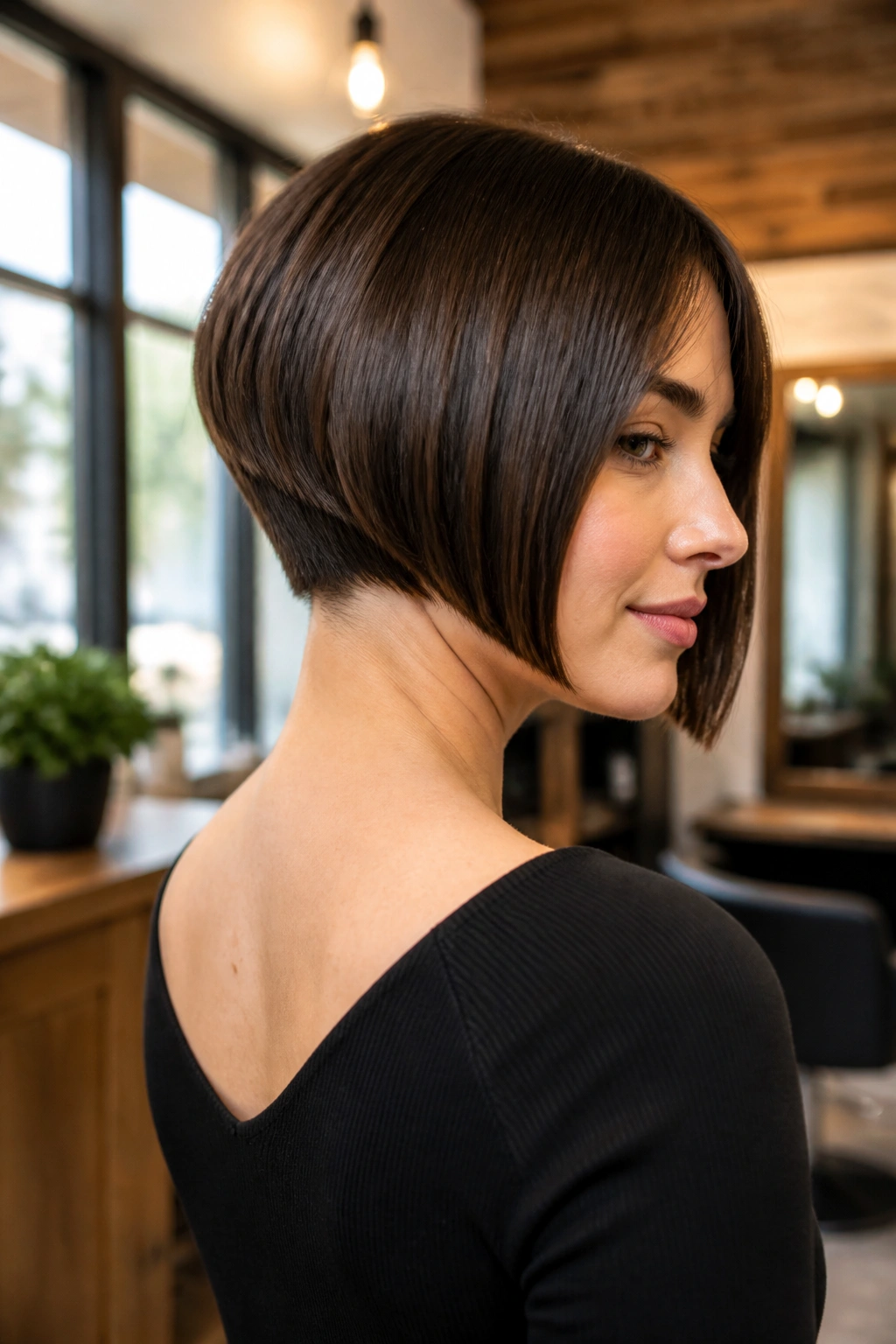
The first thing you notice is the back. It sits close and neat, then the line lengthens toward the front in a way that feels almost architectural. That’s the charm of an A-line bob.
This cut gives you the sharpness of a mod bob without feeling boxy. The angle creates movement before you even style it, which is useful if you want a haircut that looks planned from every side. Straight hair shows the line best, but fine wavy hair can wear it too if the perimeter stays crisp.
Why It Flatters So Well
The forward length draws attention to the jaw and cheekbones. The shorter nape keeps the shape light. Together, they create that clean, edited look that mod hair does so well.
A good A-line bob should not be packed with layers. Ask for graduation in the back, not a choppy stack. That distinction matters. Too many layers can make the ends kick out in random places, which ruins the point.
What to Tell Your Stylist
- Keep the nape tight and polished.
- Let the front hit around the chin or slightly below.
- Avoid heavy face-framing pieces that break the line.
- Blow-dry with a nozzle and a paddle brush for a smooth finish.
One small detail makes a big difference here: tuck one side behind the ear after styling. It shows off the angle and makes the haircut look even sharper.
8. Softened Bowl Cut With Texture
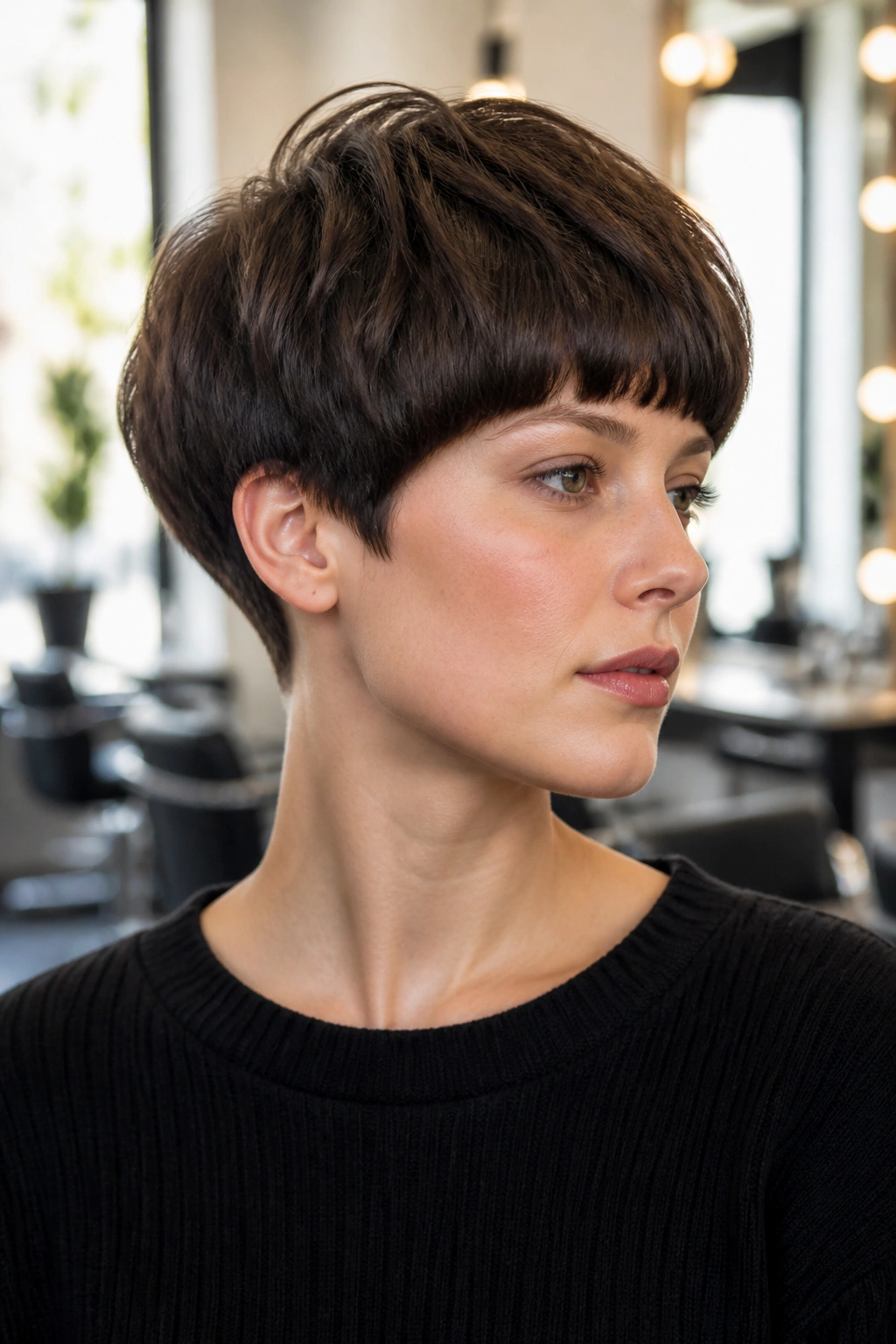
A bowl cut gets a bad reputation because people remember the worst versions. The ones that looked pasted on. The good version is all about control, and a little texture softens the line without taking away the shape.
The modern mod bowl is not flat and rigid. It has a rounded outline, sure, but the edges can be slightly broken up so the cut feels wearable instead of severe. That makes it work on straight hair and even some wavy textures, provided the bulk is handled carefully.
What Keeps It From Looking Helmet-Like
The crown should have a hint of lift, and the perimeter should sit cleanly around the head rather than bulging out. If the haircut is too dense at the bottom, it goes heavy fast. If it’s thinned too much, the shape disappears. There’s a narrow lane here, and that’s exactly why a skilled cut matters.
A light styling paste can separate the ends just enough. You do not need much. Seriously, a fingertip amount is enough for short hair.
Try This If You Want:
- A bold mod shape with less fuss than a full bob.
- A cut that shows off earrings, makeup, or strong brows.
- Something short that still feels polished.
- A style that works with straight hair’s natural smoothness.
This one is not for everyone, and I like it more because of that. It has a point of view.
9. Collarbone Cut With Inward Bend
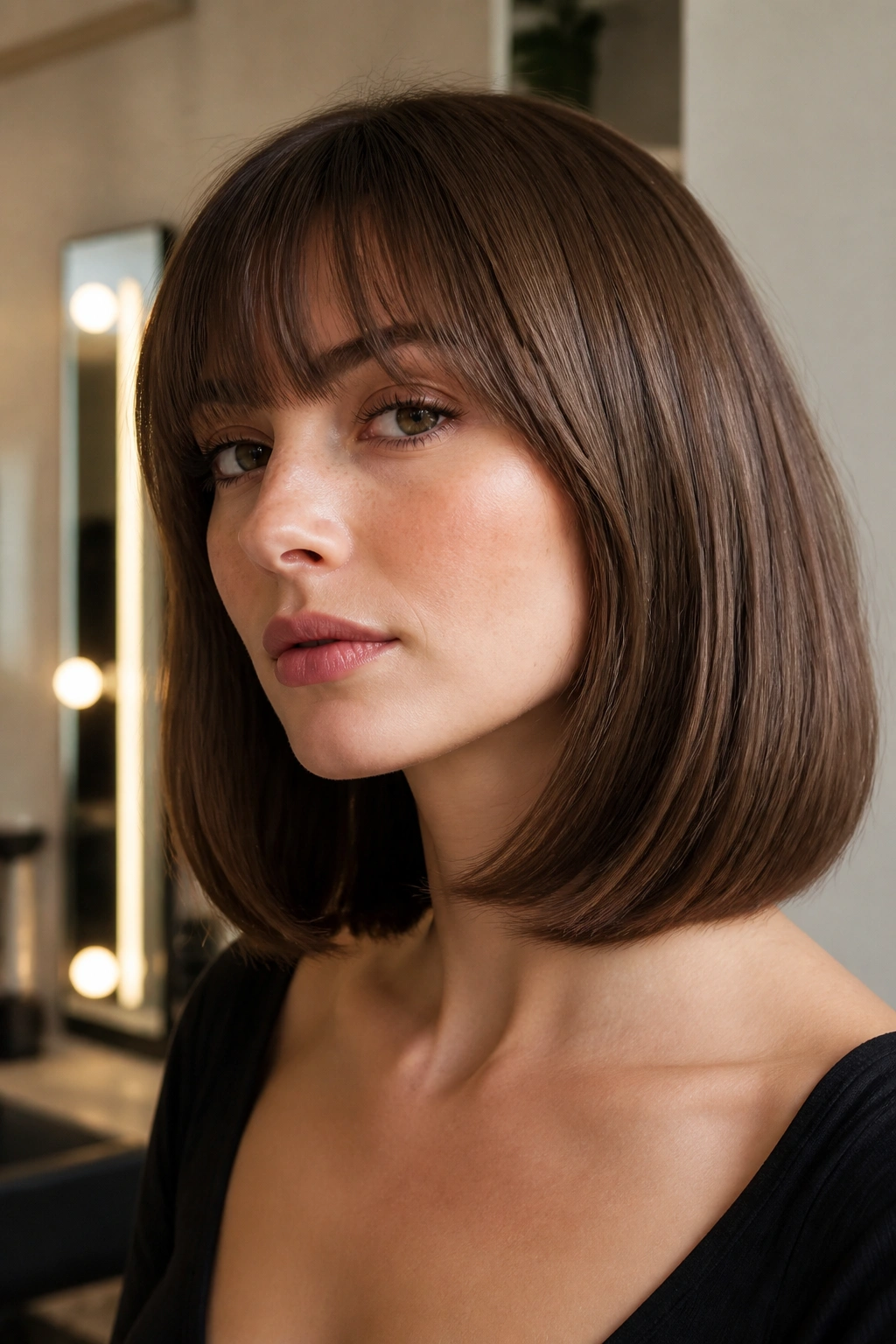
Need something mod that still gives you length to play with? The collarbone cut is the easy answer, but only if the ends are shaped correctly. Without that bend, it’s just long hair. With it, the whole thing starts to feel intentional.
The silhouette here sits around the collarbone or a touch lower, then curves inward at the ends. That little turn is what makes the style read as retro. It echoes the polished finishes you see in classic mod hair, just stretched out a bit for more versatility.
Why It Works
Longer hair can lose shape fast, so the bend matters more here than on a shorter bob. If the ends are blunt but not heavy, they hold a clean line. If they’re layered too much, the shape goes stringy and the retro edge gets lost.
A round brush and a heat protectant spray are the bare minimum. Dry the hair to about 80 percent first, then smooth the ends under in sections. If you rush the drying stage, the bend won’t hold. It’ll slip flat by lunchtime.
What Makes It a Good Everyday Cut
- Easy to tuck behind the ears.
- Long enough for clips, barrettes, and half-up styles.
- Sharp enough to look mod with a fringe.
- Simple enough to wear without a complicated routine.
This is one of my favorite options for people who want the look without losing length. Practical, but not boring. That balance is hard to beat.
10. Twiggy Micro Pixie With Short Fringe
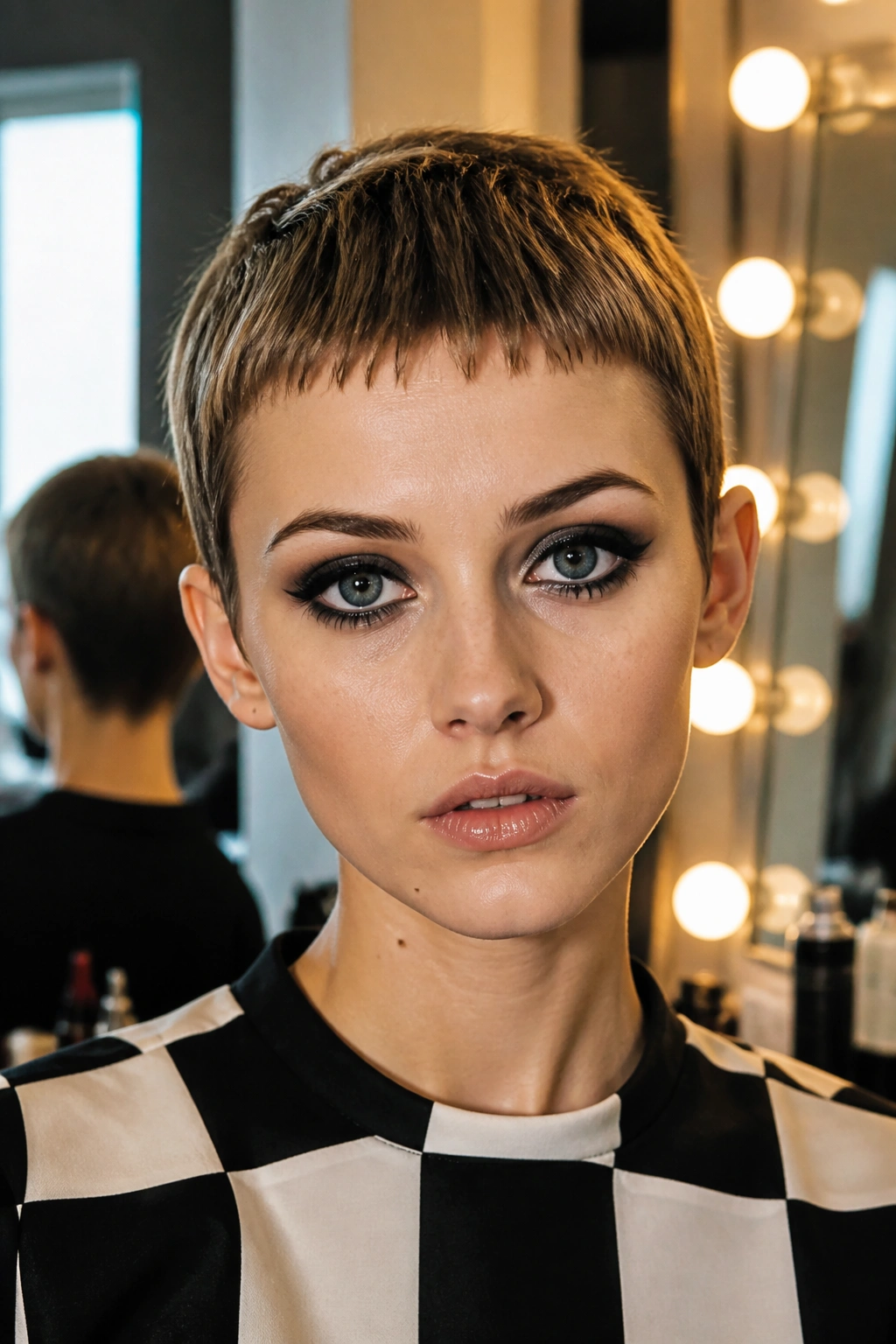
There is no hiding in this cut. The eyes, brows, and cheekbones become the main event, and the hair steps back where it should.
The Twiggy-inspired micro pixie is short on the sides, very neat at the nape, and clipped into a tiny fringe that lands high on the forehead. It feels bold because there is nowhere for the shape to drift. Every line has to be clean.
What It Needs to Work
The cut depends on precision. A half-inch too much length in the fringe can change the whole mood. Too much bulk at the sides, and the style stops looking mod and starts looking unfinished.
It suits people who like regular trims and do not mind maintenance. That’s not a flaw; it’s the price of the silhouette. If you want a soft grow-out, this is not the cut. If you want a sharp frame for the face, it’s excellent.
A Few Real-World Notes
- Best with strong brows or bold eyeliner.
- Needs trims every 3 to 5 weeks to stay crisp.
- Works well on straight hair and fine hair.
- Can be styled with a tiny amount of matte paste or smoothing cream.
This haircut is tiny, but it has attitude. A lot of it.
11. Chin-Length French Mod Bob
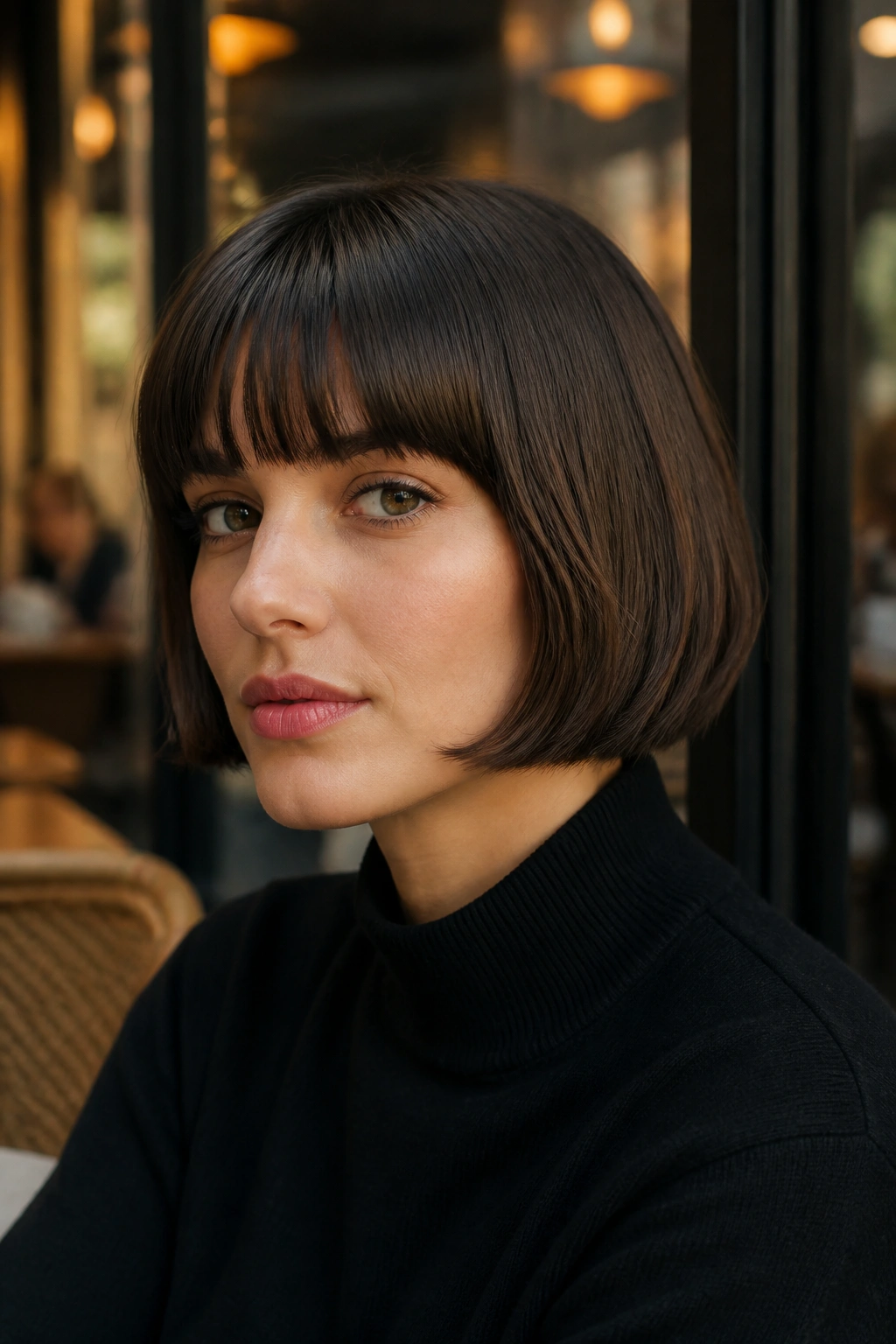
Chin-length is the sweet spot for a lot of mod haircuts because it puts the line right where the face naturally wants structure. Add a fringe, and the whole thing becomes sharper without getting severe.
This version borrows a little from French bob energy, but the finish is more graphic. The ends sit close to the jaw, the fringe is full enough to matter, and the outline stays clean. You get the polished shape of mod hair with a bit of city-girl ease.
A cut like this can go either way with parting. A center part makes it feel more symmetrical and a touch more retro. A side part softens the front and can be kinder if your cowlick fights a straight fringe. I prefer the center part when the hair is dense and the side part when it needs a little lift.
The thing I like most is how it works with simple clothes. A crewneck sweater, a structured coat, even a plain white shirt — the haircut does the visual work. That’s the old mod instinct again: the shape carries the look.
12. Tousled Mod Shag With Center Part

Can a shag still be mod? Absolutely, if you keep the outline disciplined. The danger is letting the layers get so loose that the haircut turns into generic texture. That’s the part most people miss.
How to Keep It Mod
The center part gives the style symmetry, and symmetry is doing a lot of work here. The fringe can open in the middle, then fall softly toward the cheekbones, while the ends stay controlled enough to preserve the silhouette. You want movement inside the shape, not chaos around it.
This version is especially good for natural wave. If your hair likes to bend on its own, you can work with that instead of fighting it. A little mousse at the roots, a diffuser on low heat, and a quick scrunch are often enough.
What To Ask For
- Soft layers through the crown.
- A defined perimeter around the jaw or collarbone.
- Curtain-style fringe that can split down the middle.
- Light feathering, not razor-thin ends.
Unlike a classic blunt bob, this cut gives you more motion and less polish. That makes it a better fit for people who want retro edge without looking over-styled. It’s still a mod haircut. It just has a looser collar.
13. Sleek Shoulder-Length Cut With Beveled Ends
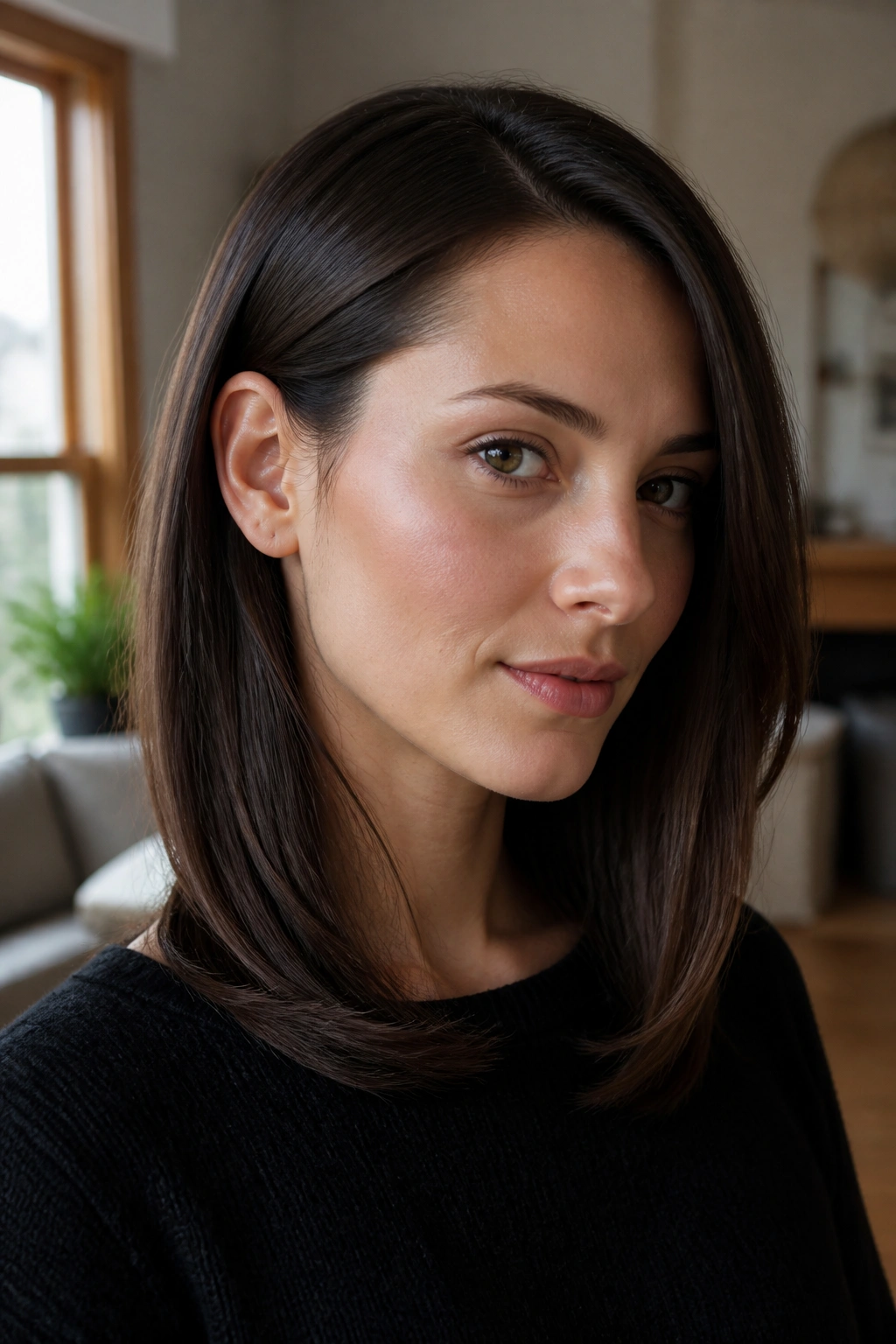
Shoulder length can look very mod if the ends do the right thing. If they’re dead straight and heavy, the cut feels plain. If they’re beveled in just enough to follow the line of the shoulders, the whole shape wakes up.
This is a smart option for people who want something easy to grow into and easy to pin back. The shape is long enough to be practical, but the finish stays neat. That’s the part that keeps it from wandering into standard medium-length hair.
The beveled end matters because it creates a little movement without breaking the outline. You can get that by using a round brush under the final two inches of hair or by running a flat iron through the ends with a slight inward turn. Don’t overdo it. A subtle bend looks more expensive than a dramatic curl.
This cut also loves accessories. A barrette near one temple, a narrow headband, or a tucked-behind-the-ear look all play well with it. It’s the kind of style that gives you options without asking for a new routine every morning.
14. Mod Crop for Curly Hair With Rounded Fringe
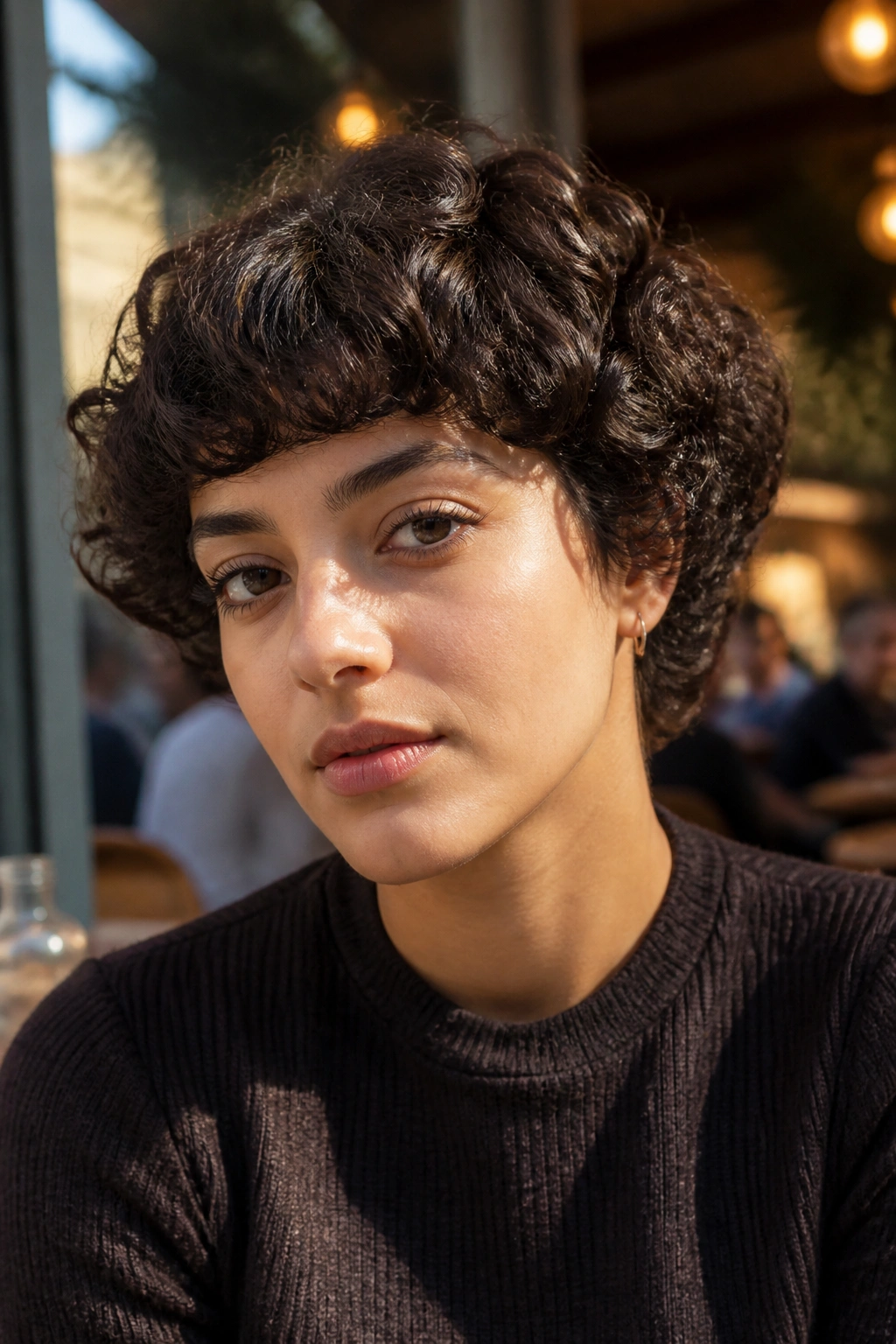
Can curls do mod? They can, and when the cut is shaped right, they can do it better than straight hair in some cases. The trick is to stop pretending curls should behave like a bob cut on a mannequin.
A curly mod crop needs a rounded outline that respects the curl pattern. The fringe should be cut to land where the curl naturally springs up, not where it would sit when wet and stretched. That difference is huge. If you cut curly fringe too short, it bounces right out of the frame.
What Helps This Cut Work
- A dry cut or a curl-by-curl approach can be useful.
- The sides should stay neat so the shape remains visible.
- A lightweight cream or gel keeps the fringe from frizzing apart.
- Diffuse on low heat, then leave the curls alone once they’ve set.
The rounded shape gives the haircut that mod feeling, while the curl adds personality. It ends up looking more alive than a stiff straight cut, which I think is a win.
If your curls are dense, ask your stylist to keep the outline clean and avoid over-thinning the interior. Too much thinning makes the shape collapse. Too little, and it balloons.
15. Rounded Mushroom Cut With Clean Lines
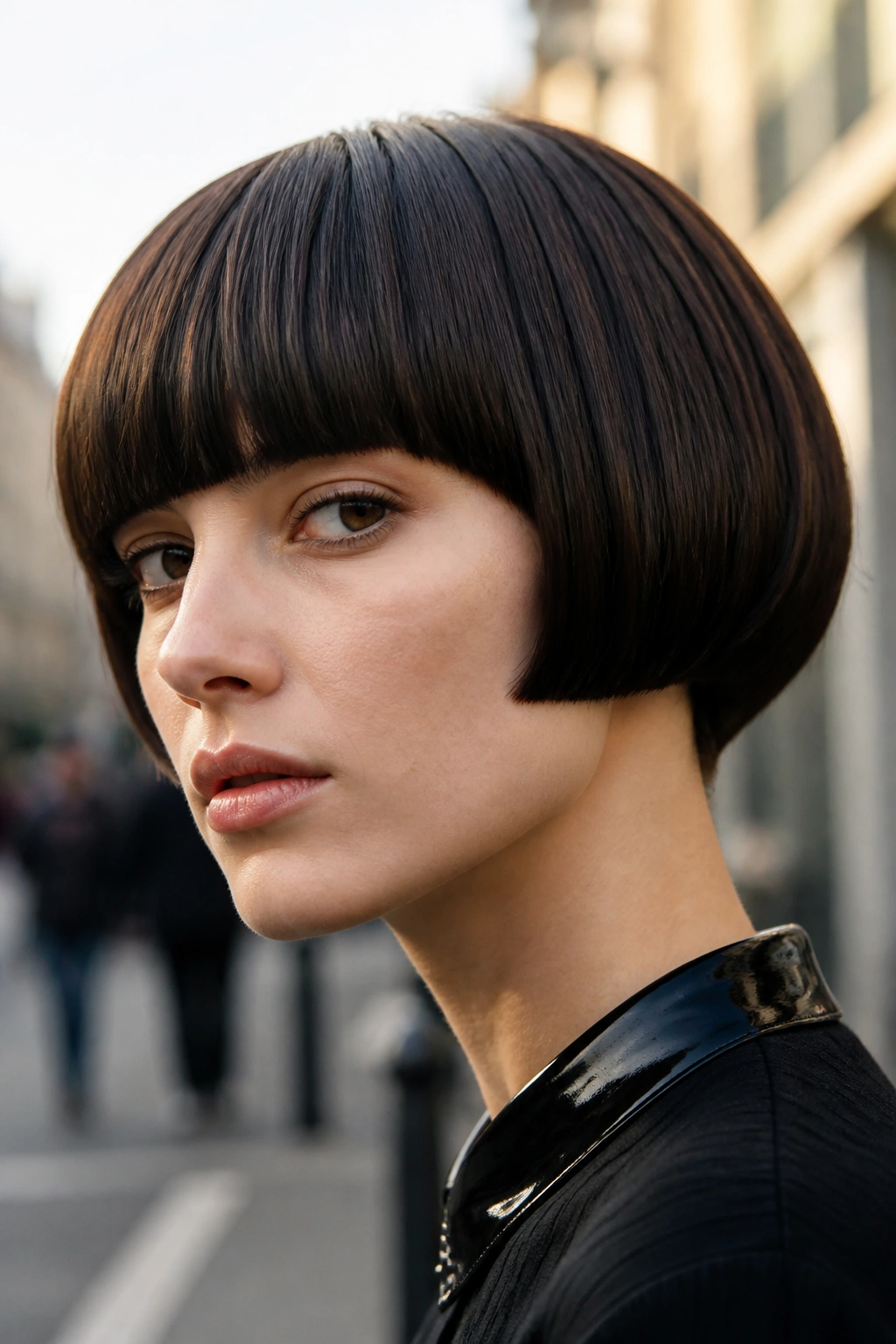
This is the boldest one. If you want a mod haircut that announces itself before you say a word, the rounded mushroom cut does that job with almost rude efficiency.
What makes it work is the balance between fullness and control. The top has enough roundness to create a distinct shape, the sides stay smooth, and the perimeter lands in a clean line that doesn’t fray out. It’s not a joke haircut when it’s done well. It’s a silhouette.
That said, the mushroom cut asks for commitment. It needs regular trims, usually every 4 to 6 weeks, because the shape gets messy fast once the line starts to blur. It also prefers hair that can hold a neat outline — straight hair or controlled waves usually behave best.
I like this cut for people who want the strongest retro edge on the list. It feels a little playful, a little severe, and very specific. That specificity is why it works. A lot of so-called vintage hairstyles borrow the mood of an era; this one actually commits to the geometry.
If you want the most unmistakable mod finish, this is the one I’d point to first. No hesitation.
