



Victory rolls have a funny habit of looking far more complicated than they are. On a bad day, they can read as stiff or costume-y; on a good day, they look like you stepped out of a black-and-white film with your hair under perfect control and a little attitude still left in it.
What makes the style worth learning is that the shape does most of the work. You do not need endless length, fancy tools, or a giant arsenal of products. You need clean sectioning, a little grip at the roots, and the patience to pin the roll where it actually wants to sit.
That’s the part a lot of people miss. Victory rolls are not one hairstyle so much as a family of hairstyles — sharp, soft, glossy, undone, symmetrical, off-center, padded, braided, tucked into a scarf, or paired with loose waves that keep the whole thing from feeling too formal.
Once you know how the roll behaves, you can push it in a dozen different directions without losing the vintage feel. Some versions lean pin-up. Some feel elegant. Some can be worn with jeans and a red lip and still look intentional.
1. Classic Victory Roll Hairstyles with Double Rolls
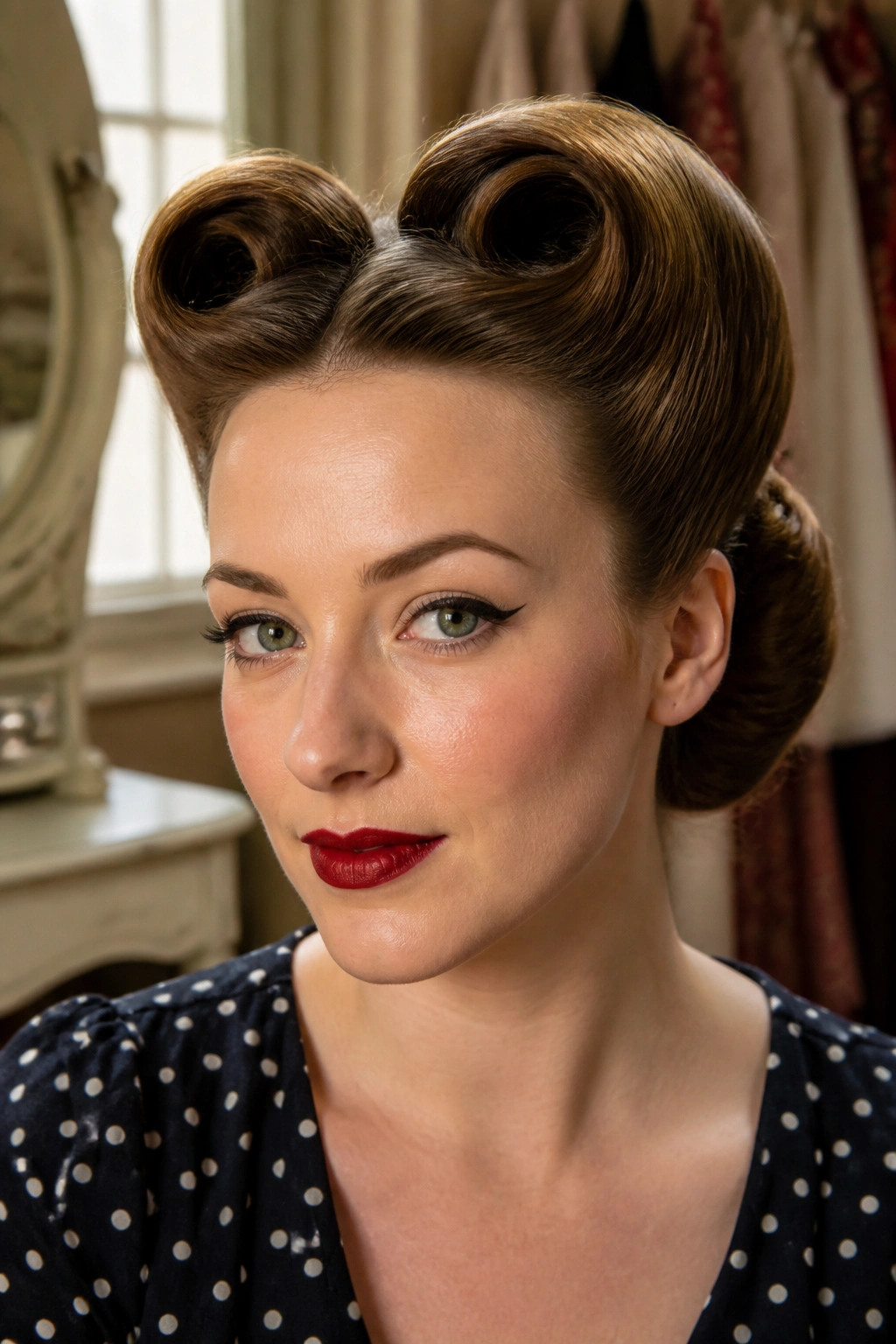
This is the version most people picture first: two mirrored rolls sitting high near the temples, usually with the rest of the hair pinned up or swept into a neat shape. It has that clean, old-school line that makes the whole style feel unmistakably vintage.
Why It Still Works
The reason this shape holds up is simple. The eye loves symmetry. Two rolls frame the face evenly, and that balance makes the style feel polished even before you add curls or accessories. If your hair is medium length, this is one of the easiest places to start because you have enough material to build shape without wrestling with excessive bulk.
A solid double-roll set starts with a firm base. I like a little texture spray at the roots and a rough blow-dry with a round brush, just enough to take the slip out of freshly washed hair. If the hair is too soft, the roll slides. If it is too dry and puffy, the roll gets fuzzy. That middle ground is the sweet spot.
What To Watch For
- Section the hair at the temples with a rat-tail comb so each roll has its own lane.
- Backcomb only the lower half of each section if you need lift; the ends should stay smooth.
- Pin the roll with two crossed bobby pins at the base, not one lonely pin in the middle.
- Finish with a light mist of hairspray from about 10 inches away so the surface stays neat.
Tip: Angle both rolls slightly upward instead of making them perfectly horizontal. The shape looks more alive that way, and your face gets a little lift for free.
2. A Single Side Victory Roll Can Look Sharper Than Two
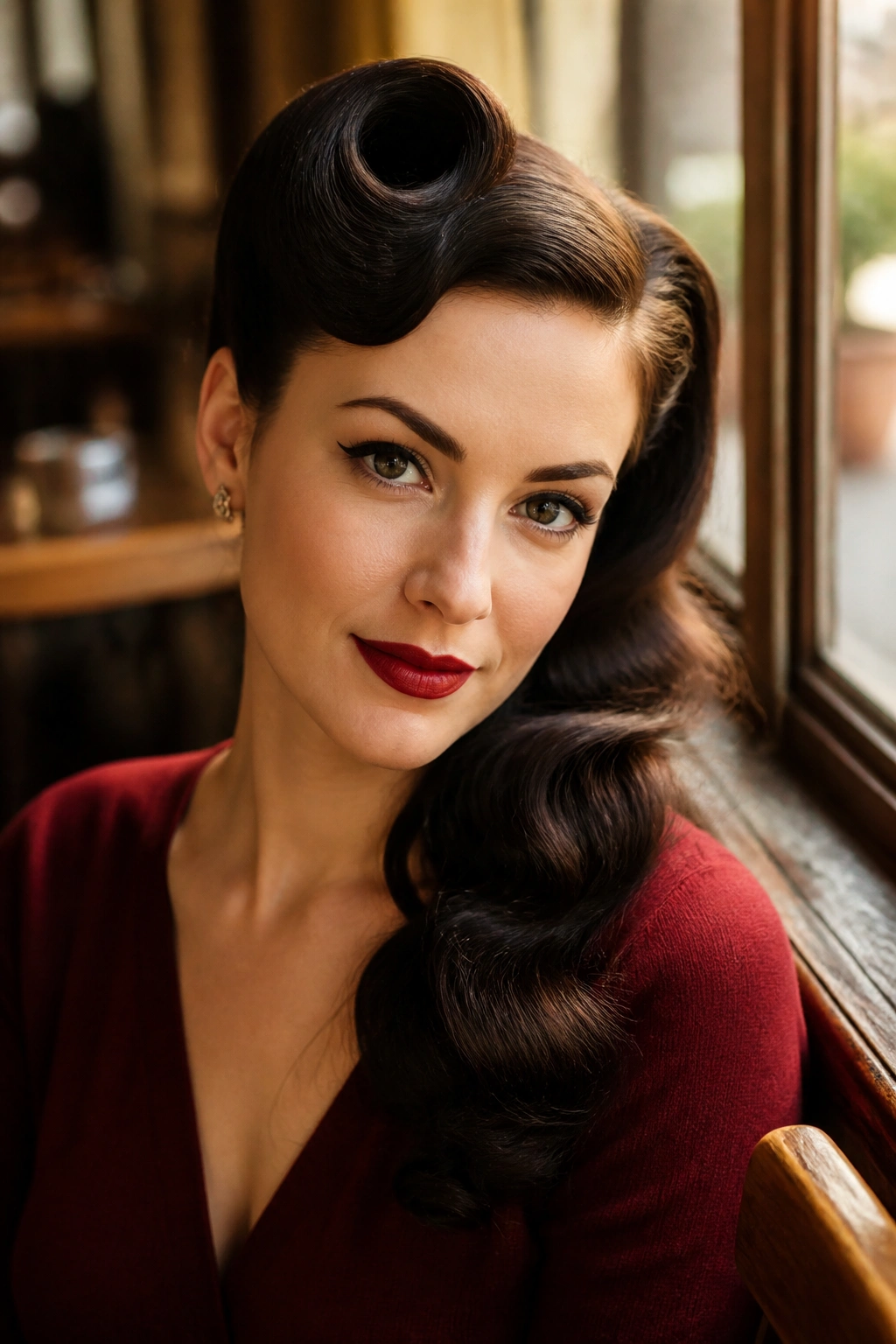
One roll is often enough. Seriously. If you want a retro look that feels a little less formal, a single side roll gives you all the vintage mood without locking you into full symmetry.
The nicest thing about this version is how flexible it is. You can place the roll above one eyebrow, keep the other side softly waved, and let the contrast do the styling for you. It works especially well with a deep side part because the part line creates movement before the roll even begins.
I also reach for this style when one side of the hair is a little shorter or has awkward layers. Instead of fighting that difference, the single roll uses it. The rest of the hair can fall into a loose wave, a low pin-up knot, or even a blunt shoulder-length bob tucked behind one ear.
What I like most is the attitude. One roll says you know the reference, but you are not trying to dress like a museum display. That matters. A hairstyle should feel worn, not embalmed.
3. Half-Up Victory Rolls Keep Long Hair from Looking Bulky
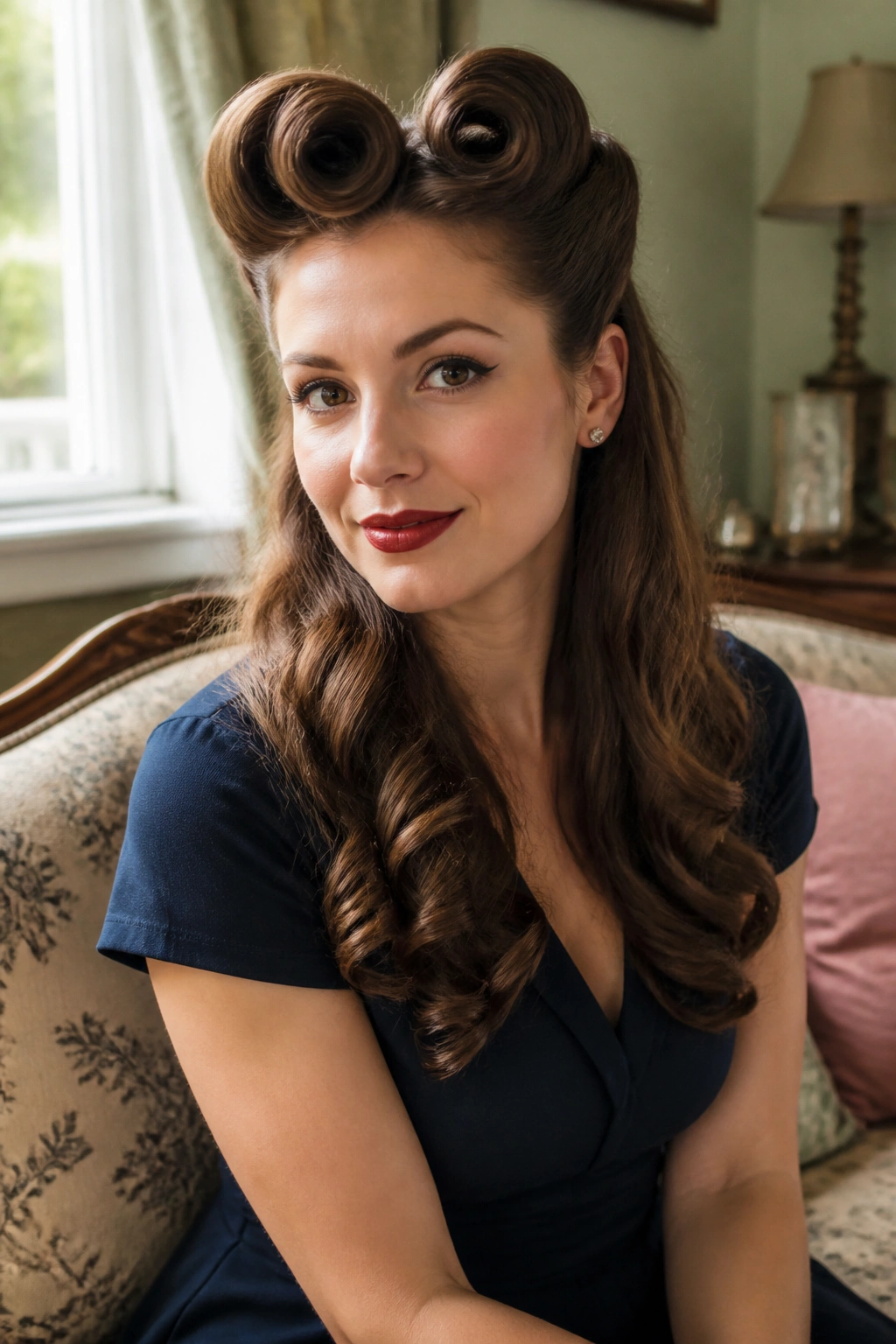
Long hair can make full victory rolls feel heavy fast. The answer is not to force every strand up and hope for the best. The answer is to leave the lengths loose and let the roll handle the drama.
Keeping the Length Soft
Half-up styling gives you a lot more room to breathe. The crown and temple sections can be rolled and pinned, while the back lengths stay in loose curls or soft bends. That keeps the head shape from becoming too tall or too dense, which is the main problem with full vintage sets on longer hair.
A good half-up roll starts with a clean division across the head, usually from temple to temple. Everything above that line gets built into the roll. Everything below it gets shaped separately — usually with a 1-inch curling iron or a set of large hot rollers if you want a rounder wave pattern.
- Leave the ends glossy and loose, not over-sprayed.
- Curl the lower section away from the face for a softer silhouette.
- Keep the rolls slightly smaller than you would on an updo so the top half does not overpower the length.
- If the hair is thick, clip the lower layers away while you work so they do not get dragged into the roll by accident.
The result feels more wearable than a strict pin-up updo. You still get the vintage line at the top, but the hair keeps its natural movement at the bottom. That contrast is the whole trick.
4. Victory Rolls with a Bandana or Scarf Feel Relaxed and Smart
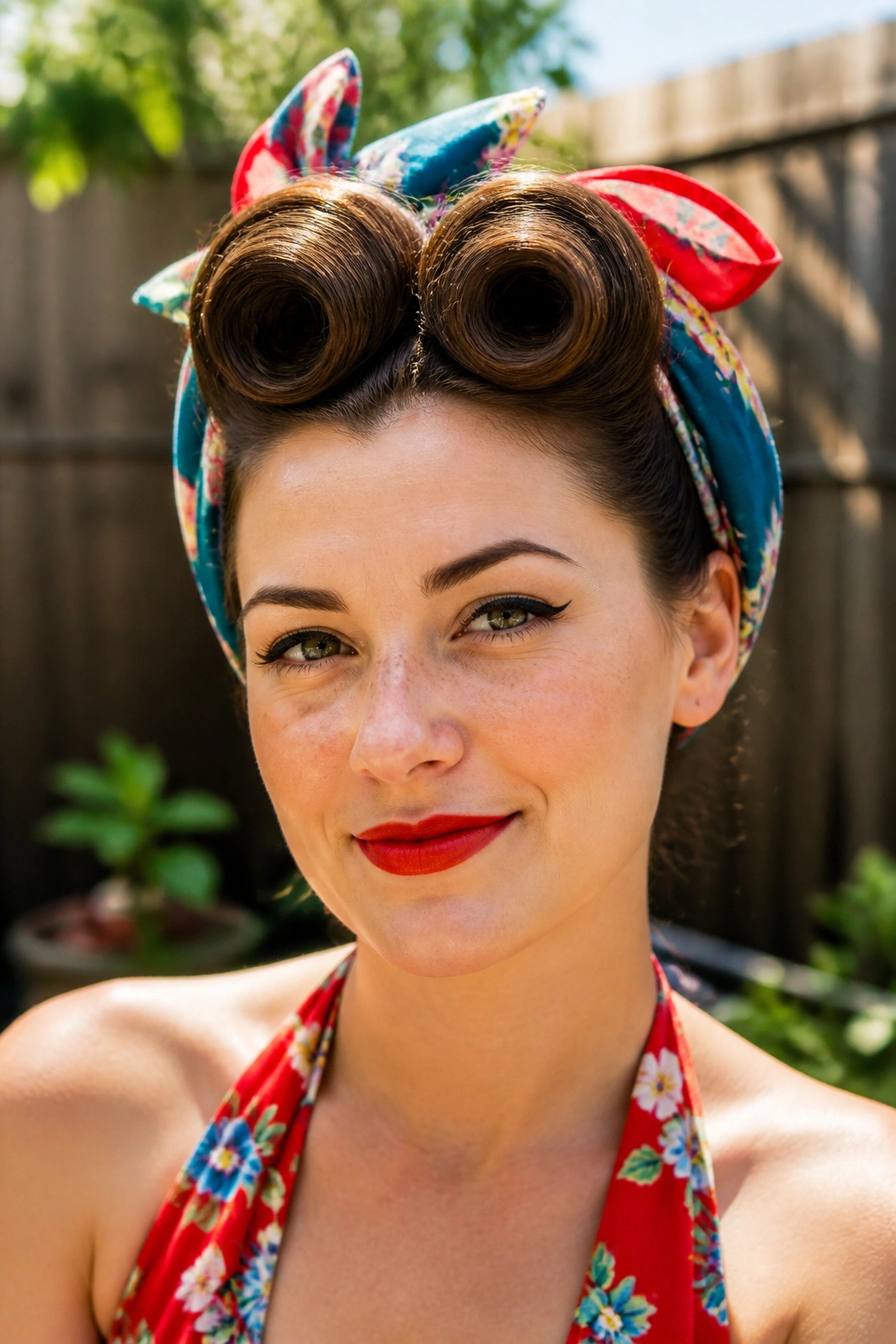
A scarf changes everything. Not in a small way, either. The fabric adds color, covers pin spots, and gives the style a little built-in structure, which is handy if your rolls never quite stay where you want them.
This is the version I reach for when I want vintage hair that does not feel precious. A folded bandana or silk scarf can frame the rolls, hold the crown down, and make the whole style feel less stiff around the edges. It also helps on hair that is freshly washed and a bit slippery, since the scarf can hide the places where pins need backup.
Try folding the scarf into a strip about 2 to 3 inches wide. Tie it around the head just behind the front rolls or across the crown, depending on how much of the hairline you want to show. A knot at the top reads playful. A knot tucked under the back reads cleaner.
There’s a small bonus here that nobody mentions enough: the scarf makes the style look deliberate even if one roll is a tiny bit larger than the other. That kind of asymmetry usually bothers people. With a bandana in the mix, it looks like part of the plan.
5. Short-Hair Mini Victory Rolls Depend on Tight Sectioning
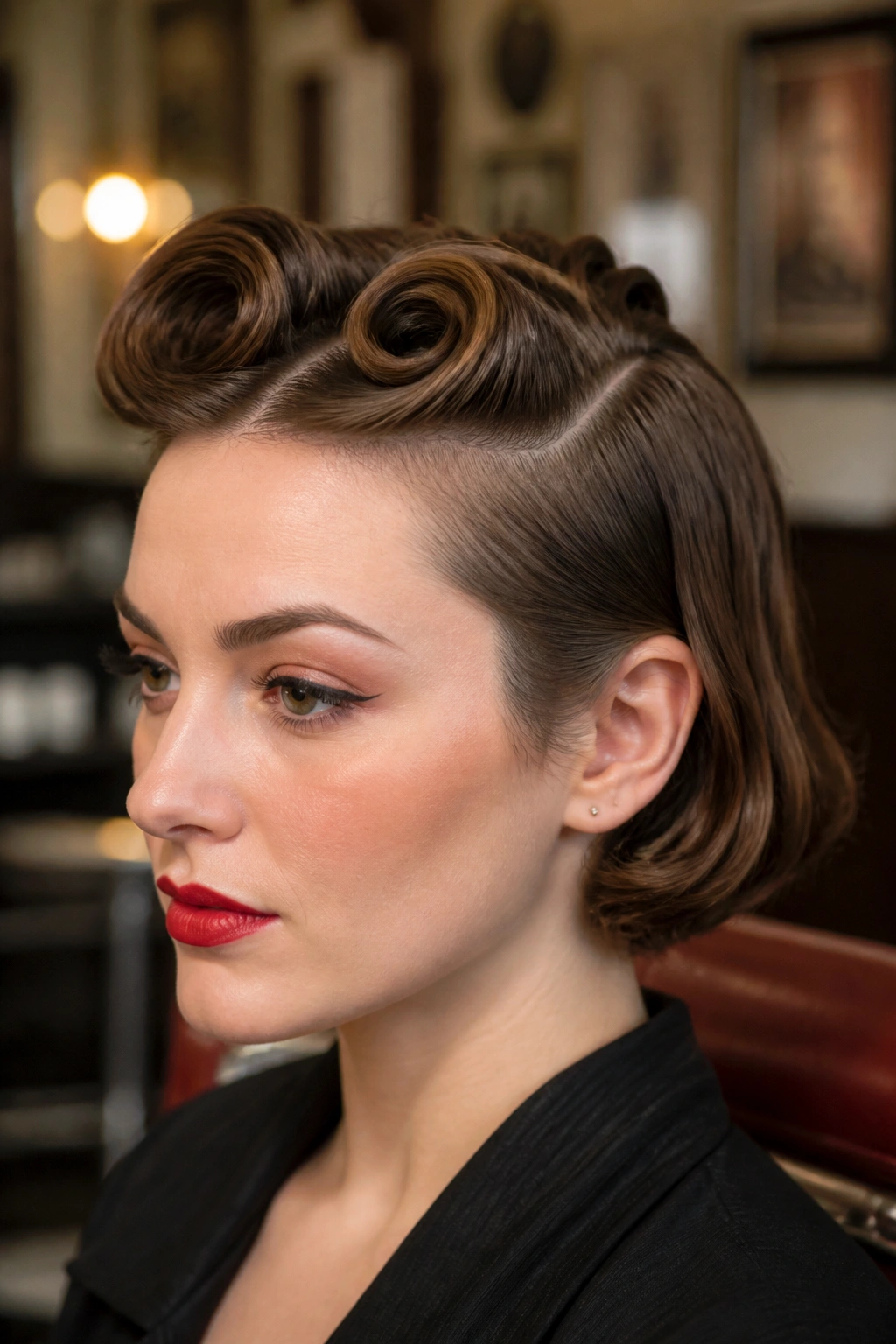
Can you do victory rolls on short hair? Yes, and the smaller versions can be some of the cutest ones. A bob or a shoulder-skimming cut does not give you those oversized, theatrical rolls, but it does give you crisp little shapes that sit close to the head.
The main mistake with short-hair rolls is trying to build them too large. That only leads to loose ends poking out in weird places. Better to work with compact sections and let the roll stay modest. On shorter lengths, a roll that rises just an inch or two above the scalp can already look strong.
I like this style with a bit of grit in the hair first. Dry shampoo, texture powder, or a touch of matte paste helps the section hold its own. If the hair is silky, the pinning gets fussy. If it has a little drag, the shape feels much easier to form.
One more thing: short hair often benefits from a hidden flat pin at the very base of the roll before the bobby pins go in. It sounds fussy. It saves time. The roll stops shifting while you finish the second side.
6. Curly Hair Victory Rolls Work Best When You Respect the Curl Pattern
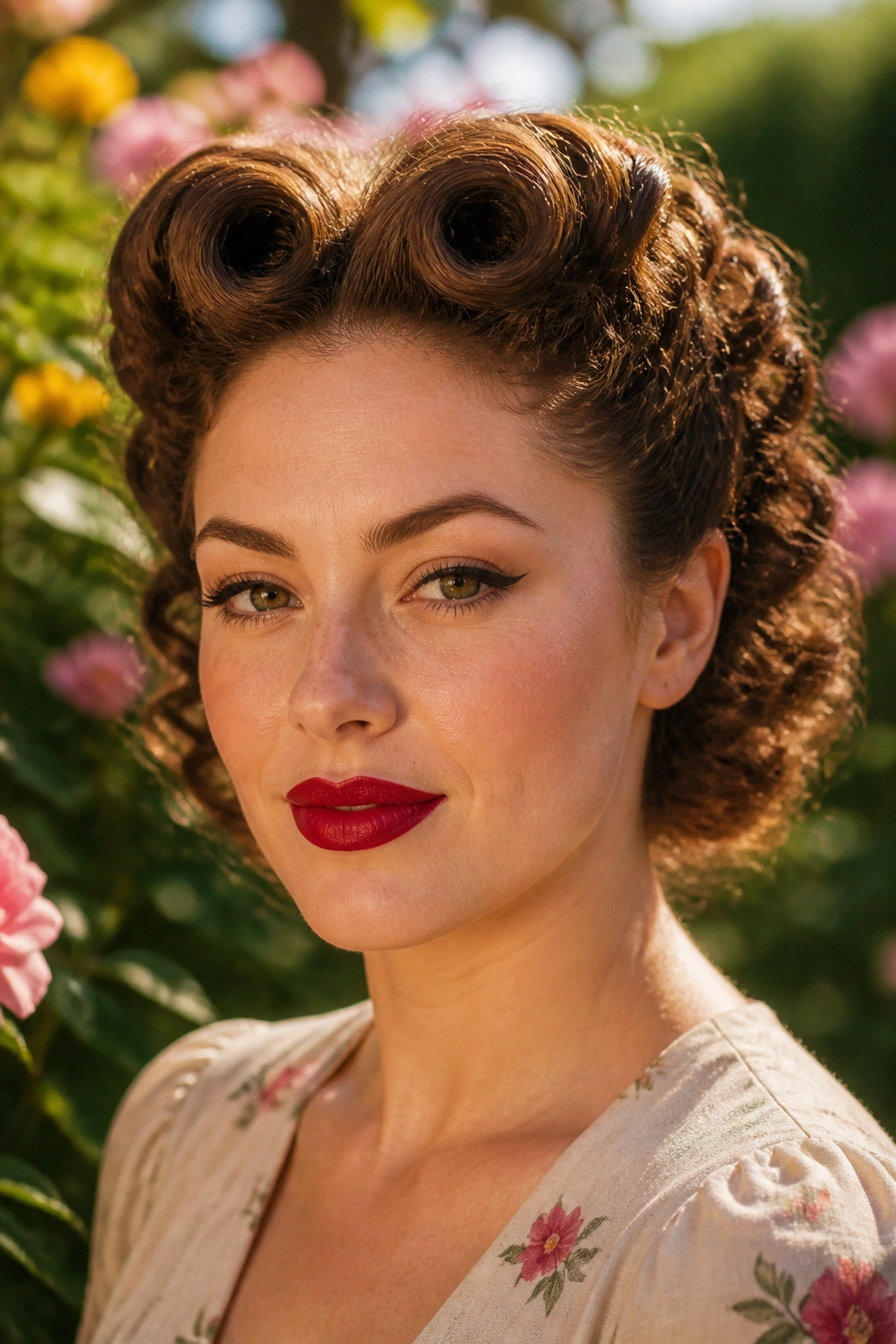
What if your hair is curly and refuses to behave like a smooth pin-up set? Then do not fight the curl pattern all the way through. Work with it at the ends and smooth only the parts that need to become the roll.
Curly hair has one advantage that straight hair often has to fake: built-in fullness. The roll can look rich and dimensional without much teasing at all. The catch is that the outer layer needs enough control to read as a clean vintage shape, not a random puff sitting near the temple.
How to Keep the Curl from Taking Over
Smooth the section with a cream or light gel first, but only from roots to mid-lengths. Leave the ends a little more flexible so they can tuck into the roll without cracking or frizzing apart. If you flatten the entire curl pattern, the hair can lose the very body that makes this version look good.
- Use a diffuser on low heat to dry the roots after applying styling cream.
- Work with smaller sections than you would on straight hair.
- Pin the roll while the hair is warm and still slightly pliable.
- Set the finished look with a humidity-resistant spray if the weather tends to puff your curls.
The best curly victory rolls look intentional but not ironed into submission. That’s the line. Tight control at the base, curl-friendly softness in the rest.
7. Sleek Victory Roll Hairstyles with a High-Shine Finish
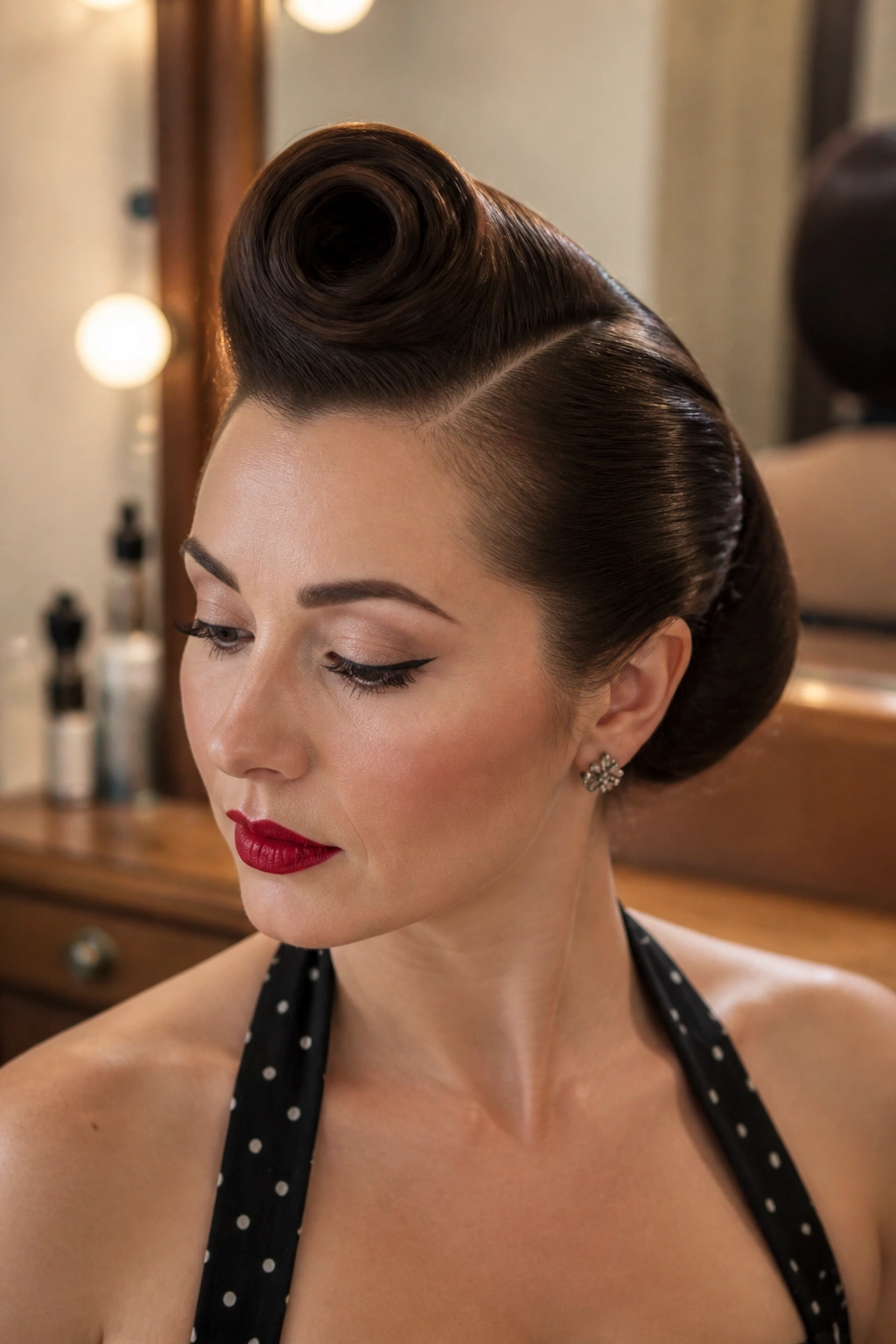
Shine changes the mood fast. A glossy victory roll reads more evening than daytime, more dressed-up than playful, and the difference comes down to finish more than shape.
This version starts with smoothing. A boar bristle brush, a little pomade, and a clean side part do a lot of work before the first pin goes in. The surface should look tidy enough that you can see the curve of the roll, not the flyaways around it. If the hair is coarse, warm the product between your palms first so you do not pile it on in clumps.
I prefer this look when the rest of the outfit is simple. A sleek roll plus a plain dress, sharp liner, or a bare neckline feels much stronger than styling the hair and the clothes to death at the same time. Too much sparkle in every place and the whole thing gets noisy.
What makes the sleek version worth the effort is how crisp it photographs in real life, not because it is shiny for shiny’s sake, but because the line of the roll stays clean from every angle. That matters more than the shine itself.
8. Braided Victory Roll Hybrids Add Texture Without Losing the Vintage Shape
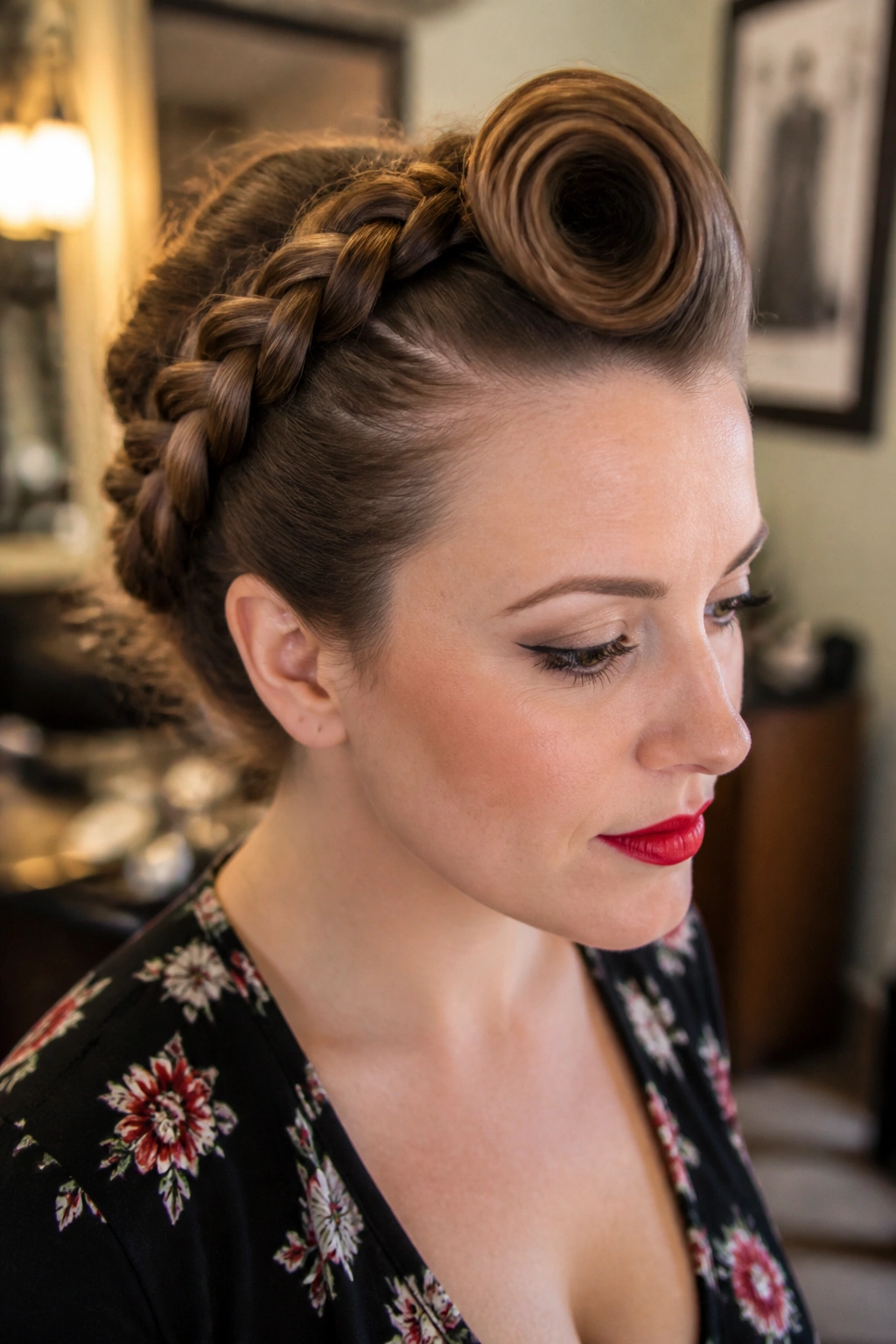
A braid tucked into a victory roll is one of those ideas that looks fancy and is mostly practical. The braid gives the style something to grip onto, and the roll stops feeling like it is floating on top of the hair.
Picture a side braid leading into a temple roll, or a small French braid wrapping into a pinned crown. The braid acts like a path, and the roll becomes the payoff at the end of it. That combination is especially useful when the hair has layers that want to break apart. The braid corrals the loose ends before they become a problem.
Good Places to Place the Braid
- Start the braid just behind the hairline if you want it visible.
- Hide it slightly under the roll if you want the vintage shape to stay in charge.
- Use a Dutch braid when you want a bit more texture and lift.
- Use a loose three-strand braid when you want the result to feel softer.
This version is also smart for medium-thick hair because the braid controls some of the bulk before it reaches the pin. Less wrestling. Better shape. A cleaner finish.
9. Victory Rolls with a Low Chignon Feel Formal Without Getting Too Severe
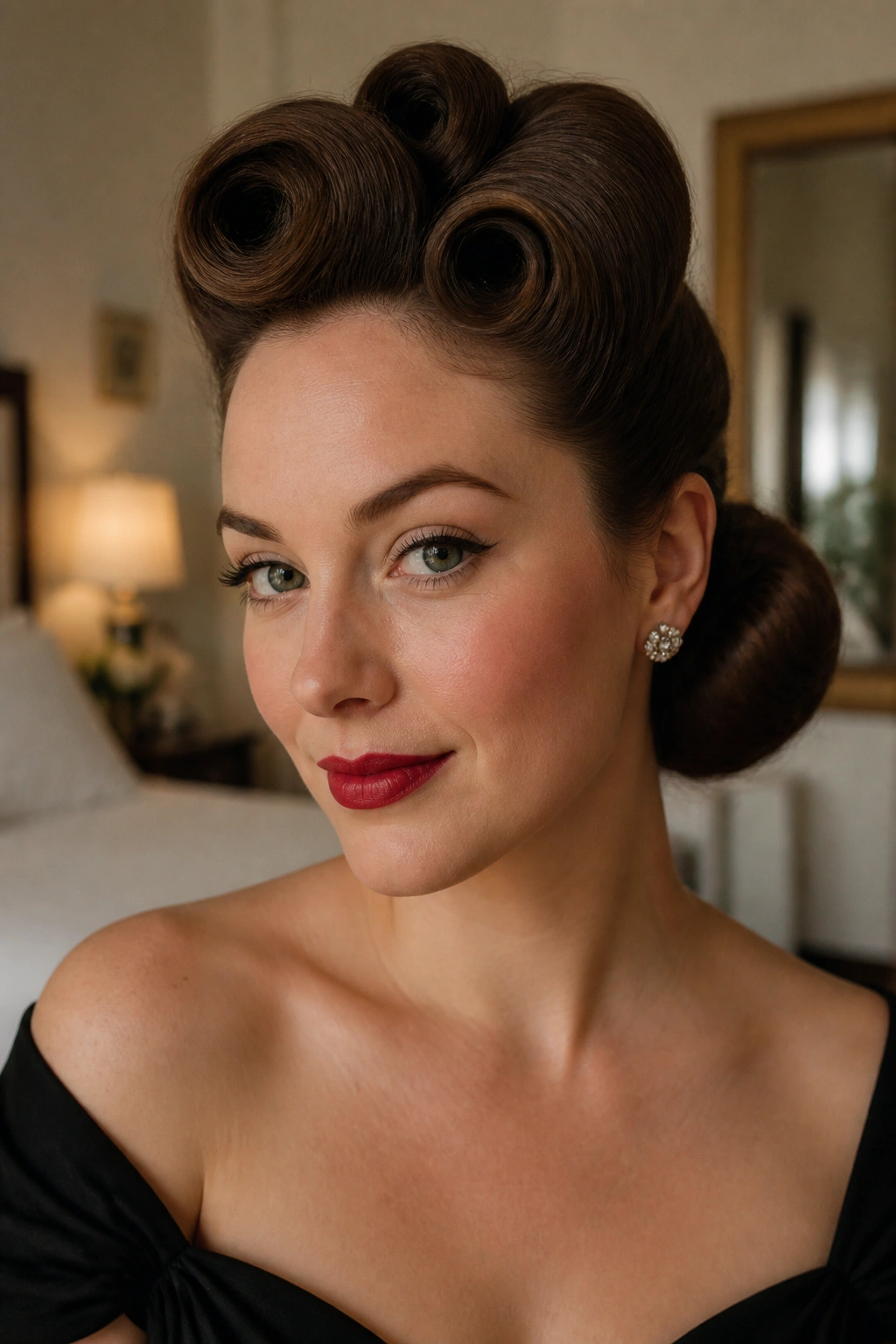
Unlike a full updo, this version keeps the neck open and the crown sculpted. That balance is why it works so well for formal events, photos, or any setting where you want polish but not a helmet of hair.
The rolls sit high enough to create that vintage front profile, while the remaining length gets gathered into a low chignon at the nape. The chignon can be smooth and tucked, or a little twisted and soft. Either way, the roll remains the first thing people notice.
I think this style is especially good when the face shape benefits from a little height at the temples but the hair itself is too long or too thick to pin fully upward. A low knot anchors the style and keeps the weight off your scalp. That makes a difference after a few hours. Heads are not designed for decorative architecture.
A small off-center chignon usually looks better than a dead-center one. It keeps the silhouette from feeling square. That tiny shift changes the whole mood.
10. Messy Victory Roll Hairstyles With Texture Feel Less Costume and More Real
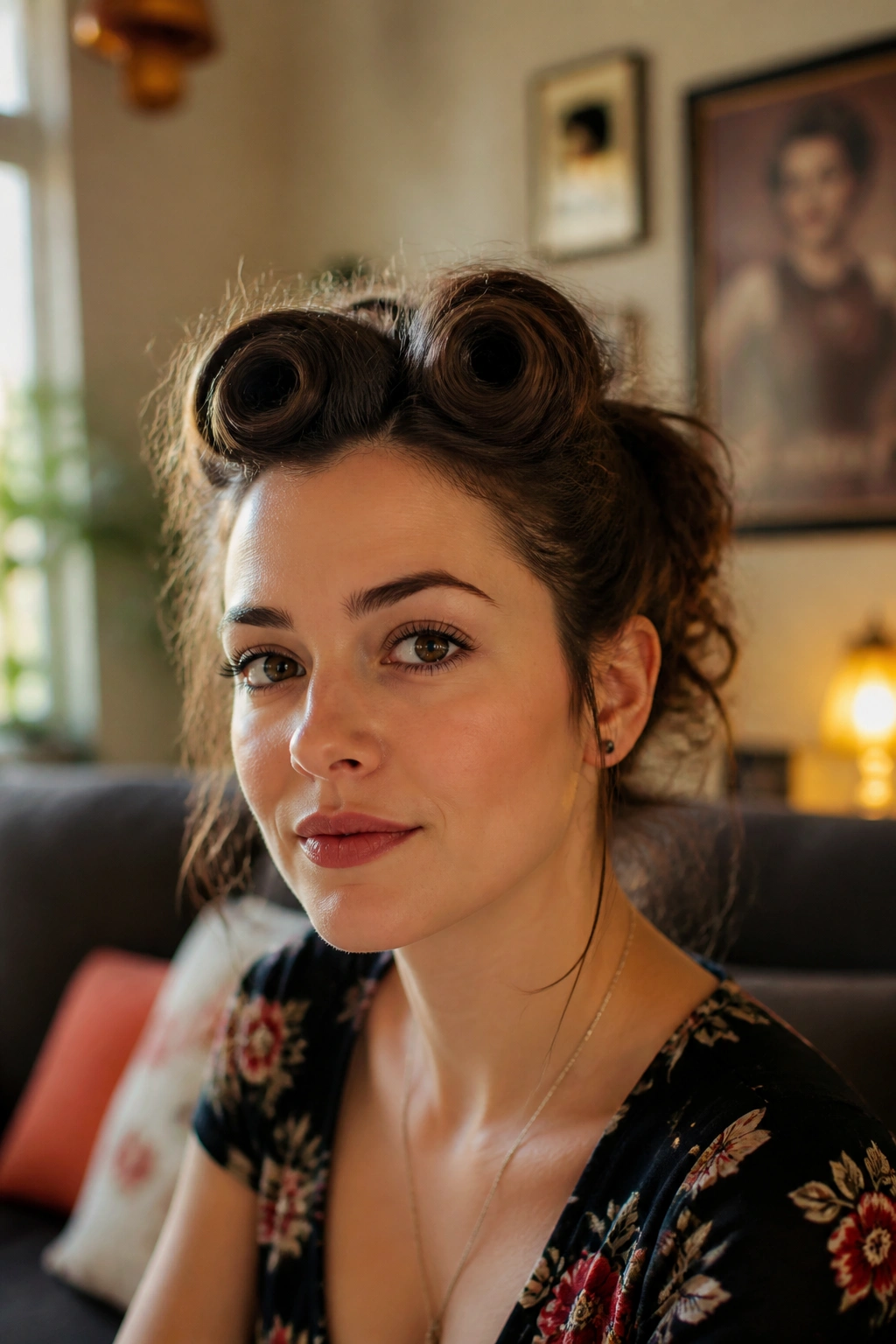
Messy wins here. Not sloppy, not half-finished. Just a little texture, a little softness, and enough visible movement that the style feels worn by a person instead of assembled by a display head.
I like this version because it stops people from over-smoothing the life out of the hair. A tiny bit of ridge line, a few soft edges around the roll, even a slightly imperfect pin spot can make the hairstyle look more interesting. Vintage does not have to mean glossy and sealed in place. Sometimes the best version looks like it loosened up after an hour and became better for it.
A matte texturizing spray helps here more than heavy pomade. So does finger-combing instead of brushing every last strand flat. You want the roll to hold its shape, but the surface should still show a little movement when you turn your head.
My bias: if the hair is too perfect, the roll can feel dated in the wrong way. A little texture makes it modern enough to wear without costume vibes, and that matters a lot if you want the style to work with denim, a sweater, or a plain dress.
11. Side-Parted Victory Rolls with Soft Waves Feel Gentler Around the Face
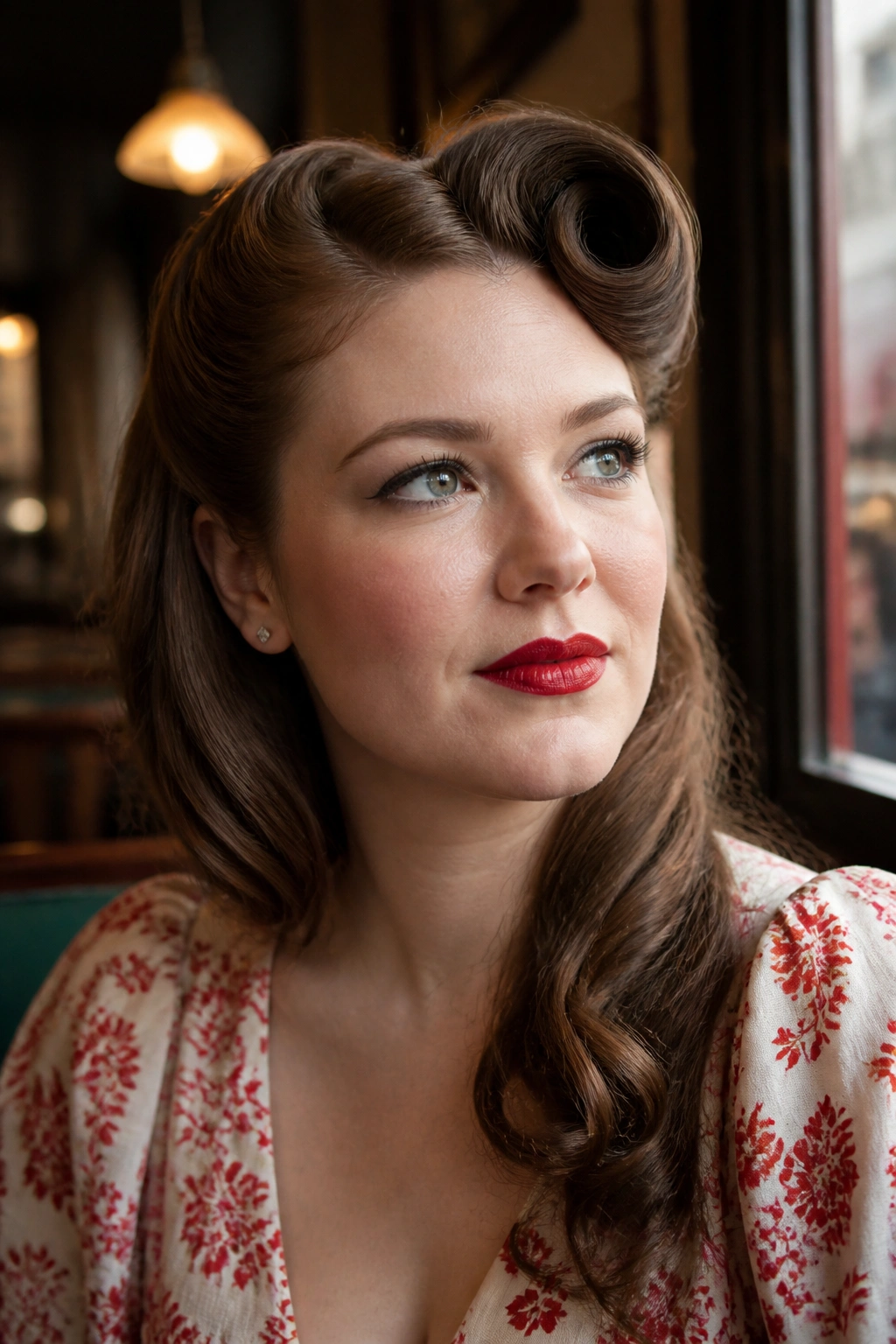
Why does a side part change the whole look? Because it breaks the symmetry before the roll even starts, and that makes the face feel longer, softer, and less boxed in.
A deep side part lets one roll sit a little higher while the opposite side melts into waves. That is a good move if a straight-across front shape feels too rigid on you. It also helps balance features that already carry a lot of width around the cheekbones or jaw. The part line itself becomes part of the design, not just a place to separate hair.
How to Keep It Soft
Use a 1 to 1.25-inch curling iron on the loose lengths and brush the curls out once they cool. That gives you the round, brushed-out wave pattern that pairs so well with vintage hair. The front roll can stay crisp while the back has a softer bend.
- Keep the roll on the heavier side of the part a little larger.
- Pin the lighter side back with one or two hidden bobby pins if it starts collapsing.
- Leave a thin veil of hair near the temple if you want less forehead exposure.
- Use a light hold spray so the waves move instead of freezing.
This is one of the easiest ways to make victory rolls feel wearable for everyday life. The style still reads retro, but it does not shout.
12. Faux Hawk Victory Rolls Bring Edge to the Vintage Shape
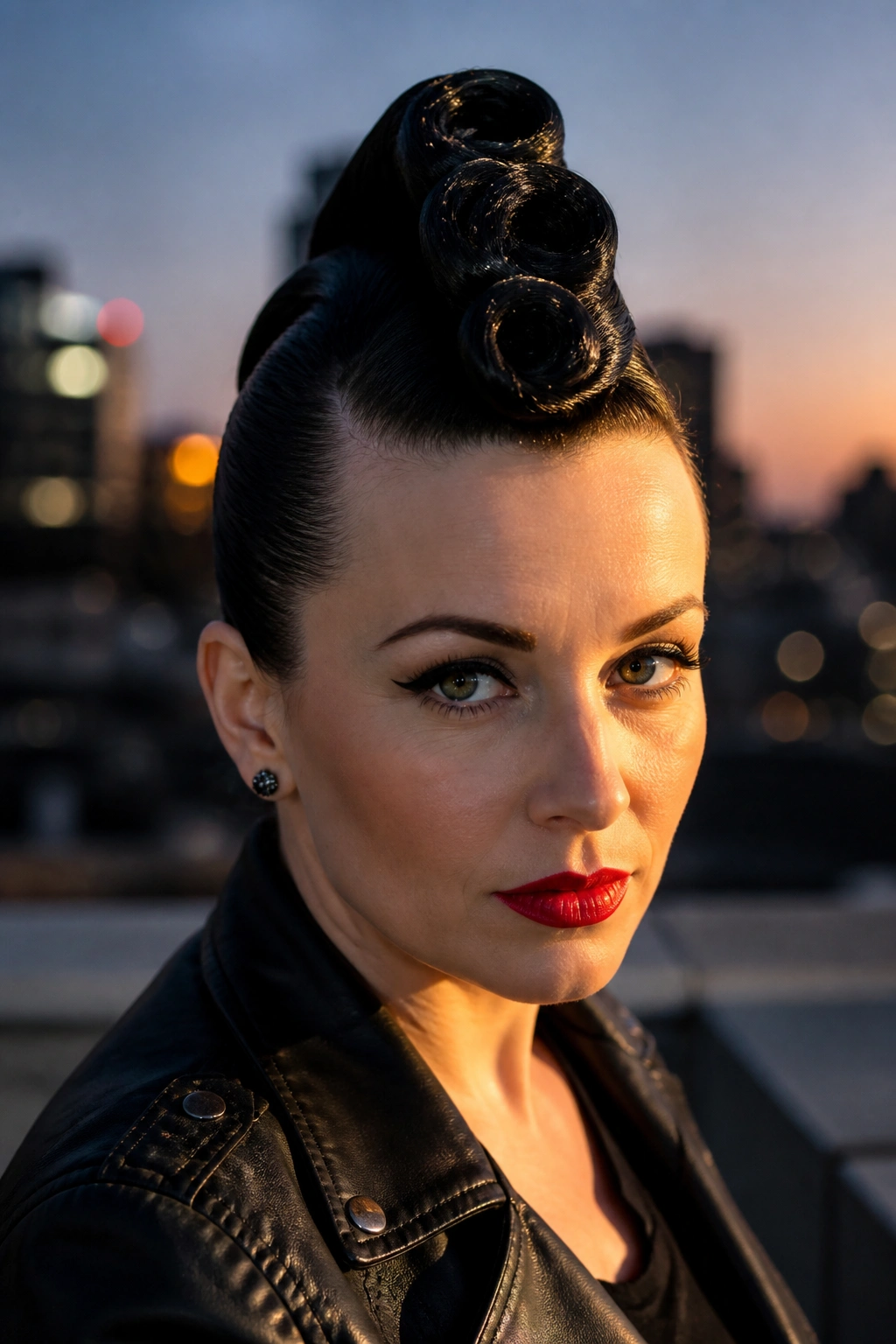
A faux hawk version is for people who like the shape of victory rolls but want them to feel less sweet and more graphic. Instead of sitting only at the sides, the rolls stack or travel along the center line, creating a raised ridge down the head.
That center lift changes everything. The profile gets longer. The sides look sleeker. The whole hairstyle carries a bit of attitude that the classic double-roll set sometimes lacks. It is not a subtle style, and honestly, that is the fun of it.
This look works well on short-to-medium hair because the center section can be built into a series of smaller rolls instead of one huge one. Side sections stay pinned close to the scalp, which keeps the shape clean. A little gel or wax at the sides makes the contrast sharper and helps the faux hawk line stay visible.
The best part is how adaptable it is. You can make it polished with smooth ends, or rough it up slightly with texture spray. Either way, it still reads as a vintage-inspired style with teeth in it.
13. Victory Rolls with Bangs Soften the Forehead Line
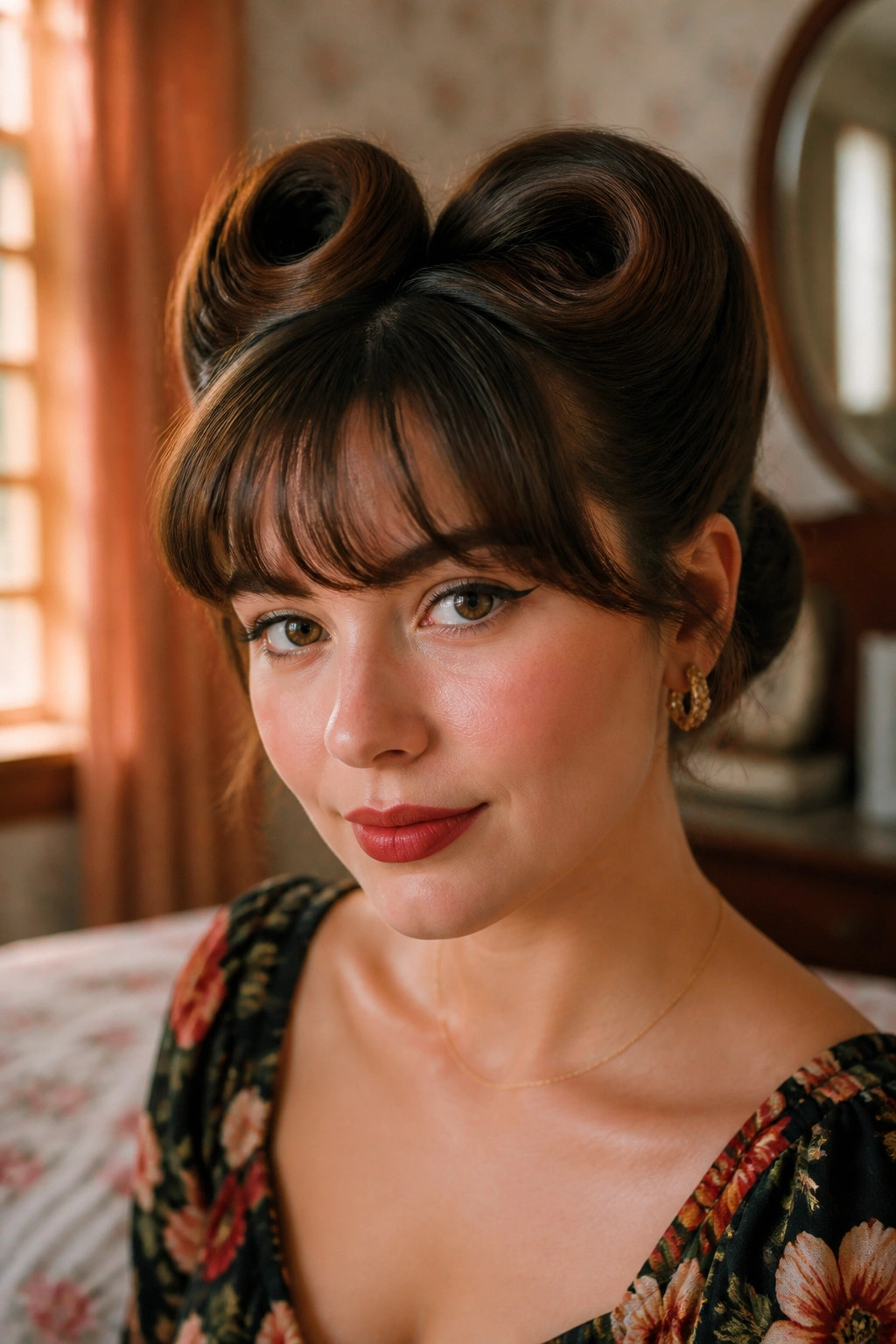
Bangs change the mood more than people expect. A roll without bangs puts the forehead and temples right on display. Add bangs, and the whole style feels softer, lower, and a bit more face-framing.
Curtain bangs are the easiest match because they separate around the face and let the rolls stay visible. Blunt bangs work too, but they create a stronger top line, so the rolls need to be a little more lifted to avoid feeling crowded. Wispy bangs are the most forgiving. They blur the transition between the roll and the rest of the hair without stealing attention.
If your bangs are thick, smooth them with a round brush first and let them sit flat before you pin the rolls. If they are very short, I would keep the rolls slightly lower and more rounded so the front of the style does not fight with the fringe. The mistake here is trying to make every piece act like the main character.
One small note: bangs are useful when the hairline has cowlicks. They hide a thousand sins. Maybe not literally, but close enough.
14. Victory Rolls for Fine Hair Benefit from Hidden Padding
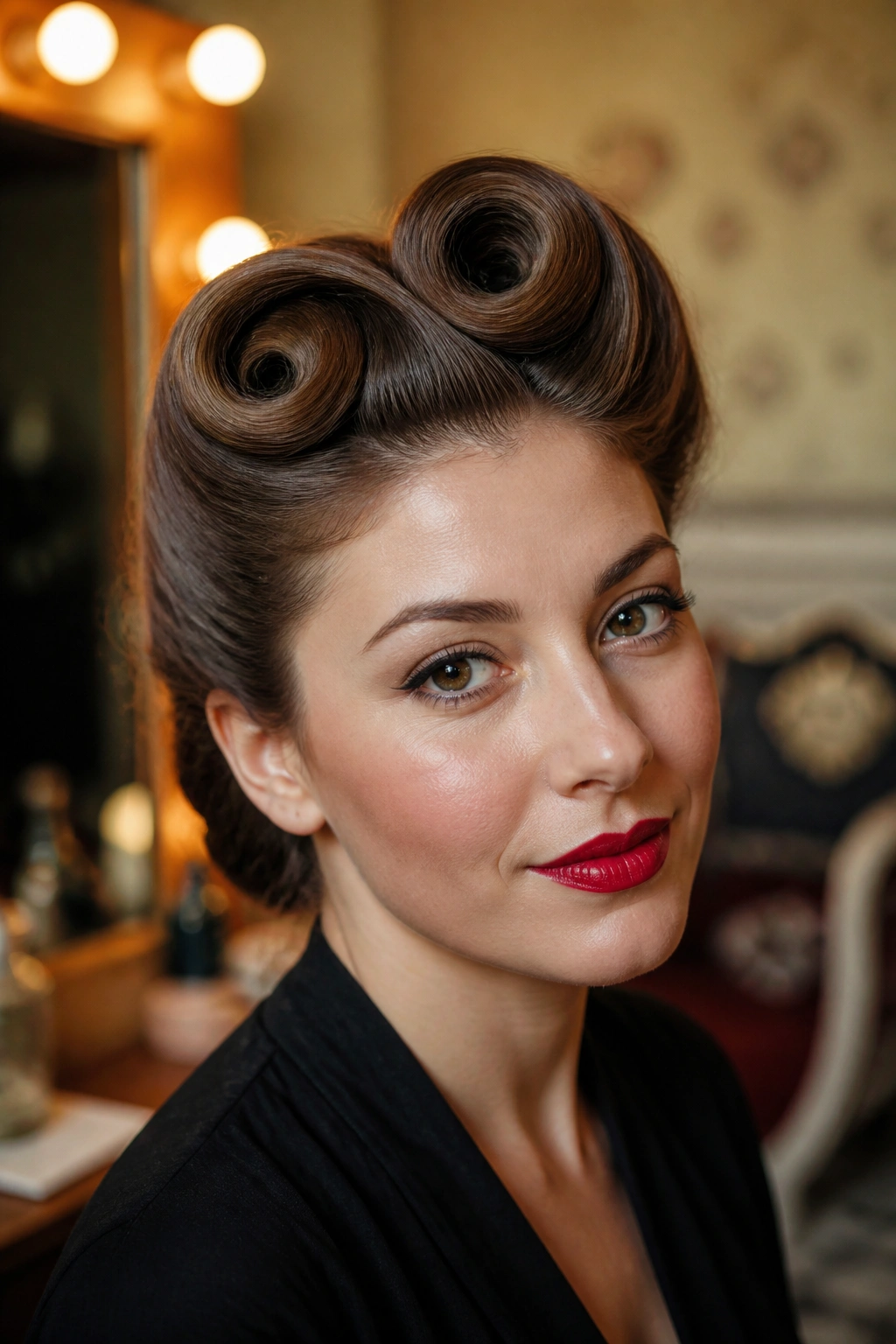
Fine hair can absolutely hold victory rolls. It just needs help. The help can be small — a bit of padding, a little teasing, and the right kind of pinning — but it makes a huge difference.
The cleanest trick is to build the roll over a tiny foam insert or a soft mesh pad. That gives the hair a shape to rest on instead of forcing it to create all the volume itself. Another smart move is to tease only the root area under the roll, about 1 inch deep, and leave the outer layer smooth. Too much backcombing can make fine hair look dry and flimsy, which is the opposite of what you want.
Where the Extra Support Helps Most
- At the base of the roll, where the hair needs lift.
- Near the crown, if the style starts collapsing backward.
- Behind the temple section, where fine hair often slips first.
- Under a side sweep, if you want the roll to look fuller from the front.
Keep the padding hidden. That sounds obvious, but I have seen plenty of styles where the support is doing its job and still showing through because the outer layer was too thin. The trick is to use just enough hair over the insert to make the shape believable, then pin it tight enough that the roll feels like hair, not a prop.
15. Everyday Victory Roll Hairstyles That Last All Day
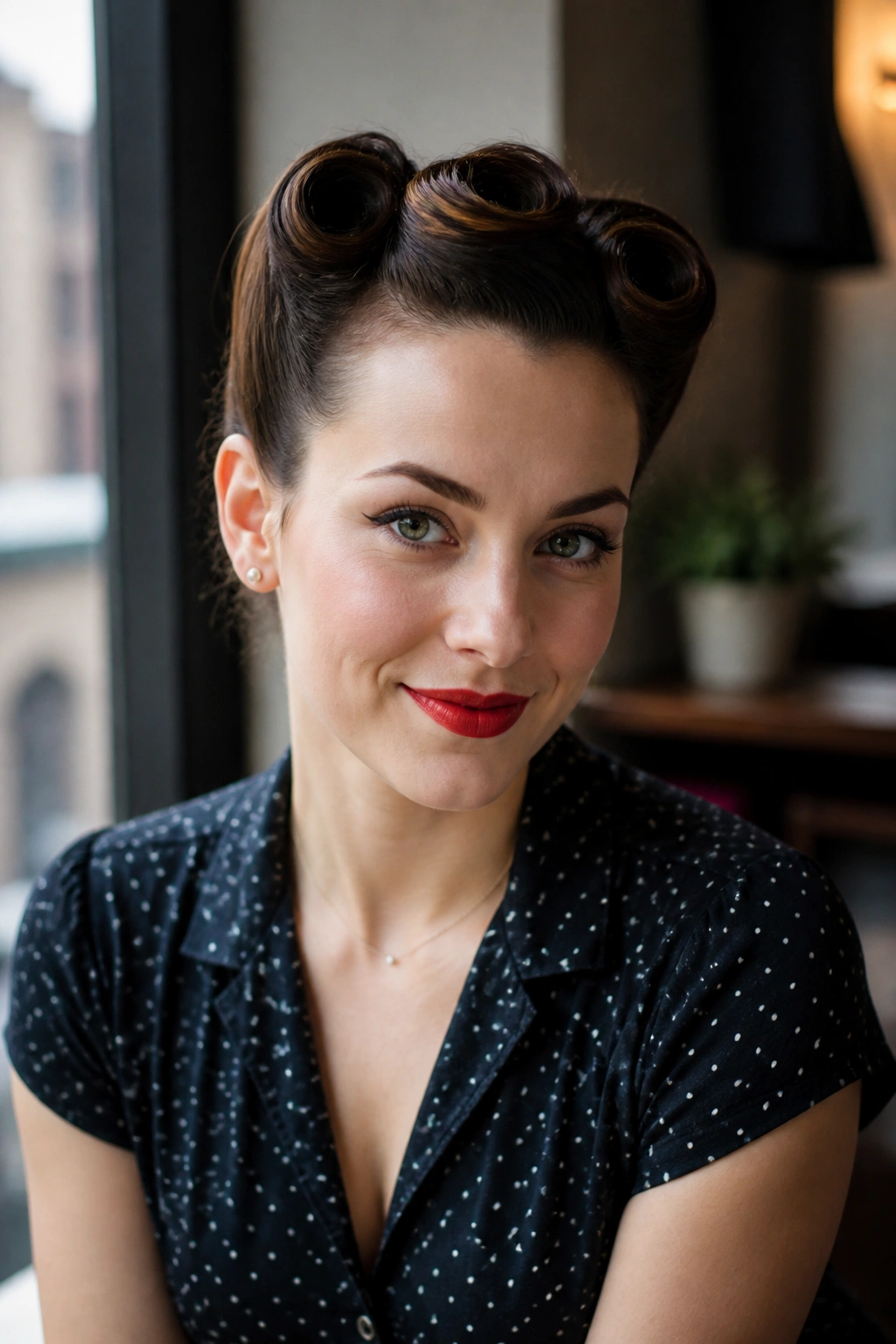
If your rolls have to survive a commute, a desk fan, and a full day of touching your hair out of habit, this is the version to copy. It is not the most dramatic one. It is the one that stays put.
The main difference is restraint. Build the roll smaller than you think you need, then lock it down with cross-pinned bobby pins and a firmer hold spray. A huge roll looks great for ten minutes and then starts to loosen, especially if your hair is soft or freshly conditioned. Smaller rolls sit closer to the scalp and hold the shape better through friction, wind, and plain old life.
Small Choices That Help It Last
- Start with second-day hair or add dry shampoo to fresh hair before styling.
- Use a lightweight mousse at the roots, not heavy conditioner near the crown.
- Let the roll cool completely before touching it again.
- Spray from a distance so the product lands as a fine mist, not damp patches.
- Keep a couple of spare pins in your bag if you know you will be out for hours.
This is the version I trust when I do not want to think about my hair all day. It still looks vintage, still feels intentional, and still leaves room for the rest of your outfit to do its work.
Final Thoughts
The strongest victory rolls are not always the biggest ones. They are the ones that sit in the right place, match the rest of the hair, and suit the amount of time you actually want to spend in front of the mirror.
A good rule is to choose one thing to emphasize: symmetry, height, shine, softness, or texture. Trying to max out all five at once usually turns the style rigid. Pick the mood first, then build the roll around that.
And if the first attempt looks a little odd, that’s normal. The shape is forgiving once you learn where it wants to fold, and the better versions usually come after a few messy tries rather than one perfect pin.
