



Festival hair should work from the front row and the food truck line. The best neon hair color ideas for festivals are the ones that still look deliberate after sweat, wind, and a dozen quick phone photos.
A neon swatch can look wild in a color chart, then land flat on real hair if the placement is lazy. A single money piece, a hidden underlayer, or a tight stripe through a braid often reads brighter than an allover color that has nowhere to go.
If your hair is darker than a medium blonde, true neon usually needs pre-lightening. That’s the annoying part, yes, but it also means a temporary spray, clip-in streak, or color wax can be the smarter move when you only want one loud weekend and not a long bleach commitment.
The ideas below are the ones I keep coming back to because they work in real life, not just in a salon mirror. Some are blunt and graphic. Some are sneaky. A few are best paired with braids, waves, or a vintage-shaped cut so the color has a frame instead of just floating there.
1. Electric Lime Money Piece
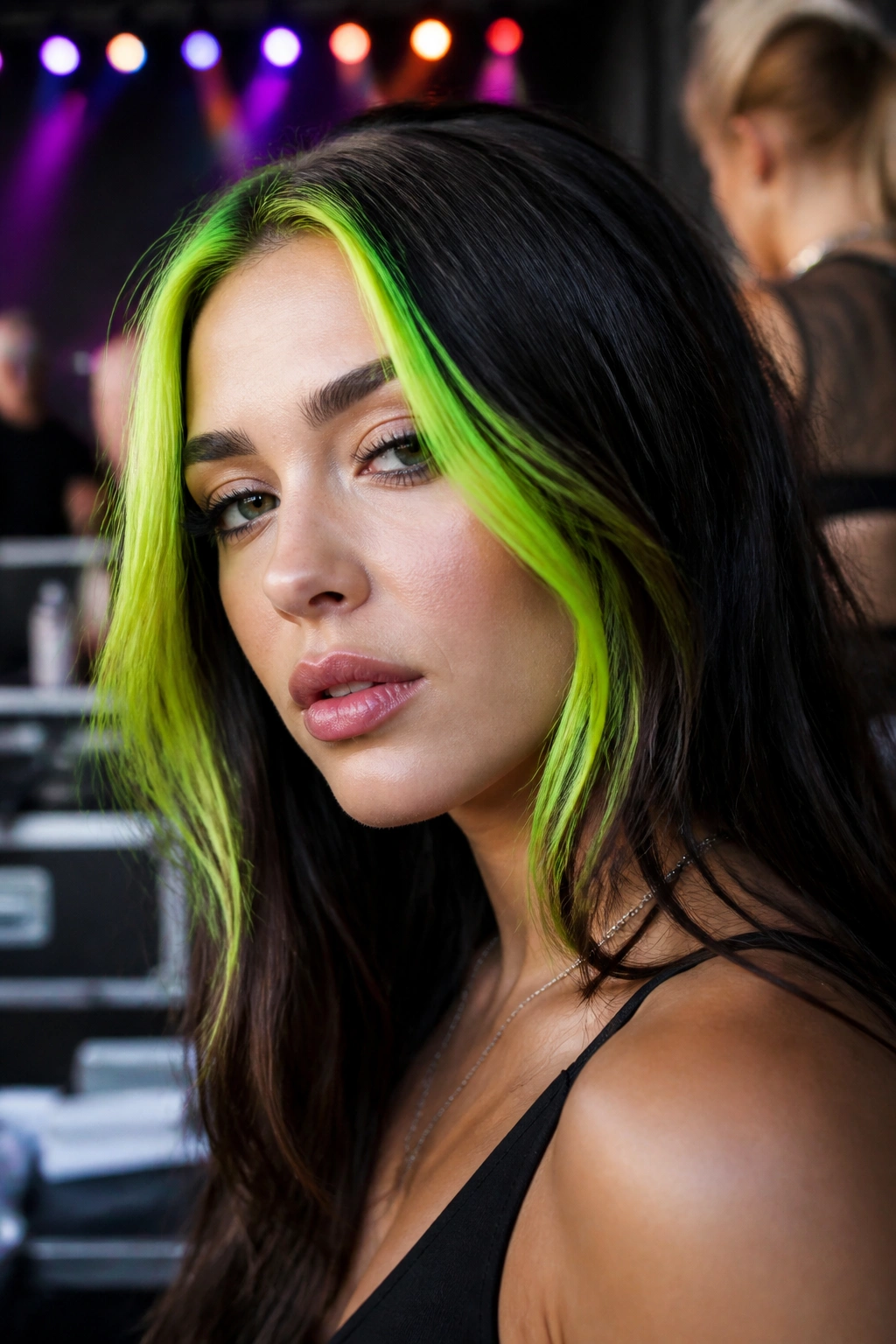
Electric lime is the loudest little decision you can make. Two bright front streaks can wake up a plain cut faster than a full head of color, and they do it without asking the rest of your hair to commit.
A money piece works especially well when the color starts right at the hairline and opens up around the face. Keep it chunky enough to read from a few feet away, not so thin that it disappears into the rest of the hair. On a dark base, that contrast looks sharp and a bit mischievous. On blonde hair, it turns more radioactive, which is a completely different mood.
Where to Place the Lime
A lime front piece looks best when it follows the shape you already wear.
- Center part? Let the lime sit on both sides of the part for symmetry.
- Curtain bangs? Paint the lime through the longest front pieces and stop before the ends look stringy.
- Side part? Keep one side heavier so it feels intentional, not accidental.
The cut matters here. I like this with a shag, a wolf cut, or long layers because the lime rides the movement instead of sitting there like a sticker. And if you want a festival look that survives braids and half-up buns, this is one of the easiest shades to pull off.
One good rule: keep the lime close to the face and away from oil-heavy roots if you’re using a temporary pigment.
2. Neon Pink Dip-Dye Ends
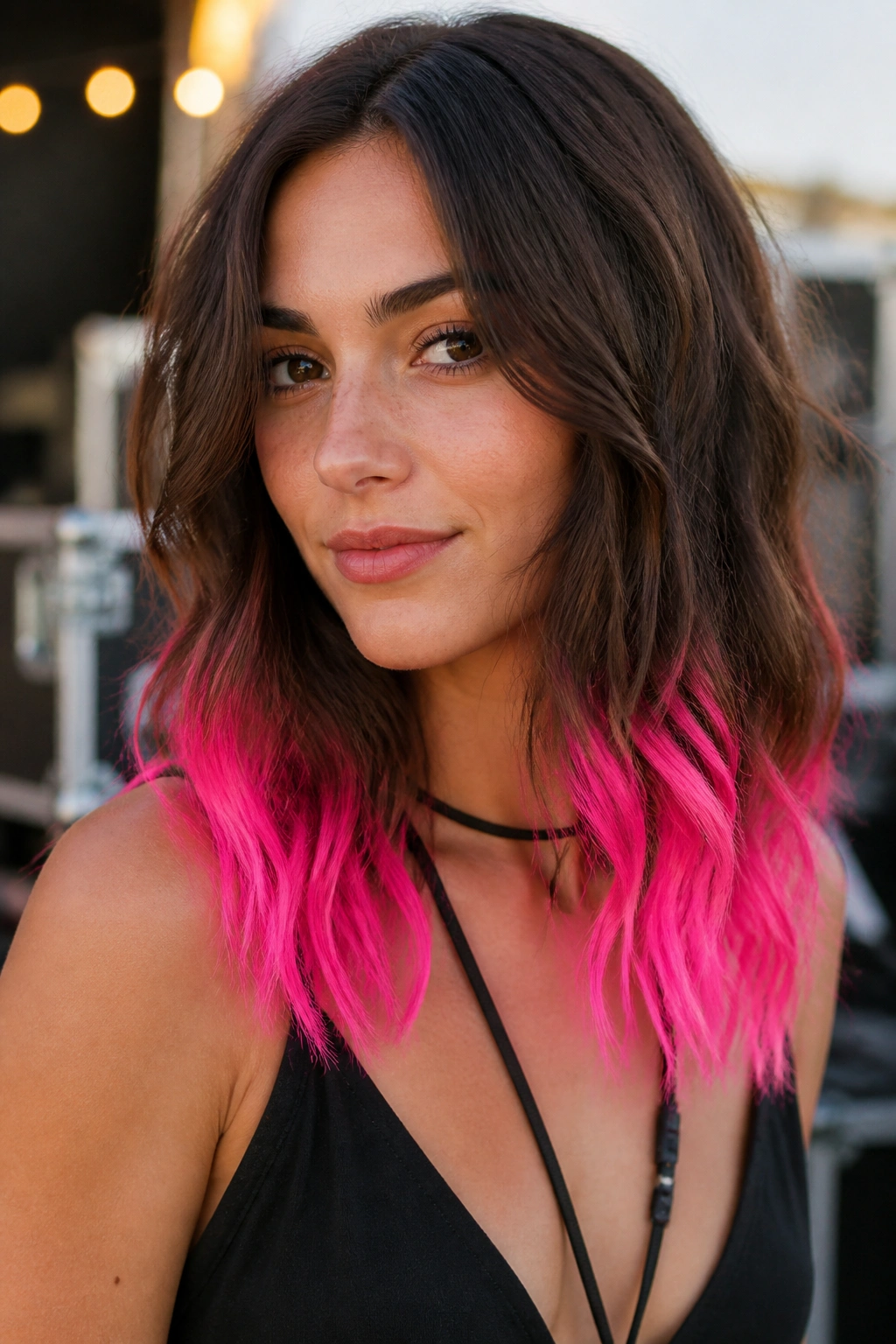
Want neon without turning your whole head into a maintenance project? Dip-dyed ends are the move. The color lives in the last 2 to 4 inches, which means the roots stay calm and the bright part shows most when hair swings.
This one works best on waves, curls, blunt ends, and anything with movement. Straight hair can wear it too, but the ends need a clean edge or the color can look smeared. When the pink is fluorescent enough, it flashes hard under stage light and softens a little in daylight. That shift is part of the appeal.
One sentence: It’s low effort on the part that grows out fastest.
If you want the look to feel polished, ask for a subtle fade rather than a hard line. A crisp line can be cool on a bob, but on longer layers a softer transition usually looks better. Hot pink is the obvious version, yet neon rose and pink-magenta hybrids can be easier to wear with red lipstick, black eyeliner, or a sequined top that is already doing a lot.
This is also the shade I’d pick for someone who wants a festival color but still wants to tie their hair into a ponytail and have it look clean.
3. Ultraviolet Root Melt
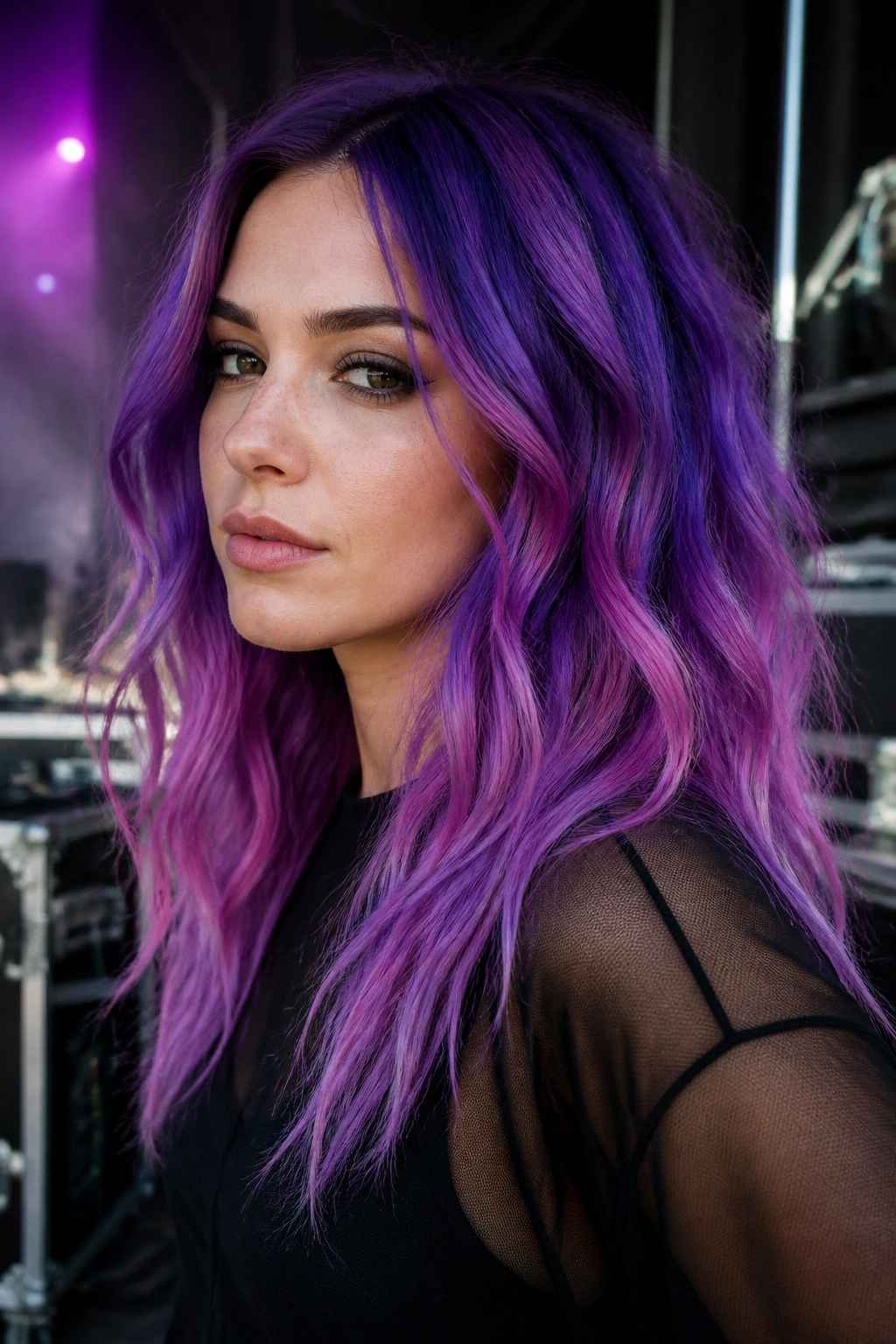
Purple near the scalp sounds tame until you let it sink into ultraviolet and indigo. Then it turns rich, a little alien, and much more interesting than a flat violet all over.
Why does this work so well? The darker root area gives the neon a place to start, and the lighter mid-lengths and ends carry the glow outward. That gradient keeps the color from feeling stripey. It also hides regrowth better than a full neon root, which is a small mercy if you do not want to think about touch-ups every few weeks.
Why It Reads So Well in Light
A violet melt does three things at once. It creates depth at the crown, brightness through the middle, and a softer fade at the ends. Under blacklight, it can look almost electric. Under daylight, it reads as a layered jewel tone with a neon edge.
Best Shapes for the Melt
- Long layers, because the fade has room to show.
- Loose waves, because the bends break up the color.
- Half-up styles, because the crown stays visible.
- Braids, because the color shifts every time the plait twists.
I like this one on longer hair more than on short cuts. Short hair can look too packed with color when the melt has no room to stretch out. If you want something that feels moody but still festival-ready, this is a strong place to start.
4. Highlighter Yellow Streaks
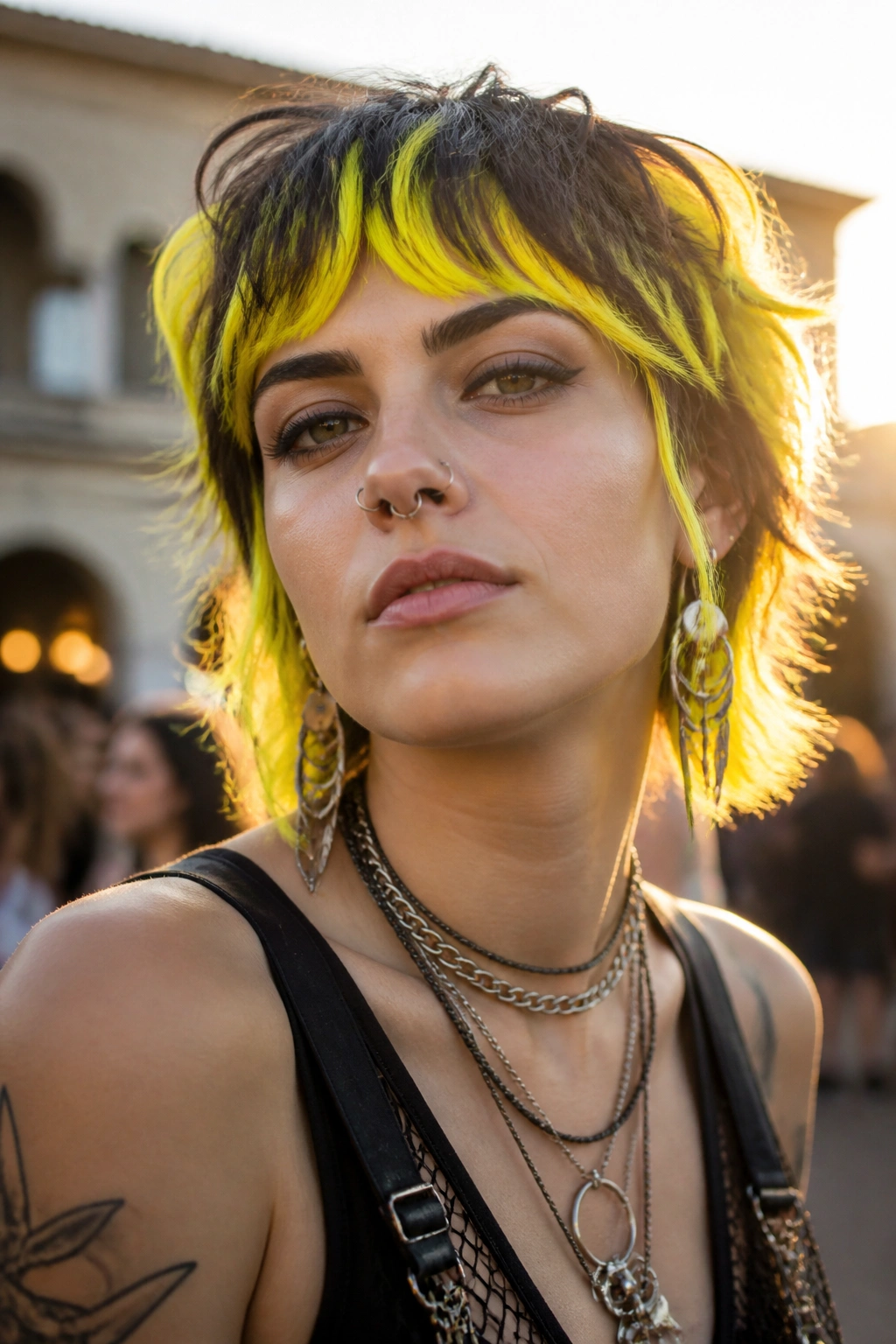
Yellow is hard to fake. That is why it looks so good when it works. A true highlighter yellow streak has an almost sharp, graphic edge — the kind that makes a shag cut or pixie look more deliberate.
A little warning, though: yellow needs enough lift or it goes muddy fast. On pale blonde hair, it can land like a neon marker. On darker hair that is only partly lightened, it can tilt greenish and lose the punch people are usually after. That is not a failure of the color. It is just yellow being picky.
I like yellow in chunky streaks rather than tiny slices. A few strong bands through the top layer, a bold piece in the fringe, or a block at the temple tends to read better than a whisper-thin highlight. It can look excellent with braids too, because the plait breaks the color into little flashes.
Best uses for yellow streaks:
- Pixie cuts with a long top
- Shags and wolf cuts
- Braided festival styles
- Bangs that already have some texture
Yellow also has a strange charm with dark clothes. Black, charcoal, navy — those colors make the yellow look even louder without needing extra sparkle. And if you are the kind of person who likes your hair to feel a bit unruly, this shade has that energy built in.
5. Neon Orange Panel Highlights
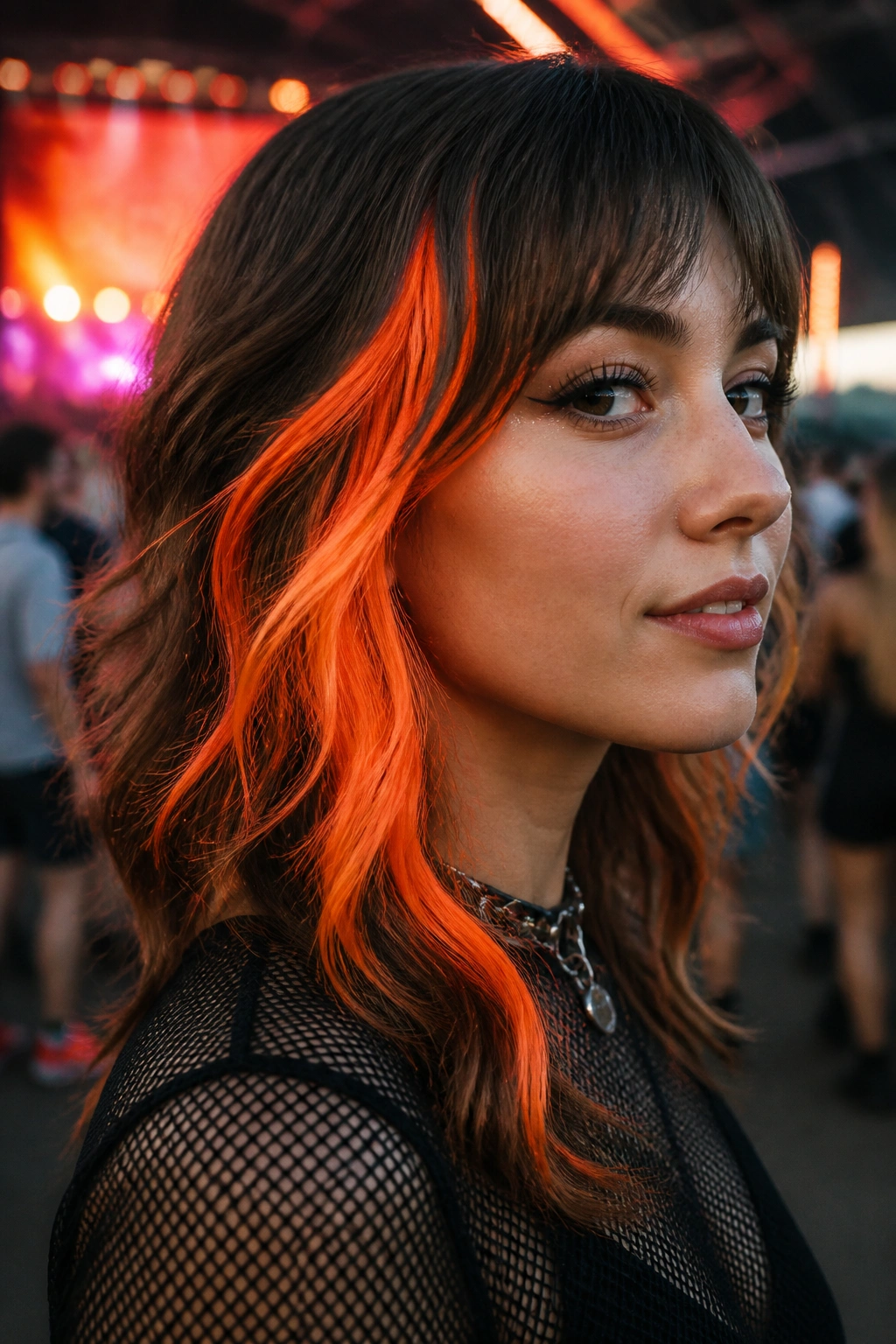
Orange gets underestimated all the time. People worry it will look too warm, too bold, too much like costume dye. Then they see it in a strong panel through layered hair and suddenly it makes sense.
A neon orange panel works best when it sits under or beside another shape, not scattered everywhere. Think of it as a strip of light in the hair, not the whole show. On a shag, wolf cut, or long layered style, orange catches the bends and makes the cut look sharper. On straight hair, it can still work, but you want a clean line and a glossy finish or the color can look flat.
Best Cuts for Orange Panels
A few cuts really let the shade do its thing:
- Choppy shags with movement around the cheekbones
- Layered lobs with bent ends
- Long hair with curtain bangs
- Cropped cuts with a side sweep
Orange is also one of the better neon shades for anyone who likes warm makeup. Bronze shadow, copper liner, peach blush — all of it sits nicely beside the hair without fighting. That said, a cool-toned outfit can make orange pop even harder. Strange, but true.
If you want a festival color that looks like it has heat in it, this one hits the mark.
6. Aqua Blue Face-Framing Highlights
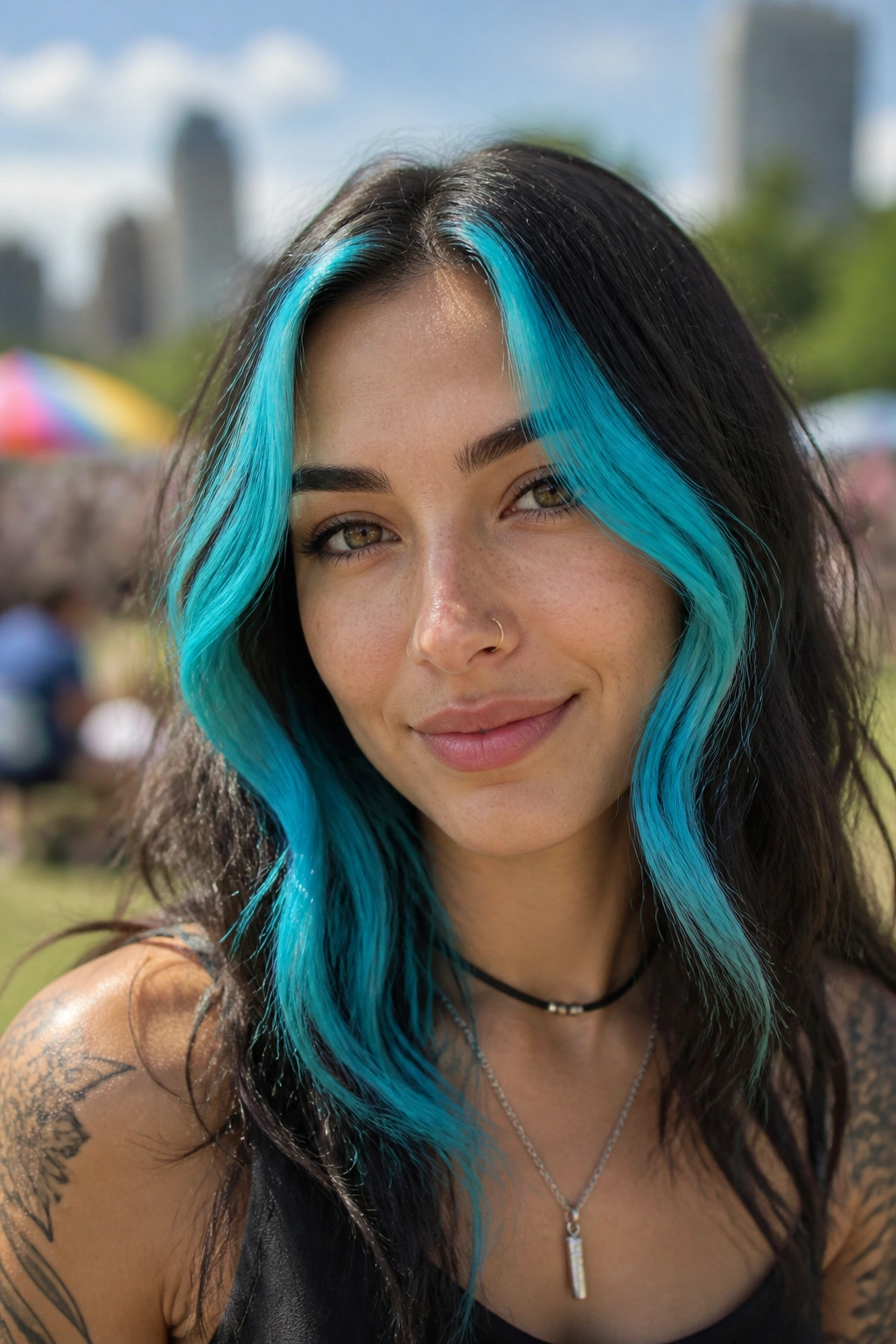
Aqua around the face feels cold in the best way. Not icy to the point of disappearing, not so dark that it turns navy — just bright enough to sit between blue and green and still read neon in motion.
This placement is flattering because it works with your face, not against it. Put the aqua where your hair naturally falls forward, and it does half the styling for you. On a blunt bob, it gives the cut a cleaner edge. On curls, it breaks into bright ribbons. On long layers, it can look almost watery, which is a weird sentence to write and still the right one.
One-sentence paragraph: Aqua is a cheat code for contrast.
I like this shade when the rest of the hair stays neutral — black, deep brown, smoky blonde, even silver. That quiet background lets the face-framing pieces carry the whole look. If you want a slightly softer version, ask for blue-green rather than pure turquoise. If you want a harder hit, keep the streaks narrow and bright.
And yes, this one looks good with glitter makeup, but it does not need it. A clean liner and a strong brow are enough.
7. Candy Green Underlights
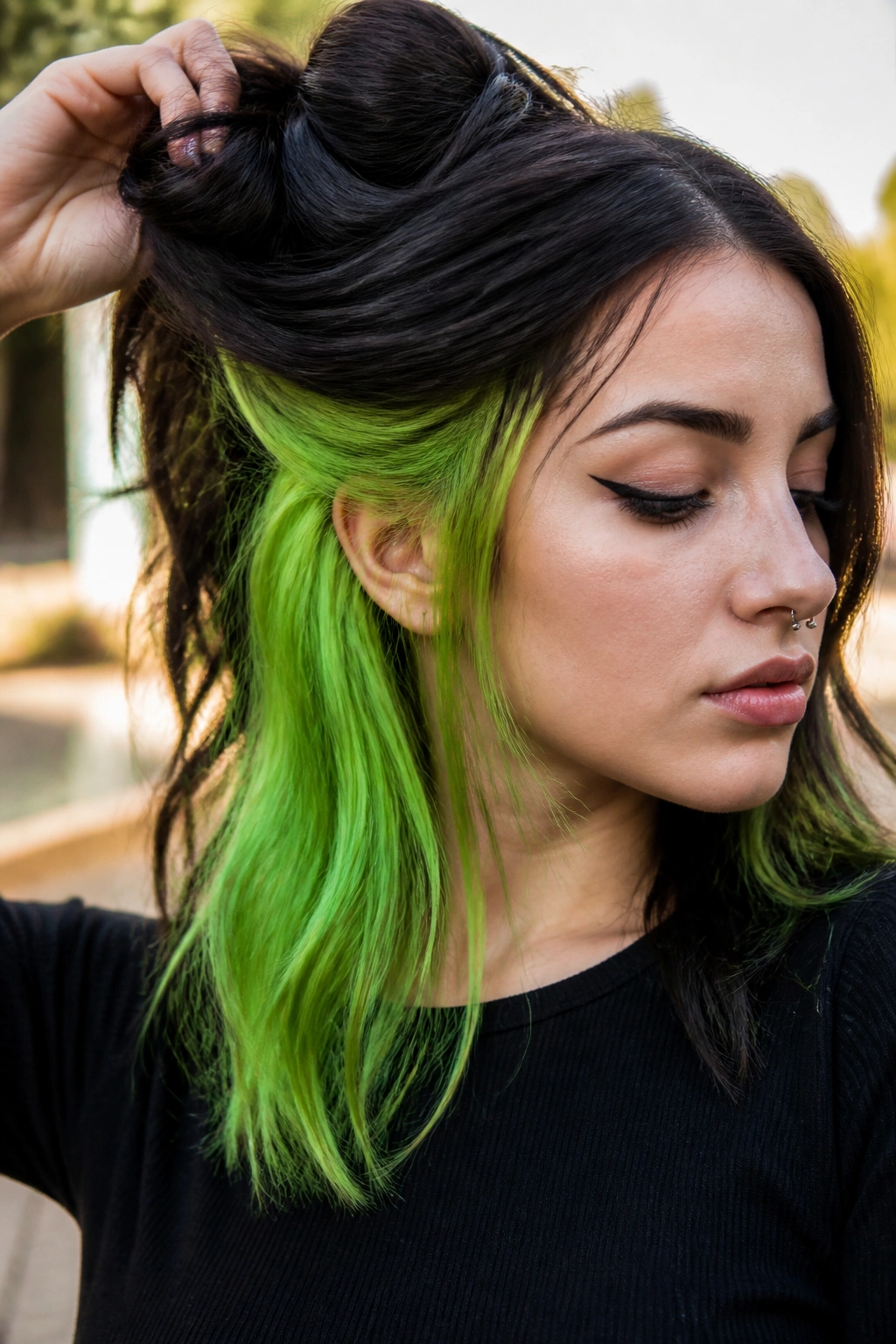
Underlights are for people who want a reveal, not a billboard. The top layer can stay dark, blonde, copper, or even natural, while the green sits underneath and flashes when you turn your head or pin the top half back.
That hidden placement is what makes the color feel a little smarter than a full-head neon job. It gives you options. Wear it down and it peeks through. Twist it into a knot and it jumps out. Braid it and the green becomes a streaking pattern instead of a flat block.
How to Wear It
- Half-up top knots for the fastest reveal
- Loose braids that let the underlayer slip through
- High buns that expose the neck and crown area
- Curtain styles that fall open as you move
The green can lean lime, chartreuse, or a more electric acid shade. I prefer the brighter end of the spectrum because the hidden placement softens it already. You do not need to make the color timid too.
This is a good option if you work around stricter dress codes or you want something that feels wearable after the festival is over. The hair can look normal from one angle and loud from another. That little trick never gets old.
8. Split-Dye Cyan and Magenta
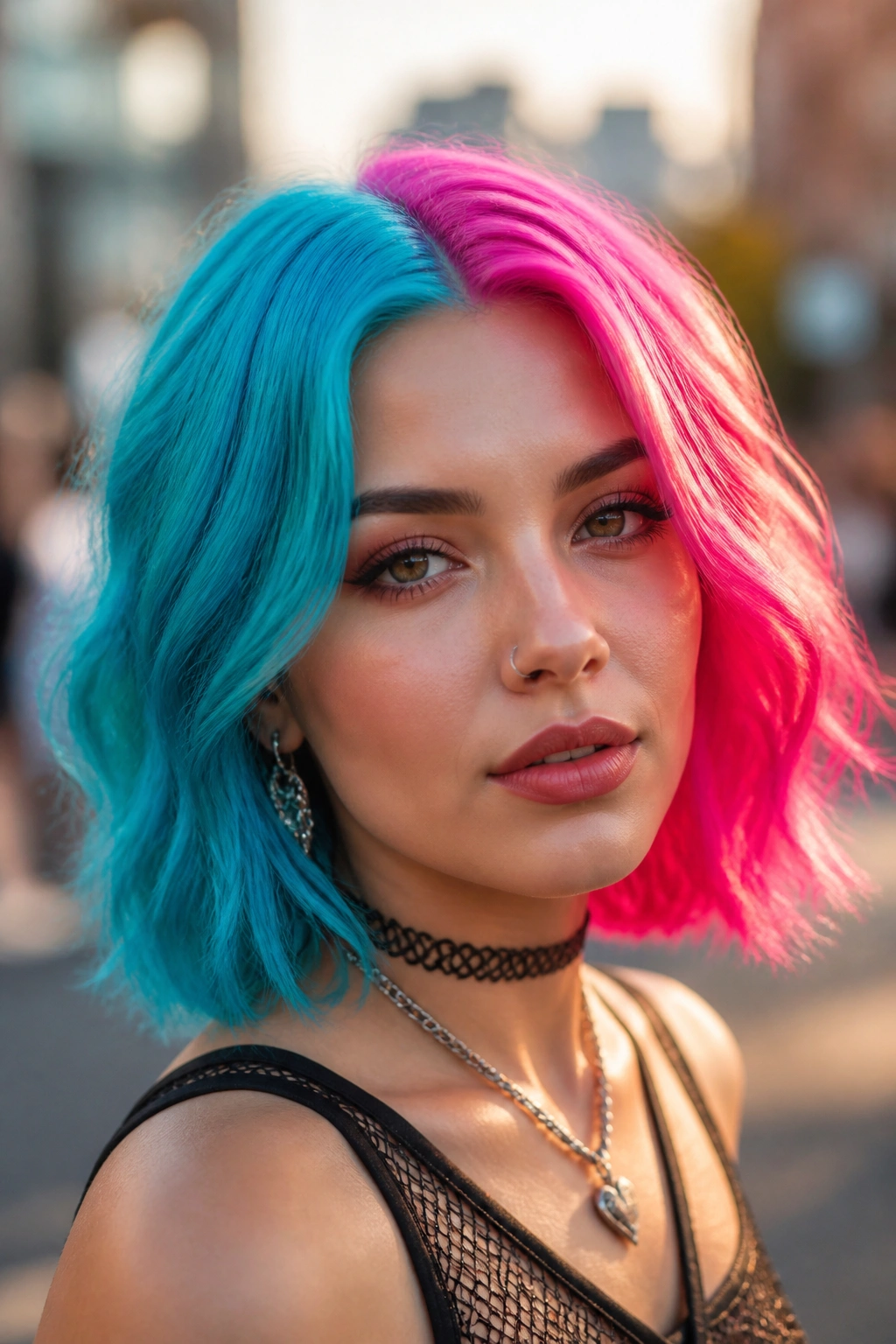
A split-dye can look chaotic in the chair and sharp everywhere else. Half cyan, half magenta gives you a built-in graphic line, which is exactly why it works so well for festival hair. It does not ask for subtlety.
The center part is the obvious version, and it’s the cleanest one. But the line can sit off-center too if you like a side part or one side of your cut already falls heavier. What matters is that the division looks deliberate. If the split lands in a random place, the whole style loses its nerve.
Where the Line Should Sit
The part line should follow the shape you actually wear most. That might mean a true center line from forehead to nape, or a slight angle if your cut has more volume on one side. For shorter hair, a half-and-half undercut can work better than an obvious surface split. For longer hair, loose waves or a straight blowout will show off the contrast most clearly.
Cyan and magenta also play well with space buns, twin braids, and sleek ponytails. Those styles make the color difference feel even cleaner. If you want the most graphic result, keep the finish smooth. If you want a messier festival feel, add texture and let the two shades blur a little at the ends.
This is one of the louder ideas here. That is the point.
9. Rainbow Peekaboo Layers
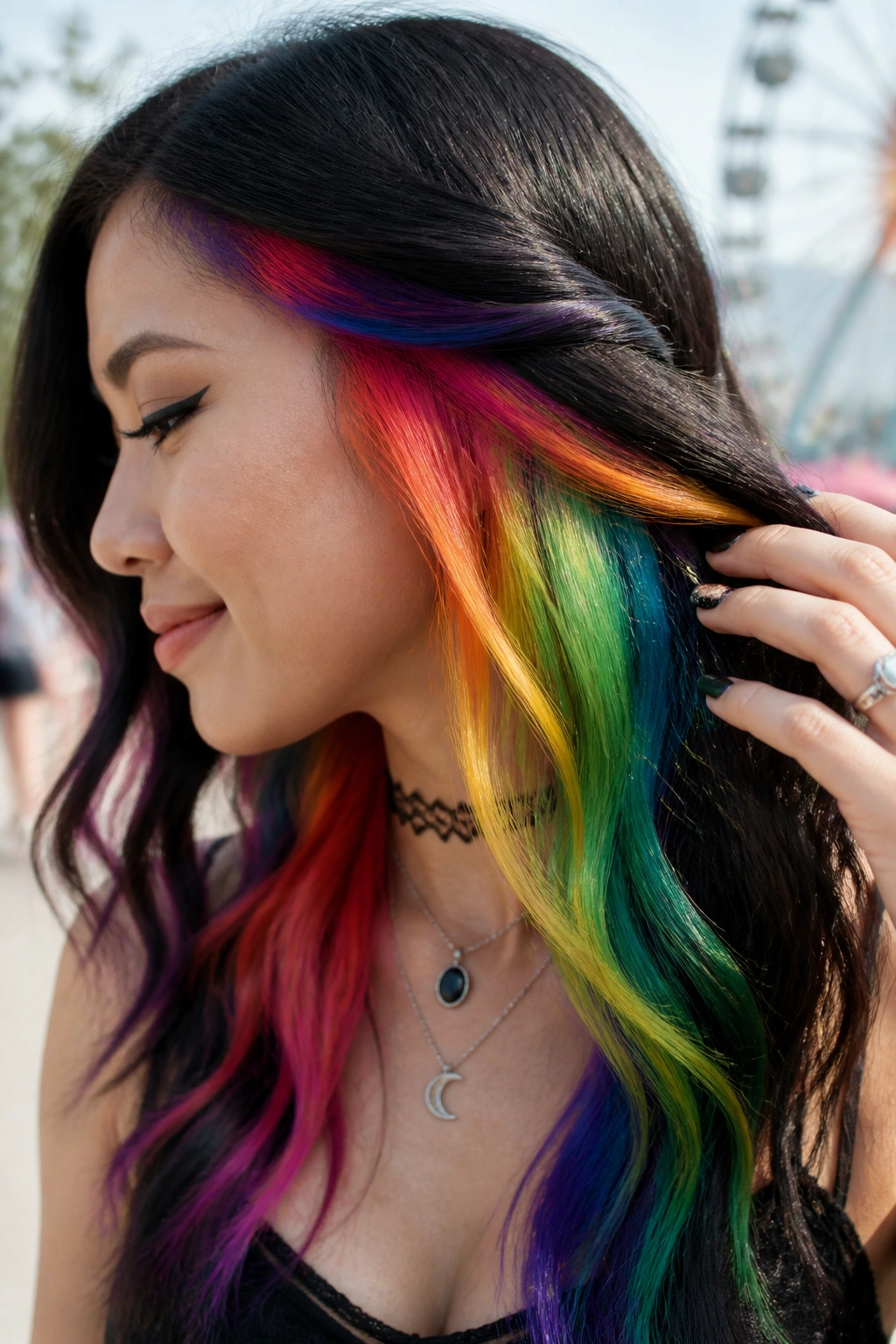
Why wear one neon when the hidden layer can do the work? Peekaboo rainbow color sits underneath the top section of hair, so the bright shades reveal themselves only when you move, tuck, braid, or twist the hair back.
This style is fun because it changes shape all day. Down and loose, it stays mostly secret. Half-up, it starts flashing. Braided, it turns into a moving stripe pattern. That means the same head of hair can look softer in daylight and louder after dark, which is useful if you like your festival look to have a little surprise in it.
How to Keep the Rainbow From Going Muddy
A clean peekaboo rainbow needs a narrow color palette that still has enough contrast.
- Use 4 or 5 shades, not 8.
- Keep the panels slim enough that they sit beside each other instead of blending into brown soup.
- Choose neon lime, orange, hot pink, cobalt, and violet if you want the colors to stay distinct.
- Put the brightest pieces closer to the nape and temple area, where movement shows them off.
I like this on long hair, but it can work on bobs too if the layers are sharp enough. The bigger the swing in the hair, the more fun the color has.
10. Neon Coral Bob
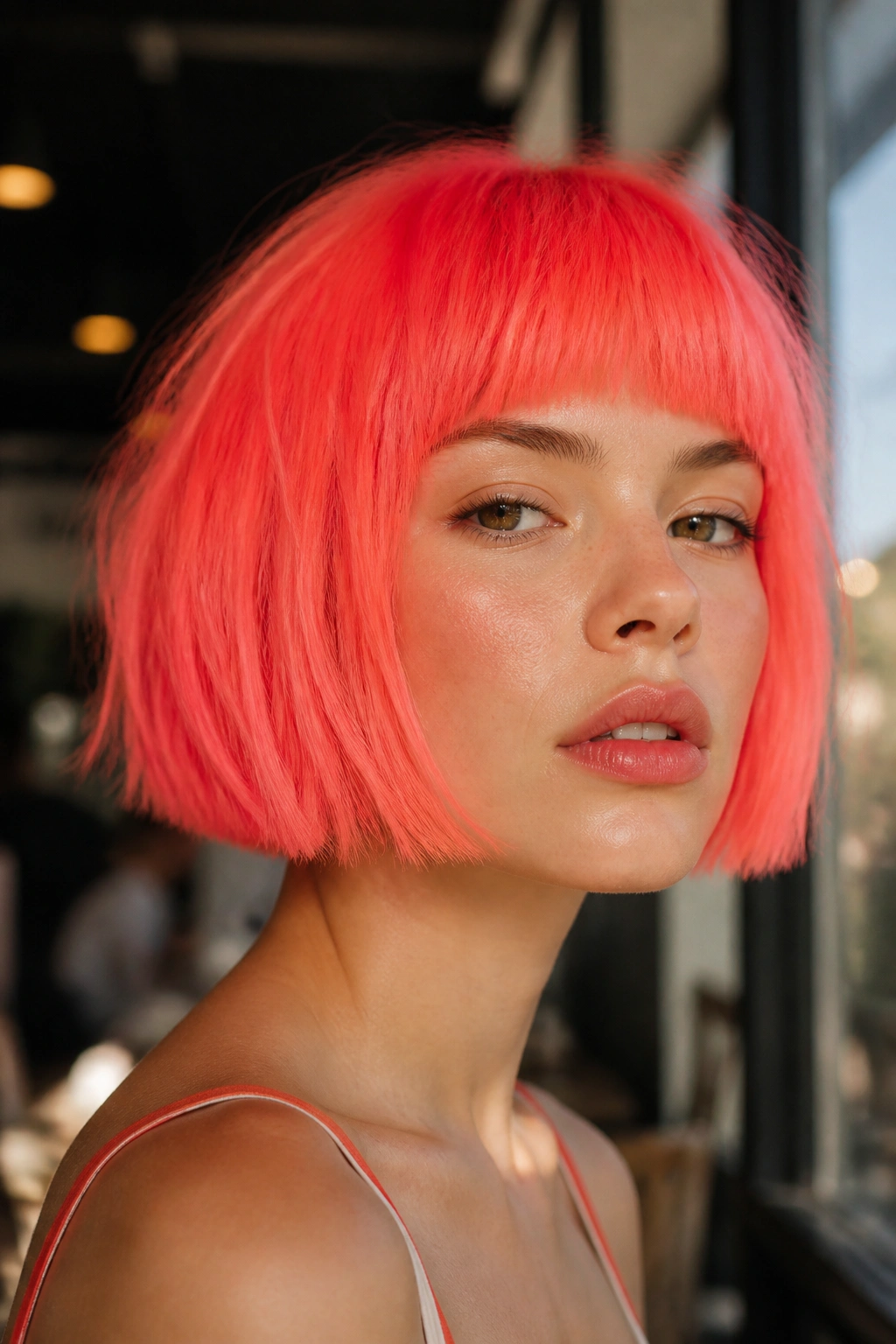
A bob and neon coral are a dangerous good pair. The cut gives the color shape, and the color keeps the cut from feeling too polite. That’s the whole appeal.
Coral sits between pink and orange, which means it has enough warmth to glow but enough pink in it to feel fresh. On a blunt bob, that can look clean and almost retro. On a French bob with a little bend, it feels softer and more playful. On a longer lob, the same shade can turn into a bright sheet of color that moves when you do.
One-sentence paragraph: Short hair loves a bold shade.
I especially like coral for festival hair because it does not need much extra styling. A deep side part, a tucked-behind-the-ear shape, or finger waves can carry the whole look. If you want to push it harder, add a glassy finish or a tiny flip at the ends. If you want to soften it, wear it with a blunt fringe and keep the makeup minimal.
Coral is also one of the few neon-adjacent shades that can work with gold jewelry without feeling overloaded. That matters more than people think.
11. Electric Teal Braided Accents
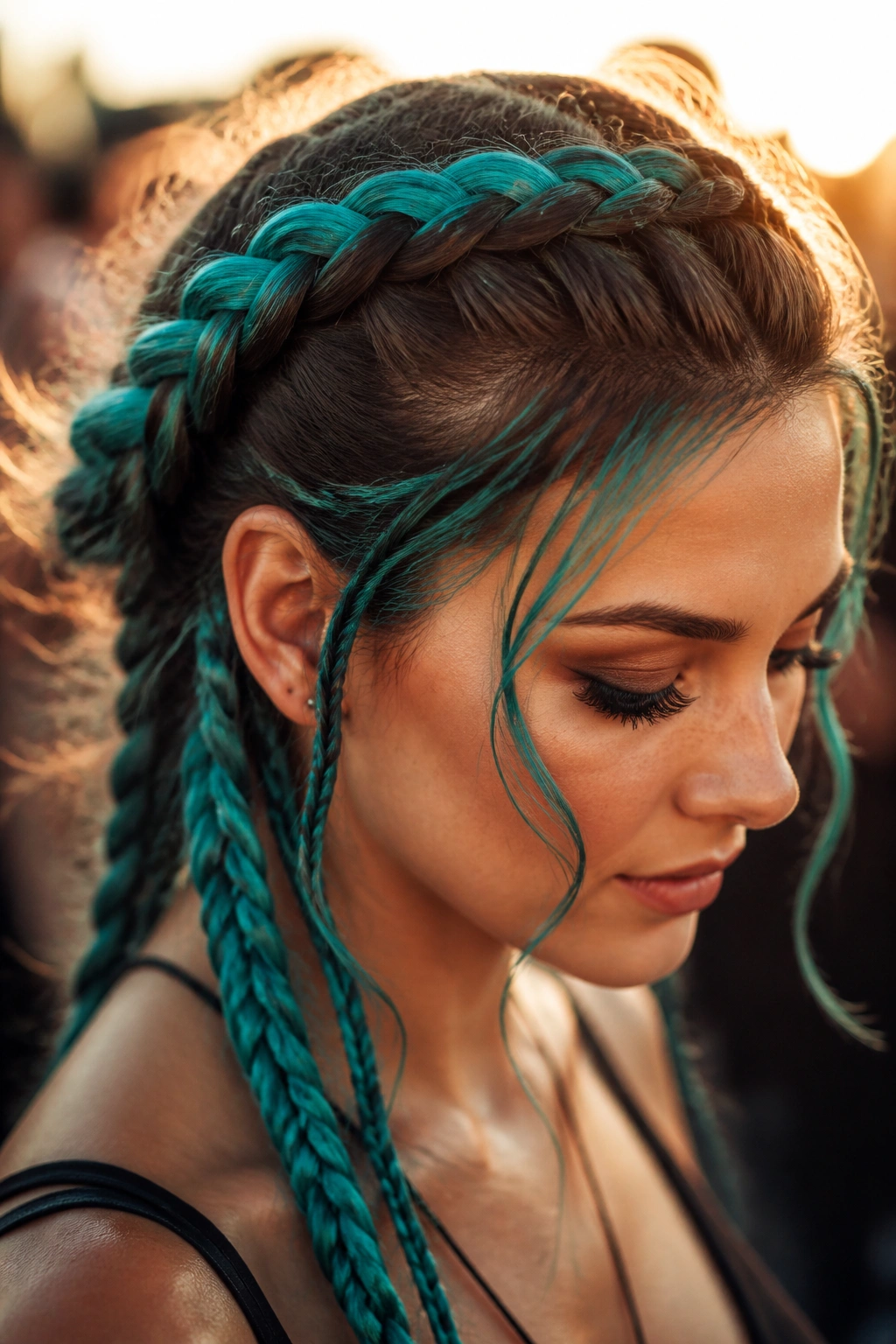
A plain braid can look flat until teal threads run through it. That bright blue-green shows up in the twist, not just the surface, which gives the style motion even when you are standing still.
Braided accents are a smart place to use neon because the braid itself does some of the visual work. The strands overlap, the color peeks in and out, and the result feels more textured than a flat streak. This is especially useful if you do not want to bleach your whole head. You can use colored extensions, feed-in pieces, or temporary braid hair for the bright sections.
Best Ways to Wear the Teal
- A single crown braid with teal woven through the outer strands
- Two Dutch braids with one teal section on each side
- Tiny accent braids mixed into loose waves
- A high pony wrapped with a teal plait at the base
The nice thing about teal is that it reads cool without turning cold. It sits between green and blue, so it can match silver makeup, black outfits, or bright festival clothes without fighting them. I’d pick this one if you want the neon to look active rather than painted on.
And yes, it holds up well in a crowd. Braids do that.
12. Peach Neon with Glitter Roots
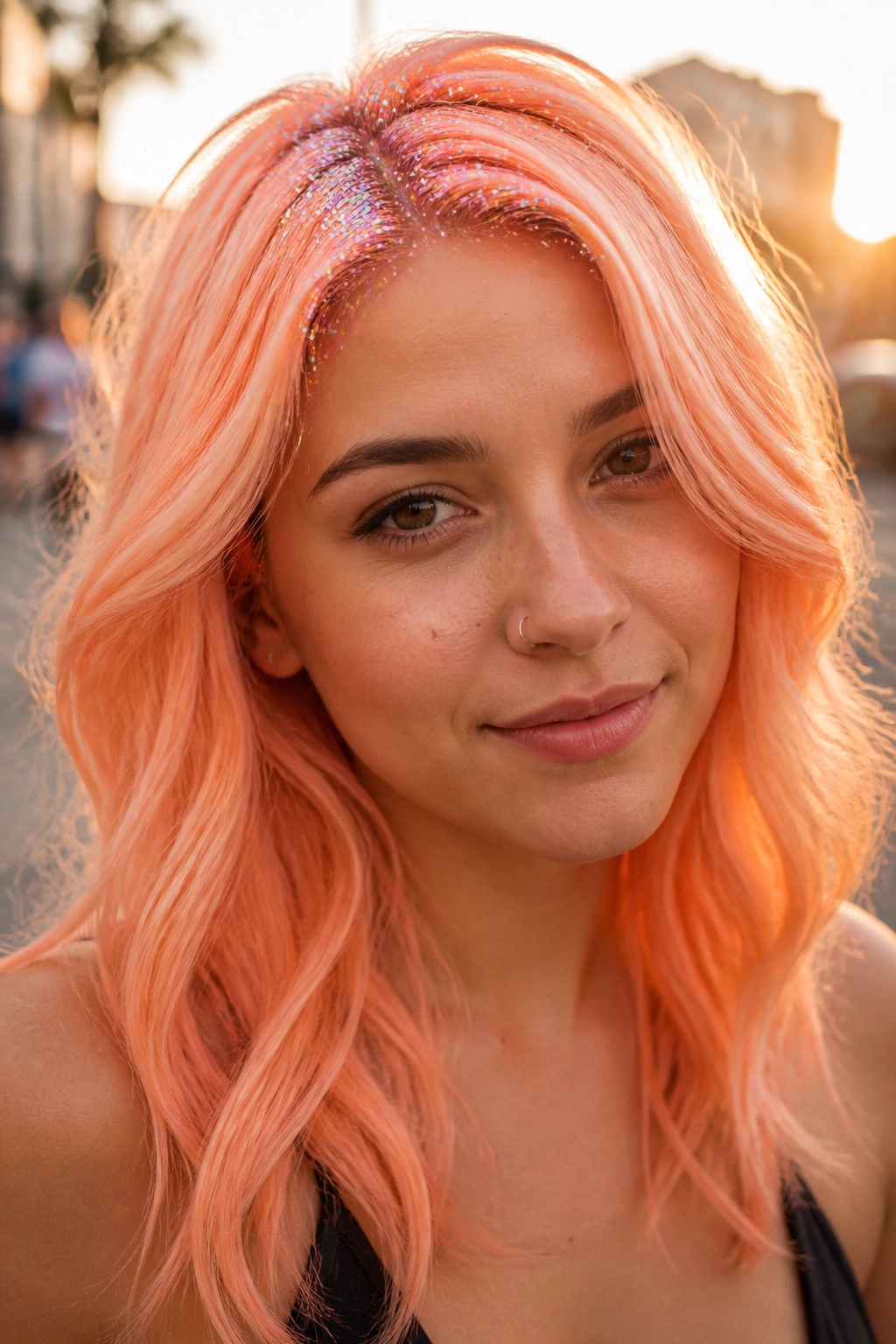
Peach is the shade that keeps people guessing. It looks soft from a distance, then turns neon when light hits it at the right angle. That makes it a good choice if you want something a little less aggressive than hot pink but still bright enough to belong at a festival.
The glitter root detail is what turns this from cute to event-ready. A thin line of cosmetic glitter or shimmer gel along the part and hairline catches light without taking over the whole head. Do not use craft glitter. Seriously. It scratches, sheds badly, and is not meant for skin. A fine cosmetic product stays where you put it and washes out with much less fuss.
How to Keep Glitter Neat
- Apply it only along the visible part line and front hairline.
- Use a clear gel or pomade as the base.
- Press the glitter in with a small brush or fingertip.
- Keep it away from the eyes and the inner brow edge.
This look pairs well with space buns, victory rolls, and soft waves. Those shapes echo the playful feel of the color. If you like vintage silhouettes, peach is one of the few neon-leaning shades that can slide into a retro hairstyle without looking out of place.
13. Hot Pink and Orange Sunset Blend
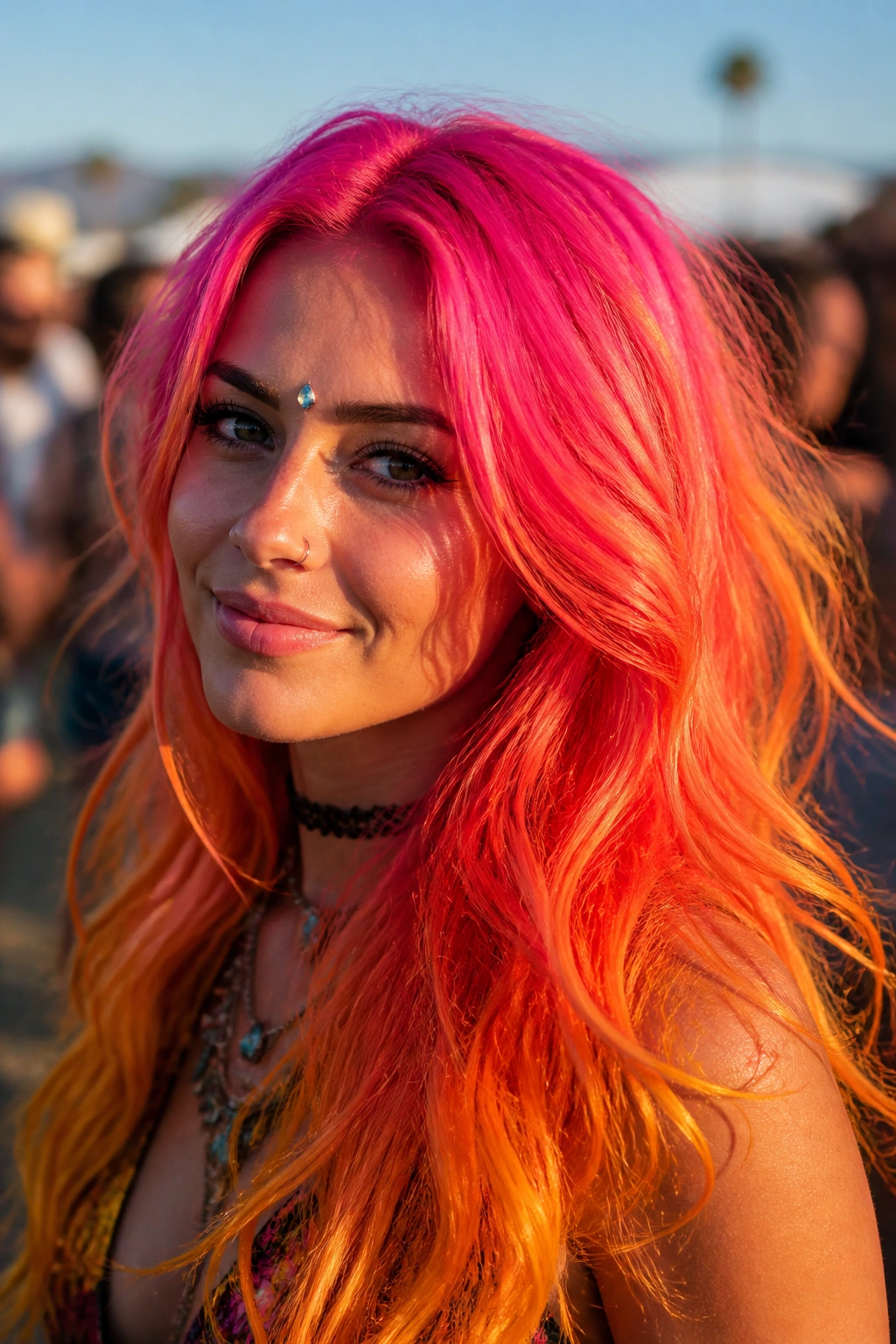
This is not a soft ombré. It’s a bright sunset melt with enough contrast to keep the colors separate while they still move into each other. Hot pink at the top, orange through the mid-lengths, maybe a touch of gold at the ends if you want more warmth. That’s the basic shape.
The reason it works is simple: the eye knows where to go. Pink gives the style its shock value, orange gives it heat, and the blend keeps the whole thing from looking chopped up. On long waves, the gradient can feel huge. On a straight blowout, it looks graphic and a little dramatic. Either way, it needs some length to breathe.
What Makes the Blend Work
A clean sunset effect needs the transition to be feathered, not muddy. The shades should touch, not mash together into one brownish zone. A colorist usually keeps the pink and orange separate enough that each one still reads as its own color. That matters most in the middle section, where people tend to overblend and lose the punch.
If you want the festival version of this look, add loose bends with a curling wand and keep the ends piecey. That stops the gradient from turning into one flat sheet. This one is a favorite for people who want their hair to look loud in motion, not just loud when still.
14. Acid Green Mohawk Stripe
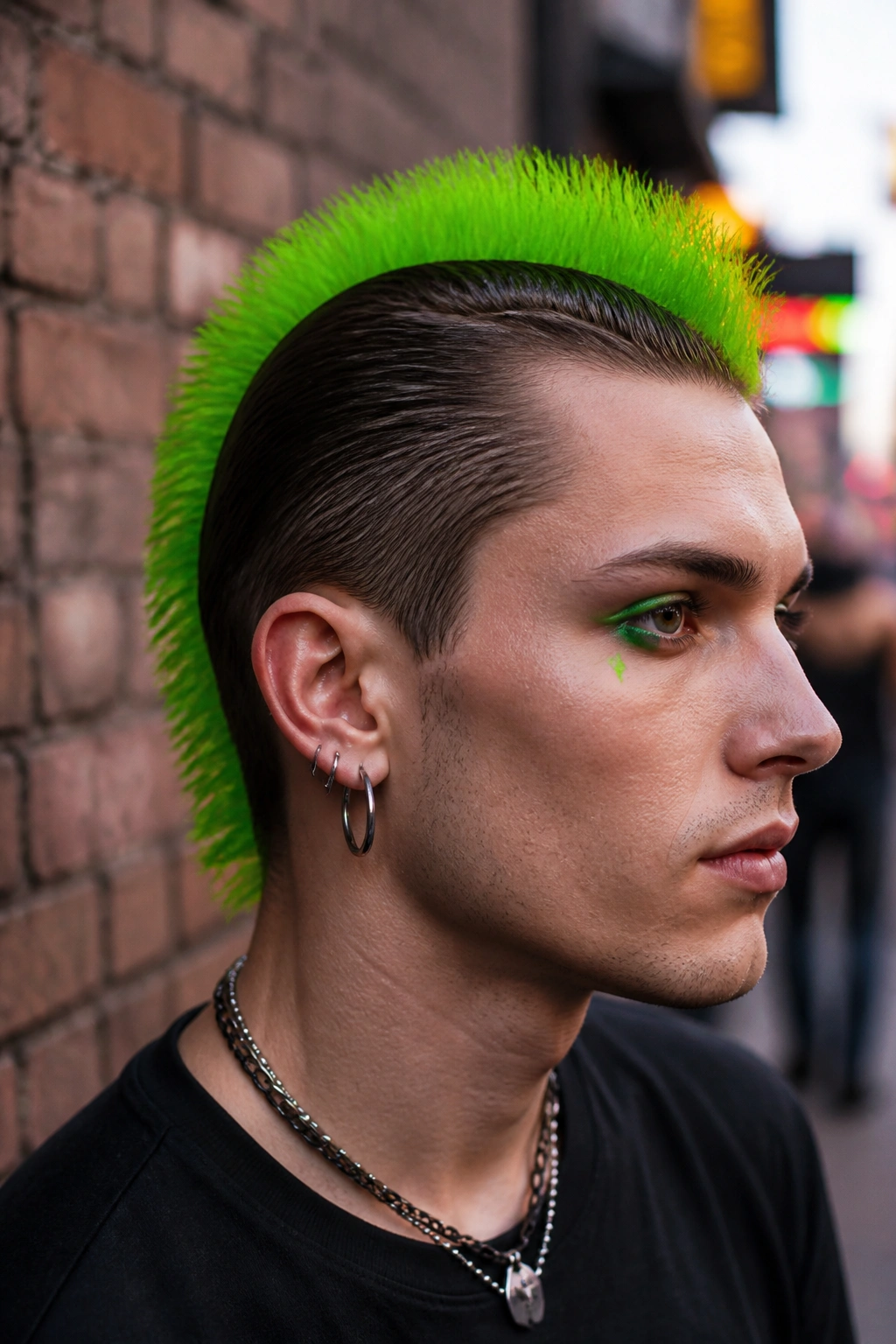
If you want your hair to read from the back row, start with a stripe. An acid green mohawk stripe gives you that straight line of color from the hairline to the nape, and it looks especially good when the sides are slicked, pinned, or braided tight.
This is one of the more unapologetic neon hair color ideas for festivals. It has edge. It has direction. It does not meander around pretending to be soft. That is why it works so well on pixies, undercuts, faux hawks, and anything with a strong middle strip of length.
How to Style It
- Slick the sides back with gel for a clean faux hawk.
- Braid the side sections down tight and leave the stripe loose.
- Add volume at the crown if you want the stripe to look taller.
- Use clip-in color or temporary spray if you want the look for one night only.
The acid green itself can be the loudest part, but the silhouette matters just as much. A narrow stripe on a flat head of hair won’t hit as hard as a stripe on a lifted crown with texture on top. This is the kind of style that looks even better with a leather jacket, mesh top, or metallic makeup. No surprise there.
15. Full-Neon Color Block Ponytail
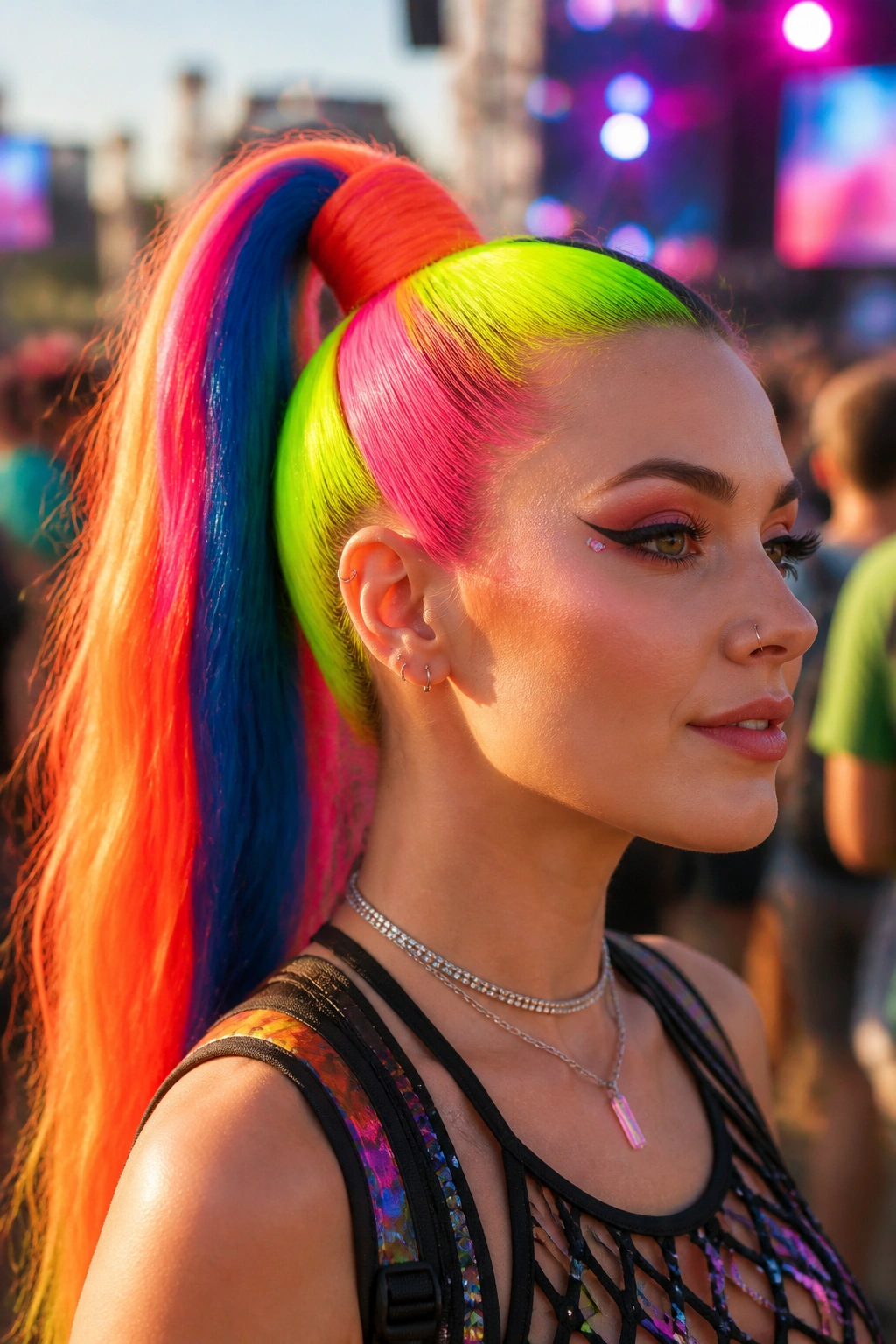
Full-head neon is not the only way to go loud. A color-block ponytail can carry multiple neon shades at once — lime, pink, blue, orange — and still look organized because the ponytail shape holds everything together.
This works especially well if you are the type who wants your hair off your neck while still wanting the color to move. A high ponytail swings when you walk. A bubble ponytail shows off each block. A wrapped pony at the crown makes the color feel more polished. The shape gives the color a job, which is half the battle.
How to Place the Panels
The trick is to think in chunks, not tiny streaks. Put one color near the face, another through the midsection, and a third closer to the length or ponytail wrap. That way each shade gets a moment instead of all of them collapsing into a blur. If you are using extensions or temporary wefts, this is a very good place to do it.
I like this style because it solves a practical problem. Festivals can be sweaty, crowded, and busy. A ponytail keeps the hair controlled, and the neon blocks still give you movement. You get the color hit without the constant fuss of wearing everything down.
Final Thoughts
Neon works best when the shape earns it. A sharp bob, a clean braid, a front money piece, or one hard stripe through the middle can do more than scattering bright dye everywhere and hoping for the best.
If you want to ease in, start with underlights, a money piece, or clip-in color. Those choices give you the punch without turning every wash into a project. And if you want the loudest result, pick one strong placement and let the cut do some of the heavy lifting.
The smartest festival hair is the one that still looks intentional after being pulled into a bun, shaken loose, and caught under a flash. That is where neon really earns its keep.
