



Soft pixie cuts can look far more feminine than people expect. The trick is not length. It’s movement.
A pixie gets harsh fast when the edges are too blunt, the crown lies flat, or the fringe stops dead across the forehead. Add feathered ends, a side-swept piece, a soft nape, and a little bend through the top, and the whole haircut changes character. It stops reading severe and starts reading polished, light, and a little flirtier.
That’s the part people miss. A feminine short cut is rarely about being “short” in the obvious sense; it’s about where the weight sits, how the hair falls around the face, and whether the outline feels tidy or sharp. A skilled cut can do more for your cheekbones than a full inch of extra length ever could. And yes, the styling matters too — a pea-sized bit of cream, a quick round-brush pass, or a finger-tousled finish can push the look in a completely different direction.
If you’ve been circling the idea of a pixie but do not want anything spiky, boyish, or high-maintenance in the wrong way, these 18 soft versions are the useful ones to know. Some lean romantic, some lean sleek, and a few are quietly practical in that way good haircuts often are.
1. Feathered Pixie Cut With Side-Swept Fringe
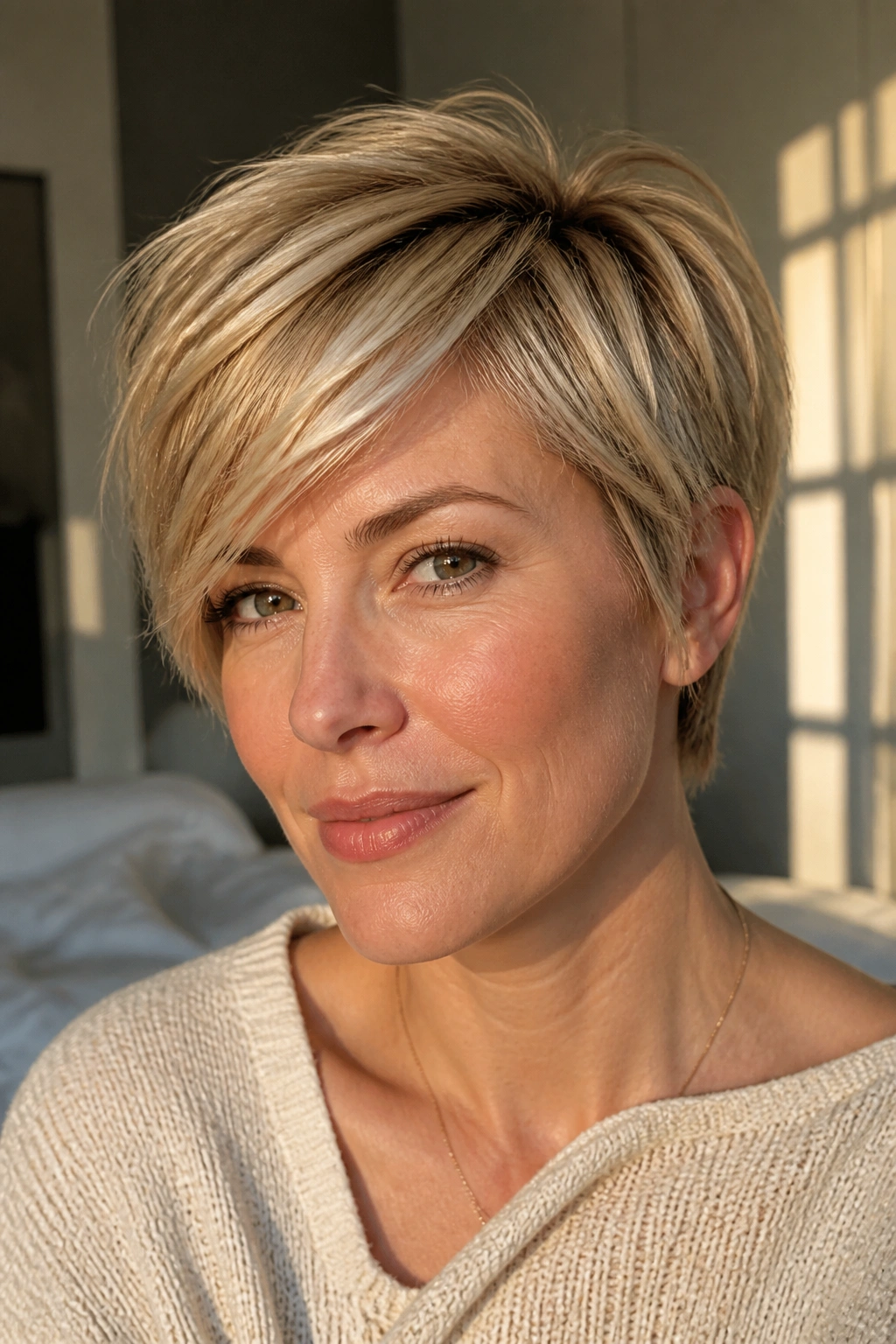
A feathered pixie cut with a side-swept fringe is one of the easiest ways to keep short hair from feeling severe. The fringe softens the forehead, pulls the eye diagonally across the face, and gives the whole cut a bit of motion before you even reach for a styling product.
Why the fringe matters
The fringe is doing most of the work here. Ask for it long enough to skim the brow or just below it, then have the ends point-cut so they do not sit in one blunt line. That little bit of texture makes the difference between “simple” and “flat.”
The rest of the cut should stay close to the head, but not tight. You want a gentle taper at the nape, soft layers through the crown, and enough length on top to sweep across instead of sticking straight up.
- Works well on straight, wavy, or lightly textured hair.
- Ask for feathered ends instead of blunt clipping.
- Use a light mousse at the roots and a 1-inch round brush if you want lift.
- Keep the nape tapered, not shaved bare.
Pro tip: If your fringe keeps splitting, dry it from the opposite side first, then sweep it over once it’s about 80% dry. It holds better that way.
2. Rounded Pixie With Soft Crown
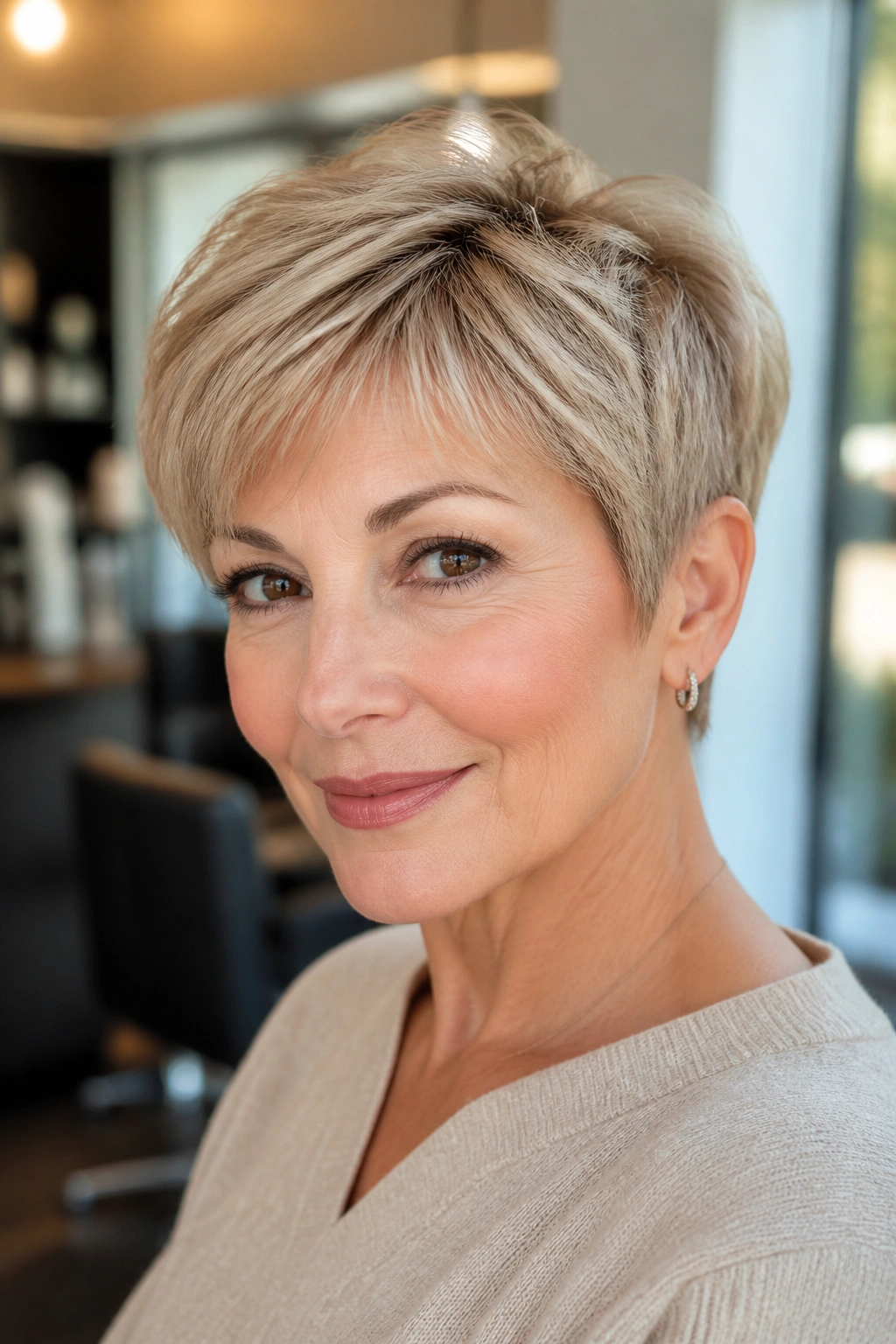
If you want a pixie that feels gentle from every angle, the rounded version is hard to beat. The shape curves softly over the head instead of forming corners, which makes the haircut look plush rather than angular.
The crown is the key. Leave a little more length there than you think you need, then blend it down gradually into the sides. Too much removal at the crown can make the top look flat and make the whole cut feel abrupt. Too little, and you get a helmet shape. The sweet spot sits in the middle.
A rounded pixie works especially well if you want something tidy for everyday wear but still want movement when you turn your head. It also plays nicely with glasses, because the soft curve around the temples keeps the face open without adding bulk beside the frames.
The best version of this cut does not scream for attention. It just sits there looking balanced, which is more useful than flashy hair most days.
3. Curly Pixie Cut With Diffused Shape
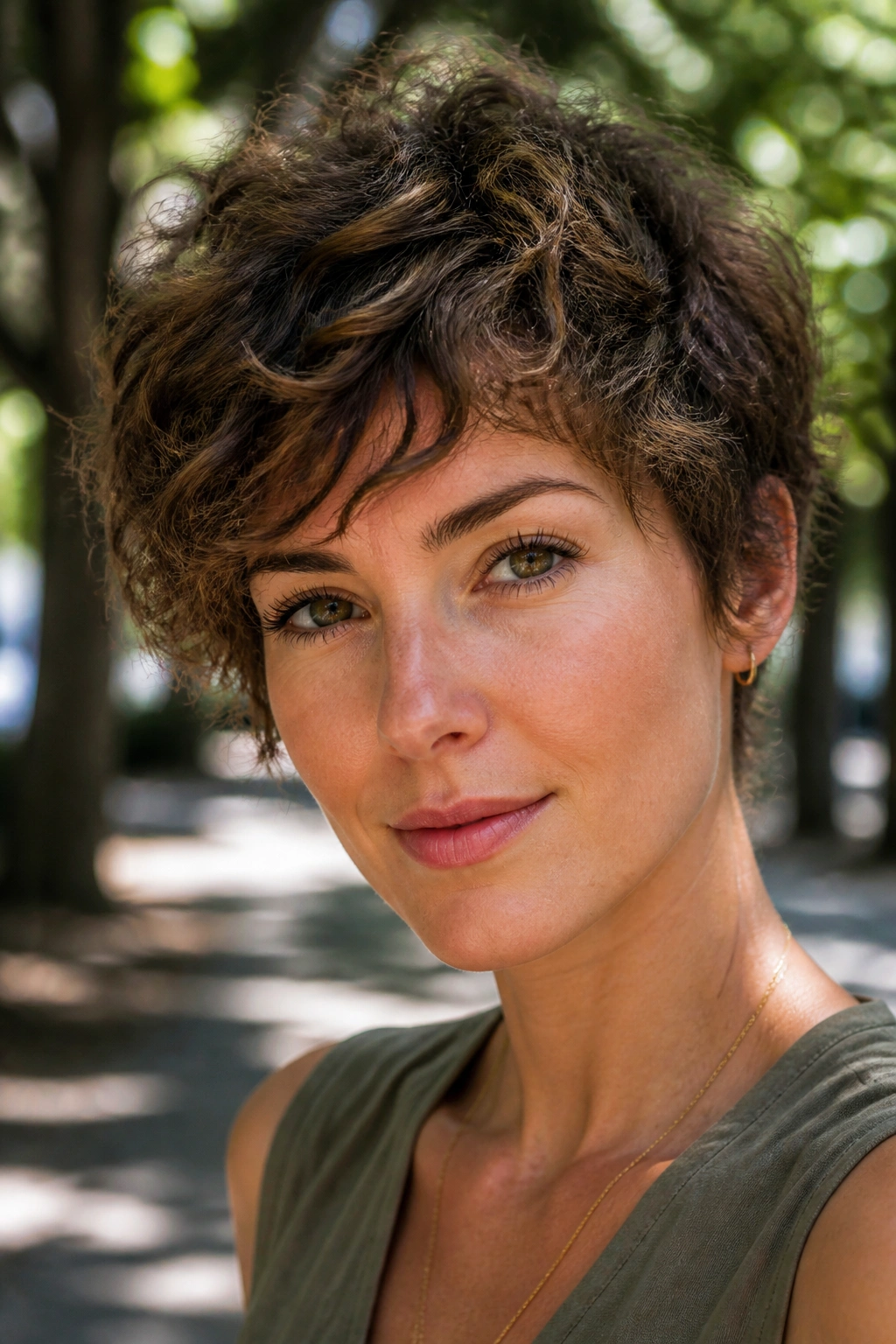
Can curls and pixies work together? Absolutely — when the cut follows the curl pattern instead of fighting it. A curly pixie cut feels soft because the curls create their own edges, so the silhouette never looks stiff.
How to keep the curl intact
Ask for the cut to be shaped dry or nearly dry if your stylist knows curly hair well. That lets them see where each curl actually lands. If they cut it wet and too evenly, the hair can spring up unevenly and turn into a triangle or a puffed-up crown.
The goal is a diffused outline with a little more length around the front and temples. That keeps the face framed and stops the cut from looking too boxy.
- Use a curl cream or a light gel, not heavy wax.
- Scrunch with a microfiber towel or soft T-shirt.
- Diffuse on low heat, low speed.
- Leave a little extra length around the hairline so the curl can soften the face.
A curly pixie is lovely when it looks lived in, not controlled. That’s the whole point.
4. Bixie With Feminine Length Around the Ears
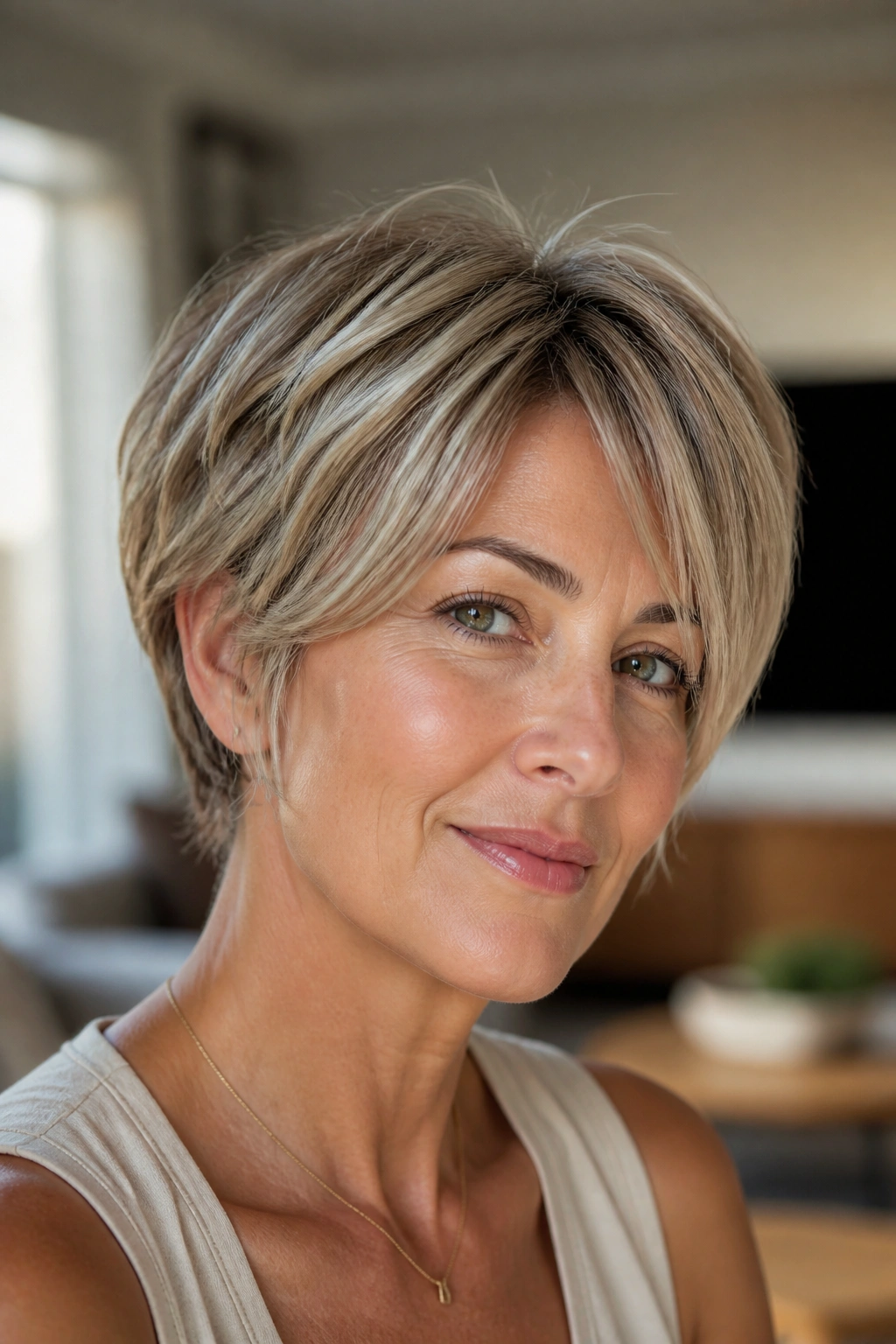
The first time I saw a bixie done well, it looked like someone had borrowed the ease of a pixie and the swing of a bob, then trimmed out all the fuss. That’s the appeal. You get short hair, but you still keep a little movement around the ears and jaw.
This cut is especially useful if you like the idea of a pixie but do not want your face fully exposed. The longer pieces around the sides and front give you something to tuck, flip, or let fall forward when you want a softer line. It feels less abrupt than a true crop.
Ask for the front to sit around cheekbone level, with the back kept shorter and neat. The ends should be lightly textured, not chopped into shelves. That’s what keeps it feminine instead of blocky.
- Front pieces can skim the cheekbone or jaw.
- The nape should stay clean and tapered.
- The side length should sit just above or at the ear.
- It grows out smoothly, which matters more than people admit.
If you’re nervous about going short, this is often the safest place to start.
5. Asymmetrical Pixie Cut With A Long Swoop
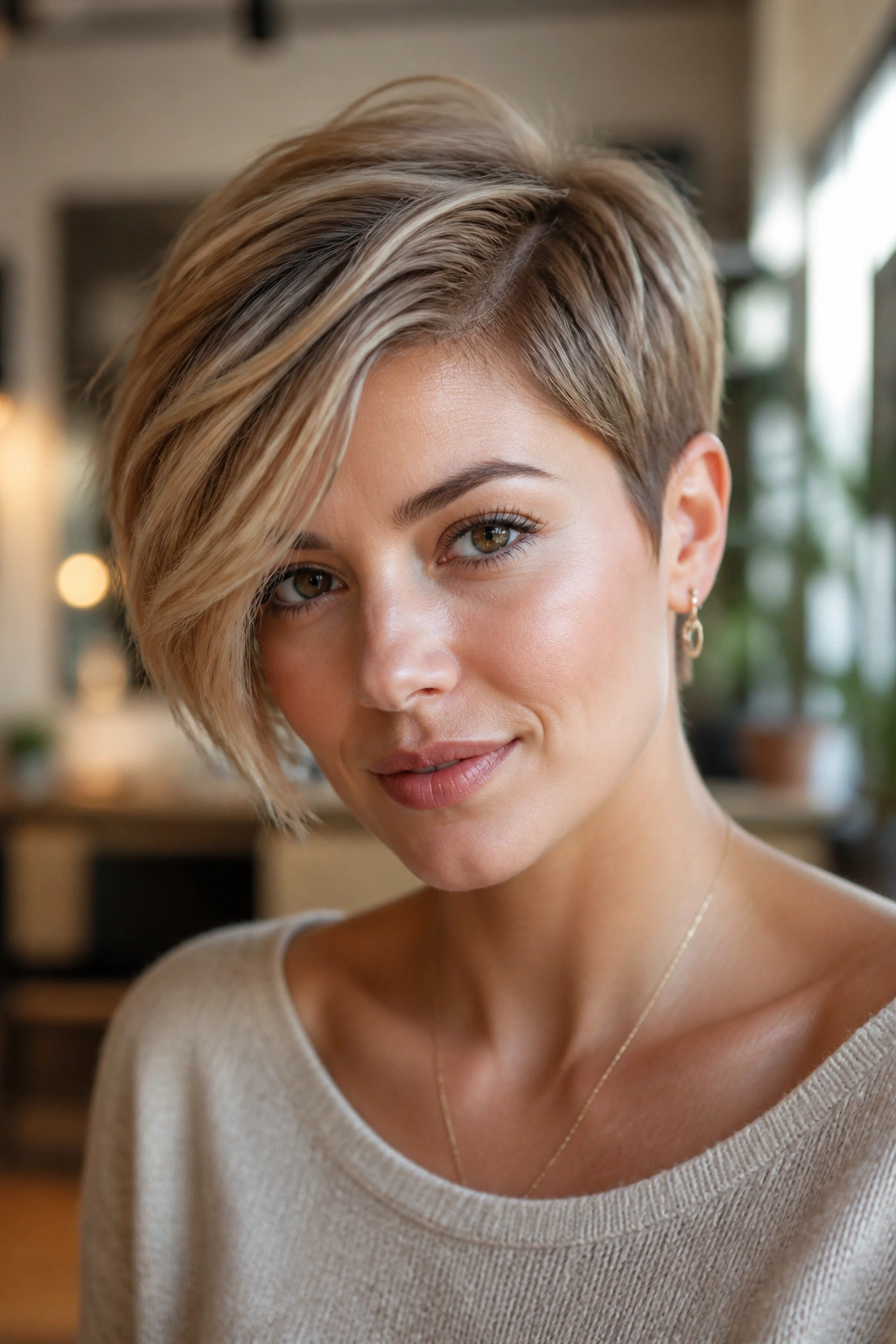
Asymmetry is one of the easiest ways to make a pixie feel polished instead of sporty. One side gets a little more length, the fringe sweeps across, and the eye gets a line to follow. The result is softer than a perfectly even crop.
The trick is keeping the difference subtle. A huge gap between sides starts to read dramatic in a way that can feel hard. A better version uses a longer swoop on one side and a closely blended opposite side, so the cut still feels intentional and wearable.
I like this shape on people who want a little edge but do not want the haircut to feel sharp. It also works well when you want one side tucked behind the ear and the other side to fall forward. That small contrast does a lot of work.
A side part helps here. So does a light cream or serum — nothing sticky, nothing heavy. You want the longer side to bend, not freeze. Keep the ends soft and the crown loose, and the whole cut turns more graceful.
6. Soft Pixie Cut For Fine Hair With Lifted Crown
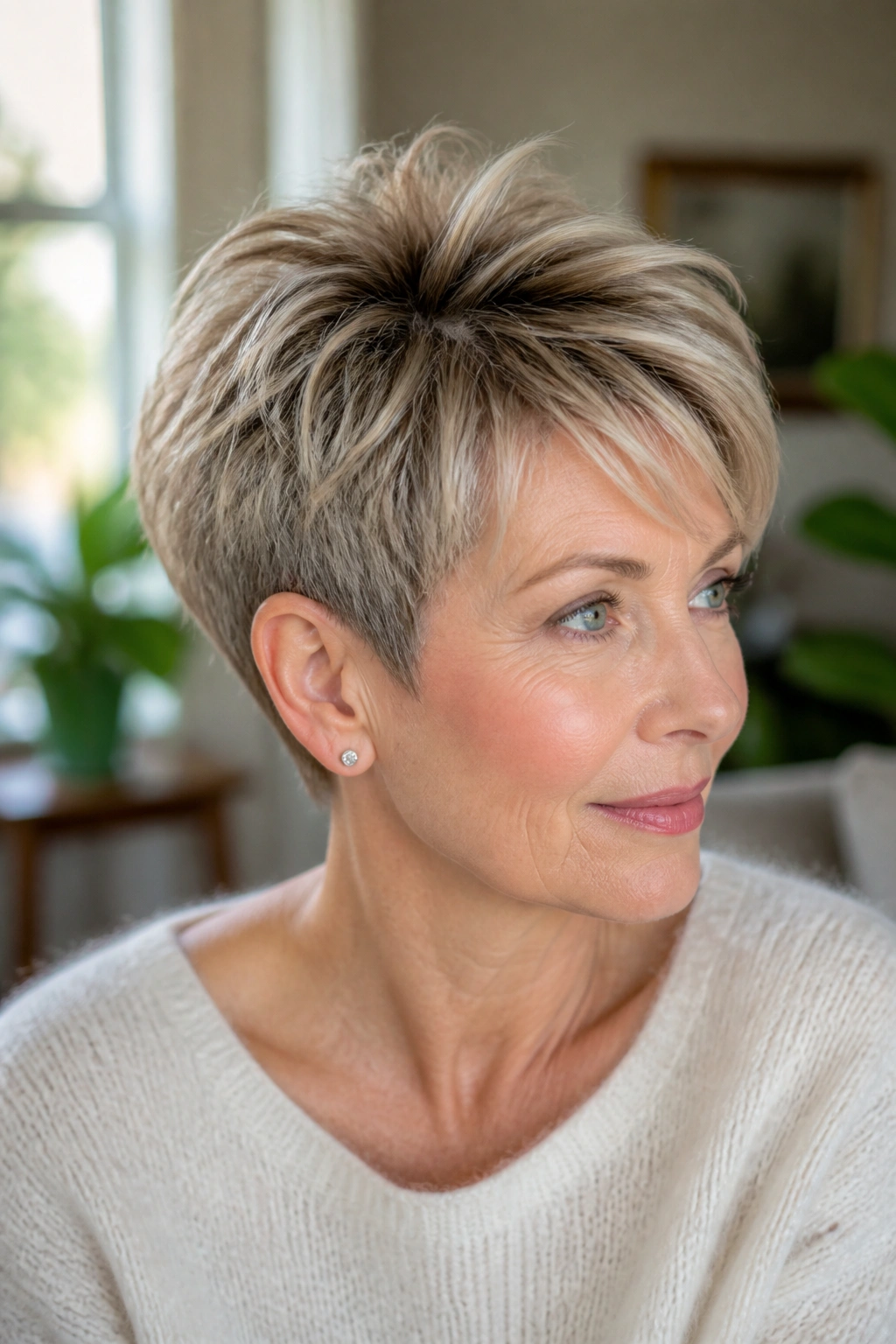
Unlike a blunt crop, this version creates fullness with internal layers rather than bulk. That matters if your hair is fine, because fine hair can go limp fast when it’s cut too heavy or too flat through the top.
Ask your stylist for a soft graduation through the crown, then keep the perimeter lightly textured. You do not want aggressive thinning shears everywhere. That often backfires and leaves the hair wispy in the wrong places. A better approach is controlled layering that gives the top some lift while the sides stay close enough to the head to look neat.
This is one of those cuts that looks good with very little effort if it’s shaped well. A little root spray at the front and crown, a quick blow-dry with your fingers, and you’re done. If you like a fuller look, tip your head forward while drying. Small thing. Big difference.
Fine hair loves a clean shape. It hates clutter. This cut understands that.
7. Curtain-Bang Pixie With Face-Framing Pieces
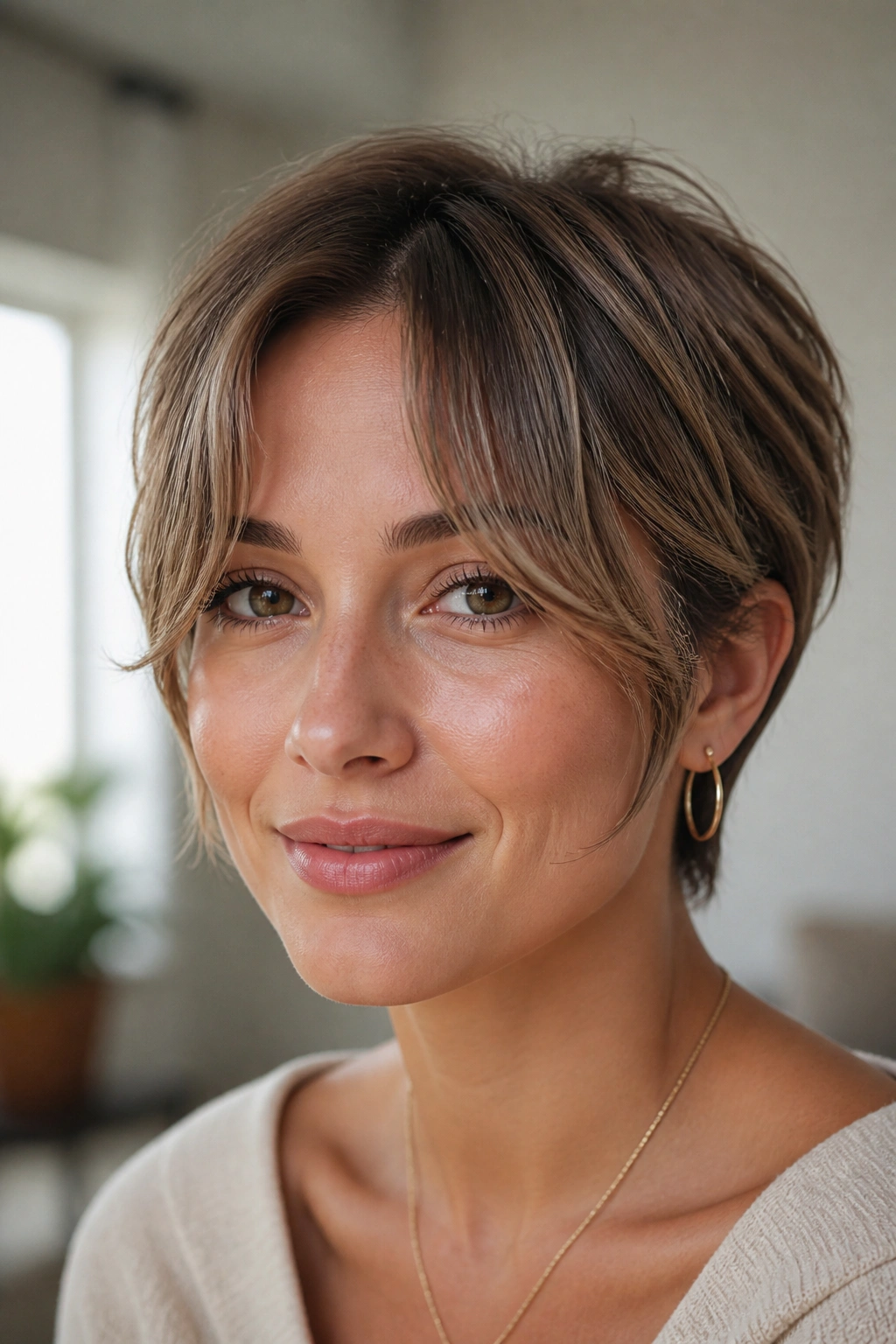
Why does a curtain-bang pixie read so soft? Because the face line breaks before it can turn blunt. The fringe opens in the middle or slightly off-center, then falls away from the cheeks instead of chopping straight across them.
How the middle part keeps it soft
The longer front pieces are doing the heavy lifting. They graze the cheekbones, soften the forehead, and give the cut a little sweep that feels almost casual. If your face is round or heart-shaped, that diagonal movement can be a blessing. It creates length without needing more hair.
Ask for the bangs to be cut with a light angle, not a heavy block. The sides should blend into the top so there is no hard line where the fringe ends and the rest of the haircut begins. That tiny detail is what keeps the cut feminine.
A small round brush can help at the front, but fingers work too. Dry the fringe away from the face first, then push it back into place with a touch of cream. The goal is a soft bend, not a perfect curl.
8. Shaggy Pixie Cut With Airy Texture
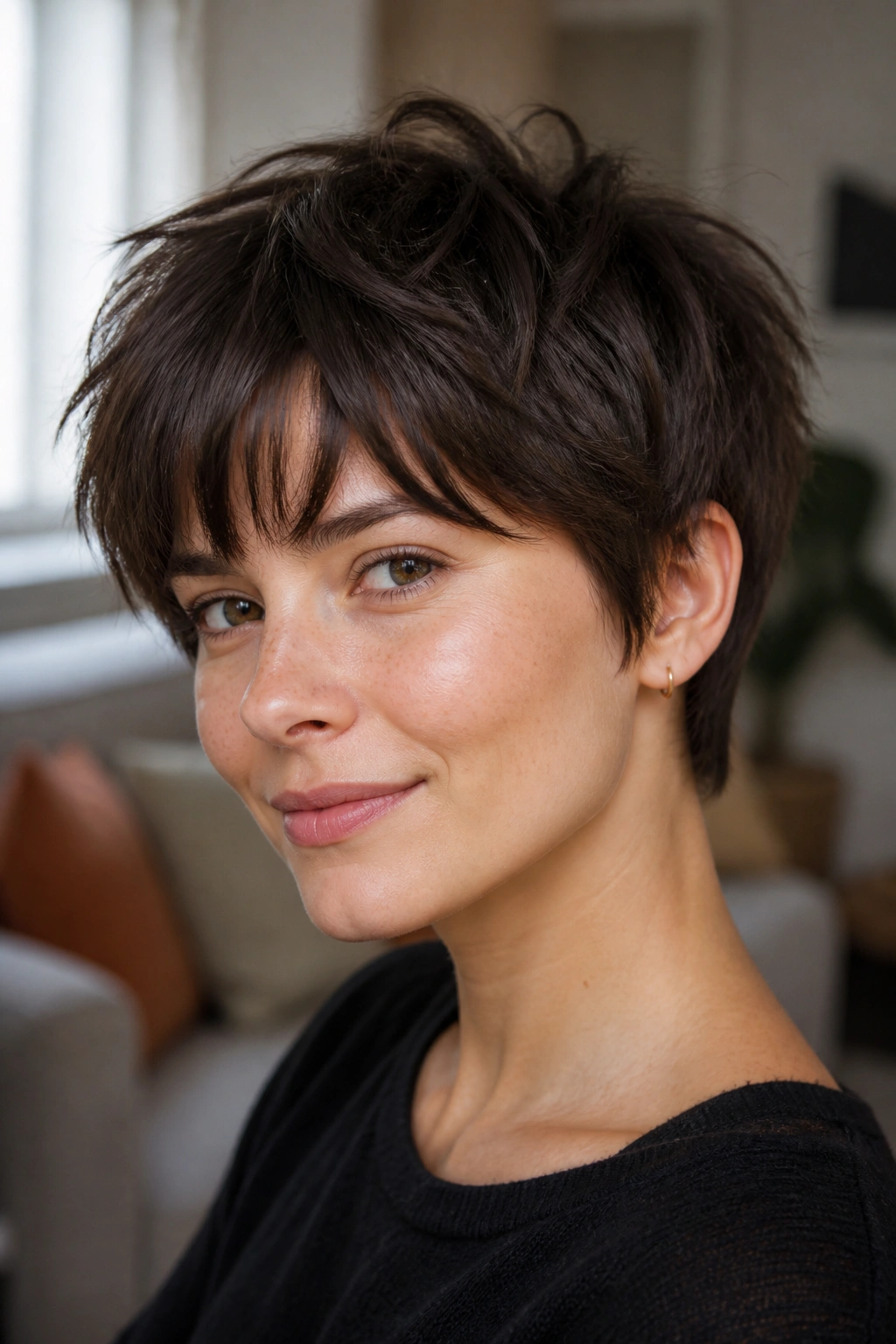
If you hate hair that sits still, this is the cut to look at. A shaggy pixie has that airy, broken-up texture that keeps it from feeling stiff, and the shape stays soft because the layers are not all the same length.
The best version still needs discipline. Too much shag can turn into a messy cloud, which is not the same thing. Keep the nape tidy, let the crown carry a little more movement, and leave enough fringe to frame the eyes. That balance is what makes it wearable.
A shaggy pixie works especially well on wavy hair because the natural bend helps separate the pieces. You can air-dry it with a bit of cream, then scrunch the ends once the hair is almost dry. Or blow-dry just the roots and leave the rest alone. Both approaches are valid.
- Use a light texturizing spray instead of heavy wax.
- Ask for choppy layers, not deep thinning.
- Keep the fringe soft around the brow.
- Don’t overbrush it. That flattens the shape fast.
Messy, yes. But still shaped. That’s the sweet spot.
9. Sleek Pixie Cut With Tucked Sides
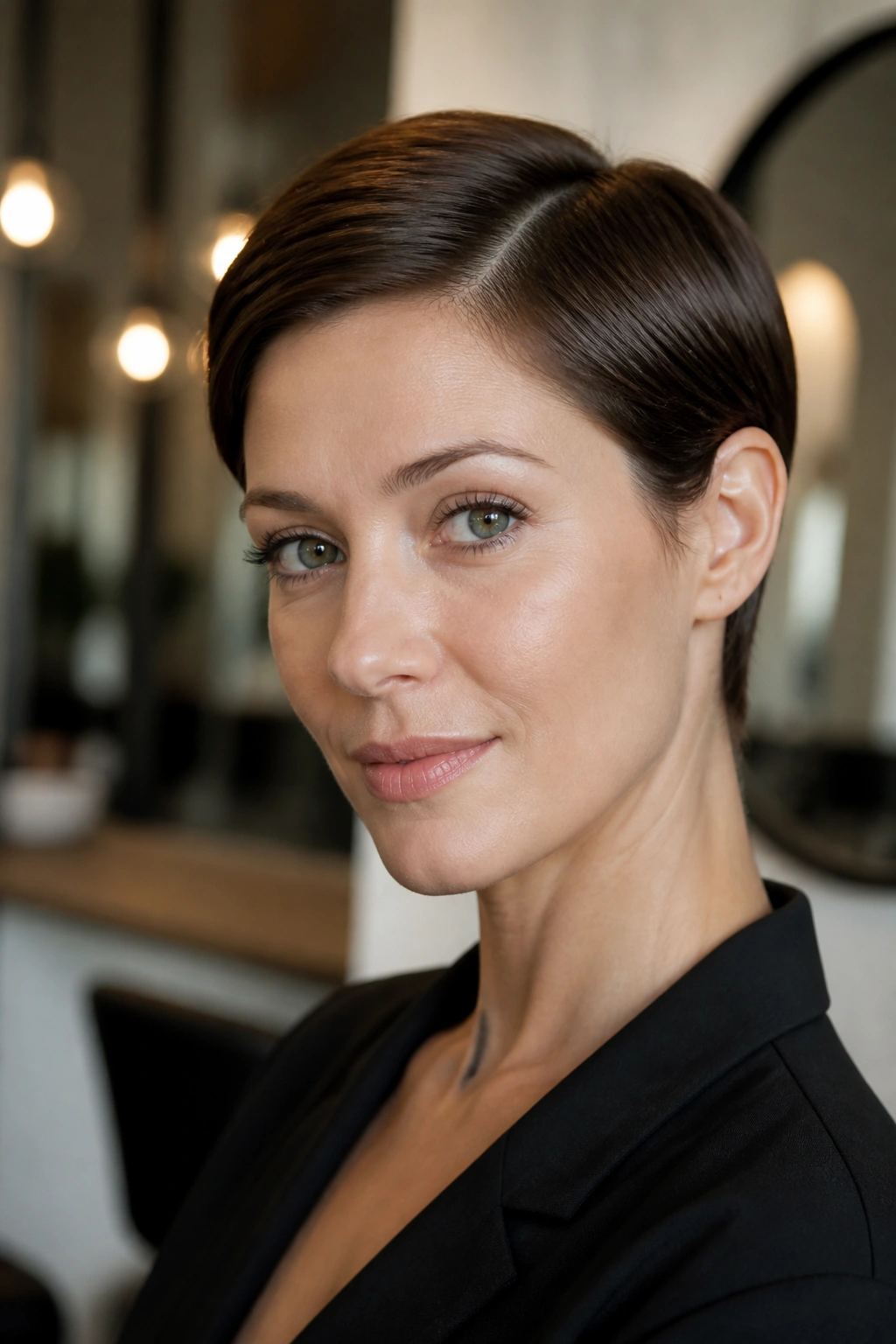
A sleek pixie cut can still feel feminine when the outline is smooth and the sides are tucked neatly behind the ears. The polish comes from shine and control, not from softness alone. It’s a different kind of pretty.
This style depends on precision. The sideburns should be rounded, not squared off. The top should have enough length to lie smoothly, and the part should sit low enough to create a clean sweep without making the front look severe. A little serum on the ends helps the hair fall in one direction instead of puffing out.
I like this cut on people who enjoy a neat finish and do not mind using a dryer or flat brush. It can look very refined with earrings, a strong brow, or a crisp neckline. It also gives the cheekbones room to do their thing, which never hurts.
Keep the shine controlled, not greasy. That is the mistake. A soft sheen looks elegant. Wet-looking hair does not.
10. Tousled Pixie With Piecey Ends
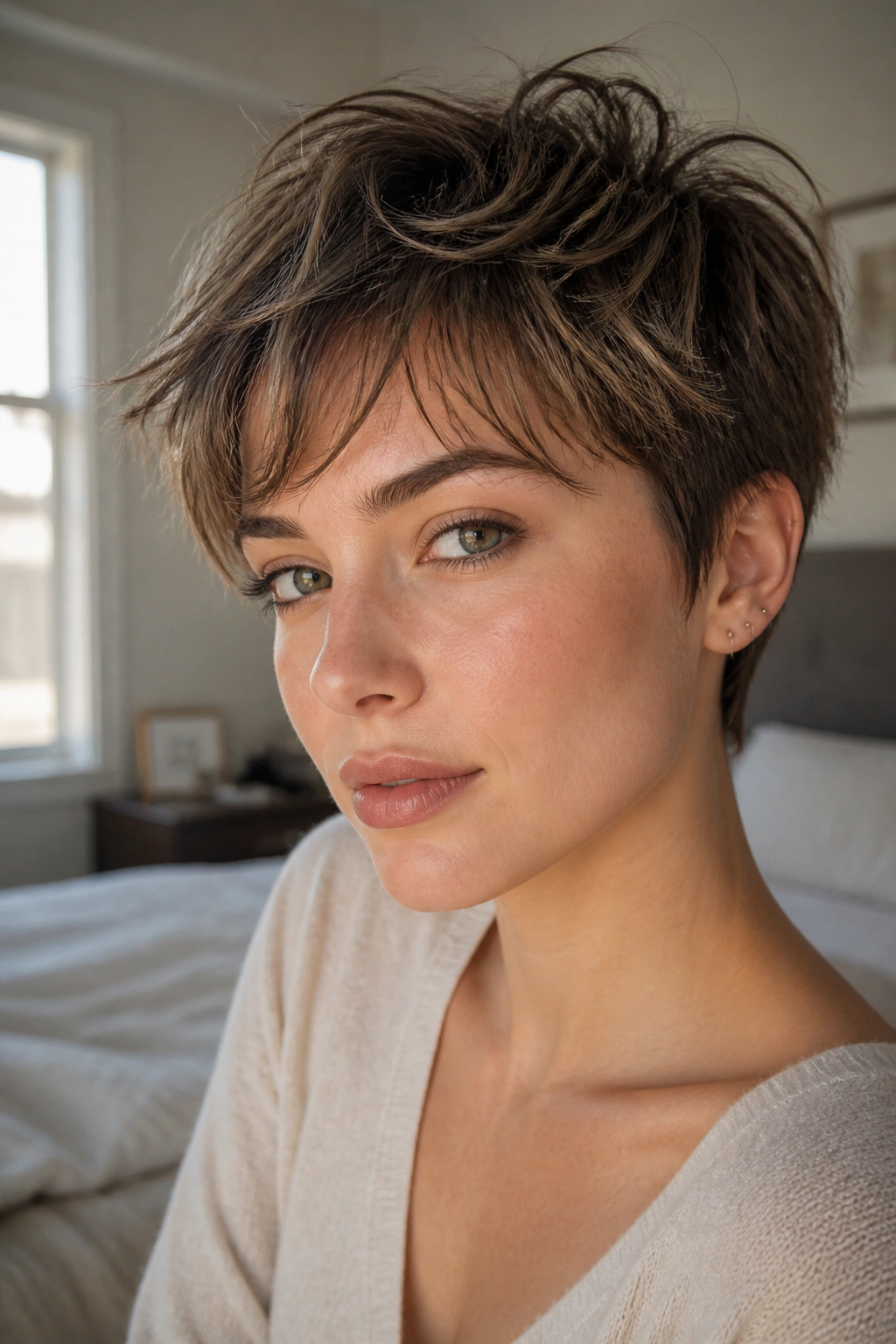
A tousled pixie does not try to behave. That is the charm. It has separation through the ends, a little lift at the roots, and enough looseness to make the haircut feel easy rather than overworked.
What to ask for at the salon
Tell your stylist you want piecey texture, not choppy damage-looking ends. There’s a difference. The pieces should be soft and irregular, but the perimeter still needs shape so the haircut doesn’t wander off into chaos.
This style looks especially good when you pinch a few ends with a tiny amount of matte cream or paste. Think pea-sized, not walnut-sized. Work it through the fringe and crown first, then use what’s left on your fingers for the sides. That keeps the texture light.
- Best for naturally straight to wavy hair.
- Great when you want a lived-in finish.
- Needs less daily styling than a sleek pixie.
- Can start to look flat if you overload it with product.
A tousled pixie is casual, yes, but it still needs a good cut underneath. No shortcut replaces that.
11. Tapered Pixie With Longer Top
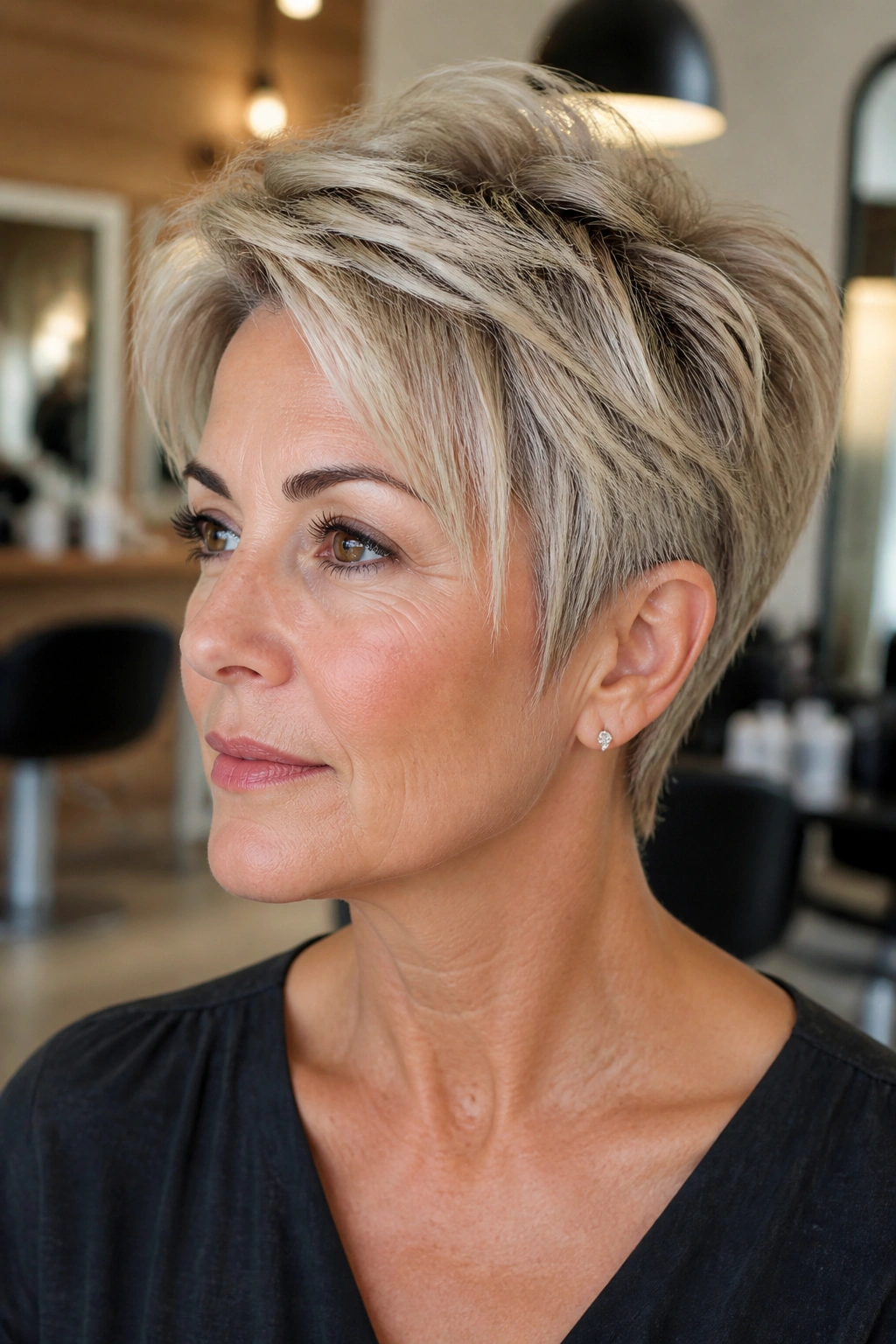
This is the cut I point people toward when they want a clean outline but do not want the top flattened. The taper at the nape and sides keeps the haircut neat, while the longer top gives you room to style it forward, back, or over to one side.
The shape matters more than the exact length. You can keep the top around 2 to 4 inches, depending on your hair density and how much movement you want. The sides should be shorter, but not shaved close unless that’s the look you want. A soft taper usually feels more flattering and far less severe.
It’s also a smart pick if your hair is thick and you need bulk removed without losing the ability to move the hair around. The top can be pushed up for lift or flattened for a smoother profile. That flexibility makes this cut practical in a way some flashier pixies are not.
Short hair should earn its keep. This one does.
12. Pixie Bob Hybrid With Soft Length
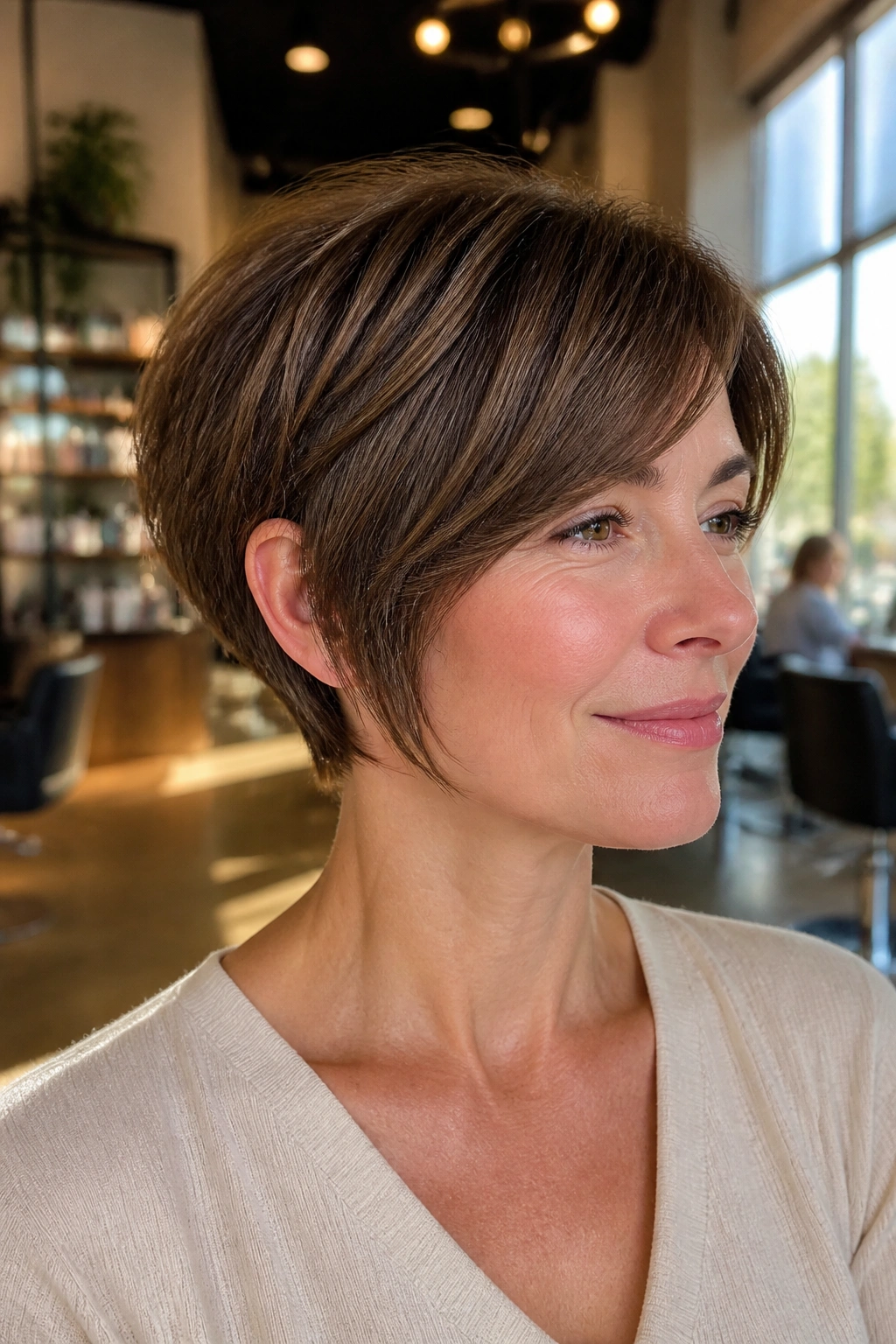
A pixie bob is the diplomatic option, and I mean that in the nicest way. It sits between a bob and a pixie, which gives you enough length to tuck behind the ear or sweep across the forehead while still keeping the neck open.
The softness comes from the transition. The back is shorter, but not cut into a hard shelf. The front pieces usually land around the chin or just above it, then blend into a shorter crown. That gentle shift is what stops the cut from reading blocky.
This shape works well if you’re not ready for a full crop or if you want something that survives a grow-out without looking awkward after three weeks. It also gives you more room to play with styling. You can air-dry it for a looser feel, bend the front with a brush, or tuck one side and leave the other loose.
A pixie bob is not dramatic. It is useful. Sometimes that’s the better move.
13. Silver Pixie Cut With Feathered Layers
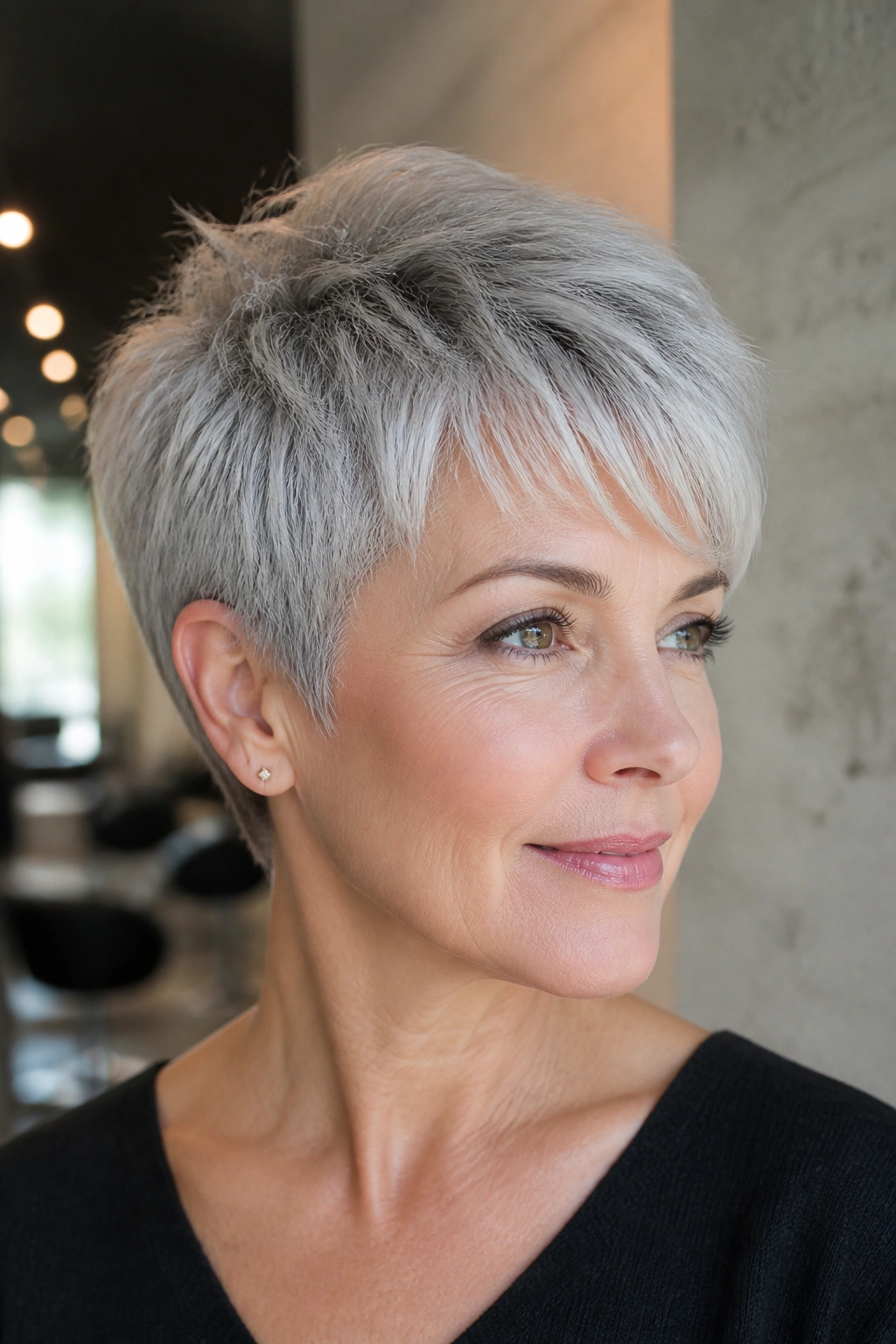
Silver hair looks especially good in a soft pixie when the layers are feathered instead of stacked. The color already brings brightness, so the cut only needs to add shape and movement. Heavy lines fight that. Light, broken edges help it.
This is one of my favorite ways to wear natural gray or silver because it lets the color do the talking without making the haircut feel stiff. A feathered crown, a soft fringe, and a tapered nape give the style lift while keeping the silhouette easy on the eyes. If the hair is coarse, a little moisture mask once a week keeps the surface from getting rough.
You do want to watch product choice here. Too much purple shampoo can leave silver hair dull or over-toned. Use it when the brassiness actually needs taming, not out of habit. A gentle shampoo and a light cream usually do more good.
Silver does not have to look строг? No — better said, it does not have to look severe. A soft pixie proves that fast.
14. Undercut Pixie Softened By A Long Top
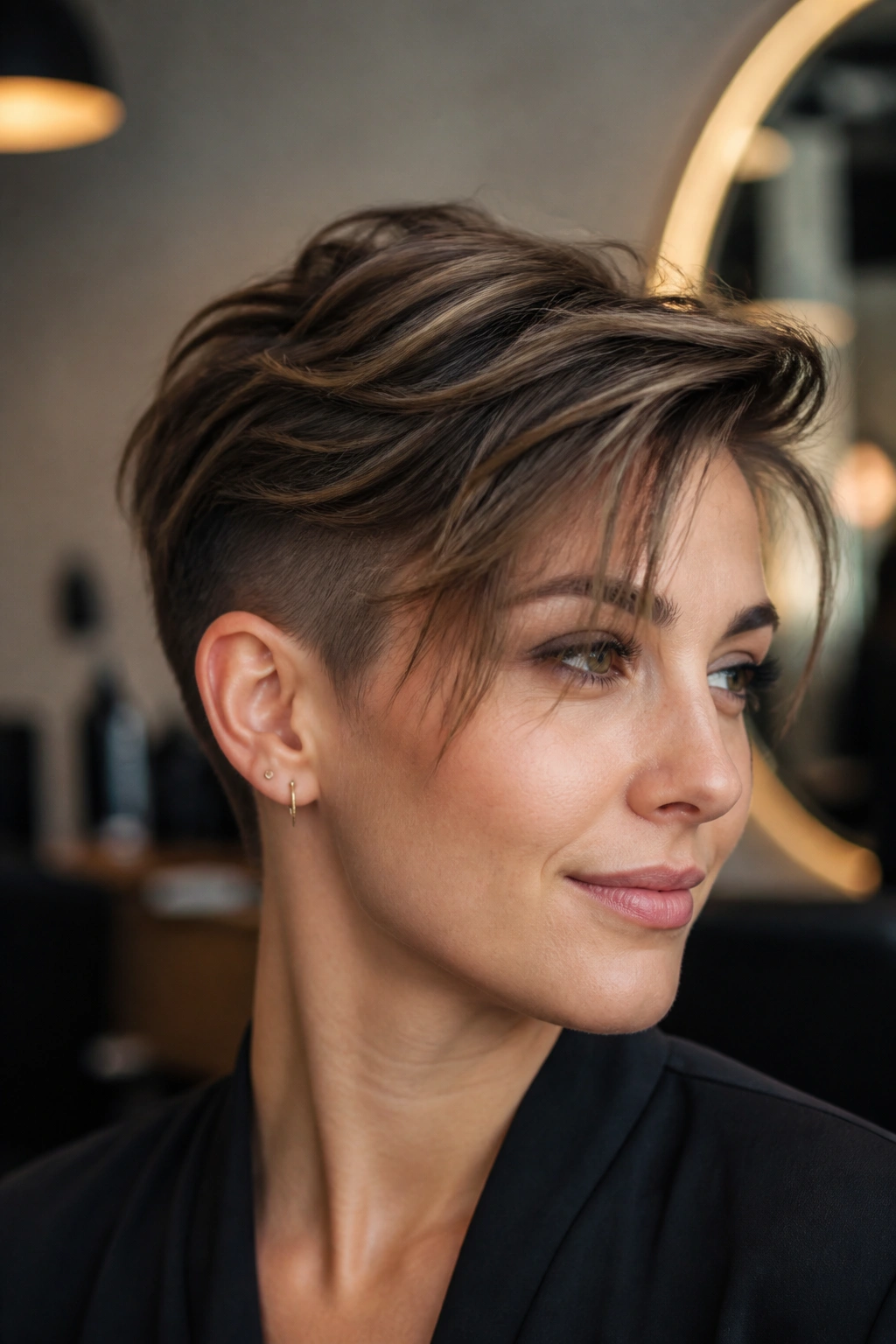
Can an undercut still read feminine? Absolutely — if the top carries the softness. The contrast between the close sides and the longer top removes bulk, but the longer top keeps the overall shape from feeling too hard.
The trick is contrast, not severity
Ask for the undercut to stay low and discreet unless you really want it visible. Then keep the top long enough to sweep, bend, or fall forward a bit. The front should have some movement around the eyes or cheekbones, because that’s where the haircut softens.
This shape is a smart one for thick hair. It takes weight out of the sides and back, which means the haircut dries faster and sits closer to the head. It also works if you like a little bit of edge without going fully sharp.
- Best with a side part or loose push-back styling.
- Keep the top textured, not slicked flat.
- Ask for the undercut to stay hidden beneath the surface layers if you want a softer finish.
- Avoid taking the side shave too high unless you want a bolder look.
The softness lives on top. Keep that part generous.
15. Micro-Fringe Pixie With Rounded Edges
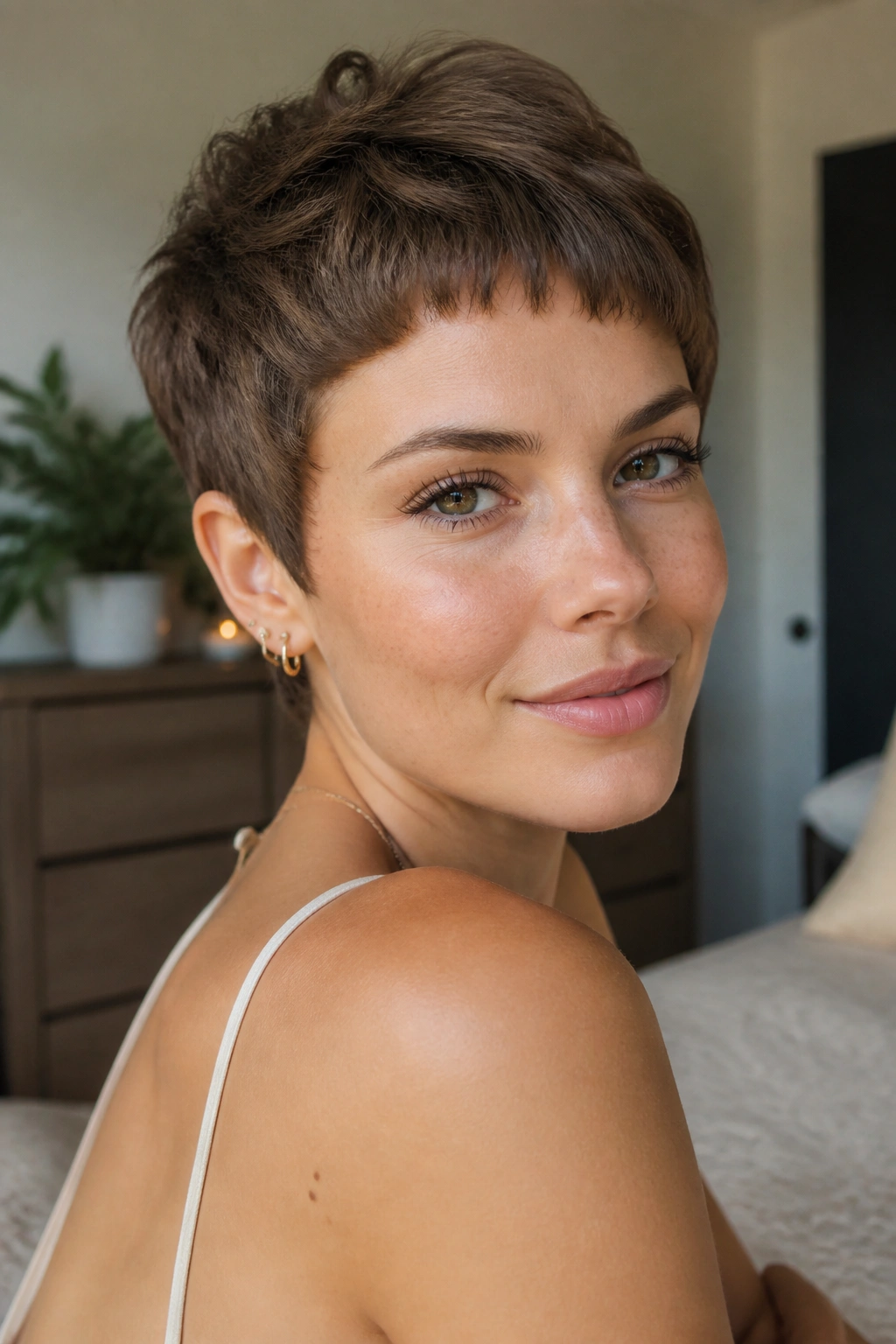
A micro-fringe pixie can look fashion-forward without losing softness, but only if the edges are rounded and the bang is kept wispy. A blunt little strip across the forehead can make the whole cut feel hard. A feathered micro fringe does the opposite.
The cropped bang puts the focus on the eyes and brows, which can be striking in a good way. To keep it feminine, the sides should stay curved and the nape should taper cleanly. Tiny details. They matter. A sharp fringe with soft sideburns is far more wearable than a geometric one with a harsh outline.
This cut suits someone who likes a bit of attitude in the haircut itself. It also looks good with minimal makeup, because the short fringe does part of the framing work. If your forehead is on the shorter side, or if your brows are one of your favorite features, the style can be a nice fit.
Keep the fringe light. If it starts to feel heavy, it stops being cute fast.
16. Wavy Pixie Cut With A Loose Bend
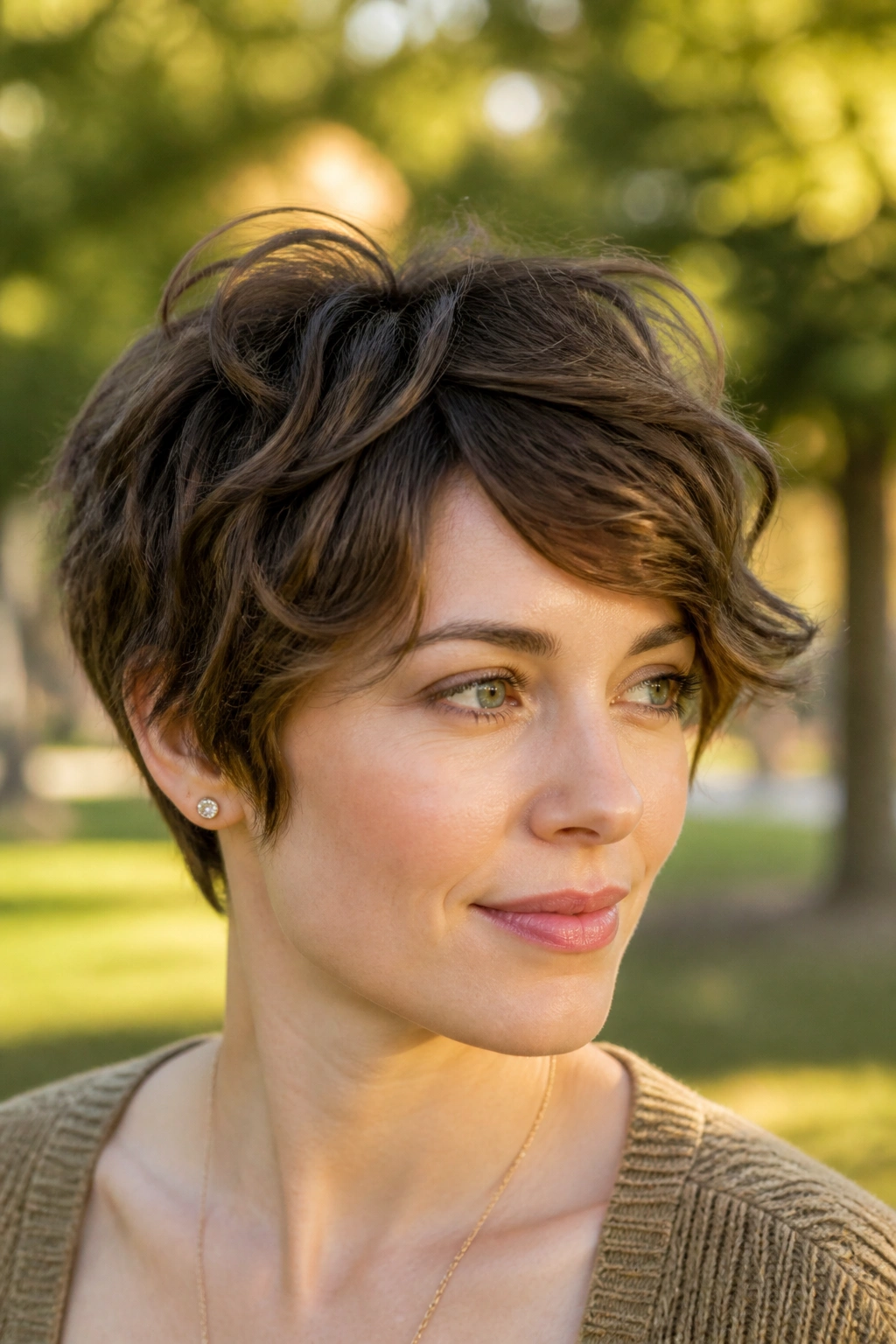
A wavy pixie works because it leaves room for movement. The shape does not need perfect curls or pin-straight control. It just needs enough structure that the wave can fall in soft bends instead of puffing out at the sides.
I prefer this cut when the hair is cut with the natural wave in mind. The stylist should see how your hair behaves once it starts to dry, because a wave that looks tame wet can spring wider than expected. Leave some length at the front, keep the crown light, and avoid over-thinning the sides. That keeps the silhouette soft instead of fuzzy.
How to style the bend
Use a small amount of cream on damp hair, then twist a few sections with your fingers as it dries. You can also diffuse on low heat for a minute or two just to set the roots. A touch of sea salt spray helps if your wave needs more separation, but do not drown it. Too much product steals the softness.
A wavy pixie is casual in the best way. It looks like hair that knows what it is doing.
17. Long-Top Pixie Cut With Ear-Length Sides
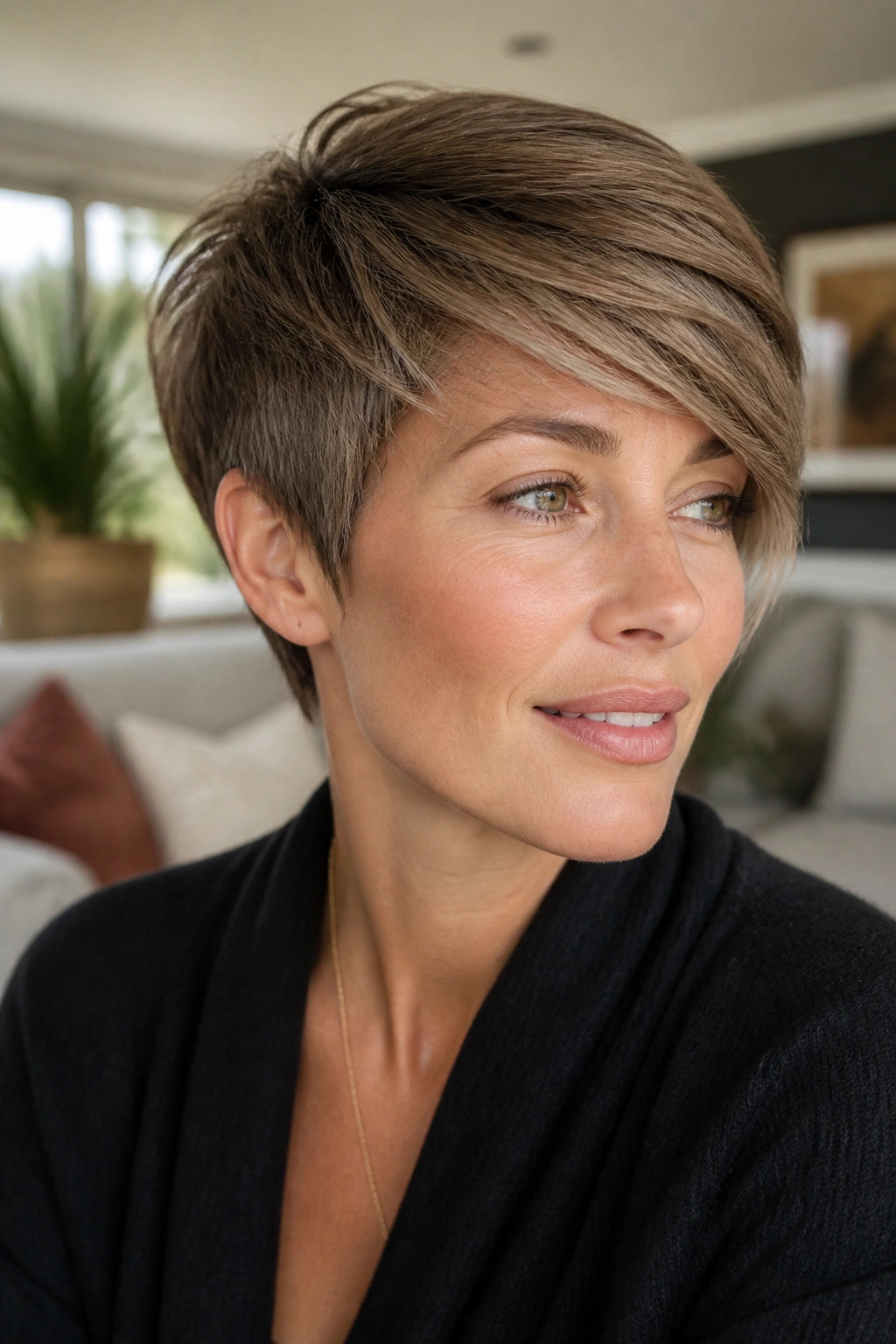
This is one of the most forgiving pixie shapes because you can wear it several ways without changing the cut itself. The top stays long enough to sweep across the forehead or back from the face, while the sides hover around the ears and keep the outline neat.
That extra length on top gives the haircut a softer mood. You can tuck it, pin it, or let it fall forward a little depending on the day. The side length around the ears keeps it from feeling too bare, which matters if you want the cut to read feminine rather than boyish.
It also wears well at different stages of the grow-out. A lot of short cuts look fresh only for a brief window. This one gives you more room before it starts to feel awkward. That makes it practical for anyone who does not want to live at the salon.
If you like options, this is a strong pick. Options matter more than hair people admit.
18. Low-Maintenance Pixie Cut With Soft Nape
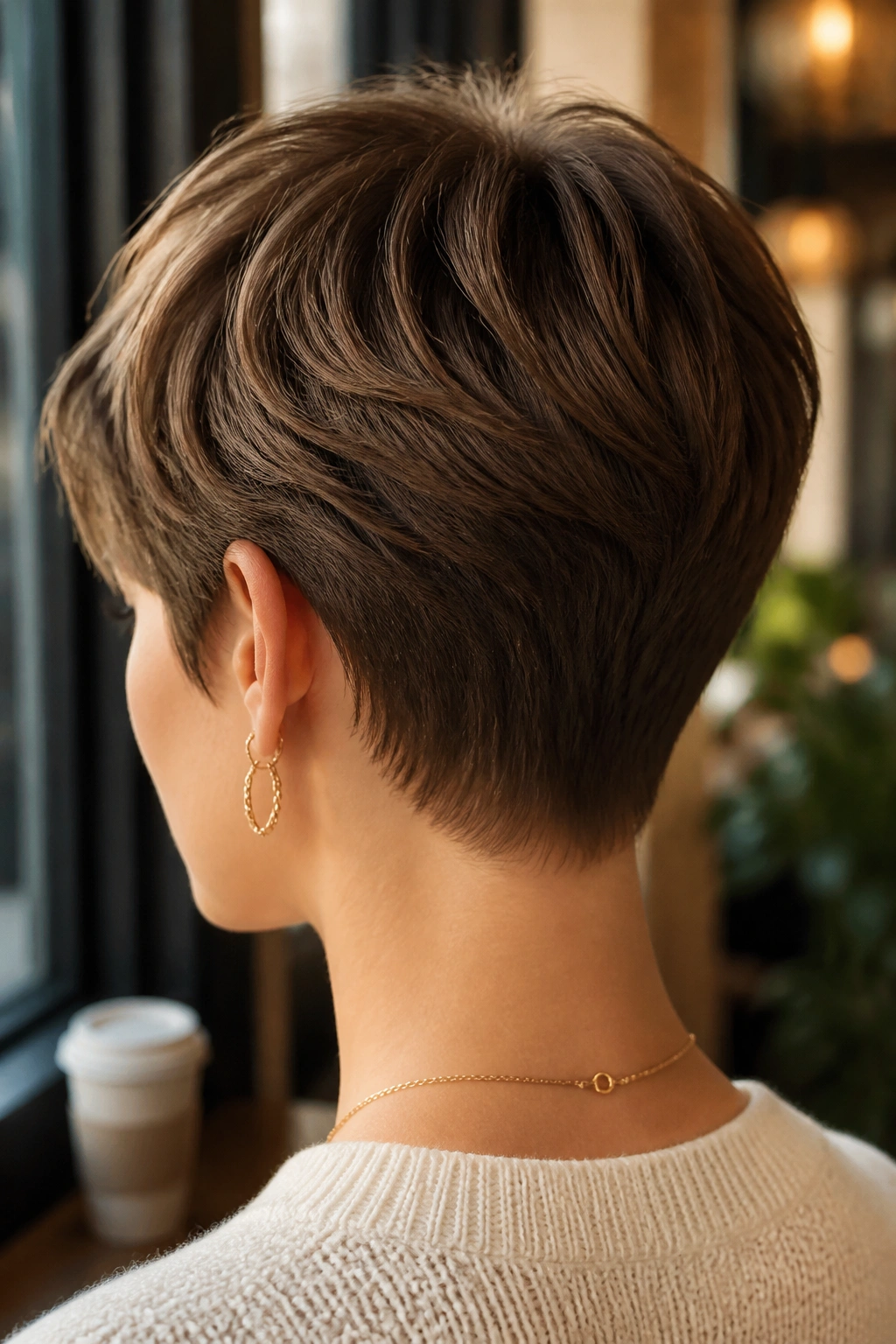
The nape is where a pixie either looks polished or looks grown out. A low-maintenance soft pixie keeps that area tapered and clean, but not harsh, so the haircut still looks finished between trims.
This version works for people who want short hair without a daily styling battle. The back stays close enough to avoid bulk at the collar, the sides are softened rather than squared, and the top has just enough length to move a little when you run your fingers through it. That combination keeps the haircut friendly to real life.
What makes it easy to live with
- The neckline grows out in a clean line rather than a blunt block.
- The top is long enough to rest flat if you skip styling.
- The sides stay soft around the ears.
- It usually holds its shape well for several weeks before it starts feeling fussy.
Ask for a tapered nape, not a hard shelf. That one request changes everything. A good soft nape takes the sting out of grow-out, and honestly, that matters more than most people think when they choose a pixie.
Final Thoughts
A feminine pixie is not about hiding behind length. It is about shape, softness, and a little restraint in the right places. The best cuts leave room for movement around the eyes, ears, and neckline, which is why feathered layers and gentle fringes matter so much.
If you’re bringing photos to a stylist, do not just save one front view. Bring the side and back too. That’s where the haircut either gets soft and flattering or turns boxy and blunt.
One last thing: say what you don’t want. “No hard fringe,” “no shaved sides,” or “keep the nape soft” is often more useful than a long speech about inspiration. Haircuts listen better when the instructions are clear.
