



Long hair gives braid accessories room to breathe, but it also punishes anything flimsy. A tiny piece that looks fine on a short plait can slide, snag, or disappear once you add length and weight.
That’s why braid accessory ideas for long hair need a slightly different filter. You want pieces that hold their shape, sit flat against the braid, and still look good after an hour in the car, a windy walk, or a full day of wear. If the accessory fights the braid, it loses.
I’ve always liked the ones that do two jobs at once. A cuff that keeps a braid looking finished. A ribbon that hides an elastic. A bead that sounds faintly satisfying when it clicks into place. Those small details matter more than people think, especially with protective styles, because the braid itself should stay the star.
So let’s get into the pieces that actually earn their spot. Some are polished, some are soft, some are a little playful. A few are old-fashioned in the best way. And a few are the kind of thing you only need once to realize, oh, that works on long hair better than I expected.
1. Gold Braid Cuffs That Snap On Cleanly
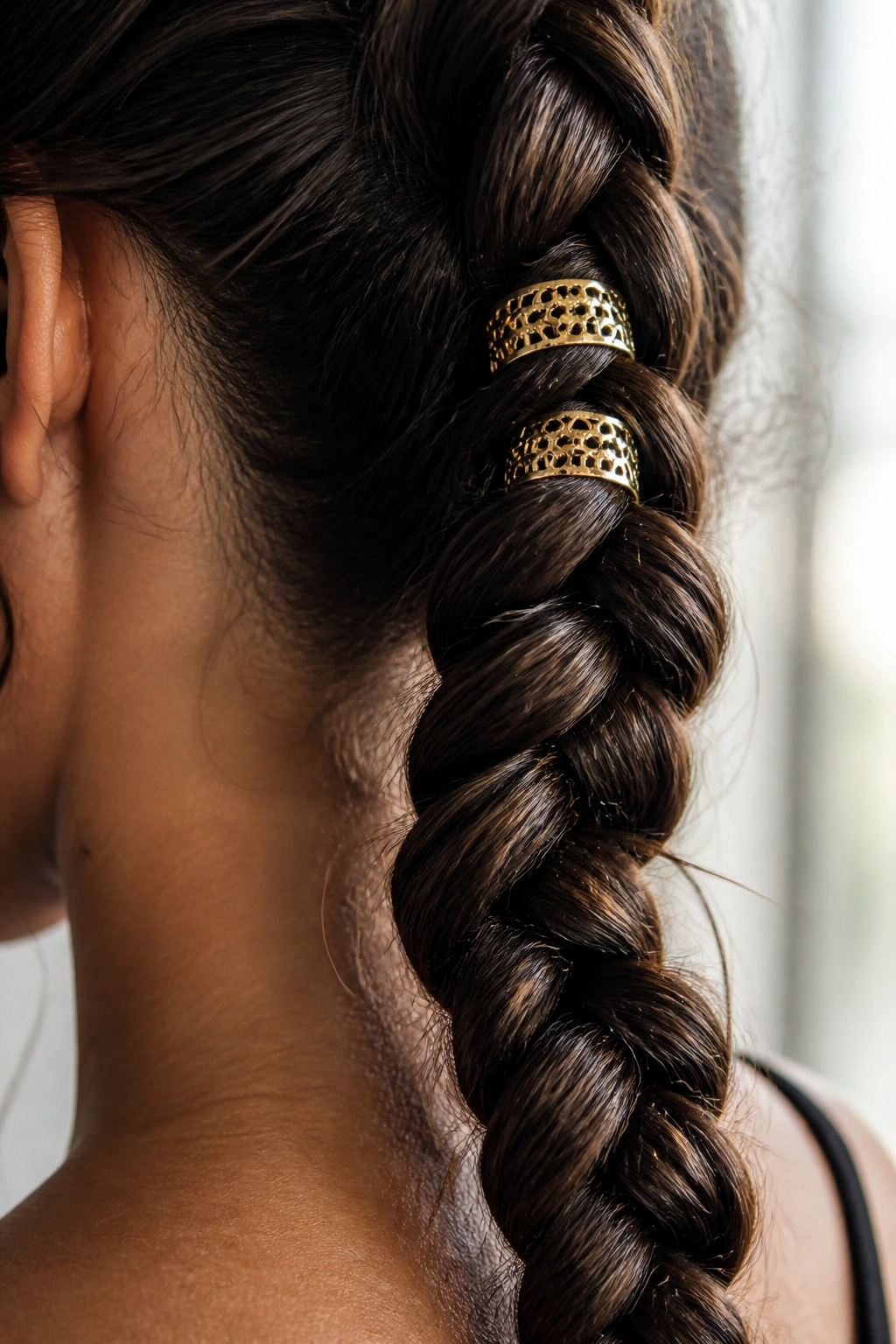
Gold braid cuffs are the easiest way to make a long braid look finished without adding bulk. They sit on the braid like tiny bracelets, and on thick plaits they read as clean, deliberate, and a little bit sharp in the best way. I like them most on Dutch braids, knotless braids, and one heavy three-strand braid down the back.
Why They Work So Well
The good ones snap on with a firm pinch and stay put because the braid gives them something to grip. That matters more on long hair, where the weight of the braid can pull lightweight pieces downward. A cuff with a smooth inner seam and a 6 mm to 12 mm opening usually handles that job better than a flimsy decorative piece from a random mix pack.
Placement matters, too. Near the base, they feel more structured. Toward the ends, they feel more relaxed. I usually like two or three cuffs spaced unevenly, not lined up like train cars.
- Best braid types: Dutch braids, box braids, fishtails, rope braids
- Good cuff size: 6 mm for thinner sections, 10 mm or more for chunky braids
- Materials to look for: brass, alloy, stainless steel, or plated metal with smooth edges
- Skip if: the braid is very delicate or the cuff has a sharp seam that catches hair
Pro tip: open the cuff only as much as needed. Overbending weakens the snap, and that is how a nice piece turns into drawer clutter fast.
2. Satin Ribbon Woven Through a Three-Strand Braid
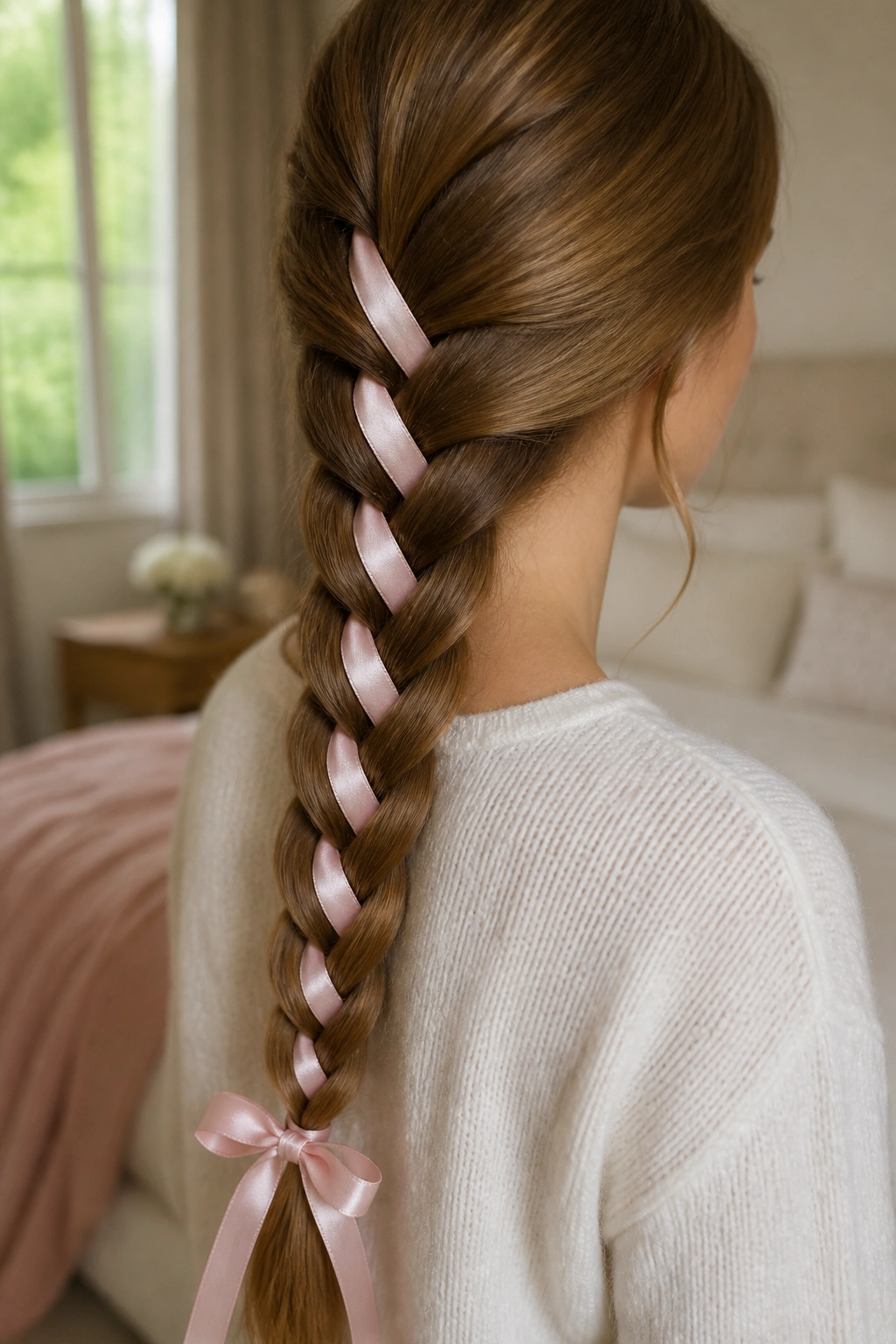
A ribbon is the cheapest accessory that makes a braid look like it took more work than it did. That sounds flippant, but it’s true. A 1/4-inch or 1/2-inch satin ribbon threaded through a long braid changes the whole mood in one pass — softer, prettier, and a little more finished.
Start by choosing a ribbon that feels smooth between your fingers. Satin gives the cleanest line, while grosgrain has more grip and a less slippery finish. If the hair is very long, cut the ribbon longer than you think you need. You want enough extra length to tie off cleanly at the bottom without fighting with short ends.
The best part is how easy it is to make it look intentional. Tuck the ribbon under the braid at the crown, then weave it through every other crossover. Don’t yank it tight. Let it sit close to the braid, not strangling it. That loose, even tension keeps the braid from getting lumpy.
And yes, ribbon can get fussy if the ends fray. A quick trim with sharp scissors helps, and a tiny dab of clear nail polish on the cut edge can slow the fraying down. Small thing. Worth it.
3. Beads That Click Into the Ends
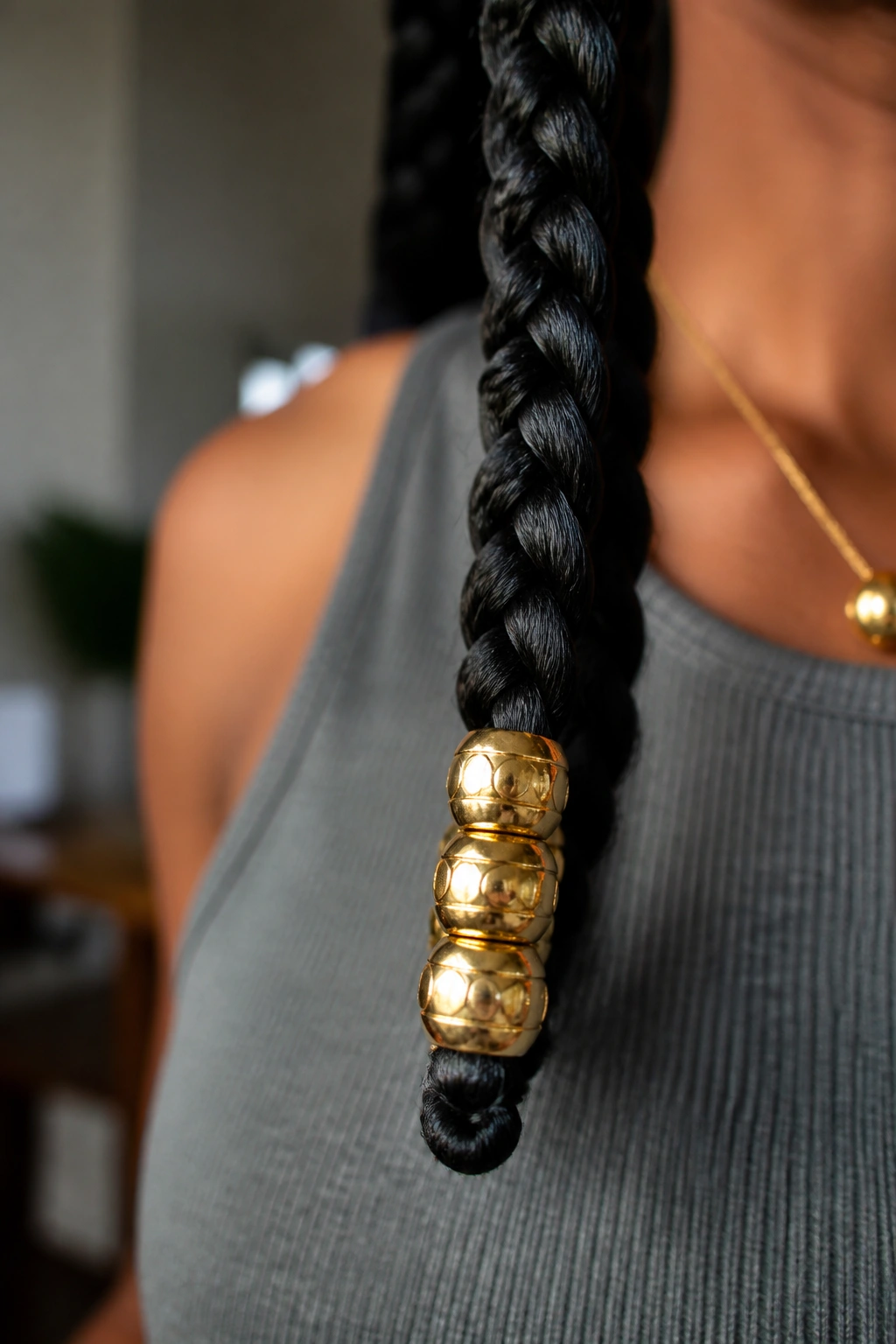
Why do beads still look so good on long braids? Because they give the last few inches a little weight and a little sound, and that tiny detail makes the braid feel alive. A row of wooden beads on a long protective style, or one smooth bead at the end of a fishtail, can change the whole finish without covering the braid itself.
The trick is choosing a bead with the right hole size and the right weight. Oversized beads drag the braid down and pull the shape loose. Tiny beads with sharp edges snag. The sweet spot is a bead that slides on without forcing the hair and closes neatly against a small elastic or a wrapped knot.
How to Use Them Without Fighting the Braid
A narrow clear elastic or a tiny thread wrap at the end gives the bead something to hold onto. On box braids, knotless braids, and small plaits, I’d rather use one or two beads per braid than pile on six. The braid should still swing.
- Wood beads feel earthy and work well on chunky braids
- Acrylic beads are lighter and easier for everyday wear
- Metal beads look sharp but can add weight fast
- Silicone-lined beads grip better and slide less
If you hear beads clacking hard against your shoulder all day, they’re probably too heavy. Quiet beads are happier beads.
4. Tiny Hair Rings Along a Single Braid
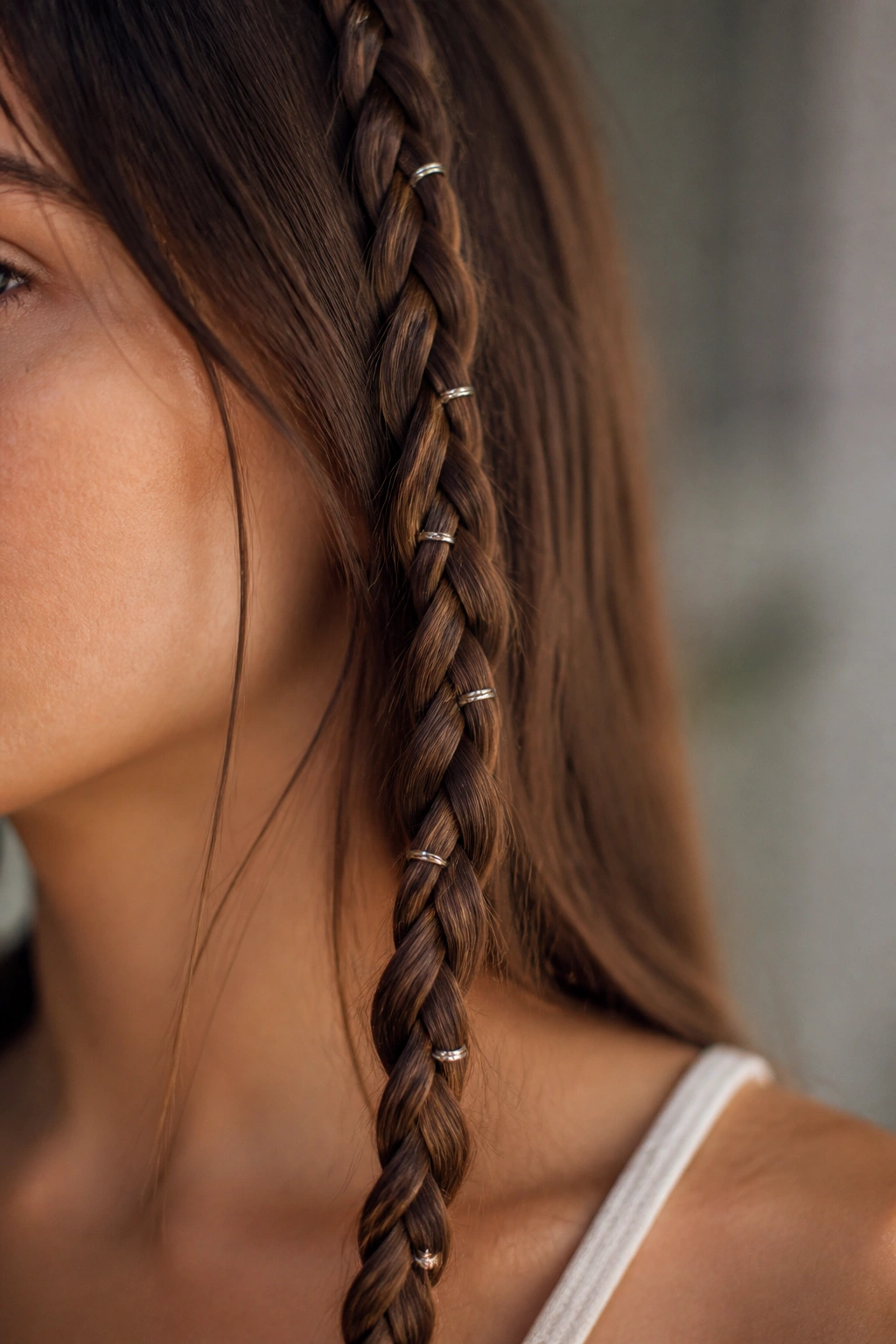
Picture one long braid with a few small rings spaced down one side, not too many, not too neat. That’s the sweet spot. The look is clean and a little edgy, and it works especially well when you want decoration that does not swallow the braid whole.
These rings are tiny metal loops that open just enough to slide over a braid section, then close back down. They work best on thicker plaits or on braids with a little texture, because the ring needs something to hold onto. A super-smooth braid can let them drift, which gets annoying fast.
I like placing them where the braid starts to narrow. That keeps the accessories from crowding the crown and gives the eye a path downward. On a long braid, three rings are usually enough. Five can be too much unless the braid is very thick.
- Best size: 2 mm to 4 mm for fine accents, slightly larger for chunky braids
- Best placement: one side only, or alternating sides down the braid
- Best finish: matte gold, silver, or blackened metal
- Watch out for: sharp cut ends that catch on clothing
A tiny ring on a long braid says you paid attention. That’s the whole appeal.
5. Fresh Flowers for a Soft, Romanced Look

Fresh flowers can be gorgeous in braids, but they’re not casual in the way people pretend they are. You need to think about stem length, flower weight, and how long you expect the style to last. A flower tucked into a braided crown at a wedding or photo session feels dreamy; a heavy bloom jammed into the middle of a long plait can slump within minutes.
Small, sturdy flowers behave best. Baby’s breath, mini roses, waxflower, spray orchids, and even a single sprig of lavender all sit more kindly than big, open blooms. If the stem is soft, wrap it with floral tape first so it doesn’t slip. If the braid is very thick, pin the flower where the braid crosses or gathers, not on the loose tail where gravity gets greedy.
I’ve always preferred fresh flowers near the face line or at the base of a braid. They look fragile there in a way that feels deliberate, not accidental. A flower buried halfway down a long braid can get lost.
Dried flowers and silk flowers make more sense if you want the style to last through the whole day. Not glamorous, maybe. Practical, though. And that wins more often than people admit.
6. Decorative Pins on a Braided Crown
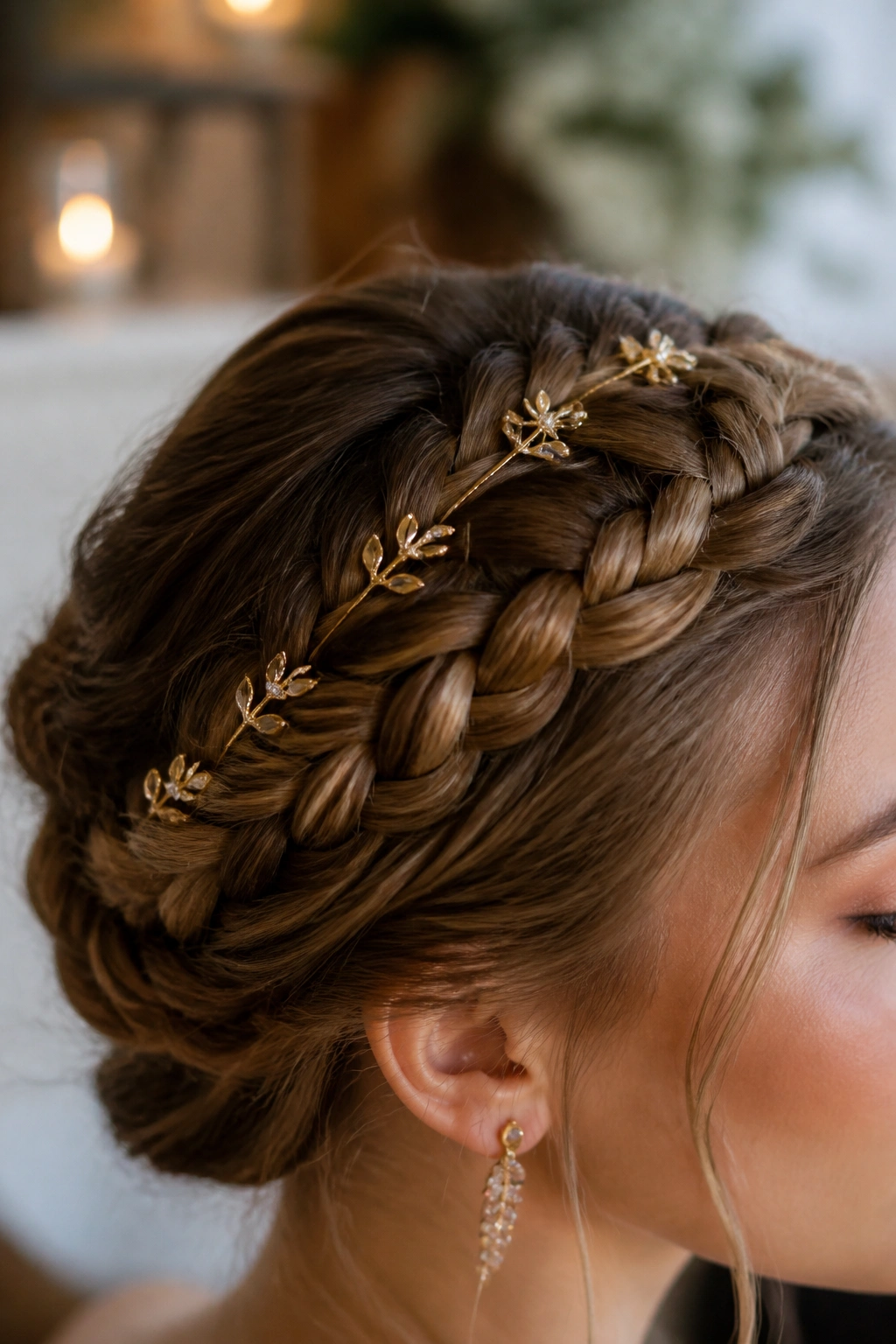
A braided crown can take decorative pins better than almost any other style. The shape gives you a built-in path, so the pin doesn’t look random. It looks placed. That difference matters, especially when you’re working with long hair and need the accessory to follow the braid instead of fighting it.
Unlike a bulky barrette, a slim decorative pin sits flatter and disappears into the braid until the light hits the stone or metal detail. That makes it useful for formal styles, but also for days when you want a little polish without rebuilding the whole hairstyle. A 2-inch pin with a straight shaft usually works better than a wide, curved one.
I like this accessory on halo braids, side braids that sweep across the head, and large braided updos. Put the pin where the braid turns or overlaps. That gives it a natural anchor point, and it won’t feel like decoration floating in empty space.
If you want a quick fix before going out, this is one of the easiest options. Slide it in, check the angle, and leave it alone. Fussy placement usually makes it worse.
7. Thread Wraps in Bright or Earthy Colors
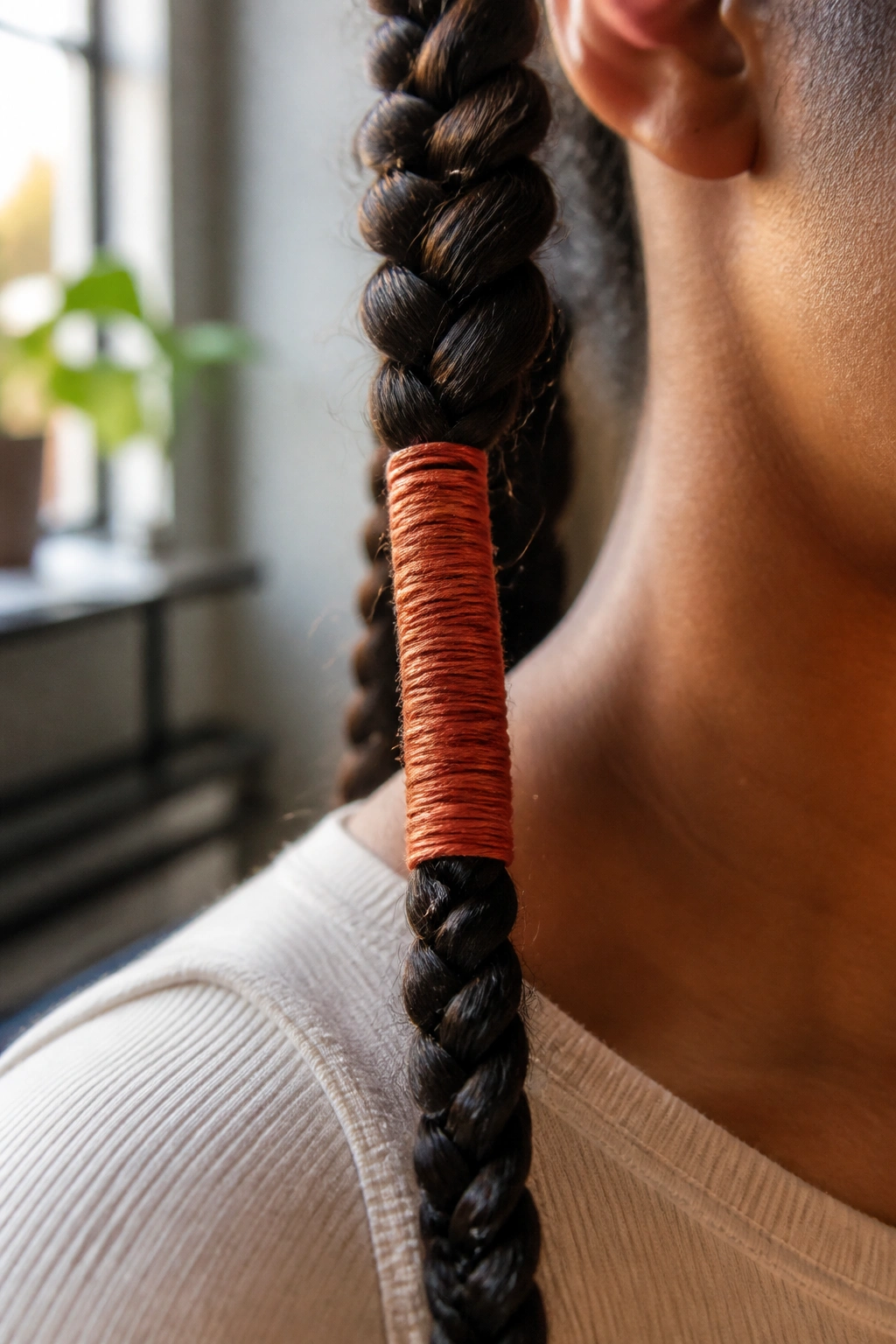
Thread wraps are one of those details that look modest until you see them against a long braid. Then they do a lot. A few inches of embroidery floss or thin yarn wrapped around one section can pull together the whole look, especially if you match the thread to a shirt, scarf, or bag.
Why Thread Beats Chunky Trim
It lies flatter than ribbon, which means it works better on braids that already have a lot going on. Thread also stays visually quieter, so the braid texture stays visible. That’s useful on long hair, where too much decoration can flatten the shape and make the braid look crowded.
Choose embroidery floss, cotton thread, or a very thin yarn. Six to eight strands of floss twisted together gives enough body without making the braid stiff. Wrap around a short section, then knot the thread under the braid and trim the tail close.
- Best use: accenting one braid, not every braid
- Best colors: black, rust, olive, cream, deep red, metallic thread
- Good length to wrap: 1 inch to 3 inches of braid
- Avoid: thick yarn that adds bulk or sheds fibers
Quick tip: keep the wrap section short. A long wrapped stretch starts to look heavy, and the braid loses that clean line that made you want the wrap in the first place.
8. Pearls on a Half-Up Braid
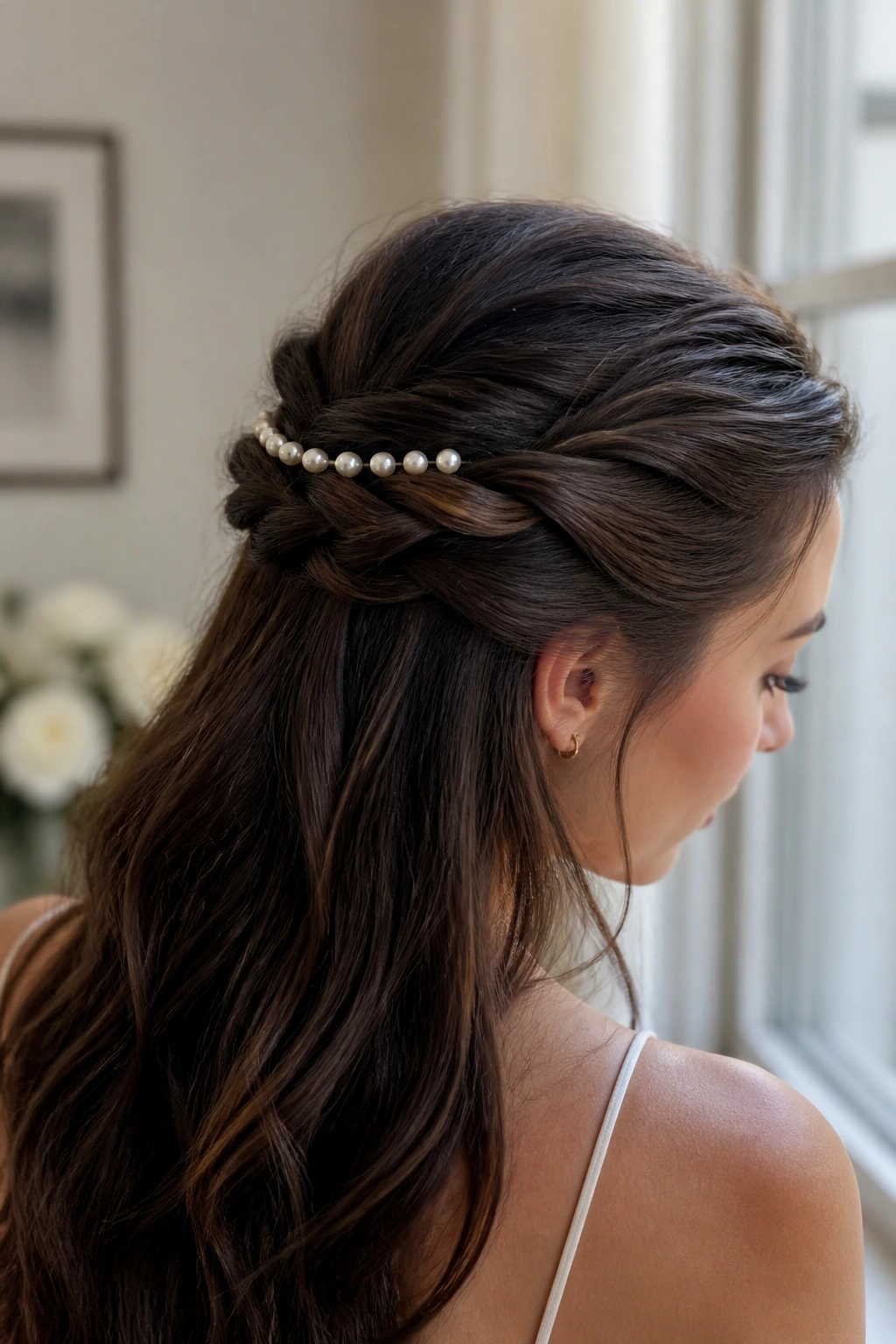
Pearls can look fussy, but on long hair they often read as calm rather than formal. A half-up braid with a few pearl pins or tiny pearl clips near the twist point feels neat and expensive without shouting about it. I know that sounds like a strange way to describe hair accessories, but it’s accurate.
What works here is restraint. One line of 4 mm pearls across a braid crown can look refined. A whole cluster of large beads can tip the style into costume territory fast. The braid should still feel like the main shape, with the pearls acting as a line of punctuation.
Faux pearls are usually the smarter choice for long wear because they’re lighter and less slippery than the real thing. They also tend to stay put in the braid a bit better. If you use pins, insert them where the braid overlaps so the metal shaft has something to grip.
This style is good for long hair that’s pulled half back but still left with length down the shoulders. The braid shows enough detail, and the pearls keep it from feeling plain. Nice balance. Hard to beat.
9. Shell Charms for Box Braids and Vacation Braids
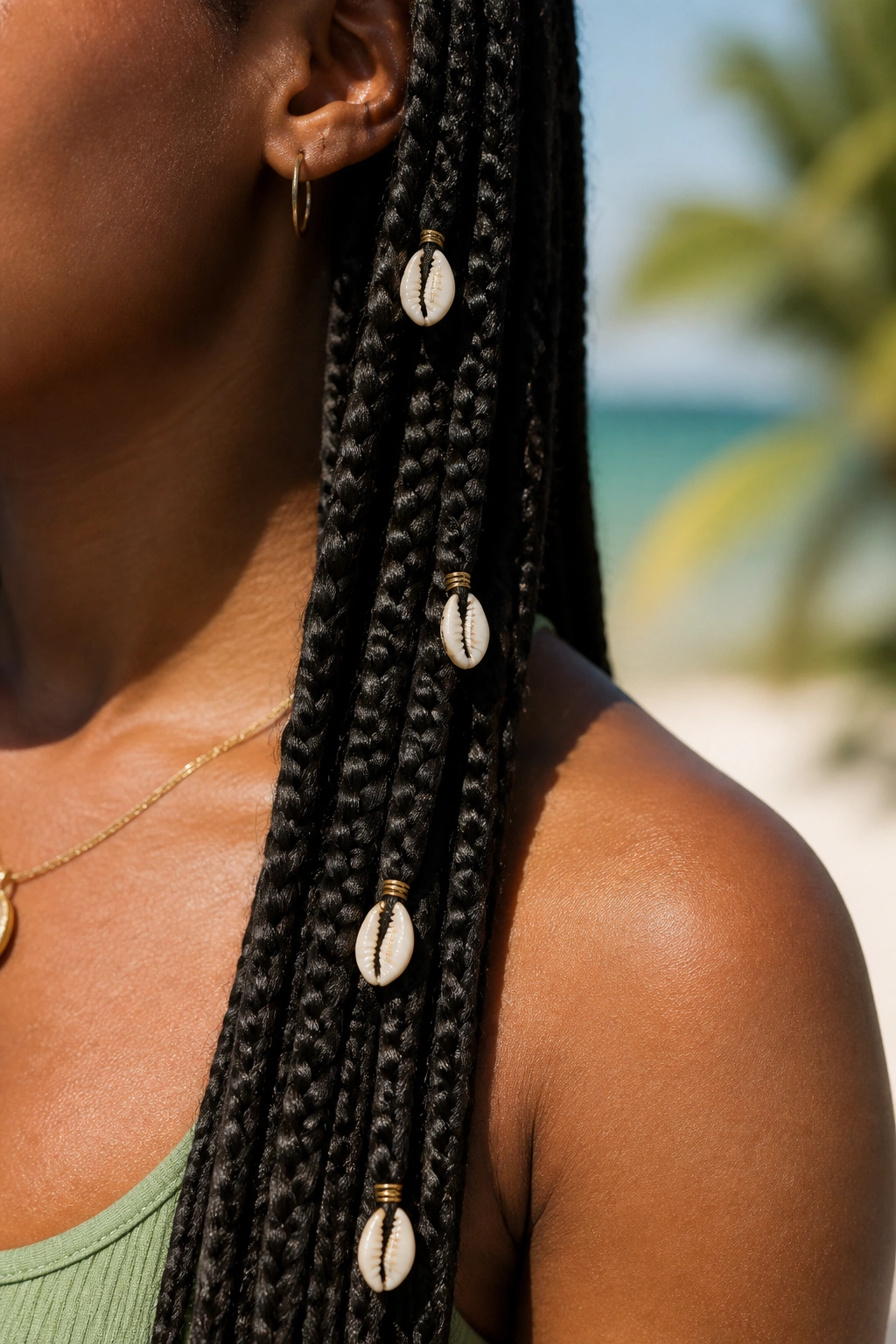
Shell charms work because they bring texture without looking bulky. On long box braids, knotless braids, or feed-in styles, a few small shells feel like part of the braid itself instead of an extra layer sitting on top. Cowrie shells are the obvious choice, but small polished shell pieces and shell beads can do the job too.
Why does this look so good on long braids? Because shells have shape. They’re not flat and not shiny in the same way metal is, so they break up the line of the braid in a softer way. That matters on thick protective styles, where too much metal can start to feel heavy and stiff.
How to Place Shell Charms
Keep the charms toward the middle or lower third of the braid if you want movement. Near the root, they can feel crowded. Near the ends, they can swing and tap against each other in a nice, relaxed way.
- Choose small shells for thinner braids and larger shells for chunky sections
- Use secure loops or clasps so the charm does not slide off during wear
- Limit the count unless you want the braid to look intentionally full of detail
- Pair with matte beads if you want a less shiny finish
The only real mistake is overloading the braid. Shells are strong visually. They do not need backup.
10. Leather Cord Woven Into a Fishtail

Leather cord changes a fishtail braid in a way that feels grounded and a little tougher. It gives the braid a matte line that thread or ribbon can’t quite match. On long hair, that matters because the braid already has so much movement. Leather slows the look down a bit.
I like suede cord better than stiff polished leather for this. Suede bends more easily, ties more cleanly, and doesn’t stick out from the braid in awkward little angles. A width of about 3 mm to 5 mm works well for most long braids. Wider than that, and the braid can start looking boxed in.
- Best braid types: fishtails, rope braids, side braids
- Best colors: tan, chestnut, black, burgundy
- How to place it: weave it through like a ribbon, then tie it low
- What to avoid: stiff strips that poke and scratch
The strongest version of this look keeps the leather to one braid, maybe two at most. More than that, and the braid loses the clean shape that makes the cord look interesting. A little contrast is enough.
11. Metallic String for a Subtle Shine
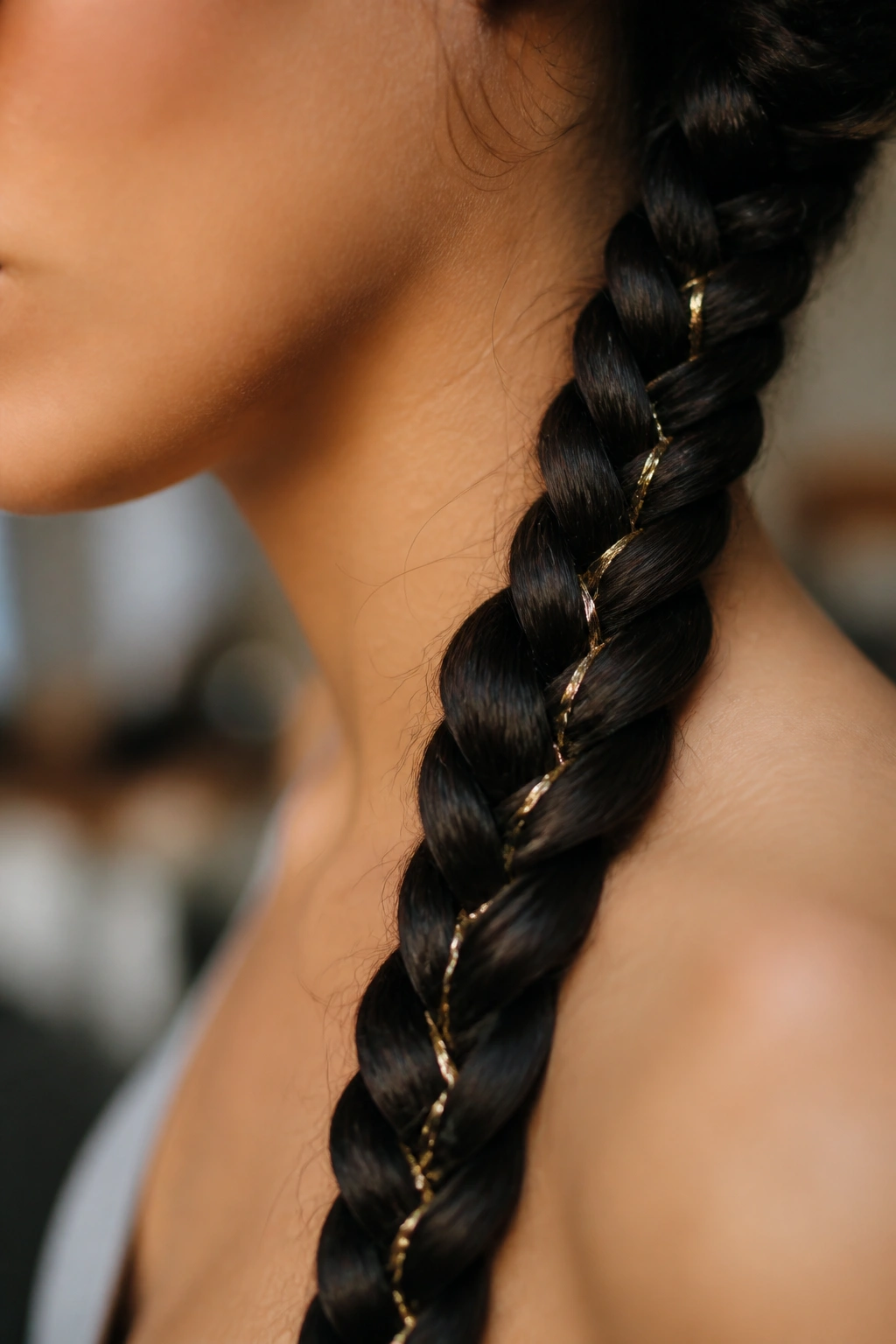
Metallic string is the accessory for people who want a little shine without turning the braid into a costume piece. Thin gold, silver, or bronze thread woven through long braids can pick up movement in a quiet way, and it looks especially sharp against dark hair.
The useful thing here is flexibility. You can wrap metallic embroidery thread around a braid section, knot it at the base, or braid it in from the beginning if you want the effect to run the full length. I prefer using it as a highlight, not the whole story. One metallic strand in a thick braid is enough to change the tone.
The material matters. Craft wire sounds tempting, but it can scratch and bend in ugly ways. Soft thread with metallic fibers is safer and easier to remove. The braid should still feel smooth when you run your hand down it.
This is one of those accessories that looks even better when the braid moves. Not because it sparkles in some dramatic way, but because it flashes in narrow little lines when the hair turns. Subtle. Clean. Hard to overdo if you stop early.
12. Jeweled Bobby Pins Hidden at the Base
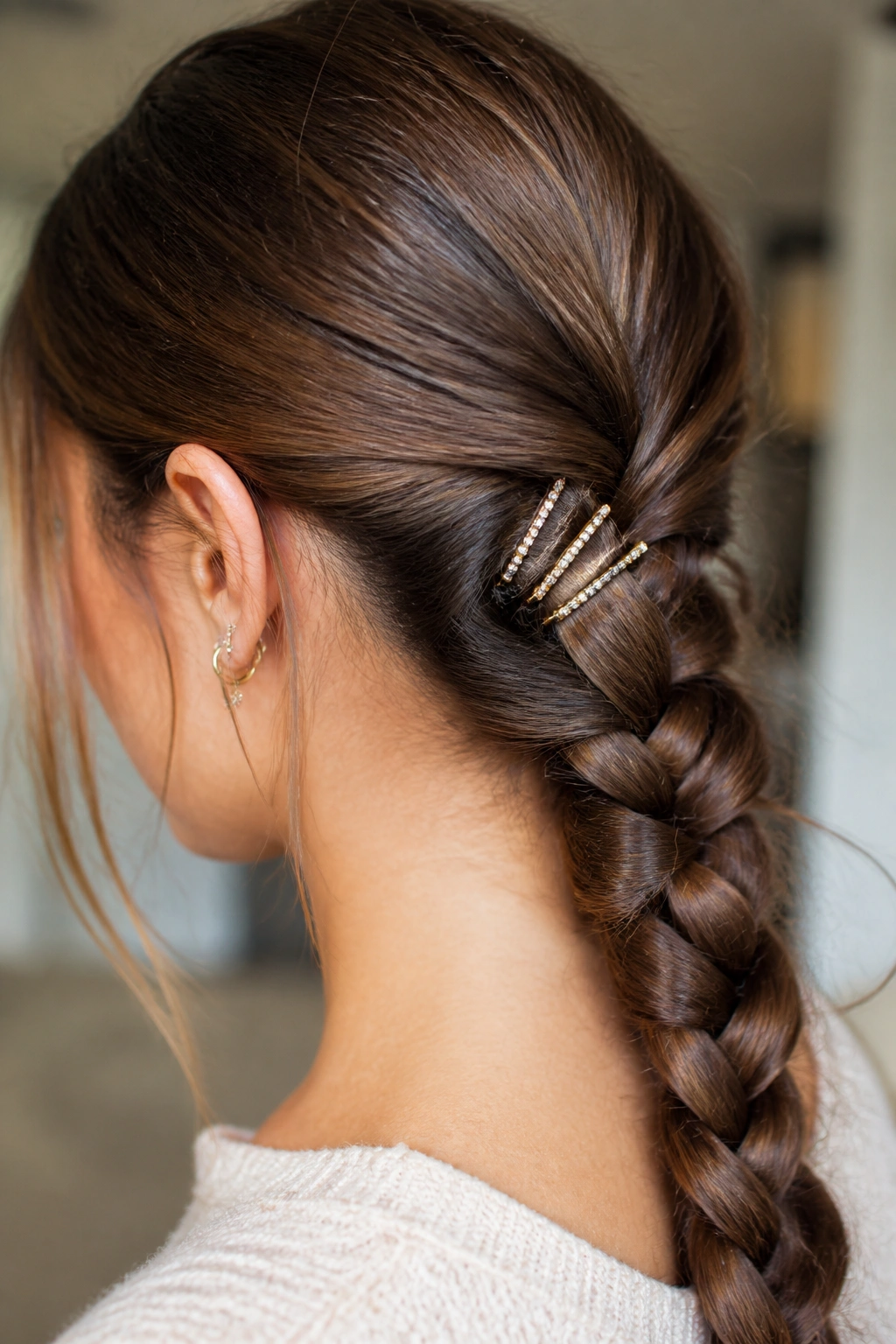
Jeweled bobby pins are the quiet workers of braid styling. They don’t announce themselves from across the room, but they give the base of a braid a tidy, finished edge. That makes them especially useful for long hair, where the crown can look a little empty if you only decorate the tail.
Unlike cuffs or rings, these pins disappear into the hair until you move. That makes them useful when you want something polished but not loud. A set of four or six slim jeweled pins fanned near the braid base can hold a side sweep in place and add a small amount of shine without making the whole style feel heavy.
I like this option for quick styling before an event, because it doesn’t demand a full re-braid. Slide the pins in where the braid crosses or where the side section tucks under. The angle matters. If the pins sit parallel to the scalp, they look cleaner than if they point in random directions.
Best of all, they’re easy to remove. No tugging. No drama. That alone puts them higher on my list than a few prettier accessories that are much harder to live with.
13. Oversized Scrunchies at the Braid End
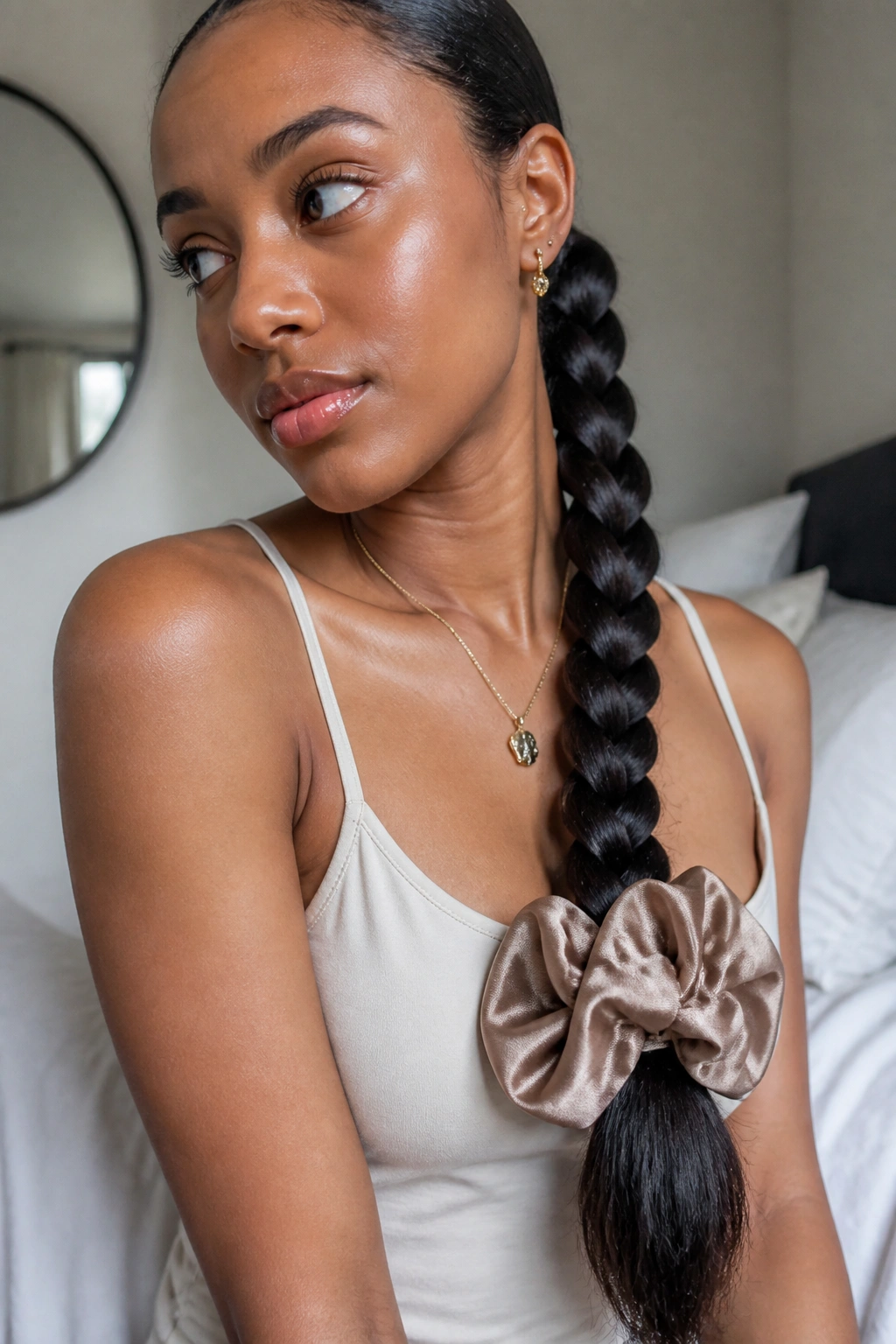
An oversized scrunchie at the end of a long braid can look surprisingly intentional. It softens the finish, keeps the braid from unraveling at the tail, and gives the whole style a little volume at the bottom. If your hair is thick, it also helps balance the braid visually so the length does not feel too narrow at the end.
Why a Scrunchie Can Look Intentional
The trick is fabric. Satin and silk feel sleek. Velvet adds texture. A crisp cotton scrunchie can work, but it reads more casual. I’d rather use one with a wider band and a fuller ruffle so it has enough shape to sit beside a long braid instead of shrinking into it.
- Best fabrics: silk, satin, velvet, soft organza
- Best sizes: medium to oversized, not the tiny gym kind
- Best placement: braid end, low side braid, or a loose gathered tail
- Watch out for: elastic that pulls too hard on the last braid section
My take: if the braid itself is very neat, go with a scrunchie that has some softness or shine. If the braid is loose and textured, a plain matte scrunchie can look cleaner.
14. Tassels and Fringe Ties on the Last Few Inches

Tassels give a braid movement right where long hair usually gets a little heavy. A small thread tassel, a leather fringe tie, or a beaded fringe at the end of the braid breaks up the last few inches and keeps the style from feeling too straight-laced. I like that. It feels a bit less predictable.
The best tassels are narrow and controlled. Think 2-inch to 4-inch fringe, not a whole curtain of strings. Anything larger starts to compete with the braid itself. Thread tassels work well on soft, romantic braids. Leather tassels feel stronger and a bit more graphic. Beaded fringe has the most swing, which can be fun if the braid is thick enough to support it.
Place the tassel where the braid is already secured tightly, usually at the end elastic or just above it. That way the weight hangs from a stable point. If you attach it halfway down the braid, it will drag and look awkward.
This is one of those accessories that’s more interesting in motion than in a still photo. It moves when you walk. That’s the whole point.
15. A Silk Scarf Wrapped as a Braid Finish
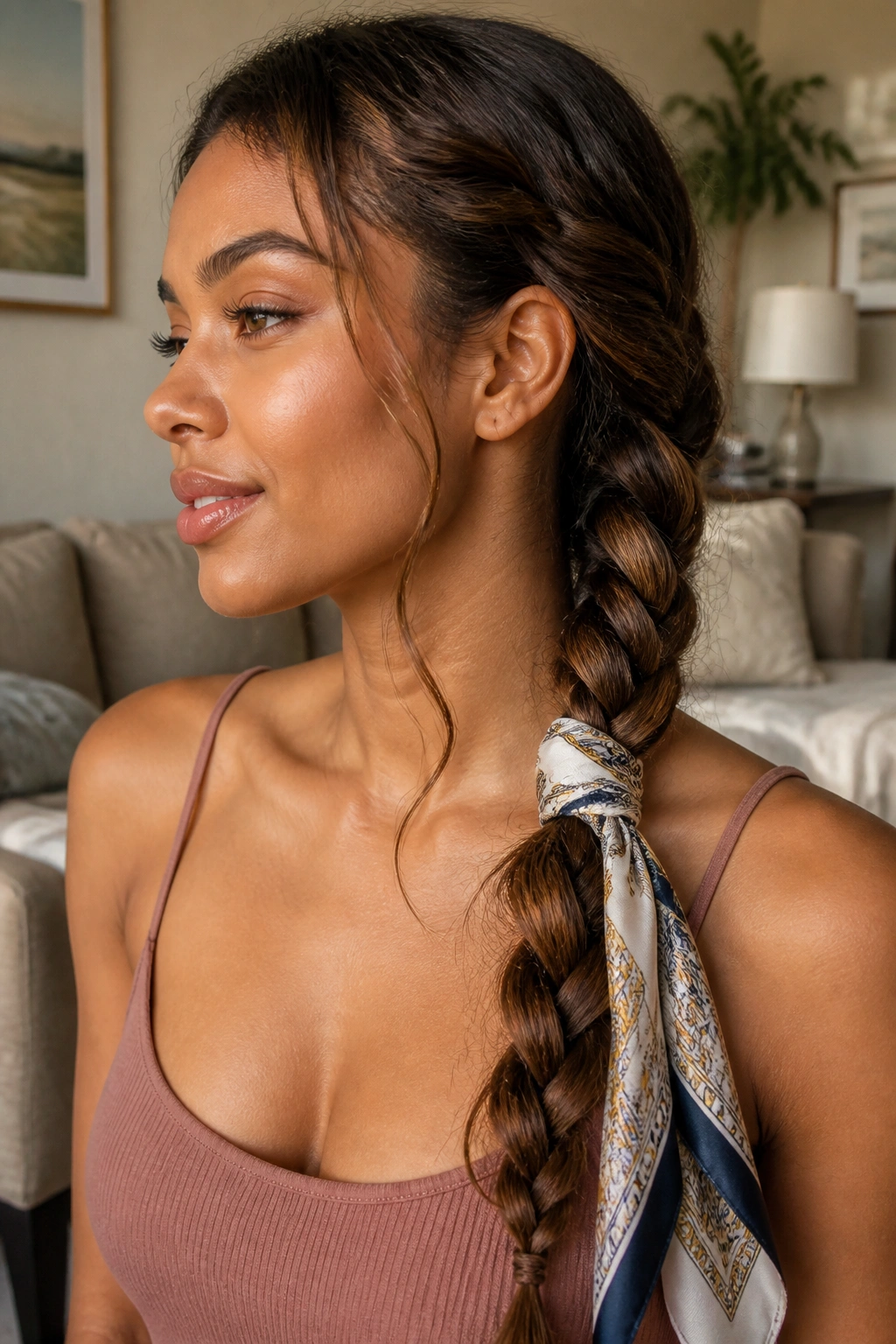
Can one accessory do several jobs at once? A silk scarf can, and that’s why I keep coming back to it for long hair. It can hide an elastic, add color, soften a braid that feels too severe, and give the whole style a finished edge without making it look crowded.
A slim silk scarf or a long twilly works best. Tie it at the base of the braid, then let the ends trail down, or weave it loosely through the last third of the braid if you want more texture. A scarf that’s too wide can swallow a braid, especially on fine hair. A narrow one sits better and leaves the braid visible.
I like this option when the braid is already good and you don’t want to fight it. That’s the honest appeal. No tiny hardware to lose. No sharp edges. No heavy pieces pulling at the length. Just fabric, color, and movement.
If you only buy one accessory from this whole list, make it the one that fits your braid’s thickness and weight instead of the one that looks prettiest in the package. Long hair tells on bad choices fast. Good choices, though, make the braid look like it was always meant to be dressed that way.
