



The ritual starts the same way, no matter which style you choose. You hear the sharp, rhythmic clack of the metal parting comb against the scalp, followed by the familiar hum of conversation in the salon. Braids are more than just a protective style; they are an act of self-care and a deeply rooted cultural tradition that has evolved into high art. Whether you are looking to give your natural hair a break from heat and chemical processing or simply want to switch up your look for a few weeks, the options are vast and intimidatingly beautiful.
I remember my first time getting box braids. I spent eight hours in the chair, my neck stiff, watching the stylist weave synthetic hair into my own with a dexterity that felt like magic. When she finally turned the chair toward the mirror, I barely recognized myself—but in the best way possible. There is a specific kind of confidence that comes with a fresh braid install, a feeling of being pulled together and ready for anything.
That said, navigating the choices can be overwhelming. The difference between a knotless braid and a traditional box braid might seem minor until you actually feel the weight difference on your scalp. Understanding the maintenance requirements for different styles can save you money, time, and, more importantly, the integrity of your edges. Let’s walk through the options, from the classics that never go out of style to the modern variations that have taken over social media feeds everywhere.
1. Knotless Box Braids
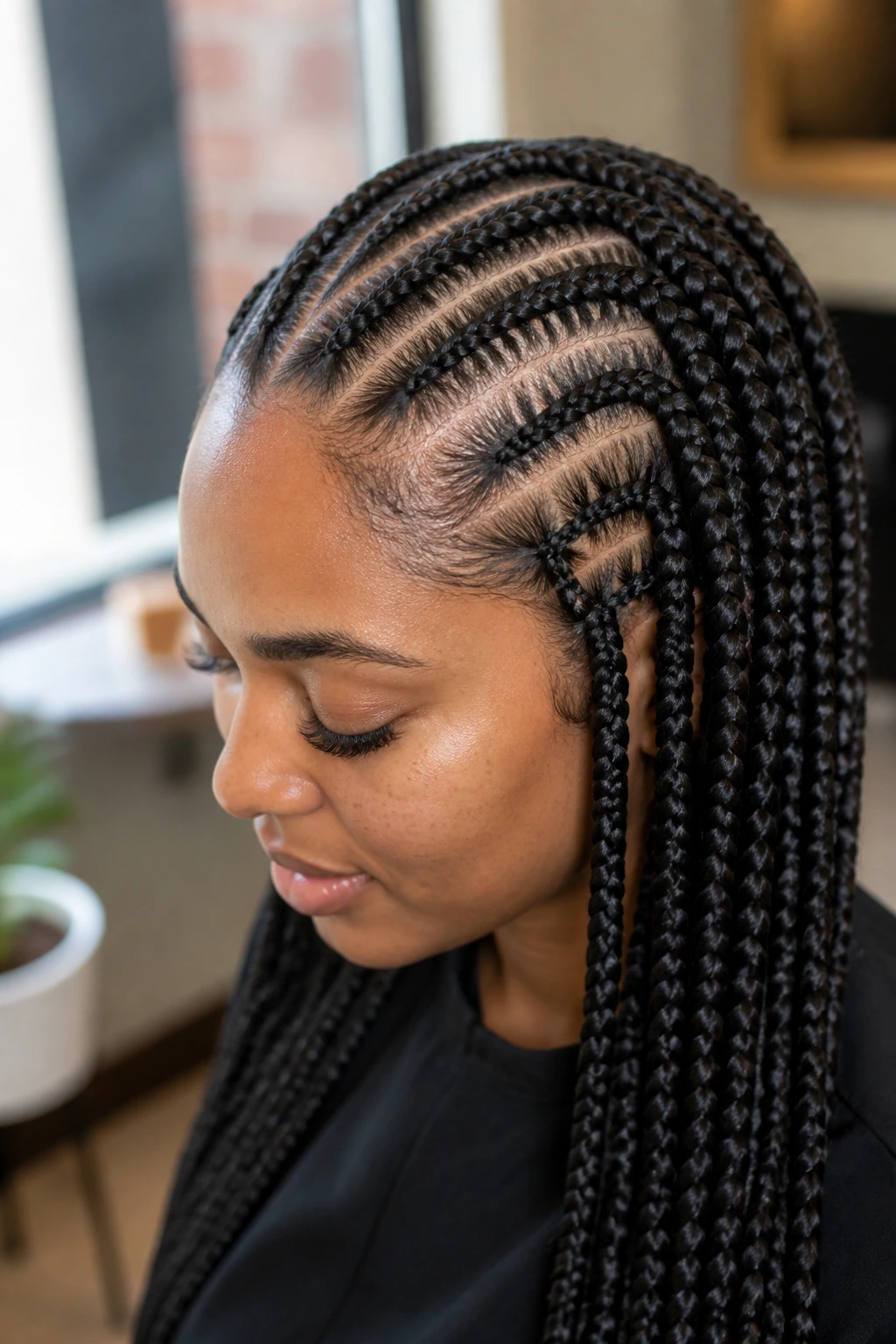
These have become the gold standard for anyone who values comfort above all else. Unlike traditional box braids that start with a small, tight knot of synthetic hair anchored to your scalp, knotless braids begin with your natural hair and gradually feed in the extension hair. This method eliminates the heavy “bump” at the root, which means your braids lie flat against your head the moment you leave the salon.
Why They Feel Different
The primary benefit is tension. Because the extensions are fed in gradually, there is no sudden pull on your follicles. This reduces the risk of traction alopecia significantly. If you have a sensitive scalp, this is almost certainly the style you want.
Quick Care Tip: Since these are looser at the root, they can get frizzy faster than traditional braids. Keep a light foam mousse on hand to smooth the roots without causing buildup.
2. Classic Box Braids
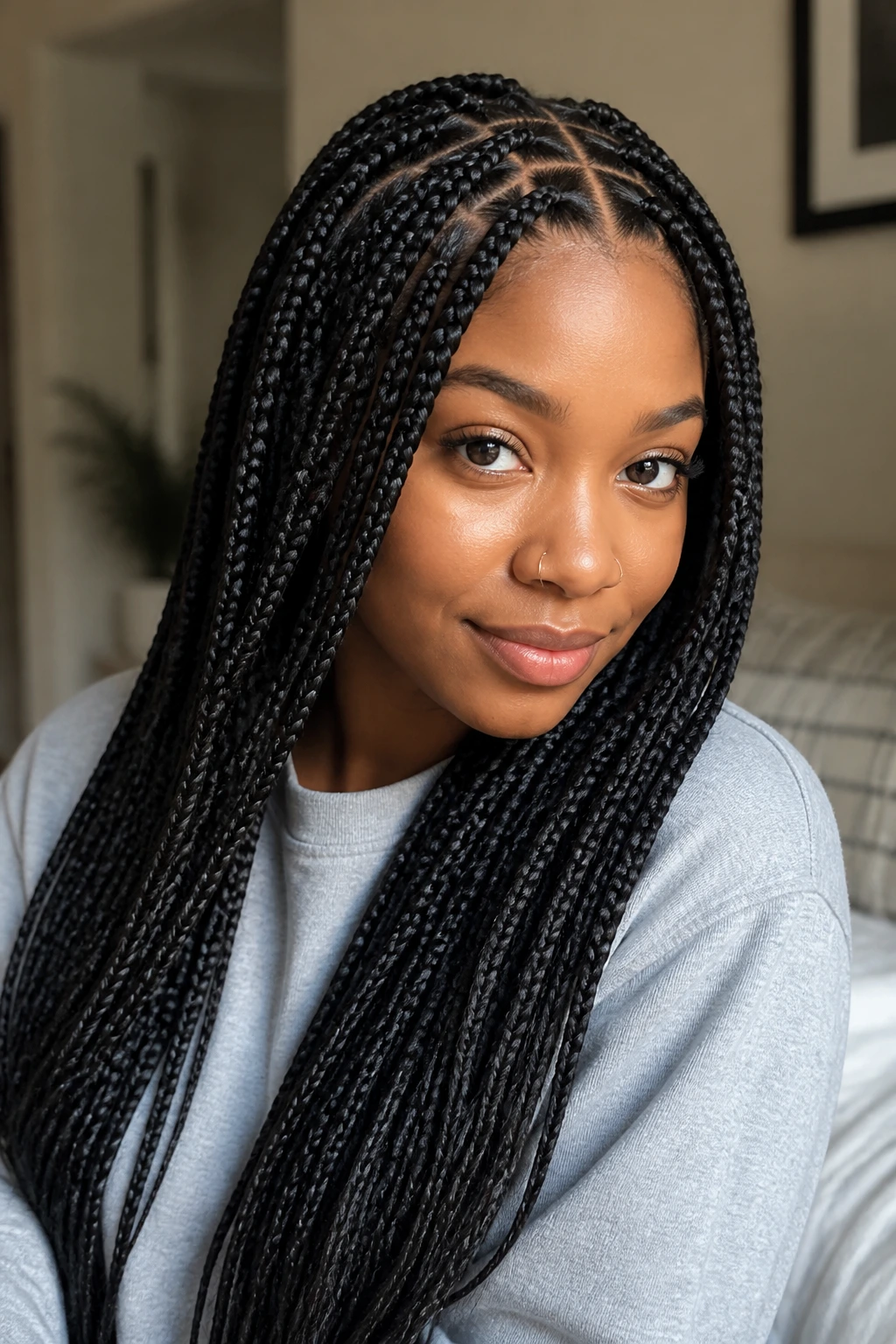
There is a reason these never left. Box braids are the bedrock of protective styling—versatile, durable, and iconic. They are installed by sectioning the hair into square (or triangular) parts and braiding the extension hair from the root, usually using a standard three-strand technique.
The Durability Factor
Because they are anchored with a knot at the base, they tend to be the most secure option. If you are planning a beach vacation or an active trip where you need your hair to stay pristine for a month or longer, this is your go-to. They are less likely to slip, even if your hair texture is very soft or freshly washed.
Drawback: You have to accept the “break-in” period. The first three days often involve a bit of tightness while the hair settles. Ibuprofen and a warm towel can make a world of difference during that first night.
3. Cornrows with Beads
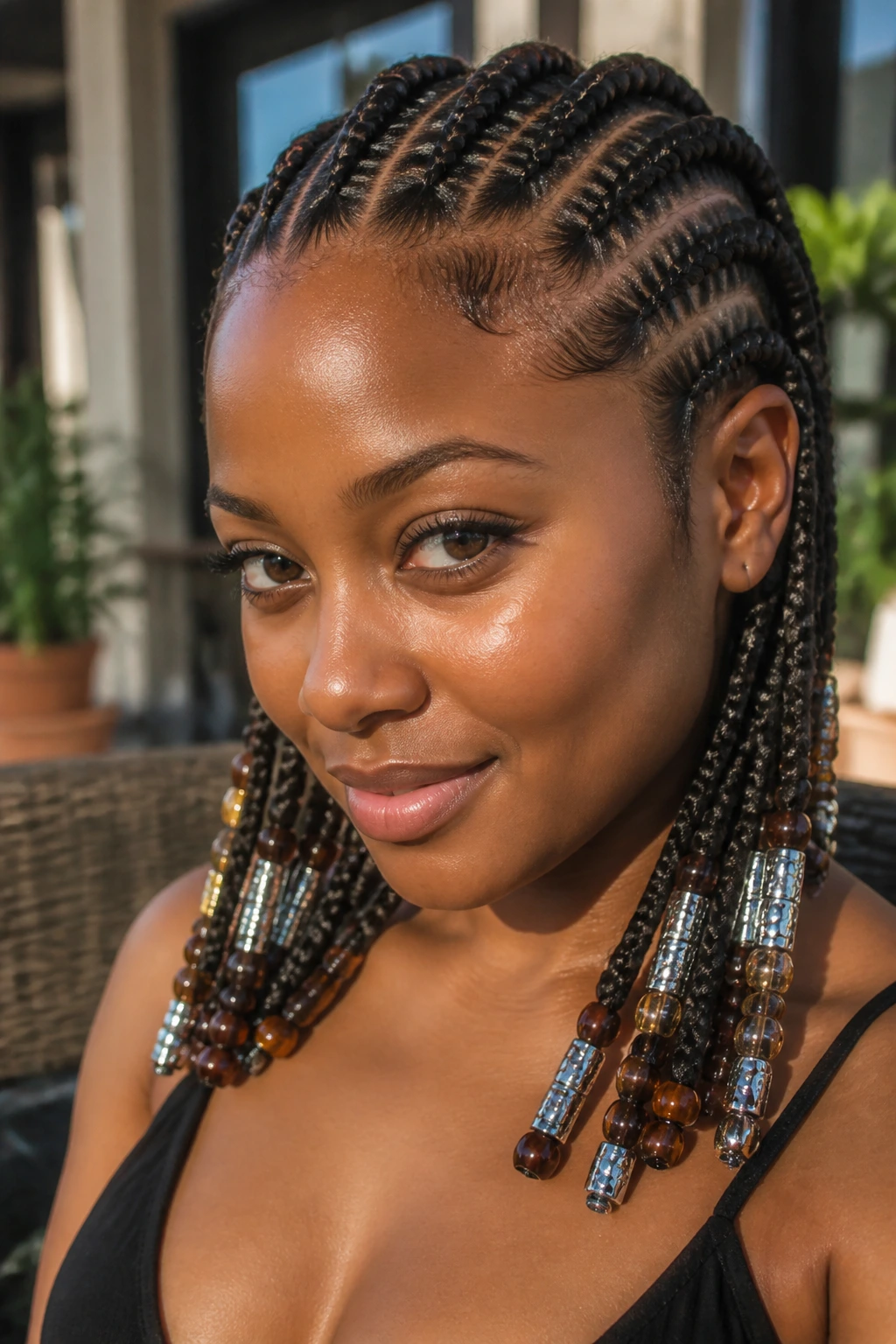
Cornrows aren’t just a foundation for wigs or weaves; they are a standalone style that demands respect. Adding beads—whether clear, wooden, or colored plastic—injects personality and movement into the style. It creates a satisfying clack sound when you move, which honestly never gets old.
Styling for Impact
You can keep the cornrows straight back or get creative with geometric patterns. The key here is the accessorizing. Don’t just settle for standard beads; look for metallic cuffs or cowrie shells to mix in.
Maintenance: Beads can be heavy if you overdo it. If you are doing a full head of beads, ensure your braids are tight enough at the ends to support the weight, or you might end up with them sliding off when you sleep.
4. Fulani Braids

Named after the Fula people of West Africa, this style is instantly recognizable. It typically features cornrows braided in the front, often with a central part and side braids that hang down toward the temples, combined with box braids or twists in the back.
The Allure of Precision
The beauty of Fulani braids lies in the symmetry. You need a stylist who is precise with their parts, as the decorative nature of the style draws attention to the scalp pattern. It is an intricate look that feels regal and intentional.
Pro Tip: If you want to lean into the traditional aesthetic, incorporate gold or silver hair rings along the cornrows. It elevates the style from casual to event-ready in seconds.
5. Goddess Braids
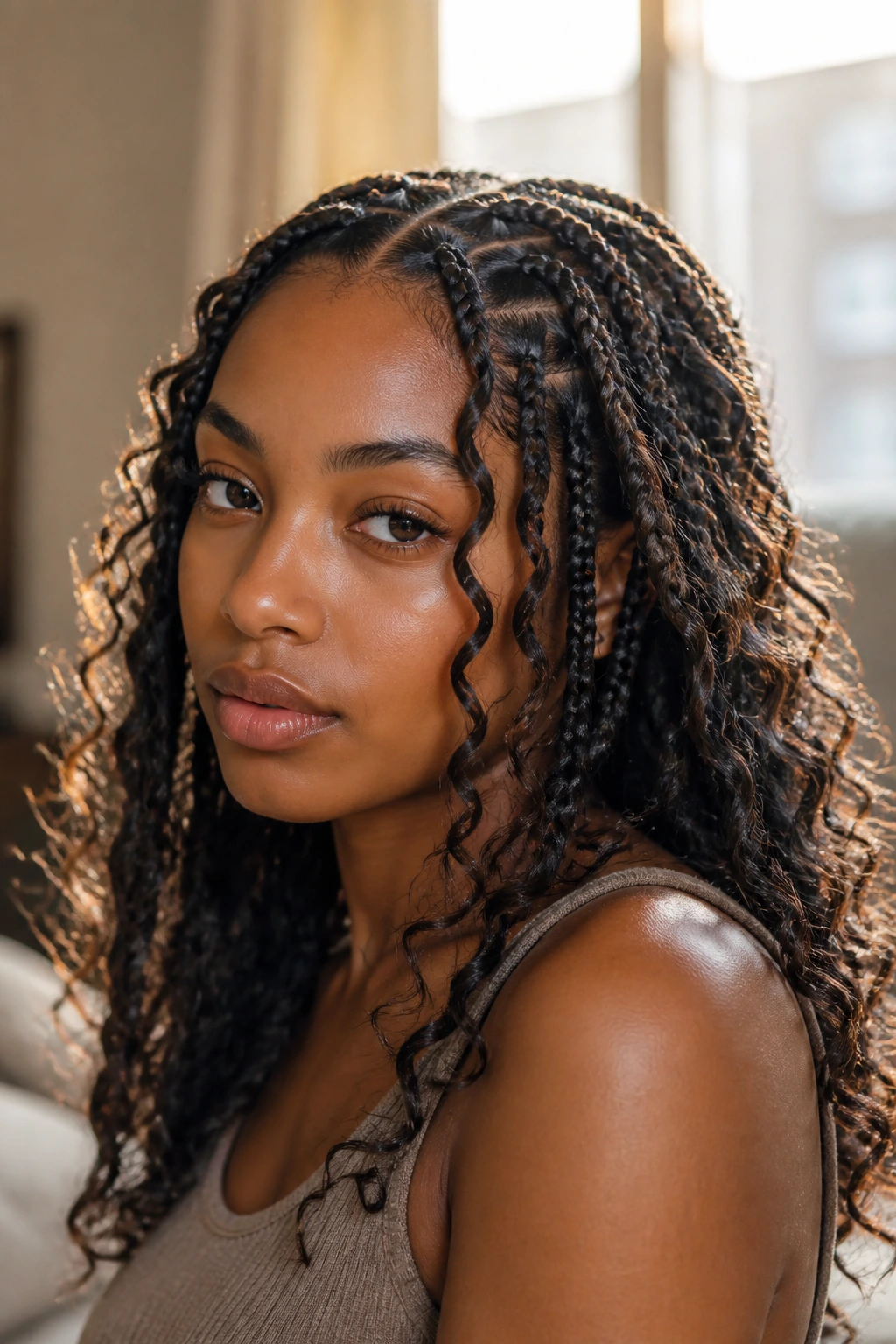
Goddess braids are essentially a romanticized version of box braids. The secret is in the ends: instead of sealing the synthetic hair completely, the stylist leaves loose, curly tendrils flowing from the ends of each braid.
Why They Are Popular
They offer a softer, more bohemian vibe than standard, blunt-ended box braids. The curls add volume and movement, making the braids look less like a stiff protective style and more like a high-fashion accessory.
Maintenance Warning: Those curly ends are prone to tangling. You must carry a small spray bottle with water and a leave-in conditioner. Spritzing the ends daily prevents the dreaded matte-like tangling that can ruin the look after two weeks.
6. Feed-in Braids

This technique changed the game for cornrows. Instead of starting with a visible knot of extension hair, the stylist braids your natural hair for an inch or two, then feeds the extension hair into the braid. This creates a natural-looking start that mimics the way hair grows from the scalp.
The Illusion of Natural Thickness
Feed-in braids are perfect if you want the look of thick, full cornrows without the pain and tension of traditional braiding. The graduation of thickness makes the braids look like your real hair, just magnified.
Customization: You can request different sizes, from thin “lemonade-style” braids to chunky, thick plaits. It is entirely up to you and how much scalp you want exposed.
7. Lemonade Braids

Popularized by the music icon whose name is synonymous with the style, Lemonade braids are cornrows that sweep from one side of the head to the other. They are typically long and thin, creating a sleek, elegant silhouette.
Efficiency Meets Style
One of the best things about this style is the installation time. Because the braids are all moving in one direction, they are often faster to install than complex, geometric tribal patterns. Plus, the side-swept look is incredibly flattering on almost every face shape.
Styling Idea: Keep the length long. These braids really shine when they are waist-length or longer, adding to that dramatic, swept-back effect.
8. Tribal Braids
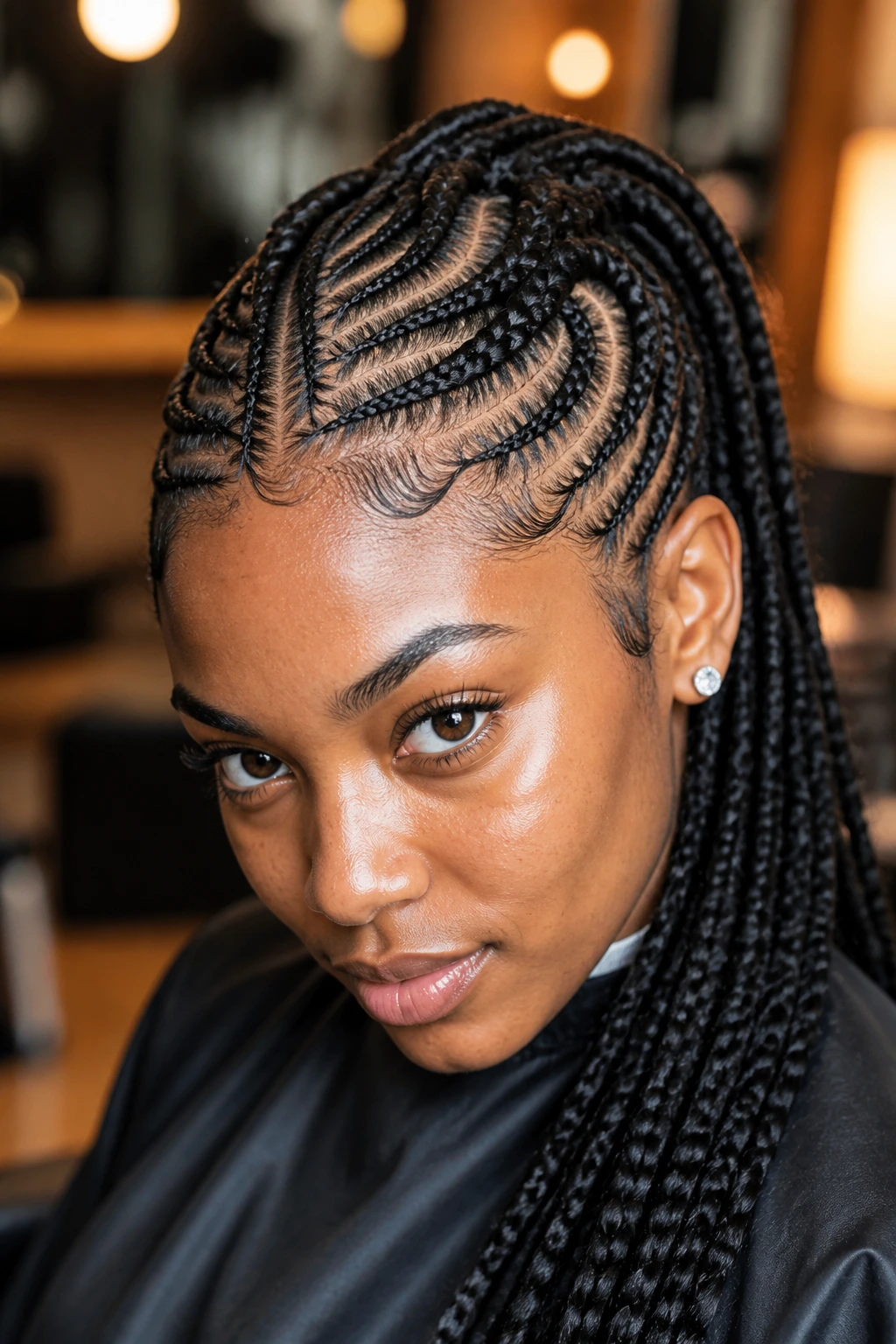
Tribal braids are an umbrella term for styles that combine different sizes and patterns of braids, often influenced by traditional cultural designs. You might see a mixture of cornrows in the front and box braids in the back, or specific patterns that mimic tribal markings.
Artistic Freedom
There is no single “right” way to do tribal braids. That is the best part. You can show a stylist a reference image, but they can easily adapt the pattern to suit your hairline and preferences.
Who is this for? This style is for the person who gets bored easily. If you want a style that looks different from every angle, tribal braids offer that visual complexity that stays interesting for weeks.
9. Senegalese Twists
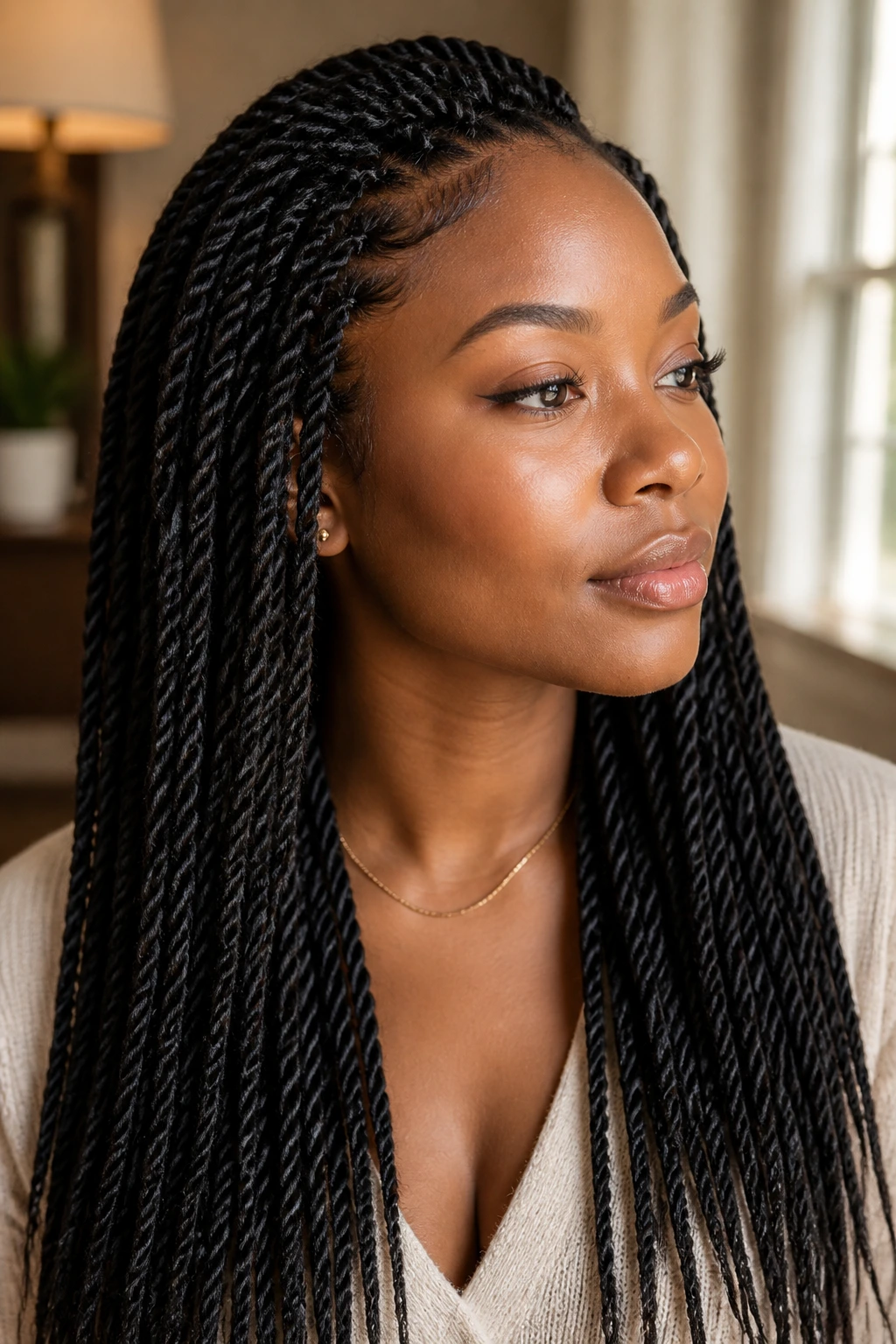
While technically a twist rather than a braid, these are installed with the same protective intention. They are smooth, rope-like twists that offer a sleek, sophisticated alternative to plaits.
The Texture Difference
Senegalese twists are generally less bulky than box braids. They hang loosely and have a silky, uniform texture. If you have very fine hair, these might be a better option because they tend to be lighter than heavy box braids.
Warning: They unravel much faster than braids. You cannot get these wet without risking serious fuzziness or total unraveling. If you are going to the gym daily, you might want to consider a different style.
10. Passion Twists
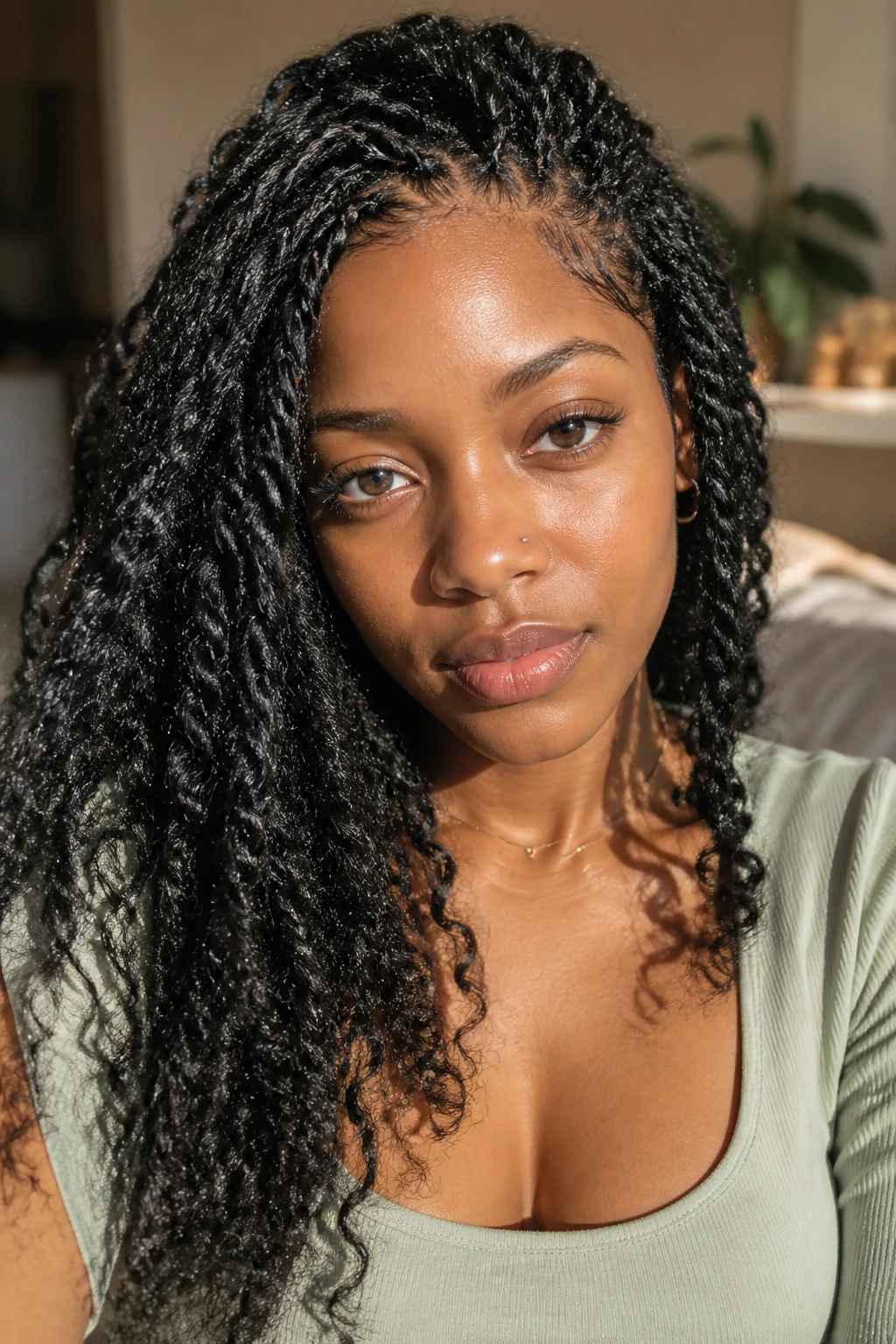
If you love the look of locs but aren’t ready for the commitment, Passion Twists are your best friend. They use a specific type of curly, synthetic hair that is twisted into your own hair to create a soft, wild, and incredibly textured look.
The “Messy” Aesthetic
These are meant to look slightly undone. You don’t have to worry about them looking perfect, which is a massive relief for anyone who hates the maintenance of tight, clean braids. The older they get, the better they look.
Maintenance: When they start looking a little too frizzy, you can simply pull the twists apart slightly or trim flyaways. They are remarkably forgiving.
11. Butterfly Locs
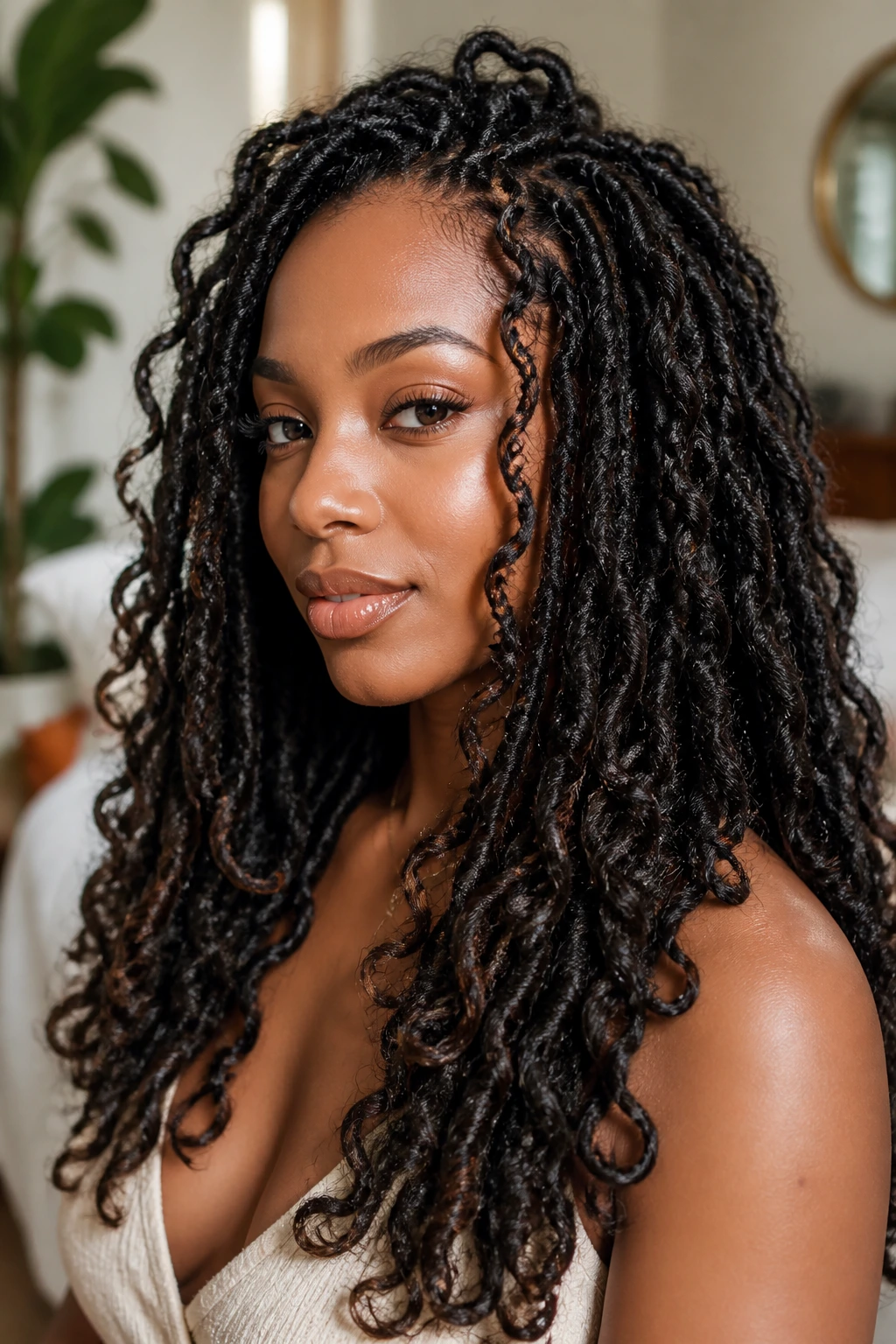
These are essentially a variation of faux locs with a loop-and-wrap technique that creates “wings” or loops along the length of the loc. They are voluminous, thick, and have a wonderfully distressed appearance.
Why They Feel Bohemian
The loops create a texture that looks like you’ve had the hair in for months—in a good way. It’s a very intentional, “effortless” style that looks expensive. Because the hair is so thick, you often need fewer packs than with regular box braids, which can save you some money on supplies.
Pro Tip: Use a satin bonnet at night. The texture can catch on cotton pillowcases, causing unnecessary frizz.
12. Crochet Braids
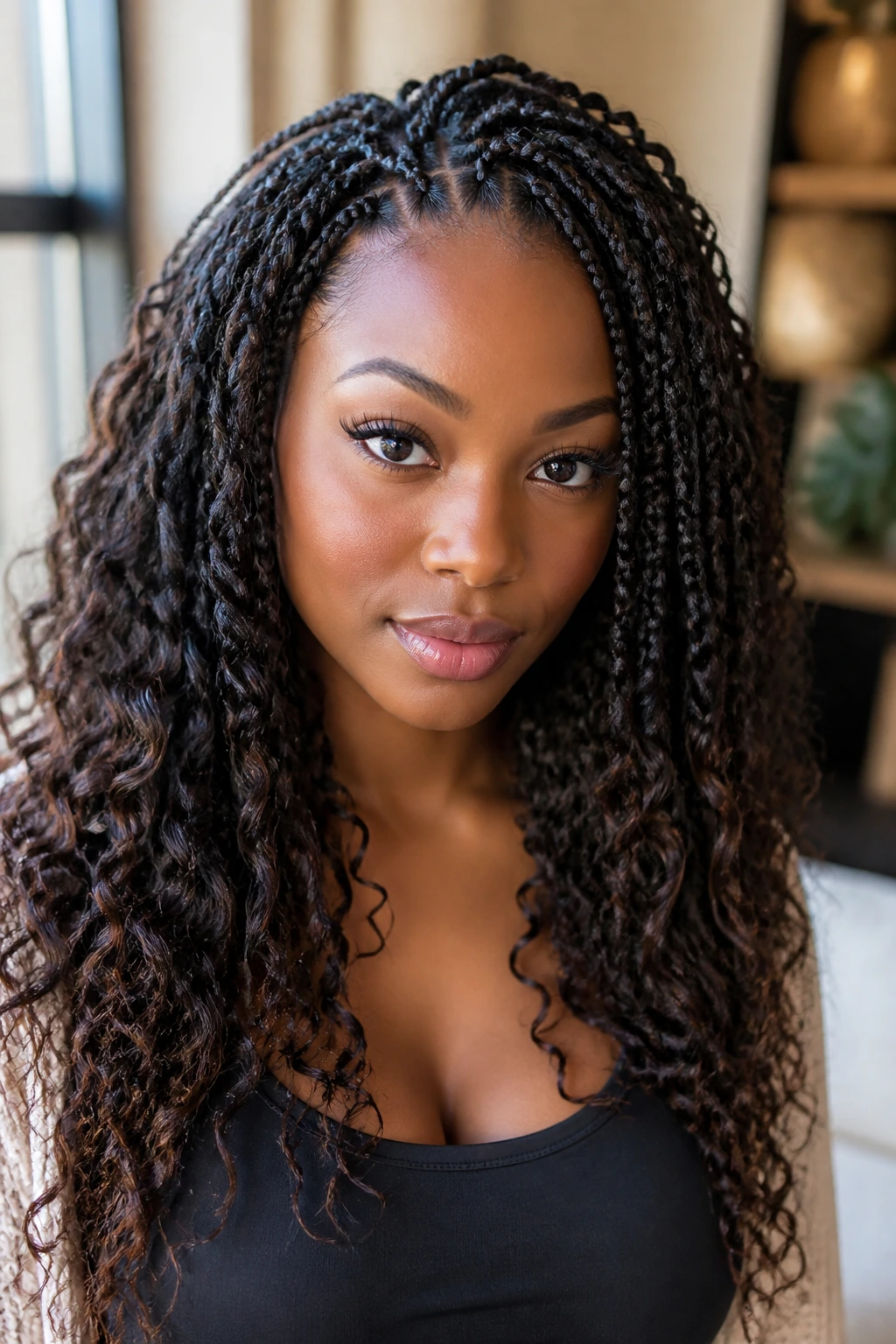
Crochet braids are the “fast food” of protective styling—quick, convenient, and effective. The process involves braiding your natural hair into a cornrow base and then using a latch hook tool to pull pre-braided or pre-twisted extensions through the cornrows.
The Time Saver
You can get a full head of braids in two or three hours instead of the usual six to eight. It is a massive time saver. Plus, because the crochet hair is already pre-styled, you are guaranteed consistency.
Versatility: You can buy crochet hair in almost any style—box braids, twists, faux locs, or even curly hair. Once you get bored, you can take them out without having to painstakingly unravel each braid.
13. Jumbo Box Braids
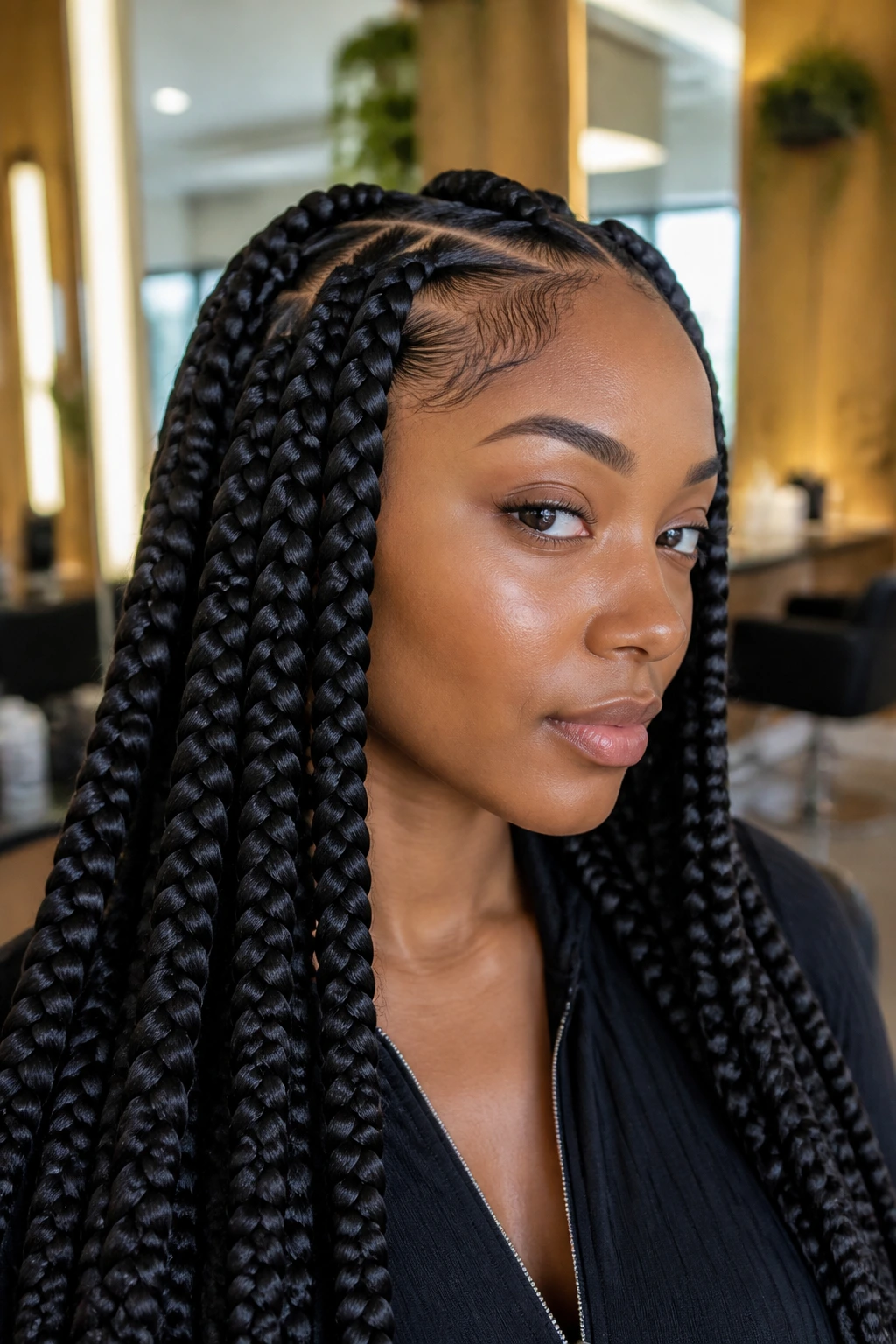
Sometimes you just don’t have the patience to sit for a twelve-hour installation. Jumbo box braids are exactly what they sound like—large, thick plaits that cover your head quickly.
Instant Gratification
They provide a bold, edgy look that makes a statement. Because the braids are so big, they are also incredibly easy to style; you can throw them into a high bun or a simple ponytail without needing to worry about the weight of hundreds of tiny braids.
A Note on Maintenance: Because the sections are so large, your scalp is more exposed. Make sure you are diligent about oiling your scalp, or you might deal with dryness and itching, especially in the winter months.
14. Micro Braids
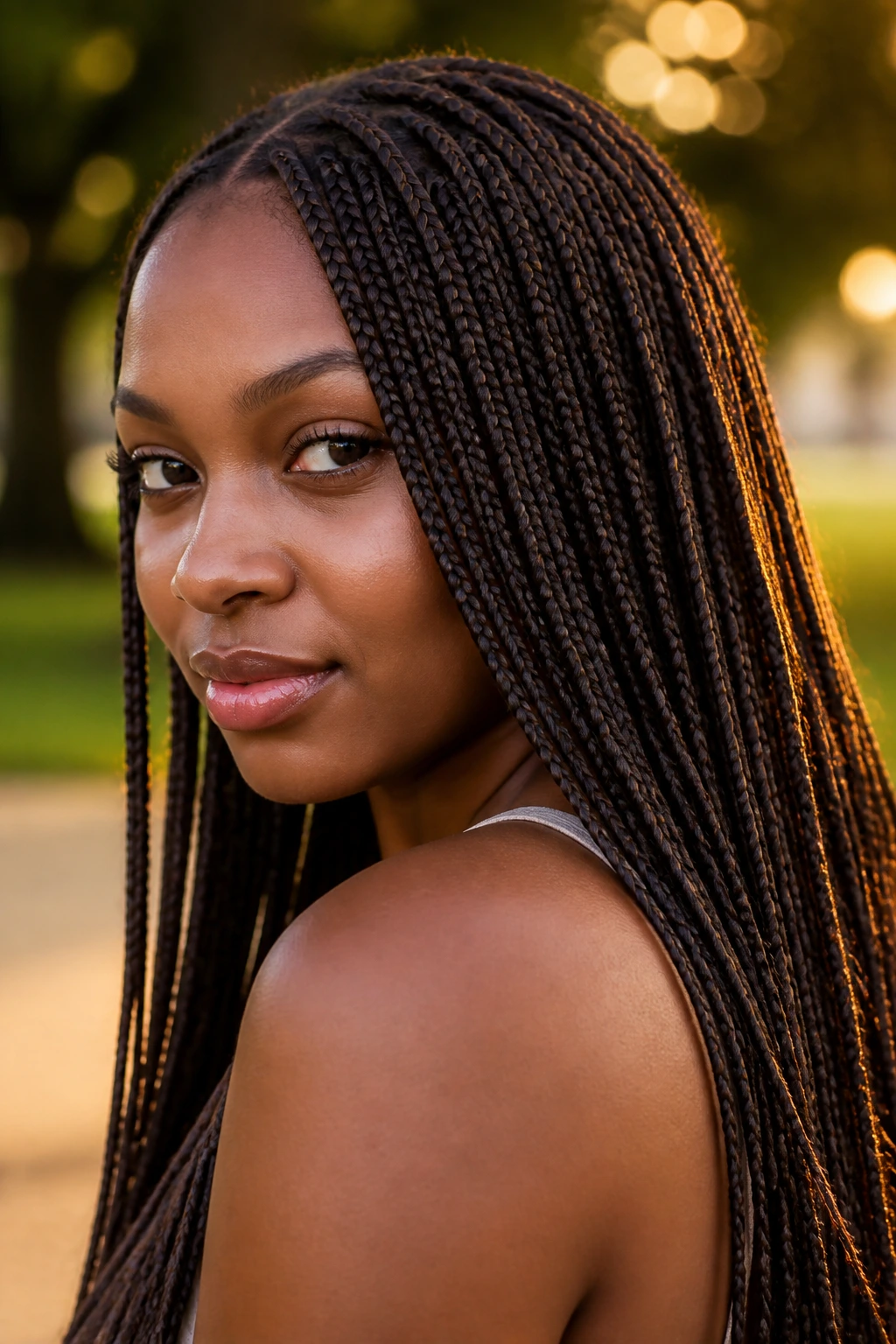
On the opposite end of the spectrum, we have micro braids. These are incredibly small, thin, and numerous. They take an eternity to install, but the result is a style that looks almost exactly like natural, loose hair.
The Aesthetic
Micro braids allow for maximum versatility. You can treat them like loose hair—curl them, flat iron them, or style them in any updo you can imagine. They move and flow in a way that thicker braids simply cannot.
Careful Caution: Because the braids are so thin and the sections are so small, there is a risk of tension if your hair isn’t strong enough to support the extensions. They are not recommended for damaged or thinning hair.
15. Braided Ponytail
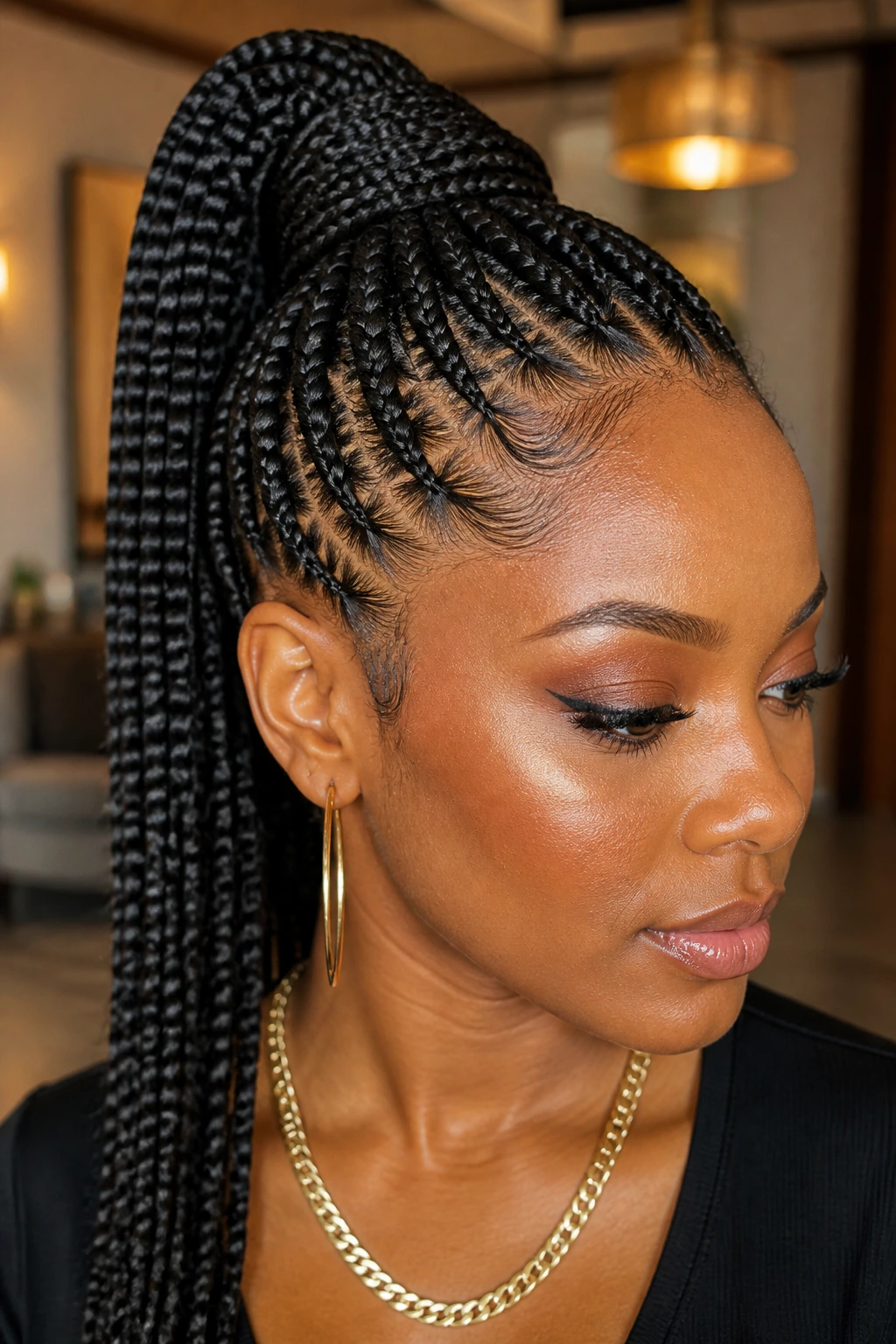
This is the ultimate sleek, high-fashion protective style. It involves cornrowing the base of your hair (usually in a radial or curved pattern) and then extending the ends into a long, dramatic ponytail.
Sleek Perfection
The braided ponytail is perfect for formal events or professional settings where you want your hair off your face but still want to look polished. You can leave the ponytail braided, or leave the extension hair loose for a mix of textures.
Edge Control: The success of this style relies heavily on your edges. Invest in a high-quality edge control gel that offers a firm hold without turning white or crunchy by the end of the day.
16. Braided Bun

Similar to the ponytail, but gathered into a neat, coiled bun at the crown or the nape of the neck. This style is timeless. It is the protective style equivalent of a “clean girl” aesthetic.
Occasion Versatility
You can wear a braided bun to a wedding, a board meeting, or a casual brunch. It is incredibly adaptable. If you want to elevate it, weave in some gold thread or metallic accents around the bun.
Comfort: This is a very comfortable style for sleeping. Since the hair is contained, you won’t wake up with braids tangled all over your pillow.
17. Bohemian Box Braids
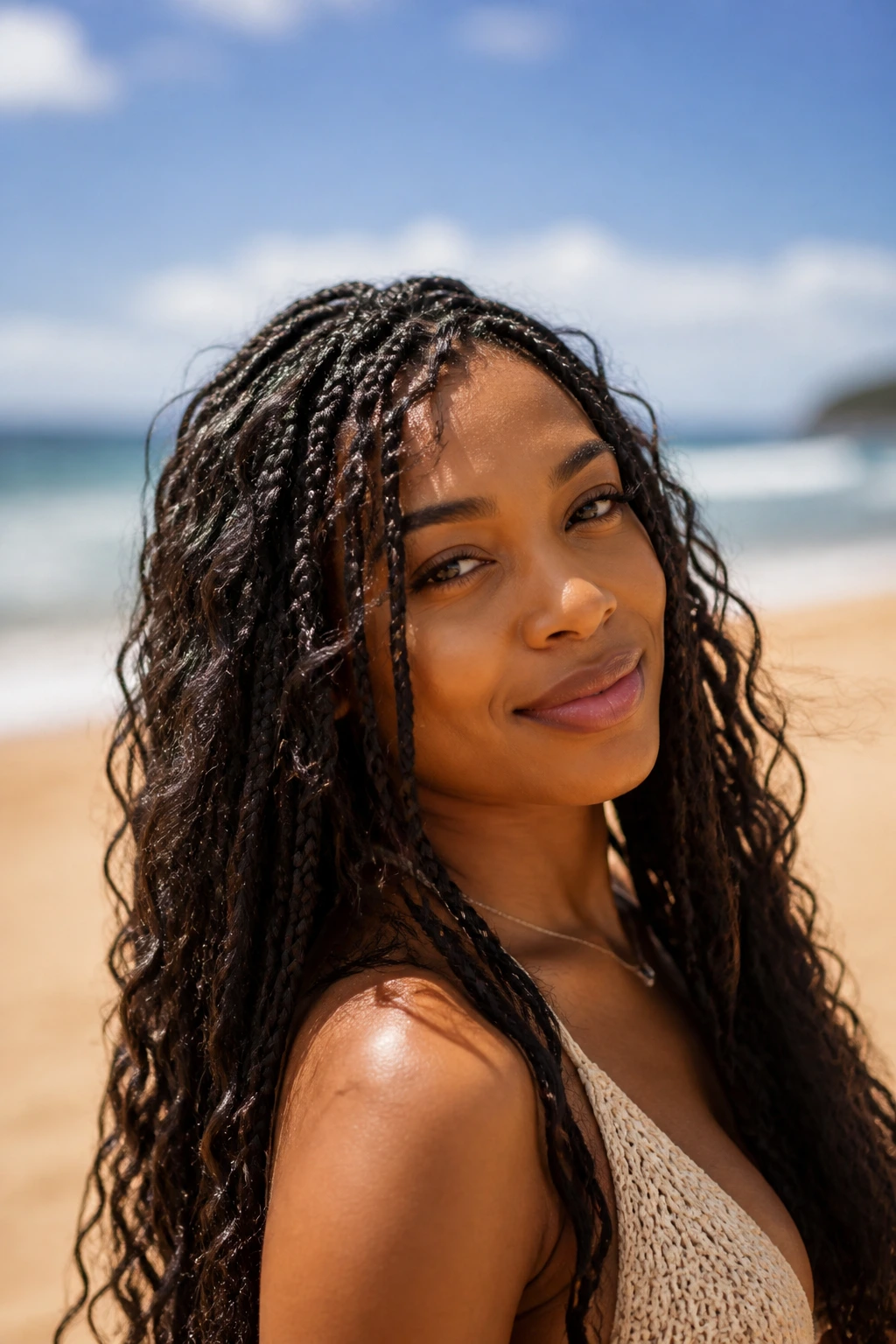
This style takes standard box braids and incorporates loose strands of wavy hair throughout the length of the braid. It’s similar to Goddess braids, but the loose hair is integrated more consistently along the entire shaft.
The Volume Effect
If you want big, voluminous hair, this is the way to go. The mix of textures creates a lot of body. It’s perfect for summer vibes or vacations where you want a “mermaid” aesthetic.
Maintenance: These require the most upkeep of any braid style. You need to treat the loose hair daily with a light leave-in spray, or it will become a tangled mess within a week.
18. Fishtail Braids with Extensions
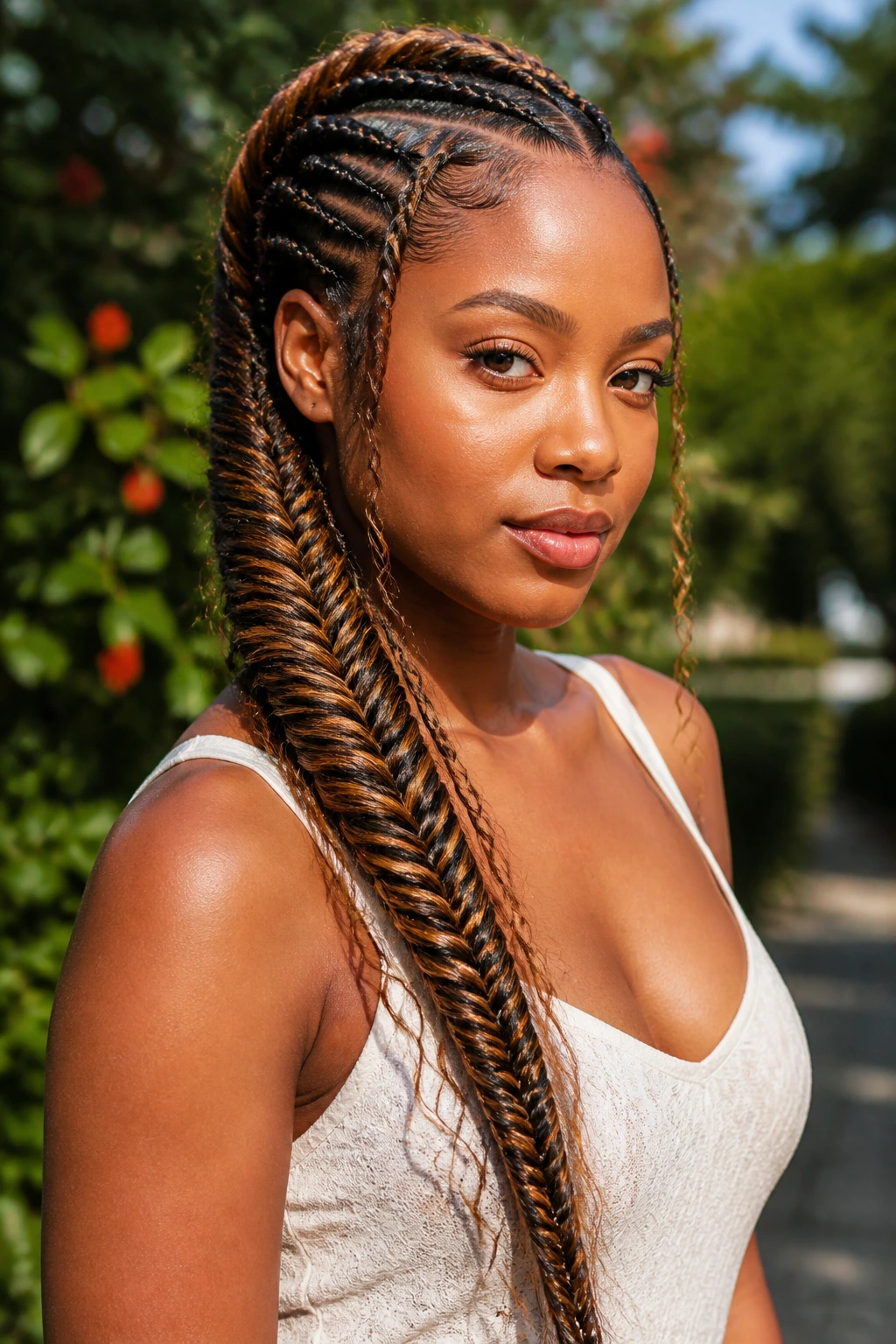
Fishtail braids are usually a single-style technique, but when you add extensions, you can create a massive, intricate fishtail that cascades down your back. It’s a complex, detailed look that always draws compliments.
Why It Stands Out
Fishtails have a unique, woven appearance that looks much more intricate than a standard three-strand braid. It’s a great way to wear braids if you are tired of the standard box-braid look and want something that feels a bit more “finished” and elegant.
Technique: This takes patience. If you are doing this yourself or with a friend, be prepared to spend some time on the braiding process. The result, however, is undeniably sophisticated.
19. Dutch Braids with Extensions
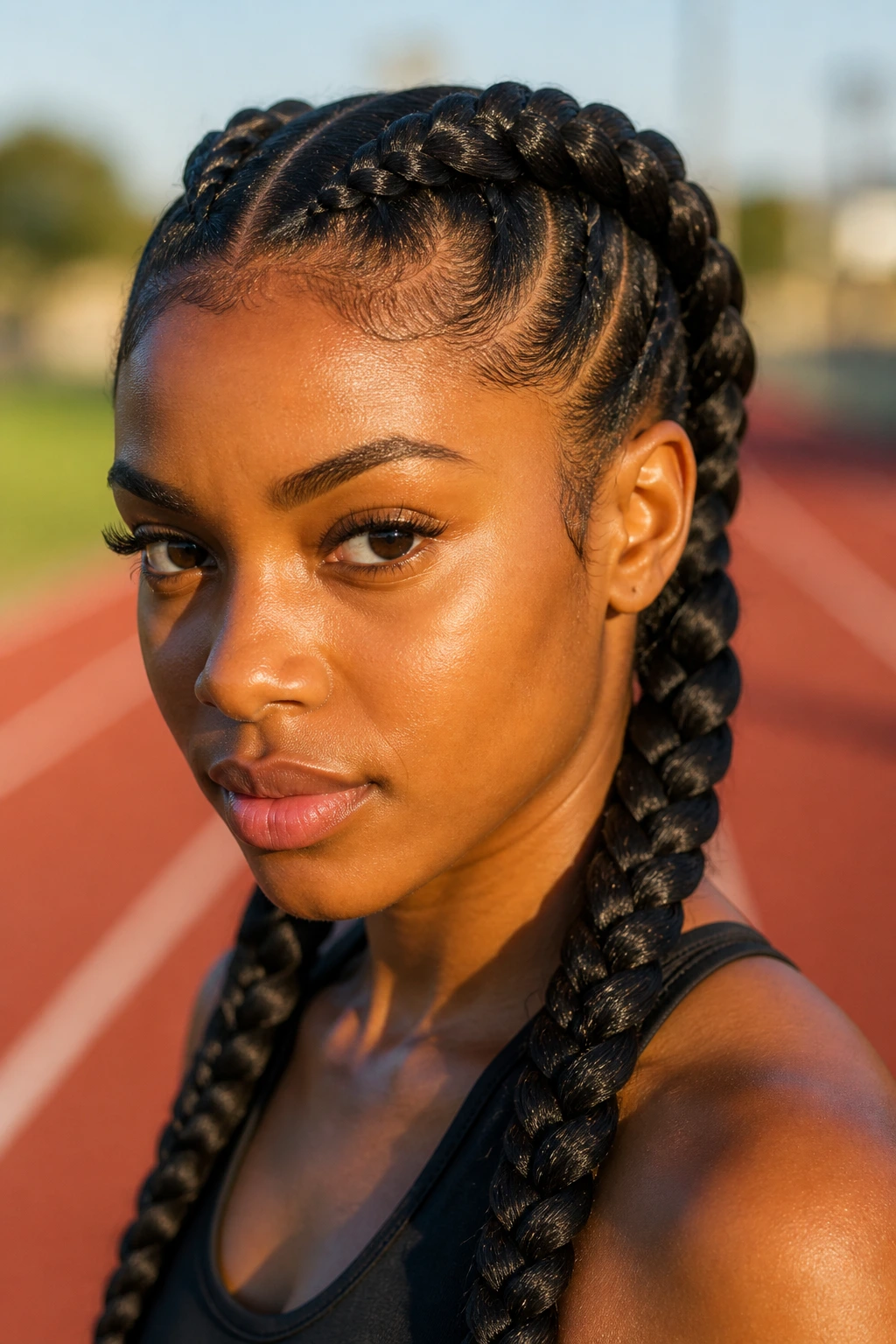
Dutch braids (or inverted French braids) create a 3D effect where the braid sits “on top” of the hair rather than being tucked under. By adding extensions, you can make these braids thick, long, and substantial.
The Sporty Look
Dutch braids are incredibly practical. They hold your hair securely in place, making them a fantastic choice for workouts, hiking, or busy days when you don’t want to think about your hair.
Styling: Two large Dutch braids running back from the forehead are a classic, clean look. You can also do a single side-swept Dutch braid for a more playful, asymmetrical vibe.
20. Halo Braid
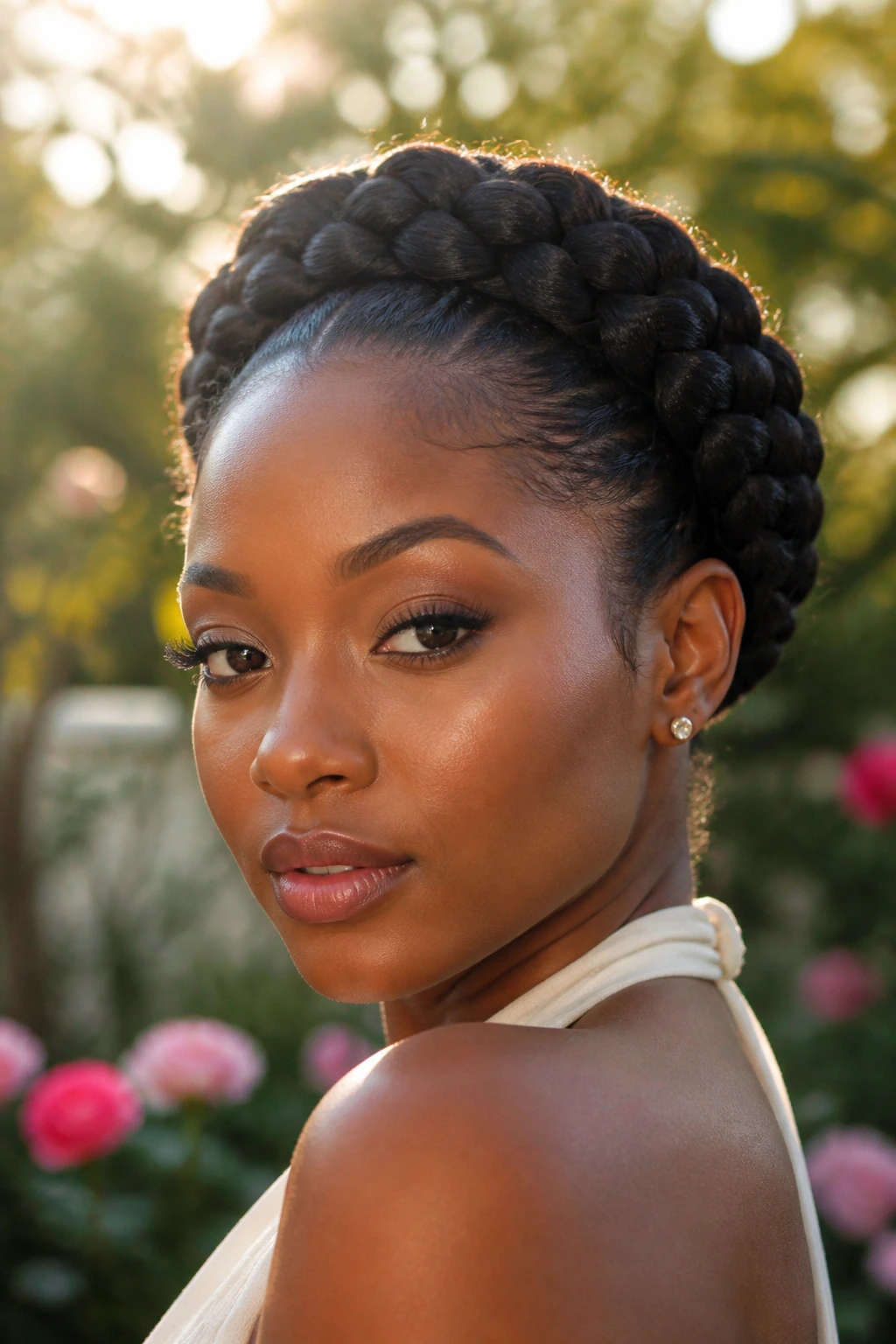
Also known as a crown braid, this style involves braiding the hair around the perimeter of the head to create a crown effect. It is regal, feminine, and perfect for special occasions.
Elevating the Look
You can add extensions to give the halo more fullness if your natural hair isn’t long enough to wrap around your head. This style is sophisticated and keeps your hair completely contained and protected.
Pro Tip: Use a few bobby pins to secure the ends of the braid into the base, hiding the seam. This ensures the braid looks seamless all the way around.
21. Stitch Braids
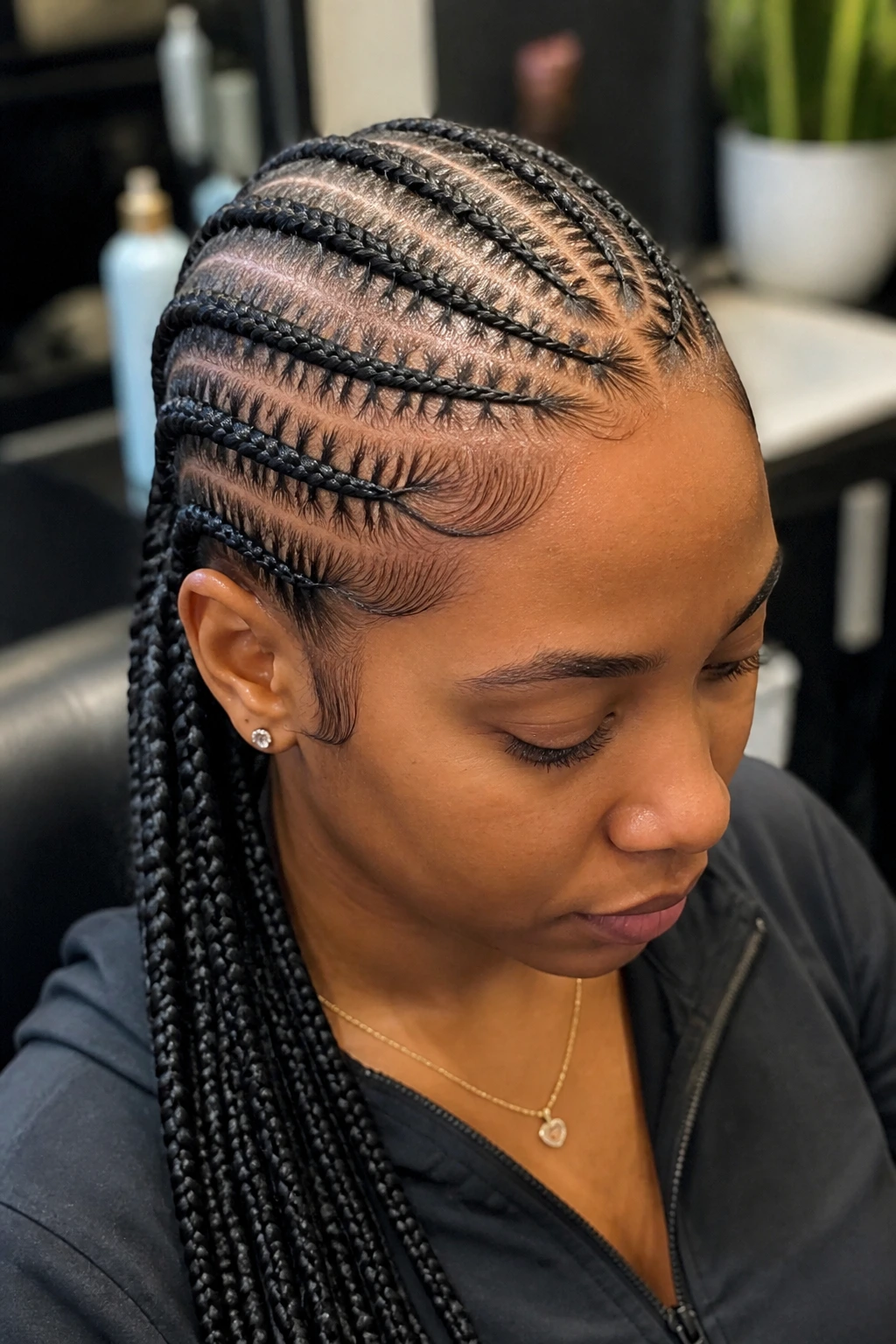
Stitch braids are all about the lines. The technique involves using a feeding method while creating precise, horizontal “stitches” across the braid. It’s a very clean, graphic style that highlights the pattern of the parts.
The Graphic Aesthetic
Because the parts are so distinct, this style is best done with a little bit of grease or pomade to keep the scalp looking pristine. It is a very structured look that feels modern and sharp.
Variety: You can do straight-back stitch braids, or you can get creative with curves and zig-zags. The key is the sharpness of the lines.
22. Shaved Side with Braids

For those who want an edgier look, incorporating a shaved side (or an undercut) with braids is a bold move. It contrasts the intricate work of the braids with the clean lines of a close crop.
The Visual Balance
The shaved section keeps the style from looking too traditional. It’s a high-fashion, punk-inspired look that is incredibly low maintenance on the sides. You just have to keep up with the barber visits to maintain the shave.
Styling Tip: Braid the longer section into feed-in cornrows that lead toward the shaved side for a dramatic, asymmetrical silhouette.
23. Half-Up, Half-Down Braids

This is the best of both worlds. You get the protection of braids but retain the ability to have your hair loose and flowing around your shoulders. You braid the top section into a high ponytail or bun and leave the bottom section of braids hanging free.
Practical and Stylish
It’s a great way to keep your hair out of your eyes during the day while still having that “loose hair” feeling. It’s also very easy to modify; you can pull the top into a messy bun for a casual look or a sleek ponytail for something more formal.
Versatility: This style works with box braids, twists, or even faux locs. It is one of the most flexible options on this list.
24. Space Buns with Braids
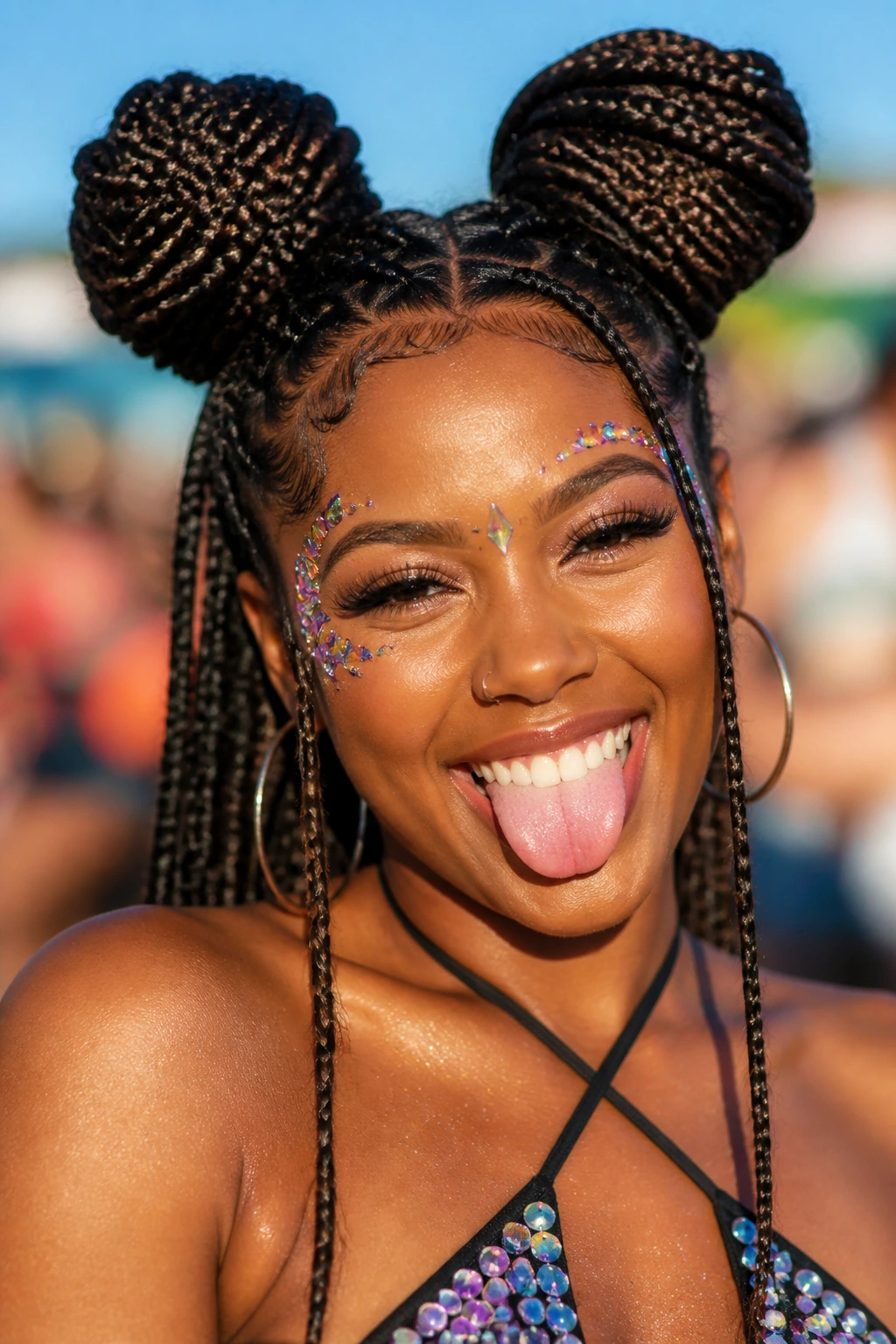
Space buns are fun, playful, and youthful. By braiding the hair first—either into cornrows leading up to the buns or by using pre-braided extensions—you add texture and depth to the buns that simple twists don’t have.
The Playful Aesthetic
This is a great look for festivals, parties, or just when you want to feel a bit more energetic with your style. You can add cuffs or rings to the braids leading up to the buns to give it that extra level of detail.
Pro Tip: If your natural hair is thick, creating two massive buns can get heavy. Ensure the base cornrows are tight so they don’t sag under the weight of the buns.
25. Zig-Zag Part Braids
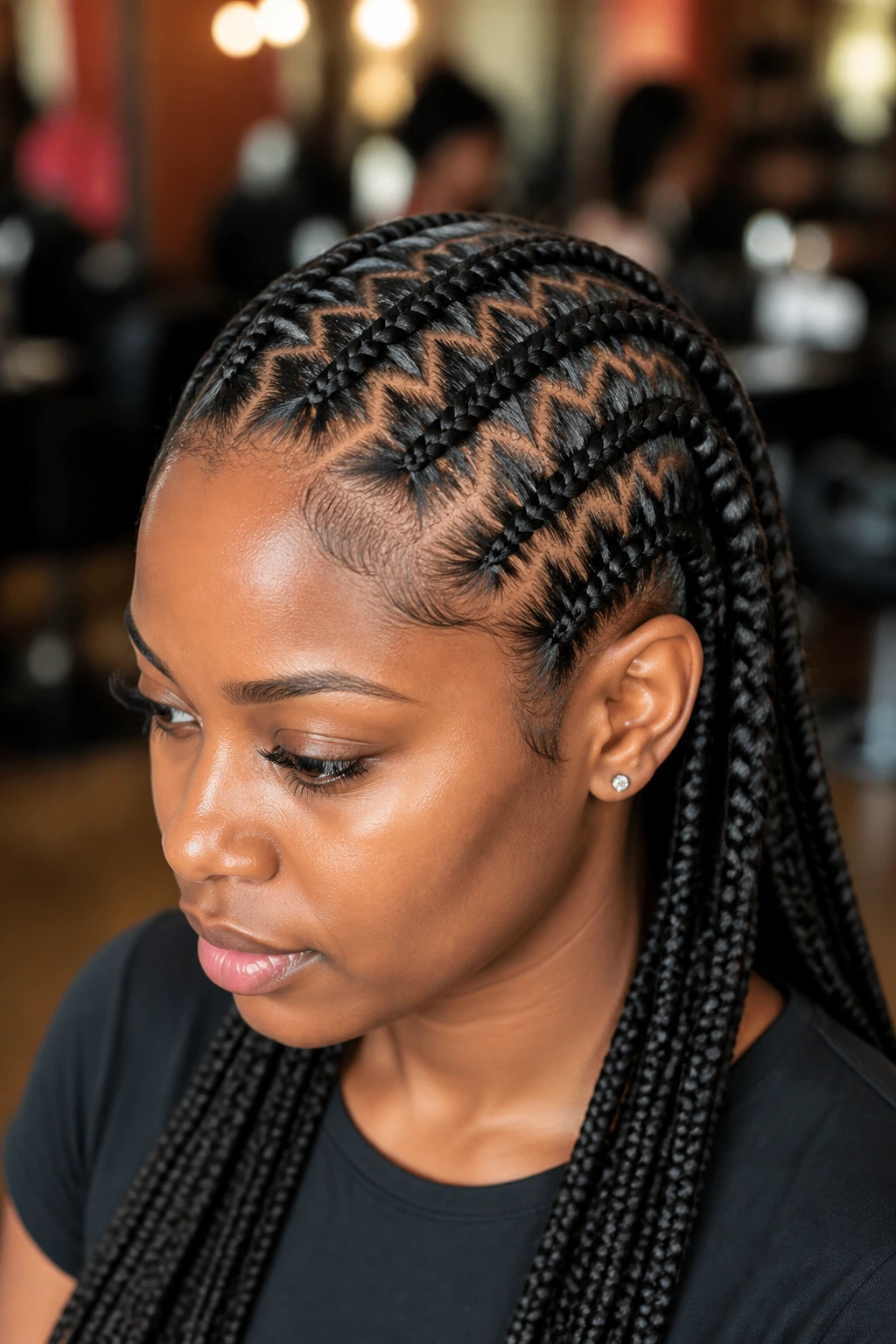
Sometimes the magic isn’t in the braid itself, but in the parting. Zig-zag parts instantly transform a standard set of cornrows or box braids into something much more artistic and detailed.
Complexity in Detail
This requires a stylist who is comfortable with detailed parting. It’s a throwback to the ’90s and early 2000s, and it’s seeing a huge resurgence. The zig-zag pattern adds movement to the scalp and makes the whole style look like a carefully planned design.
Maintenance: Keep the parts clean by using a small brush dipped in a bit of edge control to smooth the hair down. It keeps the zig-zags looking sharp for weeks.
26. Color-Blocked Braids
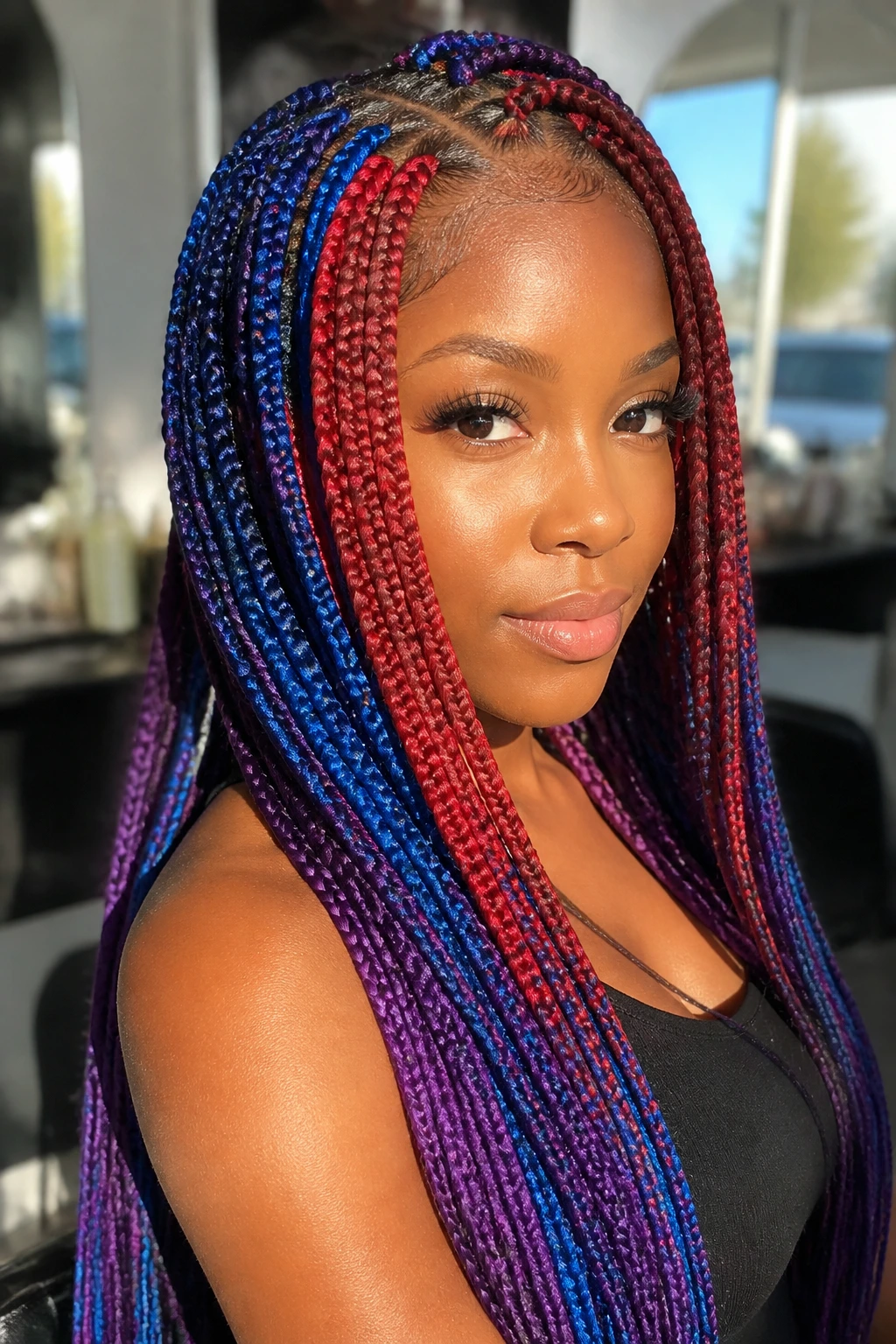
If you are tired of standard black hair, this is the easiest way to experiment with color. You can incorporate colored braiding hair—think vibrant reds, blues, purples, or even ombre gradients—into your braids.
The Commitment-Free Color
You get the look of vivid, dyed hair without actually damaging your natural strands with bleach or dye. It’s a fun way to express your style, whether you go for subtle highlights or full-on neon.
Suggestion: If you aren’t ready for a full head of color, try an “peek-a-boo” approach where you only put the colored hair in the bottom layers of the braids, so it only shows when you move.
27. Wrapped Ponytail Braids
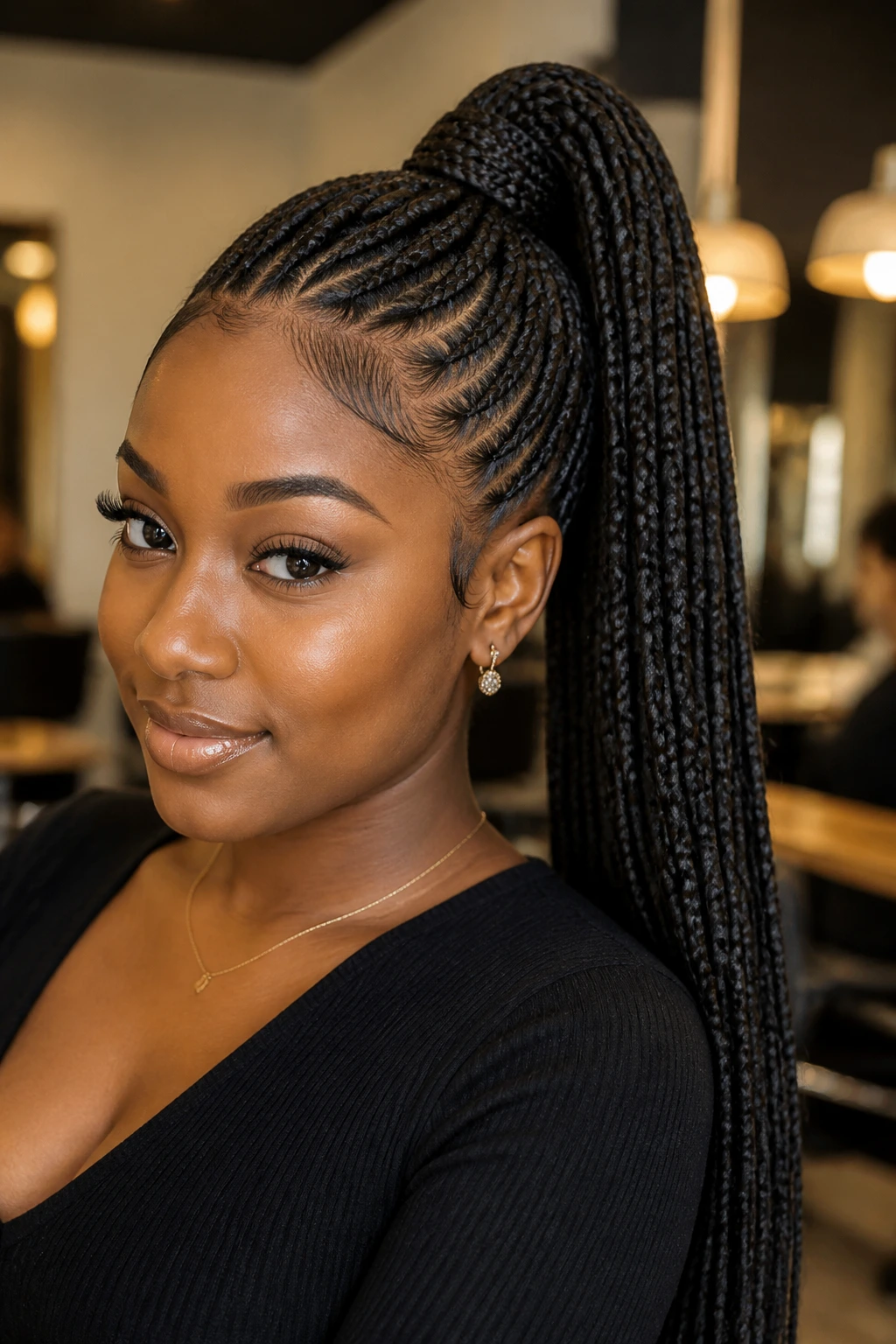
This involves taking a set of braids—usually box braids or knotless—and wrapping a long, thick braid or a piece of extension hair around the base of the ponytail to hide the rubber bands.
Polished Professionalism
It gives the style a high-end, finished look. A standard ponytail is fine, but a wrapped ponytail looks like it was styled for a shoot. It takes two minutes to do and adds a significant amount of polish.
Method: Take a small section of synthetic hair, wrap it tightly around the hair tie until it is completely covered, and tuck the end under, securing it with a small bobby pin.
28. Mini Twists
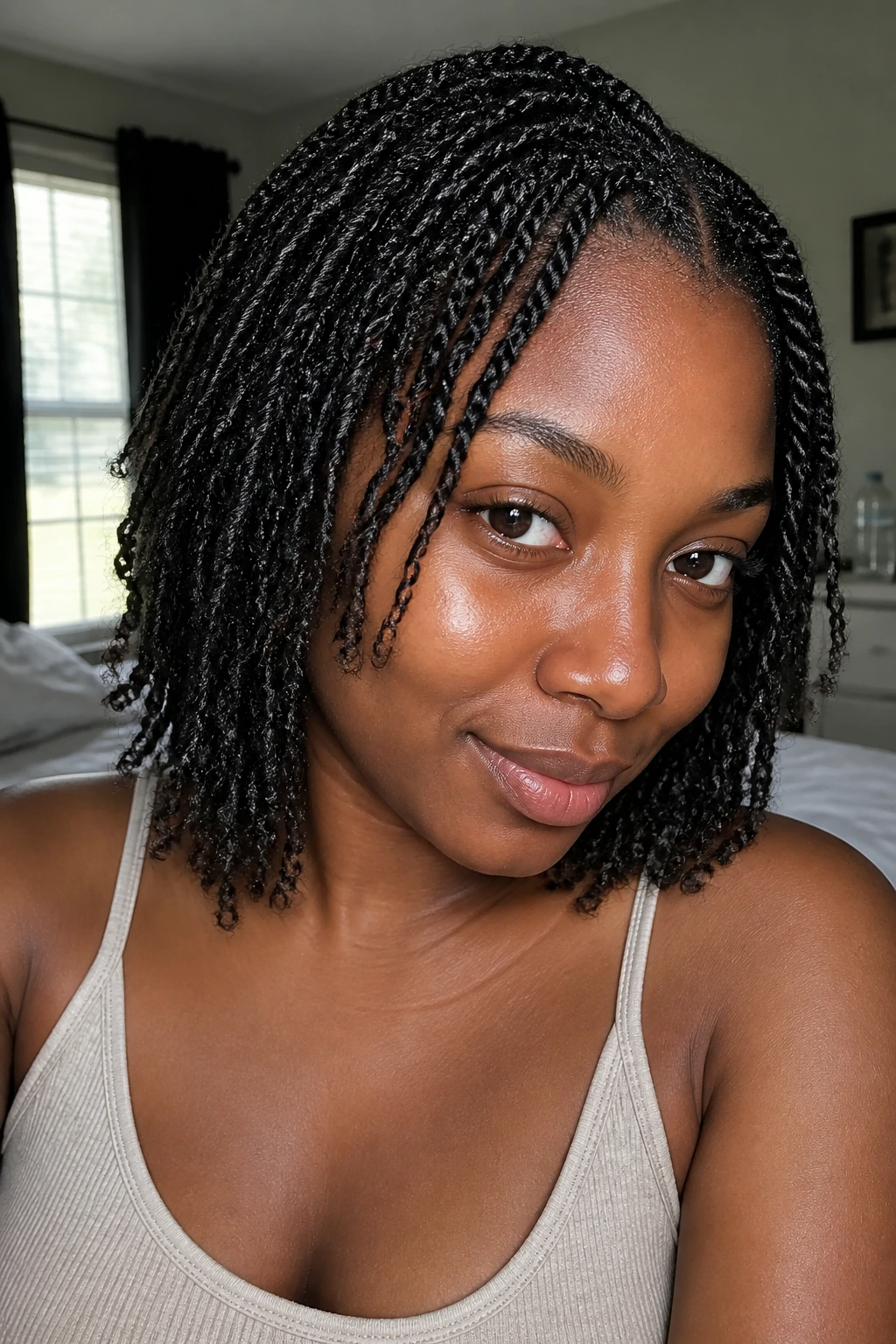
We are ending with a natural hair favorite. Mini twists are tiny, two-strand twists done on your natural hair without extensions. They are the ultimate “low-manipulation” style.
The Natural Journey
These are perfect if you are transitioning or just want to give your hair a break while keeping your texture. They shrink up, they fluff out, and they look better as they get older. It’s a very authentic, earthy style.
The Commitment: These take a long time to install—sometimes even longer than extensions because you are working with small sections of your own hair. But the payout is weeks of waking up with your hair already done.
Final Thoughts
Choosing a braid style is about balancing what you want, what your hair needs, and the amount of time you are willing to spend in the chair. Some styles, like knotless box braids, are investments in your long-term scalp health. Others, like crochet braids or space buns, are about quick expression and fun.
Remember that the style is only as good as the care you give it. Your scalp still needs to be moisturized, your edges need to be protected, and your nighttime routine is non-negotiable if you want to keep the style looking fresh. Braids are a beautiful way to honor your hair and your culture, so take the time to treat them with the respect they deserve. Whatever you choose, enjoy the process—and the feeling of walking out of the salon with a fresh look.
