



Layered haircuts that pair with glasses do one job well: they keep the face open instead of boxed in. A good cut works with the frame line, not against it, so your eyes stay front and center instead of disappearing behind a wall of hair.
The details matter more than most people think. Where the first layer starts, how heavy the ends feel, and whether a fringe stops above the brow or bumps into the temples can change the whole balance. Thick acetate frames ask for softer movement near the cheekbones. Thin wire frames can handle a cleaner edge.
I like cuts that move a little when you turn your head. They look better with glasses, and they behave better when you tuck hair behind an ear or slide the frames on and off during the day. Some styles need a blow-dry to look right; others look better a bit rough around the edges. The first cut below gets that balance right in the easiest way.
1. Curtain Layers That Open Around the Frames
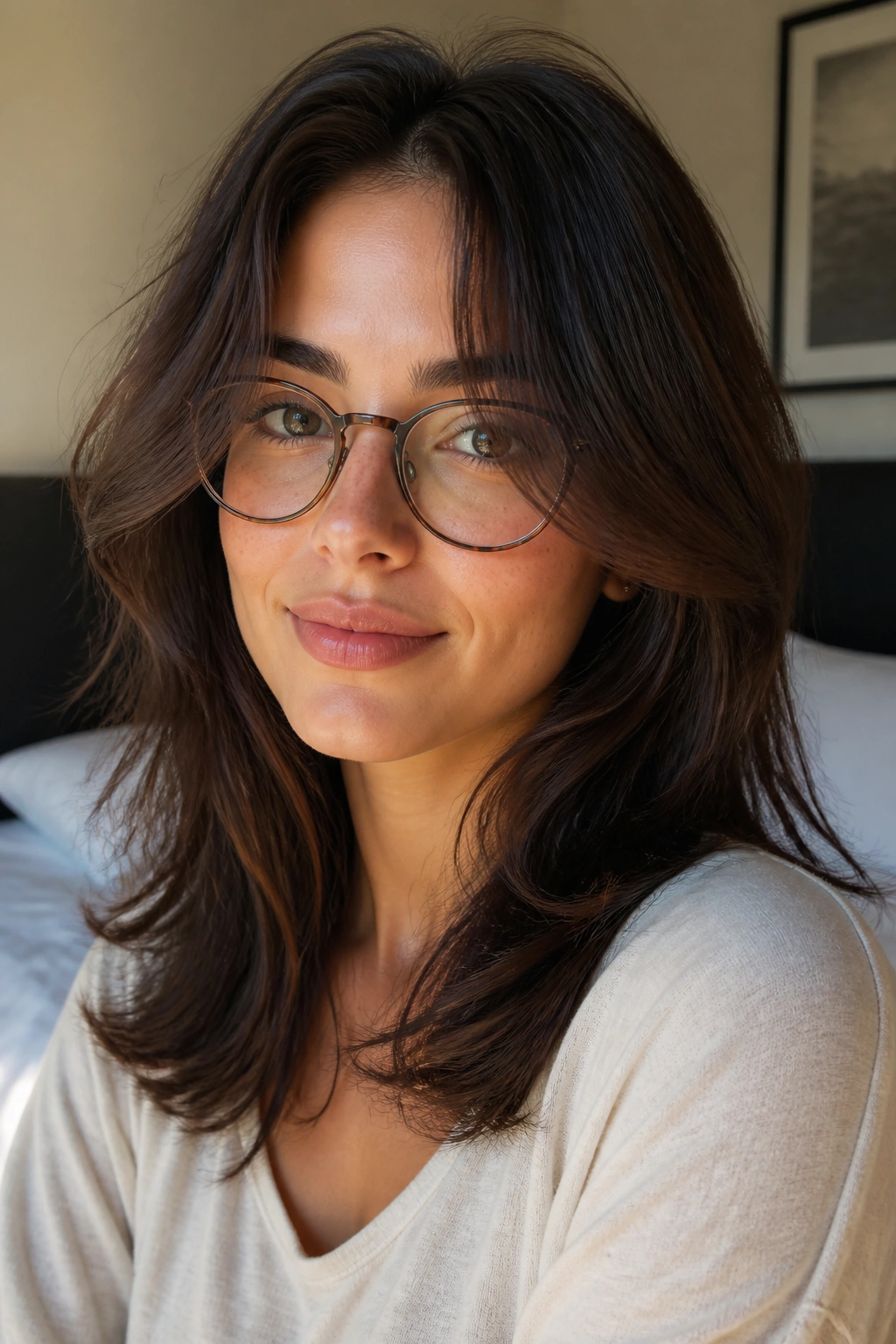
Curtain layers are the safest place to start when someone wants shape without fuss. They part softly down the middle, fall away from the face, and give glasses room to breathe. That matters more than it sounds. If the shortest pieces sit right on top of the frame, the whole look can feel crowded. If they start around the cheekbone, the face opens up.
Why They Work So Well With Glasses
The best version of this cut keeps the front pieces long enough to skim the jaw or lip line, then lets the rest of the hair fall in a loose frame. That gives you movement without stealing attention from the frames. Round glasses look softer with this cut. Square frames get a little contrast. Cat-eye frames look more deliberate, which is a nice bonus.
Ask for the shortest layers to begin around the cheekbone or just below it. That small detail changes everything. If your glasses sit high on the nose bridge, you do not want the hairline fighting the top of the lens.
- Works well on straight, wavy, and lightly textured hair
- Looks best with a middle part or a slightly off-center part
- Needs a round brush or a quick bend with a flat iron
- Keeps thick frames from swallowing the face
Pro tip: keep the front pieces long enough to move when you tuck hair behind one ear. That little swing makes the cut feel lighter.
2. The Collarbone Lob With Hidden Layers

A collarbone lob is the haircut I reach for when someone wants polish without fuss. It sits in that sweet spot between short and long, and the hidden layers keep it from turning into a blocky shape under glasses. The line hits around the collarbone, which means the hair does not pile up around the jaw or lens area.
Hidden layers are the trick here. You still get fullness, but the ends do not feel heavy and blunt. That matters if your frames are bold or wide, because a heavy haircut can make the lower half of the face look crowded. A lob with movement keeps the whole look clean.
This cut likes a smooth finish. A soft bend at the ends is enough. Straightened pin-straight hair can look a little severe, and very airy waves can make the shape drift. Aim for soft structure, not fluff.
Best frame matches? Oval, rectangular, and slightly oversized glasses all sit well with this length. The cut has enough shape to hold its own, but not so much that it competes.
3. Long Face-Framing Layers That Start Below the Cheekbones

Why do some long layers make glasses look sharp while others make the face feel dragged down? Usually, it comes down to where the layers begin. If they start too high, the hair and the frames fight for the same space. If they start lower, the glasses stay visible and the shape feels intentional.
The sweet spot is usually somewhere between the cheekbone and the top of the lip. That lets the front pieces sweep around the face instead of sitting directly on the temples. The back can stay long and full, which is useful if you like to wear your hair up half the time and down the rest of the time.
Where to Ask the Layers to Begin
A good stylist will keep the shortest pieces away from the widest part of the glasses. That usually means no short chop right at the temple. The hair should fall past the frame edge, not stop on it.
This cut works especially well with round faces, heart shapes, and anyone wearing a frame with a strong top line. Side parts make it feel a little more lifted. Middle parts keep it softer. Both work.
If your hair is thick, ask for the layers to be removed in the interior, not around the front edge. That keeps the length from feeling bulky without making the frame area look thin.
4. The Feathered Shag With Soft Movement at the Sides

A feathered shag brings life to a face that likes movement. It is not the same as a wild, choppy shag that sticks out in every direction. The feathered version is softer. The ends taper, the crown gets lift, and the sides stay airy enough that glasses do not disappear in the hair.
Picture this: your frames sit cleanly on the face, and the hair moves around them instead of sitting on top of them. That is the whole point. The feathering removes weight from the cheek area, which can be a gift if your glasses are round or if your hair tends to puff out at the sides.
Best Match for Frame Shapes
- Round frames get a sharper contrast from the texture
- Wire frames look more defined against the movement
- Cat-eye frames sit well with a little crown height
- Heavy square frames need the layers to stay soft, not jagged
This cut usually looks best with a light mousse or texture spray and a rough blow-dry. You do not need a perfect finish. In fact, too much polish can flatten the whole thing. A little separation is the point.
Watch out for one thing: if your hair is very fine, keep the top layers long enough to avoid a see-through crown.
5. The Chin-Length Layered Bob That Stays Clear of the Lenses

A chin-length bob can be a mess with glasses if it lands in the wrong place. It can also look expensive and sharp when the cut is done with enough thought. The difference is in the layers. A blunt chin bob can box in the lower face. A layered version bends away from the cheeks and keeps the lens area open.
I like this cut on people who wear bold frames, especially thick acetate or wider rectangles. The short length lets the frames stay visible. The subtle layers stop the sides from puffing out like a triangle, which is the part nobody wants.
Keep the ends slightly beveled, not chopped flat. That soft curve helps the hair sit just under the jaw instead of landing on the widest part of the face. If you have a small face, this cut can look neat and crisp. If you have stronger features, it adds shape without too much extra bulk.
It is not the best cut if you hate upkeep. The line shows every few weeks. But when it is fresh, it has a tidy, clean feel that works beautifully with glasses.
6. The Butterfly Cut That Lifts the Hair Away From Glasses
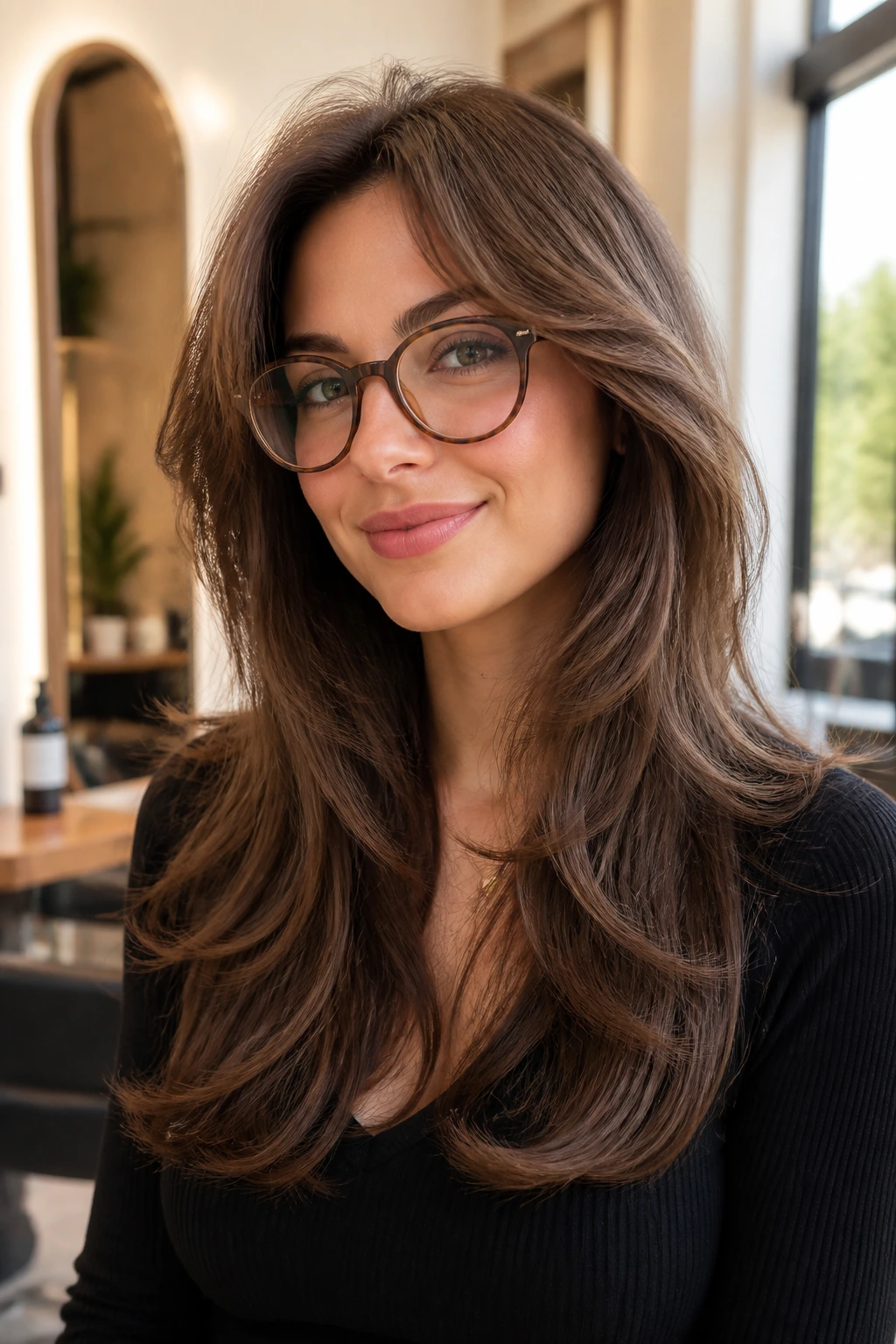
The butterfly cut earns its place when you want length and lift at the same time. It gives you short face-framing layers near the top, then leaves the lower length in place, so the whole cut feels airy without losing the drama of long hair. With glasses, that lift matters. Hair that floats away from the frame line looks lighter on the face.
What Makes It Different
The top layers are the part people notice first. They can open the cheekbone area and make large frames feel less heavy. The bottom length keeps the cut from looking thin or unfinished. That balance is why it shows up so often on people who wear glasses and still want movement.
How to Wear It
- Blow-dry the front pieces with a round brush, away from the face
- Use velcro rollers if you want more bend at the crown
- Keep the shortest pieces at or below the cheekbone
- Leave the back length full so the cut does not feel too airy
The butterfly cut can feel big if your hair is fine and your frames are oversized. If that sounds like your setup, ask for softer layering through the crown. You want lift, not a halo.
7. The Bixie Cut With a Side-Swept Fringe

A bixie is not a risky cut if you wear glasses. In many cases, it is easier. The hybrid shape sits between a bob and a pixie, which means it clears the cheek area, keeps the ears visible, and leaves enough top length to play with. That makes it a good match for frames that already bring a lot of shape.
The side-swept fringe is the part that makes it work. A straight, heavy fringe can crash into the top of the lenses. A side sweep slides around them and gives the face a little motion. That small shift keeps the haircut from feeling too severe.
This cut loves texture cream or a small amount of matte paste. Use your fingers, not a brush, if you want it to stay soft. The goal is shape, not helmet hair. And yes, that matters more than people admit.
It is also a good choice if you want a low-maintenance cut that still looks deliberate. You will need trims every few weeks to keep the outline neat, but the day-to-day styling is fast. Shorter cuts and glasses can be a nice pairing when the lines are clean.
8. Shoulder-Length Layers With Wispy Ends

Shoulder-length layers are the practical choice, and I say that as a compliment. They are long enough to tuck, clip, or wave, and short enough to keep from dragging the face down under glasses. The wispy ends keep the line from feeling blunt, which helps a lot if your frames are thick or angular.
This cut works because it gives shape without crowding the jaw. Hair that ends right at the shoulders can flip out in annoying ways, so the softer layers matter. They keep the bottom from behaving like a shelf.
If you wear glasses every day, this length is forgiving. It looks fine air-dried, looks better with a rough bend from a curling iron, and still behaves when you need to pull it back. That flexibility is underrated.
A small side tuck changes the mood fast. One side behind the ear, the other falling forward, and the glasses become part of the look instead of sitting next to it. That little asymmetry has a nice effect, especially with oval or rectangular frames.
9. The Stacked Bob With a Clean Back and Soft Front

A stacked bob is for someone who likes a haircut with a little structure. The back is built up in short layers, so it lifts at the nape. The front stays softer and slightly longer, which keeps the frame area from feeling hard. Compared with a straight bob, this shape has more life in the back and a cleaner fall around the face.
That balance matters with glasses. A bob that is too flat can make the head look wide at the temples. A stacked shape narrows that out a bit by creating lift lower down. It works especially well if your glasses are square, cat-eye, or any frame with a strong line.
The Shape to Ask For
You want the stack to be subtle, not dramatic. Too much stacking can look sharp in a way that clashes with eyewear. Ask for a rounded back, a soft angle toward the front, and ends that curve in rather than flip outward.
- Best on straight or slightly wavy hair
- Needs regular trimming to keep the shape crisp
- Works well with side parts
- Looks strongest with medium to bold frames
If you have a longer face, keep the front length a touch lower. If your face is round, a little more angle can help.
10. The Soft Wolf Cut With Controlled Texture

A wolf cut does not have to look chaotic. The softer version keeps the cool shape but dials down the rough edges, which is the version I prefer with glasses. Too much choppiness around the temples can make the frames feel lost. Soft texture does the opposite. It gives the face movement without turning the whole haircut into a cloud.
The trick is to keep the shortest layers away from the lens line. You want lift at the crown and softness through the sides, not a big puff right at the cheeks. That is where people go wrong. They ask for “texture” and end up with a cut that eats the frame.
This version works well with wavy hair, but straight hair can carry it too if you are willing to use a little styling cream or salt spray. The cut does not need to be perfect. It needs shape. That is a different thing.
If your glasses already have a bold shape, keep the wolf cut softer and less broken up. If your frames are thin, you can push the texture a little more. Either way, the goal is the same: movement that supports the glasses instead of shouting over them.
11. The U-Shaped Long Layers That Pair With Glasses
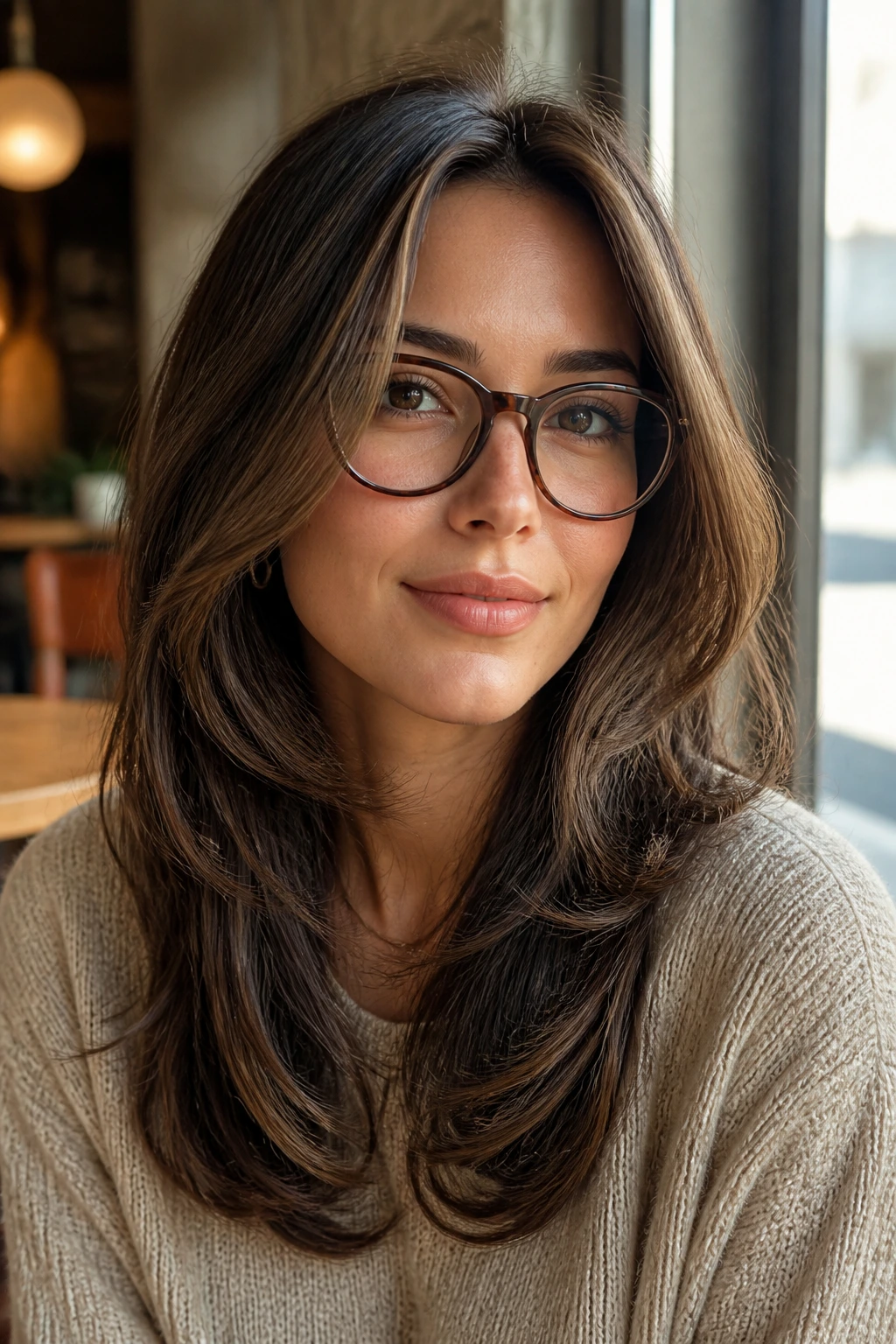
Long hair can work with glasses if the shape is handled well. A U-shaped cut is one of the easiest answers. The back keeps more length, the sides curve inward, and the whole outline feels softer than a blunt hemline. That curve matters because it stops the hair from sitting like a straight curtain around the face.
This is one of the best layered haircuts that pair with glasses if you want to keep your length. The shape lets the hair move, but it does not strip away density. Thick hair benefits a lot here. The layers remove weight without making the ends look thin or ragged.
What to Ask Your Stylist For
- A U-shaped perimeter that starts around the collarbone or lower
- Face-framing pieces that begin below the cheekbone
- Light internal layers through the mid-lengths
- Ends that stay full enough to tuck behind the shoulders
This cut can feel heavy if the front pieces are too short. Keep them long enough to skim the jaw or the top of the collarbone. That keeps the glasses visible and the hair soft around them.
It also grows out nicely. That is not a small thing. A cut that still looks good after a few weeks saves you from chasing the salon chair too often.
12. The Layered Pixie With Air at the Temples
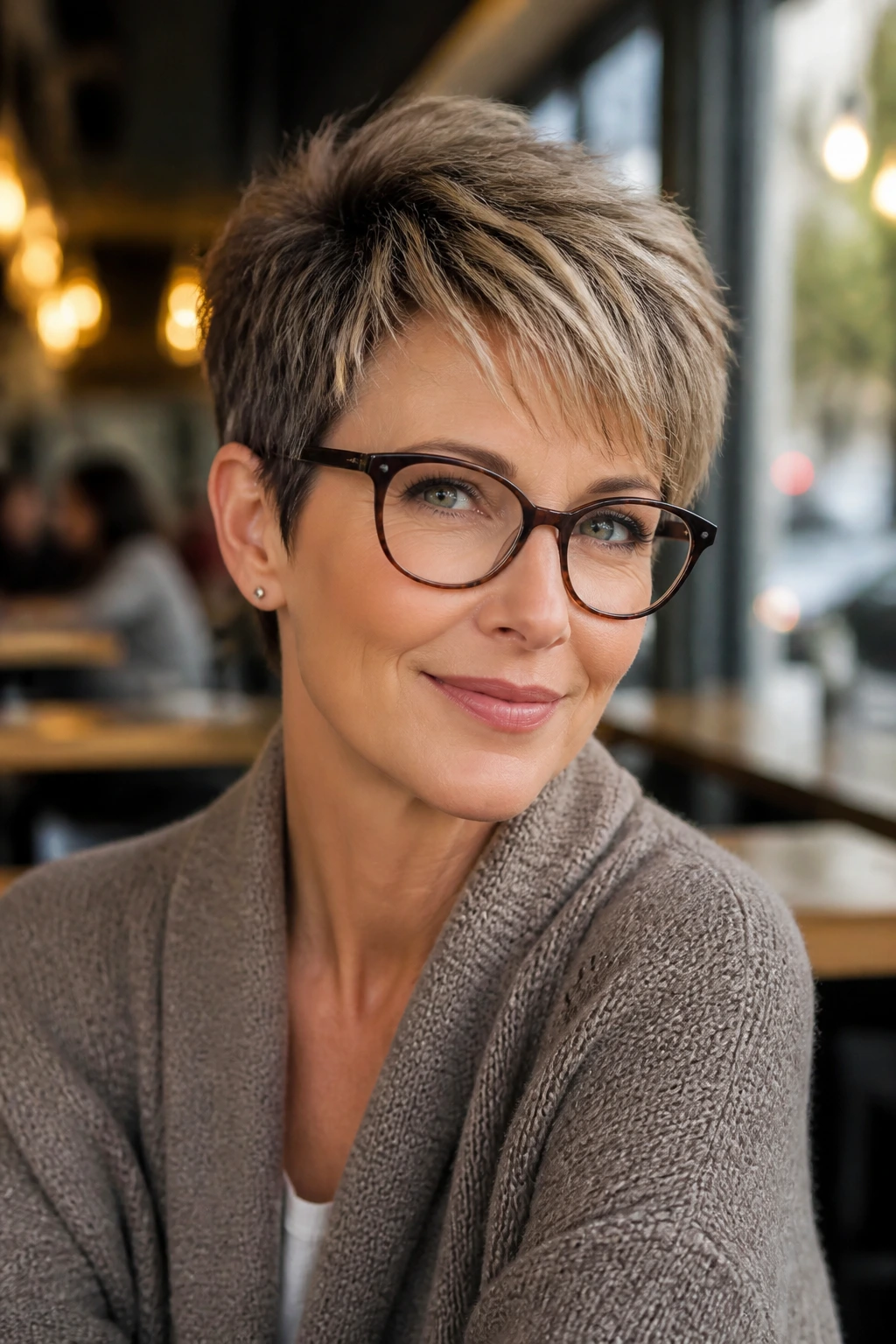
A layered pixie is one of those cuts that makes people second-guess themselves and then wonder why they waited. With glasses, it can look sharp in a good way. The short sides clear the temples, the top layers add lift, and the face gets all the room it needs.
The important part is keeping some softness around the fringe and sideburn area. If the cut is too tight, the frames can start to dominate the whole look. A little length at the front keeps it balanced. That tiny bit of softness changes the tone from severe to easy.
This cut is a smart match for smaller frames, oval frames, or any pair with a delicate bridge. It also works well if you want your glasses to be a real part of the style. With a pixie, you are not hiding them. You are putting them in the spotlight.
Styling takes little time. A pea-sized amount of paste, a quick lift at the crown, and a finger-swipe through the fringe is often enough. But the cut does need regular trims. Short hair shows every uneven edge.
13. Curly Layers That Keep Shape Beside the Frames

Curly hair and glasses can be a great pairing if the layers are cut with some care. When the shape is right, the curls sit around the frames instead of pressing into them. When the shape is wrong, everything balloons at the cheeks and the glasses vanish in the volume. That is a big difference.
The best curly layers are usually cut dry, or close to dry, so the curl pattern is visible while the shape is being made. You want the face-framing pieces long enough to clear the jaw, and you want the crown layered with enough care that it lifts without exploding outward. Short layers right at the temple are usually a bad idea here. They can make the haircut flare where the glasses sit.
What to Ask For in the Chair
- Dry or curl-by-curl cutting if the stylist works that way
- Longer face-framing pieces, not short temple pieces
- Layers that follow the curl pattern instead of fighting it
- Enough weight left in the ends to stop the triangle shape
A diffuser on low heat helps keep the curl shape tidy. Leave-in conditioner and gel can do more than a dozen products if you use the right amount. The curls should feel springy, not crunchy.
14. The Inverted Bob With Tapered Ends

An inverted bob is for someone who likes a sharper outline. The back is shorter, the front angles down a bit, and the whole haircut has more structure than a soft lob. With glasses, that structure can be a gift, especially if your frames have a strong top bar or a heavy shape.
I prefer this cut on straight hair or hair that can be smoothed without much fight. The angle helps define the jaw, and the tapered ends keep the front from looking chunky beside the lenses. If the front is too blunt, the haircut can feel square. If the angle is too steep, it starts to look dated. The sweet spot is somewhere in the middle.
This cut is one of my favorites for square and oval faces. It gives the cheekbones a little room and keeps the lower half of the face from feeling too heavy. Bold frames can hold their own here. Tiny frames can too, but the angle should stay softer.
A flat iron and a round brush make the shape behave. That is part of the deal. The payoff is a clean line that looks polished without being stiff.
15. The Arched Fringe and Layered Crop for a Sharper Look
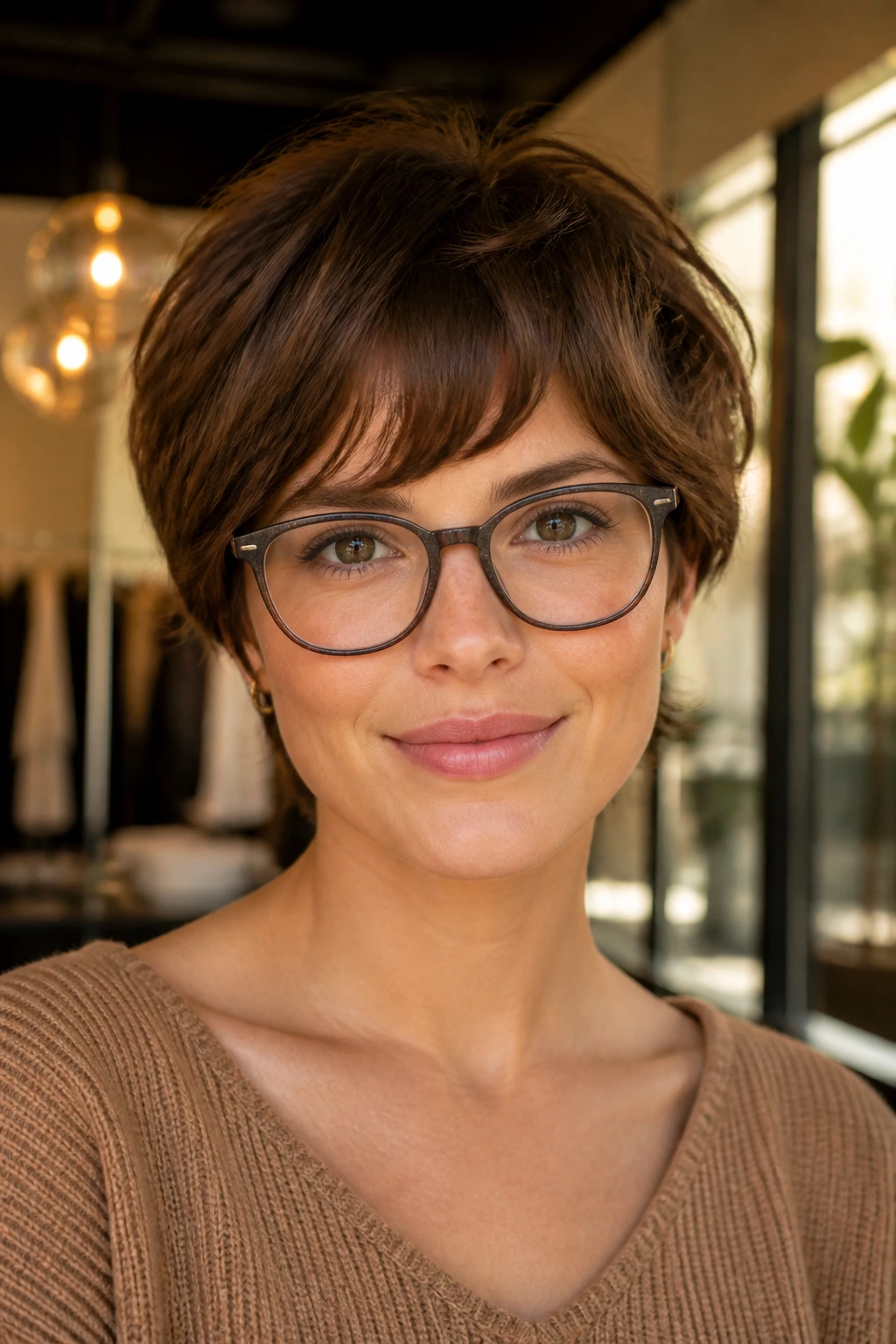
A fringe can be tricky with glasses, but an arched fringe gets around the problem in a smart way. It sits a little shorter in the middle, tapers at the sides, and leaves room near the lenses. That curve is the difference between a fringe that fights your frames and one that works with them.
I like this cut for people who want a face-framing shape without long layers. The crop keeps the sides neat, and the arched fringe gives the eyes a clear frame of their own. It works especially well with round or oval glasses, since the curve of the fringe echoes the shape without feeling too matched.
A few things matter here:
- Keep the fringe above the frame line
- Soften the sides near the temples
- Leave enough length for the fringe to move when you blink
- Trim it often so it does not drop into the lenses
This is not the haircut for someone who wants zero upkeep. Bangs need attention. Still, when they are cut well, they can make glasses look intentional instead of like an afterthought. That is the whole point, really. The best haircuts do not compete with the frame. They finish it.
