



Short hair on an oval face can be almost unfairly easy — until the cut lands in the wrong place.
An oval face usually has balanced proportions: a forehead that isn’t too wide, a jaw that isn’t too square, and enough length through the middle to wear a lot of shapes without distortion. That balance is the gift. It is also the trap. A haircut that looks crisp on one person can look flat, too blunt, or oddly wide on another, even when both have the same face shape.
The trick is not to chase length for its own sake. It’s to put the weight of the haircut where it helps the face most: around the cheekbones, at the jawline, along the fringe, or through the crown. A good short cut gives the eyes somewhere to go. A bad one just sits there.
That’s why the best short haircuts for oval face shapes tend to do one of three things: soften the forehead, sharpen the jaw, or add a small bit of lift where the silhouette needs it. Clean lines work. So do messy ones. The real difference is intention. When the proportion is right, short hair looks expensive even when it’s a very simple cut.
1. Textured Pixie With Side-Swept Fringe

A textured pixie with a side-swept fringe is the fastest route to short hair that still feels soft around an oval face. The fringe interrupts the forehead just enough, and the short sides keep the cut from eating up your features.
This cut works because it gives you shape without bulk. Ask for choppy pieces on top, a little lift at the crown, and a fringe that falls across the brow rather than straight down. That diagonal line is doing quiet work. It pulls the eye upward and keeps the whole style from feeling boxy.
Why It Works
- The side fringe breaks up the vertical length of the face.
- Shorter sides show off cheekbones instead of hiding them.
- A bit of crown lift keeps fine hair from collapsing by noon.
Best styling move: rub a pea-sized amount of matte paste between your fingers, then pinch the top in small sections. If your hair has a cowlick at the front, keep a touch more length in the fringe than you think you need.
A trim every 4 to 5 weeks keeps the shape honest. Let it grow too long and the fringe starts to hang instead of sweep.
2. Chin-Length Blunt Bob
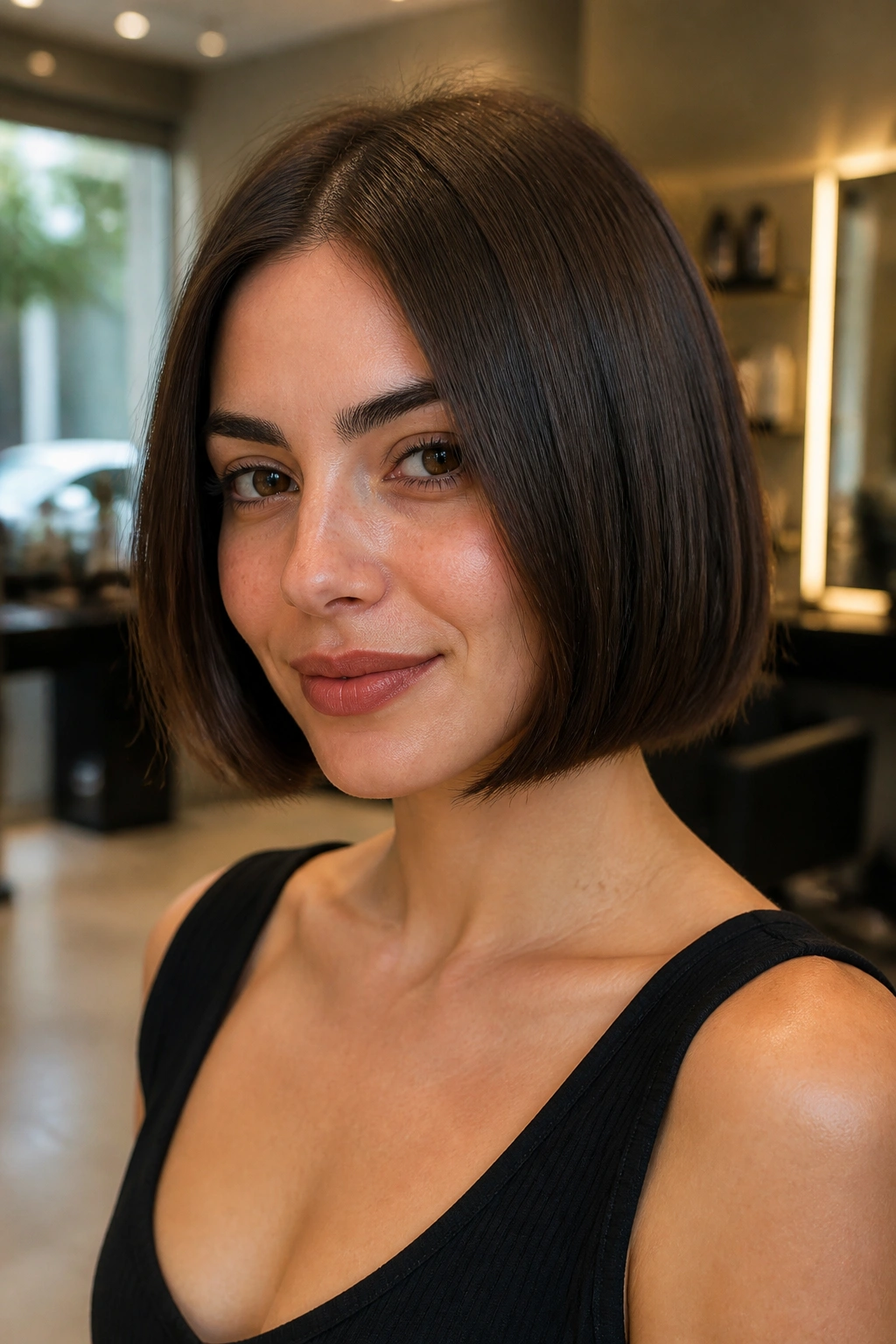
Want the cleanest line on the menu? A chin-length blunt bob is the one that makes oval face shapes look immediately neat and balanced. The hemline sits right where the jaw can take it, which gives the whole face a sharper frame.
Keep the edge blunt, not wispy. That matters. A soft, uneven bottom line can look nice on some cuts, but a blunt bob gets its power from the exactness of the outline. On straight or slightly wavy hair, it falls in one clear shape and makes the neck look longer without trying too hard.
If you part it in the center, the look reads calm and symmetrical. Move the part off center by an inch or two, and the style gets a little more relaxed. Both work. The better choice usually depends on how much symmetry you want on a given day.
This is one of those short haircuts that does not need much decoration. A flat iron pass at the ends, a touch of smoothing cream, and you’re done. If your hair is thick, ask your stylist to remove weight underneath without cutting into the visible edge. That keeps the bob from puffing out like a triangle.
3. French Bob With Soft Micro-Bangs
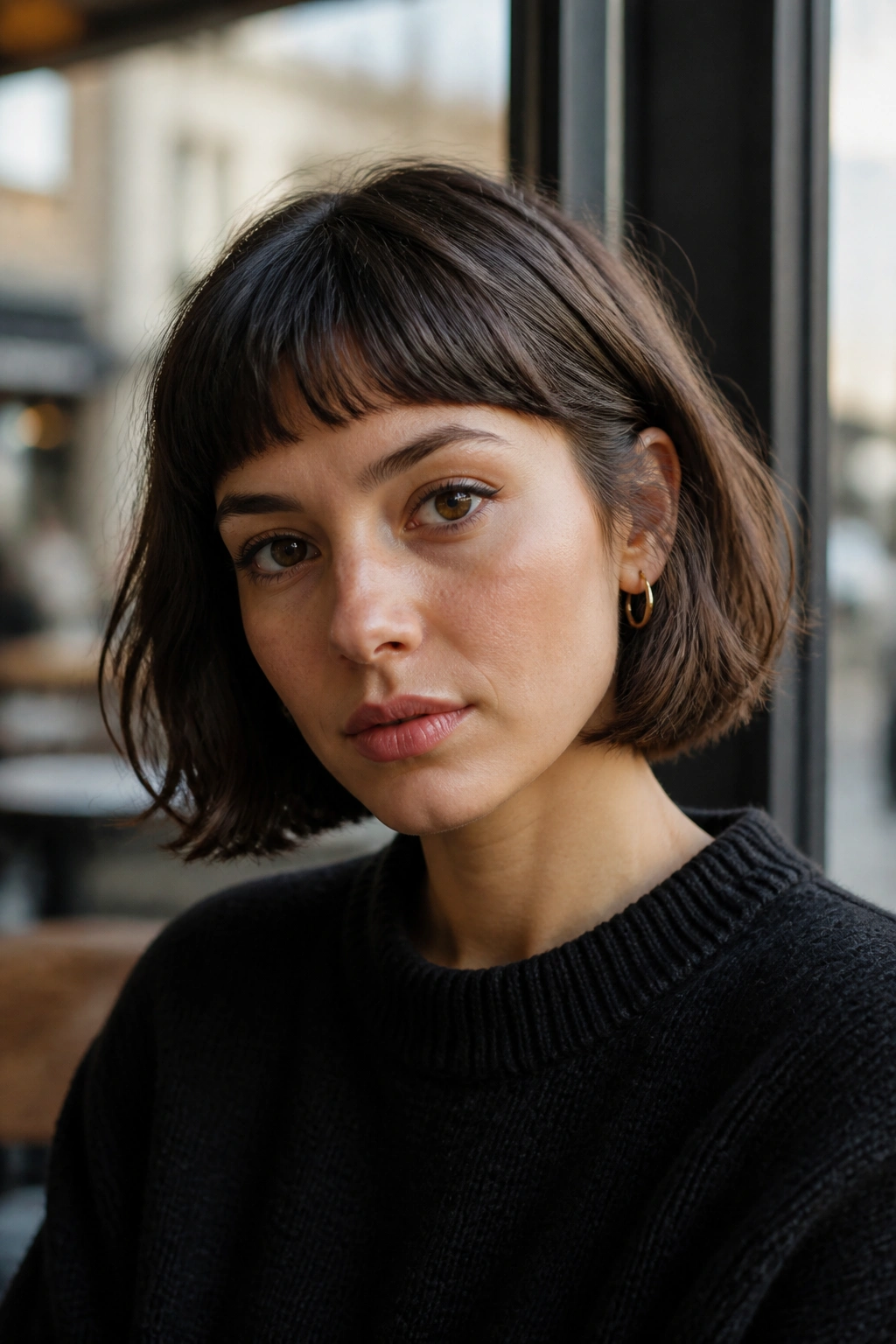
A French bob sits at cheekbone or jaw level and moves with a kind of airy confidence that oval faces handle well. Add soft micro-bangs, and the whole cut turns sharper without losing charm.
The bangs are the gamble here, but on an oval face they usually land better than people expect. The key is keeping them light and broken up, not heavy and straight across. A blunt block of bangs can crowd the face. Micro-bangs with tiny gaps between the pieces let the forehead breathe.
What to Ask For
- Length that lands around the upper jaw or just above it.
- Bangs that skim the brow, not a thick curtain.
- Ends that are blunt but not stiff.
A little bend through the ends helps a lot. You can do it with a round brush, a 1-inch curling iron, or just a quick twist with your fingers after a rough dry. The cut should feel lived-in, not stiff. That is the whole point.
If you like hair that looks better when it is slightly imperfect, this one is hard to beat.
4. Chin-Length Shag With Airy Layers

This is the cut I keep recommending to anyone who wants short hair but refuses to spend half the morning styling it. A chin-length shag with airy layers gives an oval face movement around the cheekbones and jaw, which is where the shape needs a little action.
The layers should be visible, but not shredded. Too much thinning makes the ends look stringy. A good shag has enough softness to move when you walk, and enough weight left in the bottom to keep the silhouette from fraying. That balance matters more than the trend label attached to the cut.
Styling Notes
- Use a light mousse on damp hair.
- Scrunch or twist the ends with your fingers.
- Finish with a small mist of texture spray on the mid-lengths.
This cut is especially good if your hair has a natural wave. The bend gives the layers life, and the face frame stops the whole thing from looking like a triangle. If your hair is straight, a soft bend at the ends with a flat iron can make the layers show without overdoing it.
A shag like this grows out with less drama than a razor-sharp bob. That alone makes it worth a look.
5. Asymmetrical Bob
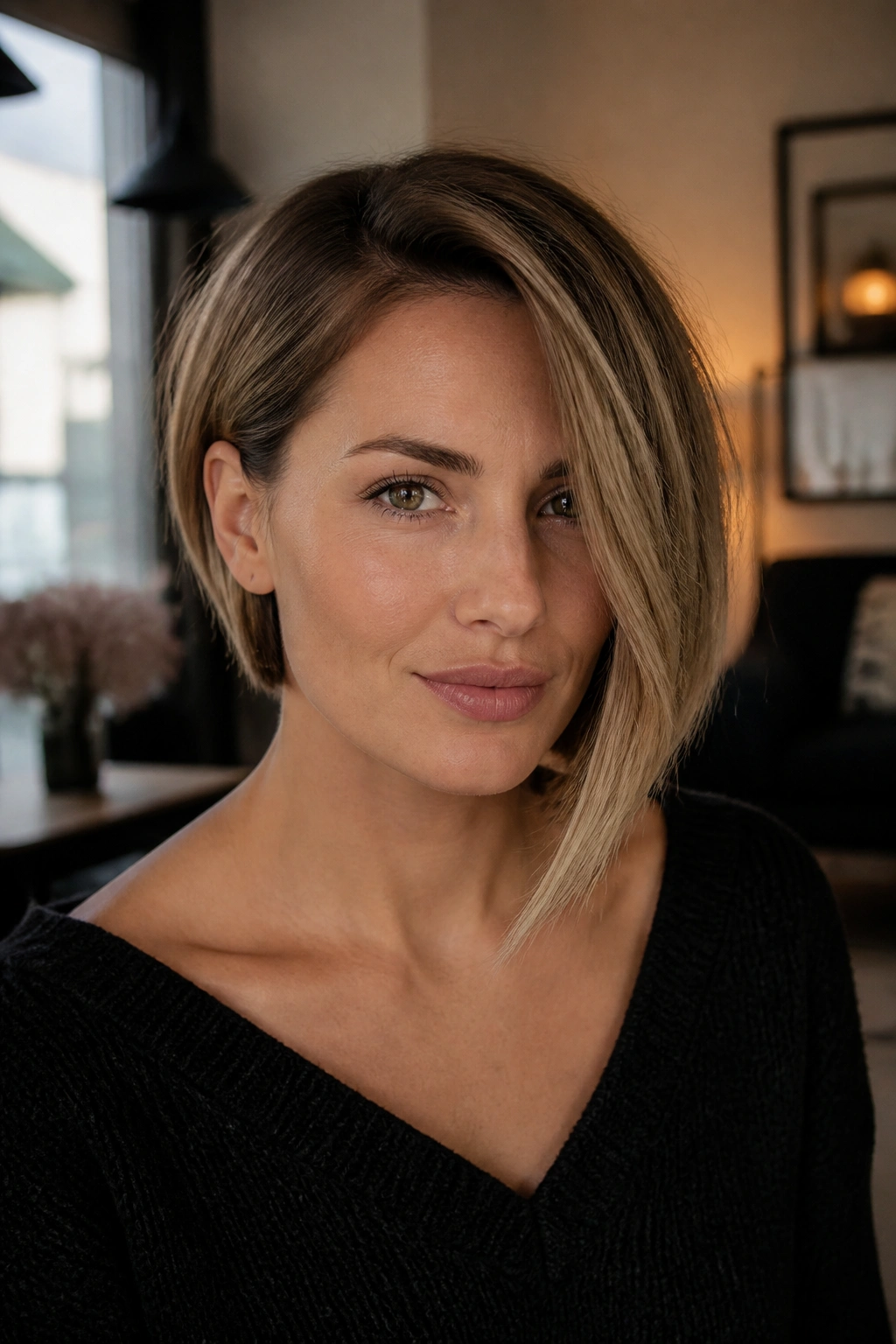
A small diagonal can do more than a big haircut ever does. An asymmetrical bob keeps one side slightly longer than the other, which adds movement without making the style loud.
For oval face shapes, that off-balance line gives the face a little edge. It breaks symmetry in a good way. If your features are already balanced, the asymmetry keeps them from getting lost in a haircut that is too even and too safe. A difference of one to two inches is enough. You do not need a dramatic angle unless you want the look to feel sharper.
This cut is strongest on straight hair or soft waves. It shows the line clearly, and the longer side can graze the chin or skim the collarbone while the shorter side opens up the neck. That makes the style feel sleek from the front and lighter from the profile.
Keep the part clean and the ends precise. If the bob gets too fluffy, the asymmetry disappears. A small amount of smoothing serum on the surface and a flat brush blow-dry usually does the job.
6. Tapered Pixie Cut
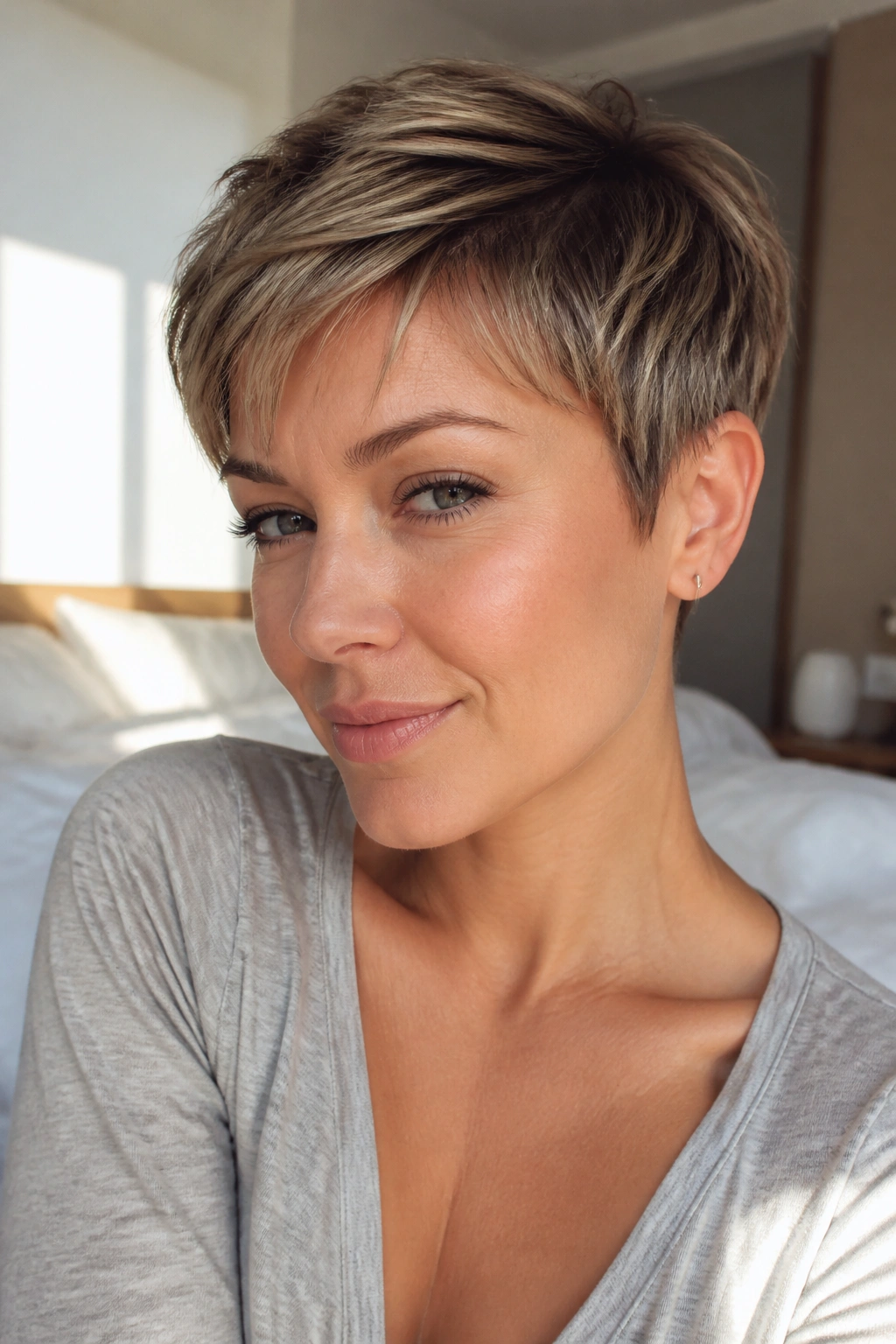
A tapered pixie is what I suggest when someone wants a short cut that looks finished from every angle. The sides and nape are cut closer, then the top is left with enough length to keep the shape from reading severe.
Oval faces do well here because the taper exposes the bone structure instead of hiding it. The neckline looks clean, the ears can show a little or a lot depending on how the top is styled, and the crown can be pushed up, forward, or side-swept. That flexibility is the charm.
A tapered pixie also behaves better than a one-length crop when hair is dense. Heavy hair can sit flat on top and poof out around the sides, which is never the look anyone wants. Tapering the back and sides removes that bulk before it becomes a problem.
Ask for longer pieces at the crown if you like height, or keep the top piecey if you want a closer crop. Either way, a little styling cream plus a blow-dry with your fingers is enough. The cut should look deliberate even when it’s slightly messy. That’s the sweet spot.
7. Curtain-Bang Bob
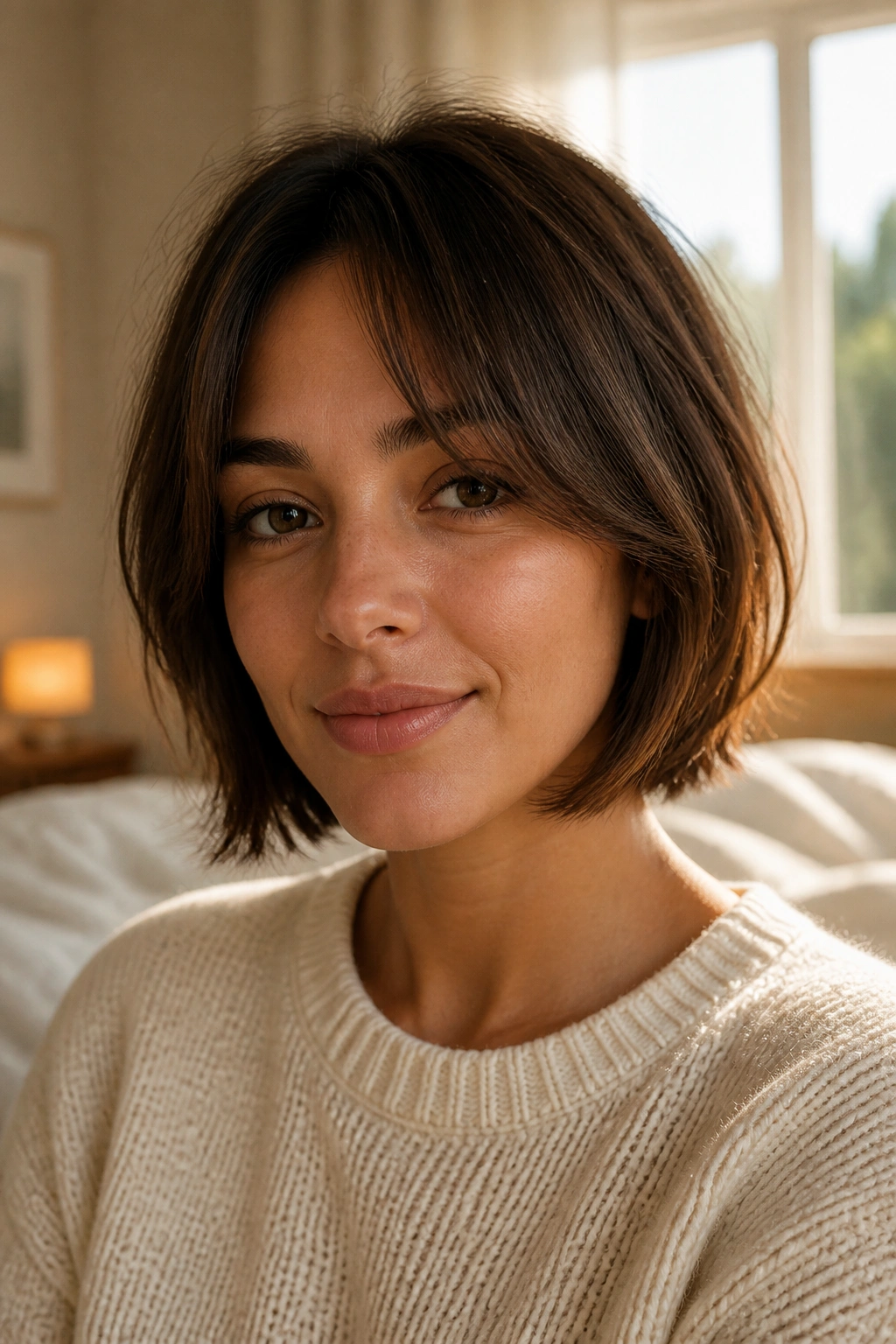
Do you want short hair that still feels soft around the face? A curtain-bang bob is the answer I reach for most often, especially on oval face shapes that like a little movement at the temples.
The curtain fringe opens in the middle and falls away from the face, which creates a gentle frame without boxing you in. That’s useful if your forehead is on the longer side or if you dislike full bangs. It also keeps the front of the haircut from looking too blunt. A bob can be a bit stern; curtain bangs soften the tone.
The best version sits around the jaw or just below it, with the bangs starting high enough to create shape but not so high that they look chopped off. Ask for face-framing pieces that connect smoothly into the bob. If the transition is too sudden, the cut starts to feel disconnected.
A round brush and a quick blow-dry at the fringe are usually enough. Pull the bangs away from the face while drying, then let them cool in place. That little bend makes them fall naturally instead of splitting in weird directions.
8. Feathered Crop

Feathering is not the same as thinning, and I wish more people understood that. A feathered crop keeps the haircut light through the ends while still leaving enough structure for the oval face to hold onto.
The reason it works is simple: soft edges make the face look relaxed, not over-edited. With an oval face, you do not need to force balance. You need movement. Feathered pieces around the temples and jaw keep the outline from feeling heavy, especially if your hair is medium to thick.
How to Keep It Airy
- Ask for point-cutting instead of aggressive razor thinning.
- Keep the layers short enough to move, but not so short they stick out.
- Use a light cream, not a heavy wax.
This cut is a nice choice if you want something between a pixie and a bob. It has more softness than a classic crop and less weight than a full bob. That middle ground is useful when your face already has good proportions and you just want the hair to look easy.
If your stylist starts talking about “taking out bulk,” ask how much and where. That detail matters more than the haircut name.
9. Sleek Tucked-Under Bob

A sleek tucked-under bob is one of those haircuts that looks more expensive than it is, mostly because the line is so clean. The ends curve inward and skim the neck, which gives an oval face a tidy frame.
This cut is especially good on straight hair. The surface needs to lie smooth so the tucked-under shape actually reads. If the hair frizzes or flips out too much, the effect disappears. A little heat styling helps, but you do not need to make it helmet-straight. Just smooth enough that the bend at the bottom feels intentional.
There’s also a nice side effect here: the inward curve draws attention to the jaw and chin without sitting on top of them. That is useful if you like your features to look defined, but not harsh.
A paddle brush, a blow-dryer nozzle, and a quick pass with a round brush at the ends will do most of the work. Finish with a drop of serum on the very tips. Too much product makes the tuck collapse, and then the whole thing goes limp.
10. Bixie Cut
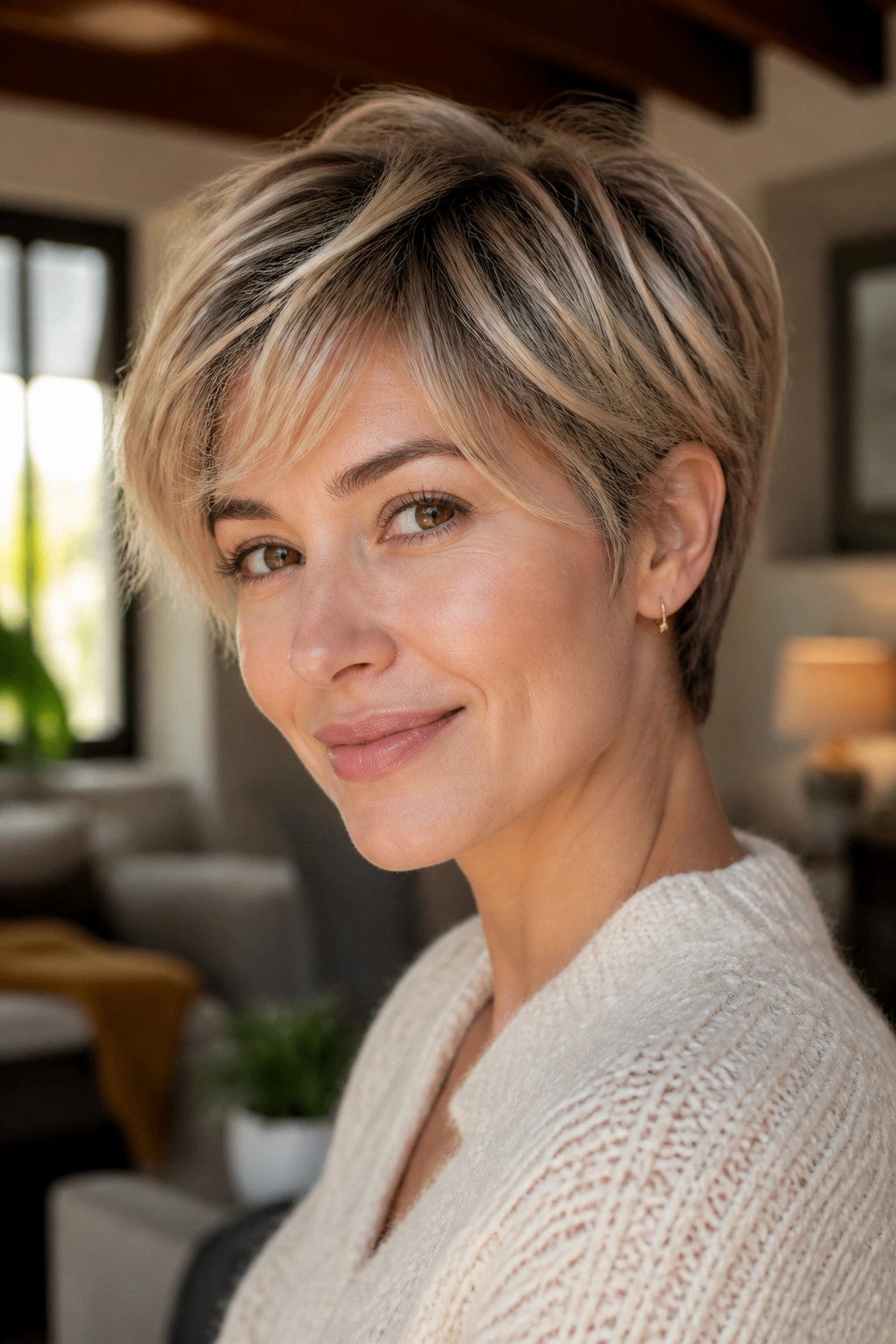
If a pixie feels too bare and a bob feels too heavy, the bixie sits right in the middle. That’s why it has such a strong case for oval face shapes. It gives you length at the top and sides without crossing into full bob territory.
Where the Shape Lives
The top stays piecey, the sides are softer than a classic pixie, and the back usually sits somewhere between cropped and bobbed. That mix lets the face stay open while the hair still has enough length to play with. You can wear it swept back, parted to the side, or pushed forward a little for a more casual feel.
How to Wear It
- Use a light volumizing mousse at the roots.
- Blow-dry with your fingers for a looser finish.
- Add a touch of pomade to the ends if you want separation.
A bixie is one of the better options if your hair has some natural texture. Straight hair can wear it too, but you may need a bit more styling to keep the top from lying flat. The cut looks best when the pieces move a little.
It grows out gracefully, which matters if you hate the awkward stage between a pixie and a bob.
11. Wavy Shag Bob
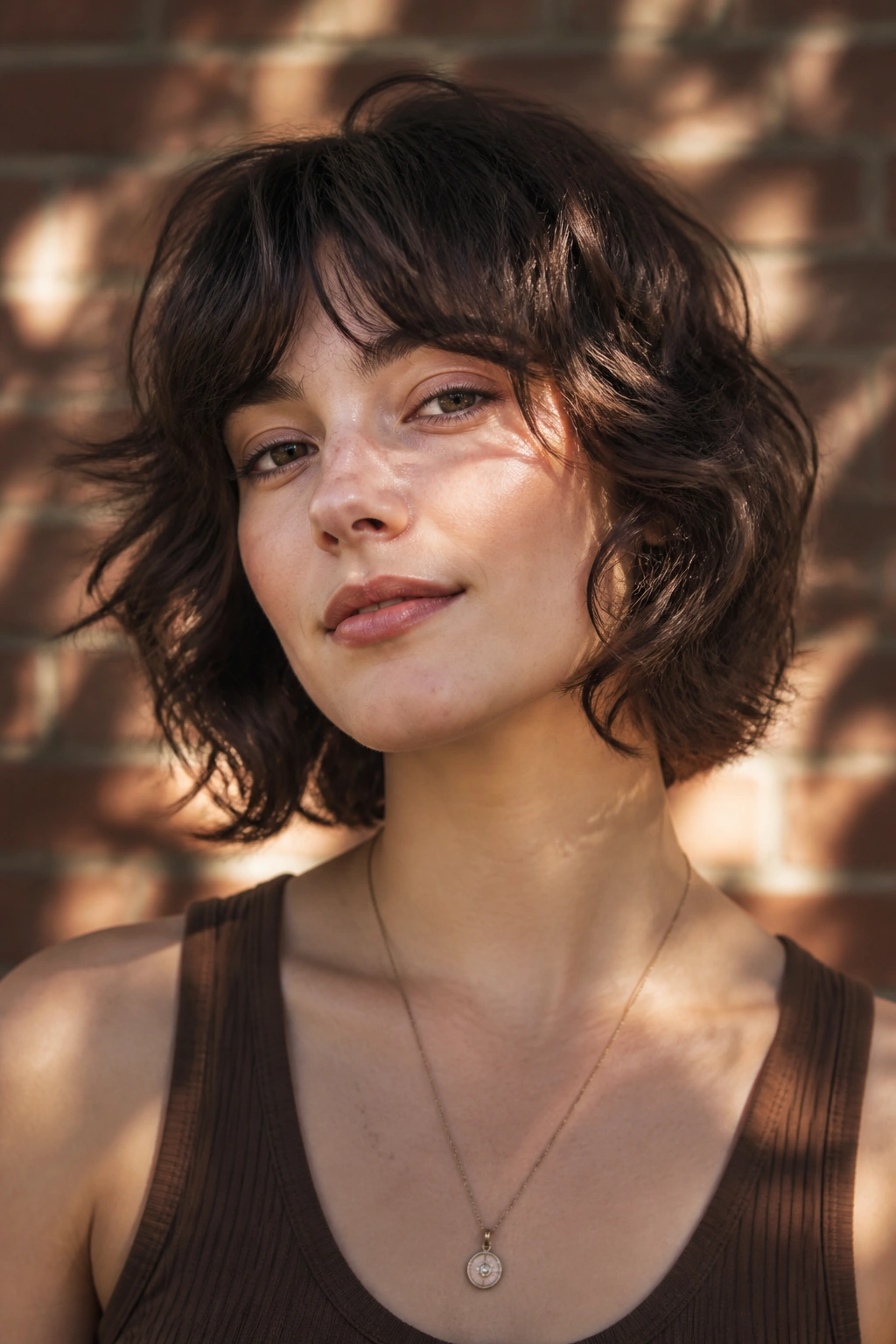
A wavy shag bob has a built-in advantage: it looks like it was meant to be touched. Oval faces suit that relaxed shape because the waves sit around the cheeks and jaw instead of fighting them.
This is the cut I think of when someone wants hair that survives an air-dry day. The layers break up bulk, the wave pattern keeps the silhouette soft, and the length stays short enough to feel fresh. If your hair naturally bends, the cut will do half the styling for you. If it doesn’t, a diffuser or a curling wand can fake the texture in five to ten minutes.
What Makes It Work
- Layers should start high enough to show movement.
- The ends need to stay soft, not chopped blunt.
- A little irregularity makes the whole shape better.
The one thing to avoid is overlayering near the crown. That can make the top puff up while the bottom goes thin, which is a bad trade. Keep some weight at the perimeter so the bob still reads as a bob.
This is a cut for people who like hair that looks a bit undone on purpose.
12. Short Angled Bob

Unlike a blunt bob, a short angled bob keeps the front longer than the back, and that slight shift changes the whole mood. On an oval face, the angle pulls the eye downward and forward, which adds a bit of drama without making the cut hard.
The back is usually shorter and sits close to the nape, while the front angles toward the chin. That shape gives you clean movement and a stronger profile. It also makes the neck look longer, which never hurts. If your hair is straight or only mildly wavy, the diagonal line stays crisp. On curly hair, the angle becomes softer, but the effect still holds.
This haircut is especially good if you want a bob that doesn’t feel static. The front pieces can be tucked behind the ears one day and left loose the next. Small changes matter with this cut because the angle does most of the visual work.
Ask for the front to stop just where your face wants framing, not where a ruler says it should. A good stylist will adjust that by looking at your chin, jaw, and neck, not by copying a standard chart.
13. Curly Cropped Bob

Curly hair behaves differently, and that is a gift here. A curly cropped bob can look gorgeous on oval face shapes because the curl pattern adds width exactly where you want a bit of softness.
The main mistake is cutting curls too short while wet and assuming they’ll stay put. They won’t. They spring up, and sometimes quite a bit. So if your hair curls tightly, ask for a dry cut or at least a curl-by-curl shaping method. That keeps the balance honest and avoids the mushroom effect nobody asked for.
One-sentence truth: shrinkage changes everything.
A good curly bob usually sits around the jaw or just below, with layers placed to encourage the curls to stack without becoming a triangle. The perimeter should still feel defined. Too many layers and the shape turns fluffy; too few and it gets heavy.
Use a leave-in conditioner, a curl cream, and a diffuser on low heat. Let the curls set before you touch them. Pulling them apart too soon is how you lose the shape you just paid for.
14. Soft Mullet Crop
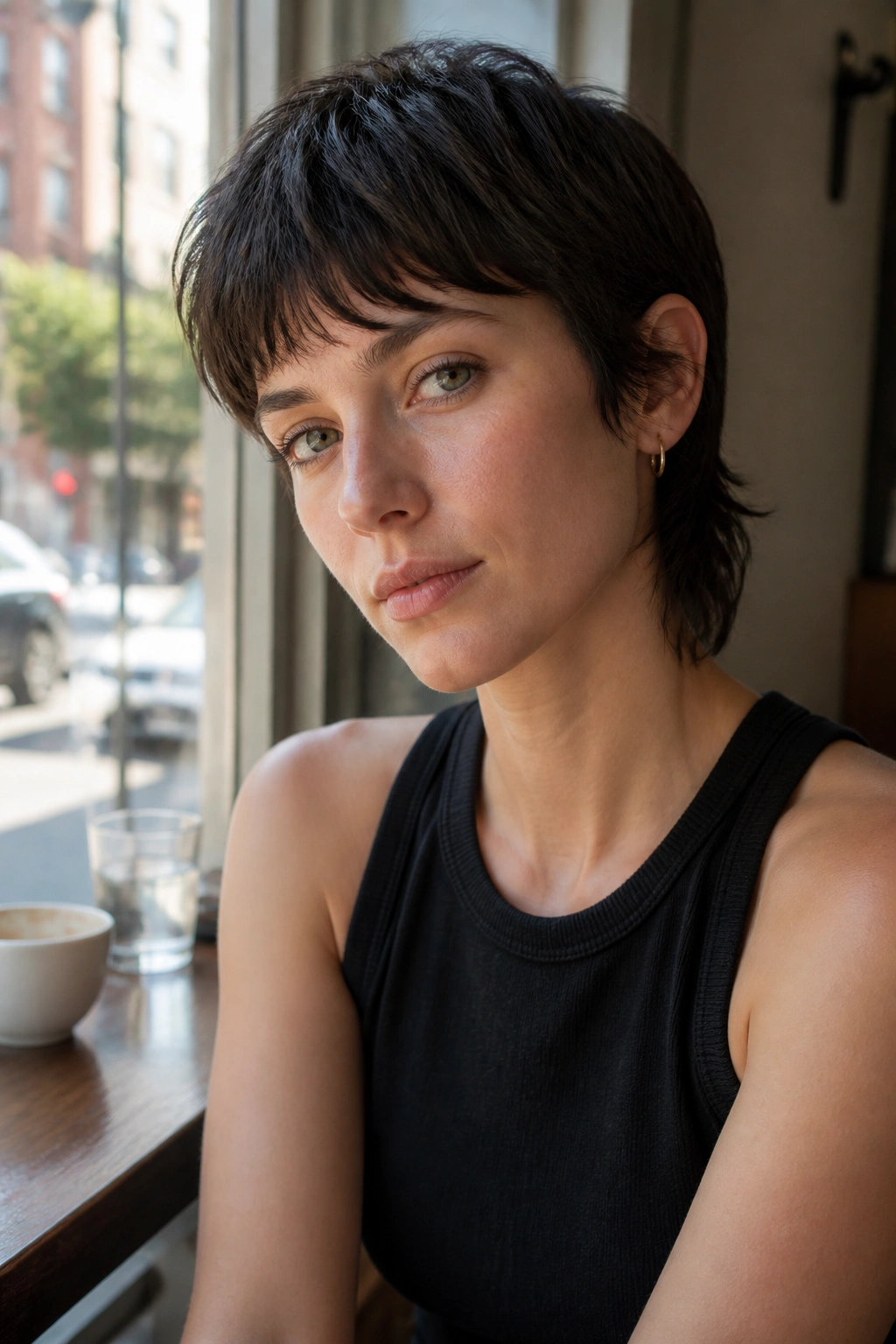
A soft mullet crop sounds more daring than it usually is. On an oval face, the trick is keeping the transition gradual so the cut feels modern rather than theatrical.
The front and crown stay shorter and fuller, while the nape carries a little extra length. That rear length gives the haircut a line to follow, and the top can be styled with lift or texture. The result is a cut that keeps the face open while still having some edge.
This is not the place for harsh disconnects unless you want a strong fashion look. Softer layers make it easier to wear every day. The oval face benefits because the extra volume at the top adds balance, and the length at the neck keeps the silhouette from looking too closed in.
If your hair is fine, a little volumizing spray at the roots helps keep the crown from falling flat. If your hair is thick, ask your stylist to remove weight underneath so the back doesn’t puff out. The difference between cool and awkward can be one tiny adjustment.
15. Undercut Pixie
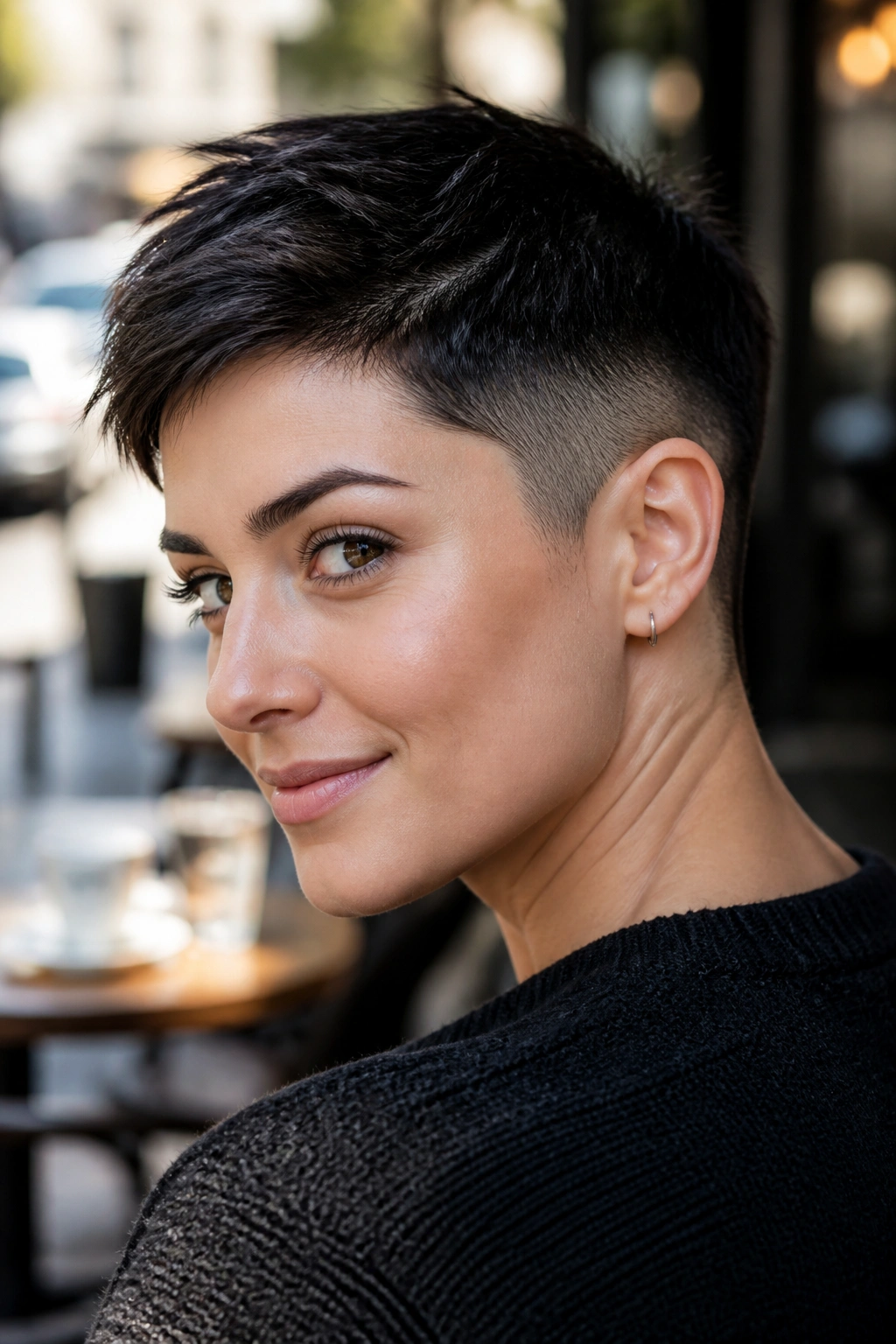
If your hair sits heavy at the sides, shave the bulk out from underneath. That’s the practical reason an undercut pixie works so well on oval face shapes.
The visible top remains soft and full enough to style, but the hidden undercut takes away density where it would otherwise build a triangle. That means the outline stays close to the head, the neckline feels clean, and the face gets more room. Oval faces can carry that exposed structure because the proportions already make sense.
This cut has a nice side effect: it dries faster. Less hair means less time under the dryer, and that matters more than people think. The top can be smoothed back, pushed forward, or spiked a little depending on your mood, while the sides stay neat without daily effort.
One caveat. The grow-out stage can be annoying if the undercut is too high or too sharp. Keep the clipper work low and tapered if you want the maintenance to stay reasonable. A tiny amount of styling cream on top is usually enough to make the shape sit right.
16. Deep Side-Part Bob
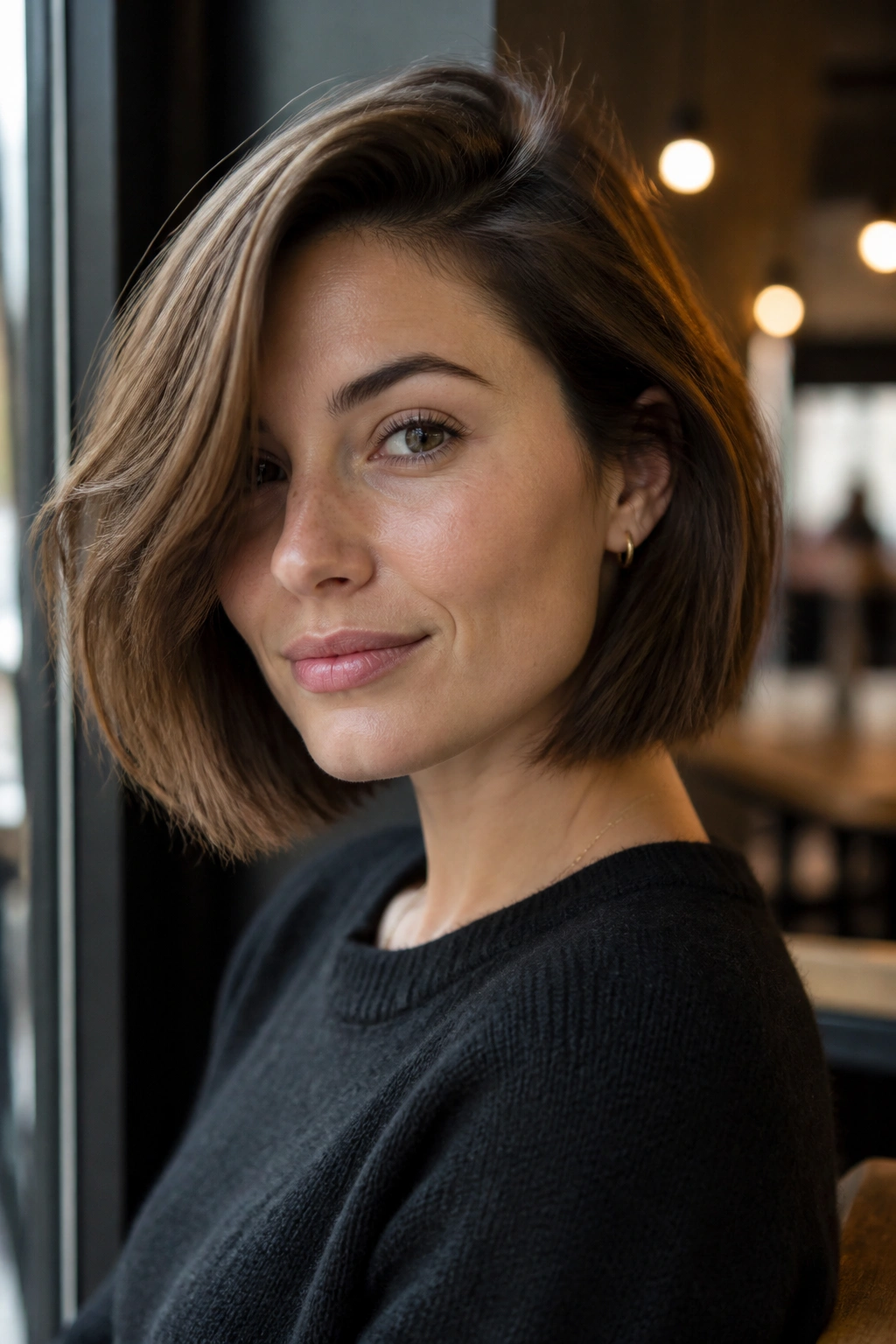
A deep side-part bob is a simple cut with a big effect. The part shifts the weight of the hair to one side, which breaks the symmetry of an oval face in a way that feels flattering instead of fussy.
What to Ask Your Stylist
- Keep the length around the chin or slightly below.
- Place the part 2 to 3 inches off center.
- Add subtle internal layers if your hair is thick.
That off-center part creates lift at the roots on one side and softness on the other. It also lets the front pieces fall across the cheekbone, which is one of the best places to place hair on an oval face. If your features are balanced, the part gives the style a little tension, and tension is what keeps a haircut from looking bland.
This bob is a nice option if you wear glasses, too. The side sweep can sit above or beside the frame without crowding it. If your hair is straight, a quick bend at the ends keeps the look from becoming too severe. If it is wavy, let the texture do most of the work and keep the part crisp.
A few root-lift sprays at the part line help. So does flipping the hair to the opposite side while it cools.
17. Piecey Crop With Baby Bangs
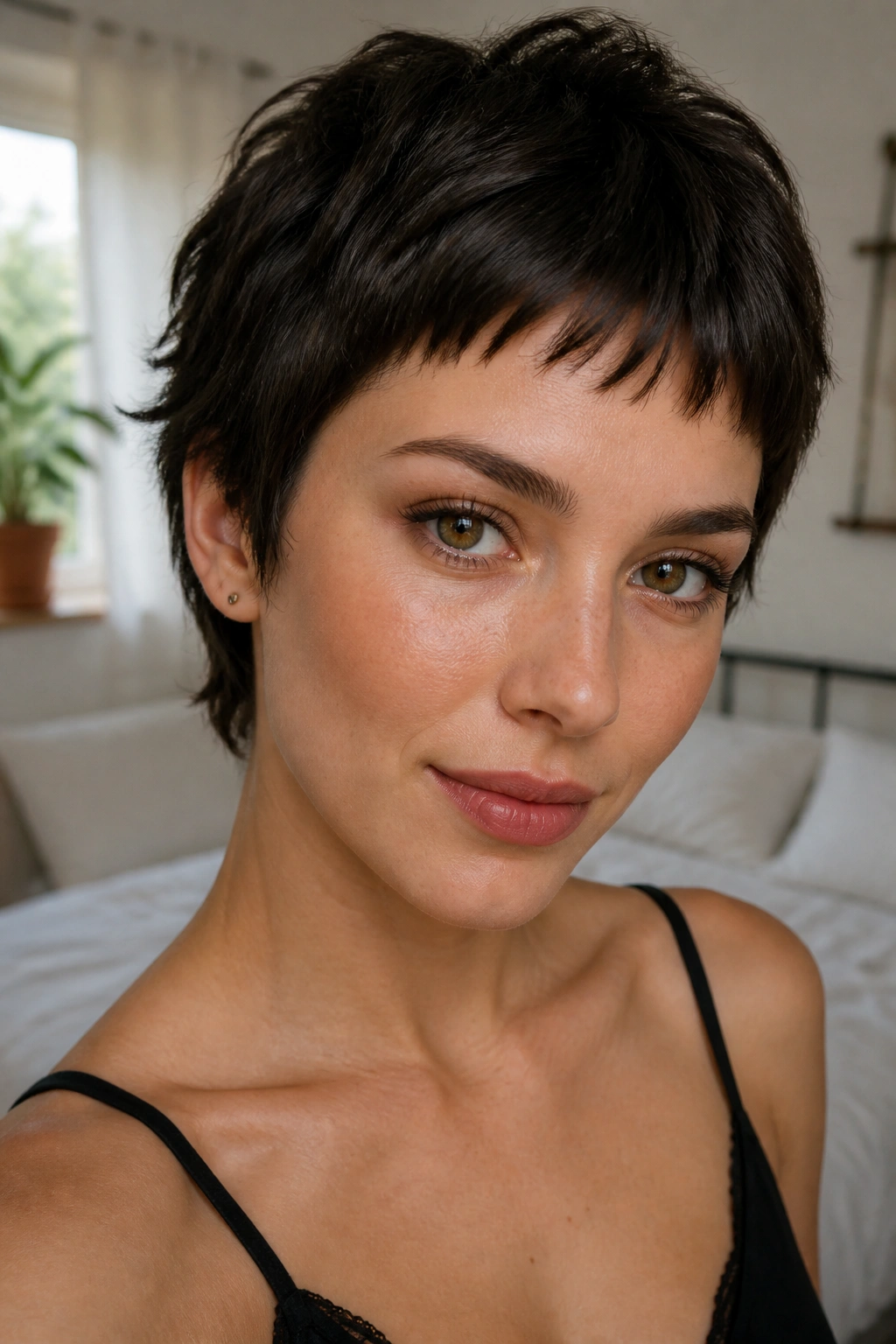
This cut is for the person who wants the eyes to do the talking. A piecey crop with baby bangs puts the emphasis high on the face, which works especially well on oval shapes that can handle a little boldness.
Baby bangs are short, yes, but they do not have to feel severe. When they’re cut with softness and the crop below them is slightly broken up, the whole look feels playful instead of harsh. The oval face helps because the overall balance keeps the short fringe from overwhelming the features.
The piecey texture is the real release valve here. It stops the cut from reading too clean or too costume-like. Use a lightweight styling paste and separate a few strands with your fingers after drying. You want definition, not spikes.
This one does need maintenance. Baby bangs grow fast and lose their shape fast, too. Plan on trims more often than you would for a bob. If you don’t want frequent salon visits, skip this one. If you like a haircut that stays sharp, it’s a fun choice.
18. Rounded Bowl-Inspired Bob
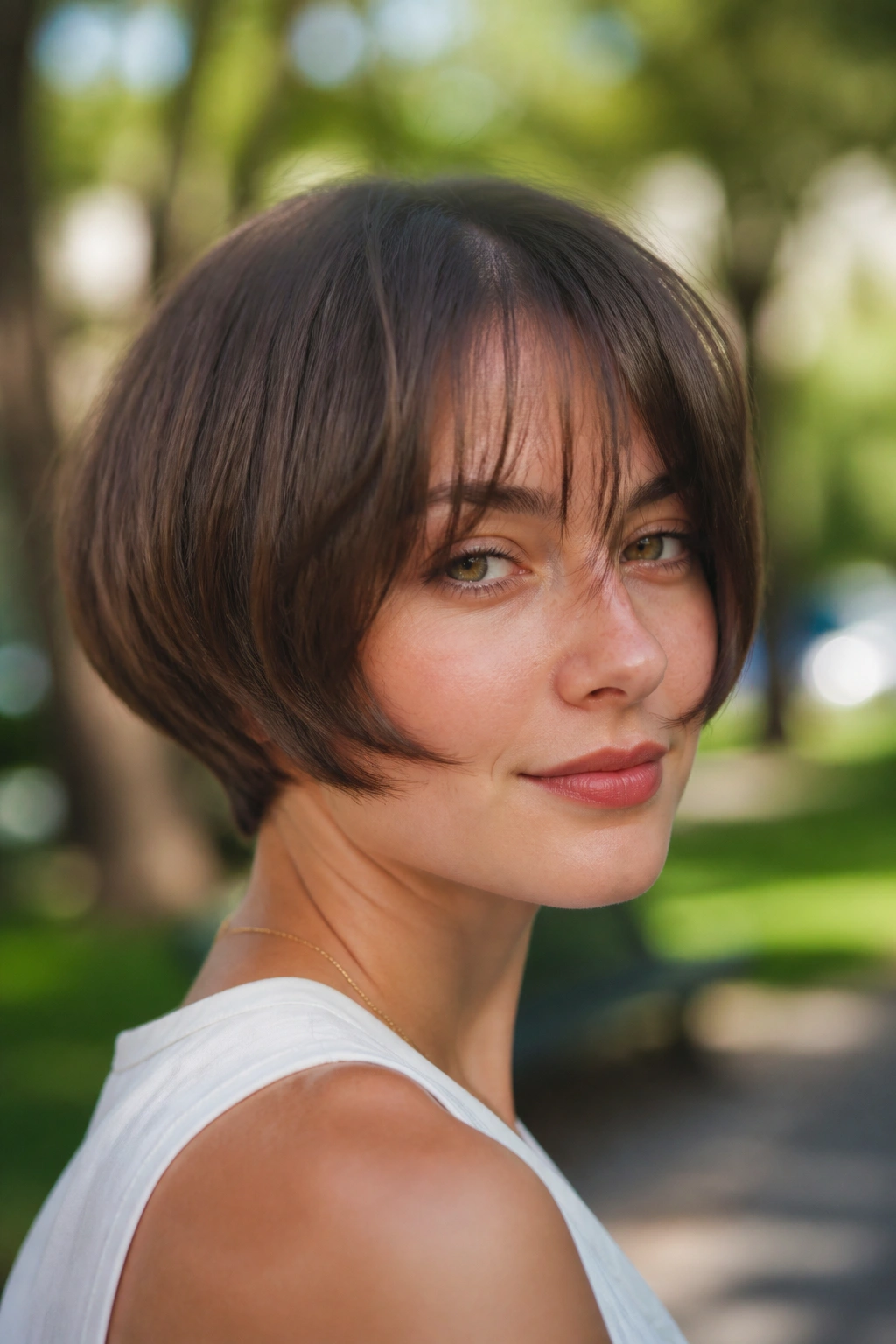
A bowl-inspired bob can sound alarming, but the modern version is softer, textured, and far less literal than the name suggests. On an oval face, a rounded outline can actually look elegant if the perimeter is broken up a little and the fringe is light.
The trick is avoiding the old-school helmet shape. You want curve, not a hard dome. Keep the line around the head smooth, but add point-cut ends so the silhouette doesn’t look pasted on. A touch of length around the ears helps too, because it keeps the haircut from tightening too much around the face.
How to Keep It Modern
- Leave the bangs wispy or slightly separated.
- Add texture through the ends, not the top.
- Keep the curve close, but not rigid.
This cut works best when the hair has enough density to hold a shape. Fine hair can wear it too, but it needs careful cutting so it does not collapse. If your hair is thick, the round line can be beautiful because it controls volume without flattening the crown.
I like this look on people who want something short, polished, and a little unexpected. It has personality without needing extra styling tricks.
19. Ear-Length Textured Chop
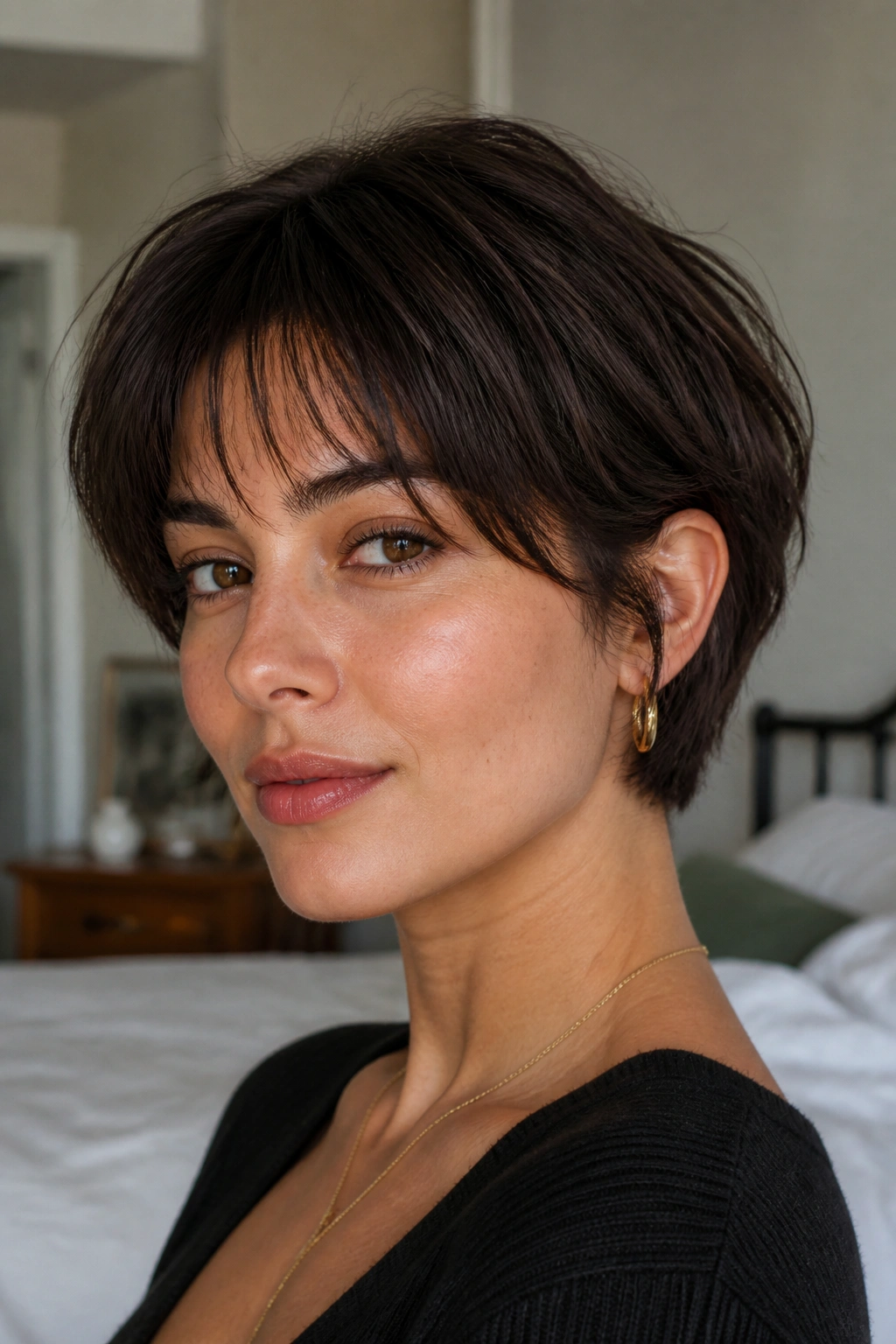
An ear-length textured chop gives you one of the shortest options on the list while still keeping some movement in the hair. On an oval face, that openness can look striking because the jaw, neck, and cheekbones are fully visible.
This is a good cut if you like to wear earrings or if you want your face to stay the focus. The hair sits close enough to feel crisp, but the texture keeps it from becoming a hard block. Ask for tiny pieces to be removed through the top and sides so the cut moves instead of sitting still.
The downside is that it can go fluffy if the texture is too aggressive or if the hair has a strong wave pattern. A little product goes a long way here. Dry shampoo at the roots, a small dab of pomade at the ends, and maybe a quick finger-style is usually enough.
One nice thing about this chop: it grows out into a neat pixie or a short bob without much drama. That makes it a smart choice if you like shorter hair but do not want a messy grow-out phase.
20. Polished Crop With Tapered Nape
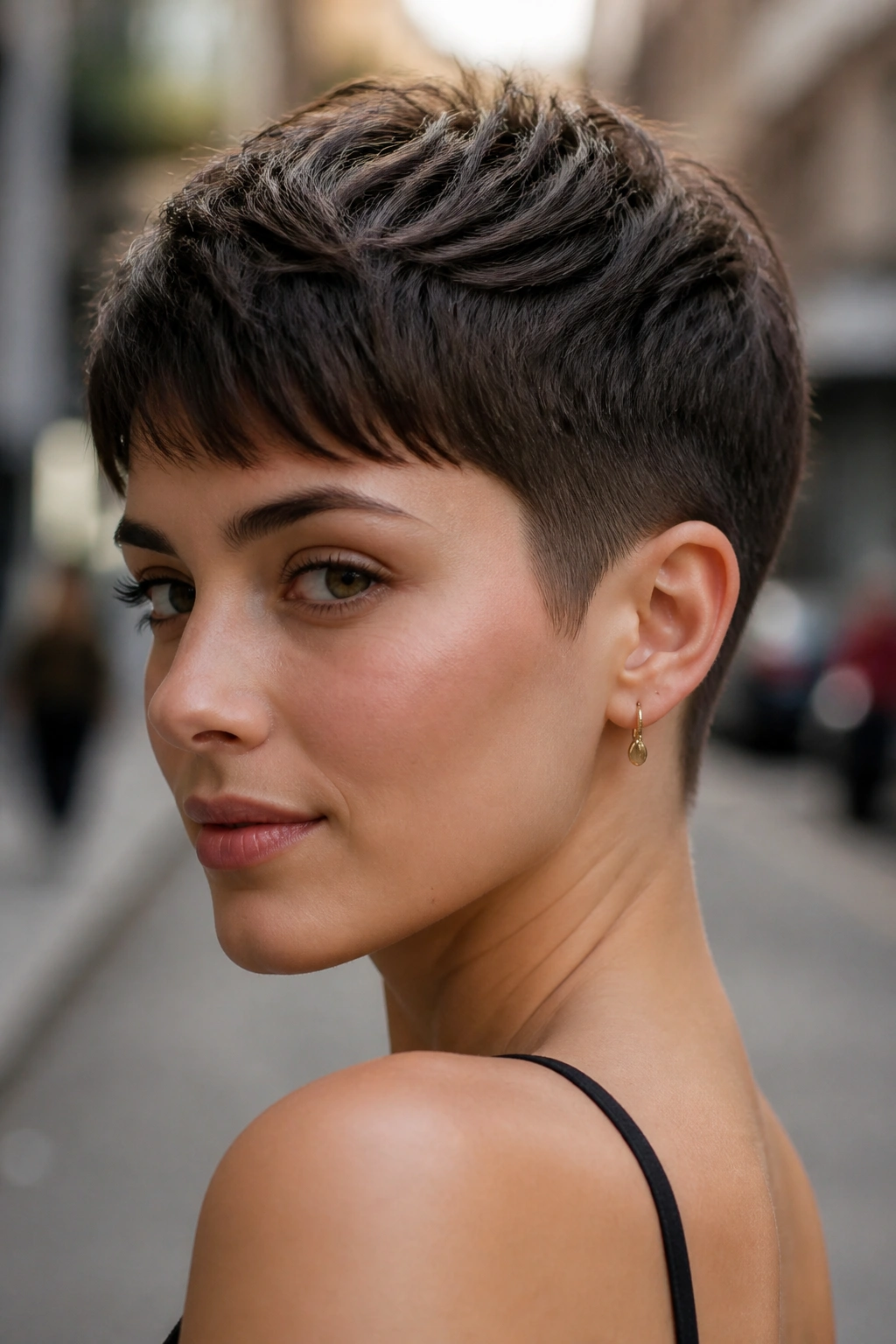
A polished crop with a tapered nape is the neatest short cut in the whole set, and that’s exactly why it works. Oval face shapes can wear this kind of close, controlled silhouette without losing balance.
The top stays slightly longer than the sides, but not so long that it turns into a fauxhawk. The nape is taper-cut so the back hugs the neck, and the edges around the ears stay soft enough to avoid a harsh line. The result is clean, direct, and easy to dress up with a bit of shine or texture depending on how you style it.
This is a smart haircut if you want something that stays orderly through a long day. It holds shape in a way that a shag never will. That’s not a flaw. It’s a choice. If you like sleek outlines, this is the one that gives you the least fuss with the most structure.
The best version comes down to how you wear the front. Push it up for a little lift, sweep it forward for a cooler mood, or tuck it neatly for a sharper finish. If you’re torn between two short cuts, pick the one that still looks good after a rushed morning and a bad weather day. That’s usually the one you’ll keep reaching for.
