



Haircuts for long face shapes women work best when they stop the eye from sliding straight down the face. A cut that adds width near the cheekbones, jaw, or temples usually does more than a cut that just keeps getting longer and flatter.
That sounds simple. It isn’t. A long face can come with a tall forehead, a narrow jaw, or both, and the wrong cut can make one feature dominate everything else. The right one brings the whole face into balance without making it look crowded.
I keep coming back to one rule: if the haircut creates shape on the sides, it helps a long face. If it only adds height on top or length below the chin, it usually works against you. Bangs, blunt lines, rounded edges, and shoulder-grazing cuts all do useful work here, and the good news is that you do not need to give up length to get there.
1. Chin-Length Blunt Bob
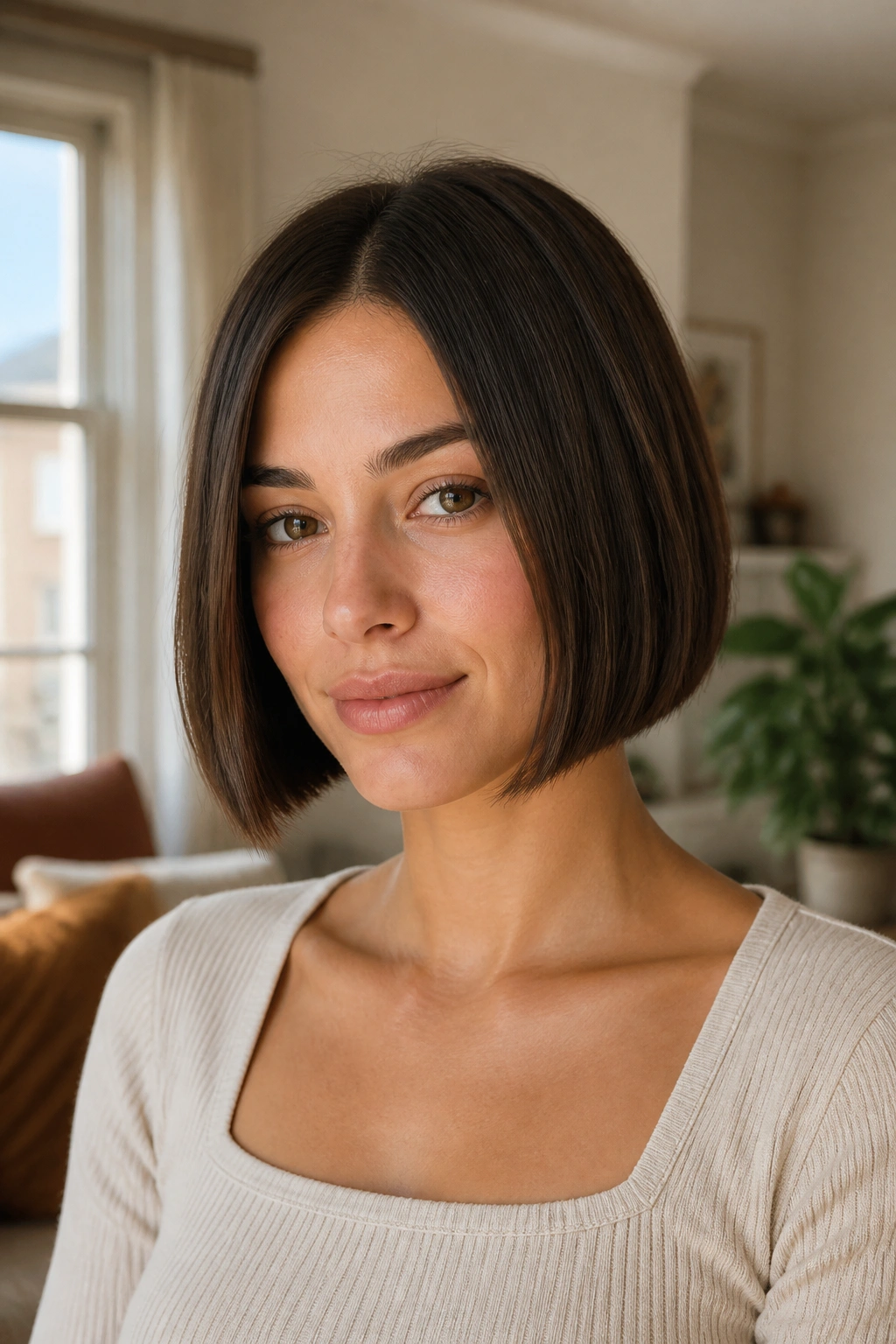
A chin-length blunt bob is one of the quickest ways to give a long face a wider look. The blunt edge draws a clean horizontal line right where a long face needs it most, and that line lands close enough to the jaw to make the whole face feel shorter.
Why It Works
The blunt edge matters more than people think. Soft, wispy ends tend to disappear, while a solid line gives the eye a place to stop. That pause is the whole trick.
Keep the length right at the chin or a hair below it. Too short and the cut can start to feel boxy; too long and it stops doing the balancing job. A slight bend under the ends can help, but don’t curl it in so much that you lose the sharp outline.
- Best on straight to slightly wavy hair
- Looks strongest with a center part or a soft off-center part
- Needs trims every 6 to 8 weeks to keep the edge clean
My favorite version: blunt, barely tucked, and just messy enough to feel modern. That tiny bit of movement keeps it from looking too severe.
2. French Bob with Soft Bangs
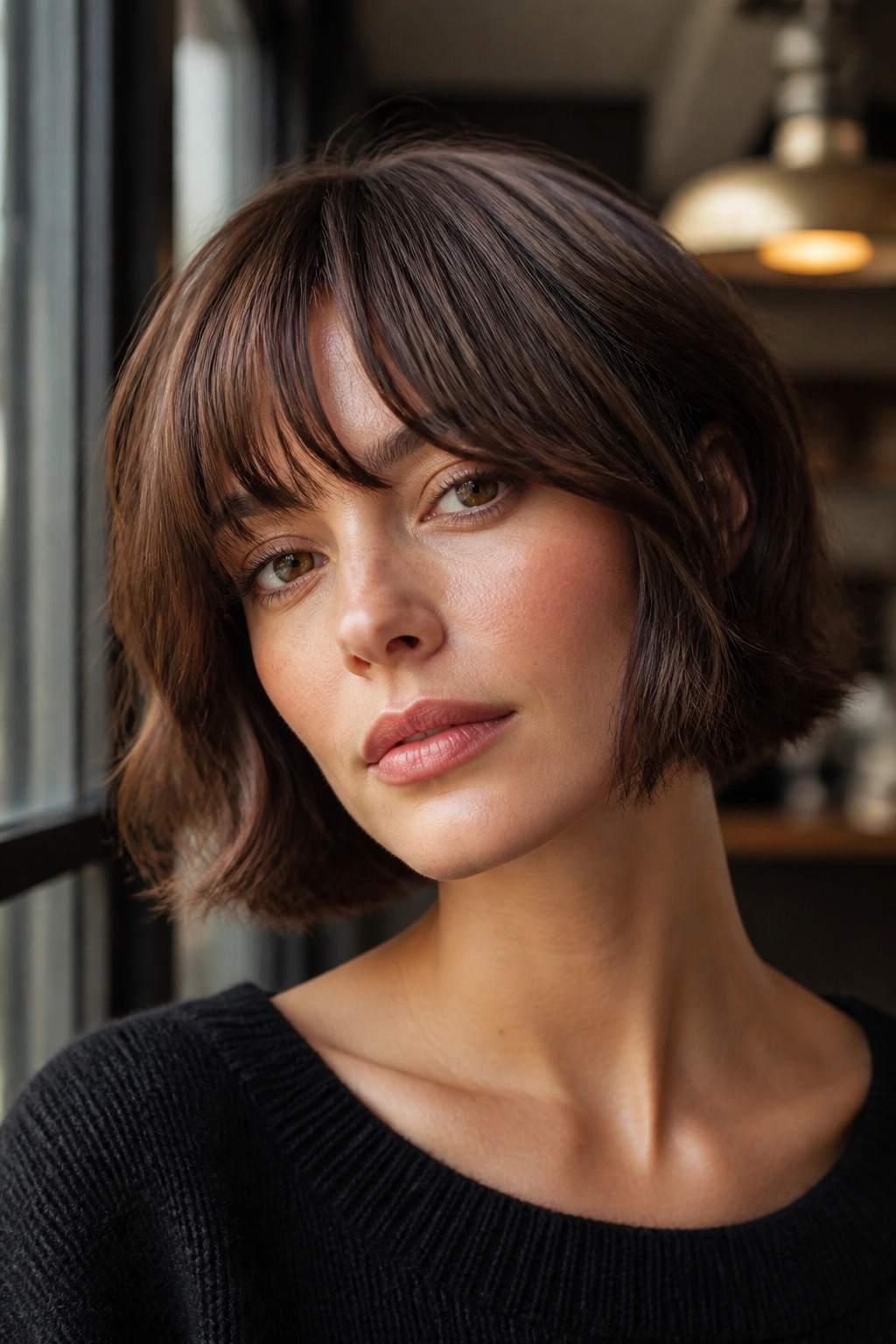
A French bob sits at that sweet spot where it feels chic without being fussy. On a long face, the magic is the shorter length and the soft fringe together.
The bob usually lands around the cheekbone or just above the jaw, which pulls attention back toward the middle of the face. Add soft bangs that skim the forehead, and you’ve got two shape-shifters working at once. The face looks less stretched, but not heavy.
This cut is especially good if your hair has a little natural wave. Air-dried bends and a loose, piecey fringe keep it from looking too polished. Pin-straight hair can still wear it, but the bluntness gets stronger, so the bangs need to stay soft and not stiff.
One caution: keep the crown low. A French bob with too much lift on top can send the eye upward, and that is the last thing a long face needs.
3. Curtain Bangs for Long Face Shapes
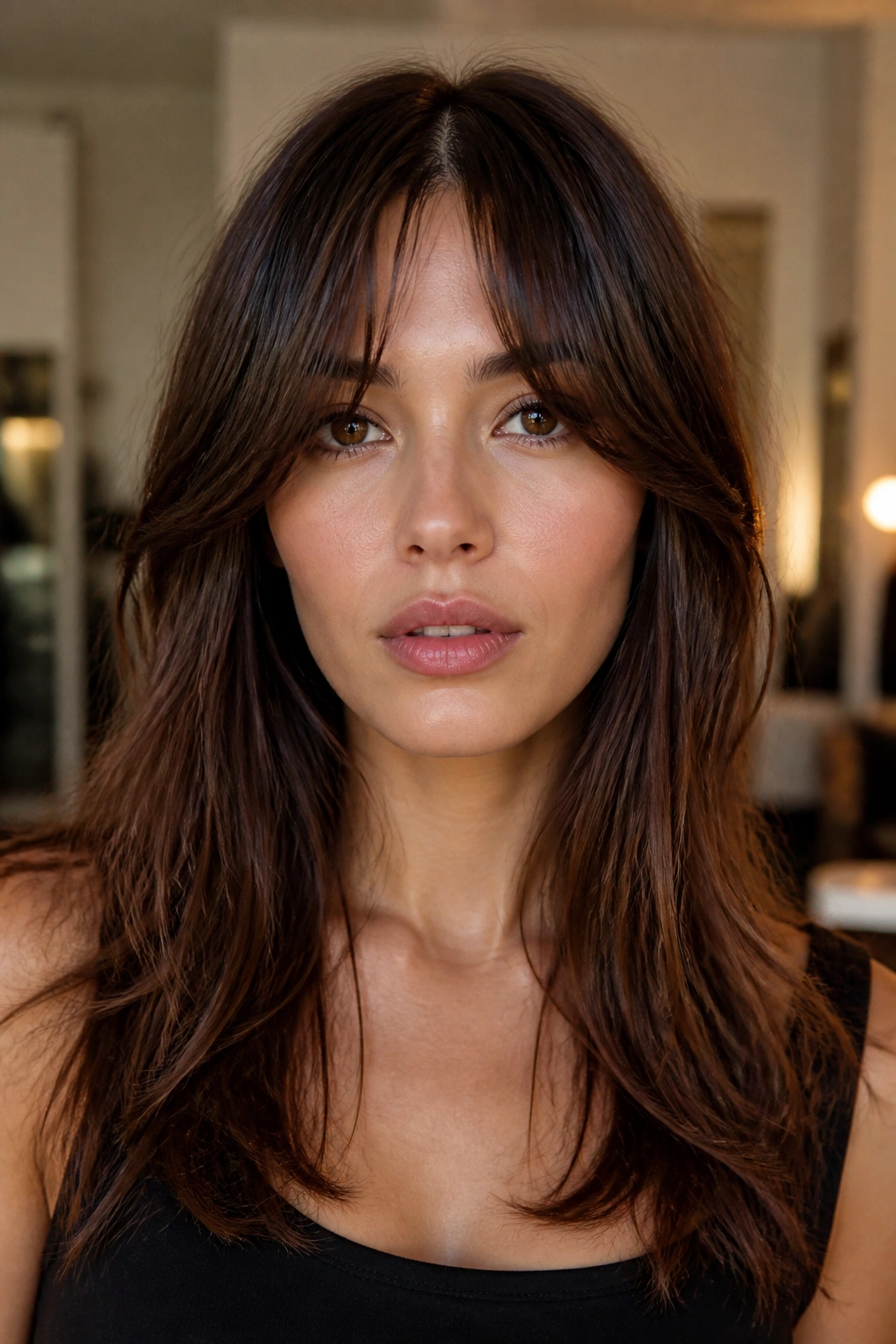
Why do curtain bangs for long face shapes keep showing up in good salons? Because they split the forehead visually and widen the face at the exact points that matter. They also grow out more gracefully than a hard fringe, which is nice because nobody wants a haircut that turns into a negotiation two weeks later.
How They Frame the Face
Curtain bangs work best when the shortest point lands around the eyebrow or just below it, then opens toward the cheekbones. That side sweep creates a soft V shape that breaks the long vertical line without making the forehead look boxed in.
The rest of the cut matters too. A straight, flat length behind the bangs can cancel the effect, so ask for some body through the sides or a light bend from mid-length down. If your hair is thick, the bangs should be thinned only enough to move. If your hair is fine, keep them piecey rather than see-through.
How to Ask for Them
- Shortest point at the brow or just below
- Longer sides that hit around the cheekbone
- Soft separation, not a heavy wall of hair
- A little bevel at the ends so the shape opens outward
Best for: women who want face framing without a drastic chop. It’s also the easiest way to test fringe before going all in.
4. Textured Lob with Loose Waves
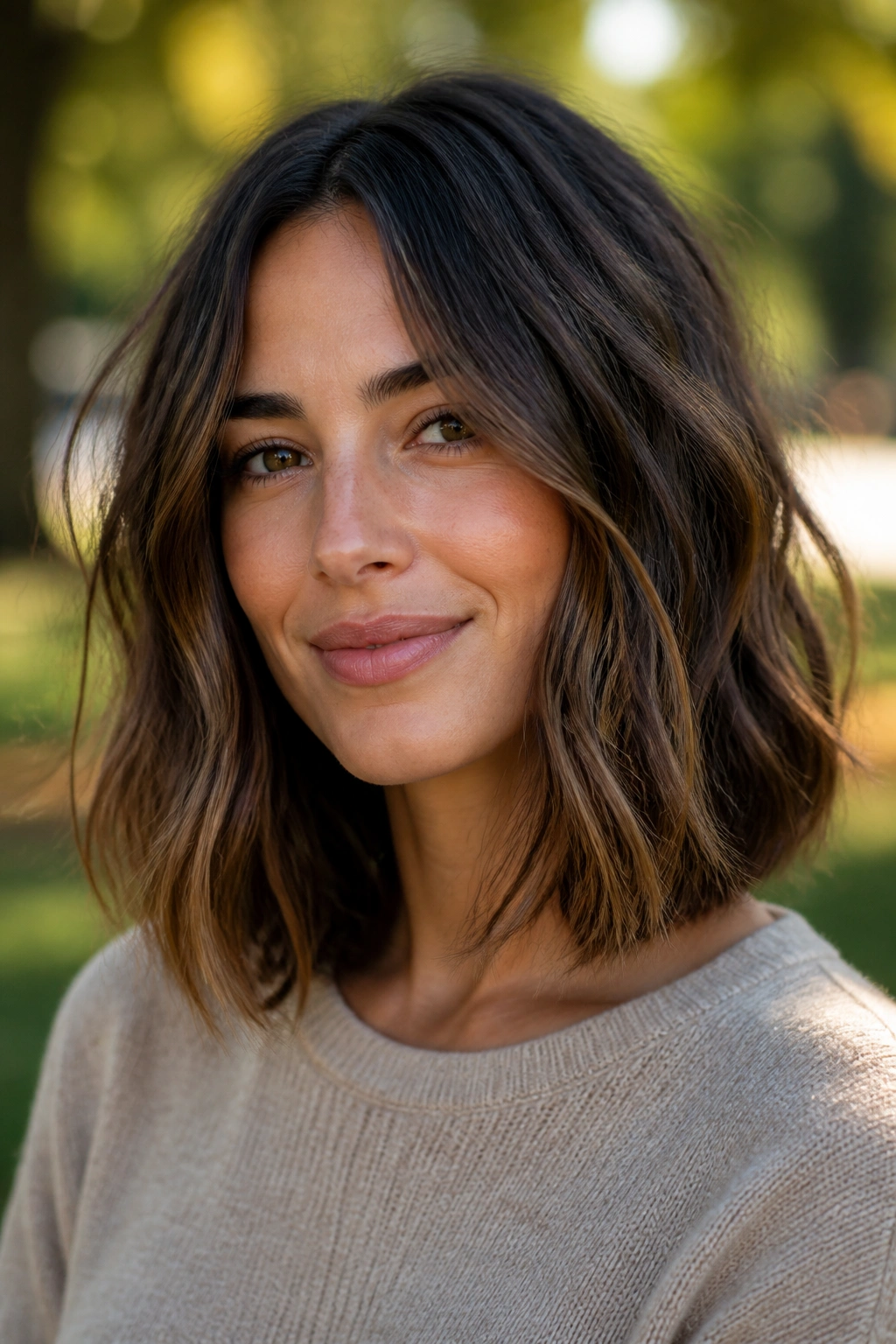
A textured lob is the haircut version of breathing room. It keeps enough length to feel feminine and easy, but the line stops around the collarbone, which gives a long face a wider visual base.
Loose waves help even more. Straight hair hanging past the shoulders can drag the face downward. A soft wave, especially one that starts below the cheekbone, adds width without fuss. The goal is not pageant hair. The goal is a little bend, a little movement, and ends that don’t sit like dead weight.
This cut is especially nice if you wear glasses or have a sharp jawline, because it softens the overall shape without hiding your features. I like it with a middle part when the waves are full, and with a slight side part when the hair is finer. Both work, but the part changes the mood fast.
5. Side-Swept Bangs and Mid-Length Layers
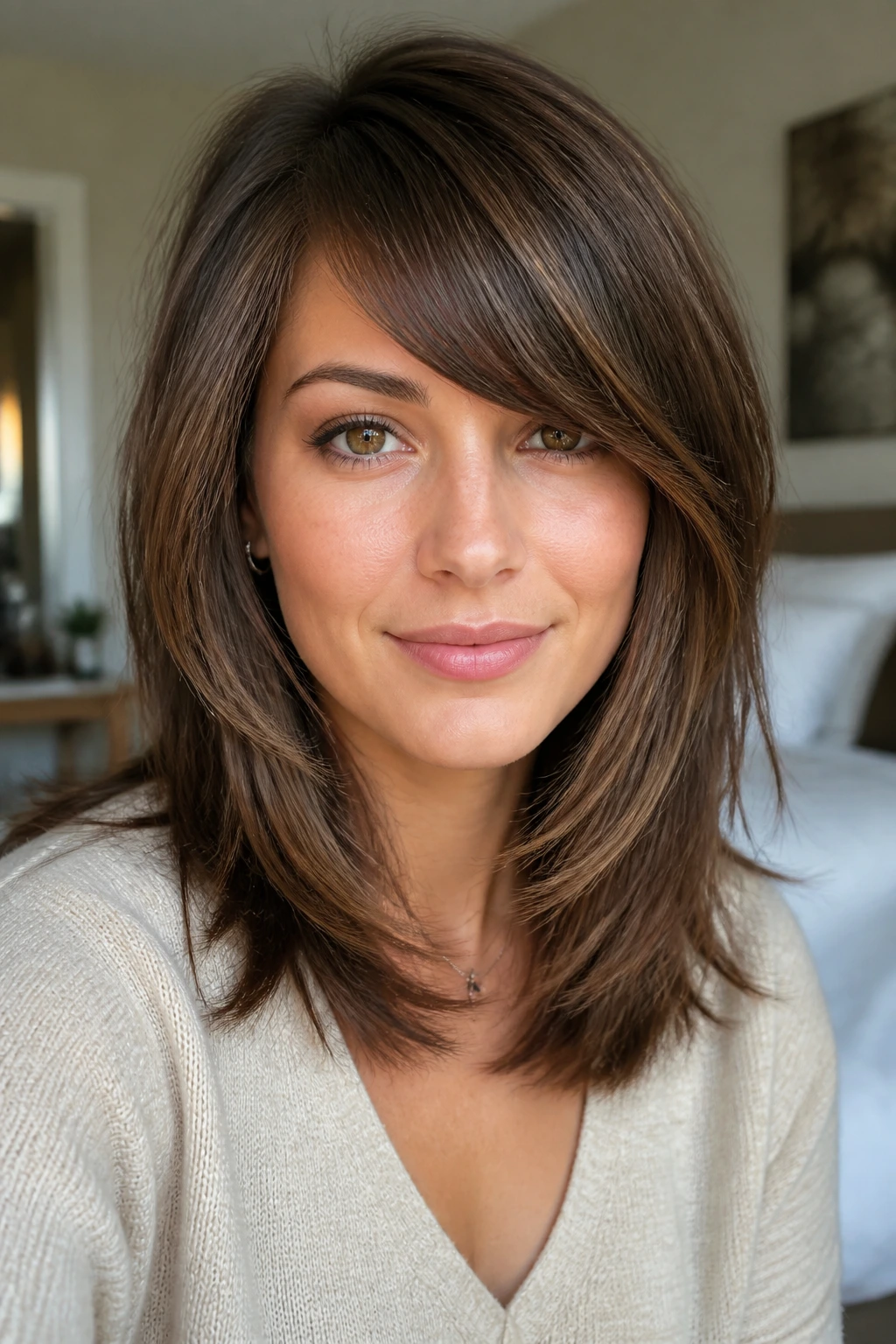
Side-swept bangs are underrated. They do not shout, which is part of why they work so well on long faces. That diagonal line draws attention across the face instead of down it.
Paired with mid-length layers, the whole haircut feels lighter around the cheeks and stronger around the sides. The bangs should start deep enough that they sweep across the forehead rather than sit on top of it. If they are too short, the look can get spiky. Too long, and they fall into your eyes with no shape at all.
This is a smart choice if you want something softer than a blunt fringe. It also plays nicely with hair that has a little bend, because the sweep looks more natural when the strand has movement. Keep the rest of the cut below the chin and avoid too much height at the crown. That crown volume is sneaky. It adds length fast.
6. Butterfly Cut
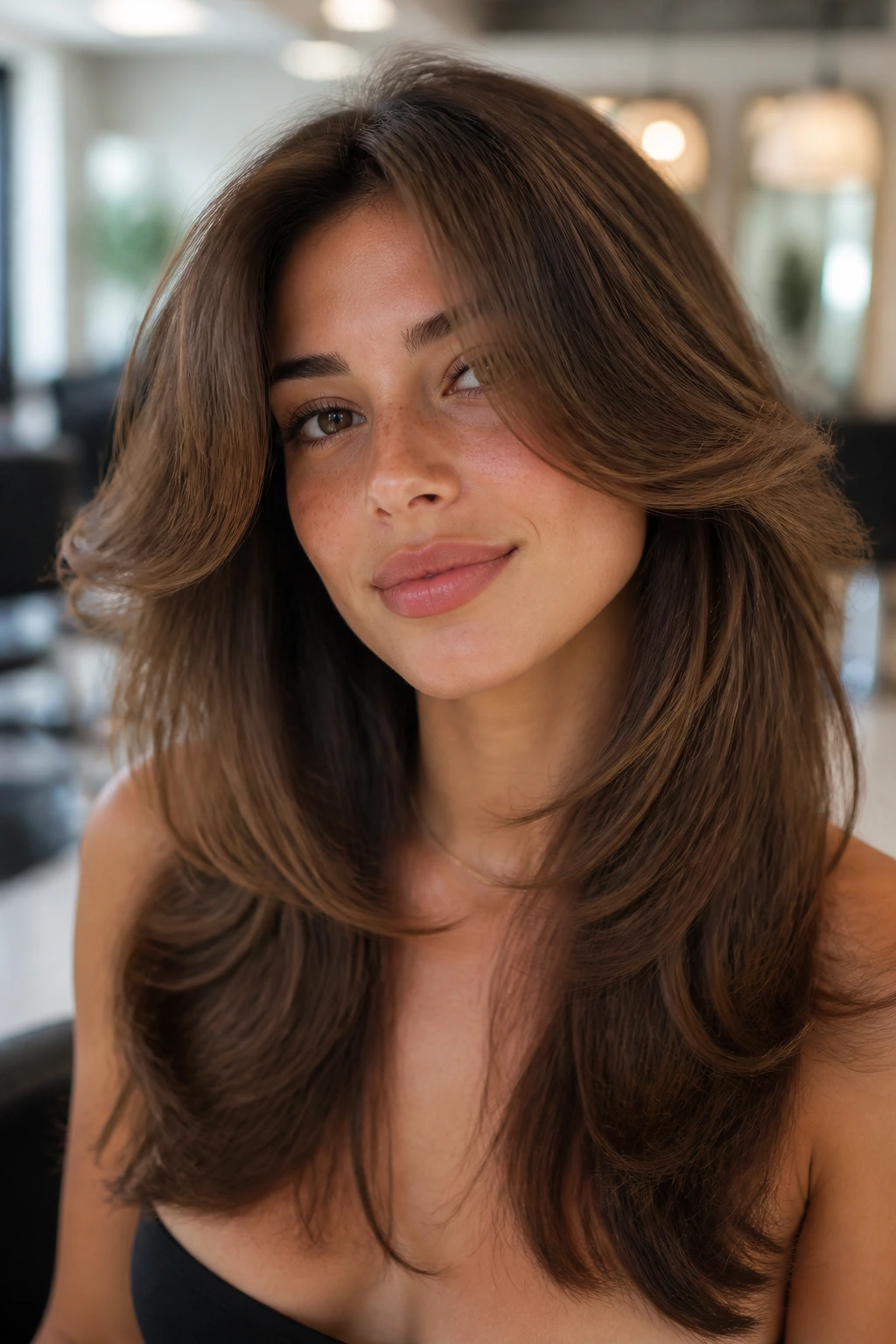
A butterfly cut can be excellent for long faces, but only when the shorter layers are placed with intent. The whole point is to create width around the face while leaving the back length intact.
The shorter pieces around the front should hit somewhere near the cheekbones or mouth, then blend into longer lengths. That gives the face a wider frame without making the haircut feel chopped up. Blowouts usually make this cut look its best because the layers lift away from the face and create that airy, side-swept shape.
The Part That Matters Most
If the top layers start too high, the cut can actually stretch the face more. That happens when all the volume lives above the temples. Not helpful.
- Ask for face-framing layers that begin below the cheekbone
- Keep the longest layers heavy enough to hold shape
- Style with a round brush or large rollers for side fullness
- Skip sky-high root lift near the crown
A butterfly cut suits people who like movement and still want length. It’s polished, but not flat.
7. Soft Shag with Cheekbone Pieces
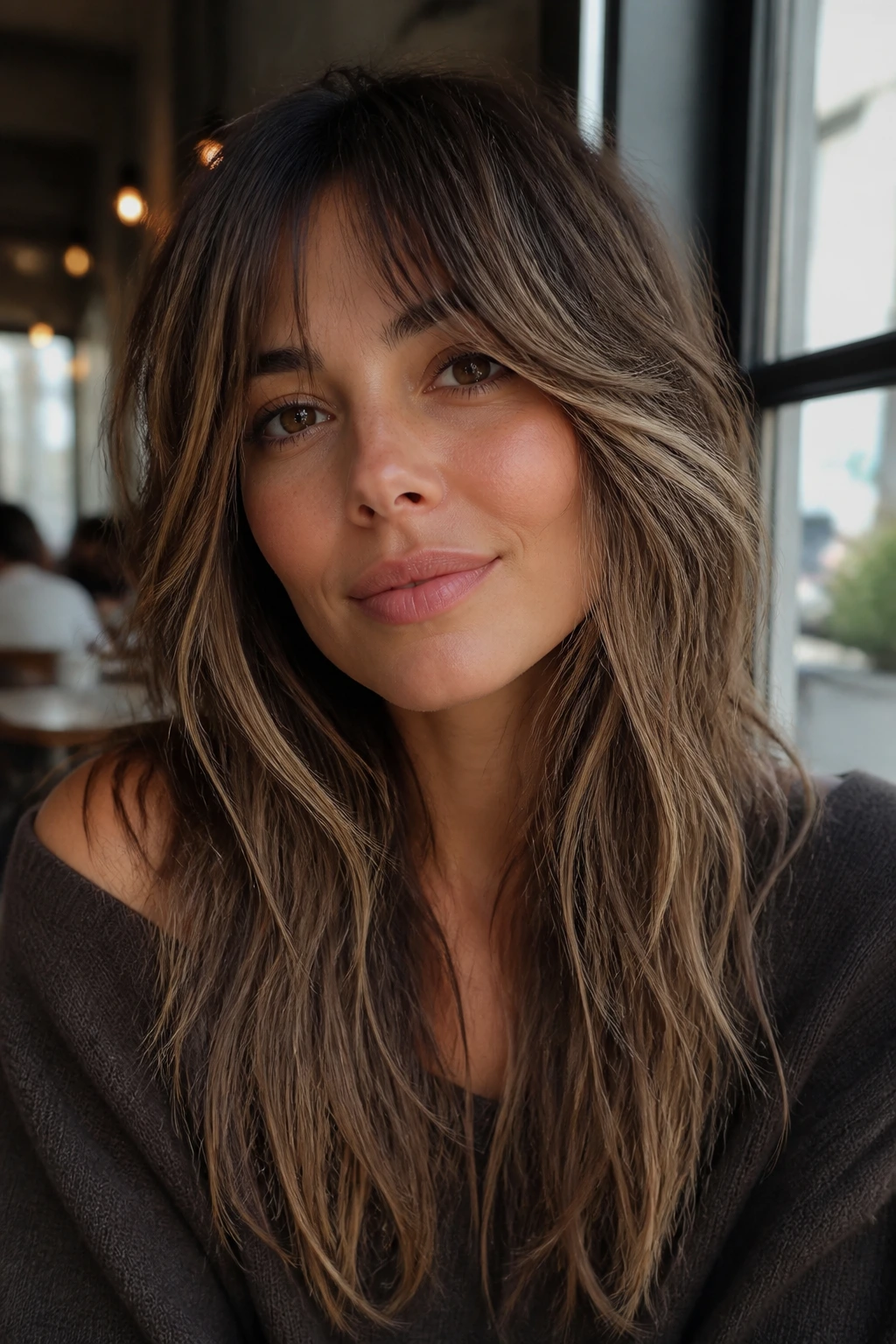
A soft shag is not the same thing as a wild, chopped-up cut from the back of a concert hall. On a long face, the softer version is the one that works.
What makes it useful is the cheekbone emphasis. Those lighter pieces around the face create width right where the eye needs a break from vertical length. The rest of the layers should stay airy, not shredded. If the top gets too short or too piecey, the cut starts to pull the eye upward, and that is a bad trade.
This style loves natural wave. Straight hair can wear it too, but it needs texture spray or a quick bend with a flat iron. The point is movement, not perfection. A slight mess is part of the appeal.
If your hair is thick: this cut removes bulk without making the shape collapse.
If your hair is fine: ask for softer internal layers, because too many short pieces can leave the ends looking thin.
8. Blunt Collarbone Cut

A blunt collarbone cut is clean, easy, and sneakily flattering on long faces. The length lands low enough to keep some softness, but the blunt edge gives width where the shoulders start.
That matters. A long face often looks better when the haircut stops the eye at the upper chest instead of letting hair hang forever. The collarbone is a good landing place because it creates a strong shape without feeling severe.
I like this cut best when it is worn with a slight bend under the ends or a loose wave through the mid-lengths. Straight and sharp can work too, especially if your features are delicate. But if your face is narrow, a bit of movement keeps the line from feeling too rigid.
One small warning: don’t over-layer it. The whole point is the blunt perimeter. Too many chopped layers erase the strong shape that makes the cut useful in the first place.
9. A-Line Bob
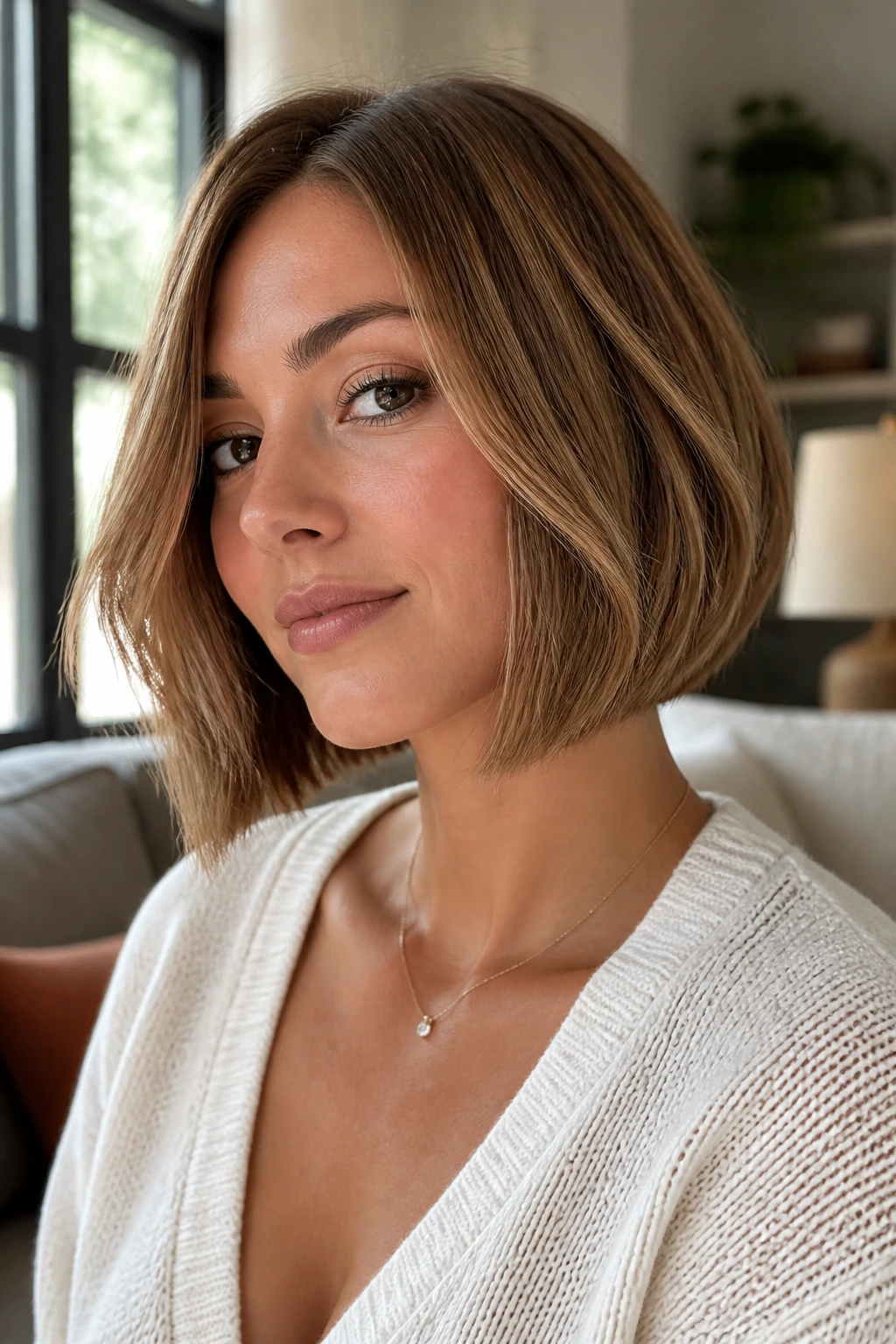
An A-line bob adds a subtle forward swing that works well on a long face. The back sits a little shorter, the front drops a little longer, and that tiny angle creates width near the jaw instead of lengthening the face.
This cut is best when the angle is gentle. A dramatic wedge can look dated fast and can also make the chin area feel too pointy. A soft A-line, though, gives you a polished outline with just enough edge. It is one of those haircuts that looks neat even when it is slightly grown out.
Wear it smooth for a sharper look, or add a small wave for softness. If your face is very long, keep the front no lower than the collarbone. If it drops too far past that, the balancing effect starts to fade.
A side part can be useful here. It shifts the weight and gives the top half of the face a little more width without adding height.
10. Long Layers for Long Face Shapes Women
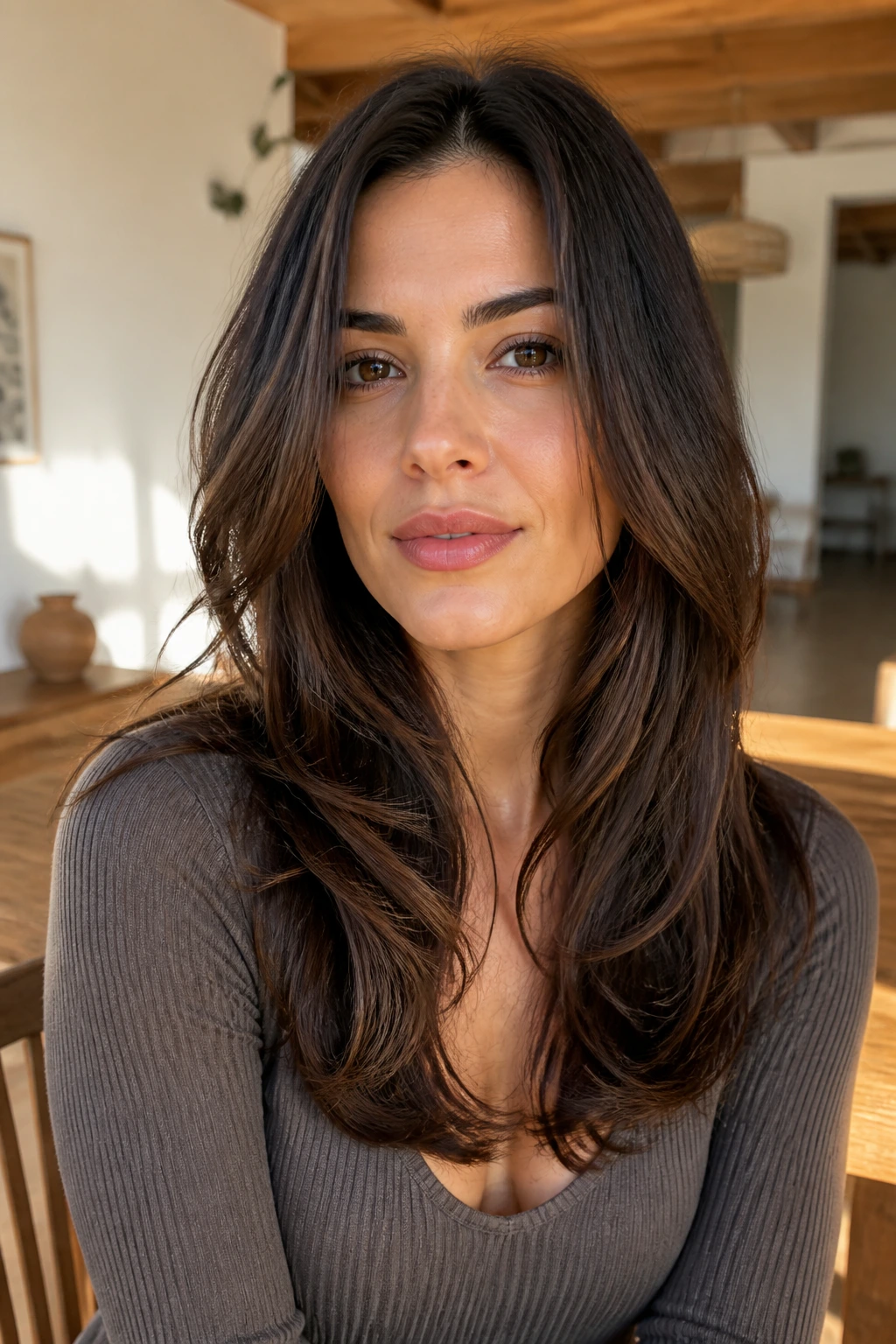
Can long layers for long face shapes women work? Absolutely, if the layers do something useful instead of disappearing into the length. The best version keeps the hair long but places fullness around the middle of the face.
Where the Layers Should Start
I like long layers that start around the chin or lower. That keeps the cheek area from looking bare. If layers begin too high on a long face, they can pull the eye upward and make the forehead feel bigger than it is.
The finish matters too. Long hair with soft waves, a slight bevel, or a big bend around the mid-lengths works far better than bone-straight hair that falls flat. You want the sides to have some body. Not fluff. Body.
What to Avoid
- Short crown layers that add height
- Thin ends that make the haircut look stringy
- A harsh center part with zero movement
- Face-framing pieces that stop at the jaw and go no further
This is a good choice for anyone who wants to keep length. You do not have to give up your long hair to flatter a long face. You just have to place the layers with more care than most people do.
11. Pixie with Long Side Fringe
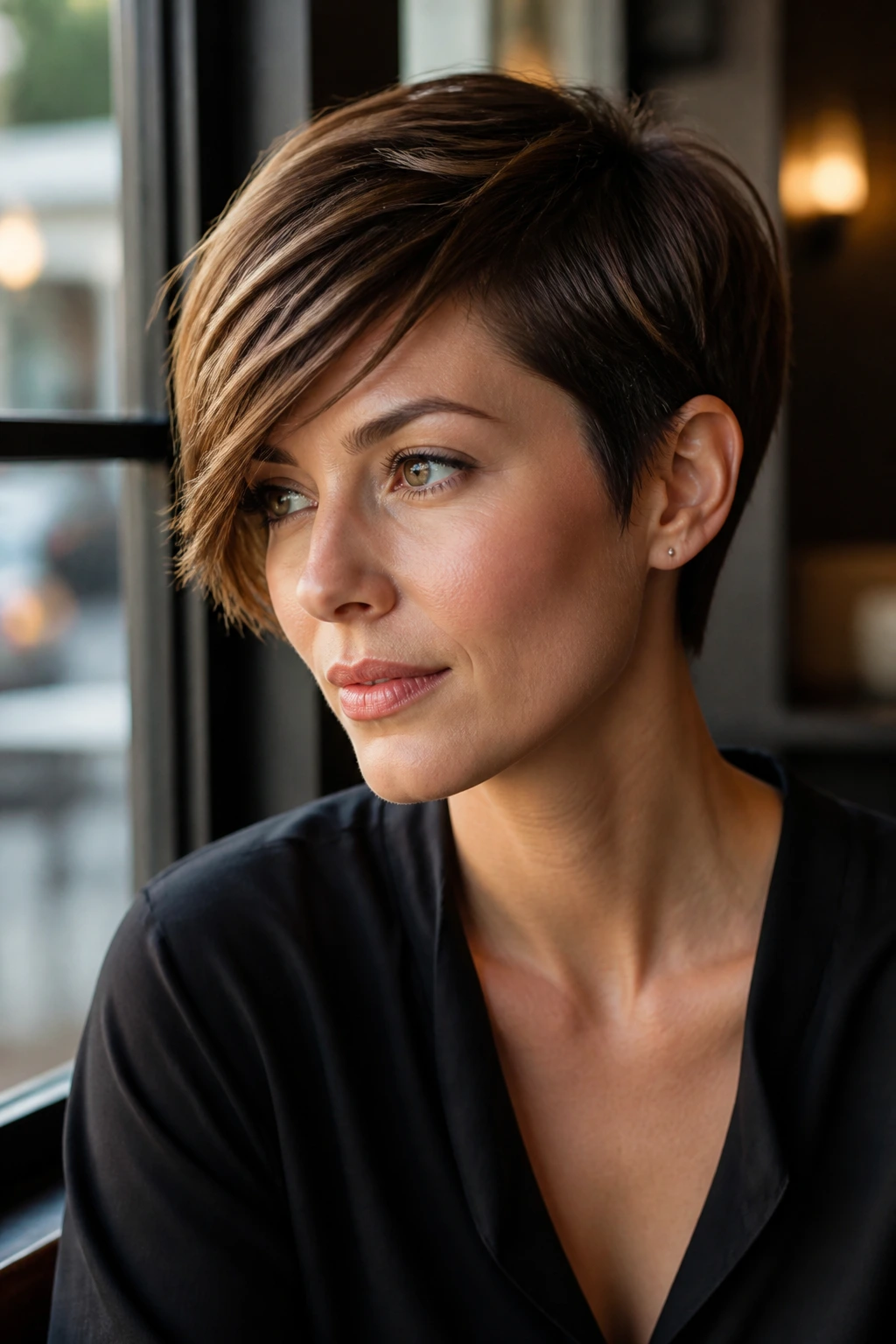
A pixie with a long side fringe can be a sharp move on a long face. The fringe shortens the forehead visually, and the longer side section creates motion across the face instead of up and down.
The key is balance. Keep the top modest, not tall. A lot of pixies get styled upward, which adds height right where you do not want it. Instead, let the fringe fall across the forehead and keep the sides tidy. That creates width and makes the eyes pop.
This is one of the better short cuts for women who like strong features. It puts the cheekbones, jaw, and neck on display. Earrings help. Necklines matter too. A simple crew neck can make the cut feel sporty, while a boat neck or open collar gives it a little more softness.
One sentence version: short hair is not the enemy. Height is.
12. Wavy Lob with Invisible Layers
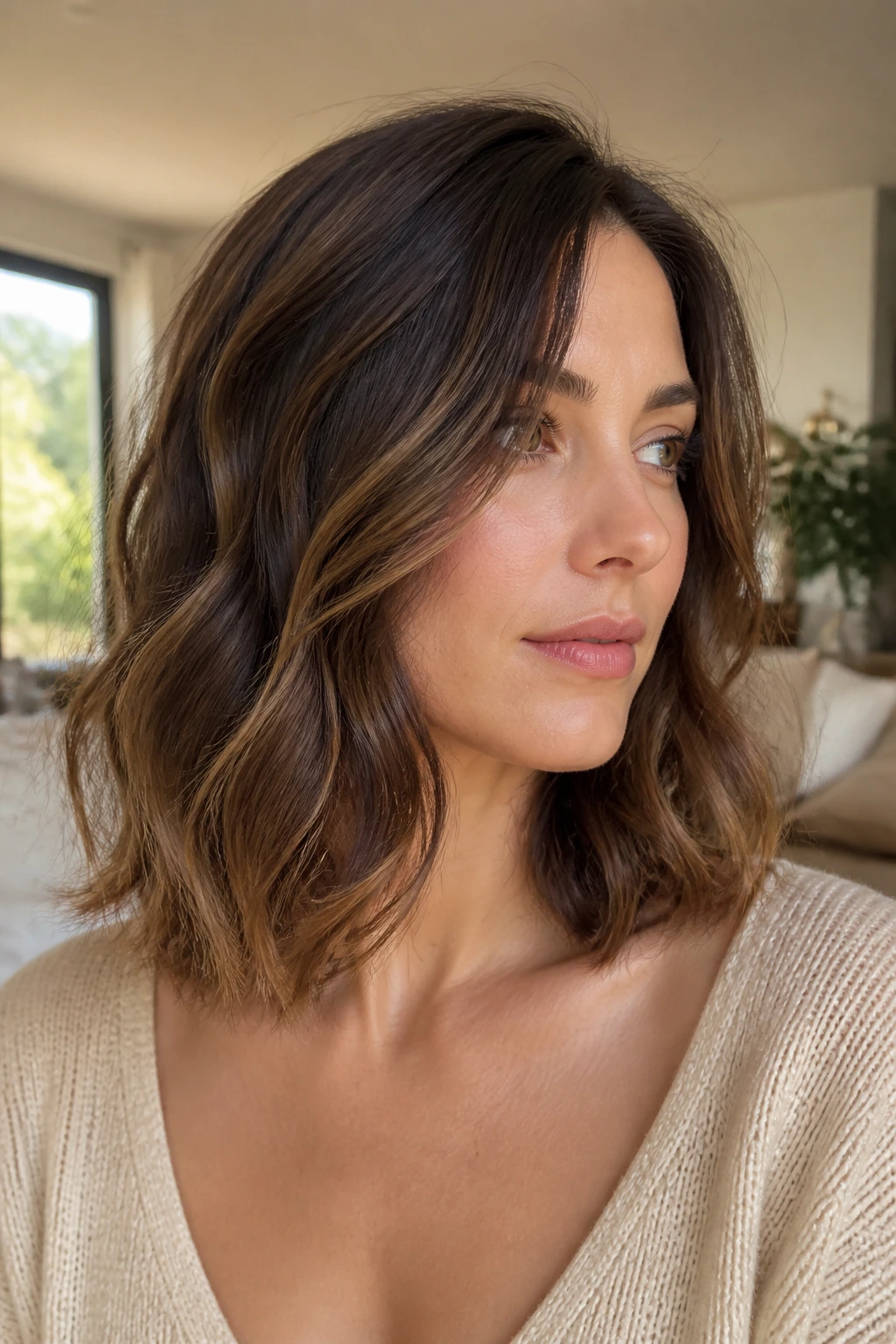
A wavy lob with invisible layers is a favorite when someone wants movement without obvious chopping. The layers sit inside the haircut, so the ends still look full while the hair gains a little bounce.
That makes a long face look better in a quiet way. You get width from the wave and shape from the collarbone length, but you do not get the broken-up look that heavy layering can sometimes create. It’s a good cut for medium-density hair, especially if you want something easy to grow out.
I like this cut with a deep side part or a loose center part, depending on the face. The wave should sit around the cheekbone and jaw, not float up at the temples. That placement matters. It keeps the eye moving side to side, which is exactly what a long face needs.
A flat iron bend or a large curling wand works well here. Leave the ends a little undone. Too much curl turns the lob into a different haircut.
13. Asymmetrical Bob
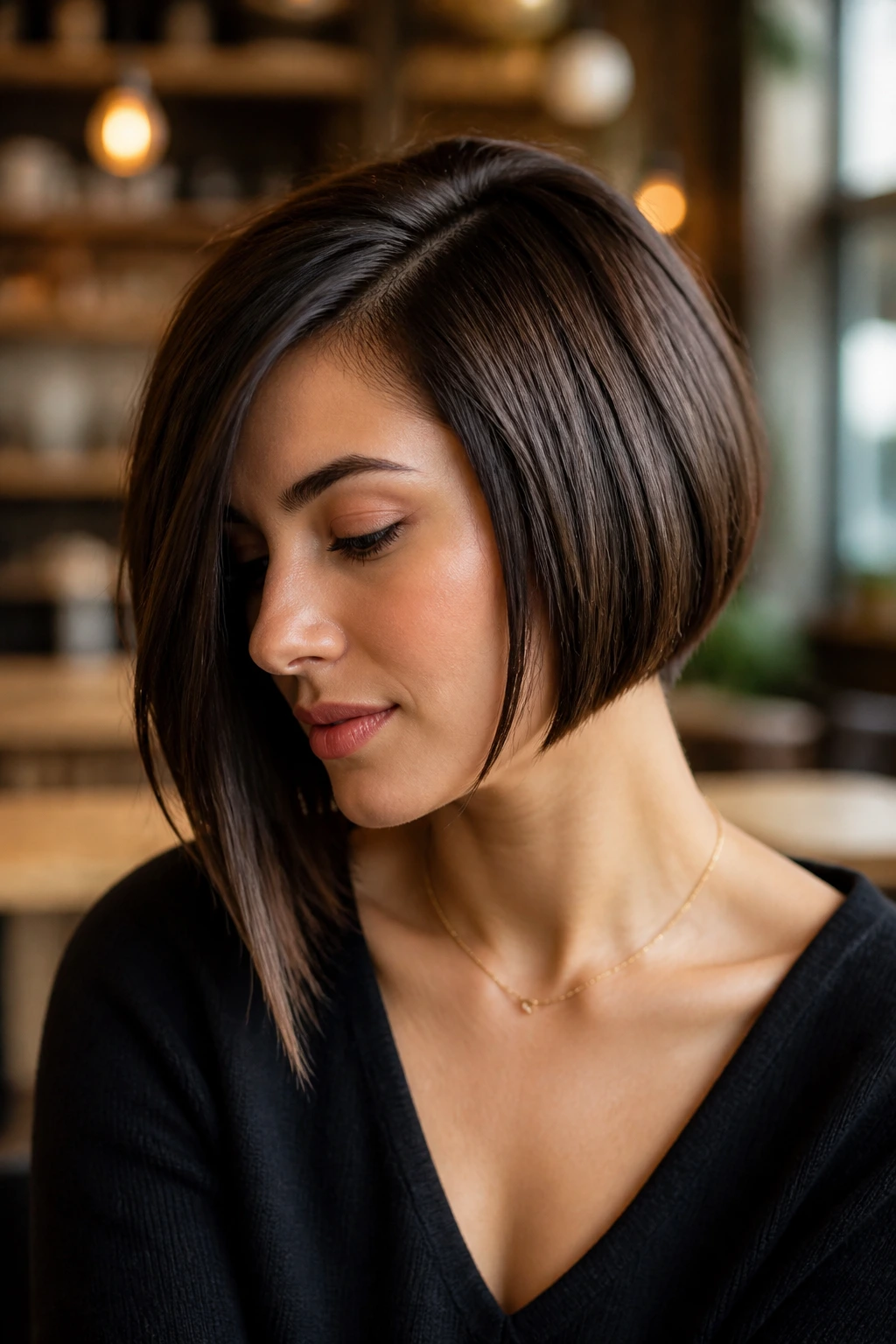
A slightly asymmetrical bob breaks a long face in a useful way. One side sitting a touch longer than the other creates movement across the face, and that movement keeps the eye from reading the shape as a straight vertical line.
The difference should be small. A dramatic asymmetry can feel harsh, and on a long face it can pull attention to the length instead of away from it. Keep the longer side just grazing the jaw or collarbone. That gives the haircut some edge while still staying flattering.
This cut looks especially good when tucked behind one ear. That simple move shows off the angle and opens space around the face. It also works well with a side part, since the part naturally builds a little width on one side.
If you like structure and a haircut that feels deliberate, this one delivers. It is neat, but not boring. That is a useful combination.
14. Shoulder-Length Cut with Full Fringe

A shoulder-length cut with a full fringe can be a strong choice when the forehead is the longest part of the face. The fringe cuts the vertical space right away, and the shoulder length adds a broad base below.
The fringe should not be too thick or stiff. A heavy wall across the forehead can look severe and close off the face. Soft ends, a little curve, and some space between the strands make it easier to wear. Think of it as a frame, not a curtain.
The shoulder-length perimeter gives you room to style the hair in waves, bends, or a smooth blowout. If you leave it too flat, the bangs do all the work and the rest of the haircut fades into the background. A bit of volume at the sides helps the whole shape read correctly.
This is a good option if you like a polished look and do not mind fringe maintenance. Bangs need trims. That’s the price.
15. Curly Shag
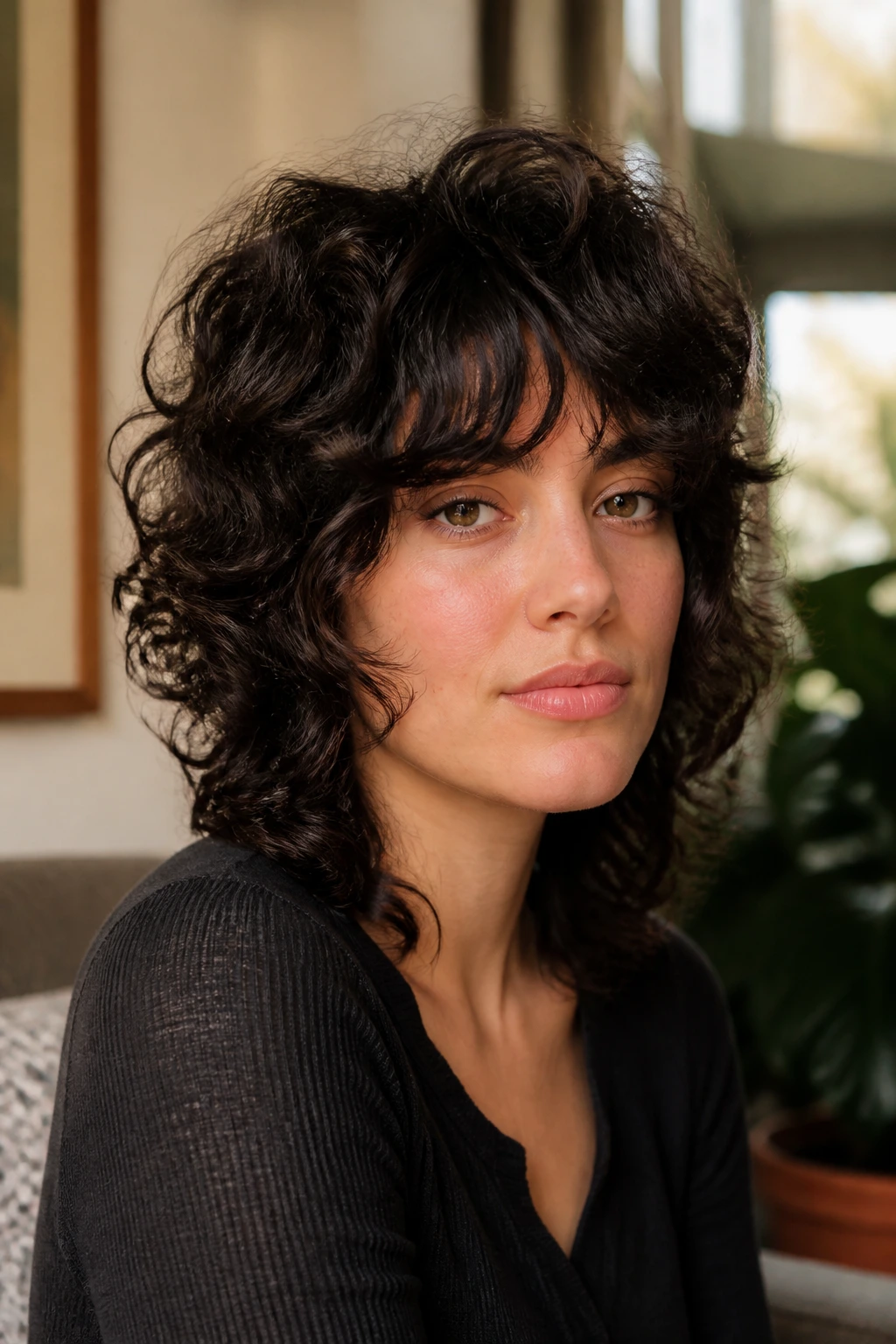
A curly shag works on a long face because curls already have width, and the shag shape lets that width live in the right places. The result feels balanced instead of heavy on top and thin at the bottom.
What the Layers Should Do
For curly hair, the layers need to respect the curl pattern. Choppy layers cut badly into curls can create a triangle, which is not what we want. The best curly shag keeps the sides round and lets the curls stack softly around the cheeks and jaw.
Dry cutting helps a lot here. Curls shrink, sometimes in a dramatic way, and a cut that looks perfect wet can land two inches shorter than expected once it dries. That’s why curl-by-curl shaping matters.
Best Styling Habits
- Use a light cream or gel for hold
- Diffuse on low heat if you need volume
- Keep the top from rising too high
- Let a few front curls fall toward the cheekbones
A curly shag can look messy in a good way, but it should still have shape. If it puffs straight out from the temples, ask for the sides to be refined a bit more.
16. Box Bob
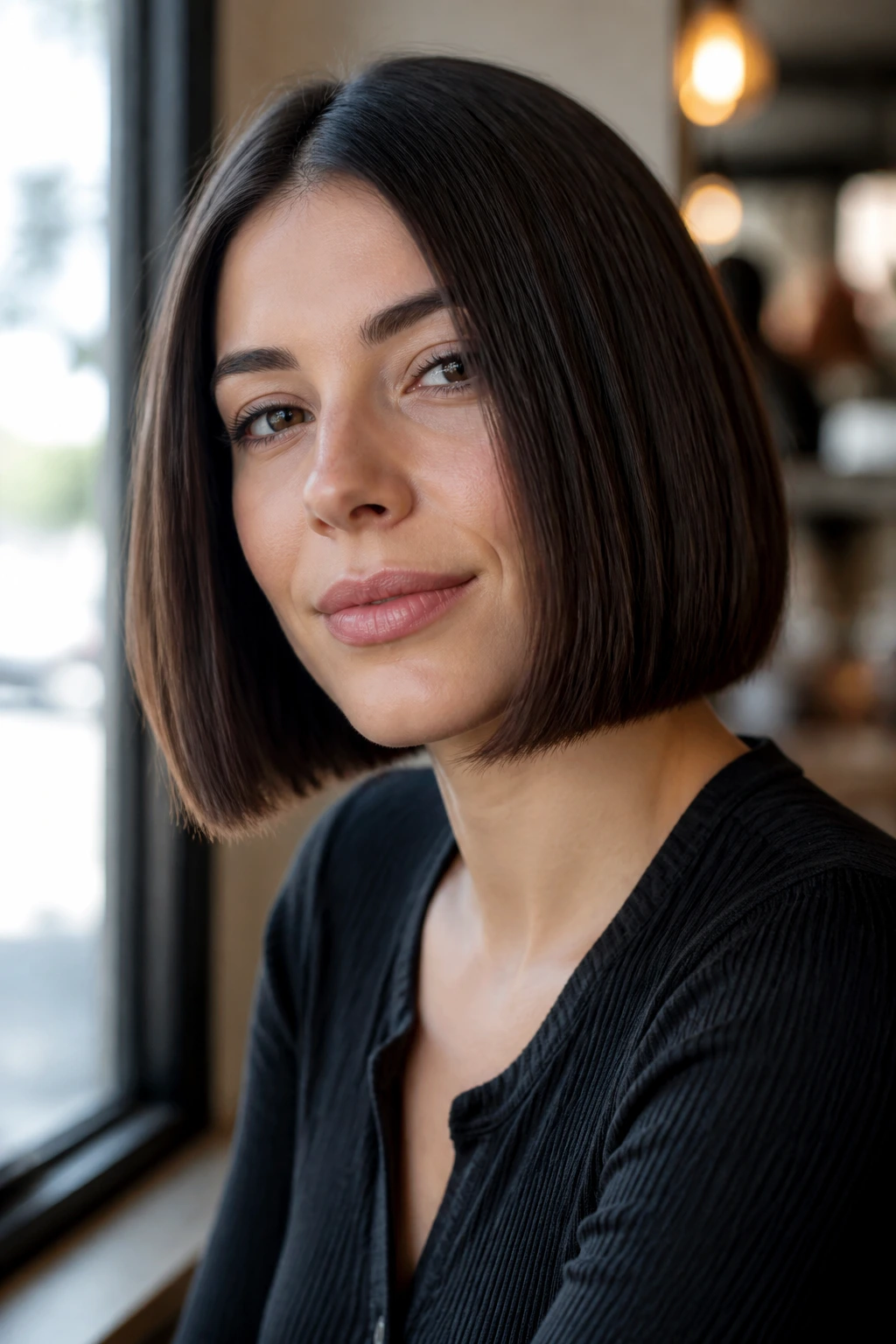
A box bob has a straighter, fuller outline than a rounded bob, and that shape can be a gift for long faces. The line widens the face visually, especially around the jaw and lower cheek.
This cut is best when the ends are blunt and the width sits evenly from side to side. It has a bit more geometry than a soft bob, which makes it feel crisp. If your face is narrow, that crispness helps create balance fast.
It’s especially good on straight hair, where the boxy shape can stay visible all day. Wavy hair can wear it too, but the edges should be left clean enough that the shape does not collapse into fuzz. A slight off-center part often works better than a hard center part because it gives the top half a little less height.
There’s a practical upside too: box bobs tend to look thick even when hair is medium-fine. The blunt perimeter does some of the visual heavy lifting.
17. Mid-Length Wolf Cut
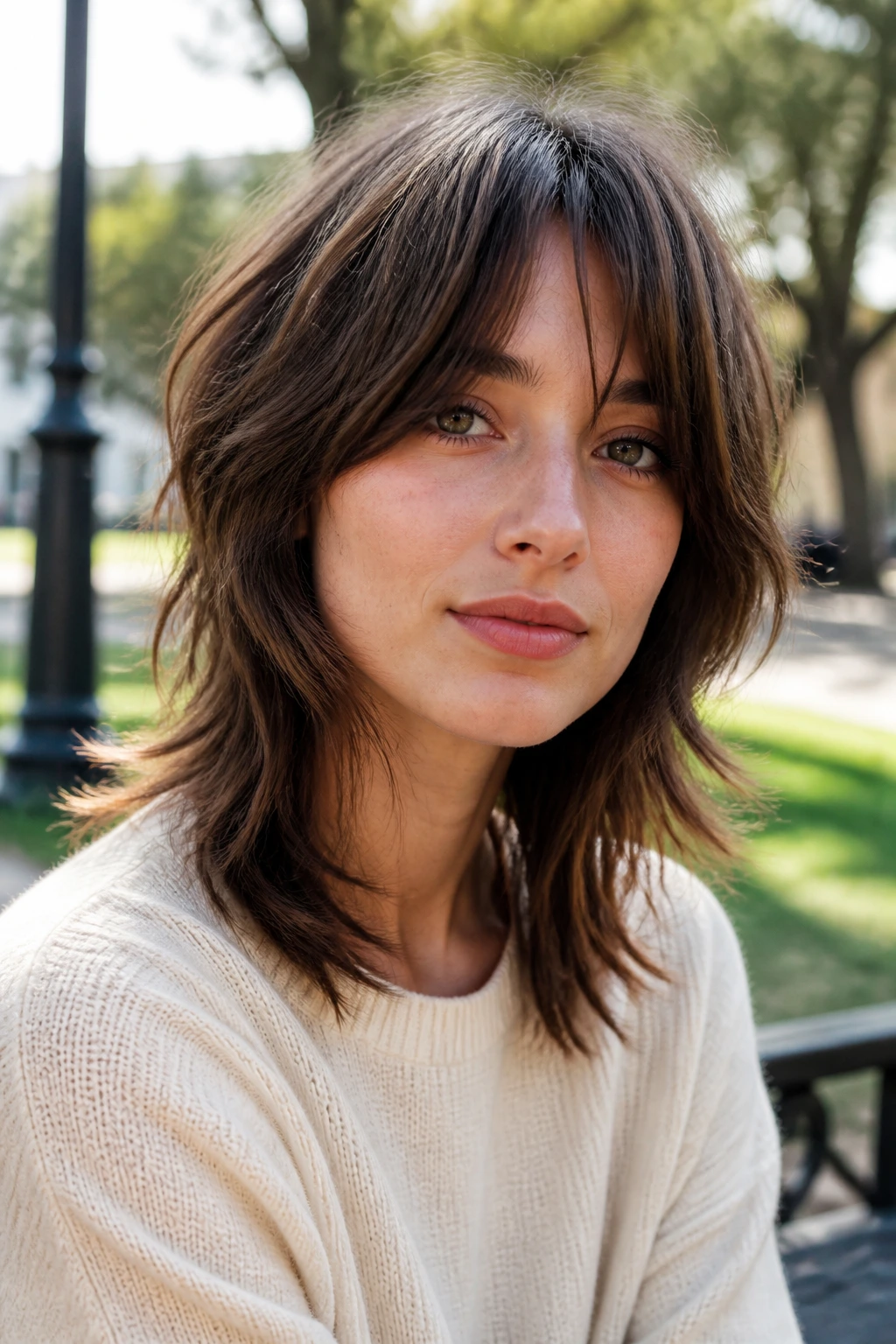
A mid-length wolf cut can work on a long face, but only if it stays soft. The trouble with a too-aggressive wolf cut is that all the height moves to the crown, and that lengthens the face instead of balancing it.
The version that works keeps the face-framing pieces substantial and the crown controlled. You want texture around the cheeks, not a mushroom of short layers on top. The bottom length should still hold some weight so the shape does not get wispy.
This cut makes sense if you like a little edge and you already wear your hair with movement. Wavy and thick hair are the easiest matches. Straight hair can wear it, but it needs more styling to stop the layers from lying flat.
A small trick: use your hands, not a brush, when drying the front pieces. Brushes can over-fluff the top and flatten the rest. Hands keep the texture messier in a better way.
18. Bixie with Tapered Sides
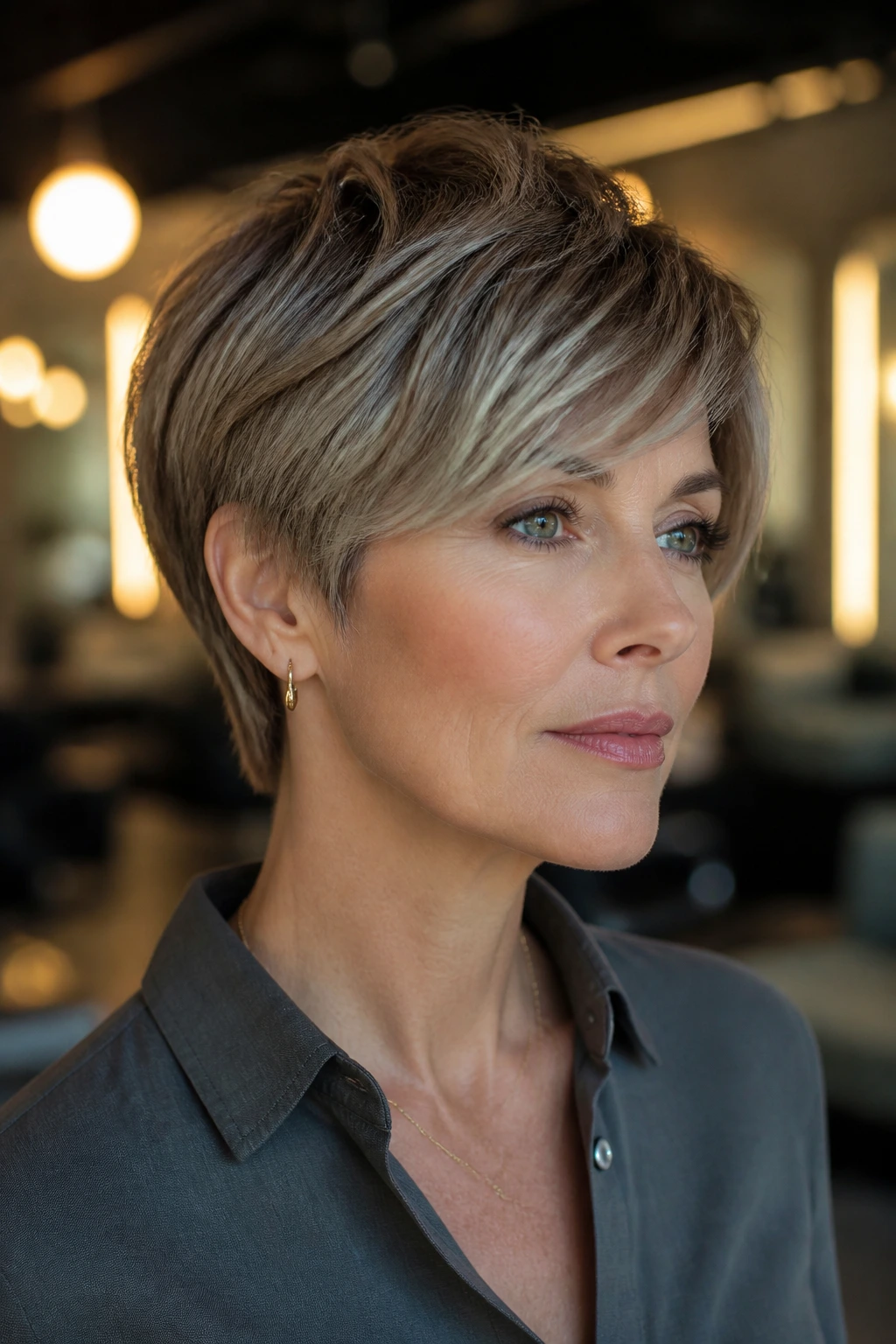
A bixie sits between a bob and a pixie, and the tapered sides are what make it useful for long faces. The cut gives softness around the temples and jaw while keeping enough shape on top to feel modern.
Why It Flatters
The bixie shortens the face visually without going as short as a classic pixie. That makes it easier to wear if you’re nervous about losing length. The tapered sides also keep the haircut from feeling too wide or boxy.
What to Ask For
- Soft taper around the ears and sides
- Longer fringe that can fall diagonally
- Low volume at the crown
- A little texture through the top, not spikiness
This is a smart option for fine hair because the layers can create lift without much weight. It also grows out well if you keep the outline clean. If you want something bold but not severe, this is the sweet spot.
19. U-Cut with Soft Waves
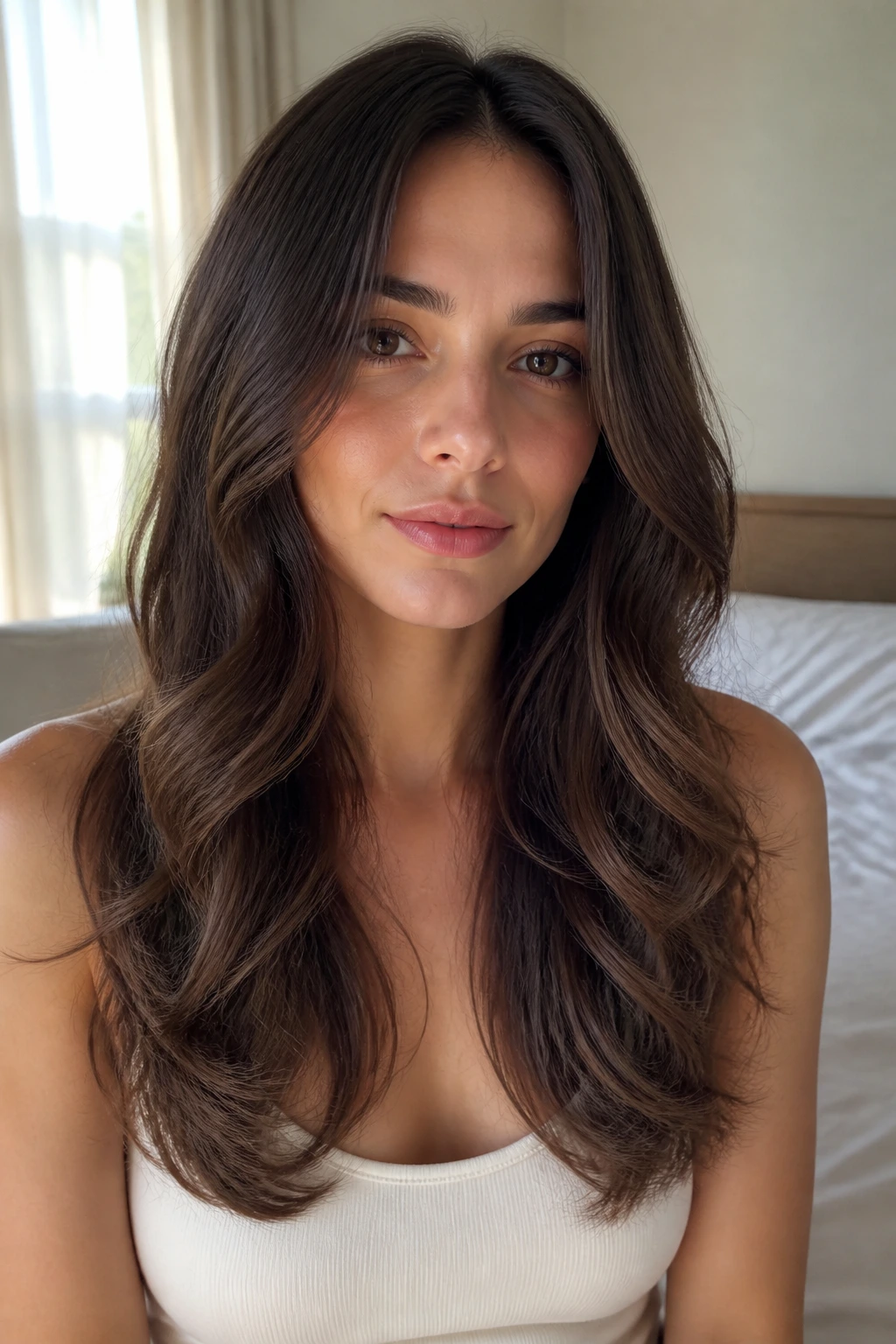
A U-cut keeps the center length slightly longer than the sides, which sounds subtle, but on a long face it can make the whole haircut feel softer and broader. The curved hem creates a gentler shape than a sharp V.
That matters because a V-cut tends to draw the eye downward. A U-cut does the opposite. It gives the length a little roundness, and when you add soft waves, the sides gain just enough fullness to balance the face.
This cut is a good answer if you love long hair and do not want a dramatic change. It also works well with natural texture because the wave makes the curve visible. Straight hair can wear it too, but the shape is easier to see once the ends move.
I like this one for women who want their hair to feel feminine without looking stringy. Long, but not heavy. Soft, but not shapeless.
20. Shoulder-Grazing Cut with Bottleneck Bangs

A shoulder-grazing cut with bottleneck bangs is one of the smartest combinations for a long face. The length gives width at the shoulders, and the bangs narrow the forehead just enough to balance the face without making it feel boxed in.
Bottleneck bangs are a little softer than a full fringe. They start shorter in the center, then angle longer toward the temples. That shape is useful because it widens the upper face while still leaving room for movement. They also grow out better than blunt bangs, which makes them easier to live with.
The shoulder-grazing length keeps enough hair around the face to soften the jaw. Wear it with a bend, not a perfect curl. A little looseness around the ends keeps the haircut from looking overworked.
If you want one haircut that can feel polished on a workday and relaxed on a weekend, this is a strong pick. Long face shapes do not need drama to look balanced. They need the right interruption in the right place, and this cut gives you exactly that.
