



Oval faces can wear a lot, which is exactly why people get indecisive about them. Medium layered cuts for oval faces sit in that sweet spot where hair still has movement, but the shape of the cut does some quiet work for you instead of hanging there doing nothing.
The trick is not “fixing” an oval face. That shape already has balance. What matters is where the layers start, how much width they create near the cheeks, and whether the ends keep enough weight to stop the whole cut from floating away from the face. A medium cut that lands around the collarbone or shoulders can do that job beautifully — if the layers are placed with some intention.
A lot of bad haircut advice treats oval faces like they can wear anything and call it a day. Technically, sure. In practice, a cut can still make the face look longer than it is, flatten the cheek area, or turn thick hair into a triangle. Texture, density, parting, and the way you style your hair in the morning all matter. They matter a lot.
The smartest medium layered haircut is the one that works with your hair’s habits, not against them. Keep that in mind as the options unfold, because the difference between a flat medium cut and one that moves well is often only an inch or two of layer placement.
1. Collarbone Curtain Layers

Collarbone curtain layers are the safest place to start if you want movement without chaos. The length sits right at the collarbone, which gives oval faces a little width around the lower half of the face and keeps the overall shape from running too long.
Why It Works
The curtain effect comes from layers that open away from the center part and fall softly around the cheekbones. That little bend creates a frame without boxing the face in, and it works especially well when the shortest layer lands somewhere between the lip and the chin. Too short, and the result can look dated. Too long, and you lose the point.
Ask your stylist for long, face-framing layers that start around the cheekbone and blend into a medium-length base. If your hair is straight, this cut gets a soft curve with a round brush. If it’s wavy, a little air-drying cream is enough.
- Best for: medium to thick hair that needs shape
- Avoid if: you want a blunt, heavy finish
- Style with: a 1.25-inch round brush or a large curling iron, bent away from the face
Small tip: keep the ends clean. Curtain layers look polished when the last inch still has weight.
2. The Butterfly Cut
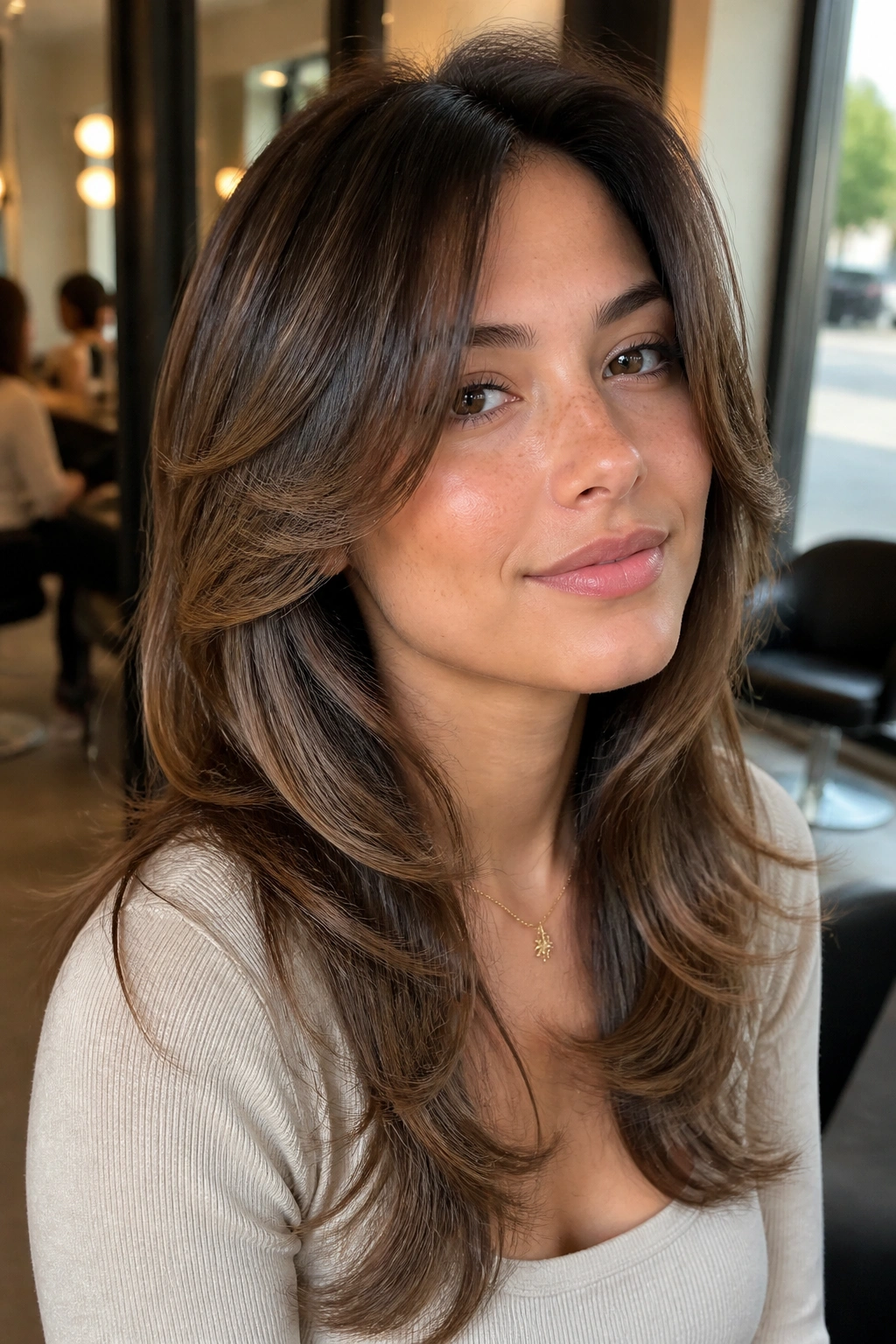
The butterfly cut is the one people ask for when they want volume at the top without giving up length at the bottom. On oval faces, that contrast is useful because it adds energy around the cheekbones and jaw without making the face feel crowded.
The upper layers are shorter and lighter, so they flip and lift. The lower section stays longer and swings. That split is the whole point. It gives you the feeling of a dramatic haircut while still keeping a medium length that brushes the shoulders or collarbone.
This cut shines if your hair tends to go flat around the crown. It also plays well with blowouts, because the shorter top layers catch the brush and give you that airy bend people usually chase with too much heat. Don’t overdo the shortest pieces, though. If they end too high, the style can start to feel like two separate haircuts stitched together.
Ask for internal layering on top and a softer, longer perimeter below. That’s the part most people miss.
3. Textured Lob with Airy Ends
A lob does not have to be blunt to feel clean. That’s the nice part. A textured lob with airy ends gives oval faces shape without the hard edge of a one-length bob, and the medium length keeps it easy to wear tucked, waved, or blown straight.
The texture should live in the ends, not all the way up the shaft. Think of it as a cut that moves when you walk, but still holds its line when you pin one side back. Point cutting is your friend here. So is a stylist who knows when to stop. Too much slicing turns the ends wispy and weak.
If your hair is fine, this is one of the better layered haircuts because it doesn’t strip away too much bulk. If your hair is thick, the airy finish helps keep the shape from feeling boxy around the shoulders.
What to Ask For
- A collarbone or slightly shorter length
- Soft, broken-up ends instead of a blunt edge
- Light layers through the mid-lengths, not all over the head
My opinion: this is one of the easiest medium layered cuts to live with. It grows out nicely and still looks deliberate after a few weeks.
4. The Modern Shag

Why does the shag keep coming back? Because it solves a real problem: hair that lies flat on top and puffs out at the bottom. Oval faces can handle the messier silhouette, and medium length keeps the shag from turning into a full-blown wolf cut unless that’s what you want.
The best version is softer than the ones with super-short crown pieces. You want movement around the eyes and cheekbones, not a helmet of chopped layers. A good shag has lift at the crown, broken texture through the sides, and enough length around the bottom to keep it from looking too severed.
A medium shag is especially good if you like a lived-in look and do not want to fight your hair every morning. Scrunch in a light mousse, air-dry halfway, then rough-dry the roots. That’s usually enough. A round brush can smooth the front if you need a cleaner finish.
What Makes It Different
The shag is less about polish and more about energy. That is the entire charm.
It suits oval faces because the face already has balance; the shag adds attitude without needing to “correct” anything. If you want the cut to feel a little cooler, ask for piecey fringe. If you want it softer, keep the fringe longer and let the layers blend.
5. Feathered Mid-Length Layers
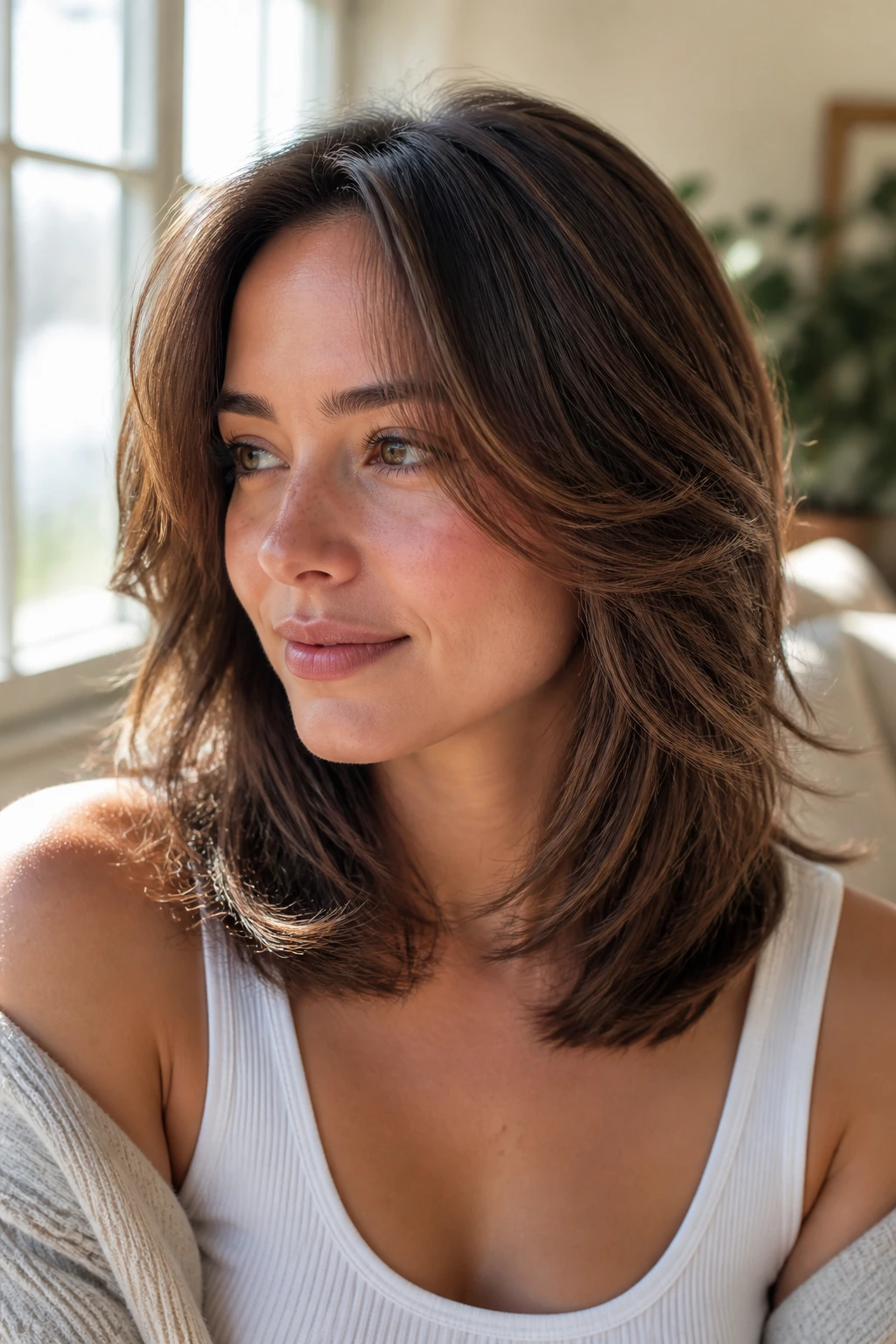
Feathering has a bad reputation because people remember the overdone versions. The modern take is better. Much better. On an oval face, feathered mid-length layers can soften the sides of the face without making the hair look thin or choppy.
This cut is all about tapered movement. The layers don’t jump out at you; they drift. The ends are light, but not shredded. That makes the style a good fit for straight hair that needs a little life, or for thicker hair that wants motion without losing its shape.
A feathered cut usually looks best when the longest pieces sit just below the shoulders. That gives the layers enough room to swing when you turn your head. Blow-drying with a medium round brush helps the ends turn under in a neat way, but you can also let it dry naturally and tuck one side behind the ear.
A small warning: feathering and thinning are not the same thing. One adds shape. The other can leave the ends looking hungry.
6. The Side-Part Sweep

Center parts get a lot of attention, but they’re not mandatory for oval faces. A deep side part can change a medium layered cut fast — it shifts volume, breaks symmetry, and gives the hair a little slope that flatters the cheekbone line.
This works especially well if your hair is fine or tends to collapse at the roots. The side part gives the top section a natural lift, and the longer sweep across the forehead adds diagonal movement. That diagonal line matters. It keeps an oval face from feeling too vertical, especially if the hair is straight and long through the sides.
How to Wear It
- Start the part just above the arch of one eyebrow
- Blow-dry the front section over from the opposite side for lift
- Keep the shortest layers around the cheekbone, not the temple
The cut itself can be simple. The part does a lot of the visual work. That’s why I like this on days when you want your hair to look styled without actually spending 40 minutes on it.
7. The Soft Wolf Cut

A wolf cut should look a little wild. Not messy in a bad way. Just a little loose, a little undone, with texture that falls in uneven pieces instead of one neat sheet of hair. For oval faces, the softer medium version is the sweet spot.
Start with a medium base and let the crown have more lift than a regular layered cut. Then keep the bottom perimeter soft enough to preserve length. The goal is motion, not a chopped-up outline. If the top is too short, the cut starts to dominate the face. If the bottom is too heavy, you lose the whole point.
This cut is not the one I’d hand to someone who wants a smooth blowout every day. It wants some grit. A little sea-salt spray, a diffuser, finger drying, all of that. It looks best when the layers are allowed to separate a bit.
And that’s the honest truth: the soft wolf cut is for people who like hair with some personality. It is not quiet.
8. Rounded U-Shape Layers
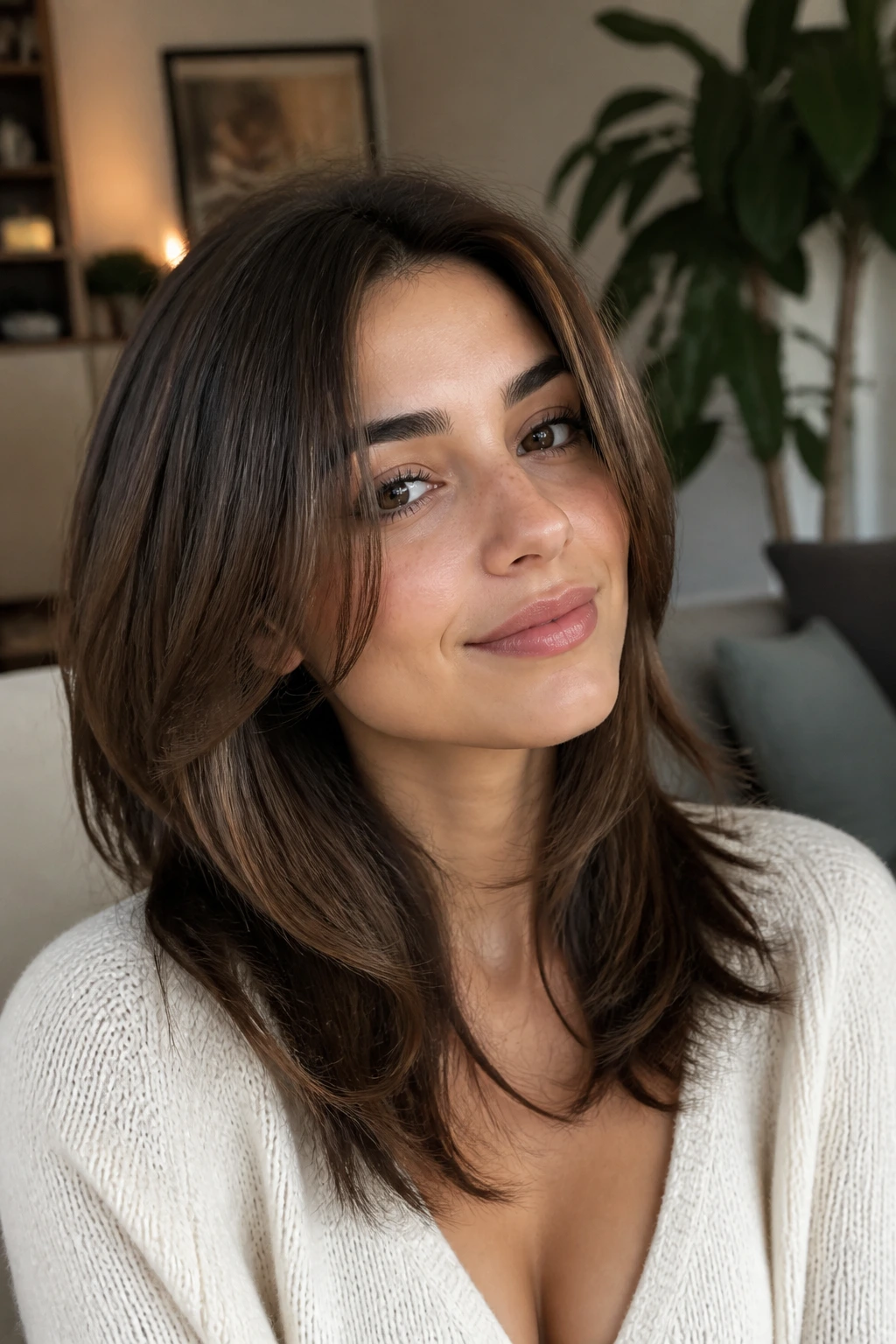
A rounded U-shape is underrated. It keeps the length softer at the back, with the front pieces sitting a touch shorter so the whole cut curves gently around the face. On an oval face, that curve gives the hair some structure without looking too square or too severe.
Compared with a straight-across cut, the U-shape takes pressure off the bottom edge. That matters if your hair is thick or if you hate the blunt, shelf-like look that medium hair can get at shoulder length. The layers should be long and subtle, with the bulk removed from the middle rather than the ends.
How to Ask for It
Say you want a medium U-shape with long blended layers and softness around the face. That phrase helps a stylist understand you do not want a stack of short pieces around the head.
- Works well on wavy or thick hair
- Keeps the outline smooth as it grows out
- Gives a little extra swing when you curl the ends outward
This is one of those cuts that doesn’t shout. It just keeps the whole head of hair looking calm.
9. Face-Framing Layers with a Blunt Base
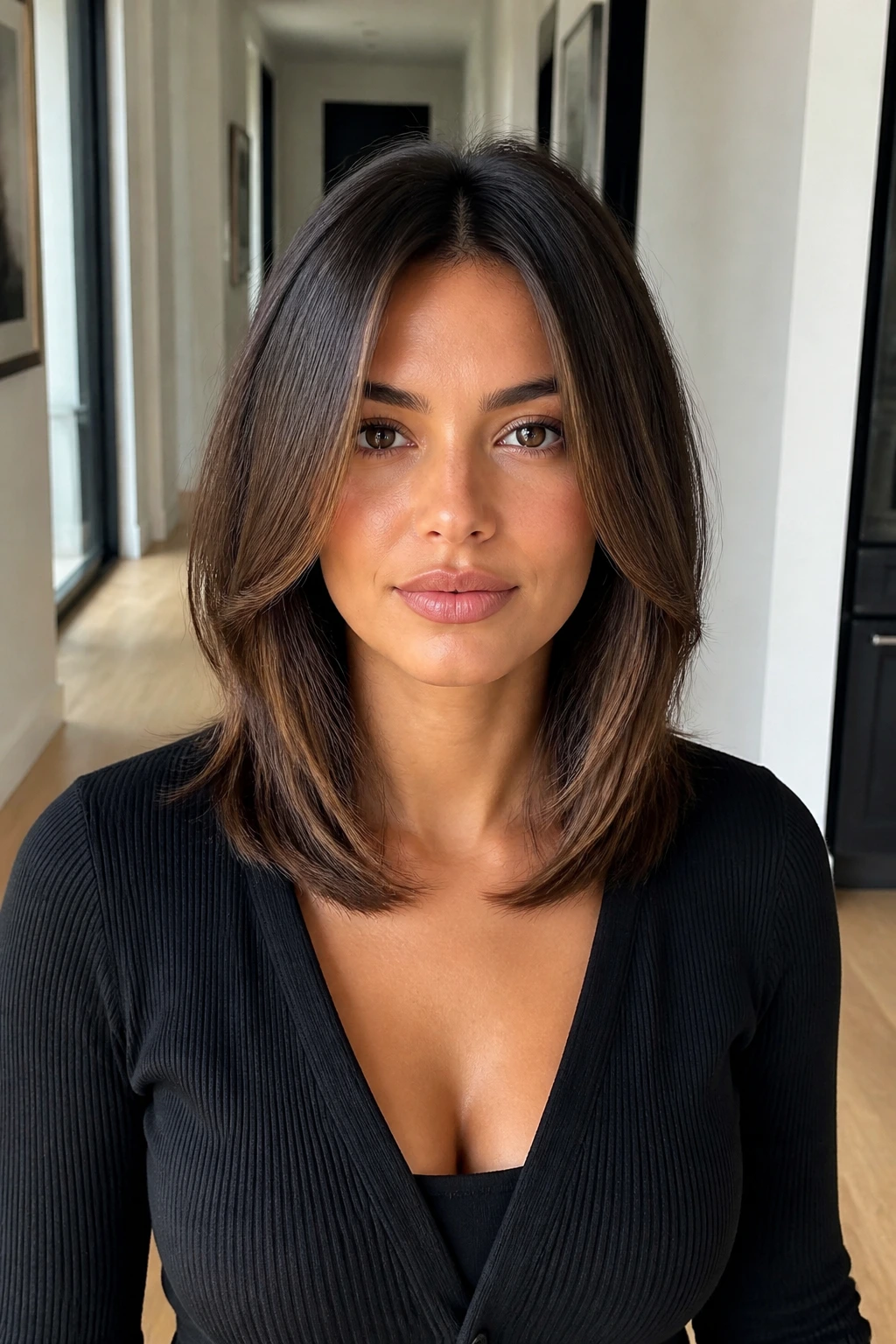
Here’s the nice contradiction: a haircut can have layers and still look full. The trick is keeping the base blunt and only cutting a few pieces around the face. For oval faces, that gives you shape without draining the hair of weight.
This style is especially useful if your hair is fine or medium density and tends to look thin when too many layers are added. The blunt perimeter keeps the outline strong. The face-framing pieces soften the front so the cut doesn’t feel blocky. You get movement where people look first, and thickness everywhere else.
I like this cut on people who want polish more than obvious texture. It works straight, tucked, curled under, or with a slight bend at the ends. If you wear your hair down a lot, it stays neat longer than a shag or wolf cut.
Ask for two to three long face pieces that begin near the chin and blend into the rest. That’s enough. More can start to fray the shape.
10. Shoulder-Grazing Cut with Internal Layers
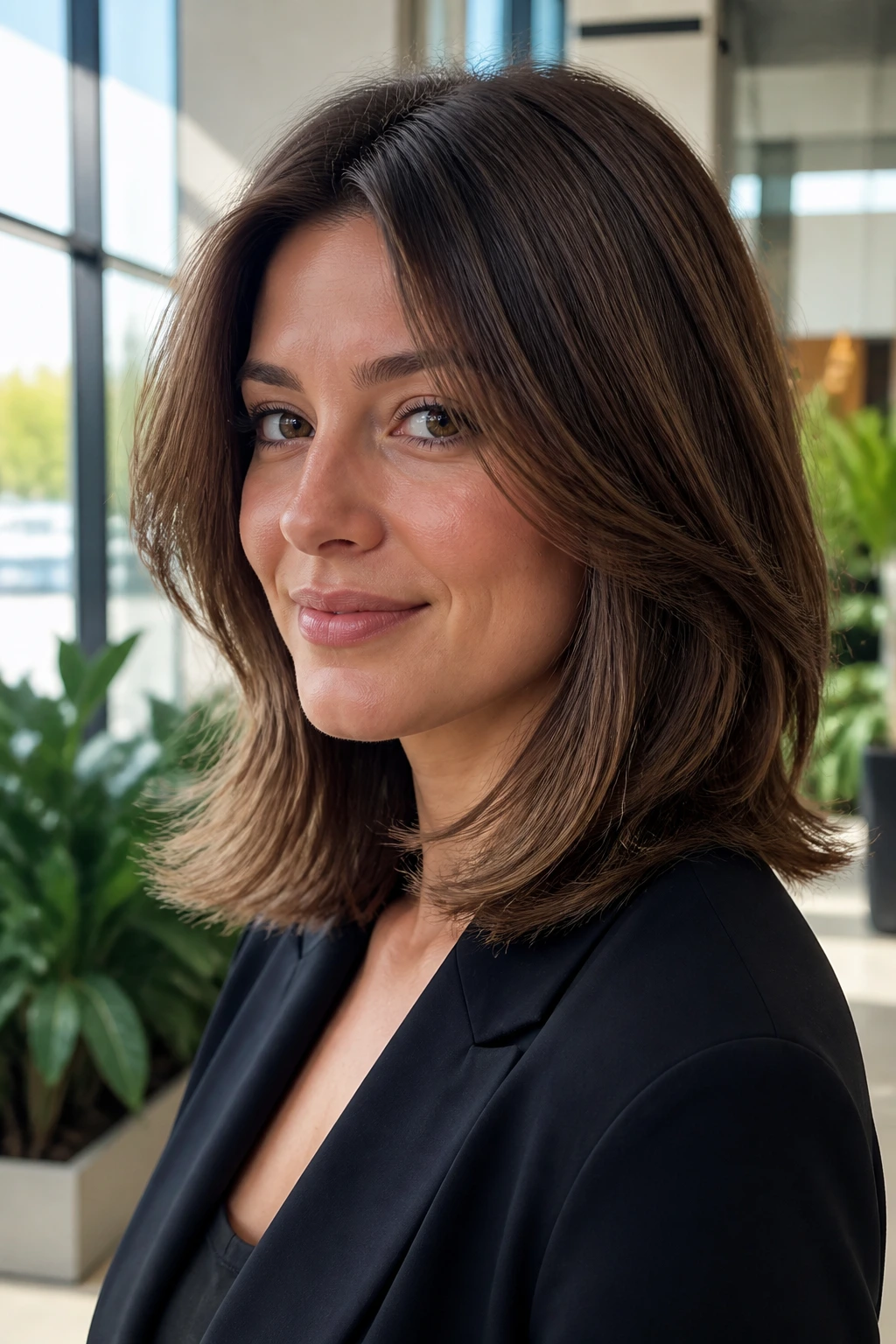
Shoulder-grazing hair can be annoying if the cut line is wrong. It flips out, sits on the collar, and does that awkward flip that makes you want to put it in a clip. Internal layers fix that problem by moving the weight inside the shape instead of taking length away from the outside.
The result is a medium cut that still looks smooth from the front. Oval faces benefit because the layers create softness around the sides without stealing the neat outline of the haircut. If you like clean lines but hate hair that feels heavy, this is a smart middle path.
The best version keeps the outer edge fairly even, then removes bulk underneath. That means the haircut looks tidy when you’re not styling it, but it still bends and moves when you do. A flat iron can smooth the ends; a blowout brush gives it a little swing.
No drama. Just control.
This is one of the few medium layered cuts that works equally well on office days and lazy days, which is part of why I keep coming back to it.
11. Razored Layers for Fine Hair
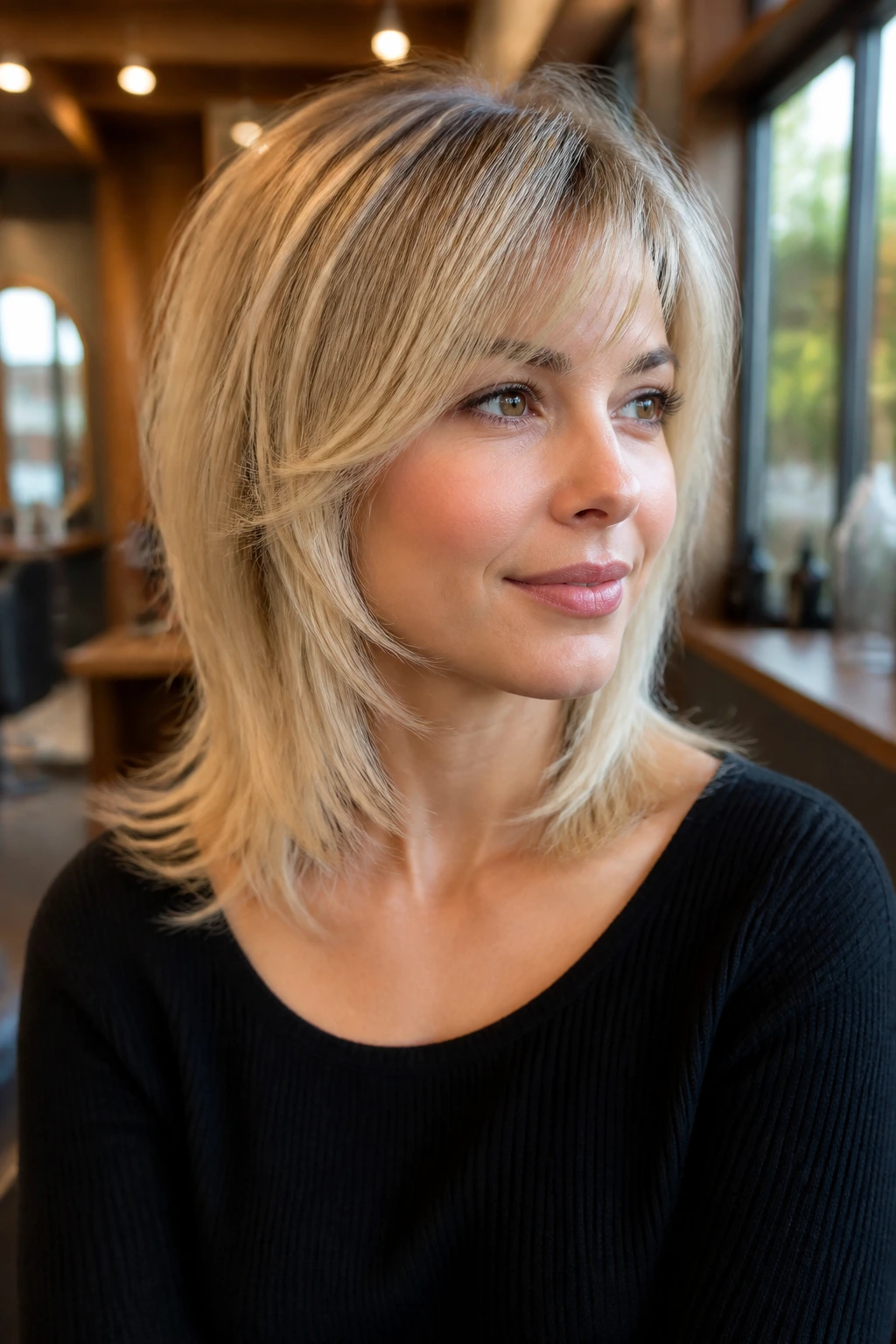
Can razor cutting help fine hair? Yes — if it’s handled lightly. Too much razor work can make the ends look see-through and frayed. Done well, though, it gives fine strands a soft, airy edge that scissors sometimes miss.
Razored layers work because they remove bulk without leaving a heavy step between sections. For oval faces, that means the cut can move around the cheekbones instead of collapsing into one flat sheet. Keep the layers long enough to support the shape. The shortest pieces should still graze the jaw or collarbone, not sit high on the face.
What to Watch For
- Ask for soft razoring, not aggressive thinning
- Keep the perimeter fairly full
- Avoid very short crown layers if your hair already lacks volume
Styling matters here. Use a lightweight mousse at the roots and a little heat on the front pieces. Heavy creams can make the cut hang flat, and that defeats the point. Fine hair likes a little air.
If your hair tends to separate into skinny ends, this cut can make it look fuller without pretending it’s thick when it isn’t.
12. Bouncy Layers for Wavy Hair

Wavy hair has its own opinion. The good layered cuts respect that instead of forcing the waves into a shape they don’t want. On oval faces, bouncy medium layers can bring out the cheekbone line and keep the ends from puffing out like a triangle.
The best version works with the wave pattern rather than against it. That usually means layers that start lower than you might expect, plus enough weight at the bottom to keep the curl clumps together. If you cut too high into wavy hair, you can get frizz and a shape that balloons out around the ears. Nobody needs that.
A diffuser helps, but the cut should do most of the work. A tiny bit of leave-in conditioner, scrunching, and hands-off drying can be enough. If the hair is dense, the layers should be placed to remove bulk from the inside while leaving the outer edge soft.
This is one of those cuts that can look casual in the best way. Not sloppy. Casual.
13. Curtain Bangs with Piecey Mid-Length Layers

Curtain bangs can do a lot for oval faces, especially when they’re paired with medium layers that keep the rest of the cut moving. The fringe draws attention to the eyes, opens the forehead, and gives the haircut a clear front shape so the layers do not all blur together.
The key is keeping the bangs long enough to blend into the side sections. Short curtain bangs can feel too separated from the rest of the cut. Longer ones, usually around cheekbone length at the shortest point, melt into piecey layers through the mid-lengths and ends. That blend is what makes the style feel deliberate.
Best Way to Style It
- Blow-dry the fringe with a small round brush or a Velcro roller
- Direct the front pieces away from the center for lift
- Keep the ends soft so the bangs don’t look carved
This cut is nice when you want some framing but do not want a heavy fringe. It gives shape without closing off the face. And yes, it grows out better than most bangs. That matters more than people admit.
14. Long Side Bangs with Graduated Length

Long side bangs are the quiet cousins of curtain bangs. They do a little less, which is exactly why some people prefer them. On an oval face, a long side sweep can soften a strong forehead, add a diagonal line, and break up the center of the haircut without making the front too busy.
The graduated length is what keeps this style from feeling flat. The front should be a little shorter, then gradually join the rest of the medium layers. That gradual shift lets the hair move backward and outward, so the face doesn’t get boxed in by a single fringe line.
This cut is especially good if you wear your hair behind one ear often. The side bang still does its job, even when it’s tucked back. It also works well with waves because the bend in the front section gives the style some easy motion.
Unlike blunt bangs, this one does not need perfect styling every morning. A quick blow-dry and a little bend at the ends are usually enough.
15. Air-Dried Layers for Natural Texture
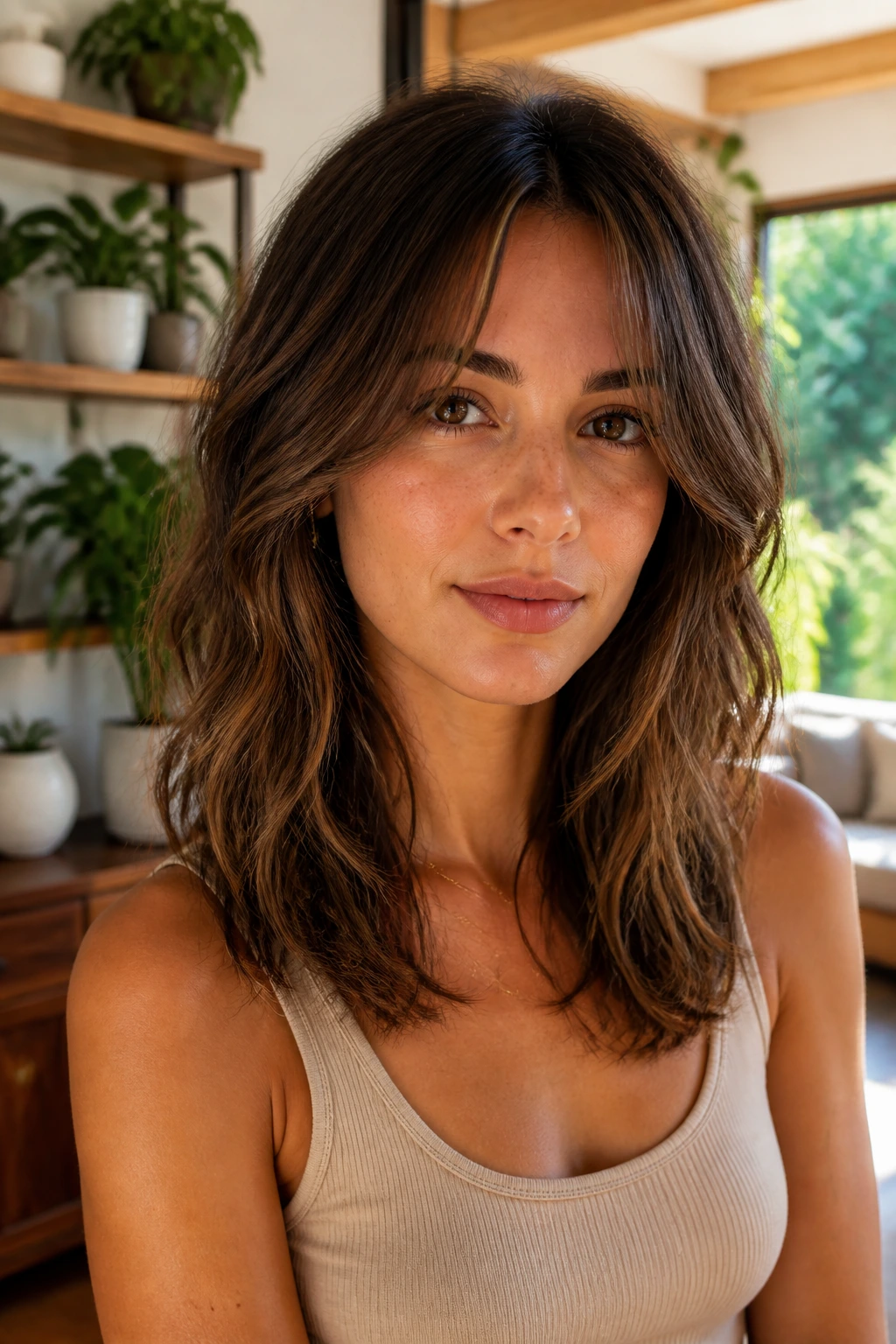
Some cuts only look good under a round brush. I’m not interested in those. Air-dried layers for natural texture are for people who want a medium haircut that still makes sense when they leave the bathroom with damp hair and five minutes to spare.
The cut should have enough built-in shape that the hair falls into place without much help. That means thoughtful layer placement, not random chopping. On oval faces, the shortest layers should still frame the face instead of floating out at odd spots, and the ends should keep some weight so the shape doesn’t frizz out by noon.
A little leave-in cream, a towel squeeze, and a few scrunched sections can be enough. If your hair is wavy or lightly curly, this style can look especially good because it keeps the natural texture visible rather than fighting it flat.
My blunt opinion: if you air-dry most days, tell the stylist up front. Do not let them build a cut that only works with a hot tool.
16. Weight-Removing Layers for Thick Hair
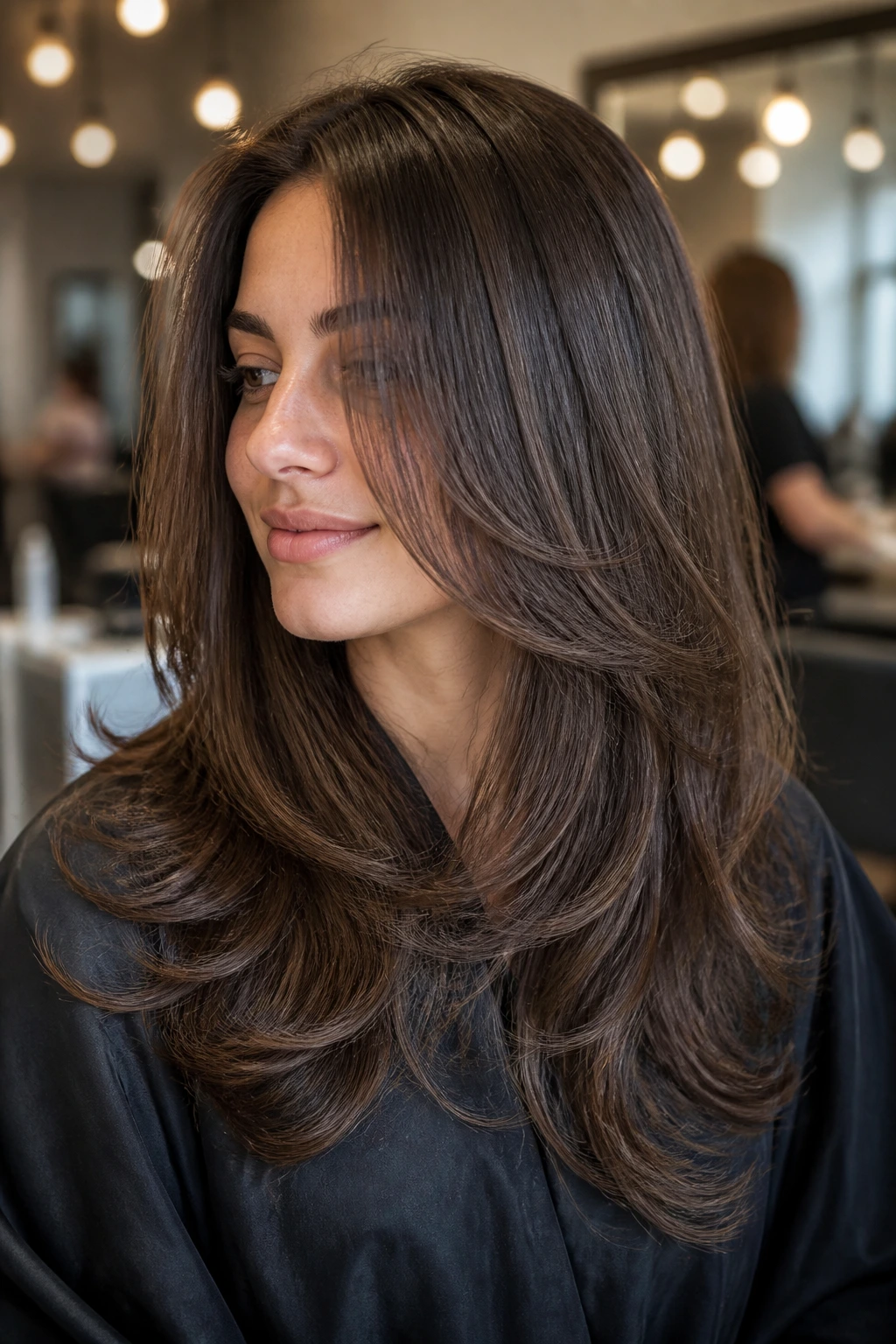
Thick hair needs removal, not just shape. That’s the big difference. If the layers are too timid, the haircut ends up sitting like a block. If the layers are too short, the hair can puff and fray. The sweet spot is long internal layering with controlled weight removal.
For oval faces, this kind of medium cut is excellent because it keeps the sides from ballooning while still preserving a clean outline. The hair should move when you shake it, but it should not lose its body. Point cutting and careful sectioning matter more here than flashy techniques. A stylist who knows thick hair will usually leave enough length around the perimeter and only take the heavy mass out from underneath.
A Few Good Moves
- Ask for long layers, not short choppy ones
- Keep the face-framing pieces soft and connected
- Avoid over-thinning with shears if your ends already feel dry
This cut can save you a lot of styling time. It also grows out well, which thick hair often needs because frequent reshaping gets old fast.
17. Sleek Layered Cut with Tapered Ends

Layered hair does not have to look messy. That’s a myth, and a lazy one. A sleek medium cut with tapered ends gives oval faces a sharper outline while still allowing movement through the sides and back.
The layers here are subtle. They’re tucked into the shape instead of sitting on top of it. That means the haircut still looks smooth when it’s straightened or brushed out, but it won’t feel stiff. The tapered ends stop the bottom from looking too blunt, especially if your hair is naturally straight and tends to hang heavy.
This is a strong option if you like a polished finish. It reads clean without feeling severe. A paddle brush, heat protectant, and a quick pass with a flat iron are usually enough to show the shape.
One nice thing about this cut: it can look expensive without trying too hard. That sounds vague, but I mean the hair falls in a neat line and still has enough bend to keep it from looking stuck to the head.
18. The Collarbone A-Line With Soft Layers

An A-line cut at medium length gives you a little angle without going full bob. The front pieces sit slightly longer than the back, which creates swing and keeps the face open. On oval faces, that subtle slope adds interest without fighting the natural balance of the face.
The soft layers are there to stop the A-line from feeling too geometric. You want movement through the sides and just enough lift around the chin so the line doesn’t look stiff. This is a good choice if you want a haircut that keeps its shape as it grows, because the A-line already has a bit of built-in direction.
It’s especially good for straight or lightly wavy hair that needs some structure. Blow-dry it smooth, tuck one side behind the ear, and the angle shows itself. Let it dry with a bend, and the cut feels softer and more relaxed.
I like this one for people who want a medium cut that looks intentional even on low-effort days. It has shape. It has swing. It does not need a pile of products to make sense.
Final Thoughts
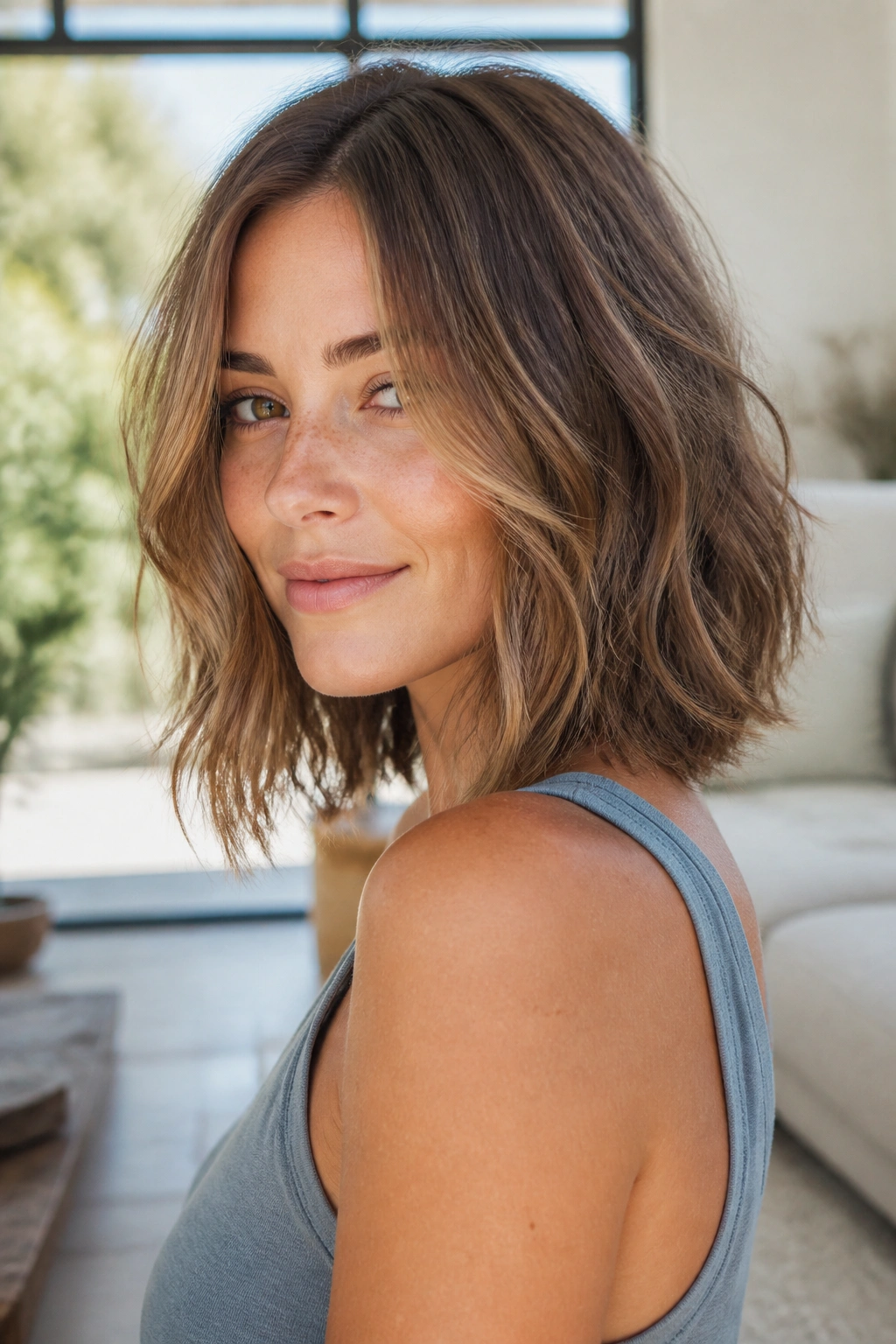
The best medium layered cut for an oval face is the one that respects your hair’s texture before it chases a trend. That sounds simple, but it’s the part people skip. Collarbone length, cheekbone framing, and layer depth all change the way the face reads — sometimes by a lot, sometimes by just enough to matter.
Bring a photo, sure. Bring a blunt sentence too: tell your stylist how you dry your hair, how much time you spend on it, and whether you want polish or movement. That one conversation usually does more than ten saved pictures.
And if you’re undecided, start softer. Hair grows. Bad blunt bangs are the real long-term commitment.
