



The Italian bob haircut has a sneaky quality: it looks expensive even when the styling takes ten minutes and a round brush you already own. That alone explains a lot.
The shape sits between crisp and soft. The ends are clean, but they do not sit stiff; they bend, tuck, and move when you turn your head. That movement is the whole point. A good Italian bob keeps weight through the line so the cut feels full, then trims the interior in a way that lets the hair swing instead of puff.
That is why the cut works on so many different heads of hair. Straight hair gets body, wavy hair gets shape, and thicker hair can keep its fullness without turning into a triangle. If your last short cut felt too blunt, too shaggy, or too neat in a bad way, this family of Italian bob haircuts is a much smarter place to land.
1. Classic Chin-Length Italian Bob
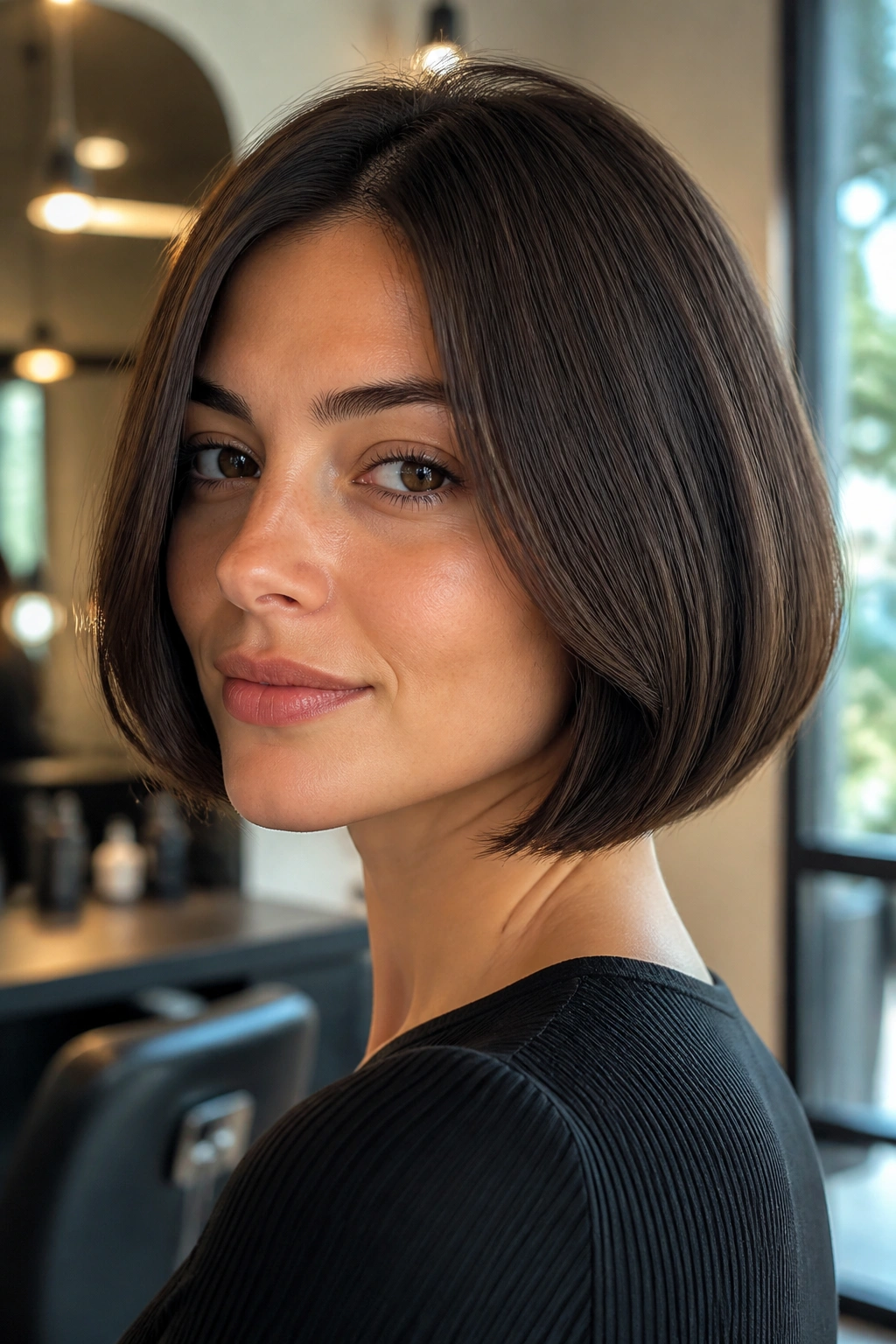
The classic chin-length Italian bob is the version that makes the whole category make sense. It sits right around the jaw, maybe a hair below, with enough weight on the ends to feel dense and enough softness in the interior to keep it from looking boxy. That balance is hard to fake. You either get it, or the cut starts acting like a helmet.
What makes this shape sing is the bevel at the bottom. The ends are not chopped into a hard line and forgotten. They are nudged under with a brush or a bend of the wrist, which gives the haircut that plush, expensive-looking finish people chase when they say they want an Italian bob.
- Best length: chin to just under the jaw
- Best hair types: straight, slightly wavy, and medium-density hair
- Styling tool that helps most: a 1- to 1.25-inch round brush
- Ask for: a clean perimeter with soft internal movement, not heavy layering
Skip the razor-thin ends. The charm here comes from weight, not from a wispy finish that disappears by lunch.
2. Italian Bob With Curtain Bangs
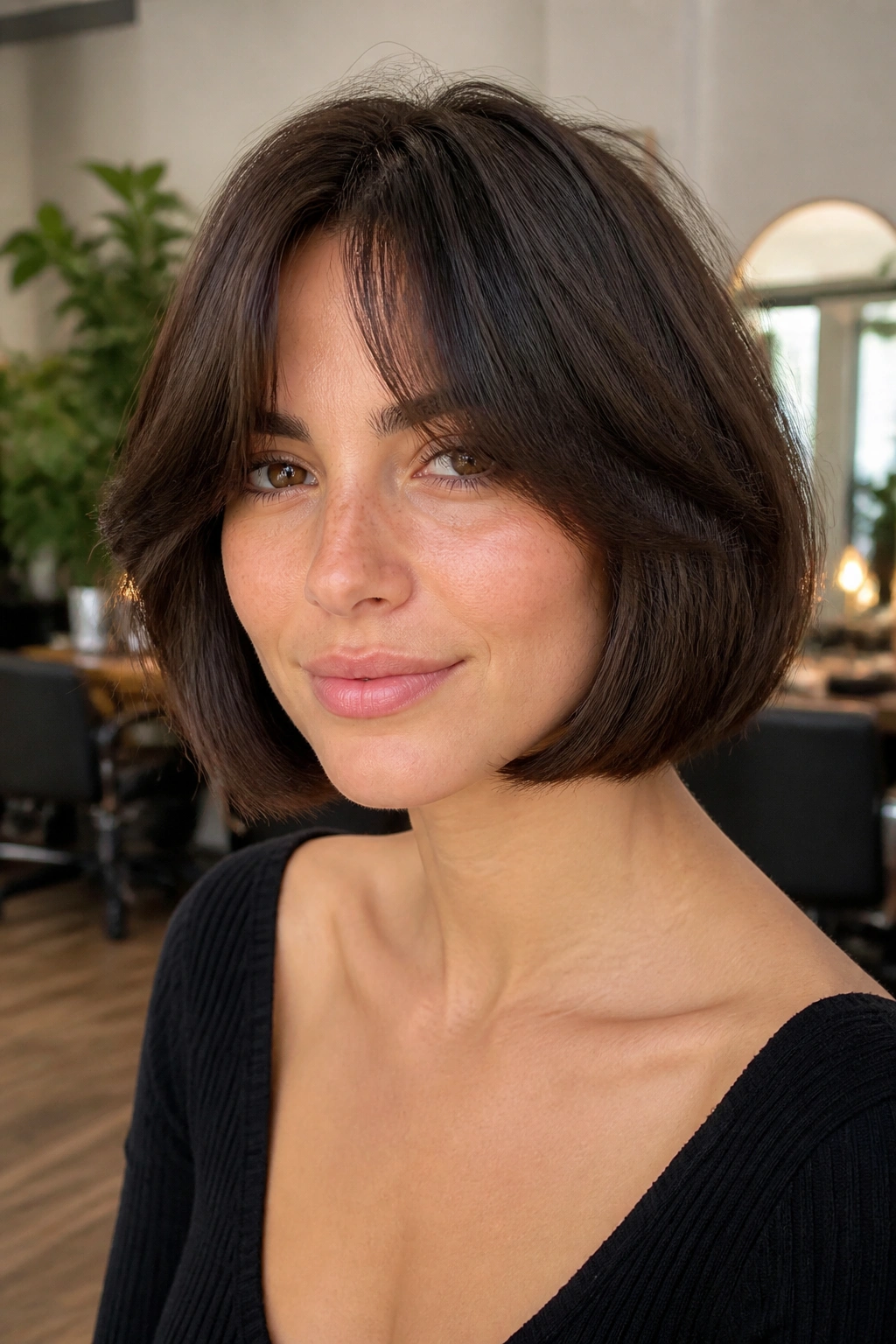
Why does a little fringe change the whole haircut? Because curtain bangs pull the eye upward and outward, which gives the bob more motion before the rest of the hair even starts moving. That matters on shorter cuts. Without that front shape, a bob can feel a bit boxed in.
Curtain bangs are the softest way to frame the face here. They split around the brow, open at the cheekbones, and blend into the sides without looking like a separate piece glued on top. On an Italian bob, that matters because the haircut already wants flow. A fringe that bends instead of sits flat keeps the whole shape in the same language.
Why the fringe works
The bangs soften a strong jawline and make the bob feel less severe around the forehead. They also help if your hair wants to fall forward at the sides, because the fringe gives the front a place to go instead of letting everything collapse.
How to style it
Dry the bangs first, using a small round brush or even a vent brush if your hair is fine. Blow them away from the face, then let them cool in the position you want. A little bend is enough. You do not need a giant swoop, and you do not want one.
3. Jaw-Length Italian Bob With a Deep Side Part
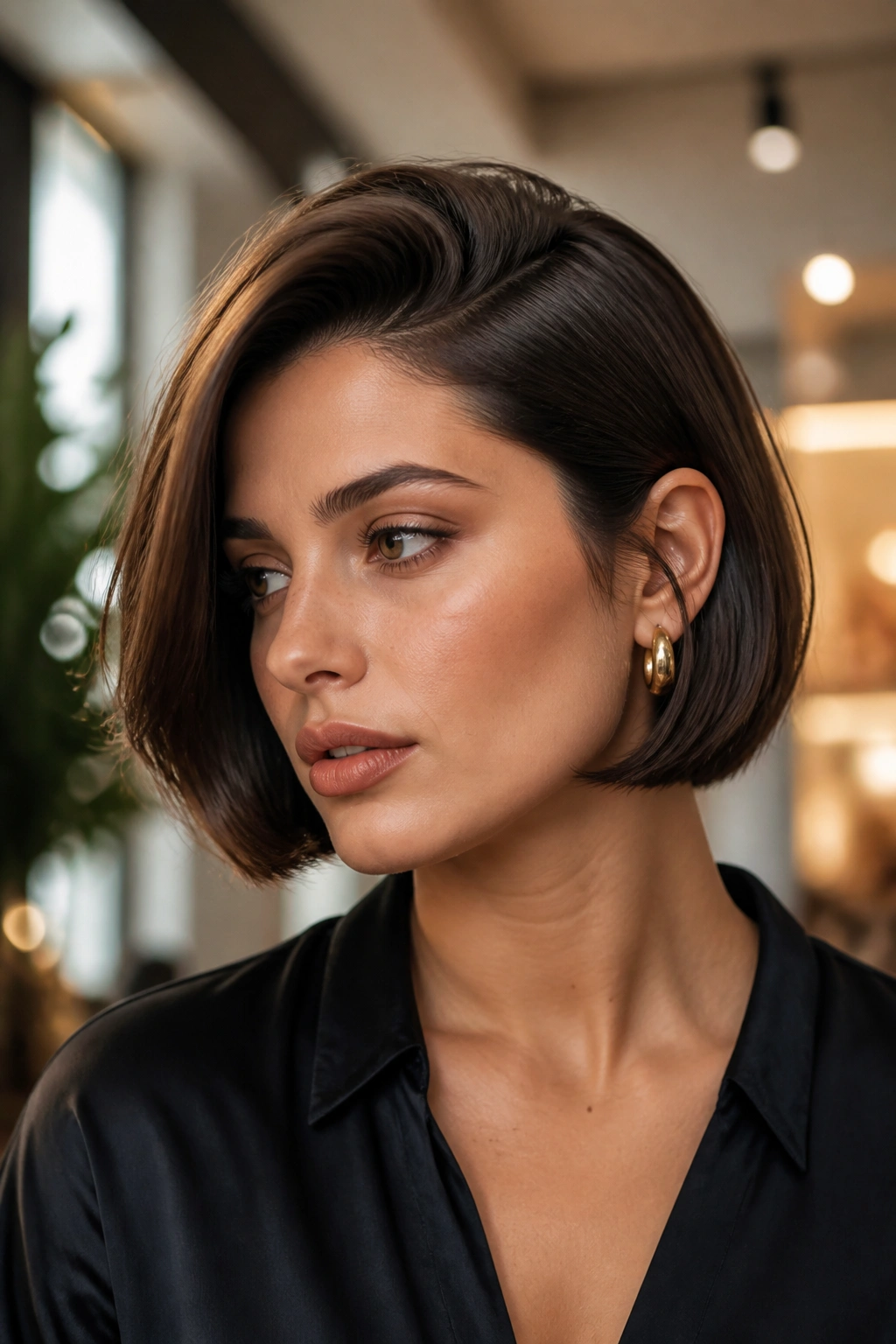
Picture a bob that lands right at the jaw and swings hard to one side. That is the deep side-part version, and it has more attitude than the center-part cuts without feeling fussy. The offset part creates lift at the roots, which is useful if your hair falls flat on top or your face needs a little asymmetry to wake it up.
This version is good when you want the bob to look sharper. The side part gives you that built-in diagonal line, and diagonals are flattering on a lot of faces because they break up roundness and soften width across the cheeks. It also keeps the haircut from reading too symmetrical, which can be a little stiff on very polished hair.
A clean side part needs a bit of discipline. Start it while the hair is damp, then blow-dry the root in the direction you want it to settle. If you wait until everything is dry and then try to move the part, the shape gets awkward fast.
Best for: round faces, soft jawlines, and anyone who likes a little drama without adding length.
Less ideal for: cowlicks that fight hard against side parts. Those can be a battle.
4. Collarbone Italian Bob
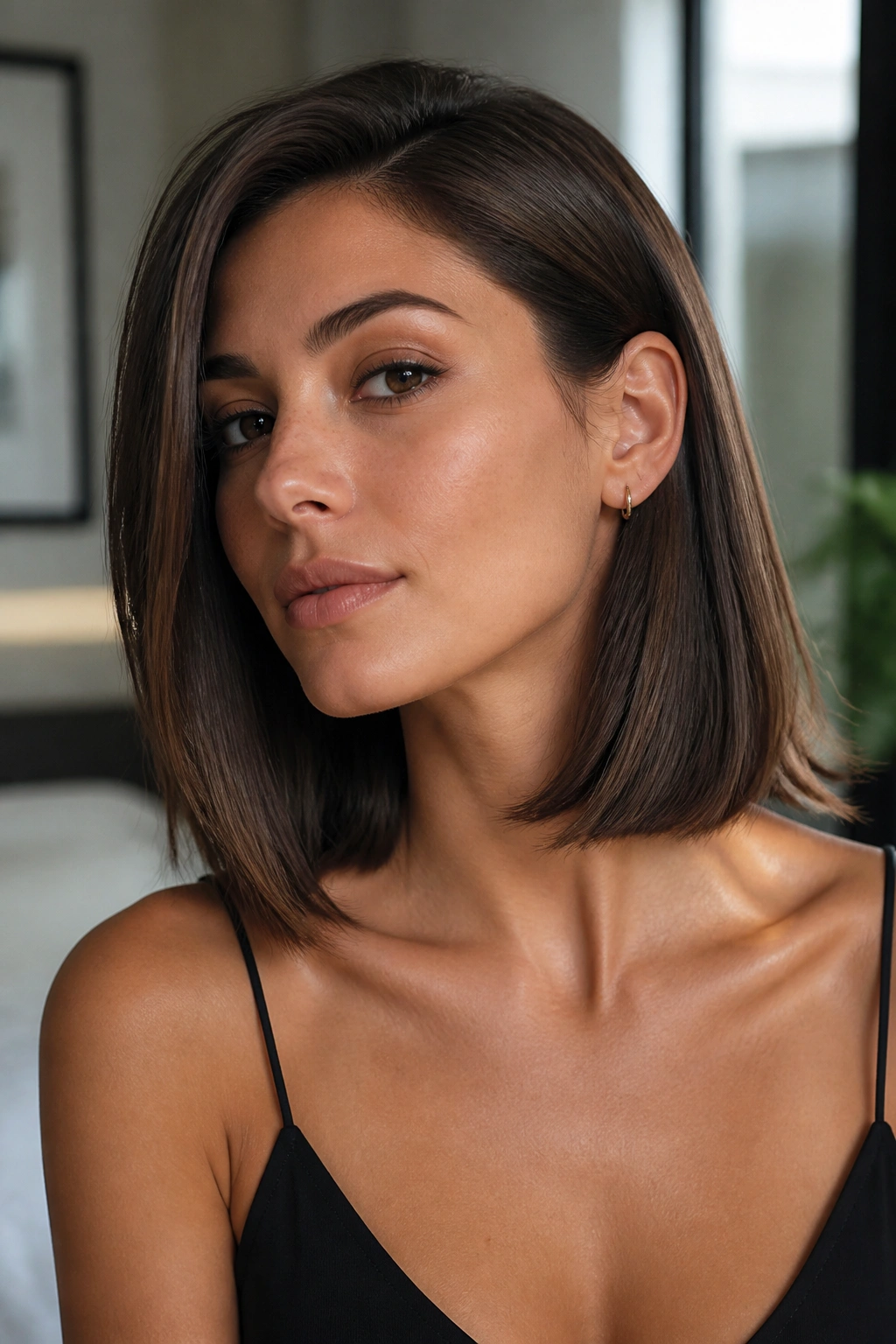
A bob does not have to stop at the jaw to feel Italian. The collarbone version stretches the shape just enough to feel relaxed, which is why it works so well on people who want short hair without the daily maintenance of a shorter cut. It tucks behind the ear. It brushes the neck. It still has presence.
This length is especially good if you are growing out a shorter bob and do not want the awkward middle stage to ruin your mood. The cut keeps a clear perimeter, but the extra length gives you options on tired mornings. Half-up styles work. Clips work. A low bend at the ends still looks intentional, not accidental.
There is a small trick here: the cut needs weight at the bottom, or it starts looking like a long layer haircut instead of a bob. That bottom line is what keeps the Italian feel intact. Lose that, and the whole thing turns limp.
5. Flipped-Out Italian Bob Ends
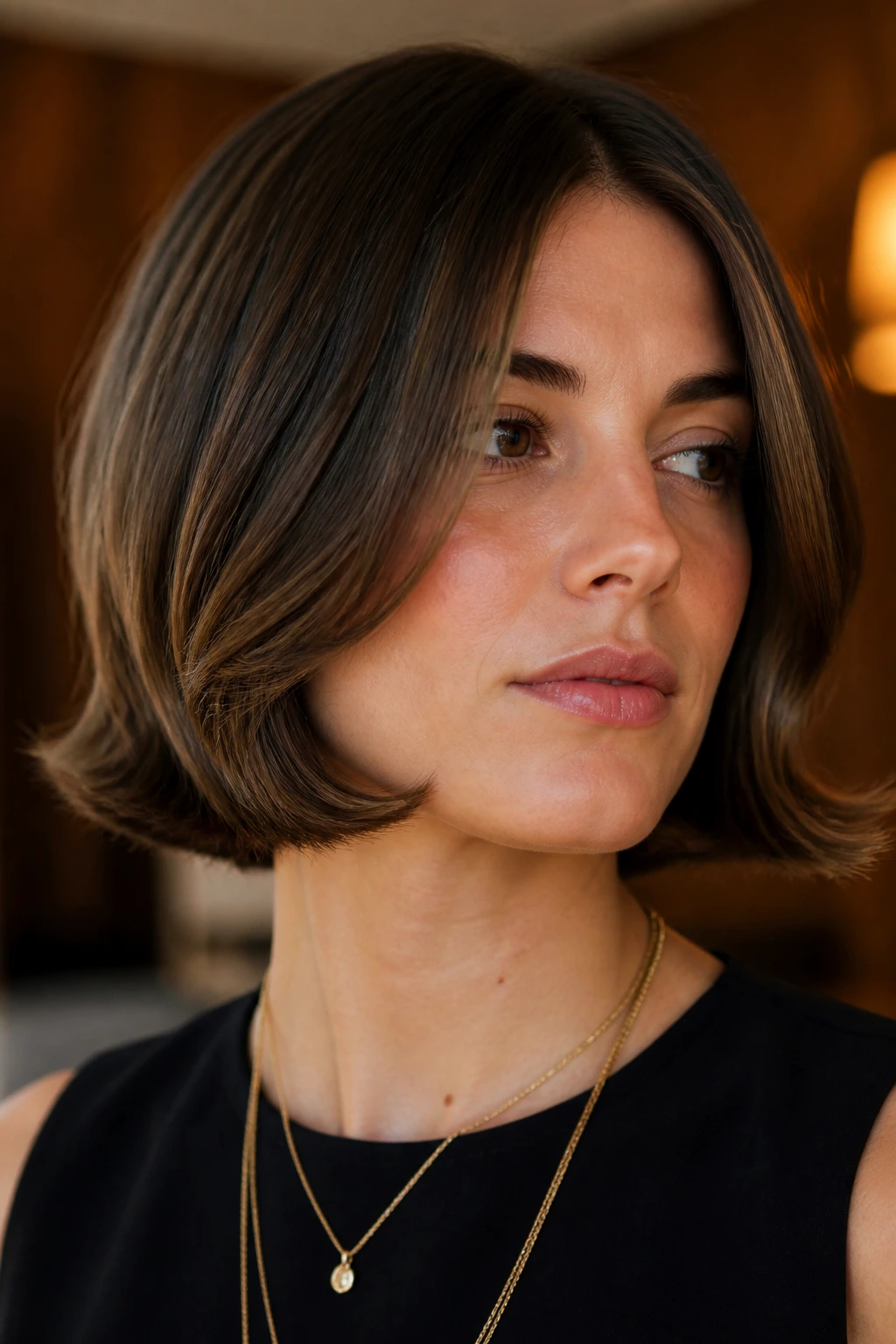
The flipped-out Italian bob looks like the ends were given a tiny nudge with a brush and a flat iron. That sounds simple because it is. The charm comes from that outward flick at the bottom, which makes the shape feel playful without tipping into retro costume hair.
This is a good choice if you like hair that has movement even when it is not perfectly blown out. The flip creates a little space between the neck and the haircut, which keeps short hair from sitting too close to the face. On thick straight hair, that small bend can make the whole cut feel lighter.
A medium round brush or a flat iron with rounded edges does the job. Turn the last inch of hair outward, not upward. Upward can make the bob look puffy. Outward gives it that clean, airy finish.
And yes, it looks better when the ends are healthy. Split ends ruin the effect fast.
6. Air-Dried Wavy Italian Bob
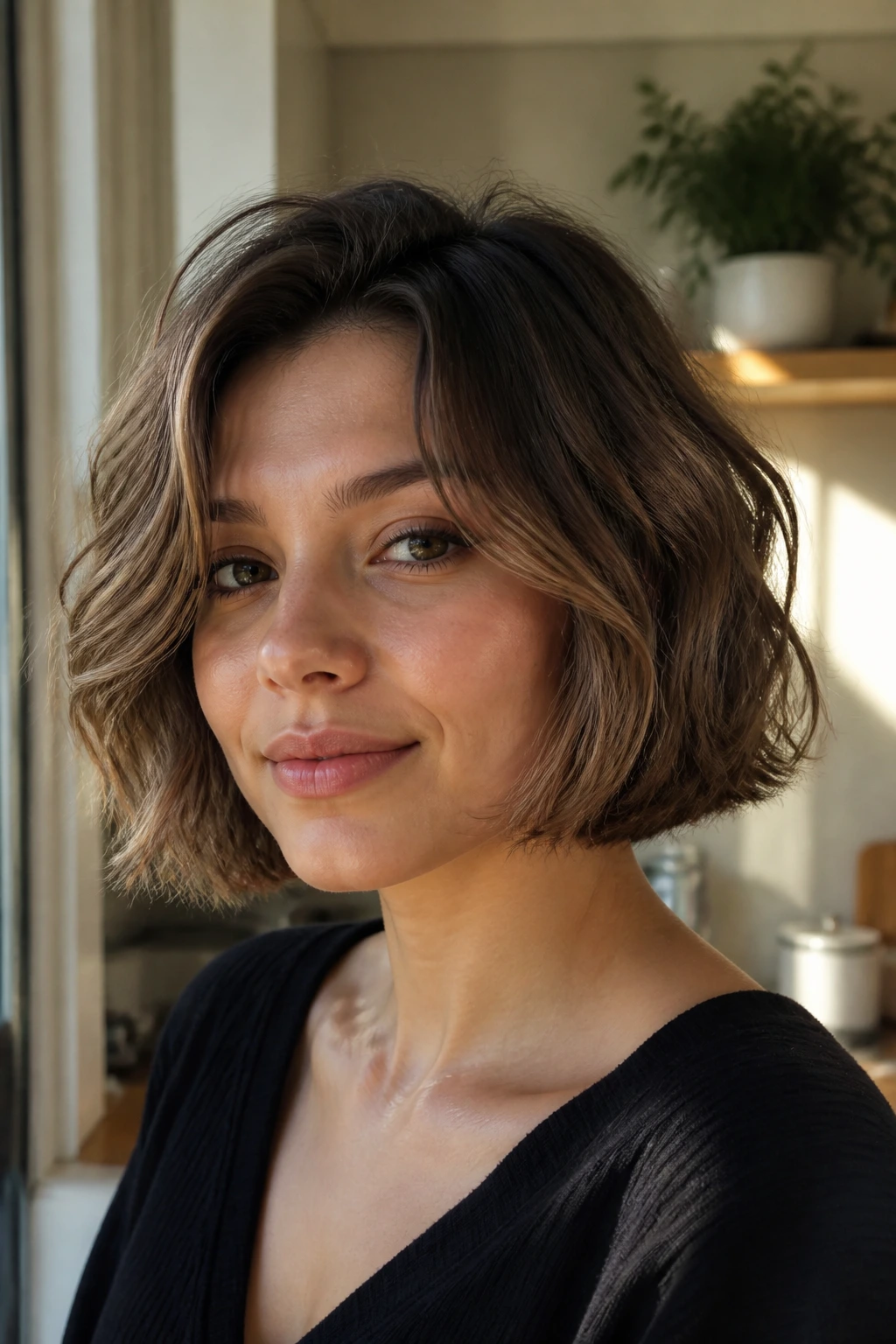
If your hair already has a little bend, an air-dried Italian bob is the one worth trying first. It leans into the texture instead of forcing the hair into a polished blowout every time. That saves time, and it also gives the cut a looser, more relaxed feel that can look better than a perfect finish on the right face shape.
The trick is keeping the shape underneath. Wavy hair can turn fluffy when it is cut too blunt at the wrong length, so the perimeter still needs some thought. Ask for a line that encourages the wave to sit in a soft curve, not a pile of uneven ends that collapse by noon.
What helps most
- A light mousse through damp roots
- A curl cream only on the mid-lengths and ends
- Air-drying with the part in place from the start
- Scrunching once, then leaving it alone
Do not keep touching it. Wavy hair usually looks best when it is left to settle.
7. Italian Bob With a Blunt Fringe
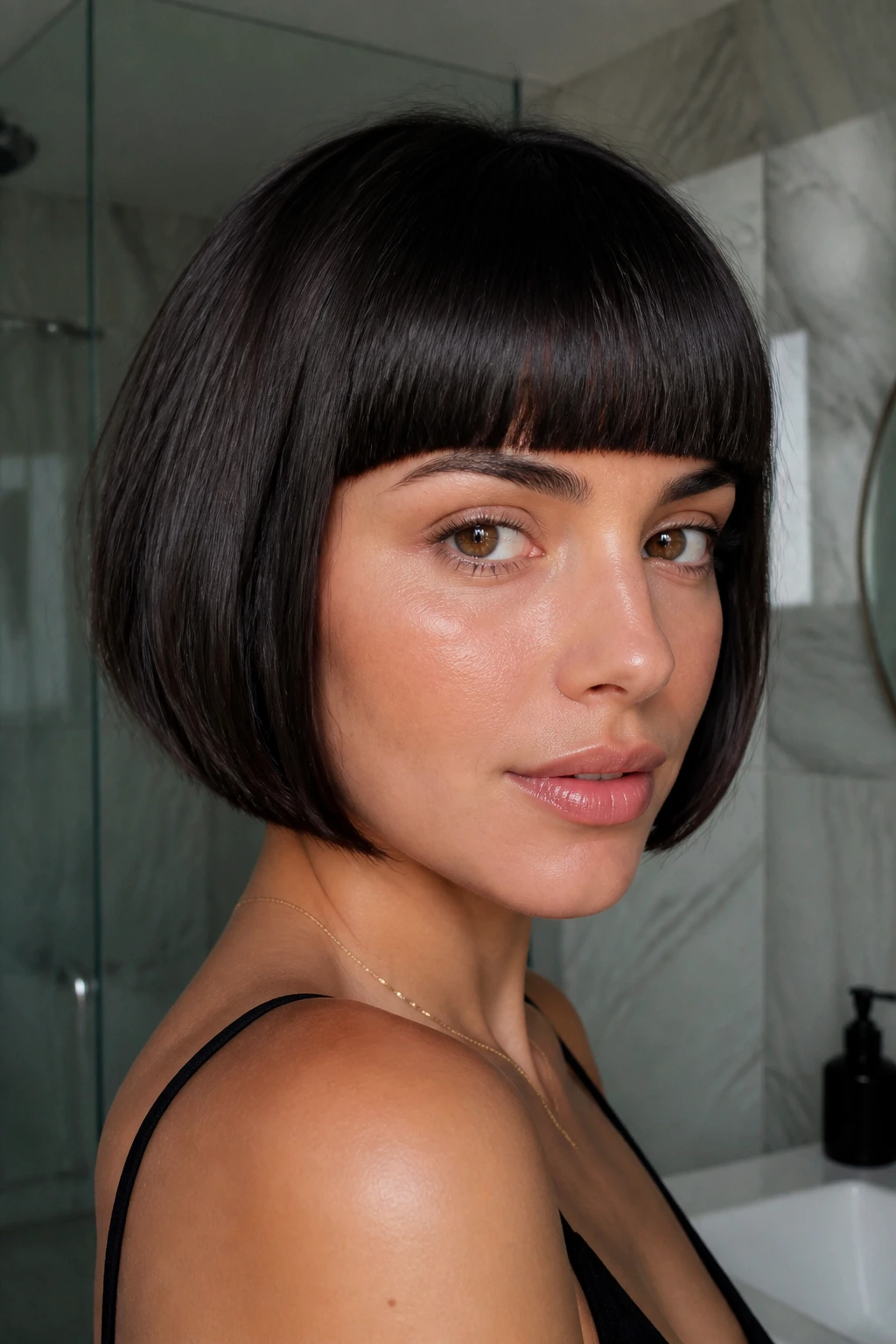
A blunt fringe makes an Italian bob look direct and strong. That is the whole appeal. The front line turns the haircut into something more graphic, which works well if you want the face framed in a way that feels deliberate rather than soft and airy.
This version needs enough density in the bangs to hold the line. Thin fringe can separate and go see-through by lunchtime, which kills the effect. Thick, even fringe sits better and makes the bob feel fuller overall. It also brings attention to the eyes in a clean, unfussy way.
The tradeoff is maintenance. Bangs need trimming more often than the rest of the cut, and they need a little styling every morning or they start splitting in the middle. If you like to wash and go, this may test your patience. If you do not mind a quick pass with a brush and dryer, the shape is worth it.
8. Curly Italian Bob With Shape

Curly hair and an Italian bob can be a smart match, but the cut has to respect shrinkage. That is the first thing to remember. A curly bob that looks perfect when wet can land far shorter once the curls spring up, and then the whole silhouette feels off.
The best version keeps enough length for the curls to stack without turning the head into a triangle. Shape matters more than bluntness here. The outline should follow the natural curl pattern, with the perimeter tailored to where the curls actually fall rather than where they sit in a comb chair.
A dry cut helps a lot. So does a stylist who understands how your curls behave when they are loose, brushed out, or diffused. If the haircut is too tight around the sides, the curls widen the shape in ways you will not love. Leave some room. Curly hair needs it.
One more thing: this cut looks best when the curls are hydrated but not weighed down. Heavy cream can flatten the volume you want to keep.
9. Fine-Hair Italian Bob With Hidden Layers

Fine hair needs a different trick than thick hair. The cut line matters more than layers. That is why hidden layers can be so useful here: they create movement without breaking up the perimeter so much that the hair starts looking stringy.
The goal is lift without loss. You want the bob to feel soft around the face and fuller through the ends, not chopped into pieces that can’t support themselves. Subtle internal shaping gives the hair a little push at the crown and around the back, while the surface still reads as a neat bob.
What to ask your stylist
- Keep the bottom line blunt enough to hold weight
- Add soft internal layering only where the hair needs lift
- Avoid heavy thinning shears at the ends
- Leave enough length to create a slight bend under the chin
Fine hair often benefits from a root spray and a quick blow-dry with a round brush. Nothing fancy. The cut does the heavy lifting if it is built right.
10. Thick-Hair Italian Bob With Internal Debulking
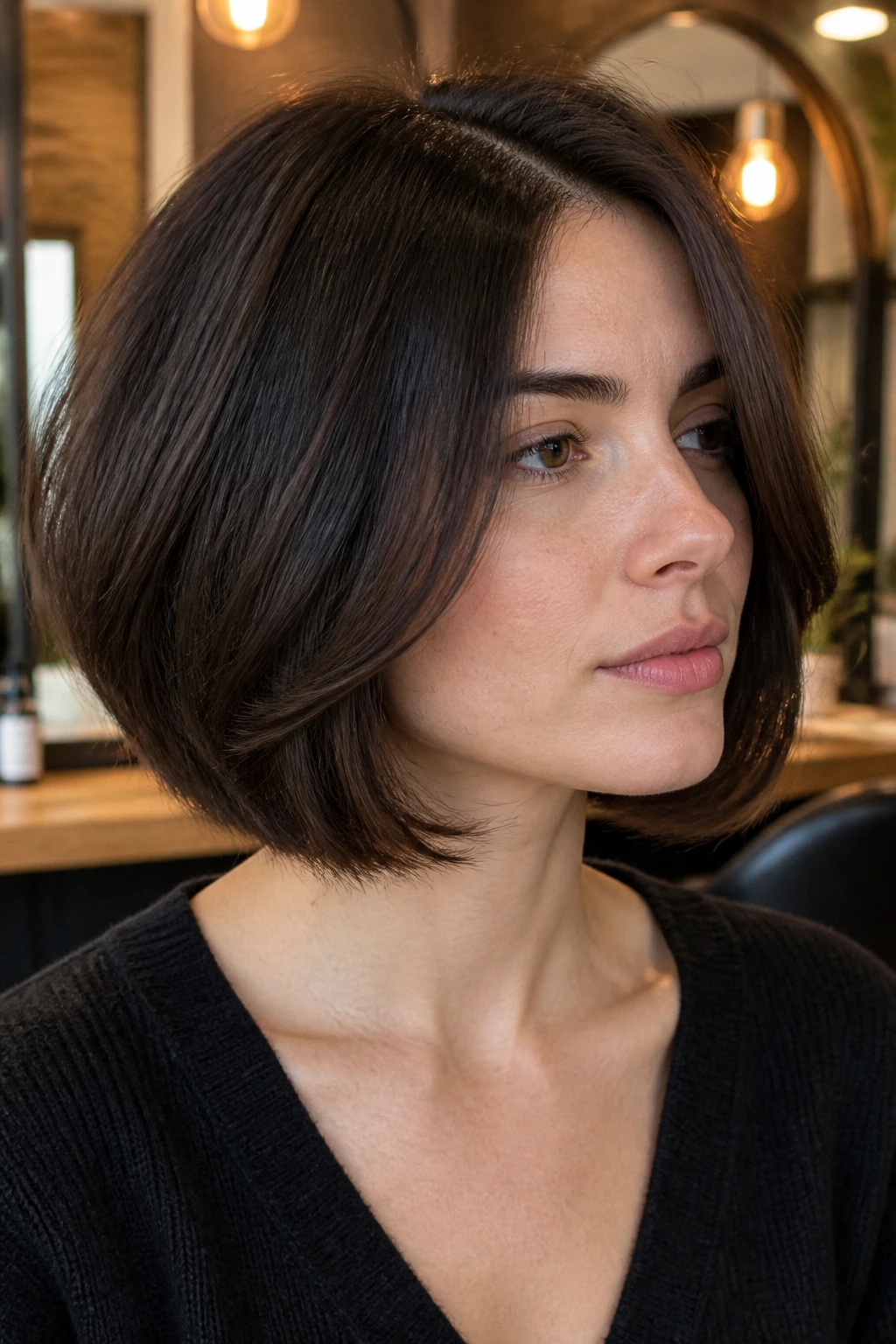
How do you keep thick hair from turning into a triangle? You remove bulk inside the cut, not from the outline. That is the entire game here. If the perimeter gets thinned too much, the bob loses its body and starts floating away from the face in all the wrong places.
Internal debulking is a cleaner answer. The stylist takes weight out from the inside while preserving the outer line, so the bob still looks full and rounded but does not sit like a brick. That matters on dense hair, especially if it has a little natural wave that wants to spread outward.
What can go wrong
- Too much thinning near the ends
- A jagged outline that flips in random directions
- Layers that start too high and create a puffed top
- A cut that looks great wet and bulky when dry
The best thick-hair Italian bob feels controlled, not shrunk. It should move when you turn your head, but it should also keep enough heft to look intentional on day three. That balance takes a steady hand.
11. Sleek Glass-Finish Italian Bob
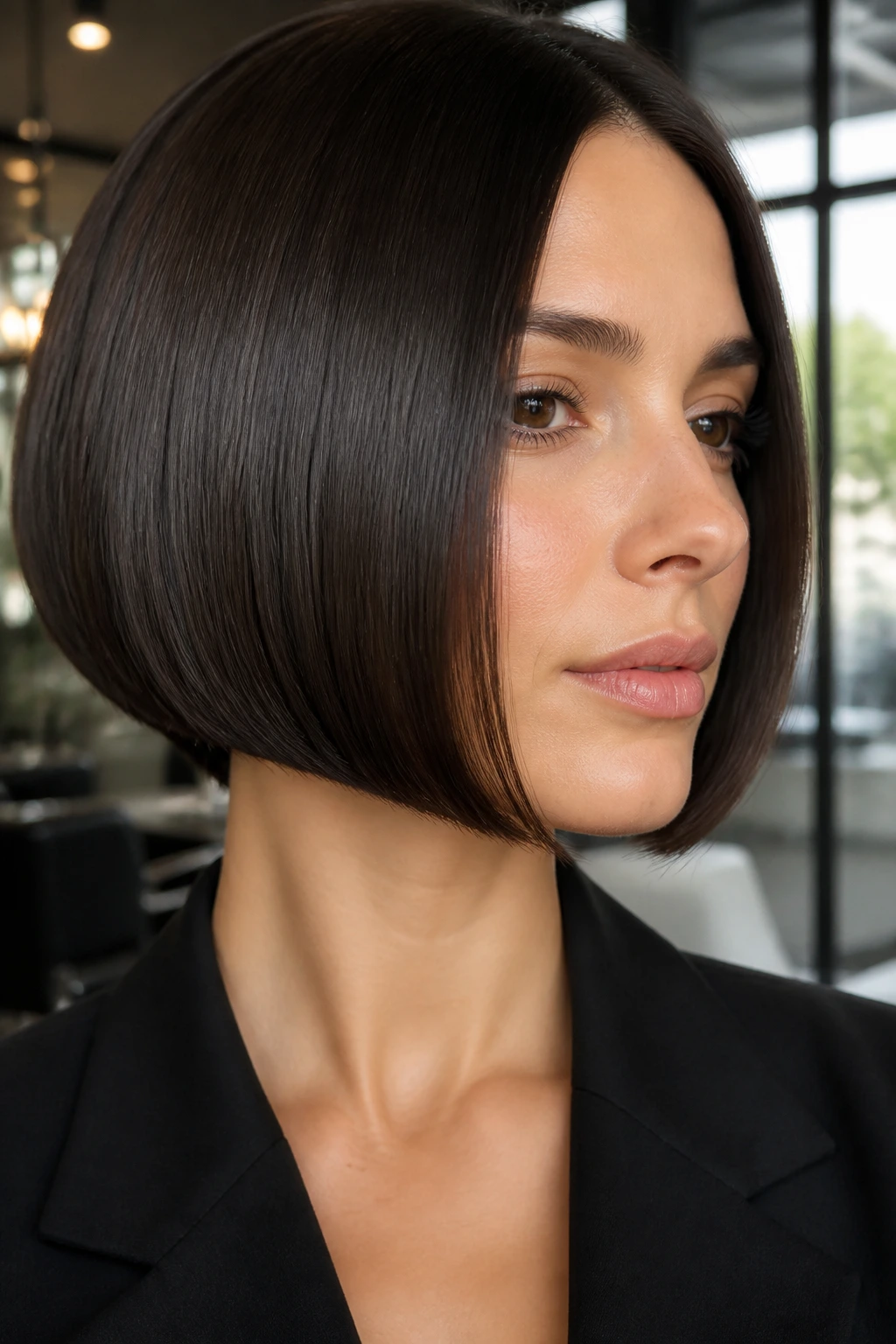
The sleek glass-finish version is the sharpest Italian bob on the list. It relies on smoothness, shine, and a clean edge, so the cut itself has to be immaculate. There is nowhere for a bad line to hide here. The payoff is a bob that looks polished even in plain clothes.
This shape works best on straight hair, or on hair that can be pressed smooth without fighting every inch. The ends should sit in a subtle curve, not flip out and not tuck under too much. That quiet curve is what keeps the style from looking severe.
A heat protectant, a blow-dryer nozzle, and a flat iron with narrow plates are enough. Pass the iron slowly, one section at a time, and keep the final inch soft so the outline doesn’t feel sharp in a harsh way. A tiny amount of serum on the ends adds shine without turning the cut greasy.
This one shows frizz fast. If your hair loves humidity, be honest about that before you commit.
12. Tousled Italian Bob With Broken Texture
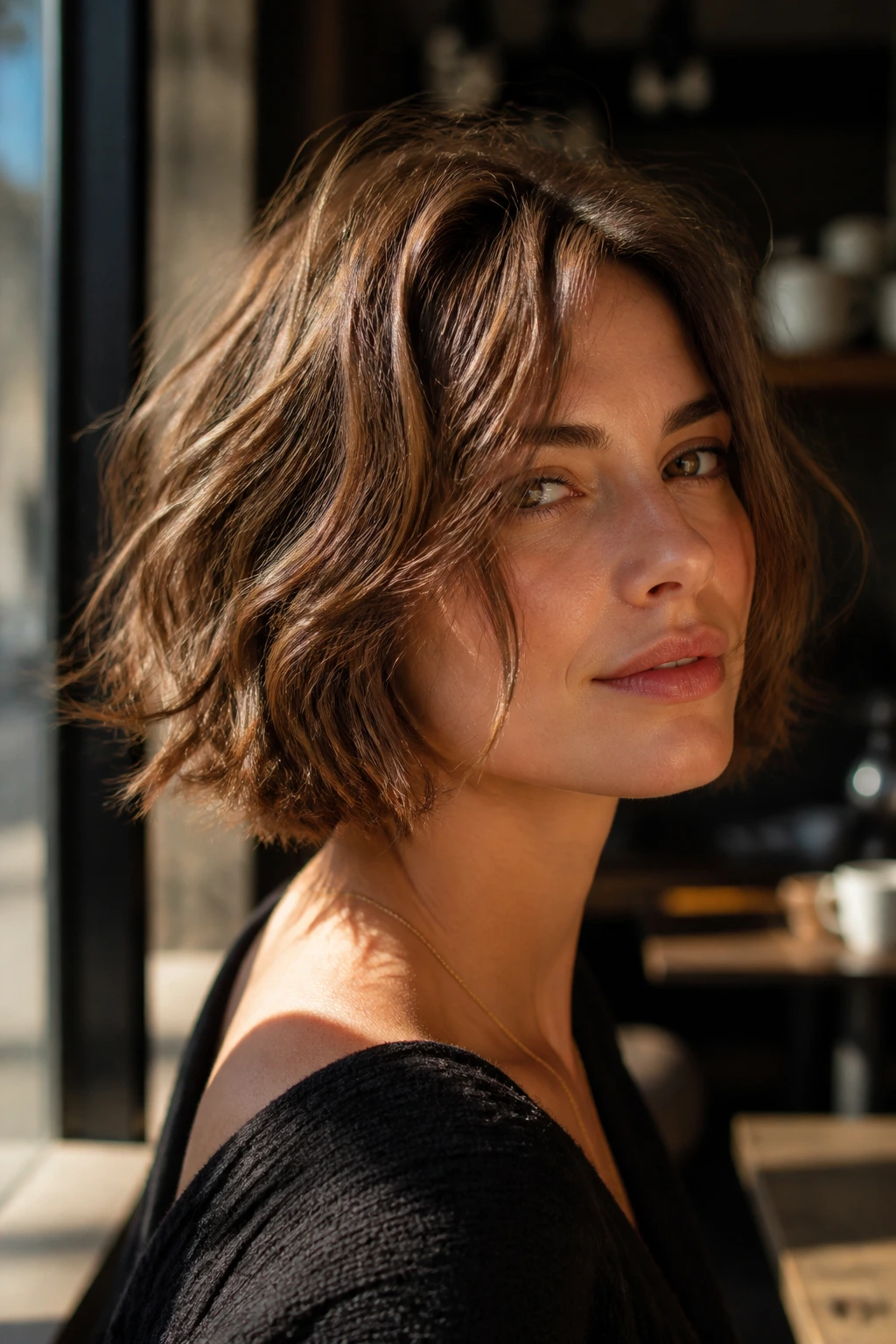
On a day when the hair is a little undone, the tousled Italian bob can look better than the careful version. That is partly why people keep reaching for it. Broken texture gives the cut an easy, lived-in feel, like the hair was styled with fingers and not bullied into place.
The key is not to confuse tousled with messy. The shape still needs structure underneath. You want the bob to hold its outline while the surface pieces bend in different directions. If everything is equally textured, the cut loses the Italian polish and starts looking overworked.
A dry texture spray at the roots and a small amount of paste through the ends can help. Rub it between your palms first. Then pinch and separate small pieces, especially around the front where the movement matters most.
This version is good for people who hate spending twenty minutes chasing perfect symmetry. It has enough edge to feel styled, but not enough fuss to feel precious.
13. Asymmetrical Italian Bob

Asymmetry sounds risky until you see it on a bob. Then it makes sense. One side a touch longer than the other gives the haircut movement even when the hair is still, which is a nice trick if you want the shape to feel modern without needing a lot of layers or styling tricks.
The difference does not have to be dramatic. Sometimes half an inch is enough. That tiny shift changes the line around the jaw and neck, and it can make a face look slimmer or longer without shouting about it. A bigger difference feels bolder and more editorial, but it also asks more of the haircut’s precision.
This is a strong choice if you like a bob that feels a little custom. It suits people who enjoy hair that looks like it was considered, not copied from a generic template. The cut should still feel soft at the ends. If it becomes too angular, the Italian part of the shape disappears.
14. Cheekbone-Layered Italian Bob

If you want softness around the face without bangs, ask for cheekbone-skimming layers. They sit in that sweet area just above the jaw and around the outer cheek, which helps the bob frame the face without closing it in. That placement matters more than people think.
These layers work especially well when the rest of the haircut keeps a clear line. The face frame gives movement where the eye looks first, while the length below stays full and neat. It is a neat little trick, and it keeps the haircut from feeling flat in photos or in person.
You will notice the difference most when the hair is tucked behind one ear. The front pieces fall forward in a soft way, and the bob suddenly looks more expensive than it did a minute ago. Small detail. Big payoff.
A round brush helps, but so does a quick bend with a curling iron on the front pieces only. Keep the curl loose. Tight ringlets would fight the whole mood.
15. Old-Hollywood Volume Italian Bob
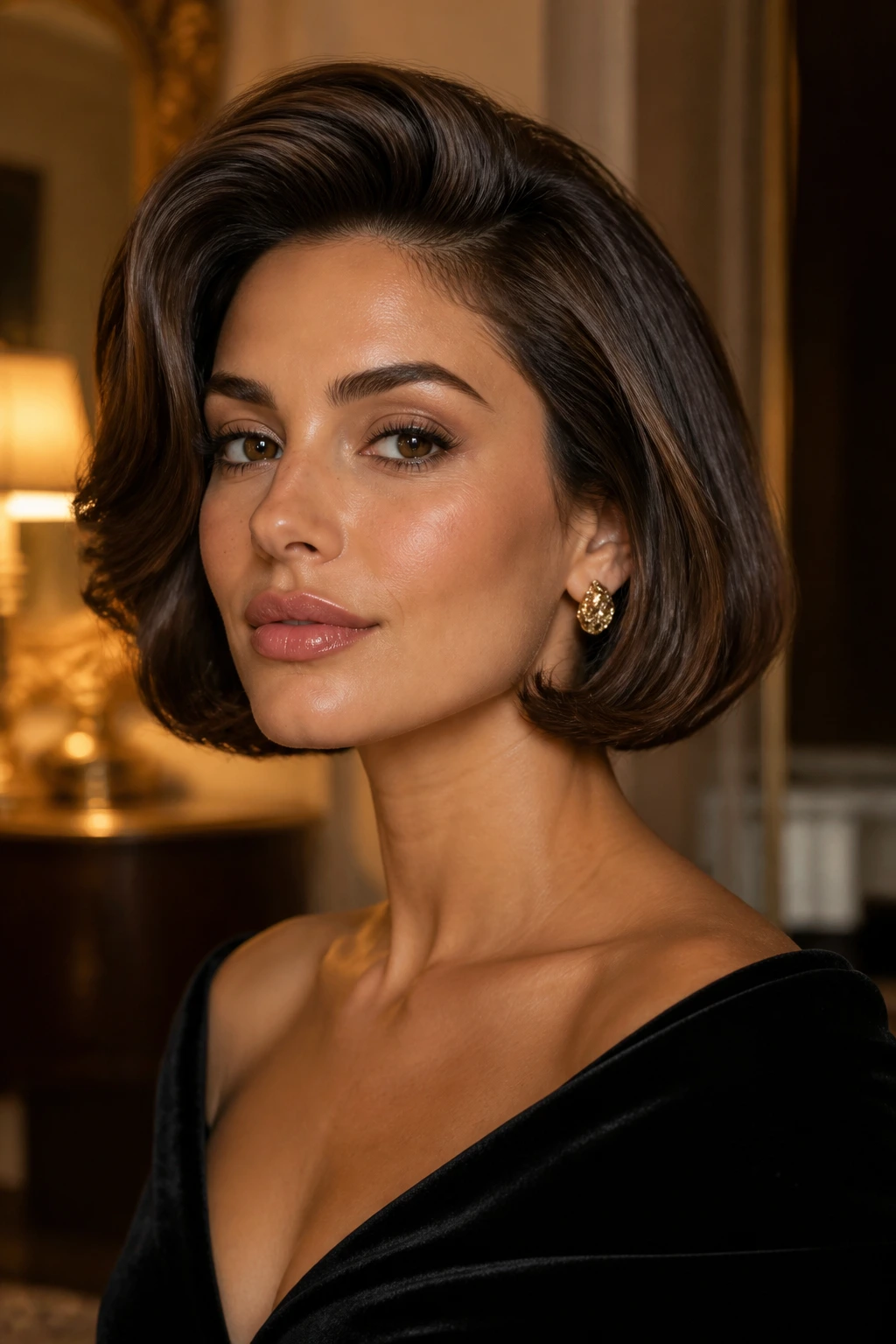
Old-Hollywood volume is where the Italian bob gets dressier. This version borrows the round, brushed-out lift from classic glamour hair and puts it on a shorter shape, which gives you a bob that feels special without turning into pageant hair. The volume should live at the crown and through the sides, not balloon out everywhere.
The tools that matter
- A medium round brush
- A blow-dryer with a nozzle
- Velcro rollers or large hot rollers
- A light setting spray that doesn’t turn crunchy
The trick is to build the root first, then smooth the ends into a polished bend. If the crown lies flat, the whole style loses the point. If the ends are too curled, it starts looking old-fashioned in the wrong way. Aim for lift, shine, and a soft sweep around the face.
This is the Italian bob for dinners, events, and any day you feel like wearing hair with a little more presence. It does take more work than the air-dried versions. Worth it, though.
16. Italian Bob for Gray and Silver Hair
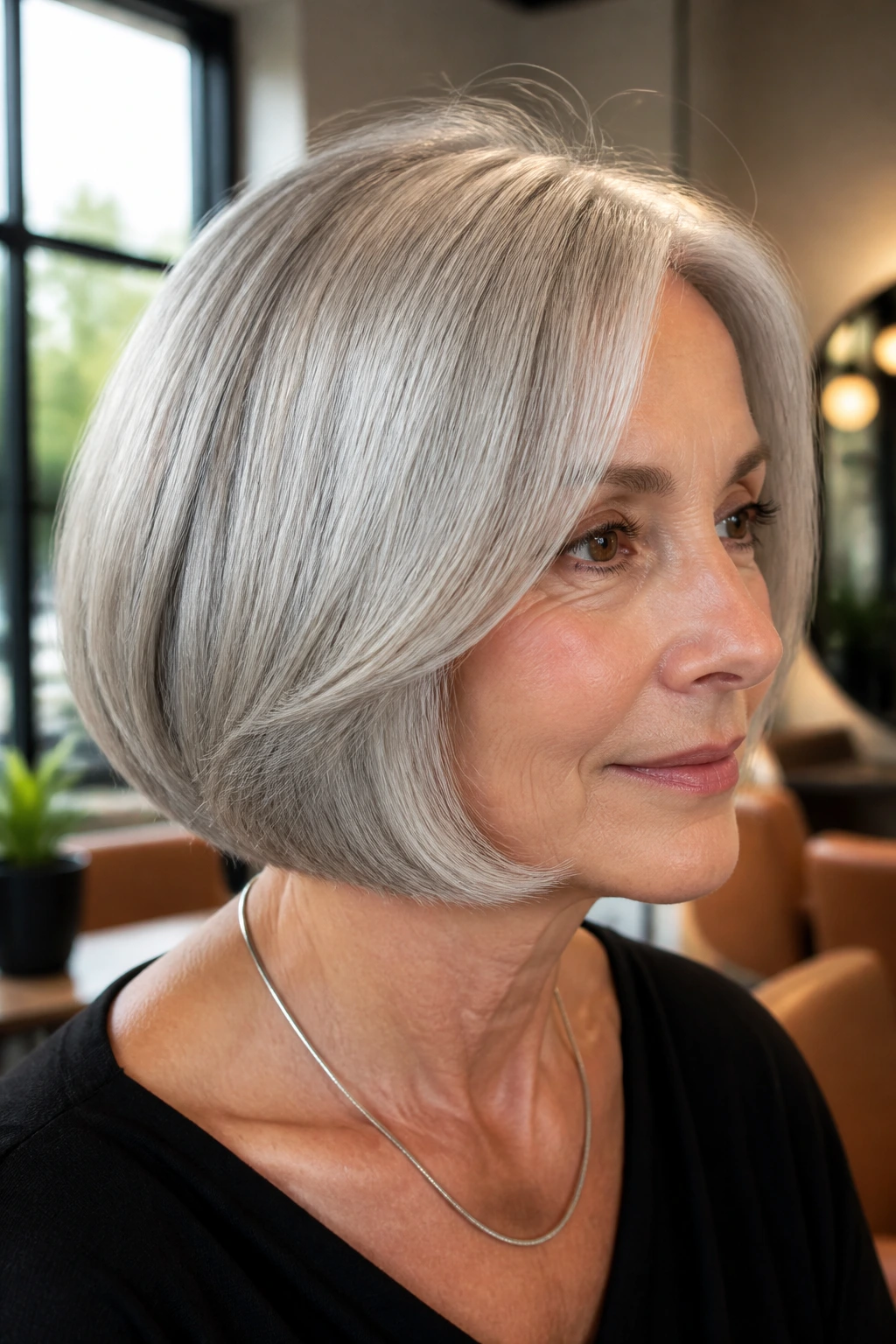
Gray and silver hair show every bad cut, which is why a clean Italian bob can look so strong on them. The shine is the story here. When the perimeter is neat and the ends are shaped with care, the color catches light in a way that reads crisp instead of flat.
This is not the place for heavy thinning or messy texture that robs the hair of its edge. Silver strands already reflect light differently, and a too-soft cut can make them look wispy. A defined bob gives the color a frame. That frame matters.
A slight bevel at the ends helps the shape feel softer around the face, especially if the hair has a wiry bend in it. Keep the layers light and specific. You want the bob to hold together in a clean line, with enough movement to avoid stiffness.
Purple shampoo is not the whole answer. A good cut does more for silver hair than a shelf full of toning products ever will.
17. Brunette Italian Bob With Dimension
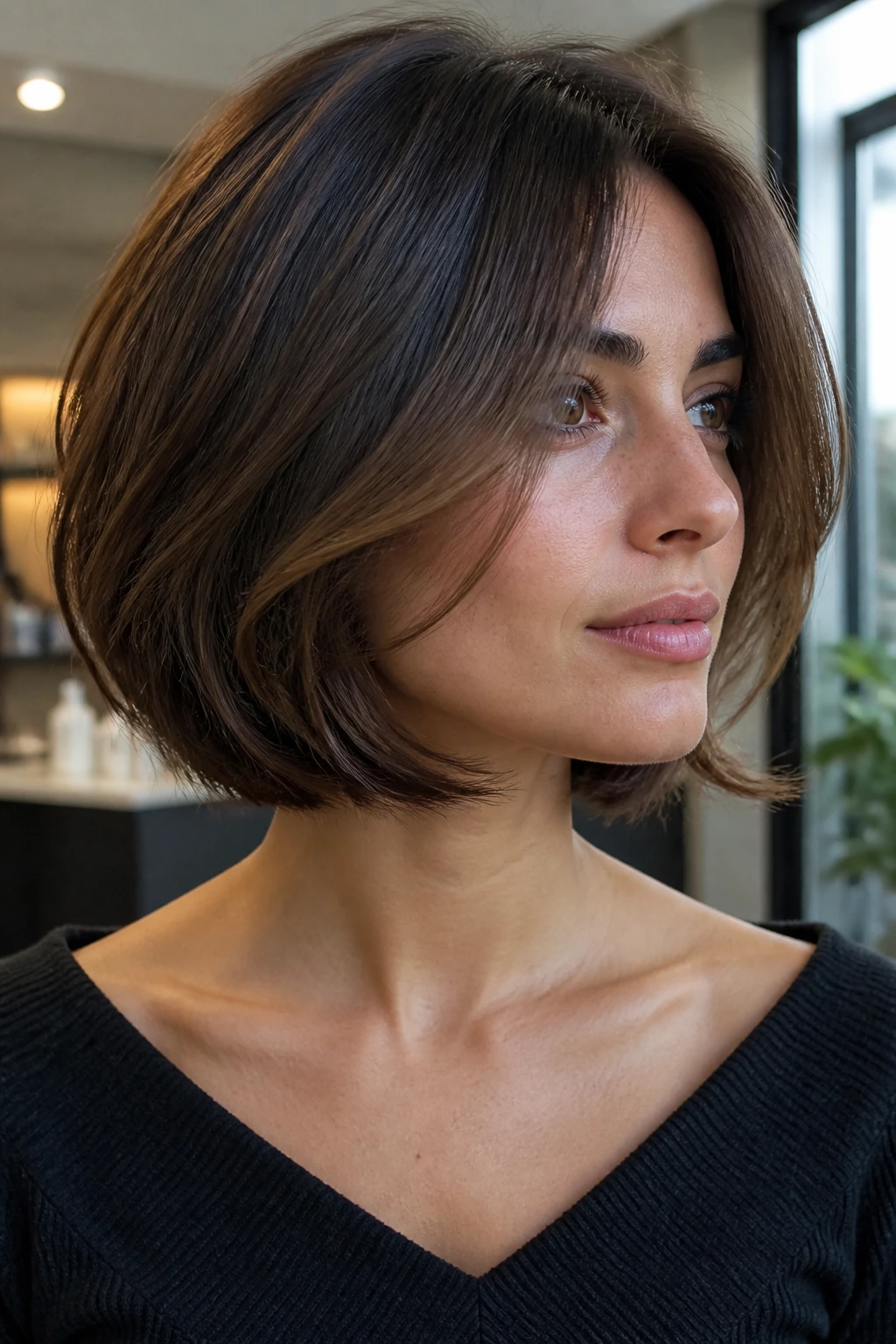
A brunette bob can look flat fast. Dimension fixes that. Rich brown hair has a tendency to swallow detail when it is cut into one solid block, so adding slight tonal shifts keeps the shape visible and lively. The bob starts showing off the cut instead of hiding it.
What the color should do
A soft mocha or chestnut glaze can warm the ends, while a deeper root keeps the overall look grounded. That tiny shift makes the perimeter read more clearly, especially on blunt or chin-length cuts. The hair looks thicker because your eye can see movement in the color.
This is the version I like when someone wants polish without a loud highlight job. The color should support the cut, not compete with it. If the dimension is too stripey, the bob loses its clean Italian feel and starts looking busy.
A gloss treatment every so often keeps brunette shades from going dull at the ends. Dull brunette hair can make even a good bob look tired. Shine matters more than people admit.
18. Blonde Italian Bob With Ribbon Highlights

Blonde highlights on an Italian bob work best when they are painted like ribbons, not stripes. Heavy contrast can make the haircut look chopped up. Soft ribbons, placed around the front and through the top layer, keep the light moving where the cut already wants movement.
That matters because blonde hair can lose definition fast if the color is too even. A little variation helps the ends show up and keeps the bob from looking washed out in certain light. Face-framing brightness also gives the haircut a livelier edge near the eyes and cheekbones.
This version suits people who want the bob to feel airy and bright. It looks especially good when the styling is simple: a smooth blow-dry, a soft bend at the ends, and not much else. Too much curling competes with the color.
One thing to watch: if the highlights start too high or too thick, the shape can look busy from the back. Keep the ribbon effect controlled. It makes a difference.
19. Italian Bob With Soft Baby Bangs

Baby bangs are not the same thing as a blunt fringe. They sit higher, softer, and a little more editorial, which gives the Italian bob a sharper personality without weighing the face down. On the right person, the effect is cool and direct. On the wrong person, it can feel like the haircut is wearing you.
The cut works best when the bangs are feathered at the ends, not cut into a hard shelf. That softness helps them connect with the bob instead of floating above it. They also need a face that can carry a shorter fringe without the forehead area feeling crowded. Cowlicks can make this tricky.
This version is for people who do not mind a little maintenance and like a haircut with point of view. You will probably need more frequent trims than you would with curtain bangs. That is the tradeoff.
Still, when the balance is right, the combo is excellent. The short fringe sharpens the eyes, and the bob keeps the rest of the look grounded. Nice contrast.
20. Shoulder-Grazing Italian Bob for Easy Grow-Out

If you want the cut to grow out without drama, the shoulder-grazing Italian bob is the one to bookmark. It keeps the same full, soft perimeter as the shorter versions, but the extra length gives you breathing room. The shape still looks intentional when it slips past the jaw.
This is a useful choice for people who do not want a haircut that needs constant babysitting. You can wear it smooth, tuck it behind the ears, clip one side back, or let it bend naturally at the ends. It keeps its identity even when life gets busy and the styling gets lazy.
The shoulder-grazing version also works as a bridge cut. If you are moving from a shorter bob to longer hair, it avoids that awkward middle stage where everything feels too heavy. A little internal movement keeps the outline alive, which is what makes it still read as Italian instead of generic long hair.
And that is the real appeal of the whole category. The best Italian bob haircuts do not try to be everything at once. They keep a shape, keep some weight, and leave enough softness for the hair to move like hair. That is the part people remember when the cut is good.
