



Honey blonde has a way of softening a haircut before the cut even changes.
That is why I keep coming back to it. A good honey blonde sits between gold and beige, with enough warmth to flatter skin and enough depth to look lived-in, not loud. On a level 6 or 7 base, it can look silky; on darker brunettes, it can read like sunlight sliding through the hair instead of a hard color shift.
These honey blonde hair ideas are not all the same shade, and that is the point. Some lean caramel, some lean amber, some stay close to the root and let the ends do the work. The placement matters as much as the tone, especially if you want softness rather than a stripey, over-processed look.
A lot of the strongest versions rely on a simple trick: keep the root a shade deeper, brighten in thin sections, and glaze the finish so the blonde stays honeyed instead of turning loud. That balance is what makes the color feel calm. First, the darker-rooted versions.
1. Honey Blonde Balayage on a Dark Brunette Base
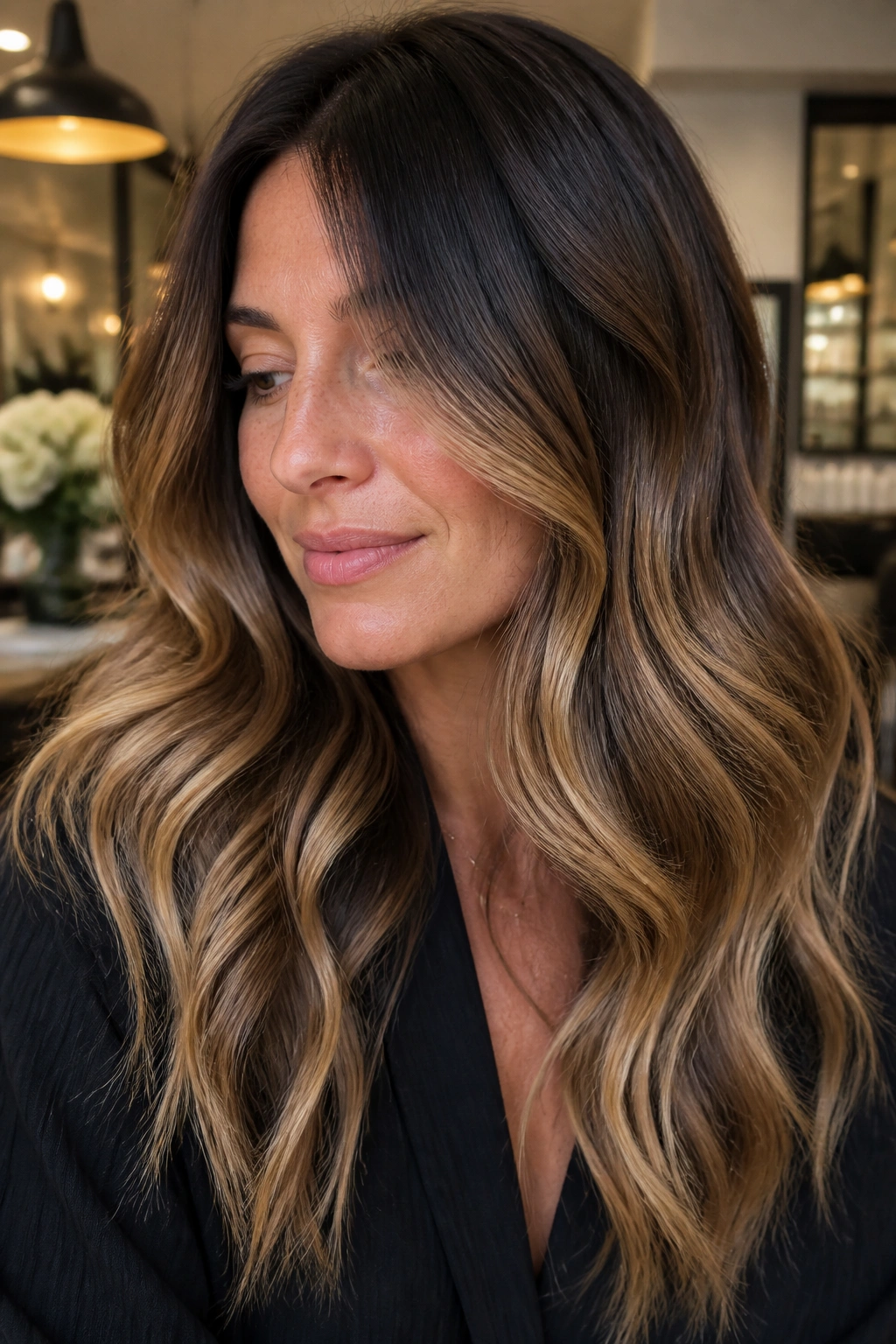
The easiest way to make honey blonde feel rich is to let a brunette base stay visible. Hand-painted balayage does that better than almost any other color method, because the lighter pieces are placed where hair would naturally catch sun: around the face, through the mid-lengths, and a little heavier on the ends.
I like this look on hair that already has some movement. Waves show the color shifts. Straight hair can wear it too, but the effect is softer when the cut has long layers or a slight bend at the bottom.
Why the Soft Transition Matters
Balayage keeps the grow-out from looking harsh. Instead of a hard line at the root, the color melts from deep brown into honey, which makes the whole head look more expensive without trying too hard. That sounds fussy, but it is really just about restraint.
Ask for level 7 to level 8 honey tones painted through the mids and ends, with the root left one to two levels deeper than the lightest pieces. If the hair is dark, a colorist may need to lift in stages. Rushing that part is how warmth turns orange.
- Best on medium to long hair with movement
- Works well with loose curls, S-waves, or air-dried texture
- Needs a gloss every 6 to 10 weeks to keep the blonde warm, not brassy
- Looks nicest when the lightest pieces sit below the cheekbone, not right at the roots
My take: if you want honey blonde that looks soft from every angle, balayage is the safest place to start.
2. Face-Framing Honey Blonde Money Pieces
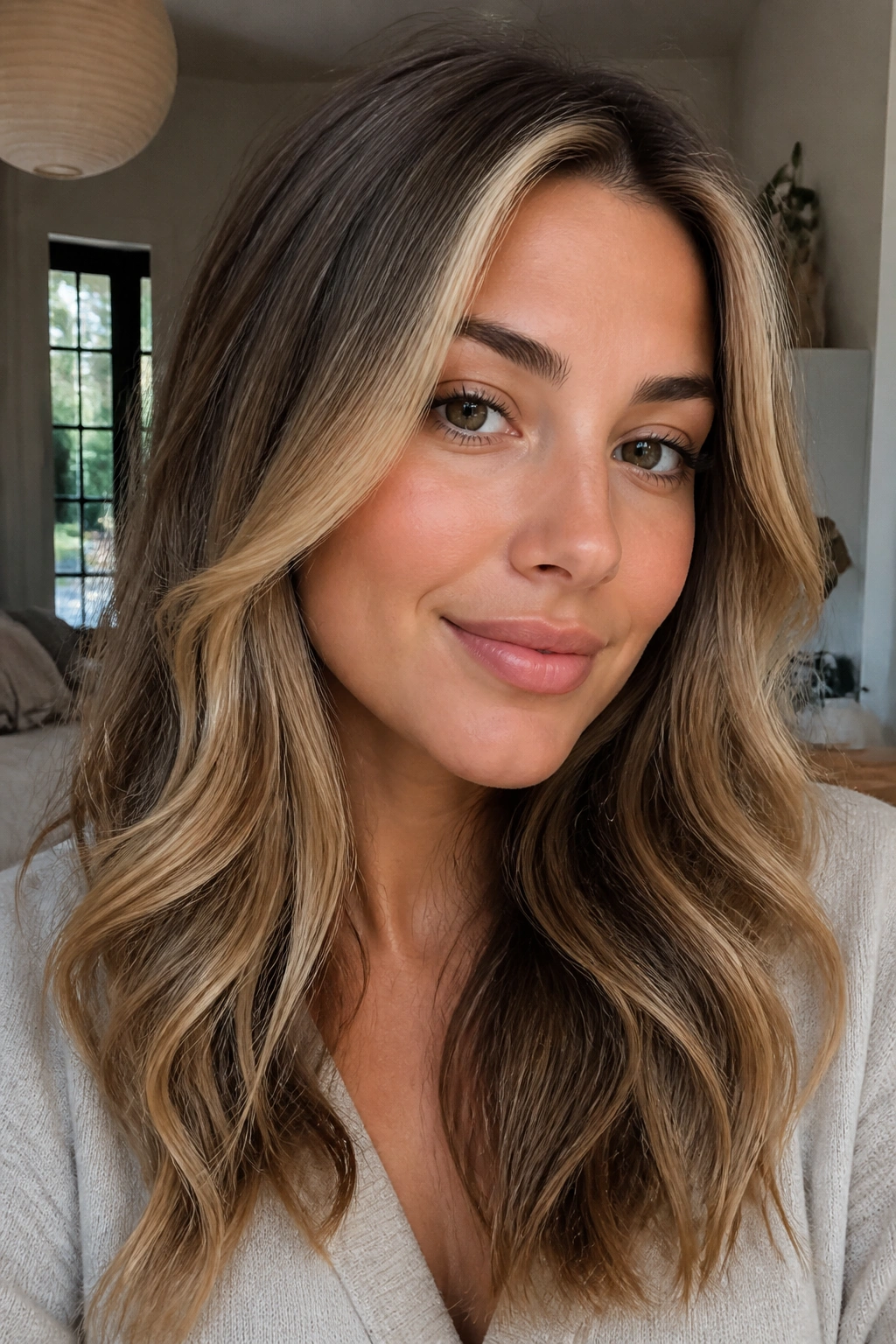
Want the quickest way to brighten a face without coloring the whole head? Put the lightest honey blonde pieces right around the front. Money pieces can be bold, but they do not have to be. In honey blonde, they can look like a lifted veil of warmth around the eyes and cheekbones.
This is the version I recommend when someone wants change but is nervous about commitment. The front gets the attention, while the rest of the hair stays calmer and easier to maintain.
Where the Brightest Pieces Should Sit
The most flattering placement usually starts just behind the hairline and runs down the front sections for about 4 to 6 inches. That gives brightness near the face without making the color look stripy at the root. If the face-framing pieces are too thick, the whole thing starts to look dated fast. Too thin, and you barely see them.
The trick is to keep the rest of the head a shade softer and slightly deeper. That contrast makes the front pieces matter. It also works well with ponytails, clips, and half-up styles, which is one reason this look keeps showing up in real life and not just on mood boards.
How to Keep It Soft
- Request beige-honey or golden-honey around the face, not pale yellow
- Leave a soft shadow at the root so the line does not look blocky
- Curl the front sections away from the face to show the color blend
- Use a lightweight glossing spray, not a sticky serum, so the front does not clump
Small detail, big difference: if your bangs are long enough to tuck behind the ear, these pieces look even better because they flash in and out of view.
3. Soft Honey Blonde Lob with a Shadow Root
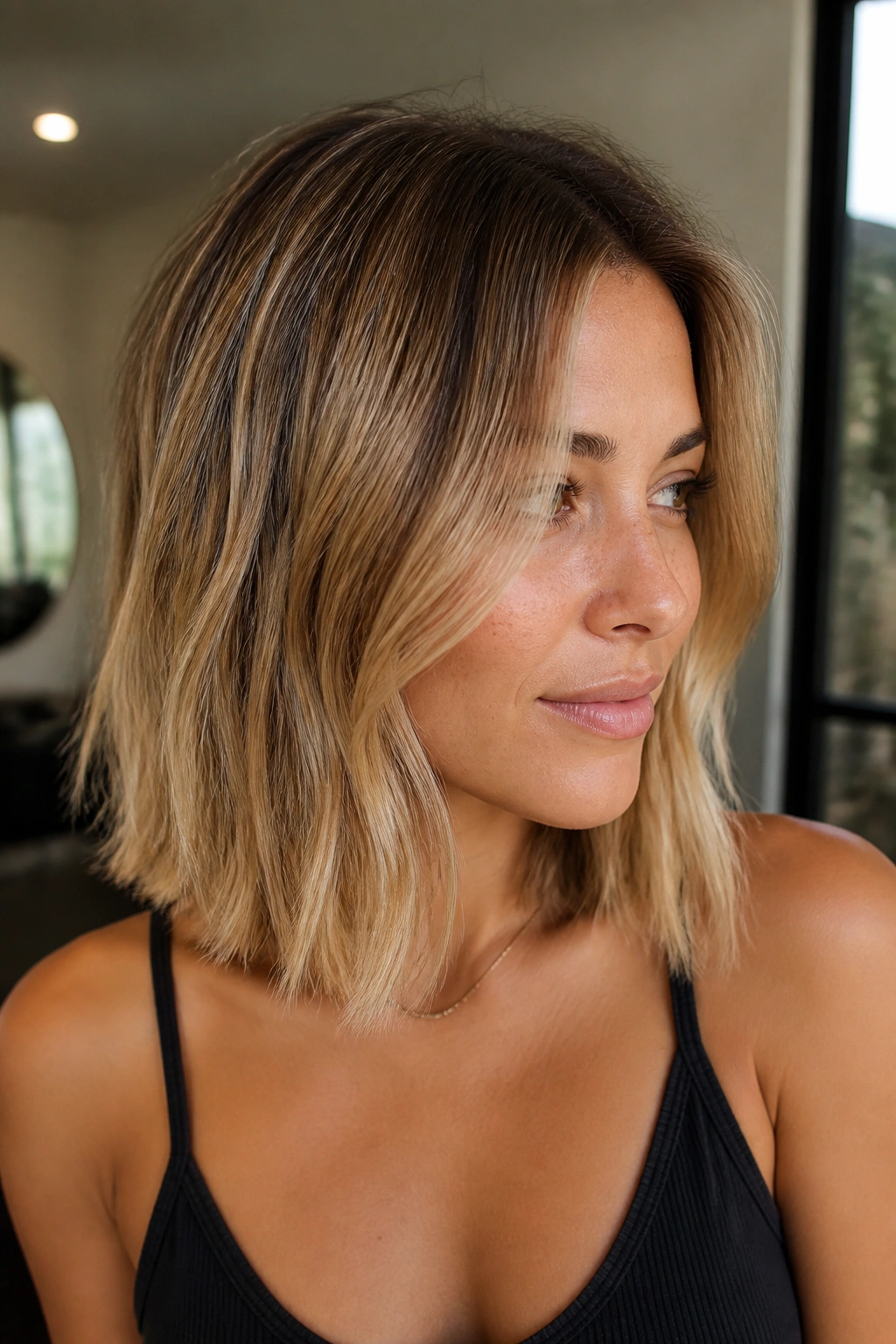
A bob does not need icy blonde to look polished. In fact, a lob with a shadow root often looks better because the color has somewhere to breathe. The shadow root gives the roots depth, while the honey blonde through the body keeps the hair looking warm and glossy.
This works especially well on shoulder-length cuts. The length is long enough to show a color melt, but short enough that the ends do not drag the blonde down. That keeps the whole look clean.
The part I like most is the low-maintenance feel. A 1- to 1.5-inch shadow root can buy you a softer grow-out, and the mid-lengths stay bright without screaming for attention. If the hair is blunt, the contrast can feel a little strong. Add a few soft interior layers, and the whole thing settles down.
One thing people miss: the ends matter. If the cut is too thick at the bottom, honey blonde can look chunky instead of airy. A slight bend under the chin or along the collarbone helps the color skim rather than sit.
4. Curly Honey Blonde Ribbon Highlights
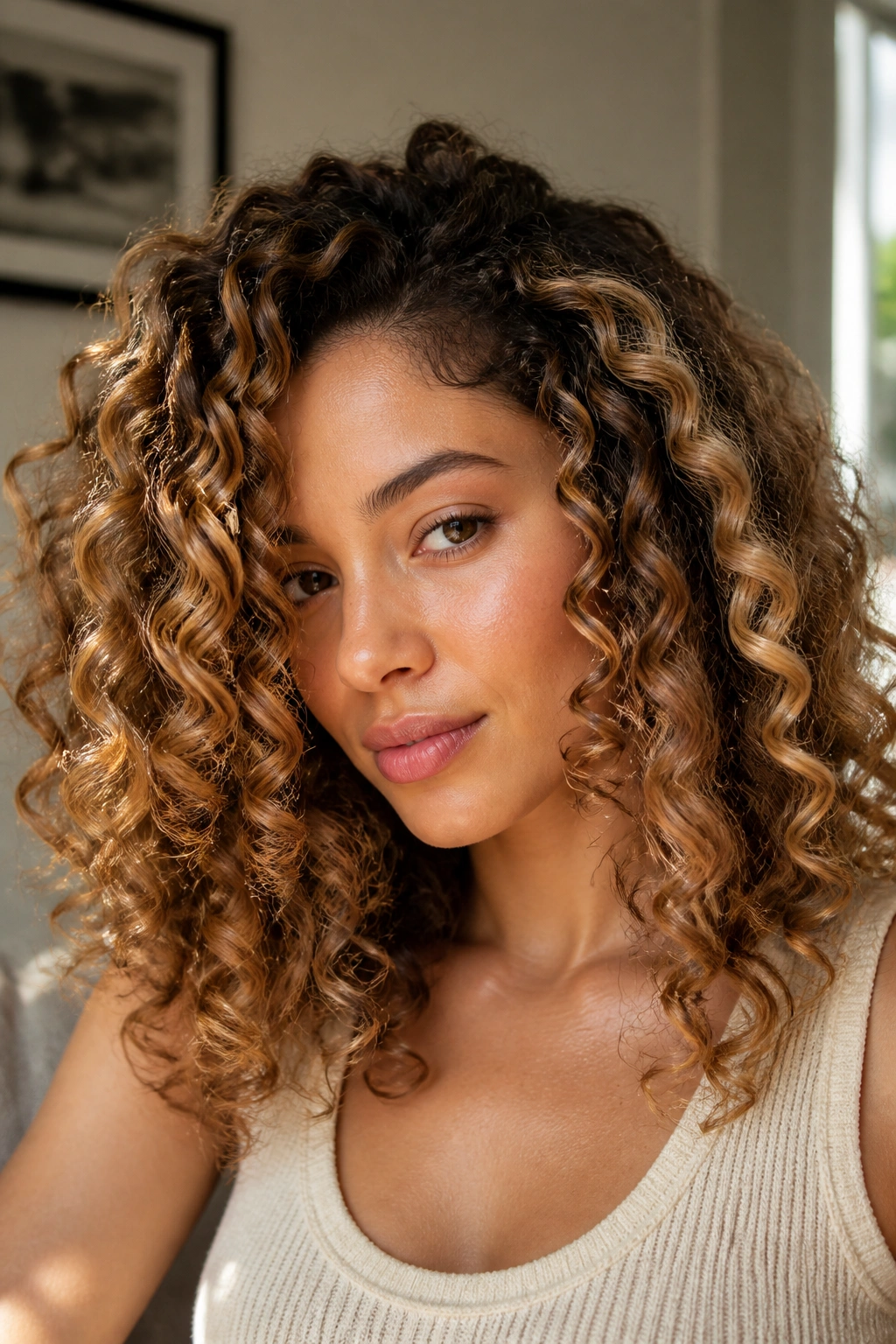
On curls, honey blonde should look like ribbons of sunlight woven through the coil, not a block of color.
That is why ribbon highlights work so well. They follow the curl pattern, showing up where the hair curves outward and disappearing where the curl tucks back in. The result is dimensional, not flat. And on textured hair, flat is the enemy.
Why the Placement Matters
Curly hair expands when it dries, so highlight placement has to respect shrinkage. If the lighter pieces are painted too close together, the curls can lose definition and start to blend into one bright mass. If they are too sparse, the color disappears once the hair dries.
A good colorist usually paints the lighter honey pieces on the outer curve of the curl and leaves the interior a shade deeper. That keeps the pattern visible. It also means the honey reads as warm and soft, not streaky.
What to Ask For
- Thin painted ribbons instead of full, chunky foils
- Honey, amber, or caramel tones that sit in the same family
- A few brighter curls around the face and crown
- A glaze that keeps the finish soft after lifting
A curly cut with layers makes this even better, because the color can move through the shape. The result is one of those rare styles that looks better air-dried than forced.
5. Golden Honey Blonde Bob with Beveled Ends
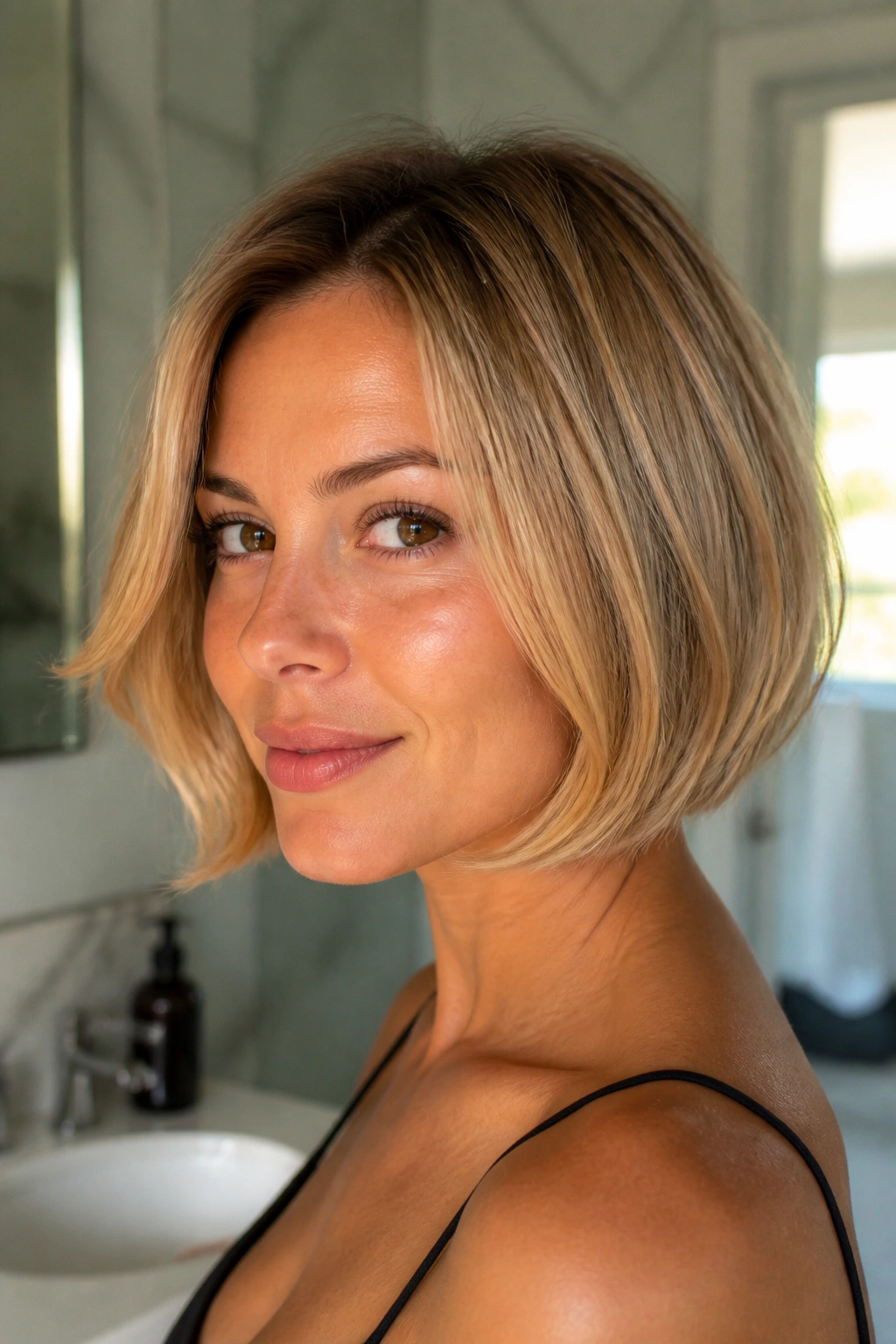
This is one of my favorite honey blonde hair ideas for fine hair, because the cut does half the work. A bob with beveled ends gives the color a little curve, and that curve is what makes the golden tones show up.
Short hair can go flat fast. A blunt one-length bob often needs either very strong shine or very strong shape to keep it interesting. Beveled ends solve the problem neatly. The hair sits a touch under at the edge, so the honey blonde catches light instead of looking like one solid sheet.
I like this look best when the blonde is concentrated through the outer layer and a touch lighter around the perimeter. That keeps the bob from looking heavy. If the roots are left deeper by a half level or so, the whole shape feels softer.
A round brush blow-dry helps here, but not in a stiff salon way. You want just enough bend to tuck the ends inward. Too much polish and the cut loses its ease. Too little and the shape can read as unfinished.
6. Honey Blonde Babylights for a Gentle Lift
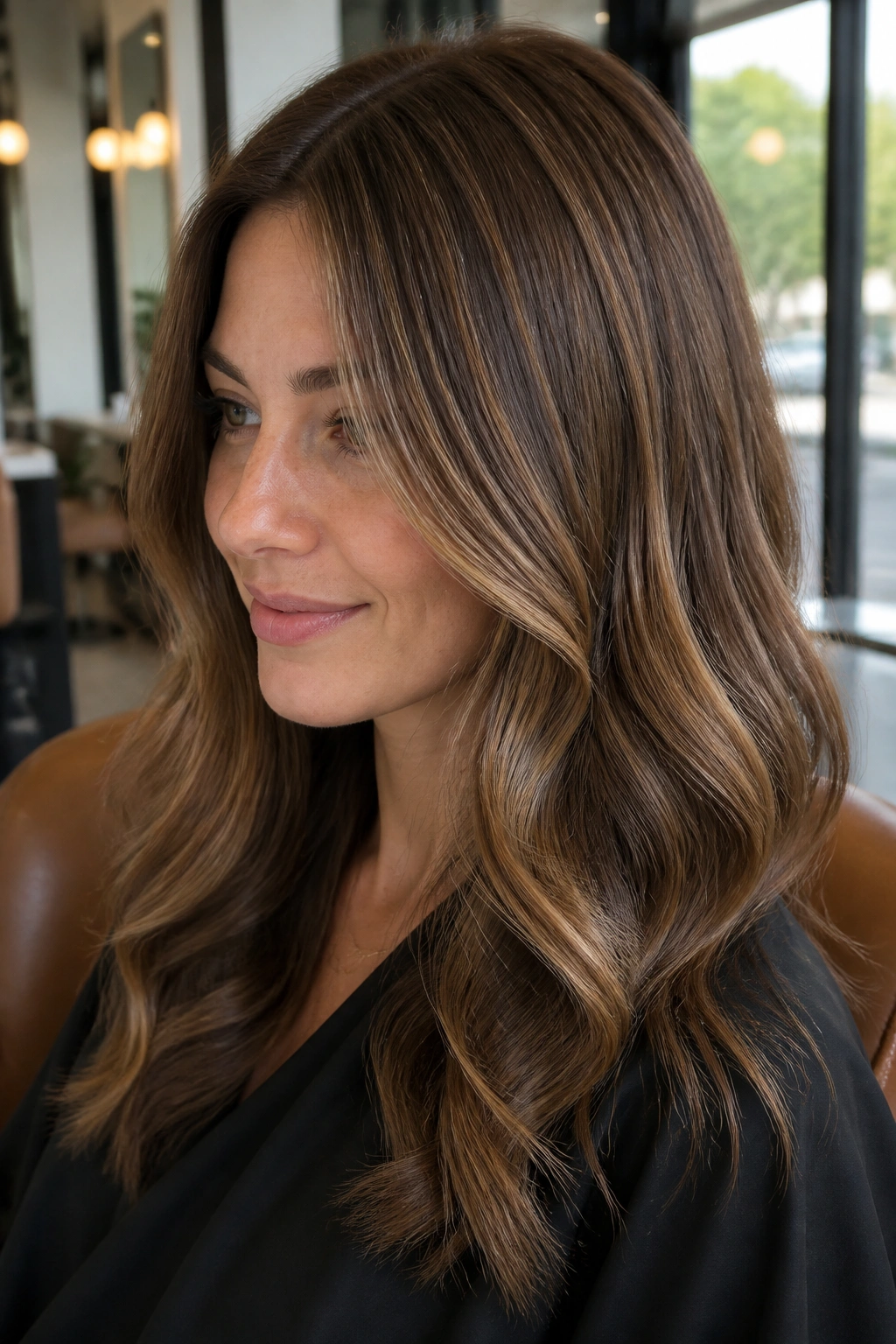
Babylights are the most underrated way to wear honey blonde if you hate obvious streaks. They are tiny, fine highlights that mimic the soft, mixed-in color kids often have after time in the sun. On adult hair, that same technique gives lift without drama.
The beauty of babylights is density. There are enough of them to brighten the whole head, but each piece is so fine that your eye reads the result as glow, not stripe. Honey blonde babylights work especially well on medium brown or dark blonde bases that need warmth, not a full color overhaul.
What Makes Them Different
The foils are typically sliced very thin — think about the width of a shoelace, maybe a bit finer. That is what keeps the effect soft. The highlights are spread more evenly across the head, so the color grows out quietly.
Babylights are also nice for people who wear their hair up a lot. A bun or low knot will still show the brightness through the surface layer. Chunkier highlights can look too intentional in that setting. Babylights just look good.
What to Tell Your Colorist
- Ask for fine honey and beige foils, not pale blonde
- Keep the base slightly deeper for contrast
- Add a gloss after lightening so the warmth stays controlled
- Skip chunky face money pieces if you want the softest finish
This is the kind of color that makes hair look healthier than it is. Not because it is magic. Because the pieces are small enough to fool the eye.
7. Beige-Honey Blonde with a Root Melt
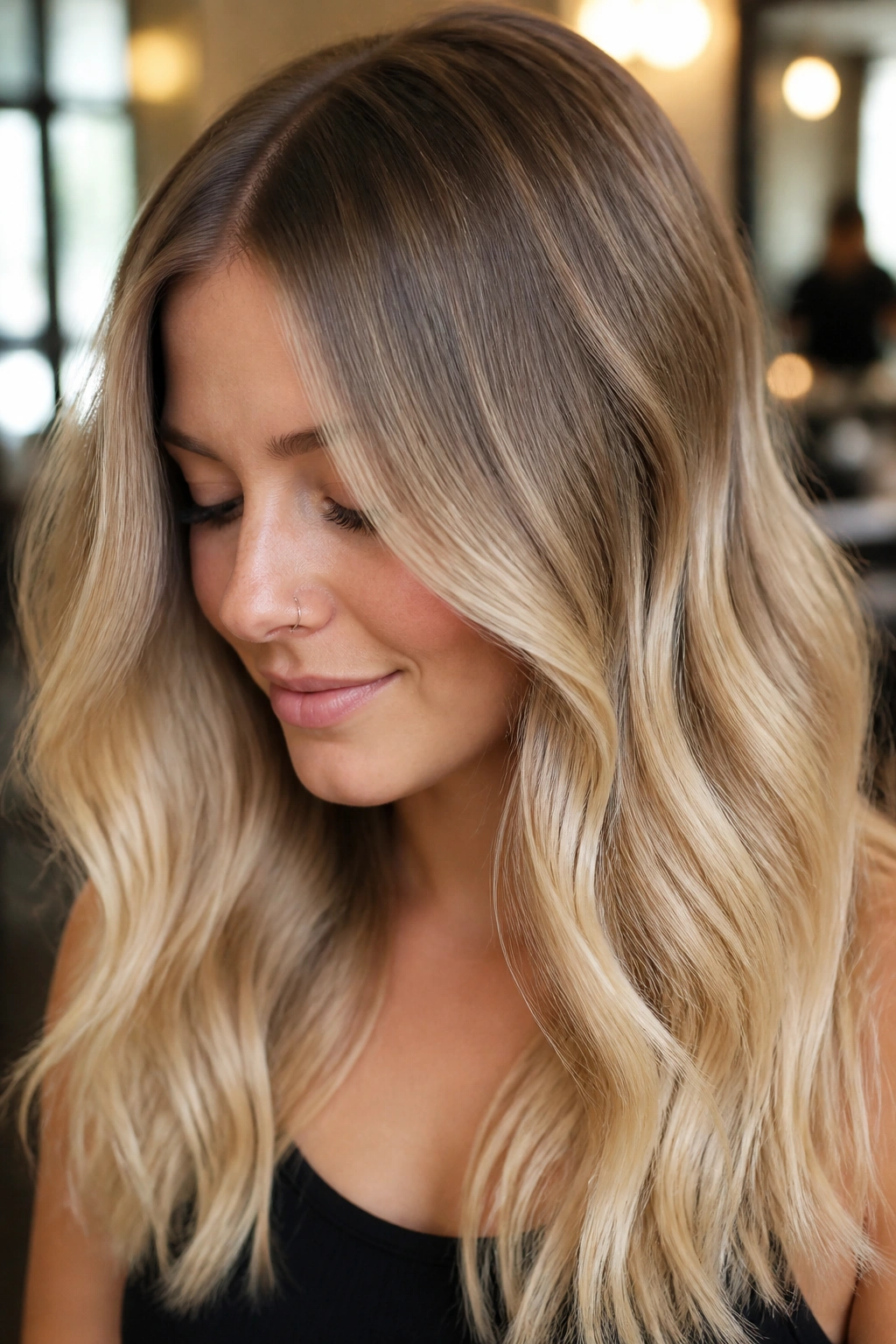
Picture a blonde that looks soft in the shade and bright in the sun. That is the beige-honey root melt version, and it is a smart choice for anyone who wants warmth without orange.
The root melt is the quiet hero here. A slightly deeper root fades into a beige-honey midsection, then into lighter ends that still feel warm. The beige keeps the blonde from going too yellow, while the honey keeps it from looking dusty. That balance is harder to get than people think.
When to Choose It
This version suits hair that has already been lightened once or twice and needs the color family adjusted, not redone from scratch. It is also useful if your natural root is on the deeper side and you want the grow-out to blend instead of announce itself.
The soft transition makes styling easier too. Loose waves show the melt best, but even straight hair benefits because the root does not look hard against the scalp. That matters more than most people admit. A harsh root can make a gorgeous blonde look a little tired.
What to Ask for at the Salon
- A shadow root that is one shade deeper than the mids
- Beige-gold toner through the length
- Ends kept light, but not pale
- No chunky separation near the part line
I’d pick this over cooler blonde every time if the goal is warmth with restraint. It has more depth, plain and simple.
8. Honey Blonde Ombré on Long Waves
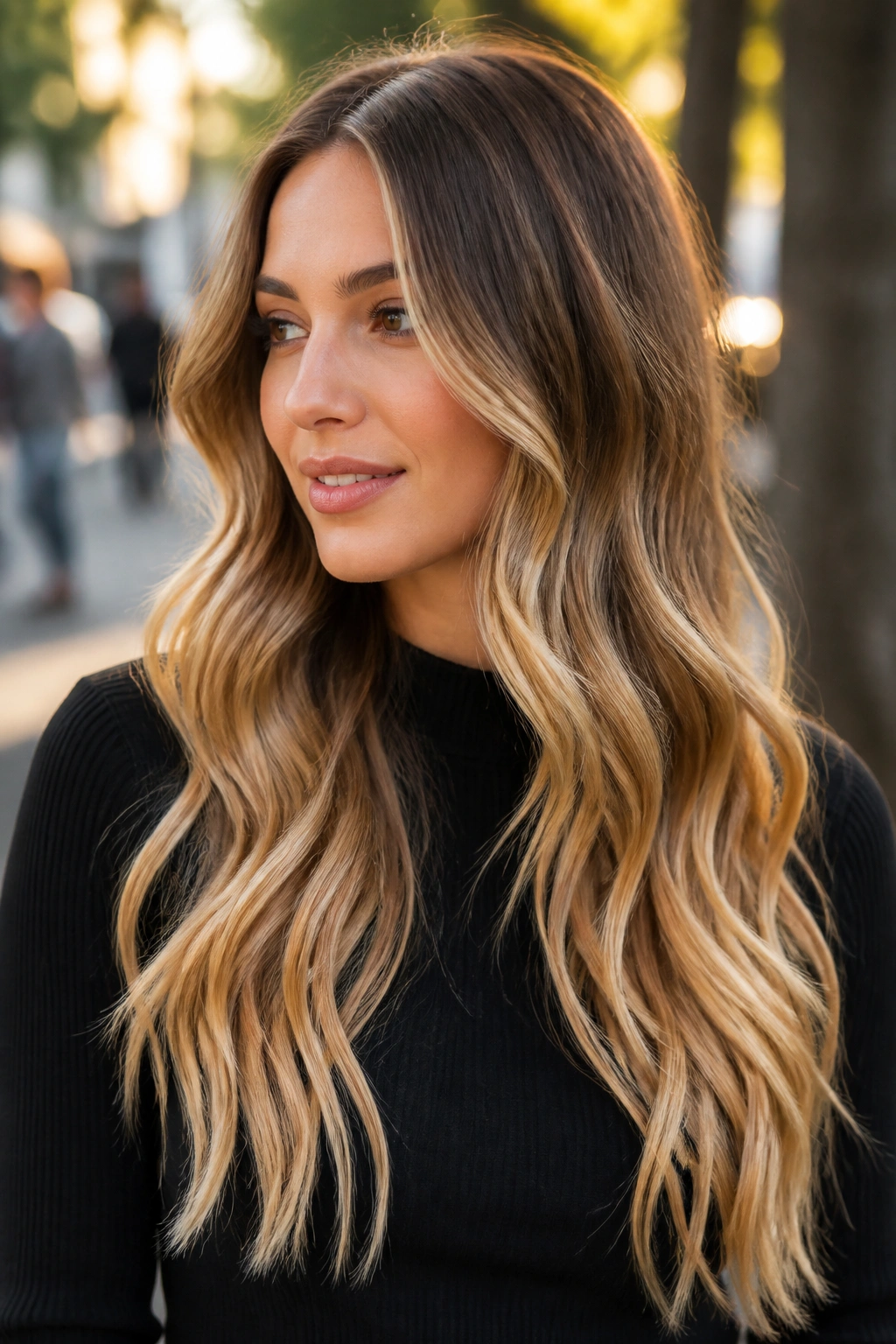
Long hair can handle more contrast than people think. Honey blonde ombré proves it, as long as the shift from dark to light stays blurred instead of abrupt. The roots stay deeper, the mid-lengths soften into caramel, and the ends turn a rich honey shade that looks almost buttery in motion.
This style works because the waves do the blending for you. Every bend in the hair catches a slightly different amount of color, so the eye never gets stuck on one band. On poker-straight hair, the transition can feel more obvious. On waves, it looks fluid.
I like ombré on long hair when the ends are cut in a soft line, not razor-thin. A little weight at the bottom keeps the blonde from looking scraggly. If the hair is layered, the shortest layers should still reach past the chin so the color has room to fade naturally.
- Best for hair that reaches the shoulders or longer
- Looks strongest when the lower third is the lightest area
- Needs a gloss to keep the honey tone from going flat
- Can be styled with 1.25-inch curls for a soft, brushed-out finish
The whole point is easy contrast. Nothing harsh. Nothing overworked.
9. Honey Blonde Pixie with a Textured Crown
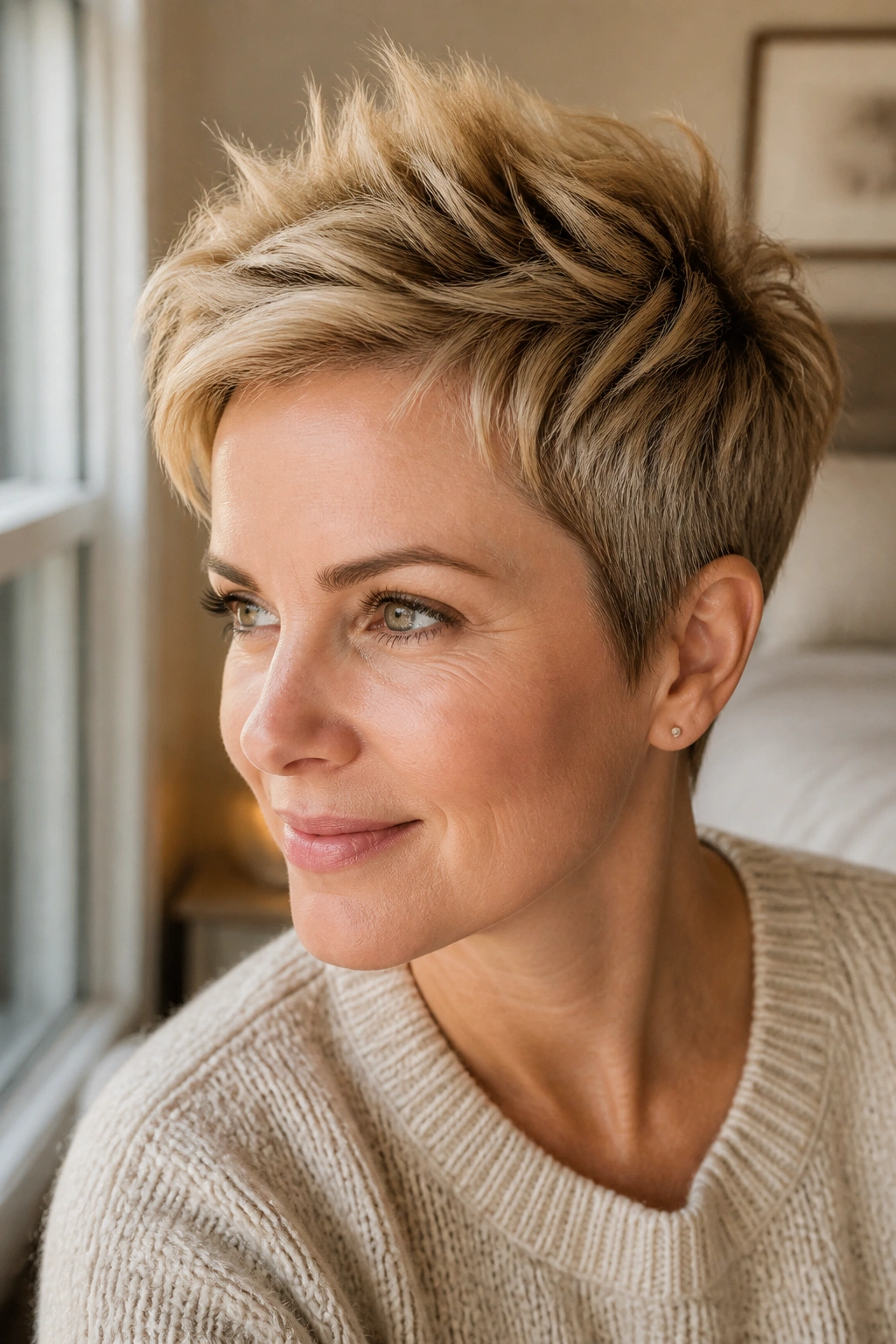
Can honey blonde work on short hair? More than that, it can save a pixie from looking flat.
Short cuts do not have much length to play with, so color placement has to do the visual heavy lifting. A textured crown with honey blonde pieces through the top creates lift, while slightly deeper sides keep the shape clean. The result is sharp but still warm.
A pixie like this looks especially good when the top has a little piecey movement. Honey blonde highlights catch on the texture, and the cut stops feeling like one solid block. If the top is too smooth, the color disappears. If it is too spiky, the softness is gone. That middle ground is where the style works.
This is also one of the easiest blonde ideas to wear if you do not want a ton of maintenance. Short hair gets trimmed often anyway, so the color can stay fresh with just the occasional gloss or toner refresh. Keep the pieces concentrated on the crown and fringe, and let the sides stay closer to the natural base.
Best use: if you want warmth, shape, and a cut that looks intentional even on a five-minute styling day.
10. Honey-Caramel Blonde on Layered Shag Hair
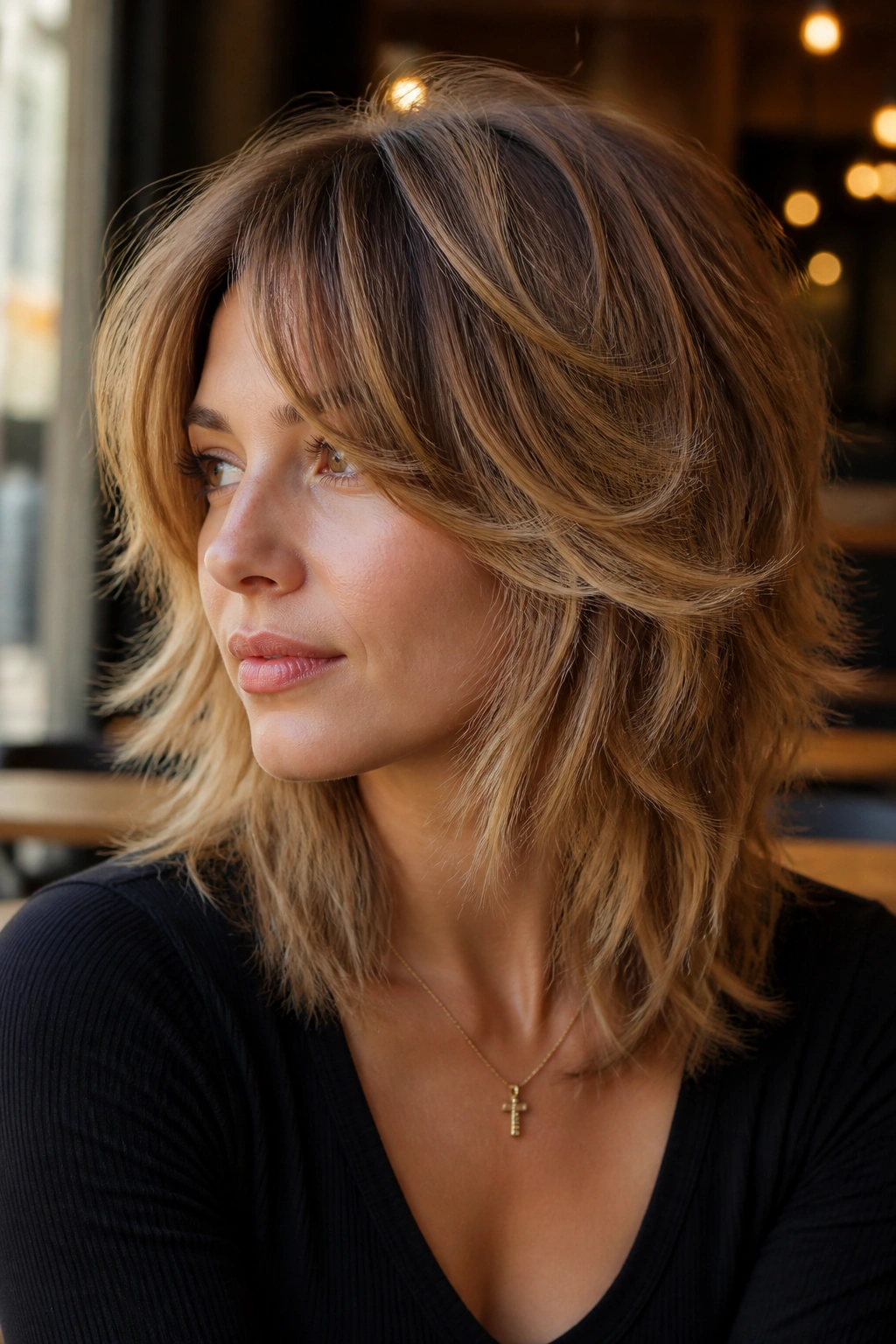
A shag loves warm blonde because the cut already wants movement. Honey-caramel color pushes that movement forward without making the hair feel busy.
The layered shape gives the blonde places to live: around the face, through the cheekbone area, and in the longer, broken-up ends. A solid one-tone color would flatten all of that. Honey-caramel highlights, by contrast, keep the layers visible. That matters a lot on shags, which can go from cool-girl to messy in one bad color job.
I prefer this version when the highlights are painted in a loose, irregular pattern. Too much symmetry makes the shag feel stiff, and that is the opposite of what you want. A few brighter strands near the fringe, a softer spread through the back, and a deeper root are usually enough.
There is also something nice about the warmth here. A shag can feel a little edgy on its own. Honey tones take the edge off, so the hair looks lived-in rather than intentionally gritty. That sounds like a small thing. It is not.
11. Honey Blonde Gloss Over Existing Blonde
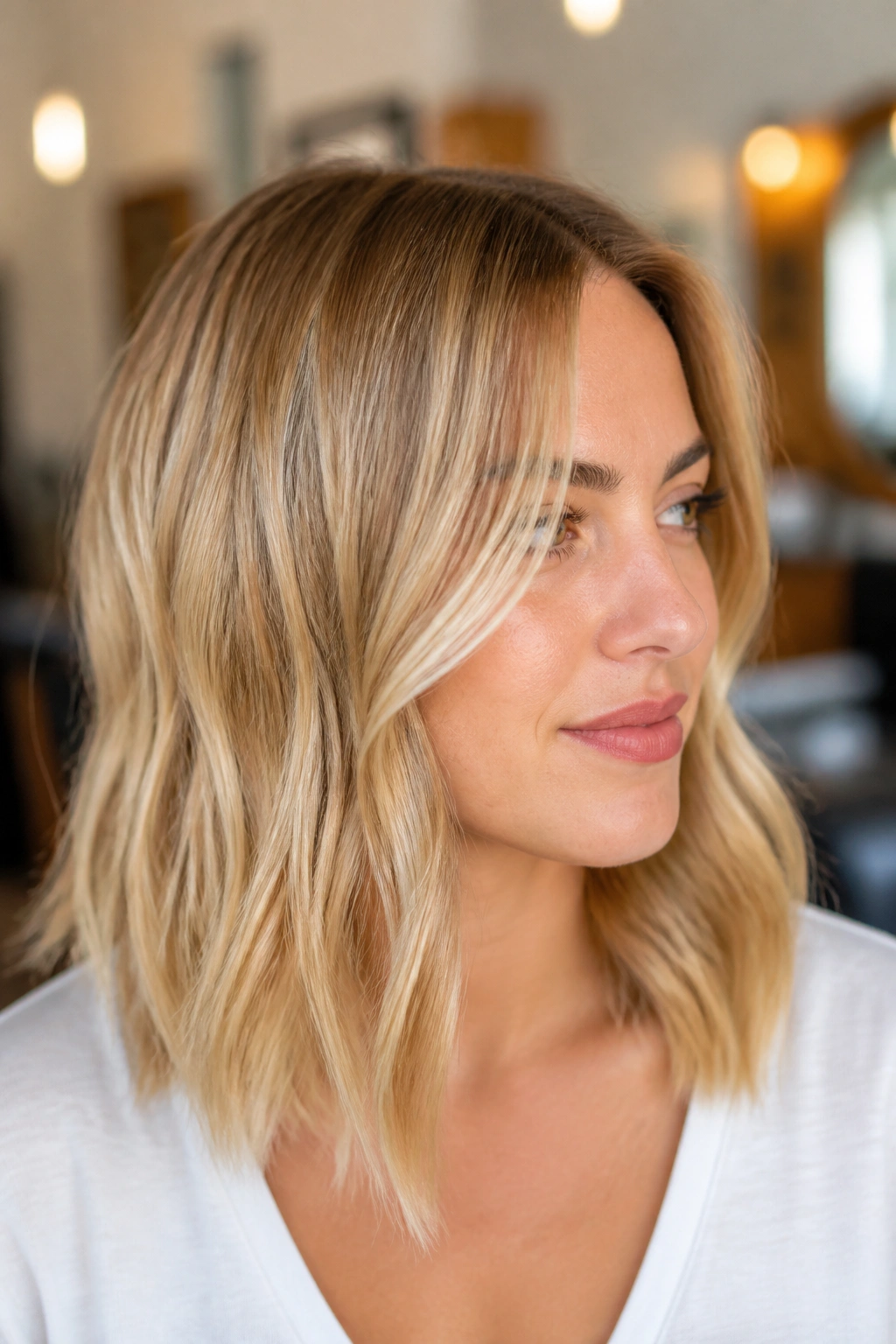
If your blonde has gone a little too pale, a honey gloss can change the whole mood without lifting the hair again. I reach for this kind of refresh when the blonde looks washed out, icy, or a touch hollow around the edges.
A gloss is lighter than a full color service. It deposits tone, shine, and a bit of richness, which is why it works so well on faded blonde. The result is not dramatic in the dramatic sense. It is better than that. It makes the hair look healthier and more deliberate.
The shade matters a lot here. A honey gloss should add warmth without turning orange or muddy. Think gold with a beige edge, not yellow paint. A good colorist will usually mix a demi-permanent glaze to sit in that sweet spot for a few weeks, enough to make the blonde feel plush again.
This is also the easiest option for people who already love their cut and just want the color to look softer. No major lift. No big maintenance shift. Just a cleaner finish with more warmth through the mids and ends.
12. Curtain Bangs with Honey Blonde Brightening
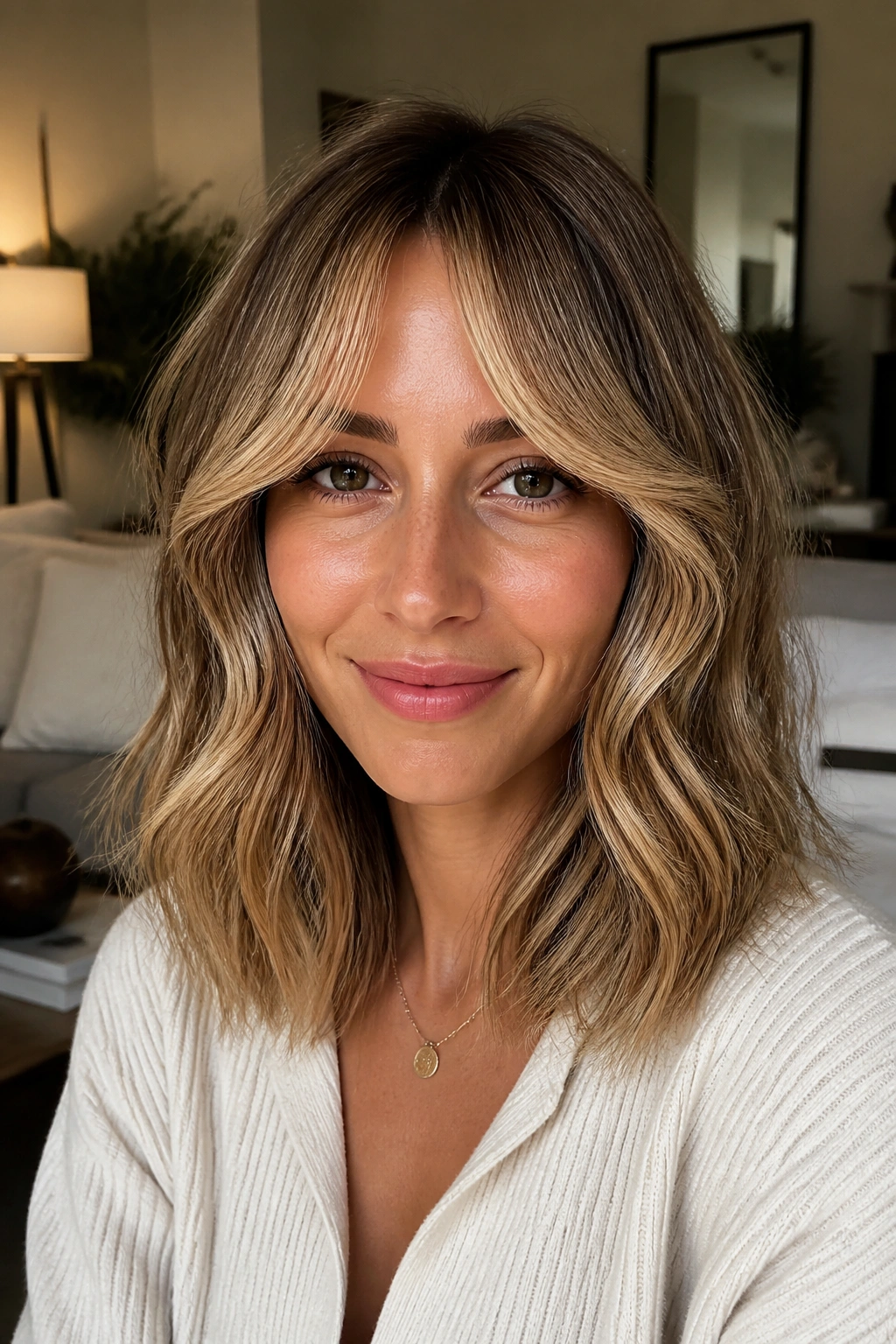
Do curtain bangs need to be the brightest part of the hair? Not exactly, but they do need enough color to show the shape.
Honey blonde and curtain bangs play well together because the bangs sit where everyone looks first. If the front sections are a touch lighter, the eyes go straight to the face, and the rest of the hair can stay calmer. That is useful when you want softness more than high contrast.
How to Place the Brightness
Keep the lightest pieces just off the center part and through the outer curve of each bang. You do not need full saturation. A few honey-toned ribbons around the cheekbone area can do more than a heavy blond stripe right at the root. The difference is subtle in theory and obvious in real life.
The rest of the hair should support the bangs, not fight them. Shoulder-length waves, long layers, or a soft lob give the fringe somewhere to land. If the rest of the head is packed with equally bright color, the bangs lose their job.
A small trick I like: dry the bangs with a round brush, then let the ends fall apart a little. That slight looseness makes the honey blonde look airy instead of helmet-like.
13. Chunky Honey Blonde Ribbons on Mid-Length Hair
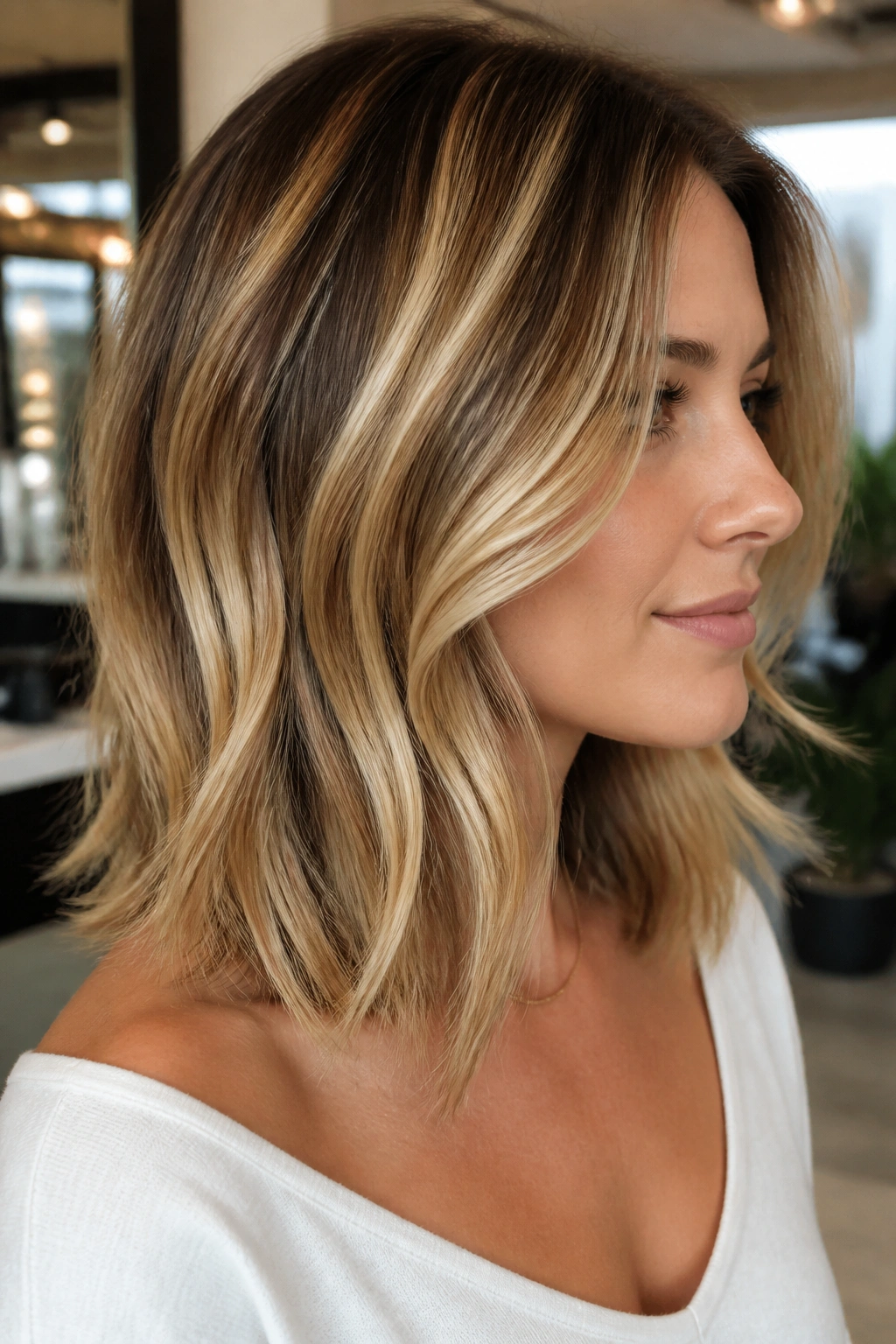
Not every soft blonde needs to be tiny and blended. Chunky ribbons can still look warm and calm when the tone is honey instead of platinum.
This style works because the larger sections create visible contrast, which makes the color read from across the room. On mid-length hair, those ribbons have enough space to show shape without taking over the whole head. If the base is medium brown or deep blonde, the effect can be striking in a good way.
The trick is to soften the edges. A beige or caramel toner keeps the ribbons from looking too harsh, and a few thinner pieces mixed in between the larger ones stop the whole thing from becoming blocky. That mix matters. Too many chunky pieces and the color looks like a throwback. Too much blending and you lose the point.
Key Details to Ask For
- Wider honey ribbons around the face and crown
- Smaller transition pieces between the larger sections
- A toner that keeps the warmth rich, not yellow
- Waves or a brushed-out bend to show the spacing
A style like this has a little more attitude than babylights. That is the appeal.
14. Honey Blonde Foils on Auburn or Copper Hair
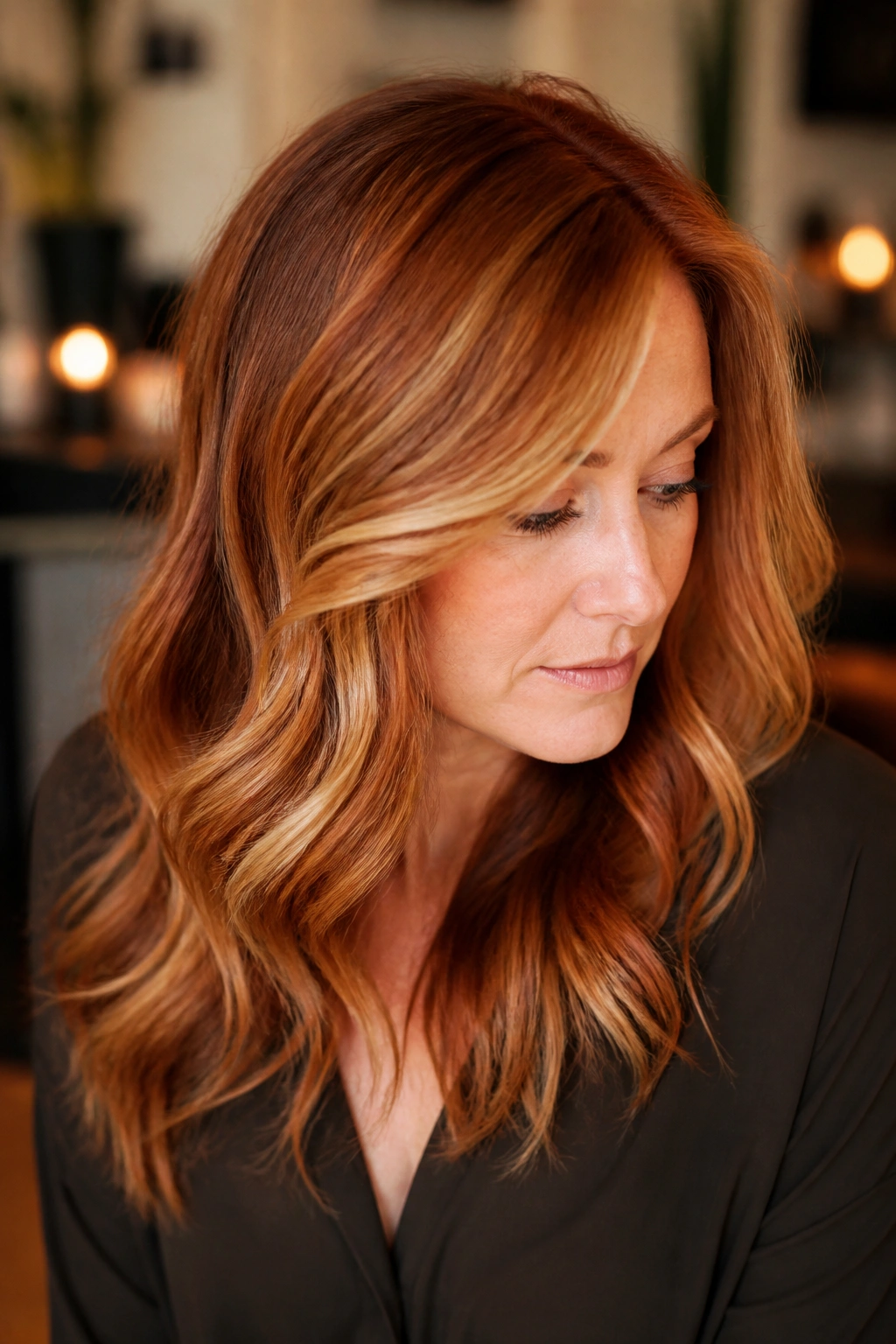
Honey blonde on red hair can be gorgeous, but only if the lift stays gentle. Push it too far and the warm tones start fighting each other. Keep it controlled, and auburn hair gets a soft golden glow that looks expensive without looking fake.
I like this direction for natural redheads who want brightness around the face and through the mids, not a full blonde makeover. Honey foils can lighten the hair just enough to add dimension while leaving the copper base intact. That gives you warmth on warmth, which sounds simple but is harder to get right than ash-blonde work.
The best placement usually starts around the perimeter and crown, where light naturally lands first. Keeping some deeper copper underneath preserves depth, so the blonde does not wash out the whole head. If the hair is very red, a gloss after the foils helps the honey tone sit neatly beside the natural pigment.
This is not the place for aggressive lifting. Softness matters more. A golden-red blend can look rich, but only when the colorist respects what the hair already is.
15. Honey Blonde Ends on Airy Long Layers
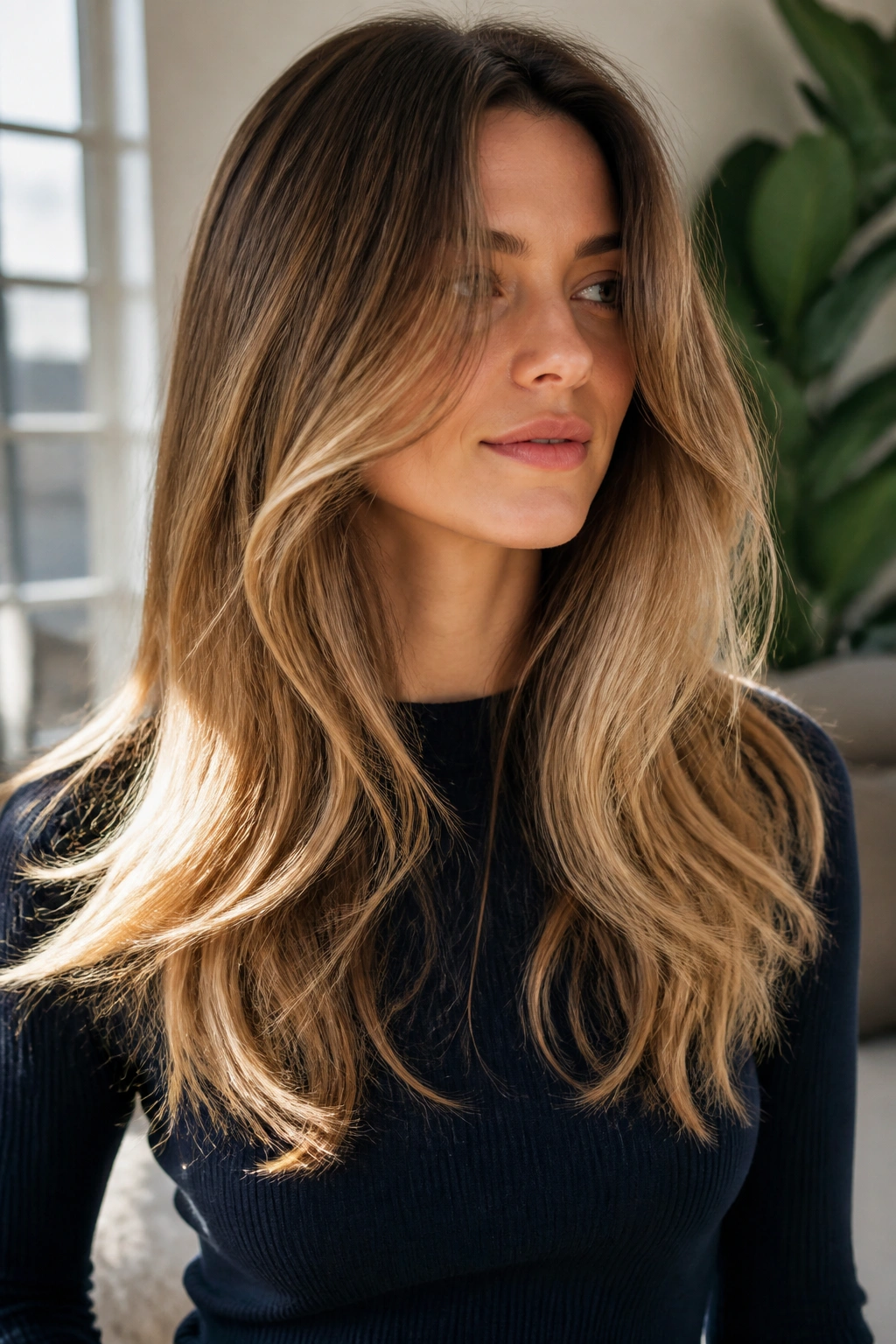
A subtle finish can carry a lot of weight when the cut has movement. Honey blonde ends on long layers are a good example, because the lightness stays where the hair naturally swings and bends.
This is one of the easiest ways to wear honey blonde if you want warmth without losing your base color. The upper lengths stay closer to your natural shade, and the lower sections pick up the golden tone. On long layers, that creates a soft fade that looks especially good in motion.
Why It Works on Layered Hair
Layers break up the silhouette, so the lighter ends do not read as a hard block. Instead, they look like the hair has been kissed by sun in the places that move the most. That is the whole trick. Keep the root calm, let the ends glow, and the style reads softer from every angle.
A few things make the difference here:
- Ask for honey at the ends, not pale blonde
- Keep the transition from mids to ends gradual
- Add face-framing brightness only if the cut needs it
- Style with a loose wave or twist-out to show the fade
My favorite part: this version grows out with almost no fuss. The base can stay deep, the ends stay warm, and the whole thing still looks intentional weeks later.
If you want honey blonde that feels soft instead of shouty, this is the one I’d keep coming back to.
