



Sun kissed highlights work best when they look borrowed from daylight, not painted on in a hurry. A few thin ribbons near the face can make hair look brighter, softer, and a lot more expensive than a heavy blanket of blonde ever does. That’s the whole trick: light in the right places, not light everywhere.
The cleanest versions usually keep some depth at the root and through the underside. That contrast matters. Without it, hair can go flat fast, especially on brunette bases or on cuts with very little layering. The prettiest color I’ve seen in real life usually has a little shift in tone too — beige, honey, champagne, caramel, soft copper — because a single flat blonde note can look harsh under indoor light.
Placement is doing most of the work here. A colorist who understands face shape, part lines, and where your hair bends naturally can make a few pieces look like a full brightness upgrade. A colorist who over-foils everything? That usually gives you stripes, which is the opposite of what you want.
These 30 ideas keep the brightness soft, wearable, and easy to grow out. Some lean blonde. Some stay deep and warm. A few are barely a whisper of color, which is often the smartest choice if you want that sun-kissed finish without spending every six weeks in a chair.
1. Champagne Babylights on a Brunette Base
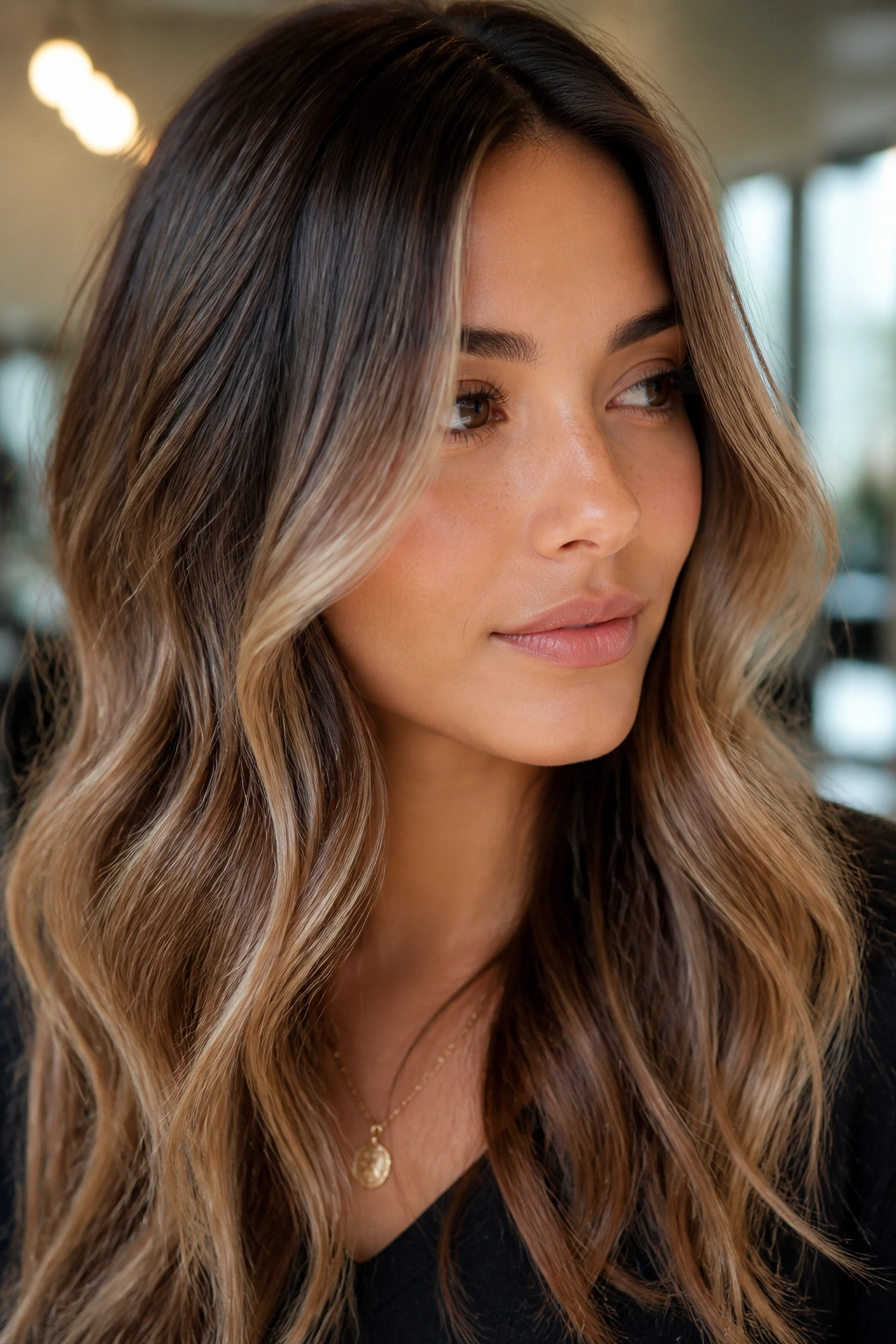
Champagne babylights are the move when you want hair to look softly lit instead of obviously highlighted. The pieces are tiny, the lift stays gentle, and the final tone sits between beige and pale gold. On chestnut or espresso hair, that gives you brightness that feels expensive, not loud.
Why It Looks Natural
The fine weave is doing the heavy lifting here. Because the strands are so thin, the eye reads the whole head as luminous instead of seeing one isolated streak. Keep the contrast to about one or two levels lighter than your base, and the result stays believable.
A beige gloss at the end makes a bigger difference than people expect. It pulls the warmth down just enough so the highlight doesn’t turn orange in daylight. That little adjustment is what keeps champagne hair from drifting into brass.
- Best on level 4 to 5 brunettes.
- Ask for ultra-fine foils around the hairline and top layer.
- Keep the underlayer deeper for contrast.
- Finish with a beige or neutral gloss, not a yellow one.
Pro tip: if your hair is one color from roots to ends, leave a touch more depth in the bottom half so the babylights have something to bounce off.
2. Honey Money Piece Beside Curtain Bangs

A honey money piece can brighten your face faster than any full-head color job. The difference is right at the front: a soft halo around the cheekbones and bangs, with the rest of the hair staying calmer. That contrast gives you lift without turning the whole style into a blonde project.
Curtain bangs make this look easy to wear because they break up the highlight instead of framing it like a line. The honey tone should stay warm, but not orange. Think fresh honey after it cools, not candy.
The smartest placement starts just in front of the part and then melts into the first few face-framing layers. If the front pieces are too thick, the look gets dated fast. Thin, blended, and a little feathered at the ends is where the sweet spot lives.
You can keep the rest of the head darker and still get a big visual change. That’s why this one works so well for people who want to look brighter in ponytails, loose waves, and even on a messy second-day blowout. The hair does not need to be all one brightness to feel refreshed.
3. Caramel Foilyage on Dark Brown Waves
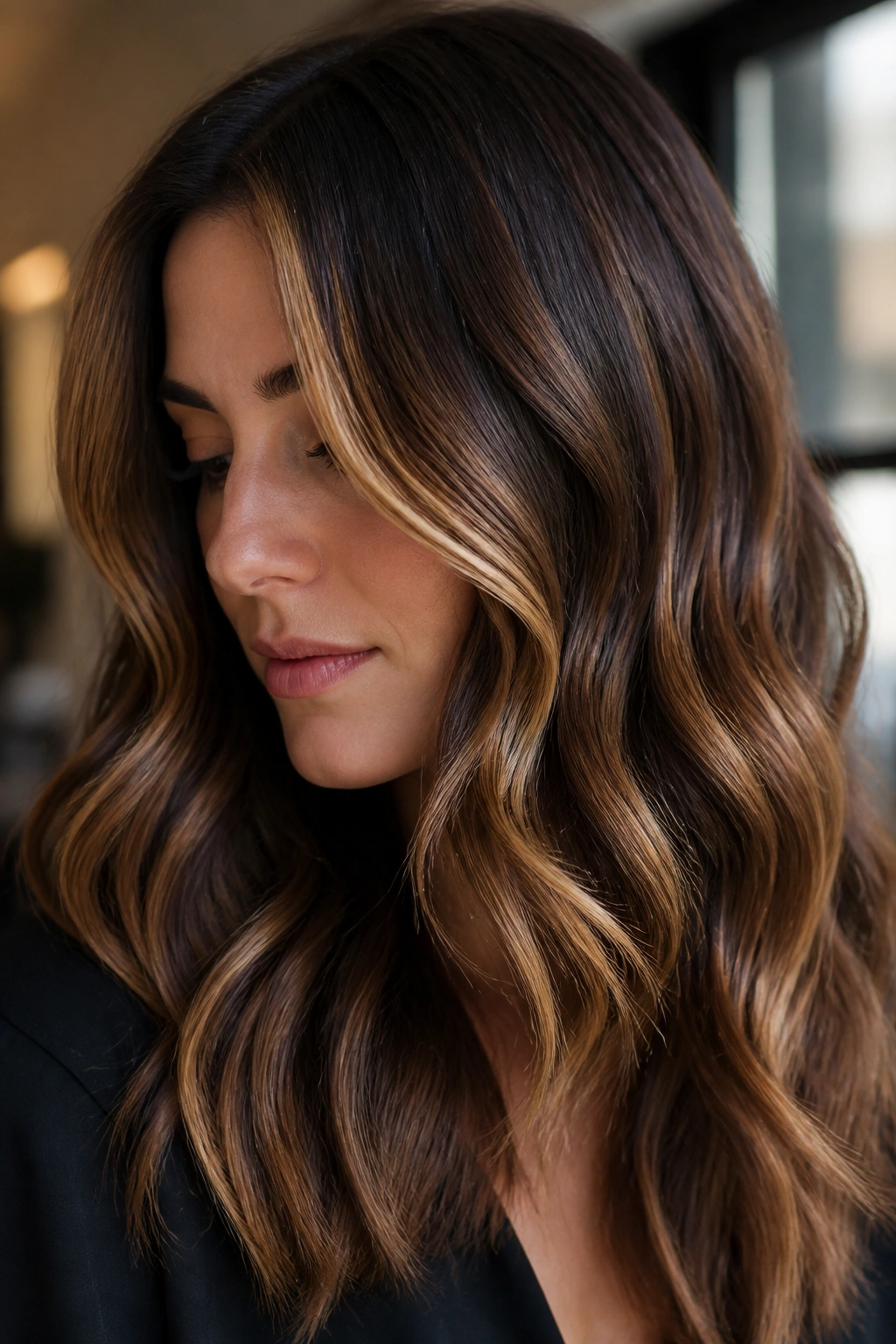
Why does caramel work so well on dark brown hair? Because it respects the base instead of trying to erase it. Foilyage gives you a little more lift than freehand balayage alone, so the caramel reads rich and visible through waves without looking patched on.
How to Ask for It
Ask for a few painted pieces through the mid-lengths and ends, then add selective foils where you want extra brightness. That combination gives the hair a lifted, sun-warmed look while keeping the root soft. Dark brunettes usually need that foiled boost if they want the caramel to show up cleanly.
The tone matters more than people realize. A caramel that leans gold will pop more; one that leans toffee will blend better. If your skin has warmth, gold is lovely. If you prefer something quieter, toffee sits down a bit and still catches light.
When hair waves naturally, this method looks almost effortless. The bends pick up the lighter strands and the darker pieces stay in the background, which gives you movement even on a simple air-dry. That’s the real appeal here. Not drama. Motion.
4. Sandy Beige Balayage on Shoulder-Length Hair
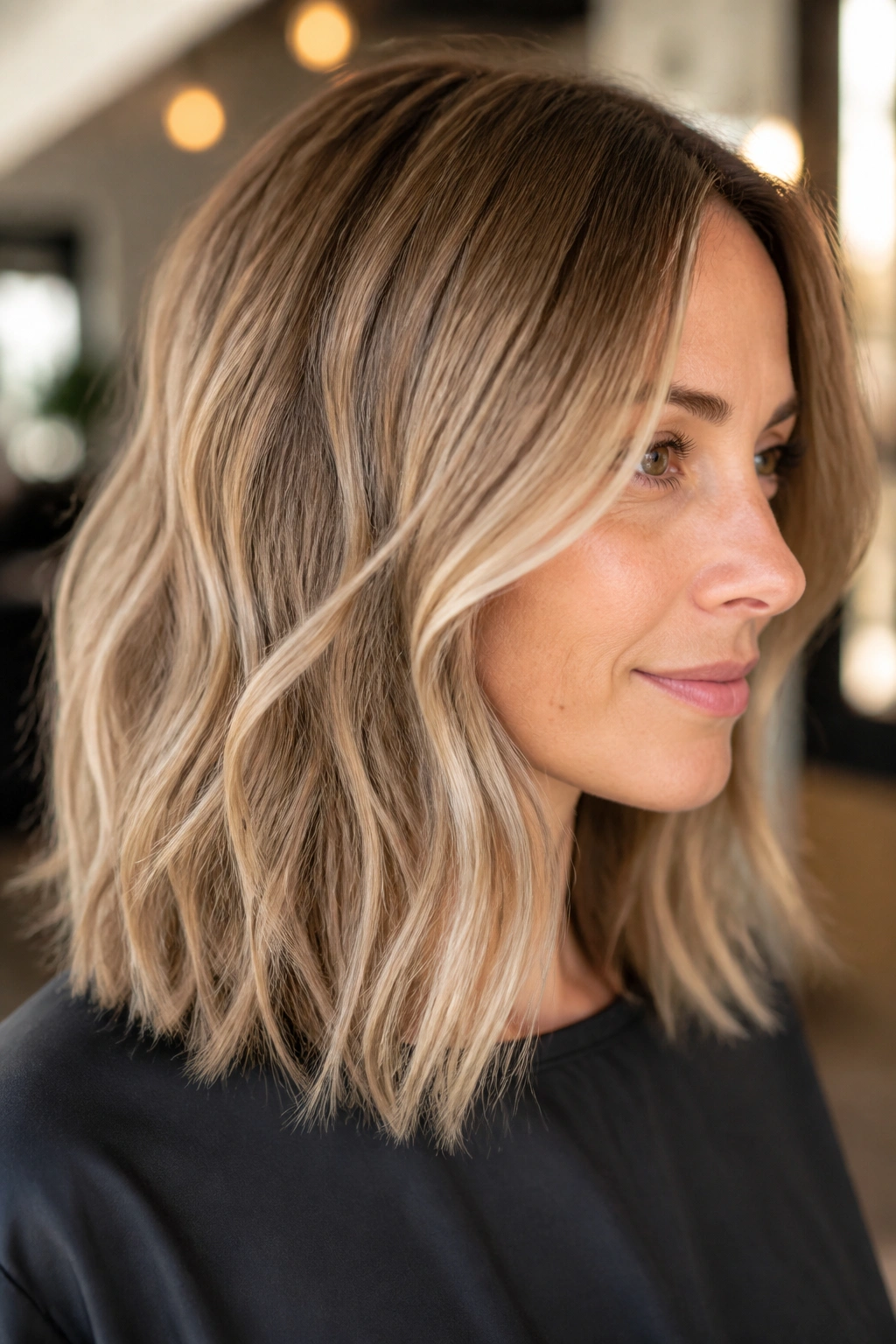
Shoulder-length hair can look heavy if the color sits too flat, and sandy beige balayage fixes that fast. I keep thinking of it as the haircut’s built-in window light. The lighter pieces live mostly on the outer surface and through the lower half, so the whole shape feels airier.
A client with a blunt shoulder cut once told me her hair looked “stuck to her head” before color. Sandy beige balayage solved that without making the cut look choppy. The key was keeping the lights soft at the ends and slightly diffused near the part.
- Focus the brightest pieces around the face and the top layer.
- Leave some deeper beige-brown between ribbons.
- Keep the ends a shade lighter than the mids.
- Ask for a soft root shadow if you hate obvious regrowth.
The reason this style works so well is that beige doesn’t shout. It brightens, but it stays calm. On a cut that sits right at the collarbone, that calmness keeps the shape from feeling busy.
5. Vanilla Ribbon Highlights on Long Blonde Hair
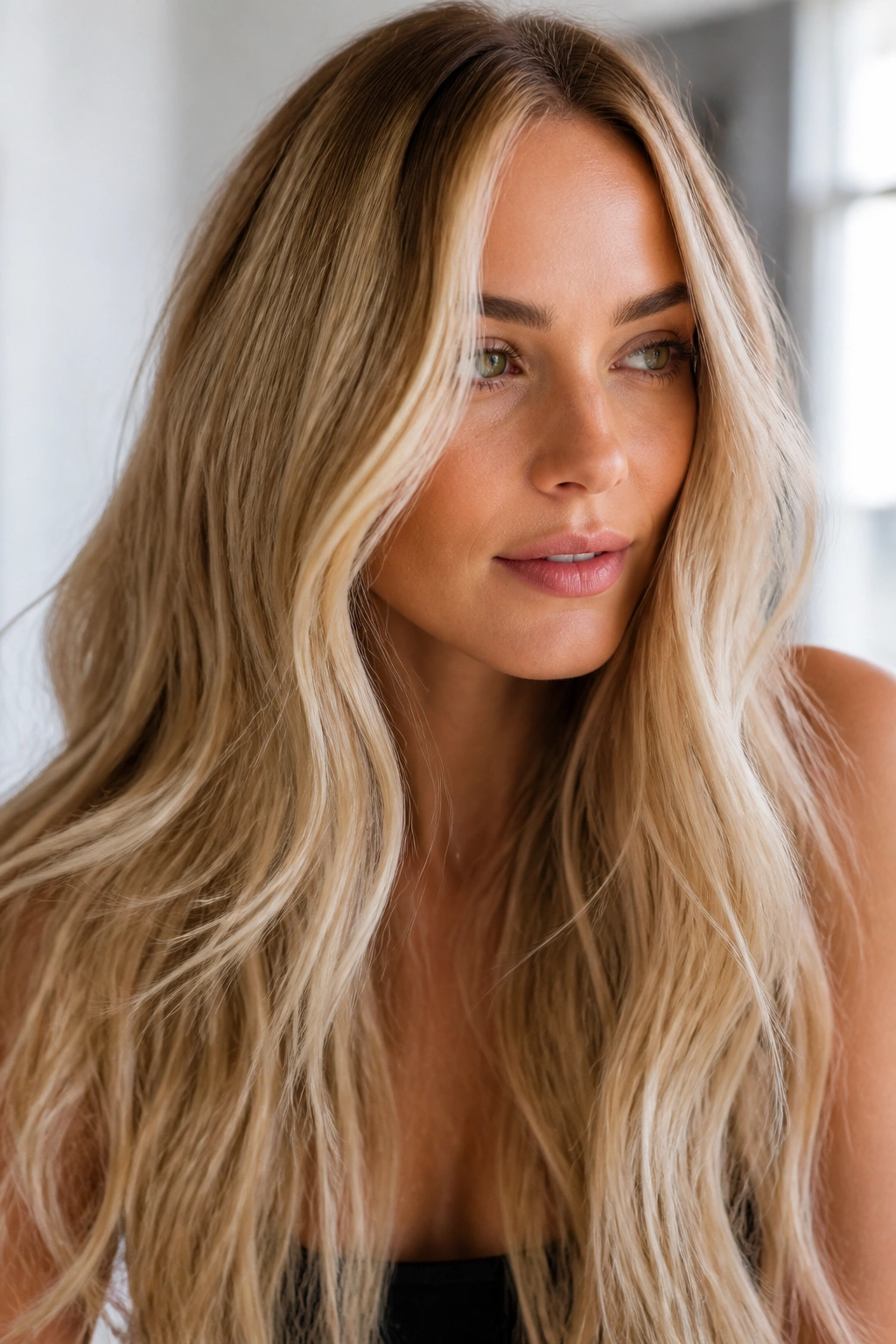
Vanilla ribbon highlights are for blonde hair that needs depth as much as brightness. Pure blonde can go stale fast if every strand lands in the same pale zone. These ribbons thread slightly lighter strands through a softer base so the color keeps moving when the hair swings.
That swing matters. Long hair shows color changes in a way short hair does not, especially if it falls straight most of the time. The ribbons should be narrow enough to blend from a few feet away but bright enough that they catch the ends and face line when the light hits.
A lot of people think long blonde hair needs more blonde. Usually, it needs less sameness. Leaving some buttery or beige sections intact makes the vanilla pieces feel richer, not louder. It also helps the hair hold shape visually, which is handy if your cut is mostly one length.
A gloss every so often keeps the vanilla note from looking chalky. That’s the part people skip, and then they wonder why the blonde looks dry in indoor light. Tone is half the job. Texture is the other half.
6. Mushroom Blonde Dimension for Cool Brunettes
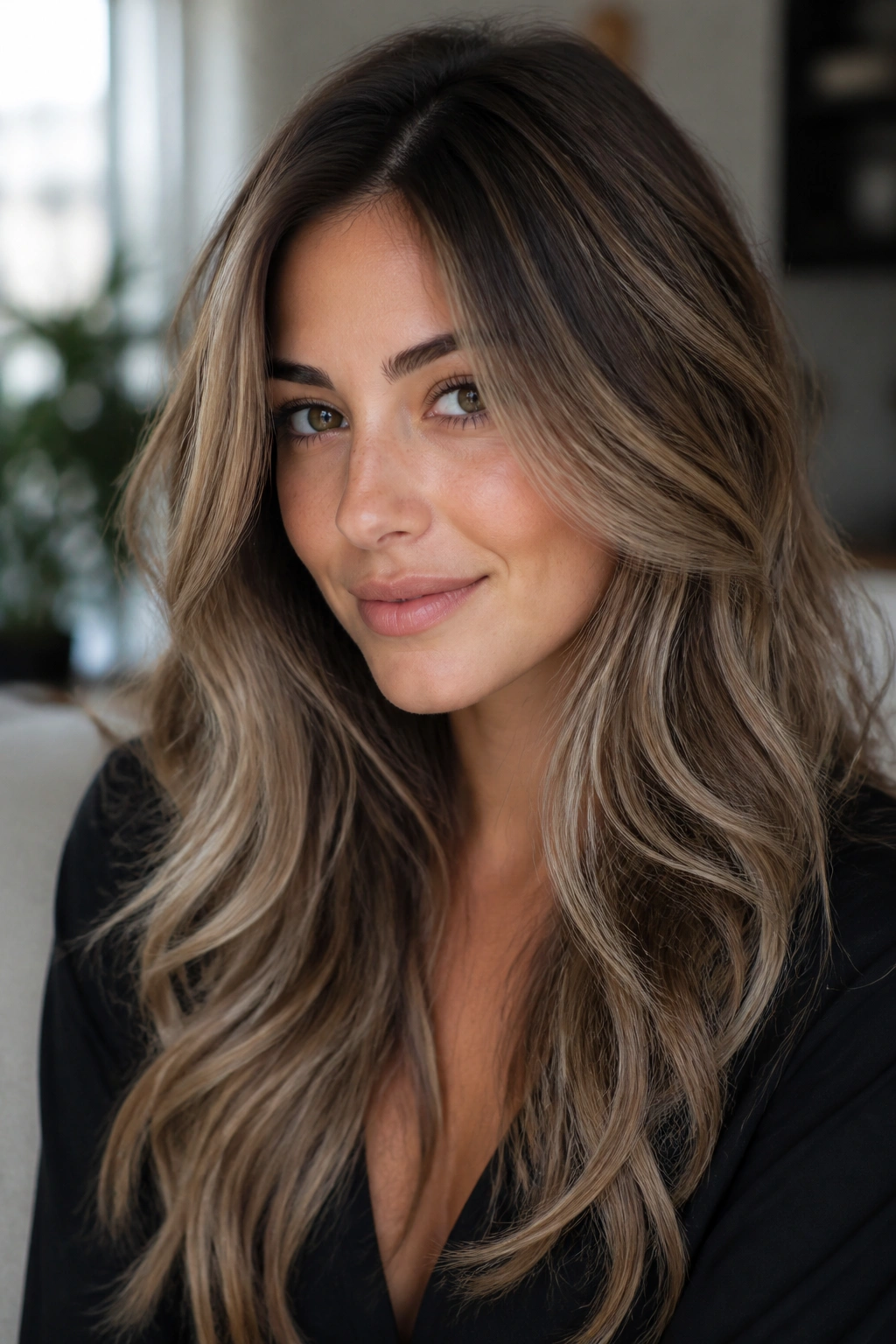
Mushroom blonde is the cooler cousin of caramel, and that’s exactly why it works on some brunettes so well. Instead of warm gold, it leans taupe, beige, and soft ash. The result is a soft brightness that feels modern without turning yellow.
Unlike honey or caramel, mushroom blonde doesn’t fight cool skin or naturally smoky brown hair. It sits closer to the base, which makes grow-out easier and the transition gentler. For people who dislike brass, this is a much saner lane to live in.
The best version usually uses a root smudge and very fine ribbons through the mids. That root shadow keeps the top from looking too bright too fast, while the lighter pieces stop the hair from reading flat. It’s a balance thing, but not the fake kind people say online. A real balance thing.
This is also one of the few lighter looks that can still feel quiet on straight hair. Waves show it more, sure, but a smooth blowout gives you a clean, almost smoky finish that’s hard to fake with warm blonde alone.
7. Cinnamon Ribbons on Black Hair
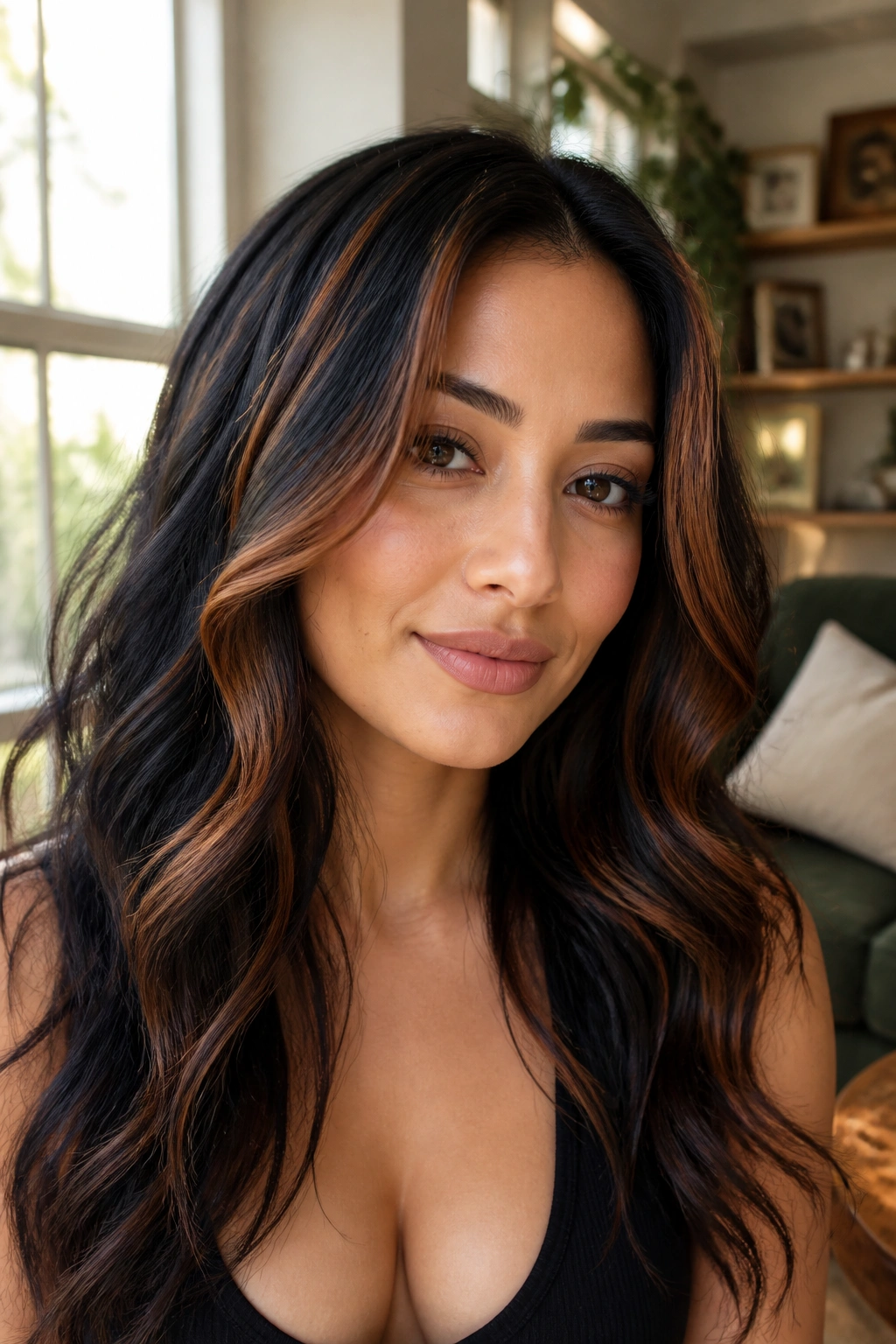
Cinnamon ribbons are one of my favorite ways to brighten black hair without stripping away its depth. The warmth shows up as soft red-brown glints instead of a full blonde shift, which means the hair still looks dark from a distance. Up close, it has life.
What Makes It Different
The lift usually stays modest. You are not chasing pale gold here. You’re looking for a warm cinnamon note that sits just above the base and catches light near the face and through the outer layers. That restraint is what keeps the result elegant rather than streaky.
Black hair can go flat fast if every highlight is too light or too wide. Cinnamon solves that by keeping the color family close to the base. The contrast is there, but it is subtle enough to feel intentional.
- Best for dark hair that already has warmth in it.
- Works well with loose curls or soft bends.
- Ask for fine ribbons, not chunky slices.
- Add a copper-brown glaze if you want more glow.
Pro tip: if your hair is very dark, one slightly warmer ribbon near the front often does more than several pale ones scattered everywhere.
8. Soft Beige Foils on a Blunt Lob

A blunt lob can look severe if the color is too dense, so soft beige foils are a smart fix. The lighter pieces break up the line of the cut without making it messy. That means you still get the clean shape, but the hair doesn’t sit there like one heavy block.
This is one of those cases where less is more, and I do mean that in the practical sense. A few foils through the top layer and around the temples give the cut a little lift. If you put them everywhere, the lob starts losing the exact crispness that made it good in the first place.
Beige is the right tone because it softens the shape. Warm gold can make a blunt cut feel thicker, while ash can make it look dull. Beige lands in the middle and keeps the edges from feeling sharp.
If you wear your lob straight most days, this color choice is especially nice. It gives the surface enough movement that even a simple blow-dry looks finished. No extra styling tricks needed.
9. Rose Gold Tint on Strawberry Blonde

Can strawberry blonde get brighter without turning cartoonish? Yes, and rose gold is the reason. It leans into the hair’s own warmth instead of trying to cool it down, which keeps the final result soft and believable.
How to Keep It Airy
The tone should stay translucent. That’s the part that matters most. If the rose note is too heavy, the hair starts looking pink in a way that can be hard to control. A light tint or gloss over existing strawberry tones is usually enough.
Rose gold also works well on hair that has a little natural peach in it already. It makes the color look polished, not forced. On very pale strawberry blonde, the effect can be almost like a warm filter.
If you want a little more edge, keep the root area neutral and let the rose live through the mid-lengths. That gives you contrast without losing the softness that makes this shade wearable. It’s a small choice, but it changes the whole mood.
10. Sunlit Ends on Layered Curls

Layered curls are where sun-kissed highlights can look almost unfairly good. The curl pattern breaks up the color, so the lighter ends peek through as the hair moves. That means you do not need a ton of brightness to get a lifted effect.
The safest way to place these highlights is to follow the shape of the curl, not the stretched-out strand. The outer ring, the face frame, and the ends below the chin usually take the light best. If everything is lighted evenly, curls can lose depth fast.
- Light the outermost curls first.
- Keep the inside layers a little deeper.
- Focus on the pieces that frame the cheekbones.
- Use a gloss that matches the base warmth.
A curly cut with sunlit ends tends to look best when it is styled with a diffuser or air-dried with some structure left in it. The highlights show movement that way. Straightened curls can still look nice, but the effect is softer and less obvious.
11. Almond Contour Highlights on Straight Hair

Straight hair can be trickier than waves because there is nowhere to hide a bad placement. Almond contour highlights solve that by tracing the face and top layer in a way that suggests natural sunlight instead of obvious foils. The result feels clean.
The almond tone is a nice middle ground between beige and warm brown. It adds brightness without yanking attention away from the cut. On long straight hair, that matters because the eye already sees every line.
A lot of stylists over-light straight hair near the ends. I would push back on that. Keep the brightest pieces higher up near the cheekbone area and soft through the lengths, or the hair can look stringy when it is brushed out.
This look is especially good if you part your hair the same way most days. The contour will land where the eye goes first, and the rest can stay quieter. Simple, but not boring. That’s the goal.
12. Bronze Face Frame on Deep Brunette

Bronze face-framing pieces are what I suggest when someone wants brightness but refuses to go blonde. The bronze tone stays rich, a little metallic, and warm enough to read clearly against deep brunette hair. It lifts the face without changing the whole personality of the hair.
Unlike a full-head highlight job, this version keeps most of the depth intact. That’s the appeal. The hair still feels dark, glossy, and solid, but the front gets enough brightness to soften the features and make the eyes stand out.
If you want the color to feel expensive rather than loud, keep the bronze close to the root color at the top and let it open up a little more through the ends. That way the front pieces don’t look pasted on. They melt.
This is a good choice for anyone who wears their hair back a lot. A ponytail or bun still shows the front brightness, which means the color keeps doing its job even on low-effort days. Handy. Very handy.
13. Peachy Glaze on Warm Blonde
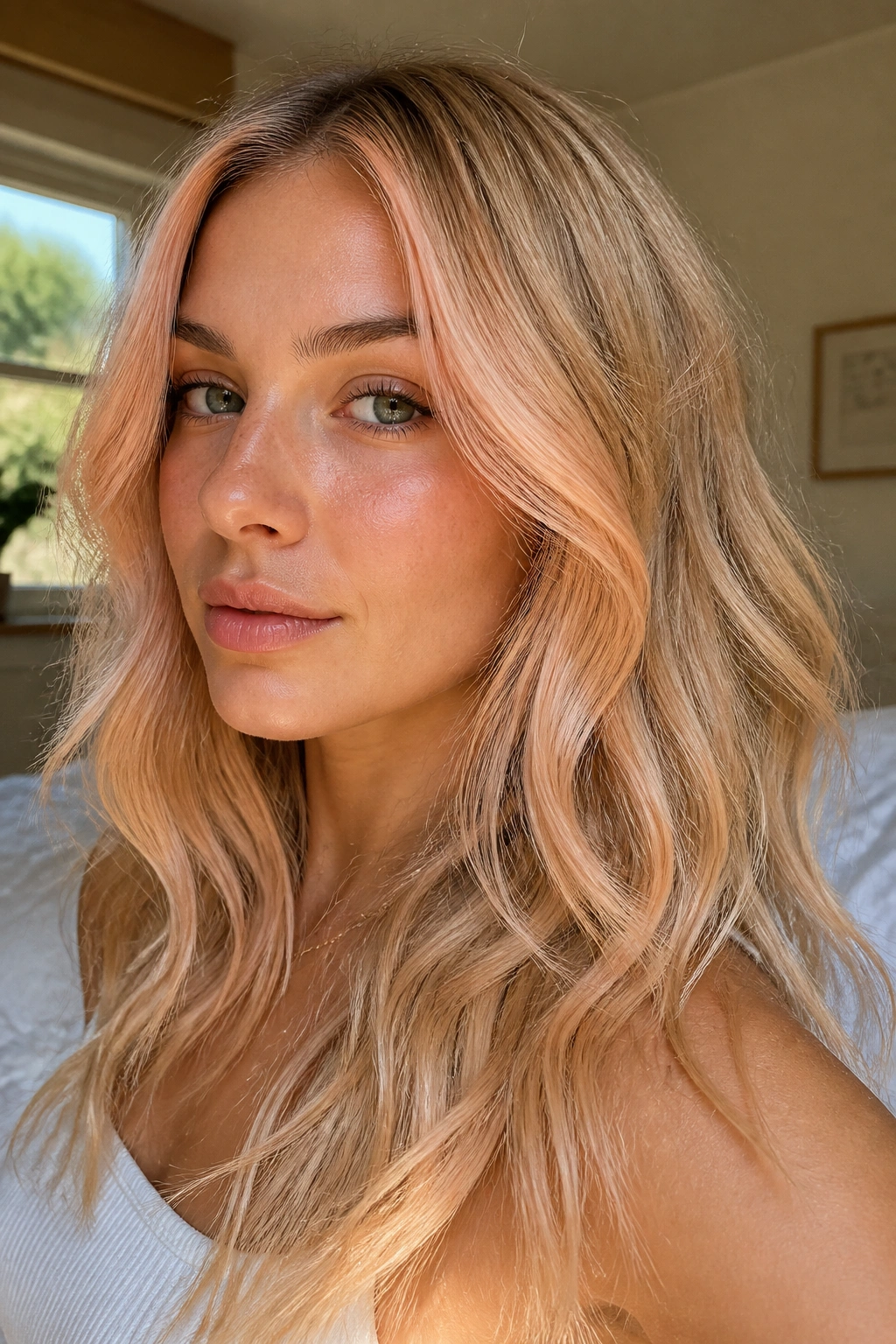
Peachy glaze is one of those shades that sounds risky and usually isn’t. On a warm blonde base, it reads as soft apricot light rather than full-on fashion color. That makes it a nice option if you want something playful but still easy to wear.
Where the Color Sits
The best peach tones live in the gloss, not in chunky pieces. That’s how you keep the finish airy. If the peach is woven through the whole head too strongly, it can look heavy. A glaze over already-light strands keeps the surface bright and the tone subtle.
Warm blonde hair can handle peach because the undertone is already there. You’re just nudging it in a different direction. The effect is especially pretty near the temples and ends, where the color breaks up into a soft glow instead of a block.
A peachy glaze also fades in a forgiving way. It softens rather than disappearing harshly, which means grow-out usually looks fine. That’s one of the rare times a delicate shade is easier to live with than a neutral blonde.
14. Wheat-Gold Babylights on Long Layers
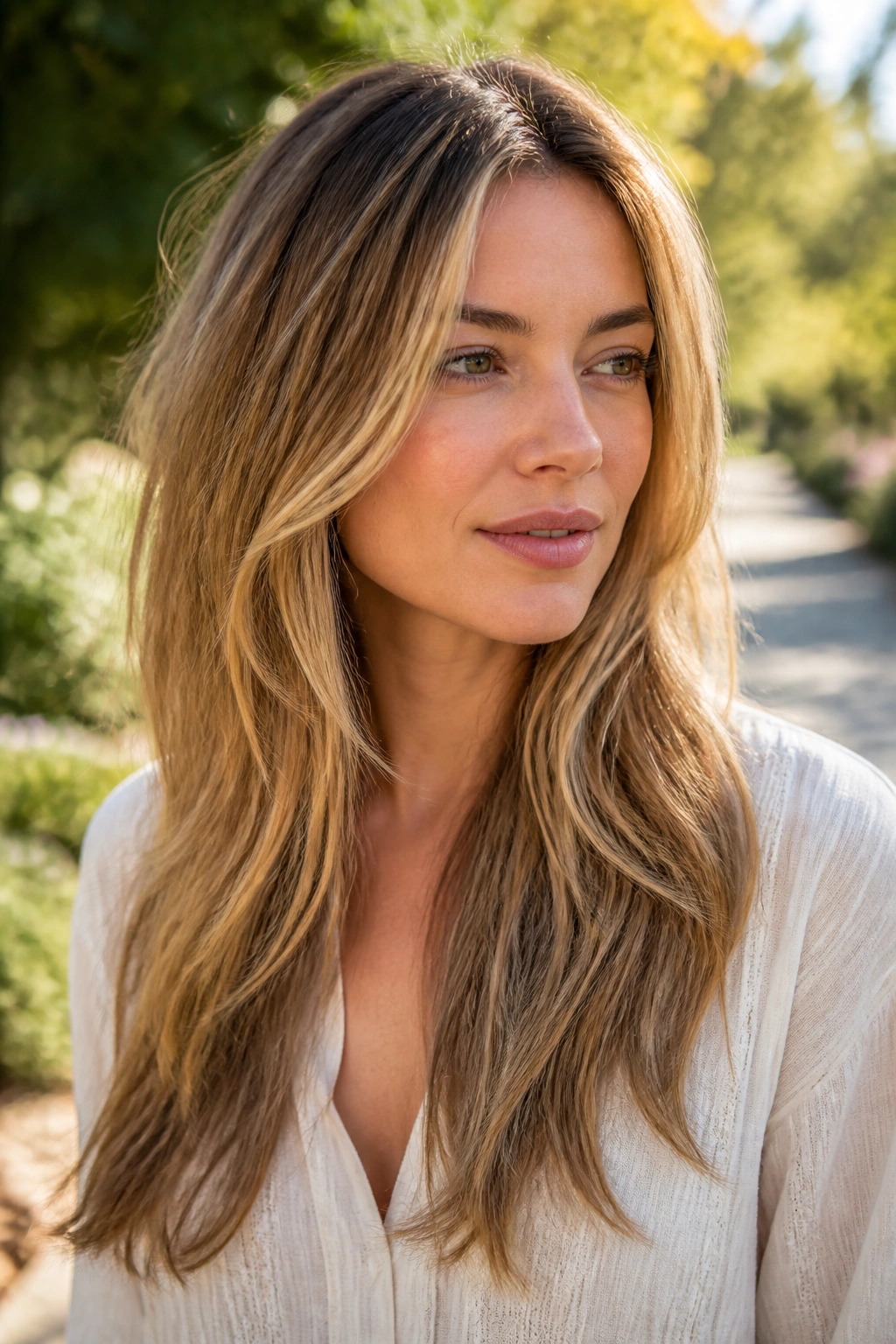
Wheat-gold babylights are a quiet way to make long layers look fuller. The color sits between pale gold and soft beige, so it brightens the hair without stealing its depth. On layered cuts, that little shimmer is enough to show the movement in the shape.
Because the pieces are so fine, this color works even when you do not want a big salon change. The layers do the visual work, and the highlights just catch the bends. If the hair is especially long, a few brighter strands around the face keep the whole look from drifting flat.
The best part is how forgiving it is. Grow-out stays soft because the contrast is gentle, and the wheat-gold tone doesn’t scream for attention when the roots come in. That’s useful if you hate high-maintenance color but still want hair that looks cared for.
A lot of long-hair color jobs fail because they forget the underside. Don’t do that here. Keep some brightness tucked into the outer surface and leave enough depth below so the layers can move against each other.
15. Pearl Blonde Micro-Lights for Fine Hair
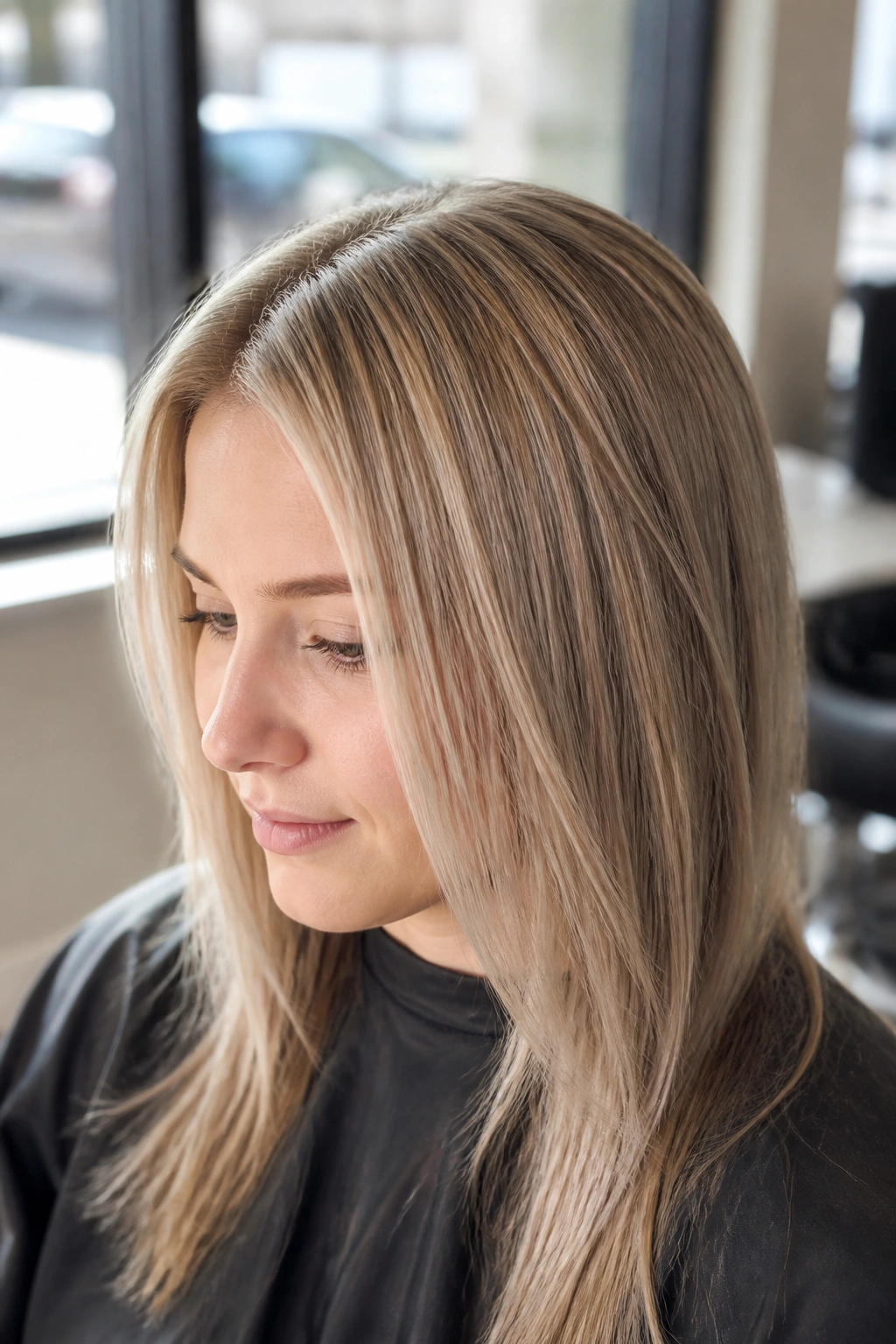
Fine hair needs a different approach. Heavy highlights can make it look sparse, so pearl blonde micro-lights are the smarter move. The pieces are tiny, almost threadlike, and the tone stays cool and luminous instead of harsh.
How to Get the Most From It
Ask for micro-weaving or very narrow foils through the top and around the face. That keeps the base looking full while still giving the hair a brighter surface. Too much contrast on fine hair often makes the scalp more visible, which is not the look anyone wants.
Pearl blonde works because it reflects light softly. It does not need a lot of depth to make an impact. Even a few translucent strands can create that airy brightness that makes fine hair feel more polished.
- Keep the highlights narrow.
- Leave depth at the root.
- Use a cool beige or pearl gloss.
- Avoid chunky slices through the crown.
If your hair tangles easily, this version is also gentler to wear. There is less harsh contrast between sections, so the texture looks smoother when it’s brushed out or tucked behind the ears.
16. Maple Swirl Highlights on Chestnut Waves

Maple swirl highlights are warm without going blond. On chestnut waves, they add a soft reddish-brown glow that feels rich and dimensional. It’s a good choice for anyone who wants warmth without crossing into copper territory.
I like this look on hair with natural movement because the waves break the maple tone into pieces. The color shows up as little flashes instead of a solid stripe, which feels more natural and a lot less processed. That matters when the base color is already pretty on its own.
The swirl effect comes from varying the placement. A few pieces near the face, a few lower through the mids, and a couple on the outer layer usually do the trick. Too much uniformity makes the style dull. A little irregularity is what makes it feel sunlit.
Chestnut hair can carry warmth well, so the maple note should lean soft and brown rather than red-orange. That restraint is what keeps the color wearable for everyday life, not just for photos.
17. Bright Crown Accents on a Pixie Cut
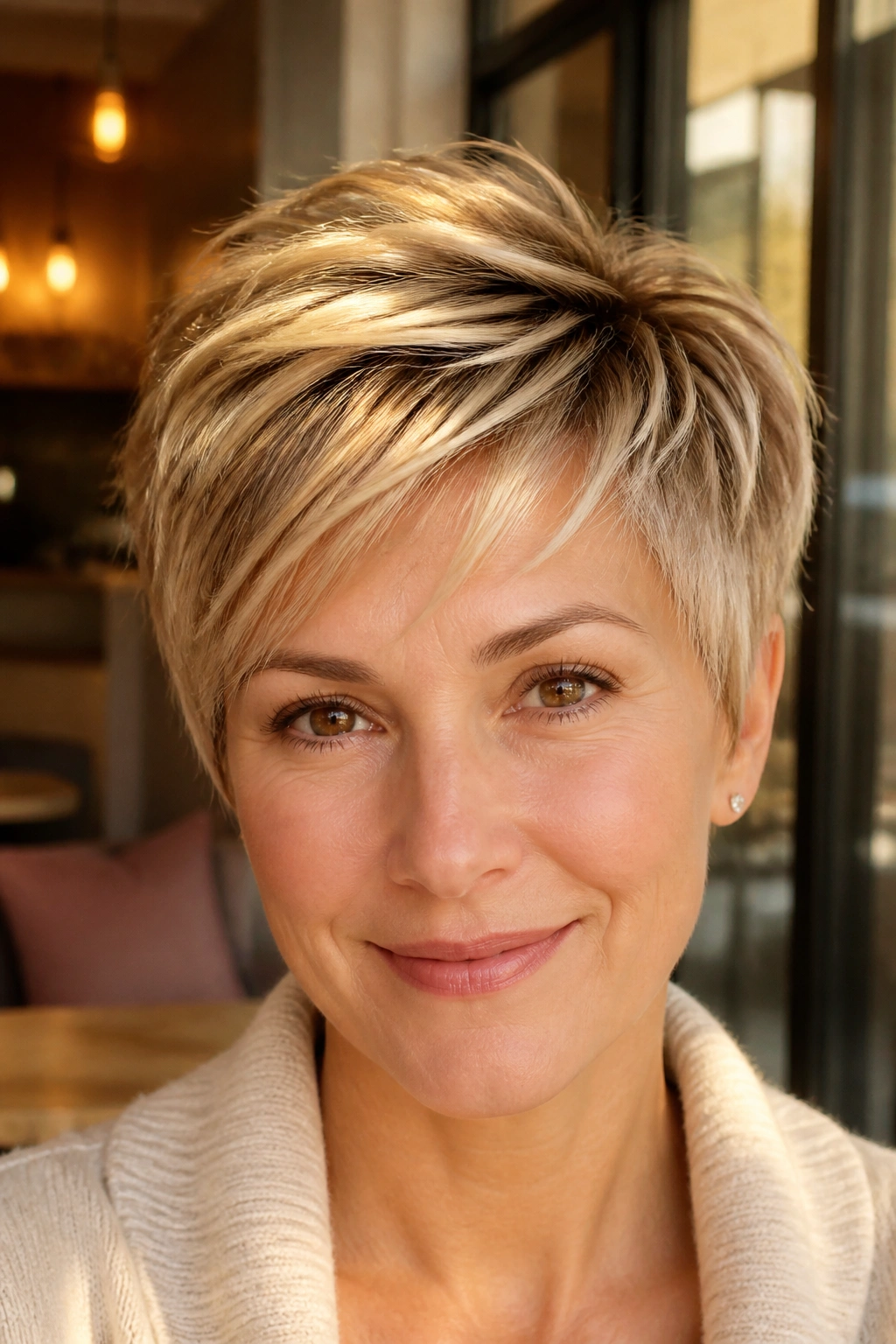
Pixie cuts need brightness in a different spot than long hair. A bright crown accent gives the cut lift where it matters most, right at the top and slightly forward. Without that, a pixie can look too close to the head and lose some shape.
The color should stay concentrated, almost like a spotlight. Tiny pieces through the crown and fringe area are enough. If you scatter highlights everywhere on a pixie, the result can get busy fast, and the neatness of the cut starts to disappear.
A soft golden or beige tone works well because it reflects light without reading chunky. The idea is to make the short layers look feathered and dimensional. That little bit of brightness can also make the side profile look cleaner, which is a nice bonus.
Short hair grows fast, so this is not a low-maintenance choice in the strictest sense. But the payoff is immediate. A pixie with a bright crown has movement even when you barely style it.
18. Buttery Beige on a Blunt Bob
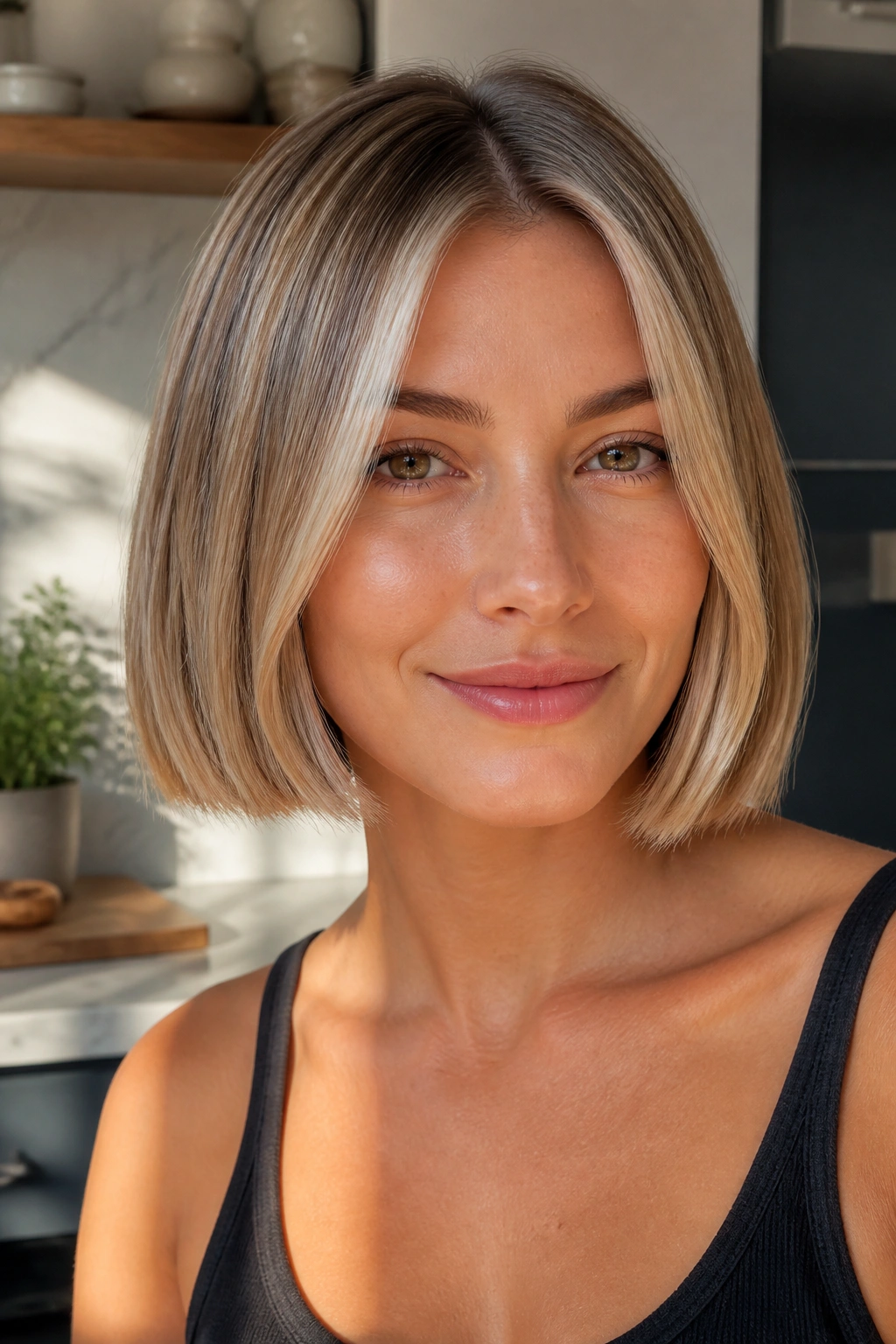
A blunt bob looks best when the color has enough softness to stop it from feeling boxy. Buttery beige does exactly that. The tone adds a warm, creamy brightness that breaks up the hard line of the cut without making it messy.
What Makes It Work on Short Hair
The lighter pieces should sit close to the face and through the top section, with the ends kept a touch softer. That keeps the bob from turning into a helmet. Short cuts need some color variation, but not so much that the shape gets lost.
Buttery beige is gentler than icy blonde and more flattering than a stark platinum stripe on a blunt edge. It lets the bob hold its clean shape while still looking bright in daylight. That balance is the whole point.
If the hair is very straight, a slightly deeper root shadow can help the color feel grounded. It keeps the top from floating away from the cut. On wavy bobs, the effect is softer and more playful. Both work. The tone just changes the mood a bit.
19. Espresso-to-Mocha Gradient on Dark Brunette
An espresso-to-mocha gradient is for people who want dimension, not contrast for contrast’s sake. The hair stays dark, but the ends and upper layers soften into mocha so the whole head looks richer. It is subtle, and that’s why it works.
I prefer this look on darker brunettes who hate obvious highlights. The shift is enough to make the hair catch light when it moves, but no one can point to a stripe and call it out. That makes it feel polished in a very quiet way.
The gradient should start slowly. If the mocha appears too high up, the effect looks grown-out too early. Keep the deepest espresso near the root and underlayers, then let the mocha open gradually through the mid-lengths and ends.
This is one of those color jobs that can make a haircut look better without changing the cut at all. Long layers, a lob, even a simple one-length style all feel more finished with that deeper coffee-to-mocha shift.
20. Apricot Shimmer on Auburn Hair
Apricot shimmer is a smart move for auburn hair because it brightens without fighting the base tone. The hair keeps its red warmth, but the apricot adds a lighter, fresher note that stops the color from looking flat.
The trick is not to push the lift too far. Auburn hair can turn brassy fast if the highlights are too pale or the toner is too orange. Apricot should look like soft sunlight, not a neon wash. That’s a narrow lane, but it’s a good one.
The Tone That Keeps It Wearable
A translucent gloss is usually enough to get this effect. You want the result to feel like the hair caught a warm glow, not like the entire head was recolored. Thin placement around the face and through the top layer is usually enough.
This shade is especially nice on wavy hair because the movement keeps the apricot from reading as a block. Each bend catches a little bit of the warmth. That’s where the charm is.
21. Cocoa-Caramel Balayage on Long Hair
Why does cocoa-caramel balayage look so good on long hair? Because long lengths can handle a slow color transition. The darker cocoa at the top gives the hair weight, while the caramel opens through the mids and ends where the light naturally hits.
How to Place the Dark and Light
The dark pieces should stay strongest near the roots and underneath. That keeps the hair from looking thin or overworked. Then the caramel can be painted in curved, soft strokes through the outer layers so the color flows when the hair moves.
Long hair needs that curve. Straight-up horizontal highlights can look harsh over a long surface, but a gentle sweep feels more natural. The finish ends up softer, richer, and a lot easier to wear with both straight and wavy styling.
If your hair is thick, this approach is especially good because it breaks up the bulk without making the ends look frayed. The color does the visual shaping for you.
22. Frosted Beige Ribbons on Ash Brown
Frosted beige ribbons are for ash brown hair that needs light, not warmth. The tone stays cool and clean, which keeps the base from turning muddy. On cooler brunettes, this is often the most flattering way to brighten the hair without drifting into gold.
A lot of people with ash brown hair make the mistake of adding warm highlights and then wondering why the color fights their skin. Frosted beige avoids that problem. It sits in the same family as the base, so the result feels smooth instead of patched together.
- Ask for cool beige ribbons, not honey.
- Keep the root shadow soft and sheer.
- Use highlights mainly through the top layers and sides.
- Skip overly warm toners that turn the finish yellow.
This look tends to stay elegant even as it grows out because the contrast is gentle. The root is still there, but it does not feel like a separate color block. That makes the whole thing easier to live with.
23. Island Blonde Waves with a Lived-In Root
Island blonde works because it has room to breathe. The root stays a shade deeper, the mids go lighter, and the ends pick up that sun-washed brightness that makes waves look fuller. The whole thing feels relaxed, which is why so many people keep coming back to it.
What I like most is the lack of strain in the color. Nothing is fighting for attention. The root shadow gives the blonde a little depth, and the brighter pieces sit where they can catch movement. On waves, that means the hair looks lit from inside when it shifts.
A lived-in root also makes maintenance easier, which is practical even if nobody wants to admit that’s part of the appeal. You can stretch out your appointments more comfortably without the color looking abandoned. That matters if your schedule is messy, which, honestly, most people’s is.
This style is best when it still looks like hair, not a single shade of beach souvenir. Keep the blonde airy, not chalky.
24. Champagne Fringe Highlights with Curtain Bangs
Curtain bangs can either soften a face or create a weird stripe if the highlights are too thick. Champagne fringe highlights avoid that by keeping the front pieces light, sheer, and well blended. The result frames the eyes without drawing a hard line across the forehead.
The champagne tone is a good choice because it adds brightness without going too yellow or too stark. Around bangs, that matters more than it does on the back lengths. The front is where people look first, and any roughness shows fast there.
Unlike a full face frame, this approach keeps the brightness concentrated in the fringe and just a little into the side pieces. That means the bangs still move and separate naturally. They don’t sit there like a block of color.
If you wear your bangs parted slightly off-center, this style is even softer. The highlight can fall in a broken line instead of a straight stripe, which usually looks more relaxed in real life than in salon photos.
25. Honey Glaze on Textured Coils
Textured coils need highlights that respect shrinkage. Honey glaze does that nicely because the brightness sits on the outer surface and catches the shape without trying to flood every curl with light. The result is warm, dimensional, and easy to read.
Where the Light Should Land
The best honey placement usually happens on stretched curls or a twist-out, not on fully shrunken hair. That way the lighter pieces are placed where they’ll show once the curls spring back. If you color only the parts you see in their shrunken state, the final look can vanish.
Honey tone is warm enough to glow but not so light that it makes coils look dry. That’s a big deal. Coily hair deserves brightness, yes, but it also needs depth to keep the pattern visible and the texture looking healthy.
- Focus on the outer curl layer.
- Add a few brighter face-framing pieces.
- Keep the interior a little darker for contrast.
- Use a glaze that keeps the honey rich, not yellow.
The result should look like the sun touched the outside of the style and left the inside alone. That’s the right kind of restraint here.
26. Biscotti Blonde on a Shoulder-Length Cut
Biscotti blonde sits somewhere between beige, tan, and soft gold, which is why it works so well on shoulder-length cuts. The color brightens the hair without flattening it. On a cut that sits right at the collarbone, that little bit of tonal movement makes a big difference.
The tone is especially nice if your base is medium blonde or light brown. It gives the hair a toasted, creamy finish that looks calm in indoor light and warm outside. That versatility is part of the appeal. It doesn’t switch personalities from one room to the next.
If you want the cut to look a little fuller, keep the biscotti pieces concentrated through the top layer and around the front. The lower ends can stay a touch deeper. That gives the shape more weight, which keeps the shoulders from looking overly wide.
Shoulder-length hair can go dull fast if the color is too even. Biscotti solves that by giving the surface a lived-in brightness that still feels neat.
27. Sun Tea Ribbons on Red-Brown Hair
Sun tea ribbons are a softer way to brighten red-brown hair without pushing it into full copper. The tone feels warm, mellow, and a little earthy — like tea steeped in sunlight, which is a better mental picture than most color names get. It’s subtle, but not boring.
The Tone That Makes It Wearable
The lift should stay close to the base. That’s what keeps the red-brown depth intact. If the ribbons go too pale, the whole shade can look disconnected. With sun tea tones, the aim is a gentle shift, not a big contrast jump.
This works well on layered cuts because the ribbons show up in motion. A blow-dry or loose wave is usually enough to bring them to life. Straight hair still looks nice, but the color really opens when the strands separate a little.
Red-brown hair has warmth built in, so these ribbons feel natural rather than forced. They add brightness where the sun would hit first — around the face, along the top, and through the outer lengths.
28. Sunkissed Copper on Warm Brunette
Sunkissed copper is for brunettes who want glow, not blonde. The copper note brings warmth forward and makes the hair look lit from within, especially when the base already has some gold or auburn in it. It’s a strong choice, but not a noisy one.
I like this best as a few coppery pieces near the face and through the top layers. That gives the style movement without turning the entire head orange. There is a narrow line between rich copper and loud copper, and this version stays on the right side of it.
- Keep the copper soft and brown-based.
- Add brighter pieces around the cheekbones.
- Leave some deep brunette underneath.
- Pair it with loose waves or a round-brush blowout.
This is one of those colors that looks even better when the hair is healthy and shiny. Copper shows texture fast, so the cut and finish matter. If the ends are rough, the color will snitch on you.
29. Soft Rooted Brightness for Grow-Out
Soft rooted brightness is less a single color and more a very smart way to wear highlights. Keep the root deeper by an inch or two, then let the brightness start softly through the mid-lengths and around the face. The hair looks fresh longer because the grow-out has somewhere to land.
That root softness is the whole point. A hard line at the scalp makes even pretty color look fussy once it starts moving out. A rooted finish stays calmer, which means you can go longer between appointments without feeling like the color has lost its shape.
This style is especially good if you are the type who gets color once and then wants it to behave. It does. As long as the highlight tone is close to your base family — beige, caramel, honey, or soft gold — the regrowth blends in better than a high-contrast blonde would.
The smartest versions keep brightness where the eye lands first: the front, the top layer, and the pieces that show when hair is tucked behind one ear. Everything else can stay quieter. That’s often enough.
30. Face-Lifting Money Piece with a Soft Gloss Finish
If you want the quickest route to a brighter look, this is it. A face-lifting money piece with a soft gloss finish gives you instant light around the eyes and cheekbones, then a clean sheen over the rest of the hair so nothing feels unfinished. It is simple, and that is why it works.
Unlike a full highlight overhaul, this approach focuses on the parts people actually notice first. The front sections get the most brightness, the gloss keeps the tone polished, and the rest of the hair stays grounded. You end up looking fresher without losing your base color’s personality.
This is a good fit if your hair is healthy enough to take a little lift but you do not want a maintenance-heavy blonde. It also works well when you already like your current shade and just want more light around the face. No need to chase a total makeover when two well-placed pieces can do the job.
The best version looks soft from a distance and a little brighter when you move your head. That’s the whole point of sun kissed highlights in the first place — hair that looks naturally bright, like the light found it on its own.
