



Medium hair gives blonde more room to move than a bob and less weight to fight than waist-length hair. If you’re hunting for blonde hair color ideas for medium hair, this is the sweet spot where color actually shows up: the ends catch light, the face-framing pieces do some work, and a soft root can grow out without looking like an accident.
I’ve always thought medium-length cuts are the best canvas for blonde because they don’t hide bad tone. Beige reads beige. Honey reads honey. A flat yellow tone? You’ll spot it from across the room. That honesty is useful, even if it can be a little unforgiving.
The good news is that medium hair can carry both delicate and high-impact blonde looks. A blunt lob makes a creamy shade look clean and polished. Layered mids make babylights, ribbons, and lowlights look deeper and more expensive because the movement gives the color somewhere to land.
The trick is picking a blonde that fits the cut, not just the mood board. A bright shade with no root blur can feel harsh on shoulder-length hair. A root shadow, a money piece, or a few strategically placed lighter panels usually makes the whole thing look more intentional. That’s where the best ideas start.
1. Champagne Balayage on a Layered Lob
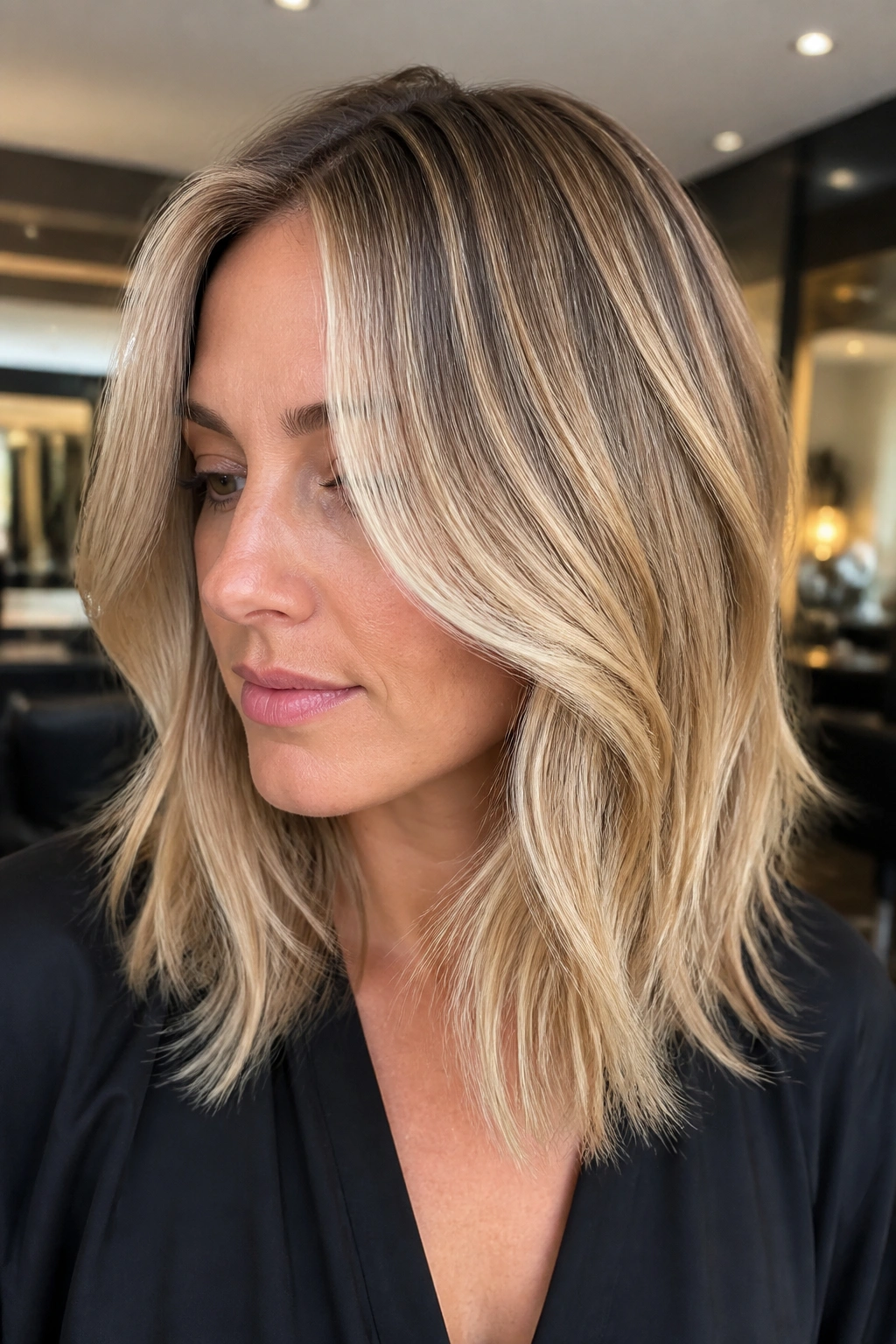
Champagne blonde has a nice little trick on medium hair: it looks bright without screaming for attention. The pale beige-gold ribbons sit well on a layered lob because the bends in the hair catch the lighter pieces and break up any flatness.
Why it works
Balayage keeps the root area softer, which matters when the cut ends near the shoulders. Hard lines show fast on this length. Ask for lighter pieces around the cheekbones and a few brighter ends so the layers don’t disappear into one solid block.
- Best on a lob with loose bends
- Use a gloss every 6 to 8 weeks
- Ask for beige-gold ribbons, not flat yellow
Best for: anyone who wants brightness with a quiet grow-out.
2. Honey Blonde with Curtain Bangs
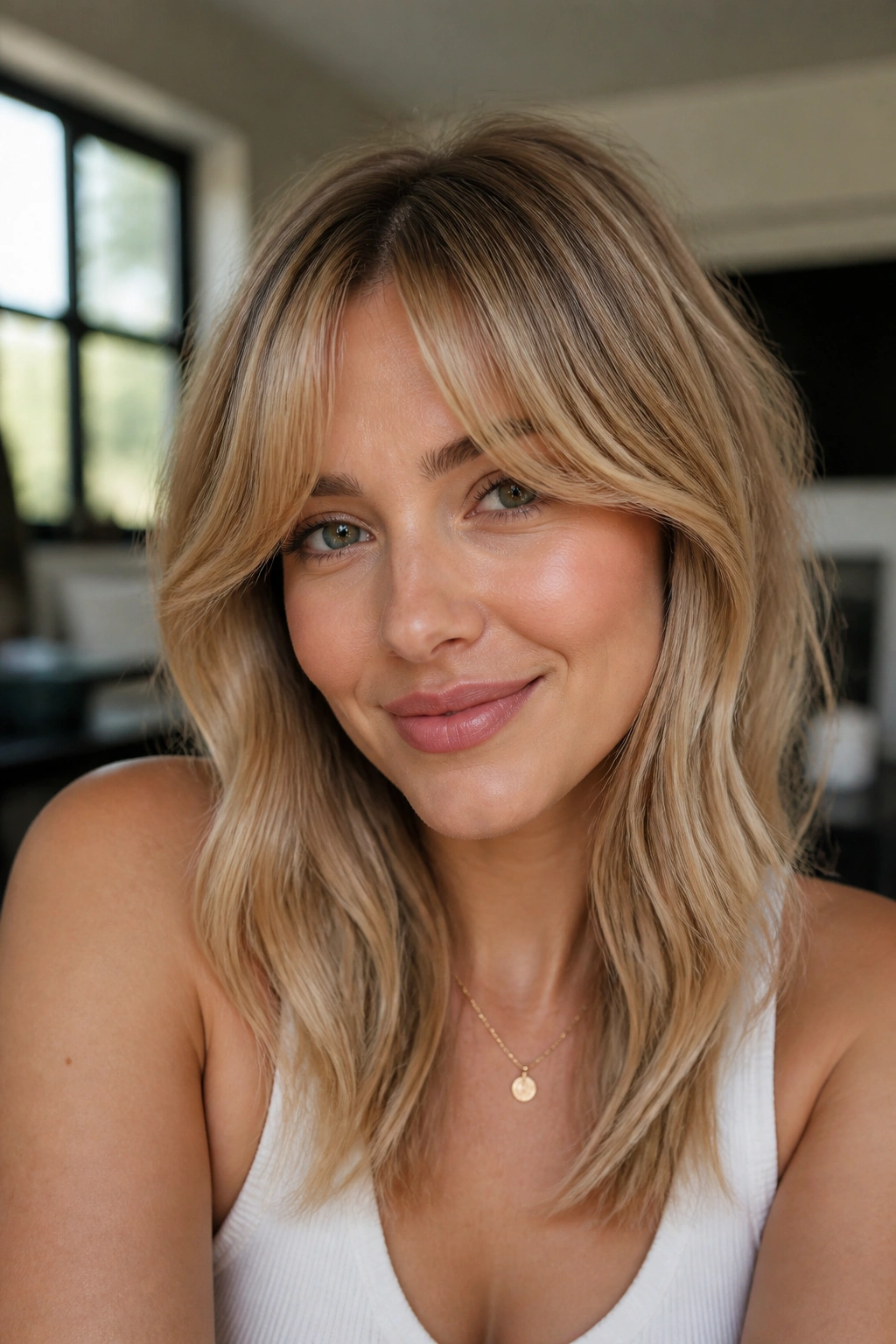
Why does honey blonde look so good with curtain bangs? Because the warm tone gives the fringe some glow, and the bangs cut straight across the face just enough to make the color feel richer. On medium hair, that mix keeps things soft instead of sugary.
The color works best when the roots stay a touch deeper. Too much lightness at the front and the bangs can start to look disconnected from the rest of the cut. Keep the front pieces around one shade brighter than the body, and the whole thing feels balanced.
3. Icy Platinum with a Shadow Root
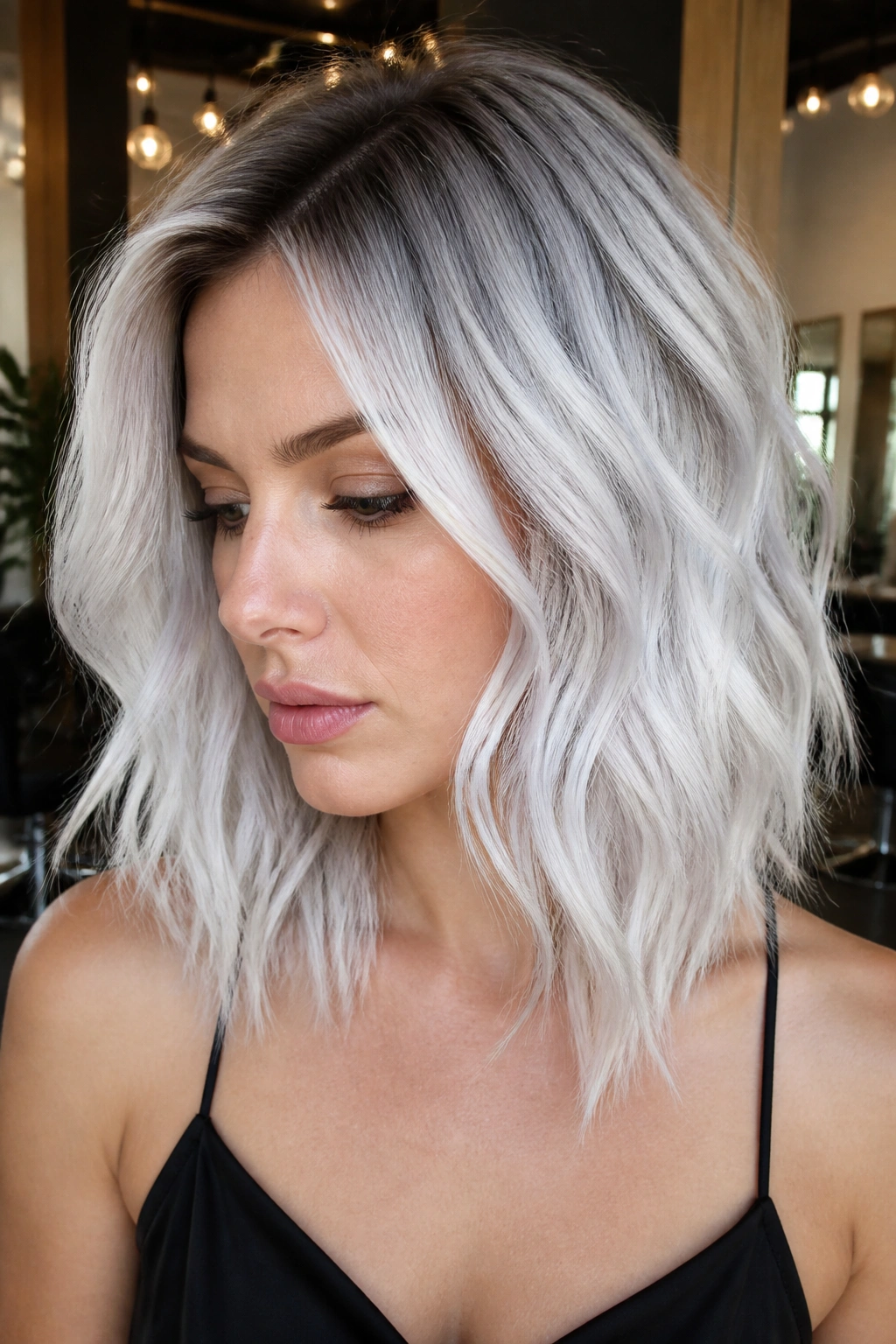
Icy platinum on medium hair is a strong look, not a timid one. The shadow root saves it from looking stark, and that darker base gives the pale ends somewhere to land visually.
The key is contrast. A medium-length cut has enough surface area for the platinum to read clearly, but not so much length that it turns into a sheet of color. Keep the root blur about 1 to 2 inches deep, and the midlengths will look cleaner between salon visits.
4. Beige Blonde Waves with Soft Money Pieces
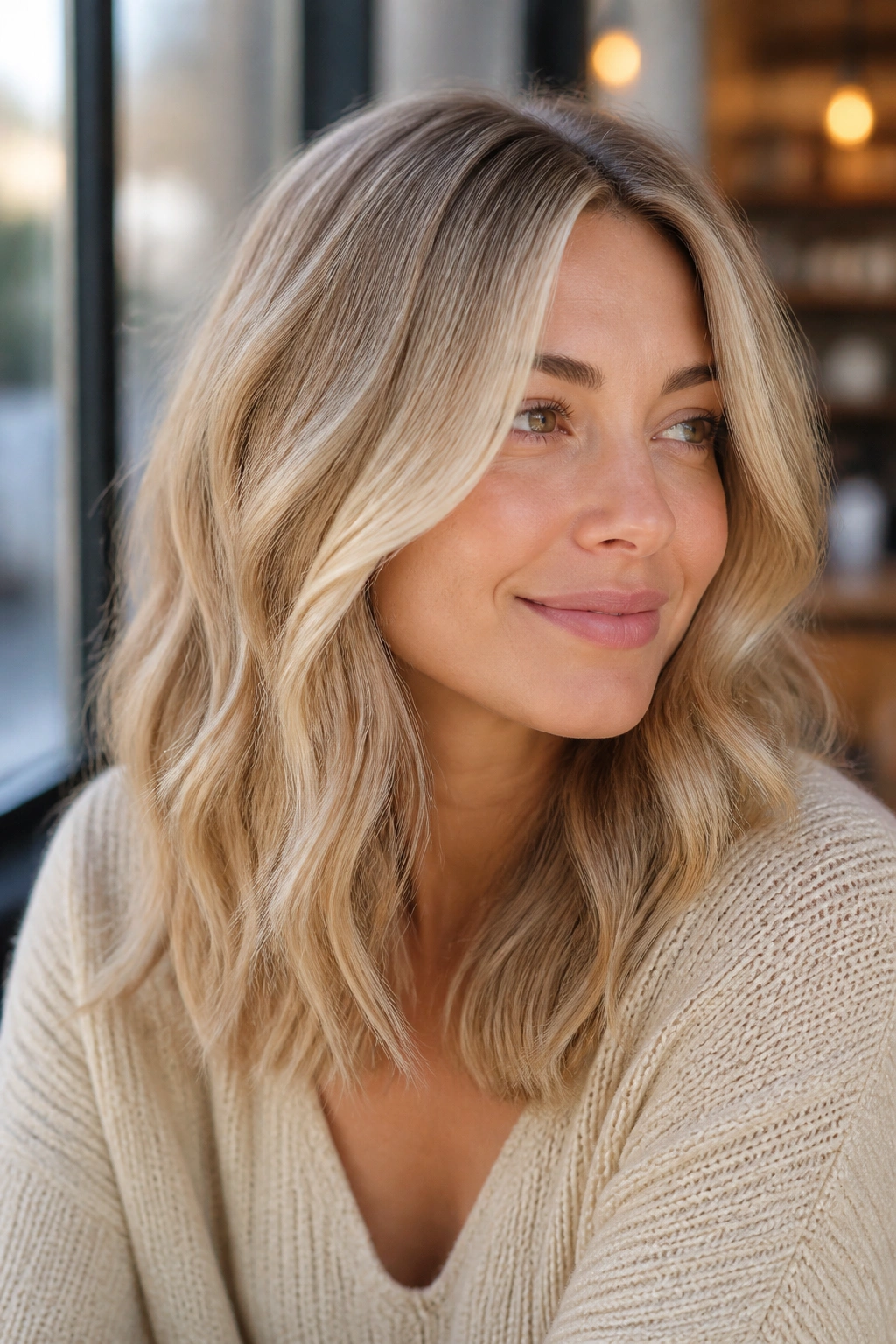
A beige blonde base can feel almost too calm until you add money pieces. Then it wakes up fast. On medium hair, those lighter front sections sit right where people notice them first, which is why this style works so well for a collarbone cut.
The money pieces should be thin enough to blend, not thick enough to look striped. Around 1/2 inch wide is enough for most people. Loose waves make the front sections pop even more, but this one still looks good when you wear your hair straight.
5. Buttercream Blonde on a Blunt Cut
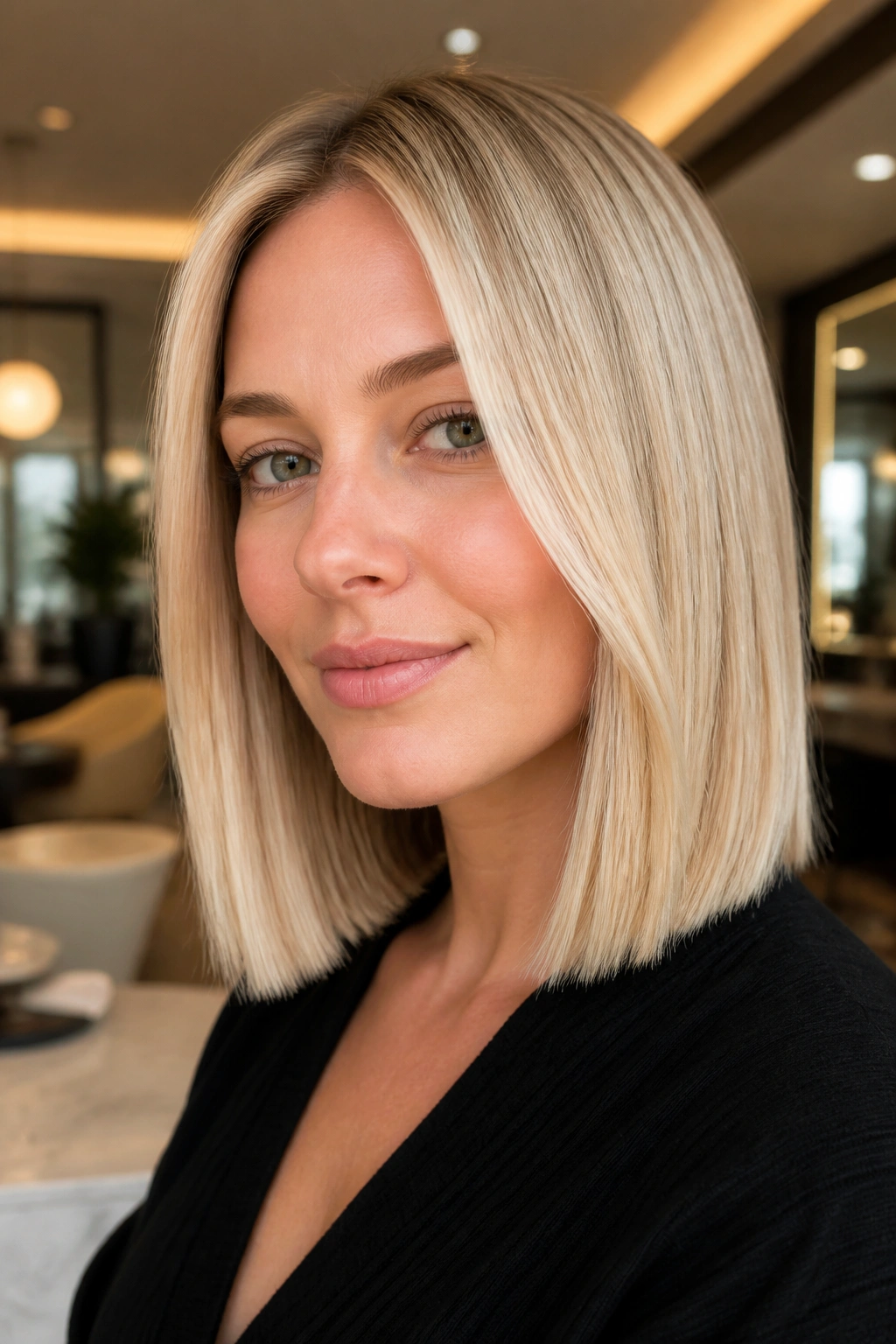
Buttercream blonde has a creamy finish that flatters blunt medium hair because the cut gives the color a clean edge. There’s no shaggy movement to hide behind. Everything is exposed, and that’s a good thing here.
The shade sits between pale gold and soft beige, so it reads rich rather than icy. If your hair is naturally darker, ask for a gradual lift with a soft root so the grow-out doesn’t carve a hard line through the center of the cut. That little bit of shadow keeps it wearable.
6. Sandy Blonde Babylights for Fine Hair
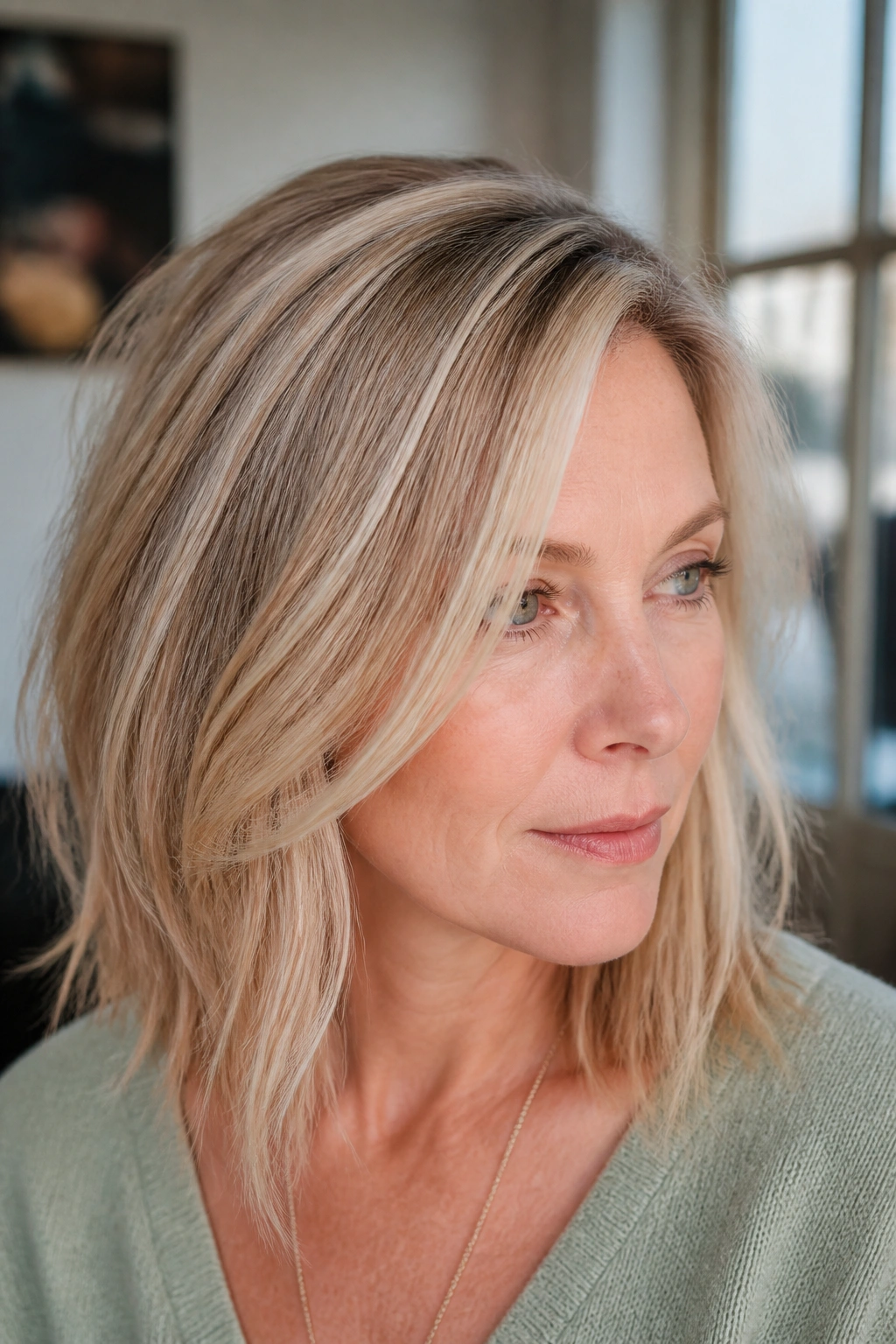
Fine medium hair can get swallowed by chunky highlights. Babylights fix that. They’re tiny, woven pieces that create brightness without making the hair look overworked or thin at the ends.
What to ask for
- Very fine highlights through the crown and sides
- A sandy blonde toner, not a yellow one
- A few brighter threads around the face
- A soft gloss to keep the finish reflective
This is one of those blonde hair color ideas for medium hair that looks subtle in photos but better in motion. The small strands move with the cut, and that movement gives the illusion of fullness. Honestly, it’s a smart choice if your hair already feels delicate.
7. Golden Vanilla Ribbons in a Shag
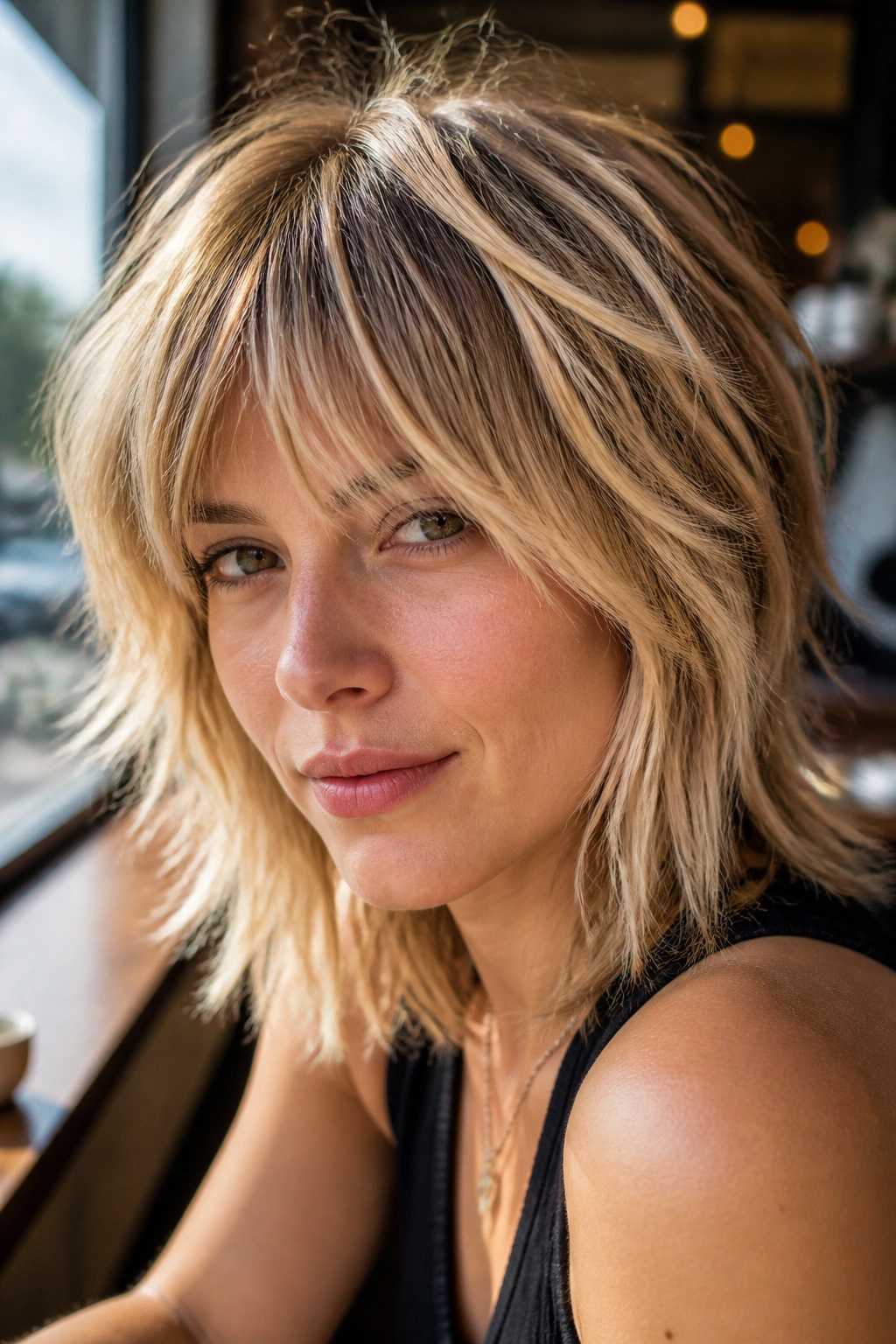
Golden vanilla sounds sweet, but on a shag it reads breezy and a little undone. The choppy layers catch the lighter ribbons, and the shape keeps the blonde from feeling too precious.
The important part is placement. Put the lightest strands on the outer layers and around the crown, then leave some darker depth underneath. That contrast gives the shag texture even on days when you do almost nothing to it. Which, if we’re being honest, is most days for most people.
8. Strawberry Blonde Melt with Blonde Ends
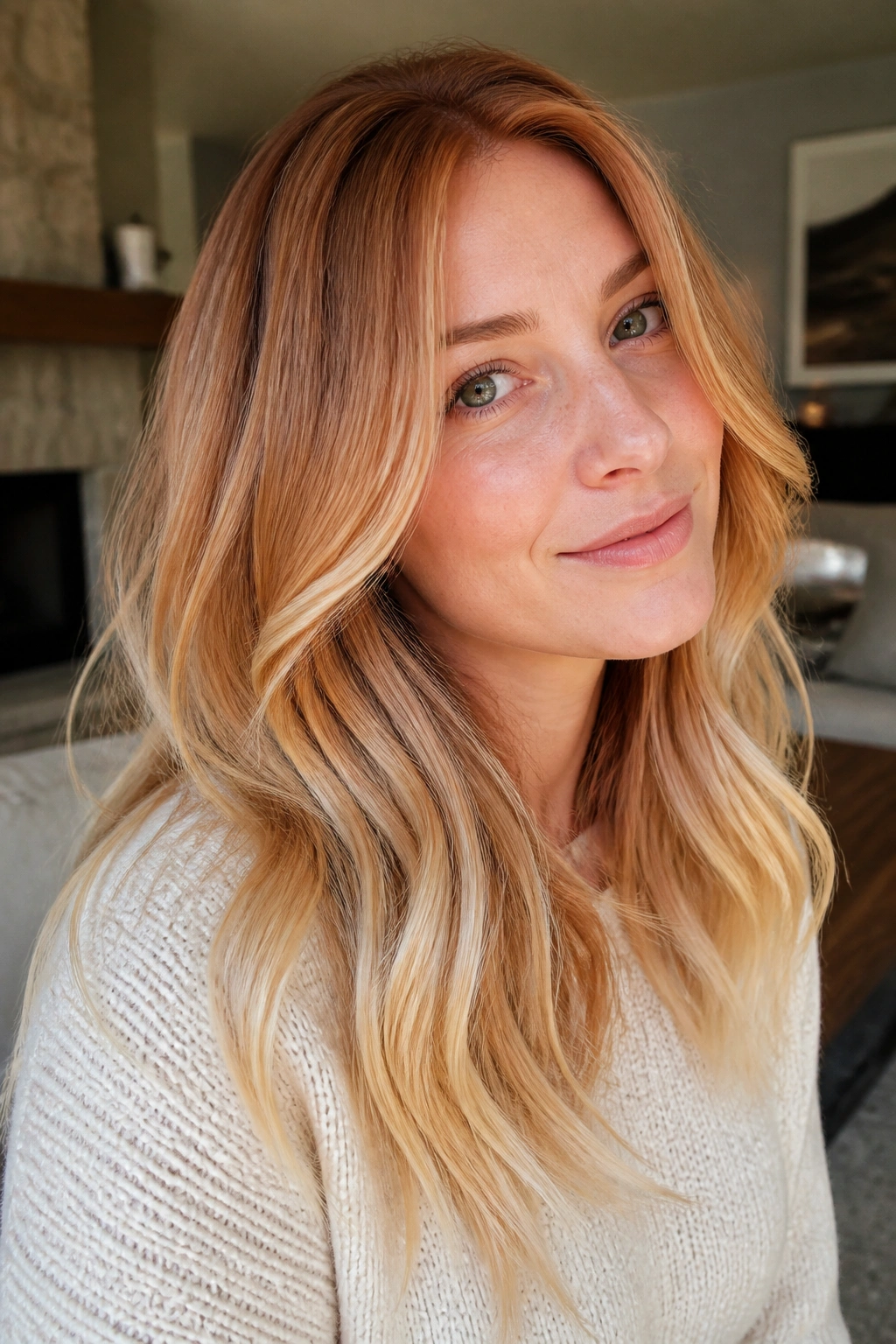
Can strawberry blonde work as a blonde idea? Absolutely, as long as the red stays soft and the ends stay light. On medium hair, the blend from warm coppery tones to pale blonde tips gives you a color story instead of a flat shade.
How to wear it
- Keep the top half warm and soft
- Brighten the lower third with pale blonde
- Style with loose bends, not tight curls
- Use color-safe shampoo, because warm tones fade fast
This one suits people who want something warmer than beige but less obvious than copper. It also loves a lob with texture. Straight hair makes the fade more visible, while waves make it glow.
9. Mushroom Blonde with Cool Beige Ends
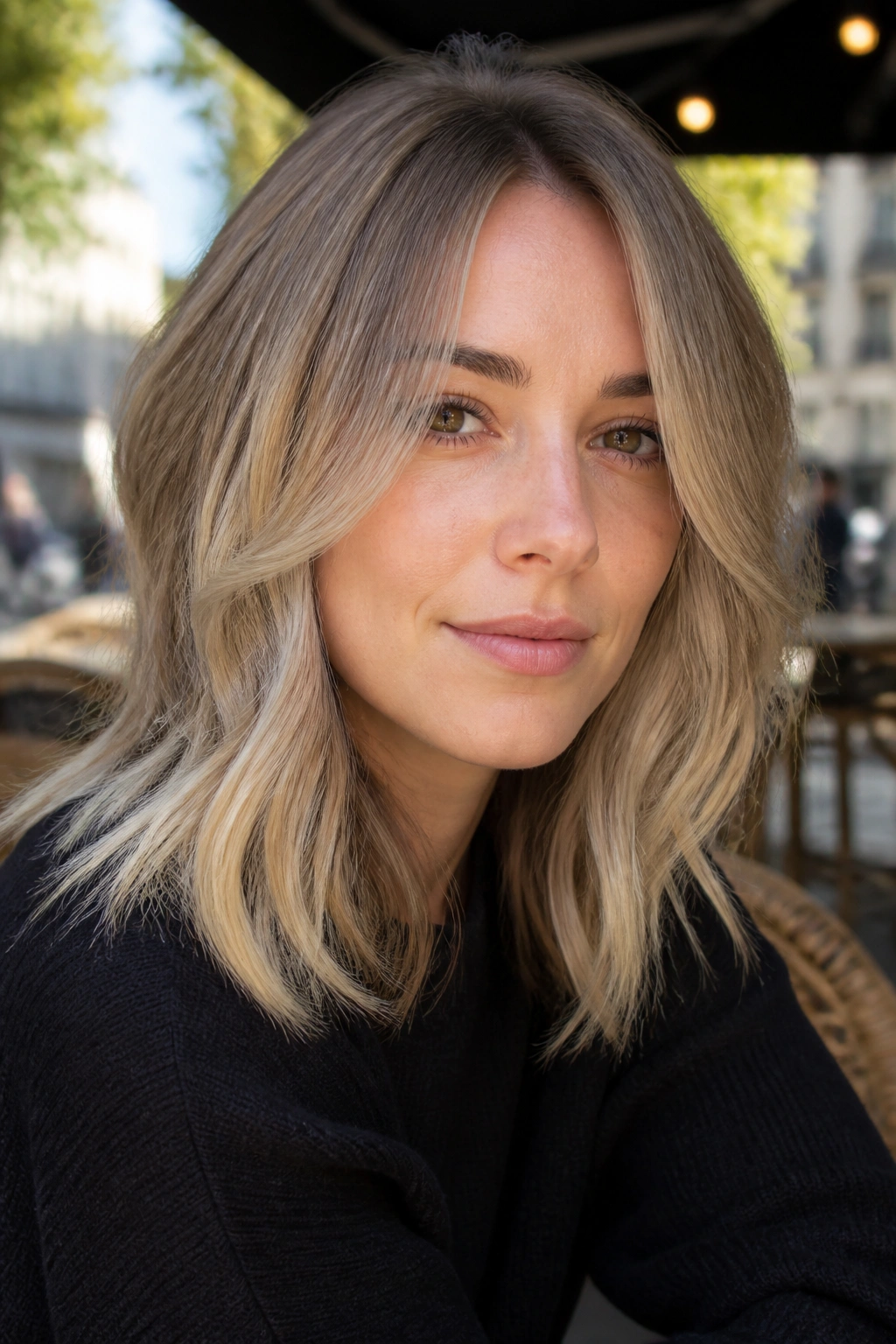
Mushroom blonde is a cooler, earthier take on medium-length blonding. It sits in that gray-beige lane that some people dismiss too quickly, but the tone can look expensive when the cut has clean lines.
The reason it works on medium hair is simple: the length gives the color room to shift. You can keep the roots smokier and let the ends open up into beige blonde without the whole look feeling muddy. If your skin tends to run cool, this is one of the safer bets.
10. Ash Blonde Face-Framing Highlights
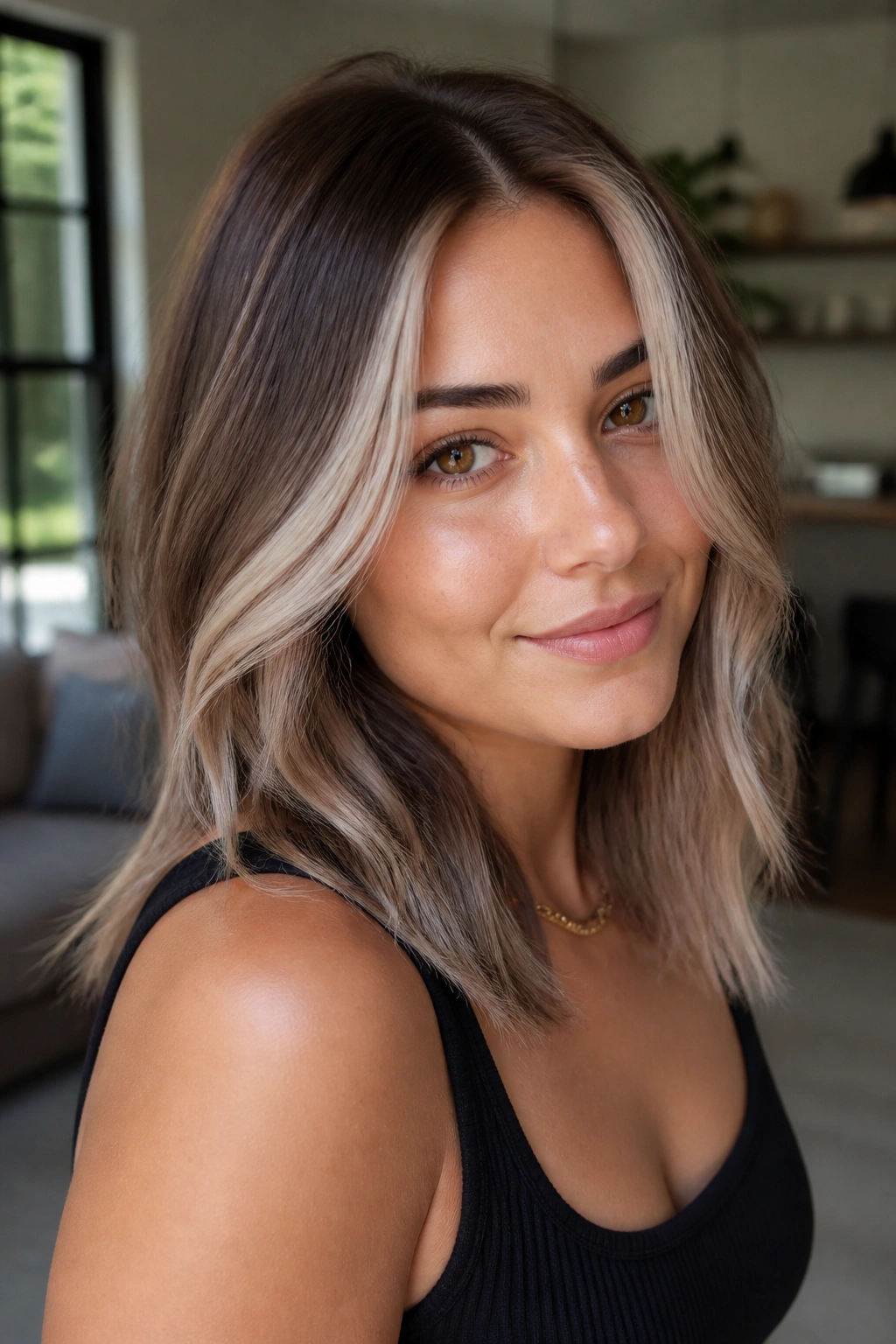
Ash blonde is not the easiest blonde, and that’s part of why it looks so sharp when it’s done well. On medium hair, face-framing highlights in ash tones can brighten the front without committing to a full head of cool color.
The best version keeps the rest of the hair deeper, almost like a quiet brunette base peeking through. That contrast matters. A small amount of ash around the face gives structure, especially on a center part. Too much and the whole look can go flat, so I’d keep the bright pieces selective.
11. Pearl Blonde Gloss on Straight Medium Hair
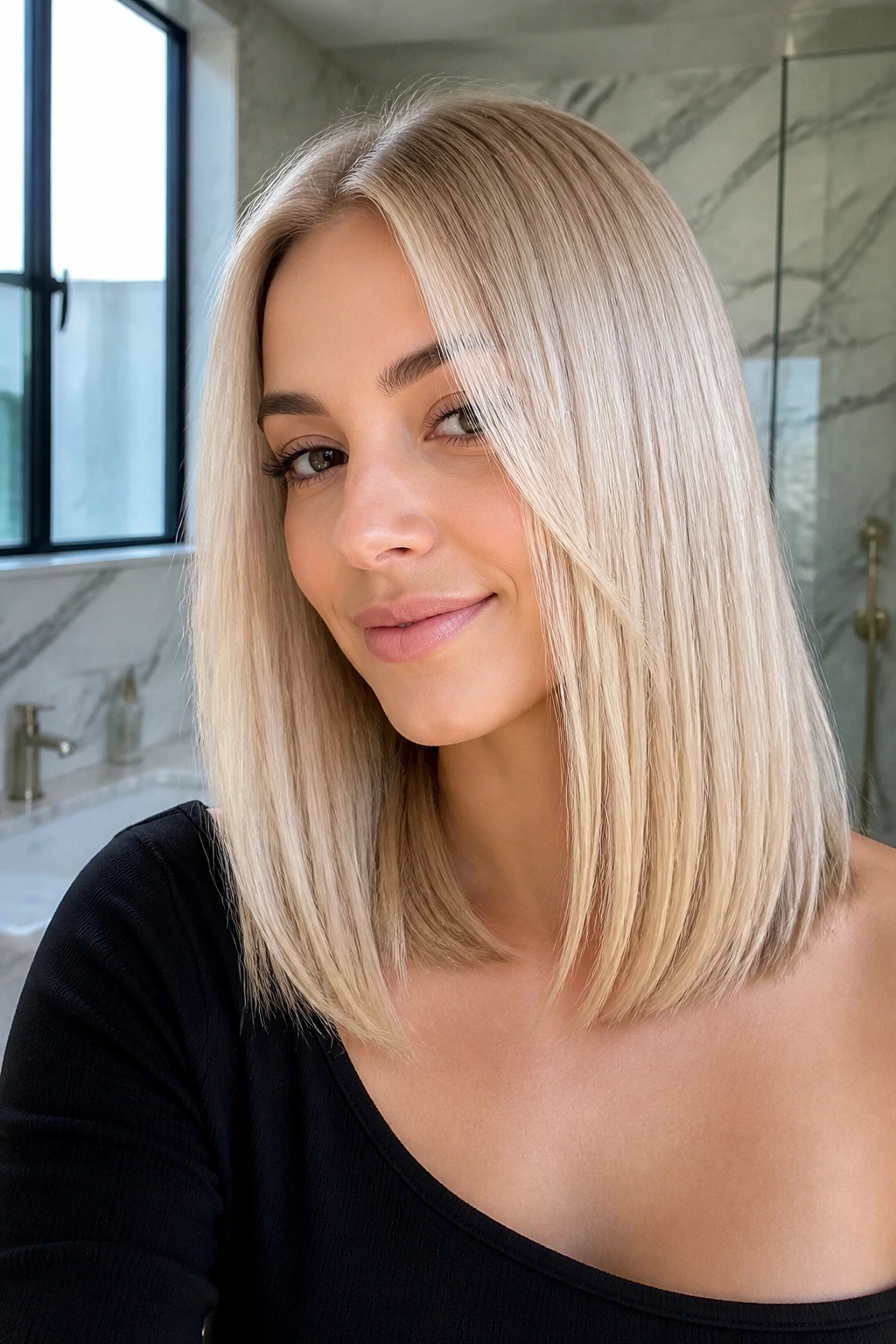
Pearl blonde is for people who like their blonde polished rather than sun-kissed. On straight medium hair, the glossy finish becomes the whole point. The surface looks smooth, and the pale tone reflects light in a softer way than icy platinum.
Why it lands
Pearl blonde usually needs a clean lift first, then a toner that keeps the color in that pale, opalescent space. It’s not a shade you just wash and go. The payoff is a sleek finish that makes a blunt midi cut look more expensive than it has any right to.
Best way to style it
- Blow-dry with a paddle brush for a smooth finish
- Use a lightweight shine serum on the midlengths
- Trim every 6 to 8 weeks to keep the ends crisp
12. Caramel-to-Blonde Ombré on a Midi Cut
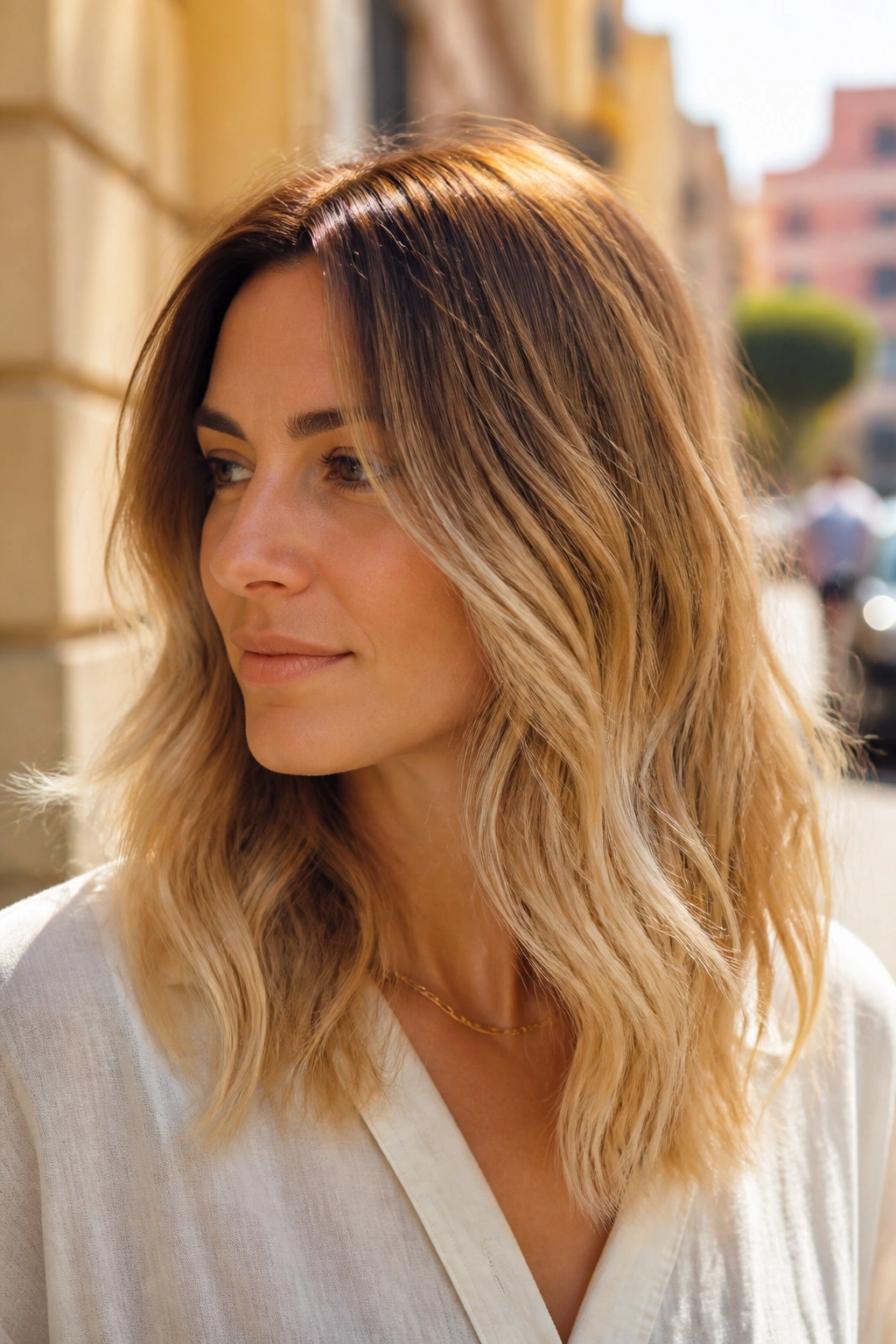
Caramel-to-blonde ombré works because the shift is gradual. Medium hair is long enough to show the transition, but not so long that the fade feels dragged out. That makes the whole look easier to wear than it sounds.
Start with a caramel base near the roots and melt into a lighter blonde through the last third of the hair. The ends should look sun-leaned, not dipped in bleach. If you like warm color but still want visible blonde, this is a smart middle ground.
13. Wheat Blonde with Airy Layers
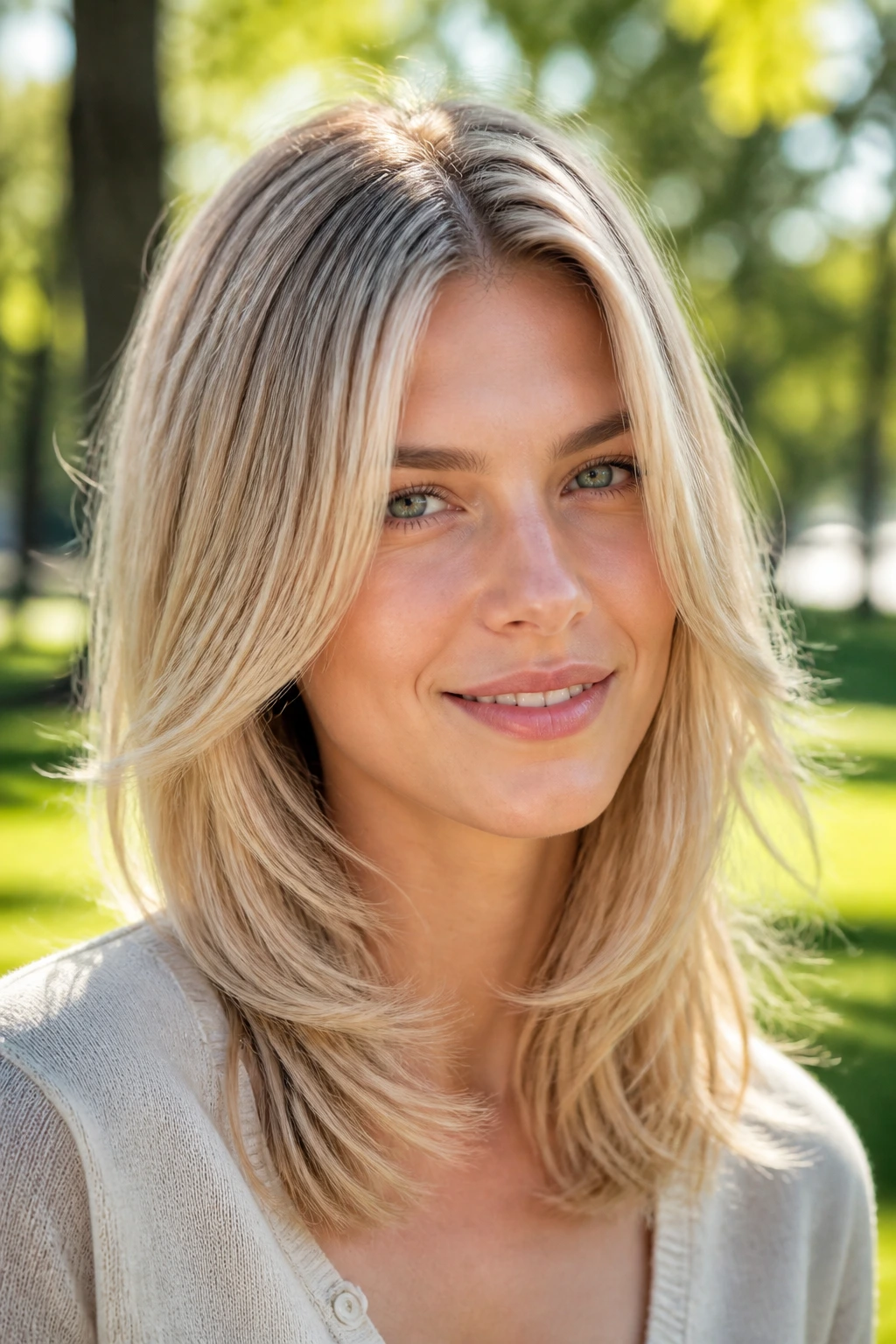
Wheat blonde has a soft, dry brightness to it. Not flat. Not brassy. Just pale enough to look light, with a little beige warmth so it doesn’t turn chalky on medium hair.
The reason it suits airy layers so well is movement. The lighter tone picks up every bend in the cut, and the layers keep it from sitting like one solid mass. If you want a blonde that feels clean but not icy, wheat blonde is an underrated choice.
- Ask for a beige-based toner
- Keep layers light around the face
- Add a gloss if the color starts to look dull
14. Vanilla Blonde and a Center Part
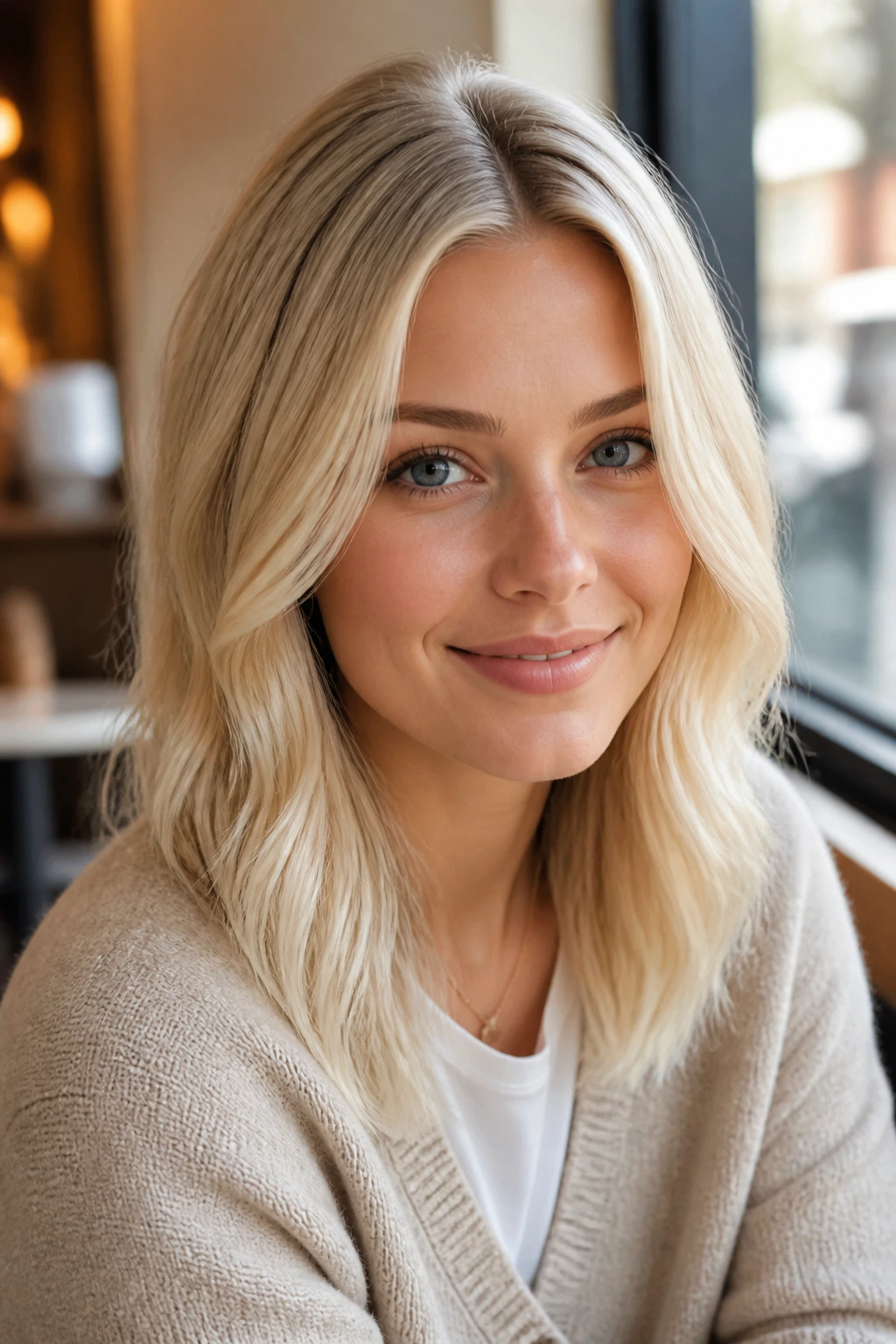
Does vanilla blonde look too sweet on medium hair? Only if the tone is pushed too far into yellow. The cleaner version is pale, creamy, and a little soft around the edges.
A center part helps because it makes the color feel symmetrical, which suits a collarbone-length cut. I’d keep the root just deep enough to prevent a helmet effect. That little shadow gives the blonde shape and keeps the ends from floating away from the rest of the head.
15. Toasted Coconut Blonde with Wavy Ends
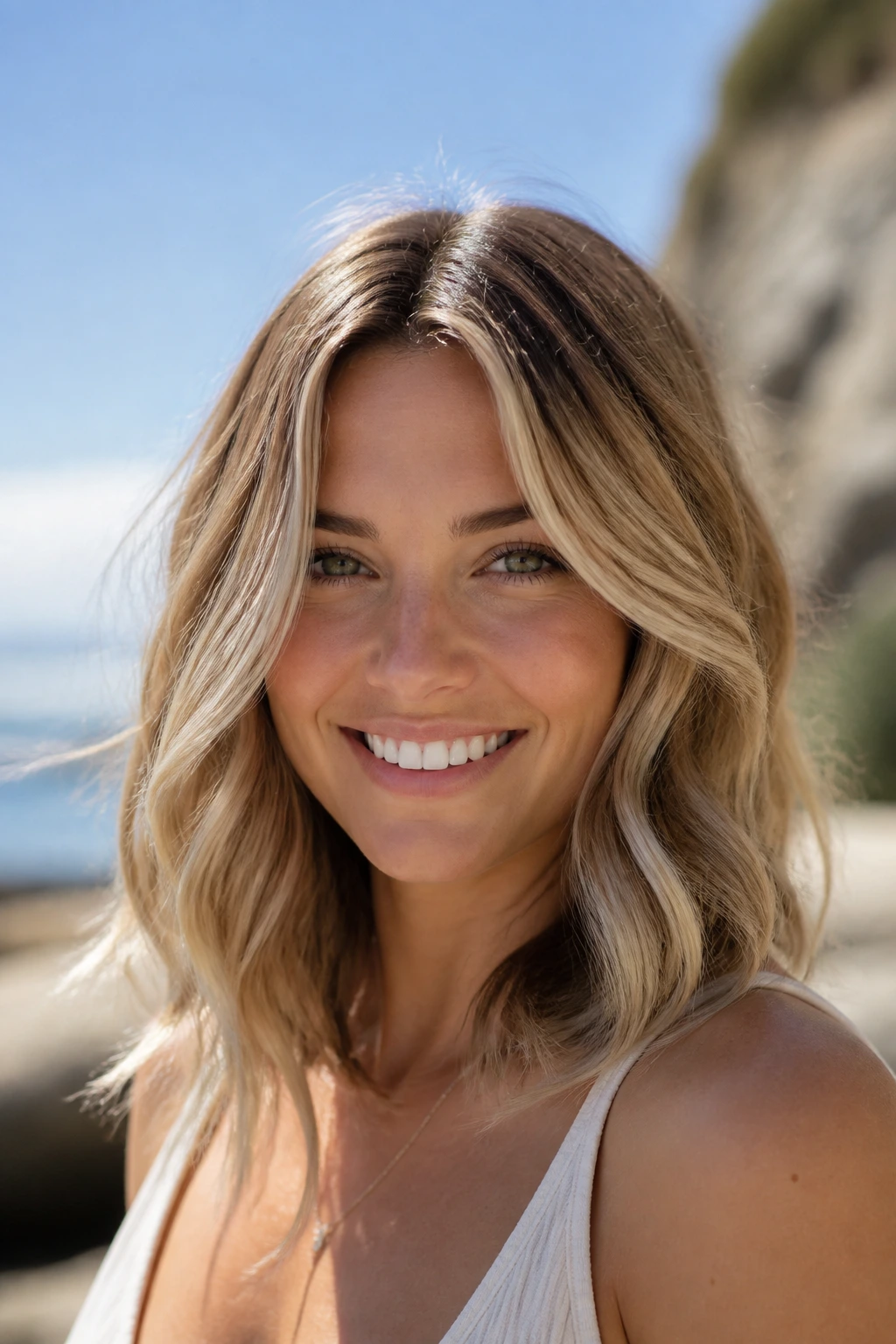
Toasted coconut blonde has that cool-warm mix that looks best when the hair has some bend. On medium hair, wavy ends stop the darker root from feeling severe and let the lighter pieces show up in the places that matter.
I like this one on people who want a softer alternative to icy blonde. The base can stay beige or light brown, while the ends lift into a creamy blonde. It feels lived-in without looking messy, which is harder to pull off than people think.
16. Honey Butter Foilayage
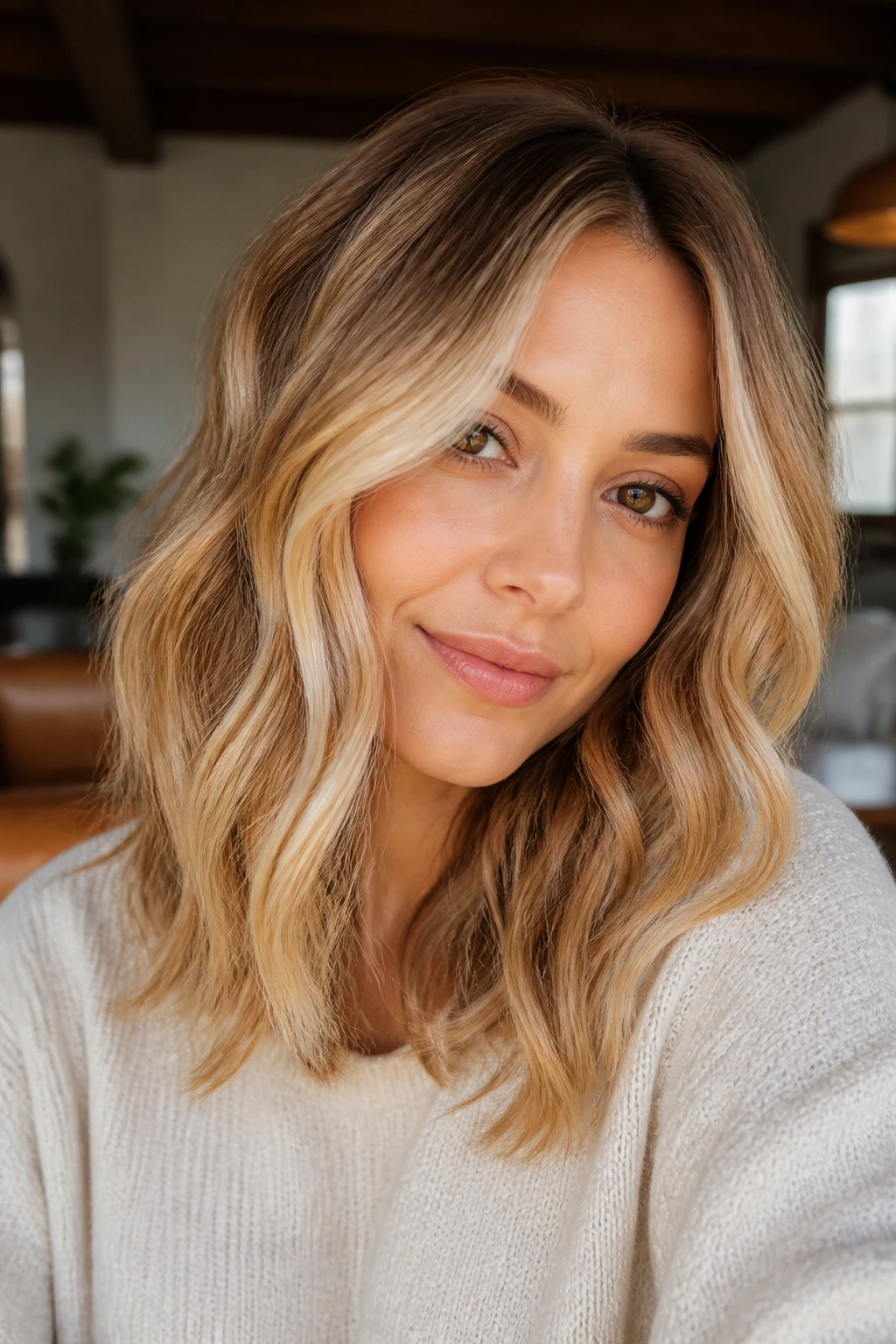
Foilayage gives you brighter lift than open-air balayage, but it still softens the line. On medium hair, that matters because you want enough blonde to read from across the room without carving the cut into stripes.
What makes it different
The foil placement lets the color pop at the midlengths and ends while keeping the roots manageable. Honey butter is the right tone if you want warmth, but not orange. It’s creamy, glossy, and friendly to a shoulder-length cut that needs a little light around the face.
Best use case
- Medium thick hair that can handle contrast
- Cuts with layers or long bangs
- People who want brighter lift in 1 session
17. Smoky Beige Blonde with a Soft Root
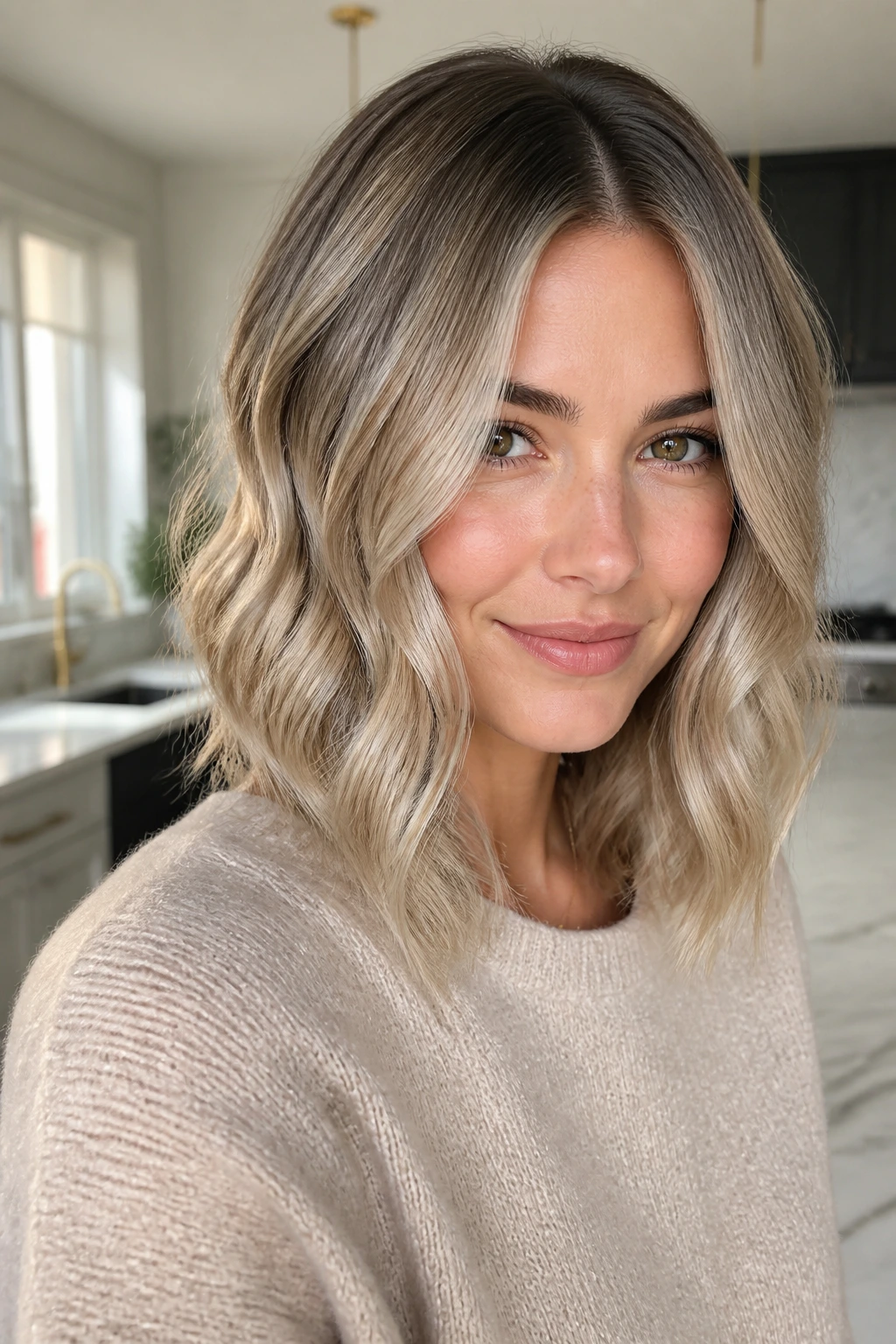
Smoky beige blonde is one of my favorite medium-hair shades because it avoids the two usual traps: too yellow or too flat. The smoky base keeps it grounded, and the beige finish keeps it pretty.
The soft root helps the cut look deeper at the crown, which is useful on medium hair because the shape can sometimes feel boxy. Add a subtle wave and the entire color starts to feel layered, even if the haircut itself is simple.
18. Scandinavian Blonde with Face Lighting
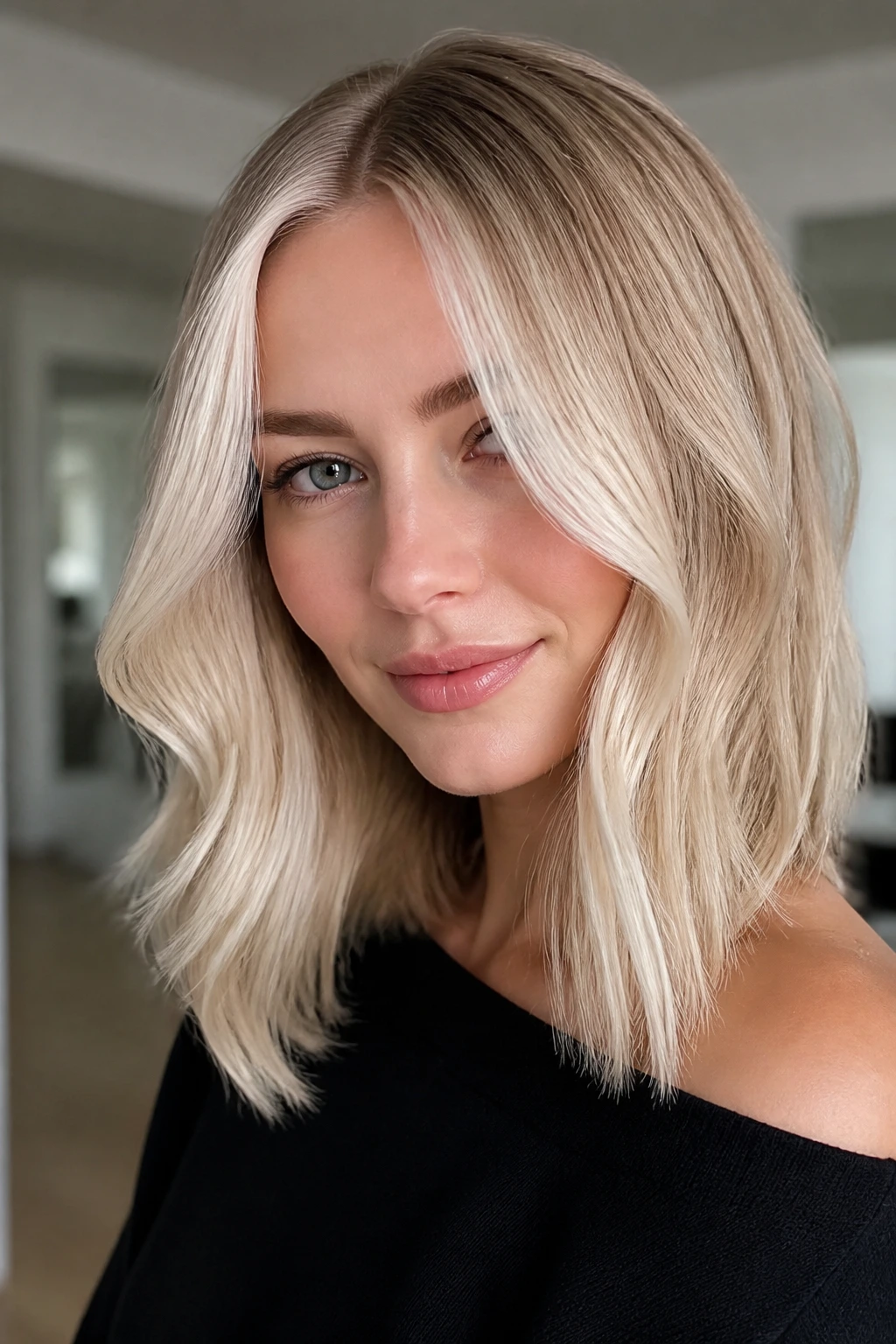
Scandinavian blonde gets bright fast, so the face lighting has to be controlled. On medium hair, tiny bright panels around the front are enough to create that airy, pale look without bleaching every inch of the head.
How to ask for it
Tell your colorist you want the front pieces very light, but not heavy. Ask for a soft transition into a cooler blonde through the mids, and keep the root blur thin. The result should look pale, not harsh.
This style loves a clean lob or a blunt midi. If the cut is too layered, the brightness can look scattered. Keep the shape tidy and let the color do the drama.
19. Champagne Rose Blonde
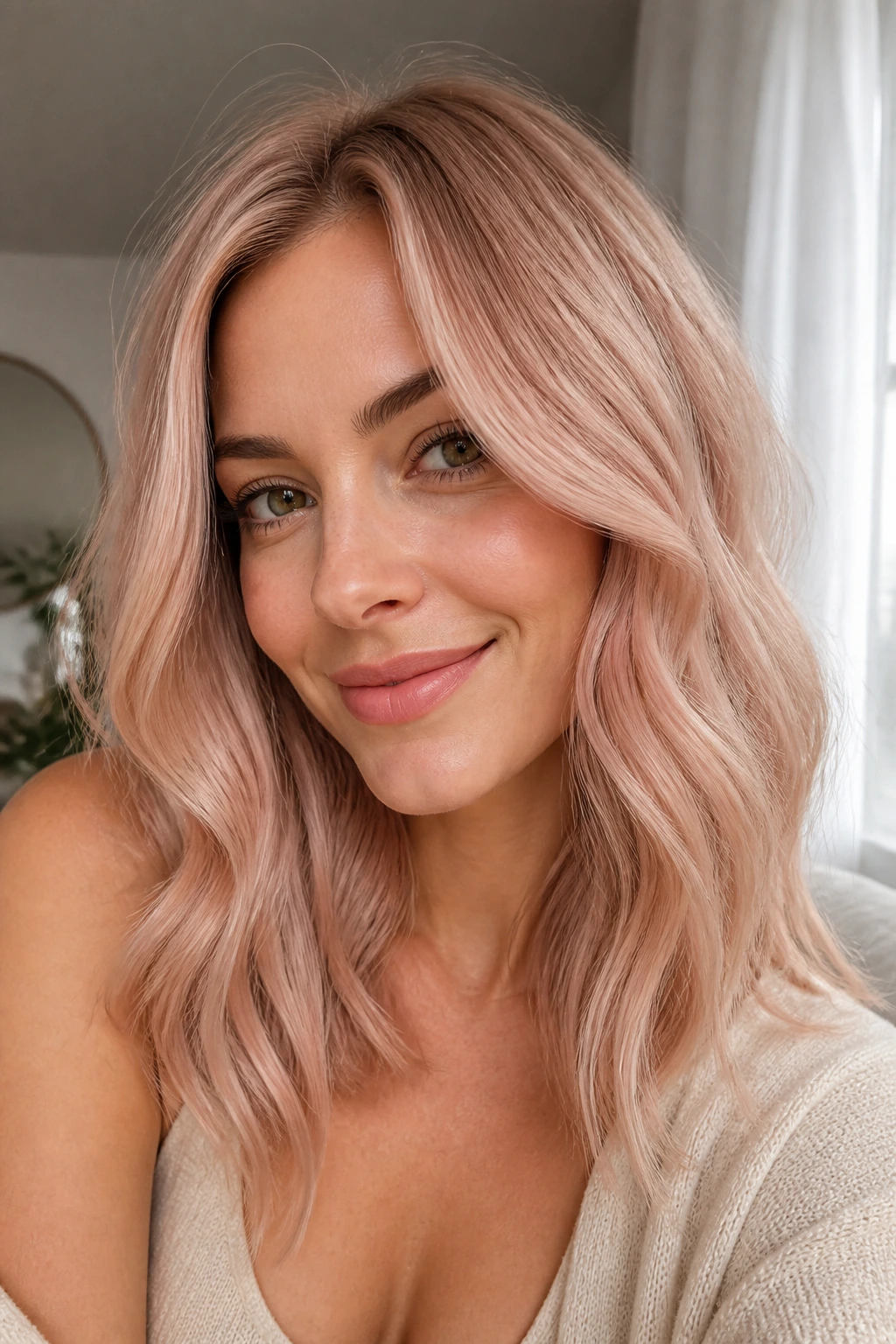
Champagne rose blonde has a blushy warmth that sits somewhere between gold and pink. On medium hair, that slight tint catches the light in a way that feels fresh without drifting into pastel territory.
The trick is restraint. You want the rose tone to whisper, not shout. A few soft waves and a glossy finish are enough. Straight hair can still wear it, but the bend gives the color more softness and keeps the tone from looking too deliberate.
20. Butterscotch Blonde Waves
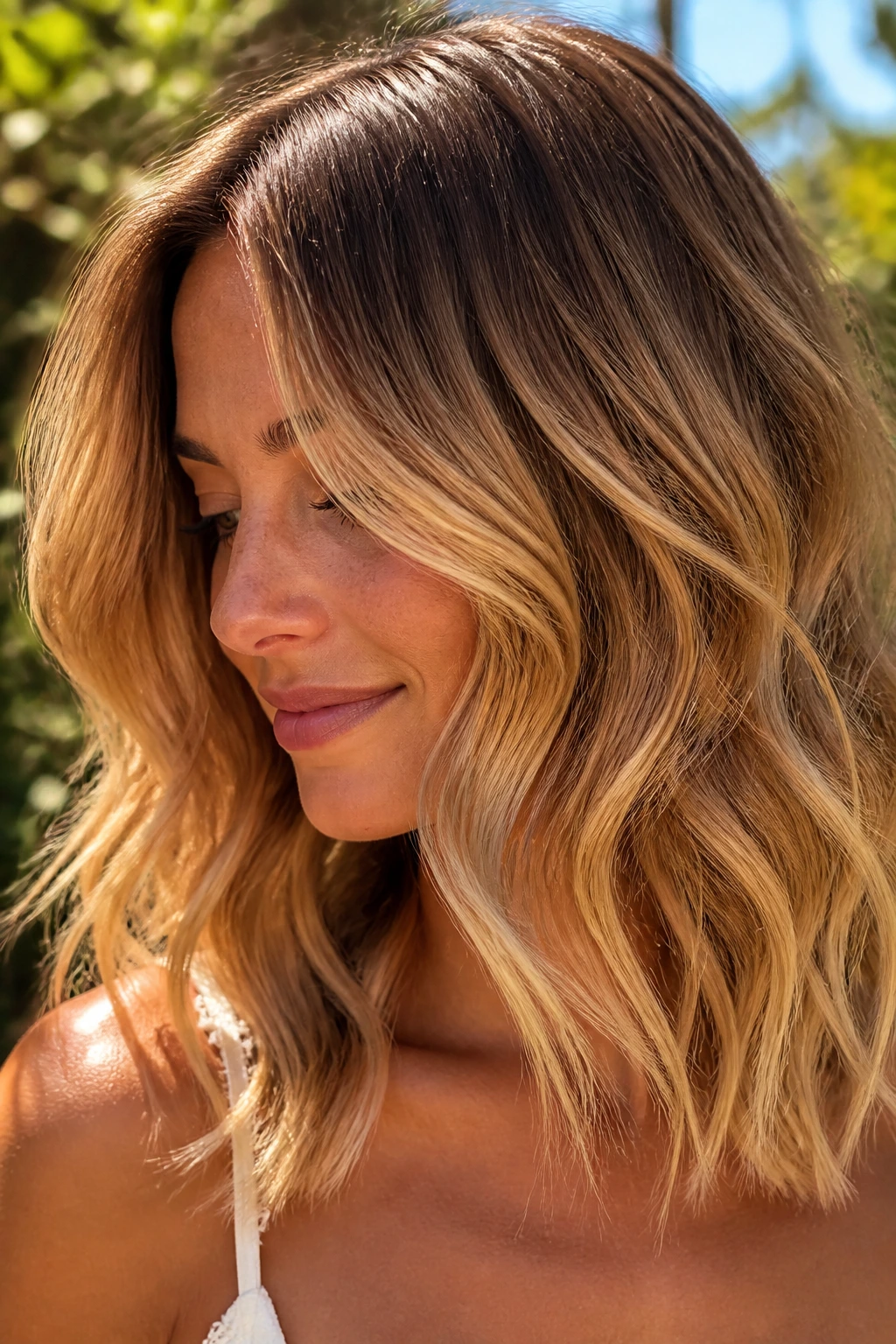
Butterscotch blonde is richer than honey and warmer than beige. On medium hair, it’s especially good if you want color that looks golden in sunlight and cozy indoors.
Why it feels easy to wear
The tone sits close to natural warmth, so the grow-out is kinder than with very pale blonde. That makes it a solid choice for shoulder-length cuts that move a lot. A soft wave helps the butterscotch ribbons separate, which keeps the hair from reading as one big block of warmth.
Quick styling notes
- Add a few brighter ends for lift
- Keep the root at least one shade deeper
- Use a hydrating mask every week if the hair is lightened
21. Sunlit Almond Blonde on a Collarbone Lob
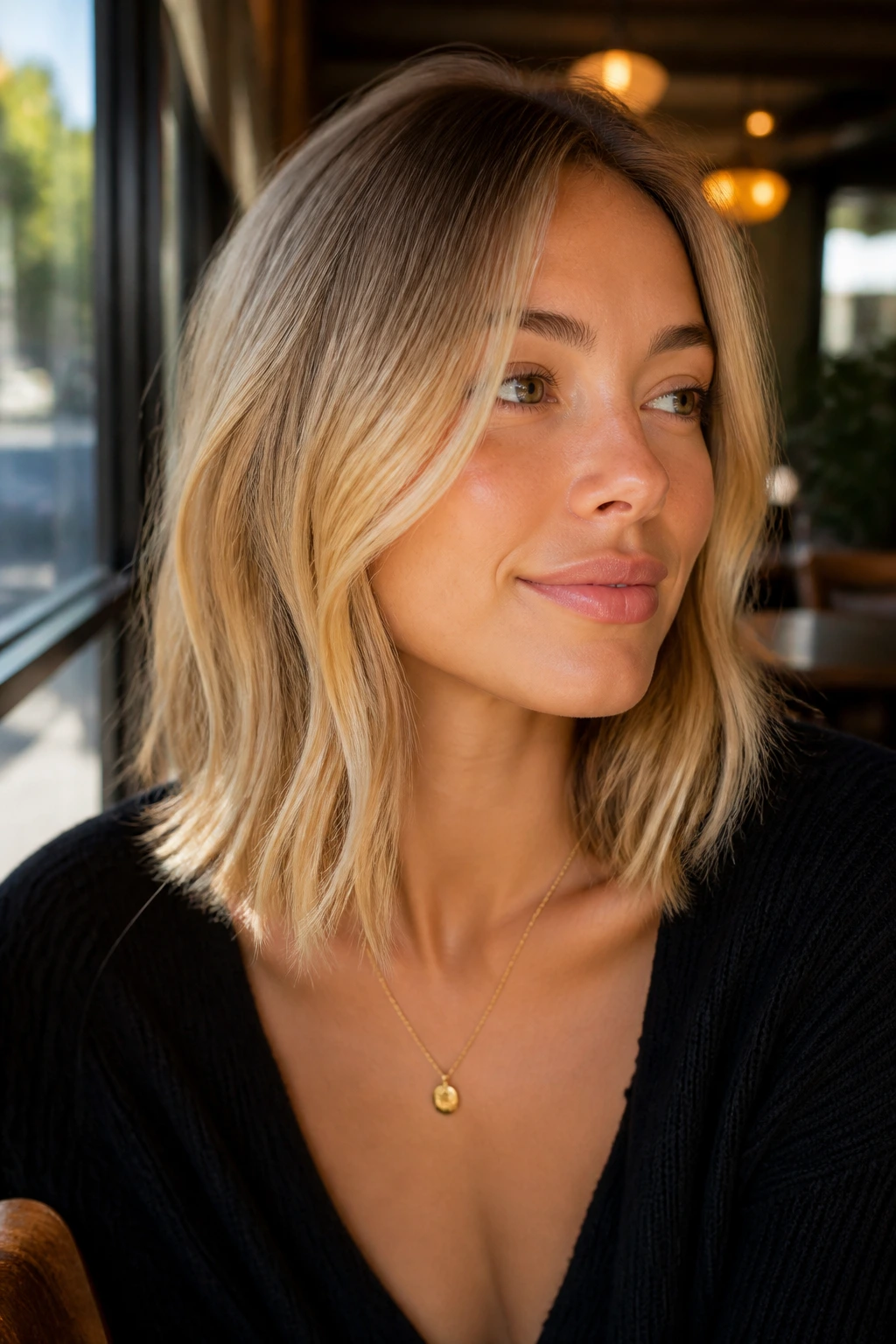
Sunlit almond blonde sits in a sweet spot between brown and blonde, which is why it flatters a collarbone lob so well. The hair gets enough lightness to look bright, but the almond base keeps the finish calm.
I like this look when the cut has a slight bend at the ends. It stops the color from feeling too smooth and gives the lighter pieces somewhere to sit. If your hair is naturally dark blonde or light brown, this is one of the easiest ways to go lighter without a big tonal jump.
22. Cool Cream Highlights on a Dark Blonde Base
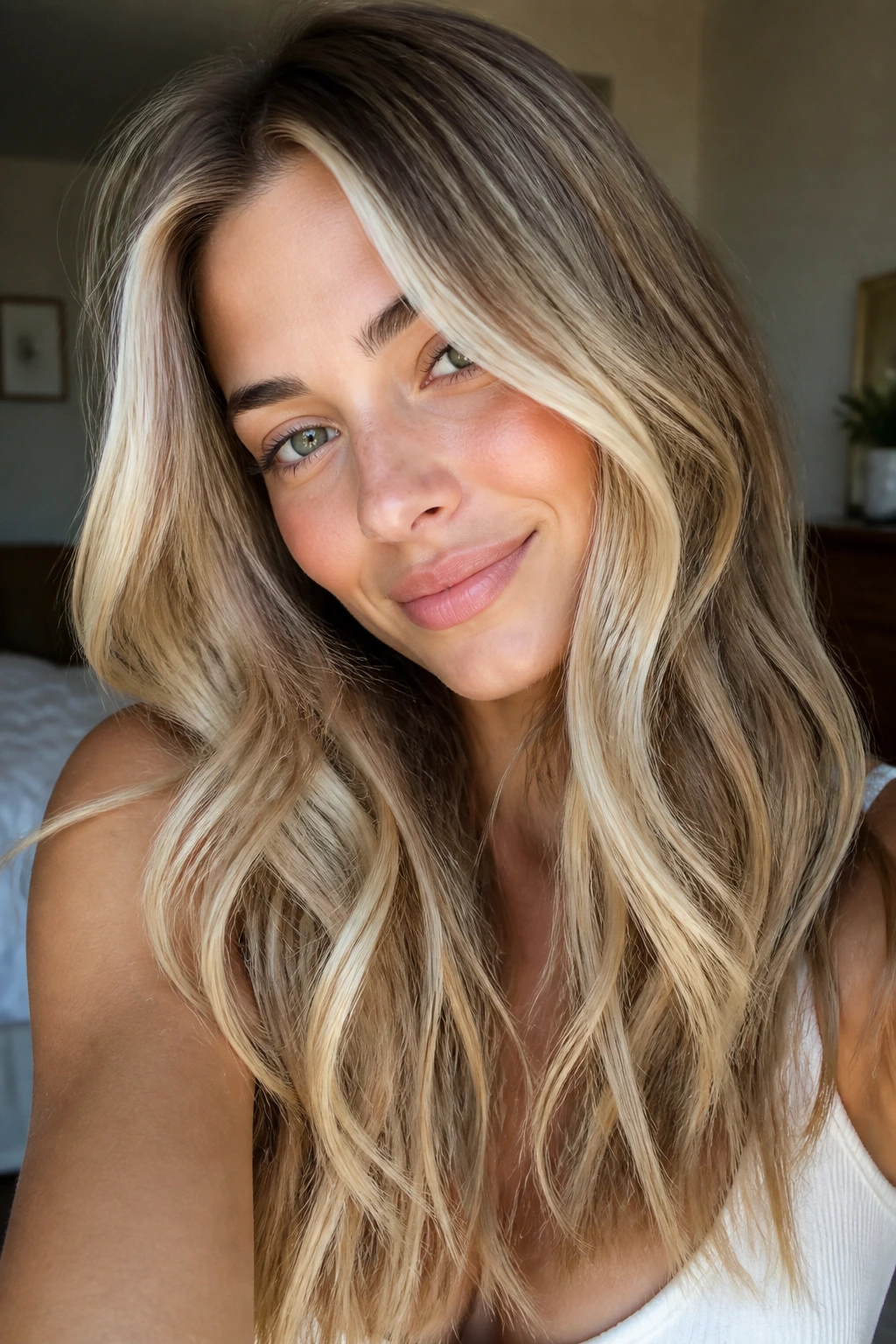
Cool cream highlights work best when the base stays dark blonde instead of drifting into brown. That middle ground makes the highlights pop without needing a full overhaul.
The medium length helps because the brighter pieces can be placed through the front and upper layers, where they show most. Keep some depth underneath. Too many highlights and you lose the creamy effect. The best versions look expensive because they still have shade, not just light.
23. Linen Blonde Face-Framing Pieces
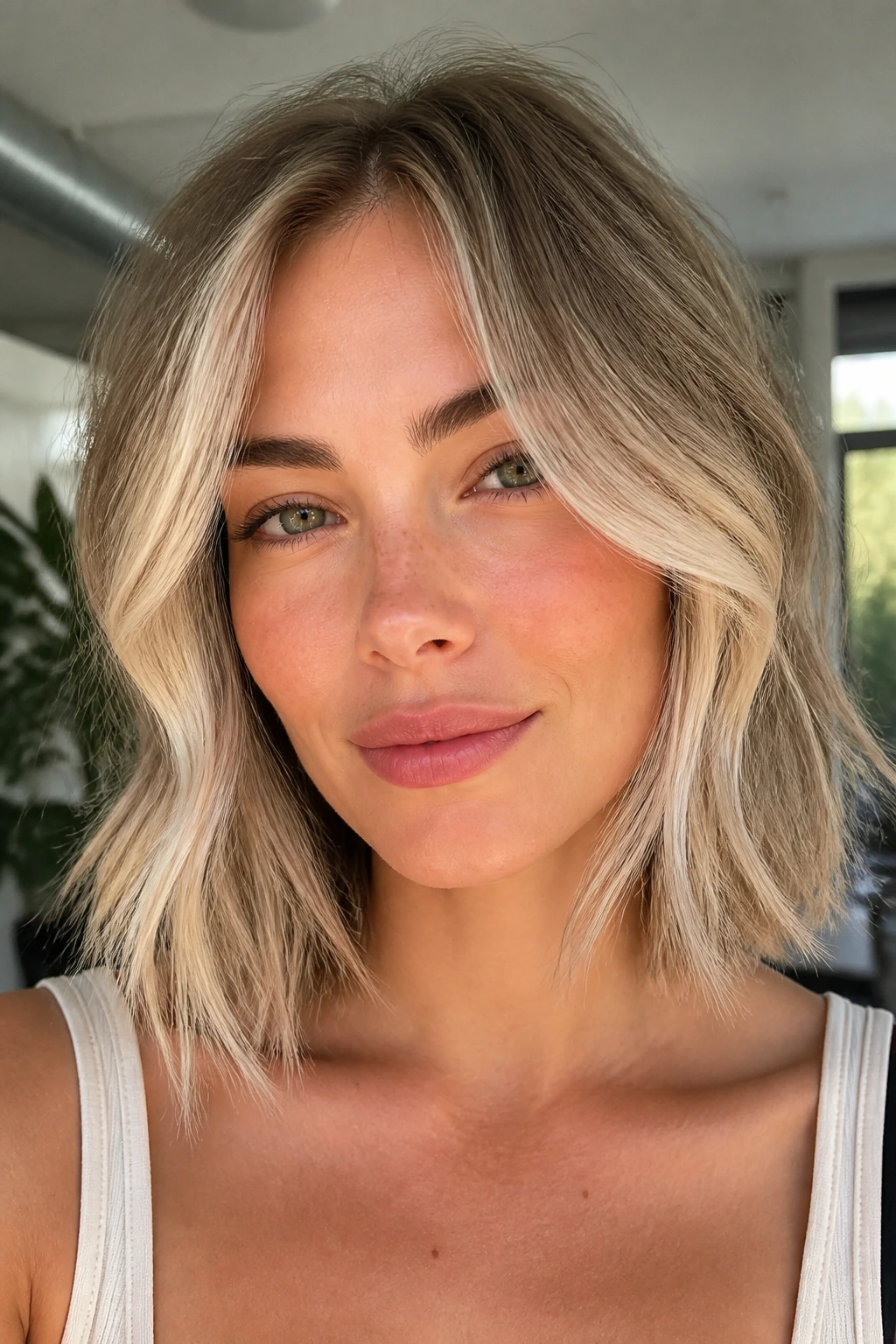
Linen blonde sounds soft, and that’s the point. It’s pale, neutral, and a little airy, which makes it a nice choice if you want brightness only where people actually see it first.
Where to place it
- Around the cheekbones and jawline
- Through the top layers near the part
- On the ends of curtain bangs, if you wear them
This is not the shade for someone who wants a high-drama blonde. It’s for the person who likes a gentle lift and a clean finish. On medium hair, the lighter face frame does the heavy lifting while the rest of the color stays relaxed.
24. Dimensional Taffy Blonde
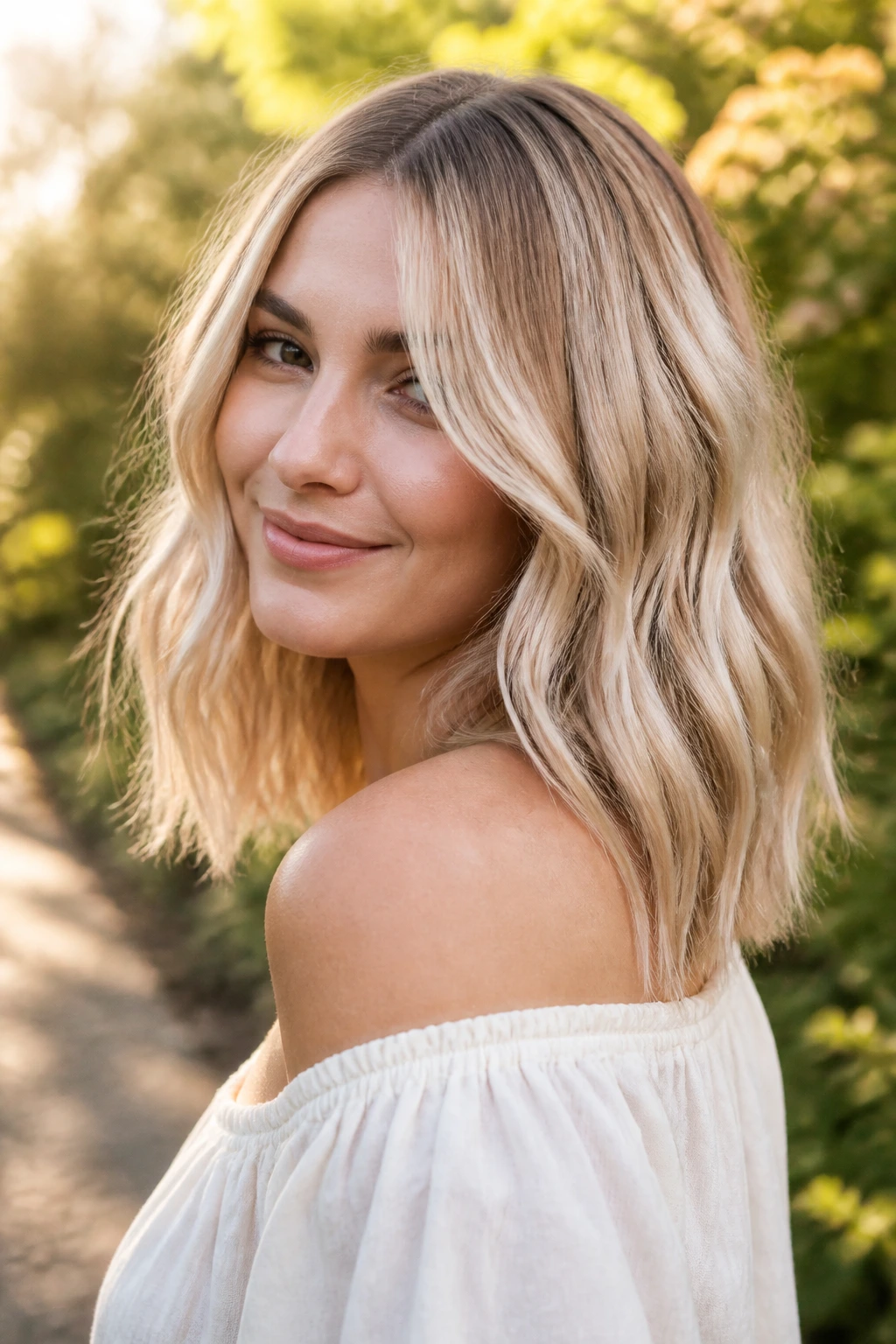
Dimensional taffy blonde is sticky in the good sense — stretchy, blended, and full of movement. On medium hair, the multi-tone effect keeps the color from looking overprocessed, which can happen fast when the length sits right on the shoulders.
The formula usually mixes warm and cool pieces, so the blonde doesn’t land in one flat note. That balance gives the haircut more life. If your ends tend to look sparse, this is a useful trick because the dimension helps the hair appear thicker than a single shade would.
25. Pearlized Balayage on a Wavy Lob
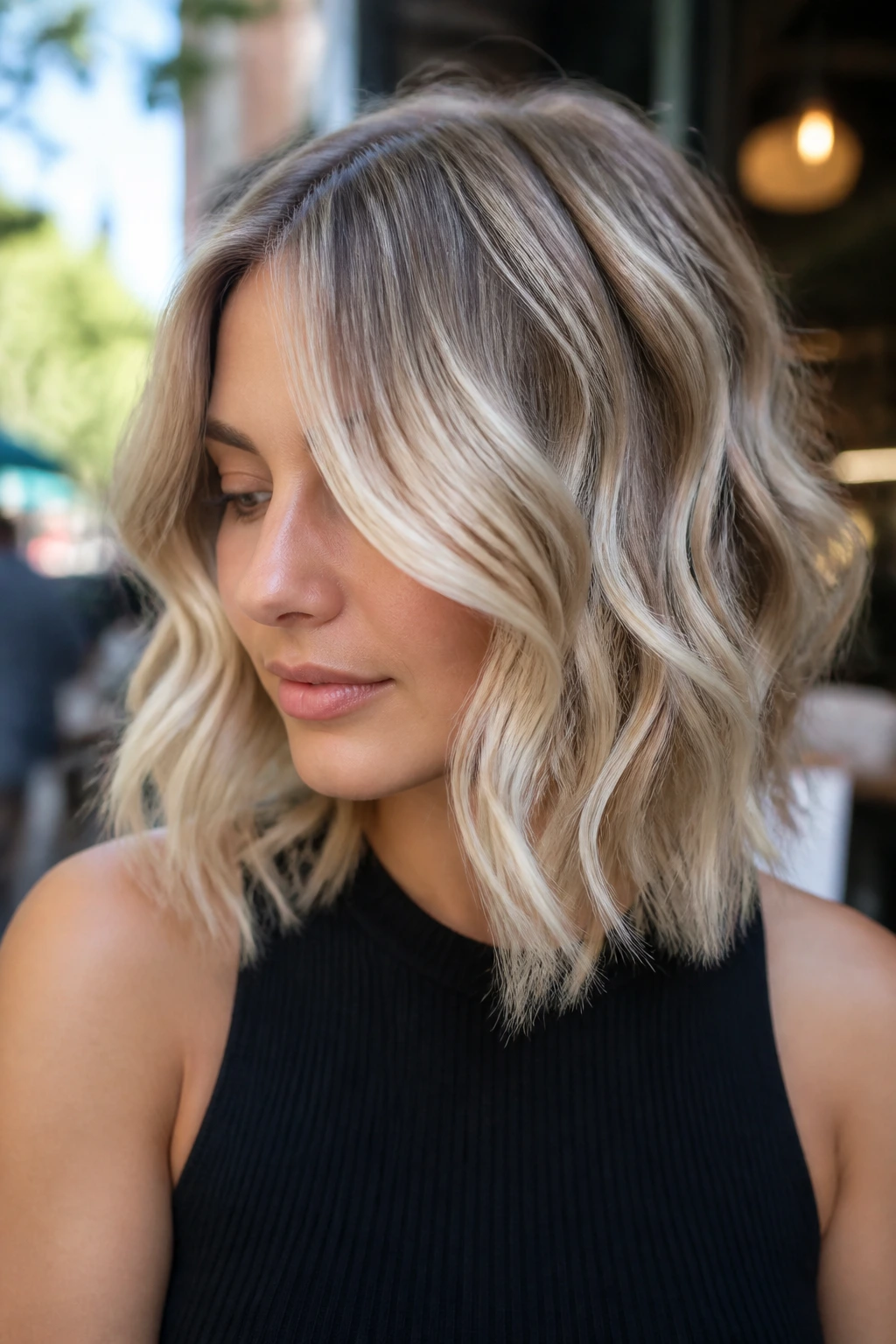
A wavy lob and pearlized balayage get along well because the waves show off the color shifts. The pearl tone keeps everything clean, while the balayage placement softens the transition from root to end.
I’ve always liked this version for medium hair that needs brightness but not a full bleach-out. The waves create pockets of light and shadow, which makes the blonde look intentional rather than sprayed on. It’s one of those styles that still looks decent when the wave falls out a little.
26. Rooted Platinum with Soft Waves
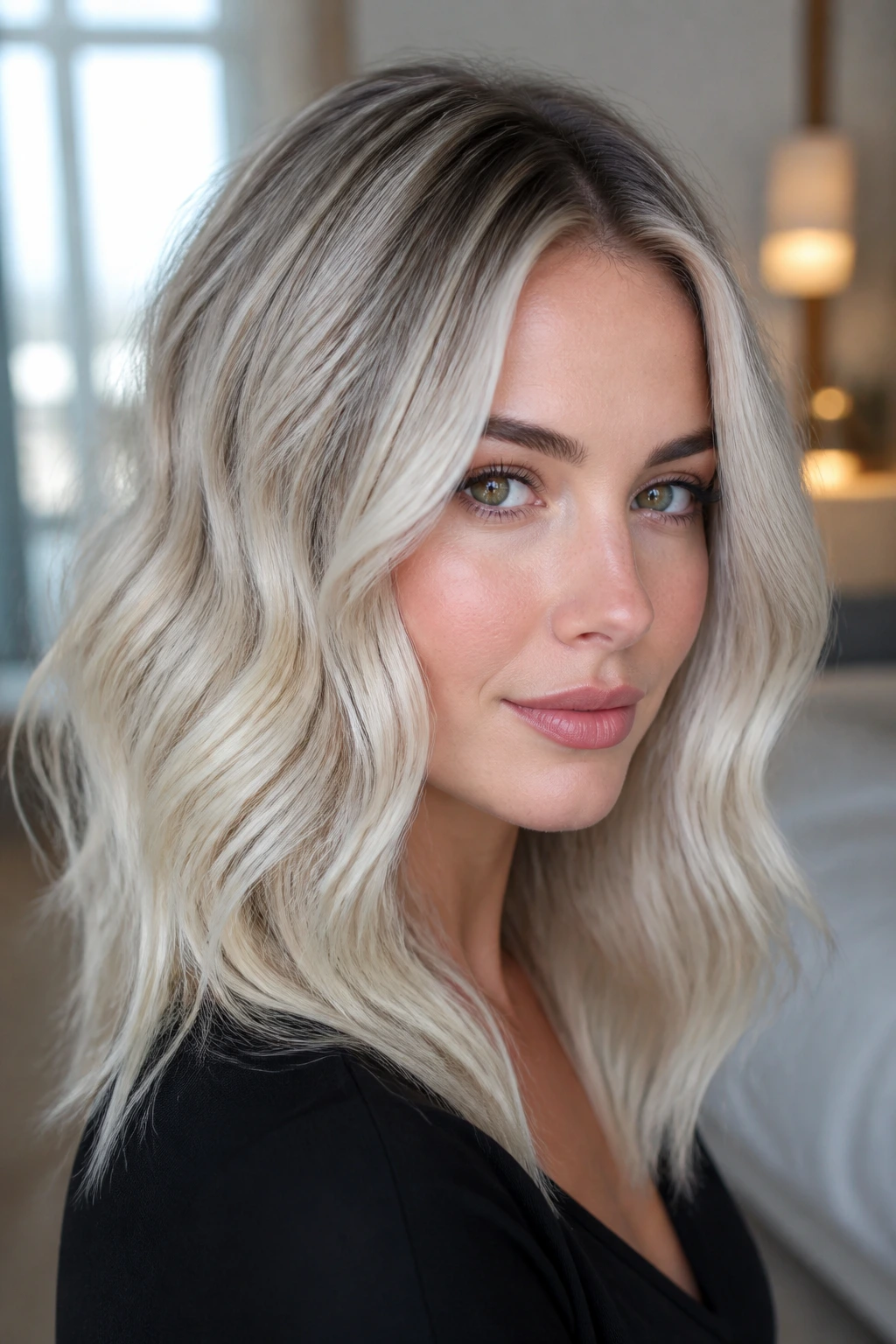
Rooted platinum is the practical cousin of full platinum. The darker root keeps the look anchored, and medium hair gives the contrast enough room to breathe. Without that root, platinum on this length can feel a bit too severe.
Soft waves help too. They break the lightness into sections and stop the color from looking like a single sheet. If you like a bright blonde but don’t want the upkeep of a full pale head every few weeks, this version is far easier to live with.
27. Soft Apricot Blonde
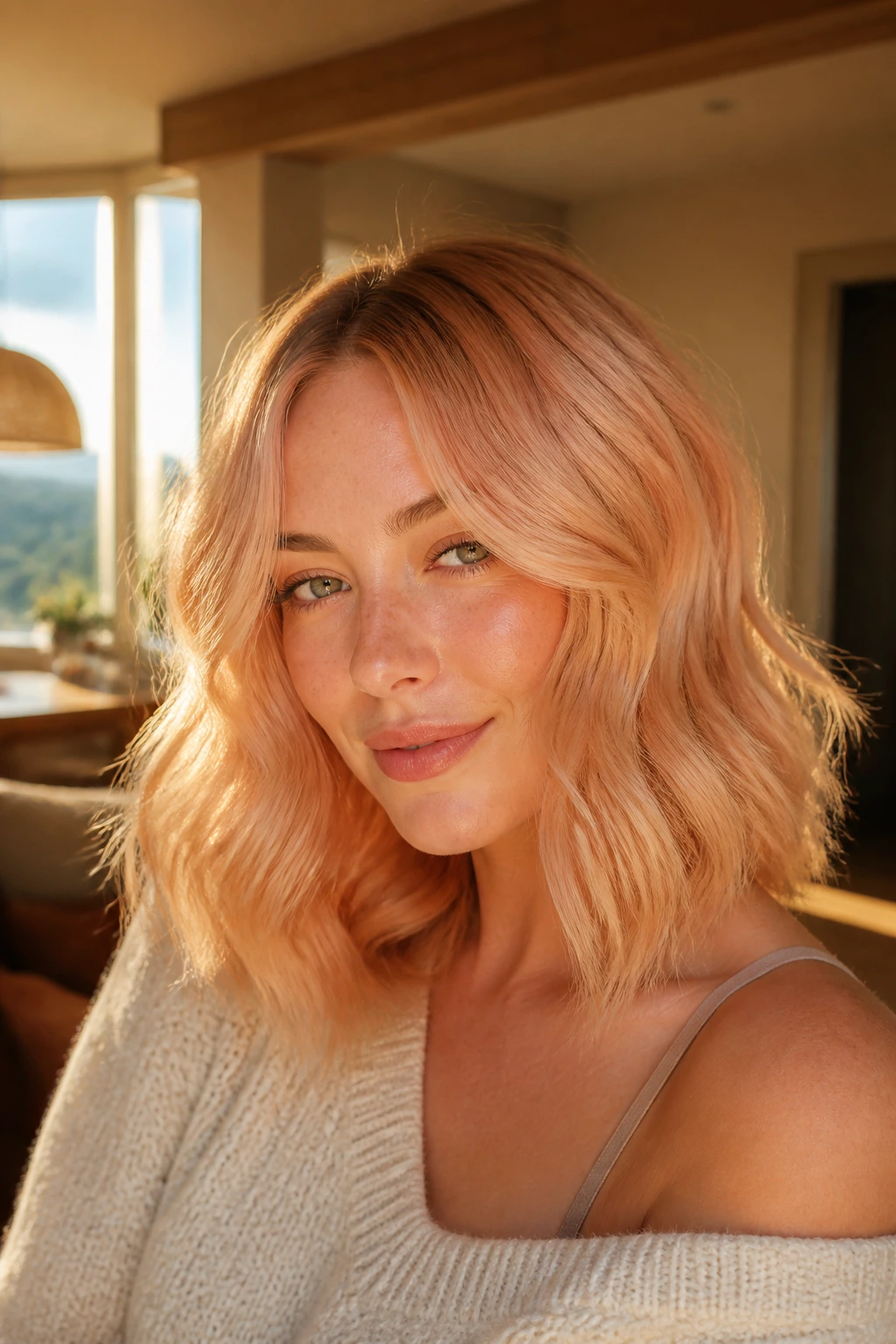
Soft apricot blonde is warmer than rose blonde and less orange than copper. On medium hair, it reads as a cheerful blonde with a tiny flush of color, which gives it a lot more personality than plain gold.
The science of the look
The warm peachy note flatters skin that wants a bit of warmth near the face. It also plays well with layers because the slight color shift shows up best on movement. A straight cut can still wear it, but the end result feels nicer with bends or loose waves.
Best pairings: warm makeup, textured layers, and a low-key gloss.
28. Beige Blonde with Curtain Bangs
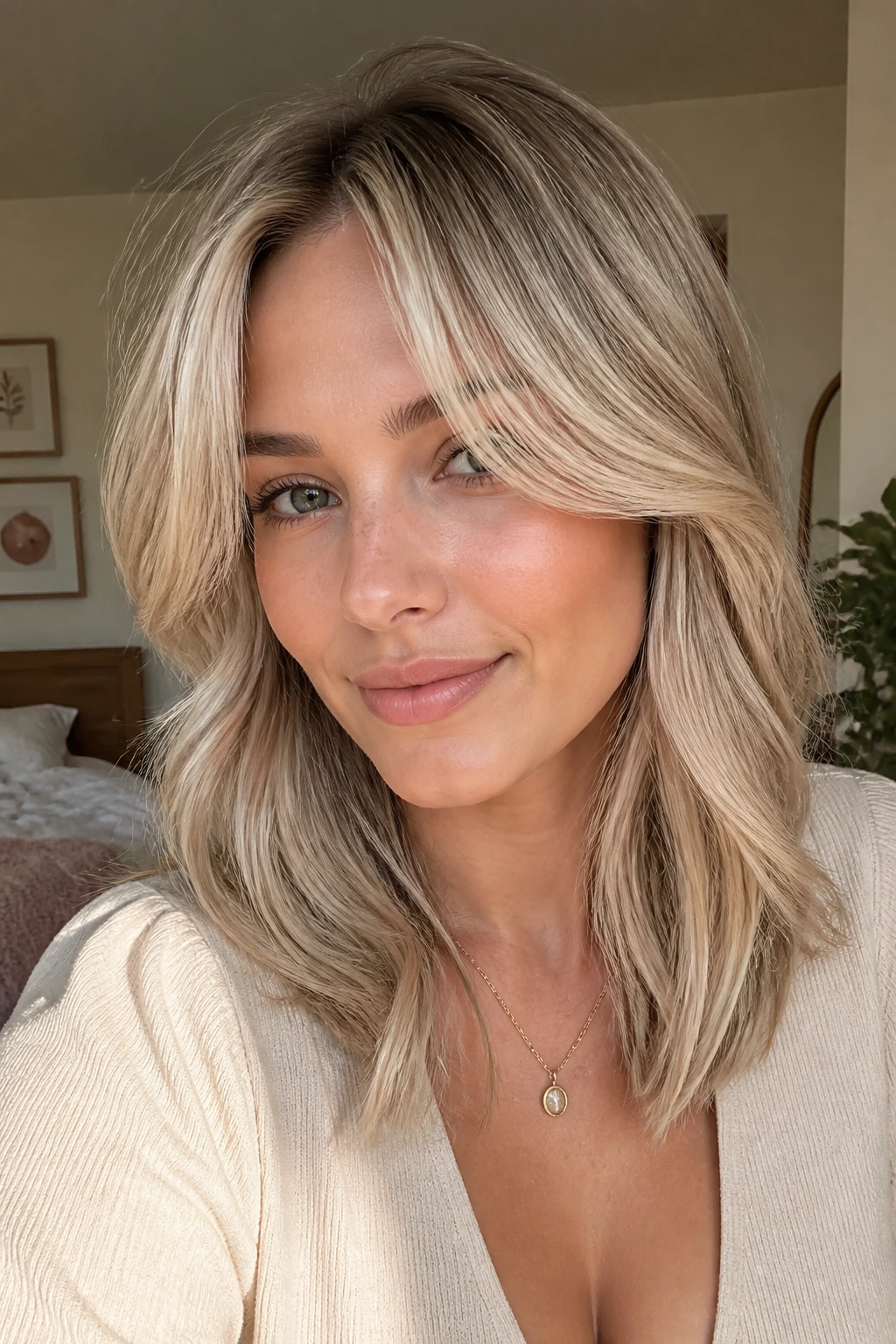
Beige blonde and curtain bangs are a very good pairing because both soften the face. The bangs break the front edge, and the beige tone keeps the rest of the hair from looking too bright or too cool.
The color should stay neutral, not muddy. That’s the part people get wrong. Ask for a beige toner with enough warmth to keep the shade wearable, then add a few lighter ribbons around the bangs. The whole style feels easy, even if the coloring took some thought.
29. Gold-Dust Highlights on a Chestnut Base
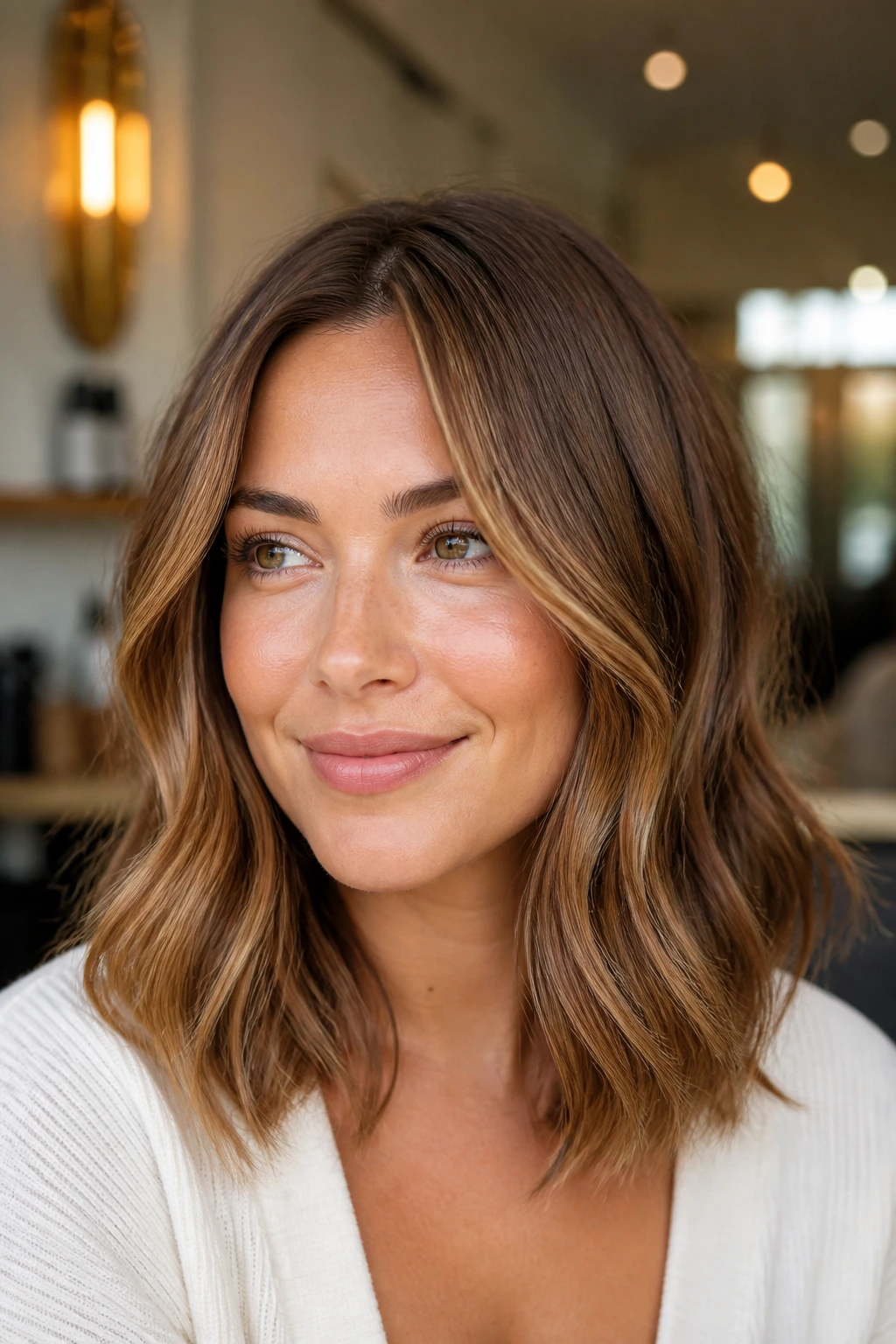
Gold-dust highlights can wake up a chestnut base fast. On medium hair, the warm contrast creates shine without forcing you into full blonde territory, which makes this a nice bridge if you’re easing lighter.
What to ask for
- Thin golden highlights through the top layers
- Keep the base chestnut or deep light brown
- Add a few brighter pieces near the face
- Finish with a warm gloss, not a cool toner
This is a strong choice for layered medium hair because the highlights flicker through the movement. It looks richer when the hair is touched, which sounds dramatic, but it’s true.
30. Cream Soda Blonde
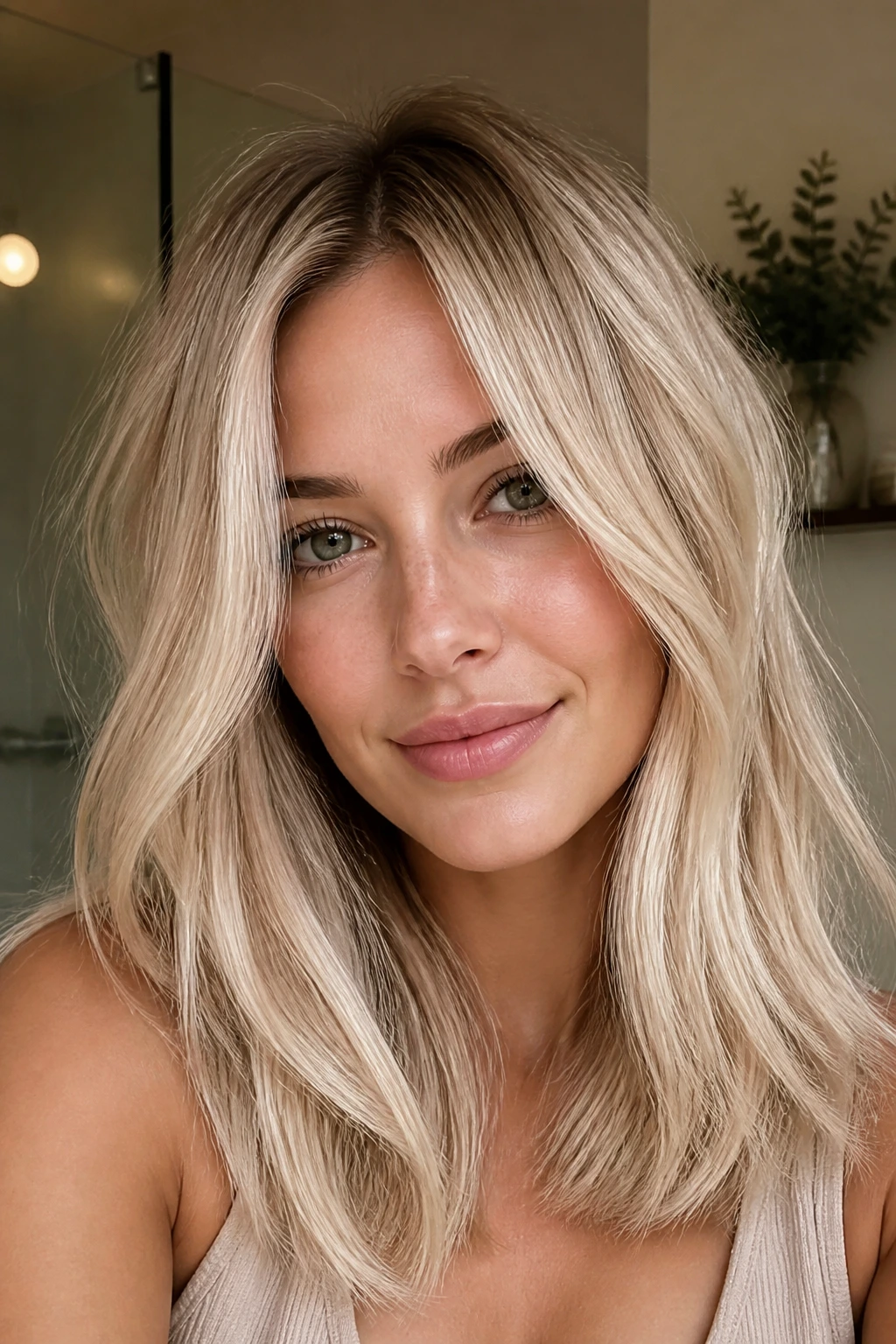
Cream soda blonde is warmer than pearl and softer than honey. Think pale beige with a little warmth left in it. On medium hair, that balance keeps the shade from getting washed out.
The best versions have a shadow root so the blonde doesn’t feel pasted on top of the cut. That root also helps the style last longer between appointments. If your hair lifts pale quickly but tends to go dull at the ends, this is a smart shade to ask for.
31. Silky Wheat Balayage
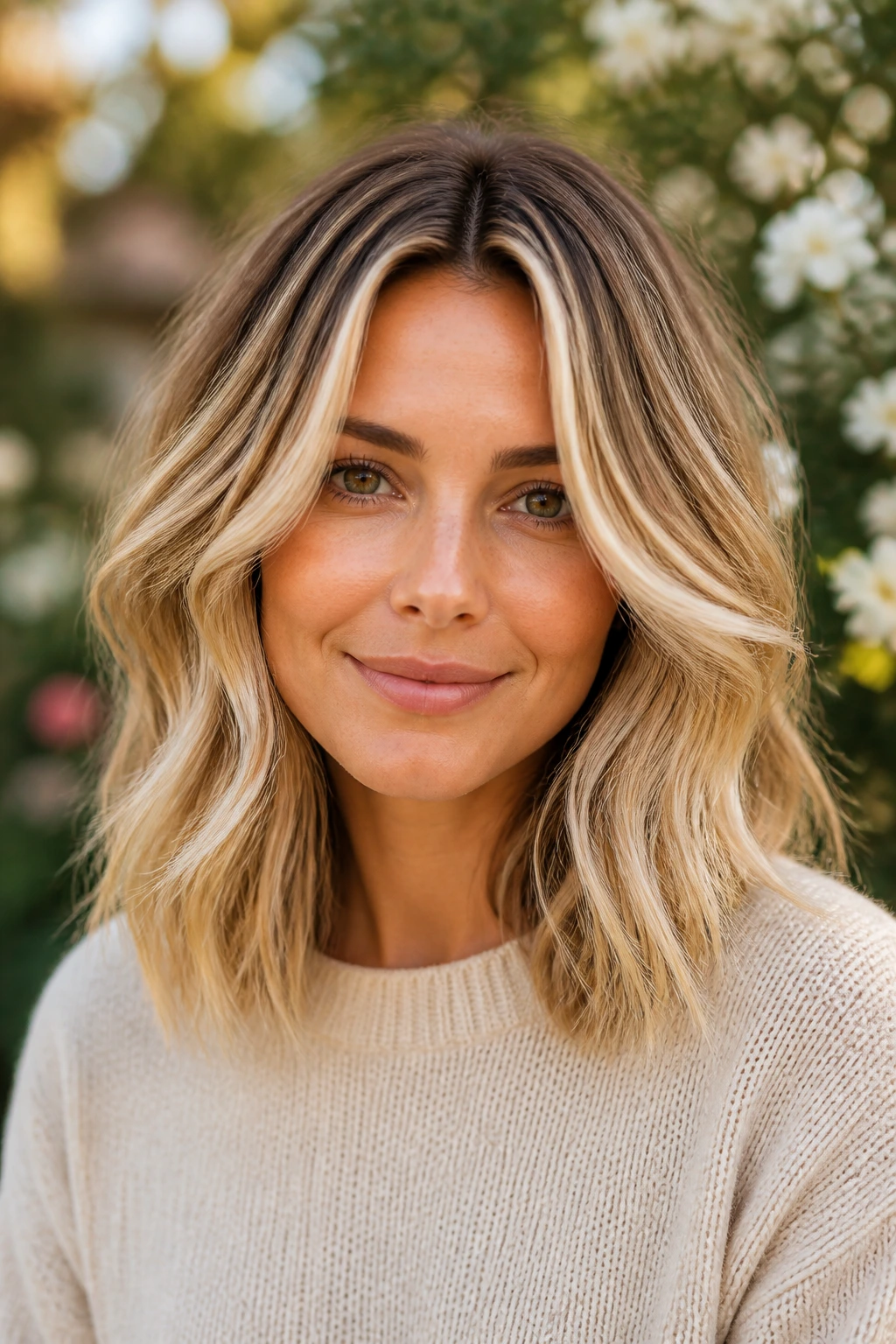
Silky wheat balayage has a smooth, almost satin finish on medium hair. It’s not flashy. It works because the tone is calm and the ribbons are placed with enough breathing room that each one can show.
I like this on hair that’s slightly layered or softly curved under at the ends. The wheat tone picks up natural movement without needing a lot of styling. If you’re the type who wants blonde that looks polished on day one and still sensible on day twelve, this is a solid lane.
32. Warm Vanilla Reverse Balayage
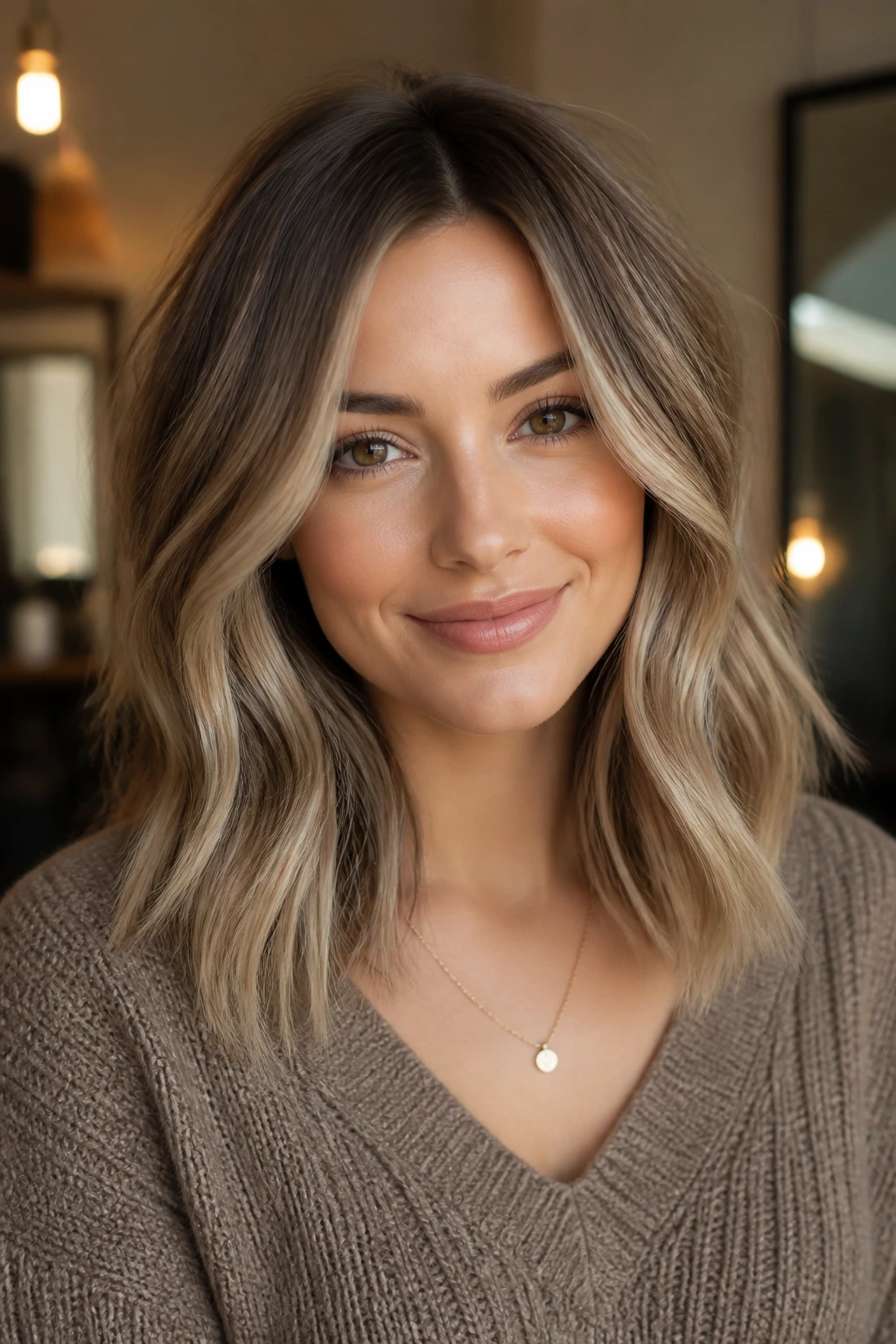
Reverse balayage is a nice fix when hair gets too light everywhere. Instead of adding more blonde, it tucks in deeper pieces and leaves the vanilla ends bright. On medium hair, that creates shape fast.
The warmer vanilla tone on the lighter sections keeps the color from feeling harsh. It also gives you a bit of relief if your hair has been over-foiled in the past. That darker contrast underneath isn’t a punishment; it makes the blonde look more expensive, and frankly, more believable.
33. Ice Blonde Panels
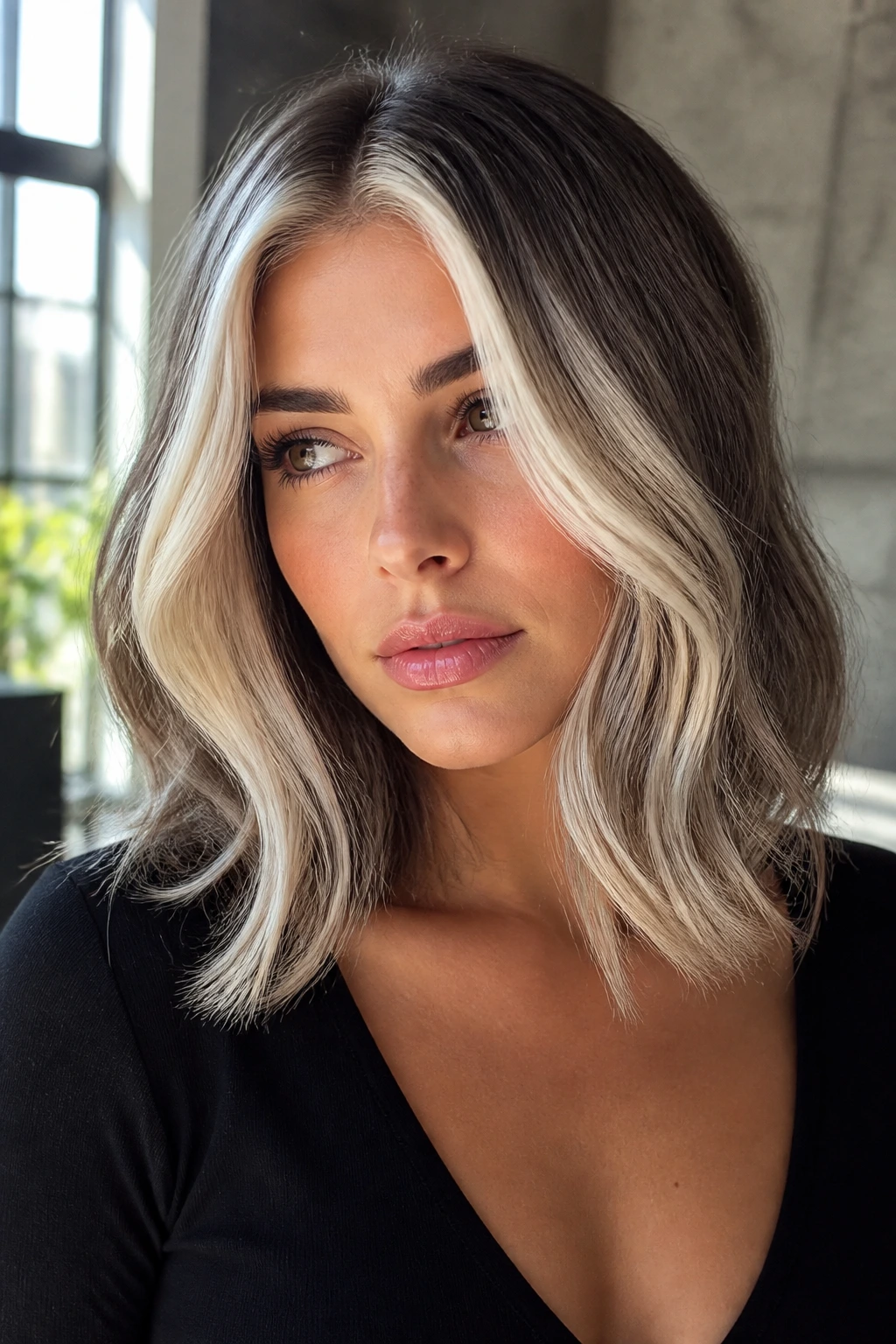
Ice blonde panels are for people who want a sharper, fashion-leaning look. On medium hair, the panel placement matters more than the overall brightness. A few precise sections can change the whole mood.
Watch the placement
- Put the brightest panels near the part and front
- Keep the rest of the head softer
- Leave enough depth so the panels stand out
This style can look incredible on a sleek lob or a blunt medium cut. It can also look too severe if the panels are too wide. Narrower is smarter here. The line between cool and costume is thinner than most people think.
34. Maple Blonde Melt
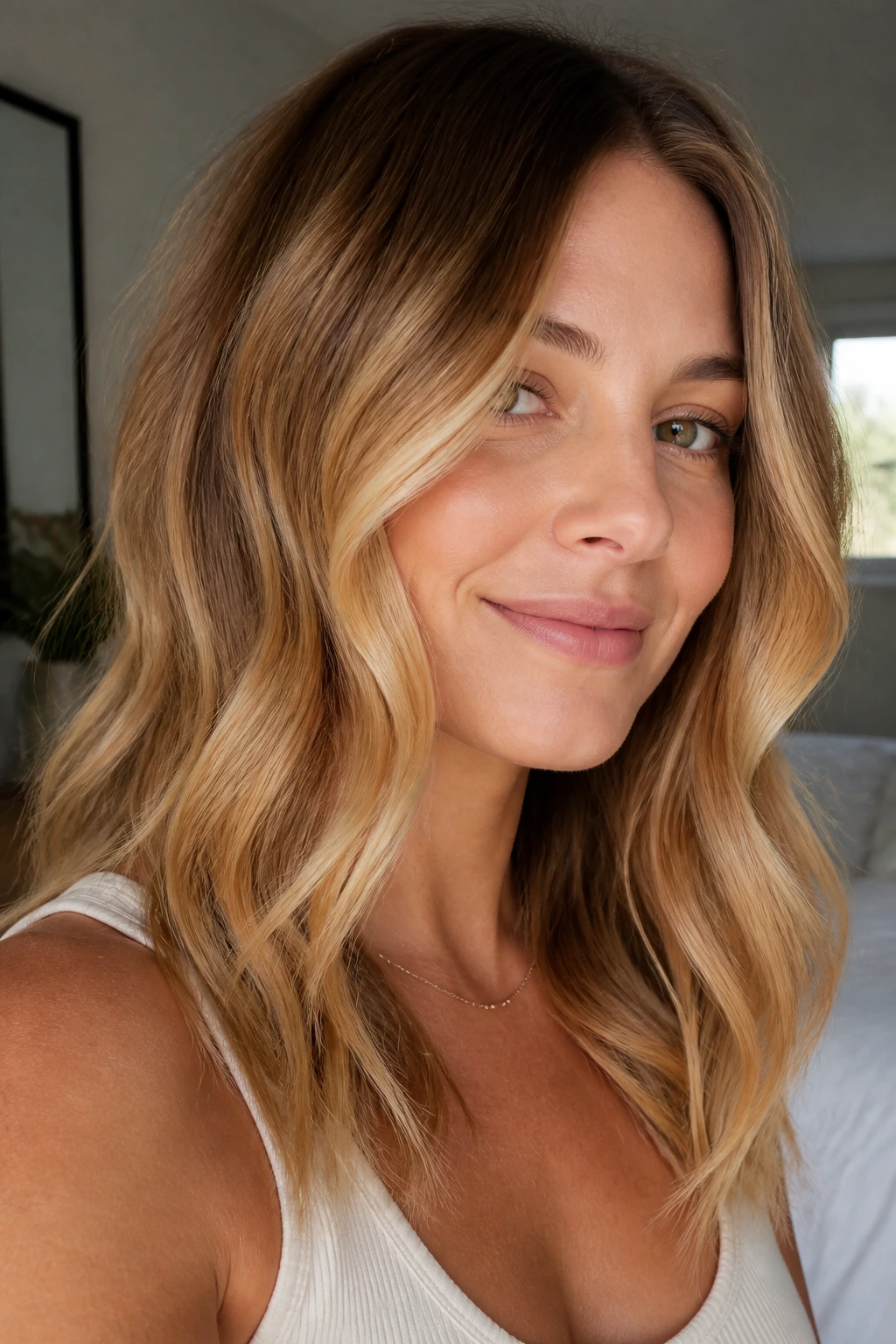
Maple blonde is warm, layered, and a little glossy. On medium hair, the melt from deeper roots into maple-gold ends feels natural because the length is just right for a gradual shift.
The shade works especially well if you like warmth but do not want orange. It has that toasted-sugar quality that looks flattering in soft light. I’d pair it with loose waves or a round-brushed finish so the color can show its different tones instead of sitting in one flat layer.
35. Bright Sandy Blonde Shag
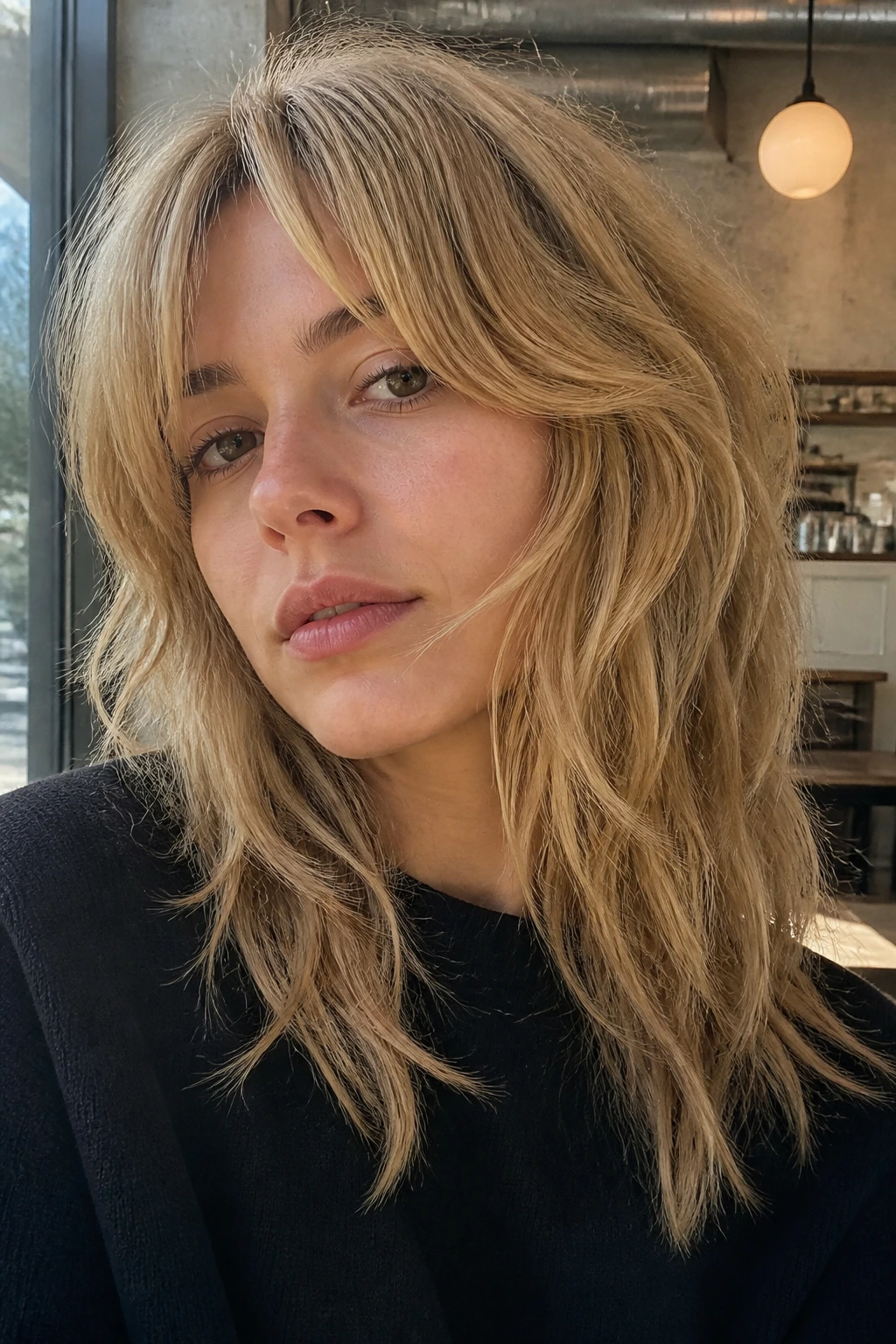
A shag gives sandy blonde a lot of attitude. The uneven layers keep the shade from feeling too neat, and the brightness reads more textured because the haircut itself is doing some of the work.
This is a good pick if you like a cooler blonde but still want some warmth in the strands. The texture matters more than a perfect tone match here. A bit of grit in the finish makes the color feel real, which is exactly why it works on medium hair.
36. Soft Buttercream Blonde
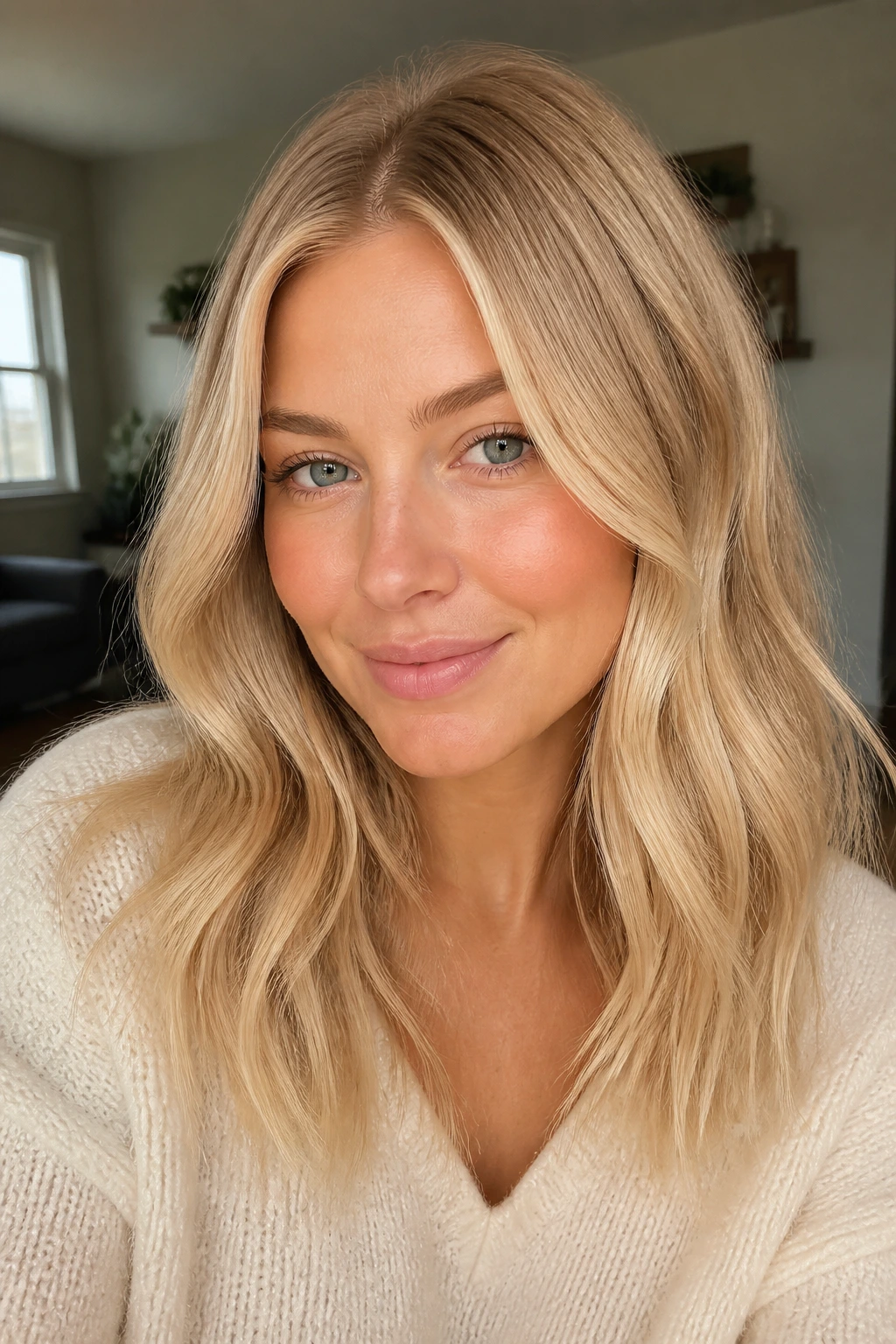
Soft buttercream blonde is one of those shades that looks easy even when it isn’t. The creamy tone can be tricky to get right, but on medium hair it lands well because the length shows the color without overwhelming it.
How much warmth should it have? Enough to avoid looking pale and chalky, not so much that it turns yellow. That’s the tightrope. Keep the ends a touch lighter than the top, and the whole cut feels smooth and flattering instead of high-maintenance.
37. Honeyed Champagne Lob
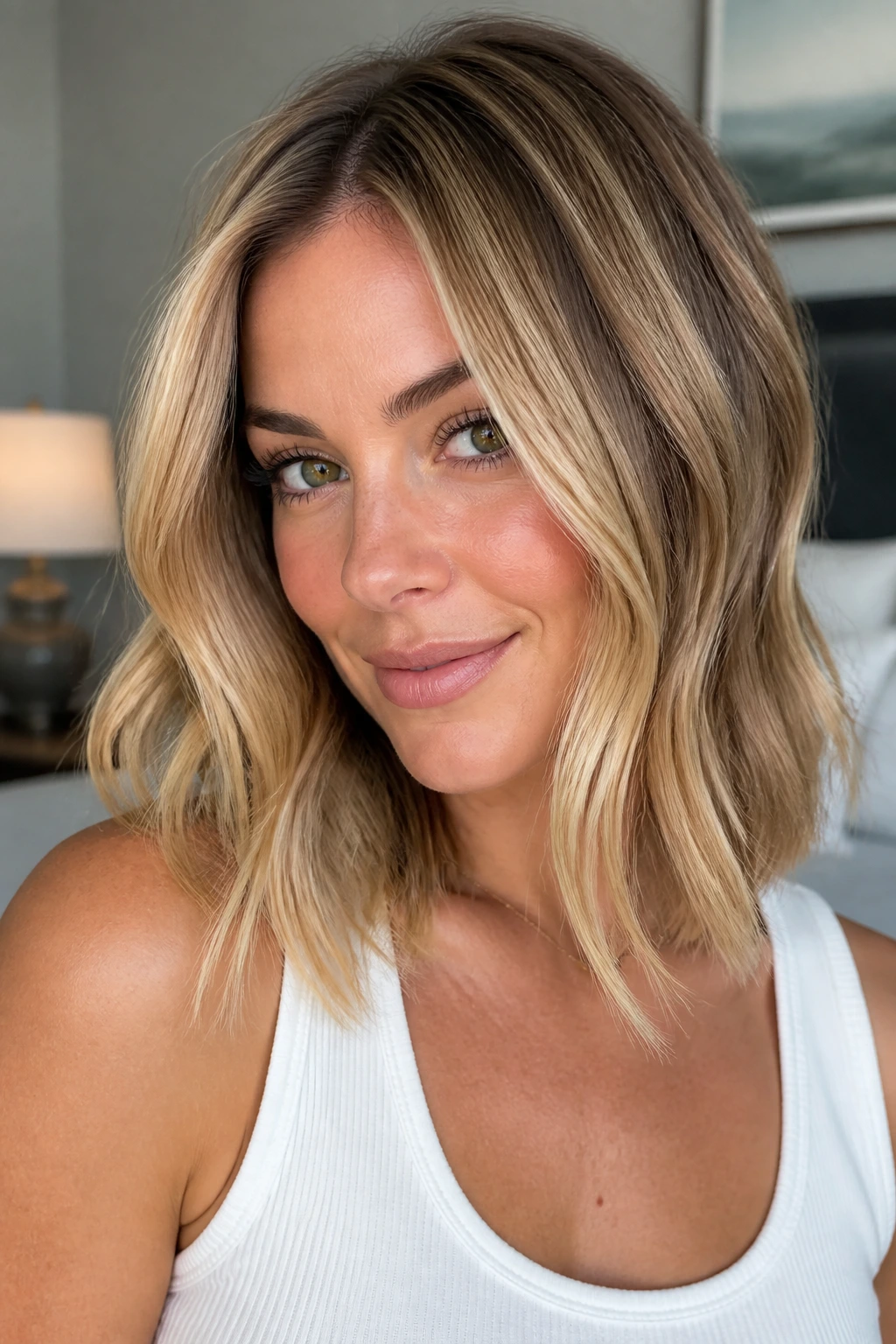
Honeyed champagne sits between warm and cool in a way that medium hair really likes. The lob shape keeps it modern, and the blended tone gives the color a little depth without muddying the finish.
I’d choose this if you want a blonde that flatters both indoor light and sunlight. That’s where it shines. The shade doesn’t rely on one environment to look good. It changes a bit as you move, which is part of the appeal.
38. Neutral Blonde with Lowlights
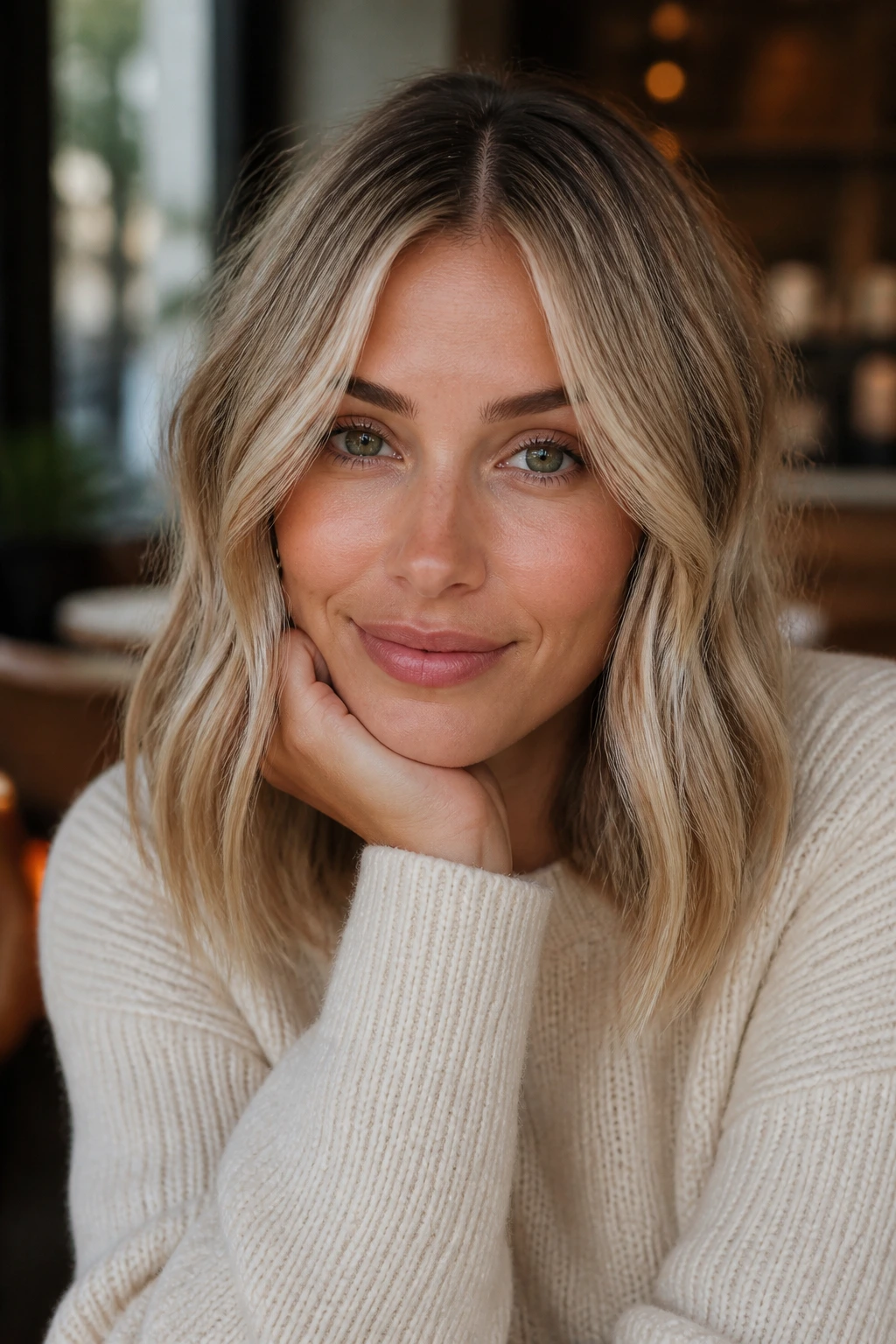
Neutral blonde can get boring if it’s too even. Lowlights fix that. On medium hair, the darker pieces keep the blonde from looking overly bright at the top and help the cut look thicker.
Why the lowlights matter
They give the eye somewhere to rest. That matters on shoulder-length hair, where the front and ends can feel too similar if everything is one tone. A few muted strands underneath the top layer make the brighter sections look cleaner.
Good styling match
- Blunt lobs
- Soft waves
- Center parts with face-framing pieces
39. Lived-In Gold Blonde
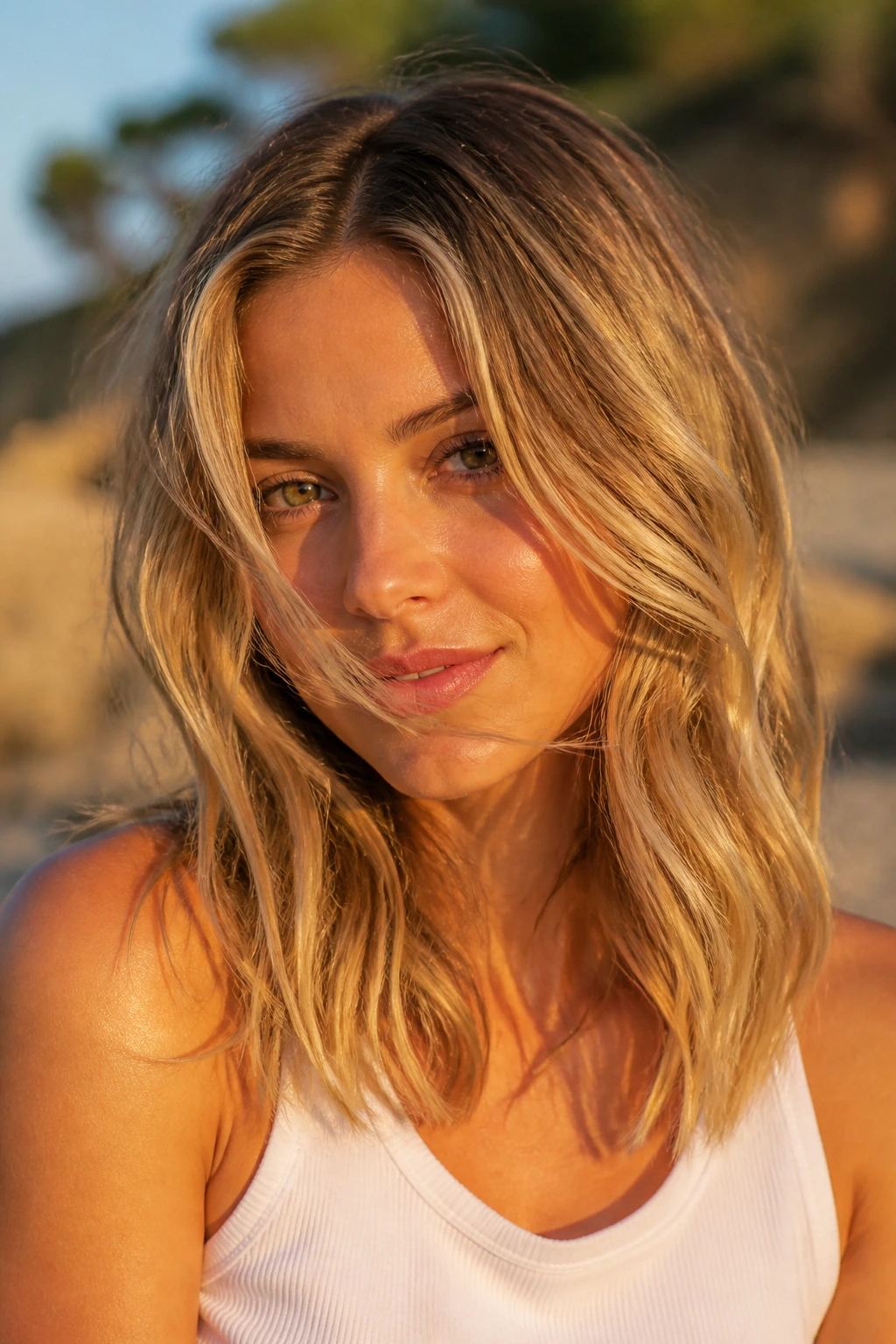
Lived-in gold blonde is the easygoing cousin of brighter gold shades. The roots stay softer, the mids stay warm, and the ends hold just enough lightness to feel fresh. On medium hair, that kind of grow-out is a gift.
A lot of people want blonde that looks good on day one and still looks good six weeks later. This is one of the better answers. The length helps because the color shifts read clearly, but the root softness stops the whole thing from becoming high-drama the moment your hair grows half an inch.
40. Rooted Vanilla Blonde with Subtle Face Brightening
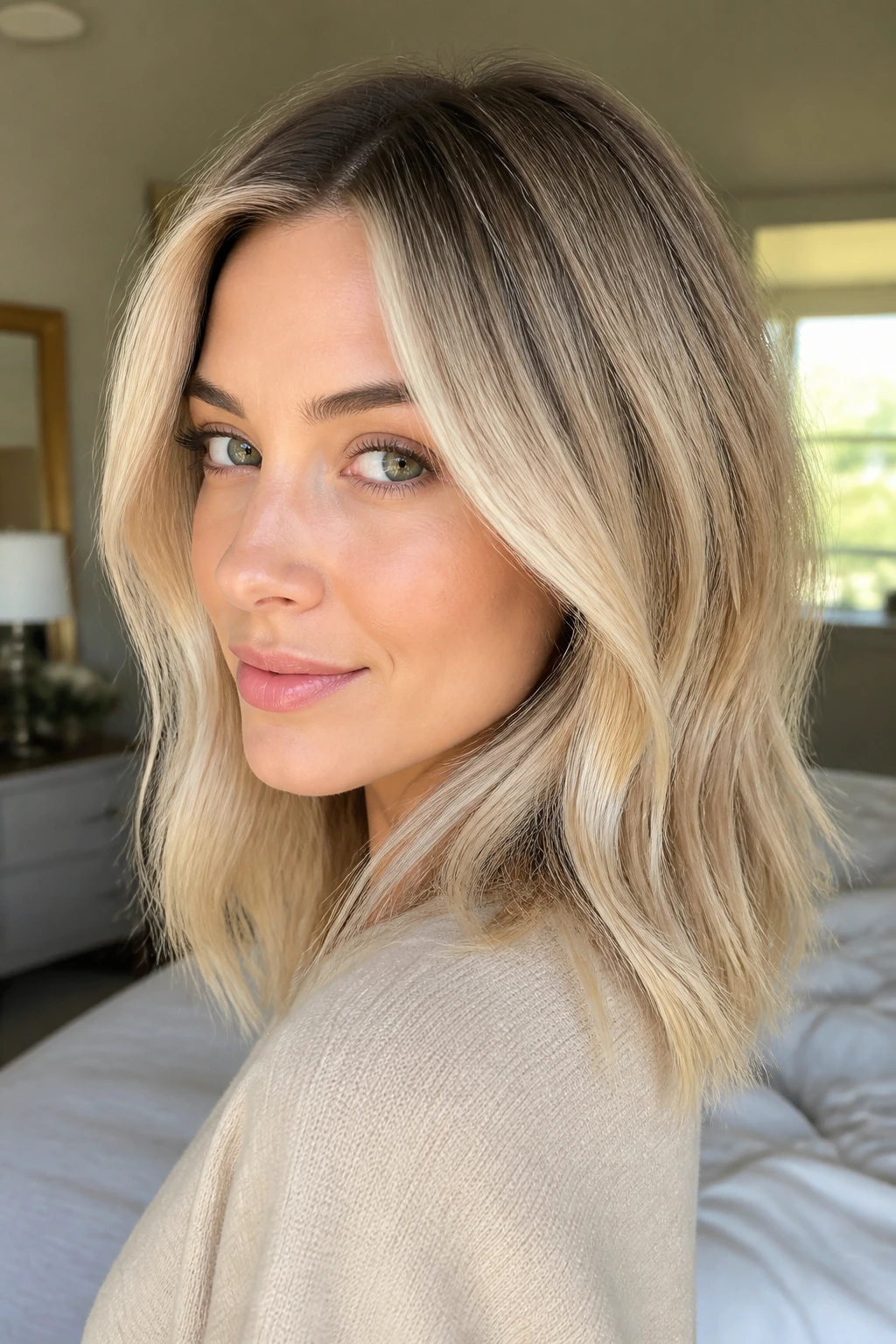
Rooted vanilla blonde is the shade I’d hand to someone who wants clean blonde without a constant salon chase. The root stays soft, the vanilla tone keeps the mids creamy, and the front pieces are bright enough to frame the face without stealing the whole show.
On medium hair, that balance is the point. The length shows the transition from root to light ends in a way that feels deliberate, not fussy. Keep the face brightening narrow, maybe just a few fine ribbons at the part and cheekbone, and the color stays elegant as it grows. That’s the version of blonde I trust most when the cut is medium-length and the goal is to look put together without babysitting it every week.
