



Curly hair changes the math. A highlight that looks soft on straight hair can turn into a stripe on curls, while a tiny ribbon that seems modest in the bowl can flare up once the hair dries and the pattern opens. The best hair highlights ideas for curly hair respect that movement instead of fighting it.
Stripy is the enemy.
Curls want dimension, not a row of identical light pieces marching from root to end. The prettiest color usually sits on the outer curve of the curl, around the face, or in the mid-lengths where the shape needs lift. Put the light in the wrong place and the whole head can look noisy. Put it in the right place and the haircut looks fuller without adding a single layer.
Porosity matters too. Curly ends often grab color faster than the roots, especially if the hair has been colored before, so a smart formula is rarely one-size-fits-all — it usually means softer roots, careful lift, and a gloss that keeps the result from turning brassy or dull. That is where the fun starts.
1. Honey Caramel Ribbon Highlights

Honey caramel is the shade I reach for when someone wants brightness without turning the whole head into a project. On curls, thin ribbons of warm blonde-brown read as soft movement, not as a hard line, and that matters more than people think.
Why It Works on Curls
The curl pattern breaks up the color for you. A few honey ribbons placed along the outer curve of each spiral catch light as the hair moves, so the result feels alive even when the styling is simple. That is the main trick here: you want color that follows the curl, not color that cuts across it.
I like this on medium brown and chestnut bases, especially when the goal is to make the hair look thicker and sunnier without going blond. Ask for 1/8- to 1/4-inch painted ribbons through the top layers, then leave a deeper shade underneath so the curl stack keeps its shape.
- Best on medium brown, light brown, and warm brunette bases
- Works well when the lighter pieces are painted on the outer curve, not packed into every strand
- Keep the interior about 20% to 30% darker for depth
- Refresh with a beige or clear gloss when the ends start to look dry or flat
Pro tip: Ask for two honey tones instead of one. A slightly lighter ribbon near the face and a deeper caramel through the crown keeps the whole head from looking painted in one flat color.
2. Espresso and Cherry Cola Highlights
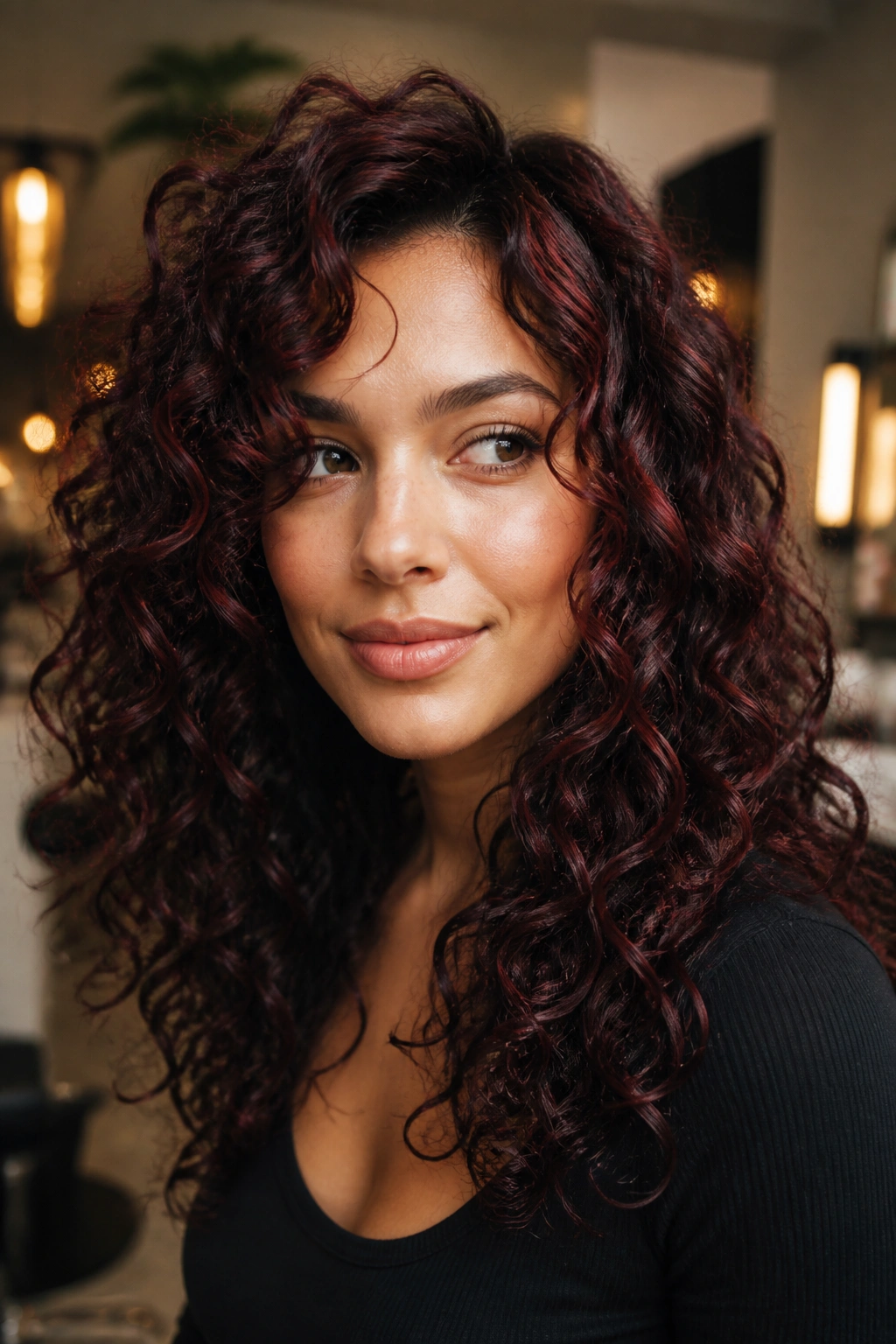
Red-brown highlights can look richer on curly hair than blonde ever will. That sounds dramatic, but I mean it in the most practical way: cherry cola tones move through dark curls like sheen on polished wood, while lighter shades can sometimes sit on top and feel obvious.
Espresso and cherry cola work because the contrast is controlled. You still get brightness, but it comes from mahogany, burgundy, and deep berry notes instead of pale blonde. On dark brown or black curls, that shift gives you depth first and flash second. The curl has something to show off even when the room lighting is dull.
I’d ask for this with demi-permanent color or a gloss-heavy approach if you want the red to soften gracefully. If the hair gets lifted too high, the shade can drift orange faster than you’d like. Better to stay in the dark red-brown family and let the gloss do the heavy lifting.
This is also one of those looks that gets better as the hair settles. The first day can look a little too neat. After a wash and a diffusing session, the cherry tones start slipping through the curls in little pockets, and that is where the color starts to make sense.
3. Face-Framing Money Piece Highlights
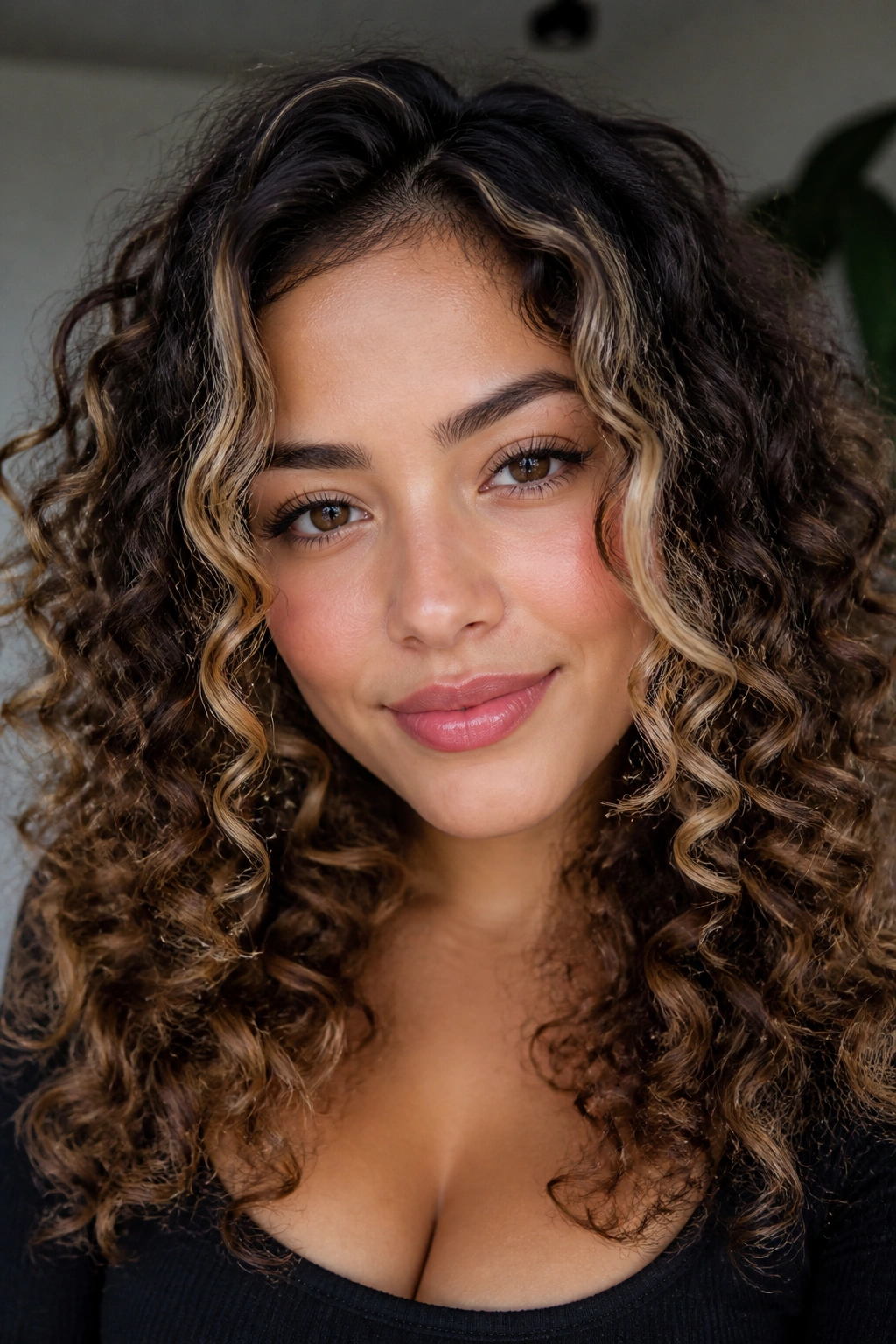
Why does a face frame do so much? Because the hair around your eyes and cheekbones moves the most. A lighter strand there acts like a tiny reflector, and on curls that flash of brightness can pull the whole style forward fast.
The only mistake I see all the time is going too wide. A chunky money piece can fight with the curl shape and look pasted on, especially if the front curls shrink more than the rest of the head. Better to break the front into two to four smaller weaves so the brightness feels woven in instead of slapped on.
How to Ask for It
- Ask for the brightest pieces to start around the cheekbone or jawline
- Keep the front narrow enough that each curl still has its own outline
- Ask for a shade one level lighter than the rest of the highlights, not five levels lighter
- Let the stylist feather the color into the next curl so the edge does not look blunt
This is the idea I suggest when someone wants a small change with a big payoff. It works on shoulder-length curls, long coils, and even tighter textures that only want a little face brightness. If your hair shrinks hard when it dries, have the color placed on the visible curl pattern, not on the stretched section in the bowl.
4. Cinnamon Balayage Through the Mid-Lengths

Picture shoulder-length curls that feel a little heavy near the crown but wake up once the light hits the middle. Cinnamon balayage fixes that exact problem. It gives the mid-lengths more life, which is often where curly hair needs the help most.
The placement matters as much as the shade. Hand-painted cinnamon, amber, and toasted copper pieces through the middle of the hair make the curl stack look lighter without forcing the roots to go bright. That middle zone is where the eye reads movement, especially on layered cuts.
- Best on medium to thick curls with some natural volume
- Strong choice for air-dried styles and diffuser sets
- Keep the roots softer so the grow-out stays calm
- Use a warm glaze if the cinnamon starts leaning too brown
This is the sort of color that looks polished on day one and even better after a few washes. A good balayage should not announce itself from across the room. It should show up when the hair moves, when a shoulder turns, or when the curls stack differently on the second day. That is the whole point.
5. Copper Accent Highlights on Dark Curls

Copper is not subtle, and that is the point. On dark curls, a few copper accents can make the whole head feel warmer, richer, and more awake without bleaching every strand into submission.
I like copper most when it is used sparingly. A face-framing piece, a few canopy curls, and one or two hidden spirals underneath can be enough. Too much copper on very dark hair can look brassy or loud, but the right amount lands like a flicker of heat. It’s the color that glows when the curls move.
The other thing copper does well is catch indoor light. Under warm bulbs, it can look almost cinnamon. Outside, it turns sharper and brighter. That shifting quality is useful if you wear your curls in buns, clips, or half-up styles, because the lighter pieces will keep popping in different places instead of sitting in one flat stripe.
Copper does fade. A lot. If you love it, plan on a color-depositing conditioner or a gloss between salon visits. If you want low effort, this is not the calmest option. If you want personality, though, copper has a way of making curls look like they have something to say.
6. Mushroom Brown Dimension
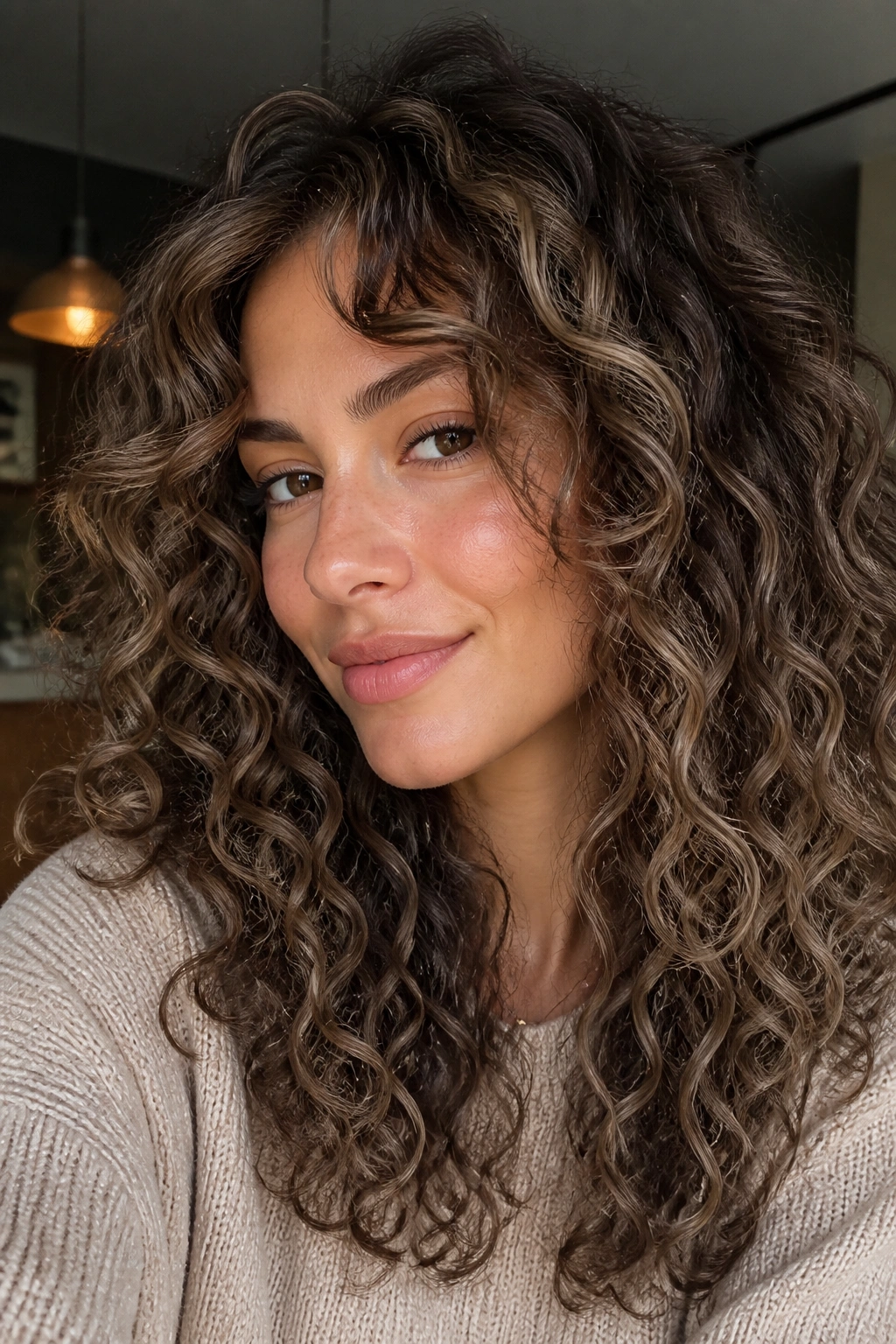
Mushroom brown sits between ash and beige, and that middle ground is why it looks so good on curls. Unlike caramel, it doesn’t lean warm. Unlike icy blonde, it doesn’t go chalky or hard. It keeps the curl pattern visible without making every ringlet shout for attention.
This is the color I like when someone wants dimension but hates brass. Cool beige ribbons through a brunette base can make curls look denser and more expensive-looking without changing the overall mood of the hair. Softness is the whole job here.
It’s especially good for olive skin, neutral undertones, and anyone whose natural brown base tends to pull red or orange after lightening. If that sounds like you, ask the colorist to stay one or two levels lighter than the base and finish with a neutral gloss, not a gold one.
My honest take: mushroom brown is underrated because it looks quiet in photos and richer in person. The curls still get light, but the shade never feels sugary. That makes it a smart choice for people who want a grown-out look that does not beg for constant touch-ups.
7. Golden Babylights for Fine Curls

Can tiny highlights make fine curls look fuller? Yes — if the pieces are small enough that they disappear into the pattern and then reappear as the hair moves. That’s exactly what babylights do.
The trick is restraint. Fine curls can look stringy if the foils are too wide or too bright, so the color needs to be scattered in very thin, soft weaves through the crown, part line, and top layer. Think shimmer, not stripes. A little brightness goes a long way here.
How to Get the Fine, Scattered Look
- Ask for foils about 1/16- to 1/8-inch wide
- Focus on the top layer and the part line, not the whole head
- Keep the tone soft gold or beige rather than pale yellow
- Ask the stylist to leave enough natural hair between foils that the curls still look separated
The part people miss is the finish. Fine curls often look best when the light pieces are toned just enough to keep them warm and soft. If they go too pale, the curl ends can look dry before they actually are. A gentle gloss and a careful cut matter here almost as much as the color itself.
8. Platinum Peekaboo Panels

The smartest way to wear platinum on curls is to hide most of it. Sounds backwards, but it works. Peekaboo panels under the top layer let the bright blonde flash through when the curls move, which is far better than bleaching the whole head and fighting brass at every turn.
This is the dramatic option for people who want the payoff without seeing the maintenance in every mirror. You can tuck platinum under the canopy, behind the ears, or in the lower back sections where the curls swing open. When the hair lifts, the color shows. When it doesn’t, the darker top layer does the job of keeping things grounded.
Platinum needs honesty. It asks for regular toner, careful cleansing, and a willingness to trim off dry ends before they start looking fried. I would not call it low-maintenance. I would call it worth it if you like a strong contrast and you’re fine keeping up with it.
If you want the look without the whole-head commitment, ask for a soft root shadow and a few interior panels first. That gives you room to test how much brightness you actually want living in your curls.
9. Rose Gold Tint on Warm Curls

Rose gold on curly hair works because the shape does half the styling for you. A blush-toned highlight that might look sugary on straight hair can look soft and brushed on curls, almost like warm metal mixed with peach.
The base matters here. Light brown, golden brown, and prelightened brunette curls usually take rose gold best. On deeper bases, the color often needs more lift than people expect, and if the lift is uneven, the result can look muddy fast. This is not the shade for careless bleach work.
What I like about rose gold is the fade. It often drifts toward peach, apricot, or soft copper, which still looks intentional on curly hair. That means the shade can stay wearable even as it loses some brightness. If you enjoy color that changes a little over time, this one gives you that without looking messy.
A color-safe wash and cool water help, yes, but the real secret is not over-washing. Pastel-adjacent tones do not love daily shampoo. Keep the cleansing gentle, and the rose part will last long enough to make the whole color feel finished.
10. Beige Bronde Balayage

Bronde is the bridge that keeps brunettes from looking stripy when the hair starts to shrink. Beige bronde balayage threads the gap between brown and blonde, and curly hair loves that middle zone because it reads dimensional without looking busy.
On a base that sits around level 5 or 6, the lighter pieces can hover around level 7 or 8 with a beige toner on top. That keeps the highlight soft and prevents the orange cast that shows up when brunette curls are lifted too far and left too warm. If your hair pulls gold fast, beige is safer than honey.
I also like bronde for people who part their curls in different places. The color does not depend on one exact line. It travels with the shape, which is useful if your styling changes from wash day to wash day. A center part, a side part, or a clip-up look can all work without exposing a harsh root.
This is one of the easiest ideas to live with over time. It grows out quietly, looks good with both defined and messy curls, and doesn’t demand that you keep the style perfect just to make the color make sense.
11. Jewel-Toned Peekaboo Highlights

Bright color is easier to wear on curls than on straight hair. That’s not a gimmick. The curl pattern breaks the color into flashes, so a jewel tone only shows a little at a time unless the hair is stretched or tucked back.
Plum, sapphire, emerald, and teal all work well in peekaboo placement. Hidden panels beneath the top layer or behind the ear let the color appear in motion instead of all at once, which keeps it from feeling costume-like. The reveal is the point.
How the Color Shows in Motion
A defined curl can expose just the edge of the jewel tone, while a looser bend lets more of it show through. That makes the color feel alive without needing a full neon head. I like this especially on curly bobs, shag cuts, and longer layers where the interior hair has room to swing.
- Use semi-permanent or direct dye if you want a softer fade
- Place the color under the top layer for a hidden effect
- Wash with cool water to slow fading
- Expect the tone to soften after several washes, especially with blues and teals
This is the fun option. It is not the easiest one, and that is fine. If you enjoy seeing a flash of color when you flip your hair or clip it up, jewel tones can be a small rebellion that still looks polished enough for daily wear.
12. Silver Ribbon Highlights for Gray Blending

What if you stop trying to hide gray and start using it? Silver ribbon highlights can make salt-and-pepper curls look deliberate instead of patchy, and that shift changes the whole feel of the hair.
The key is blending, not whitening everything. Cool beige, pearl, and soft silver pieces can lift the gray without erasing it, which is especially useful when gray is growing in around the temples or crown. You want the silver to feel woven in, not painted on top.
What to Tell Your Colorist
- Keep the silver ribbons fine and irregular
- Mix in neutral beige so the gray does not turn flat
- Leave some natural gray visible for contrast
- Use a soft shadow root if the hair around the part line needs depth
A lot of people try to cover gray with something too warm, then wonder why the roots look orange against the rest of the hair. Cool tones solve that, but they need a careful hand. Too much silver can look stark on curls, especially if the pattern is dense. The sweet spot is a mix of reflective and natural pieces.
Blue or purple shampoo can help, but I would not drown this color in toning products. The goal is to keep the silver soft and believable, not to push it into that flat, icy territory that makes curls lose their shape.
13. Toffee Ribbon Highlights on Thick Curls
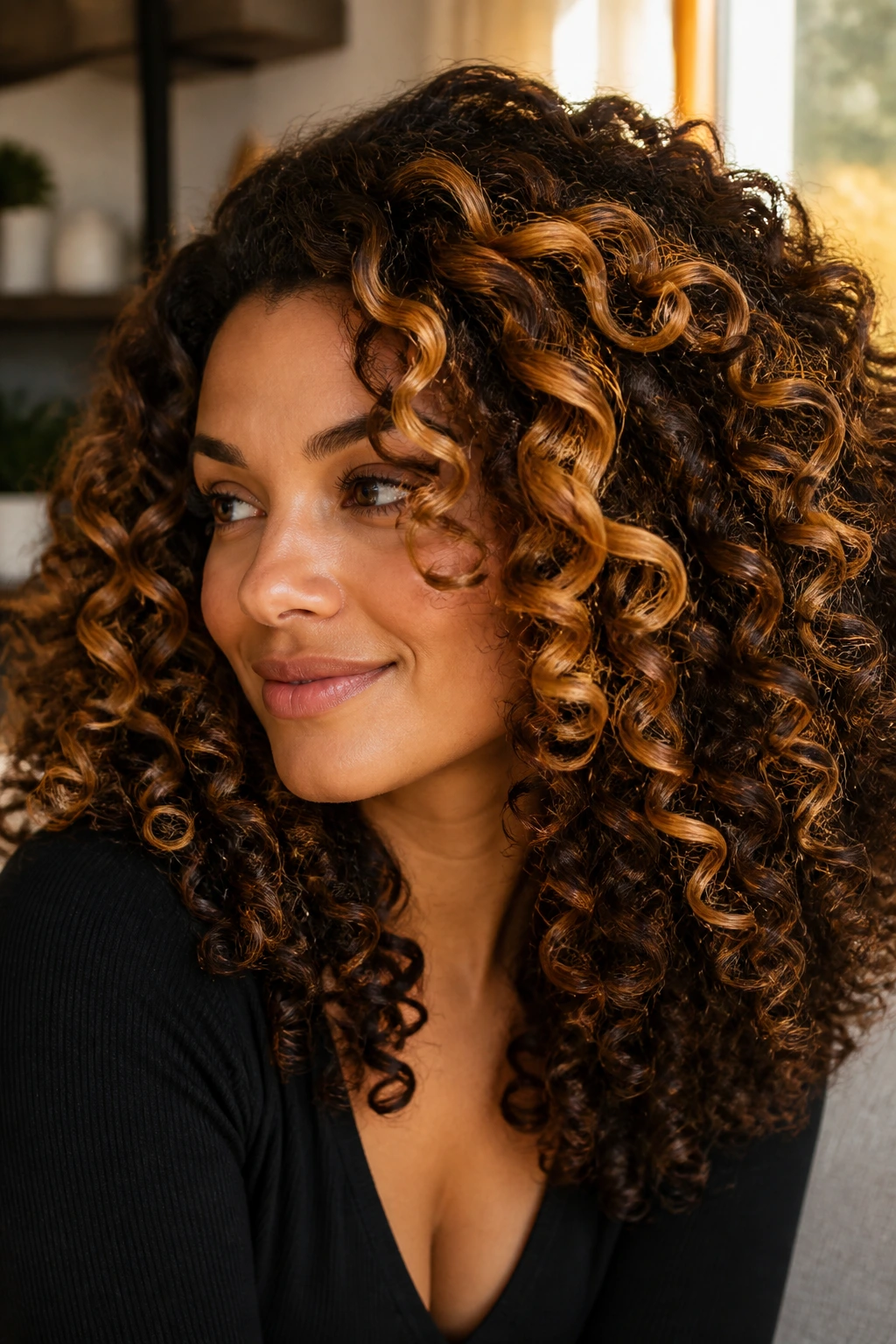
Thick curls can swallow color if the ribbons are too thin. That is why toffee highlights work so well — they are warm, medium-depth pieces that show up clearly without looking harsh, even when the hair has a lot of density.
I’d use this on coarse curls, high-density curls, and big shapes that need light threaded all the way through the interior. Slightly wider ribbons keep the color visible when the hair expands, which matters more than people think. If the panels are too fine, they disappear once the curls dry.
A good toffee placement usually hits the crown, the side panels, and a few hidden spots near the nape. That mix prevents the top from looking heavy while still keeping depth underneath. The brightest pieces should not sit in every section. Thick hair looks better when it has pockets of light, not a uniform coat.
- Use ribbons around 1/4- to 1/2-inch wide if the hair is very dense
- Keep some deeper brown in the lower interior
- Choose warm toffee rather than yellow blonde
- Add a gloss if the tone starts leaning orange
This is one of those shades that does a lot of work in the background. It does not scream for attention. It just makes the curls look more carved out, which is often exactly what thick hair needs.
14. Vanilla Beige Halo Highlights
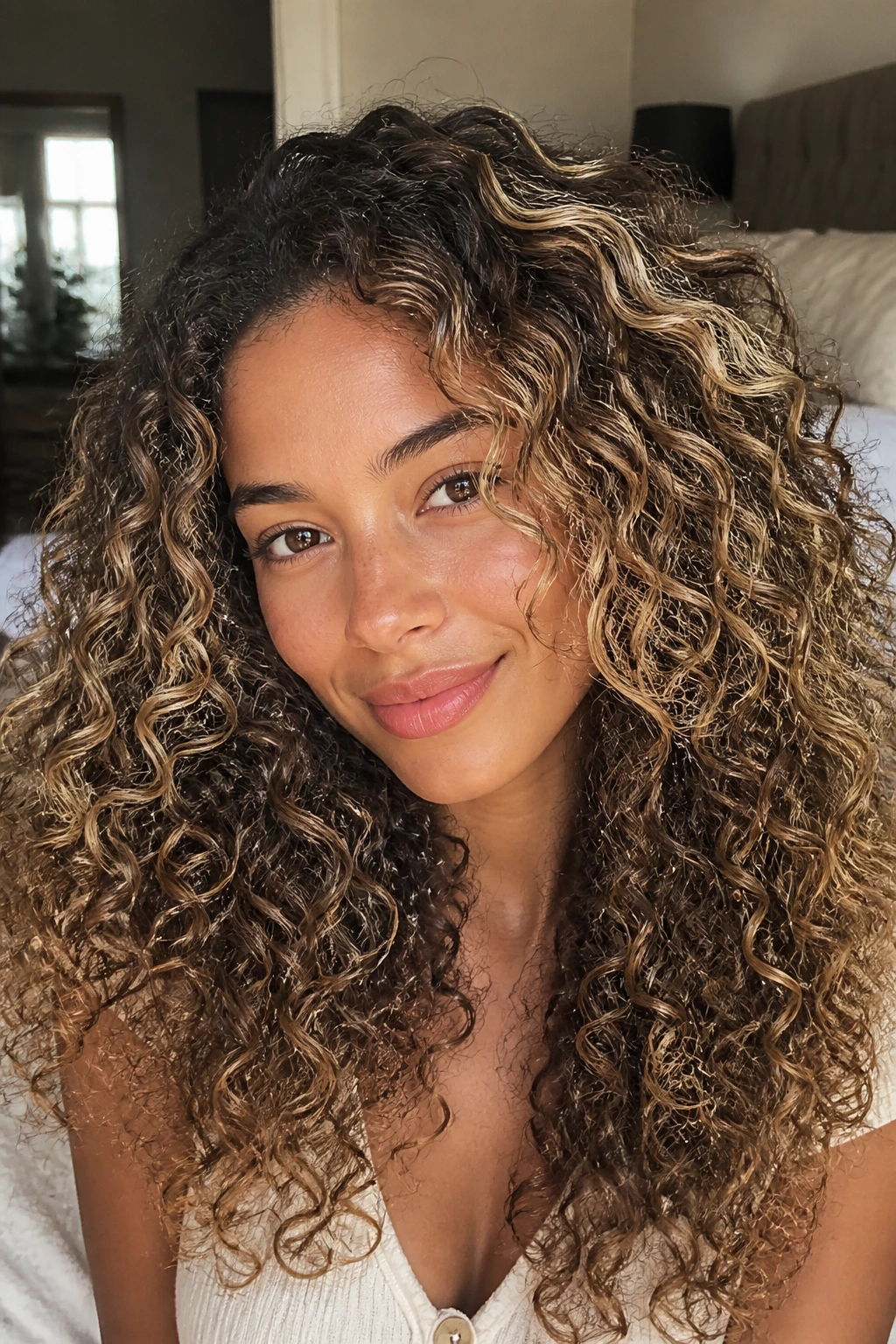
A halo placement can fix the “heavy at the ends, flat at the crown” problem. When the brighter pieces sit in a soft horseshoe around the outer top layer, the curls look lifted without needing every inch of hair to be colored.
Vanilla beige is a smart tone for this because it stays creamy rather than yellow. On dark blonde, light brown, or medium brunette curls, it brightens the outline of the haircut and makes layers show up better. The shape looks cleaner the second the hair starts moving.
I like this idea on longer curls and cuts that need a little structure up top. A halo of light around the crown and front can make the whole style feel more deliberate, especially when the back is left slightly deeper. That contrast keeps the silhouette from going mushy.
This is also one of the more forgiving ideas if you want a softer grow-out. Since the light sits around the perimeter rather than packed into the whole head, the roots don’t announce themselves as quickly. You still need maintenance, but the color is not shouting every time it grows.
15. Smoky Brunette Contour Lights
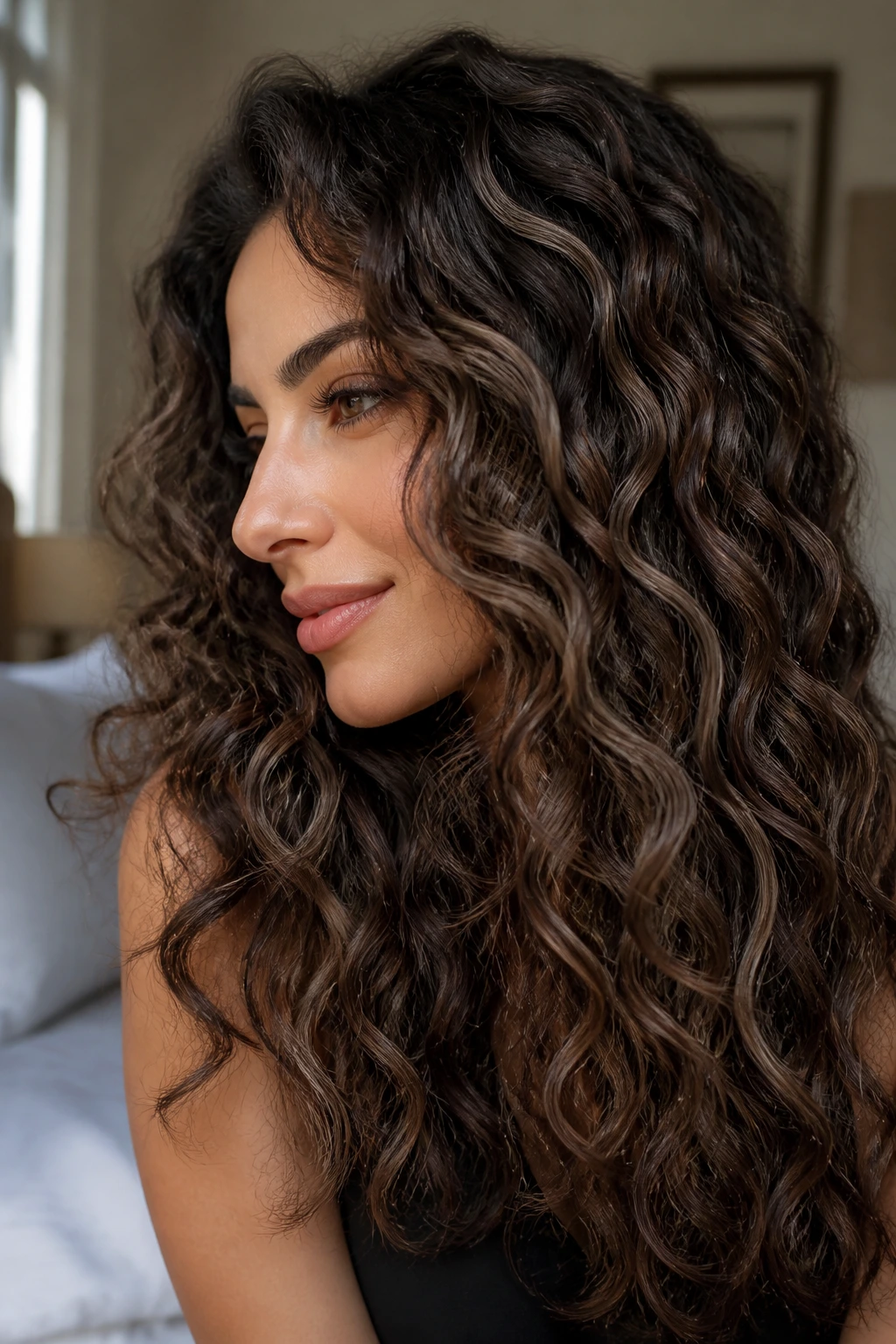
Not every curly head needs warmth. Smoky brunette contour lights are for people who want the haircut to look sharper, denser, and a little cooler without slipping into ash-blonde territory.
The idea is simple: use cool mocha, cocoa, and muted beige pieces to contour the curls the way makeup shapes a face. The brighter strands go where the curl needs lift, while the deeper sections stay in place to hold the outline. You are not trying to brighten everything — you are trying to shape it.
This is a strong choice for dark brown hair, especially if copper and gold make you feel too warm. It also works well on curls that look bulkier than you want, because the contrast can carve out the spiral pattern instead of flooding it with color. If the cut has layers, even better. The highlights show the movement fast.
If I had to narrow the whole list to one low-drama, high-payoff option, this would be near the top. It grows out softly, it keeps the curls looking full, and it does not demand a perfect styling routine to make sense. Some colors need a lot of fuss. This one does not.
The best curly highlights are never really about being louder. They are about making the curl pattern easier to read. If a shade does that while still looking good on day three, after a clip, or under a grocery-store light, it has done its job.
